You know the wine. Here's why Chablis deserves a weekend
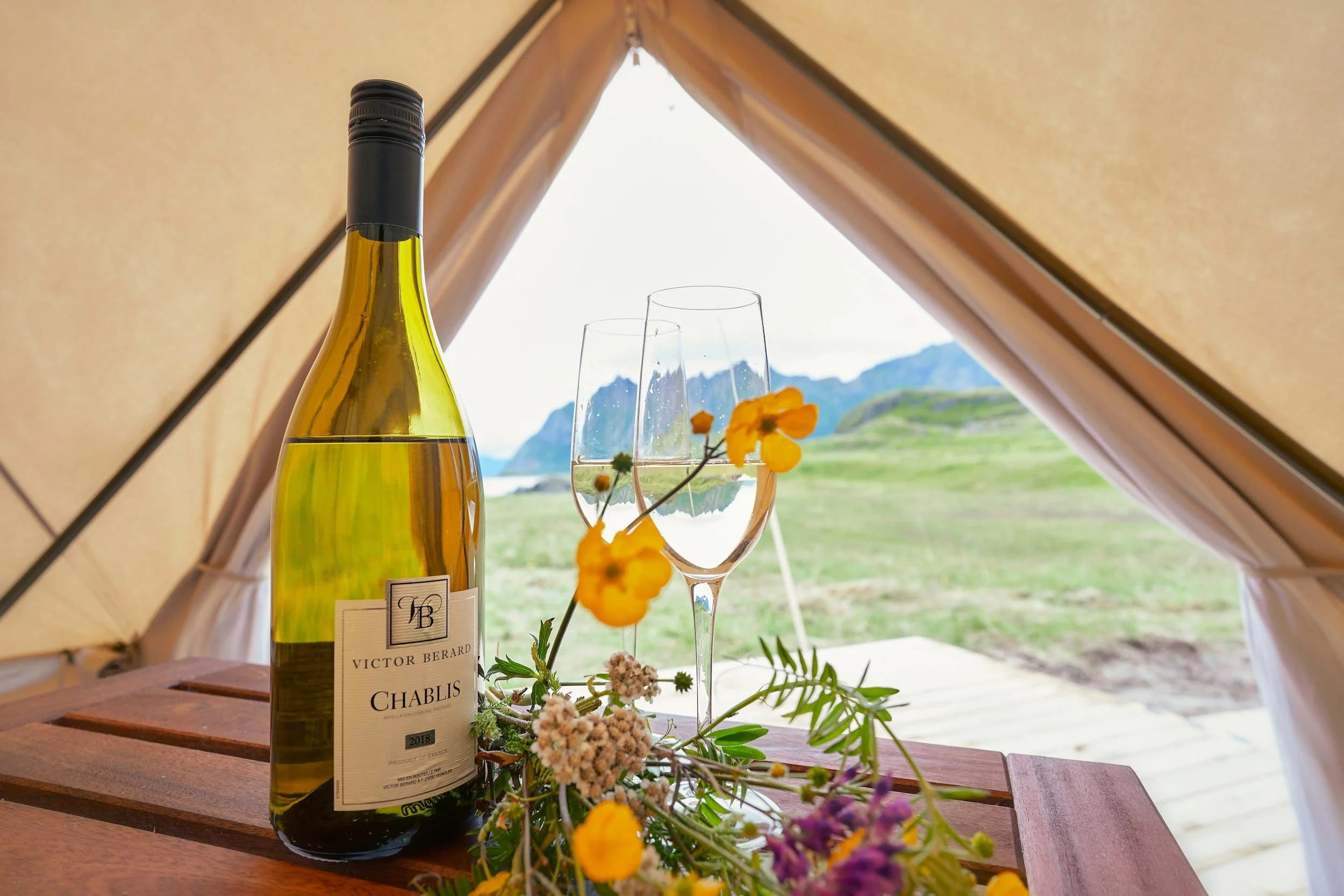
Most people know Chablis before they ever arrive. They recognise it from restaurant wine lists, they've probably ordered a bottle once or twice, and they assume they've got a fairly good idea of what the place will look like. Then they arrive and realise the famous name belongs to a town that's much smaller, quieter and far less polished than they expected.
A lot of visitors arrive for a tasting, buy a few bottles and continue towards Beaune. On paper, that makes sense. Chablis is small. You can walk from Place Charles de Gaulle to the edge of the vineyards in less time than it takes to finish a coffee. By 20.00 on many evenings, parts of the centre are already surprisingly quiet.
But that's also where Chablis gets misunderstood.
This isn't the part of Burgundy where you're moving between grand wine houses and busy restaurant terraces all day. One of the nicest ways to spend a morning here is simply wandering uphill towards the Grand Cru vineyards, passing workers heading into the vines while the bakeries around Rue Auxerroise are still busy with locals collecting bread for lunch. On Fridays, the market briefly fills the centre with cheese producers, vegetable growers and wine merchants before disappearing again by early afternoon. A few kilometres away, villages like Préhy, Chichée and Courgis feel less like wine destinations and more like places where wine just happens to be part of everyday life.
That's why Chablis works best as a weekend rather than a stop.
If you're thinking about spending a couple of days in this corner of northern Burgundy, this guide is less about chasing famous labels and more about understanding how the town, the vineyards, the food and the surrounding villages fit together. That's usually the difference between leaving with a few bottles in the boot and leaving already planning a return visit.
If travelling without a car is becoming your thing, Béziers by train is another destination that surprises people.
Where is Chablis and what's the easiest way to get there?
Chablis sits in the northern part of Burgundy, about 180 kilometres southeast of Paris and around 20 kilometres east of Auxerre. Even though it's one of France's best-known wine names, it isn't surrounded by the bigger wine towns that many people associate with Burgundy. Beaune is almost two hours away by car, which is why Chablis feels like a completely different wine region rather than an extension of the Côte d'Or.
Driving is by far the easiest way to explore the area, especially if you want to visit villages like Préhy, Chichée, Courgis or Pontigny alongside the vineyards. The roads are quiet, distances are short and parking in Chablis is generally straightforward. Several public car parks sit just outside the historic centre, including near Avenue de l'Obédiencerie and Rue du Serein, so it's easy to leave the car and explore the town on foot.
If you're travelling by train, the journey takes a little more planning because Chablis doesn't have its own railway station. The nearest station is Auxerre-Saint-Gervais, with regular trains from Paris Bercy, Dijon and Laroche-Migennes. From Auxerre, local buses connect to Chablis several times a day, although the timetable isn't always ideal for a weekend trip, particularly on Sundays. If you're arriving later in the afternoon or travelling with luggage, a taxi from Auxerre is often the simpler option and takes around 25 minutes.
It’s easy to underestimate is how compact Chablis itself is. Once you've arrived, the centre is completely walkable. You can stroll from Place Charles de Gaulle to the Church of Saint-Martin, browse the wine shops along Rue Auxerroise, stop for coffee by the River Serein and be climbing towards the Grand Cru vineyards in less than 15 minutes. That's one of the reasons staying in the centre is ideal. You don't need the car again until you're ready to explore the surrounding villages. From Place Charles de Gaulle it's about five minutes to Maison Colas, ten minutes to the Church of Saint-Martin and around fifteen minutes to the first rows of the Grand Cru vineyards along Chemin des Clos. Préhy is five minutes by car, Pontigny around fifteen, while Noyers-sur-Serein is closer to forty minutes.
If you're already travelling through Burgundy, Chablis fits naturally with Auxerre, Noyers-sur-Serein or Pontigny Abbey. Trying to combine it with Beaune in a single day, however, usually means spending more time in the car than among the vineyards.
Burgundy becomes surprisingly easy once you understand the train network. Burgundy by rail shows exactly how to link towns like Chablis without hiring a car.
Understanding TER trains before you leave home will save you far more time than you'd expect.
Driving between Paris and Burgundy anyway? These small-town stops are easy to add without turning the day into a detour.
Choosing where to stay makes a bigger difference than people expect
Because Chablis is so compact, your choice of accommodation changes the feel of the weekend more than the amount of driving you'll do.
If it's your first visit, I'd stay right in the centre. Somewhere within a few minutes of Place Charles de Gaulle or Rue Auxerroise means you can leave the car parked after you've checked in and forget about it until you're ready to head home or explore the surrounding villages. It also changes the evenings. Instead of thinking about driving back after dinner, you can wander slowly through the quiet streets, stop for one last glass at a wine bar or take a short walk beside the River Serein before turning in for the night.
A hotel or guesthouse surrounded by vineyards offers a completely different experience. Waking up to rows of Chardonnay outside the window is hard to beat, particularly in late spring or during harvest, but you'll probably end up driving into Chablis for dinner, breakfast or an evening stroll. If you're planning to spend most of your time exploring the countryside and visiting smaller domaines, that trade-off often makes perfect sense.
The third option is staying in one of the nearby villages. Places like Préhy or Chichée are only a few minutes away by car and feel noticeably quieter once the visitors have gone home. They're a lovely choice if you've already been to Chablis before or simply enjoy staying somewhere that feels more residential than touristy, although you'll naturally miss the convenience of walking to the bakeries, restaurants and wine bars in the evening.
After spending a weekend here, it's easy to understand why so many people book somewhere in the centre for their first visit and then choose a vineyard stay when they come back. They feel like two completely different weekends, even though you're only a few kilometres apart.
If quiet weekends are what you're really chasing, Montolieu swaps vineyards for bookshops without losing any of the atmosphere.
Chablis is much smaller than most people expect
People often compare Chablis with Beaune simply because both are famous wine towns. Once you're here, the comparison doesn't really hold up.
Beaune feels like somewhere you can spend half a day wandering between wine shops, hotels and restaurant terraces before you've even thought about the vineyards. Chablis gets to the point much quicker. Within a few minutes of leaving Place Charles de Gaulle, you've crossed the River Serein, walked past the Church of Saint-Martin and you're already looking up at rows of Chardonnay vines.
The centre is small enough that you quickly stop checking the map. Rue Auxerroise, Rue Jules Rathier and Rue des Moulins become familiar after a couple of walks, and you'll probably pass the same boulangerie more than once without planning to. If you forgot to buy that bottle from La Chablisienne or spotted a cheese you wanted to come back for, it's only a few minutes away.
Mornings are quiet slow here. Around eight, you'll mostly see locals picking up bread, vineyard workers grabbing coffee before heading out and delivery vans unloading outside Au Fil du Zinc and Hostellerie des Clos. Visitors tend to appear a little later. The first tables outside Café La Chablisienne slowly fill up, wine shops unlock their doors one by one, and people begin wandering towards tasting appointments with no particular rush.
It’s easy to miss if you're only here for lunch is how close everything is. From the centre, it's barely a fifteen-minute walk to the Grand Cru hillside. Follow Chemin des Clos and turn around every now and then instead of only looking ahead. The view changes surprisingly quickly. One moment you're beside stone houses and church bells, and a few minutes later the rooftops of Chablis sit below you with Les Clos, Vaudésir, Valmur and Les Preuses stretching across the opposite slope.
If you've got an hour between tastings, don't feel like you need to fill it with another glass of wine. Pop into Librairie Obliques to browse regional cookbooks and French novels, wander through the small independent shops around the square or pick up a few things for lunch. Soumaintrain cheese, fresh bread from Maison Colas, a slice of jambon persillé and a handful of cherries in summer make a pretty convincing picnic by the Serein.
The evenings catch quite a few people by surprise. Chablis isn't the sort of place where you move from one wine bar to another until midnight. After dinner at Le Bistrot des Grands Crus or Au Fil du Zinc, people head home. By half past nine, you'll often have parts of the centre almost to yourself apart from a few couples finishing a bottle on a terrace or locals walking home across the bridge.
That's probably why two nights feels so different from two hours. Once the coaches leave and the tasting rooms close, Chablis starts feeling less like a famous wine destination and more like a small Burgundian town where wine just happens to be part of everyday life.
If you're hoping to fly a drone over the Grand Cru vineyards, check the current regulations before you travel. Chablis is an active agricultural landscape rather than an open viewpoint, and restrictions can apply around villages, roads and working vineyards. Even where flying is permitted, harvest isn't really the time for it. The last thing anyone needs is a drone hovering over tractors bringing in the vintage.
Still choosing between Burgundy and Provence? Apt or Gordes? helps you decide without spending hours comparing guides.
The biggest mistake is treating Chablis as a two-hour stop
If you only spend a couple of hours in Chablis, it's easy to leave wondering what all the fuss is about. That's exactly how many people experience it. They arrive around lunchtime, join a tasting, buy a bottle or two, have lunch on a terrace and continue towards Beaune or Dijon before the afternoon is over. If you're here on a sunny weekend, you'll probably notice the coaches arriving at much the same time, groups moving between the larger domaines and restaurant terraces suddenly filling up around Place Charles de Gaulle. For a few hours, Chablis feels busier than it actually is.
Stay the night and it becomes a completely different place.
By late afternoon, most of the day visitors have disappeared, the tasting rooms begin to close one by one and the streets become a lot quieter. Instead of walking past people checking maps and carrying wine boxes back to their cars, you'll mostly pass locals on their way home, couples taking an evening stroll along the River Serein or vineyard workers finishing another day among the vines. It's a side of Chablis that's difficult to appreciate if you're watching the clock.
The vineyards are often at their best later in the day too. Around lunchtime, the paths around Les Clos and the other Grand Cru vineyards are usually shared with organised groups, cyclists and people stopping for photos before moving on. Come back after dinner or just before sunset and it feels much more spacious. You have time to follow Chemin des Clos without wondering if you're going the right way, stop to look back across the rooftops towards the Church of Saint-Martin and notice just how compact the town really is with the River Serein winding quietly through the middle. It doesn't take long before you lose sight of the centre altogether.
Fridays feel completely different from the rest of the week. By eight o'clock, Place Charles de Gaulle is already busy with locals picking up fruit, vegetables, flowers and bread before work, while visitors drift between the stalls trying to decide whether to carry on to their first tasting or postpone it until the afternoon. The queue for the roast chicken van starts forming surprisingly early, the cheese stalls are busy from the moment they open and you'll notice plenty of people leaving with paper bags from Maison Colas rather than bottles of wine. It feels less like an event and more like the town doing its weekly shopping, with visitors simply becoming part of it for a few hours.
By Sunday afternoon, the atmosphere has changed again. Lunch still spills out onto the terraces at Au Fil du Zinc and Le Bistrot des Grands Crus, but once the tables begin to empty the centre quickly becomes quieter. A few smaller domaines finish their last tastings, shutters come down over independent shops and the streets around the River Serein feel almost sleepy compared with Friday morning. If you walk back through town later in the afternoon, you'll probably pass more people walking their dogs than carrying wine boxes.
That's one of the reasons a weekend here never feels as though it's built around a checklist. You head out intending to visit two wineries, then spend far longer than expected talking about the differences between Les Clos and Vaudésir. Lunch stretches into the afternoon because nobody is trying to hurry you along, someone at the next table mentions a small producer in Préhy you've never heard of, and before you know it you're taking the longer route back through the vineyards because the evening light has completely changed the valley.
Most people know Chablis because they've seen it on a wine list. Spending a couple of days here gives you a very different picture. You start recognising the names on the vineyard signs, the people behind the market stalls, the roads that disappear between the vines and the villages that sit just beyond them. The wine still matters, of course, but by the time you're driving home it's usually become just one part of the weekend rather than the whole reason for it.
Planning a longer route through southwest France? Cahors or Figeac? is one of those decisions that's much easier once you've seen them side by side.
Heading towards the Mediterranean afterwards? Collioure without a car makes a brilliant follow-on stop.
The wine starts making more sense once you've walked through the vineyards
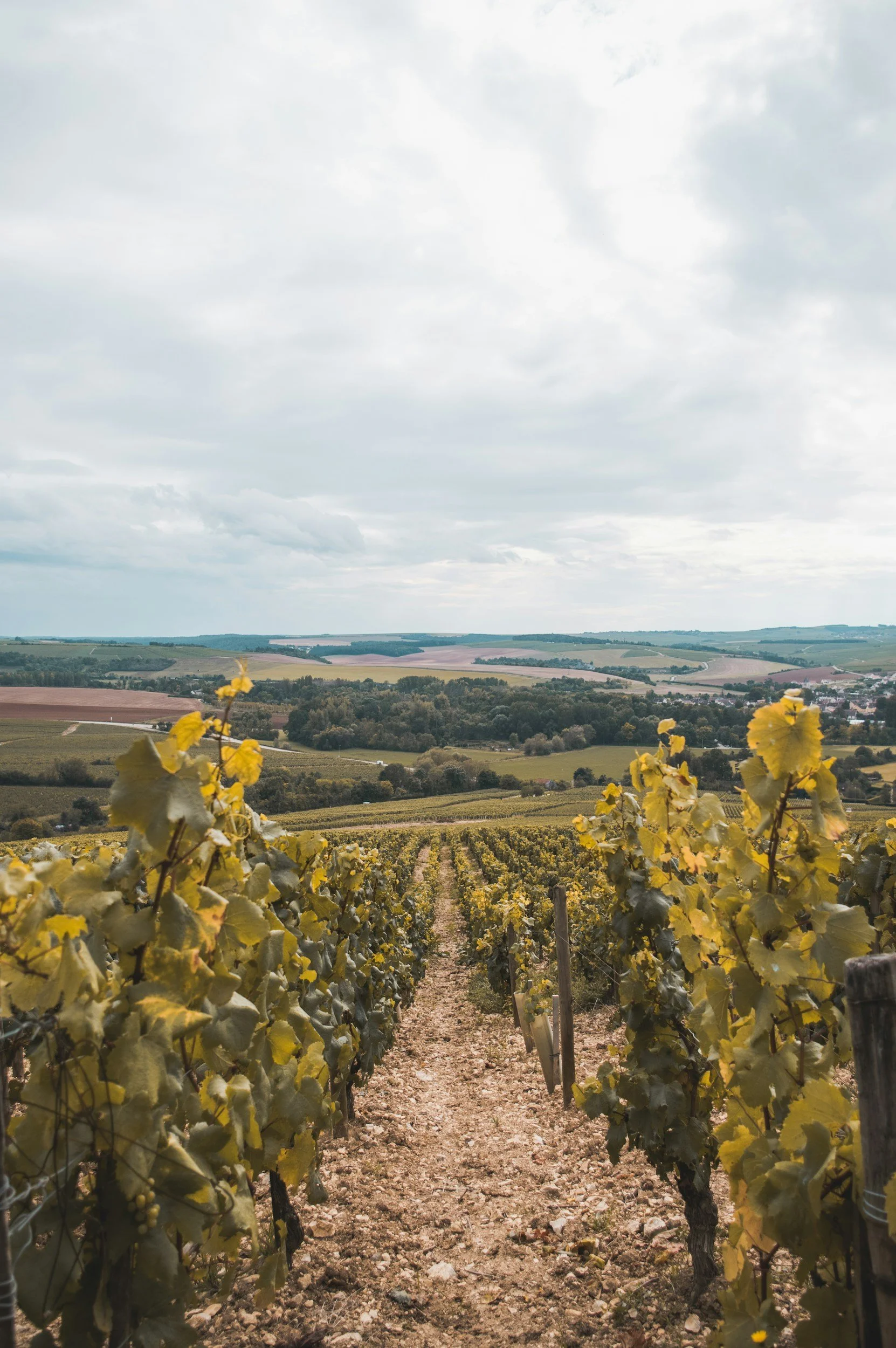
Something that catches a lot of people off guard is just how close the vineyards are to the centre of Chablis. You can finish breakfast on Place Charles de Gaulle, wander across one of the little bridges over the River Serein and, before you've really had time to think about where you're going, find yourself climbing gently towards Chemin des Clos with the rooftops already beginning to disappear behind you. It's one of those rare wine regions where the transition feels almost seamless. There isn't a long drive out of town or a dramatic viewpoint announcing you've arrived. The vineyards simply begin, and after a few minutes it feels as though the town has quietly stepped aside to let them take over.
The famous Grand Cru hillside is much smaller than most people imagine, especially if you've spent years seeing the names on restaurant wine lists without ever looking at a map. Les Clos sits beside Vaudésir, Valmur folds into Blanchot, while Bougros and Grenouilles occupy the same south-west facing slope overlooking the river. From several points along Chemin des Clos, particularly as you continue climbing above the vines, you can stand still and see almost the entire Grand Cru landscape without needing binoculars or a viewpoint marked on Google Maps. It's surprisingly small for somewhere with such an outsized reputation.
Early in the morning, the sun reaches the Grand Cru hillside from the east, gradually lighting up vineyards like Les Clos and Vaudésir while much of Chablis itself is still waking up below. It's a lovely time to walk Chemin des Clos because the paths are usually quiet and the valley feels almost completely still apart from birds and the occasional tractor beginning its day. Towards evening, the light shifts behind you as you look back towards the town, warming the limestone walls, the rooftops and the spire of Saint-Martin while the vineyards take on softer shades of gold and green. If you're hoping to take photographs, don't worry about finding one famous viewpoint. The nicest pictures usually come from simply stopping every few minutes as the path climbs because the view keeps changing with every bend, and the town gradually becomes smaller beneath you.
It doesn't take long before you stop thinking about the vineyards as something to look at and start treating them as part of the walk. From the edge of Chablis, you're climbing almost straight into the Grand Cru slopes, following narrow vineyard roads where every few hundred metres another sign points towards Les Clos, Vaudésir or Blanchot. Tractors rumble past at little more than walking pace, growers stop to chat without turning off the engine and every so often you'll pass an old stone cabotte that looks as though it has been standing there for generations.
There are details that are easy to miss if you're only driving through. The dry stone walls separating tiny parcels, wildflowers growing along the edges of the tracks in late spring, roses planted at the ends of certain rows and handwritten signs pointing towards family domaines all remind you that this is still a working landscape. During September, the roads become busier with grape trailers heading back and forth between the vineyards and the wineries, while the sweet smell of fermenting grapes drifts out through open cellar doors long before you reach the centre of town.
Continuing into Champagne? These cozy stays are a lovely way to slow the journey down before heading home.
It's also worth looking down every now and then. The pale, dusty tracks are scattered with pieces of limestone and tiny fossil shells that have worked their way to the surface over time, and once you notice them, they're everywhere. People talk a lot about Kimmeridgian limestone in Chablis, but standing there with fragments of ancient seabed under your feet makes the geology feel surprisingly straightforward. You don't need to know much about wine to understand why people keep coming back to the soil. It's right there beneath your boots for most of the walk.
The difference between Premier Cru and Grand Cru also becomes much easier to picture once you've walked through the landscape instead of trying to memorise classifications… The Grand Cru vineyards all share this single hillside overlooking the Serein, while the Premier Cru vineyards spread out across different valleys and slopes around Chablis, places like Montée de Tonnerre, Fourchaume, Montmains and Vaillons. None of them feel less beautiful or less important when you're standing there. If anything, they're often quieter because fewer visitors make the short detour away from the famous Grand Cru names.
That's one reason it pays not to spend the whole weekend chasing the wineries everyone already knows.
William Fèvre is an obvious place to begin because many of the wines come directly from parcels you've just walked past, and the tastings help connect the landscape with what's in the glass. Domaine Laroche, housed in the historic Obédiencerie buildings near the centre, combines centuries of local history with modern winemaking, while Domaine Louis Michel & Fils has built a loyal following by letting the vineyard speak for itself rather than relying heavily on oak.
If you've already visited some of the better-known producers, it's worth looking a little further. Domaine Pattes Loup, just outside Chablis, has quietly become one of the region's most respected names among wine lovers, producing biodynamic wines that feel very different from the more traditional style many visitors associate with Chablis. Domaine Jean-Marc Brocard, overlooking the vineyards near Préhy, offers another perspective on the landscape, while Domaine Daniel-Etienne Defaix remains one of the most interesting places to visit if you're curious about older vintages that have been patiently cellared for years before release.
Don't worry too much about trying to visit 'the best' producer. Some of the most memorable tastings happen because you noticed a handwritten dégustation sign, sent a quick email the day before or simply followed a recommendation from the winemaker you visited that morning. Chablis is small enough that those conversations often lead you somewhere you hadn't planned to go.
The nicest moments usually happen between the tastings rather than during them. You leave a cellar planning to head back into town, notice a vineyard road climbing above Les Clos and, before you've really thought about it, you're walking uphill instead. From there, Chablis looks surprisingly small. The spire of Saint-Martin rises above the rooftops, the River Serein loops quietly through the valley and the rows of vines stretch away in every direction with little white markers identifying vineyards you've probably seen on restaurant wine lists for years. Standing there, it's much easier to understand that Les Clos, Vaudésir or Blanchot aren't just labels on a bottle. They're real places with their own position on the hillside, their own exposure to the sun and their own character, separated by little more than a narrow track or a low stone wall.
By the time you sit down for dinner later that evening, whether it's a seasonal menu at Au Fil du Zinc or a more relaxed meal at Le Bistrot des Grands Crus, ordering a glass of Les Clos or Vaudésir feels completely different because you've already spent the afternoon walking through the vineyards themselves. Without really noticing when it happened, the labels have become part of the landscape rather than just names on a bottle.
The vineyards never look quite the same twice. In May and June, everything is an almost electric shade of green and the limestone paths are edged with wildflowers. Summer brings long evenings when people are still walking through the vines well after dinner because the light lingers over the valley for so long. September changes the mood completely as harvest gets underway, with tractors moving constantly between the rows and the smell of fermenting grapes drifting out from open cellar doors, while winter strips everything back to bare vines, pale stone walls and morning mist hanging over the River Serein. It's quieter then too. Quite a few domaines scale back tastings, restaurants light their fireplaces and the whole valley feels as though it's taking a breath before the next growing season begins.
Most cellar tastings take place underground, and even on a warm July afternoon they can feel surprisingly cool. If you've spent the morning walking in the sunshine, stepping into a stone cellar that's sitting around 12°C comes as a bit of a shock. A light jumper is usually enough, but it's one of those little details that almost everybody comments on after their first visit.
And one thing that's worth remembering if you've been walking through the vineyards after rain is that some of the smaller tracks quickly become surprisingly muddy. The main vineyard roads are generally fine, but the narrower paths between parcels can stay slippery for a day or two, particularly in spring. Comfortable shoes make a much bigger difference here than hiking boots, although you'll probably want to leave white trainers at home if heavy rain is forecast.
Love vineyard landscapes but fancy somewhere completely different next time? Bugey wine country has a very different feel from Burgundy.
The Grand Cru hillside is only the beginning. These vineyard walks compare some of the best wine-country hikes across Europe.
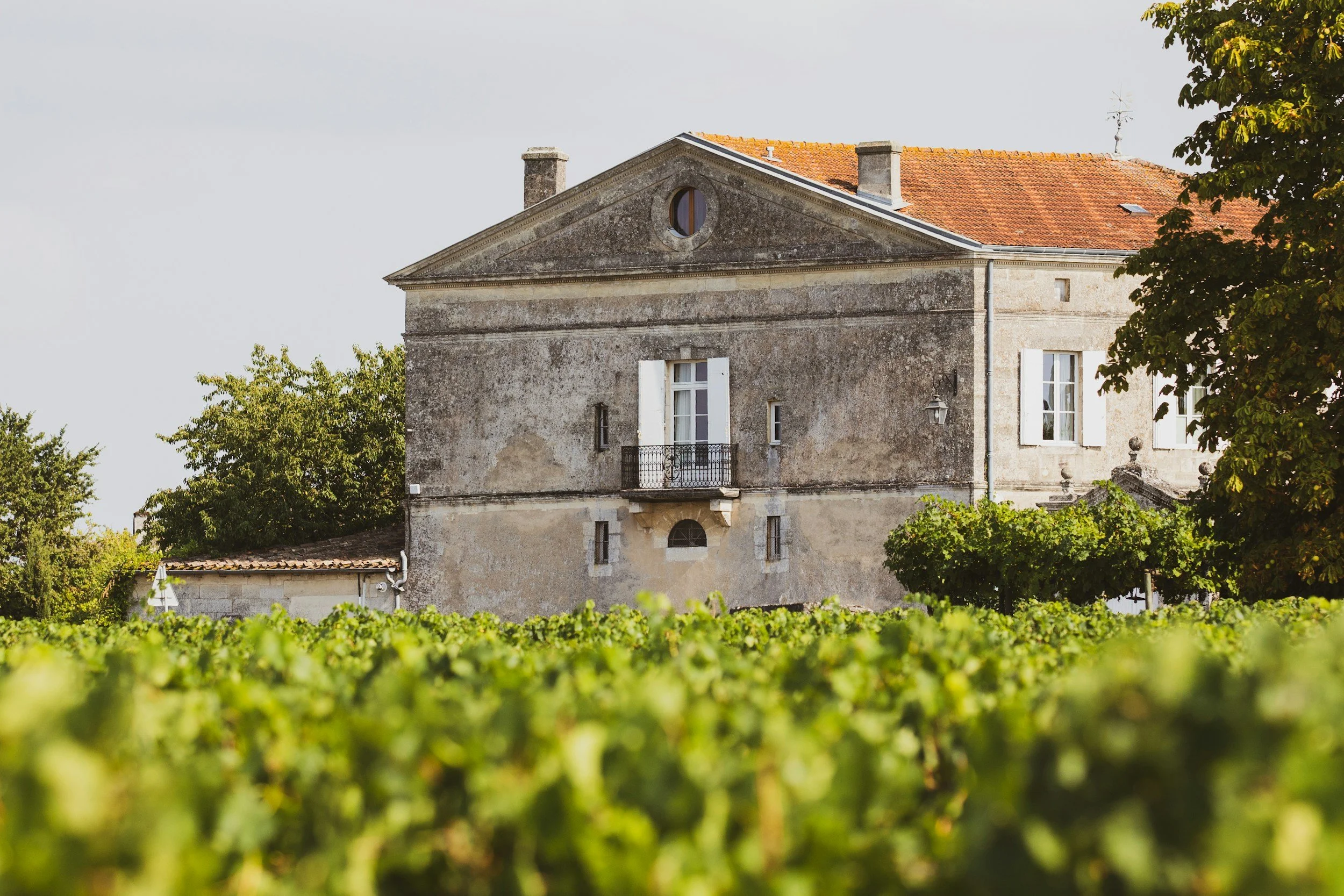
A few things people often don't notice until they're already here
Some of the nicest details in Chablis aren't the sort of things you'd ever plan a trip around, but after a day or two they become part of what you remember.
Walk up Chemin des Clos early in the morning and you'll hear the bells from the Church of Saint-Martin carrying surprisingly far across the vineyards. There aren't many other sounds apart from birds, the occasional tractor climbing slowly between the rows and people calling to each other across neighbouring parcels.
If you've got your eyes on the ground rather than the view, you'll probably start spotting tiny fossil shells mixed into the pale limestone. They're everywhere once you notice them, and after spending a weekend here it's difficult not to think about them every time someone describes Chablis as tasting "mineral."
The roads above Les Clos are worth wandering without any particular destination in mind. Some lead to viewpoints across the valley, others simply end beside another vineyard, but they're usually much quieter than the main paths closer to town. During harvest, the air often carries the sweet smell of freshly crushed grapes long before you reach a winery, and it's not unusual to stop for a couple of minutes while another tractor pulls past with a trailer full of fruit.
Keep an eye on the front doors as you pass through villages like Préhy or Chichée. Quite a few family domaines still have nothing more than a small brass plaque or a handwritten Dégustation sign outside the house. If you didn't know what you were looking for, you'd probably walk straight past.
Back in the centre, there are little reminders that Chablis is still a working town rather than somewhere built around visitors. Shutters close over shop windows during lunch, locals arrive at La Chablisienne carrying cardboard cases instead of buying a single souvenir bottle, and by early evening you'll often see neighbours chatting across the street while someone cycles home through the square with a baguette balanced in the basket.
None of these things are landmarks, but together they're part of what gives Chablis its character!
If Chablis feels a little too well known, these quiet villages offer a completely different side of rural France.
If this weekend has convinced you that two nights is never enough, these French food weekends are the next places I'd be looking at.
Chablis is just as much about lunch as the tasting
One thing you'll notice surprisingly quickly is that nobody seems to be in much of a hurry to eat in Chablis.
Breakfast isn't really something that happens in cafés the way it does in Paris. Instead, people drift into Maison Colas or one of the other bakeries scattered around the centre, leave with a warm baguette tucked under one arm or a paper bag full of pastries under the other, exchange a few words with whoever is behind the counter and carry on with their morning. Around half past eight you'll see vineyard workers doing exactly the same thing before disappearing out towards Préhy, Fyé or the Grand Cru slopes, while visitors stand outside trying to decide whether they should start the day with coffee or head straight for their first tasting.
Friday morning is when Chablis feels most local. By the time the market is in full swing, Place Charles de Gaulle is full of people weaving between the stalls with shopping trolleys, wicker baskets and paper bags from the bakery. You'll find bunches of asparagus in spring, strawberries and cherries once summer arrives, jars of honey from nearby producers, wheels of Soumaintrain and Époisses, fresh goat's cheese, saucisson and the unmistakable queue forming beside the roast chicken van long before lunchtime.
If Friday's market ends up being your favourite part of the weekend, you'll probably lose an hour reading about these market towns too.
It's also one of the easiest places to spot the difference between people visiting Chablis and people who live here. Visitors are deciding which bottle to take home or stopping to sample cheese, while locals are buying bread, fruit and whatever they'll be cooking that evening before carrying on with the rest of their day.
Quite a few lunches start here without much planning. A wedge of Soumaintrain wrapped in paper, a warm baguette from Maison Colas, a few slices of jambon persillé and whatever fruit happens to be in season are often enough. By the time you've crossed the River Serein and found a bench or a quiet patch of grass, you've put together a lunch that feels far more connected to the place than booking another table.
You could easily end up skipping a restaurant altogether after the Friday market. A wedge of Soumaintrain wrapped in paper, a few slices of jambon persillé, still-warm bread from Maison Colas and whatever fruit is in season are more than enough for lunch. Walk a couple of minutes down towards the River Serein or find a bench once you're up among the vines and you've got a meal that's hard to beat. It's also one of the easiest ways to slow the day down a little, especially if you've already got a winery booked later in the afternoon.
If you do book a table, lunch often becomes the longest part of the day. Le Bistrot des Grands Crus changes its menu regularly depending on what's available, so you might find asparagus with hollandaise in May, trout from the surrounding rivers a few weeks later or mushrooms and richer Burgundy dishes once autumn arrives. Au Fil du Zinc is somewhere people happily settle in for a while rather than eat quickly and move on. The dining room isn't large, the service never feels rushed and it's quite common to realise you've been sitting there for two hours without really noticing. Hostellerie des Clos has been part of Chablis for generations and still feels like somewhere people come because they enjoy the cooking, not because it's the restaurant everyone says you should visit.
One thing that surprised me was how often food and wine overlap without either one taking centre stage. Someone orders oysters because they're in season, another table shares gougères before lunch arrives, and bottles are chosen because they suit what's on the plate rather than because they're the most expensive on the list. By the second day, you stop thinking about "wine tastings" and "restaurant meals" as separate parts of the weekend. They naturally run into each other.
The classic pairing everyone talks about is oysters with Chablis, and after seeing it on so many menus it's difficult not to become curious! It sounds almost odd at first, considering you're nowhere near the sea, but once the plate arrives it starts to make sense. The wine is bright, crisp and almost salty in its freshness, and suddenly you understand why restaurants have been serving the combination for generations rather than because it makes a good photograph.
By six o'clock, Chablis starts feeling like a different place again. The last visitors drift out of the tasting rooms, shutters come down over a few of the independent shops around Place Charles de Gaulle and the little queue outside La Chablisienne grows as people stop in to collect a bottle they tasted earlier in the day before it closes. It's a small detail, but you'll notice plenty of cardboard wine carriers tucked under people's arms as they make their way back towards their hotels.
Dinner rarely begins particularly early. Restaurant terraces at Au Fil du Zinc, Le Bistrot des Grands Crus and Hostellerie des Clos gradually fill up, while Rue Auxerroise becomes quieter apart from the occasional couple wandering back from the vineyards. If you've spent the afternoon walking up Chemin des Clos, you'll probably recognise a few familiar faces from William Fèvre or Domaine Laroche sitting a couple of tables away. Chablis is small enough that the same people seem to cross paths throughout the weekend without really planning to.
Once the sun starts dropping behind the hills, it's worth taking one last walk before the light disappears. The climb back towards the Grand Cru vineyards is much quieter than it was in the middle of the day, and from the little roads above Les Clos you can look back across the rooftops towards Saint-Martin, with the River Serein catching the last of the evening light below. It's also the time when the working side of the vineyards becomes most obvious. Vineyard workers are locking gates, tractors head back towards the villages after a day's work and the smell drifting from open cellar doors changes depending on the season. During harvest it's sweet and unmistakable, while at other times of year it's simply cool stone, damp earth and old oak barrels.
Back in the centre, nobody seems to be rushing anywhere. A couple linger over dessert outside Au Fil du Zinc, someone walks into Maison des Vins de Chablis for one last bottle before closing, and a group sitting beside you suddenly starts debating whether tomorrow should be spent around Préhy or driving out to Noyers-sur-Serein instead. That's probably the point where Chablis stops feeling like somewhere you've come to taste wine and starts feeling like somewhere you'd happily come back to without making many plans at all.
If you're planning to bring a few things home, Friday morning is easily the best time to shop. The market is the obvious place for seasonal fruit, local honey, Soumaintrain and Époisses cheeses, country pâtés and charcuterie, but it isn't the only option. Maison Colas is somewhere you'll probably return to more than once over the weekend, whether that's for a warm baguette before a vineyard walk or a few gougères to nibble with a bottle later in the day.
Wine is a little different. Buying directly from a domaine is part of the experience, especially if you've just spent an hour talking with the winemaker, but if you'd like to compare several producers in one place, the shop at La Chablisienne is a good stop before heading home. You'll find wines from across the appellation, from Petit Chablis through to Grand Cru, and it's much easier to compare styles without driving between different wineries.
If mustard is on your shopping list, don't expect the town to be full of specialist mustard boutiques in the way Dijon is. You'll usually find a small selection of Burgundian mustards in local épiceries, delicatessens and wine shops, but Chablis is much more about bringing home things produced in and around the vineyards. A wedge of Soumaintrain wrapped in paper, a jar of honey from one of the Friday market producers, a box of gougères that's somehow still warm from Maison Colas or the bottle you couldn't stop thinking about after a tasting all feel like natural things to take home. Most people leave with at least one cardboard wine carrier tucked under an arm, and it's quite common to see boots full of wine boxes being carefully packed before the drive home rather than souvenir bags.
After a couple of days, it's difficult to separate the food from everything else you did. Lunch at Le Bistrot des Grands Crus leads to a walk through the vineyards. A stop at the Friday market turns into an impromptu picnic beside the River Serein. Someone at the next table recommends a producer in Préhy, and suddenly that's where you're heading instead of back to the hotel. Looking back, it's usually those small detours you remember first, not whether lunch was on Friday or Saturday or which bottle ended up being your favourite.
If lunch is just as important as the wine, Lot Valley flavours might be your next trip.
Prefer picnics to restaurant reservations? This piece about how to plan a Provence picnic is packed with places you'll want to bookmark.
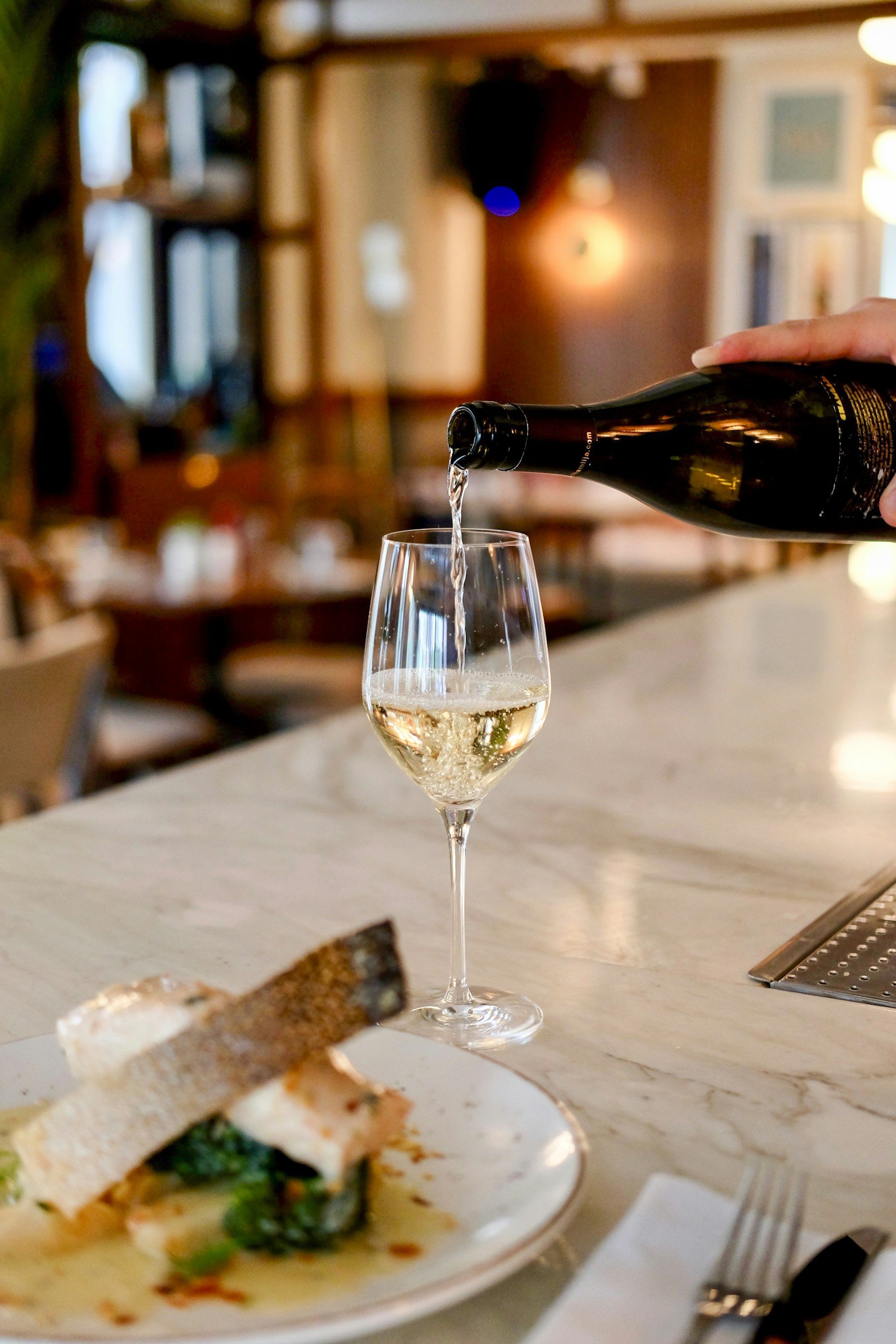
Le Bistrot des Grands Crus
If this article has put you in the mood for another food-and-drink route, Normandy's cider route is a brilliant autumn alternative.
The villages explain the region better than another tasting
After two or three winery visits, something interesting starts happening. You stop paying quite so much attention to what's in the glass and become more curious about where it came from.
That's usually the moment it's worth leaving Chablis for an hour or two.
The villages surrounding the town aren't places where you'll spend an entire afternoon ticking off attractions, but together they explain why this part of Burgundy feels so different from the better-known wine regions further south. The roads are quieter, the distances are short enough that you rarely feel like you're driving anywhere in particular, and almost every village seems to blend into the vineyards rather than sitting apart from them.
Driving west towards Préhy only takes a few minutes, but the landscape begins opening up almost immediately. The valley around Chablis gives way to gently rolling vineyards where the rows of Chardonnay seem to stretch further across the hillsides, broken occasionally by walnut trees, small woodland patches and old stone cabottes that once gave vineyard workers somewhere to shelter during bad weather. Domaine Jean-Marc Brocard sits just outside the village and attracts visitors throughout the day, yet once you continue past the winery the atmosphere changes surprisingly quickly. You'll pass the mairie, the village church and neat limestone houses with climbing roses around their front doors before finding yourself on roads where you're more likely to slow down for a tractor than another tourist.
Fyé feels even quieter.
There isn't much here in the traditional sightseeing sense, and that's really the point. You don't come to Fyé because someone told you there's one thing you have to see. You come because the roads around the village are lovely to wander, especially if you've got a bike or simply feel like taking the long way back towards Chablis. In late spring the verges fill with wildflowers, the vines begin turning bright green and every now and then you'll come across a hand-painted Dégustation sign outside a family home that wouldn't stand out at all if you weren't looking for it.
Chichée has a slightly different character again. The village gathers around the Church of Saint-Pierre and an old stone lavoir that quietly reminds you these places existed long before anyone travelled here for wine. It feels lived in rather than preserved, with washing hanging in gardens, vegetable patches behind low stone walls and vineyard equipment parked beside houses instead of hidden away behind visitor centres. During harvest, trailers loaded with grapes rumble slowly through the narrow streets from early morning, and it's not unusual to find a winery closed for lunch with a handwritten note on the door saying they'll reopen later that afternoon.
Continue towards Courgis and you'll notice the vineyards spreading out across different slopes rather than concentrating around one famous hillside. Some of Chablis' Premier Cru vineyards lie in this direction, and walking here feels very different from the Grand Cru slope above the town. The tracks are quieter, there are fewer people stopping for photographs and it's perfectly possible to spend half an hour following vineyard paths without seeing another visitor at all. If you enjoy walking simply for the sake of seeing where a path leads, this part of the region is often more rewarding than the famous viewpoints.
Beine, or Beine-Fère, sits on flatter ground east of Chablis where the vineyards begin giving way to open farmland, cereal fields and pockets of woodland. It's a landscape that feels broader and more agricultural than the valley around Chablis itself, and early in the morning you'll often see more tractors than cars. Several local producers sell honey and fruit directly from their properties during the season, sometimes with nothing more than a small roadside table and an honesty box.
You'll probably also notice that many vineyard roads aren't completely empty, even when there aren't many visitors around. Local growers move constantly between parcels, often with dogs sitting patiently beside them in the passenger seat or waiting quietly at the end of a row while work carries on. They're working roads first and walking routes second, so it's worth stepping aside whenever tractors come through, particularly during harvest.
Not every worthwhile detour revolves around wine.
About fifteen minutes south of Chablis, the vineyards gradually disappear and the road opens into wide fields before the towers of Pontigny Abbey suddenly appear above the trees. The abbey is enormous, yet the village around it remains remarkably understated. Walk through the grounds and you'll hear birds rather than tour groups, while the long avenue of lime trees leading towards the entrance makes it feel more like you've stumbled across it than arrived at one of Europe's largest surviving Cistercian monasteries. It's a lovely place to slow down after a morning of tastings, especially if you've picked up bread, cheese and fruit from the Friday market and fancy an unhurried picnic beneath the trees.
Already planning your next French market weekend? Brocantes & vide-greniers explains where the best treasure hunting actually happens.
If you've got another hour to spare, continue on to Noyers-sur-Serein. Unlike the villages closer to Chablis, this isn't a wine village at all, and that's exactly why it rounds off the weekend so well. The vineyards disappear, replaced by medieval gates, timber-framed houses leaning gently over narrow lanes and little squares where locals stop for coffee rather than sightseeing. Most visitors never venture much further than Place de l'Hôtel de Ville, but it's worth wandering down Rue des Vignes towards the old ramparts, where the crowds thin out surprisingly quickly. There are small galleries tucked behind heavy wooden doors, independent craft shops selling ceramics and linen, and cafés where nobody seems particularly concerned if you linger over a coffee for an extra half hour.
By the time you drive back towards Chablis, the region starts making much more sense. You realise it was never really about finding the next tasting room. It's about understanding that the vineyards are only one part of everyday life here, woven between villages where people still buy bread from the local bakery, stop to chat outside the mairie and carry on much as they always have, whether anyone happens to be visiting or not.
Still deciding which Burgundy town feels most like you? Semur-en-Auxois couldn't feel more different from Chablis.
If you're heading south afterwards, don't overlook Tournus. It's one of those places people often wish they'd allowed another night for.
The practical things you usually only figure out once you're there
Chablis is one of those places that looks incredibly straightforward on a map. Everything seems close together, the centre is tiny and most of the villages are only a few kilometres away, so it's easy to think you'll fit far more into a day than you actually will.
If you're arriving by train, you'll come into Auxerre-Saint-Gervais rather than Chablis itself. The journey from Paris is simple enough, but the last stretch catches people out because there's no railway line into the town. Regional buses run between Auxerre and Chablis, although not often enough that I'd leave the connection to chance, particularly on Sundays. Quite a few people simply take a taxi instead. It's only about twenty-five minutes, and if you're staying for a couple of nights it's usually the easiest part of the journey.
After that, the car hardly moves! And that's something I wasn't expecting. Looking at the map beforehand, I assumed I'd be driving constantly between wineries, but unless you're heading out towards Noyers-sur-Serein or Pontigny, most of the weekend happens on foot. You can leave the car near Avenue de l'Obédiencerie or Place du 11 Novembre, wander into the centre, spend the morning around Place Charles de Gaulle and still be walking through the Grand Cru vineyards before you've had time to wonder where the afternoon went.
If you prefer cycling, an e-bike makes a real difference. The roads around Chablis aren't particularly steep, but the climb back from villages like Préhy or Courgis always seems a little longer after lunch than it did on the way out. Most hotels can arrange bike hire if you ask when you book, and it's worth doing that in advance during summer because there aren't rows of rental bikes waiting in the town square.
The wineries also work a little differently from what many people imagine. La Chablisienne, William Fèvre and Domaine Laroche are generally easy places to visit if you've decided on the day, but once you start looking at smaller family domaines, things become less predictable. Quite a few tastings happen in what looks like an ordinary family home or a working cellar rather than a visitor centre, and it's completely normal to ring the bell, wait a couple of minutes and have the person pouring your wine come straight in from the vineyard. Sending an email a few days beforehand almost always leads to a better visit because nobody is trying to squeeze you in between forklifts, deliveries and harvest.
If you're here in September, don't be surprised if a tasting starts twenty minutes late because someone is still out collecting grapes. Tractors towing trailers become part of everyday traffic, the smell of fermenting grapes drifts out from open winery doors and conversations naturally revolve around the weather because everybody is watching the forecast. It's one of the most interesting times to visit, but it also helps to arrive with a bit of flexibility.
If your dates are flexible, it's worth thinking about what sort of weekend you're hoping for rather than simply aiming for good weather. Summer brings longer opening hours at many tasting rooms and you'll find people lingering outside wine bars until late in the evening, while winter is much quieter and conversations with winemakers often last longer simply because there are fewer visitors passing through. Neither season is better. They just feel like two different versions of Chablis.
And something I'd definitely avoid is trying to visit six producers in one day.
It sounds possible because they're all so close together, but Chablis has a habit of slowing you down in the nicest possible way. A tasting that was meant to last forty-five minutes becomes an hour and a half because someone disappears into the cellar to fetch an older vintage, lunch runs longer than expected because nobody is in a hurry to clear the table, then you decide to walk up Chemin des Clos before heading back into town and suddenly it's early evening.
Friday is easily the busiest day in the centre. The market takes over Place Charles de Gaulle, locals arrive carrying shopping trolleys rather than cameras, and by eleven o'clock the queue for roast chicken is often longer than the queue outside some tasting rooms. If you want to pick up Soumaintrain, fresh fruit, pâté or a baguette for lunch, Friday morning is the time to do it.
Sunday feels completely different. After lunch, the streets empty surprisingly quickly, several smaller domaines close for the day and even the cafés seem to wind down a little earlier than you'd expect. If there's a bottle you've been thinking about buying, don't leave it until four o'clock on Sunday afternoon because the producer may already have gone home.
Public toilets are available in the centre of Chablis, but once you're out among the vineyards or exploring the surrounding villages there often isn't another facility until you're back in town or stopping at a winery. It's a small thing, but if you're planning a long walk through the Grand Cru vineyards before lunch, it's worth keeping in mind.
One last thing that's easy to overlook is the weather. Chablis might not look much further north than Beaune, but the evenings often feel noticeably cooler, especially in spring and autumn. It's the sort of place where you'll happily walk through the vineyards in short sleeves all afternoon, then find yourself reaching for a jumper the moment you sit down outside with a glass of wine.
Mobile reception is generally good around Chablis itself, but it occasionally drops for a minute or two once you're walking higher through the vineyards or exploring some of the quieter roads around Courgis and Préhy. It isn't a problem if you're following the main routes, although it's another reason not to rely entirely on Google Maps if you decide to wander whichever vineyard track looks most interesting.
It's surprisingly easy to build an entire trip around places like this. These countryside towns fit together beautifully by rail.
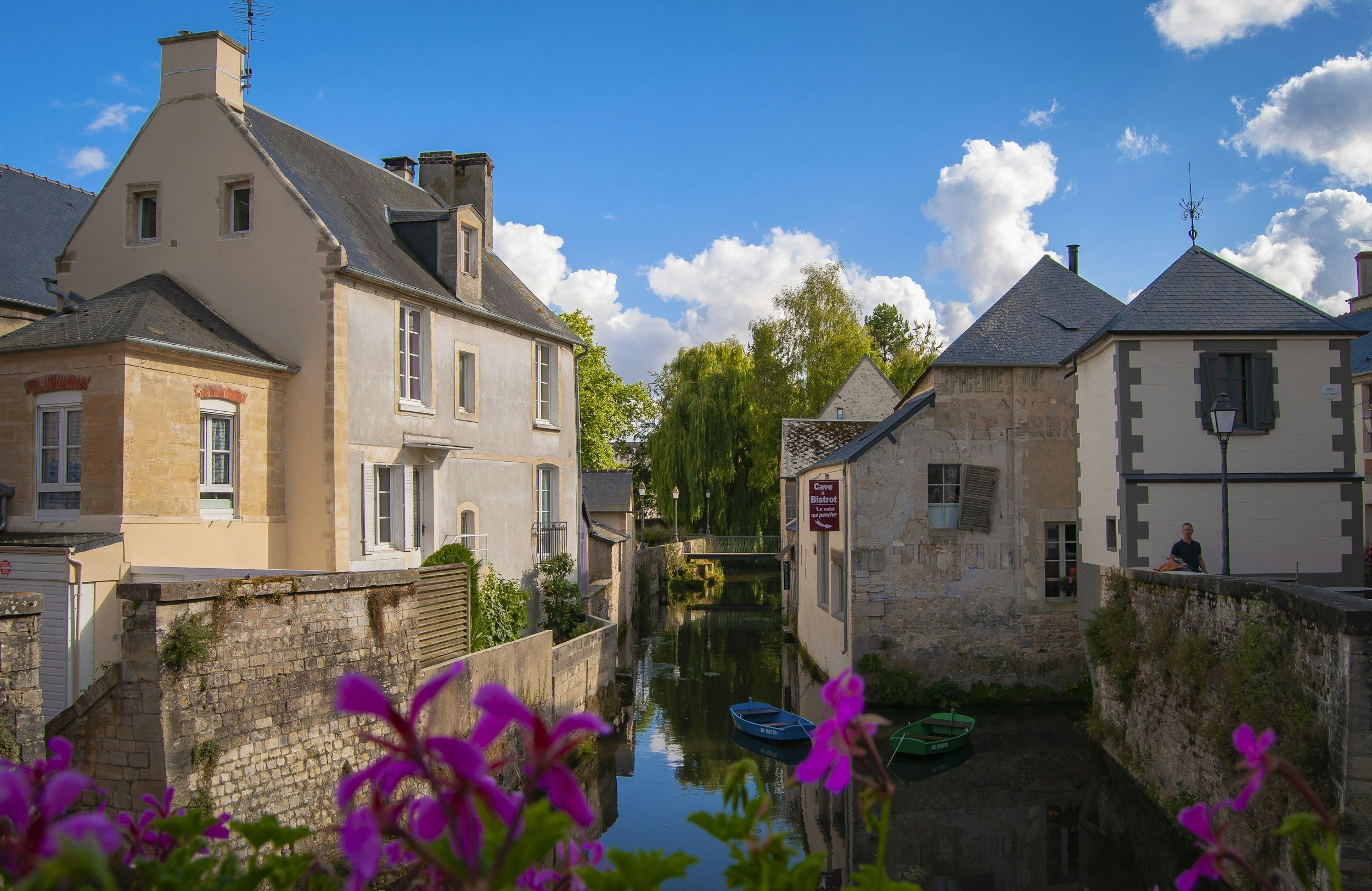
If you've only got one full weekend
If you can arrive on a Friday afternoon, do it.
The market is usually packing up by then, but that's part of the appeal. Stallholders are loading empty crates into vans, a few people are still queuing for bread or cheese before heading home and Place Charles de Gaulle starts looking like a town square again instead of a market. If you've booked somewhere in the centre, it's easy to drop your bags and head straight back out before dinner.
There's no real need to make plans for the first evening. Walk along the River Serein, wander up Rue Auxerroise, have a look inside La Chablisienne if it's still open or simply see where the streets take you. Chablis is small enough that you'll naturally pass most of the places you'll come back to over the weekend, whether that's Maison Colas for tomorrow's breakfast, a restaurant you've already decided to book or a wine shop where you make a mental note to stop before driving home.
Saturday is usually the busiest day of the weekend, but it rarely feels busy once you're up in the vineyards. The centre is lively from mid-morning, especially around the tasting rooms, yet it only takes a few minutes to leave the last houses behind and start climbing towards the Grand Cru slopes. The paths above Les Clos, Vaudésir and Valmur are wide enough to walk comfortably, and every bend gives you a slightly different view back across the rooftops, the church tower and the River Serein below.
It's easy to spend much longer up there than you expected. You stop to read the vineyard signs, watch a tractor working its way slowly along the rows or simply look back towards Chablis from a different angle before carrying on. By the time you head back into town, names that were only ever labels on a wine list have become places you can picture without thinking.
Lunch often sets the pace for the rest of the day. Au Fil du Zinc and Le Bistrot des Grands Crus both fill up quickly on Saturdays, especially if the weather is good, so booking ahead is worthwhile. If you've picked up bread from Maison Colas and a few things at the Friday market instead, walking down to the River Serein with a simple picnic can be just as enjoyable. Either way, don't expect to be back on the road an hour later. Around here, lunch has a habit of becoming the afternoon.
Afterwards, you've got plenty of options without covering much distance. Préhy is only a few minutes away by car if you feel like visiting another domaine, Pontigny Abbey is close enough for a relaxed detour and, if the weather is on your side, another walk through the vineyards often ends up winning over both. That's one of the nice things about Chablis. The days aren't packed with attractions, but they never really feel empty either.
By late afternoon, most of the tasting rooms have closed for the day and the centre settles down surprisingly quickly. The groups who arrived for lunch have gone, vineyard workers start heading home and you'll notice more people carrying bread than wine as they cross Place Charles de Gaulle. Outside La Chablisienne, there's often a small stream of people collecting the bottles they decided to buy after a tasting, while a few cyclists roll back into town from the Grand Cru vineyards before dinner. It doesn't feel as though the day has ended. It simply slips back into everyday life.
Sunday begins much more quietly. Maison Colas opens early, a handful of people stop for coffee around the square and the bells from Saint-Martin carry across the rooftops before the streets gradually fill again. If there was a bottle you couldn't stop thinking about after Friday or Saturday, it's worth picking it up before setting off because some of the smaller domaines finish earlier on Sundays than they do during the rest of the weekend.
There's usually enough time for one last detour before heading home. Some people drive over to Pontigny Abbey while the roads are still quiet, others take the slower route through Préhy or Courgis to see the vineyards one last time, and quite a few end up back on Chemin des Clos without really meaning to. The view hasn't changed much since yesterday, but somehow it always feels worth stopping again before leaving Chablis behind.
The time of year changes the weekend more than you might expect. In June, people are still sitting outside Au Fil du Zinc long after dinner, the last light hangs over the Grand Cru vineyards well into the evening and it's hard not to take one more walk before heading back to the hotel. Come back in November and you'll find a completely different Chablis. The vines are bare, morning mist often lingers over the River Serein, fireplaces are lit inside Hostellerie des Clos and conversations in the tasting rooms tend to last a little longer simply because there are fewer people passing through.
By the time you're ready to leave, you'll probably have a couple of bottles in the boot, a paper bag from Maison Colas on the passenger seat and a list of producers or villages you never quite found time for. Maybe someone recommended a small domaine in Préhy after lunch, or perhaps you drove past Courgis and thought you'd stop on the way back, only to realise there wasn't enough time. That's usually how weekends in Chablis end. Not because you've seen everything, but because you've already started thinking about what you'll come back for next (at least that’s what I did…).
Not every French wine weekend feels the same. Bordeaux solo shows just how different another wine region can be.
If Chablis has you wondering whether Beaune is actually the better base, where to stay makes the decision much easier.
FAQs about visiting Chablis
Is Chablis better as a day trip or somewhere to stay for the weekend?
If all you want is a tasting and lunch, a day trip works perfectly well. That's how a lot of people experience Chablis. Staying for two nights, though, gives you a completely different picture of the region. You have time to walk through the Grand Cru vineyards when they're quiet, browse the Friday market, visit a couple of smaller villages and enjoy dinner without watching the clock because you've still got another morning ahead of you.
Can you walk between the wineries in Chablis?
Some of them, yes. If you're staying in the centre, it's easy to walk to places like William Fèvre, Domaine Laroche and La Chablisienne, and the Grand Cru vineyards are only fifteen or twenty minutes away on foot. The smaller family domaines are more spread out, particularly around villages like Préhy and Chichée, so you'll either need a car, an e-bike or be happy to walk a little further through the vineyards.
Which wineries should I book before arriving?
The larger producers are usually the easiest if you're making plans at the last minute, but smaller family domaines often prefer appointments because they're working wineries rather than visitor attractions. If there's somewhere specific you'd like to visit, sending an email a few days beforehand almost always leads to a more relaxed tasting than hoping someone happens to be free when you arrive.
Are wineries in Chablis open on Sundays?
Some are, but opening hours vary much more than many visitors expect. Larger producers often continue welcoming visitors on Sundays, while smaller domaines may only open in the morning or close altogether. If you're travelling over a weekend, it's worth doing most of your wine shopping on Friday or Saturday rather than assuming every cellar door will still be open late on Sunday afternoon.
Do you need a car in Chablis?
Not if you're only planning to explore the town itself. Chablis is compact enough to discover on foot, and the Grand Cru vineyards are surprisingly close to the centre. A car becomes useful once you want to visit villages like Courgis, Pontigny or Noyers-sur-Serein, or if you're hoping to call in at several wineries scattered around the surrounding countryside.
Where is the best place to stay in Chablis?
If it's your first visit, staying in the historic centre makes the weekend much easier. You'll be within walking distance of the restaurants, wine shops, tasting rooms and the River Serein, and you can head out into the vineyards without needing to move the car. Staying just outside town works well if you're travelling by car and prefer a vineyard setting, but you'll probably end up driving into Chablis for dinner.
Is the Friday market worth planning your trip around?
Definitely. The market changes the atmosphere of the whole town. Instead of visitors moving between wineries, you'll find locals filling shopping bags with seasonal vegetables, flowers, fresh bread, Soumaintrain cheese, charcuterie and fruit. It's also one of the nicest mornings to put together a simple picnic before heading out into the vineyards.
Which villages near Chablis are actually worth visiting?
If you've already explored Chablis, I'd head towards Préhy, Chichée and Courgis before anywhere else because they give you a much better feel for everyday life in the vineyards. Pontigny is worth the short drive for its extraordinary abbey, while Noyers-sur-Serein is ideal if you'd like to spend an hour wandering medieval streets, browsing independent shops and stopping for coffee before heading home.
What's the best time of year to visit Chablis?
Late May and June are wonderful if you enjoy walking because the vineyards are lush and the days are long. September is fascinating for a completely different reason, with harvest bringing constant activity to the wineries and vineyard roads. October is quieter again, with autumn colours spreading across the valley and cooler evenings that are perfect for long dinners. If your dates are flexible, I'd simply avoid planning around Monday, when more restaurants and shops tend to close.
What should you eat in Chablis besides drinking the wine?
Start with whatever is in season rather than searching for one signature dish. You'll come across Soumaintrain cheese, gougères, jambon persillé and country pâté throughout the weekend, while spring often brings local asparagus and many restaurants serve freshwater trout from the region. If you've never tried oysters with a glass of Chablis, it's one of those combinations that's famous because it genuinely works rather than because it's traditional.
Is Chablis or Beaune a better choice for a weekend?
That depends on what you're looking for. Beaune has more shops, more restaurants and more going on in the evenings. Chablis feels much smaller, the vineyards begin almost at the edge of town and it's easier to slow down without feeling like you're missing anything. If your ideal weekend includes wandering through vineyards, discovering little villages and lingering over lunch, Chablis usually suits that style of trip better.
Is Chablis busy in summer?
It can feel surprisingly busy between late morning and mid-afternoon, especially on Fridays and Saturdays when coach tours and day visitors arrive for tastings and lunch. Stay overnight and you'll see a different side of the town. Once the day-trippers leave, the centre becomes much quieter, the vineyard paths empty out and dinner feels far more relaxed than it does at lunchtime.