
Is Tournus worth stopping for between Lyon and Dijon?
You’re on the train between Lyon and Dijon, watching the stops come up and trying to decide if it’s worth getting off anywhere before you reach your destination. Mâcon feels like the practical option. Beaune is the one everyone knows. Then Tournus appears in between, smaller, quieter, and not quite on the main route unless you’ve chosen a regional train on purpose.
This is usually where the hesitation starts. Not because there’s nothing there, but because it’s unclear what kind of stop Tournus actually is. Whether it’s somewhere you step off for a couple of hours and feel glad you did, or somewhere that ends up feeling like a pause that didn’t add much.
This guide looks at Tournus exactly from that moment on the train. What it’s like to arrive, how much there is once you’re there, what changes depending on the time of day, and whether it fits naturally into the Lyon–Dijon route or interrupts it. If you’re deciding whether to stay on the train or get off here, this will give you a clear answer before you commit.
Getting from Lyon to Tournus (train timings, road exit, and what it feels like in practice)
From Lyon, Tournus is just far enough to feel like a proper break in the journey, but not far enough that you’d plan a full day around it.
On the train, you leave from Lyon Part-Dieu and switch to a TER regional line heading toward Dijon or Chalon-sur-Saône. The journey usually takes just under an hour, but what matters more is the spacing between trains. You don’t get constant departures here. Midday, there might be one train every hour, sometimes longer gaps. If you’re thinking of getting off in Tournus for a couple of hours, it’s worth checking the next northbound departure before you step off, because the station itself is quiet and there’s nothing around it if you end up waiting.
When you arrive, you step out onto a small platform with a single station building. No café, no luggage lockers, just a timetable board and a few benches. From there, you walk straight down Avenue du 23 Janvier, pass a couple of low apartment blocks, and within about 8–10 minutes you’re crossing into the older part of town near Rue Gabriel Jeanton. Most people end up reaching Place de l’Abbaye without really thinking about the route.
If you’re carrying a suitcase, you’ll feel it on that walk. The pavements are fine, but once you get closer to the centre, the streets narrow and become slightly uneven in places. It’s manageable, just not something you ignore.
Driving is easier. You stay on the A6 from Lyon, take the Tournus exit, and within a few minutes you’re near the river. Most people park along Quai de Verdun or in one of the small lots just behind it. From there, it’s a short walk straight into the centre, and you’ll see the abbey almost immediately.
The key thing to understand is that Tournus works because it sits directly on this northbound route. It’s not a place you drive out to from Lyon and back again just for the afternoon. It makes sense when you’re already moving between places and want to break the journey somewhere that doesn’t take effort to reach or navigate once you’re there.
Planning to repeat this kind of stop a few times on the same trip? It’s worth checking which Eurail pass actually covers these slower regional routes without overpaying.
Mâcon, Tournus or Chalon-sur-Saône
Coming from Lyon, Mâcon is the first place that feels like a “proper” stop. You step out at Gare de Mâcon Ville and within a few minutes you’re already in a busier part of town. Walk straight down toward the river and you hit Quai Lamartine, where there’s a continuous stretch of cafés and terraces. Even mid-afternoon, places like Café de la Paix or the brasseries along the quay are still open, people are sitting outside, and you don’t have to think about where to go next. You can keep walking along the river, cross the bridge toward Île Saint-Laurent, or head back into streets like Rue Carnot where shops stay open later than you expect.
Tournus doesn’t give you that same flow. When you get off at Gare de Tournus, the walk in is quieter from the start. You follow Avenue du 23 Janvier, pass a pharmacy, a couple of low buildings, and then you’re suddenly near Rue Gabriel Jeanton without much build-up. Within a few minutes, you’re in front of the abbey on Place de l’Abbaye, and that’s where almost everything happens. There are a few places to sit, maybe a table outside near Aux Terrasses or one of the smaller cafés nearby, but once you’ve walked those streets, you don’t really “continue” anywhere else. If something is closed, like the bakery on the corner or one of the wine shops, you notice it straight away because there isn’t another street full of options around the corner.
Chalon-sur-Saône feels different again. When you arrive there, you don’t land directly in the centre. You walk a bit longer from the station, cross over toward the old town, and then it opens up around Place Saint-Vincent and the cathedral. From there, streets like Rue de Strasbourg and Rue aux Fèvres stretch out in different directions, with more shops, more restaurants, and more people moving through. You can sit down somewhere near the square, then walk another 10 minutes and end up in a completely different part of town without retracing your steps. There’s also more along the river here, especially closer to the marina, and it feels like somewhere you could stay for the afternoon without watching the clock.
The difference becomes obvious the moment you look at your train times and the time of day you’re arriving. If you get off in Mâcon mid-afternoon, you don’t really need a plan. You can walk down to Quai Lamartine, find somewhere open, and stay longer than you expected without thinking about it.
If you arrive around 15:00 in Tournus, you’ll notice straight away that a few places are already closed or between services. You might walk through Rue Gabriel Jeanton, circle around the abbey, and realise you’ve seen most of it sooner than planned. That’s not a problem if you expected a short stop, but it can feel slightly flat if you thought you’d stretch it into an afternoon.
Chalon sits somewhere else entirely. You can arrive at the same time, walk into the centre near Place Saint-Vincent, and still have enough open streets, shops, and places to sit that you don’t keep checking the clock.
In practice, Tournus is the stop you choose when you already know you’re only getting off for a couple of hours. It works when you’ve looked at your route, seen a gap between trains, and thought it would be a good place to step out, walk a bit, eat, and continue north. It doesn’t really carry the day on its own in the same way the other two can, and that’s the part that’s easy to miss when you’re just looking at the map.
Continue east from here and the whole pace changes, this wine weekend in Bugey shows what a stay looks like when you don’t move on after two hours.
Do you naturally pass Tournus or do you have to plan it in?
Most people don’t pass through Tournus without thinking about it first.
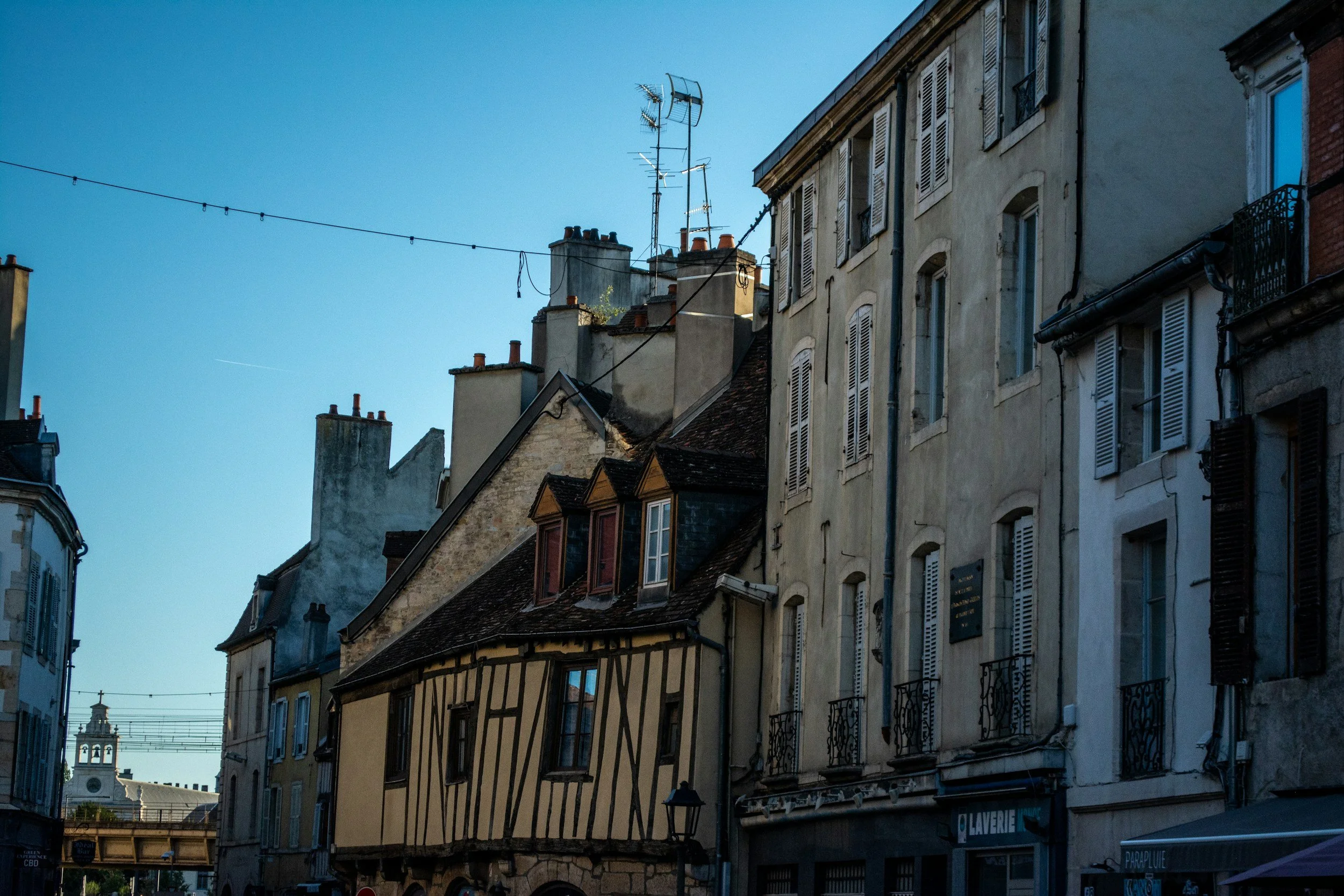
If you’re taking the direct TGV between Lyon and Dijon, you won’t go anywhere near it. The high-speed line skips this stretch completely, so Tournus only appears as an option if you’ve already decided to take a slower regional route or break the journey on purpose.
Even on TER trains, it depends on the service you choose. Some run straight through with a short stop, others require a change in Mâcon. It’s not complicated, but it’s not the kind of place you end up in by accident while browsing tickets.
You usually notice it when you’re looking at the map more closely. You see Lyon at the bottom, Dijon further north, and then these smaller stops in between. Mâcon stands out first because it’s larger. Tournus comes up next, slightly off to the side, and that’s where you start wondering if it’s worth getting off.
If you’re driving, it’s easier to include. The A6 runs right past it, and the exit for Tournus is only a few minutes from the centre. You don’t need to navigate small roads or go out of your way once you leave the motorway. But even then, it’s still a conscious decision. You don’t stop here unless you’ve already decided to break the drive somewhere between Lyon and Dijon.
Heading toward Lake Annecy next and unsure where to base yourself? This Talloires vs Annecy breakdown makes the choice quicker than scrolling through maps.
Arriving in Tournus by train or car
From Gare de Tournus, it’s about a 9–10 minute walk into the centre, and there’s really only one way to do it. You step off the train and it’s quiet straight away. Not in a charming way, just… nothing really happening. Walk straight down Avenue du 23 Janvier, then continue until it turns into Rue Gabriel Jeanton, which leads directly to Place de l’Abbaye. The station is small, and once the train leaves, it empties out quickly. No café, nowhere to sit properly, no obvious sign pointing you somewhere interesting.
The only place most people pause is just before the square, where Boulangerie La Tournusienne sits on the corner. If you arrive before midday, it’s usually open and it’s the easiest place to grab something quick before everything slows down later in the afternoon.
If your train gets in around 11:30–12:30, you walk straight into lunch at places around the square, sit down, and the stop feels easy. If you arrive closer to 15:00, the bakery is usually closed, restaurants are between services, and you’re left with fewer options than you’d expect.
Also worth knowing before you get off: there’s no luggage storage at the station, and nothing in the centre either. If you have a suitcase, you’ll take it with you the whole way. The walk itself is flat, but the ground around the abbey is slightly uneven, so it’s manageable, just not smooth.
So practically, this walk is less about getting into town and more about setting up the stop. You’re either walking into a place where things are open and it works easily, or you’re walking into a very quiet square with limited options and a bit more time to fill than you planned.
First impressions walking through tournus (stone streets, river, and pace)
At some point, usually after you’ve walked around the abbey and the square once, you’ll start wondering if it’s worth heading down to the river. It looks close on the map, and it is. From Place de l’Abbaye, you just drift downhill, most people end up on Rue de la République without really choosing it, and a few minutes later you’re on Quai de Verdun.
What you get when you arrive is very simple. A wide stretch of the Saône, a row of trees, a couple of benches, and a road running alongside it. No cafés along the water, no obvious place that pulls you in. It’s noticeably quieter than the square, and that shift is immediate.
Most people walk a little in one direction just to see if something changes. If you head toward Pont de Tournus, it’s worth stepping onto the bridge for a minute. That’s the only place where the view really opens up, looking back over the river and the line of trees along the quay. It’s not marked as a viewpoint, but it’s the closest thing you’ll get here. If you go the other way, the path continues but nothing new really appears, so most people turn back quite quickly.
There aren’t any cafés or shops directly along the river, which is why it works better if you’ve already picked something up before coming down. The easiest option is to stop near the square first. Boulangerie La Tournusienne on Rue Gabriel Jeanton is the obvious one for something quick, especially earlier in the day. If you want to sit down first, somewhere like Aux Terrasses just off Place de l’Abbaye works, and then you walk down afterward. Without that, you tend to arrive at the river, look around, and head back up again within a few minutes.
If you happen to be in Tournus on a Saturday morning, the Marché de Tournus changes things slightly. It takes place around Place de l’Abbaye and spreads into the surrounding streets, including parts of Rue de la République leading down toward the river. On those mornings, the walk feels more connected, with stalls, people moving between the square and the lower streets, and a bit more energy overall. Outside of market hours, the riverfront sits completely separate from everything else.
Mid-afternoon, especially around 15:00, it can feel almost too quiet after the square, because you’ve left the only part of town with some movement. Later in the day, closer to early evening, it feels more natural to come down, sit for a few minutes, and then head back up.
In practical terms, you’re not spending long here. Fifteen to twenty minutes is enough to walk down, go up onto the bridge, pause briefly, and return to the centre. It fits easily into a short stop, but it doesn’t add much if your timing is already tight….
The streets around the abbey (where you actually end up walking once you’re there)
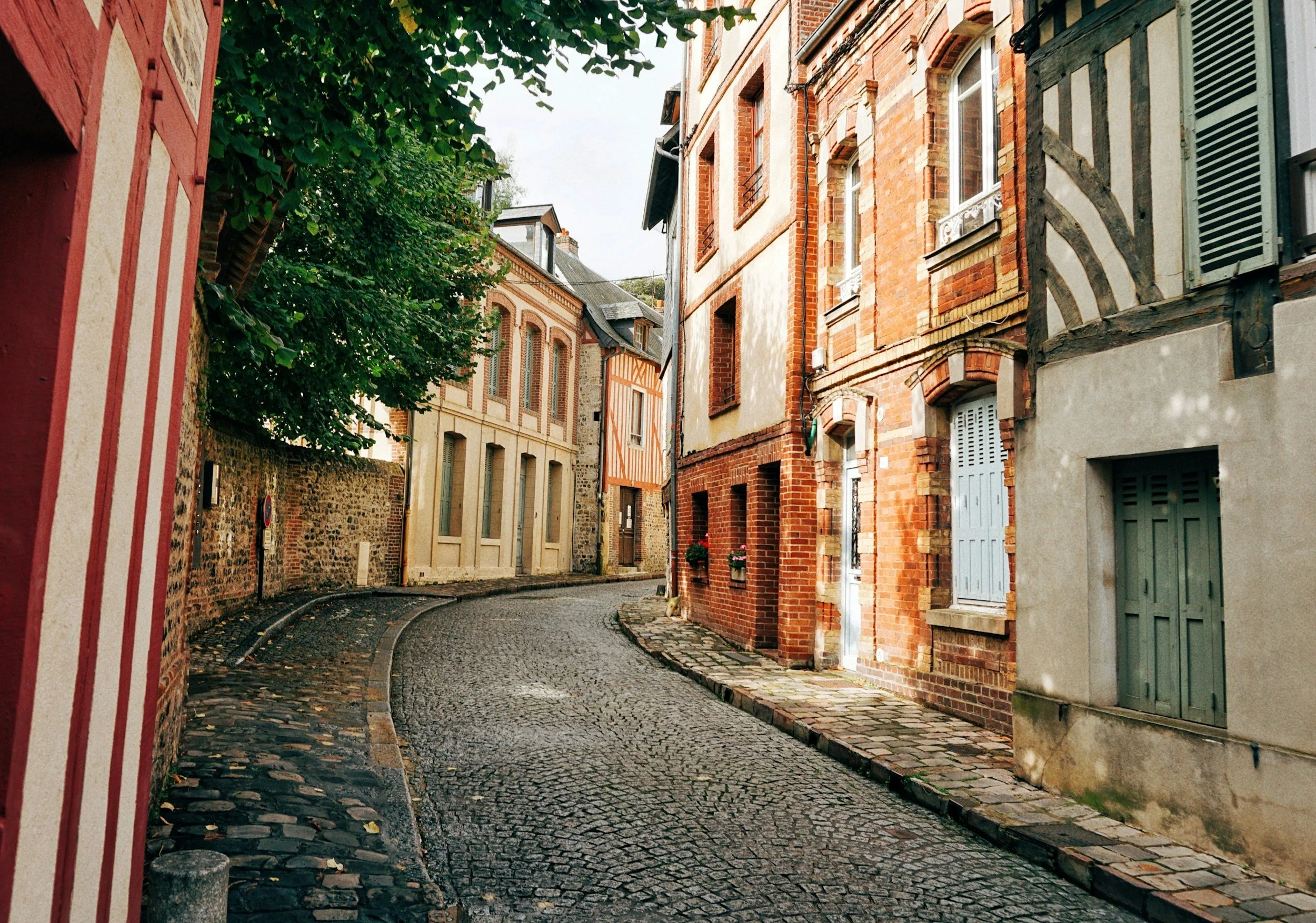
Once you’ve reached Place de l’Abbaye, the rest of your time in Tournus mostly plays out in a small loop without you really planning it.
You’ll head off in one direction, usually along Rue Gabriel Jeanton, because it looks like the main street, then drift into Rue de la République, maybe cut through one of the smaller side streets like Rue Greuze, and within a few minutes you’re back at the square again. It doesn’t feel like you’ve “done a loop,” but you have.
What stands out here isn’t a specific sight or street, it’s how quickly you stop making decisions. You don’t need a route, and you don’t really look at a map. You just walk, turn when something catches your eye, and then realise you’ve already come full circle.
There are small details you notice more because of that. A wine shop with a couple of bottles set out by the door, a chalkboard menu that changes depending on the day, a café that looks open from a distance but isn’t. Things you might overlook in a larger town become more visible here simply because there’s less competing for your attention.
If you go out a bit further, the streets shift almost immediately into residential. Shutters down, quiet corners, no reason to keep going unless you’re deliberately trying to extend the walk. Most people turn back at that point without thinking about it.
So the way you move through Tournus isn’t about exploring different areas, it’s more about circling the same few streets from slightly different angles. You pass the same corners again, notice something you missed the first time, and then naturally end up back at the abbey without planning to.
Abbaye Saint-Philibert and how central it feels to the town
You end up at Place de l’Abbaye almost without trying, and once you’re there, everything else falls into place around it. The abbey isn’t just something you visit, it’s what your whole stop ends up revolving around.
Most people go into the abbey within a few minutes, partly because it’s right in front of you and partly because there isn’t anything else competing for your attention. Inside, it feels different from what you might expect if you’ve been through other towns in Burgundy. It’s darker, heavier, and more stripped back. Thick stone columns, a lower ceiling than you think, and a space that doesn’t try to hold you for long. You walk through, pause here and there, and after about 20 minutes you’ve seen it without needing to follow anything specific.
When you come back out, you’re straight into the square again, and that’s where you decide what the rest of your stop looks like.
If it’s around lunchtime, the square works well. A few tables are filled, people are sitting outside near Aux Terrasses, and there’s just enough movement between the restaurant and the bakery to make it feel like something is happening. You might grab a table, or you might walk across to Boulangerie La Tournusienne, pick something up, and sit nearby for a few minutes before moving on.
If you come out of the abbey later, around 15:00 or so, it feels different. The same places are there, but a few are closed or between services, and the square loses that bit of movement. You’ll notice it straight away, especially if you were expecting to sit down somewhere without thinking about it.
What ends up happening is fairly predictable once you’re here. You go into the abbey, come back out, stand in the square for a minute looking around, and then either sit down or start walking again. If you don’t stop, you realise quite quickly that you’ve already seen most of what’s here. If you do stop, even just for a coffee or something small to eat, it changes the pace enough that the whole visit feels more settled.
There isn’t another area you move on to afterwards, so you’ll pass through this square more than once without planning to. It’s the point everything returns to, whether you’re heading down toward the river or back toward the station.
Where to eat in tournus (and if it’s worth stopping here just for food)
Food is the part that decides whether your stop in Tournus feels smooth or slightly off, and it comes down almost entirely to when you arrive.
If you get in around lunchtime, everything works without effort. You walk out of the abbey, look around Place de l’Abbaye, and there are a few obvious options straight away. Aux Terrasses is the one most people notice first, just off the square, and it’s where you go if you want a proper sit-down meal and have time for it. It’s not a quick stop, but it’s reliable.
If you’re not looking for that kind of lunch, you’ll naturally drift a few steps away from the square onto Rue de la République or back toward Rue Gabriel Jeanton, where there are a couple of smaller spots that don’t require planning. These are the places you choose because they’re open and have a few people sitting outside, not because you’ve read about them beforehand. You sit down, eat something simple, and it does exactly what you need it to do.
It changes quite quickly after lunch service ends. Around 14:30, things start closing down, and by 15:00 you’ll feel it properly. You can still walk around, but if you were expecting to just find somewhere open for food, you’ll notice that you’ve missed the window. You might find somewhere for a drink, but not much more than that.
Dinner works differently again. There are fewer places open, and the ones that are tend to expect you to have booked, especially during the week. Aux Terrasses comes up again here, along with a couple of other restaurants tucked into the streets around the centre, but you don’t have the same freedom to just turn up and see what’s available.
So in practice, lunch fits naturally into a stop in Tournus, and dinner only works if you’ve already decided to stay and thought about where you’re going. The gap in between is where most people get caught off guard, especially if they arrive later in the day expecting the same flexibility.
What you’ll actually see on menus in Tournus (and what makes sense to order here)
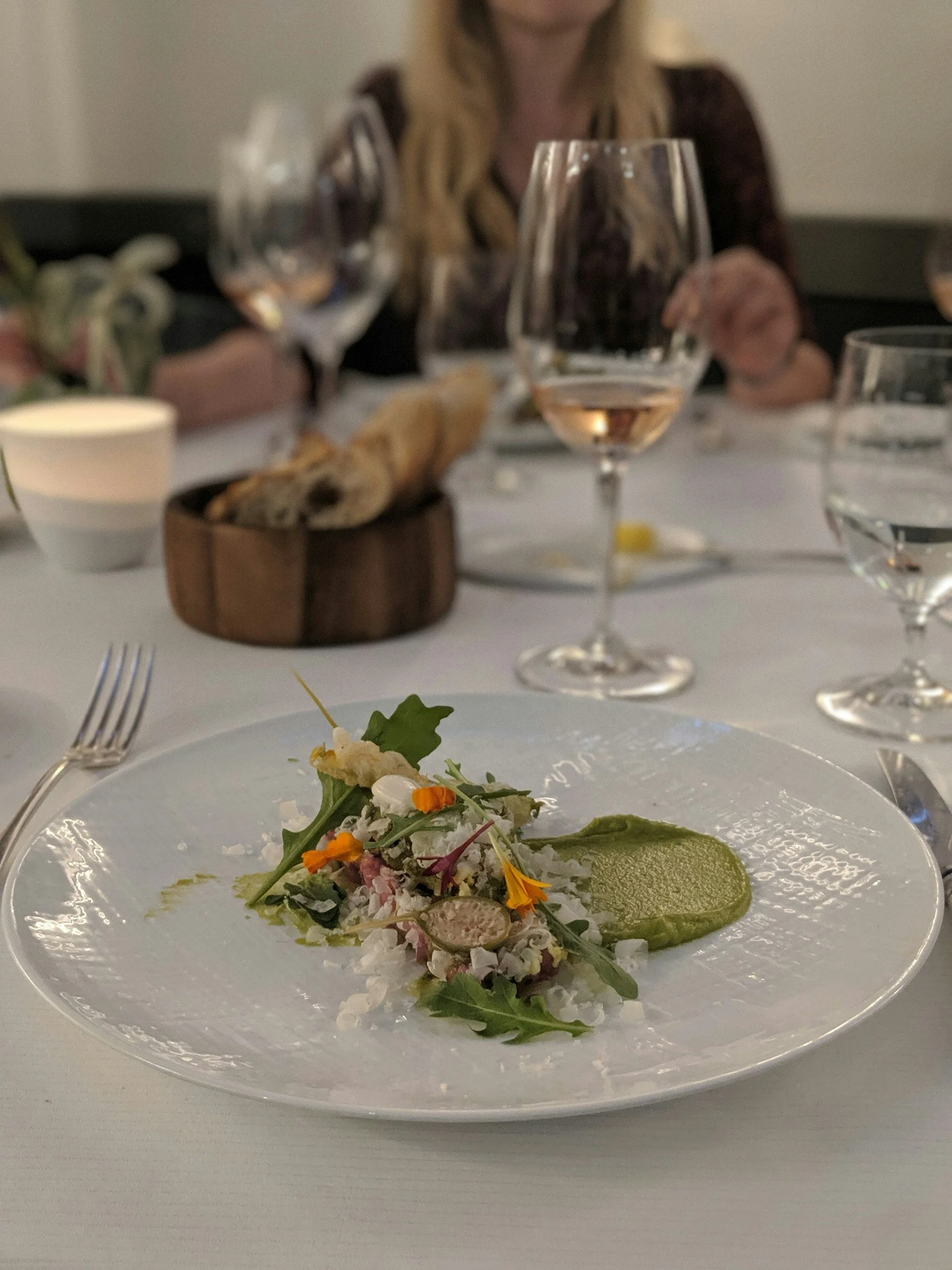
You don’t need to overthink food in Tournus, because most places around Place de l’Abbaye, Rue Gabriel Jeanton, and Rue de la République are working with the same kind of menu. What changes is how much time you have and whether you want to sit down properly or just eat something and keep moving.
If you sit down somewhere like Aux Terrasses, the menu reads exactly like you’d expect for this part of Burgundy. You’ll see boeuf bourguignon, usually listed as a slow-cooked dish, and it really is slow. It’s not something you order if you’ve got one eye on the clock and a train to catch in an hour. It comes out when it’s ready, and you’ll be there for a while.
A more realistic option if you’re stopping between trains is something lighter but still local, like poulet à la crème or a simple piece of fish with a beurre blanc-style sauce. These are the dishes that still feel tied to the region but don’t turn your stop into a long sit-down.
If you don’t feel like committing to a full meal, the smaller places just off the square are where you’ll naturally end up. Along Rue de la République, you’ll usually find a couple of spots offering assiettes with charcuterie and local cheeses. This is where dishes like jambon persillé show up, that pink, slightly translucent terrine with parsley that you’ll see in this part of France. It’s the kind of thing that comes out quickly and works well if you’ve got limited time.
One detail people don’t expect is how similar the menus are from place to place. You’re not walking around comparing wildly different options. You’re more likely to stop at the first place that’s open and has a couple of tables taken, and that usually works out fine.
What a stop in Tournus actually looks like (2 hours vs 1 night)
If you get off the train in Tournus with two hours, it’s surprisingly clear what you’re going to do before you even realise you’ve made a plan.
You walk in from the station, reach the abbey, go inside, come back out, and then you’re standing in the square thinking about food. If it’s around 12:00–13:00, that decision is easy. You sit down somewhere near the square, eat properly, and that becomes the anchor of the stop. After that, you’ve got just enough time to walk a bit, maybe head down toward the river, and then you’re already looping back toward the station without feeling like you’re rushing anything.
It works because everything lines up. Arrival, lunch, short walk, done.
Where it gets less straightforward is when the timing is slightly off.
If you arrive closer to 14:30 or 15:00, you walk into the same square, but it feels different. A few places are closing, others are between services, and you’ve already done the abbey within the first half hour. You end up walking the same streets again, maybe heading down to the river just to fill time, and then checking your train more often than you expected. That’s usually the moment people realise Tournus is very dependent on timing.
Staying the night doesn’t suddenly fix that, it just stretches it.
Late afternoon is the part no one really talks about. You’ve already seen everything, but dinner hasn’t started yet. You’ll probably find yourself back near Place de l’Abbaye again without planning to, walking slowly, checking menus, noticing what’s closed. It’s not bad, just a bit empty if you didn’t expect it.
Dinner is what makes staying feel worthwhile. If you’ve booked somewhere like Aux Terrasses, the whole evening settles into place. You sit down, take your time, and that becomes the main reason you stayed. If you haven’t booked, it’s more hit or miss. Fewer places are open, and you don’t have the same flexibility you had at lunch.
The next morning is simple and short. A bakery opens, a couple of people pass through the square, and within an hour you’re ready to leave again.
So the real difference isn’t about seeing more. With two hours, you’ve already covered it. Staying overnight only makes sense if you want that slower dinner and a quieter evening, not because there’s another layer of the town waiting after you stay longer.
This brocante and café is worth a visit though!
What Tournus is like as a stop between Lyon and Dijon
Tournus looks like an easy yes when you’re scanning the route. It sits right there between Mâcon and Chalon-sur-Saône, the train stops, the centre is close, and on paper it feels like the kind of place you should break the journey.
What’s not obvious until you’re there is how contained it is.
You get off, walk in, reach Place de l’Abbaye, and that’s the stop. The abbey, the square, a couple of streets like Rue Gabriel Jeanton and Rue de la République, and that’s where your time plays out. There isn’t a second area you move on to afterwards, no longer stretch of cafés or shops that pulls you further in once you’ve done the first loop.
That’s why it works well in one very specific situation. You’re already on a regional train, you’ve got a clean gap between connections, and you want to step off somewhere that doesn’t require effort. You walk in, do the abbey, eat, maybe head down to Quai de Verdun for a short break, and then you’re back on the train without feeling like you complicated your day.
It works less well if you’re trying to turn it into something it’s not.
If you’re comparing it to stopping in Mâcon, where you can walk along Quai Lamartine, cross over toward Île Saint-Laurent, and keep moving for a while, or Chalon where you’ve got more streets branching out from Place Saint-Vincent, Tournus feels noticeably shorter. You don’t keep discovering new pockets of the town. You just circle the same few streets from different directions.
Timing makes a bigger difference here than in those places as well. If you arrive around lunch, the square has enough going on that the stop feels complete without effort. If you arrive mid-afternoon, you’ll feel quite quickly that you’ve already done what there is to do, and you’re filling time rather than using it.
So the way to think about Tournus isn’t as a destination along the route, it’s more like a short pause that only works when the timing lines up. If it does, it fits neatly into the journey. If it doesn’t, you’ll notice it within the first hour.
If you’re hesitating between stopping here or choosing something with a bit more going on, this look at quieter towns near Lyon makes that decision much clearer.
How Tournus compares to nearby stops on the same route
Looking at the timetable, it’s easy to treat Mâcon, Tournus, and Chalon-sur-Saône as almost the same kind of stop. They’re close together, trains run between them regularly, and they all sit along the Saône. But once you get off, the difference shows up within a few minutes.
If you get off in Mâcon, the first thing you notice is how quickly you’re in the middle of things. You walk out of the station, head toward the river, and you’re straight onto Quai Lamartine where cafés run along the water. Places like Café de la Paix or the brasseries nearby are already open, people are sitting outside, and you don’t need to think about what to do next. You can keep walking, cross over to Île Saint-Laurent, or head back into streets like Rue Carnot without ever hitting a dead end.
In Tournus, it’s more contained from the start. You come into the centre and within a short time you’ve already covered the area where you’ll spend your stop. You don’t get that same feeling of “let’s just keep going a bit further.” Instead, you’ll notice you’re passing the same corners again without meaning to. It’s not confusing, just tighter.
Chalon-sur-Saône changes the pace again, but in a different way than Mâcon. When you get off there, the centre isn’t immediate. You walk a bit longer, cross toward the old town, and then it opens up around Place Saint-Vincent. From there, streets like Rue de Strasbourg and Rue aux Fèvres branch out, with more shops, more places to stop, and more people moving through. You can walk for 20–30 minutes without repeating your route, which you don’t get in Tournus.
The difference really shows when your timing isn’t ideal. If you get off mid-afternoon in Mâcon, you’ll still find open places along the river without looking for them. In Chalon, you’ve got enough streets and movement that you can fill the time without noticing it too much. In Tournus, you’ll feel it quicker. Not because anything is wrong, just because there’s less to absorb that extra time.
So the choice between them isn’t about which one is “better,” it’s about how much time you have and how much you want to think about it. Mâcon is the easiest to drop into without planning. Chalon gives you more room if you want to stretch things out. Tournus sits in between, but leans toward being the shortest, most straightforward stop of the three.
That slightly empty feeling mid-afternoon isn’t always about timing, this off-season difference explains exactly why some towns feel “closed” rather than just quiet.
When Tournus feels at its best (season and day of the week)
Tournus doesn’t change dramatically through the year, but small differences in timing make a noticeable impact on how the stop feels.
If you come on a Saturday morning, the whole place feels more connected than usual. The Marché de Tournus takes over Place de l’Abbaye and spreads into the nearby streets, including parts of Rue de la République and the lanes leading toward the river. You’ll see stalls with produce, cheese, bread, and people moving between the square and the surrounding streets. It’s one of the few times the town feels like it has some momentum, and if your train lines up with that window, it’s the best version of Tournus you’ll see.
Weekdays are quieter and more predictable. Late morning into early lunch, roughly between 11:30 and 13:30, is when everything works most easily. Places are open, there’s a bit of movement in the square, and you don’t need to think about timing too much. Outside of that window, you start to notice how quickly things slow down.
Mid-afternoon, especially around 15:00–16:00, is the weakest time to be there. The market is gone if it was on, lunch service has ended, and the streets around the abbey feel noticeably emptier. You can still walk around, but there’s less to anchor your time.
Early evening is quieter again, but in a slightly more settled way. A few people reappear around the square and near the restaurants, and it makes more sense if you’re staying for dinner rather than just passing through.
Seasonally, spring and early autumn tend to work best without needing to plan around it. The weather is comfortable enough to sit outside, and most places are open without the interruptions you sometimes get in winter. Summer doesn’t get crowded in the way bigger towns do, but it does bring a bit more consistency in opening hours, which makes the stop easier to manage.
Winter is where you feel the limits more. Fewer places open, shorter hours, and less reason to spend time outside. It still works as a quick stop if you’re passing through, but it doesn’t add much beyond that.
So there isn’t one perfect moment, but there are definitely better ones. If you can line it up with a Saturday morning market or arrive just before lunch on a weekday, everything falls into place without needing to think about it.
If your visit happens to fall on a market day, it can change the whole feel of the stop, this guide to summer markets helps you see which ones are actually worth adjusting your plans for. We list the coziest summer markets!
Things that catch people off guard in Tournus (the small details that actually change the stop)
Tournus is easy once you’re there, but a few things tend to feel different from what you expected, especially if you’re arriving between trains and haven’t looked too closely at the timing.
The first one is mid-afternoon. If your train gets in around 15:00, you’ll notice the shift straight away. You walk back into Place de l’Abbaye, and it’s the same square you saw earlier, but quieter. Chairs are still out at places like Aux Terrasses, but fewer people are sitting, and a couple of kitchens are already closed. You’ll walk along Rue de la République, glance at a few menus, and realise you’re between services rather than arriving at a good moment. It’s not that nothing is open, it’s just that the easy options are gone.
The second thing is how quickly you run out of “new” streets. You might leave the square thinking you’ll explore a bit more, take a turn onto Rue Greuze or one of the smaller lanes, and within a minute or two it becomes residential. Shutters down, quiet corners, no reason to keep going unless you’re just filling time. You end up back near the abbey again without trying, and that loop repeats itself more than once.
Evenings are similar in a different way. If you’ve booked dinner, it works. You head to your table, sit for a while, and that’s the evening. But once you step back out, the town quiets down quickly. You won’t find a second place to move on to or somewhere to continue the night. Most people walk back through the square and head straight to where they’re staying.
There are also a couple of small practical things that make a difference if you’re just passing through. Gare de Tournus doesn’t have luggage lockers, and there isn’t anywhere obvious in the centre to leave a bag, so you’ll have it with you the whole time. You’ll feel that more than you expect once you start looping the same streets. Toilets are there, but not always easy to find unless you’re already sitting somewhere, so most people end up using a café or restaurant when they stop.
Opening hours are another one. You might walk past a place that looks open, chairs outside, door unlocked, but they’re not serving food at that time. It happens a lot between lunch and dinner, especially midweek. Once you’ve seen it once, you adjust quickly, but it’s not something you necessarily expect before arriving.
None of this is a problem once you know it, but it explains why Tournus can feel very smooth or slightly flat depending on when you arrive and how you plan those couple of hours.
Building a longer route beyond Burgundy and want something that doesn’t feel this contained? The Lot Valley is where the pace opens up properly.
FAQ: Tournus between Lyon and Dijon
Should you stop in Tournus between Lyon and Dijon by train?
Yes, if you have a clear 2–3 hour gap and want a simple stop without overplanning. It works best if your train arrives late morning so you can walk straight into lunch near Place de l’Abbaye. If your timing lands mid-afternoon, the stop feels much quieter and more limited.
Is Tournus worth stopping for 2 hours?
Yes, two hours is enough to walk into the centre, visit the abbey, eat, and take a short walk toward the river. You won’t feel rushed, and you won’t feel like you missed anything important.
What does a stop in Tournus actually look like between trains?
You arrive, walk about 10 minutes into town, spend 20–30 minutes in the abbey, then decide between sitting down for lunch or doing a short walk toward Quai de Verdun. Most people loop the same streets once or twice and head back to the station.
Is Tournus better than Mâcon for a stop between Lyon and Dijon?
No, not if you want more choice and flexibility. Mâcon has a longer riverfront (Quai Lamartine), more cafés, and stays active throughout the afternoon. Tournus is smaller and works better as a shorter, more contained stop.
What time of day is best to visit Tournus?
Late morning into lunch (around 11:30–13:30). That’s when restaurants are open and the square has some activity. Around 15:00, many places are closed or between services, and the stop feels noticeably quieter.
Can you visit Tournus without a car?
Yes, it’s one of the easiest stops to do by train. The walk from Gare de Tournus to the centre takes about 10 minutes and everything you’ll see is within a few streets around the abbey.
Is Tournus worth staying overnight?
Only if you want a slower evening with a proper dinner. Staying overnight doesn’t add more places to see, it just spreads the same small area across more time.
What are the main things to do in Tournus?
Visit Abbaye Saint-Philibert, walk around Place de l’Abbaye and nearby streets like Rue Gabriel Jeanton, and take a short walk to the Saône river along Quai de Verdun. That’s the full stop.
Are restaurants open all day in Tournus?
No. Most serve lunch from around 12:00–14:00 and reopen for dinner later. Between those times, options are limited, especially midweek.
Is Tournus a good lunch stop between Lyon and Dijon?
Yes, this is where it works best. You arrive, walk into town, and sit down near the square without needing to plan much. It’s one of the easiest ways to break the journey.
Is there luggage storage in Tournus station?
No. There are no lockers at Gare de Tournus, so you’ll need to carry your bags into town.
When is the Tournus market?
The weekly market takes place on Saturday mornings around Place de l’Abbaye and nearby streets. This is the busiest and most active time to visit.