
Béziers is one of southern France's easiest cities without a car
If you’re trying to plan a southern France trip without renting a car, you’ve probably already run into the same problem over and over again. The places that look best online often become the most inconvenient once you actually arrive there with luggage, summer heat, and regional train schedules that don’t quite line up the way you hoped they would.
You find a beautiful village hotel, then realize the station is outside town beside a retail park. Or you base yourself somewhere coastal and spend half the trip moving between buses, beach shuttles and steep uphill walks that nobody mentioned in the guide you read beforehand. Even places that technically work without a car can start feeling strangely exhausting after two or three days.
Béziers isn’t usually presented as one of the major train-friendly bases in southern France, but after a few days there, it becomes obvious why it works so well.
You step out of Gare de Béziers and you’re immediately in the city itself, not stranded outside it. Within ten minutes, you’re walking past cafés opening for the morning along Avenue Gambetta, small tabacs already busy with locals buying newspapers, and bakeries putting out the first trays of croissants before the heat settles over the streets later in the morning. If you stay somewhere around Allées Paul Riquet, Rue de la République, or the lower part of the old town, the entire trip starts functioning in a very uncomplicated way. You can walk to the station, walk home after dinner, stop for groceries on the way back from a day trip, and move through the city without constantly thinking about transport.
That practicality changes the rhythm of the trip more than people expect.
Instead of planning every day around logistics, you start moving more spontaneously. You can decide over coffee to spend the afternoon in Narbonne because the weather is less windy there that day, or take an early TER toward Sète before the beaches get too crowded. You can come back in the late afternoon when the upper streets around the cathedral feel almost blindingly hot in summer, pick up fruit and cheese from Les Halles de Béziers before things start closing down for the afternoon lull, then wander slowly back through the center as people begin reappearing outside around dinner time.
And Béziers really does have a different daily rhythm from places further east in Provence.
Lunch still affects the city properly here. Some cafés close unexpectedly in the middle of the day. Sundays can feel unusually quiet once you move away from Place Jean Jaurès and the busier restaurant streets. In the upper old town near Saint-Nazaire Cathedral, evenings become calm surprisingly early outside peak summer weekends, while the lower boulevard areas stay active later with people sitting outside under the plane trees along Allées Paul Riquet long after the heat finally starts easing.
There are also parts of Béziers that many travel blogs tend to smooth over.
Some streets feel elegant and grand, especially around the Allées and the older Haussmann-style buildings near the center. Then one block later, shutters are closed, facades feel worn down, and the city suddenly feels much more local and unfiltered than the polished version of southern France most people expect before arriving. Some visitors dislike that immediately. Others end up finding it far more relaxing than destinations where every street feels rebuilt around tourism.
Because Béziers doesn’t really ask you to spend the entire day sightseeing.
It works better as a place you settle into while moving around the region. A city where you can take the train to the coast in the morning, spend the afternoon walking beside the Canal du Midi near Fonseranes, then end the evening with a glass of wine outside a small café on Place Jean Jaurès without ever needing to think about parking, driving back in the dark, or reorganizing your accommodation every second night.
If you’re wondering whether this region works better outside peak summer, this autumn guide gives a very realistic sense of how much calmer southern France feels once September arrives.
And in case you want to keep following smaller rail-connected towns after Béziers, these castle routes fit surprisingly naturally into the same kind of slower southern France trip.
Why Béziers makes more sense than Provence for a car-free trip
After a few days in Béziers, you start noticing how much energy other southern France trips quietly waste without you realizing it at first. Things like realizing too late that the beach town you booked is actually spread between a marina, a historic center and a completely separate station area connected mostly by traffic circles and exposed roads with almost no shade in July.
You feel it almost immediately around the lower center near Allées Paul Riquet in the mornings, when the city is already properly awake before most visitors have even left their apartments yet. The newspaper kiosk outside Gare de Béziers is open early, Café Le Cristal already has regulars standing shoulder-to-shoulder drinking espresso at the counter, and people are moving through Avenue Gambetta carrying baguettes or shopping trolleys instead of wandering around sightseeing. If you stay somewhere around Rue de la République, the smaller side streets behind the boulevard, or near Plateau des Poètes, the entire trip starts becoming operationally simple after the first day or two. You stop checking maps constantly. You stop thinking about transport every time you leave your accommodation.
And honestly, that changes the atmosphere of the trip more than the actual sightseeing does.
Because once the practical side disappears into the background a little, you start noticing the city itself instead. The shaded corners around Place Jean Jaurès around 6pm when people slowly begin reappearing after the hottest part of the afternoon. The tiny independent wine shops selling bottles from Faugères and Saint-Chinian that would probably be marketed as “boutique discoveries” somewhere more tourism-driven. The old men sitting outside the same tabac every morning beneath faded shutters along the boulevard. Even the sound of plates and cutlery drifting out from apartment windows in the upper streets near the cathedral once the city finally cools down in the evening.
And Béziers really does cool down differently from Provence.
In places further east, especially around Aix or parts of the Luberon in summer, evenings can still feel performative somehow. Busy terraces, polished restaurant rows, carefully curated little shopping streets where almost every business feels designed for visitors first. Béziers never fully slides into that atmosphere. One street looks elegant and almost grand, especially around the Haussmann-style buildings near Allées Paul Riquet, then suddenly you turn a corner toward Rue Française or the smaller lanes climbing uphill and things feel rougher, quieter, less restored. Some façades are beautiful, others peeling and faded right beside them. A restaurant packed with locals sits beside somewhere serving frozen tourist menus no repeat visitor would ever choose twice.
Around Les Halles de Béziers in the mornings, people are actually shopping properly instead of slowly browsing with cameras. You see locals queueing for roast chicken at Maison Carne before lunch, older couples carrying oysters and paper bags filled with produce, groups gathering surprisingly early around the wine counters toward the back of the market. And outside the halles themselves, the side streets still feel functional rather than polished. Some cafés look almost aggressively ordinary until you realize half the city seems to stop there at some point during the day.
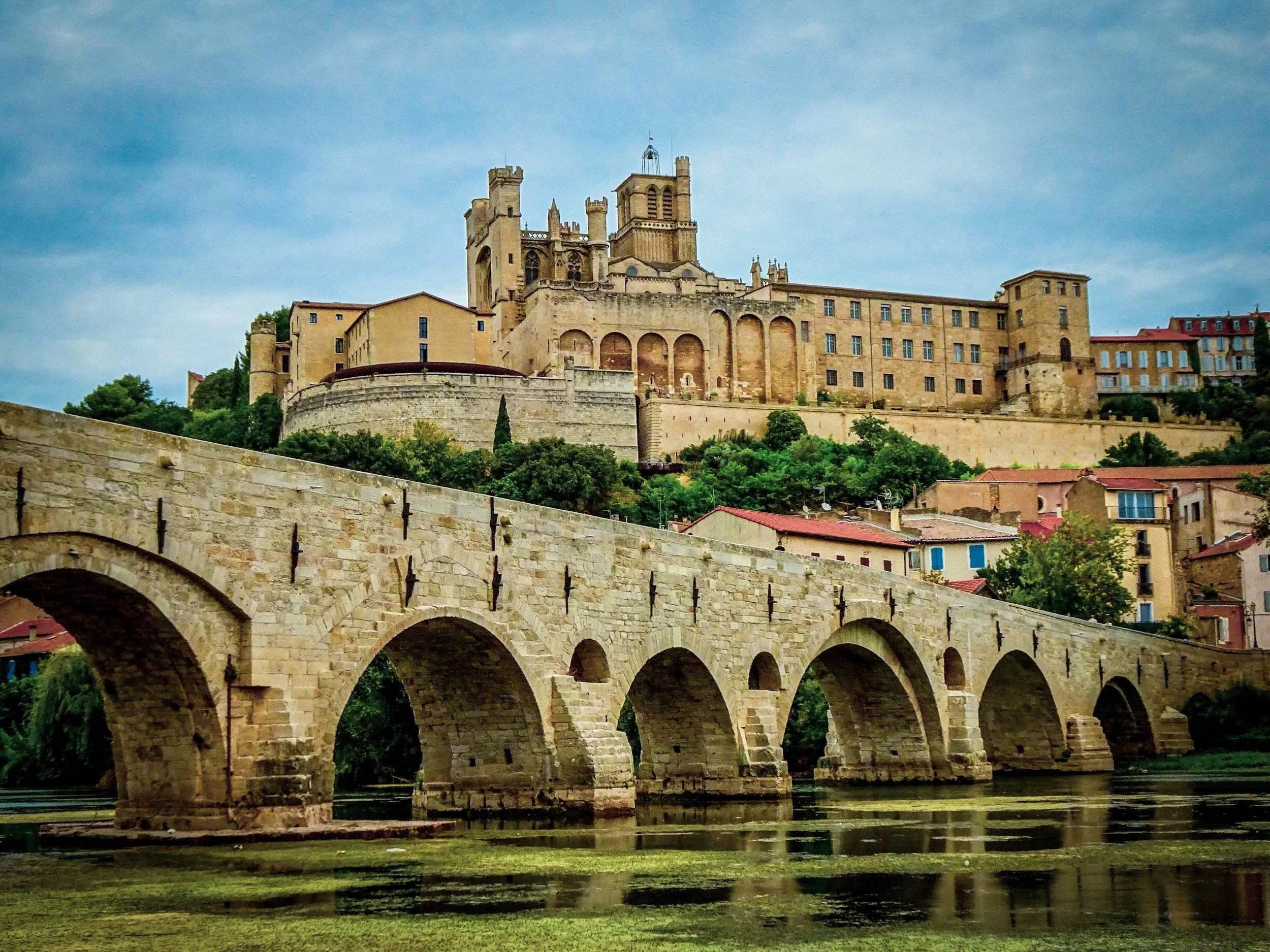
The upper old town changes completely depending on timing too, which most travel guides barely mention. Around midday in summer, the climb toward Saint-Nazaire Cathedral can feel brutally exposed, especially around the stone streets near Rue du Puits des Arènes where the heat reflects back upward from the walls. Early evening is entirely different. The cathedral viewpoint overlooking the Orb River, Pont Vieux and the vineyards beyond the city starts turning soft gold around sunset once the harsh white afternoon light disappears, and suddenly the city feels quieter and older in a much more interesting way.
Most visitors never spend enough time in the smaller lanes behind the cathedral either, which is honestly where Béziers starts becoming more memorable. Around Place de la Madeleine and the surrounding streets, there are little galleries, old painted shop signs, independent ateliers and tiny wine bars where people drift in slowly after work rather than treating the area like a nightlife destination. Places like Le Chameau Ivre feel more neighborhood-driven than curated, especially midweek when groups spill casually into the square outside with glasses of local red instead of rushing through dinner reservations.
And then there are the details repeat visitors quietly start planning around without thinking about it consciously. The shaded side of Allées Paul Riquet becomes noticeably more valuable after about 4pm in July. Sundays after lunch can feel almost eerily quiet outside the center unless there’s rugby on. The walk toward Fonseranes Locks is much better before 10am because the canal path becomes almost aggressively hot later in the day. Some cafés uphill near the cathedral still open too late to work before early TER departures, while the simpler places near the station are already functioning long before most tourists are awake.
And that’s really the thing Béziers does well! You can spend the morning in Narbonne, take a slow lunch somewhere around the canal there, come back by late afternoon before the heat peaks again, wander through the market, then end the evening sitting outside near Place Jean Jaurès without ever needing to think about parking, taxis, driving narrow roads after dark, or repacking your luggage every second morning.
After a while, that ease starts becoming more valuable than staying somewhere objectively prettier but far more exhausting to move through once the actual trip begins.
If you’re still deciding whether southern France feels easier from a base like Béziers or somewhere deeper into Provence, this regional breakdown makes the differences pretty obvious once you compare the transport, prices and day-trip pacing.
Staying near the station changes the trip completely
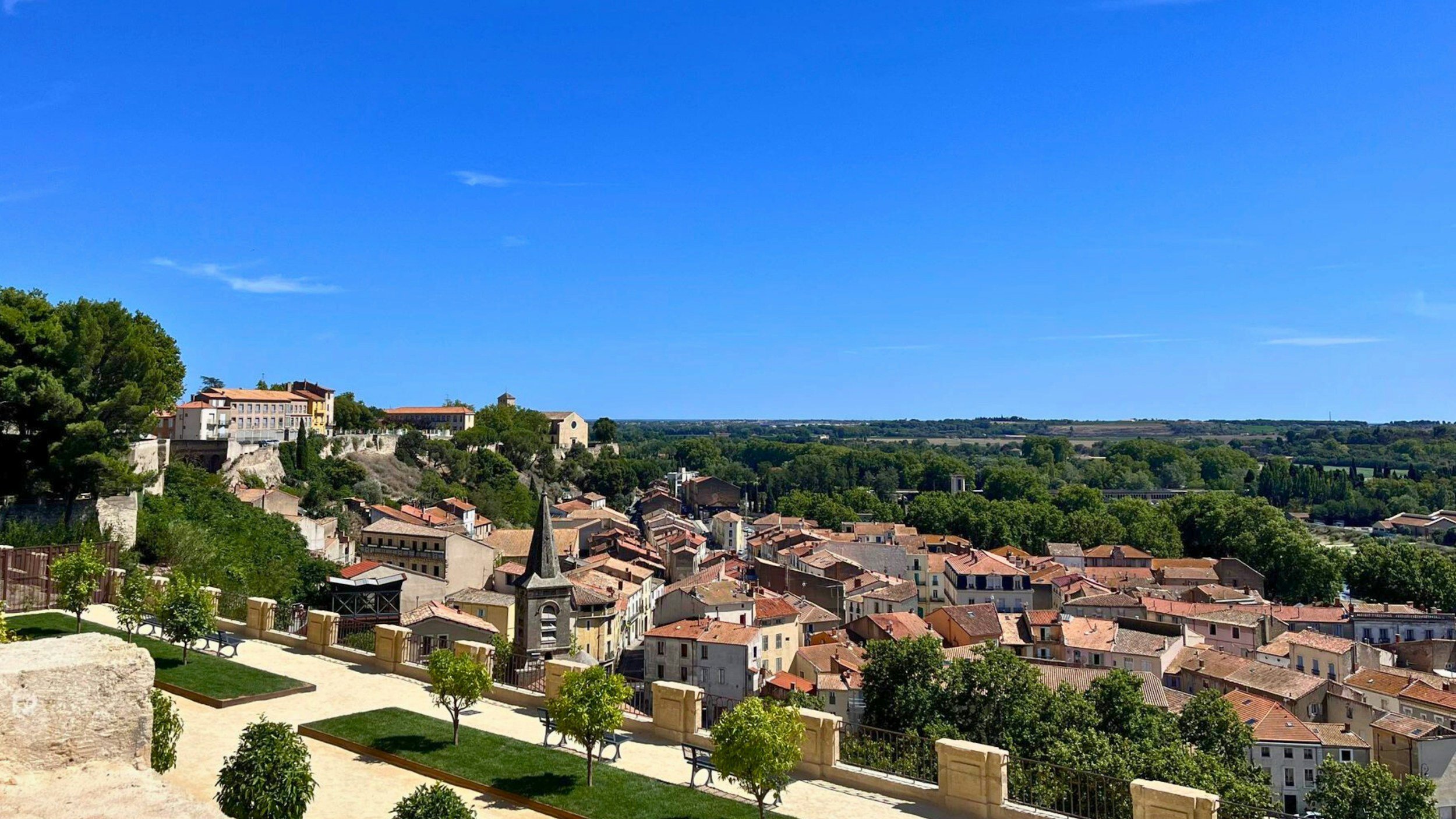
A lot of people book accommodation in the upper part of Béziers because that’s the version of the city they see first online. The cathedral. The stone streets. The little staircases climbing uphill toward old façades and viewpoints over the river. And visually, that part of Béziers really is beautiful, especially later in the evening when the heat finally starts leaving the walls and the light softens around Place de la Madeleine and the streets behind Saint-Nazaire Cathedral.
But once you actually stay there for several days without a car, the practical side of the geography starts mattering much more than the photos did beforehand.
The old quarter sits properly uphill from Gare de Béziers, and while the climb feels atmospheric when you’re wandering around casually after dinner, it feels completely different at 2pm with luggage, groceries, or after a full day moving around the region by train. Streets like Rue du Capus and Rue Canterelles get steeper than people expect, and because the stone holds heat so aggressively in summer, even short uphill walks can suddenly feel exhausting in the middle of the afternoon.
That’s why the lower part of the city around Allées Paul Riquet usually ends up working much better as an actual base, especially if you’re taking regional trains several times during the trip and treating Béziers more as somewhere to settle into than somewhere to “see” all at once.
The boulevard itself isn’t particularly polished in the Provençal sense. It feels lived in. Functional. The plane trees provide almost continuous shade across parts of the promenade, older locals sit outside cafés reading newspapers early in the morning, and around Avenue Gambetta the city is already properly awake long before the upper streets have started moving. If you stay somewhere near Rue de la République, Avenue Alphonse Mas, or the side streets near Plateau des Poètes, you can step outside and immediately have everything you actually need within a few minutes’ walk without thinking much about it.
And after a day or two, that ease quietly starts shaping the whole trip.
You come back from Narbonne in the late afternoon and stop at Monoprix on the way home without making a detour. You pick up pastries from Maison Conquet before an early TER departure while the city is still relatively cool and quiet. You wander through Les Halles de Béziers before lunch and notice the same oyster counter somehow always packed with locals drinking white wine before noon. None of it feels particularly staged for visitors, which is partly why the rhythm of the city starts becoming easier to settle into than in places where every central street seems to revolve around tourism.
There are also corners of the lower center that most people miss because they immediately head uphill toward the cathedral and never really spend time around the streets where everyday life in Béziers actually happens. Around Place Jean Jaurès and Rue Mairan, there are little independent shops, older cafés and slightly chaotic bookstores that make the city feel far more layered than it first appears. Librairie Clareton still has the feeling of a proper neighborhood bookshop where nobody rushes you, and nearby wine shops focus heavily on bottles from Faugères, Minervois and Saint-Chinian instead of pushing generic Provence rosé at every opportunity.
In the evenings, that whole lower section of the city changes again once the heat finally starts dropping. Around 7:30pm, terraces slowly fill up beneath the trees along Allées Paul Riquet while families drift through Place Jean Jaurès and people begin settling into long dinners much later than visitors from northern Europe usually expect. Some of the nicest restaurants in Béziers are honestly the ones that barely look remarkable from the outside. Places where menus still change depending on what arrived that morning, where people linger over wine for hours, and where nobody seems particularly interested in turning the place into a social media destination.
Then later at night, once you walk uphill again toward the cathedral, the city becomes much quieter almost immediately. Around Rue du Puits des Arènes and the smaller lanes behind Place de la Madeleine, you mostly hear cutlery from apartment kitchens, distant conversations through open shutters, and the occasional footsteps echoing off the stone streets. The viewpoint beside the cathedral overlooking the Orb River and Pont Vieux is probably the best place in the city around sunset, especially once the harsh white afternoon light disappears and everything turns softer and dustier across the rooftops and vineyards beyond the river.
But staying up there full-time feels very different from visiting it for an evening walk.
After several days, the repeated climbs, limited grocery options and quieter mornings start becoming noticeable in a way most people underestimate before arriving. And that’s really the thing about Béziers as a car-free base. The city works best when daily life starts feeling effortless in the background. You wake up, walk a few minutes for coffee, head to the station, come back through the market, maybe stop for wine somewhere near Place Jean Jaurès later in the evening, and somehow the entire trip keeps moving naturally without needing much planning or adjustment from you at all.
If you’ve been looking at Aix-en-Provence instead, this Aix comparison helps quickly figure out whether you want polished and busier or somewhere that feels more relaxed operationally.
The regional train network is what makes Béziers useful
What makes Béziers work so well without a car is how little energy you end up spending on logistics once you’re actually there. After a couple of days, the trains stop feeling like “excursions” and start feeling more like part of the city itself. You wake up, look at the weather, grab coffee near the station, then decide where to go from there depending on the wind, the heat, or whether you feel like coast, canal towns or somewhere quieter inland that day.
That flexibility is surprisingly rare in southern France.
A lot of places technically have train access, but once you arrive you realize the station is stranded outside town, buses stop early, or the nicest neighborhoods involve exhausting uphill walks in full afternoon heat. Around Béziers, everything connects in a much more natural way. Gare de Béziers sits right inside the city, so even on days when you’re moving around a lot, the travel never really feels heavy.
And the regional TER network around Occitanie is much more useful than people expect before arriving.
Not luxurious. Not always punctual. But genuinely practical.
The routes toward Narbonne run constantly throughout the day and usually take somewhere around 15–20 minutes depending on the train. Tickets are often surprisingly cheap too, especially if booked through SNCF Connect ahead of time or bought as regional fares. Most journeys end up costing somewhere between €1 and €10 around Occitanie depending on promotions and timing, which completely changes how casually you start using the trains once you realize you don’t need to “save” day trips for special occasions.
Narbonne is probably the easiest route to fall into naturally because the station sits close enough to the center that you don’t lose momentum after arriving. Some mornings are honestly best spent doing almost nothing there besides wandering through Les Halles, stopping for oysters and white wine before lunch, then drifting through the quieter streets behind Canal de la Robine where the city suddenly feels far less polished than the main squares around the cathedral.
The line toward Sète takes around 30–40 minutes depending on connections, and timing matters a lot more there than people expect. Arriving at 9am feels completely different from arriving after lunch in peak summer. By early afternoon, parts of the city around the canals start reflecting heat aggressively off the water and stone, especially near the walk between the station and the waterfront. Early mornings work much better if you actually want to enjoy Sète slowly instead of just surviving the heat.
And because the trains are short-distance and frequent, you stop overplanning everything.
You can leave Béziers at 10am, spend half a day in Sète eating seafood near Quai Général Durand, browse the smaller streets climbing toward Quartier Haut afterward, then head back whenever you feel done rather than structuring the entire day around complicated transport windows.
Agde is even easier. Trains take roughly 10–15 minutes from Béziers, and because they run so regularly, the town works well for slower half-days instead of “full itineraries.” Most people associate Agde entirely with Cap d’Agde, but the historic center feels much darker and older than the beach resort image people expect beforehand. Late afternoon around Place de la Marine is usually nicest once the riverfront cools slightly and locals begin reappearing outside.
Further south, Perpignan takes just over an hour by direct train and suddenly feels almost Catalan rather than southern French. The station itself is oddly memorable too because of the Salvador Dalí connection, which sounds gimmicky until you actually arrive there. Even the atmosphere on the train changes slightly heading south. The landscape dries out, the architecture shifts, and by the time you’re sitting outside near Place de la République in the evening, Béziers already feels much farther away than the journey time suggests.
The useful thing is that none of these trips require major planning.
That’s what makes Béziers work as a base instead of just another destination, as you’re not constantly reorganizing accommodation, checking parking situations or trying to optimize routes between villages. If the tramontane wind suddenly makes the coast unpleasant, you pivot inland. If lunch in Narbonne turns into a slow afternoon with wine and oysters, it doesn’t matter because trains back are straightforward. If you miss one TER connection, it’s usually annoying rather than disastrous, although later evening services thin out noticeably outside summer and smaller stations can feel almost abandoned after 8pm.
And there are details you only really notice after several train days in a row.
Certain platforms around Occitanie have almost no shade at all during summer. Some smaller stations lock their waiting rooms completely in the afternoon. Sundays reshape the entire region because market towns suddenly become quiet while coastal routes fill with local families heading toward the sea. Even the morning atmosphere changes depending on direction. Early trains toward Montpellier feel busier and commuter-heavy, while routes inland stay calmer and slower.
After a while, you stop treating the trains as transport and start using them more like extensions of the trip itself, which is probably the biggest reason Béziers ends up working better than people expect without a car.
A lot of the frustration people have with Provence actually comes from the car logistics, and this train guide explains exactly where things start getting awkward without one.
And if Béziers turns into the beginning of a longer rail trip, these train towns connect surprisingly well from Occitanie without needing a car at all.
Day trips from Béziers that actually work well without a car
One of the nicest things about staying in Béziers is that the surrounding day trips don’t need to feel overly planned. You’re not waking up ridiculously early trying to squeeze three destinations into one day because transport is difficult. Most places nearby are close enough that you can leave after breakfast, move slowly, stop for wine or coffee whenever you feel like it, and still make it back before late evening without checking train schedules every twenty minutes.
Narbonne is probably the easiest place to settle into because the city starts almost immediately after you leave the station. Within a few minutes you’re beside Canal de la Robine, and from there it’s easy to just wander without really needing a plan. Most people stay around the market and cathedral area, but Narbonne gets much better once you drift into the smaller streets behind Rue Droite where the city suddenly feels quieter and more local again.
There are little wine shops around there selling bottles from La Clape and Corbières without any polished “wine tourism” atmosphere, old bookstores with faded paperbacks stacked outside, tiny cafés where people still sit for hours over one coffee in the middle of the afternoon. If you go on a Thursday or Sunday morning, the market around Les Halles spills properly into the surrounding streets and the whole center feels much livelier than during quieter weekdays.
And Narbonne is one of those places where lunch somehow becomes half the day without anybody planning for it. You sit down for oysters and white wine somewhere near the market, the heat settles over the streets outside, and suddenly it’s 4pm.
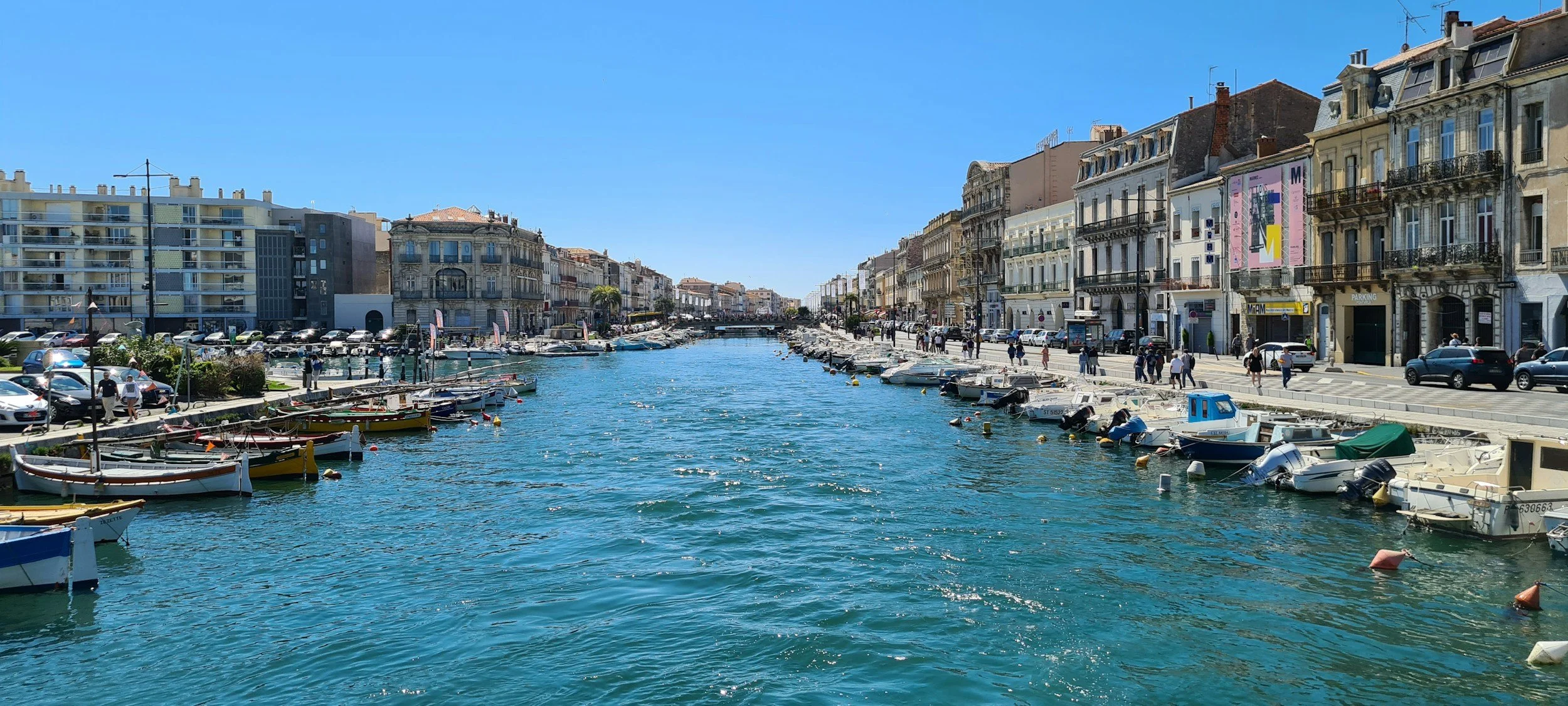
Sète feels completely different… The first thing most people underestimate is how spread out it actually is. You step out of the station expecting a compact seaside town and instead realize the city stretches across canals, bridges, steep little hills, fishing areas and beaches that all take longer to reach than expected once the heat kicks in.
The nicest version of the day usually starts slowly around Halles de Sète while fish deliveries are still happening and café terraces are only half full. Then you wander uphill toward Quartier Haut where the streets start getting quieter and stranger in a good way. Tiny galleries opening late in the morning, old men sitting outside bars beneath faded shutters, little record stores and artist studios hidden behind doors you’d barely notice otherwise.
And honestly, some of the best parts of Sète are not the obvious waterfront areas at all. If you keep climbing toward Mont Saint-Clair later in the afternoon, the viewpoints become incredible once the harsh midday light disappears a bit. You can see the fishing port, the sea, the canals and the long coastline stretching out in both directions while everything slowly turns softer and dustier around sunset.
Pézenas feels smaller and quieter than the coast, but in a way that works really well after a few busier train days.
The old center is full of antique shops, linen stores, ceramic studios and slightly chaotic independent boutiques where owners still rearrange tables and displays outside themselves in the mornings. Around Rue de la Foire and Place Gambetta, you’ll find little courtyards hidden behind heavy wooden doors, old staircases covered in ivy, wine shops selling local bottles from Pézenas and Faugères, and cafés where people seem to stay all afternoon once they’ve sat down.
Saturday is easily the best day to go because the market changes the whole atmosphere of the town. By late morning, the center is full without feeling overwhelming, people move slowly between food stalls and antique dealers, and nearly every terrace around Cours Jean Jaurès is busy.
Further south, Collioure works best if you leave Béziers early and stay until evening instead of trying to rush back. Midday there can feel crowded and overly photographed around the harbor, but once you move uphill behind the waterfront, the town gets much quieter very quickly.
The smaller streets around Rue de la Fraternité and the staircases climbing behind the church are where Collioure becomes more interesting. Tiny galleries, old faded shutters, little wine bars tucked into corners near bougainvillea-covered walls, sea views suddenly opening between buildings when you least expect them.
And late afternoon is really when the town changes, as he day crowds thin out, restaurant terraces start filling again around 7pm, and the waterfront becomes calmer once people staying overnight slowly reclaim the town from the afternoon visitors.
After a few days moving around this part of Occitanie by train, you start picking up on the little things that quietly shape the day. The platform in Agde feels unbearable around 3pm in July because there’s almost no shade at all. In Sète, getting there before 10 in the morning feels like a completely different city than arriving after lunch once the canals, pavement and parked boats start throwing heat back into the streets. Sunday evenings back toward Béziers get noticeably busier too because local families are coming home from the coast carrying beach bags and coolers onto the TER trains.
And smaller towns around here still properly slow down in the middle of the day. You can wander through parts of Pézenas at 2:30pm and find half the shutters closed while people disappear into long lunches somewhere behind the squares.
That’s partly why Béziers works so well as the base underneath all of this. You’re never stuck too far from “home” once the heat gets exhausting, the wind changes, or you suddenly realize you don’t actually feel like squeezing another destination into the day.
A lot of people planning this kind of trip also get stuck trying to figure out whether a rail pass is actually worth the money, and this Eurail guide explains where it genuinely helps and where regional tickets are cheaper.
The Canal du Midi feels more local here than in Carcassonne
The canal around Béziers doesn’t really feel like a “destination” in the same way it does around Carcassonne. You don’t arrive through some polished tourist setup and suddenly start following signs toward scenic viewpoints. It’s more gradual than that. The city just slowly thins out around you until the streets turn quieter, the plane trees get thicker, and suddenly you’re beside the water without really noticing when the transition happened.
That’s part of why the canal here feels so much calmer.
People actually use it. Early in the morning near Fonseranes Locks, you’ll see locals cycling to work with baguettes sticking out of baskets, older men fishing beneath the trees, runners moving slowly along the towpaths before the heat properly kicks in. The rental boats and day visitors arrive later, usually around late morning, and honestly by then the lock area itself starts getting pretty unpleasant in peak summer. The concrete reflects heat everywhere, there’s very little shade near the main viewing points, and by 1pm most people look far more tired than relaxed.
The nicer part starts once you keep walking! Most visitors turn around after the locks, but if you continue west instead, the atmosphere changes almost immediately. The paths get quieter, the canal narrows slightly beneath the trees, and within twenty minutes it barely feels connected to the city anymore. Some stretches out there are almost weirdly silent apart from cicadas and the occasional bike rolling past.
And this is where Béziers starts feeling very different from the more polished Canal du Midi stops.
Nobody’s really trying to turn every corner into an attraction. You’ll pass little gardens backing onto the water, old men sitting beside folding tables playing cards in the shade, tiny moored boats with laundry hanging outside. Around Villeneuve-lès-Béziers later in the evening, families start appearing near the canal after the heat drops and the little guinguette terraces finally start filling up properly.
A lot of the nicer moments around the canal happen at awkward times too. Around 6:30pm in summer when the light softens and the paths finally cool down enough to walk comfortably again. Or early in the morning when the water is completely still and the only places open are little cafés near the edges of the city where people stop before work.
Even the route from the center toward the canal feels nicer if you take your time with it.
Walking through Plateau des Poètes in the early evening works especially well because the whole area slows down around that time. Kids playing near the fountains, people sitting outside apartment buildings waiting for the temperature to drop enough for dinner, little grocery stores near Avenue Valentin Duc selling cold drinks and ice cream while cyclists cut through the park toward the canal paths.
And there are lots of smaller places around the canal that are easy to miss if you only do the quick lock-photo version of the area.
Near the quieter stretches outside the city, there are little seasonal terraces where people sit for hours drinking wine from Saint-Chinian or Faugères while bikes pile up beside the tables. Back toward Béziers itself, places around Rue du Moulin à L’Huile and the older streets near Église de la Madeleine become really nice once the evening light starts hitting the stone properly. Tiny galleries open irregularly around there, old bookstores leave boxes outside on the pavement, and some of the little wine shops near the old town sell excellent local bottles without feeling remotely curated for tourists.
And honestly, one of the nicest things to do around the canal here is not really “doing” anything at all.
Pick up food earlier from somewhere near Les Halles de Béziers, bring a bottle of wine, sit beside the water once most people have gone back toward the center, and just stay there for a while. Around that time, you mostly hear bikes passing, glasses clinking from nearby terraces, water moving slowly through the locks, and trains somewhere in the distance behind the trees.
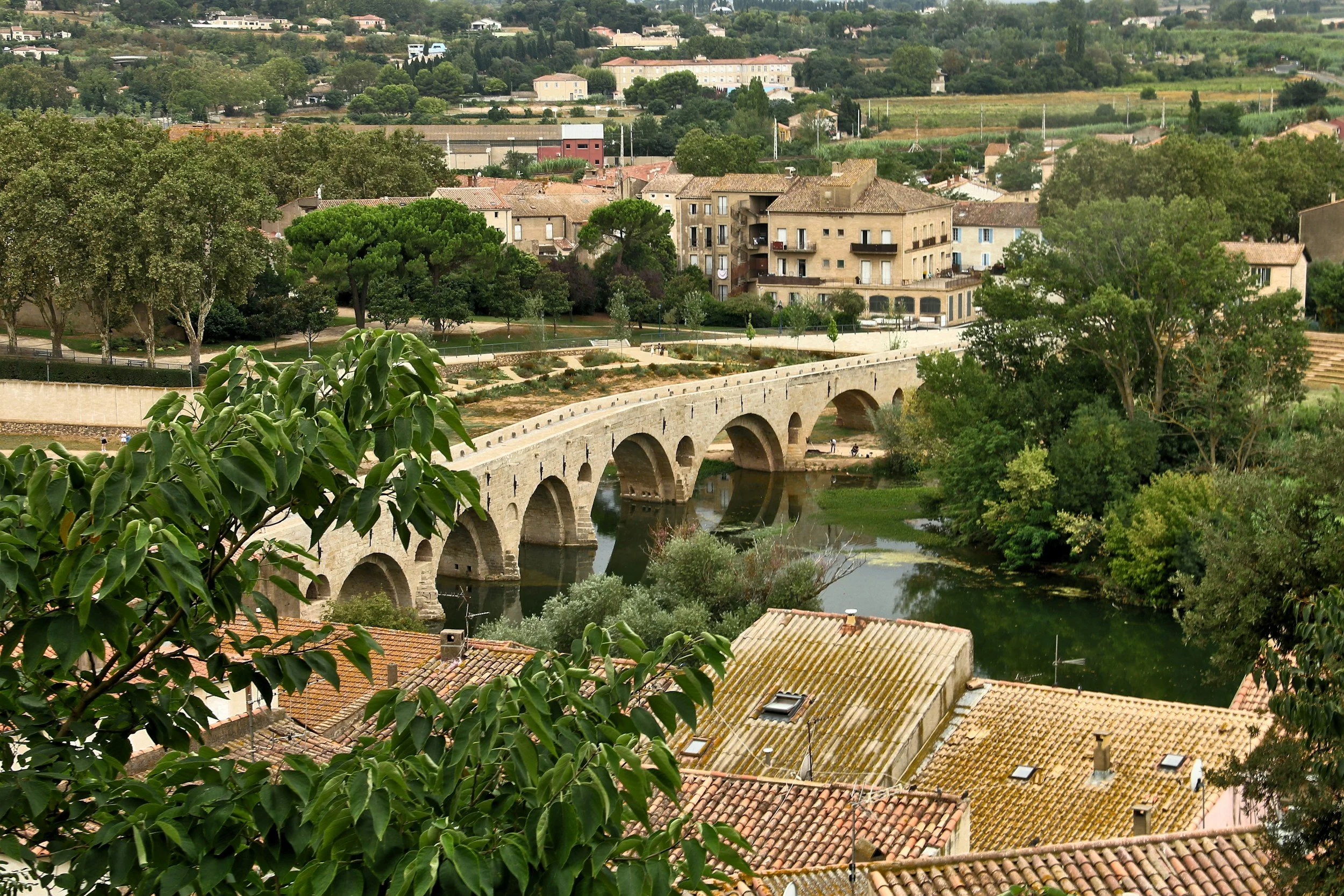
The canal atmosphere around Béziers also feels very different from the hilltop-village version of southern France you get in this Drôme guide, especially once you’re traveling without a car.
People who enjoy Béziers usually end up looking for other places in southern France that work well without driving, and these walkable stays are useful if you’re continuing east afterward.
Béziers feels very different from Provence
A lot of southern France has started feeling strangely similar lately. The same pale stone storefronts, the same carefully styled wine bars, the same boutiques selling linen shirts, ceramic olive bowls and expensive natural soap beside cafés where everybody seems to be eating identical brunch plates beneath dried flowers and rattan lampshades.
Béziers doesn’t really smooth itself into that version of the south.
And honestly, the city can feel slightly confusing at first because of it.
You walk through one part of the center and everything feels elegant and almost grand beneath the plane trees around Allées Paul Riquet, then suddenly you turn into a smaller side street near Rue de la République or Rue Française and the atmosphere changes completely. Old faded storefronts beside beautiful carved stone balconies. Tiny PMU bars full of locals arguing about rugby results beside half-renovated wine bars. Apartment shutters hanging slightly crooked above little grocery stores that still seem to function mainly for the neighborhood rather than visitors.
But after a couple of days, that inconsistency starts becoming one of the most relaxing things about the city because you stop feeling like every street has been arranged around tourism expectations.
Around Provence now, especially during summer, there are moments where entire neighborhoods almost feel staged. In Béziers, normal life constantly interrupts the aesthetic version of southern France people arrive expecting. Delivery vans blocking narrow streets at the wrong moment. Somebody shouting from an apartment window above a café terrace. Teenagers sitting on church steps late at night eating pizza from paper boxes. The city never really settles into a polished version of itself for very long.
And the rhythm of the day feels completely different too.
Around 8 in the morning, the center already feels properly awake in a very local way. Bakeries near Avenue Gambetta have lines forming outside before the heat arrives, Café des Allées starts filling with regulars reading newspapers beneath the trees, and around the side streets near Place Jean Jaurès people are already dragging market trolleys home before most visitors have even left their apartments.
Then by early afternoon in summer, parts of the city suddenly feel almost abandoned because people here still disappear indoors properly once the heat gets too heavy. Shutters close. Streets empty out. Even some restaurants stop serving entirely between lunch and dinner instead of trying to stay open continuously for tourism. Then somewhere around 7:30 or 8pm, everything slowly wakes up again. Chairs scrape back onto terraces, people reappear outside in groups, and the whole city starts moving again once the stone cools down enough to walk comfortably.
The nicest parts of Béziers usually happen in those in-between moments rather than around the obvious sights.
The little staircases around Place de la Madeleine after sunset when the walls still hold warmth from the day. The older streets behind the cathedral where tiny galleries stay open irregularly depending on exhibitions and owners sit outside chatting beside half-open doors. The bookstores around Rue Française with faded regional photography books left in the windows for so long they’ve started bleaching in the sun.
And there are lots of small independent places around Béziers that still feel genuinely personal rather than carefully branded.
Librairie Clareton has the kind of slightly chaotic atmosphere where you end up browsing for far longer than planned because the tables feel assembled by actual interest instead of merchandising strategy. Around the market streets near Rue Mairan, little wine shops sell bottles from Saint-Chinian, Faugères and Minervois to people stopping by on the way home from work rather than tourists looking for tasting experiences. Some evenings you’ll see locals carrying two or three unlabeled bottles home in cardboard trays while the cafés nearby slowly start filling for dinner service.
Even the restaurants feel different from Provence in a way that becomes more noticeable the longer you stay. There are fewer places trying to deliver some perfectly aesthetic “south of France” experience and more places that simply seem built around regular customers returning every week. Tiny seafood spots that look almost forgettable from outside but are somehow completely full on Tuesday nights. Old-fashioned dining rooms near the upper town where people stay sitting for hours after dinner while staff drift in and out without rushing anybody along.
And Béziers stays unpredictable in a way many tourism-heavy towns no longer do.
A place that feels dead at 4pm suddenly becomes loud and crowded three hours later. A café near the station unexpectedly serves the best coffee you’ve had all week. A wine bar that was packed the night before is nearly empty the next evening for no obvious reason. The city never fully turns itself into a product where every experience has already been polished into consistency.
Financially, it changes the whole atmosphere of the trip too, as you can stay longer without constantly thinking about costs. Renting an apartment for nearly a week near the center still feels realistic. Long lunches don’t quietly become €100 afternoons. Buying a decent bottle of local wine doesn’t feel like some expensive “vacation moment” every single time.
And because of that, you start behaving differently without really noticing it.
You return to the same bakery several mornings in a row because the woman working there already recognizes your order. You end up sitting longer after dinner because there’s no pressure to rush through the city before your budget runs out. You walk the same route back through Place Jean Jaurès late at night often enough that it starts feeling familiar instead of temporary.
That’s probably the biggest difference between Béziers and Provence now.
The city still feels like somewhere you can temporarily settle into instead of somewhere designed mainly to pass through beautifully for two days.
If Pézenas ends up on your shortlist too, this Uzès comparison saves a lot of back-and-forth research because the two towns feel completely different once you’re actually there.
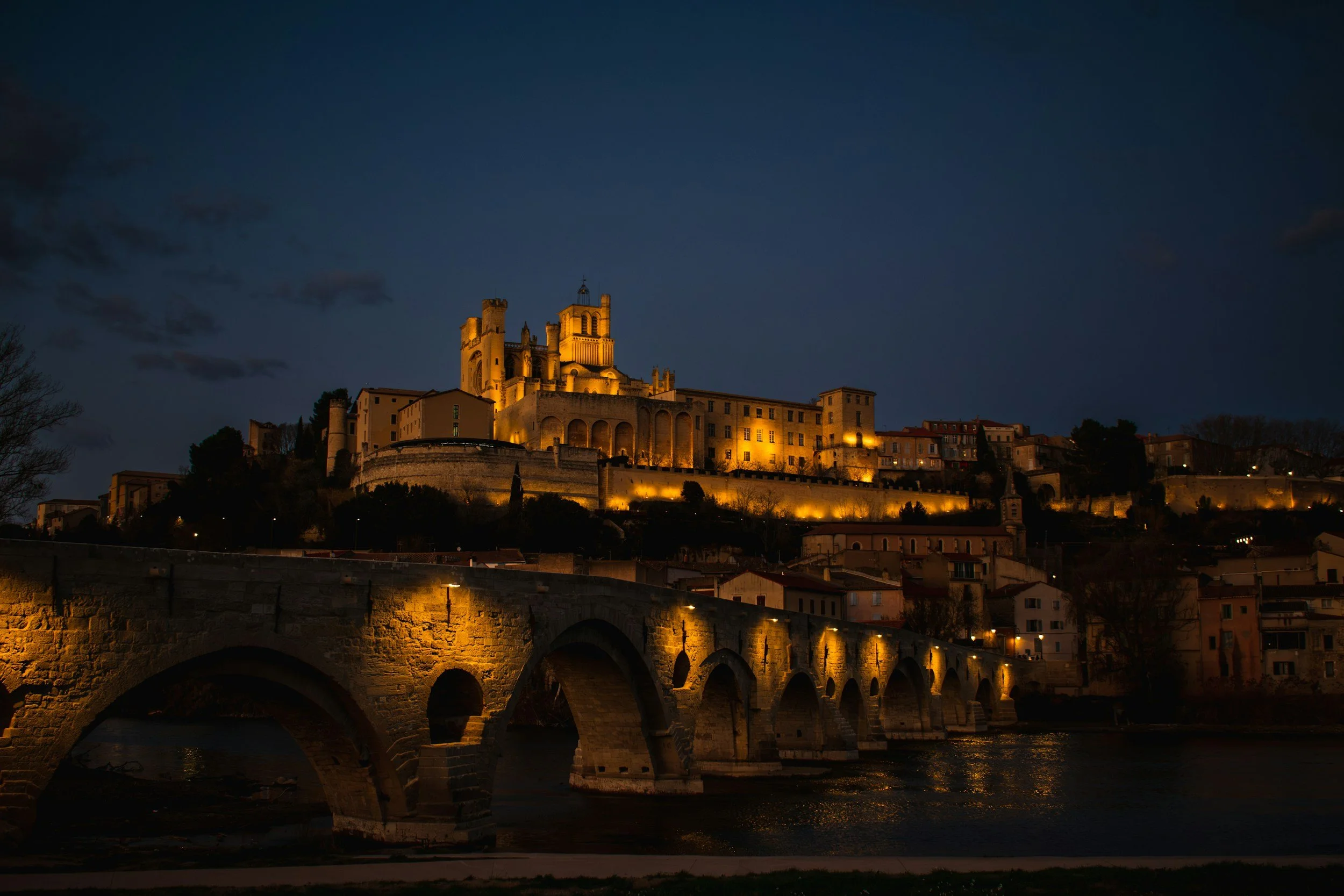
What people often misjudge about Béziers
One thing people regularly get wrong about Béziers is assuming the city center works like a compact tourist zone where everything worth seeing sits close together and stays active all day.
It doesn’t really function that way! The city spreads vertically more than people expect, and the atmosphere changes fast between neighborhoods. Around the lower boulevards near the station, things feel busy and practical from early morning onward. Up near the cathedral, the streets can feel almost deserted by mid-afternoon in summer because the heat gets trapped between the stone walls and hardly anybody wants to walk uphill unless they absolutely have to.
That catches people off guard constantly. Especially visitors booking apartments high up in the old town because the photos looked romantic online, then realizing halfway through the trip that they’re carrying groceries uphill past shuttered buildings at 3pm while the nearest open café is fifteen minutes downhill again.
And Béziers definitely has neighborhoods that work better than others depending on the kind of trip you want.
Around the streets near Allées Paul Riquet and Avenue Alphonse Mas, the city feels easier operationally. You’re near pharmacies, supermarkets, early cafés, the station and flatter walking routes. Around the upper old town near Place de la Madeleine and the cathedral, the atmosphere gets much prettier after dark, especially once the day visitors disappear and the stone streets finally cool down, but daily life also becomes less convenient very quickly.
Some visitors also underestimate how local the city still feels socially.
You notice it on rugby nights especially. Around Stade Raoul-Barrière, the atmosphere changes completely compared to ordinary weekdays. Bars that felt almost empty earlier suddenly spill onto pavements, restaurants become louder, and groups gather outside cafés hours before matches start. If you happen to stay nearby during rugby season, the city suddenly feels far more energetic than its quiet daytime atmosphere suggests.
And then the next morning it goes back to normal almost immediately.
That unpredictability is very Béziers! The same goes fotr restaurants and cafés too. A place that looked busy and lively one evening can feel almost abandoned the next day for no obvious reason. Some restaurants close for holidays with handwritten notes taped to the door even in summer. Others look completely average from outside but end up serving some of the best food of the trip because most of their customers are local and return regularly anyway.
There are also parts of Béziers visitors often waste too much time on.
The immediate area around the cathedral gets crowded with quick photo stops during summer afternoons, but the nicer time to actually be there is later in the evening once the light softens and the city quiets down. Around Rue Viennet and the little lanes behind the cathedral, things become much calmer after about 8pm, and you start noticing details that disappear during the hotter hours of the day. Old painted shop signs. Tiny balconies overflowing with plants. Cats sleeping on staircases still warm from the afternoon heat.
And some of the nicest corners of the city are lower down where visitors barely spend time at all.
Around Plateau des Poètes near sunset, locals sit outside far later because the park stays slightly cooler beneath the trees than the upper old town. Smaller bars around Avenue Foch fill gradually after work with people ordering simple glasses of wine and beer rather than turning the evening into a whole event. Some nights there’s live music drifting from terraces near Place Jean Jaurès while little side streets nearby remain almost completely silent.
There are also practical things people rarely think about before arriving.
Certain bakeries sell out surprisingly early on Sundays. Some grocery stores close entirely during lunch hours outside peak season. The smaller pharmacies near the old town often shut longer than expected in the afternoon. And if you’re depending on trains, the city works much better once you realize dinner in southern France often starts late enough that trying to combine a full evening meal with later TER departures can become awkward very quickly.
Béziers still feels much more local than places where everything switches into English the second you walk inside.
Menus aren’t always translated, and shop owners sometimes speak very little English outside the main center. Small wine caves and market stalls often assume you already know the region’s wines and products. But honestly, that’s partly why the city still feels grounded compared to places where every interaction has already been optimized for tourism.
And that’s probably the biggest thing people misjudge about Béziers overall.
If you like the slightly messy and casual market atmosphere around Béziers, these market towns feel much closer in spirit than the crowded Provençal villages that usually dominate travel guides.
And if the antique markets around Occitanie become part of the trip, this brocante guide helps you avoid the overly touristy markets and spot the ones locals still actually shop at.
FAQs about train travel to Béziers
Can you use Béziers as a base for southern France without a car?
Yes, and that’s honestly where Béziers makes the most sense. The city sits directly on major rail lines between Montpellier, Narbonne, Toulouse and Spain, which means you can stay in one apartment for several nights and still reach beaches, canal towns, wine regions and smaller cities without constantly repacking or reorganizing transport. The station is also close enough to the center that arriving by train doesn’t feel exhausting the way it can in some southern French towns.
Where should you stay in Béziers if you’re arriving by train?
The most practical area is usually between Gare de Béziers and Allées Paul Riquet. That part of the city gives you easy access to trains, supermarkets, bakeries, cafés and flatter streets, which starts mattering much more once temperatures hit 30+ degrees in summer. Staying high up near the cathedral looks beautiful in photos, but daily uphill walks get tiring quickly if you’re carrying luggage, groceries or returning from day trips in afternoon heat.
Is Béziers or Montpellier better without a car?
Montpellier has trams, bigger museums and more nightlife, but it also feels much larger, busier and more expensive. Béziers works better if you want a quieter base with easier day-trip pacing and lower accommodation costs. The city also feels more connected to the surrounding wine regions and smaller Occitanie towns rather than functioning mainly as a larger urban destination.
Can you reach the beach from Béziers without a car?
Yes, pretty easily. Agde is only around 10–15 minutes away by TER train, and from there local buses connect toward the coast and Cap d’Agde. Sète also works well for beach access combined with restaurants and canal walks, although the beaches sit farther from the station than many visitors expect. During July and August, earlier trains usually make the experience much more comfortable before the heat and beach crowds build.
Is Béziers walkable?
Yes, but the geography surprises people. The lower center near Allées Paul Riquet is relatively flat and easy to move around on foot, while the upper old town around Saint-Nazaire Cathedral becomes steep very quickly. In cooler months the walks are pleasant, but in peak summer even short uphill routes can feel draining during the middle of the day.
How hot does Béziers get in summer?
Hotter than many visitors expect. July and August afternoons regularly move above 30°C, and the stone streets in the upper old town hold heat well into the evening. Around 2–5pm, parts of the city can feel almost empty because locals disappear indoors properly during the hottest hours. Early mornings and later evenings are much better for walking around the old center or canal areas.
What are the easiest train day trips from Béziers?
The easiest regional train trips are:
Narbonne for markets, wine bars and canal walks
Sète for seafood, galleries and beaches
Agde for the older volcanic-stone center
Perpignan for a more Catalan atmosphere
Collioure for a longer coastal day trip
Most journeys stay under 90 minutes, which makes Béziers unusually practical for slower regional travel without a car.
Does Béziers work for a longer stay?
Much more than people expect. The city works especially well once you stop treating it like a quick sightseeing stop and start using it as a temporary base instead. Accommodation prices stay lower than many Provençal destinations, groceries and wine remain affordable, and the regional train network makes it easy to vary your days without changing hotels constantly.
What part of Béziers feels nicest in the evening?
The atmosphere changes a lot after sunset. Around Place Jean Jaurès and the smaller streets near Place de la Madeleine, terraces start filling once temperatures cool down and the city feels much more social than during the afternoon heat. The viewpoint near the cathedral is also best later in the evening when the harsh white daytime light disappears over the Orb River and vineyards beyond the city.
Do you need French in Béziers?
Not necessarily, but Béziers feels much less adapted around international tourism than places further east along the coast. Menus are not always translated, smaller wine shops often assume customers already know local wines, and some cafés or market stalls operate almost entirely in French. Even basic French helps noticeably here.
When do restaurants close in Béziers?
Lunch and dinner hours still matter properly in Béziers. Many restaurants stop serving completely between lunch and dinner, and some smaller places close unexpectedly on Sundays or Mondays even during summer. Dinner also starts later than many visitors expect, with lots of restaurants only becoming lively after 8pm once the heat drops.
Is Béziers good for food and wine?
Yes, especially if you’re interested in regional wines and less polished dining scenes. Around the city, you’ll see local bottles from Saint-Chinian, Faugères, Minervois and Picpoul everywhere, often at much lower prices than in Provence. The food scene feels more local-worker and neighborhood-driven than tourism-focused, particularly around the market streets and smaller lanes behind the old town.
Is the Canal du Midi worth seeing in Béziers?
Yes, but timing changes the experience completely. Fonseranes Locks gets crowded and very hot around midday in summer, while early mornings and evenings feel much calmer. The quieter stretches beyond the locks are often more enjoyable than the lock complex itself, especially if you want somewhere to walk, cycle or sit beside the water without heavy crowds.