

Cahors or Figeac? Which town would I choose for the weekend?
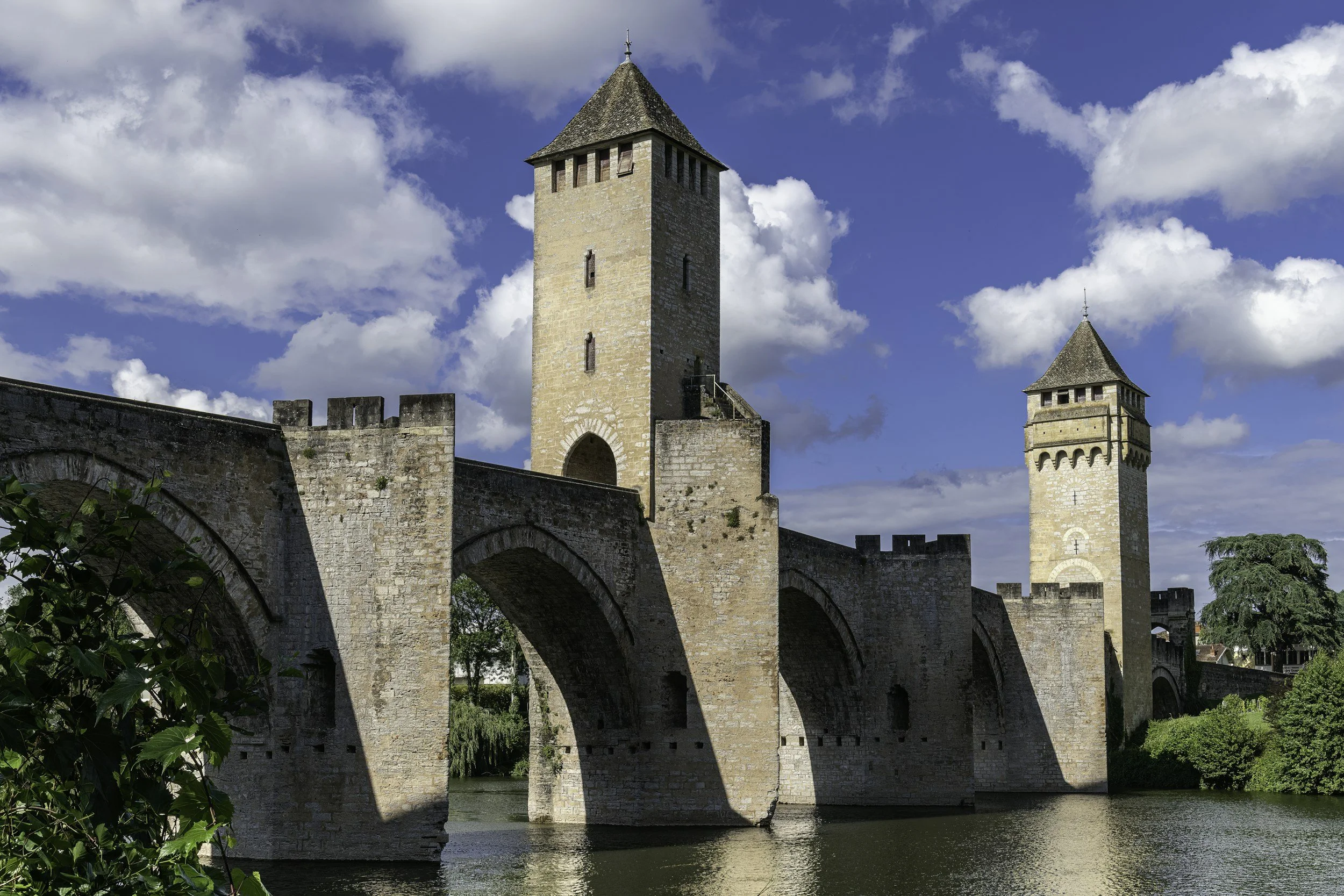
Cahors is usually the town people book first. Probably cause it has the train station, the famous bridge, the wine region and enough visibility that it tends to dominate articles about the Lot. Then somewhere during the planning process, Figeac appears. Maybe it's a market recommendation. Maybe somebody mentions staying there instead of Cahors. Maybe it simply keeps turning up while you're looking for places that feel enjoyable to spend a few days in.
What makes the decision difficult is that neither town has an obvious “advantage”.
They're close together, both have excellent markets, both have attractive historic centres and both work well for travellers who don't want to rent a car. Yet the experience of spending a weekend in each town is surprisingly different once you get beyond the photos.
Cahors feels larger, busier and more spread out. A morning can start with coffee near the cathedral and end by the river without any real plan in between. The market occupies a significant part of the centre, there are more restaurants than many visitors expect, and it's quite easy to fill several days without feeling like you've exhausted the town.
Figeac feels more concentrated. Most visitors quickly become familiar with the centre because so much happens within a relatively small area. By the second day you'll probably recognise the same bakery queue, the same café terraces and the same route between the market and Place des Écritures. Some people love that. Others start looking beyond the town much sooner than they would in Cahors.
That's why comparing Cahors and Figeac isn't really about deciding which one is more beautiful. The more useful question is what you want the weekend to look like once you've arrived, checked into your hotel and started wandering around.
Cahors and Figeac are not the same type of town
If your ideal weekend involves wandering between cafés, markets, independent shops and places to sit for a while without feeling rushed, Cahors and Figeac deliver that in very different ways.
In Cahors, most visitors end up spending far more time around the cathedral quarter than they originally expected. The streets around Place Chapou, Rue Nationale and Rue du Château-du-Roi are packed with wine shops, food stores, cafés and small businesses, and they connect naturally to the market area. If you're staying near the centre, there's a good chance you'll walk through the same area multiple times a day simply because so much happens there.
One of the advantages Cahors has over Figeac is variety. You can spend an hour browsing local products at Maison Sudreau, stop for coffee nearby, walk towards the covered market hall, cross the river to Pont Valentré and then head up to Mont Saint-Cyr later in the afternoon for one of the best views in southwest France. None of these places are particularly far apart, but they create a fuller day without needing a car.
The independent bookshop-café Le Bon Air est dans les Livres is also worth knowing about because it solves a very specific long-weekend problem. If the weather turns or you simply want a slower hour between sightseeing and dinner, it's the sort of place where locals read newspapers, students work and travellers quietly disappear for longer than intended.
Figeac feels much more concentrated, and most visitors spend a large part of their time somewhere between Place Carnot, Place Champollion, Rue Séguier and Rue Gambetta. The centre is compact enough that you'll quickly develop favourite routes. Instead of covering lots of ground, people tend to return to the same squares throughout the day.
One thing that surprised me when researching Figeac is how little ground most visitors actually cover. The streets around Place Carnot, Place Champollion and Rue Séguier contain a large proportion of the cafés, restaurants and independent shops people end up using during a weekend. In a larger town you might keep discovering new districts. In Figeac, the pleasure comes more from returning to the same streets and noticing details you missed earlier.
Figeac is probably the better choice if you enjoy browsing independent businesses rather than ticking off attractions. The streets around Place Champollion and Rue Séguier are packed into such a small area that it's easy to spend an entire morning moving between bookshops, galleries and food shops without ever feeling like you're sightseeing. Librairie Le Livre en Fête is worth a stop if you enjoy independent bookshops, while the small streets behind Place Champollion tend to contain the kinds of businesses that survive because local people use them, not because they're appearing in guidebooks.
The museum itself is also more important to the town than many first-time visitors realise. Even people who have little interest in Egypt often end up spending longer there than expected because it helps explain why Figeac feels slightly different from many other market towns in southwest France.
By the third day, Cahors and Figeac start pulling people in different directions.
In Cahors, many visitors are still spending most of their time in and around the town itself. One afternoon might disappear between a long lunch, a walk out to Pont Valentré and the climb up to Mont Saint-Cyr for the view across the river loop. Another day might revolve around a wine tasting at Château de Haute-Serre or browsing the food shops and wine merchants around the centre before settling into a terrace for a few hours. Even without a car, there's usually enough going on that people don't feel an urgent need to leave town.
Figeac often works differently, and by day three you'll probably have favourite cafés, favourite streets and a fairly good idea of where everything is. That's usually the point where nearby places start looking tempting. Cajarc is only a short drive away and makes an easy half-day trip, Capdenac-le-Haut sits dramatically above the Lot Valley, and the Célé Valley begins opening up just beyond town with small villages, walking routes and riverside roads that feel very different from the busier parts of the Dordogne.
That's not because Figeac runs out of things to do. It's because the town is so easy to get to know!
Cahors often keeps you occupied within the town itself for longer. Figeac tends to become the centre of a wider area that gradually draws you outward…
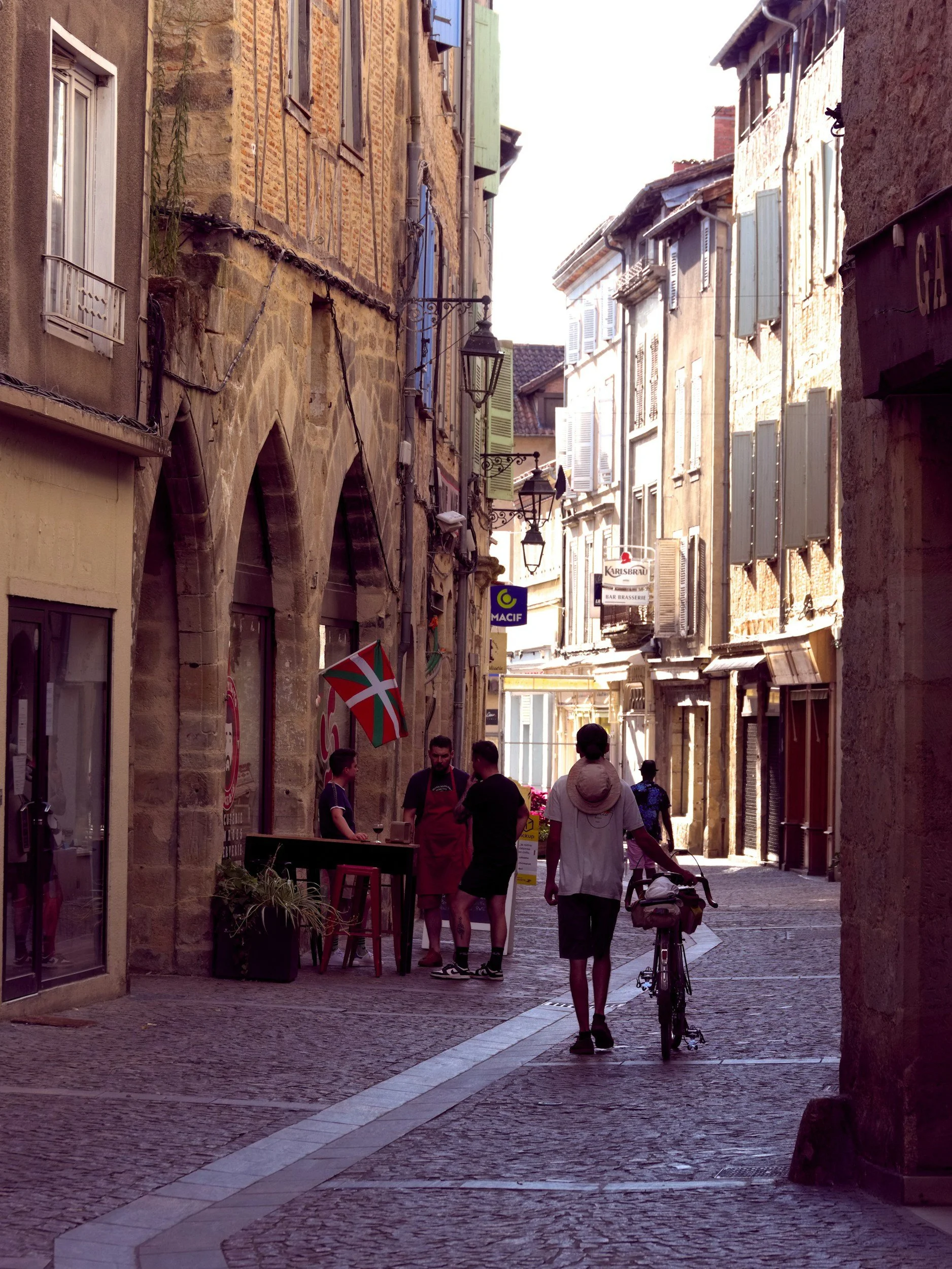
Street in Figeac
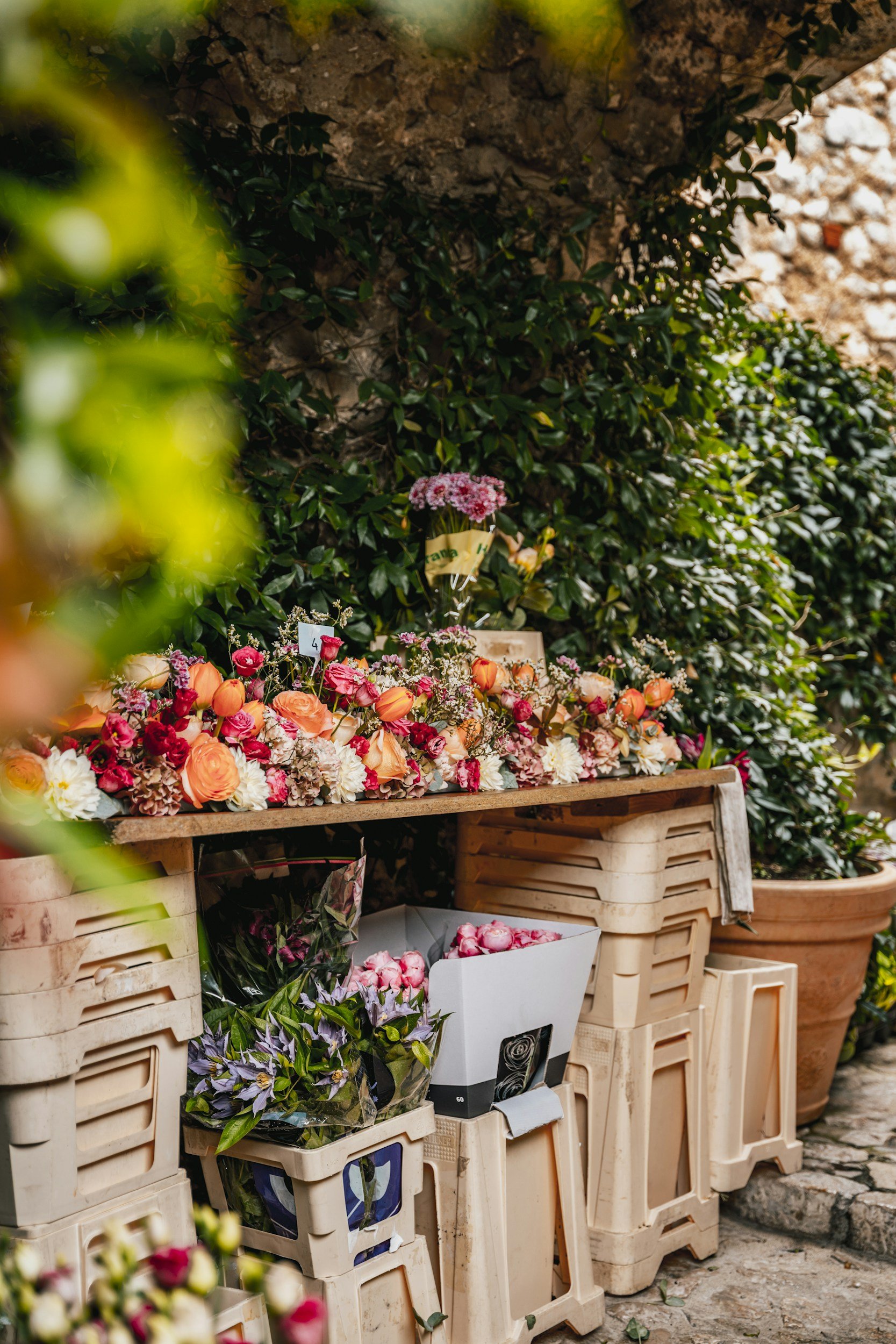
Market day in Cahors
Cahors is the stronger market town if the market is one of the main reasons you are choosing where to stay.
The main market runs on Wednesday and Saturday mornings around Place Chapou, beside Cathédrale Saint-Étienne, and this location matters because it puts the market right inside the part of Cahors most visitors already want to be in. You are not heading to a separate market ground on the edge of town. You are stepping into the old centre, with stalls set up close to the cathedral, the covered hall nearby and cafés, food shops and wine merchants within a few minutes’ walk.
Saturday is usually the better choice for a long weekend. Wednesday is useful if you are already in town midweek, but Saturday has the stronger weekend feeling and is the one that makes Cahors feel most alive before lunch. The official hours are morning only, roughly 8am to 1pm, but it is worth arriving before 10am if you want the market to feel like a food shop rather than a browse. By late morning, especially in summer, it becomes much more of a visitor scene.
The products are very Lot. Rocamadour goat’s cheese, walnuts, duck, foie gras, Quercy lamb, saffron, pastis quercynois and Cahors Malbec all belong here, and that is one reason the market feels more substantial than a pretty square with vegetables. It is also a good place to buy the kind of food that makes sense if you are staying in an apartment or planning a picnic by the river later in the day. Cheese, bread, strawberries in season, a slice of pastis, a bottle of local wine from a nearby shop and you have half the afternoon sorted.
What many visitors miss is the connection between the open-air market and the Halle de Cahors on Place Saint-Maurice. The outdoor stalls around Place Chapou get most of the attention, but the covered hall is useful before or after the market because it gives you another layer of food shops and prepared things to buy when the outdoor stalls start packing away. It is also where the market morning can continue a little longer if you are not ready to sit down for lunch yet.
Parking is the part people should think about before arriving. Cahors is not impossible by car, but Saturday morning is not the time to drive into the centre without a plan and assume you will glide into a space beside the cathedral. The town has paid street parking and several car parks, including Amphithéâtre, de Gaulle and Le Phare, and parking becomes easier after 12:30 on Saturdays when several paid options become free. That is helpful if you are arriving later, but less useful if you want to shop properly before lunch.
If you are staying in Cahors itself, the best version of market morning is to walk. Come early, buy before you sit down for coffee, and do not treat the market as something you quickly “see” before moving on. Cahors market works best when you let it take over the morning a little. Browse Place Chapou first, check the surrounding streets, step into the covered hall, then decide whether lunch should be something proper at a restaurant or just market food eaten somewhere quiet near the river.
This is where Cahors has a real advantage over Figeac. Its market does not just add something to the town. On Saturday morning, it becomes the reason the centre makes sense.
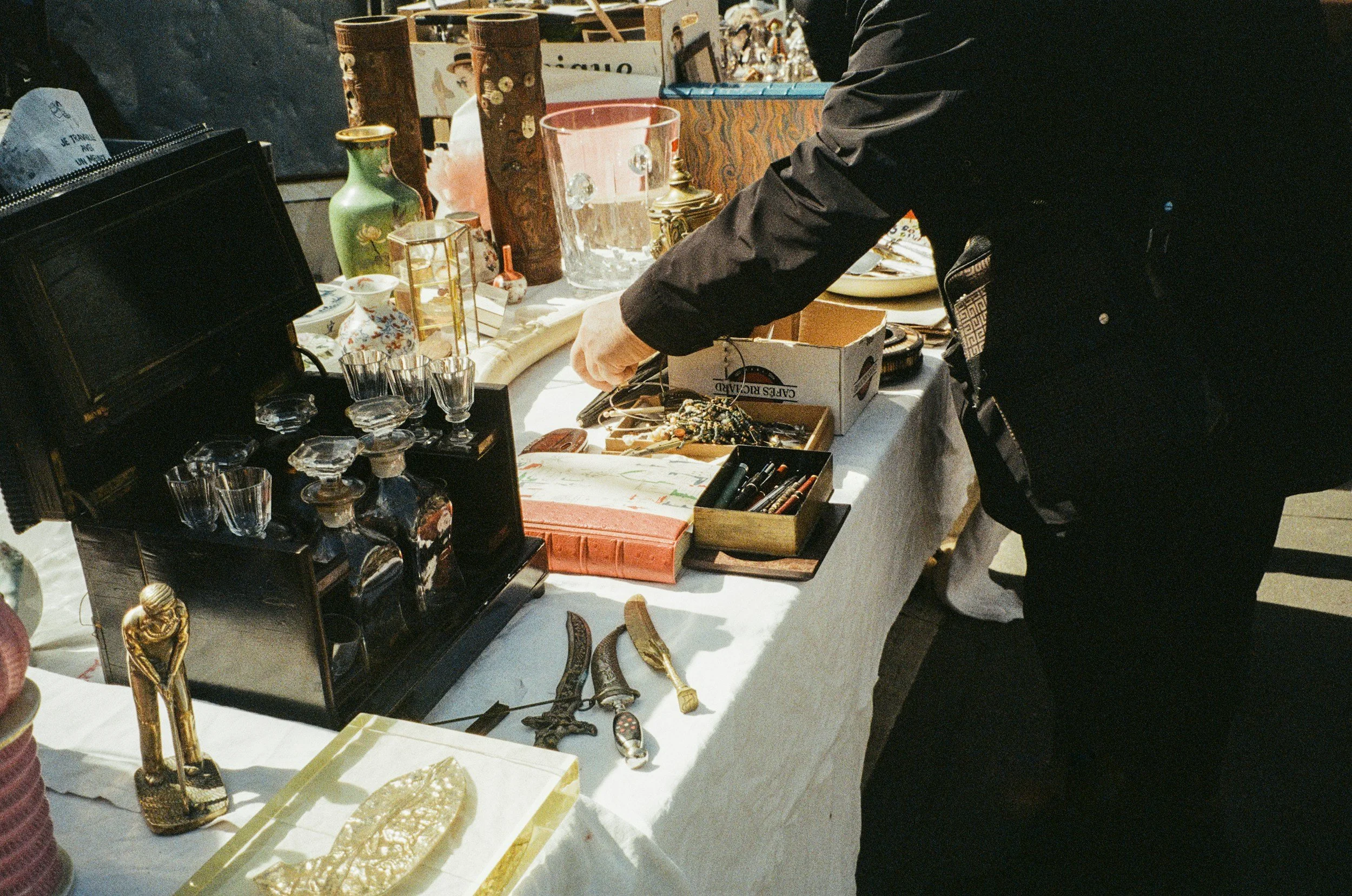
If the market is one of the reasons you're coming to southwest France in the first place, these brocante tips might completely change what you stop to look at next time you're wandering through a French market.
Market day in Figeac
Figeac’s Saturday market is easier to get your head around than the one in Cahors, and that is part of its appeal.
The market is held on Saturday mornings, roughly from 8am to 12:30pm, in the middle of town rather than on a separate market ground. The main areas are the covered market, Place Carnot, Place Vival and Place Champollion, so most of it sits within the part of Figeac where you would probably end up wandering anyway. You do not need to plan a route in the same way. You walk into the centre and the market is simply there.
It is smaller than Cahors, but it is not “thin”. The food offer is very much from the Lot and Quercy: Rocamadour PDO, cabécous, goat’s and sheep’s cheeses, walnuts, Quercy melon in season, mushrooms such as ceps and girolles, free-range lamb, charcuterie, farçous, saffron, fouace, pastis, pompe à huile and Cahors wine. It is the sort of market where you can still buy properly for lunch rather than just browse a few pretty stalls, but you will not spend half the morning wondering whether you have missed another street of producers.
Cahors market feels larger and more town-wide, and Fgeac feels more concentrated. You can start at Place Carnot, move through the covered hall, reach Place Vival and Place Champollion, then circle back without feeling as if you have lost the thread of the morning. For some travellers, that makes Figeac more enjoyable. You can actually see the whole thing, buy what you want, sit down for coffee and still have most of the day left.
Place Carnot is useful as more than just a market square. On Saturday morning it gives you the clearest sense of how Figeac works, because the market, cafés, ordinary errands and visitors all land in the same small area. The town does not split itself into a visitor centre and a local centre. They overlap, which is one reason Figeac can feel more grounded than expected for a town that gets a steady flow of visitors.
Before 10am, the market feels more practical. People are buying vegetables, cheese, bread and things for the weekend. Later in the morning, it becomes easier to drift, stop for coffee and browse without needing to think too much. In summer, especially, the best version of the market is earlier than many visitors arrive. By late morning the centre can feel full, and parking becomes the part of the experience nobody writes romantic paragraphs about.
If you are staying in Figeac, the best plan is not really a plan. Walk in before the town gets too busy, buy a few things you actually want, then let the rest of the morning happen around Place Carnot and Place Champollion. The Musée Champollion is close enough that it can easily become part of the same day, especially if the weather turns or you want something more substantial after the market starts packing away.
Compared with Cahors, Figeac does not dominate your whole morning in quite the same way. That may sound like a disadvantage, but for a long weekend it can be exactly what makes it work. Cahors gives you the bigger market event. Figeac gives you a market morning that is easier to absorb, easier to finish, and easier to fold into the rest of the day without feeling like you have to build the whole weekend around it.
Not sure whether Cahors or Figeac should be your base, or simply one stop on a longer route? These market town stays explain why some French towns are worth spending a few nights in rather than just passing through.
Where you'll spend most of your time
One of the biggest differences between Cahors and Figeac has nothing to do with monuments, museums or market days. It comes down to where you naturally end up spending the hours between breakfast and dinner.
In Cahors, those hours tend to spread out.
You might start the morning with coffee around Place Chapou while market traders are still setting up, wander through the streets around Cathédrale Saint-Étienne, stop inside the Halle de Cahors to see what is left from the morning market and then find yourself walking along Boulevard Gambetta without having consciously decided to go there. The centre covers more ground than many visitors expect and different parts of town have different personalities. The streets around the cathedral feel different from the riverside. The riverside feels different from the commercial centre around Rue Nationale.
That variety is one of the reasons people often end up walking much further in Cahors than they planned.
A typical afternoon might involve a glass of Cahors Malbec at Le Bordeaux, browsing books at Le Bon Air est dans les Livres, then crossing the river towards Pont Valentré before heading back into town for dinner. None of those places are particularly far apart, but they pull you across different parts of the centre and make the town feel larger than it actually is.
Figeac doesn't really work like that.
A lot of weekends in Figeac end up revolving around the same few streets, and that's not a criticism.
Place Carnot, Place Champollion, Rue Séguier and Rue Gambetta sit so close together that they almost blur into one another after a while. You stop for coffee on one square, wander into a side street because a bookshop catches your eye, end up looking in a gallery window for a few minutes and before long you're back near Place Carnot again without having consciously decided to go there.
The centre isn't particularly large, but there is enough packed into it that the same streets can feel slightly different every time you walk through them. One hour you're passing people carrying market bags across the square, later in the afternoon tables are filling up outside cafés, and by evening the restaurants around the old centre start becoming the focus instead.
What stood out to me when researching Figeac was how often people mention returning to the same places. Not because there is nowhere else to go, but because the town makes that easy. A café you stopped at on your first morning suddenly becomes your breakfast place. A wine bar you found by accident on Friday evening ends up being where you return for a final drink before dinner on Sunday.
A lot of people who enjoy Figeac eventually start looking for other towns with the same independent-shop, café-and-market feel. If that's you, take a quick look at Semur next.
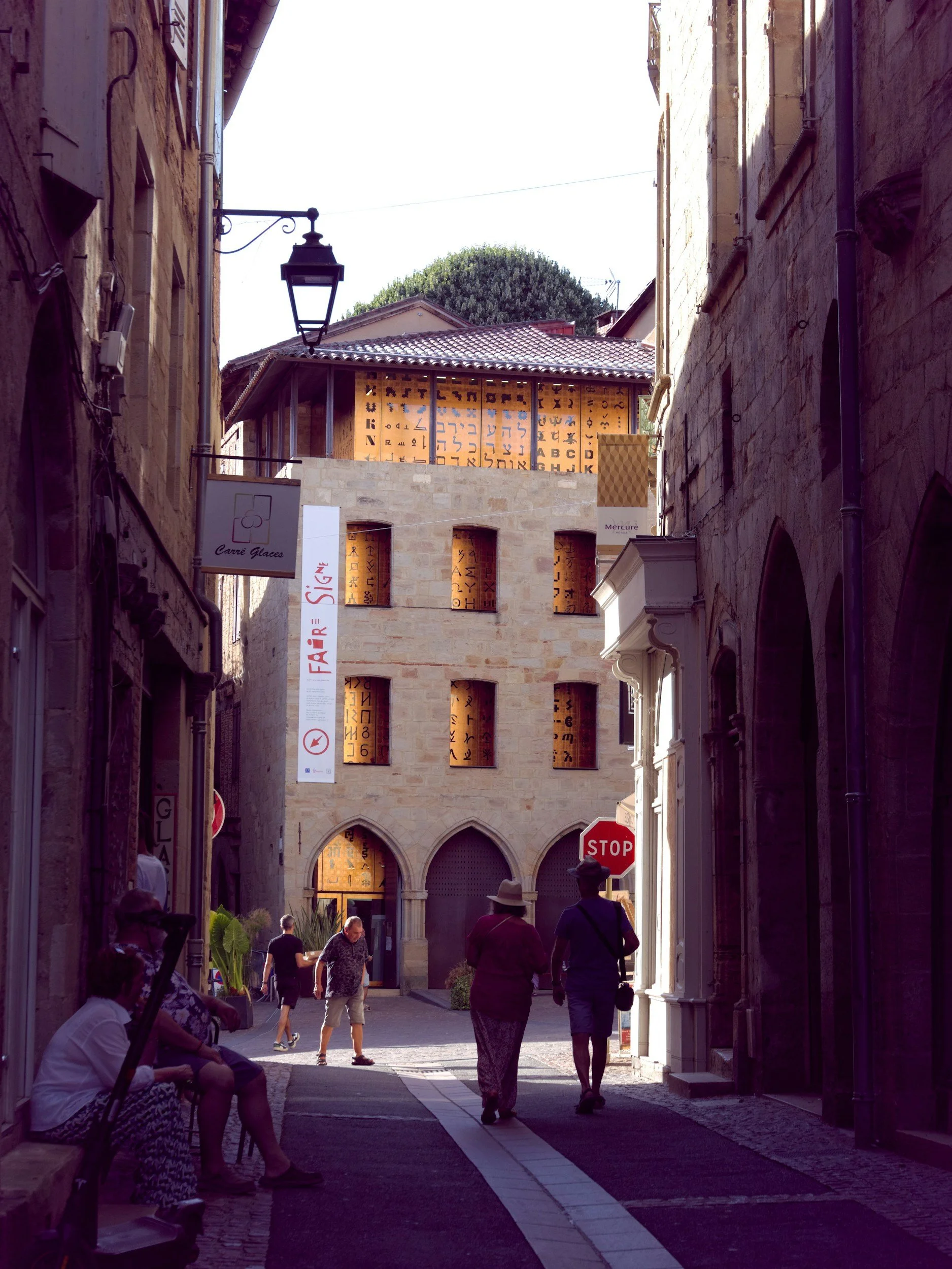
Restaurant in Figeac
In Cahors, people tend to talk about where they walked. In Figeac, they tend to talk about where they kept coming back to.
The independent businesses are a big part of that, and around Place Champollion you'll find small galleries, artisan workshops and locally owned shops mixed in with everyday businesses that local residents actually use. The streets around the Musée Champollion are particularly good for wandering because there isn't one obvious route everybody follows. Some visitors spend half an hour there. Others disappear for most of the afternoon.
After a couple of days, you start noticing that you're spending your time very differently in the two towns.
In Cahors, it's surprisingly easy for an entire afternoon to disappear without spending much time in the same place. You stop for coffee near the cathedral, end up looking around a wine shop on Rue Nationale, wander through streets you hadn't planned to walk down and then find yourself by the river wondering whether it's worth walking out to Pont Valentré before dinner. Most people seem to cover far more ground than they intended when they first left their hotel that morning.
A lot of weekends in Figeac end up revolving around the same small part of town, and that's part of what makes it so enjoyable. Place Carnot, Place Champollion and the streets connecting them become familiar very quickly. You start recognising restaurant terraces, noticing which café tables fill first and developing favourite shortcuts through the old town without really thinking about it.
One afternoon you might stop for a coffee and end up staying longer than planned. The next day you're back in the same area again because that's where lunch sounds good. Then later in the evening you're walking through the same square on your way to dinner. Not because you've run out of places to go, but because so much of the town naturally centres around that area.
The food scene highlights the difference quite well, but before ordering the same dishes everyone else does, it's worth reading about these Lot specialities.
In Cahors, dinner can easily take you to a completely different part of town than where you spent the afternoon. You might have a drink near Place Chapou, eat somewhere around Boulevard Gambetta and finish the evening by the river. There are enough restaurants, wine bars and terraces spread across the centre that your days rarely follow the same route twice.
In Figeac, the old centre remains the focus long after the market has packed away. By the second evening there's a good chance you'll already have a favourite place for a glass of wine, a restaurant you've been recommended twice, or a café terrace you've walked past often enough that it feels familiar.
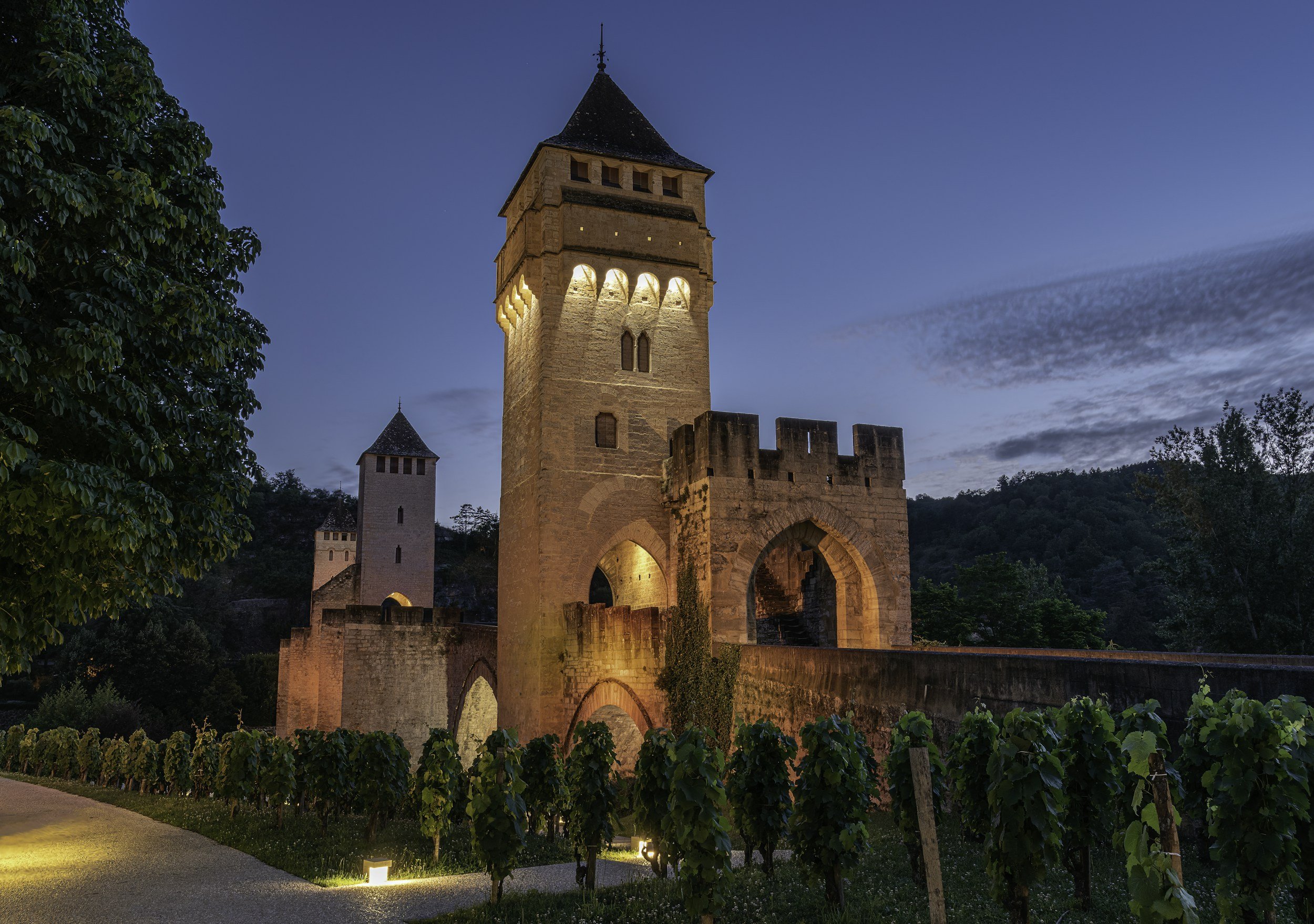
Cahors architecture
Arriving without a car
Cahors is the easier town if you are arriving by train and only have a long weekend to play with.
The station is west of the historic centre, close enough that most people with a normal weekend bag can walk in rather than looking for a taxi. It is not the prettiest arrival in the Lot, but it is straightforward. You come out of the station, head towards the centre, and within fifteen or twenty minutes you can be around Boulevard Gambetta, Place Chapou or the cathedral area, depending on where you are staying. For a Friday afternoon arrival, that matters. You can still drop your bag, go out for a first glass of Cahors wine, and feel as if the weekend has actually started before dinner.
The train connections are the bigger advantage. Cahors sits on the Paris–Toulouse line, so it works better if you are coming from Toulouse, Montauban, Brive, Limoges or Paris without wanting to build the whole trip around transfers. Trains between Cahors and Toulouse usually take around 1 hour 20 to 1 hour 30, with regular daily services, and there are also direct options between Cahors and Paris. That makes Cahors one of the more realistic Lot towns for people who want a car-free weekend rather than a complicated rural transport project.
Figeac is not difficult, but it asks for more patience.
The station is still walkable from the centre, so once you arrive you are not stranded on the edge of town. The issue is usually the journey before that. From Toulouse, Figeac often takes closer to three hours by train, and even the quicker routes are noticeably longer than Cahors. From Rodez, it works much better, with direct regional trains taking a little over an hour, but that only helps if Rodez makes sense for the rest of your trip.
This is the part people often underestimate when they compare the two towns on a map. Cahors and Figeac are not dramatically far apart by car, but the train experience is not the same. Cahors feels like a town you can add quite naturally to a rail trip through southwest France. Figeac feels more like somewhere you choose on purpose, check the timetable for, and probably avoid planning too tightly around a Sunday evening departure.
Sundays are worth mentioning because they can quietly change the whole feel of the trip. Regional trains in rural France often run less frequently at weekends, and while Cahors still benefits from being on a stronger mainline route, Figeac can feel more exposed if your return journey depends on one particular connection. It is the sort of detail that does not seem important when you are planning from home, then suddenly becomes very important when you realise the train you wanted leaves earlier than expected or requires a long wait somewhere along the way.
Taxis are not something I would build a weekend around in either town. You may find one when you need one, especially from the station or through your hotel, but this is not a region where you should assume late-night taxis will appear easily just because they would in a larger city. If your accommodation is outside the centre, check the walking distance carefully before booking. “Just outside town” can mean something very different when you arrive tired, with luggage, after dark.
Once you are in town, both Cahors and Figeac are easy enough on foot, but Cahors is more forgiving if you are travelling fully without a car. You can fill a weekend with the market, Pont Valentré, the cathedral area, the riverside paths, wine bars, restaurants and the walk up to Mont Saint-Cyr without needing to leave town at all.
Figeac is also very walkable, and the centre is easier to understand quickly, but the temptation to explore nearby places arrives sooner. Cajarc, Capdenac-le-Haut, the Célé Valley and Saint-Cirq-Lapopie are the kinds of places people start looking at once they have spent a day or two in town, and that is when not having a car becomes more noticeable.
For a simple car-free long weekend, Cahors is the safer choice.
For Figeac, travelling without a car still works, but the trip is better if the train times are checked properly before you book the hotel.
Still trying to work out whether you can comfortably explore this region without driving? This car-free guide answers most of the questions people usually have before they book.
If you're looking at Cahors and Figeac and thinking, “Maybe I should spend a few extra days in this part of France,” this Lot Valley guide helps you see how the towns, villages and wine country fit together before you start booking accommodation.
Two nights or three?
Two nights is enough for either town.
The first day in Cahors is usually spent around the cathedral, the market and the streets running through the historic centre, but by the third morning many people are still finding reasons to stay close to town. Maybe they never got around to walking up to Mont Saint-Cyr and decide to do it before lunch. Maybe they spent Saturday tasting Cahors Malbec and now want to see where it actually comes from. Château de Haute-Serre is less than twenty minutes away and makes an easy outing, especially if the weather is good and a long lunch among the vines sounds more appealing than another museum or church.
The wine villages west of town fit naturally into the same sort of day. Luzech sits inside a dramatic bend of the river surrounded by vineyards, and Puy-l'Évêque, with its steep lanes and old stone houses dropping towards the Lot, feels completely different despite being less than an hour away. Neither requires military planning or an early start. They're the kind of places people visit because they have another day available rather than because they built the whole trip around them.
That's something Cahors does particularly well. A third day often feels like a continuation of the weekend rather than an attempt to find extra things to do.
By the third morning in Figeac there's a good chance you've already wandered through Place Carnot several times, found a café you like, spent longer than expected in the Musée Champollion and worked out which streets you naturally keep returning to. The town itself becomes familiar fairly quickly, which isn't a criticism at all. In fact, it's one of the reasons people become attached to it.
What often happens next is that the map comes out.
Cajarc is close enough that it can easily become a lunch destination. Capdenac-le-Haut sits dramatically above the valley and takes almost no effort to visit if you have a car. Then there is the Célé Valley, which starts just beyond town and contains some of the most enjoyable drives and small villages in this part of southwest France. Places such as Espagnac-Sainte-Eulalie rarely dominate guidebooks, yet they are exactly the sort of places people end up talking about afterwards.
In Cahors, staying somewhere near Place Chapou, the cathedral quarter or Boulevard Gambetta usually makes sense because so much of the weekend revolves around the town itself. In Figeac, it becomes much easier to justify booking a countryside stay, a chambre d'hôtes in the Célé Valley or a small hotel on the edge of town because there's a reasonable chance you'll spend part of the weekend exploring the surrounding area anyway.
By the time a third night enters the conversation, you're no longer really choosing between two towns.
You're deciding whether you want the weekend to keep drawing you back into the same place or whether you'd rather use that place as a starting point for everything around it.
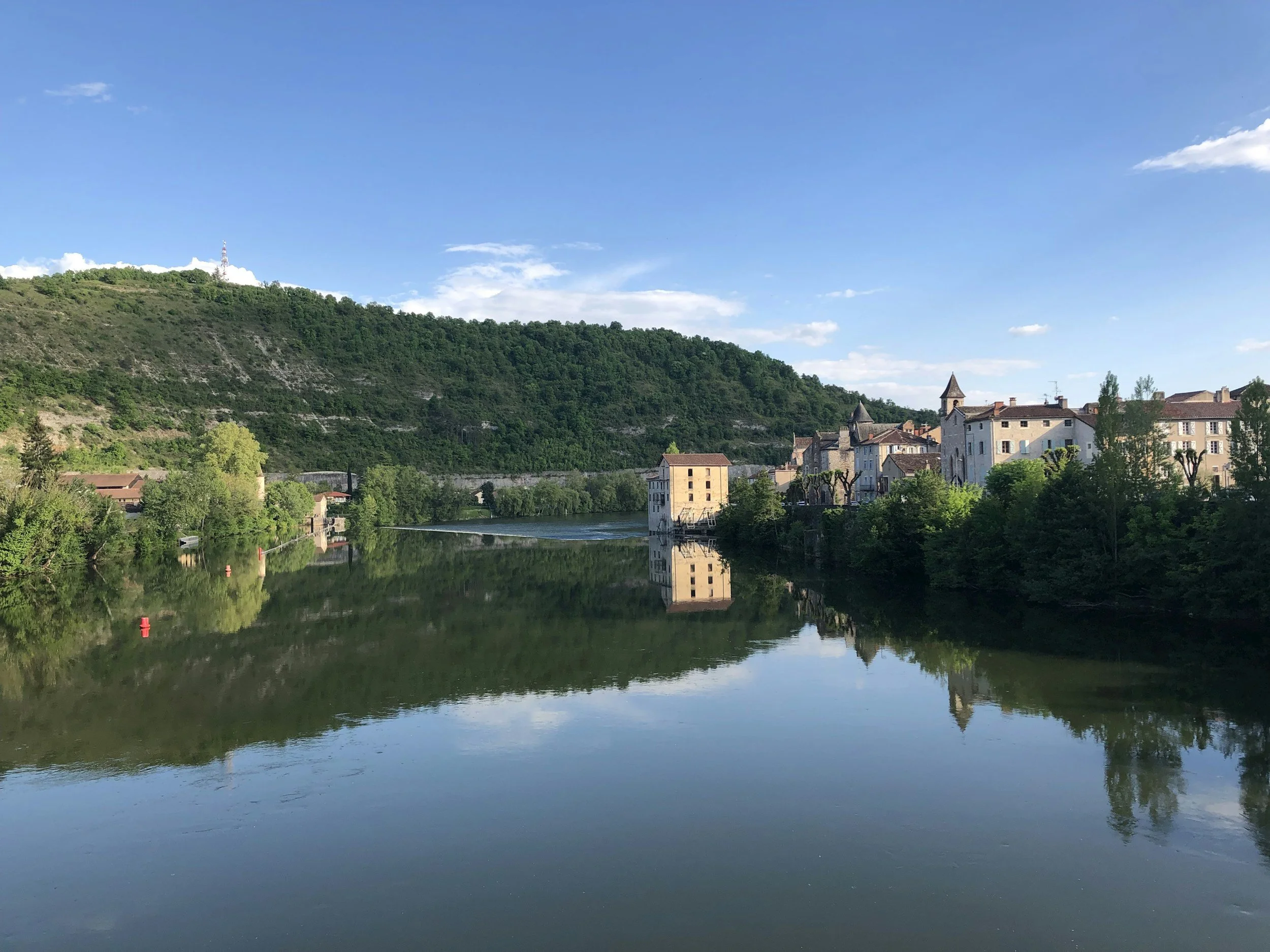
Village square in Figeac
Which town should you book?
Choose Cahors if...
You like the idea of having several different versions of the same day available to you.
One of the things Cahors does particularly well is give you options when your plans change. If the weather is perfect, you can spend most of the day outdoors around the river and the viewpoints above town. If it starts raining, there are enough cafés, wine bars, shops and indoor places to disappear into without feeling as though the day has been ruined. If you wake up on Sunday and decide you'd rather spend the afternoon driving through vineyard villages than wandering around town, that works too.
I also think Cahors suits travellers who enjoy food as part of a trip rather than simply something that happens between activities. The town has enough wine bars, speciality food shops and restaurants that it's easy to build an afternoon around a long lunch without feeling guilty that you're missing something more important elsewhere.
And while this might sound like a small detail, Cahors gives you more room to improvise. You don't need a particularly detailed plan before arriving. A lot of people simply book a hotel in the centre, show up and figure the rest out as they go.
Choose Figeac if...
You're the kind of traveller who remembers a favourite café more clearly than a famous sight.
Figeac tends to appeal to people who enjoy returning to the same places rather than constantly looking for new ones. The centre is small enough that by the end of the first day you'll probably already have opinions about where you'd like breakfast tomorrow, which streets are nicest in the evening and which square you'd choose if you had an hour to sit with a book and a coffee.
There's also something slightly unexpected about Figeac. The town receives visitors, but it doesn't always feel as though it is performing for them. Outside market hours and summer weekends, daily life continues at a fairly ordinary pace. Shops close. People run errands. The centre belongs to local residents as much as visitors.
That becomes increasingly noticeable the longer you stay.
If your ideal weekend involves antique shops, independent bookshops, long lunches, a bit of wandering and the occasional moment where you realise you've spent twenty minutes looking at old doorways and stone façades without actually going anywhere, Figeac tends to fit that mood very well.
The town also works surprisingly well for travellers who enjoy discovering places almost by accident. Not major attractions. Just small things. A bakery you hadn't planned to visit. A wine bar hidden down a side street. A viewpoint you weren't expecting. Those moments seem to happen more often in Figeac than they do in Cahors.
The truth is that most people who choose either town end up happy with the decision.
The better question is probably what you picture yourself doing at eleven o'clock on a Sunday morning.
If the answer involves another stroll through a market, browsing food shops and deciding where to have lunch, I'd book Cahors.
If it involves settling into a café terrace for longer than intended before wandering through the same streets you've already walked three times because you genuinely don't mind seeing them again, I'd book Figeac.
Some travellers end up choosing Figeac because they enjoy towns where cafés, bookshops and everyday life are as interesting as the main sights. If that's what appeals to you, you'll probably enjoy Montolieu too.
Before you book
The funny thing about Cahors and Figeac is that they look much more similar online than they do once you're actually there.
If you spend enough time researching the Lot, you'll see the same kinds of photos for both towns. Market stalls. Stone buildings. Café terraces. Historic squares. It's easy to come away thinking you're basically choosing between two versions of the same weekend.
You're not.
What struck me while putting this comparison together was how quickly the conversation moves away from sights once people have actually visited. Nobody seems particularly interested in comparing churches or museums afterwards. Instead, they're talking about where they stayed, whether they wished they had booked an extra night, whether they spent more time in town than expected, or whether they ended up disappearing into the countryside for most of the weekend.
That's probably why this decision is harder than it first appears…
The photos don't tell you that Cahors feels noticeably bigger once you're walking around it. They don't tell you that Figeac becomes familiar surprisingly quickly, or that a third day can look completely different depending on which town you've chosen as a base.
If you're still undecided at this point, I'd stop looking at photos altogether.
Look at a map instead, and see what sits within twenty or thirty minutes of each town. Look at the restaurants. Look at where you'd stay. Think about what you'd realistically do on a Sunday afternoon when the market is over and you're not particularly interested in visiting another museum.
That's usually where the answer starts appearing.
And if you're anything like most people who visit the Lot, there's a decent chance you'll end up wanting to come back and try the other town anyway.
If you're comparing several destinations in southern France before making a decision, these Occitanie favourites might save you a surprising amount of research.
FAQ:s about Cahors and Figeac
Which town feels less touristy, Cahors or Figeac?
Neither town feels heavily tourism-focused in the way that places such as Sarlat or Saint-Cirq-Lapopie can during the summer, but they feel different once you spend a few days there.
Cahors functions as the administrative centre of the department, so daily life continues regardless of whether visitors are in town or not. People are going to work, shopping, meeting friends and running errands. Tourism is visible, but it isn't the whole story.
Figeac feels smaller and more local, particularly outside the busiest summer weeks. Much of the centre still revolves around residents rather than visitors, and that's especially noticeable once the market has packed away and day-trippers have left.
Is Cahors or Figeac better without a car?
Cahors is generally the easier choice if you want a completely car-free weekend.
The train station is close to the centre, the connections are better and there is enough happening within the town itself that most visitors never feel the need to leave. Between the market, wine bars, restaurants, riverside walks and viewpoints, two or three days can pass quite comfortably without touching a car.
Figeac also works well on foot, but many visitors eventually find themselves looking at places such as Cajarc, Capdenac-le-Haut or the Célé Valley. That's when not having a car becomes more noticeable.
Which town has the better market?
If market day is one of the main reasons for the trip, Cahors probably wins.
The Saturday market spreads across a larger area around Place Chapou and the cathedral quarter, and the atmosphere feels bigger from the moment you arrive. There are more stalls, more producers and more people filling the centre.
Figeac's market is smaller but easier to explore. Most of it sits around Place Carnot, Place Champollion and the covered market hall, making it possible to see the entire market without feeling overwhelmed.
Which town is better for cafés and people-watching?
Figeac.
Not because it necessarily has more cafés, but because so much of the town revolves around the same few squares. Place Carnot in particular becomes part of daily life very quickly. You have coffee there one morning, walk through again after lunch and find yourself back in the same area before dinner.
In Cahors, cafés are spread across a wider area, which means people tend to keep moving around town rather than settling into one place for long periods.
Is Figeac too small for a weekend?
For two nights, no.
Most visitors have no problem filling a weekend between the market, the old town, cafés, restaurants and the Musée Champollion. The question becomes more relevant once you start looking at three or four nights.
At that point, many people begin exploring nearby places such as Cajarc or the Célé Valley. That's not because Figeac suddenly becomes boring. It's simply because the centre becomes familiar quite quickly.
Which town is better for a three-night stay?
This depends on how you travel.
A third night in Cahors often means going deeper into the town itself, spending more time around the wine region, visiting places such as Luzech or Puy-l'Évêque, or finally getting around to things you skipped on the first two days.
A third night in Figeac often means the surrounding area becomes part of the trip. Cajarc, Capdenac-le-Haut and the villages of the Célé Valley start appearing on the itinerary much sooner.
Which town works better as a base for exploring the Lot?
Figeac generally works better as a base.
Its position in the eastern part of the department makes it convenient for the Célé Valley, Cajarc, Capdenac-le-Haut, Rocamadour and parts of the Aveyron.
Cahors works better if your focus is the western Lot, the Cahors wine region and the vineyard villages surrounding the town.
Which town has better restaurants?
Cahors has more choice.
The larger population supports more restaurants, wine bars and dining options spread across different parts of town. If you're staying for several nights and like trying somewhere different each evening, Cahors gives you more flexibility.
Figeac's restaurant scene is smaller, but many of the best options sit within a few minutes' walk of each other around the historic centre, which makes evenings feel very easy and relaxed.
Which town is quieter in the evening?
Figeac.
Outside summer and major events, evenings become noticeably quieter once dinner service winds down. That's part of the appeal for many visitors, but it's worth knowing before you book.
Cahors isn't exactly lively by big-city standards, but it tends to retain more activity later into the evening, particularly around the cathedral quarter and the central restaurant areas.
Which town is better in October?
October is actually a great month for both.
The summer crowds have largely disappeared, temperatures are usually comfortable for walking and the surrounding countryside begins changing colour.
Cahors tends to feel slightly busier because of its larger resident population, while Figeac becomes particularly atmospheric once the peak season has ended and the centre returns to everyday local life.
Which town would I choose for a first visit to the Lot?
For a first trip, I'd usually lean towards Cahors.
The train connections are simpler, the market is larger, there are more restaurants and it's easier to fill a long weekend without needing to leave town.
That said, many travellers who fall in love with the Lot end up preferring Figeac later on. It often appeals to people who enjoy smaller market towns and don't mind a quieter atmosphere.
Which town is better for food and wine lovers?
Cahors has the advantage here.
The town sits at the centre of one of France's oldest wine regions, and local Malbec appears everywhere from wine bars to specialist shops and restaurant menus. Vineyard visits, tastings and wine-focused lunches are easy to incorporate into a weekend.
Figeac has excellent local food, markets and restaurants, but the experience tends to revolve more around the town and surrounding countryside than around wine tourism.
Which town is better for bookshops, galleries and independent shops?
Figeac often surprises people here.
The streets around Place Champollion and Rue Séguier contain a concentration of independent businesses, small galleries and locally owned shops that feel closely tied to the town itself. Much of the pleasure comes from wandering rather than shopping with a specific destination in mind.
Cahors has more shops overall, but they are spread across a larger area and mixed into a busier commercial centre.
Can you visit Cahors and Figeac on the same trip?
Absolutely.
They're close enough that many travellers include both during a week in the Lot. The mistake is trying to squeeze both into a short weekend.
If you only have two or three nights, most people get more out of choosing one town and exploring it properly rather than constantly moving between destinations. The two towns are similar enough that you'll see some overlap, but different enough that each deserves its own trip.