Don't leave when the market closes
If you arrive in Uzès at 11am on a Saturday in May, it can honestly feel like a mistake to stay overnight.
The market around Place aux Herbes is so busy by late morning that most people assume the town has already peaked before lunch. You squeeze past tables near Café Ernest, buy olives you probably don’t need, circle through Rue Jacques d’Uzès with everyone else, then start wondering whether to continue toward Avignon or Nîmes before the buses get crowded.
Then around 18:30, the whole place changes.
The market stalls are gone. Restaurant staff drag tables back across the square after the long afternoon closure. Small groups start gathering outside the wine bars near Place Dampmartin instead of the main square, and suddenly the town feels far less exhausting than it did six hours earlier. People who are actually staying overnight start replacing the daytime crowd.
That shift happens in a lot of French market towns, but not all of them.
Some places collapse completely once the market packs down. You walk through empty streets at 20:00 looking for somewhere still serving wine and realize the entire town basically operates between breakfast and lunch. Others become noticeably better after the market closes, especially once the excursion traffic leaves and locals drift back into the centre for apéro.
Those are usually the towns worth building an overnight stop around.
Not necessarily the biggest markets or the most photographed towns. More often the places where the evening still has momentum after the stallholders leave. Where people linger outside wine bars on a Tuesday in October. Where dinner starts later than expected and nobody seems in a rush to move tables along.
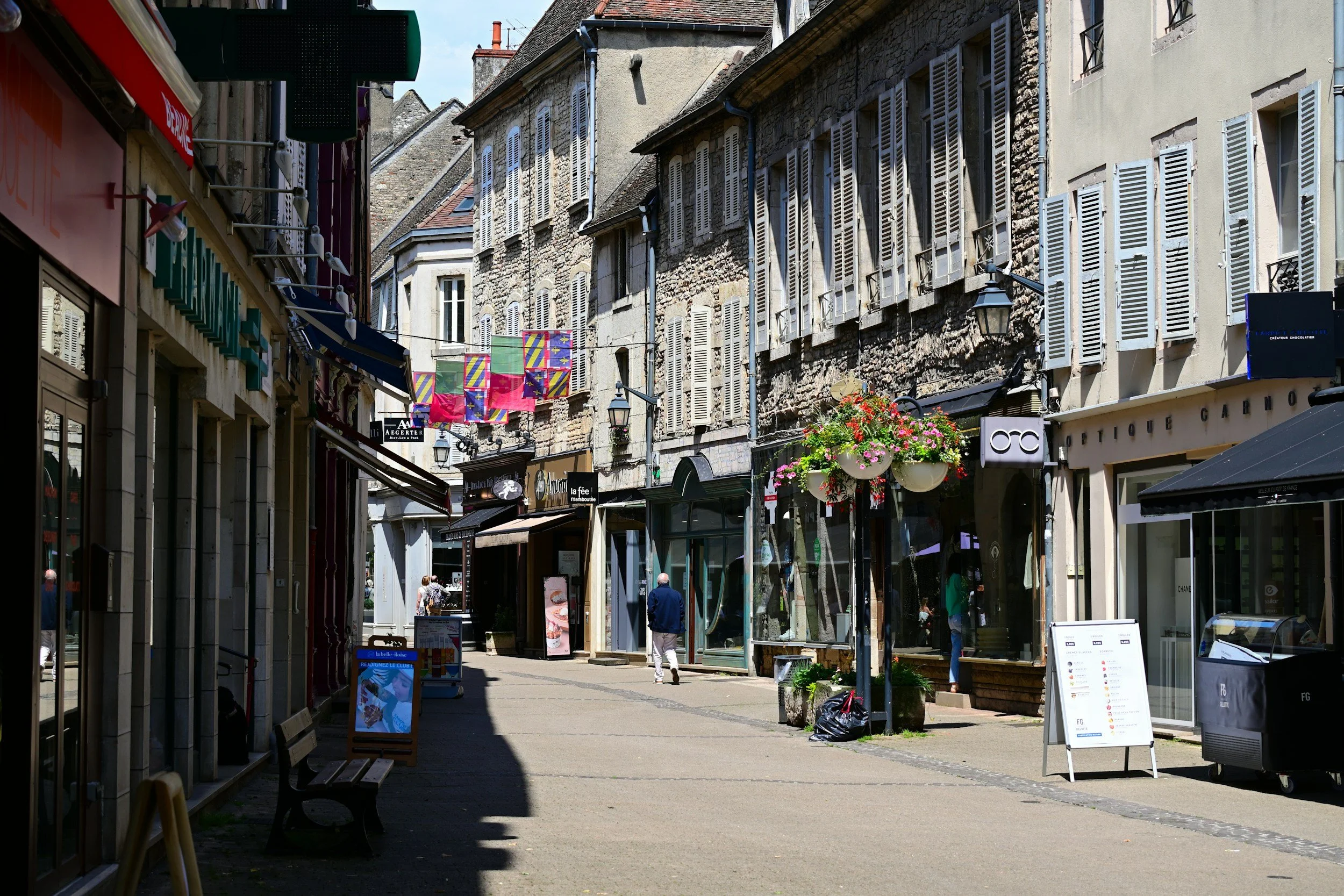
The practical side matters too, and most travel guides skip over it entirely. Some towns are genuinely easy without a car. In Beaune, you can walk from the station into the centre in under fifteen minutes without thinking about logistics much at all. In Pézenas, arriving after 19:00 without a car becomes annoying quickly because the bus connections from Agde and Béziers thin out early. In Cahors, the first walk from the station feels oddly unremarkable until the streets suddenly tighten near Rue Nationale and the older part of town starts making sense properly.
Timing changes these places more than people expect.
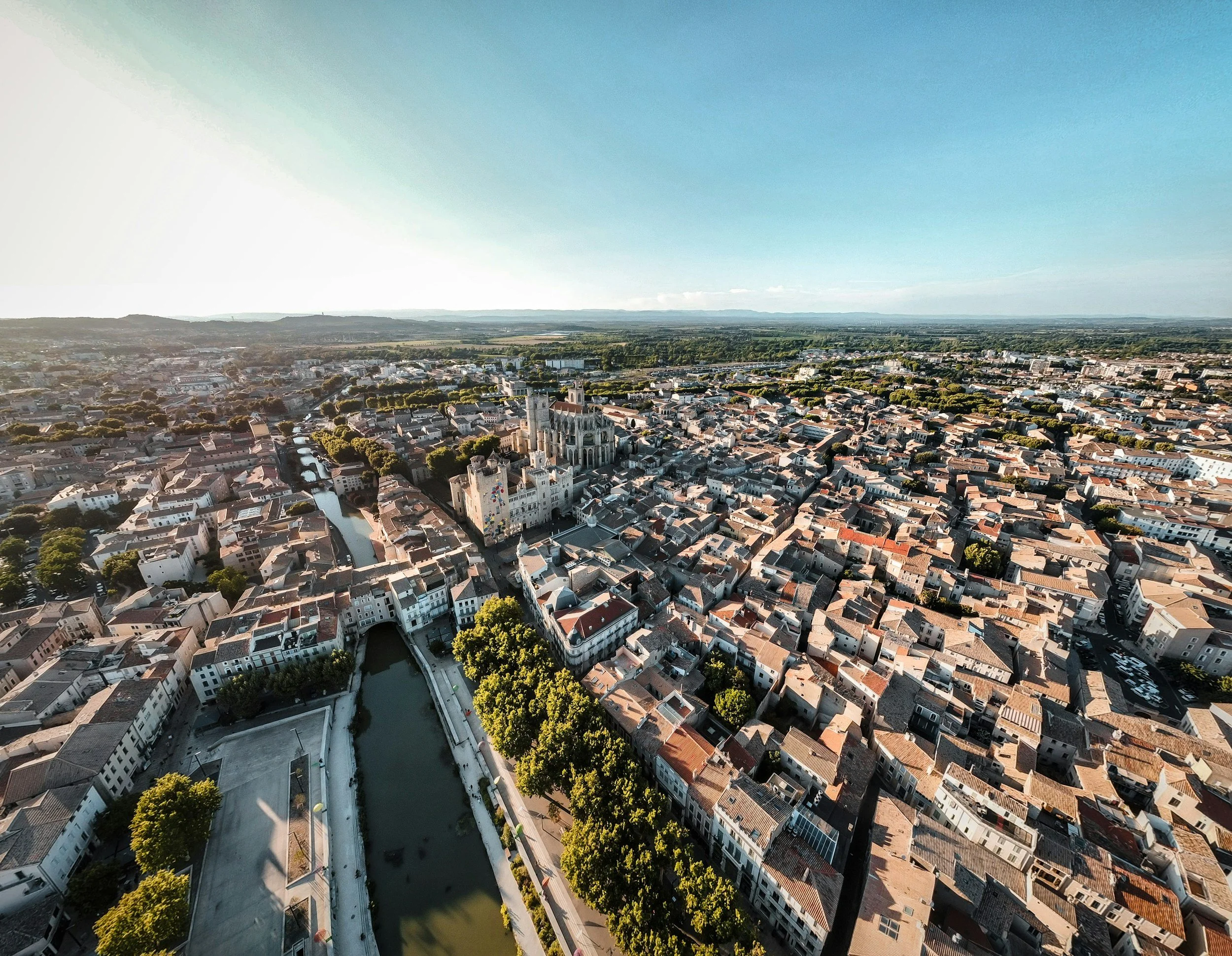
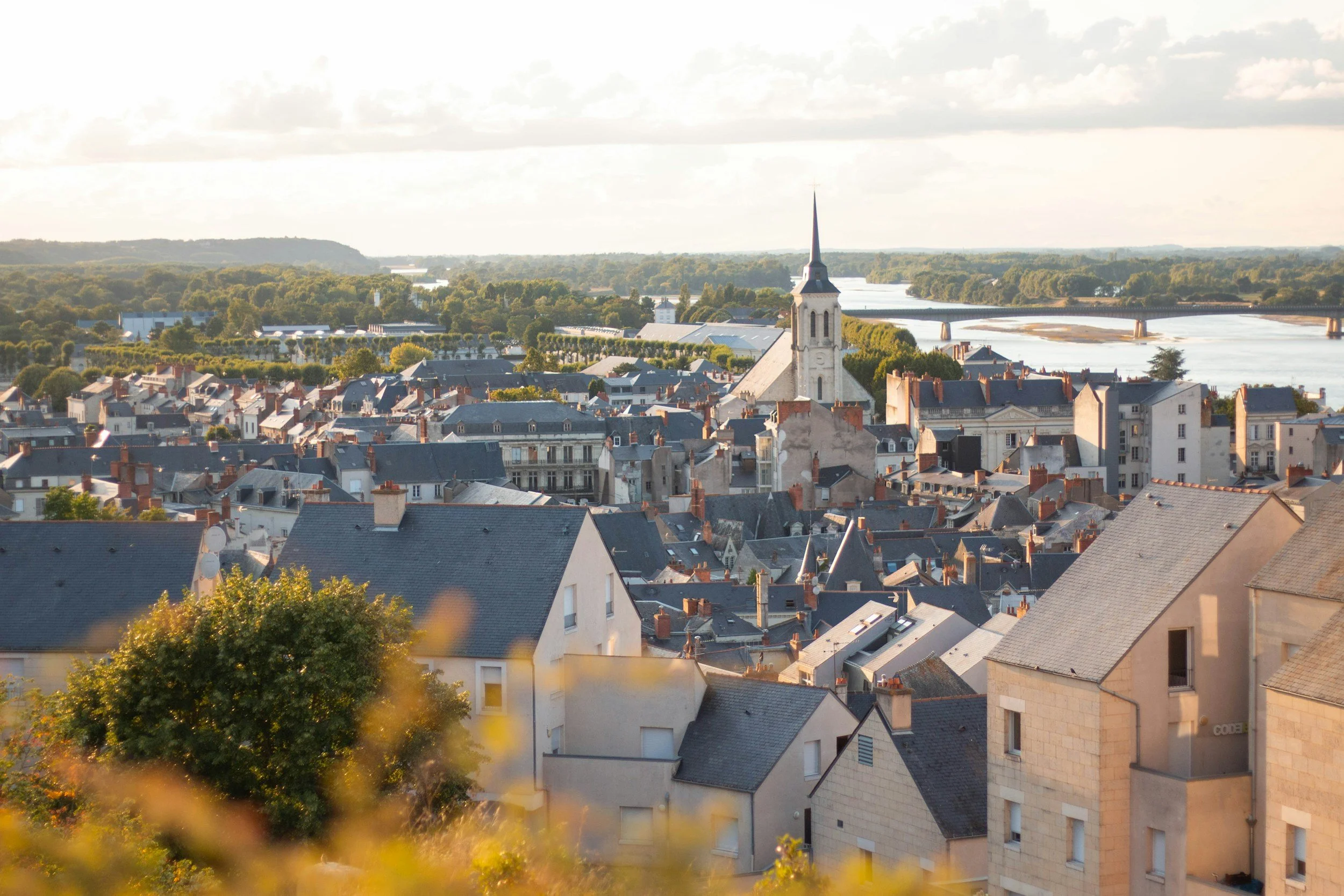
Narbonne still feels alive around Canal de la Robine well after dinner in October, long after the summer beach traffic disappears. Colmar becomes almost impossible to enjoy calmly during the peak Christmas market weeks but settles completely differently by late September once the day-trippers thin out. In Saumur, the riverfront starts filling properly closer to 20:00 during warmer evenings because the heat lingers hard against the pale stone all afternoon.
And honestly, some towns simply work better once you stop treating them like checklist destinations.
The best evenings are usually not the polished wine tastings people pre-book months ahead. They happen after the market bags are already back at the hotel, when somebody orders one glass outside a small cave à vin on Rue Maufoux in Beaune and accidentally stays for two hours. Or when tables start filling outside Le Comptoir de la Cité in Carcassonne after most visitors have already left the medieval walls for the evening. Or sitting near Les Halles in Narbonne around apéro hour when the oyster counters are still loud and nobody seems particularly concerned about dinner reservations yet.
That’s the version of these towns most people miss entirely because they leave too early.
Uzès feels completely different once the market crowd disappears
Saturday mornings in Uzès can feel slightly overwhelming if you arrive at the wrong time, because by around 10:30 Place aux Herbes is usually so packed that people start spilling into the surrounding lanes just to escape the centre for a few minutes. Tables outside Café Ernest fill early, the line for ice cream at La Fabrique Givrée somehow already exists before lunch, and half the town seems to be moving slowly between olive stalls, striped market bags, baskets of apricots, and tiny paper cups of tapenade being handed out under the plane trees.
Most people stay around the main square the entire time too. They do one lap through the market, buy goat cheese or strawberries they probably didn’t plan on carrying all day, stop for oysters and a glass of white wine somewhere under the arches, then head back toward Nîmes or Avignon before the town even begins settling into the evening. Which is honestly why Uzès still feels surprisingly calm overnight despite how busy the market gets.
Around 17:30, the whole atmosphere changes and the town finally starts breathing again a little.
The market stalls disappear, restaurant staff drag tables back across the square after the long afternoon closure, shutters reopen slowly along Rue Jacques d’Uzès, and suddenly you can actually walk through the old town without constantly weaving around people stopping in the middle of the street. The smaller lanes behind the Duché become quieter first, especially around Rue Xavier Sigalon and Place Dampmartin where the evenings feel less tied to tourism and more like people naturally ending up outside after work for a drink before dinner.
Honestly, some of the nicest food and wine spots in Uzès are not directly on Place aux Herbes at all, especially once the daytime crowd leaves and the town spreads outward a little more naturally.
Le Zanelli starts filling slowly around apéro time rather than at dinner itself, and the atmosphere outside becomes much better later in the evening once the market visitors have mostly disappeared. A few streets away, Ten has one of the more interesting natural wine lists in town without making the experience feel overly serious or performative, and people tend to stay longer than they planned while sharing small plates and ordering another bottle almost by accident. Maison Abel usually stays lively late into the evening as well, especially on warmer weekends when people spill onto the terrace after dinner instead of heading straight home.
One thing Uzès does particularly well is that the evenings move gradually between places instead of revolving around one fixed reservation. People stop for a glass at a cave à vin near Boulevard Gambetta, disappear into the smaller lanes for dinner somewhere behind the square, then slowly drift back outside afterward for another drink or dessert once the temperature finally cools down properly.
The food atmosphere changes quite a bit after the market closes too. During the daytime, nearly everyone crowds the obvious café terraces around Place aux Herbes, but in the evening people spread out into quieter streets where the pace feels calmer and less compressed. You start noticing smaller places like Les Petites Mains more naturally at that hour, along with wine-focused menus hidden behind old stone doorways you probably walked straight past earlier in the day without even realizing.
If you continue walking beyond the main square for another ten minutes, the town becomes quieter surprisingly quickly. Around the Fenestrelle Tower and Rue Saint-Théodorit there are little galleries still open during summer evenings, independent homeware shops closing slowly for the night, and small pockets where locals sit outside talking long after dinner without the centre itself feeling busy anymore. Galerie Akka often keeps exhibitions open later during the warmer months, while Librairie de la Place aux Herbes becomes noticeably calmer in the evening once people stop rushing inside for shade or air conditioning during the market rush.
One of the nicest evening walks is down toward the Jardin Médiéval just before sunset, when the rooftops around Uzès catch the light differently once the heat finally starts lifting from the stone walls and you can still hear glasses clinking from the terraces below without actually being in the middle of the crowd anymore.
The mornings after staying overnight are honestly just as good as the evenings, which is probably the strongest argument for not treating Uzès as a rushed day trip.
Around 07:30, delivery vans move through streets that will become shoulder-to-shoulder busy only a few hours later, bakers start opening one by one, and café staff scrape chairs across the square while setting up terraces for breakfast service. Grabbing a coffee and pastry from Le Calicot before the market fully starts feels almost strange after seeing how hectic the town becomes later in the morning.
The logistics shape the pacing more than people expect too. Uzès does not have a train station, and the buses from Nîmes become annoying later in the evening or on Sundays, especially if you are carrying luggage or trying to time connections back toward Avignon. Trying to squeeze Uzès into a rushed day trip usually ends up feeling far more stressful than the town itself actually is once you slow down enough to stay overnight.
And Sunday evenings outside peak summer can get very quiet. Not in a bad way exactly, but quiet enough that it genuinely helps if you booked a hotel terrace or restaurant you actually want to hang around for a few hours.
If Uzès in high summer sounds slightly too intense during market hours, this look at autumn in Uzès gives a much more realistic sense of when the town actually feels comfortable to stay overnight.
A lot of people trying to choose between Uzès and Pézenas for a weekend end up underestimating how different the evenings feel once the market crowd disappears, which is exactly why this weekend comparison helps so much before booking anything.
Beaune works better if you avoid treating it like a wine capital
A lot of people arrive in Beaune with extremely ambitious Burgundy plans and end up exhausting themselves within about four hours.
You can usually spot them somewhere near the Hospices around midday, standing outside with a printed tasting schedule, trying to work out whether they still have time to get to Pommard before a cellar visit in Meursault at 15:00. Burgundy trips can become strangely stressful once every glass of wine starts feeling like an appointment.
Beaune works much better when the wine becomes part of the background instead of the entire structure of the day.
Saturday mornings around Place de la Halle are busy in a way that still feels connected to local life rather than just tourism. Older residents queue for roast chicken near the covered market, people balance tiny espresso cups on market bags outside the fromageries, and by late morning the terrace at Le Conty is usually packed tightly enough that waiters start squeezing sideways between tables carrying glasses of Aligoté and plates of œufs en meurette.
Most visitors stay concentrated around the Hospices and Place Carnot for most of the afternoon too, especially once the tasting rooms start opening properly, which is why the town changes so noticeably later in the day.
Around 16:30 or 17:00, Beaune starts “relaxing” a little.
The tour buses disappear first, Rue de l’Hôtel-Dieu suddenly becomes walkable again, and the centre settles into a much softer rhythm once the tasting appointments finish and the overnight crowd slowly replaces the daytime visitors. Shops along Rue Monge begin pulling shutters halfway down for the evening while wine bars start filling for apéro rather than formal dégustations, which honestly feels like the moment Beaune finally becomes itself again.
The nicest evenings usually happen slightly outside the obvious restaurant zone around Place Carnot. If you walk toward Rue du Faubourg Bretonnière or continue down Rue Maufoux once the tasting rooms empty out, the atmosphere changes pretty quickly. Ma Cuisine still draws people looking for traditional Burgundy food and serious wine without much fuss around it, while places like La Dilettante feel more relaxed and spontaneous, especially later in the evening when people spill outside with bottles from smaller producers around the Côte Chalonnaise and Mâconnais instead of only the big famous labels. At Biz’Tro, the atmosphere becomes much livelier after dark once locals finish work and the dinner crowd stretches well into the evening.
One thing Beaune does particularly well is the long stretch between market hours and dinner service, when nobody seems especially rushed to decide where the night is going yet.
People drift slowly between places instead of staying in one restaurant all evening. Someone stops for one glass near Place Carnot, disappears into Athenaeum bookstore for half an hour longer than expected browsing wine books and regional cookbooks, then ends up somewhere else ordering jambon persillé and another bottle because dinner reservations are not until 21:00 anyway.
And honestly, some of the best parts of Beaune have very little to do with wine itself…
The antique shops near Rue d’Alsace stay open surprisingly late during summer weekends, Athenaeum is one of the few bookshops in wine regions where people genuinely linger instead of just photographing shelves, and if you walk along the ramparts near Boulevard Perpreuil just before sunset, the centre suddenly becomes much quieter while restaurant kitchens start sending smells of butter, garlic, and slow-cooked beef into the side streets below.
The food side of Beaune also becomes much more interesting once you stop focusing only on famous addresses.
Yes, people still reserve Ma Cuisine months in advance, but some of the better evenings happen more casually at places like Biz’Tro where the terrace fills gradually after 19:30, or at Caveau des Arches where dinner stretches late because half the room eventually starts talking about wine across tables. Even around Rue Maizières, which can feel slightly formal and busy during the middle of the day, the atmosphere settles considerably once the afternoon tasting crowd disappears.
The afternoons catch people off guard though, especially first-time visitors.
Between roughly 14:30 and 18:00, parts of Beaune become far quieter than people expect from somewhere with such an international wine reputation. Smaller bars stay closed until apéro time, some shops shut entirely for the afternoon, and even the streets around the Hospices can suddenly feel almost empty once lunch service finishes.
That lull is part of the vibe here, and honestly Beaune works much better once you stop trying to fill every hour with vineyard plans.
Some of the nicest moments happen in between everything else anyway! Like sitting outside with one glass turning into two because nobody seems interested in rushing the table along, walking through the centre once the stone streets cool down slightly after the heat of the afternoon, or grabbing pastries early from Boulangerie Marie Boucherot while delivery vans squeeze through roads that will be crowded again a few hours later.
One thing people misjudge about Beaune is how easy it actually is without a car, especially compared to how intimidating Burgundy sometimes sounds when people start talking about wine routes and vineyard villages. The station sits close enough to the centre that arriving with luggage is straightforward, even later in the evening, and most overnight visitors can comfortably walk everywhere without needing taxis or complicated planning.
Most people only experience Beaune during the busiest part of the day, which is probably why so many of them miss the version that actually makes staying overnight worthwhile.
Beaune works very differently from smaller Burgundy towns once evening starts taking over from daytime wine tourism, and this guide to Semur-en-Auxois helps if you are trying to figure out whether you actually want Burgundy wine culture or just a calmer overnight base.
In Narbonne, the evenings begin before the market finishes
Narbonne feels different from a lot of the inland market towns because the food culture and wine culture already blend together long before dinner starts.
At Les Halles, people are drinking wine before noon without anybody making a thing out of it. Oyster counters stay busy late into the morning, waiters squeeze through the crowd carrying plates of bulots and glasses of Picpoul, and groups stand outside talking for so long that it becomes difficult to tell whether they are still on lunch or already halfway into the evening. At Chez Bebelle, somebody is usually yelling orders across the market while steaks wrapped in butcher paper get passed dramatically through the crowd, and a few stalls away people stand shoulder-to-shoulder eating oysters with white wine while everyone else is still trying to decide where to have lunch.
The funny thing is that Les Halles almost empties surprisingly quickly after the lunch rush. By around 15:00, parts of the market suddenly feel calm again after being almost chaotic only an hour earlier, and that’s usually when Narbonne starts becoming much more enjoyable to walk through.
Which is honestly why the town works so well overnight.
The station helps a lot too. You can step off a train from Montpellier, Toulouse, Perpignan, or Barcelona later in the afternoon and be walking along Canal de la Robine ten minutes later without needing taxis or complicated transfers. That changes the whole rhythm of the place because people arrive gradually throughout the day instead of all at once for the market.
Around sunset, the daytime shoppers thin out, tables along Cours Mirabeau begin filling more slowly with people actually staying overnight, and the wine bars shift naturally from quick daytime glasses into long evening apéros. The light around the canal gets softer too, especially near Pont des Marchands where the reflections from the old buildings start catching on the water just before dinner service properly begins.
The wine lists here feel very different from Burgundy.
Nobody is treating every bottle like a museum piece. Menus lean heavily toward Corbières, Minervois, Fitou, and La Clape wines that people order casually by the glass while sharing anchovies, oysters, charcuterie boards, or little plates that somehow turn into dinner without anyone formally deciding that was the plan. At La Part des Anges, people stay outside for hours once the temperature drops slightly in the evening, while nearby at Chez Marius the tables fill gradually with locals ordering seafood and cold white wine long before tourists even start thinking about dinner.
If you want somewhere quieter, L’Estagnol near the canal usually stays calmer than the busiest terraces around Cours Mirabeau, especially earlier in the evening before the dinner crowd fully spreads through the centre. And around Rue Droite, some of the smaller wine bars barely get going before 20:30, which catches people off guard if they are used to earlier dinners further north in Europe.
One thing Narbonne does especially well is that stretch between around 18:00 and 21:00 when the whole centre feels alive without becoming chaotic.
People drift between places instead of staying in one spot all evening. Someone stops for one glass near the canal, disappears into Librairie Libellis for twenty minutes longer than planned, then ends up somewhere else ordering another bottle because dinner reservations are not until later anyway. The smaller independent shops around the old centre also stay open later than people expect during warmer months, especially the wine boutiques and little homeware shops tucked into the streets behind the cathedral.
There are also a few places that make much more sense once you stay overnight instead of rushing through for the market. Fromagerie Beillevaire near Les Halles becomes useful the next morning if you want to put together a train picnic before leaving town, and Maison Saint-Crescent’s bakery counter is one of those places people quietly return to twice during the same stay without really planning to.
If you wander farther away from Les Halles in the evening, Narbonne becomes much prettier than people often realize during the daytime rush.
Rue Droite and the smaller lanes around the cathedral quiet down a lot once the market crowd disappears, and some of the nicest corners of the old town are actually the streets people rush through during the middle of the day without noticing properly. Around Place de l’Hôtel de Ville the terraces stay lively well into the evening, but if you continue farther behind the Palais des Archevêques, the atmosphere changes quickly and becomes much calmer.
One of the nicest evening walks is up near the cathedral cloisters just before dark, especially when the stone still holds some warmth from the day and you can hear glasses clinking from the canal terraces below without actually standing in the middle of the crowd yourself. During summer, smaller gallery spaces near Rue Gustave Fabre often stay open later too, and the whole area feels more local once dinner service starts pulling people away from the canal.
Narbonne is still a functioning regional city though, and that catches people off guard sometimes. Parts of it feel practical rather than high-end, especially near the station roads and larger boulevards outside the older centre. It is not preserved in the same way as somewhere like Uzès or Colmar.
Honestly, that is partly why the evenings feel more natural here. A lot of people passing through Narbonne end up continuing toward Béziers without realizing how manageable that whole stretch of southern France actually is by rail, especially if you are building a slower itinerary around markets and wine bars, which is why this Béziers guide is useful to check beforehand.
The atmosphere in French market towns changes massively depending on the season, especially in places like Provence where July and October barely feel like the same trip anymore, and this breakdown of market seasons makes planning much easier.
Pézenas becomes easier once the afternoon heat fades
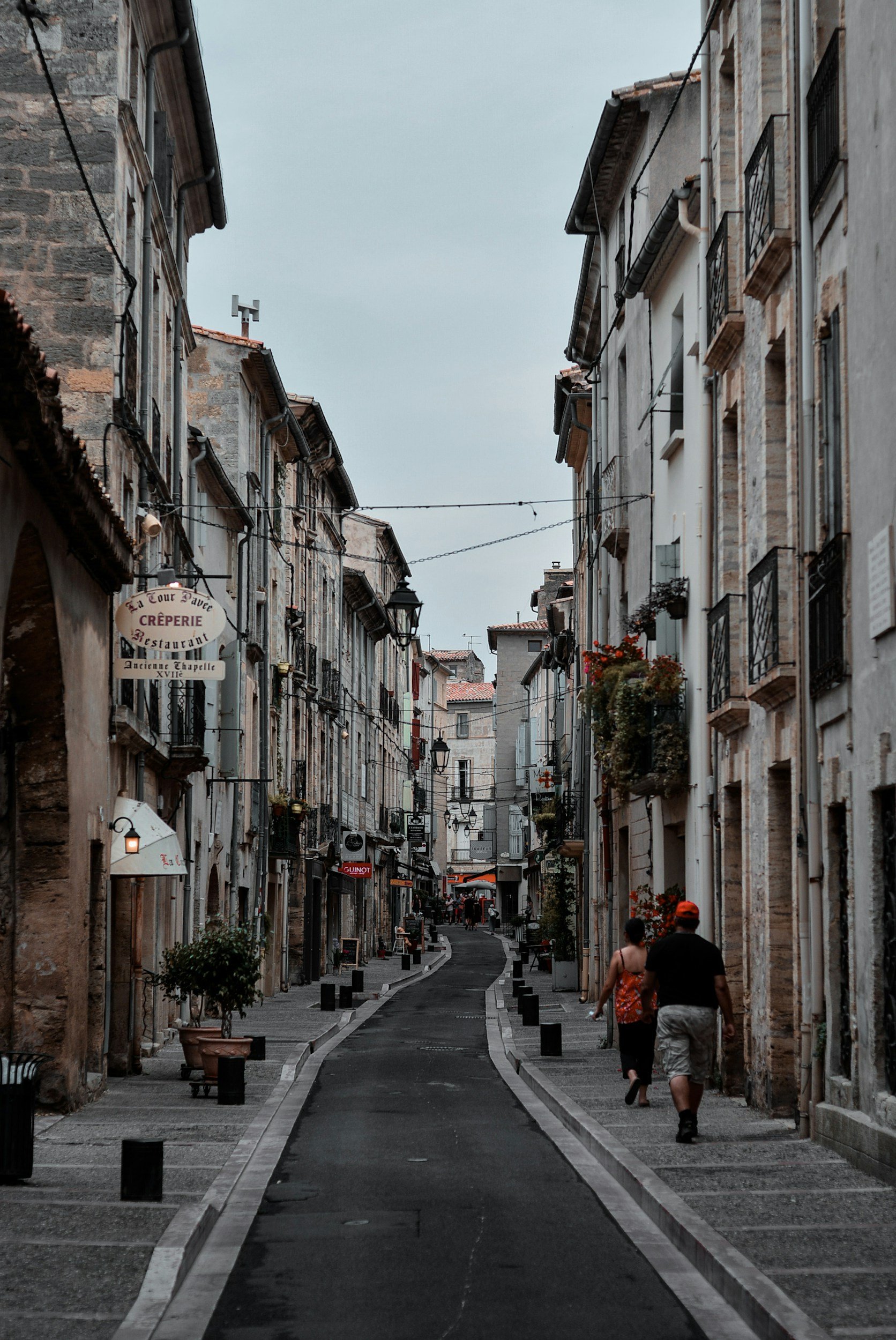
Pézenas can feel surprisingly intense in the middle of the day, especially during summer when people start arriving from the coast around late morning and the whole centre suddenly fills with visitors from Cap d’Agde, Béziers, Sète, and the smaller beach towns nearby. By around 11:30, Place Gambetta is usually crowded enough that café tables spill outward into the square, while the narrow streets around Rue de la Foire and Rue Conti trap heat so badly that by mid-afternoon even people trying to browse the little artisan shops start slowing down and looking for shade without really meaning to.
The stone buildings hold onto the warmth for hours here. Tables sitting in direct sun empty first, shutters get pulled halfway closed against the heat, and suddenly everyone is standing under awnings with cold rosé or citron pressé while the town feels slightly too bright and sleepy all at once.
Then somewhere around 18:00, Pézenas changes completely.
The day-trippers drift back toward the coast, restaurant terraces reopen after the long afternoon pause, and the smaller lanes behind Cours Jean Jaurès finally become calm enough that you can wander properly without constantly stepping around people taking photos of old doors and faded shutters. The temperature drops just enough that people start lingering outside again, and the whole town feels softer and less crowded than it did only a few hours earlier.
Honestly, the evenings are the entire reason to stay overnight here!
Pézenas is not a big “wine destination” in the fancy Burgundy sense where everything revolves around tastings and vineyard appointments, but wine quietly shapes almost the whole evening atmosphere anyway. Smaller bars pour regional Languedoc bottles without overexplaining them, people order pichet wine without thinking too hard about it, and tables slowly fill with groups who clearly only planned to stay for one drink before dinner but never really leave.
Around Place Gambetta, places like Le Pré Saint Jean stay lively late into the evening, while the smaller wine spots tucked into Rue Anatole France and the lanes behind the square feel much calmer once the daytime crowd disappears. At L’Entre Pots, people sit outside enjoying glasses of Faugères and Pic-Saint-Loup long after dinner should technically be finished, and nearby at Poisson Verre the atmosphere gets especially good later in the evening once the heat finally lifts from the stone streets and the tables under the trees fill with people sharing natural wine, anchovies, oysters, and little plates instead of sitting through formal dinners.
One thing Pézenas does really well is that the evenings never feel tightly planned.
People drift around gradually instead of locking themselves into one reservation all night. Someone stops for a glass near Place Gambetta, wanders through the smaller side streets for twenty minutes, ends up inside Cave Pézenas buying a bottle to bring back to the hotel, then somehow finishes the evening eating dessert somewhere completely different than originally planned.
And honestly, some of the nicest parts of Pézenas are not directly tied to food or wine at all.
The little streets behind Rue de la Foire become noticeably quieter after dinner, and once the heat finally disappears, the town starts feeling much bigger and calmer than it does during the middle of the day. Around Place des Trois Six, small galleries and artisan workshops stay open later during summer evenings, while the antique shops scattered through the centre suddenly become far more interesting once people stop crowding through them in the afternoon heat.
Librairie Un Point Un Trait is one of those places people end up staying inside longer than expected once the evening cools down properly, and around Rue des Orfèvres there are tiny courtyards and old carriage entrances that barely register during the daytime rush but feel completely different after dark when windows are open above the streets and conversations drift down from apartments over the wine bars below.
One of the nicest things to do in Pézenas is honestly just wandering uphill without much direction once the stone streets stop radiating heat. Around Rue Montmorency and the quieter lanes near the old hôtels particuliers, you start noticing little details that completely disappear during the middle of the day - restaurant staff leaning against doorways before service gets busy again, people drinking wine from low glasses outside hidden courtyards, the smell of garlic and butter drifting out from kitchens you barely noticed earlier.
The food scene also becomes much more interesting once you stop focusing only on the obvious terraces near the main square. At Maison Conti, dinner stretches late because nobody seems interested in rushing tables along, while the smaller places near Rue Chevaliers Saint-Jean feel calmer and more local once the overnight visitors replace the daytime crowd. Even simple apéro places become part of the evening rhythm here because the town stays compact enough that everything happens naturally on foot without needing much planning.
And the mornings after staying overnight are honestly underrated.
Before the heat builds again, Pézenas feels almost sleepy. Café terraces slowly reopen around Place Gambetta, delivery vans squeeze through streets that will become crowded a few hours later, and people begin lining up quietly outside Boulangerie Paloc for pastries before the market-day crowd arrives from the coast.
Transport is the trucky part… There is no train station in Pézenas itself, which changes the kind of travelers who actually stay overnight. Most people arrive through Béziers or Agde before continuing by bus or taxi, and late arrivals become annoying surprisingly quickly, especially on Sundays when connections thin out heavily in the evening.
Honestly, that friction is probably part of why Pézenas still feels relatively calm overnight compared to some Provençal towns farther east, because the people staying here usually stay on purpose rather than accidentally passing through for a few hours.
People who like the slower evenings in Pézenas usually end up liking the atmosphere in the Drôme Provençale too, especially once the markets close and the villages settle down a bit, which makes this Drôme guide a surprisingly good continuation of the same kind of trip.
If you are debating between staying somewhere high-end like Aix-en-Provence or somewhere looser and less structured like the towns in this article, this Aix guide makes the differences obvious very quickly.
Cahors feels more lived-in than most wine towns people usually end up in
The first arrival into Cahors can honestly throw people off a little because it does not immediately give you that polished “French wine town” feeling people often expect before they get there.
You leave the station and the first streets feel practical more than picturesque, with apartment buildings, pharmacies, busy roads, parked scooters, and supermarkets that make the town feel far more everyday than somewhere like Beaune or Colmar. Then somewhere around Rue Nationale, everything suddenly tightens around the river bends, the streets become older and narrower, and Cahors slowly starts making sense once you stop expecting it to perform for visitors straight away.
And honestly, that is probably why some people end up liking it more than the prettier wine towns!
The market mornings still feel properly local here in a way that many famous wine destinations no longer do. On Wednesdays and Saturdays, people are actually shopping rather than slowly browsing around with cameras all morning, and around Halle de Cahors you see older residents pulling little shopping carts, market traders talking across the square, people stopping briefly at Café Le Bordeaux for coffee before continuing errands, and stalls filled with walnuts, Rocamadour cheese, strawberries, saffron products, duck pâté, and dark bottles of local Malbec without much effort made to turn any of it into a polished “experience.”
Inside the covered market, the oyster counter starts filling surprisingly early with people drinking white wine before lunch like it is the most normal thing in the world, while outside near Place Chapou the terraces stay busy just long enough before the afternoon heat slowly flattens the whole pace of the town again.
Cahors actually becomes much more interesting later in the day anyway. By early evening, the streets around Cathédrale Saint-Étienne quiet down first, the light softens against the pale stone buildings, and suddenly you start noticing details that completely disappear during the market rush earlier in the day - old painted shop signs above wine bars, tiny staircases disappearing between buildings, apartment windows opening above the streets while restaurant staff drag tables back outside after the afternoon break.
The wine bars here feel very different from somewhere like Burgundy too because nobody seems especially interested in turning every glass into a formal tasting. At Les Petits Producteurs, people stay outside for hours, while at Ivresse near Rue de la Préfecture the atmosphere feels more like a neighbourhood wine bar that happens to serve really good local bottles than somewhere designed for international visitors.
And the wine itself has actually changed a lot over the past years. A lot of visitors still arrive expecting huge, heavy Cahors reds, but many of the lists now lean much more toward younger producers making fresher, lighter versions of Malbec that work far better for sitting outside late into the evening once the heat finally disappears from the stone streets. You see shorter wine lists, smaller menus, younger owners, and far fewer intimidating tasting rooms than people usually expect before arriving.
And honestly, some of the nicest parts of Cahors happen away from the obvious restaurant streets completely.
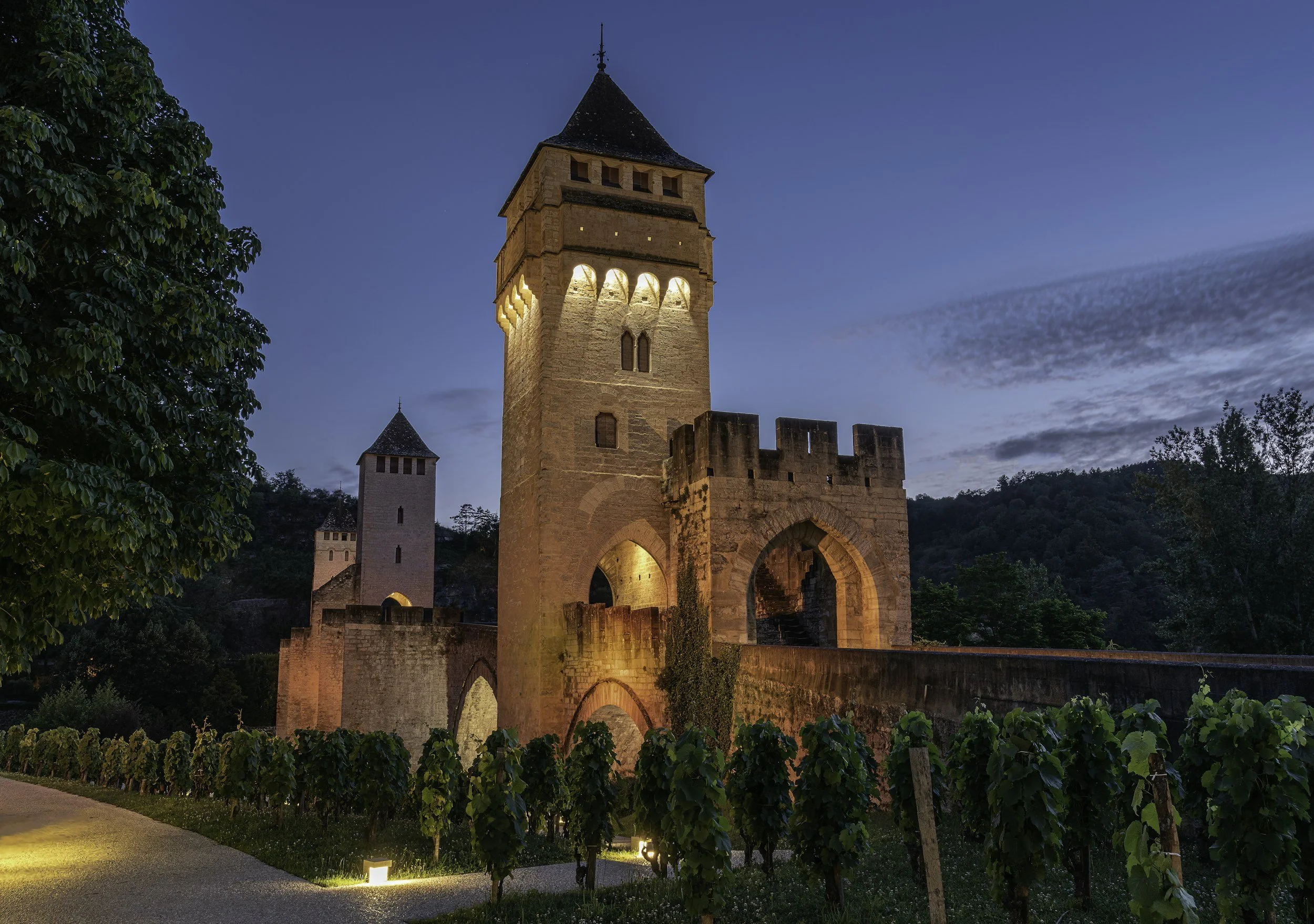
If you walk toward Pont Valentré once the evening light starts fading, the atmosphere changes surprisingly quickly. The riverside near Quai Champollion stays lively just long enough for people to stretch apéro into the evening, but farther along the bridge the town suddenly becomes almost quiet except for glasses clinking from terraces back toward the old centre.
The tables outside Le Bordeaux usually fill first on warmer evenings because they catch the last sunlight much longer than the cathedral side streets, while the quieter corners near Place Lafayette empty earlier and start feeling almost sleepy before the night is even fully going yet. Around Rue du Château-du-Roi and the smaller lanes behind the cathedral, the atmosphere changes again later at night once the restaurant terraces finally settle down and the old stone streets become almost silent except for conversations drifting out through open apartment windows above the bars.
There are also little routines people only really notice after staying overnight here.
Around 08:00, people stop into Maison Sudreau for pâté, foie gras, or bottles of local wine before continuing deeper into the Lot Valley later in the day, while delivery vans squeeze through streets that will become crowded again a few hours later. And the uphill walk toward Mont Saint-Cyr feels completely different depending on when you attempt it. In the middle of the afternoon heat it can feel unnecessarily brutal, but closer to sunset the climb suddenly becomes manageable and the view over the river bends and rooftops easily becomes one of the best in the region.
Some of the nicest corners of Cahors are also the ones people rush straight past earlier in the day.
Around Rue des Soubirous and the smaller lanes behind the cathedral, little galleries and artisan workshops sometimes stay open later during summer evenings, while old staircases and hidden courtyards around the historic centre start feeling completely different once the daytime crowd disappears and the temperature finally drops off the walls.
The food side of Cahors becomes much better once you stop aiming only for traditional “wine town” restaurants too. At Tandem, people stay outside sharing plates long after sunset once the terrace finally moves into the shade, while at La Bell’Occitan the atmosphere stays calmer and more local than the busier terraces closer to the cathedral. Even the simpler bars around Boulevard Gambetta become part of the evening rhythm because Cahors always have that local feel to it.
Some streets feel beautiful and historic, others feel practical and slightly rough around the edges. One terrace stays lively late into the evening while another street only a minute away already feels almost empty by 21:30. Cahors has never really been formed into a perfect wine-tourism version of itself, which is probably why the evenings feel more natural here than in towns that are prettier on first impression.
One thing worth knowing though is that Mondays can feel extremely quiet outside summer because several restaurants and wine bars close at the same time, which changes the atmosphere of the centre much more than people expect if they are only staying one night.
And Cahors definitely settles earlier than somewhere like Narbonne.
Good if you want long evenings beside the river where one glass naturally turns into another without much noise around you. Less ideal if you expect crowded terraces and busy streets late into the night.
In Saumur, the evenings stretch longer than the market itself
Saumur feels different from the other wine towns in this article because the evenings never really revolve around “wine tasting” in the formal sense. The wine is everywhere, obviously, but it slips into the background of the town much more naturally.
People meet for Crémant before dinner without making a ceremony out of it. Someone orders a bottle of Saumur-Champigny because it is hot outside and they want something lighter. Tables stay occupied for hours without anybody pushing the evening forward too aggressively. Compared to Burgundy especially, the atmosphere feels softer, looser, less interested in prestige…
And honestly, the town becomes far more enjoyable once the market crowd disappears.
Saturday mornings around Place Saint-Pierre and Rue Saint-Nicolas still pull plenty of people into the centre, especially once the oyster stalls open and the terraces start filling with coffee cups, market bags, pastries, and glasses of Loire white before lunch. But by mid-afternoon, the whole centre can start feeling strangely exposed during summer because the pale stone reflects heat back into the streets and there is very little shade once the sun settles properly over the old town.
Around Rue du Puits-Neuf and the climb toward the château, the heat can feel surprisingly brutal by 15:00, especially for people arriving from the station with luggage who underestimated how uphill parts of Saumur actually are. You see people stopping halfway up the streets pretending they wanted photos of the view when really they just need a minute to recover.
Then somewhere around 19:00, the light softens over the Loire, the riverfront slowly fills again, and the whole evening pace shifts away from the market streets toward wine bars, terraces, and the quieter lanes near the water. The tables along Quai Lucien Gautier usually fill first because they catch the last light beautifully before sunset, while the smaller streets behind Place Saint-Pierre stay calmer for another hour or two.
You’ll probably hang around relaxing, instead of locking yourselves into dinner reservations all night. Someone starts with a glass outside Le Cellier, disappears toward Rue Saint-Jean for a while, ends up sitting outside with Loire wines and little plates at L’Alchimiste much later than originally intended because nobody really feels like moving yet.
The wine lists here also feel very Loire in the best possible way!
More Chenin Blanc, Crémant, Cabernet Franc, and lighter reds that actually suit warm evenings by the river instead of the heavier “serious wine region” atmosphere people often expect before arriving. At Le Pot de Lapin, tables stay occupied forever once the evening cools down, while places like Le Cercle Rouge feel more like neighbourhood spots that happen to pour excellent local wine than polished tasting destinations built around visitors.
And some of the nicest parts of Saumur happen slightly outside the obvious centre anyway. If you wander beyond the restaurant terraces and continue toward Rue d’Orléans later in the evening, the pace changes surprisingly quickly. Independent shops close slowly, little antique stores stay lit longer than expected, and around the smaller streets behind the theatre there are corners where the whole town suddenly feels quiet except for music drifting out from wine bars farther downhill.
Librairie Le Livre à Venir is one of those places people step into for five minutes and somehow leave forty minutes later, especially once the afternoon heat disappears and the town becomes easier to move through again. Nearby, smaller gallery spaces around Rue Saint-Nicolas and the theatre district often stay open later during summer exhibition evenings, particularly on Thursdays when the centre feels more local and less weekend-heavy.
One thing repeat visitors notice quickly in Saumur is how much the river shapes the evenings. It’s true!
The closer you stay to the Loire after sunset, the longer the town feels awake. Around Place de la Bilange things quiet down earlier, but the riverfront keeps moving much later, especially during warm weather when people stretch apéro almost accidentally into dinner. Some nights the terraces near Pont Cessart stay half-full close to midnight while the upper streets near the château already feel nearly asleep.
And honestly, the château itself works much better in the evening than during the middle of the day.
The uphill climb feels unnecessarily exhausting in peak afternoon heat, but closer to sunset the whole upper part of town changes completely and the view over the Loire rooftops suddenly makes much more sense. You start realizing how wide the river actually is, how spread out the town feels from above, and why people stay outside so late here once the temperature finally drops.
The food side of Saumur also works best when you stop aiming for “special occasion” dinners every night.
At Bistrot des Ecuyers, the atmosphere usually gets better later in the evening once the overnight crowd settles in properly, while places near Rue de la Tonnelle stay relaxed enough that people keep ordering another glass without much discussion about it. Even the simpler bars near Place Saint-Pierre become part of the evening rhythm because Saumur stays compact enough that people naturally keep moving around instead of staying fixed in one place.
Weekdays actually is better than Saturdays here too!
Tuesdays and Wednesdays feel far more balanced because the market visitors are gone, the centre still has enough movement to feel alive, and the evenings belong more to people actually staying overnight instead of passing through for the day. Some Loire towns empty surprisingly quickly after dinner outside peak season, but Saumur usually keeps enough life around the riverfront and terraces that the town still feels gently active later into the night.
And the mornings after staying overnight are probably underrated here more than almost anywhere else in the article.
Before the day properly starts, the riverfront still feels half asleep, delivery vans move slowly through streets that will become crowded later, and the first people stop into La Fabrique à Mignardises near Rue Saint-Nicolas while café staff quietly set up terraces around Place Saint-Pierre. For an hour or two, Saumur feels almost strangely calm for somewhere sitting in the middle of one of France’s most famous wine regions.
People often assume Provence requires a car until they actually start looking at the regional train and bus connections properly, and this Provence transport guide answers most of the logistical questions that usually come up halfway through planning.
If your ideal evening is less wine-bar-focused and more thermal baths, slower dinners, and quieter summer towns after dark, this guide to French thermal towns could be something for you.
Colmar changes completely once the day-trippers finally leave
Colmar is probably the town in this article that depends the most on timing, because if you arrive in the middle of the day during summer or Christmas market season, it can honestly feel almost impossible to understand why people stay overnight at all…(!)
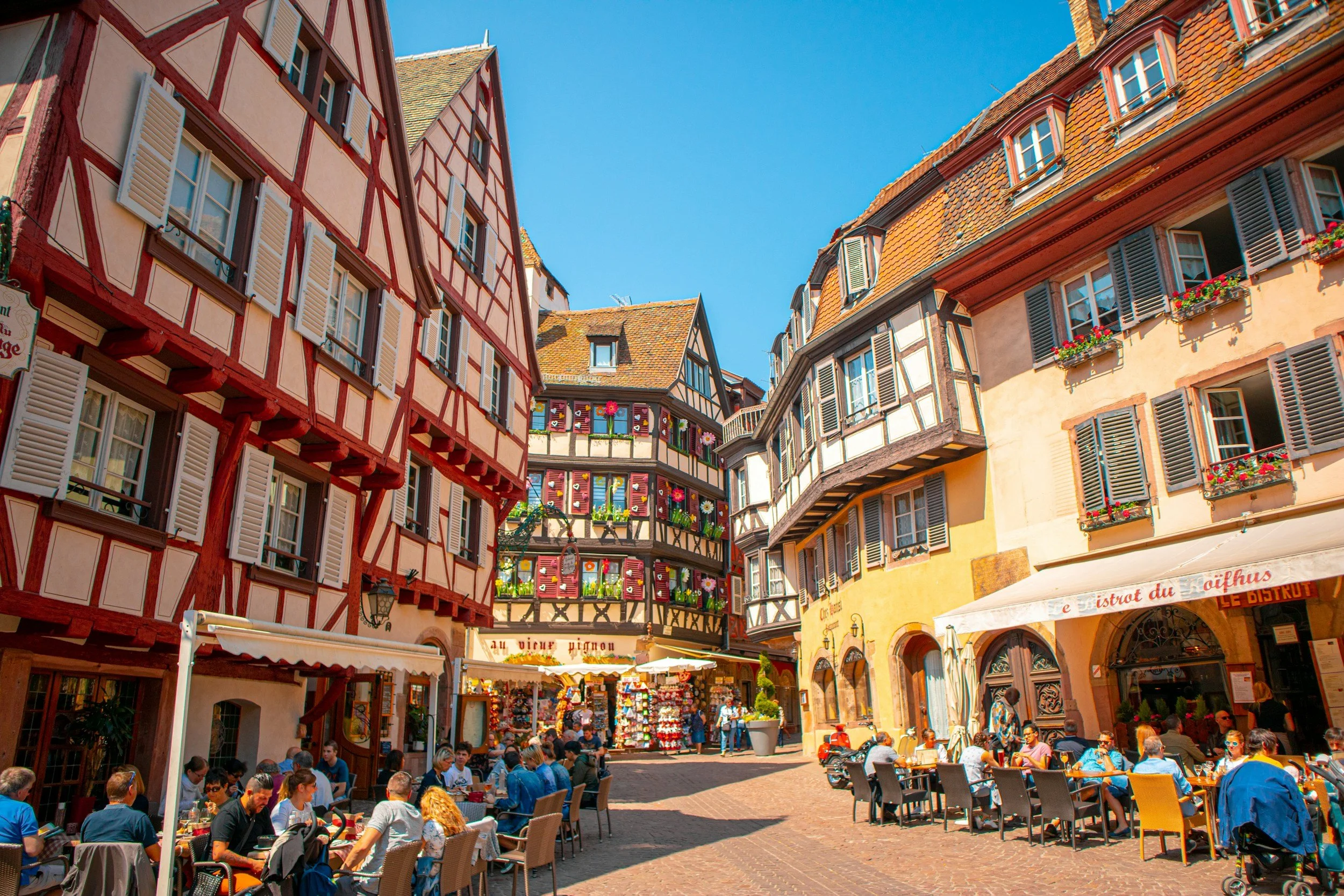
By late morning, the streets around Petite Venise become so crowded with excursion groups from Strasbourg, Basel, and river cruises farther down the Rhine that some parts of the old centre barely move properly anymore. Around Rue des Marchands and Quai de la Poissonnerie, people stop constantly in the middle of narrow streets to photograph timbered houses and canal reflections, pastry shops develop queues out the door before noon, and the atmosphere starts feeling much more like a tourist corridor than an actual town.
Then around dinner time, the organized groups disappear first, the trains start pulling people back toward Strasbourg and Mulhouse, and suddenly streets that felt claustrophobic a few hours earlier become quiet enough that you can hear glasses clinking from wine bars and restaurant kitchens opening their evening service windows.
And honestly, that is the version of Colmar that actually makes staying overnight worth it.
Most people stay too concentrated around Petite Venise all evening because that is the part they recognize from photos, but the better overnight atmosphere usually happens once you drift slightly farther west toward Rue Berthe Molly, Place des Dominicains, and the smaller lanes behind the covered market where the centre starts feeling less staged after dark.
At Le Cercle des Aromes, people settle into long evenings over Riesling, Sylvaner, and Crémant once the daytime crowd fades, while at La Cave des Anges near Rue de l’Ange the atmosphere becomes noticeably calmer later in the evening once the excursion visitors disappear and the people actually staying overnight start replacing them. The smaller wine bars around Rue des Boulangers also feel completely different after 20:00, especially during September and October when harvest season keeps the wine lists lively without the pressure of Christmas crowds.
And Colmar really is much nicer once you stop trying to chase the “postcard version” of the town all evening.
Some of the nicest moments happen in the streets people rush straight through earlier in the day. Around Rue des Écoles and the quieter lanes behind Musée Unterlinden, the whole atmosphere softens after dinner once the souvenir shops close and the centre finally breathes again. Little galleries near Place de l’Ancienne Douane stay open later during summer exhibition nights, restaurant staff sit outside with one final glass after service, and windows above the old timbered buildings stay open long into the evening once the heat finally drops out of the stone streets.
During the middle of the afternoon, the canals around Quai de la Poissonnerie can honestly feel slightly overexposed and overcrowded, but later in the evening, once the excursion groups leave, the reflections soften completely and the whole canal area suddenly feels calmer. The tables closest to the water near Pont Rue Turenne fill first around golden hour because they catch the evening light longest, while the narrower lanes near Rue Saint-Jean cool down much faster after hot summer days and become far more comfortable for wandering later into the evening.
And truth is, some of the nicest places in Colmar have very little to do with wine at all. As for some other villages here in the area.
Librairie Hartmann becomes much quieter and more enjoyable once the daytime crowd disappears, while around Rue des Têtes there are little independent food shops where people staying overnight stop in for Munster cheese, kougelhopf, pâté, or bottles to bring back to hotel terraces and apartments later in the evening. Gilbert Pâtissier near Place de la Cathédrale usually still has people lingering outside surprisingly late during warmer months, and around the covered market you start noticing tiny details after dark that completely disappear earlier in the day - flower boxes above alleyways, old painted signs over wine shops, hidden courtyards glowing softly behind half-open gates.
The food side of Colmar also becomes much better once you move beyond the heavily photographed restaurants around Petite Venise. Trust me on this!
Yes, people still queue for tarte flambée and choucroute in the obvious places during peak hours, but the evenings become much more enjoyable once you drift a few streets outward. At L’Un des Sens, people stay outside over Crémant and lighter Alsace wines much later than planned once the centre cools down properly, while places near Rue des Clefs feel calmer and more local once the overnight crowd settles into the town properly instead of rushing between attractions.
There are also little practical things people only notice after staying overnight here.
The station is close enough to walk comfortably, but dragging luggage over the cobbled streets near the old centre becomes annoying surprisingly quickly if you arrive during peak afternoon crowds. And during December, the Christmas markets completely reshape the town’s rhythm. The quieter version of Colmar this article is talking about almost disappears during those weeks because even the side streets stay crowded late into the evening and restaurant reservations become frustratingly difficult far in advance.
September and October feel completely different! Harvest season keeps the wine bars lively without overwhelming the town, the evenings stay warm enough for outdoor terraces, and around sunset near Quai de la Sinn the whole centre suddenly feels softer once the day visitors finally clear out.
Around 07:30, before the first trains from Strasbourg arrive and before the pastry shops begin filling properly, the canal streets feel almost strangely empty. Café staff quietly set up terraces near Place de la Cathédrale, delivery vans move through roads that will become crowded later in the morning, and the smell from the bakeries around Rue des Clefs drifts through streets that for a short while finally feel like a real Alsace town again instead of one of the busiest day-trip stops in France.
If the Loire sections in Saumur made you want smaller market towns with more local rhythm and fewer rushed day-trippers, this guide to Loire Valley markets fits naturally afterward.
A lot of travelers move through French markets without really knowing what separates tourist stalls from the brocante stands locals actually stop at, especially later in the morning once the better pieces disappear, so this brocante guide quietly saves people from wasting time.
Staying overnight changes what you actually notice
A lot of French market towns are experienced almost entirely at their busiest and most frustrating hour now. People arrive late morning when the centre is already full, spend most of the day moving slowly through crowded streets, eat lunch somewhere near the main square, then leave before the town has properly settled back into itself again.
And the strange thing is that many of these places barely make sense that way.
Some towns become noticeably better once the market closes and the pressure disappears from the centre. The streets cool down, the pace changes, restaurant terraces fill more gradually, and you start noticing how differently each town actually functions once it is no longer trying to handle several thousand daytime visitors at once.
That shift happens differently everywhere too. In Narbonne, the energy drifts toward the canal and the wine bars stay active long after dinner. In Pézenas, the evening only really becomes comfortable once the heat drops off the stone streets. In Colmar, entire parts of the old town become almost quiet once the last excursion trains leave. And in places like Cahors or Saumur, the best hours are often later and slower than people expect before arriving.
The timing changes everything more than most guides admit.
A Tuesday evening in September can feel completely different than a Saturday in July even in the exact same town. Some places work far better midweek once the excursion traffic disappears. Others become too quiet on Sundays or Mondays because several restaurants close at once. Those details shape the overnight experience much more than whether a market is technically “famous” or not.
And honestly, the things people remember later are usually not the obvious headline moments anyway.
It is more often the small practical parts of the evening that stay with you. Finding a wine bar because another place looked too busy. Walking through streets that felt overcrowded earlier and realizing they are suddenly almost empty. Buying pastries early the next morning before the market starts rebuilding itself again. Sitting outside longer than planned because the temperature finally became comfortable enough to stay there.
Those are the parts that are hardest to find online because they only really become visible once the middle of the day is over.
If you are curious what a market town feels like before the heavier summer crowds arrive, this detailed look at Nyons in May captures that calmer in-between season surprisingly well.
A lot of the towns in this article work best without rushing between destinations every day, which is why this guide to French countryside towns works well if you are building a longer rail itinerary around overnight stays instead of day trips.
FAQs about French market towns
Are French market towns worth staying overnight in?
Usually yes, especially in towns where the atmosphere changes completely once the market closes and the excursion visitors leave.
Places like Colmar, Uzès, Saumur, and Narbonne often feel at their most crowded and least enjoyable in the middle of the day, but become noticeably calmer by early evening once the market stalls disappear, restaurant terraces reopen properly, and the streets stop functioning almost entirely around daytime tourism.
A lot of the best parts happen later - wine bars filling gradually, quieter side streets, slower dinners, bakery mornings before the centre wakes up again.
Which French market towns become quieter after day-trippers leave?
Colmar changes the most dramatically because the excursion trains toward Strasbourg and Basel pull large numbers of visitors out again around dinner time. Streets around Quai de la Poissonnerie that felt overcrowded at 14:00 can suddenly feel almost quiet by 20:00.
Uzès also softens noticeably once the Saturday market empties, especially around the smaller lanes behind Place Dampmartin and Rue Xavier Sigalon where the evening atmosphere feels far less hectic than the daytime centre.
Pézenas and Cahors calm down differently. They do not empty completely, but the pace slows enough that the towns start feeling more local and much easier to move through comfortably.
Which French market towns stay lively in the evening?
Narbonne and Saumur usually keep the strongest evening movement after dinner.
In Narbonne, the canal area around Canal de la Robine and Cours Mirabeau stays active late into warm evenings because people continue moving between wine bars long after the market closes.
Saumur keeps a softer version of that energy around the Loire riverfront, especially during September and early October when people linger outside over Loire wines much later than expected once the heat drops.
Beaune also stays active late, although the evenings there revolve more around Burgundy wine bars and restaurant reservations than relaxed terrace culture.
Which French market towns become too quiet at night?
Some towns flatten surprisingly early once the market closes, especially outside summer.
Cahors settles much earlier than people often expect, particularly on Mondays when several restaurants and wine bars close at once. Parts of Uzès can also feel very quiet on Sunday evenings outside peak season.
That quieter atmosphere is part of the appeal for some travelers, but less ideal if you are expecting busy nightlife or packed restaurant streets after dinner.
Is Colmar better as a day trip or overnight stay?
Overnight stays work much better if you want to experience the town without peak daytime pressure.
Between around 11:00 and 16:00, especially during summer weekends and December, parts of Colmar can feel overwhelmingly crowded around Petite Venise and Rue des Marchands. But later in the evening, once the excursion trains leave, the atmosphere changes completely and the quieter streets around Rue Berthe Molly, Rue des Écoles, and Place des Dominicains become far more relaxed.
The early mornings are also one of the best parts of staying overnight because the canal streets feel almost empty before the first visitors arrive from Strasbourg.
What happens in French market towns after the market closes?
It depends heavily on the town.
In Narbonne, the energy shifts toward the canal terraces and wine bars. In Saumur, people drift toward the Loire riverfront and slower dinners. In Pézenas, the centre only really becomes comfortable once the afternoon heat disappears from the stone streets.
Some towns become quieter and softer after the market closes, while others lose momentum almost completely once the daytime visitors leave.
That difference matters much more than whether a market is technically “famous.”
Which French market towns work best without a car?
Narbonne, Colmar, Beaune, Saumur, and Cahors all work particularly well by train because the stations sit close enough to the historic centres for manageable arrivals on foot.
Narbonne is especially easy operationally because the station sits very close to Canal de la Robine and the older centre.
Uzès and Pézenas are less convenient because neither town has a train station, which means arriving through Nîmes, Béziers, or Agde before continuing by regional bus or taxi.
Which French market towns are best in September?
September is probably the strongest overall month for this type of trip because the evenings still feel lively while the daytime crowds drop noticeably compared to July and August.
Saumur works especially well during harvest season because the Loire wine bars stay busy without the pressure of peak tourism. Colmar also feels much calmer in September once the Christmas market season is still far away but the Alsace vineyards remain active.
In southern towns like Narbonne and Pézenas, the temperatures become much more comfortable for evening wandering once the extreme summer heat fades.
Are Saturdays actually the best days to visit French markets?
Not always.
Saturday mornings usually bring the largest and busiest markets, but they also bring the most crowded streets, the longest restaurant waits, and the heaviest excursion traffic.
For overnight stays, Tuesdays and Wednesdays often work better because the towns still feel active without becoming overwhelmed by day visitors. A lot of smaller wine bars and terraces also feel more relaxed midweek.
Which French market towns still feel local?
Cahors probably feels the least curated overall because the markets still revolve heavily around actual regional shopping rather than only tourism.
Narbonne also keeps a more local rhythm around Les Halles because people genuinely use the market throughout the week instead of treating it purely as an attraction.
Pézenas and Saumur still retain quieter neighbourhood rhythms outside the main visitor streets, especially once the evenings begin stretching later and the excursion crowd disappears.
Which French market towns are best for wine bars without formal tastings?
Narbonne, Pézenas, and Saumur all work particularly well if you prefer relaxed wine bars over structured tastings and vineyard appointments.
The atmosphere in these towns revolves more around long evenings, smaller pours, local wines ordered casually with dinner, and people drifting between terraces rather than formal wine experiences.
Beaune feels more tasting-focused overall, while Narbonne and Pézenas stay much looser and less polished in the evenings.
What time do French market towns become quieter?
Usually between around 17:00 and 19:00 depending on the town, season, and market day.
There is often a short transition period after the market closes where the centre briefly empties before restaurants and wine bars slowly fill again later in the evening.
That in-between period is often when towns start feeling most comfortable because the daytime pressure disappears but the evening atmosphere has not fully built yet.
Which French wine towns are overrated as rushed day trips?
Colmar is probably the clearest example because most people only experience it during its busiest hours and leave before the atmosphere changes completely in the evening.
Uzès can also feel overly crowded and stressful as a rushed Saturday trip during peak season, while towns like Saumur and Cahors make much more sense once you stay long enough to experience the slower evening rhythm instead of only the daytime market.