Planning an autumn trip to Alsace? Time it around these festivals.
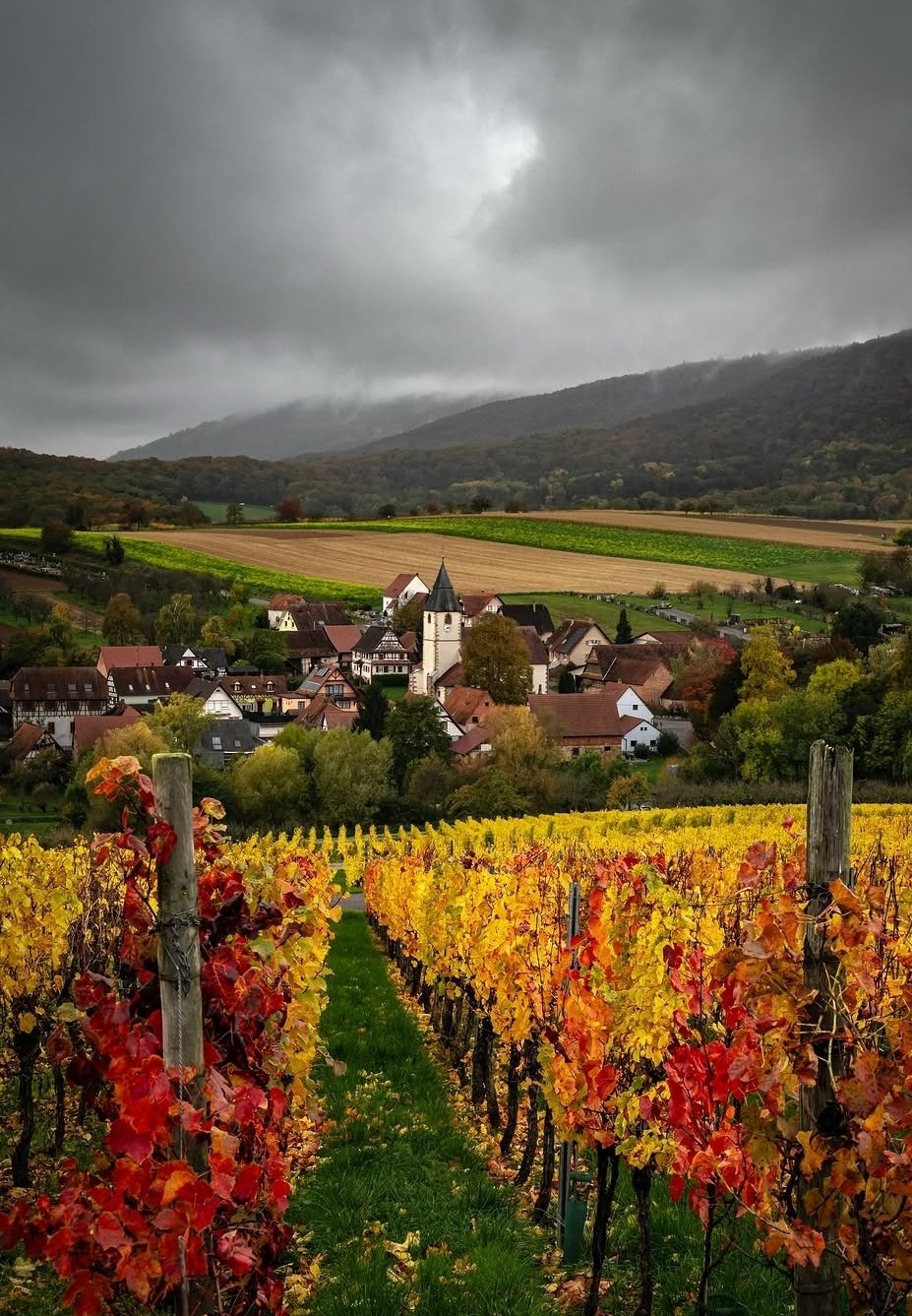
If you arrive in Alsace on a harvest weekend expecting sleepy wine villages, the first surprise is usually how quickly the atmosphere changes. Place de l'Hôtel de Ville in Barr might be filling with market stalls before you've even finished breakfast, musicians are carrying instruments across the square, and restaurants that still had plenty of tables on Friday evening are fully booked by Saturday lunchtime. Half an hour later, you can be wandering through Turckheim or Boersch wondering where everyone has gone. Harvest season doesn't arrive everywhere at once, and that's one of the reasons it feels so different from almost anywhere else in France.
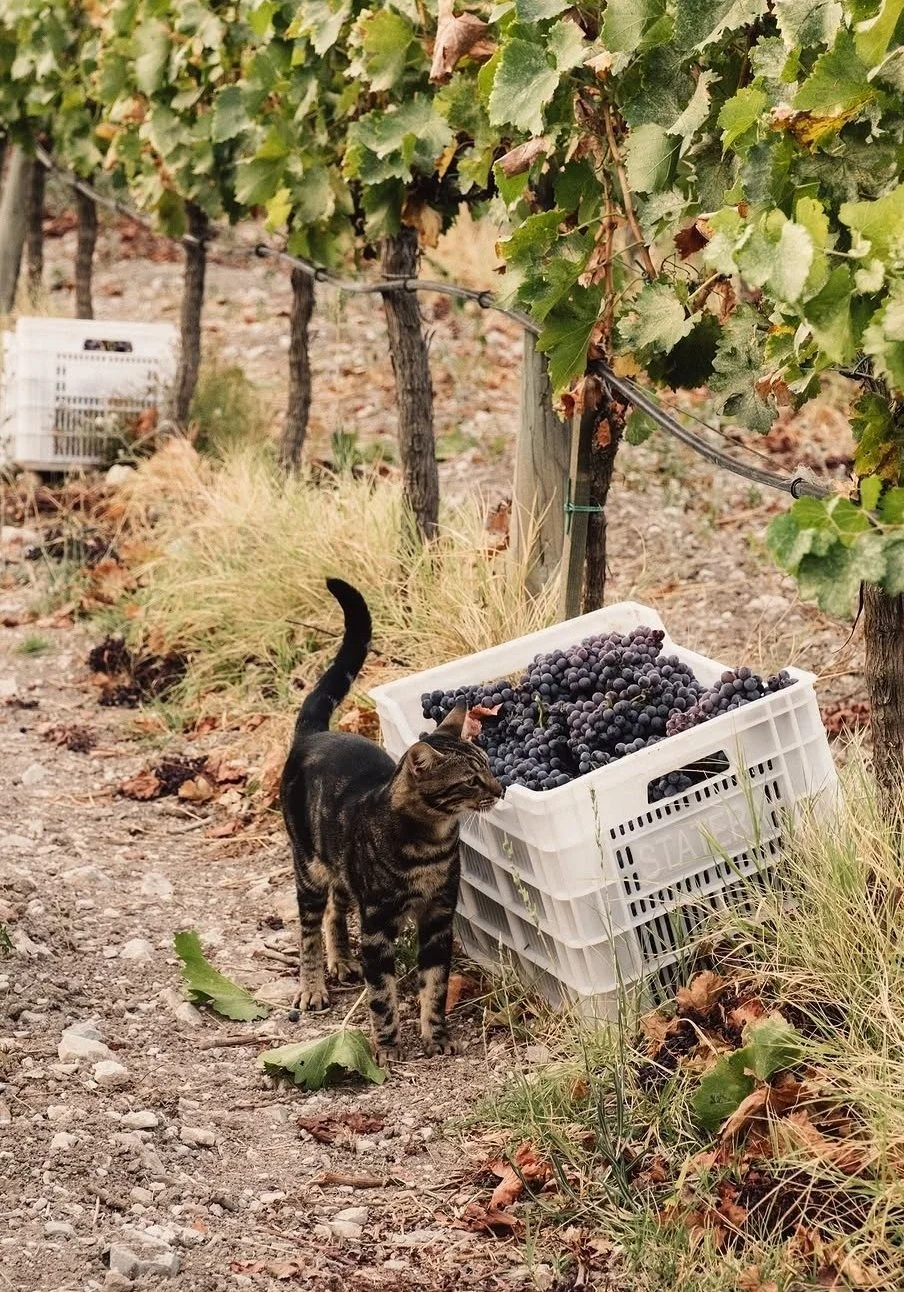
The changes aren't always obvious at first. A chalkboard outside a restaurant suddenly lists the year's first zwiebelkuchen, winery courtyards fill with grape crates waiting to be unloaded, and bakeries quietly replace late-summer fruit tarts with apple cakes, kougelhopf and other autumn favourites. Village calendars begin filling with harvest celebrations, but everyday life carries on around them. Local markets are busier, growers are working long days in the vineyards, and neighbouring villages can be in completely different stages of the season despite being only a few kilometres apart.
This is one of the best times of year to explore Alsace, but it's also one of the easiest to misjudge if you haven't visited before. Choosing the right village, staying in the right place and understanding how harvest season moves across the region can completely change the weekend. This guide brings together the festivals worth planning around, the towns that work best without a car and the small local details that make autumn in Alsace feel unlike any other season.
One of the things that makes harvest season in Alsace so interesting is that it never feels like one single event. Instead, it slowly moves along the foothills of the Vosges, with every village following its own calendar. You could spend Saturday in Barr while the harvest is still in full swing, then arrive in Ribeauvillé the following weekend to find the celebrations continuing even though many of the surrounding vineyards have already finished picking. That shifting rhythm is part of what makes autumn here so rewarding, but it's also why choosing where to stay, when to visit and which villages to combine matters much more than people often expect.
If you're already planning another French autumn weekend, Drôme Provençale is one of those places people usually discover much later than they should.
Why harvest season feels different in Alsace
One thing that's easy to miss when looking at a map is how concentrated Alsace's wine country actually is. The vineyards stretch for about 170 kilometres along the foot of the Vosges Mountains, but many of the villages sit only a few kilometres apart. It's completely normal to have lunch in one village, catch a short train or bus, and be somewhere that feels very different by mid-afternoon.
That also explains why harvest season never feels like one big regional event. Every village has its own calendar, every winery decides when it's time to pick the grapes, and the atmosphere changes from one weekend to the next. Barr might be preparing for its biggest celebration while Ribeauvillé is still relatively quiet, even though they're less than half an hour apart by road. If you're travelling for the festivals, it's always worth checking individual dates rather than assuming the whole region celebrates at once.
One thing that becomes obvious surprisingly quickly is that Alsace doesn't feel entirely French, but it doesn't feel German either. Walk through Grand'Rue in Ribeauvillé, Place du Marché in Obernai or the old streets around Place du Château Saint-Léon in Eguisheim and you'll notice it everywhere. One of the easiest ways to understand Alsace is to look at the bakery windows instead of the history books. Bakery windows are filled with kougelhopf, restaurant menus move easily between flammekueche, onion tart and French classics, and many family names above winery doors have German roots despite being firmly on the French side of the border. You don't need to know the region's history to notice it.
Harvest season makes that mix of traditions even easier to notice. Walk through Place de l'Hôtel de Ville in Barr or Place du Marché in Obernai during a festival weekend and you'll see school bands playing alongside local brass ensembles, winegrowers chatting with neighbours they clearly know by name, and families returning every year because they've always been part of the celebrations. Visitors are welcome, but the atmosphere never feels staged. You're stepping into a weekend that's happening for the people who live there just as much as the people who've travelled to experience it.
That local feel is one of the reasons Alsace works so well without a car. The main TER railway runs along the plain below the vineyards, linking Strasbourg, Obernai, Barr, Sélestat, Colmar and Mulhouse, while the wine villages sit just above the railway line along the lower slopes of the Vosges. Looking at a map, it's easy to assume you'll spend most of the weekend travelling between them, but the opposite is usually true. The train journeys are often the quickest part of the day. What takes longer is deciding to leave another glass of Riesling on a terrace in Barr, enjoying lunch in Ribeauvillé or stopping one more time at a bakery because the smell of fresh kougelhopf drifting onto Grand'Rue is too difficult to ignore. The only part of the network that needs a little more planning is the final stretch into villages like Riquewihr and Eguisheim, where local buses become noticeably less frequent on Sundays and public holidays. That's another reason it pays to build your weekend around one part of the region instead of trying to cross Alsace from north to south in two days.
Wine isn't the only reason to travel through eastern France in autumn. Cheese caves is one of the most unusual food trips you can add to the same journey.
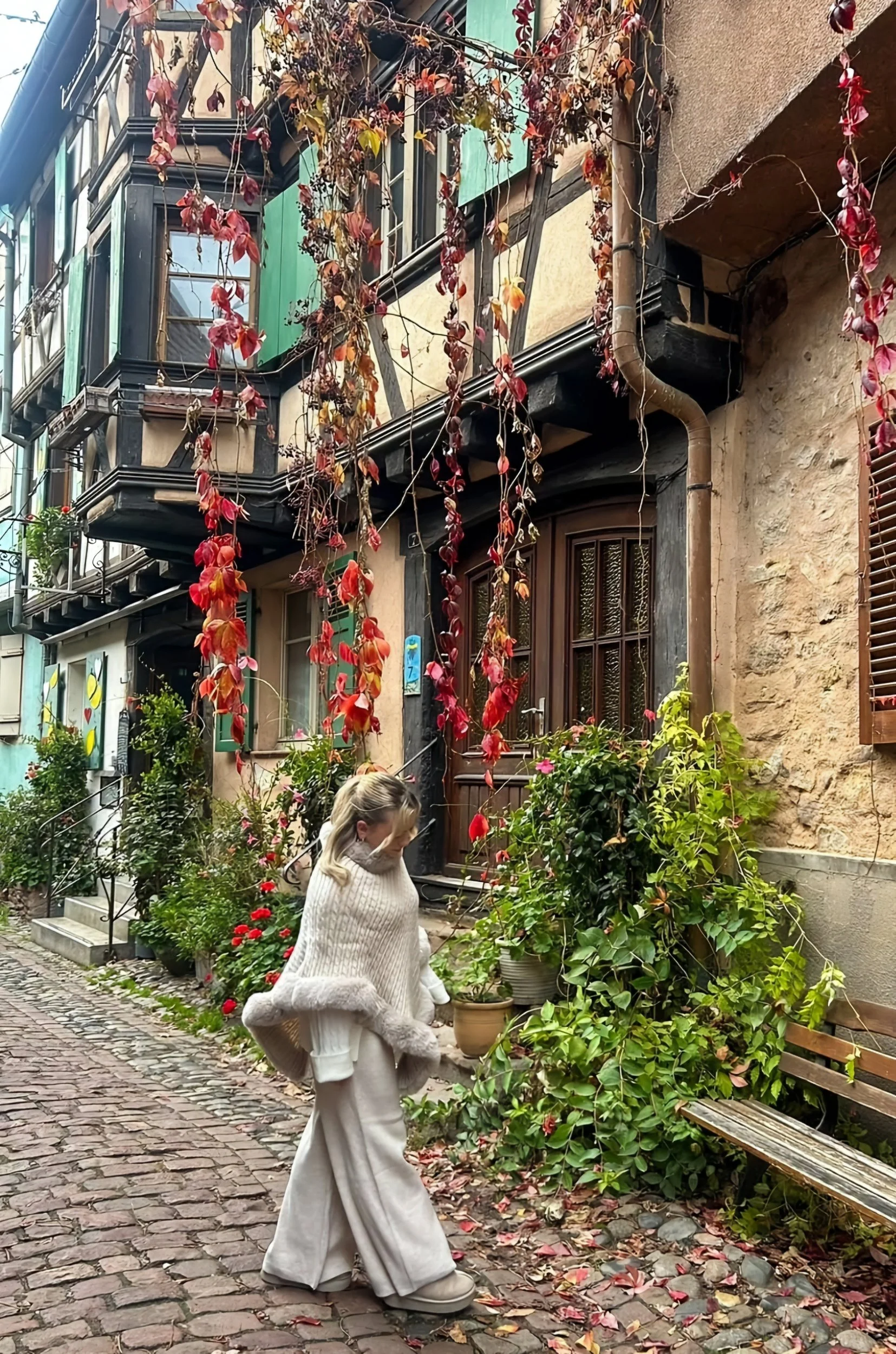
Harvest season in Alsace isn't one weekend
One mistake people make is picking a date first and a village second. In Alsace, it usually works better the other way around.
Take Barr and Eguisheim. They're less than an hour apart, but they rarely feel like they're in exactly the same stage of harvest. One weekend Barr's Place de l'Hôtel de Ville might already be filling with wine stands and local producers for the Fête des Vendanges, while growers outside Eguisheim are still working quietly between the rows of vines below Les Trois Châteaux. Even neighbouring producers don't necessarily begin picking on the same morning. Riesling, Pinot Gris and Gewurztraminer all ripen differently, and every estate decides for itself when the grapes are ready.
That's why there isn't one "best" harvest weekend for the whole region. If you're looking at the calendar in August, you'll probably notice that festival dates seem to jump from village to village rather than following the harvest itself. They're planned around local traditions, available volunteers and village events just as much as the vineyards. Some celebrations begin while tractors are still arriving with freshly picked grapes. Others take place after most of the harvest has already finished.
If you've pictured peaceful vineyards where visitors can wander freely all day, it's worth adjusting those expectations slightly. September is one of the busiest working periods of the year. Along sections of the Route des Vins d'Alsace, you'll regularly see trailers loaded with grapes heading towards producers like Domaine Albert Mann near Wettolsheim or Domaine Bott-Geyl in Beblenheim. Smaller lanes can become surprisingly busy for an hour or two after lunch as tractors move between parcels. Walking is never a problem, but it's a reminder that the vineyards aren't there for visitors first…
The same thing happens behind the scenes. Some tasting rooms simply disappear for a few days because everyone is picking grapes. Others only open in the late afternoon once work in the vineyards has finished. Family estates are usually good about updating Facebook or Instagram before Google Maps, so it's worth checking there if you're travelling specifically for a tasting. It saves turning up to a handwritten sign saying Vendanges - fermé aujourd'hui.
Harvest season also changes where it makes sense to spend the night. Many visitors immediately book Colmar because it has the biggest station, but if you're visiting for one of Barr's festival weekends you'll spend much of Saturday travelling back and forth. Staying in Barr means you can simply walk back to your hotel after dinner while the square is still busy. The same applies in Obernai, where restaurants around Place du Marché often stay lively later into the evening during autumn events than they do on an ordinary September weekend.
If your dates are flexible, the last week of September into the first half of October often feels like the best time to visit. The vineyards are still active, seasonal dishes like zwiebelkuchen have appeared on menus, village festivals continue across the region, and there's a better chance that wineries have started welcoming visitors again after the busiest days of picking. It's a small shift in timing, but it changes the whole weekend.
Coming from Paris instead of Strasbourg? Break the journey instead of rushing straight south.
Small things you'll only notice during harvest season
The biggest changes in Alsace during harvest season aren't always the festivals. They're the little details that slowly appear over a few weeks, often without anyone pointing them out.
Walk through a village before nine o'clock and you'll notice you're sharing the streets with far more locals than visitors. In Barr, bakery doors are opening while growers stop for coffee before heading into the vineyards, delivery vans are pulling up outside wineries instead of hotels, and people are already carrying boxes of grapes across small courtyards that most visitors walk straight past later in the day. By eleven o'clock, trains from Strasbourg and Colmar have brought a completely different crowd, café terraces begin filling, and the same streets feel as though they've quietly changed purpose over the course of a couple of hours.
Bakery windows are one of the easiest ways to tell where the season has reached. Alongside the usual pastries you'll start seeing bottles of freshly pressed jus de raisin, trays of still-warm zwiebelkuchen and shelves filled with fresh kougelhopf. Some bakeries only bake onion tart on harvest days because they know local families will stop on the way home instead of cooking after spending the day in the vineyards. A week or two later, those same counters begin filling with apple cakes, walnut tarts and richer autumn pastries as the harvest gradually winds down. If you see locals queuing for one particular thing, it's usually worth joining the line rather than asking what's most popular.
If you visit a family-run winery during harvest season, don't expect the conversation to begin with the tasting menu. More often than not, someone will ask where you've travelled from before disappearing back into the cellar because another trailer of grapes has just arrived. Bottles are still on the shelves, but the attention has already shifted to this year's vintage. You'll hear people talking about how the Riesling is looking, whether the Gewurztraminer came in earlier than expected or if the weather will hold for another few days. It's one of the few times of year when next year's wines are a much bigger topic than the ones you're tasting.
You'll also start noticing small handwritten signs that simply aren't there in summer. A sheet of paper taped to a cellar door saying "Vendanges en cours", another asking visitors to ring the bell because everyone is working in the winery, or a chalkboard outside a restaurant announcing the first girolles from the Vosges before they're mentioned anywhere else on the menu. Outside farm shops, crates of apples, pears or mirabelles often appear with an honesty box, and if you pass through villages like Mittelbergheim, Andlau or Epfig, it's worth slowing down rather than driving straight on. Those little roadside stalls often change from one week to the next depending on what's being harvested, and they're one of the easiest ways to spot what local families are actually buying at that time of year.
The same goes for wine shops. Instead of asking what's famous, ask what's just beginning to appear or which producer the staff are most excited about this year. Conversations like that usually lead somewhere much more interesting than the bottles lined up in the front window. If you're spending time in Colmar, I'd make time for Le Tire-Bouchon rather than heading straight for the largest tourist-oriented shops. The selection changes throughout the year, the staff know the region exceptionally well, and it's one of the easiest places to compare bottles from smaller producers before deciding what to take home.
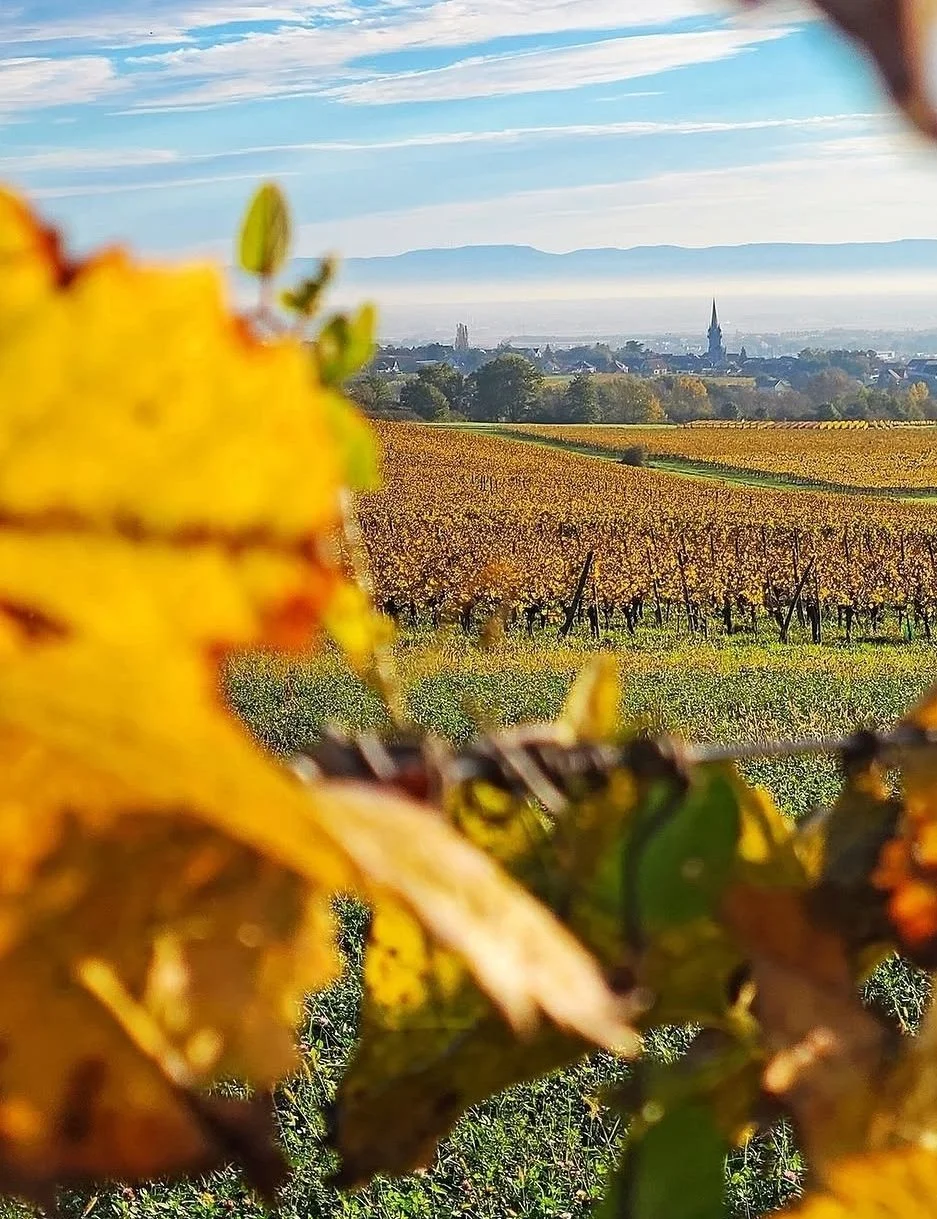
Even the colours change more gradually than people expect. Early in September, vineyards are still almost entirely green. A couple of weeks later, you'll begin spotting patches of gold and copper, often on one hillside but not the next. It isn't unusual to stand on the old ramparts in Turckheim or the vineyard paths above Ribeauvillé and notice that one slope has already turned while another still looks like late summer. The landscape changes field by field rather than all at once.
If you have the choice between catching the first train back or staying for another hour, I'd usually stay. Not because another event is about to begin, but because the villages start feeling different. Shops begin closing, restaurant staff set tables for the evening, and growers who've spent the day in the vineyards gradually reappear in the centre. It's one of the few moments when visitors and local routines overlap instead of moving around each other. One thing you'll notice after a couple of days is that you stop checking the festival programme quite as often. Instead, you start paying attention to bakery windows, chalkboards outside restaurants and what's being sold at the market that morning. That's usually a much better indicator of where harvest season is than any printed schedule.
If you're looking for somewhere even quieter than Alsace's wine villages, peaceful villages might be exactly what you're after.
Barr still feels like the centre of harvest season
There are harvest festivals all along the Alsace Wine Route, but Barr has a way of making the whole season feel connected. Partly because it's been celebrating the Fête des Vendanges for well over a century, and partly because the vineyards begin almost where the town centre ends. You don't arrive at a festival that's been built beside the vineyards. You arrive in a wine town that's carrying on with one of its busiest times of the year.
One of Barr's advantages is simply how easy it is to reach without a car. Barr station sits on the TER line between Strasbourg and Colmar, and the walk into the old centre takes around ten minutes along Rue de la Gare before reaching Place de l'Hôtel de Ville. That's unusually convenient for the Alsace Wine Route, where several of the most famous villages don't have a railway station at all and rely on buses that become much less frequent on Sundays.
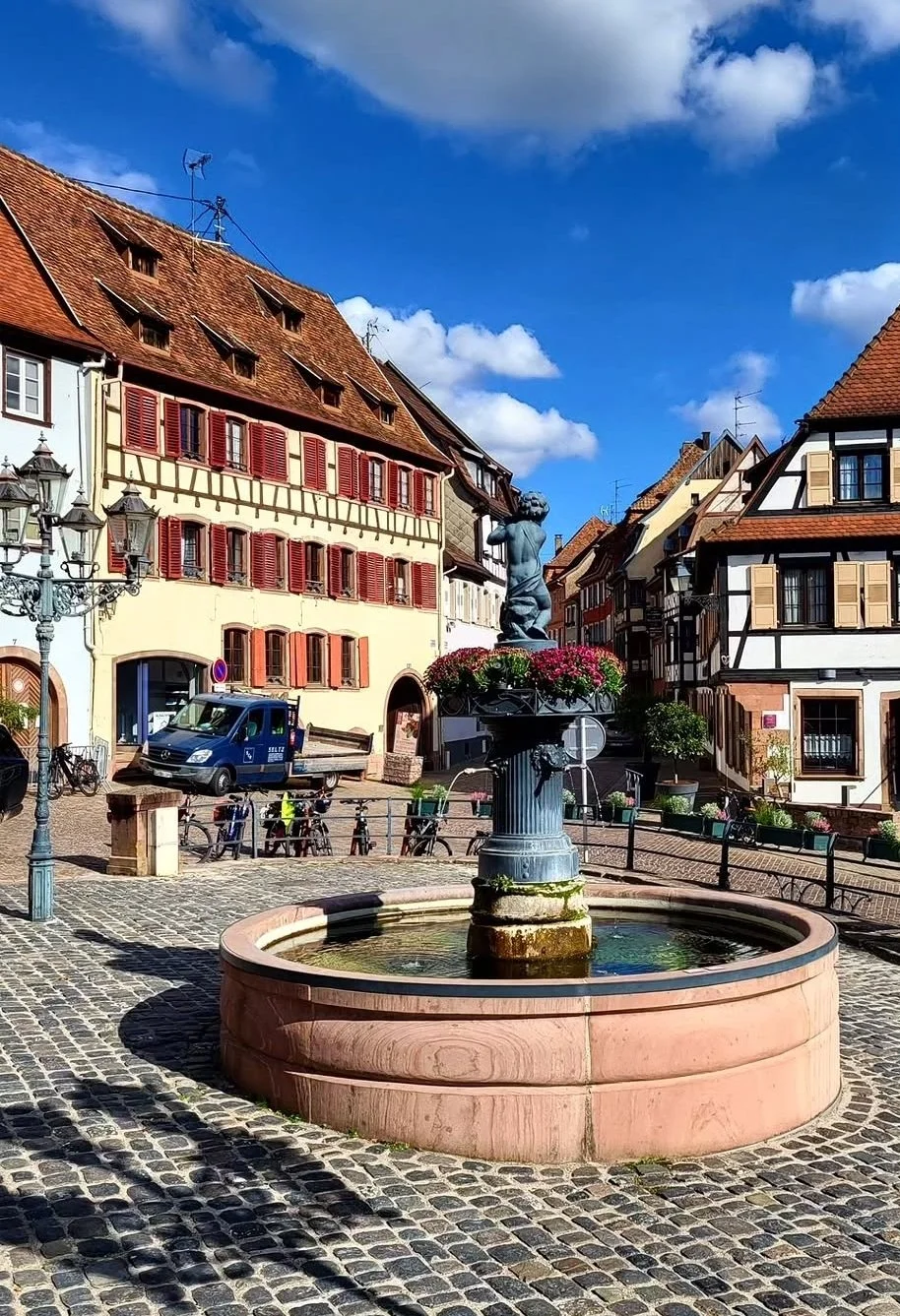
From Place de l'Hôtel de Ville, most people continue along Grand'Rue, but Barr becomes much more interesting once you drift into the smaller streets. Rue de la Kirneck feels noticeably quieter during harvest weekends, with family wineries, half-timbered houses and small courtyards replacing the busiest café terraces. Follow the Kirneck stream for a few minutes and you'll quickly find yourself away from the festival crowds. It's not unusual to pass someone hosing down grape crates outside a cellar, workers moving between winery buildings or residents cycling home while the main square is still filling with visitors. The centre is compact enough that those two sides of Barr sit only a few minutes apart.
The town also changes character as the day goes on. By late morning, trains from Strasbourg and Colmar have arrived, the streets around Place de l'Hôtel de Ville are noticeably busier and queues begin forming outside the most popular lunch spots. If you're hoping to browse the wine stalls or speak to producers without quite so many people around, the first hour after everything opens is usually much more relaxed than the middle of the afternoon.
Stay a little longer and Barr changes again. Around six o'clock, many of the day visitors begin walking back towards the station, but the restaurants are only just starting to fill. Tables at La Table du 5, L'Essentiel and Au Potin become busier, families arrive after spending the day at the festival, and the pace slows almost without anyone noticing. It's probably my favourite time to wander back through Grand'Rue. The market stalls are still open, music drifts across the square, but instead of people trying to fit everything into an afternoon, most have stopped looking at the time altogether.
Barr also works well because you don't have to treat every winery as a destination in itself. Maison Klipfel has welcomed visitors since the early nineteenth century and is known for its historic Clos Zisser vineyard just outside the centre, while Domaine Vincent Stoeffler produces organic wines from parcels around Barr and nearby Ribeauvillé. During harvest, though, flexibility helps. Family estates sometimes adjust tasting hours at short notice while everyone is working in the vineyards, and it's quite normal to find that the cellar is only open in the afternoon even if Google still shows all-day opening hours. Checking the winery's own website before you walk over usually saves disappointment.
If you're staying until Saturday morning, make time for Barr's weekly market before catching the train. It stretches along Grand'Rue and into the streets around Place de l'Hôtel de Ville, and feels very different from the harvest festival itself. Instead of wine stalls and music, you'll find fruit and vegetable growers from the surrounding villages, local cheeses, charcuterie, flowers and bakeries doing a steady trade with people who have clearly followed the same Saturday routine for years. It's also one of the easiest places to see what's actually in season. Depending on when you visit, the stalls gradually shift from late-summer fruit to apples, walnuts, mushrooms, pumpkins and the first autumn produce without anyone making a fuss about it.
Only a few minutes away, Musée de la Folie Marco is worth an hour if you're interested in understanding the region beyond the vineyards. The restored eighteenth-century townhouse is filled with Alsatian furniture, ceramics and decorative arts, giving a glimpse of the prosperous wine merchants who helped shape towns like Barr long before harvest festivals became something visitors travelled to see.
If the weather is clear, I'd also set aside time for Mont Sainte-Odile. Most people visit for the monastery, but the real perspective comes from looking back across the plain below. From up there, it's much easier to understand why the villages developed where they did. The vineyards form a remarkably narrow strip between the Vosges and the Rhine Plain, with Barr, Obernai, Andlau, Mittelbergheim and dozens of other wine villages appearing almost one after another along the foothills. Seeing that landscape from above changes the map you've been carrying around in your head all weekend.
Barr is also one of those places that becomes more enjoyable the less you rush it. On paper, it's an easy stop between Strasbourg and Colmar, and plenty of people treat it that way. In reality, harvest season works against that kind of itinerary. If you only stay for a couple of hours, you'll probably see the festival. Stay until the evening, come back out again the following morning and wander through the Saturday market, and you'll start noticing everything happening around it instead. That's when Barr feels less like somewhere you've visited for an event and more like somewhere you've briefly stepped into while everyday life carried on around you.
Harvest season doesn't stop at the German border. September wine towns is a good place to start if you're already planning where autumn should take you next.
If harvest weekends are your kind of trip, you'll probably enjoy Normandy in autumn just as much, only with cider orchards instead of vineyards.
Around Colmar, the festivals become much busier
Looking at a map, it feels completely realistic to visit Eguisheim, Riquewihr, Ribeauvillé and Kientzheim in the same weekend. They're only a few kilometres apart, and the train makes Alsace look surprisingly compact. Then you arrive and realise that a long lunch turns into an afternoon, one winery recommends another just down the road, and suddenly you've spent four hours somewhere you thought you'd only stop for one.
That's why I'd stop thinking about ticking villages off and instead think about choosing an area. Eguisheim and Turckheim work well together. So do Ribeauvillé, Riquewihr and Kientzheim. They're close enough that you never feel rushed, but different enough that each place adds something new instead of feeling like another version of the last village.
If you're travelling by train, Colmar still makes the easiest base. Not because it's the highlight of the trip, but because it gives you options. If it starts raining, if you decide to stay another couple of hours in Ribeauvillé, or if you suddenly hear about a harvest event in another village, changing plans is easy. That's much harder if you've booked yourself into one of the smallest wine villages.
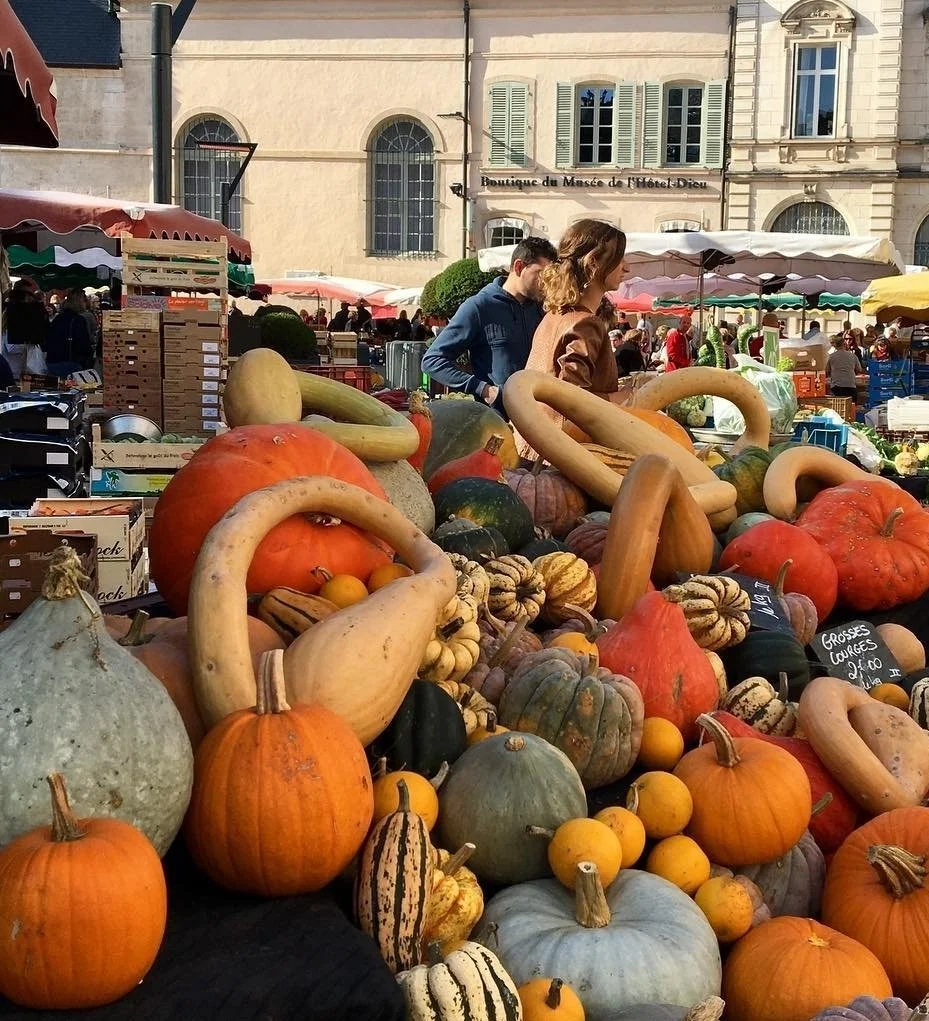
Before leaving Colmar, I'd spend half an hour in Marché Couvert. Not to shop for souvenirs, but simply to see what's turning up on the stalls that week. In September you might still find the last mirabelles beside baskets of girolles and walnuts. A couple of weeks later, pumpkins begin appearing where the summer fruit had been. During harvest season you'll often notice baskets of mushrooms from the Vosges, freshly picked apples, walnuts, local cheeses, charcuterie and bottles of jus de raisin appearing alongside the more familiar Alsatian specialities. It gives you a surprisingly good picture of how the season is changing before you've even reached the vineyards.
From there it's an easy walk past the Koïfhus, along Rue des Marchands and back towards the station. Most visitors stay on the main streets, but if you've got time before your train, wander one or two streets away instead. That's where you'll find neighbourhood bakeries with queues out the door, small wine merchants helping locals choose bottles for Sunday lunch, and cafés that feel more like part of the town than part of the tourist route.
The village most people recognise first is Riquewihr, and it's also the one that's easiest to underestimate. During harvest weekends, Rue du Général de Gaulle becomes busy surprisingly early. By late morning, tour coaches from Colmar and Strasbourg have usually arrived, restaurant terraces are filling, and the narrow main street can feel much smaller than it looks in photographs. If you're hoping to wander without crowds, arrive before nine in the morning or wait until early evening. Once the coaches leave, the atmosphere changes completely. The same streets that felt crowded a few hours earlier become a lot quieter, and that's when staying overnight starts to make sense.
Ribeauvillé feels noticeably different from Riquewihr, even though they're only a few kilometres apart. The first thing you'll notice is the space. Instead of everything happening around one square, the town stretches along Grand'Rue for almost a kilometre, so people naturally spread out. The busiest part is usually around Place de l'Hôtel de Ville, where restaurant terraces and wine stalls stay busy for much of the afternoon, but keep walking for another five or ten minutes and the atmosphere changes. Small bakeries, independent wine cellars and quieter side streets begin replacing the festival crowds, and it suddenly feels much easier to stop without someone waiting behind you.
If you've arrived by train via Sélestat, I'd also save enough time to walk uphill instead of heading straight back after lunch. The climb towards Château Saint-Ulrich, Château du Girsberg and Château du Haut-Ribeaupierre is steeper than many people expect, especially in the afternoon sun, but it's one of the easiest ways to leave the crowds behind. Most visitors never go beyond the last houses, which means the vineyard paths become surprisingly quiet even on busy harvest weekends. Looking back from the lower sections of the trail, you can see the rooftops of Ribeauvillé stretching north and south along the foothills, with vineyard parcels climbing almost to the castle walls. It's one of the few places where you really understand how narrow the Alsace wine-growing strip actually is.
Eguisheim is probably the village where the difference between midday and evening is easiest to notice. Between late morning and four o'clock, the circular streets around Place du Château Saint-Léon IX, Rue du Rempart, Rue du Bassin and Rue du Monceau are usually full of people following the same loop through the village. By early evening, that changes surprisingly quickly. Coaches have left, many visitors have returned to Colmar, and suddenly the cafés and restaurants are filled with people who are actually staying the night rather than squeezing Eguisheim into a few hours.
That's one of the reasons I'd seriously consider booking a hotel here instead of just visiting for the afternoon. You get a completely different village once dinner begins. The flower-lined streets become much quieter, the wine bars have room for longer conversations, and it's much easier to wander without constantly stepping aside for another group taking photographs. If you head out again before breakfast the following morning, you'll probably find bakery queues forming before the streets have filled with visitors, making it one of the few times of day when Eguisheim feels almost entirely local again.
It's also worth looking beyond the names that appear in every guidebook. Turckheim often gets overlooked despite having one of the prettiest medieval centres in the region. Walking through the Porte de France, across Place Turenne and along the old ramparts takes very little time, but the town usually feels calmer than its better-known neighbours. Just outside Kientzheim, Domaine Weinbach sits beside the former Capuchin monastery and has become one of Alsace's most respected producers. A little further away in Ammerschwihr, Maison Faller is another long-established family estate that's worth seeking out if you're interested in wines with a strong sense of place rather than simply visiting the most famous places.
One of the easiest mistakes to make when planning a weekend around Colmar is assuming the villages are close enough that you'll comfortably fit three or four into a single day, because when you look at the map Ribeauvillé, Riquewihr, Kientzheim and Eguisheim almost seem to blend into one another. In reality, harvest season has a habit of stretching the day without you noticing. A tasting at a small winery becomes a conversation about this year's harvest, lunch lasts longer because nobody is in a hurry to leave the terrace, and by the time you've wandered through a market or stopped at a bakery on the way back to the bus, you've completely forgotten the timetable you were looking at over breakfast.
The trains themselves are rarely what limits the weekend. Getting between Colmar, Sélestat, Barr, Obernai and Strasbourg is straightforward enough. It's the last few kilometres that shape your plans, because villages like Riquewihr, Eguisheim and Kientzheim rely on local buses that become noticeably less frequent on Sundays and public holidays, which means changing your mind halfway through the afternoon isn't always as simple as it looked when you were planning the trip from home. The Kut'zig shuttle is a lovely alternative if you're happy to settle into one village for several hours, have a proper lunch and see where the afternoon takes you, but it's much less satisfying if you're watching the clock because you're determined to fit one more stop into the day.
That's probably why I still come back to Colmar as the easiest place to stay, even though it isn't the village I remember most vividly afterwards. Having frequent trains, plenty of restaurants and enough flexibility to change your plans without the whole weekend unravelling becomes surprisingly valuable once you're actually there, especially during harvest season when one unexpected conversation, one recommendation from a winemaker or one market that's much better than you expected can quietly change the rest of the day.
If you're already wondering whether Alsace is the best autumn choice, or if another French region might suit you better, autumn weekends compares places that feel completely different once September arrives.
Obernai feels less like a wine village and more like a town that happens to sit in wine country
After spending time around Colmar, Obernai can almost feel like a reset. The vineyards are still there, but harvest season isn't concentrated around one postcard-perfect main street. Instead, it spills naturally into markets, bakeries, cafés and restaurants where plenty of the people around you are there because they live in Obernai, not because they're following the Alsace Wine Route.
The journey is one of the easiest in the region. TER trains from Strasbourg reach Obernai station in around half an hour, and from there it's a fifteen-minute walk along Rue de Sélestat towards the old centre. The route is straightforward, although the last stretch over the cobbles around Place du Marché and Place du Beffroi is just uneven enough that you'll notice it if you're pulling a suitcase full of wine home.
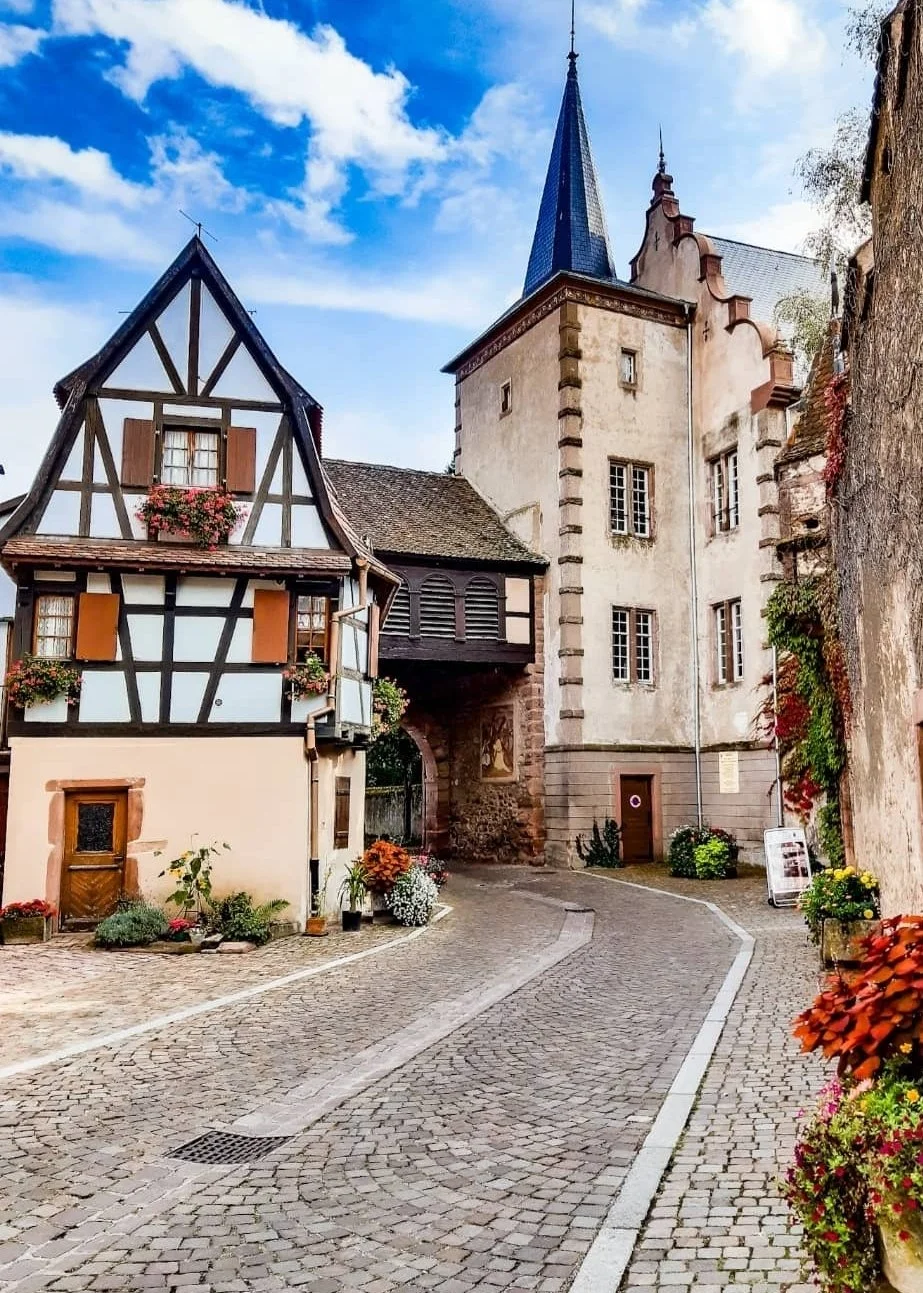
Obernai is noticeably bigger than villages like Eguisheim or Riquewihr, and you feel that almost as soon as you leave Place du Marché. Instead of everyone following the same loop through the centre, people naturally spread out between Rue du Général Gouraud, Rue du Marché, Place de l'Étoile, the Renaissance Halle aux Blés, the Puits à Six Seaux, the medieval Kapellturm and the old town walls. You can spend twenty minutes wandering without ending up back where you started, and it's surprisingly easy to drift away from the busiest streets simply by taking the next turning instead of continuing straight ahead. That's one of the things I like most about Obernai during harvest season. Even on busy weekends it still feels like a town where people are meeting friends for lunch, stopping at the bakery or walking home with their shopping rather than somewhere everyone is following exactly the same route.
Thursday is probably the day Obernai makes the most sense. Long before the cafés begin filling, the streets around Remparts Maréchal Joffre, Remparts Maréchal Foch and the Salle des Fêtes are already lined with market traders. The market has been part of the town since 1301, but it doesn't feel historic in the way tourism brochures often describe it. People are here because it's Thursday. Someone is buying flowers before work, another stops for cheese and bread on the way home, and the stallholders seem to know half their customers by name. If you've already spent a day or two in the smaller wine villages, the contrast is obvious almost immediately.
If your trip falls over a weekend instead, Obernai still has something most visitors never realise exists. On Saturday mornings, Halle Gruber fills with the Bi'O Market, where local growers and producers bring fruit, vegetables, honey, bread, cheeses, flour, sauerkraut and wine from around the surrounding villages. It's much smaller than Thursday's market, but that's part of the appeal. You'll often spend longer talking to the people behind the stalls than deciding what to buy. Even the setting tells you something about the town. If another event is using Parking des Remparts, the market simply shifts a few metres along to Rempart Foch, above Porte de Schwal. Nobody makes a fuss about it. It just carries on, exactly as it has for years.
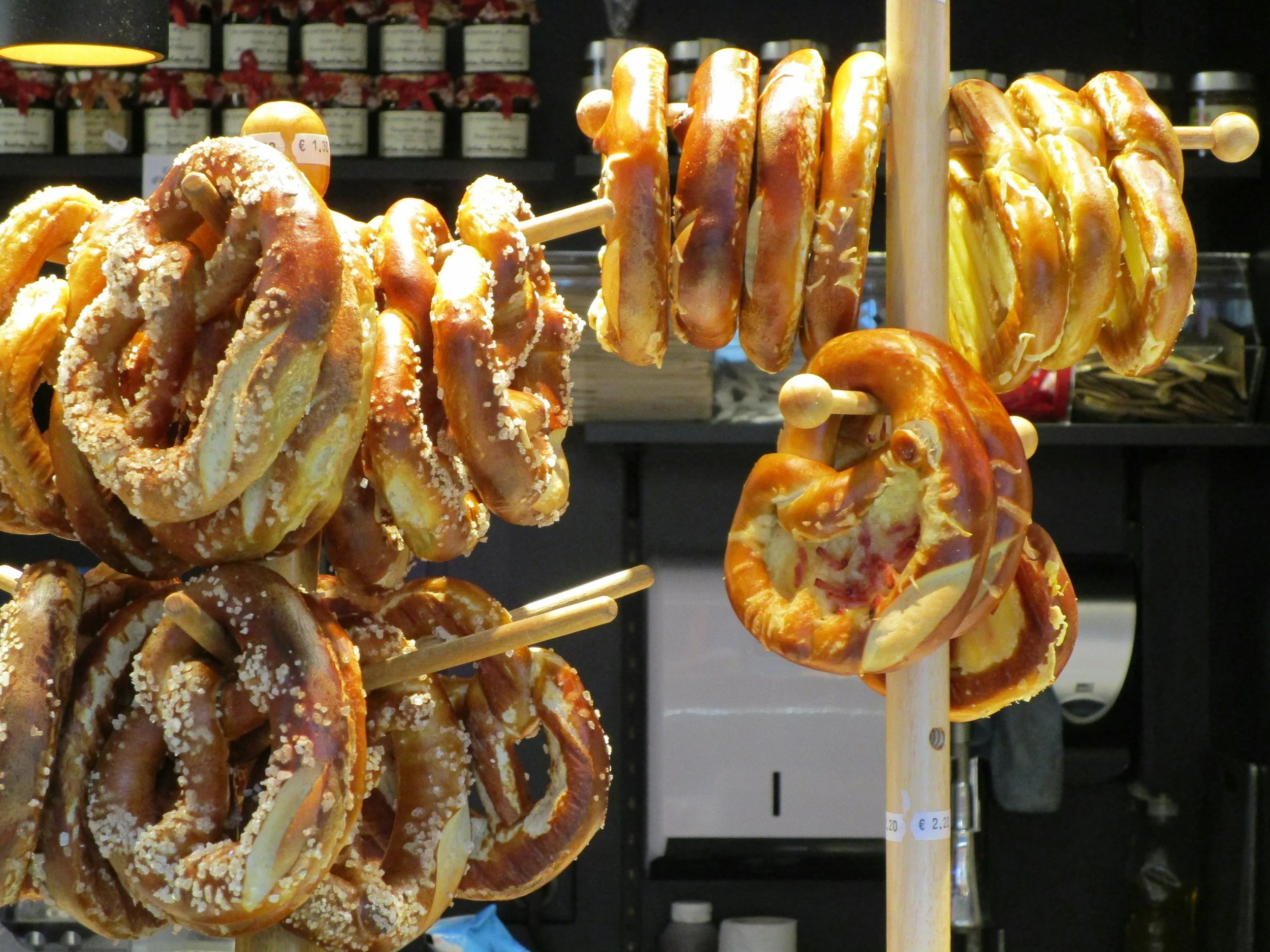
One of the things I like about Obernai is that you don't spend the whole day thinking about wine. The vineyards are never far away, but harvest season also finds its way onto bakery shelves, restaurant menus and even the lunchtime queues outside the boulangeries. By September you'll start seeing zwiebelkuchen written onto blackboards outside restaurants almost overnight, while bakery windows fill with fresh kougelhopf, apple cakes and other pastries that weren't there a couple of weeks earlier. It's the sort of change you only notice if you've visited Alsace at different times of the year.
That makes Obernai an easy place to stretch lunch into most of the afternoon. Le Schtampfel changes its menu with the season instead of serving the same dishes all year, and after lunch it's only a short walk to Domaine Seilly on Rue du Général Gouraud, where you can taste wines without leaving the old town or driving out into the vineyards. If the weather turns wet, Boulangerie Au Pain Gourmand occasionally runs demonstrations and workshops around traditional kougelhopf, which feels far more in keeping with an autumn weekend than simply waiting for the rain to pass in a café.
One thing I think Obernai does better than almost anywhere else on the Wine Route is making it easy to build a long weekend without constantly checking bus timetables. Rosheim is one stop away by train, where Rue du Général de Gaulle hosts its weekly Friday market, giving you two completely different local markets on consecutive mornings. A short cycle or taxi ride brings you to Boersch, where the Ehn flows beneath old stone bridges and the streets are usually quiet enough that you'll hear the church clock long before you see another visitor. Head the other way and you're quickly in the vineyards around Mont National, where local winegrowers regularly lead walks during the harvest season that finish with tastings among the vines.
One thing Obernai gets right is that you don't spend the whole weekend thinking about logistics. Restaurants don't disappear on Sunday evening in the way they often do further south, so there's no rush to finish dinner before everything closes, and because the station is within walking distance of the old town it's easy to come and go without constantly checking bus timetables. If you're driving, it's much less enjoyable trying to squeeze into the streets inside the old centre than leaving the car at Parking des Remparts and walking the last few minutes instead.
I also think Obernai suits a different kind of weekend than somewhere like Riquewihr. You can spend Thursday morning wandering through the market, stop for lunch without already thinking about the next village, walk over to Domaine Seilly for a tasting, then decide over dinner whether Friday belongs in Rosheim, Boersch or somewhere else entirely. Nothing feels especially planned, but somehow the weekend still falls into place. That's probably why I'd choose Obernai over some of the more famous wine villages if I were travelling by train!
If this weekend has made you fall in love with local markets, market weekend in Burgundy is probably the next trip I'd look at.
Planning a harvest weekend by train
One of the biggest misconceptions about Alsace is that because the villages are close together, you should try to see as many as possible in one weekend.
I'd actually do the opposite.
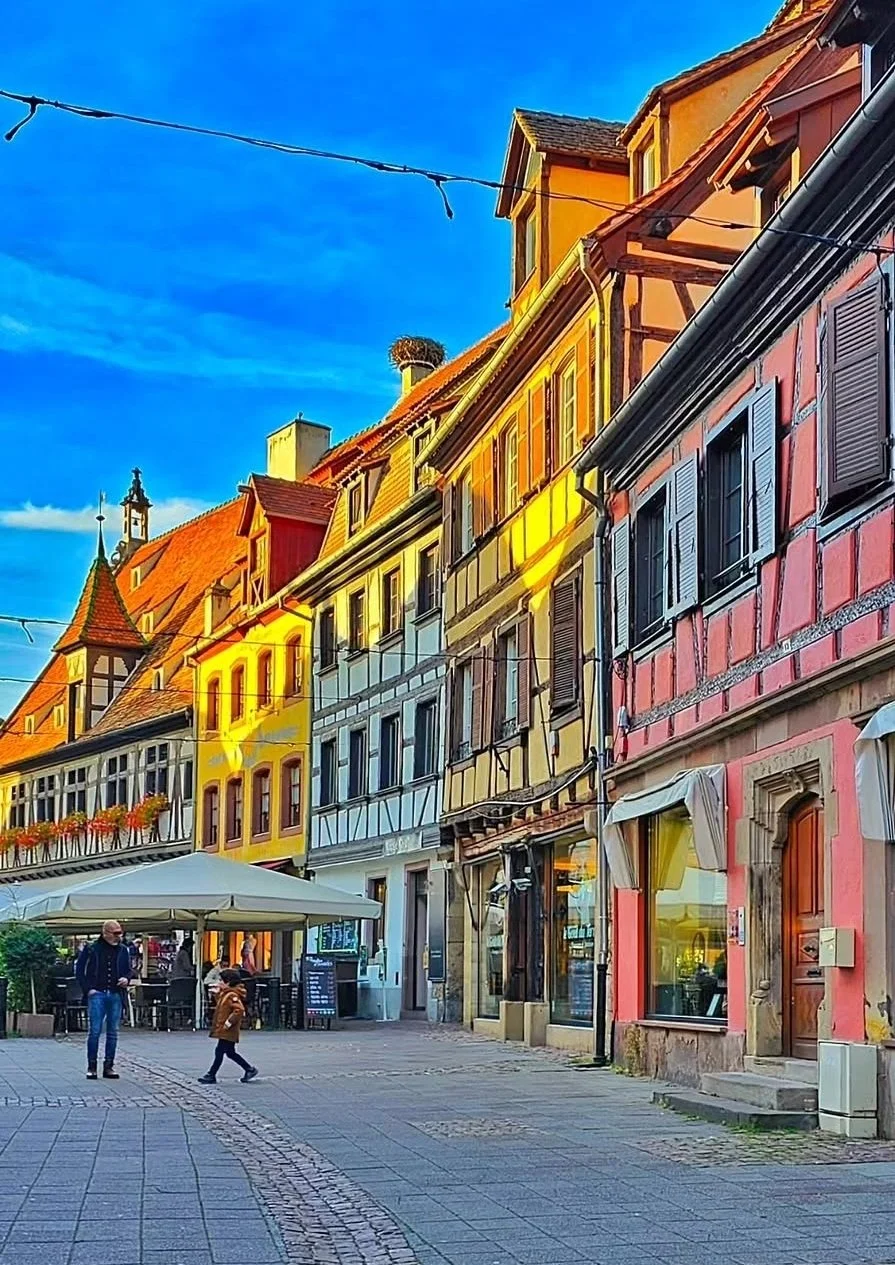
The villages are close enough that it's easy to become overambitious when you're planning. Barr, Ribeauvillé, Riquewihr, Eguisheim, Turckheim and Obernai all look as though they'll fit comfortably into one weekend, especially once you start looking at train times. Then Saturday arrives and you spend longer than expected at the market in Barr, lunch turns into most of the afternoon, a winemaker points you towards another cellar a few streets away, and by the time you're ready to leave you've stopped caring about squeezing another village into the day.
For most weekends, Colmar is still the easiest base. Not because it's the prettiest place to stay, but because it gives you options. Trains arrive frequently from Strasbourg, Sélestat, Mulhouse and Basel, and if the weather changes or you decide to spend another few hours in a village, you're much less likely to find yourself stranded waiting for the last connection. You also have dozens of restaurants within walking distance of the station and old town, something that's easy to appreciate after a long day of walking through vineyards.
Barr is one place where I'd seriously consider staying overnight. During the middle of the day the streets around Place de l'Hôtel de Ville are at their busiest, but by early evening a lot of people have already caught the train back towards Strasbourg or Sélestat. The music is still playing, the wine stalls are still open and the restaurants are only just starting to fill, but the town settles into a different evening. Instead of people trying to fit everything into a few hours, you'll see families arriving for dinner, neighbours stopping to talk on their way across the square and festival visitors who aren't looking at train times because they're already staying in Barr.
The next morning is just as much a reason to stay. Before the festival gets going again, the town belongs to the Saturday market, the bakeries and the people doing their usual weekend shopping. By the time the first day visitors begin arriving, you've already had a completely different experience of Barr than someone who only came for the afternoon.
A realistic harvest weekend usually means choosing one cluster rather than the whole region. Barr and Obernai work naturally together because they're connected directly by TER. Colmar, Eguisheim and Turckheim also combine well, especially if you're happy using local buses or the seasonal Kut'zig panoramic shuttle. The bright red open-top bus leaves directly opposite Colmar station and loops through Eguisheim, Turckheim, Kaysersberg, Riquewihr and Ribeauvillé, returning roughly every 1 hour and 45 minutes. It's a relaxed way to explore if you're spending several hours in each village, but it's much less useful if your plan is to hop on and off every thirty minutes.
Public transport becomes a little more complicated once you leave the railway. Riquewihr doesn't have a train station, and buses are much less frequent on Sundays than many visitors expect. The TER coach between Sélestat, Ribeauvillé and Riquewihr only runs a handful of return journeys on Sundays and public holidays, so missing one can easily change the rest of your day. That's one reason I'd avoid building an itinerary with tight connections between villages.
Another small detail that catches people out is luggage… If you're stopping in Colmar before checking into your hotel or heading out to the villages, there aren't official luggage lockers at Colmar station. Instead, you'll need to use one of the private luggage storage services near the station or in the old town. It's worth planning that in advance rather than assuming you'll find station lockers when you arrive.
One thing that rarely gets mentioned is how quickly the wine starts adding up. Buying a bottle in Barr doesn't seem like much, then another in Ribeauvillé because you can't find that producer anywhere else, a couple more in Obernai after lunch, and by Sunday morning you're trying to remember how heavy six bottles actually are. The regional TER trains have plenty of space for luggage, so getting the wine home usually isn't the difficult part. Carrying it across cobbled streets between stations, markets and hotels is what most people underestimate. Unless you've found something you think might sell out, I'd leave the biggest wine purchases until the last afternoon. Your shoulders will thank you somewhere between the station and the platform.
Sunday evenings also deserve a bit more thought than they usually get. Riquewihr, Kientzheim and even parts of Eguisheim become remarkably quiet once the weekend visitors leave. That's lovely if you're staying overnight, but less helpful if you're hoping for a lively final dinner. Colmar and Obernai are much stronger choices for a Sunday night. Both have enough local residents that restaurants, wine bars and cafés continue to feel busy after the day-trippers have disappeared, and you'll have far more choice if one restaurant happens to be fully booked.
Harvest weekends are one of the few times I'd strongly recommend reserving dinner in advance. Around Place de l'Hôtel de Ville in Barr, the central streets of Riquewihr, and the busiest parts of Rue des Marchands in Colmar, it's not unusual for the most popular tables to be taken well before 7pm. Walking one or two streets away from the obvious squares often makes a bigger difference than eating earlier.
The weekends that seem to work best are rarely the ones with the longest itinerary. They're usually the ones where Barr unexpectedly becomes the whole afternoon, where a stop at the market turns into lunch because someone recommends the restaurant next door, or where you decide to stay in Obernai for another hour instead of catching the bus to one more village. Harvest season has a habit of changing your plans, and most of the time it's worth letting it.
Can't decide between Alsace and Burgundy? Our Chablis guide makes that decision much easier.
If you're travelling through France by train anyway, this piece on countryside escapes gives you several quieter stops that fit naturally before or after Alsace.
Why no two harvest weekends in Alsace feel the same
As mentioned before, harvest season doesn't arrive everywhere in Alsace at the same time. While one village is still bringing grapes into the wineries, another is already setting up for its harvest festival, and somewhere else the weekly market is carrying on exactly as it does every Thursday, only with a few more bottles of fresh jus de raisin, apple cakes and onion tarts than there were a couple of weeks earlier. Travelling through the region by train makes those small changes surprisingly easy to notice because they're happening only a few stations apart.
Looking back, I don't remember harvest weekends in Alsace by the festival programmes. I remember stopping at a bakery in Eguisheim because everyone ahead of me was leaving with slices of still-warm zwiebelkuchen, walking through Marché Couvert in Colmar and realising the last mirabelles had disappeared since my previous visit, or ending up in Obernai on a Thursday morning when half the town seemed to be carrying flowers, bread and vegetables home from the market. A week later, the same places already looked slightly different again. Another menu, another harvest stage, another market stall replacing summer produce with apples, walnuts and pumpkins.
One thing I came away appreciating much more than I expected was how ordinary harvest season still feels once you step away from the festival squares. A tractor waits outside a winery while someone pops into the bakery next door. The Thursday market in Obernai carries on exactly as it always has, only with apples replacing the last summer fruit and a few more bottles of freshly pressed grape juice on the stalls. In Barr, people stop for a glass of wine after work while visitors are still deciding where to have dinner. None of it feels organised for an audience. You're simply passing through a few weeks that matter to the people who live here every year.
That's probably why Alsace keeps drawing people back in autumn. Not because there's one harvest festival you have to see, but because no two weekends are ever quite the same. A different producer is pouring wine, another menu has appeared outside the bistro you walked past last time, the bakery has swapped one seasonal tart for another, and somewhere further along the railway line another village is just beginning its busiest weekend of the year.
Uzès has a completely different feel in autumn, and if you're debating between southern France and the vineyards of Alsace, this comparison will probably save you an afternoon of research.
FAQs about harvest season in Alsace
When is the best weekend to visit Alsace during harvest season?
If your dates are flexible, I'd aim for the second half of September or the first weekend or two in October rather than choosing a date months in advance. Harvest doesn't begin everywhere at the same time, and neither do the festivals. Some villages celebrate while grapes are still being picked, others wait until most of the harvest has finished. Those few weeks usually give you the best chance of seeing vineyards in full swing, visiting local markets and finding autumn menus appearing in restaurants at the same time.
Which village feels most authentic during harvest season?
That depends on what you enjoy. Barr still feels like a working wine town throughout harvest, with tractors moving between vineyards and local producers at the centre of the celebrations. Obernai feels more like everyday Alsace, where markets, bakeries and cafés continue as normal alongside harvest events. Eguisheim becomes much quieter after dinner once most day visitors return to Colmar, while Riquewihr is often at its busiest between late morning and mid-afternoon.
Is Colmar really the best place to stay without a car?
For most people, yes. It's the easiest place to build a flexible itinerary because of the train connections and wider choice of hotels and restaurants. The exception is if you're travelling specifically for Barr's Fête des Vendanges or another village festival. Staying overnight means you experience the village after many of the coaches have left, which often feels completely different from the middle of the day.
Can you visit several harvest festivals in one weekend?
Yes, but I'd resist trying to visit as many as possible. Harvest weekends work best when you choose one part of the region rather than constantly moving between villages. Barr and Obernai pair naturally together, while Colmar, Eguisheim and either Ribeauvillé or Riquewihr make another good combination. Trying to fit all of them into two days usually leaves very little time to actually enjoy where you are.
Do wineries stay open during the grape harvest?
Some do, but harvest is one of the busiest periods of the year for family-run producers. It's completely normal for tasting hours to change at short notice or for wineries to close for a day or two while everyone is working in the vineyards. Always check the producer's own website or social media before making a special journey rather than relying entirely on Google Maps.
What's the easiest way to travel between the wine villages without a car?
The TER train line connects Strasbourg, Obernai, Barr, Sélestat and Colmar, but the smaller villages rely on buses. That's the part many visitors underestimate. Services to places like Riquewihr become much less frequent on Sundays, and missing one connection can easily change the rest of your day. If you're travelling during the warmer months, the seasonal Kut'zig panoramic shuttle is another option, although it's designed for slower sightseeing rather than quickly hopping between villages.
Are harvest festivals suitable if you don't drink wine?
Absolutely. Wine is only one part of harvest season. Village markets fill with local cheeses, honey, breads, pastries, fruit, mushrooms and seasonal vegetables, while restaurant menus begin featuring dishes like zwiebelkuchen, game and autumn desserts. Many people spend an entire weekend exploring markets and food without visiting a single winery.
Which villages become much quieter after the crowds leave?
This is one of my favourite parts of harvest season. Eguisheim changes noticeably after dinner, when the organised day trips have returned to Colmar. Riquewihr also becomes much calmer once the coaches leave, especially early in the evening. If you're staying overnight, those are often the hours that feel most rewarding to wander through the old streets.
Is it worth hiring a car during harvest season?
Usually not. Unless you're planning to visit very small producers well away from the railway line, travelling by train is often the more relaxing option. Parking around the most popular villages becomes much busier during festival weekends, and you'll spend more time thinking about where to leave the car than if you'd simply taken the train and walked.
What should I book before travelling?
Hotels are the first thing I'd reserve, especially if you're hoping to stay inside Barr, Riquewihr or Eguisheim during a festival weekend. After that, think about restaurants rather than wineries. Popular places often fill surprisingly early during harvest celebrations, while many wineries are happy to welcome visitors without a reservation if they're open that day.
Can I buy wine and take it home on the train?
Yes. It's completely normal to see passengers travelling with wine boxes on regional trains in Alsace. I'd simply leave your biggest purchases until the final afternoon. Carrying six bottles through markets, festivals and cobbled streets sounds much easier when you're planning the trip than it does a few hours later.
Does harvest season change much from one week to the next?
More than most first-time visitors expect. Come back two weeks later and you'll often find different market produce, different restaurant menus, different winery opening hours and even a different village celebrating. Harvest season doesn't arrive everywhere at once. It slowly moves along the foothills of the Vosges, which is one of the reasons autumn feels slightly different every time you visit.