

The French market towns I'd never visit as a day trip
Some French market towns revolve entirely around one space, while others spread out in a way that changes how you move through them. In Uzès, everything gathers in Place aux Herbes, and the square fills quickly once the morning builds. In Apt, the market stretches across several streets, so where you enter makes more difference than you expect. In places like Sainte-Foy-la-Grande, the grid layout means you can shift between parallel streets without getting stuck in one section.
That becomes more noticeable when you’re staying for a full weekend. In smaller towns like Cucuron or Castelnau-de-Montmiral, the market is finished within an hour, and the rest of the time happens in the same square without the stalls. In places like Dieulefit, the activity spreads along one main street, and the pace changes depending on where you are along it.
Timing changes the experience more than the size of the market. Early in the morning, movement is direct, with people buying what they need and leaving again. Later on, the same streets slow down, but not in the same way everywhere. In some towns, everything gathers in one place. In others, it spreads out, and you adjust your route instead of stopping completely.
The towns in this guide are included for different reasons. Some are here because the market itself is worth planning around. Others work because of what happens once you step away from it, whether that’s moving a few streets out of the centre or continuing the day somewhere close by.
Saint-Antonin-Noble-Val – Tarn-et-Garonne
Occitanie | Sunday Market
Saint-Antonin-Noble-Val sits in a bend of the Aveyron River, about 45 minutes north-east of Montauban. Most arrivals come via Caussade, where the road narrows and follows the river into the valley before opening up near the town. Parking is spread along Avenue du Dr Paul Benet and the riverbanks. On Sunday mornings, arriving before 9:30 usually means a shorter walk into the centre. After that, most people park further out and walk in along the river, entering the town from the bridge side rather than directly through the main square.
The market takes place on Place des Moines and spreads into streets like Rue Droite and Rue Guilhem Peyré. The layout isn’t linear. You don’t move through it once and leave. Instead, you enter from one side, pass through a few sections, and often loop back without planning to. The first slowdown usually happens where the streets narrow just before opening into the square, especially later in the morning when people gather under the arcades.
Between 8:30 and 9:30, the pace is still direct. Residents move quickly through the square, often stopping only at specific stalls before leaving again. Bread is usually collected early, and some of the smaller food stalls don’t restock once they sell through their first batches. By around 10:30, the centre slows noticeably. The narrower streets feeding into the square back up first, and crossing Place des Moines becomes less direct.
What makes this town work for a weekend is how the pattern changes across two days. On Saturday, without the market, the same streets feel quieter and easier to navigate. Rue Droite is where most of the independent shops are, including small galleries and food stores that open gradually through the morning rather than all at once. This is also where you’ll find places like Carré des Saveurs, which is a reliable option for a slower lunch, and Beau Site, set slightly away from the centre with views over the river.
On Sunday, the rhythm shifts. The centre fills quickly, but it also empties earlier than expected. By late morning, many local residents have already left after finishing their shopping, and the movement becomes more fragmented. This is usually the point where people start moving away from Place des Moines rather than staying in it.
The river becomes the second part of the day. Within two to three minutes, you can step away from the square and reach the Aveyron. Most people don’t stay in the centre to eat. They pick up food from the market and move toward the water instead. Crossing the old bridge or following the path along the river changes the pace immediately. The area just beyond the bridge fills first, but if you continue further along the bank, it becomes noticeably quieter.
If you prefer to sit down, cafés around Place des Moines fill from around 10:30, but it’s often easier to walk a few minutes out of the centre. Les 2 Rivières is one option closer to the water, while smaller cafés along the side streets tend to have more space later in the morning.
Beyond the market, the town is also a base for short walks and activities that fit naturally into a weekend. The Aveyron Gorge just outside the village is used for canoeing during warmer months, and there are walking routes that start close to the centre and follow the river or move up into the surrounding hills. These aren’t long excursions but short extensions of the same area, which makes them easy to combine with a slower morning in town.
Staying overnight makes the difference clearer. Arriving only for Sunday means experiencing the busiest version of the town without seeing how quickly it settles once the market is gone. Spending a full weekend gives you both, and that contrast is what makes Saint-Antonin-Noble-Val work better as a place to stay rather than just pass through.
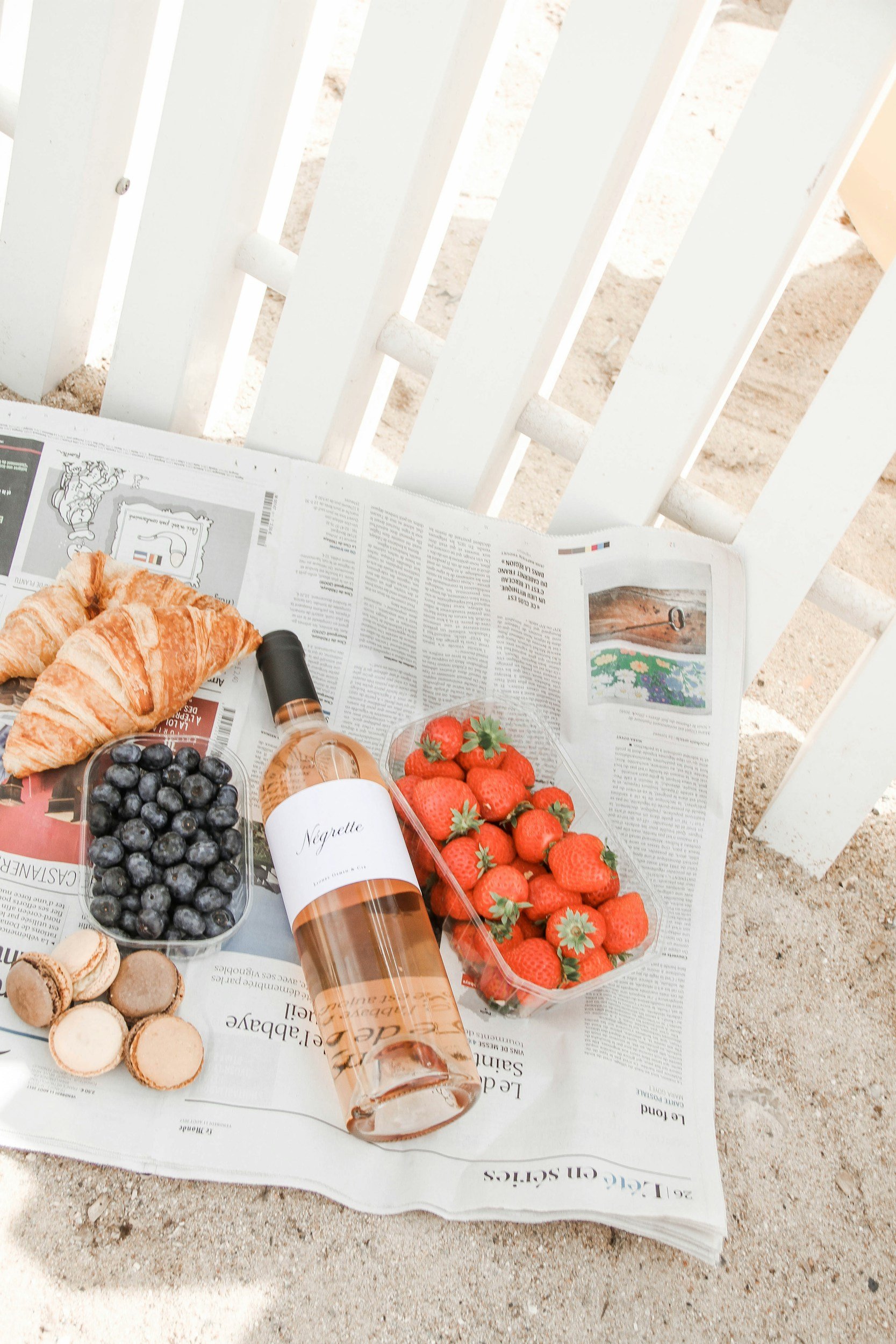
After the market, most people drift toward the river rather than staying in the centre. A short walk from Place des Moines brings you to the old lavoir along the Aveyron, which is one of the quieter spots close to town. It’s used more as a place to stop briefly rather than a destination, but it’s an easy way to step out of the busiest streets without going far.
If you’re staying overnight, it’s worth using the late afternoon differently from the morning. The Roc d’Anglars viewpoint sits above the town and can be reached on foot in under 30 minutes. The path is short but uneven in places, and most people go up toward the end of the day rather than earlier. From the top, you can see the full layout of the village and the river bend, which gives a clearer sense of how compact the town actually is once the market has cleared.
Rent a kayak from “Les Pieds dans l’Eau” just outside town after your market morning. The river route from Saint-Antonin toward Cazals is shaded, peaceful, and drifts beneath limestone overhangs.
Cucuron – Luberon, Provence
Vaucluse | Tuesday Market
Cucuron sits on the southern side of the Luberon, about 40 minutes from Aix-en-Provence and just under an hour from Avignon. Most arrivals are by car, usually via Lourmarin or Pertuis, with the final stretch opening into wider views before the road drops slightly toward the village. Parking is set just outside the centre along Route de Vaugines and Avenue Philippe de Girard. From there, most people walk in from the southern side and enter directly into Place de l’Étang.
The market takes place on Tuesday mornings and is centred entirely around Place de l’Étang. The large rectangular basin, lined with plane trees, defines the layout. Stalls run along the edges of the water, and the movement follows the perimeter rather than spreading into multiple streets. You don’t move through sections in the same way as larger markets. Instead, you circle the basin, step out briefly into side streets, and return again.
Between 8:30 and 9:30, the pace is steady and local. Residents walk along the edge of the basin with a clear purpose, stopping briefly at produce stalls, bakeries, and cheese vendors before leaving again. At this stage, it’s still possible to cross the square directly without following the full loop.
From around 10:30, the edges of the basin begin to slow, particularly along the sections closest to the cafés where people stop and stand longer. The areas between the trees and the stalls narrow slightly, which creates short bottlenecks rather than one central point of congestion. Unlike larger markets, the pressure stays consistent rather than building in one place.
Food is distributed evenly around the square. Early in the morning, most people buy produce, bread, and cheese, while prepared food becomes more visible closer to midday. The low walls around the basin and the shaded areas under the trees are used for short stops, but most people don’t stay in one place for long.
What makes Cucuron worth including is how contained everything is. The market doesn’t extend far beyond the square, and most people move through it in under an hour. It works better as part of a slower morning rather than something to build the whole day around.
Outside market hours, the same space functions differently. On Saturday and Sunday, Place de l’Étang is quieter, and the cafés around the basin become the main focus rather than the stalls. Le Petit Café sits directly by the water and fills steadily from late morning, while La Petite Maison de Cucuron, just off the square, is better suited to a longer lunch or dinner.
A short walk away from the basin changes the pace quickly. Moving toward Église Notre-Dame-de-Beaulieu or into the surrounding residential streets takes only a few minutes, and beyond that, paths lead out toward the vineyards and open countryside. These aren’t long routes, but they extend the visit without needing to leave the village.
Staying overnight gives you both versions of the town. Tuesday morning is more active but still contained, while the rest of the week is centred around the basin without the market. Most people who know Cucuron don’t stay in the square continuously. They pass through, step away, and return later, which changes how the place feels across the day.
Early spring in Provence can be surprisingly good. This look at Provence in April with its early markets and quiet villages is a nice reference if you’re planning outside peak summer.
And for a softer spring trip, this piece on Provence Verte and early lavender gives you a sense of how the region looks and feels before it gets busy.
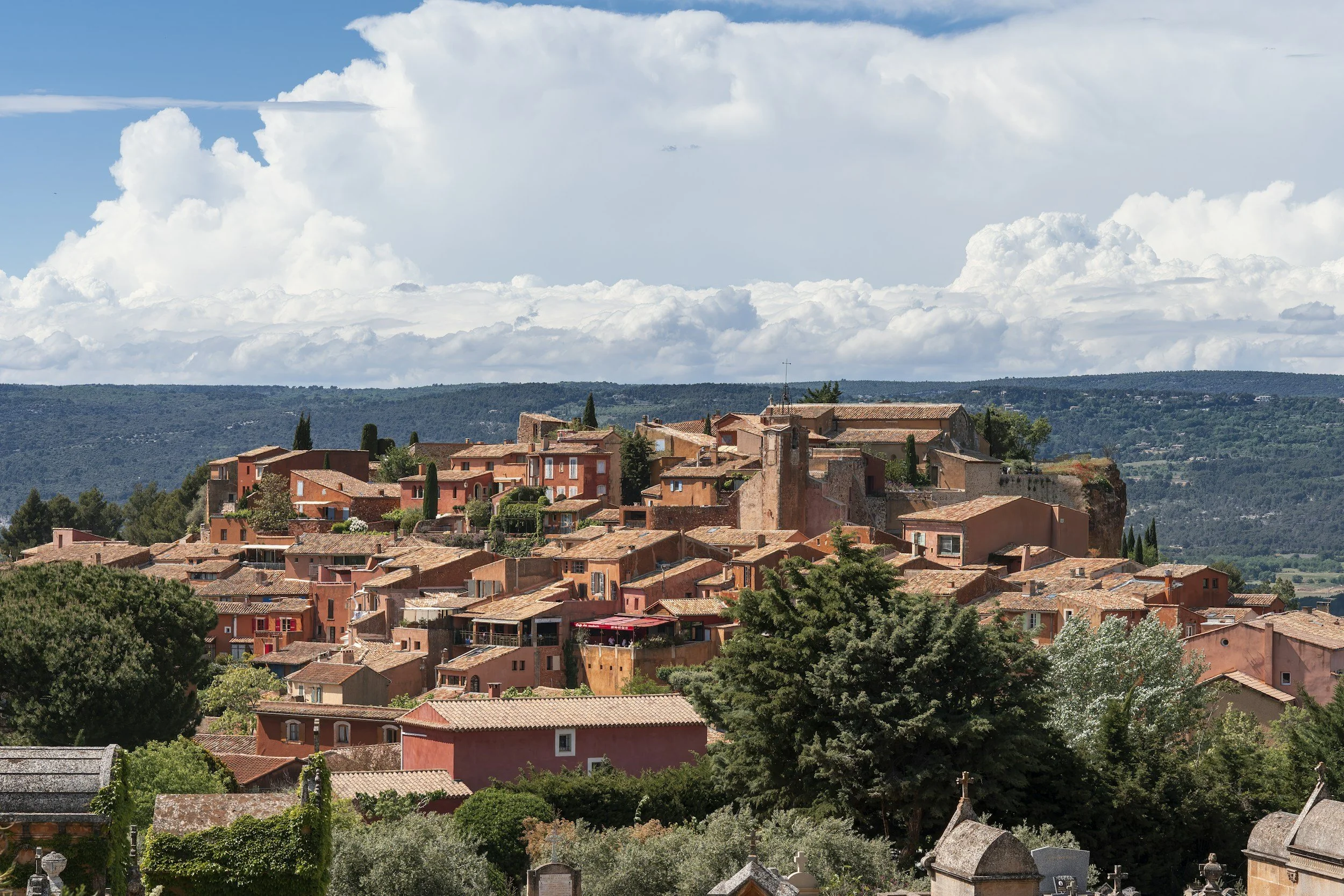
If you walk to the back of the square, beyond the more visible stalls, there’s often a small table with a handwritten sign selling foraged herbs and dried flowers from the hills above the village. The woman who runs it sometimes adds seasonal tisanes or herbal oils she’s made herself. It’s quiet, unadvertised, and very special.
Dieulefit – Drôme Provençale
Auvergne-Rhône-Alpes | Friday Market
Dieulefit sits in the Drôme Provençale, about 30 minutes south-east of Montélimar. There’s no train station in the town, so most people arrive by car, often from Montélimar or nearby villages across the hills. Parking is spread along Avenue du Général de Gaulle and near Place de l’Abbé Magnet. On Fridays, arriving before 9:30 usually means a shorter walk into the centre. After that, most people park further out and walk in along the main road, entering the market from the lower end near Place de l’Abbé Magnet.
The market runs along Grande Rue and extends into connecting streets like Rue du Bourg and Place Châteauras rather than gathering in a single square. Most people join from the lower end and move upward, following the natural slope of the street. The first slowdown usually happens where Grande Rue narrows slightly as it approaches the centre, while the upper sections closer to Rue du Bourg remain easier to move through for longer.
Between 8:30 and 9:30, movement is direct. Residents move quickly between stalls, often stopping only at the same vendors each week before leaving again. You’ll see people buying vegetables, eggs, bread, and cheese in small quantities, with short exchanges rather than browsing. Because the market stretches along a long street, it’s possible to move through several sections without needing to stop.
From around 10:30, the lower end near Place de l’Abbé Magnet slows first, especially where people enter from the main access points. The centre becomes more fragmented, with short sections of congestion rather than one continuous crowd. At this point, many people shift upward toward Rue du Bourg, where movement remains more consistent.
Food is distributed along the full length of the market. Most people buy gradually as they walk rather than collecting everything in one place. Prepared food becomes more visible closer to midday, but unlike larger markets, people rarely stay on Grande Rue to eat. Instead, they step into side streets or leave the main route once they’ve finished shopping.
What sets Dieulefit apart over a weekend is how the ceramics are part of the same flow. Workshops and small shops along Rue du Bourg and nearby streets stay open beyond market hours, and people move in and out of them without treating them as a separate stop. On Saturday, without the market, this becomes the main activity. The same streets feel quieter, and it’s easier to spend time moving between workshops rather than following a fixed route.
For food, Le Quartier Général sits just off Grande Rue and works well for a longer lunch, while La Table 2 Giffon is slightly further out and better suited to dinner. Smaller cafés along Grande Rue open gradually through the morning, but most people don’t sit down until later, once the market begins to slow.
By around 11:30, most local residents have already left, and the remaining movement becomes slower and more dispersed. Because the market is spread out, it never fully compresses, but the pace becomes less direct.
Drôme Provençale is one of those areas people don’t talk about much. This guide to its markets and hilltop villages gives you a feel for what you actually find there.
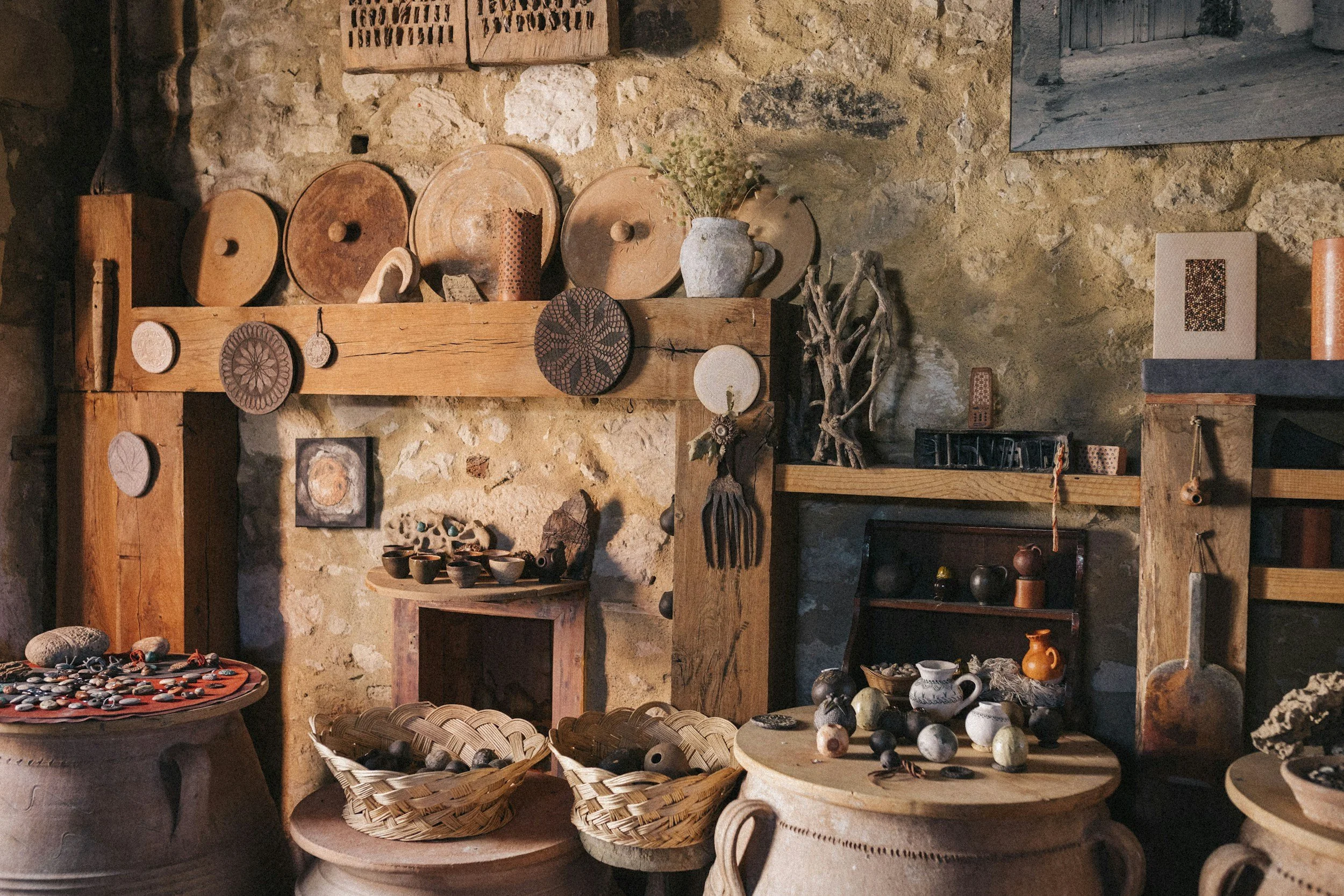
A few minutes away from Grande Rue, the town becomes quieter. Side streets and the edges of the village shift the pace immediately, and paths leading into the surrounding hills start close to the centre. These are short extensions rather than full excursions, which makes them easy to include without planning a separate outing.
Staying overnight gives you both versions of the town. Friday morning is active but spread out, while Saturday returns to a slower rhythm centred around the same streets without the stalls. Most people who know Dieulefit don’t stay on Grande Rue once they’ve finished shopping. They move away from the main street and continue the day elsewhere, which is what makes it work better as a place to stay rather than a short stop.
The same region feels completely different later in the year. This piece on Drôme Provençale in autumn is helpful if you’re weighing up summer versus quieter months.
A few streets beyond the main square, you’ll often find a small setup in front of a pottery workshop - unmarked, just a few pieces of stoneware and a handwritten sign that says “fait à la main.” If the door is open, you’re welcome to peek in. Ask (gently, in French if you can) and they’ll likely tell you about the clay, the glaze, and the story behind the piece.
The town is also known for its healing air which is officially recognized as therapeutic. It once housed open-air sanatoriums, and the locals will quietly tell you it’s still a place people come to fully relax.
Sainte-Foy-la-Grande – Dordogne
Nouvelle-Aquitaine | Saturday Market
Sainte-Foy-la-Grande sits on the Dordogne River, about 25 minutes from Bergerac. Unlike many smaller market towns, it has a train station within walking distance of the centre, and arriving that way brings you in from the northern side of the grid. Most people still drive, parking along the outer streets or near the riverbanks, and then walk in toward the centre. On Saturdays, arriving before 9:30 usually means a shorter walk, while later arrivals often enter from the southern side and move inward along the main streets.
Ps. if you’re planning a bigger loop by rail, this breakdown of which Eurail pass actually makes sense is worth checking before you book.
The market takes place on Saturday mornings and fills the bastide grid, which immediately changes how it works compared to towns with irregular layouts. Streets run in straight lines and intersect at regular intervals, with arcades along parts of Rue de la République and the surrounding routes. Instead of gathering in one square, the market spreads evenly, and you move through it by crossing between parallel streets rather than following a single path.
Most people enter along Rue de la République and are pulled inward toward the centre, but there isn’t one fixed route. You can move a few metres, turn onto a parallel street like Rue Alsace-Lorraine or Rue Pasteur, and continue without needing to double back. The first areas to slow are usually the sections under the arcades, where people stop more frequently and the space narrows slightly.
Between 8:30 and 9:30, the pace is steady and direct. Residents move through the grid with a clear purpose, often stopping only at specific vendors before leaving again. You’ll see people buying vegetables, fruit, bread, and regional products in small quantities, with quick exchanges rather than browsing. At this stage, it’s easy to move between streets without interruption.
From around 10:30, the centre slows, but not in a single point. Instead of one crowded square, the pressure spreads across several streets. Rue de la République becomes slower first, especially under the arcades, while the parallel streets remain easier to navigate. Many people adjust their route by stepping sideways into these streets rather than continuing forward.
Food is distributed throughout the market, with no clear central food section. Early in the morning, most purchases focus on produce and bread, while prepared food becomes more visible closer to midday. Because the layout is open, more people stay within the market streets to pause or eat, rather than leaving immediately.
What makes Sainte-Foy-la-Grande work for a weekend is how easy it is to move through. The grid removes the need to plan your route in advance, and even at its busiest, it’s possible to keep walking without stopping for long. Most people move through several streets and leave rather than trying to cover everything.
For food, Le Victor Hugo sits within the centre and works well for a longer lunch, while La P’tite Pause is a simpler option for something quicker. Cafés along Rue de la République fill first, while those just off the main street tend to have more space later in the morning.
This guide to autumn markets in the Dordogne shows a completely different side of rural France.
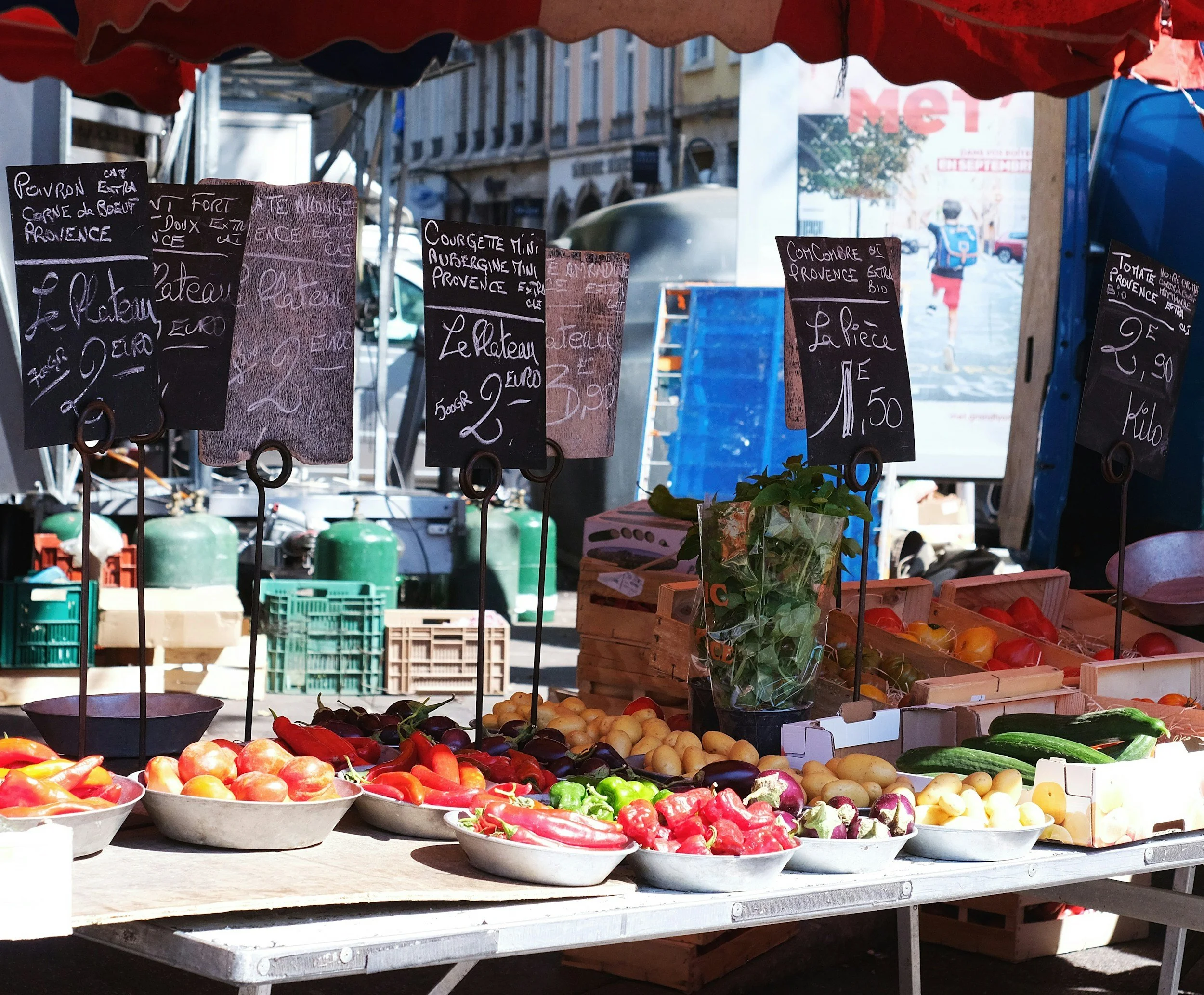
A few minutes’ walk brings you to the Dordogne, where the pace changes immediately. Most people head there once they’ve finished moving through the market, using the riverbanks as a continuation of the morning rather than staying in the centre.
Staying overnight shows a different version of the town. Saturday is active but evenly spread, while the rest of the weekend is quieter and more structured around the same grid without the stalls. The contrast is less dramatic than in tighter market towns, but it makes the place easier to return to across the day rather than experiencing it all at once.
Ask for the “noix du Périgord” (local walnuts), and you’ll often be handed a small paper bag with cracked shells. The walnut oil here is also exceptional (darker, more aromatic, and pressed just outside town).
Castelnau-de-Montmiral – Tarn
Occitanie | Tuesday Market (summer only)
Castelnau-de-Montmiral sits in the Tarn, about 20 minutes north-west of Gaillac and around an hour from Toulouse. The village is set on a ridge, and the final approach climbs steadily before opening onto a small plateau just outside the old town. Parking is kept outside the centre along Route de la Grésigne and near the entrance gates. Most people arrive from this side and walk in on foot, entering the village through the main access points that lead directly toward Place des Arcades.
The market takes place on Tuesdays and is centred entirely around Place des Arcades. The square is enclosed by medieval buildings with covered walkways, and the market does not extend far beyond it. This creates a contained layout where all movement happens within one space rather than across multiple streets.
Most people enter through the main arches leading into the square and are pulled directly toward the centre. The first slowdown usually happens just inside these entry points, where people gather before deciding which direction to take. Movement then follows the perimeter under the arcades or cuts across the centre, but because of the size, you pass through the same areas more than once.
Between 8:30 and 9:30, the pace is still steady. Residents move through the square with a clear purpose, often stopping briefly at specific stalls before leaving again. You’ll see people buying produce, bread, and cheese in small quantities, with short exchanges rather than browsing. At this stage, it’s still possible to cross the square directly without following the full loop.
From around 10:30, the square slows across its entire width. The arcades fill first, especially along the shaded sections where people pause longer, and the central area becomes harder to cross without stopping. Because the market is contained, there’s no alternative route. Movement slows evenly rather than shifting elsewhere, and the entrances begin to back up in short sections.
Food is concentrated within the square, with produce and bread dominating earlier in the morning. Prepared food becomes more visible closer to midday, but most people don’t stay inside the square to eat. Instead, they step just outside the arcades or move toward the edges of the village where there is more space.
What defines this market is its scale. Most people move through it in under an hour, and staying longer usually means circling the same space rather than discovering new sections. It works best as part of a slower day rather than something to build the entire morning around.
Outside market hours, Place des Arcades remains the focal point but feels noticeably quieter. Le Cap de Castel sits just off the square and is one of the more consistent places for a longer meal, while cafés under the arcades open later in the morning and fill gradually.
Staying somewhere smaller in France changes the whole experience. This guide to cozy stays in Champagne is useful if you’d rather stay somewhere personal than a standard hotel.
A short walk from the square brings you to the edges of the village, where the view opens out across the surrounding countryside. The transition is immediate, and most people step out toward these viewpoints once they’ve finished in the centre rather than staying within the square.
Staying overnight shows a different version of the village. Tuesday morning is active but contained within Place des Arcades, while the rest of the weekend returns to a slower pace centred around the same space without the market. The contrast is clear, but the scale remains small, which is what makes it work as a more contained place to stay.
Thinking about a city escape but you’ve already done Paris? Bordeaux isn’t just wine tours. This guide to Bordeaux for solo travellers is useful if you want quieter streets and slower days between tastings.
After the market, drive toward Gaillac, stopping in at one or two of the region’s family-run wineries (many are open for walk-in tastings). The Route des Vins du Gaillac is peaceful, green, and winding.
Saint-Guilhem-le-Désert – Hérault
Occitanie | Thursday Market (small, seasonal)
Saint-Guilhem-le-Désert sits at the edge of the Gorges de l’Hérault, about 45 minutes north-west of Montpellier. The road follows the valley and narrows in the final stretch, with traffic slowing near the entrance to the village. Parking is set below the centre, and most people walk in from this side, following the path along the river or climbing gradually toward the main street.
The market here is smaller and less central than in other towns in this guide. Stalls appear around Place de la Liberté and along Rue de la Fontaine on certain mornings, but they don’t define the layout in the same way as in places like Uzès or Apt. Instead, they sit within the existing structure of the village.
Most people enter along Rue de la Fontaine, which narrows quickly and leads directly into the square. Movement is shaped by the street itself rather than the market. The first slowdown happens near the entrance to Abbaye de Gellone, where people gather and pause, and this remains the busiest point through most of the morning.
Between 8:30 and 9:30, it’s still possible to walk through the centre without stopping. After 10:30, the square and the main street slow consistently, and because there are few alternative routes, movement stays concentrated in the same areas. Unlike larger market towns, you don’t move between sections. You pass through once and then step away.

That’s what defines this place as a weekend destination rather than a market stop. Within a few minutes, you can leave the centre entirely and reach the river below. Most people do this after passing through the square, moving toward the Hérault or continuing to the Pont du Diable.
For food, La Table de l’Abbaye works best earlier in the day, before the square fills, while O Bistro sits along the main route in and is easier to access later. Cafés around the square fill quickly from mid-morning, and staying in the centre for lunch usually means waiting.
The village changes noticeably across the day. Midday is the most compressed, especially around the abbey, while late afternoon becomes easier once the flow of visitors starts to thin. Early morning and late afternoon are the only times when it’s possible to move through the centre without stopping frequently.
Staying overnight is what makes this place work in the context of this guide. The market is a small part of the morning, but the rest of the time is spent outside the square. Without the daytime flow, the same streets become easier to move through, and the village feels structured around its setting rather than the stalls.
If you have time, we recommend walking the trail from the Abbaye de Gellone to the Pont du Diable (Devil’s Bridge) in the golden hour. It’s short (about 30 minutes), easy, and gives you an unforgettable view of the village folding into the landscape as the sun hits the cliffs.
If you can stay overnight (just a handful of rooms available), do it. The village empties in the evening, leaving you with lantern-lit lanes, the sound of water in stone basins, and a kind of stillness everyone needs sometimes.
How to plan your market weekends in France
If you’re visiting more than one of these towns in the same trip, the order you see them in makes a difference. Starting with a larger market like Apt, where the stalls run along Cours Lauze de Perret and into multiple side streets, changes how you experience smaller places afterwards. By contrast, visiting Cucuron or Castelnau-de-Montmiral later in the trip works better, as everything happens within one square and takes less time to move through.
Lyon is surrounded by towns that make easy detours. This list of quiet towns near Lyon is helpful if you’re already in the region.
Where you enter also shapes how the morning turns out. In Uzès, stepping straight into Place aux Herbes after 10:30 usually means staying in the slowest part of the market, while entering from streets like Rue Jacques d’Uzès and moving inward keeps things more manageable. In Sainte-Foy-la-Grande, staying on Rue de la République holds you in the busiest flow, but turning onto parallel streets like Rue Pasteur or Rue Alsace-Lorraine changes the pace immediately.
Most people spend less time in the centre than they expect. In Saint-Antonin-Noble-Val, the shift toward the river happens within minutes once you leave Place des Moines, and the same pattern repeats in Saint-Guilhem-le-Désert, where the main street clears quickly once you move toward the Hérault. Staying in the square after that point usually means standing still rather than continuing the morning.
One detail that tends to get missed is how early certain stalls finish. Bread and smaller food vendors often sell through their first batches before 10:30, especially in smaller markets like Dieulefit. Going back later in the morning rarely gives you the same choice, even if the market itself is still busy.
Not every market here needs to be approached in the same way. Some work best if you arrive early and move through them quickly. Others are easier to treat as part of a longer morning, where you step in and out of the centre rather than staying in one place. Knowing which is which changes how the town feels once you’re there.
Ps. You don’t need a car to plan a market weekend. This guide to markets near Paris by train shows how easy it is to build a whole weekend around one town without worrying about driving.
Want more places like this?
We created a printable Summer Market Guide featuring 12 authentic European market towns just like these - complete with verified market days, slow travel tips, and the kind of spots that still feel like secrets.
What to know before visiting French market towns
What are the best French market towns for a weekend trip?
Towns where the market fits into the layout of the centre tend to work best. In Saint-Antonin-Noble-Val, the market sits around Place des Moines but the day continues along the Aveyron. In Dieulefit, stalls run along Grande Rue and the rest of the weekend shifts toward workshops on Rue du Bourg. Smaller places like Cucuron or Castelnau-de-Montmiral are more contained and are better combined with time outside the square.
What time should you arrive at markets in French towns like Uzès or Dieulefit?
Between 8:30 and 9:30 gives the most flexibility. In Uzès, Place aux Herbes is still possible to cross without stopping, while in Dieulefit you can move along Grande Rue before the lower sections near Place de l’Abbé Magnet slow down. After 10:30, central areas begin to fill and movement becomes less direct.
Do you need a car to visit small market towns in France?
In most cases, yes. Towns like Dieulefit, Cucuron, and Castelnau-de-Montmiral don’t have train stations, and arrival time affects both parking and how you enter the market. Sainte-Foy-la-Grande is one of the few exceptions, with a station within walking distance of streets like Rue de la République.
You don’t have to rent a car to explore smaller places. This guide to castle towns in southern France you can reach by train makes planning easier if you prefer trains.
If Marseille is your starting point, this list of small towns near Marseille by train gives you a few easy escapes.
How long should you spend at a French market town?
Most markets work best within one to two hours. In smaller towns like Castelnau-de-Montmiral or Cucuron, the market is often covered in under an hour because everything sits within one square. In places like Dieulefit or Sainte-Foy-la-Grande, the layout stretches across multiple streets, so people tend to stay longer without realising it.
What makes a market town worth staying overnight in France?
It depends on what happens after the market. In Saint-Antonin-Noble-Val, most people move from Place des Moines toward the river within minutes. In Saint-Guilhem-le-Désert, the centre clears quickly and the focus shifts toward the Hérault. Towns where the day continues outside the market work better for a weekend stay.
Lyon is surrounded by towns that make easy detours. This list of quiet towns near Lyon is helpful if you’re already in the region
What should you buy at French markets in smaller towns?
Early in the morning, most people focus on produce, bread, and cheese. In towns like Dieulefit, smaller vendors often sell through their first batches before mid-morning. Bread is usually one of the first things to go, and returning later rarely gives you the same choice.
Are smaller market towns in France less crowded?
Not always. In Castelnau-de-Montmiral, the market is contained within Place des Arcades, so it slows quickly even with fewer people. In Sainte-Foy-la-Grande, the grid layout spreads movement across streets like Rue Pasteur and Rue Alsace-Lorraine, which makes it easier to keep moving.
Arles has a completely different mood depending on when you go. This guide to Arles in autumn gives you a good sense of what to expect once the summer crowd thins.
Where should you eat during a market day in a French town?
It depends on timing and layout. In Cucuron, cafés around Place de l’Étang fill steadily from late morning, while in Saint-Guilhem-le-Désert, places around Place de la Liberté are busiest by midday. In most towns, it’s easier to eat either early or just outside the main square once the centre slows.
Is it worth visiting more than one market town in the same trip?
Yes, but mixing layouts works better than repeating the same type. Visiting a spread-out market like Dieulefit and then a contained one like Castelnau-de-Montmiral creates more variation than visiting two similar towns back to back.
Why do some French markets feel slow even when they’re small?
It usually comes down to layout. In towns built around a single square, like Cucuron or Castelnau-de-Montmiral, movement slows quickly once people gather. In places with longer streets or a grid, like Dieulefit or Sainte-Foy-la-Grande, you can change direction and keep moving instead of stopping.