
These French countryside towns are surprisingly easy to reach by train
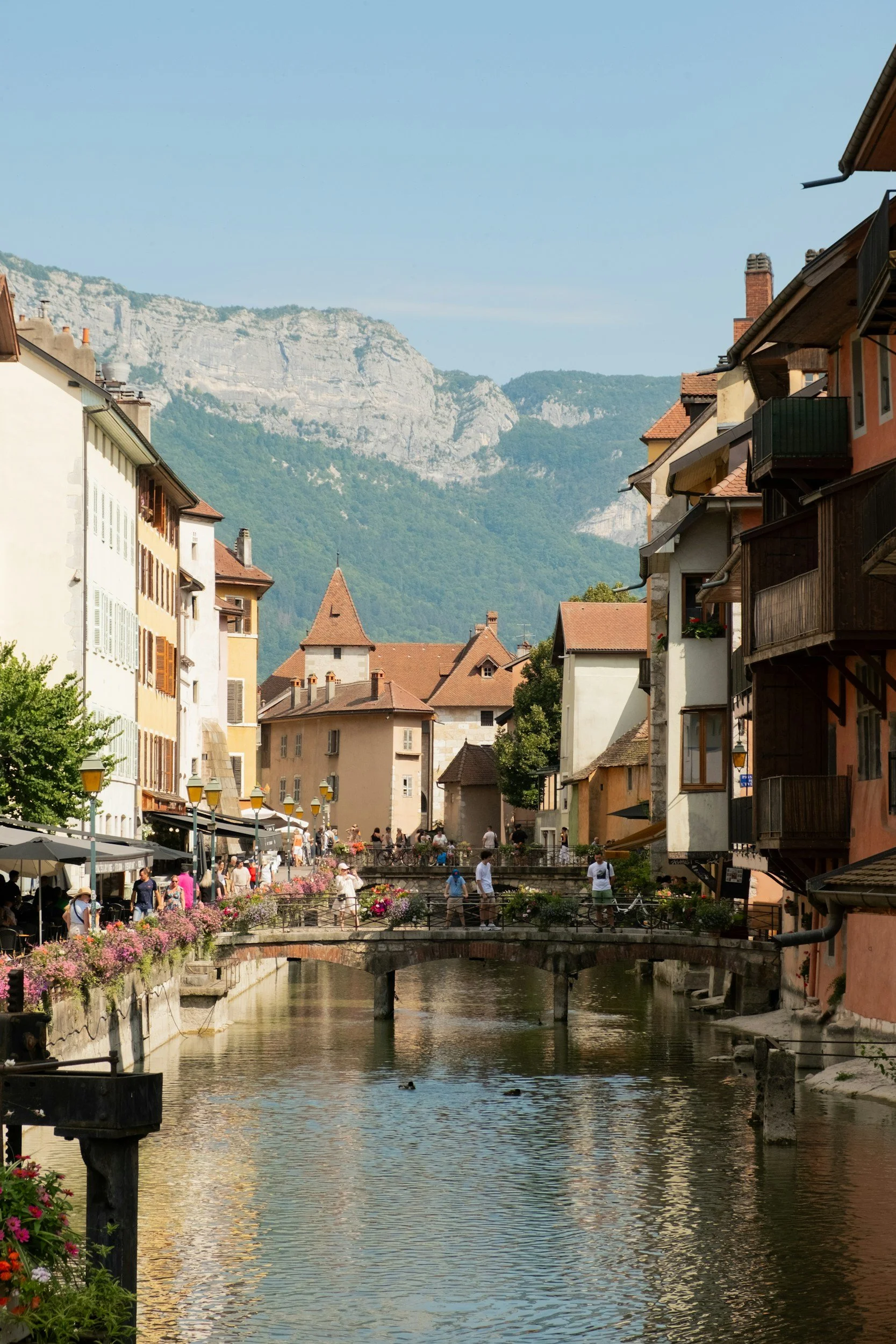
You step off a train in Nîmes just after 15:00, expecting the last part to be simple, and then realise you’ve missed the bus to Uzès by ten minutes. The next one isn’t for another hour, taxis aren’t lined up outside, and suddenly a journey that looked straightforward on paper feels slightly off. It’s not a big problem, but it’s exactly the kind of detail that decides whether a train-based countryside trip in France feels easy or frustrating.
This is where most guides fall short. They list towns you can technically reach by train, but don’t tell you what actually happens when you arrive, how far the station is from where you’re staying, or whether that “short transfer” is something you’ll even notice or something that breaks the flow of the trip.
This guide is built around that gap. Every town here is not just reachable without a car, but realistic to stay in for a few days without constantly checking schedules or relying on taxis. The focus is on what the arrival looks like in practice, how the town works once you’re there, and whether it holds up beyond a quick visit. If you’ve been trying to plan a trip where you can rely on trains without overcomplicating things, this is the level of detail that usually takes hours to figure out and rarely shows up in one place.
What “walkable from the station” really looks like in smaller French towns
“Walkable from the station” usually sounds clearer than it is. In French countryside towns, it often means anything from a flat 8-minute walk with pavements the whole way, to 20 minutes uphill on narrow streets where you end up stepping aside for cars. The difference matters more once you’re actually there with a suitcase.
Take Amboise as an example. The station sits on the opposite side of the Loire from the old town, and on a map it looks close. In practice, you leave the station, follow a straightforward road, and cross the bridge into town in about 12–15 minutes. It’s flat, there are proper pavements, and you’re not guessing where to go. Even with luggage, it feels simple, and once you’ve crossed the river, everything (bakeries, cafés, the château) is within a few streets.
Compare that with Cassis. The train ride from Marseille is short and easy, but the station sits above the town, not in it. The walk down to the harbor takes around 25 minutes and includes a steady descent on a road that isn’t fully shaded. In summer, arriving around midday with a suitcase means dealing with heat and limited pavement space in certain sections. Locals often book a taxi in advance here, not because it’s far, but because that last stretch changes the arrival completely.
Then there’s L’Isle-sur-la-Sorgue, which is closer to what people expect when they read “walkable.” The station is about 10 minutes from the canals, the route is flat, and you’re quickly inside the part of town where everything happens. You’ll pass a few residential streets first, then small cafés start appearing, and within minutes you’re by the water. Even on a Sunday during the antiques market, the walk itself stays manageable because it’s not congested until you reach the center.
If part of the trip is really about markets and not just the towns themselves, these market towns help you narrow down where it’s actually worth planning your days around.
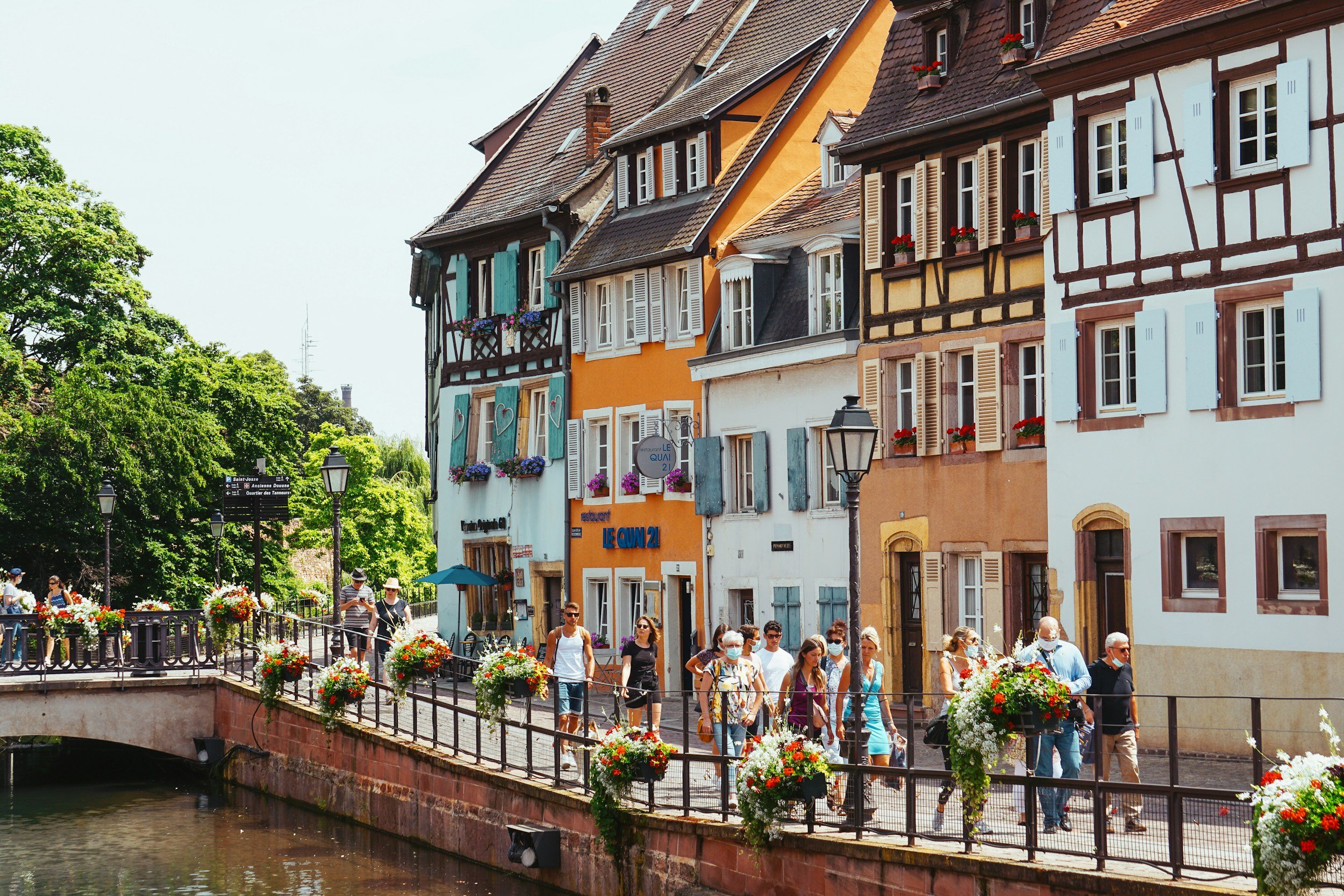
Some towns fall into a middle ground where the distance is fine, but the details catch people off guard. In Colmar, for example, the station is about a 20-minute walk from the old town. The route is direct, but it’s longer than many expect, and the first part of the walk is through a more modern area without much to stop for. If you arrive early in the morning, it’s quiet and easy. If you arrive mid-afternoon, especially in warmer months, that same walk can feel drawn out, and that’s where many people end up taking a taxi even though it’s technically walkable.
Smaller towns like Bayeux are often the easiest. The station is close, around 10 minutes on foot, and the route into town is flat and clearly marked. You leave the station, follow a straight road, and within a few minutes you’re already passing bakeries and small shops. There’s no decision-making involved, which is usually what people are hoping for when they plan a train-based trip.
Where it starts to feel inconvenient is when the walk combines distance, elevation, and lack of clear paths. Anything beyond 20 minutes, especially with hills or uneven streets, tends to shift from “easy arrival” to something you need to plan around. This is particularly noticeable in parts of Provence where towns sit slightly above the station level or where sidewalks narrow in older areas.
Timing also changes the experience more than most people expect. Arriving in the early evening often makes the walk feel easier, as temperatures drop and the streets are less busy. Midday arrivals, especially in summer, make even short distances feel longer, particularly in towns where shade is limited between the station and the center.
Taxis are usually available, but not always waiting outside. In places like Uzès (via Nîmes) or Sarlat, if you’re relying on a taxi for the final stretch, it’s worth either booking ahead or at least having a number ready. In smaller stations, you might not see a taxi rank at all, and local drivers often work on call rather than waiting for arrivals.
So when looking at whether a town is “walkable,” the real question is less about distance and more about the full picture: how direct the route is, whether there are pavements the whole way, if there’s shade, and how it feels with luggage at the time of day you’re arriving. Those are the details that decide whether you step off the train and settle in quickly, or spend the first hour figuring things out.
Provence and the south
Uzès (via Nîmes)
Uzès is one of those places that technically works by train, but only feels easy if you get the last part right. The train to Nîmes is straightforward, with frequent arrivals from Paris, and the station itself is small enough that you’re outside within a minute or two. The complication starts once you’re standing in front of the station deciding what to do next.
The buses to Uzès leave from directly outside, but they don’t run often enough to rely on timing alone. If your train arrives at 15:02 and the bus left at 14:55, you’re suddenly waiting close to an hour. That’s usually the moment people switch plans and take a taxi instead. From experience, if you arrive after around 15:30, taking a taxi is often the only way to reach Uzès while the town is still properly open.
The taxi ride takes about 30–35 minutes and drops you near Boulevard Gambetta, just outside the historic center. From there, it’s a short walk, around 4–6 minutes, into the old town. You don’t ease into it. The pavement disappears quickly, the streets narrow, and the ground shifts to uneven stone almost immediately. If you’re pulling a suitcase, you’ll notice it straight away.
Arriving at the wrong time changes the first impression more than most people expect. If you walk into Uzès at 14:00, especially in summer, it can feel almost closed. Restaurants are between lunch and dinner, many shops have shutters down, and the streets are noticeably quieter. It’s not that the town is empty, it’s just paused. Come back out at 17:00, and it’s a different place entirely. Doors are open again, people are moving, and the square starts filling slowly.
Everything here revolves around Place aux Herbes, but not in a way that feels staged. You pass through it constantly because most streets lead back to it. In the morning, it’s functional. People stop briefly at bakeries like La Nougatine, pick up bread, have a quick coffee, and move on. Tables are used, but not occupied for long.
Market days on Wednesday and Saturday change how the town works completely. By 9:00, the square is already crowded, and by 10:30, you’re no longer browsing. You’re moving with the flow. If you actually want to look at anything properly, you need to be there before 8:45. At that time, it’s still local. People are shopping quickly, not lingering, and you can move between stalls without stopping every few steps.
The market spreads further than most expect. It doesn’t stay contained in the square. It runs into Rue Jacques d’Uzès, down Rue du Dr Blanchard, and into smaller side streets where it becomes slightly easier to navigate. Those edges are often where you can slow down without getting caught in the center.
Outside market days, Uzès feels much more balanced. You can walk across the same square at midday without adjusting your pace. If you continue along Rue Grande Bourgade, the town shifts almost immediately. Small shops, fewer people, and then within a few minutes, you’re in quieter residential streets without realising where the transition happened.
The scale is smaller than it looks. From Place aux Herbes to the outer edge of the old town is rarely more than 8–10 minutes on foot. Walking toward Rue de la République, you gradually leave the center, but there’s no clear boundary. It just thins out.
Afternoons are predictable in a way that helps once you understand it. Between roughly 13:30 and 16:30, a large part of the town slows down. Shops close, fewer people move through the streets, and most activity shifts to shaded terraces. This is not the time to plan anything specific. It’s when you sit down somewhere and stay longer than intended.
Evenings build slowly. Around 18:30, a few tables are taken. By 20:00, most of the square is full, but it never feels rushed. People arrive, sit, and stay. If you want something slightly quieter, walking just a few minutes away toward places like Le Zanelli is usually enough to step out of the busiest part without leaving the center.
What makes Uzès fit into a train-based trip is not just that you can reach it without a car, but that once you arrive, you don’t think about transport again. You don’t check distances, you don’t plan routes, and you don’t need to leave the town to fill your time. Two nights works well here. A third night only makes sense if you’re comfortable repeating the same streets at different times of day, which is exactly how the town is best experienced.
Leaving requires slightly more planning again. Buses back to Nîmes run on a fixed schedule and don’t wait, so if you rely on them, you need to be at the stop early. Most people with morning trains book a taxi the evening before. It removes the only uncertain part of the trip.
If you’re hesitating around southern France because of how busy it can get, these Provence alternatives help you compare options that feel similar but are easier to move through.
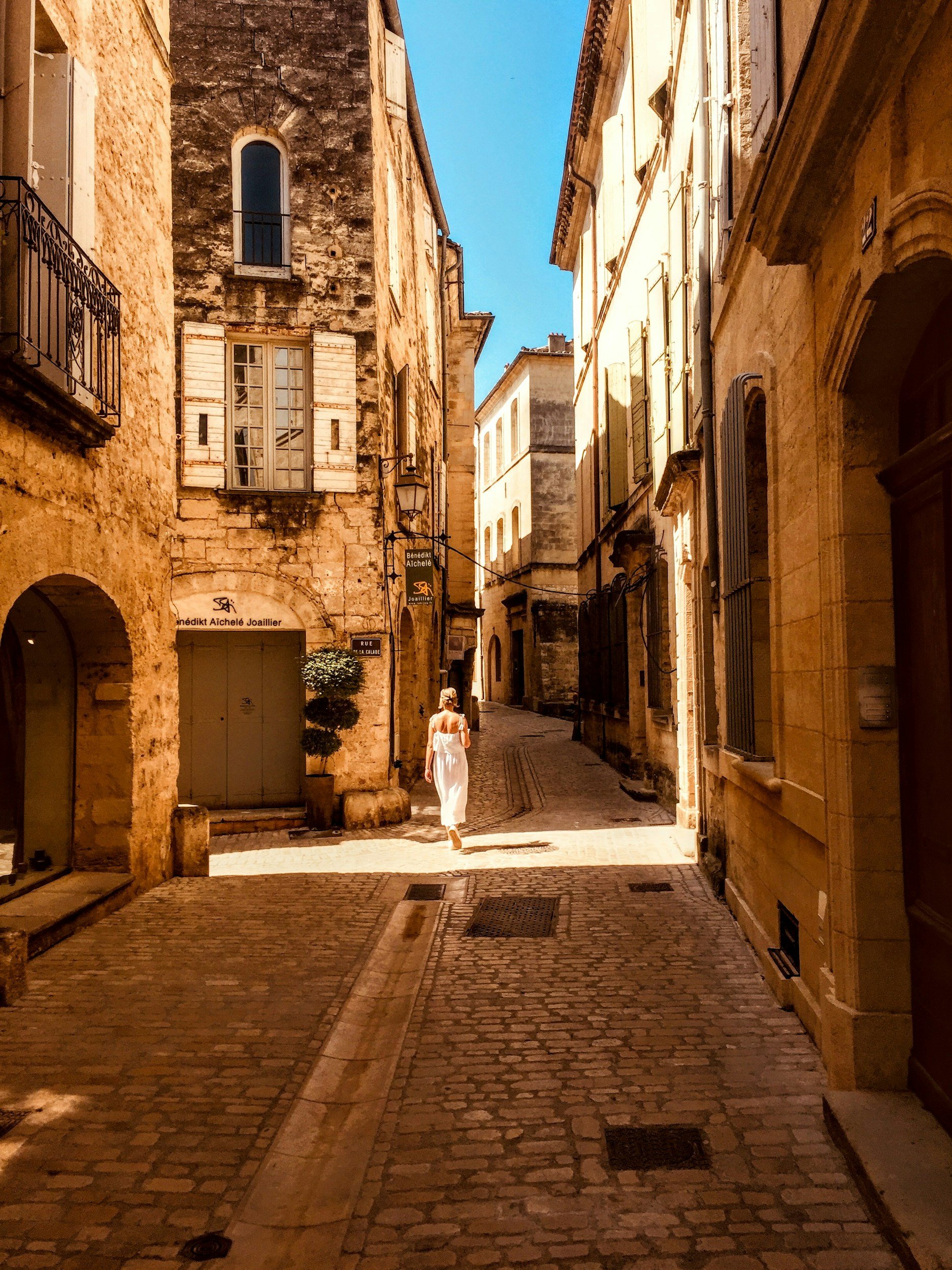
L’Isle-sur-la-Sorgue (direct train access)
This is one of the few towns in Provence where you don’t have that last annoying decision after the train. No bus to figure out, no taxi to justify. You step off at L’Isle-sur-la-Sorgue, walk out of the station, and you’re already on your way in.
The route is simple enough that you barely need directions. From the station, you head left and follow Avenue de la Libération. It’s flat the whole way, proper pavements, nothing to think about. After about 6–7 minutes, you start seeing the first signs of the town changing. A few cafés appear, traffic slows down, and then you reach the water near Quai Rouget de Lisle. That’s usually the moment people stop for a second without meaning to, just to look around and get their bearings.
From there, you’re inside the part of town that actually matters. Cross one of the small bridges and you’re immediately in the canal loop where everything happens. You don’t really navigate L’Isle-sur-la-Sorgue in a straight line. You walk along the water, cross over, turn without planning to, and end up back near where you started.
If you arrive on a weekday, the town feels easy from the start. Around 9:00, places along Quai Jean Jaurès are already open, and you’ll see people sitting outside with coffee and something small, not rushing anywhere. Café Fleurs is one of those places that fills steadily rather than all at once, and if you sit there for a bit, you’ll notice that tables don’t turn quickly. People stay longer than they planned.
Sunday is something else entirely. The antiques market takes over everything. By 8:30, vans are unloading, stalls are being set up, and by 9:30, the central canals are already difficult to move through. The busiest stretch runs between Place de la Liberté and along the main canal edges where the larger antique dealers set up. If you arrive at 11:00 expecting to browse, you won’t. You’ll just be moving with the crowd.
If you actually want to see anything properly, you need to be out early, closer to 8:00–8:30. That’s when it still feels local. People are there with a purpose, buying, not wandering. You can stop without feeling like you’re blocking ten people behind you. By late morning, that’s no longer possible in the central streets.
What most people miss is that the market stretches well beyond the obvious areas. If you move away from the canals into streets like Rue Carnot or further out toward Avenue des Quatre Otages, it opens up. There’s more space, fewer people, and often more practical items rather than just decorative antiques. It’s where you can actually slow down again.
On non-market days, the town resets quickly. The same streets that were packed the day before are suddenly easy to walk through. You can follow the canals without adjusting your pace, stop where you want, and actually notice the details you missed. Things like the waterwheels turning slowly along the edges, or how certain corners stay shaded longer into the afternoon.
Midday here is less abrupt than in some other Provence towns, but there is still a slowdown. Around 14:00, you’ll notice fewer open doors, especially in smaller shops. Restaurants close between lunch and dinner, and the town shifts toward sitting rather than moving. Most people end up along the water again, where there’s at least some shade and a bit of air.
If you walk a few minutes away from the canals at that time, the difference is immediate. Streets like Rue Denfert Rochereau or further out toward the residential edges are almost empty. It doesn’t take long to leave the busier parts behind, and you don’t have to go far.
Evenings settle in without much effort. Around 18:30, tables start filling along the canals, but it’s gradual. There’s no moment where everything suddenly becomes busy. By 20:00, most places are taken, especially in the central loop, but if you walk even two or three minutes out, you can still find space.
A small adjustment makes a difference here. If you don’t want to sit right in the middle of the main canal flow, move slightly off it. Places just one street back tend to feel calmer without being empty. You’re still close enough that nothing feels out of the way.
The town is slightly more spread out than Uzès, but still compact enough that you never think about distance. From one side of the central canal loop to the other is about 10–12 minutes on foot. You’ll cross several bridges along the way, and most routes end up looping back rather than leading you somewhere new.
What makes L’Isle-sur-la-Sorgue work so well in a train-based trip is how little effort it requires once you arrive. You don’t need to plan anything around transport. You don’t need to think about how to get from one place to another. You just walk, and the layout of the town does the rest.
Two nights is usually enough, especially if one of those days includes the Sunday market. Without the market, the town is calmer and more consistent, and you’ll probably notice yourself repeating the same routes at different times of day rather than trying to add more.
Leaving is straightforward in a way that most Provence towns aren’t. The station is close, the walk back takes about 8–10 minutes, and you don’t need to factor in anything extra beyond that.
Cassis (direct from Marseille)
Cassis is the kind of place that looks effortless when you’re booking it. Direct train from Marseille, short journey, no changes. That part is exactly as easy as it sounds. The part that catches people off guard is everything after you step off at Cassis station.
You arrive, look around, and it doesn’t feel like a coastal town at all. It’s quiet, slightly inland, and there’s no sign of the harbour. If you start walking straight away, you’ll realise pretty quickly that it’s not a quick stroll down to the water. It’s closer to 35 minutes, mostly downhill, with sections along Avenue du Revestel where the pavement narrows or disappears. With a backpack, fine. With a suitcase, especially in heat, it becomes something you regret halfway down.
There is a bus, the M1, that runs from the station into town, but it doesn’t line up neatly with every train. If you miss it by a few minutes, you’re waiting longer than you expect. Most people end up taking a taxi from the small rank outside the station. It’s about 10–15 minutes into town, and you’re dropped close to Avenue Victor Hugo, which is where the centre starts to feel like itself.
That last part decides everything about your arrival. If you get into Cassis around 13:00–14:00, you’re stepping straight into the busiest version of the town. The harbour is already full, especially along Quai des Moulins and Quai Barthélémy, and moving through it feels more like navigating than arriving. You don’t stop easily, you just keep walking until you find a bit of space.
Come in closer to 17:30 and it’s completely different. The same streets are still active, but you can actually slow down. You notice details you’d miss earlier, like how the harbour curves slightly as you walk along it, or how the side streets open up just enough to give you a break from the main flow.
Once you’re down by the water, everything compresses into a very small area. From the harbour to Plage de la Grande Mer takes less than five minutes. If you continue past that toward Plage du Bestouan, it’s around 12–15 minutes, and already noticeably less crowded, especially before 10:00. That small shift makes a bigger difference than most people expect.
Mornings are where Cassis actually feels manageable. Around 8:00–9:00, the harbour is still setting up. You’ll see deliveries coming in, café chairs being arranged, and only a handful of people sitting down. Bar De La Marine is one of the few places open early enough to rely on, and sitting there at that time feels very different from later in the day when every table is taken and people are waiting.
By 10:30, it fills quickly. Boat tours to the calanques start lining up along the harbour, and queues form in a way that doesn’t really spread out. If you want to go out on the water, the first departures of the day are the only ones that feel straightforward. By midday, you’re standing in line longer than you planned.
The calanque walks are one of the reasons people stay overnight, but they’re not something you just “fit in” casually. The path toward Calanque de Port-Miou starts about 15–20 minutes from the harbour, near Avenue Notre-Dame. The first part is easy, then it opens up, and there’s very little shade once you go further. If you leave after 10:00 in summer, it’s already too late to enjoy it properly.
Midday in Cassis is where most people end up doing less than they expected. The harbour is full, the beach is full, and even walking through the centre requires a bit of patience. If you move just a few streets back, for example up toward Rue Séverin Icard, it’s noticeably quieter within a couple of minutes. It’s not empty, but you can actually walk at your own pace again.
Afternoons don’t really slow down in the same way as inland towns. The activity stays high, especially near the water. What changes is where people sit… More tables in the shade fill up, and people stay longer once they’ve found a spot.
Evenings are when Cassis starts to feel like a place to stay rather than somewhere people pass through. Around 18:30, you’ll see a gradual shift. Day visitors begin leaving, and the harbour opens up just enough to move comfortably again. Restaurants along the quay fill steadily, not all at once, and you can actually choose where to sit instead of taking whatever is available.
If you walk even two streets back from the harbour at that point, the difference is immediate. It’s quieter, easier to find a table, and you’re still only a few minutes from the water. That small adjustment tends to be enough to avoid the busiest part without feeling like you’ve left the centre.
Cassis works without a car, but it’s not as effortless as somewhere like Uzès or L’Isle-sur-la-Sorgue. The town itself is easy once you’re there, but the station is far enough away that you need to think about that last stretch properly. If you handle that part well, everything else becomes simple.
Two nights is usually enough. You have time for an early morning by the harbour, one calanque walk, and an evening where the town feels calmer. A third night only really makes sense if you’re planning to spend more time out on the water or hiking further along the coast.
If you’re already looking at places further south and wondering what’s actually reachable without overplanning, this Marseille towns breakdown makes it very clear which ones are genuinely easy and which ones look easier than they are.
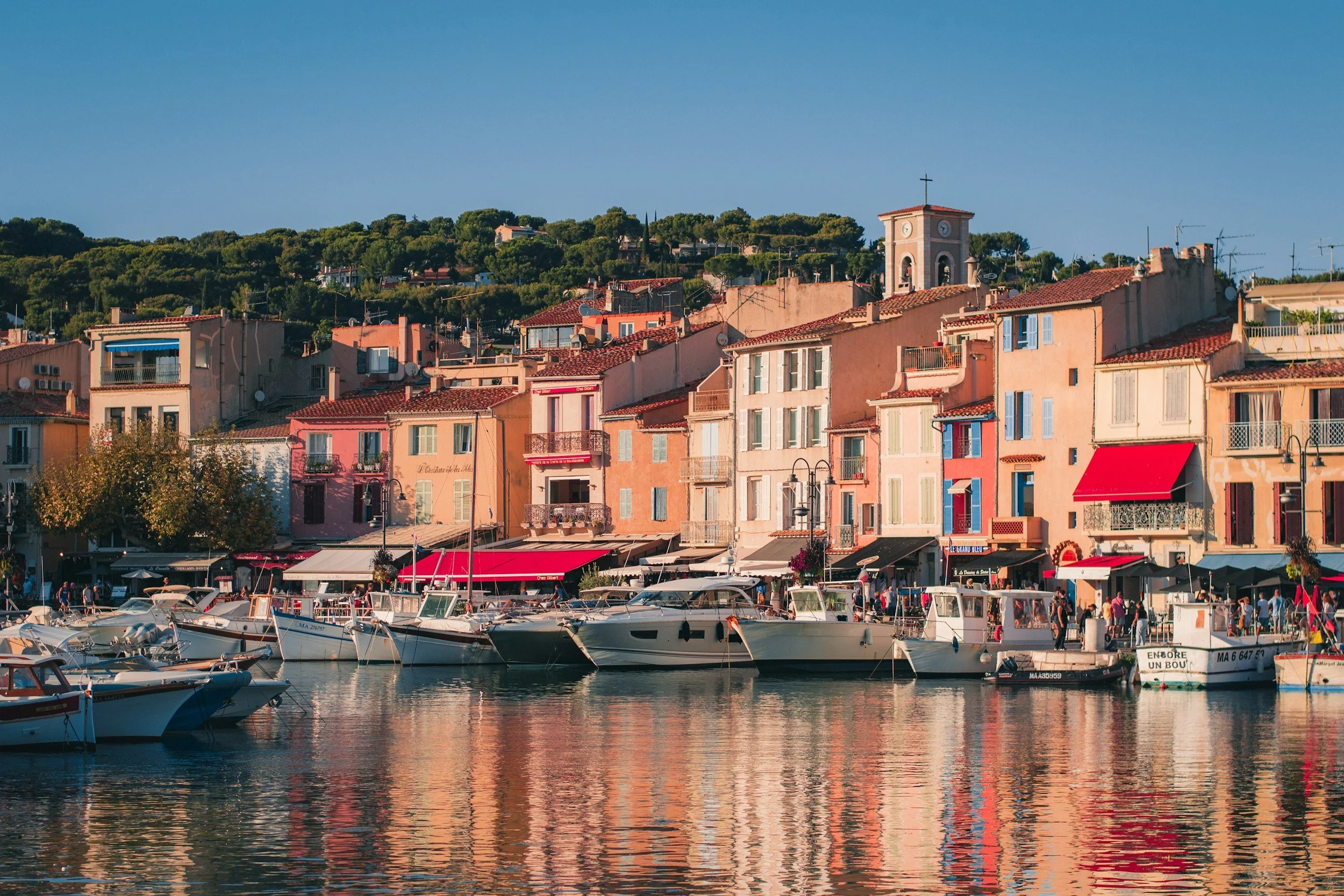
Southwest and Occitanie: slower towns with easy train logic
Albi (direct from Toulouse)
The train from Toulouse to Albi is one of those routes you don’t need to overthink. It runs often, takes just over an hour, and you can usually decide the same morning without it becoming complicated. You arrive at Gare d’Albi-Ville, step out, and you’re already on a straight path into town.
From the station, most people follow Avenue du Général de Gaulle without really realising it. It’s a direct walk, about 12–15 minutes, with proper pavements the whole way. You pass everyday places first, a pharmacy, a couple of bakeries, a tabac, and then the view opens slightly as you get closer to the river. The moment you reach Pont Neuf, the cathedral is right there in front of you, and from that point on you don’t need directions.
Crossing the bridge is usually where it clicks. The red brick of Cathédrale Sainte-Cécile looks heavier and more solid than expected, and the streets tighten as soon as you step into the historic centre. You’re not navigating a wide town here. You’re moving through a small area where everything sits close together, and you’ll start repeating the same streets without noticing.
If you arrive mid-morning, around 10:00, the town feels balanced. Not empty, not crowded. Walking along Rue Mariès toward the cathedral, you’ll pass a mix of small shops and cafés that are already open but not busy yet. Around Place Sainte-Cécile, people stop briefly, take a look, and move on. No one stays long in that exact spot, so it never feels blocked.
A more natural place to stop is Place du Vigan, just a few minutes away. This is where the town actually gathers. Around 11:00, terraces start filling slowly, and places like Cascarbar or Le Pontié are already in use, but not full. It’s the kind of place where you can sit down without planning ahead and not feel rushed to leave.
If you walk down toward the river from there, the change is immediate. Within 3–4 minutes, you’re at Pont Vieux, and everything opens up again. People spread out along the banks, some sitting on the lower paths near the water, others just walking across the bridge and back. This is where you get a clearer sense of the town layout than in the centre itself.
Mornings are steady rather than quiet. Around 8:00–9:00, bakeries like Boulangerie Saint-Honoré are already active, and you’ll see locals stopping in quickly on their way somewhere else. It’s not a slow, drawn-out breakfast culture. People come in, order, leave. Cafés start filling gradually, but there’s no single rush.
By midday, the centre fills slightly, especially around the cathedral and museum area, but it doesn’t turn into a crowd you need to move around. You can still walk at your own pace. That’s one of the differences here compared to places like Cassis or L’Isle-sur-la-Sorgue. There’s no point in the day where you feel pushed through the streets.
Afternoons don’t shut down in the same way as in Provence. Shops along Rue Timbal and Rue Peyrolière tend to stay open, and there’s still movement through the town. It slows slightly, but you’re not left with closed doors and empty streets. If anything, people just shift toward sitting longer, especially around shaded areas near the square.
If you head back down toward the Tarn in the afternoon, it’s noticeably quieter than the centre. The path along the river, particularly on the side opposite the cathedral, gives you space to walk without interruption. It’s only a few minutes away, but it feels more open and less structured.
Evenings build slowly and stay consistent. Around 18:30, a few tables are taken. By 20:00, most places around Place du Vigan and the streets behind it are active, but you don’t get that moment where everything fills at once. Restaurants like L’Épicurien or smaller spots along Rue Toulouse-Lautrec fill gradually, and if one place is full, you usually find something within a couple of minutes without needing a reservation.
The town is small enough that you don’t plan much. Everything is close! From the cathedral to the river is about five minutes. From there back to Place du Vigan is another five. After a few hours, you stop thinking in terms of distance entirely.
What makes Albi fit into a train-based trip is how little friction there is at any point. You don’t need to check bus schedules, you don’t need a taxi, and you don’t need to time your day around openings and closures in the same way as in southern Provence. It holds a steady pace throughout the day, which makes it easier to settle into without adjusting your routine.
Two nights is usually enough to see how the town shifts between morning, afternoon, and evening. A third night only makes sense if you’re planning to go slightly further out, for example toward Cordes-sur-Ciel, which is about 25 minutes away by car or longer with local transport.
Leaving is as simple as arriving. The walk back to Gare d’Albi-Ville takes around 15 minutes, flat the whole way….
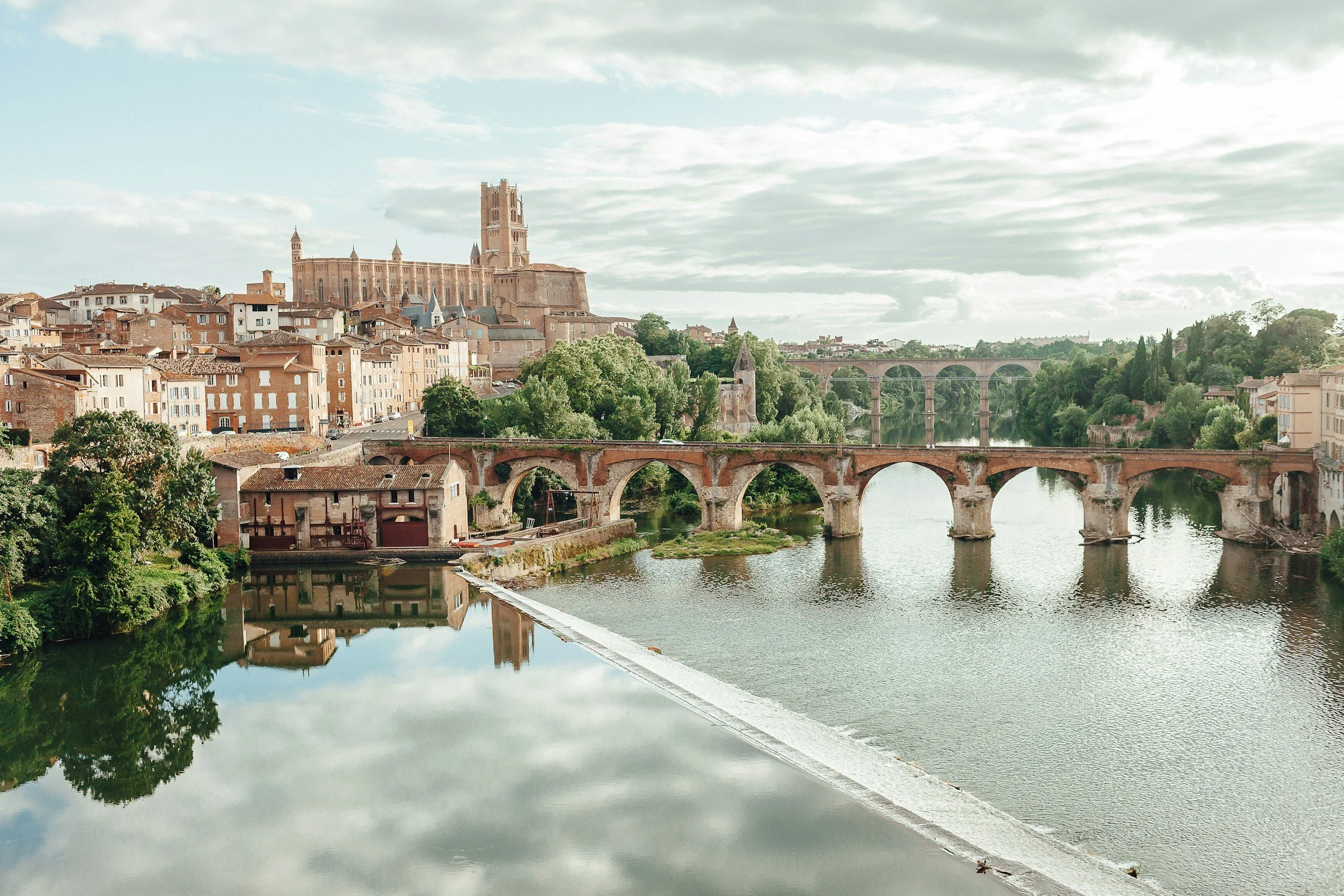
Cahors (on the Toulouse line)
Cahors is the kind of place you don’t plan in detail, but once you step off the train at Cahors, it becomes obvious why it works so well without a car. The train from Toulouse takes just over an hour, and when you arrive, there’s no second step to figure out. You walk out of the station, cross the small forecourt, and head straight down Avenue Jean Jaurès.
The first few minutes don’t feel like much. You pass a Carrefour City, a pharmacy, a couple of everyday cafés where people are standing at the counter rather than sitting. Then the street tightens slightly near Place Lafayette, and you’re already inside the old town without any clear moment where it “begins”.
Most people naturally drift toward Place Galdemar, which acts more like a junction than a destination. From there, Rue Nationale cuts through the centre. It’s not wide, and it’s never empty, but it doesn’t get stuck either. You can walk it mid-morning without adjusting your pace, pass Pâtisserie Quercynoise, glance into smaller boutiques, and keep moving without thinking about it.
If you turn off toward Rue de la Chantrerie, it quiets down almost immediately. A few steps away from Rue Nationale and it’s mostly local movement. Doors open, someone passing by, but no reason to slow down unless you want to.
The river is what anchors everything. From Place Galdemar, it’s about a 3-minute walk before you reach the Lot. Most people head toward Pont Valentré, but the timing decides whether it works. At 8:30 in the morning, you can cross it without stopping. By 11:00, you’re pausing every few steps because of the steady flow of people coming from both directions.
What works better is walking along the river first. If you follow the path from Quai Albert Cappus, you move away from the centre without leaving it completely. Within five minutes, it’s noticeably quieter. You’ll pass a few people sitting along the edge, maybe someone fishing, but there’s space to walk without weaving around anyone.
If you loop back toward the centre from there, you re-enter near Pont Neuf, and that’s when you start to notice how small everything is. The distance between the river and the centre is short enough that you move between the two without planning it.
Market days (Wednesday and Saturday) shift things slightly but not dramatically. The real activity is inside and around Halle de Cahors, just off Place Galdemar. Inside, it’s practical. Cheese counters, butcher stalls, fresh produce. People aren’t browsing, they’re buying what they need. Around 9:30, it fills up, but you can still move through without stopping constantly.
Outside, a few stalls extend into nearby streets like Rue Clemenceau, but it doesn’t take over the whole town. You notice more people, but you don’t need to change how you move.
Afternoons slow down, but not in a way that stops anything. Around 14:00, some shops close, but cafés stay open, and there’s still movement through the centre. This is when most people drift back toward the river. The lower paths along the Lot, especially on the far side of the loop, are quieter than the main streets by a noticeable margin.
If you follow that path long enough, you pass residential buildings, small gardens, and fewer cafés. It doesn’t take long before the centre feels further away than it actually is.
Evenings don’t gather in one place. Around 18:30, a few tables fill near Place Champollion and along streets like Rue de la Daurade, but it spreads out rather than concentrating. You don’t need to aim for a specific area. You just walk and stop when something looks right.
Restaurants open around 19:00. Le Marché fills gradually, especially on weekends, but if it’s full, you walk two minutes and find another place along the same street. You’re not waiting for tables here, you’re just moving between options.
The scale is what makes Cahors work. From the station to Place Galdemar is about 10 minutes. From there to the river is another 3–4. Even walking out to Pont Valentré takes about 15 minutes. After a few hours, you stop checking where things are because everything loops back on itself.
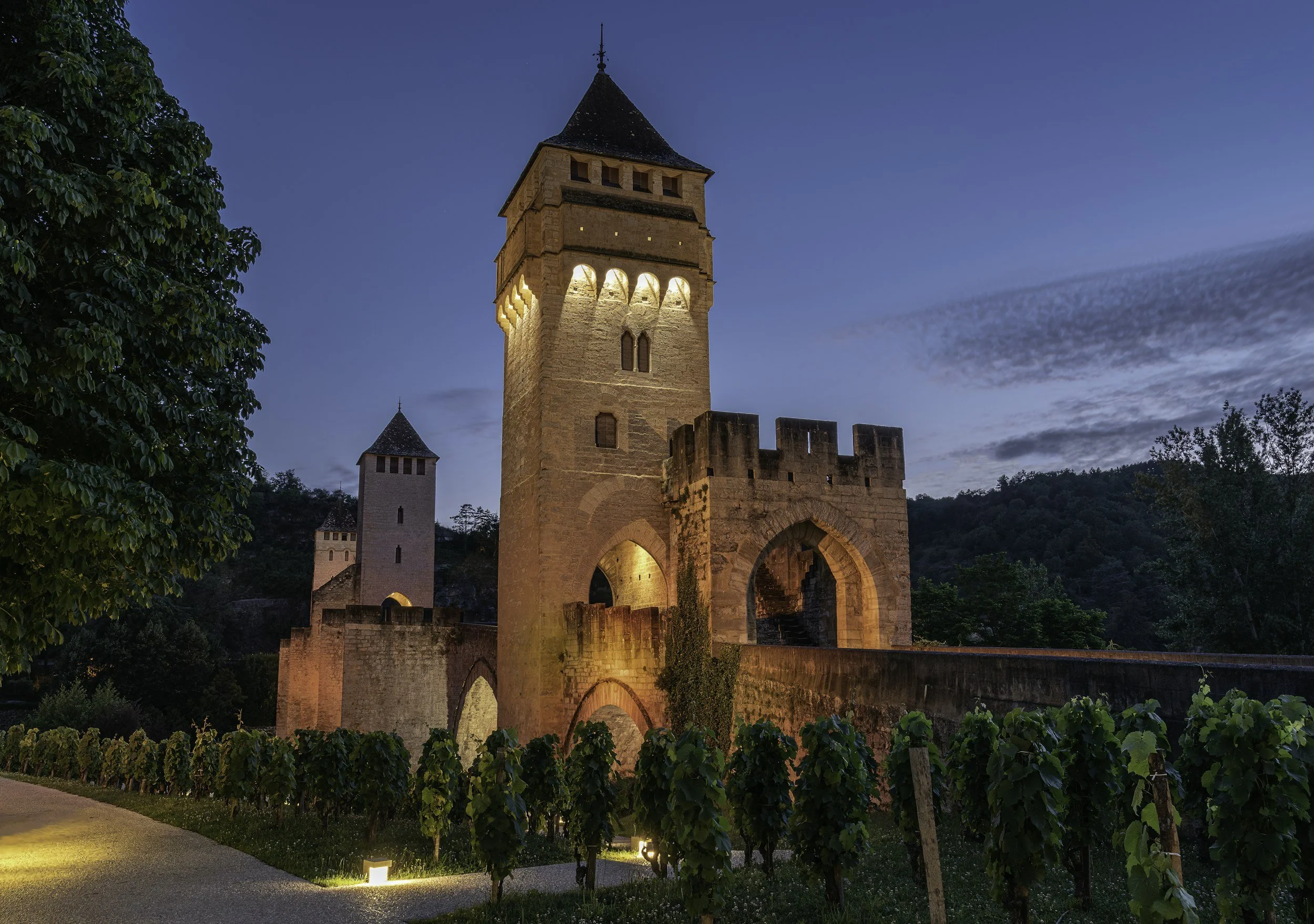
Sarlat (train + short transfer)
Sarlat is where the train journey stops being straightforward in the way people expect, because you can get close to Sarlat-la-Canéda easily enough, but not all the way, and that last stretch is the part that quietly decides whether the whole arrival feels smooth or slightly frustrating. Most routes bring you into Souillac, where you step off onto a small platform, walk out into a quiet station area, and then have to decide whether you’re waiting for the next bus or just getting into a taxi and finishing the journey without thinking about it any further.
If the timing happens to work, the bus is perfectly fine, but it’s not something you can rely on casually, because missing it by a few minutes usually means standing there longer than expected, often checking the timetable more than once just to be sure you didn’t read it wrong. That’s why most people who have done this route before tend to take a taxi instead, especially if they arrive mid-afternoon and want to get into Sarlat while the town is still open and moving. The drive itself takes around 25 minutes, and it’s not particularly dramatic, just a series of quiet roads, small clusters of houses, and stretches of greenery that don’t really prepare you for what the centre of Sarlat actually looks like when you arrive.
You’re usually dropped somewhere near Place Pasteur, and from there the shift happens quickly, almost before you have time to register it properly, because within a couple of minutes the pavement gives way to uneven stone, the streets narrow, and the buildings close in tightly enough that you’re suddenly inside one of the most intact historic centres in this part of France. It doesn’t feel like you’re approaching anything, it feels like you’ve stepped directly into it.
Arriving around midday, especially in the warmer months, can make the place feel more difficult than it actually is, because the central streets around Place de la Liberté and along Rue de la République fill up quickly, and instead of being able to move freely, you find yourself following the pace of everyone else, stopping less often than you intended, and continuing forward simply because there isn’t much space to do anything else. It’s not overwhelming, but it changes how you experience the town, and it’s often not the version people were expecting when they planned the trip.
If you arrive later in the day, closer to early evening, that same walk into the centre feels completely different, because the flow of people has shifted, there’s more space to stop without feeling in the way, and you start noticing the details that get lost earlier, like how the streets curve slightly without ever opening up fully, or how small changes in light affect how enclosed the place feels.
The real difference in Sarlat shows up in the morning, especially if you go out before 9:00, when the centre is still quiet enough that you can walk through Place de la Liberté without adjusting your path even once, and the only real movement comes from café staff setting up tables, deliveries being brought in, and a few locals passing through on their way somewhere else. If you continue along Rue des Consuls, it stays that way for longer than you expect, and within a few minutes you realise just how compact the entire centre actually is when it’s not filled with people.
That calm doesn’t last long once the day gets going, and by around 10:30 the same streets start filling in a way that changes how you move through them, because instead of choosing where to stop, you’re mostly continuing forward, occasionally stepping aside when there’s space. On market days, especially Wednesday and Saturday, that effect is even stronger, with stalls spreading across Place de la Liberté and into the surrounding streets, turning the whole centre into a continuous flow where stopping becomes less practical unless you’re there early.
There’s a small window in the afternoon, usually sometime after 14:30, when the town softens again slightly, not empty, but less compressed, with fewer people moving through the streets and more people sitting for longer periods. Some shops close during that time, others stay open, and the overall pace drops just enough that it becomes easier to move around without constantly adjusting.
If you take a few minutes to step just outside the most central streets, even without going far, you’ll notice how quickly the atmosphere changes, because Sarlat doesn’t need much distance to feel different. A couple of turns away from the main square and you’re already in quieter streets where the flow breaks up, and you can walk without thinking about where you’re stepping or who’s behind you.
Evenings bring another shift, but again, not suddenly. Around 18:30, you’ll notice the centre gradually opening up as day visitors leave, and the town starts to feel more balanced again, with enough activity to keep it interesting but enough space to actually choose where you want to be. Restaurants fill steadily rather than all at once, and you can walk around for a bit before deciding where to sit without feeling like you need to rush into a decision.
The entire centre is small enough that distance never becomes a factor, but during the day it doesn’t always feel that way because movement depends more on how many people are around than on how far you’re actually going. At quieter times, you can cross the whole area in under ten minutes without thinking about it, which is when the centre starts to make more sense.
Sarlat works in this context because once you’ve handled that final stretch from Souillac or Brive, everything compresses into a space that doesn’t require any further planning, where your day is shaped almost entirely by timing rather than logistics. Two nights is usually enough to see both sides of it, one early morning, one evening, and one busier period in the middle of the day, which together give you a more complete sense of how the town actually functions.
Leaving brings you back to that same small decision you made at the start, whether to rely on the bus or take a taxi back to the station, and most people who have an early train tend to choose the taxi again just to avoid having to think about it.
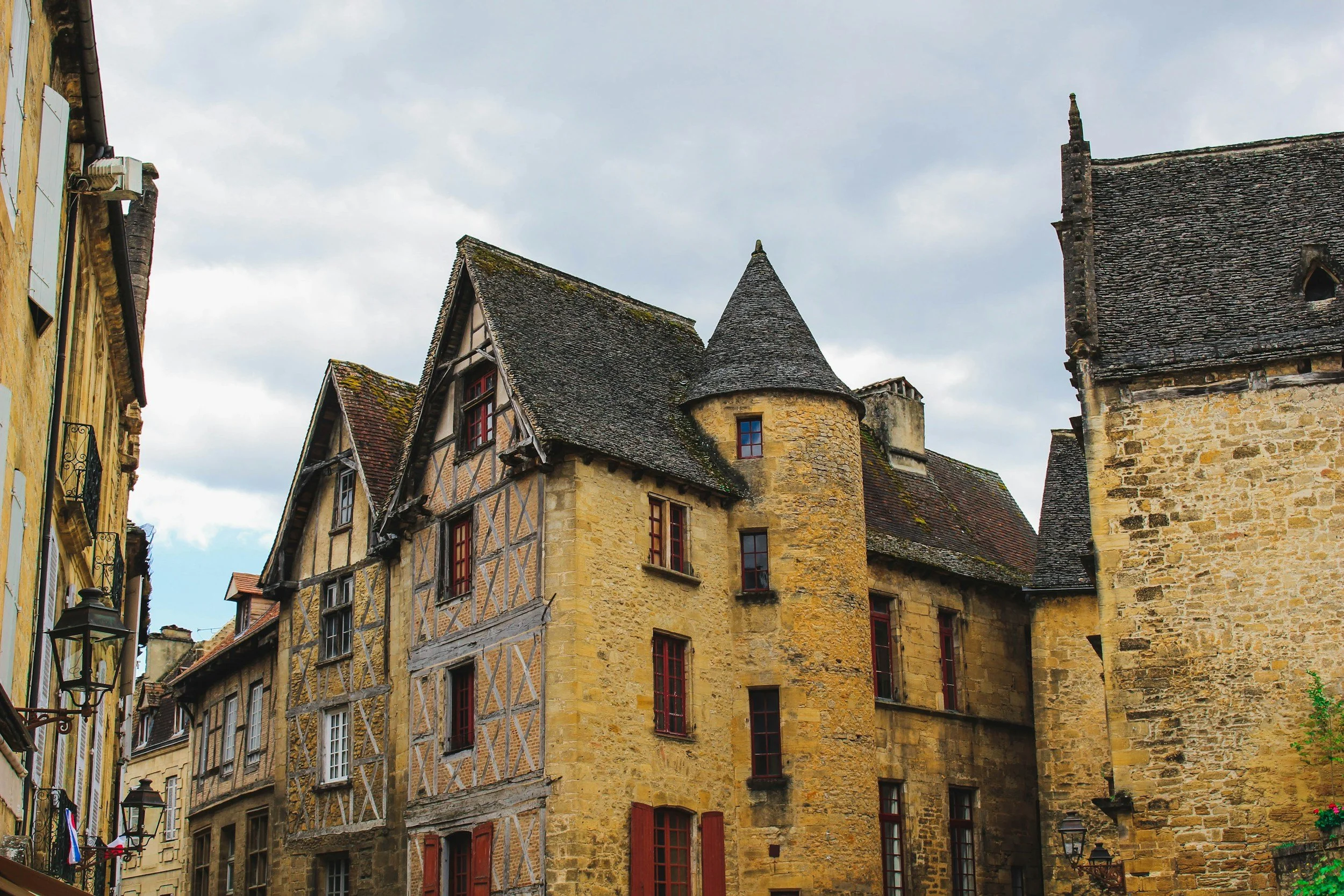
Loire Valley: towns you can reach without thinking too much
Amboise (direct from Tours or Paris)
Amboise is one of the few towns where the train journey and the arrival actually match the expectation, because you step off at the small station in Amboise and instead of pausing to figure out the next step, you just start walking with everyone else toward the bridge, almost without thinking about it, and within a couple of minutes you’re already on Pont du Maréchal Leclerc, crossing the Loire with the château sitting directly ahead of you in a way that makes the layout of the town immediately clear.
The walk into the centre takes around 12–15 minutes, completely flat, with proper pavements the whole way, and it’s one of those arrivals where you don’t need to check your phone or second-guess the route, because the movement is obvious and consistent, and by the time you reach the far side and step onto Quai du Général de Gaulle, you’re already inside the part of town where everything actually happens.
What’s noticeable straight away is how quickly the town narrows, because you move from the open space of the river into Rue Nationale almost without realising it, and suddenly you’re in a street that feels busy but not overwhelming, lined with bakeries, small wine shops, and cafés that fill gradually rather than all at once, so instead of stopping immediately, most people keep walking, looking around, getting a sense of things before deciding where to sit.
If you pass Boulangerie Bigot in the morning, especially around 9:00, there’s usually a short queue outside that moves quickly, with people stepping in, picking up bread or pastries, and continuing along the street rather than lingering, while a few doors further down, places like La Cave du Château draw people in for a minute or two before they rejoin the same slow flow along Rue Nationale.
As you continue walking, the street opens slightly around Place Michel Debré, which gives just enough space to pause without feeling like you’re in the way, and if you turn off there toward Rue Victor Hugo, the atmosphere shifts almost immediately, because within a few steps you’re in a quieter stretch where the movement drops off, and you start noticing smaller details like closed shutters, gallery windows, and the absence of that steady foot traffic you just left behind.
Mornings are when Amboise feels the most balanced, especially if you’re out between 8:30 and 10:00, because the riverfront along Quai François Tissard is still open enough to walk without adjusting your pace, and at the same time the centre is just starting to fill, so you get a version of the town that isn’t empty but also doesn’t require you to move around anyone.
If you head up toward the château during that time, using Montée de l’Emir Abd el-Kader, you’ll notice how manageable it feels compared to later in the day, when that same route becomes one of the busiest parts of town, with people gathering near the entrance and slowing everything down slightly, even if it never becomes difficult to navigate.
By midday, the town is fully in motion, but it doesn’t tip into something you need to plan around, because even near the château or along the busiest parts of Rue Nationale, you can still move at your own pace, stop when you want, and not feel like you’re interrupting anything.
The shift in the afternoon happens more quietly, and it’s usually when people start moving back toward the river, because if you step away from the main street and follow Quai du Général de Gaulle along the Loire, you’ll notice within a few minutes that there’s more space, fewer people, and a different kind of movement where people are sitting, walking slowly, or just passing through without any urgency.
If you keep going in that direction, even just for ten minutes, the town thins out quickly, and you end up in stretches where there’s almost no one around, which makes it easier to understand how small Amboise actually is once you step outside the main flow, because it doesn’t take much distance to feel like you’ve left the centre behind.
Evenings come in gradually, without a clear start point, and around 18:30 you’ll see tables along Rue Nationale and near the river beginning to fill, not suddenly, but steadily, so you can walk the street once or twice, look at a couple of places, and decide where to sit without needing to commit straight away.
If you don’t want to sit directly in the busiest part of the street, turning off toward places like Rue Joyeuse or the smaller lanes behind Place Michel Debré is usually enough to change the atmosphere, because within a minute or two it becomes quieter, easier to find a table, and still close enough that nothing feels out of reach.
What becomes clear quite quickly is that you stop thinking about distance altogether, because from the station to the centre is about 15 minutes, from the centre to the river is only a few minutes, and from one end of the town to the other takes less than ten, so after a short time you’re just moving without checking anything, repeating the same streets at different times of day without planning to.
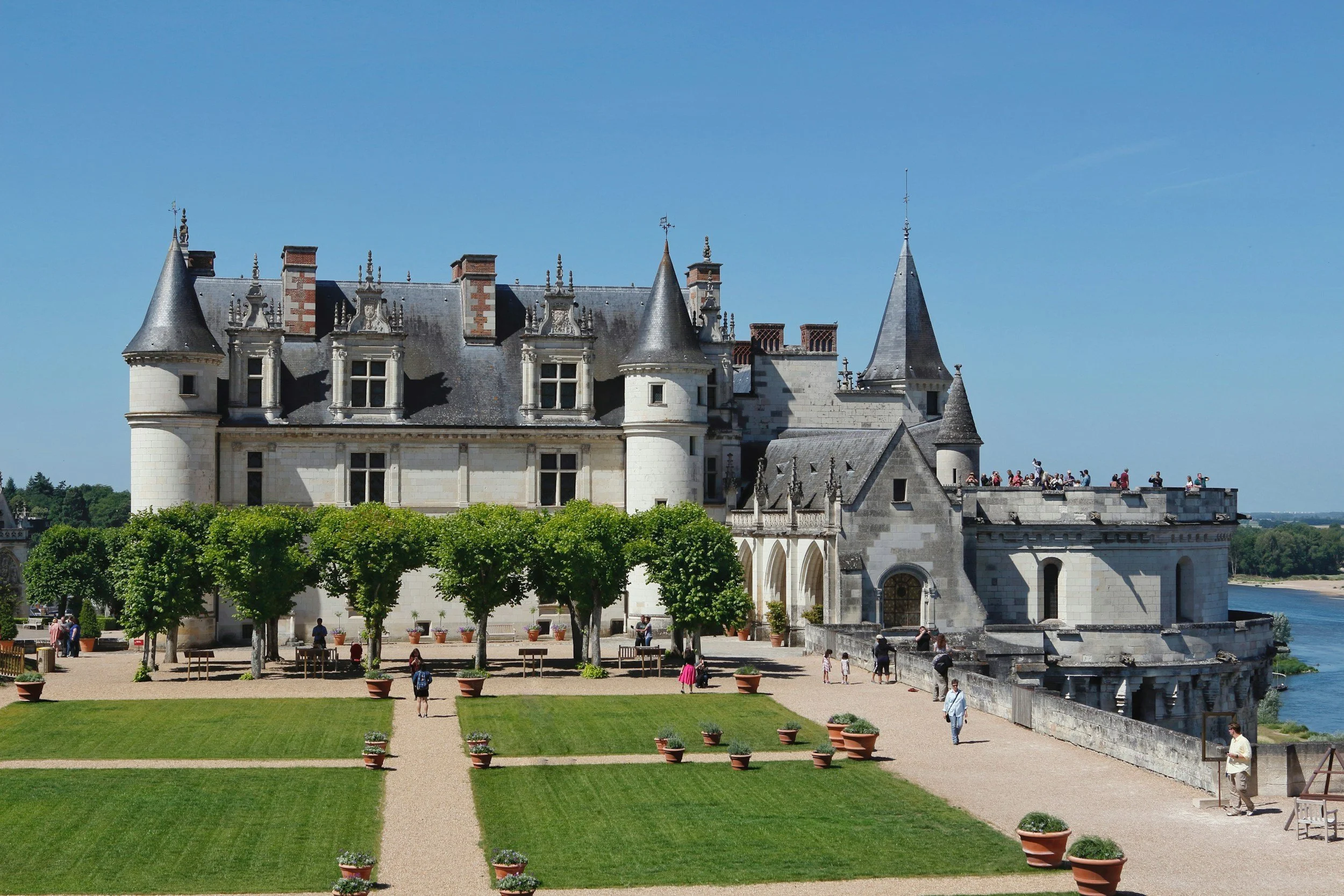
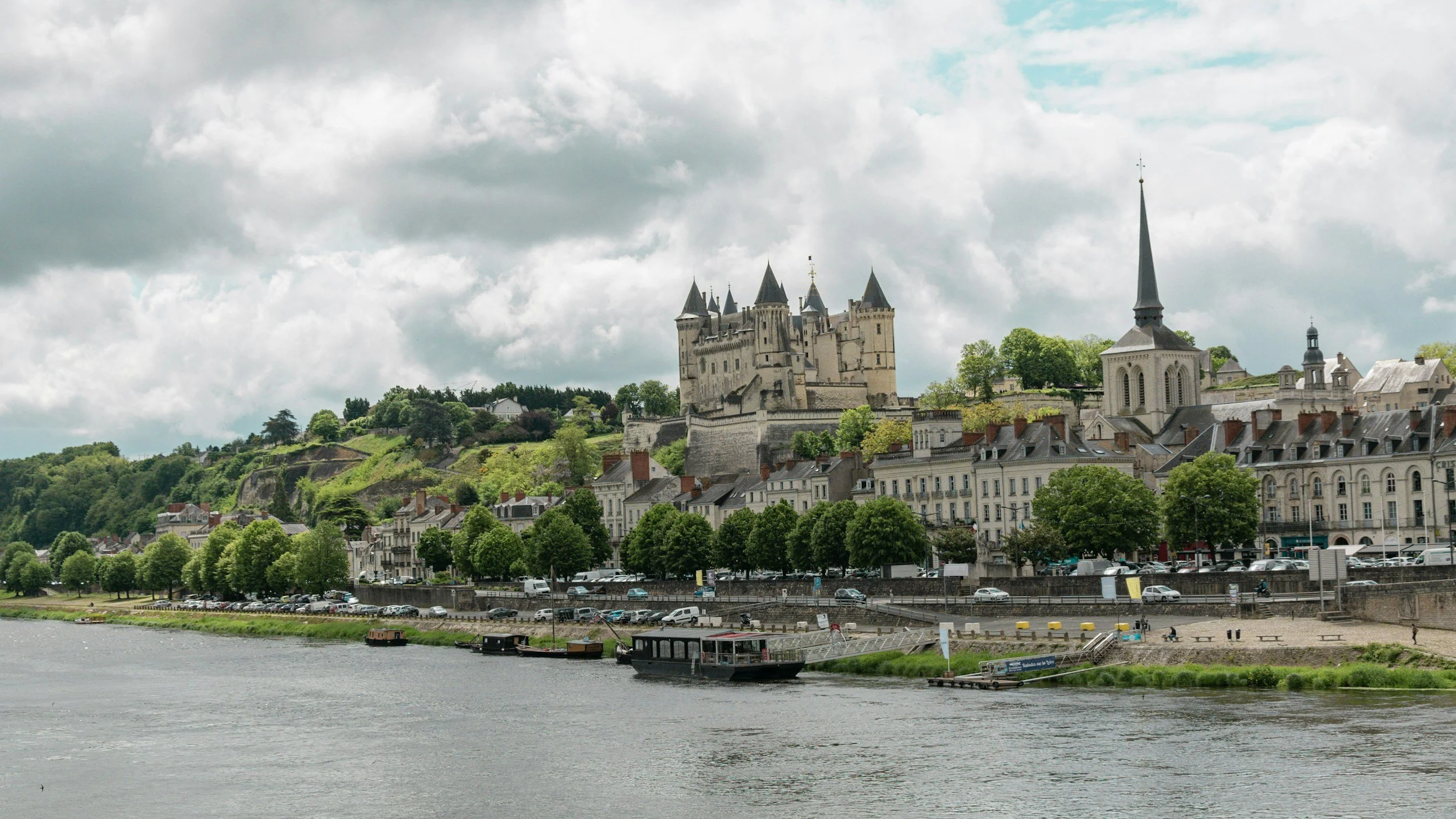
Saumur (on the Loire line)
Saumur is one of those stops along the Loire where it’s easy to assume you’ll just pass through, because the train from Tours or further west runs straight along the river and everything feels like part of a longer route, but if you actually get off at Saumur, you realise quite quickly that it’s set up in a way that makes staying simple without needing to organise anything around it.
The station sits slightly outside the historic centre, but not in a way that complicates things, because once you step out you’re already on a direct path in. Most people follow Avenue du Général de Gaulle, which runs straight toward the river, and within about 10 minutes you’re crossing into town without having had to think about direction at all. The walk is flat, with proper pavements the whole way, and you pass a mix of everyday shops before the view opens up slightly as you get closer to the Loire.
Crossing the river is where Saumur starts to feel like itself, because the château sits above the town in a way that’s visible but not overwhelming, and you can already see how the streets spread out below it rather than clustering tightly around one point. Once you step off the bridge and onto Quai Mayaud, you’re already in the part of town where everything connects, and from there you naturally move toward the centre without needing to choose a specific route.
What’s different here compared to somewhere like Amboise is that Saumur doesn’t compress into one main street. Instead, it spreads slightly, which means you don’t get that single flow of people moving in one direction. If you walk toward Place Saint-Pierre, which acts as a kind of informal centre, you’ll pass cafés, small shops, and a steady movement of people, but it never feels concentrated.
Mornings tend to start early but without much build-up. Around 8:30–9:30, bakeries are already open, and you’ll see people picking things up quickly rather than sitting down for long. Places around Rue Saint-Jean and the surrounding streets begin to fill gradually, but there’s no moment where everything suddenly becomes busy.
If you walk toward the river at that time, especially along Quai Mayaud, there’s still plenty of space. A few people sitting, others walking, but nothing that changes how you move. It’s the kind of place where you can walk in a straight line without needing to adjust your pace.
By late morning, around 10:30–11:30, the centre feels more active, particularly near Place Saint-Pierre, where terraces fill and people start settling in for longer. Even then, you don’t get the sense that you need to work around anything. The space is just more open, and movement spreads out rather than concentrating.
The château area draws people up the hill during the day, but it doesn’t pull everything toward it in the same way as in smaller towns. You can choose to go up or not without it shaping the rest of your time in the centre.
Afternoons in Saumur tend to stretch out along the river rather than staying in the centre. If you walk along Quai Carnot or continue further along the Loire, you’ll notice how quickly it becomes quieter, even though you’re only a few minutes from the main streets. People spread out more here, sitting along the water or walking without any particular direction.
Because the town is slightly more spread out, you end up moving differently. Instead of repeating the same streets, you take slightly longer routes, loop back in a different way, and notice new parts of the town without planning to.
Evenings are building gradually rather than all at once. Around 18:30, a few tables are taken near Place Saint-Pierre, and then more follow over the next hour. You don’t get a single busy moment, and you can still walk around and decide where to sit without feeling like you need to hurry.
If you move a few streets away from the square, the atmosphere shifts quickly. It’s quieter, less structured, and easier to sit somewhere without waiting, while still being close enough that you don’t feel removed from the centre.
The scale of Saumur means you still don’t think about distance much, but it does feel slightly larger than Amboise. From the station to the centre is about 10–12 minutes, and from there to the river is only a few more. Walking from one side of the town to the other takes a bit longer, but never enough to require planning.
Two nights tends to work well here, especially if you want to experience both the centre and the quieter stretches along the river. A third night can make sense if you’re using Saumur as a base to explore nearby vineyards or smaller villages, because it connects easily without needing a car.
Leaving is straightforward. You walk back the same way you came, across the river and along Avenue du Général de Gaulle, and within about 10 minutes you’re back at the station. There’s no extra step, no timing to manage, and nothing that interrupts the end of the stay.
Saumur fits into this list because it gives you a slightly different version of the Loire, one that feels less concentrated and more spread out, but still easy enough to move through without needing to think about transport at any point.
Eastern France: smaller towns that are easy by train
Colmar (direct via Strasbourg)
Colmar is one of those arrivals where the photos you’ve seen don’t match the first ten minutes at all, because you step off the train at Colmar, walk out of the station, and for a while it just feels like a normal town with wider streets, traffic, and hotels, and you start wondering if you’ve taken the right exit before anything starts to look like the Colmar people usually come for.
Most people leave the station and follow Avenue de la République without really thinking about it, and that’s the right move, but it takes a bit longer than expected before anything changes. It’s around a 18–20 minute walk into the old town, and the first half is just transitional, a Monoprix, a couple of bakeries, everyday cafés where people are standing at the counter rather than sitting, nothing that signals you’ve arrived somewhere specific yet.
The shift happens gradually somewhere around Place de la Gare’s far end as you move toward Rue des Clefs, where the buildings start to close in slightly, the streets narrow, and you notice more people walking without any clear direction. It’s not a sudden moment, more like a slow adjustment where you realise you’re no longer just passing through.
If you keep going, you’ll reach Place des Dominicains, which is usually where things start to make sense. From there, everything branches out, and within a few minutes you can head toward the canals, loop through smaller streets, or just keep walking without needing to plan anything.
What most people do next is head straight for La Petite Venise, but if you do that late morning, you’re stepping into the busiest part of the town straight away. By 11:00, the small bridges along Quai de la Poissonnerie are already full, and instead of stopping to look, you’re mostly waiting for space to move.
If you arrive earlier, around 8:30–9:00, it’s completely different. You can walk along the canals, stop halfway across the bridges, and actually stand still without someone behind you. You’ll see a few people with cameras, but it hasn’t filled yet, and the cafés nearby are only just opening.
A better way to approach it is not going there first at all. If you arrive mid-morning, it’s easier to walk through Rue des Marchands first, pass by places like Maison Pfister, and then drift toward the canals once you’ve already settled into the town. That way, you’re not starting in the most crowded part.
Mornings in the rest of Colmar don’t build quickly. Around Rue des Clefs and nearby streets, cafés fill slowly, bakeries like Gilg have a steady flow of people picking things up and leaving, and you can move through without needing to adjust your pace. It’s active, but not compressed.
By midday, the centre fills more noticeably, especially along Rue des Marchands, but because the town isn’t built around a single street, you don’t get stuck. If it feels too busy, you turn once or twice and you’re already somewhere quieter.
That’s what makes Colmar easier to manage than it first seems. You’re never more than a minute or two from a calmer street. If you walk slightly away from the canal area, toward streets like Rue des Écoles or further out toward Rue du Nord, the pace drops almost immediately without feeling like you’ve left the centre.
Afternoons hold steady rather than slowing down completely. Shops stay open, people keep moving, and the density stays more or less the same as midday. If you want space, you have to choose it by stepping away from the obvious routes rather than waiting for the town to empty out.
The easiest way to do that is to loop back toward the edges of the old town, where the streets widen slightly and fewer people pass through. It doesn’t take more than a few minutes, and suddenly you’re walking without weaving around anyone.
Evenings change things again, but not dramatically. Around 18:30, the flow through the streets slows, and more people sit down rather than move through. The canal area becomes easier to walk, and places that were full earlier open up just enough that you can actually choose where to sit.
Restaurants fill steadily, but you’re not waiting long if one is full. You just walk a few minutes and find another option. It’s not something you need to plan in advance unless you have a specific place in mind.
The size of Colmar means you do notice the distance from the station more than in smaller towns. It’s about 20 minutes each way, and if you have an early train, that’s the only part you really need to think about. Once you’re inside the old town, everything is within 5–10 minutes on foot, and you stop checking directions after a while.
Annecy (easy but not always calm)
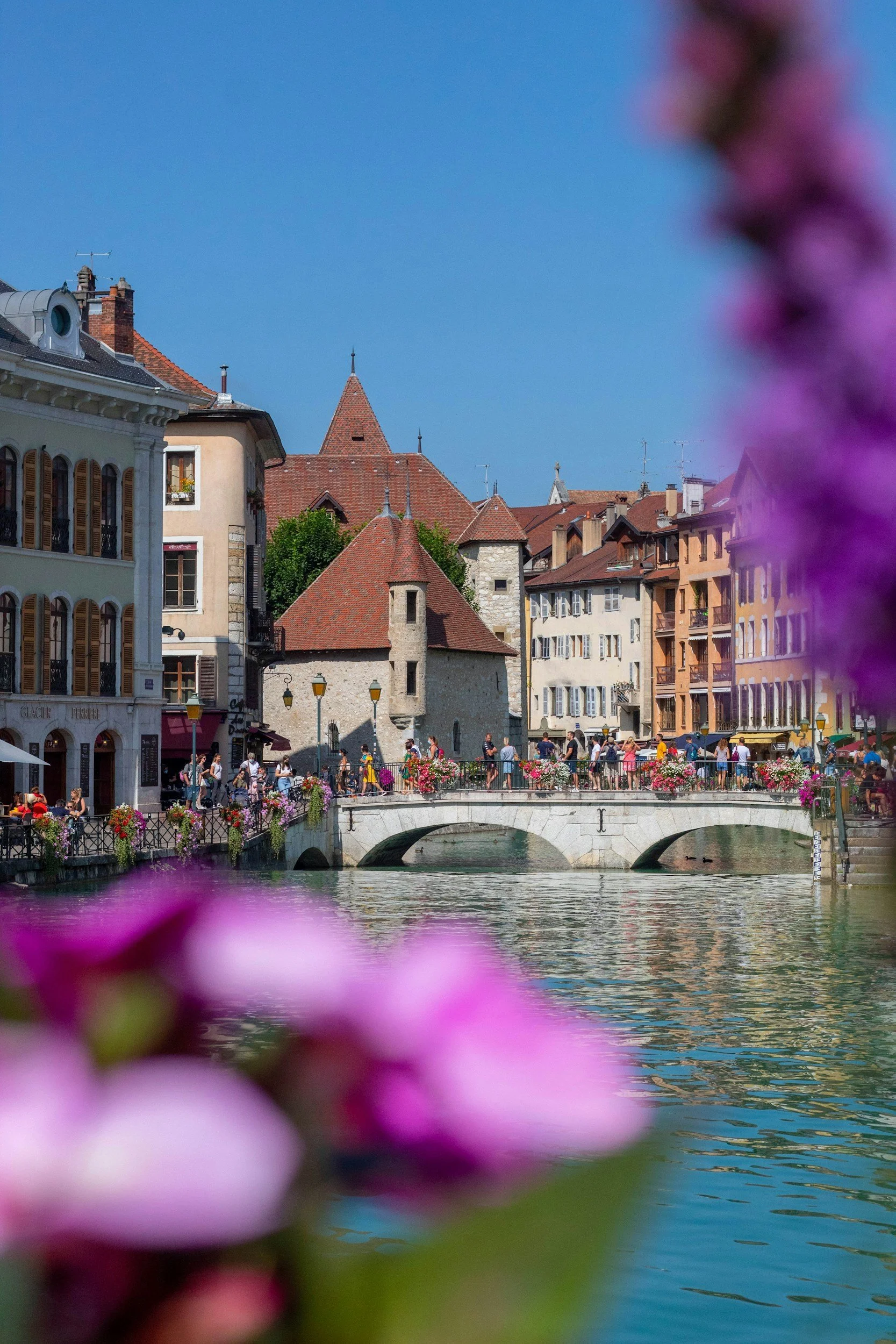
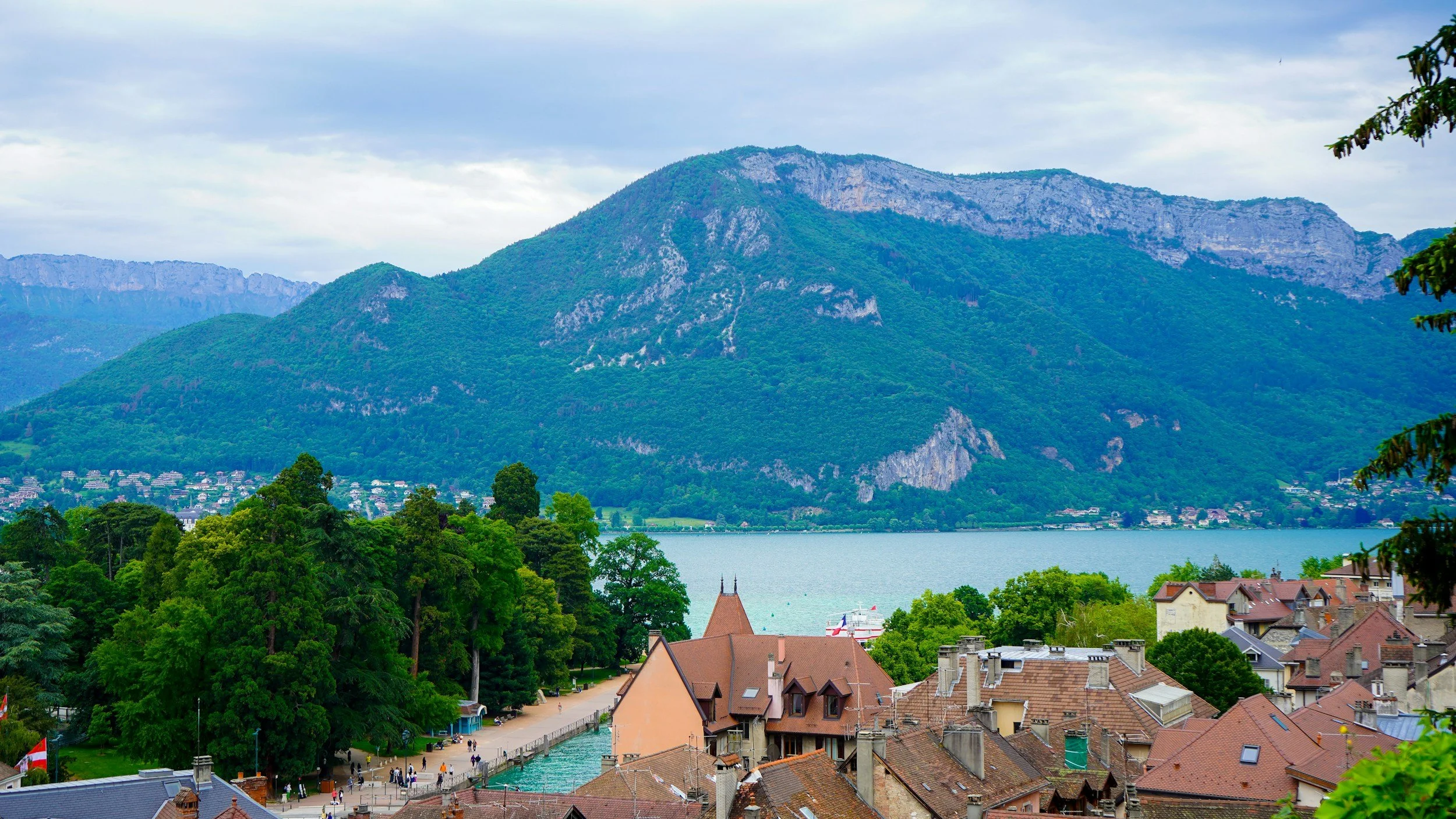
Annecy is one of those places where the arrival is almost too easy, because you step off at Annecy, walk straight out of the station, and within a few minutes you’re already moving toward the canals without having made a single decision about direction, transport, or timing, and that simplicity is exactly what makes it work so well for a train-based trip. The station sits right at the edge of the centre, so instead of easing into the town, you cross a small forecourt, follow Rue de la Gare, and almost immediately find yourself pulled toward Rue Vaugelas, where the streets begin to narrow and the first stretch of water appears between buildings in a way that makes people slow down without thinking about it.
From there, it takes less than ten minutes to reach Palais de l’Île, and that’s usually where everything compresses. The bridge just before it, the curve of the canal, and the tight space between Rue Sainte-Claire and the water create a natural bottleneck, which is why by late morning, especially around 11:00, you’re no longer walking freely through that area, you’re following the pace of whoever is in front of you, stopping when they stop, and moving again when there’s space.
If you come through at 8:30 instead, it’s almost quiet enough to feel like a different place, because café terraces along the canal are still being set up, chairs are stacked or just being put out, and places like Café Bunna or smaller spots tucked into the corners of the old town are only just opening, which means you can walk across the bridges without stepping aside, pause without blocking anyone, and actually notice how tight the streets are rather than just moving through them.
The shift between those two versions of Annecy happens quickly, and that’s what catches people off guard, because it doesn’t gradually build, it flips within an hour or so, and once it does, the old town becomes somewhere you pass through rather than explore slowly.
The easiest way to deal with that is to move out of the centre once it fills, because you don’t need to go far before everything opens up again. If you walk from Palais de l’Île toward the lake, passing through the short stretch that leads to Pont des Amours, you go from narrow streets to open space almost instantly, and even though the bridge itself is one of the busiest spots around midday, continuing past it along Jardins de l’Europe changes the pace within a few minutes.
If you keep walking along Quai Napoléon III, you’ll notice how quickly the density drops. People spread out, some sitting along the edge of the water, others walking further along the lake path, and it stops feeling like a central attraction and more like a place people actually use. Around mid-morning, before 9:30, this stretch feels the most balanced, with locals running, walking dogs, or sitting briefly before heading somewhere else, and it’s one of the few times where Annecy feels less like a destination and more like a town.
By midday, even the lakefront becomes busy near the centre, but it still gives you more space than the old town. If you continue another ten minutes past the main stretch, the flow thins out again, and you can walk without adjusting your pace or waiting for space to open up.
Back in the centre, afternoons don’t slow down in the way you might expect from smaller towns. Shops along Rue Sainte-Claire, Rue Royale, and nearby streets stay open, cafés remain active, and the level of movement stays fairly consistent. What changes instead is how people use the space. More sitting, less walking, which makes it easier to find a table but not necessarily easier to move through the narrowest parts.
If you step just slightly away from the main canal loop during that time, for example toward Rue Perrière or the quieter streets just behind it, you’ll notice the difference almost immediately. It doesn’t take distance, just one or two turns, and suddenly you’re walking without needing to move around anyone.
Evenings are where Annecy becomes easier again, but not because it empties. Around 18:30, the flow shifts, and instead of people passing through, they start staying in place. Restaurants along the canals fill gradually, and streets like Rue Sainte-Claire become easier to walk because fewer people are moving through them at once.
If you don’t want to sit directly along the canal, stepping back toward streets behind Place Sainte-Claire or slightly away from the water is usually enough to find somewhere quieter without losing the atmosphere entirely. You’re still within a few minutes of everything, but it feels less compressed.
What becomes clear quite quickly is how little distance actually matters here. From the station to the canals is under ten minutes, from the canals to the lake is another five, and you can cross the entire old town in less than ten minutes when it’s quiet. The only thing that changes that is how many people are there at the same time.
Annecy works without a car because everything sits so close together, but it only really works if you use the day properly. Early morning in the old town, time along the lake once the centre fills, and then back into the streets again in the evening is what makes it feel manageable rather than crowded.
Normandy and the north: slower, weather-dependent but worth it
Bayeux (direct from Paris)
Bayeux is one of the few places where the train actually takes you close enough that the rest of the arrival feels like part of the town rather than a separate step. You leave Paris, sit for just over two hours, and step off in Bayeux without needing to think about connections or what comes next. The station is small, easy to exit, and within a minute you’re already on Rue Larcher, which leads you straight toward the centre without needing to check directions or second-guess anything.
The walk takes about 10 minutes, and it doesn’t try to impress you at first. A pharmacy, a tabac, a couple of small bakeries where people are already stopping in quickly on their way somewhere else. Then the street narrows slightly near Place Saint-Patrice, and you realise you’re already close. There’s no big transition moment, just a quiet shift where you stop feeling like you’re arriving and start feeling like you’re already in.
Most people end up on Rue Saint-Jean without really choosing to, and that street becomes your reference point for everything else. It runs through the middle of town and you’ll pass along it several times a day without planning to. In the morning, especially around 8:30–9:30, it’s active but not busy. Maison Després has a steady line forming, people stepping in, ordering quickly, and leaving with a paper bag rather than sitting down. A few doors further along, Reine Mathilde is already serving breakfast, with tables filling gradually but never all at once.
If you keep walking, you’ll reach Place Charles de Gaulle, which opens just enough to give you a sense of space before you reach the cathedral. Cathédrale Notre-Dame de Bayeux sits slightly back from the square, and you don’t really approach it head-on. You pass it, circle around it, and then realise how close everything is. Around 10:30, you’ll see more people here, but it doesn’t turn into a place you have to navigate carefully. You can still walk straight through, pause briefly, and continue without feeling like you’re in the way.
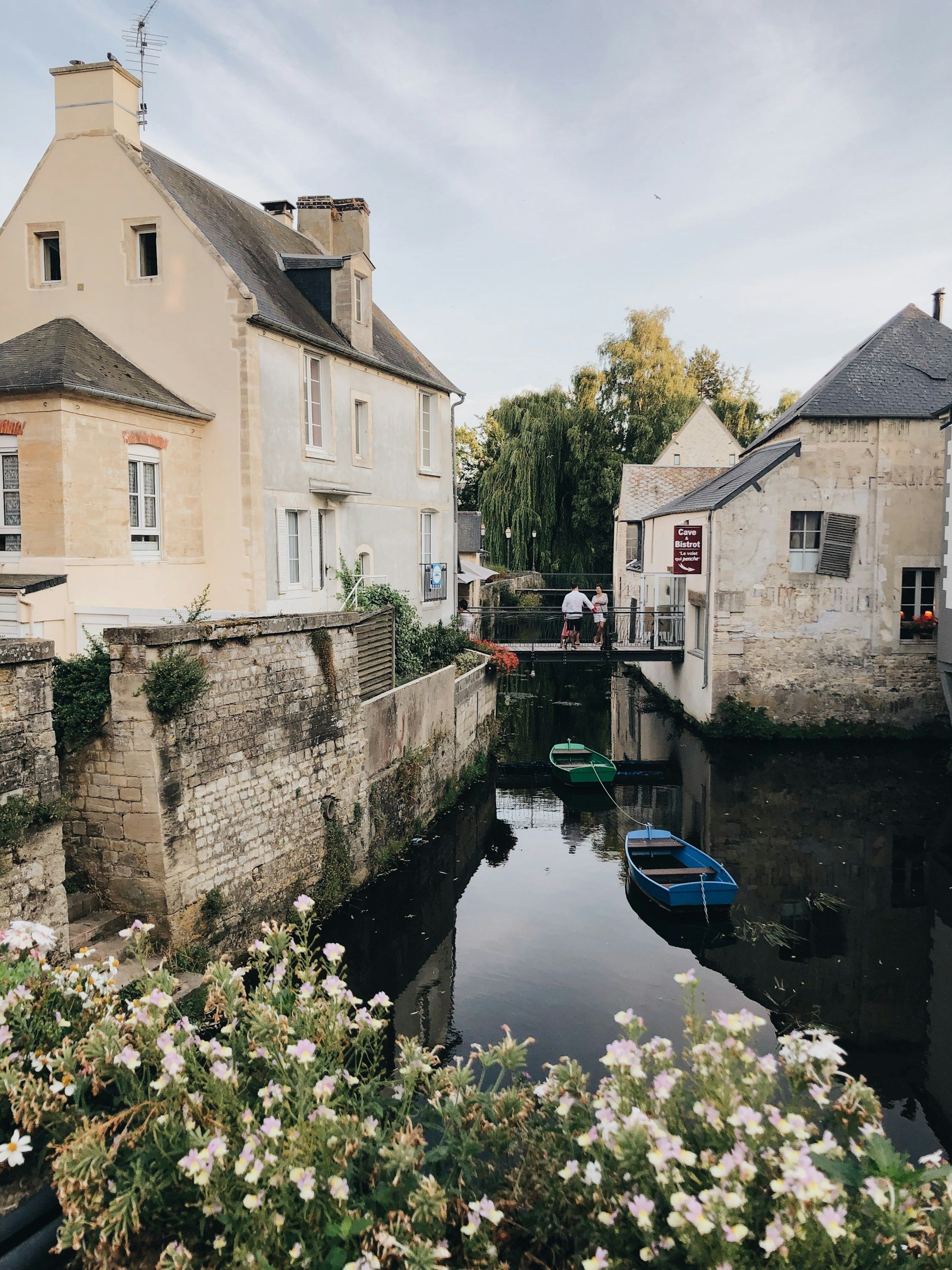
What changes the feel of Bayeux quickly is how easy it is to step away from that central movement. If you turn off toward Rue des Cuisiniers, it narrows again and becomes quieter within a few steps, with smaller shopfronts and fewer people passing through. Continue a little further and you reach the river, where the town opens out again along Rue de Nesmond.
That stretch along the water is where you naturally end up when you want space. It’s only a couple of minutes from the centre, but it feels removed enough that you’re no longer walking with anyone else. You’ll see people sitting along the edge, a few small terraces like Le Moulin de la Galette nearby, and others just passing through without stopping. It’s not empty, but it’s not crowded either, and it doesn’t require any adjustment in how you move.
If you follow the river for longer, especially past Pont Saint-Jean, you start to see how quickly the town thins out. A few residential buildings, fewer cafés, and suddenly you’re walking somewhere that feels quieter without having gone far at all. It’s one of those places where the centre and the calmer areas sit almost on top of each other.
Midday brings a bit more movement back into the centre, particularly along Rue Saint-Jean and near the cathedral, but it never builds into something you need to plan around. You might slow slightly near a café terrace or where the street narrows, but you’re not waiting to pass or adjusting your route.
Afternoons in Bayeux don’t follow a strict pattern. Some shops along Rue Saint-Malo close for a while, others stay open, and the town continues at a steady level rather than dropping off completely. It’s the kind of time where you end up sitting somewhere longer than you expected, because there’s no pressure to move on.
If you walk back toward the river then, it’s even quieter than in the morning. The same paths feel more open, and you can walk without passing many people at all. It’s often where people go to break up the day without really planning to.
Evenings don’t concentrate in one place. Around 18:30–19:00, a few tables fill along Rue Saint-Jean, and then more gradually along smaller streets branching off it. La Rapière tends to fill first, especially on weekends, but you don’t need to wait there. If it’s full, you walk two or three minutes and find another place along Rue des Chanoines or nearby without needing to think about it.
What you notice in the evening is that people stay where they sit! Tables don’t turn quickly, and the movement through the streets slows down. It’s not busy in the same way as midday, it’s just more settled.
The size of Bayeux is what makes it so easy to use without a car. From the station to Rue Saint-Jean is about 10 minutes. From there to the cathedral is another two or three. The river is just a couple of minutes further. You can cross the entire centre in under 15 minutes, and after a short time, you stop thinking about directions entirely.
Two nights fits naturally here. One morning where everything is still opening, one afternoon where you move between the centre and the river, and one evening where the town feels slightly quieter again. A third night only really makes sense if you’re using Bayeux as a base for the coast, because the town itself reveals itself quite quickly.
If you’re leaning toward a slower pace and want something that builds around one place rather than moving between stops, this slow weekend gives you a completely different way to structure the same kind of trip.
Cabourg (train + short connection)
Cabourg is one of those places where the train gets you close enough to feel easy, but not quite all the way, and that last stretch is what decides how the whole arrival feels. You leave Paris, change at Caen, and continue out toward Dives-sur-Mer, where the train line ends up feeling quieter and more local, and then you step off at Dives–Cabourg station and realise you’re technically there, but not quite in Cabourg itself yet.
The station sits on the Dives side of the river, so instead of stepping straight into town, you start with a short walk that feels slightly in-between. You follow the road out of the station, cross Pont de la Dives, and for a few minutes it still feels like you’re arriving somewhere that hasn’t fully started yet. A few small houses, quiet streets, then you hit Avenue de la Mer, and that’s where things begin to make sense.
That street runs straight down toward the sea, and once you’re on it, you don’t need to think about direction again. It takes about 10 minutes to reach the promenade, and along the way you pass places like Maison Florent for pastries or small takeaway stops that feel more seasonal than daily, especially outside peak months. It’s not a street where people linger long in the morning, more of a steady movement toward the water.
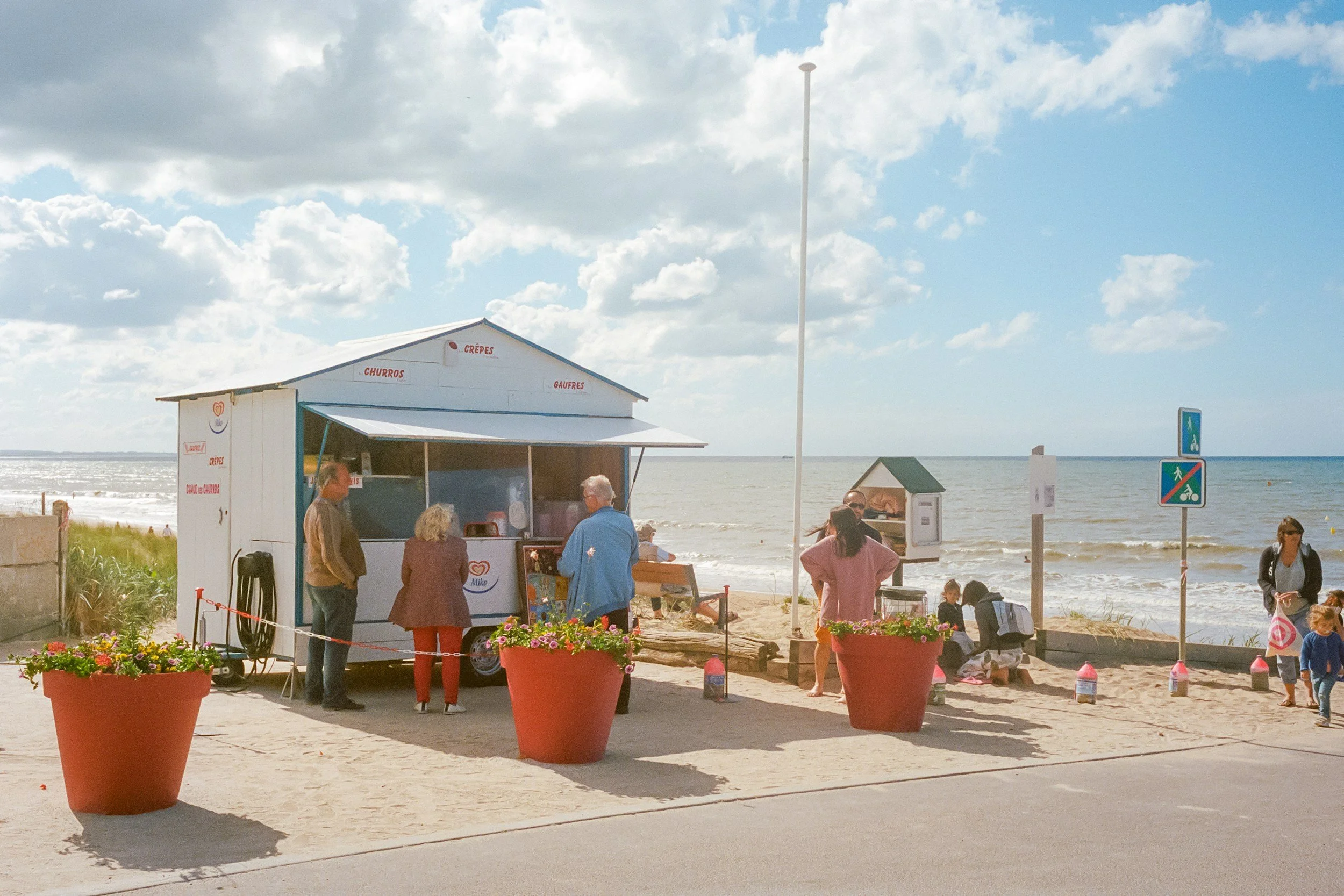
The moment you reach Promenade Marcel Proust, the town shifts completely. The street ends, the view opens, and everything flattens out along the seafront. If you arrive early, around 8:30–9:30, it’s quiet enough that you can walk the promenade without passing many people at all, just a few runners, someone walking a dog, maybe a couple sitting on a bench facing the water.
That changes slowly rather than all at once. Around 10:30–11:00, you start to see more people arriving, and the central stretch near Grand Hôtel de Cabourg fills first. That’s where most people stop, sit, and take photos, and it’s also where the promenade feels narrowest simply because of how many people gather there.
If you keep walking instead of stopping, even just five minutes further along the promenade, it opens up again. The further you go, the more space you get, and within a short distance you’re walking without adjusting your pace again, even on busier days.
Back on Avenue de la Mer, mornings stay fairly slow. Around 9:30–10:30, cafés start filling gradually, but you won’t find that one moment where everything is suddenly busy. Places like Le Baligan begin setting up for the day, but most people are still moving through rather than sitting for long.
What stands out in Cabourg is how much the town follows the sea rather than the other way around. By midday, especially if the weather is good, most of the movement shifts toward the promenade and the beach, and the streets behind it become quieter than you’d expect. You can walk along Avenue de la Mer or nearby streets without needing to move around people at all.
Afternoons depend almost entirely on the weather. On clear days, the promenade holds most of the activity, while the town behind it feels almost still in comparison. If the weather turns, people move back into cafés and covered terraces, but even then it doesn’t compress into one area in the way you might expect.
If you walk slightly inland, just a few streets away from the main route, it becomes noticeably quieter. Streets branching off from Avenue de la Mer don’t carry much through-traffic, so you end up in spaces that feel almost residential within a couple of minutes.
Evenings build slowly, in the same way as the rest of the day. Around 18:30, people start settling into restaurants along the seafront and just behind it, but there’s no rush. You can walk the length of Avenue de la Mer, look at a few places, and decide where to sit without feeling like you need to stop at the first available table.
If you don’t want to sit directly on the main street, stepping one or two streets back changes the atmosphere immediately. It’s quieter, easier to find a table, and you’re still close enough that nothing feels out of the way.
The town itself is easy to understand once you’ve walked it once. From the bridge into Cabourg to the promenade is about 10 minutes, and from there you can walk the entire central stretch of the seafront without needing to turn back unless you want to. It doesn’t take long before you stop thinking about where things are.
If Cabourg caught your attention but you’re unsure whether it’s worth that extra short connection, this Cabourg guide gives you a much clearer sense of how it actually feels once you’re there.
And in case you’re already heading into Normandy and thinking about stretching the trip slightly, the cider route adds a completely different kind of stop that still fits easily into the same journey.
France’s train system and tickets (what actually matters once you start booking)
The part that usually feels confusing isn’t where the trains go, it’s how the system behaves once you start clicking around and trying to piece together a route, especially when you’re mixing a fast train from Paris with smaller regional lines that take you into towns like Bayeux, Saumur, or Albi. On paper it looks like one network, but in practice it behaves like two different systems that just happen to connect.
If you’re staying closer to Paris and want something simpler without committing to longer train routes, these towns near Paris are much quicker to reach but still feel like a proper change of pace.
Everything runs through SNCF, but the experience depends entirely on whether you’re on a high-speed train or a regional one, and that’s the first thing worth getting clear because it affects how you book, how much you pay, and how flexible you can be on the day.
The high-speed trains, usually labeled TGV or sometimes Intercités, are the ones you’ll use for the longer stretches, for example Paris to Strasbourg, Paris to Bordeaux, or Paris to Tours, and these are the only ones where timing really matters in advance. Seats are reserved, prices change constantly, and if you check the same route on a Tuesday morning and then again on a Friday afternoon, you’ll often see a noticeable difference. Early bookings usually mean lower prices and better departure times, especially if you want to avoid the late evening trains out of Paris that tend to fill first.
Regional trains, marked as TER, work completely differently, and this is where most people overthink things the first time. These are the slower lines that take you from a bigger hub into smaller towns, like from Caen into Bayeux, from Tours into Amboise, or from Toulouse into Albi, and they don’t operate on a pricing system that rewards booking early. A ticket bought the same day is usually the same price as one bought a week in advance, and there are no seat reservations, which means you can just show up, board, and sit wherever there’s space.
That difference is what makes a lot of these trips feel easier once you’re actually in the region, because the only part you really need to commit to in advance is the long-distance leg, while the shorter connections stay flexible and don’t require planning down to the minute.
Most people end up using SNCF Connect, and it’s worth sticking with it because it shows both TGV and TER routes in one place without splitting them into separate systems. Once you’ve booked, the ticket sits in the app and gets scanned on board, so there’s no need to print anything or queue at a counter unless you want to.
Where things can still feel slightly off the first time is in larger stations, especially in Paris. Trains don’t leave from “Paris” in a general sense, they leave from specific stations like Gare de Lyon, Gare Montparnasse, or Gare Saint-Lazare, and each one serves different regions. If your ticket says Gare Saint-Lazare for a Normandy route and you accidentally head to Gare du Nord out of habit, you’ll only realise once you’re already in the wrong place, so it’s one of the few details worth double-checking.
Inside those stations, the routine is fairly consistent even if it feels chaotic at first. People don’t usually go to the platform early. Instead, they stand near the large departure boards, watch for the platform number to appear (often 15–20 minutes before departure), and then move all at once. If you’re there early, it can feel like nothing is happening until suddenly everyone starts walking in the same direction.
For smaller towns, it’s the opposite. You step off the train, and there’s often no barrier, no ticket check on the platform, and no need to look for an exit. Stations like Bayeux, Saumur, or Albi are quiet enough that you’re outside within a minute, already heading toward the centre without needing to think about it.
One small detail that still catches people is validation, which used to be required for paper tickets on regional trains. If you’re using a digital ticket, you can ignore this completely. If you happen to have a paper TER ticket, you’ll sometimes see small yellow machines on the platform where you stamp it before boarding, but this is becoming less relevant as most tickets are now digital.
In terms of timing, the system is more reliable than it looks from the outside. Trains generally run on time, connections are realistic rather than rushed, and once you’ve done one or two journeys, the process stops feeling unfamiliar. The key difference is simply knowing when to plan ahead and when not to bother.
For these kinds of trips, that usually means booking your main TGV route a few days or weeks in advance, depending on the season, and then leaving the smaller TER connections open so you can adjust them on the day without needing to commit too early. Once you start using it that way, the network feels much less like something you need to manage and more like something that just supports the trip in the background.
If you’re unsure how these train-accessible towns compare to quieter, more remote regions, this Auvergne villages guide shows what you gain and what you give up when you go further out.
And in case you’re trying to avoid places that feel seasonal or slightly empty outside peak months, this year-round towns list is useful for spotting where there’s still everyday life.
The process (what it actually looks like, including what you end up paying)
Most people overcomplicate this part before the trip and then realise very quickly that the process itself is quite repetitive once you’ve done it once, because it’s really just a sequence of small steps that don’t change much whether you’re going to Alsace, Normandy, or the south.
You usually start inside SNCF Connect, type in your route, and get a list of options that look similar at first but behave differently depending on what kind of train you’re looking at. You don’t need to analyse every detail, but it’s worth noticing whether the longer part of your journey is on a TGV or a TER, because that’s what decides how early you need to book and how much the price can shift.
For the longer routes, especially anything leaving Paris, prices move more than people expect. If you look at something like Paris to Strasbourg or Paris to Bordeaux a couple of weeks ahead, you’ll usually see options somewhere in the €40–€80 range if you’re flexible with times, but if you check the same route a day or two before a Friday or Sunday departure, it’s not unusual for those same seats to sit closer to €90–€140. That’s why those longer legs are the only part of the trip that really benefits from being booked ahead, not because the trains will sell out completely, but because the difference in price can be noticeable for no real change in experience.
Once you move onto the regional part of the journey, that logic stops applying almost completely. A train from Tours to Amboise, Caen to Bayeux, or Toulouse to Albi will usually sit somewhere around €8–€20 regardless of whether you buy it in advance or five minutes before departure, and there’s no seat reservation to think about, which means you don’t need to lock anything in too early. That’s why those shorter connections are often easier to leave open, especially if you want to adjust your timing on the day.
After booking, everything stays in the app, and that’s effectively the end of the planning side. There’s no printing, no collecting tickets, and nothing else to confirm. On the day, you just show up at the station and follow the same routine you’ll see everyone else doing.
In larger stations, especially in Paris, people tend to wait in the main hall rather than going straight to the platform. You look at the departure board, wait for the platform number to appear, usually about 15–20 minutes before departure, and then move with the crowd when it does. It can feel slightly unstructured the first time, but it’s consistent once you know what you’re looking for.
Boarding is straightforward. On longer trains, your carriage number is shown on your ticket and on signs along the platform, so you walk to the right section and get on. Ticket checks happen after departure, with the conductor scanning your phone, so there’s no barrier or gate to pass through in most cases.
For regional trains, it’s even simpler. You walk onto the platform, step onto the train when it arrives, find a seat, and that’s it. No reservation, no assigned place, and no difference in experience whether you booked earlier or just before boarding.
Connections tend to work more smoothly than they look on paper, but this is the one place where a bit of awareness helps. In larger stations, anything under about 8–10 minutes can feel slightly rushed if you don’t know the layout, while 10–15 minutes usually gives you enough time to move between platforms without thinking about it too much.
If you’re deciding whether to move around or stay longer in one place, this 3–5 nights guide helps you figure out which towns hold your attention beyond a quick stop.
FAQ (France countryside towns you can reach by train)
Is it actually easy to travel rural France by train without a car?
Yes, but only if you choose towns where the station connects cleanly to the centre. In places like Amboise, Bayeux, and Albi, you step off the train and walk straight in within 10–15 minutes. Where it becomes less smooth is when the station sits outside town, like in Cassis, where you’ll need to factor in a taxi or local bus. The train journey itself is simple, but the last stretch is what decides how easy it feels.
What’s the biggest mistake people make when planning train travel in France?
Trying to plan every leg in advance. The long-distance train from Paris is the only part that benefits from early booking. Once you’re in a region, the shorter connections on regional trains are usually fixed in price and don’t need to be locked in. Overplanning those parts often makes the trip feel more rigid than it needs to be.
Are French train tickets cheaper if you book early?
For high-speed trains, yes. A route like Paris to Strasbourg or Bordeaux can sit around €40–€70 if you book a couple of weeks ahead, but checking the same train a day or two before departure can push it closer to €100 or more. Regional trains don’t behave like this. A ticket from Tours to Amboise or Caen to Bayeux usually stays around €10–€20 whether you buy it early or just before boarding.
Which French towns are easiest to visit by train from Paris?
The easiest ones combine a direct train with a short walk into town. Bayeux is one of the simplest, with a direct route and a 10-minute walk into the centre. Amboise works well via Tours, and Colmar is straightforward via Strasbourg. These are the kinds of places where you don’t need to think about transport once you arrive.
Do you need to reserve seats on French trains?
Only on long-distance trains like TGV. Your seat is assigned when you book. On regional trains (TER), there are no reservations, and you can sit wherever there’s space.
How do you buy train tickets in France?
Most people use SNCF Connect, which shows both high-speed and regional trains in one place. You book, and the ticket stays on your phone. Ticket machines at stations work as well, but once you’ve used the app, there’s rarely a reason to switch back.
How early should you arrive at a train station in France?
Around 20 minutes is usually enough. In larger stations, the platform is often announced 15–20 minutes before departure, and people wait in the main hall until then. You don’t need to arrive early in the way you would for a flight.
Are French train stations difficult to navigate?
Not really, but they work differently depending on size. In Paris, stations like Gare de Lyon or Montparnasse can feel busy, but everything is clearly marked once the platform is announced. In smaller towns, stations are simple. You step off the train and you’re already on your way into town within a minute or two.
Is it better to stay near the train station or in the town centre?
In most cases, staying in the centre makes more sense, even if the station is nearby. In Bayeux, staying near Rue Saint-Jean or the cathedral means you’re already where you’ll spend your time, rather than walking back and forth. The same applies in Colmar, where the station is a 20-minute walk from the old town.
Are small French towns quiet all day?
No, and this is where timing matters more than location. Towns like Annecy or Sarlat-la-Canéda can feel busy in the middle of the day but much easier to move through early in the morning or in the evening. The difference isn’t the town itself, it’s when you’re in it.
Is it easy to travel between small towns in France by train?
Usually, but not always directly. Most routes go via a larger city like Tours, Caen, or Toulouse. The connections are reliable, but it’s worth checking the route in advance so you don’t expect a direct train where there isn’t one.
Is it worth renting a car instead of using trains for these towns?
For the towns in this guide, not usually. The centre is walkable, and you don’t need transport once you arrive. A car only becomes useful if you plan to explore smaller villages beyond the train network, which isn’t necessary for most of these stops.
How many nights do you need in a small French town without a car?
Two nights works well in most cases. It gives you time to see the town at different points in the day without rushing. A third night is usually only needed if you want to slow things down or use the town as a base.
Do French trains run on time?
Most of the time, yes. High-speed trains are generally reliable, and regional trains are consistent enough that delays don’t usually affect the overall trip. Tight connections can still feel rushed, so allowing a bit of buffer time helps.
Do you need to speak French to travel by train in France?
No. Ticket machines, apps, and most signage are available in English. Staff in larger stations are used to international travellers, and basic interactions are easy to manage without speaking French.
What’s the easiest way to plan a multi-stop train trip in France?
Book the main long-distance routes first, especially anything involving Paris, and then leave the shorter regional connections flexible. That way, you’re not locked into unnecessary timings, and the trip feels easier to adjust as you go.