How I'd plan a car-free weekend in Burgundy
Most Burgundy guides quietly assume you'll have a car.
They recommend villages scattered across the vineyards, suggest restaurants a few kilometres outside town, and make it sound as though driving from wine tasting to wine tasting is simply part of the experience.
But plenty of people visit Burgundy by train. And when you do, the question isn't really which hotel to book. It's where to stay.
The difference between choosing Dijon, Beaune, Tournus, Chalon-sur-Saône, or Mâcon can completely change the trip. In some towns, you can step off the train, walk to your hotel, spend the morning at the market, stop for a glass of Burgundy after lunch, and never think about transport again. In others, you'll quickly discover that the station sits further out than expected, the last train leaves earlier than you'd hoped, or that most of the places you wanted to visit are difficult to reach without a taxi.
If you're travelling to Burgundy for wine, cafés, markets, and a few slow days exploring the region, choosing the right base matters far more than most guidebooks admit. Some towns are ideal for a first visit. Some are better if you want easy access to wine villages. Others work best if you enjoy wandering local markets and settling into café terraces for an afternoon.
This guide looks at the Burgundy towns that genuinely work well without a car and what each one is actually like to stay in.
Arriving in Burgundy by train from Paris or Lyon
On paper, Burgundy can look simple without a car. The TGV lines are fast, the regional TER network covers a large part of the region, and towns like Dijon and Beaune are directly connected to Paris. But the experience of the trip changes quite a lot depending on whether you enter Burgundy from the north or the south.
Coming from Paris usually makes Dijon feel far more practical as a first base. The direct TGV from Gare de Lyon reaches Dijon in around 1 hour and 35 minutes, and once you arrive, most of the historic centre is genuinely walkable from the station. You can be checking into a hotel near Place Darcy or Rue Musette less than 15 minutes after stepping off the train, without needing taxis or complicated transfers. That matters more than people expect after travelling with luggage through Paris.
Dijon also works particularly well if you are arriving later in the day. Restaurants around Rue Jean-Jacques Rousseau and Place François Rude still stay active in the evenings, even outside summer, and there are enough cafés, wine bars, bakeries, and small grocery shops near the centre that arriving at 19:30 does not derail the trip. In smaller Burgundy towns, the atmosphere changes much earlier. Some places become noticeably quieter after 18:00, especially on Sundays and Mondays.
Lyon creates a very different Burgundy trip. If you are already travelling through southeastern France, or arriving via Lyon-Saint-Exupéry Airport, southern Burgundy towns suddenly become much easier to justify without a car. Mâcon is only around 35–40 minutes from Lyon Part-Dieu by TGV, which makes it surprisingly realistic even for shorter trips. You can leave Lyon after breakfast and still reach a Burgundy market before lunch.
That southern entry point also changes the type of Burgundy you experience. Around Mâcon and Tournus, the landscape becomes softer and greener earlier in the season, with more rolling hills and less dense village clusters than the Côte d’Or further north. Wine villages like Fuissé, Solutré-Pouilly, and Saint-Véran sit much closer together geographically, but transport becomes less forgiving without a car once you leave the train line itself. It is one of the reasons Mâcon works best for travellers happy to mix trains with short taxi rides or cycling days.
Another thing many guides skip: regional train frequency is noticeably better around Dijon than around some southern Burgundy routes. From Dijon, it is relatively easy to move between Beaune, Chalon-sur-Saône, and smaller stations during the day. But once you start relying on TER connections south of Mâcon, especially on weekends, gaps become longer and missed connections matter more. A delayed train in Paris might mean arriving 20 minutes later. A delayed regional train near Cluny or Tournus can suddenly leave you waiting over an hour for the next departure.
The timing of arrival is also important. Sunday evenings are the weak point almost everywhere in Burgundy without a car. Smaller station cafés close early, taxi availability drops, and many restaurants stop serving surprisingly early outside summer. Dijon handles this best because the city is large enough to absorb late arrivals. Beaune is manageable, but quieter. Tournus and smaller wine villages become much more complicated if your train is delayed after dark.
If the goal is a first Burgundy trip built around markets, cafés, wine bars, and easy regional day trips, arriving from Paris and starting in Dijon usually creates the smoothest experience overall. If the trip is more focused on southern Burgundy wines, slower countryside pacing, and shorter regional stays, Lyon opens up parts of Burgundy that many international visitors never really consider.
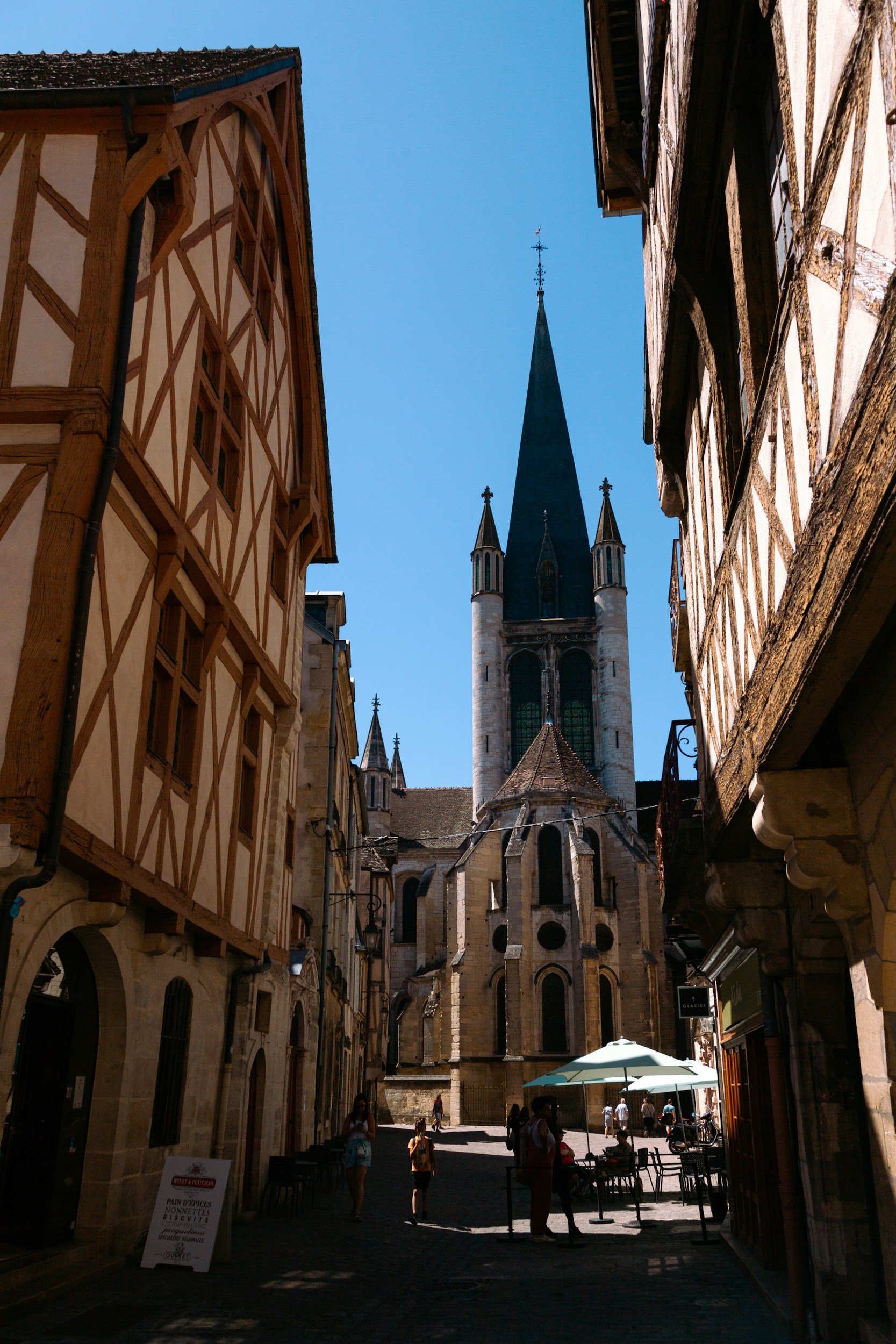
Regional trains in France work much better in some areas than others, and these castle towns are some of the few places where travelling without a car still feels genuinely relaxing.
The mistake people make trying to stay in too many Burgundy towns without a car
One of the most common mistakes people make when planning a car-free Burgundy trip is trying to stay in too many different towns. Looking at a map, it's easy to see why. Dijon, Beaune, Chalon-sur-Saône, Tournus and Mâcon all sit along the same railway line, and the train journeys between them are often surprisingly short. Dijon to Beaune can take less than 25 minutes, while Beaune to Chalon-sur-Saône isn't much longer. Before long, you've built an itinerary that looks wonderfully efficient, with two nights here, two nights there and another stop squeezed in before heading home.
The problem is that Burgundy rarely unfolds in the neat, efficient way people imagine when they're planning it.
This isn't a region where most days revolve around major attractions and packed sightseeing schedules. A Saturday morning at Beaune market can easily stretch into lunch, especially once you've started browsing the stalls around Place de la Halle and the surrounding streets. A wine tasting in Meursault that was supposed to take an hour turns into an entire afternoon. You stop for coffee in Dijon near Place François Rude and realise you've spent far longer there than intended simply watching the city wake up around you. The people who seem happiest in Burgundy are usually not the ones rushing to catch another train.
Dijon is often the place where this becomes obvious. After arriving from Paris, you can walk from Dijon-Ville station towards Place Darcy in a matter of minutes and quickly find yourself among bakeries, cafés, supermarkets, wine bars and the pedestrian streets leading towards Les Halles. If you've forgotten something, there is a Monoprix nearby. If your train is delayed, finding dinner isn't difficult. If the weather turns bad, there are plenty of places to spend a couple of hours without having to rethink the entire day. None of this sounds particularly exciting when you're booking a trip, but after several hours on trains, that simplicity feels like a luxury.
Beaune tends to have the opposite effect. It is often the town where people realise they should have booked an extra night. On paper, it looks small. The station sits within walking distance of the historic centre, the main sights appear close together, and many first-time visitors assume they can comfortably see everything in a day. Then they arrive and discover that Beaune isn't really a place people rush through. A morning can disappear between the market stalls and wine shops. Lunch lasts longer than planned. A tasting appointment near Rue d'Enfer or around the streets close to the Hôtel-Dieu takes up most of the afternoon. By the time evening arrives, the idea of packing a suitcase and moving on the next morning suddenly feels less appealing.
The atmosphere changes noticeably once many of the day visitors leave. Around Place Carnot and Rue Monge, restaurant terraces remain busy during summer evenings, while the smaller lanes behind them become unexpectedly quiet. One of the nicest parts of staying in Beaune for several nights is seeing that transition happen. During the middle of the day the centre can feel busy and energetic, but later in the evening it settles into something much calmer. That slower side of Beaune is often what people remember most, yet it's also the side many visitors never really experience because they only stay long enough to tick off the main sights.
The same thing happens in the wine villages. A lot of guides make places like Meursault, Pommard, Volnay and Puligny-Montrachet sound easy to combine in a single day without a car. Technically they are. The challenge is that these villages are at their best when you aren't constantly watching the clock. Meursault, for example, is not somewhere people fall in love with because they spent forty-five minutes there before catching the next train. It's the village square, the quiet streets lined with stone houses, the long lunch that wasn't supposed to be long, and the tasting that turns into a conversation. Burgundy generally rewards people who leave space in their plans far more than those trying to squeeze in one extra stop.
Tournus highlights another side of travelling through Burgundy without a car. Arrive on a sunny weekday afternoon and it feels wonderfully straightforward. The streets around Abbaye Saint-Philibert are pleasant to wander, the centre is compact, and most things are within walking distance. Arrive on a Sunday evening, however, and you quickly understand why choosing the right base matters. Restaurants that were busy at lunchtime may already be closed. Smaller grocery shops have shut for the day. The station area feels much quieter than somewhere like Dijon. There is nothing wrong with that, but it can come as a surprise if you're expecting every town in Burgundy to function in the same way.
That pattern appears throughout much of the region. Outside the larger towns, Sundays and Mondays can feel noticeably quieter than many international visitors expect. In wine-producing areas, lunch often remains the most important meal of the day, and some restaurants still focus much more heavily on midday service than evening dining. People arriving late sometimes assume they have chosen the wrong town when the streets feel quiet. More often than not, they're simply seeing Burgundy as locals experience it.
Even the railway stations tell a story. Dijon-Ville feels busy throughout the day, with people constantly coming and going. Beaune station is smaller and calmer. Chalon-sur-Saône is practical but not somewhere most people spend much time after arriving. Smaller TER stations between towns can feel almost empty between train arrivals, particularly during autumn and winter, which makes missed connections feel far more noticeable than they would in larger cities.
Weather has a habit of amplifying these differences. A rainy afternoon in Dijon is easy enough to fill because cafés, wine bars, museums, Les Halles market and shops all sit close together. The same weather in a smaller town can completely change the day, particularly if you've planned to spend time walking between vineyards or if your hotel sits further from the centre than expected. Burgundy is perfectly possible without a car, but it tends to reward slower travel and fewer hotel changes.
For most first-time trips, Dijon and Beaune usually make the strongest combination because they complement each other so well. Dijon provides the energy, transport connections and city life, while Beaune offers easy access to wine country and a slower pace. Travellers arriving through Lyon often find that Beaune and Mâcon work equally well, particularly if their focus is southern Burgundy rather than the Côte de Nuits.
The itineraries that look best while you're sitting at home with Google Maps open are not always the ones you'll enjoy most once you're actually there… Most people come to Burgundy looking for a slower trip, but it's surprisingly easy to spend half the week moving between hotels and watching train departure boards.
The funny thing is that the moments people remember afterwards are rarely the ones they planned most carefully. They're sitting in Beaune an hour longer than intended because lunch drifted into the afternoon. They're leaving a wine tasting in Meursault and deciding there's no reason to rush back just yet. They're carrying a bag of market purchases through Dijon and realising dinner has already sorted itself out.
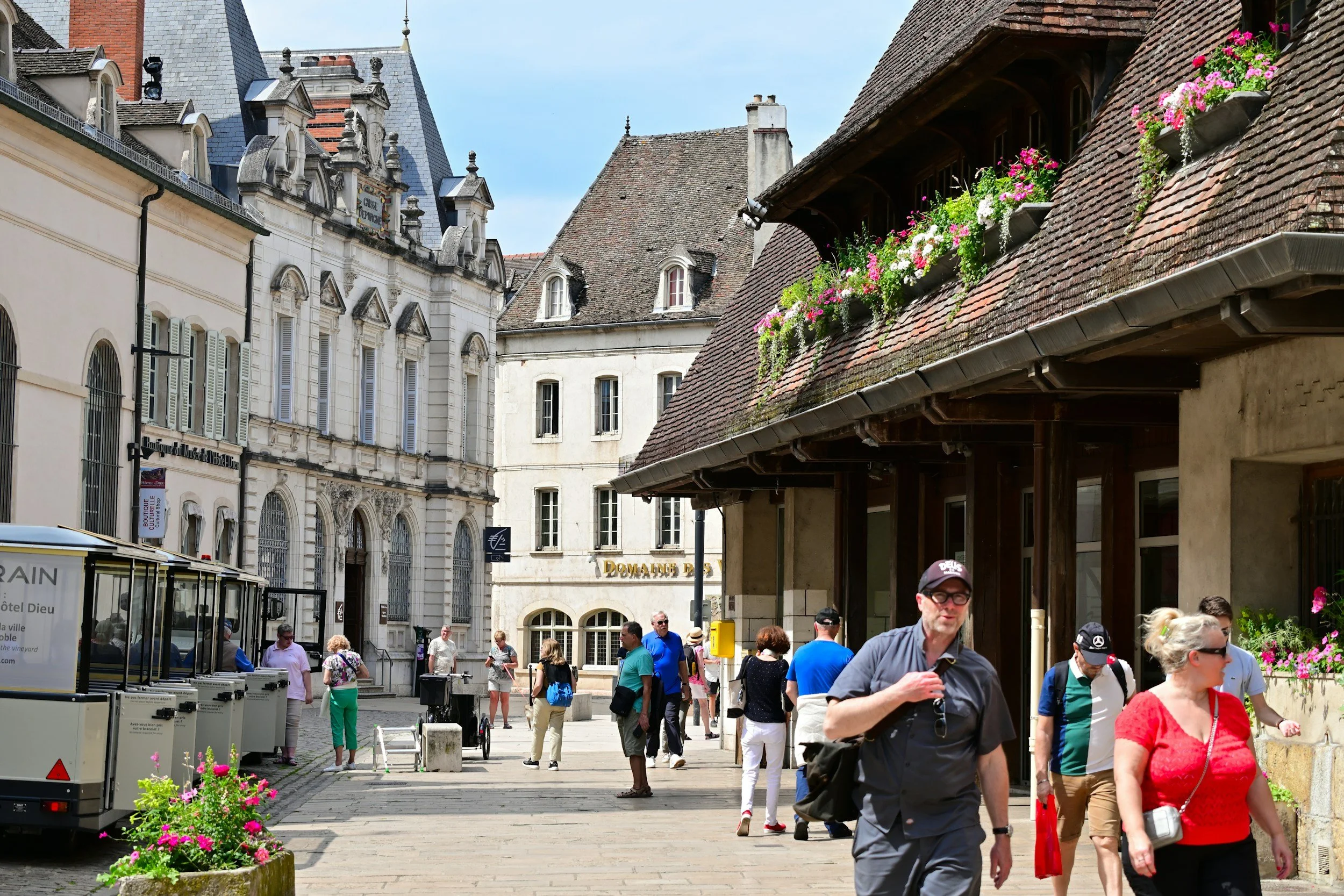
Trying to work out whether Dijon is actually worth using as a base or if somewhere smaller makes more sense? This Semur breakdown makes the trade-offs very clear very quickly.
Why Burgundy feels very different on Sundays if you're relying on TER trains
If you're travelling around Burgundy by train, Sunday is often the day that changes the shape of the trip, and not necessarily because of anything happening on the railway itself.
Looking at the TER timetable from home, everything usually seems straightforward enough. The trains between Dijon, Beaune, Chalon-sur-Saône and Mâcon are still running, the distances are short compared to many other regions in France, and it is very easy to convince yourself that Sunday might actually be the perfect day to squeeze in one more town before heading home.
Then you arrive and realise that Burgundy is having an entirely different kind of Sunday.
Spend a Saturday morning in Beaune and the centre feels busy almost from the moment the cafés open. People move between the market around Place de la Halle and the terraces on Place Carnot, bakery queues form and disappear throughout the morning, and there is a steady stream of visitors making their way towards the Hôtel-Dieu before disappearing down side streets lined with wine merchants and independent shops. Even if you don't have any particular plans yourself, there is enough going on that you naturally end up walking a little further than intended just to see what is around the next corner.
Sundays are different vibe.
Sit down somewhere on Place Carnot around lunchtime and the first thing you'll probably notice is how little the scene changes over the next couple of hours. The same groups remain at the same tables, conversations continue, coffee cups replace wine glasses and nobody seems especially eager to call for the bill. A table that looked ready to leave half an hour ago is still occupied, while another group has somehow turned a simple lunch into an entire afternoon. It's not something that immediately stands out when you arrive, but after a while you start realising that many people aren't fitting lunch into their day. Lunch is their day.
What makes Burgundy slightly awkward for train travellers is that this is often the exact moment when the timetable starts whispering that it's time to move on.
The journey to Dijon is short. Chalon-sur-Saône is easy to reach. Mâcon is perfectly manageable. Looking at a map, it all seems close together. Yet while you're checking departure times and wondering whether there is enough time to fit in another stop, much of the region has already made its decision about how the afternoon will be spent.
People stay where they are, and by four or five o'clock, Beaune has usually become much quieter, although not in the way guidebooks often describe. It's not that the town suddenly empties. It's more that the movement disappears. Earlier in the day there are people arriving, leaving, shopping, photographing buildings and wandering between attractions. Later in the afternoon, many of the tasting rooms around Rue Maufoux have closed, the crowds around the Hôtel-Dieu have thinned out considerably and some of the smaller streets behind Place Carnot can feel surprisingly calm compared with only a few hours earlier.
It's actually one of my favourite times to walk around Beaune.
The centre feels less like a destination and more like a town again. You notice details that are easy to miss when the streets are busy, whether it's the sound of cutlery drifting out from a restaurant courtyard, the shutters opening above a wine shop or somebody cycling home through streets that looked crowded all morning.
Dijon tends to absorb Sundays more easily because it is simply a larger city. Around Place de la Libération, Rue des Forges and Place Émile Zola, there are usually enough people lingering over late lunches, afternoon drinks and evening meals that the city never really feels as though it has paused. If plans change or a train is delayed, there is rarely any difficulty finding somewhere pleasant to spend another hour.
Tournus, for example, can feel lively around lunchtime when the terraces near Abbaye Saint-Philibert are busy and visitors are still exploring the historic centre, but return later in the day and the atmosphere shifts noticeably. The same applies to places like Chagny or some of the smaller stations further south. Depending on the weather and the season, you can step off a train expecting to find a bustling wine region and instead find yourself standing on a remarkably quiet platform wondering where everybody has gone.
The answer, more often than not, is lunch!
One thing that rarely gets mentioned in Burgundy travel guides is how much of Sunday still revolves around gathering around a table. Not in a romanticised way and not because Burgundy is somehow frozen in time, but simply because that is how many people choose to spend the day. Lunch stretches into the afternoon, conversations continue long after the plates have been cleared and there is very little sense that anyone needs to rush off to the next activity.
That's one of the reasons I would never plan an ambitious train itinerary for a Sunday in Burgundy. A long lunch in Beaune, a slow afternoon wandering through Dijon or a couple of hours sitting outside with a glass of local wine often ends up feeling far more connected to the region than ticking another town off a list simply because there happens to be a train that gets you there.
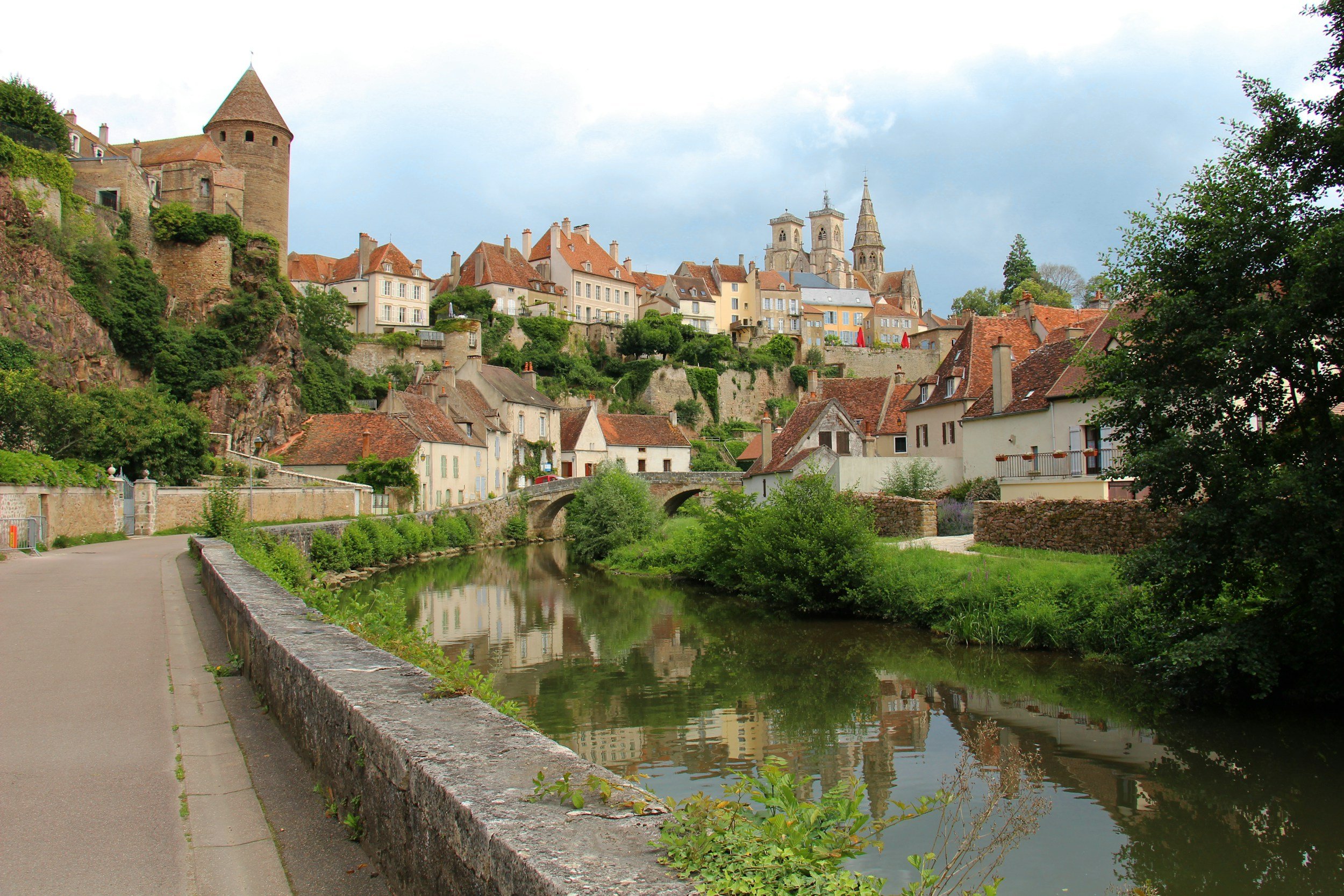
If you’re starting to realise Burgundy works much better from one practical base instead of dragging luggage between tiny wine villages every other day, these train towns make the rest of France feel much easier too.
The months when Burgundy is surprisingly easy without a car (and when it becomes frustrating)
Burgundy changes quite a lot throughout the year if you're relying on trains to get around, and it's one of those things that doesn't become obvious until you're actually there.
On paper, the region looks fairly straightforward. The train lines are the same whether you visit in February or September, Dijon and Beaune don't suddenly move further apart and most of the practical information you'll find online applies throughout the year. What changes is everything around those train journeys.
September tends to be the month when travelling around Burgundy feels easiest without really having to think about it. The summer crowds have started thinning out, but the towns still feel busy, restaurants are still operating on summer schedules and there is enough daylight left at the end of the day that arriving somewhere new never feels rushed. You can spend longer than planned over lunch, miss the train you originally intended to catch and still feel like you have most of the day ahead of you.
There is also more going on across the region than many visitors expect. You notice it from the train window as much as anywhere else. Tractors move between vineyards, workers are out in the fields from early morning and places that can feel fairly quiet during winter suddenly have people around. Even villages that don't have a station of their own seem busier.
The only drawback is that you're definitely not the only person who has realised September is a good time to visit. Finding somewhere to stay in Beaune can become surprisingly expensive, especially if you're booking late.
Late May and June are usually the months I recommend to people who want to travel slowly around Burgundy without a car.
A lot of that comes down to daylight. It sounds like a small thing, but it makes a huge difference. You stop looking at the clock quite so much. If you decide to stay another hour in Dijon or take a longer lunch than planned in Chalon-sur-Saône, it doesn't throw off the rest of the day. The whole trip becomes more relaxed because there is simply more time available.
The weather helps too. Burgundy is very walkable without a car, but you end up walking more than many people realise. Stations are not always right beside the historic centres, hotels are not always next to the station and it is surprisingly easy to spend an entire day moving around on foot. In June, those walks are usually pleasant. In the middle of winter, they can feel considerably less charming.
July and August are slightly more complicated.
People often assume summer must be the easiest time to visit, but there are afternoons when parts of Burgundy become remarkably quiet because it is simply too hot to do very much. You can arrive somewhere expecting lively streets and find half the town sitting indoors waiting for the temperature to drop a little. August can also bring the occasional surprise closure, particularly in smaller towns where family-run businesses take holidays of their own.
That said, summer evenings are lovely. Outdoor tables spread into squares and side streets, dinner starts later and there is never much pressure to get somewhere before dark. Travelling between towns feels easier when daylight stretches well into the evening.
October is when you start noticing the days getting shorter.
Not dramatically at first. Then suddenly you realise that a train you would have happily taken a month earlier now gets you into town after sunset. Burgundy is still beautiful at this time of year and the vineyards attract plenty of visitors, but the season feels different. Smaller towns quieten down earlier and there is less room for spontaneous decisions once the evenings become shorter.
By November, the difference between Dijon and the rest of the region becomes much more noticeable.
Dijon carries on pretty much as normal. Cafés are busy, the tram network keeps everything moving and bad weather rarely changes your plans very much. Smaller towns feel more seasonal. Not closed, not deserted, just quieter. You notice it most in the late afternoon when the streets empty out earlier than they did only a few weeks before.
January and February are the months when travelling without a car requires the most patience.
The trains are still there. The towns are still there. Burgundy doesn't suddenly stop working. The difference is that little inconveniences start adding up. A rainy day matters more. Waiting for a connection feels less enjoyable. Walking twenty minutes with luggage feels longer than it did in June. The practical side of travelling starts demanding more attention than it does during the warmer months.
Then March arrives and things become unpredictable again.
Some years it still feels like winter. Other years people are sitting outside with a coffee on the first warm weekend and it suddenly feels as though the whole region has woken up. That's part of the reason March is difficult to describe. It can feel completely different depending on the weather you happen to get.
If I was planning a first trip to Burgundy without a car, I'd probably aim for somewhere between late May and September simply because everything feels easier and more flexible. Not because the trains are better, but because the region itself becomes easier to enjoy when you're not constantly thinking about daylight, weather and logistics.
If you're wondering whether Tournus is actually worth stopping for or if it's just another pretty station town between Lyon and Dijon, worth a stop? might save you a wasted afternoon.
What starts feeling inconvenient after 3–4 days without a car
The first few days in Burgundy without a car are usually easier than people expect.
You arrive in Dijon, walk out of the station and realise that most of what you want to see is within walking distance. The historic centre is compact, the tram system fills in the gaps when your feet need a break and there are enough cafés, markets and restaurants spread around the city that you never spend much time thinking about transport at all. Beaune creates a similar first impression. The station sits close enough to the centre, most visitors spend their time within a relatively small area and for a few days it feels perfectly reasonable to base yourself there and rely entirely on trains.
What changes isn't Burgundy itself. It's your curiosity.
After a few days, most people have already seen the places they originally came for. They've wandered through the centre of Dijon, spent time in Beaune, sat through a tasting or two and taken a couple of easy train journeys. That's usually when conversations start sending them in completely different directions. Someone recommends a producer outside Saint-Aubin. A shop owner mentions a village you've never heard of. You catch sight of a church tower from the train window and find yourself wondering what the town around it is actually like.
The longer you stay, the more Burgundy encourages those kinds of detours.
What looks simple on a map starts becoming slightly more complicated in practice. Villages such as Auxey-Duresses, Saint-Romain or Meloisey don't look particularly far from Beaune, and technically they aren't. The challenge is that reaching them often means piecing together a mixture of walking, taxis, cycling or planning your day around the limited transport options that happen to be available. None of it is difficult enough to ruin a trip, but after several days you start noticing how often you're making those calculations.
And it's rarely the big journeys that become frustrating - it's the accumulation of small things. Wondering whether a taxi will actually be available later in the afternoon. Deciding if you want to carry a couple of wine bottles around for the next three hours. Realising you've found a restaurant you'd genuinely like to visit and then discovering it sits just far enough outside town to make the logistics awkward without a car.
Weather has a habit of exposing those inconveniences quite quickly. On a warm June afternoon, walking a little further than planned hardly feels like a problem. A few days later, if it's raining steadily and you're dragging luggage across town before catching a train, the same distance suddenly feels much less appealing. Burgundy isn't difficult without a car, but it definitely becomes easier to appreciate on good-weather days.
Something else happens after four or five days that most guides never talk about.
At the beginning of a trip, visitors are focused almost entirely on experiences. They're looking for wine tastings, historic streets, good restaurants and beautiful views. A week later, they're often looking for completely different things. Somewhere to buy groceries. Somewhere to do laundry. A café where they can sit with a laptop for an hour. A pharmacy. A quieter part of town where daily life feels a little more visible.
This is one of the reasons Dijon works so well for longer stays. Once the sightseeing is done, the city continues functioning as a city. People are commuting, shopping, meeting friends and getting on with their day, and that becomes surprisingly valuable when you've been travelling for a while. Beaune feels different. It's a lovely place to spend time, but after several days you begin noticing how much of the centre revolves around visitors, particularly outside harvest season when evenings can become quieter than many people expect.
Food is another area where longer stays change the experience.
For a weekend, Burgundy's approach to dining is wonderful. For a week or more, it can occasionally feel restrictive. You stop wanting every meal to revolve around wine pairings or multi-course menus and start looking for something simple on a random Tuesday evening. In smaller towns, particularly outside the busiest months, that isn't always as easy as visitors assume.
And this is usually the point where having a car starts making more sense.
Not because Dijon or Beaune suddenly stop working without one, but because the places that start attracting your attention are no longer the places sitting next to train stations. They're the small producers tucked away down country roads, the villages that don't appear on most Burgundy itineraries and the restaurants that locals mention casually in conversation without thinking about how somebody might actually get there.
That's the part of Burgundy many visitors discover after a few days, and it's also the point where travelling without a car becomes slightly less effortless than it felt when they first arrived.
A lot of people rush straight from Paris to Lyon, but these small towns are the reason I'd slow the journey down.
Why Dijon works best for first-time Burgundy trips without a car
A lot of first-time visitors spend ages trying to decide whether they should base themselves in Dijon or Beaune, but after spending time in both, Dijon is usually the place that makes the practical side of a Burgundy trip disappear into the background.
Part of that comes down to how easy the arrival feels. After stepping off a train from Paris, you can leave Dijon-Ville station and be walking through the centre a few minutes later without really having to think about transport at all. There is no moment where you're standing outside the station trying to work out a bus route, looking for a taxi rank or dragging luggage across half the city. You simply follow the flow of people towards Place Darcy and before long you're in the middle of cafés, shops and restaurants.
What I like about the area between Place Darcy, Rue Musette, Les Halles and Place François Rude is that it feels like a part of the city people actually use rather than a historic centre that exists mainly for visitors. Early in the morning you'll see people picking up bread on their way to work, delivery drivers trying to squeeze through narrow streets that were never designed for modern traffic and market traders setting up around Les Halles. Later in the day, shoppers drift in and out of wine stores, students sit outside cafés and locals stop for a quick coffee before heading elsewhere. None of this sounds particularly remarkable, but after spending time in smaller Burgundy towns it becomes surprisingly refreshing to stay somewhere that continues functioning as a normal city throughout the day.
That makes a bigger difference than many people realise once the novelty of sightseeing starts wearing off.
For a weekend, almost anywhere in Burgundy feels manageable. For four or five days, little practical things start becoming important. You want somewhere to buy fruit for the train the next morning. You need a pharmacy. You want a supermarket that doesn't require a twenty-minute walk in the wrong direction. In Dijon, all of those things are sitting alongside the attractions rather than somewhere on the outskirts of town.
Les Halles is probably the best example of that. Most people visit because it's famous, but after a few days it becomes useful in a much more ordinary way. One morning you might stop for coffee and pick up something for lunch later. The next day you grab bread, cheese and fruit before catching a train further south. It gives you options, which is something people often underestimate when planning longer trips around Burgundy.
The city also handles bad weather much better than most places in the region. If you've spent a few days travelling around Burgundy, you'll quickly notice how much easier everything becomes when the weather cooperates. In Dijon, a rainy afternoon rarely changes your plans very much because there is always somewhere nearby to duck into, whether that's a café near Rue des Forges, a wine bar around Place Émile Zola or simply a covered market where you can wander around for a while. Smaller towns can feel completely different. One afternoon of steady rain and suddenly the list of things you'd happily do shrinks quite quickly.
Evenings are another reason Dijon works well as a base. The city stays lively without feeling hectic. People linger over drinks, restaurants remain busy and there is enough activity on the streets that coming back from dinner never feels like you're returning to a town that has already gone to bed. At the same time, it rarely feels noisy or overwhelming, which is something many travellers appreciate after spending all day moving between trains, stations and sightseeing stops.
That's really why Dijon works so well for a first Burgundy trip without a car. It's not necessarily the most beautiful place in the region, and it doesn't have the vineyard atmosphere people often picture when they think about Burgundy, but it removes a lot of the small logistical annoyances that can otherwise take up space in your day. Everything you need is close by, regional trains are easy to reach and the city feels lived-in enough that spending a week there never feels repetitive.
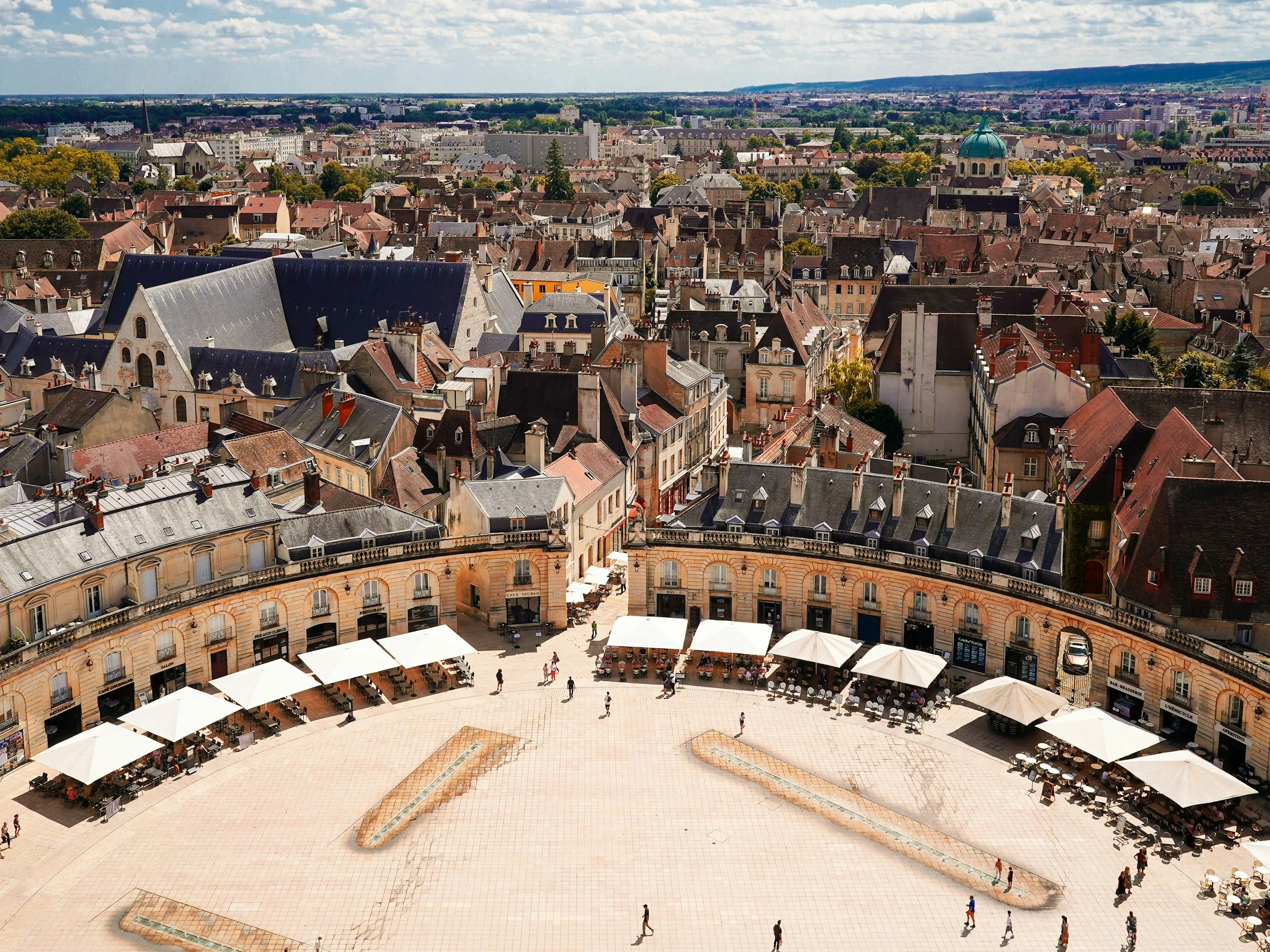
Why I’d stay near Les Halles instead of Dijon station
A lot of first-time visitors book a hotel beside Dijon-Ville station because it seems like the sensible option. If you're arriving from Paris on an evening train and leaving early a few days later, being able to walk straight from the platform to your room sounds hard to argue with.
And for the first evening, it probably is, as the area around Avenue Foch does exactly what it needs to do. There are hotels, trams passing every few minutes, people coming and going with suitcases and enough places to grab something quick to eat if you've arrived later than planned. It's convenient, but after spending a few days in Dijon you start realising that most of your time isn't actually spent there.
You walk towards Place Darcy, continue a little further and the city begins feeling different almost without noticing exactly where the change happens.
Around Rue Musette, the pace slows down. People stop to talk outside cafés. Tables spill onto the pavement. Someone emerges from a bakery carrying a paper bag that's still warm, while a few doors further along, waiters are already setting up for the evening service. By the time you reach Les Halles and the streets around Place François Rude, it feels less like a station district and more like a neighbourhood people genuinely spend time in whether they're visitors or not.
That's usually the part of Dijon people end up returning to every evening.
Not because there is one particular attraction there, but because everything sits close together in a way that makes the city easy to enjoy. You can stop for a glass of wine, wander through a few streets, change your mind about where to eat and still end up somewhere good without much planning. After a day spent on regional trains or exploring other parts of Burgundy, that starts becoming far more valuable than being five minutes closer to the station.
The difference is noticeable in the mornings too. Around Dijon-Ville, most people are heading somewhere. Around Les Halles, people seem to be settling into the day. Market traders are unloading produce, bakery queues form before the cafés have fully filled up and restaurant staff are already moving tables around outside long before lunch begins. If you're staying for more than a night or two, those small routines become part of the experience.
The market itself changes the rhythm of the area throughout the week. One morning you might walk through Les Halles on your way for coffee and end up leaving with fruit, cheese and something for lunch later on. Another day, you find yourself lingering longer than planned because half the city appears to have had the same idea. It adds a layer of everyday life that can be harder to find around the station district, where most people are simply passing through.
The practical side doesn't really change much either. That's what surprises many visitors. Stay around Rue Musette, Place Bossuet or somewhere near Les Halles and you're still within easy walking distance of Dijon-Ville station. Unless you're arriving during a downpour or hauling several heavy suitcases, the extra few minutes are barely noticeable.
What you do notice is where you spend your evenings.
Most people don't finish dinner and head back towards Avenue Foch. They drift through the streets around Place Émile Zola, stop for another drink somewhere near Rue des Forges or sit outside near Place François Rude long after the plates have been cleared away. By the end of the trip, those are usually the places they remember.
Not the station. Not the tram tracks. Not the hotel they booked because it looked convenient.
The streets where they ended up spending their time instead.
Morning TER departures from Dijon that make day trips realistic without rushing
One thing Dijon gets right is that your day doesn't have to start particularly early just because you're planning to take the train somewhere.
In some parts of France, travelling without a car can feel as though the first departure of the morning dictates everything that follows. Miss it and suddenly lunch plans, reservations or half the day's itinerary need rethinking. Dijon rarely feels that fragile. The trains south towards Beaune, Chalon-sur-Saône and Mâcon run frequently enough that most mornings can begin at a normal pace rather than feeling like a race against the clock.
That's especially noticeable if you're staying somewhere around Les Halles, Rue Musette or Place Bossuet. Instead of rolling out of bed and heading straight for the station, there's usually time to wander out for coffee, pick up something from a bakery and ease into the day before thinking about train departures at all. By eight o'clock, the city is already awake. Deliveries are arriving, café terraces are filling up and people are making their way through the centre on foot or by bike. Walking to Dijon-Ville station feels less like a transfer and more like part of the morning.
The station itself rarely feels dominated by visitors. Most of the people waiting on the platforms seem to be getting on with their normal routines. You'll see students staring into their phones, commuters carrying takeaway coffee and people heading off with shopping bags rather than suitcases. Compared with stations in more tourist-heavy destinations, it feels surprisingly ordinary.
The journey south is part of the appeal as well. Leaving Dijon, the city disappears quickly and the landscape begins changing almost immediately. Depending on the season, the view from the train might be rows of vines, fields stretching towards the horizon or small villages clustered around church towers. On some mornings, particularly in early autumn, there can still be low mist hanging over parts of the Côte d'Or as the train passes through.
What makes these day trips work so well is that they leave room for changing plans.
You can spend longer in Beaune than expected, decide to stop somewhere for lunch without checking the time every ten minutes or miss the train you originally planned to catch home without feeling as though the entire day has unravelled. Some of the most enjoyable days in Burgundy tend to develop that way. A coffee turns into a longer break, lunch stretches further into the afternoon than intended or you end up browsing a wine shop for half an hour after telling yourself you were only going in for a quick look.
Dijon makes those small detours easier because getting back is rarely complicated. There is a reassuring difference between knowing you must catch a specific train and knowing another one will be along before too long. After a few days in the region, that's often what people appreciate most about using Dijon as a base. The trains are there when you need them, but they don't end up dictating every decision you make throughout the day.
The Burgundy villages easiest to reach from Dijon without arranging taxis
One thing that becomes obvious quite quickly in Burgundy is that train access and easy access are not always the same thing.
A place can look straightforward on a map, have a station nearby and still turn into a surprisingly complicated day once you start adding buses, taxi numbers, walking distances and train schedules together. That's why some villages end up working much better than others if you're staying in Dijon and relying entirely on public transport.
The places that tend to work best are usually the ones where transport stops being something you think about after you've arrived.
Pommard is a good example. Getting there feels like a natural extension of a day in Beaune rather than a separate journey that needs organising. You arrive in Beaune, spend some time in town and then continue south, gradually leaving behind the busiest streets until the vineyards start taking over. The shift happens quite quickly. One minute you're passing cafés and wine shops, the next you're walking past stone walls, cellar doors and signs pointing towards producers hidden further up small lanes.
What makes Pommard work so well isn't that there's a huge amount to do. It's that you don't spend the entire day thinking about logistics. You can have lunch, visit a producer, wander through the village and head back whenever you're ready without feeling tied to a specific timetable.
Meursault takes a little more commitment, but that's partly why people end up enjoying it.
It's the sort of place that rewards slowing down rather than trying to squeeze it between other stops. Once you're there, the centre is compact enough that most people spend the day on foot anyway. You'll see delivery vans edging through narrow streets, cyclists arriving from neighbouring villages and groups lingering outside restaurants long after lunch has started. There isn't much pressure to keep moving because the village itself isn't really built around constant movement.
Chagny is often overlooked altogether, which is a shame because it works remarkably well for train travellers. The station sits close enough to the centre that you can step off the train and be ordering a coffee a few minutes later without needing to think about transport again. That sounds like a small thing, but after spending several days navigating stations and train schedules, it becomes surprisingly valuable.
Santenay is another place that tends to work better in reality than it does on paper. Many visitors try to fit it into a larger itinerary and end up rushing through. It feels much more enjoyable when you give yourself time to wander a little, stop for lunch and accept that you might not see everything in one afternoon. Burgundy generally rewards that approach.
The villages that become frustrating are usually the ones sitting just beyond the easy transport network. Looking at a map, some of the villages deeper in the Hautes-Côtes don't appear particularly remote, yet reaching them without a car can involve far more effort than many visitors expect. A short distance suddenly becomes a train journey, a search for a taxi and a long uphill walk, all before you've actually started exploring.
That's usually where expectations and reality part ways in Burgundy.
The places that work best from Dijon aren't necessarily the most famous villages or the ones producing the most celebrated wines. They're often the places where you can arrive, put your phone away and spend the rest of the day thinking about where to have lunch rather than how you're going to get back to the station.
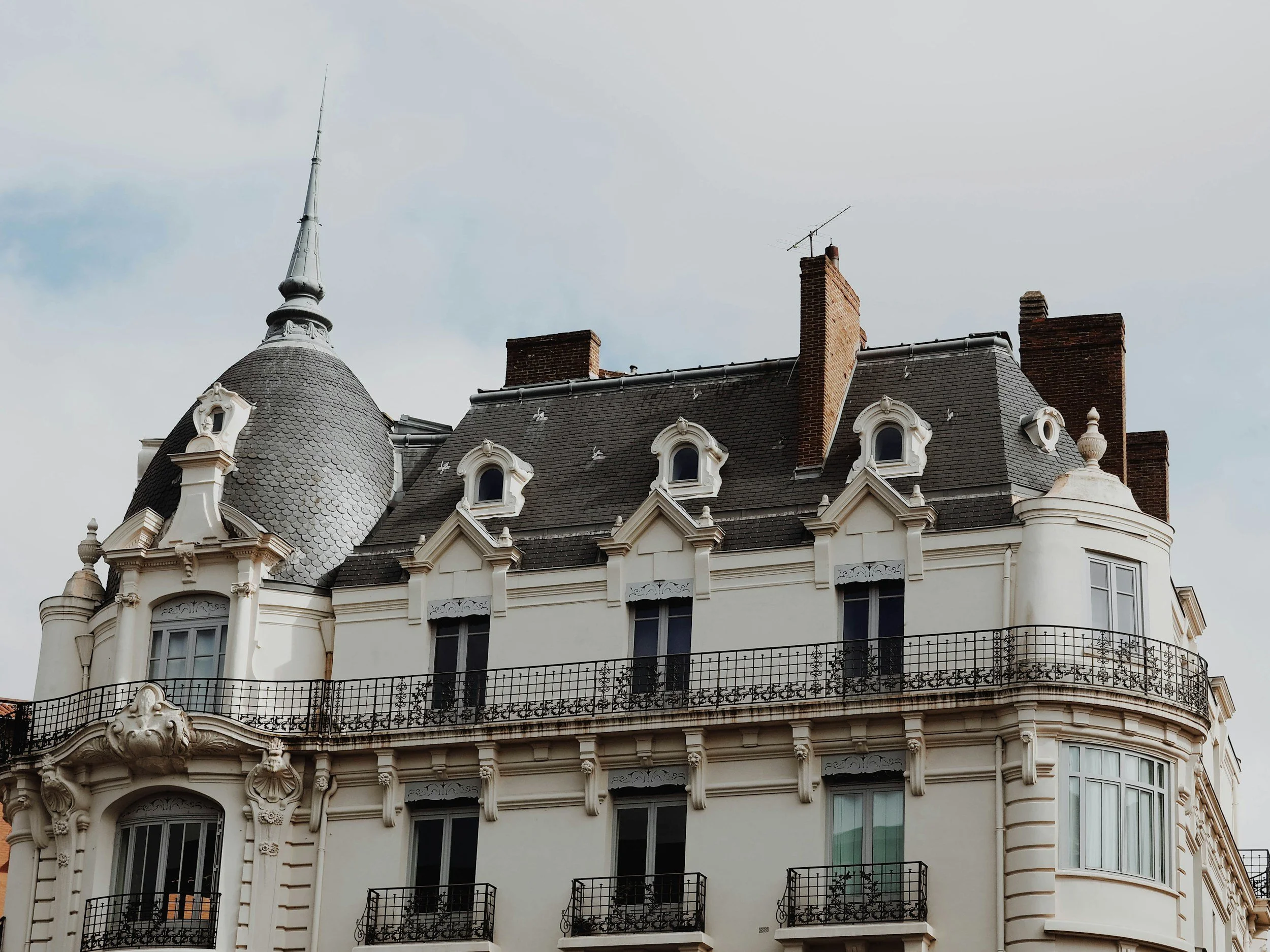
Why Dijon works better than Beaune if you’re arriving late from Paris
A lot of people start planning a Burgundy trip by looking at Beaune first.
It makes sense. Most Burgundy itineraries seem to revolve around Beaune, the wine villages sit right on its doorstep and the photos of the old centre make it look like exactly the place you should arrive in after leaving Paris.
The reality is that arrival day and sightseeing day are often two completely different things.
If your train rolls into Burgundy at two o'clock in the afternoon, Beaune is lovely. If you're arriving closer to nine in the evening after crossing Paris, dealing with Gare de Lyon and possibly sitting through delays somewhere along the way, Dijon starts becoming a much easier place to land.
Step out of Dijon-Ville station and you're immediately in a part of the city that still feels awake. Trams are moving through Place Darcy, people are sitting outside around Rue de la Liberté, and if you've suddenly realised you haven't eaten since lunchtime, finding dinner isn't something you need to think too hard about. The walk towards Rue Musette and Place François Rude takes you past bakeries, cafés, pharmacies and convenience stores that are still serving the people who actually live in the city rather than just visitors passing through.
Beaune feels completely different at the same hour.
The walk from the station isn't difficult, but it feels much quieter, particularly outside summer and harvest season. You'll usually pass a few travellers heading towards hotels near the ramparts and the occasional couple walking back from dinner, but compared to Dijon there is noticeably less movement. Once you reach the historic centre, the restaurants around Place Carnot are still busy, yet the town has already started settling into the evening.
I think that's what catches some people off guard.. When you're looking at Burgundy online, Beaune often appears lively because most photos are taken during market days, summer weekends or harvest season. Arrive on a Tuesday evening in November and you'll experience a completely different version of the town.
Dijon doesn't really have that problem.
The city is large enough that there is always something happening around Place Darcy, Rue des Forges, Place Émile Zola or the streets leading towards Les Halles. You don't need to arrive with a restaurant reservation, a detailed plan or even much energy. If your train from Paris was delayed, you can simply drop your bags and sort the rest out afterwards.
That's usually why I recommend Dijon as the first stop and Beaune as the second. Beause by the time you move down to Beaune, you're already in the rhythm of Burgundy. You've done the long travel day, you've stopped worrying about train changes and luggage, and suddenly the quieter evenings that might have felt inconvenient on arrival day become part of the reason you're there in the first place.
The cafés around Place François Rude that still feel busy outside tourist season
Place François Rude is one of the few parts of Dijon that doesn't seem to change quite as dramatically once summer ends.
The weather certainly does. By November, people are pulling coats tighter around themselves while crossing the square, and there are plenty of winter mornings when the wind seems determined to find its way down every street leading into the centre. Even then, the cafés around the square rarely feel empty for very long.
Around 08:30, most of the tables are occupied by people who look as though they have somewhere else to be shortly afterwards. Coffee and Muffin is busy with regulars grabbing an espresso before heading towards Rue de la Liberté, while a few of the terrace tables outside Café Gourmand are already occupied despite temperatures that probably don't justify sitting outdoors. Delivery vans inch through Rue Musette, restaurant staff wrestle crates and supplies across the square, and the whole area feels as though it's gradually waking up rather than suddenly opening for business.
A couple of hours later, Les Halles starts spilling into the surrounding streets and the atmosphere changes again. People emerge carrying market bags loaded with vegetables, flowers, cheese and whatever looked too good to leave behind. Someone is balancing a roast chicken under one arm, somebody else is trying to carry oysters and a baguette at the same time, and outside Mulot & Petitjean there always seems to be at least one person standing in front of the window trying to decide whether they really need pastries as well.
What I like about this part of Dijon is that the day doesn't seem to have a clear pause button.
In smaller Burgundy towns, there can be a noticeable lull between lunch and the start of the evening. Beaune often feels like that during winter. The lunch crowd disappears, chairs sit empty for a while and the centre takes a breath before people return later for apéro and dinner.
Around Place François Rude, the flow never really stops.
Students occupy café tables for far longer than one coffee should reasonably justify. Friends meet after work around Place Grangier. The wine bars near Rue Amiral Roussin gradually become busier without any obvious moment when the transition happens. Even on a cold weekday afternoon, there is usually enough movement that the area still feels connected to the rest of the city rather than existing purely for visitors.
Rain probably shows this side of Dijon better than sunshine does! When the weather turns, people don't disappear. They simply move a few metres indoors! Café windows fog up, umbrellas accumulate in corners and conversations get slightly louder as everybody squeezes a little closer together. Outside, trams continue rattling towards Darcy and people continue crossing the square carrying market bags under their coats as though the rain was an inconvenience they expected all along.
After a few days in Burgundy, those ordinary moments start mattering more than most visitors expect. The restaurants, wine bars and market stalls are still there, but what makes somewhere comfortable for a longer stay is knowing that at four o'clock on a wet Tuesday there will still be somewhere open, somewhere warm and somewhere with enough background noise that you don't feel as though you've wandered into a town waiting for the day to end.
By early evening, the tables start looking different again. Coffee cups disappear, glasses of Burgundy begin appearing in their place and groups gather outside bars near Rue des Forges discussing whether they're going home while making absolutely no effort to leave. Around Place Émile Zola, restaurant terraces gradually fill up, and even in the middle of winter the centre rarely gives the impression that it's winding down completely.
That's probably why so many people end up gravitating back to this part of Dijon. Not because there is one particular café everyone should visit, but because the square keeps finding new ways to feel useful throughout the day.
Which Dijon wine bars stay lively after 19:00 even midweek
One thing that surprises people about Dijon is how normal a Wednesday evening feels.
In a lot of Burgundy towns, especially once summer is over, you can almost feel the day winding down after dinner. Dijon never really seems to do that. Around Rue Amiral Roussin, Rue des Forges and the streets linking Place François Rude with Place Émile Zola, people are often only just settling in around seven o'clock.
Dr Wine is usually one of the first places where you notice it. Earlier in the evening, you'll see people stopping for a quick drink after work, but by 19:30 the atmosphere has usually shifted. Tables fill up, groups spill outside onto the pavement and it becomes the sort of place where one glass quietly turns into dinner. Even in colder months, there are often people standing outside with glasses in hand because there simply isn't much room left indoors.
A few minutes away, La Cave Se Rebiffe has a completely different feel. It's smaller, quieter and the pace is slower from the moment you walk in. The shelves are packed tightly with bottles, conversations seem to stretch on for hours and nobody appears particularly interested in rushing anywhere. On colder evenings, when everyone moves indoors, the place somehow feels even better.
What works well about this part of Dijon is how easy it is to drift between places without planning much at all. Somebody finishes a drink at La Fine Heure and ends up somewhere else entirely because they bumped into friends crossing Place François Rude. People head towards Place Émile Zola for dinner and then slowly make their way back towards the wine bars afterwards. The evening tends to unfold on its own.
That's something you notice particularly if you've been spending time elsewhere in Burgundy.
In Beaune, especially outside harvest season, the centre often becomes noticeably quieter later in the evening. Around Place Carnot there are still restaurants and a few bars keeping things lively, but by nine o'clock you can already feel parts of the town beginning to settle down. Dijon keeps going for longer. Around Rue Musette, people are still sitting outside under heaters, trams continue moving through Place Darcy and there is enough activity around the centre that it rarely feels as though the evening is coming to an end.
Un Singe En Hiver near Rue Verrerie is another place that seems to come into its own later in the evening. It's a little less polished, a little louder and usually filled with people who weren't necessarily planning on staying out that long. Wine glasses accumulate on tables, coats get thrown over spare chairs and conversations become increasingly animated as the night goes on.
What I like most is that none of these places feel dependent on visitors. You see people stopping in for one drink before heading home, groups sharing a bottle after work and students squeezed around small tables trying to make one glass last as long as possible. Even on a cold Tuesday in January, the centre still feels like somewhere people genuinely spend time rather than a destination that only comes alive when tourists arrive.
If you're using Dijon as a base for exploring Burgundy by train, that makes a bigger difference than you might think. It's nice knowing you can come back from Beaune, Chalon-sur-Saône or Mâcon after a full day out, head back to your hotel for an hour and still find plenty of life around the centre without needing reservations, a plan or much effort at all.
Saturday market mornings in Dijon before the crowds build around Les Halles
The best time to be around Les Halles on a Saturday is usually before most visitors have finished breakfast.
Around 08:00, Dijon still feels as though it's easing into the day. The terraces near Place François Rude are only beginning to fill, delivery vans are parked at awkward angles along Rue Bannelier and much of the crowd around the market is there for a reason beyond sightseeing. Restaurant staff are picking up supplies before lunch service, older couples are heading home with flowers tucked into shopping bags and regulars stop to chat outside stalls they've been visiting for years.
An hour later, everything feels different.
Inside Les Halles, the volume rises quickly. The seafood counters become crowded, queues start forming at the butchers and moving through the central aisles requires a little more patience than it did earlier in the morning. Around the busiest stalls, people squeeze past each other carrying baskets, market trolleys and paper bags already filled with purchases.
Earlier in the day, there is still enough space to slow down. You can easily stop at a cheese counter without feeling as though somebody is waiting for you to move. Vendors have time for a conversation. The stalls selling pain d'épices, mustard and local specialities feel more like shops than attractions, and there is room to actually look at what is on display instead of shuffling along with the crowd.
The streets around Les Halles are part of the experience too. Along Rue Odebert, the smell of coffee and butter seems to drift out of every doorway, while café staff are still arranging tables around Rue Musette before the late-morning rush arrives. People stand at counters with quick espressos before heading into the market, and bakery bags appear under arms all over the neighbourhood.
Mulot & Petitjean near Place Bossuet is usually busy even at this hour. Some people are picking up breakfast, others are leaving with boxes of gingerbread or pastries tucked into bags for later, and the queue rarely seems to disappear completely.
What I like about Saturday mornings here is that the market never feels separated from the rest of the city. Someone leaves Les Halles carrying oysters and a bottle of white wine while another person walks out of Monoprix with washing-up liquid and groceries for the week. A pharmacist unlocks the door a few streets away. Restaurant deliveries are still arriving. The market is busy, but it remains part of everyday life rather than becoming a performance for visitors.
If you're staying somewhere around Rue Musette, Place Bossuet or Place François Rude, it's easy to dip in and out of the market throughout the morning rather than trying to do everything in one visit. You might wander through Les Halles, stop for coffee, return later for bread or cheese and then find yourself back again before lunch because something caught your eye the first time around.
By midday, the restaurant terraces begin filling properly, market shoppers start comparing purchases over glasses of wine and the crowds around Les Halles become noticeably thicker. The early-morning rhythm has disappeared, replaced by something busier and louder.
That's why I always prefer the first few hours of the morning. Not because the market is better then, but because you can still see the city using it before the day turns into a Saturday outing.
Market lovers usually end up saving this Nyons guide because it explains the difference between tourist markets and places locals still genuinely use every week.
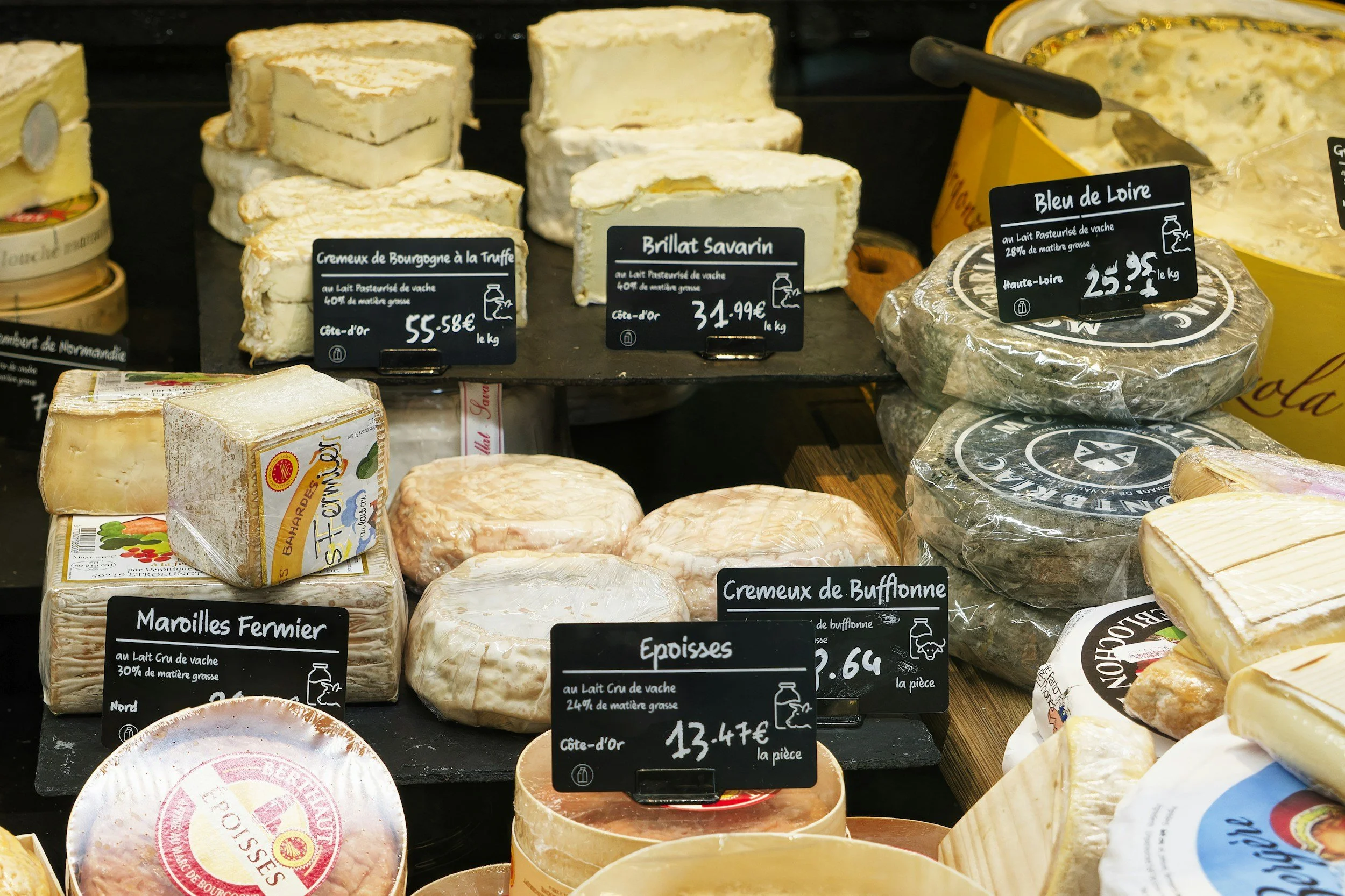
Why rainy days are easier in Dijon than Beaune
A few rainy hours in Burgundy aren't usually a problem. A rainy weekend isn't necessarily a problem either. It's when the weather settles in for three or four days that you start noticing which places are genuinely comfortable without a car and which places become harder work than they looked on the itinerary.
Dijon tends to handle those stretches surprisingly well. You leave Les Halles with a bag full of cheese, fruit and something you definitely hadn't planned to buy, only to discover it's started raining properly while you were inside. Ten minutes later you're sitting somewhere near Rue Amiral Roussin with a glass of wine, your umbrella dripping beside the table and your coat hanging over the back of a chair while people continue coming and going outside as though the weather isn't particularly remarkable. Around Place François Rude, the café terraces rarely empty completely, even on days when common sense suggests they probably should. The staff at Café Gourmand keep wiping rainwater from tables between showers, people squeeze indoors when the rain becomes heavier and drift back outside again the moment it eases. Along Rue des Forges, umbrellas appear and disappear as people move between wine bars, while the trams continue rattling towards Place Darcy in the background and students somehow manage to hold onto terrace tables under heaters near Rue du Bourg despite looking permanently cold.
A rainy afternoon in Beaune feels quite different, partly because so much of the town revolves around wandering without any particular destination in mind. On a dry day, you drift between Place Carnot, Rue Monge and the streets around the Hospices without really thinking about where you're going next. Once the rain settles in, the day starts feeling more structured. Instead of wandering, you find yourself looking at the weather forecast, checking train times and deciding whether it's worth carrying purchases around for another couple of hours. The streets around Place Carnot often become noticeably quieter once steady rain starts falling and within half an hour many people have disappeared into tasting rooms, restaurants and wine bars. The town itself hasn't changed, but the way people move through it definitely has.
The contrast becomes even clearer in some of the smaller places. Meursault can feel wonderfully relaxed on a sunny afternoon, with people lingering around the square near the mairie and cyclists rolling slowly through the village between vineyard visits. In wet weather, particularly outside the busiest months, the centre can become remarkably quiet once lunch finishes. The same thing happens in Tournus. On a bright day, people linger beside the Saône, wander between the abbey and the centre and seem in no particular hurry to leave. During a wet November afternoon, the walk between the station and the abbey can feel surprisingly empty, and if your train is delayed, you're suddenly much more aware of how small the town actually is.
What keeps Dijon easy is not that the weather is any better there. It's that ordinary life continues filling the gaps. People are still shopping around Place Grangier, somebody is still standing outside Mulot & Petitjean eating a pastry under an awning instead of waiting until they get home and the bars around Rue Verrerie still start filling up towards the end of the working day even if everyone arrives carrying umbrellas and shaking rainwater from their coats before sitting down. After a few rainy days in Burgundy, those small things start mattering more than many visitors expect. A city that still feels comfortable on a wet Tuesday afternoon often turns out to be a much better base than a place that only feels at its best when the sun is shining.
The Dijon streets you'll notice most when pulling a suitcase from the station
Dijon is an easy city to explore without a car, but after arriving from Paris with a heavy suitcase, you quickly realise that not all parts of the centre feel quite the same under luggage wheels.
The walk from Dijon-Ville station towards Place Darcy is usually straightforward enough. The pavements are wider, the surface is smoother and most people barely think about the suitcase they're pulling behind them. It's often only once you leave the station area and start heading deeper into the historic centre that the journey becomes a little noisier.
Rue Musette is usually one of the first places where visitors notice it. On a sunny afternoon it's one of the most pleasant streets in the city, lined with cafés, restaurants and people lingering over coffee. Arrive with a suitcase around dinner time and the experience is slightly different. Terrace tables push further out onto the pavement, waiters weave between customers carrying plates and glasses, and the route through the street becomes less direct than it looked on Google Maps.
The same thing happens around Les Halles, particularly on market days. Rue Bannelier, Rue Odebert and some of the smaller streets linking back towards Rue des Forges can become surprisingly busy once deliveries, shoppers and café terraces all compete for the same space. Nothing is particularly difficult, but it's the sort of area where you find yourself stopping every few minutes to let somebody pass or pulling your suitcase a little closer to avoid clipping a chair.
The cobblestones are part of it too. Dijon doesn't have the perfectly restored old-town paving you sometimes find in heavily tourist-focused destinations. Some streets tilt slightly, others are uneven, and around Place Bossuet or the quieter streets behind the market, suitcase wheels seem to amplify every bump in the surface. Early in the morning, before the city properly wakes up, you can often hear luggage rattling across the stones from surprisingly far away.
Rain makes everything a little more noticeable. Around Rue Verrerie, particularly near some of the narrower sections lined with wine bars and restaurants, the stones can become slick when they're wet. It's not something most people think about while planning a trip, but after a long train journey it's often the practical details that stand out most.
What I've found is that the most comfortable places to stay are usually not right beside the station and not deep inside the oldest part of the centre either. Somewhere around Place Darcy, the edges of Rue Musette or near Place François Rude tends to strike a good balance. You're still close enough to walk everywhere, still surrounded by cafés, bakeries and wine bars, but without needing to drag luggage through the busiest or most uneven parts of the old city every time you arrive or leave.
After a few days travelling around Burgundy by train, especially if you've accumulated a couple of bottles of wine or a bag of market purchases along the way, those extra five minutes of easier walking start feeling surprisingly worthwhile.
Choose Beaune if the wine matters more than having the easiest train base
Dijon is usually the easier choice on paper. The station has more connections, it's simpler for day trips and there are more options if plans change halfway through the day. But after spending time in both places, I've found that people who fall for Beaune are rarely choosing it because it's practical.
They're choosing it because they want to spend their evenings in Beaune.
During the middle of the day, the town can feel busier than many first-time visitors expect. Around the Hospices de Beaune, there are groups moving between tastings, cyclists threading their way through Rue Monge and restaurant terraces around Place Carnot filling up well before lunchtime. If you arrive on a sunny Saturday, especially during harvest season, it can feel far livelier than the quiet wine town many people imagine before they get there.
Then the afternoon starts slipping towards evening and the whole place feels different.
The tasting rooms begin closing, day visitors drift back towards Dijon, Lyon or Paris and the centre gradually settles into a slower rhythm. Around Rue de l'Hôtel-Dieu, the crowds thin out enough that you stop hearing tour guides and start noticing conversations spilling out from wine bars instead. A few streets away, near Rue Poterne and the quieter lanes around the old ramparts, the atmosphere changes again. Restaurant staff stand outside before service begins, bicycles lean against stone walls and cellar doors start opening for the evening crowd.
What I like about Beaune is that the best part of the evening often isn't where most people are looking.
Place Carnot stays busy and there are usually plenty of people around the restaurants, but some of my favourite walks have been the ones that drift away from the centre rather than towards it. Around Rue du Faubourg Madeleine or the streets behind the ramparts, the town starts feeling much more residential. You pass apartments with lights on upstairs, hear people talking from open windows and occasionally catch the smell of dinner coming from somewhere you can't quite place.
Around Collégiale Notre-Dame, things become quieter again once darkness settles in. Not empty, just calmer. A few tables outside the wine bars near Place au Beurre remain occupied, people linger over another glass instead of rushing home and the streets between them become surprisingly peaceful. After spending the day in a busy town, that change of pace feels good.
That's probably why Beaune works so well for travellers who care more about the wine side of Burgundy than squeezing as many places as possible into a trip. You're not staying there because it gives you the fastest train connections. You're staying there because it's easy to wander out after dinner, end up in a cellar bar you hadn't planned on visiting and spend the rest of the evening talking about wines you've never heard of before.
By the time you're walking back through Rue Paradis later in the evening, with restaurant kitchens cleaning down behind half-open doors and chairs being stacked around Place Carnot, it's usually a completely different town from the one you arrived in that afternoon. And for a lot of people, that's the version of Beaune that stays with them long after the trip is over.
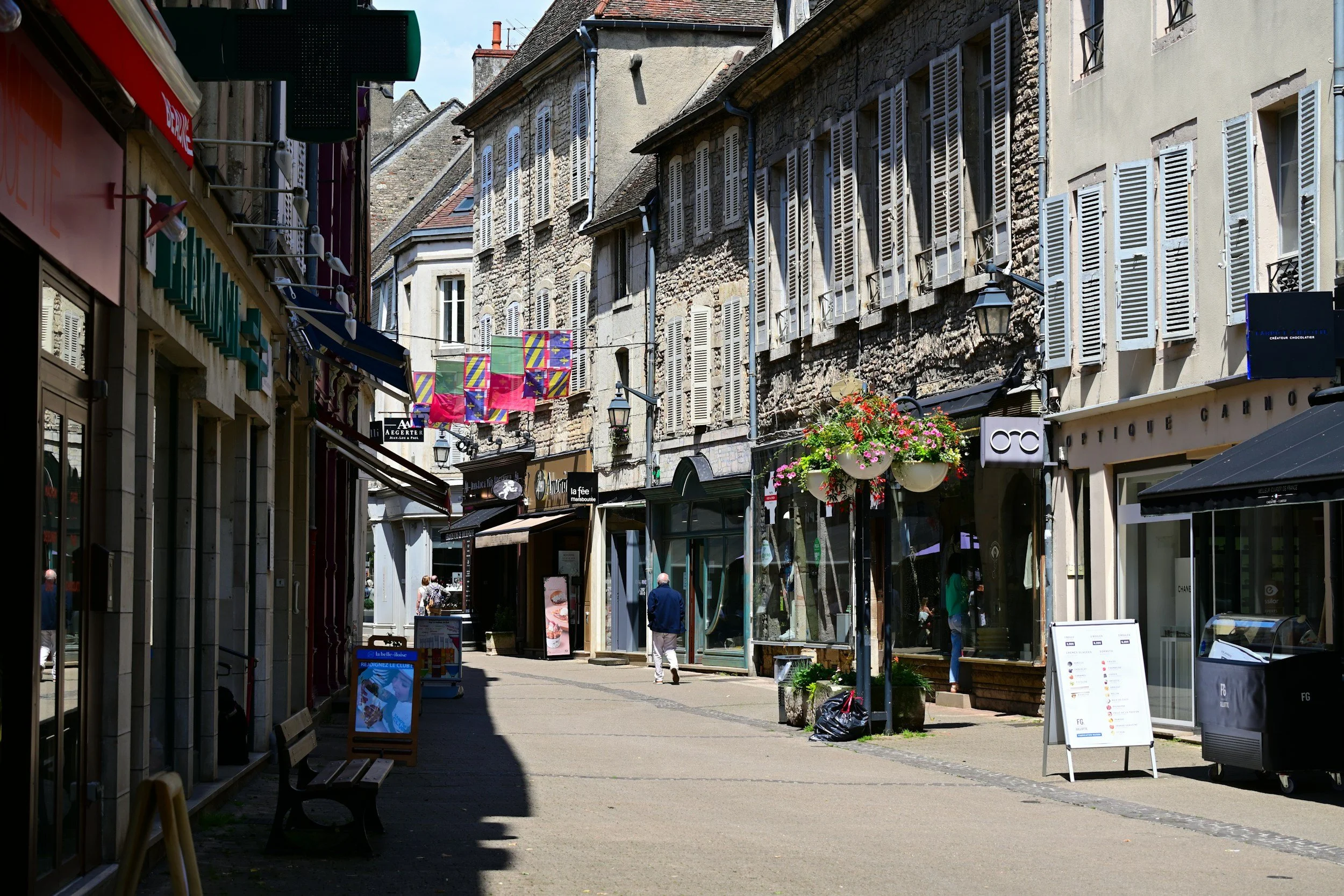
The difference between staying near Beaune station and inside the old town walls
A lot of people book a hotel near Beaune station when they first start planning their trip, and looking at a map it's easy to understand why. After a train journey from Paris or Lyon, the idea of walking a couple of minutes to your hotel instead of dragging luggage through the old centre sounds sensible.
And when you arrive, it usually is.
The streets around the station are straightforward, the pavements are smoother, supermarkets are close by and most hotel receptions stay open later than some of the smaller places tucked away inside the historic centre. If your train is delayed or you're arriving after dark, it's probably the least stressful part of Beaune to check into.
The thing is, once you've dropped your bags and headed out for the evening, most people end up walking through the old town walls anyway.
The change happens surprisingly quickly. Around Avenue Charles de Gaulle and the roads near the station, there isn't much to remind you that you're in one of Burgundy's most famous wine towns. You'll see people arriving for conferences, travellers checking into chain hotels and cars moving through the roundabouts around the station area. Useful things, practical things, but not necessarily the reason most people travelled to Beaune.
A few minutes later, you're passing through Porte Saint-Nicolas and heading towards Rue Monge, where the atmosphere feels completely different. Wine merchants have displays set up outside their shops, menus are propped against old stone walls and people drift slowly between Place Carnot, Rue Maufoux and the streets around the Hospices without seeming to have anywhere particularly urgent to be. In the late afternoon, it's common to see visitors carrying a couple of bottles back from Patriarche or one of the smaller wine merchants while restaurant staff begin setting tables for the evening service.
What I've noticed is that the convenience of staying near the station matters most on arrival day.
After that, your day usually starts and ends inside the old town. You're walking out for coffee near Place Carnot, browsing wine shops along Rue Maufoux, stopping somewhere for apéritif before dinner or taking one last walk through the centre before heading back to your room. If you're staying inside the walls, all of that begins the moment you step outside.
The evenings are where the difference becomes most obvious. Around Place au Beurre and Rue du Faubourg Bretonnière, people linger long after dinner finishes. Tables stay occupied even after the plates have disappeared, especially outside the smaller wine bars where somebody always seems to be ordering one more glass before finally heading home. A few streets away, near the quieter sections of Boulevard Perpreuil and the old ramparts, the atmosphere changes again. You might pass somebody walking a dog, hear cutlery being cleared from restaurant terraces or catch the smell of food drifting out from kitchens preparing for the next day.
The mornings have their own rhythm too. Before the first train arrivals from Dijon, Beaune feels almost like a different town. Around Rue Monge, bakery deliveries are being unloaded, café staff are dragging chairs onto terraces and shop owners are opening shutters one by one. The flower stalls near Place Carnot begin setting up while hotel guests are still making their way downstairs for breakfast. It's one of the few times of day when Beaune feels more like a working town than a visitor destination.
That doesn't mean the old town is perfect.
The luggage issue is very real! The first time you pull a heavy suitcase through Rue Maufoux or some of the narrower lanes around the centre, the romance fades quite quickly. The cobbles aren't the smooth decorative kind you find in heavily restored tourist centres. Some sections tilt slightly, others are uneven enough that small suitcase wheels seem determined to find every gap. After rain, the stones around parts of Rue Paradis and the smaller streets near the Hospices can become slippery enough that most people slow down whether they planned to or not.
That's why the sweet spot is often somewhere just inside the walls rather than deep in the oldest part of the centre. Close enough that the walk from the station still feels manageable, but far enough in that when you step outside in the evening, you're already in the part of Beaune people tend to remember afterwards.
Why Beaune gets expensive fast if you rely on taxis after wine tastings
One thing that catches people out in Beaune is how close everything looks before they arrive.
Sitting outside in Meursault after lunch, it's easy to convince yourself that nothing is very far away. Someone points towards Volnay from a restaurant terrace, another recommends a producer near Puligny-Montrachet and suddenly the whole Côte de Beaune starts sounding as though it's one compact village where moving around will somehow sort itself out. After a glass or two of wine, the distances feel even shorter.
The reality usually appears later in the afternoon.
Around four or five o'clock, tasting rooms begin closing, the weather changes, somebody realises they've bought six bottles they now need to carry, and a surprising number of people start trying to get back to Beaune at exactly the same time. Outside restaurants in Meursault, near the square around the mairie or beside tasting rooms along the Route des Grands Crus, you'll often see visitors standing with phones in hand trying to work out transport plans that felt much simpler a few hours earlier.
Back in Beaune, the same pattern repeats itself. Around the station, outside Hôtel de la Poste or near the taxi ranks close to Avenue du 8 Septembre, small groups appear carrying wine purchases and comparing taxi apps that aren't finding drivers. Hotel receptionists end up calling local taxi companies on behalf of guests. Restaurant staff get asked the same question several times an evening: "Do you think we'll be able to get a taxi back later?"
What makes Burgundy different from many wine regions is that the villages often look connected on a map but don't necessarily feel connected once you're standing there. Outside Beaune itself, pavements disappear quickly, vineyard roads become darker than people expect and the distance between villages feels very different when you're carrying purchases or walking back after a long lunch.
Meursault is probably the place where this catches people most often. Lunches stretch there. Tables around Place de l'Hôtel de Ville stay occupied well into the afternoon, especially when the weather is good, and nobody seems particularly interested in leaving. Then the light starts fading, jackets come back on, somebody remembers they're carrying several bottles and the relaxed plan of "we'll sort out transport later" suddenly becomes the most complicated part of the day.
September can be even trickier. During harvest season, vans from producers move constantly between vineyards and cellars, visitors are travelling between appointments and a large part of Beaune seems to finish tastings within the same hour. Around the station and the edges of the old town, particularly near Boulevard Perpreuil and Avenue Charles de Gaulle, you notice far more people trying to coordinate transport than you do in quieter months.
What I've found is that the people who seem happiest travelling around Burgundy without a car usually don't try to squeeze every famous village into the same day. They stay longer in fewer places, book tastings they can comfortably reach and spend some evenings in Beaune itself rather than treating every afternoon as a mission to reach another vineyard. One day might be Meursault. Another might be Pommard. They leave room for the fact that Burgundy rarely follows a perfectly timed itinerary.
That's often when the region starts feeling easier. You're no longer checking taxi apps from a restaurant terrace or worrying about getting back before dark. You're simply enjoying where you already are, which is usually the reason for coming to Burgundy in the first place.
The slower Burgundy becomes, the more this Lot Valley route starts making sense for a second France trip with fewer logistics and longer stays.
Which wine tastings in Beaune are still realistic without booking months ahead
A lot of Burgundy advice online makes the region sound far more complicated than it actually is.
You read enough forums and eventually start thinking you'll need a spreadsheet, three backup plans and a collection of confirmation emails just to drink a glass of wine… That can be true if you're trying to visit a handful of famous domaines with international waiting lists, but once you're actually staying in Beaune, the experience is often much more relaxed than people expect.
Some of the best wine afternoons happen because you didn't plan them particularly carefully in the first place.
Around Rue Paradis, Rue Maufoux and the streets running between Place Carnot and the Hospices, it's still perfectly possible to decide over lunch that you'd like to do a tasting later that day and find somewhere interesting. Not necessarily the names that appear in every guidebook, but often places where the atmosphere is more relaxed and the conversations are better.
Patriarche is a good example. The entrance on Rue du Collège doesn't look especially dramatic from the street, but once you're underground in the cellars, the scale of the place becomes obvious. Because the site is built to welcome visitors throughout the day, you don't get the same feeling of trying to secure one of a handful of appointments. You can spend the morning wandering around Beaune, stop for lunch near Place Carnot and still decide later in the afternoon that a cellar visit sounds like a good idea.
Maison Champy works well for similar reasons. It sits right in the centre near Rue du Grenier à Sel, which means you don't need to organise transport, worry about driving afterwards or build the entire day around a single appointment. People often end up there simply because they were already exploring that part of town and decided to step inside.
What surprises many visitors is how often the wine bars become the most memorable part of the experience.
You might start the evening with one glass somewhere near Rue Monge and end up staying much longer because the person behind the bar opens something from Savigny-lès-Beaune, Pernand-Vergelesses or Aloxe-Corton that wasn't even on your radar earlier that day. Those conversations happen constantly in Beaune. Somebody recommends a producer. Another person at the next table suggests somewhere you've never heard of. One glass becomes three and suddenly you've learnt more than you would have from a carefully researched tasting itinerary.
Around Place au Beurre and Rue du Faubourg Bretonnière, there are plenty of places where wine feels approachable rather than academic. Ma Cuisine gets talked about for its food, but a lot of visitors leave talking about the wine list instead. The same thing happens in smaller bars tucked into side streets around the centre, where nobody seems particularly concerned whether you can explain the difference between village wines and Premier Cru before ordering.
The bookings that usually require the most planning are often outside Beaune rather than inside it. Small family domaines in places like Puligny-Montrachet, Vosne-Romanée or Chassagne-Montrachet are often working around harvest schedules, deliveries, cellar work and export orders. Visitors are welcome, but wine production comes first. During busy periods, appointments sometimes move, get shortened or disappear altogether because the vineyard has more pressing priorities.
Back in Beaune, the day tends to unfold differently. You might spend the morning browsing Les Halles, stop for lunch near Place Carnot, wander through a cellar during the afternoon and then finish the evening somewhere around Rue Maufoux talking about wine with people who had no intention of staying out that late either. That's usually when Burgundy feels at its most enjoyable - not when every tasting has been planned months in advance, but when there's enough room in the day for things to develop naturally.

The cafés and wine bars that still feel busy outside peak harvest season
Beaune changes noticeably once harvest season is over, but not in the dramatic way people sometimes imagine.
The town doesn't suddenly become empty. What disappears first is the constant flow of visitors moving between appointments, tastings and organised wine tours. In September, Place Carnot can feel busy from early morning onwards. Cyclists roll through town in groups, delivery vans stop outside wine merchants near Rue Paradis and the cafés start filling long before lunch. By November, the pace feels different. The centre is still active, but the day unfolds more gradually.
Around 08:30, most of the activity near Place Carnot comes from people following routines rather than sightseeing plans. Café de France is often busy with regulars reading the newspaper or stopping for a quick coffee before work, while bakery deliveries are still arriving along Rue Monge. Outside the boulangeries near Rue du Faubourg Bretonnière, people queue for bread and pastries while the square itself is only just beginning to wake up. The centre feels quieter, but not empty.
As the day goes on, certain places continue drawing people in regardless of the season. Around Place au Beurre and Rue Maufoux, you'll see restaurant staff stopping for coffee before lunch service, wine workers meeting for a quick drink in the late afternoon and small groups lingering inside bars when the weather turns cold or wet. Because there are fewer short-stay visitors moving through town, it's easier to notice the rhythm of the place itself.
La Dilettante is one of those places that seems to suit the colder months particularly well. Once people move indoors, the evenings slow down and tables stay occupied for much longer. Nobody appears especially interested in rushing through a bottle before moving on somewhere else. Around Ma Cuisine, the atmosphere changes too. During harvest season, conversations often revolve around appointments, vineyard visits and tasting schedules. Later in the year, the room feels more relaxed and less driven by whatever everybody thinks they should be doing in Burgundy.
The streets around Rue du Faubourg Bretonnière are often my favourite part of Beaune once autumn settles in properly. A florist closes up for the evening. Somebody walks across town carrying bread from a bakery near Rue Monge. Coats get hung over spare chairs inside wine bars as people escape the cold for an hour before heading home. Nothing particularly remarkable is happening, which is partly why the atmosphere feels so different from September.
Even the town smells different!
On cold evenings, the scent of bread drifts from the bakeries around Rue Monge, damp stone holds onto the day's rain and cellar entrances release cool air into the streets. Around the smaller lanes behind the Hospices, you catch occasional traces of butter, wine and wood smoke as dinner service gets underway.
What I enjoy most about Beaune outside harvest season is that the town stops feeling like it has somewhere to be.
On a weekday evening in November, people linger over another glass near Place au Beurre, conversations continue long after plates have been cleared and the centre settles into a slower pace that visitors often miss if they only experience Burgundy during the busiest weeks of the year.
Anyone tired of France itineraries built entirely around major cities will probably enjoy these local small towns much more than another rushed route through Paris and Provence.
The Burgundy villages near Beaune that become complicated without a car
One thing Burgundy does exceptionally well is making distances look smaller than they really are.
You sit outside a café near Place Carnot in Beaune, open Google Maps and start looking at the villages scattered across the Côte de Beaune. Volnay is right there. Pommard looks even closer. Meursault doesn't seem far away at all. Auxey-Duresses and Saint-Romain appear just beyond the vineyards. On a screen, it all feels manageable enough that you start adding places to the day without thinking too much about how you're actually going to move between them.
Volnay is often where that confidence begins.
From Beaune, the village feels close enough that many people assume transport will somehow sort itself out naturally. On a sunny afternoon, that assumption isn't completely unreasonable. The vineyard roads are busy with walkers and cyclists, tasting rooms are open and there is enough movement between villages that everything still feels connected. Around the church square in the centre, people drift between appointments carrying tasting notes and wine purchases while cyclists stop for photos before continuing towards Pommard or Meursault. If you climb slightly above the village, the views back across the vineyards towards Beaune make the whole area feel even more compact than it really is.
The atmosphere changes surprisingly quickly later in the day. By the time tasting rooms begin closing, the roads become quieter, cyclists thin out and the practical side of getting back to Beaune suddenly becomes much more noticeable than it was a few hours earlier. Standing outside a domaine near the church at 17:00 can feel very different from standing there at 14:00.
The village Saint-Romain sits above Auxey-Duresses beneath the limestone cliffs that dominate this part of the valley. The setting is beautiful, but it's also where many visitors realise that Burgundy's geography isn't always as gentle as it looks on a map. The road climbing from Auxey-Duresses feels much steeper in real life than it appears online, especially after a long lunch or a tasting. Once you arrive, the village is wonderfully quiet, with narrow stone lanes, old houses and hardly any traffic, but it's one of those places where leaving often requires more thought than arriving.
Monthelie catches people in a different way.
In perfect weather, it can feel wonderfully straightforward. The roads between Monthelie, Volnay and Meursault seem short, the distances look manageable and everything feels connected by vineyards. Then a shower arrives, temperatures drop or daylight starts fading earlier than expected and the same route suddenly feels far less inviting.
That's partly because the vineyard roads aren't lit.
In summer, that rarely matters. In October and November, it matters a lot! The stretch between Volnay and Pommard can feel lively enough during the afternoon, with cyclists, vineyard workers and visitors moving between villages. A couple of hours later, the same road can be almost empty. You can often see the lights of Beaune in the distance while still feeling much further away than you expected.
Wine purchases have a habit of making everything feel further too… A walk that seemed perfectly reasonable before lunch can feel very different when you're carrying three or four bottles in a bag and wondering whether the weather is about to turn. Burgundy has a way of encouraging people to buy more wine than they planned, which is wonderful right up until the moment they need to carry it somewhere.
That's why some villages end up being much more enjoyable when they're treated as the destination rather than one stop on a long list. A leisurely afternoon in Volnay or Saint-Romain often feels far more rewarding than trying to squeeze Volnay, Pommard, Monthelie and Meursault into the same day. The travellers who seem happiest exploring Burgundy without a car are usually the ones who stop trying to cover every famous village and instead give themselves enough time to enjoy the one they're already in.
Beaune gets all the attention, but if you're usually happier in places that feel a bit more lived-in, Cahors or Figeac? is an interesting decision to make before your next France trip.
The walk from Beaune station that feels longer in summer than it looks on the map
The walk from Beaune station into the old town is one of those things that almost everybody describes as easy, and technically they're right. The route isn't particularly long, it's mostly straightforward and if you arrive on a cool spring morning you'll probably wonder why anyone mentions it at all. What people rarely talk about is how different the same walk feels in the middle of July after a couple of train changes, when you've been travelling since breakfast and the temperature has spent the entire afternoon building up against the stone buildings inside the old town.
When you first leave the station, everything feels simple enough. The roads around Avenue Charles de Gaulle are relatively open, the pavements are wider and there's not much to suggest the journey will be any harder than the map promised. It's only as you move closer to Porte Saint-Nicolas and start heading towards Boulevard Perpreuil that the atmosphere begins to change. The streets narrow, the pace slows naturally and the centre starts feeling warmer than the temperature on your phone suggested it would.
By the time you reach the area around Place Carnot and Rue Maufoux, you're usually sharing the streets with visitors carrying wine purchases back to their hotels, cyclists threading their way through gaps that somehow seem too small for bicycles and restaurant terraces that have expanded across large parts of the pavement. The suitcase itself isn't really the problem. It's the constant stop-and-start rhythm of the walk. You move forward for a minute, step aside for a cyclist, wait for a group to pass, adjust your bag, then start again. None of it is difficult, but after a long journey it feels noticeably different from rolling a suitcase through the station district.
The heat tends to linger here as well. Around the streets linking the Hospices, Rue Paradis and Place Carnot, the stone seems to hold onto the warmth long after the hottest part of the day has passed. On summer afternoons you'll often see people slowing down outside restaurant menus, wine shop windows and shaded doorways, sometimes because something has genuinely caught their attention and sometimes because standing still for a moment feels quite appealing.
What makes Beaune slightly deceptive is that the distances remain short throughout all of this. You're never very far from your hotel. The town simply has a way of making those final few hundred metres feel longer than they looked when you first plotted the route at home. After a few days, most people adapt without really thinking about it. Shopping bags get smaller, wine purchases are spread across several afternoons and the giant hard-shell suitcase that seemed necessary before the trip suddenly starts looking like the least practical thing in Burgundy.
The walk from the station is still easy, but it's one of those small details that makes much more sense once you've actually done it yourself on a warm afternoon with luggage in tow.
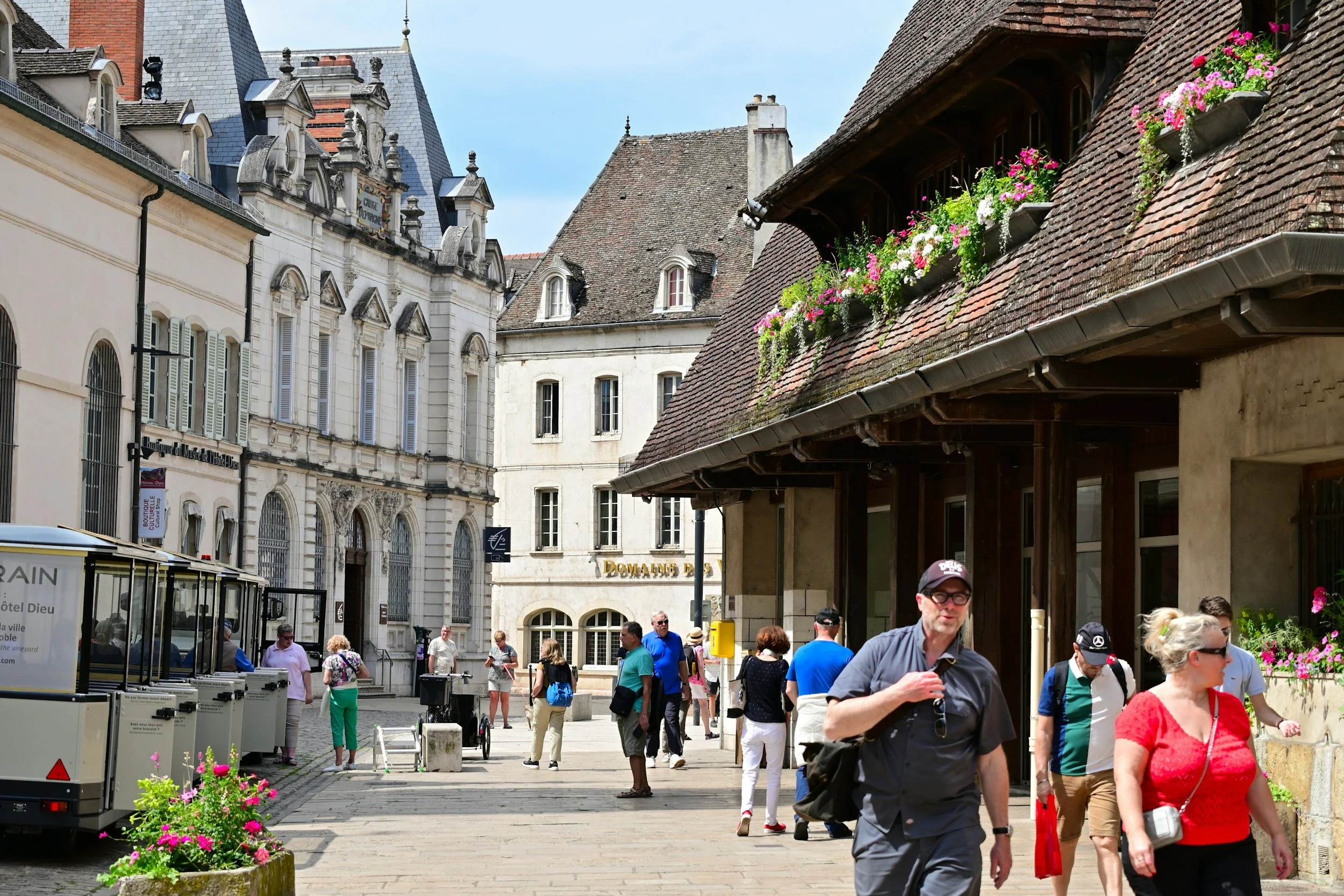
What changes in Beaune during November and January when fewer places open daily
November and January are probably the months when Beaune feels most different from the version people imagine before they arrive.
During harvest season, the centre seems to have somewhere to be from early morning onwards. Visitors move between appointments, tasting rooms open one after another and the streets around the Hospices stay busy for most of the day. By November, the pace has already shifted. Walking through Rue de l'Hôtel-Dieu around nine in the morning, you're more likely to see delivery vans unloading crates, restaurant staff setting up for lunch service and shop owners opening shutters than groups hurrying towards their first tasting of the day.
The town doesn't become empty. It simply becomes easier to notice everyday life again.
Around Place Carnot, people still stop for coffee before work and the boulangeries near Rue Monge remain busy in the mornings, especially once the weather turns colder. On damp November days, the smell of fresh bread seems to linger across the square much longer than it does in summer, while café windows start fogging up as people retreat indoors instead of spreading across the terraces.
By January, you begin noticing practical changes as well. Handwritten fermé annuel signs appear on doors, some wine bars disappear for a few weeks and restaurants that were open seven days a week during autumn suddenly switch to shorter schedules. A place that was serving dinner every evening in September might now only open from Thursday to Sunday, particularly outside the busiest parts of the centre.
What I find interesting is that the activity doesn't disappear, it just becomes concentrated into fewer streets. Around Place Carnot, Place au Beurre and parts of Rue Monge, the restaurants and wine bars that remain open often feel busier because everybody gravitates towards the same handful of places. Walk a few minutes away towards the quieter sections near the ramparts or Rue du Faubourg Madeleine and the atmosphere changes completely. Streets that felt lively in September can be almost silent by early evening.
Winter also changes what you notice. Without the constant background noise of terraces and visitors, smaller details start standing out. Church bells from Collégiale Notre-Dame seem louder. You hear delivery trucks crossing the cobbles near the Hospices early in the morning and suitcase wheels echoing through the centre before the cafés fill up. On rainy evenings, the sound of cutlery being cleared from restaurant terraces can carry surprisingly far through the old town.
What I like most about Beaune at this time of year is that it stops feeling as though it's performing for visitors. You can spend an afternoon wandering between Place Carnot, Rue Maufoux and the smaller streets around the Hospices without feeling as though you're following the same route as everyone else. For people who are genuinely interested in Burgundy rather than simply ticking off famous wine villages, November and January often end up being far more enjoyable than they expected.
Autumn changes southern France completely, and this Arles autumn guide explains why the city feels far more enjoyable once the extreme summer heat disappears.
Chalon-sur-Saône for a more local Burgundy base
Most people don't start their Burgundy trip by planning to stay in Chalon-sur-Saône.
Usually they arrive there after spending a few days elsewhere in the region and realising they've been thinking about train times more than they expected. A lunch in Meursault runs longer than planned, rain appears halfway through an afternoon in Volnay or somebody misses a TER back from Beaune because they stopped at a wine shop near Place Carnot and lost track of time. That's often when Chalon starts looking surprisingly appealing.
The first thing you notice is that it feels like a functioning city rather than a destination built around wine tourism.
Step outside Gare de Chalon-sur-Saône and there are buses pulling through Avenue Jean Jaurès, people heading home with shopping bags, students coming and going from the station and commuters stopping for coffee before catching trains south. Around Place de Beaune and the streets leading towards the centre, there is a steady sense of movement that continues whether visitors are there or not.
After spending time in smaller wine towns, that ordinary rhythm can feel unexpectedly relaxing.
If a train is delayed, it rarely matters much. Instead of standing on a quiet platform watching the departure board, you can walk into town, grab a coffee, browse a few shops or sit somewhere along the Saône for half an hour. The city gives you options, which sounds like a small thing until you've spent several days in villages where a missed connection can reshape the rest of the afternoon.
The location helps as well. Beaune is still easy to reach, Dijon remains close and places that feel slightly awkward from other Burgundy bases suddenly become straightforward. Mercurey is right on your doorstep, Givry works perfectly for a long lunch and even Lyon starts feeling less like a major excursion and more like somewhere you could visit on a whim if the weather in Burgundy turns grey for a few days.
What I like most about Chalon-sur-Saône is that the city doesn't ask much from you. You're not constantly trying to optimise a route between villages or work out how to squeeze one more tasting into the day. You can spend the morning exploring Burgundy, return in the afternoon and still have plenty of places to eat, drink or simply wander without checking transport schedules every twenty minutes.
After four or five days, that's often what people remember most. Not a particular train connection or a perfectly planned itinerary, but the fact that everything felt easier than they expected. For travellers relying entirely on public transport, that can be a surprisingly good reason to choose a base.
If Burgundy mornings are your thing, you'll probably enjoy Saint-Rémy before breakfast too. The town feels completely different before the day properly starts.
The streets around Place Saint-Vincent that make the best area to stay
The area around Place Saint-Vincent is usually where people start spending more time than they planned.
When you first arrive in Chalon-sur-Saône, the station area makes sense. The roads are wider, the hotels are easy to reach and everything feels practical. It's only once you start walking towards Rue du Châtelet and the streets around the cathedral that the city begins feeling different. The traffic fades into the background, café terraces appear around corners and people seem far less interested in getting from one place to another quickly.
Rue aux Fèvres is often the street where that shift becomes most obvious. By early evening, restaurant terraces begin filling up, conversations spill out onto the pavement and waiters move constantly between tightly packed tables carrying plates and glasses. The smells change throughout the evening too. Coffee gives way to food, then wine, then whatever happens to be coming out of restaurant kitchens that night.
What I like about this part of Chalon is that it never feels organised around visitors.
Around Place Saint-Vincent, you'll see people collecting bread on their way home, stopping for a drink after work or meeting friends without any obvious plan for the evening. The square stays busy without feeling crowded, and the activity comes from people using the city rather than sightseeing in it.
The cathedral is part of the rhythm as well. The bells carry across the centre throughout the day and after a while they become part of the background, mixed with café conversations, chairs scraping across terraces and people crossing the square below. If you're staying nearby, it's one of those sounds that quickly becomes familiar.
The area works particularly well for longer stays because everything ends up revolving around it naturally. You head out for coffee and find yourself lingering longer than expected. A walk towards the Saône turns into a drink somewhere near the square. Dinner finishes and somehow you're back near the cathedral again before the evening is over.
Rainy days suit this part of Chalon surprisingly well too. The terraces shrink slightly, people crowd inside cafés and restaurants, and the streets take on a different atmosphere altogether. Windows fog up, coats get hung over spare chairs and the centre feels compact and welcoming in a way that many larger cities never quite manage.
The riverside part of Chalon that stays active in the evenings
One thing that surprised me about Chalon-sur-Saône is how many people seem to end up by the river once dinner is over.
In Beaune, evenings mostly stay inside the old centre. People move between wine bars, restaurant terraces and the streets around Place Carnot. In Chalon, a lot of the evening gradually drifts downhill towards the Saône instead. Around Quai des Messageries and Place du Port Villiers, people keep arriving long after they've finished eating. Some stop for a drink, some sit by the water for a while and others are clearly just taking the long route home because it's a nice evening.
The river makes the city feel bigger than it actually is. After spending time in places like Beaune or Meursault, it feels strange having this much open space around you. You can walk along the quay without constantly weaving between restaurant tables and there's always something happening without it feeling busy. Someone is walking a dog, a group of friends is sitting by the water talking, a couple is heading slowly towards Pont Saint-Laurent and people are still finding tables on the terraces even though dinner service finished ages ago.
What I noticed most was how normal everything feels down there.
The riverside isn't trying to be an attraction. People use it because it's where they want to spend the evening. Office workers stop for a drink after work, families walk along the water before heading home and groups of friends sit beside the Saône talking while the light disappears from the opposite bank. It feels more like part of everyday life than somewhere visitors are told to go.
On warm evenings, the terraces near Place du Port Villiers stay busy surprisingly late. Glasses keep appearing on tables, conversations get louder and the whole area seems reluctant to call it a night. Then the weather changes and the mood shifts almost immediately. A bit of rain or a cold wind coming off the river and people start heading back uphill towards Rue aux Fèvres and Place Saint-Vincent instead. Within half an hour, the riverside can feel almost empty while the bars near the cathedral are suddenly packed with people escaping the weather.
That's probably what I enjoy most about Chalon as a base. The city gives you different places to spend an evening depending on how you feel. Some nights end by the river, some end around Place Saint-Vincent and most of the time you don't need to plan any of it in advance.
Market mornings in Chalon that feel different from Beaune
One thing I noticed fairly quickly in Chalon-sur-Saône is that the market feels less tied to tourism than some of the markets further north in Burgundy.
By around 08:30, the area around Place Saint-Vincent is already busy, but not in the same way as Beaune. People aren't wandering around deciding where to have their first wine tasting of the day. They're carrying shopping bags, collecting bread, stopping at the butcher and trying to finish errands before lunch.
The streets around the cathedral fill up surprisingly quickly on market mornings. Along Rue aux Fèvres and Rue du Châtelet, delivery vans are still unloading while shoppers move between stalls carrying flowers, fruit, cheese and bags that seem much heavier than they probably should be. Outside the cafés, tables begin filling with people who appear to know exactly who they're expecting to run into.
What I like about the market area is how naturally everything spills into the surrounding streets. Someone leaves a bakery with a baguette tucked under one arm, another person stops for coffee before continuing towards Place Saint-Vincent and restaurant staff make repeated trips between suppliers and kitchens before lunch service begins. The whole centre feels as though it's gradually building towards the afternoon.
The smells change constantly as you walk around. Near the bakeries around Rue de Strasbourg it's mostly coffee, butter and fresh bread. A few minutes later you're passing rotisserie chickens turning slowly beside market stalls, then seafood counters, then flower sellers. The cafés start filling at the same time, and by late morning plenty of people have settled in with shopping bags stacked beneath their tables.
If you're staying in Chalon for several days, it's one of the places that helps explain why the city feels different from the better-known Burgundy wine towns. The market isn't something happening alongside daily life. It is daily life.
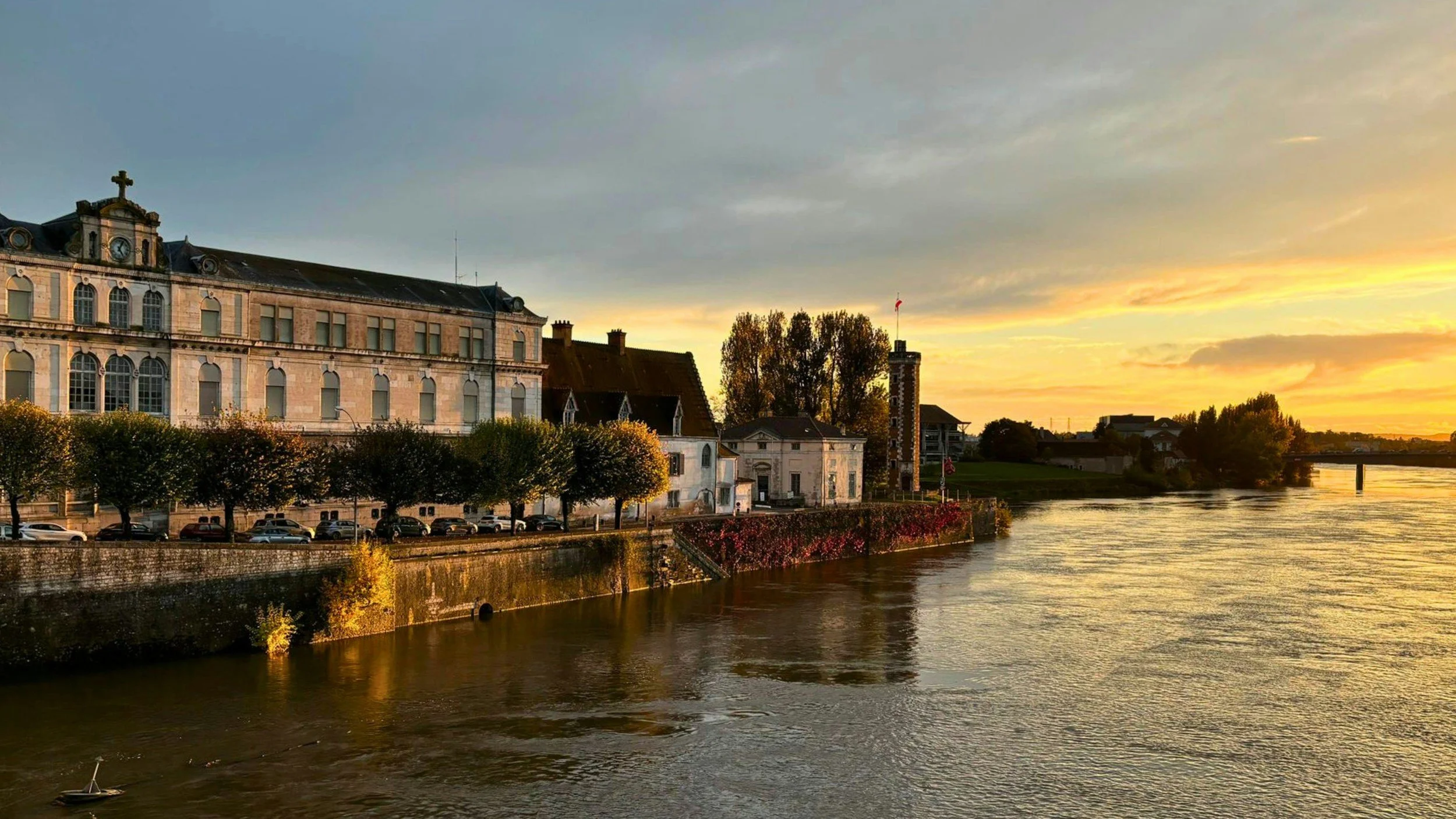
The Burgundy wine villages you can still reach from Chalon without a car
One of the nicest things about using Chalon-sur-Saône as a base is that you stop feeling as though every day has to revolve around Beaune.
The Côte Chalonnaise opens up in a way that many visitors overlook completely, and several of the villages are surprisingly realistic without a car if you're happy spending a proper afternoon in one place rather than trying to squeeze four villages into the same day.
Mercurey is usually the easiest place to start. The village is larger than many people expect and spreads out beyond the centre into vineyards, quiet residential roads and clusters of domaines that sit further apart than they appear on a map. Around Place de l'Église, things feel compact enough at first, but once you start walking between producers, you quickly realise that Mercurey is a place where the afternoon naturally expands.
That's partly why it works so well.
Lunch has a habit of running longer than planned, especially if you're sitting somewhere overlooking the vineyards and somebody opens another bottle. Afterwards, the roads leading out from the centre become quieter, stone walls begin replacing shopfronts and the pace of the day changes completely. By late afternoon, you hear church bells, the occasional tractor moving between vineyards and not much else.
Givry feels different. The centre is tighter together and easier to explore on foot, with many of the cafés, shops and tasting rooms gathered around Place d'Armes and the streets nearby. It feels more like a village where daily life happens alongside wine rather than a destination built entirely around visitors. On market days and weekend mornings, you'll see people collecting bread, stopping at local shops and moving through the square long before most visitors arrive.
Rully is probably the quietest of the three.
The village spreads out across the lower slopes beneath the vineyards, and once lunch service ends, parts of it become remarkably peaceful. Walk a little beyond the centre and the atmosphere changes quickly. You hear birds, the wind moving through the vines and the occasional vehicle heading towards one of the domaines further up the hill. It's the sort of place that rewards slowing down rather than trying to optimise every hour of the day.
What I like about all three villages is that they work well when you stop treating transport as the main event. The distances are manageable, Chalon gives you enough flexibility that a longer lunch isn't a disaster and the day doesn't fall apart if everything runs an hour later than planned.
That's often when Burgundy feels at its best. Not when you're checking train times between every tasting, but when you've settled into one village for the afternoon and stopped worrying about whether you're seeing enough of the region.
Bookshops, quiet cafés, and slower mornings sound very different after a few busy Burgundy train days, which is why this Montolieu escape works so well afterwards.
What it's like arriving in Chalon-sur-Saône after dark
One thing I ended up appreciating about Chalon-sur-Saône is how uncomplicated late arrivals feel.
If you've spent time travelling around Burgundy by train, you'll probably know the feeling of watching a delayed connection eat into the evening and wondering whether you'll arrive to a town that's already shutting down around you. That's rarely an issue in Chalon. Even after a later train from Paris, the station area still feels active in a very ordinary way. Buses are coming and going, people are heading home from work, cafés near the station are still busy and there are usually enough people moving through the area that arriving after dark never feels particularly isolated.
The walk into the centre helps too. From Gare de Chalon-sur-Saône, you can head along Avenue Jean Jaurès towards Place de Beaune and the older part of the city without needing to think too much about it. The route is flat, well lit and straightforward, which sounds like a small thing until you've spent a few days dragging luggage through places where every street seems to be made of uneven stone. After arriving from Beaune, the difference is especially noticeable. Instead of rattling suitcase wheels across cobbles and weaving between crowded terraces, you're simply walking through a city that was built to function as a city.
What I always notice is that Chalon keeps going about its evening regardless of whether visitors are arriving or not. Restaurants are still serving dinner, people are meeting friends for drinks around the centre and there's none of that slight feeling of having arrived after everything important has already happened. If your train runs late, it rarely matters much because you don't feel as though you're racing against closing times or trying to squeeze into the final available table somewhere before the night winds down.
By the time you reach the streets around Place Saint-Vincent or Rue aux Fèvres, the city already feels settled into the evening. People are lingering over dinner, terraces are still busy in warmer weather and the centre has enough life that arriving late feels completely normal rather than something you have to plan around. After travelling through some of Burgundy's smaller towns, that's surprisingly reassuring.
It's one of those things that doesn't look important when you're planning a trip at home, but after a few days of trains, changing weather and schedules that don't always run exactly as expected, having a base where you can arrive tired, hungry and an hour later than planned without it creating any problems becomes a bigger advantage than most people realise.
Where café culture feels strongest in Chalon during colder months
I actually think Chalon becomes more enjoyable once the weather turns. During summer, a lot of life shifts towards the river and the terraces along the Saône, but once November arrives and the temperatures drop, people seem to gravitate back towards the streets around Place Saint-Vincent and Rue aux Fèvres. After a couple of days in the city, it's hard not to notice how much of daily life starts happening indoors again.
On cold mornings, the centre feels completely different from the riverside. You walk through Place Saint-Vincent and the cafés are already busy long before lunch, with people lingering over coffee while the weather does its best to convince everyone to stay home. Around Rue du Châtelet, bakery windows steam up from the warmth inside, chairs disappear from the smaller terraces and anyone who has managed to get a table by a window seems determined to hold onto it for as long as possible.
What I enjoy is that nobody appears to be rushing anywhere. Someone stops for a coffee and ends up ordering lunch two hours later. Friends meet for a quick drink after work and are still sitting in the same place when you pass by again later in the evening. When rain starts falling properly, the cafés and bars around Rue aux Fèvres seem to collect people almost automatically. Coats get thrown over spare chairs, glasses fog up when you step inside from the cold and conversations get louder as more people squeeze in out of the weather.
After a few days, you start recognising small patterns without really meaning to. Certain cafés fill up almost immediately when it rains. The tables nearest the windows are always taken first. Around lunchtime, shopping bags begin appearing beside chairs as people stop for coffee after the market or before heading home. None of it feels staged and nobody seems particularly interested in creating an atmosphere for visitors. It's simply where people spend time once the weather turns colder.
That's probably why I like Chalon at this time of year. The city doesn't become quieter when summer ends. It just moves indoors, and the cafés around the old centre become one of the easiest places to see everyday life carrying on regardless of what the weather is doing outside.
Mâcon if you want southern Burgundy without driving
Mâcon makes a lot more sense once you stop expecting another version of Beaune.
That's usually where people go wrong. They arrive from Paris imagining another compact wine town where everything revolves around cellar doors and tasting rooms, then step out near the station and find a place that feels much more connected to everyday life. There are buses moving through Avenue Édouard Herriot, people heading home with shopping bags from Monoprix near Place Gardon, students sitting along the river after classes and cafés that stay busy for reasons that have nothing to do with wine tourism.
What struck me most was how close Lyon feels.
Even before you arrive, you can sense the transition happening on the train. South of Beaune, the landscape starts opening up. The vineyards are still there, but the scenery feels broader, the villages feel less tightly packed together and the whole journey starts feeling less like northern Burgundy and more like the edge of another region. By the time the train pulls into Mâcon, it already feels different.
You notice it in the restaurants too. Around Rue Sigorgne and Place aux Herbes, menus lean much more towards the food culture of Lyon than the Burgundy people often expect. Lunches are bigger, tables stay occupied longer and nobody seems particularly interested in squeezing in another tasting before the afternoon is over. People settle in and stay where they are.
The relationship with Lyon keeps showing up throughout the city. Trains run constantly between the two, people move back and forth without making a big deal of it and there isn't the same feeling of being in a destination that exists slightly apart from everything else. Someone heads up from Lyon for lunch in Fuissé. Someone else spends the afternoon in Mâcon and catches an evening train south. The whole area feels connected in a way that many wine towns don't.
Evenings along Quai Lamartine probably capture that feeling best. On warm days, people stay outside long after dinner, the terraces remain busy beside the Saône and the city feels noticeably more relaxed than the Burgundy many visitors imagined before arriving. Looking across the river towards the hills around Solutré as the light fades, it's hard not to feel that you've already drifted into a different part of France altogether.
The difference between staying near Mâcon-Ville and Loché TGV without a car
A lot of people look at a map, see Mâcon-Ville and Loché TGV sitting fairly close together and assume they're more or less interchangeable. They really aren't.
If you're travelling without a car, the difference becomes obvious almost as soon as you arrive.
Around Mâcon-Ville, you step straight into the city. Within a few minutes you're walking past bakery windows along Rue Carnot, cafés are filling around Place Gardon, buses are moving through the centre and people are carrying shopping bags home from the market. The river isn't far away, the restaurants around Rue Sigorgne are close enough to reach on foot and even if your train arrives later than planned, it never feels as though the evening is getting away from you.
That's what I like about staying near Mâcon-Ville. You don't really have to think about what happens next.
You can drop your bag at the hotel, wander towards Quai Lamartine, stop somewhere for a glass of wine and end up staying out much longer than you planned. If you miss a train or change your mind about what to do with the afternoon, the city absorbs that sort of thing quite easily.
Loché TGV feels completely different.
The station itself is modern, efficient and incredibly useful if you're arriving by high-speed train, but once the platforms empty out, there isn't much reason to stay there unless you're collecting a rental car. The area is mostly made up of parking, hotels, larger roads and commercial buildings. It's convenient in a transport sense, but not somewhere that naturally becomes part of the trip.
On a map, Loché looks close enough to Mâcon that it feels as though you'll have the same experience. In reality, every movement starts requiring a little more planning. If lunch runs longer than expected in Fuissé or the weather changes suddenly, there's no obvious place to wander for an hour while you work out your next move. You're thinking about transport again rather than simply getting on with the day.
The contrast becomes most obvious in the evenings. Around Mâcon-Ville, people are still sitting beside the Saône, restaurants stay busy around Place Saint-Pierre and the centre keeps ticking along long after dinner. Around Loché, things tend to quiet down much earlier once the train passengers have disappeared.
For most travellers without a car, Mâcon-Ville simply makes life easier. The trains are still there when you need them, but they're not controlling the shape of the day. Instead of organising everything around getting somewhere, you're already where things are happening.
Heading south after Burgundy? Collioure without a car shows how easy the French coast can be when you leave the car keys behind.
The wine villages around Mâcon that are realistic by bike or short taxi rides
The villages around Mâcon look incredibly close together when you're sitting by the river with a coffee planning the next day.
That's usually where the overconfidence starts.
On the map, Fuissé, Vergisson and Solutré-Pouilly almost look as if you could wander between them without much effort. Then you get out there and realise southern Burgundy behaves differently from the wine villages further north. The roads twist around the hills, the vineyards climb in every direction and what looked like a short distance at breakfast suddenly feels much further after lunch and a tasting.
Fuissé is where most people start, partly because Pouilly-Fuissé is one of the names everyone already knows before arriving. The route out from Mâcon is beautiful once you leave the busier roads behind. The vineyards start appearing properly, the Roche de Solutré keeps showing up in the distance and the whole landscape feels different from Beaune. Less orderly. A bit wilder. More hills, more curves and much bigger views.
The hills are what catch people out.
Not because they're impossible, but because they arrive one after another all afternoon. A route that looked completely reasonable over morning coffee can feel very different a few hours later when you're carrying a couple of bottles in a backpack and the temperature has crept up into the high twenties.
That's why a mix of cycling and short taxi rides often works surprisingly well here.
Vergisson is a good example. The village isn't far from Fuissé, but it's the sort of place that rewards slowing down rather than rushing through. Once lunch finishes and the visitors thin out a little, the roads become noticeably quieter. You hear birds, tractors somewhere in the distance and not much else. Sitting outside with a glass of wine while looking towards the Roche de Solutré often ends up being the highlight of the day, even though it wasn't part of the original plan.
That's probably what I enjoy most about this part of Burgundy. It doesn't really encourage checklist travel. The villages are close enough that you can visit several of them, but they're much more enjoyable when you stop worrying about how many names you can fit into one afternoon. Most people end up having a better day when they spend longer in fewer places and let the day take its own shape rather than trying to optimise every hour.
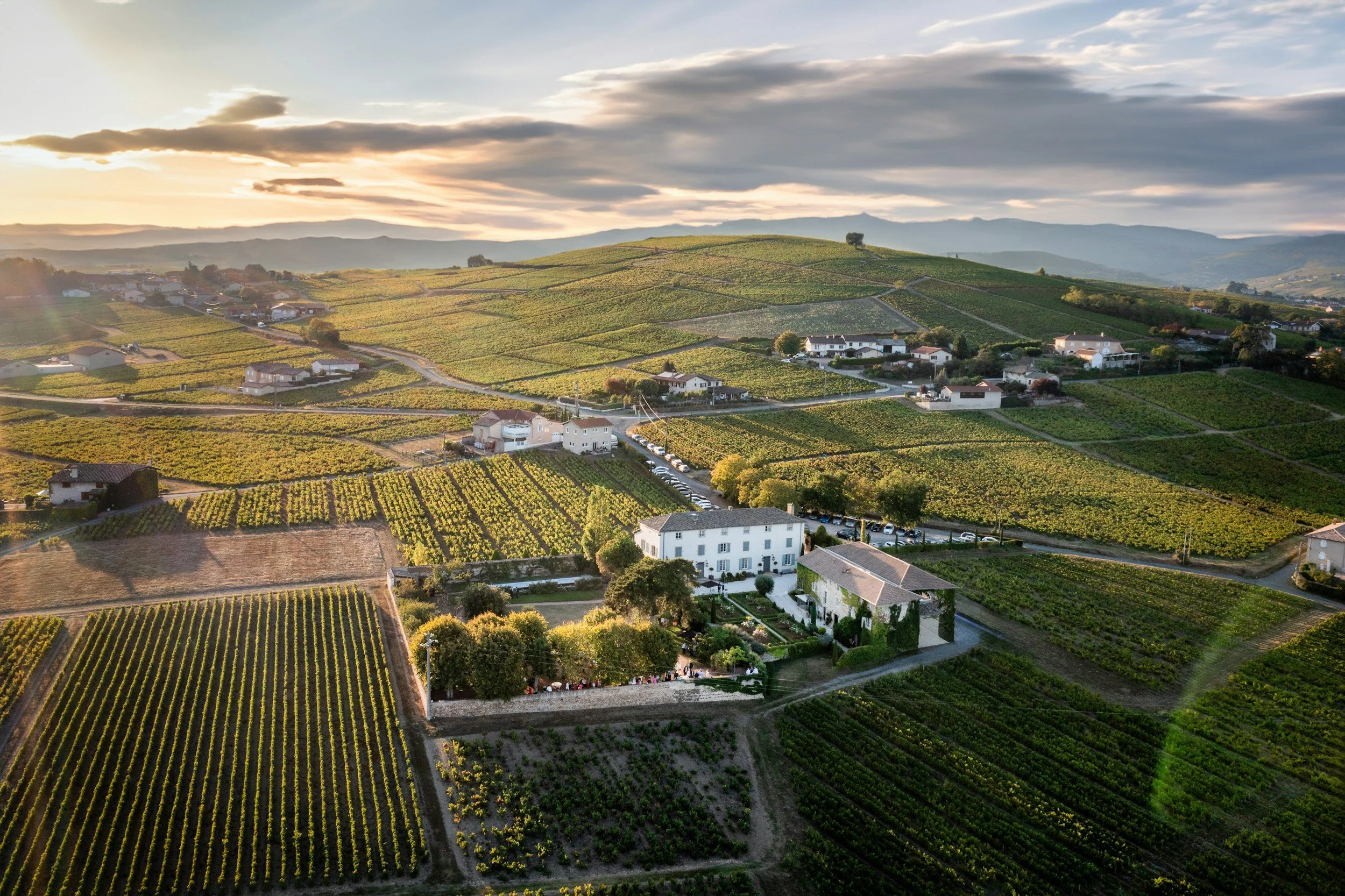
The market days in Mâcon worth planning accommodation around
If you're going to be in Mâcon on a Saturday, it's worth staying somewhere within walking distance of the centre because the market ends up shaping most of the morning without you really meaning it to.
By eight o'clock, the area between Place Gardon, Place aux Herbes and Esplanade Lamartine is already busy. Stallholders are still setting up parts of the market, café terraces are filling much earlier than usual and people are moving through the centre carrying flowers, fruit, bread and shopping bags that seem to get heavier as the morning goes on.
What I like about the market is that it still feels tied to everyday life rather than tourism. People aren't just wandering around looking for something to photograph. They're buying things for lunch, stopping at the same cheese stall they've probably been visiting for years or meeting friends for coffee before carrying on with the rest of the morning.
The market spills naturally into the surrounding streets as well. Around Rue Carnot and Place Saint-Pierre, bakery queues start forming early, cafés become noticeably busier and the whole centre takes on a different energy. One minute you're walking between stalls and the next you're sitting outside somewhere with a coffee watching the market continue around you.
By late morning, the pace slows slightly and that's usually when the day starts changing shape. People stop shopping and start settling in. The terraces around Place aux Herbes and the streets leading towards the Saône fill up, conversations get longer and lunch starts creeping into the day much earlier than planned.
That's why I think the market is one of the best reasons to spend a Saturday night in Mâcon rather than arriving for a few hours. When you're already staying in the centre, you can dip in and out of the market, stop for coffee, wander back towards the river and let the morning unfold naturally instead of trying to fit everything into a quick visit before catching the next train.
Why southern Burgundy starts feeling harder without a car once you leave the town centres
Southern Burgundy can feel surprisingly easy without a car when you're looking at it from Mâcon.
The trains work, the centre is walkable, and villages like Fuissé, Vergisson and Solutré-Pouilly don't seem very far away when you're planning the day over coffee near Place Saint-Pierre or along the river. It's only once you start heading out into the vineyards that things begin feeling different.
A few hours later, you're looking at the same route very differently.
One thing that catches people out around the Mâconnais is that the landscape doesn't work like the wine villages further north. Around Beaune, places often sit in a fairly logical line. Around Mâcon, the roads curve around hillsides, vineyards climb steep slopes and villages that looked almost next door to each other over morning coffee suddenly feel much further apart once you're actually moving between them.
The area around Fuissé and the Roche de Solutré is a good example. It's beautiful, but it isn't flat. The roads keep climbing, dropping and climbing again, and on warm afternoons there are stretches where the shade more or less disappears. What looked like an easy bike ride at 10:00 can feel very different after lunch when the temperature has climbed and you've spent a couple of hours sitting over a bottle of Pouilly-Fuissé.
The return journey is usually where reality kicks in.
Lunch runs longer than expected, somebody recommends another tasting nearby, the afternoon drifts on and suddenly you're trying to work out how you're getting back to Mâcon. The villages themselves aren't difficult. It's the combination of hills, heat, timing and transport that slowly starts making everything feel more complicated than it did earlier in the day.
That's why I think people enjoy this part of Burgundy more when they stop trying to cover so much ground. Fuissé doesn't need to be combined with three other villages. Neither does Vergisson. Most of the time, one village, a long lunch and a couple of tastings is enough to fill an afternoon without feeling rushed.
And honestly, that's when southern Burgundy starts working properly without a car. Not when you're trying to optimise every hour, but when you stop treating the day like a route and start treating it like an afternoon.
The quieter months in Mâcon that still work well for cafés and wine bars
A lot of places in wine country become noticeably quieter once summer ends. Mâcon does too, but not in a way that makes the city feel empty.
In September, there is still plenty of movement around the centre. Harvest is underway in places like Fuissé, Chaintré and Solutré-Pouilly, the terraces along Quai Lamartine are still busy on warm evenings, and it's not unusual to see people sitting outside near Place Saint-Pierre long after dinner. Then October arrives and things settle down a bit without ever feeling quiet.
What changes most isn't really the number of people. It's where they spend their time.
During summer, everyone wants to be beside the river. Once the weather turns, the activity shifts back into the centre. Around Rue Sigorgne, Place aux Herbes and the streets connecting them, café tables fill up much earlier in the day. Lunches seem to last longer. People disappear indoors and stay there.
November is probably when I notice it most. Walk through the centre on a wet afternoon and the cafés are often busier than they were in July. Bakery windows along Rue Carnot have steamed up completely, the bars around Place Saint-Pierre are already filling before dinner, and the weather outside becomes a very good excuse to order another glass rather than heading home.
The wine bars feel different too once terrace season ends. In summer, people move around constantly. One drink here, another somewhere else, then down to the river. During the colder months, people tend to stay put. You settle into a table and that's where the evening happens.
Even January works better than many people expect. A few restaurants take annual breaks and some places reduce their opening days, but the centre never feels shut down. The bakeries are busy before work, cafés are full around lunchtime and there are still plenty of places around Rue Sigorgne and Place Saint-Pierre where you can sit with a glass of Pouilly-Fuissé or Saint-Véran without feeling as though you're one of the only people out.
What I enjoy about Mâcon at this time of year is that the city stops feeling like a stop between wine villages and starts feeling like a place in its own right. The riverfront gets quieter, the centre becomes easier to enjoy and the cafés and wine bars feel more connected to everyday life than to weekend tourism.
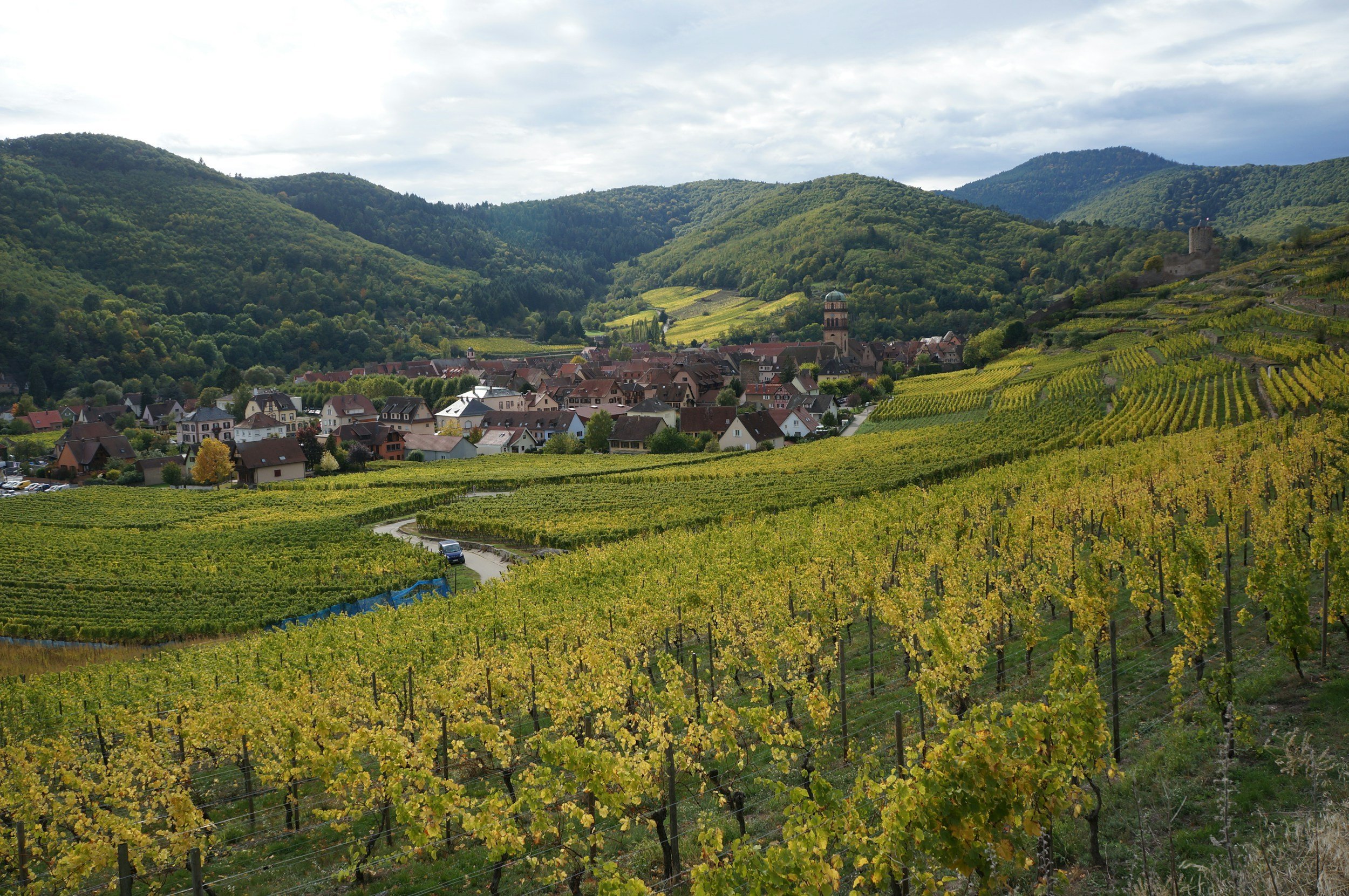
Tournus for slower mornings and smaller streets
Tournus is the sort of place that's easy to underestimate on the first day.
The centre isn't very big. You can basically walk from Saint-Philibert to Rue de la République in a matter of minutes, have a look around Place de l'Hôtel de Ville, wander down towards the river and come away thinking you've more or less got the measure of the town.
Before the cafés fill up in the morning and before people start arriving to visit the abbey, there's a short window when the centre still belongs almost entirely to the people who live there. Around Rue du Pont and Rue Désiré Mathivet, bakery doors are opening, people are collecting bread on their way to work and the first tables are being set out in the square. Nothing particularly exciting is happening, but that's partly the point.
By the second morning, you stop trying to "see" Tournus and just start spending time there.
Maybe you end up with a coffee near Place Carnot while the market traders are still setting up. Maybe you walk down towards the Saône and realise an hour has disappeared without you really doing anything. The town is small enough that you keep crossing the same streets, but somehow they feel different at different times of the day.
The area around Saint-Philibert is a good example. Around lunchtime it's full of visitors taking photos and looking at maps. Come back later in the evening and it's much quieter. You hear glasses clinking from restaurant terraces along Rue de la République, the bells from the abbey carry across the rooftops and there are whole stretches of the centre where hardly anyone is walking around at all.
That's what I think people miss when they rush through Tournus. And Tournus does looks tiny on a map, which is exactly why most people misjudge it.
It's not really a place that shows its best side in two hours. The appeal is in the second coffee, the slow morning, the evening walk back through the centre when most of the visitors have gone home and the town settles back into itself again.
Why staying near Saint-Philibert makes more sense than staying near the station
The station in Tournus is perfectly convenient when you arrive.
You step off the TER, walk a few minutes, and you're there. If you're only spending one night in town before heading on to Lyon or Beaune, staying close to the station can seem like the obvious choice.
The thing is, most people don't come to Tournus because of the station. They come for the abbey, the smaller streets around the centre, the cafés near Place de l'Hôtel de Ville, the market, and the slower pace that starts becoming noticeable once you spend more than a few hours here.
That's why I think the area around Saint-Philibert works much better as a base. Because from there, everything feels close without needing to think about it. You can walk out for coffee in the morning, wander through Place de l'Abbaye before the first visitors arrive, pick up pastries along Rue Désiré Mathivet, and be back at your hotel a few minutes later without checking a map.
The difference becomes even more obvious in the evenings.
Around the station, things quiet down fairly quickly once the trains have gone through. Around Saint-Philibert and Rue de la République, people are still sitting outside restaurants, glasses are clinking on terraces, and there is enough activity that the town feels alive without ever becoming busy.
It's also a much nicer place to start the day.
One of the best things about Tournus is the hour or two before the abbey starts drawing visitors. The streets around Place de l'Abbaye are still quiet, bakery deliveries are arriving, café staff are setting out chairs, and the town feels completely different from how it does later in the day. If you're staying near Saint-Philibert, all of that is right outside your door.
The walk from the station isn't particularly long anyway. Even with luggage, most hotels around the abbey area are usually less than ten minutes away on foot, which is a small trade-off for being in the part of town where you'll actually spend most of your time.
That's why I'd almost always choose the centre over the station area in Tournus. The convenience difference is surprisingly small, but the atmosphere is completely different once you step into the streets around Saint-Philibert and Place de l'Hôtel de Ville.
The station in Tournus is perfectly convenient when you arrive.
You step off the TER, walk a few minutes, and you're there. If you're only spending one night in town before heading on to Lyon or Beaune, staying close to the station can seem like the obvious choice.
The thing is, most people don't come to Tournus because of the station.
They come for the abbey, the smaller streets around the centre, the cafés near Place de l'Hôtel de Ville, the market, and the slower pace that starts becoming noticeable once you spend more than a few hours here.
That's why I think the area around Saint-Philibert works much better as a base.
From there, everything feels close without needing to think about it. You can walk out for coffee in the morning, wander through Place de l'Abbaye before the first visitors arrive, pick up pastries along Rue Désiré Mathivet, and be back at your hotel a few minutes later without checking a map.
The difference becomes even more obvious in the evenings.
Around the station, things quiet down fairly quickly once the trains have gone through. Around Saint-Philibert and Rue de la République, people are still sitting outside restaurants, glasses are clinking on terraces, and there is enough activity that the town feels alive without ever becoming busy.
It's also a much nicer place to start the day.
One of the best things about Tournus is the hour or two before the abbey starts drawing visitors. The streets around Place de l'Abbaye are still quiet, bakery deliveries are arriving, café staff are setting out chairs, and the town feels completely different from how it does later in the day. If you're staying near Saint-Philibert, all of that is right outside your door.
The walk from the station isn't particularly long anyway. Even with luggage, most hotels around the abbey area are usually less than ten minutes away on foot, which is a small trade-off for being in the part of town where you'll actually spend most of your time.
That's why I'd almost always choose the centre over the station area in Tournus. The convenience difference is surprisingly small, but the atmosphere is completely different once you step into the streets around Saint-Philibert and Place de l'Hôtel de Ville.
The cafés near the abbey that make slow mornings easy
One thing I like about staying near Saint-Philibert is that mornings never feel rushed.
In bigger towns, breakfast can end up becoming another thing to organise before the day starts. In Tournus, everything sits close enough together that you can simply wander out and see what looks good.
Around Place de l'Abbaye, the day starts surprisingly early. Before most visitors arrive, the square is still quiet, café staff are setting out tables and the boulangeries around Rue Désiré Mathivet are already busy with people picking up bread and pastries for the morning. If you're staying nearby, it's one of the nicest times to be in the centre.
La Maison du Haut is usually one of the first places people notice. Even if you're not planning to buy anything, it's hard to walk past without stopping. A few minutes away, the cafés around Place de l'Abbaye and Rue de la République start filling gradually rather than all at once, which is one of the reasons Tournus feels so different from busier Burgundy destinations.
What I enjoy is that mornings here don't seem to have much urgency. You can sit outside with coffee overlooking the abbey, watch the town slowly wake up and still have most of the day ahead of you. By the time visitors start arriving to see Saint-Philibert, you've already had the quieter version of the town.
If you're staying for a few nights, you start falling into little routines without really planning to. Picking up pastries from the same bakery, stopping for coffee in the same square, taking the long way back through Rue du Pont instead of heading straight to your hotel. Those small routines are part of what makes Tournus feel different from places that are built around sightseeing.
And honestly, that's why I think the area around Saint-Philibert is the best place to stay. Everything you actually want in the morning is already within a couple of minutes' walk, and the town feels at its best before the day properly gets going.
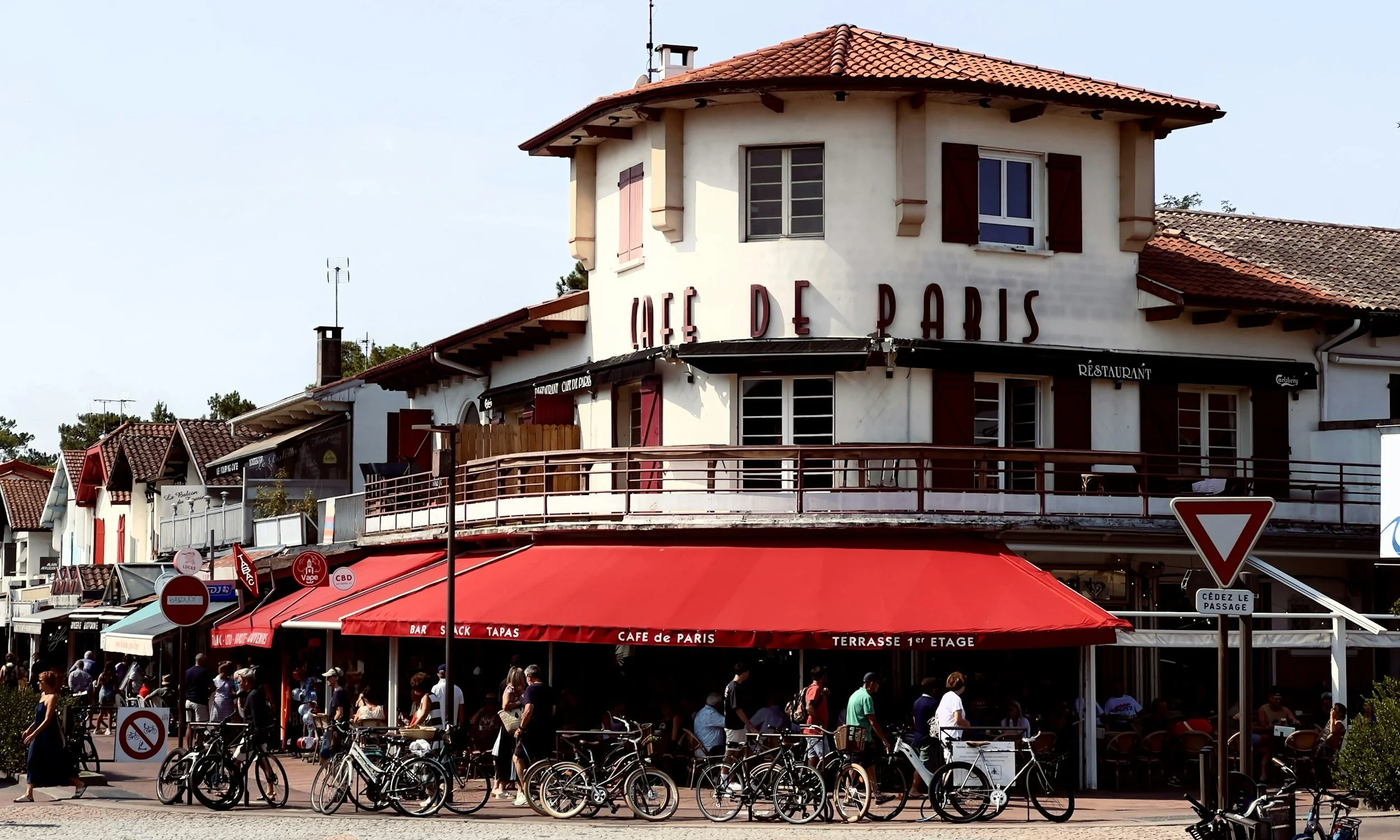
Why restaurant reservations matter more here than in Dijon or Chalon
One thing that catches people out in Tournus is that the town can feel incredibly relaxed right up until dinner time. During the afternoon, you can wander around Saint-Philibert, stop for a coffee near Place de l'Hôtel de Ville, stroll along Rue de la République and get the impression that everything is operating at a very gentle pace. Because the centre never feels particularly busy, it's easy to assume you'll decide where to eat later and that something will be available when you're ready.
Quite often, that's where the surprise comes.
Tournus has a much stronger food scene than most people expect from a town of this size, and restaurants such as Greuze, Aux Terrasses and Meulien attract diners from well beyond the local area. On weekends especially, you'll find people driving up from Lyon, Mâcon and nearby parts of Burgundy specifically for lunch or dinner, which means the dining rooms can fill long before the streets give any indication that the town is busy.
That's very different from Dijon or Chalon-sur-Saône, where you have far more room to improvise. If somewhere around Rue Musette is full in Dijon, you can usually continue towards Place Émile Zola, Rue Berbisey or Place François Rude and find another option without changing your evening plans too much. Chalon works similarly around Rue aux Fèvres and Place Saint-Vincent, where restaurants, bars and cafés are concentrated closely enough together that it rarely feels like a problem if your first choice doesn't work out.
In Tournus, there are simply fewer alternatives, which means the restaurants people really want to visit often fill surprisingly early. You can walk past Greuze before dinner and think the town seems quiet, then discover that most of the tables have already been reserved for the evening. During autumn and winter this becomes even more noticeable because some restaurants reduce their opening days, so the places that are serving dinner can become busy very quickly, particularly from Thursday through Sunday.
What I like about Tournus is that the whole town revolves around food in a very natural way. Lunches often run longer than planned, nobody seems especially interested in rushing through a meal and evenings tend to unfold at their own pace. The downside is that if you're hoping to eat at one of the better-known restaurants, it's worth thinking about dinner plans earlier than you probably would in Dijon or Chalon.
Most of the time, one reservation is all it takes to avoid the only genuinely frustrating part of staying here, because once you've secured a table, the slower rhythm that makes Tournus appealing becomes part of the experience rather than something you're fighting against.
Regional train routes from Tournus that still feel practical without a car
One of the things that surprised me about staying in Tournus was how little time I ended up spending thinking about transport.
When people first start planning a Burgundy trip without a car, there's often a temptation to build these very precise itineraries where every train, lunch reservation and tasting somehow fits together perfectly. In reality, Tournus works best when you stop trying to optimise every hour and use it as a base for a handful of places that are easy to reach on the same TER line.
Chalon-sur-Saône is probably the easiest example. The journey is short enough that it never feels like a major excursion, which means you can leave after a slow morning near Place Carnot, spend a few hours around Place Saint-Vincent, Rue aux Fèvres and the riverside, then head back whenever you're ready without feeling as though you've built the entire day around train times.
Heading south feels completely different. Within half an hour, you're in Mâcon, where the atmosphere changes almost immediately. The streets around Place Saint-Pierre and Rue Sigorgne feel busier, the terraces along Quai Lamartine stay lively well into the evening, and the whole city has a different energy from the smaller towns further north. It's one of those places that's close enough for lunch but interesting enough that you can easily spend a full day there.
Lyon is surprisingly realistic too. A lot of people automatically assume they'll need to stay overnight, but from Tournus it's straightforward enough to go down for the day, wander around Vieux Lyon, have lunch somewhere near Rue Mercière or the Presqu'île, and still be back in Burgundy in time for dinner.
What I like about this stretch of the TER network is that it gives you options without forcing you into complicated travel days. If you miss one train, another one usually comes along soon enough. If lunch runs longer than expected in Chalon or you decide to spend an extra hour beside the Saône in Mâcon, it rarely ruins the rest of the day.
That's probably why Tournus works so well without a car. The town sits in a part of Burgundy where the regional train network is genuinely useful, so you can spend less time planning logistics and more time deciding where you actually want to spend the afternoon.
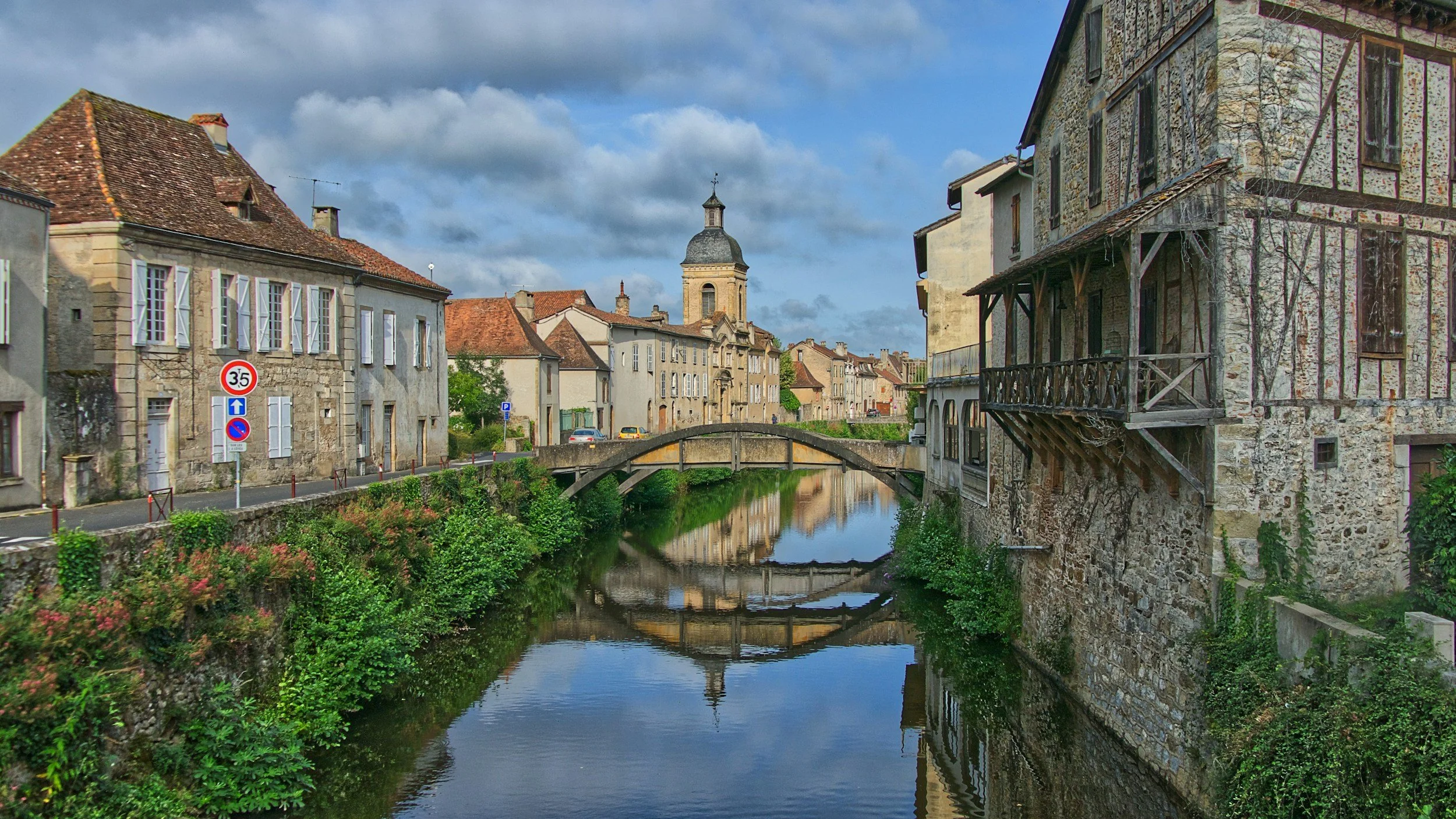
The evenings along the Saône when the town feels at its best
I actually think Tournus is at its best in the evening.
During the middle of the day, especially in summer, a lot of people are passing through. Some are visiting Saint-Philibert for an hour or two, others are stopping for lunch on the way between Beaune and Lyon, and the centre can feel busier than you might expect from a town this size. Then somewhere around early evening, things start changing.
The visitors thin out, the streets around the abbey become quieter and the pace slows down noticeably. If you walk down towards Quai de Verdun or the riverfront near the Saône, it often feels as though the town has taken a deep breath after a busy afternoon.
One of the things I like most is that there isn't really a "scene" here in the way there is in Dijon or parts of Beaune. People aren't moving from wine bar to wine bar or trying to fit one last tasting into the day. Most evenings feel much simpler than that. Restaurant terraces fill gradually around Rue de la République and Place de l'Hôtel de Ville, people linger over dinner, and the river becomes one of the nicest places to spend an hour before the light disappears completely.
The stretch around Quai de Verdun is especially nice during warmer months. Looking back towards the old town, you can see the towers of Saint-Philibert above the rooftops, while the water reflects the evening light coming off the riverside buildings. It's one of those places where you end up sitting longer than planned because there isn't really any reason to leave.
What makes Tournus different from larger Burgundy bases is that the evenings never feel over-scheduled. You can have dinner near Place de l'Hôtel de Ville, wander down towards the river afterwards and still find the town much as it was an hour earlier. Nobody seems to be rushing anywhere.
That's probably why I think staying a few nights here makes such a difference. During the day, Tournus can feel like a stop on a Burgundy itinerary. In the evening, once the streets quiet down and the riverfront settles into its slower rhythm, it starts feeling like a place in its own right.
What starts feeling limited in Tournus after several days without transport
Tournus feels wonderfully easy without a car for the first few days because the centre holds together so naturally.
You walk between Saint-Philibert, Rue de la République, Place Carnot, the Saône, the cafés near Place de l’Hôtel de Ville, and everything still feels comfortably within reach.
Then somewhere around day four or five, places like Brancion, Cormatin, Chardonnay, or smaller producers near Viré-Clessé suddenly start looking much more interesting once you’ve settled properly into Tournus itself. And online, they all look deceptively close.
Then you realise “close” in southern Burgundy often means standing beside a vineyard road in heavy afternoon heat trying to decide whether another forty-minute walk still sounds charming.
Taxi availability becomes annoying too once you leave the town centre properly. Around smaller villages, especially later in the day, suddenly everybody seems to be trying to leave at the same time. You’ll see people outside cellars refreshing taxi apps that barely load because the signal keeps dropping near the vineyards.
And after several evenings, you start recognising the everyday vibe.
The same people outside Café de la Paix every night. The same couples walking beside Quai de Verdun after dinner. The same locals discussing rugby outside bars near Place Carnot while pretending it hasn’t suddenly become much colder since sunset.
Weather here is also interresting. One hot afternoon walking everywhere feels pleasant. Five hot afternoons in a row starts feeling much more physical. Rain narrows the options quickly because Tournus doesn’t have endless cafés, bookstores, galleries, and wine bars to rotate between the way Dijon or Lyon does.
Honestly though, that’s usually the point where Tournus works best if people stop trying to turn it into a huge sightseeing base and instead let it stay what it’s actually very good at - a slower Burgundy town where long lunches and unplanned afternoons matter more than ticking places off a map.
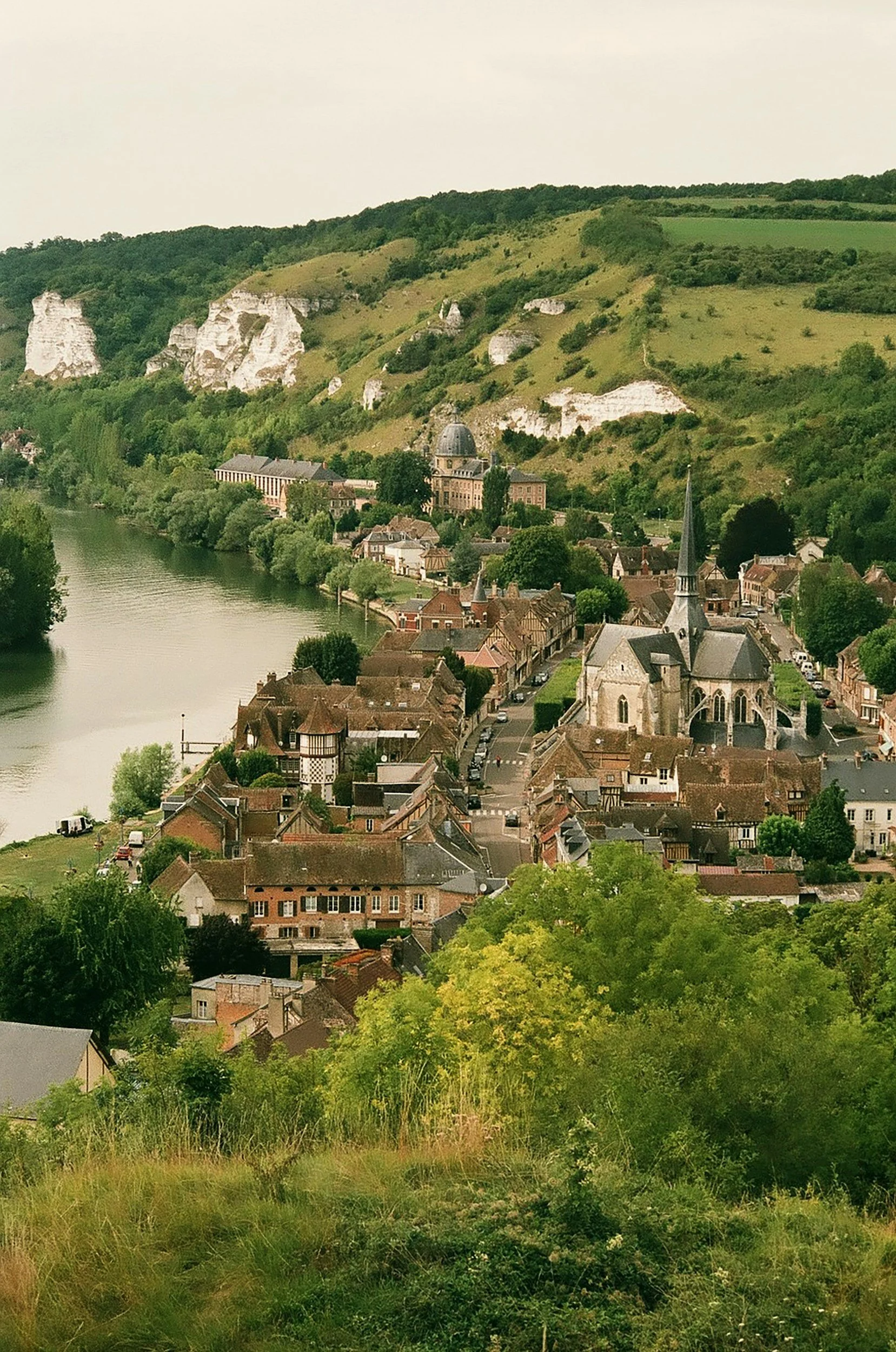
The Burgundy base that fits different kinds of trips
One thing I realised after spending time in all three towns is that there isn't really a single "best" Burgundy base without a car. It depends entirely on what you want the trip to look like once you're actually there.
If wine villages are the priority, Chalon-sur-Saône is probably the easiest choice.
It sits in a very practical position between Dijon and Mâcon, and the connections towards places like Mercurey, Givry and the wider Côte Chalonnaise are good enough that you don't spend the whole day thinking about transport. That's something people often underestimate when planning Burgundy without a car. A town might look romantic on paper, but after a few days of checking train times, arranging taxis and carrying wine purchases back to stations, convenience starts becoming surprisingly valuable.
Chalon handles that side of the trip well. You can spend the afternoon exploring wine villages, come back to the city, then walk out again in the evening around Place Saint-Vincent, Rue aux Fèvres or Rue du Châtelet without feeling as though the day has become one long logistical exercise.
If your idea of a good Burgundy trip involves slow mornings, long lunches and not feeling any pressure to be somewhere by a certain time, I'd choose Tournus every time. The centre around Saint-Philibert, Place de l'Abbaye and Rue de la République is compact enough that you can spend an entire morning wandering between cafés, bakeries and the river without really having a plan.
What I like most about Tournus is that the town doesn't constantly encourage you to move on to the next thing. In places like Dijon or even Beaune, there is always another restaurant, another wine bar or another street to explore. Tournus feels more comfortable with people lingering. You can sit outside near Place de l'Hôtel de Ville with a coffee, wander down towards the Saône an hour later and somehow realise that half the morning has disappeared without anything particularly dramatic happening.
That's why the choice usually comes down to what kind of days you want.
If you want flexibility, train connections and easy access to multiple wine villages, Chalon-sur-Saône is hard to beat. If you want slower mornings, quieter evenings and a town that feels easy to settle into for a few days, Tournus tends to leave a stronger impression than people expect.
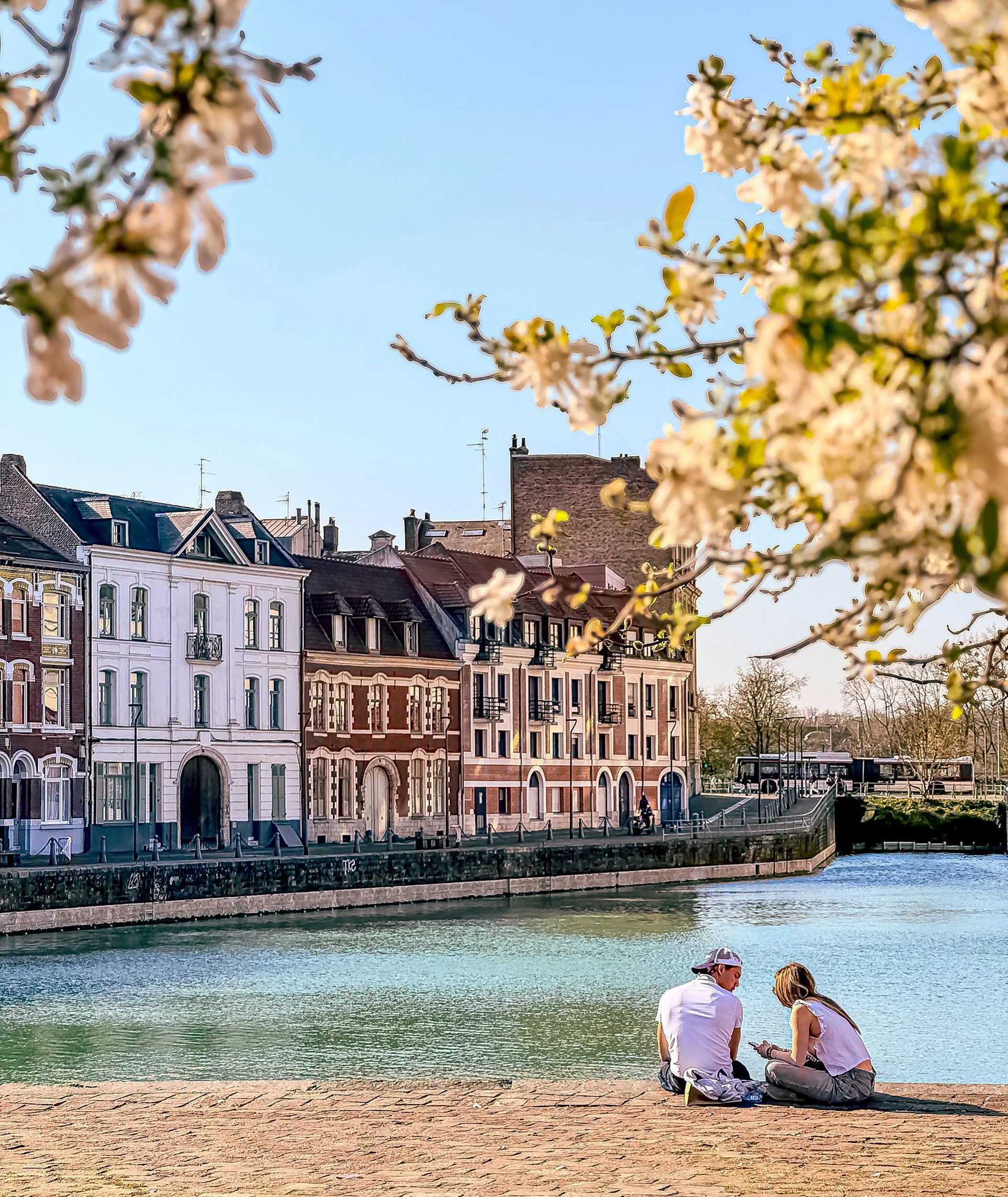
If your favourite part of Burgundy is the slower mornings, market squares and café culture, this Provence morning will probably feel familiar.
Where to stay in Burgundy if market mornings are your priority
If markets are one of the main reasons you're coming to Burgundy, the best base depends on what kind of market experience you're actually looking for.
For variety and convenience, Dijon is hard to beat. Les Halles sits right in the middle of the city, which means you can walk out of a hotel near Place François Rude, Rue Musette or Place Darcy and be at the market within a few minutes. What makes Dijon different is that the market becomes part of everyday life rather than a standalone attraction. You can stop by for oysters and a glass of white wine one morning, return another day for cheese, fruit and picnic supplies before catching a TER to Beaune, then spend a rainy morning browsing the covered stalls while the weather does its best to ruin everyone else's plans. If you're staying four or five nights and want market culture woven naturally into the trip, Dijon is usually the easiest choice.
Chalon-sur-Saône feels much more local. The market atmosphere around Place Saint-Vincent and the surrounding streets is less polished and less visitor-focused than Dijon. People are there because they're doing their weekly shopping, picking up lunch or meeting friends for coffee before heading home. You'll still find excellent produce, local cheeses and regional wines, but the feeling is very different. If Dijon feels like a city with a famous market, Chalon often feels like a market that still belongs primarily to the people who live there.
Mâcon is probably the town I'd choose if Saturday market mornings are a highlight rather than an extra. Around Place Gardon, Place Saint-Pierre and the streets leading towards the Saône, the market spills through a large part of the centre and gradually turns into lunch as the morning goes on. By late morning, shopping bags are tucked underneath café tables, people are ordering wine before noon and half the city seems to have drifted towards the terraces around Quai Lamartine. If your stay includes a Saturday, it's one of the strongest market experiences in southern Burgundy.
Tournus is the smallest of the four, but that's also part of its appeal. Market mornings feel closely connected to daily life around Place Carnot, Rue de la République and the streets near Saint-Philibert. Nobody is rushing to tick off stalls or photograph everything. People buy bread, stop for coffee, chat to neighbours and continue with their morning. It's less impressive than Dijon and smaller than Mâcon, but it feels genuine in a way that many visitors end up appreciating.
If I had to choose just one market-focused base without a car, I'd still pick Dijon because it offers the best balance of market culture, walkability and transport connections. But if you're looking for the most local atmosphere, Chalon-sur-Saône and Tournus are often the places people remember longest afterwards.
The Burgundy base that works best for a three-night trip from Paris
If you're coming from Paris for three nights, Dijon is usually the place that makes the most sense.
Not because it's the most beautiful town in Burgundy or because it has the best wine bars or restaurants. The real advantage is that you lose almost no time getting the trip started.
You leave Paris in the morning and not much later you're stepping out of Dijon-Ville station. Within a few minutes, you're already heading towards Place Darcy, Rue de la Liberté or Rue Musette instead of trying to coordinate another train, a taxi or a hotel transfer somewhere deeper into wine country. On a longer trip that might not matter much, but on a three-night break it makes a surprisingly big difference.
A lot of people underestimate how quickly a short Burgundy trip disappears.
By the time you've travelled from Paris, checked into a hotel and figured out where everything is, the first day is already half gone. That's partly why Dijon works so well. You can spend that first evening doing very little and still feel like you've arrived somewhere properly. Maybe you wander through the streets around Rue des Forges and Place François Rude, stop for a glass of Aligoté somewhere that looks inviting, then end up staying longer than planned over dinner near Place Émile Zola while the terraces gradually fill up around you.
The next morning, Les Halles is already awake before most visitors have finished breakfast. Market traders are setting up, people are stopping for coffee near Rue Bannelier before work and the city feels busy in a very normal way that never feels staged or built around tourism.
What makes Dijon particularly good for a short trip is that you don't need a detailed plan for every day. If the weather is perfect, you can catch a TER to Beaune and spend the afternoon wandering between wine bars and tasting rooms. If it rains, there are plenty of cafés, markets and wine bars within walking distance of the centre. If you sleep later than intended after a long evening, it doesn't really matter because you're not relying on a complicated chain of connections to rescue the day.
And that's usually where Dijon pulls ahead of some of the smaller Burgundy towns.
Places like Tournus, Beaune or even parts of the Côte Chalonnaise can be wonderful once you've settled into them, but on a three-night trip you're often trying to make every day count. Dijon gives you enough Burgundy atmosphere to feel immersed in the region while still making everything straightforward, which means you spend more time enjoying the trip and less time moving between places.
By the third evening, that's often what people appreciate most. The city is still lively around Place du Théâtre, Rue Berbisey and Place François Rude, the wine bars are full, dinner can happen whenever you're ready for it and there's never much sense that the day needs to end early just because you're travelling without a car.
For a longer Burgundy trip, there are good arguments for staying elsewhere. For three nights from Paris, Dijon is usually the base that gives you the most freedom with the least effort.
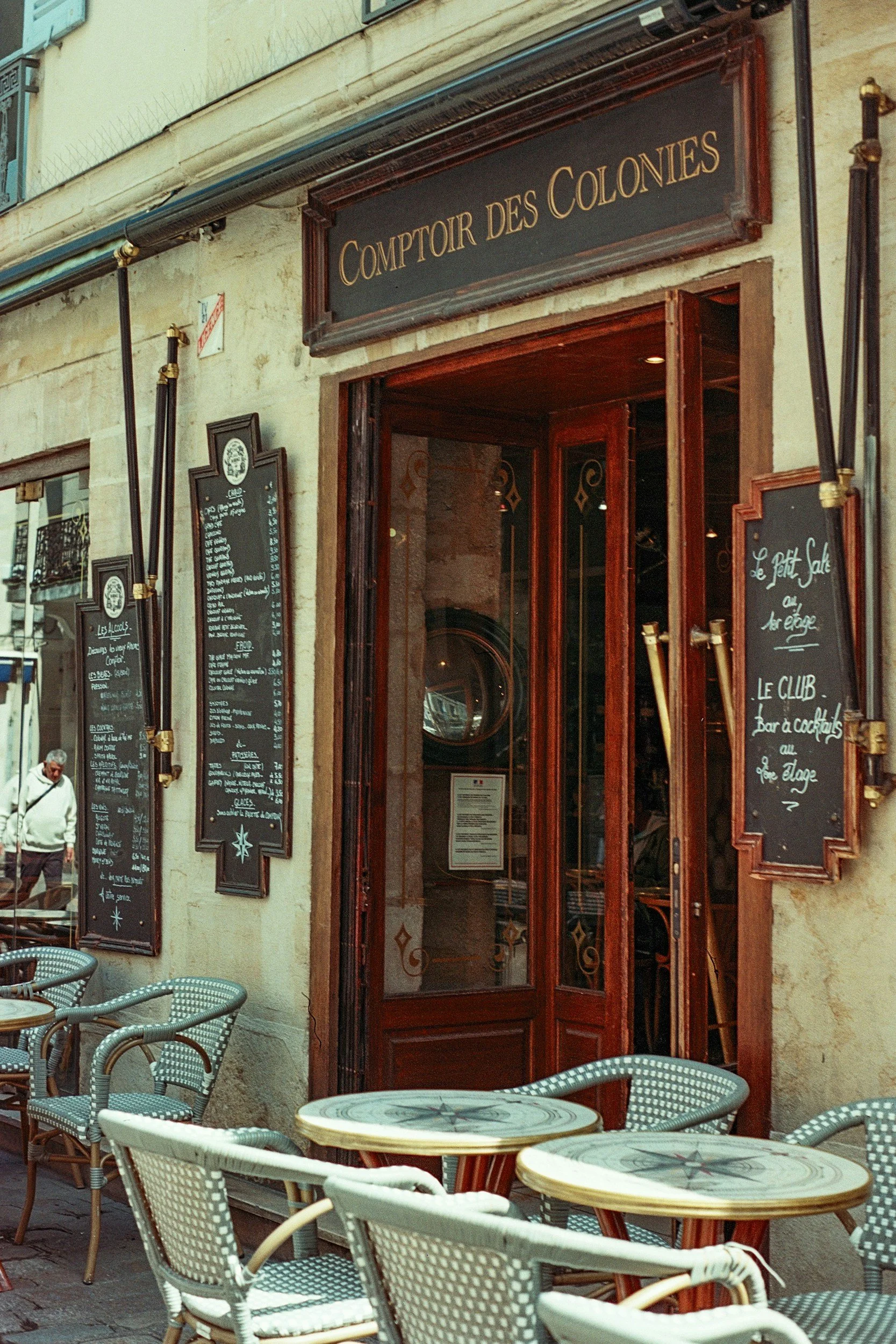
Which Burgundy destination handles bad weather best
Most Burgundy guides quietly assume you're visiting on a sunny September afternoon with a vineyard view and a long lunch ahead of you.
The reality is that plenty of people visit in November, March or early April when the forecast looks far less romantic. Three days of low cloud, steady rain and cold wind can completely change how a place feels, and some Burgundy bases handle that much better than others.
Dijon is probably the safest option if the weather looks questionable before you travel. Les Halles stays busy regardless of what's happening outside, cafés around Place François Rude and Rue Musette fill up quickly on wet afternoons, and the city is large enough that you can spend hours wandering between wine bars, bakeries, markets and covered streets without feeling trapped indoors. Even when it's raining heavily, the centre still feels lively.
Chalon-sur-Saône is the place that surprises people most.
On paper, it doesn't sound like the obvious choice for a winter Burgundy trip, but the city has enough everyday life that bad weather never seems to dominate the experience. Around Place Saint-Vincent, Rue aux Fèvres and Rue du Châtelet, cafés stay busy, restaurants fill up normally and the centre still feels lived-in rather than visitor-dependent. If rain settles in for several days, Chalon often feels easier than smaller wine towns because you don't run out of places to go.
Beaune is where the weather starts making a bigger difference. The town is beautiful year-round, but a lot of the experience revolves around walking between tasting rooms, wine bars and the historic centre. When the rain arrives, especially outside harvest season, parts of the old town can feel noticeably quieter. It's still enjoyable, but the weather becomes a much bigger part of the trip.
The same applies to some of the smaller wine villages. Meursault, Volnay and Saint-Romain can feel wonderful on clear autumn days when people are sitting outside with a glass of wine and the vineyards are glowing in late-afternoon light. After several hours of cold rain, however, the options narrow quite quickly and you start noticing how small these places really are.
That's usually why I recommend thinking about the forecast when choosing a Burgundy base. If sunshine is guaranteed, almost anywhere can work. If the weather looks uncertain, Dijon and Chalon-sur-Saône tend to be the places where the trip still feels enjoyable even when Burgundy spends three days reminding you that it isn't always vineyard postcards and blue skies.
The easiest place to stay in Burgundy if you're tired of constantly changing hotels
A lot of Burgundy itineraries look great on paper and surprisingly tiring once you start imagining the practical side of them.
Two nights in Beaune. One night in Tournus. A couple of nights somewhere near the vineyards. Another train. Another hotel check-in. Another afternoon spent dragging luggage across station platforms while trying not to break the wine bottles you've already bought.
That's why I think Chalon-sur-Saône makes a strong case as a single base, especially for trips lasting four or five nights or longer.
The city sits in a genuinely useful position in the middle of the region. You can head north to Dijon for the day, spend time in the Côte Chalonnaise around Mercurey and Givry, travel south to Mâcon or even continue to Lyon, then return to the same hotel every evening without feeling as though you're constantly relocating.
What surprised me most about Chalon is how much easier that makes the entire trip feel after a few days.
Instead of checking train times every morning and wondering whether you'll make the next connection, you start settling into a rhythm. The station becomes familiar, the route back through the centre becomes second nature, and the city gradually starts feeling less like a destination and more like a place you're temporarily living in.
That's something smaller Burgundy towns don't always offer.
They're wonderful for a night or two, but once you're travelling without a car, there can be a lot of friction involved in moving between them. Chalon removes much of that. If lunch runs late in Mercurey, it doesn't matter much. If the weather turns bad and you decide to spend the afternoon in Dijon instead, that's easy too. The city gives you enough flexibility that small changes rarely affect the rest of the trip.
And because Chalon is a real working city rather than a place built primarily around visitors, longer stays don't become repetitive as quickly as people expect. The atmosphere around Place Saint-Vincent feels different on a busy Saturday morning than it does on a rainy Tuesday afternoon. The cafés around Rue aux Fèvres fill and empty with the rhythm of the working week, and the riverfront near Quai Gambetta always seems to have something slightly different happening depending on the weather, the season and the time of day.
That's ultimately why I think Chalon works so well as a long-stay base. The city gives you easy access to the rest of Burgundy, but it also gives you somewhere enjoyable to return to at the end of the day. After a while, that becomes far more valuable than constantly packing and unpacking your suitcase in search of the perfect location.
The one Burgundy town that makes regional train day trips feel genuinely easy
Chalon-sur-Saône is probably the place that changed my mind most about travelling around Burgundy without a car. When people first start planning a trip here, they tend to focus on Beaune, the vineyard villages or the smaller towns that look good in photos. Chalon often ends up being treated as the practical option rather than the exciting one. Then a few days into the trip, after you've checked train times during lunch for the third day in a row and started calculating whether there's enough time for another glass of wine before the next departure, you begin to understand why so many people who travel Burgundy regularly seem to keep coming back to Chalon.
A lot of it comes down to how comfortably the city sits in the middle of everything. Dijon is easy. Tournus is easy. Mâcon is easy. Even Lyon is close enough that it doesn't need to become a major day-long expedition. Instead of every outing feeling like a carefully balanced chain of connections, the region suddenly feels smaller and more manageable. You can leave Chalon after breakfast near Place Saint-Vincent, spend a few hours wandering around Les Halles in Dijon, lose track of time over lunch, and still get back without feeling as though you've complicated the entire day.
The same thing happens heading south. What starts as a quick afternoon in Mâcon can easily stretch into the evening once you're sitting near Quai Lamartine watching the river and ordering another glass of Saint-Véran. In Tournus, a stop for coffee near Place de l'Hôtel de Ville somehow turns into lunch, and then another hour disappears before anyone even notices. The difference is that none of these situations feel stressful when Chalon is your base. Missing one train rarely feels catastrophic because another one usually comes along soon enough that the day keeps moving naturally.
That's really what Chalon does better than anywhere else in Burgundy. The trains stop becoming the main event. They fade into the background and simply become part of how you move around the region. Instead of building the day around transport, you start building it around whatever you're actually enjoying, whether that's a long lunch in Mercurey, a market morning in Dijon or an afternoon wandering around Mâcon.
And when you get back in the evening, Chalon still feels like somewhere worth returning to. Around Rue aux Fèvres and Place Saint-Vincent, the terraces are busy, people are lingering over wine, and the centre has enough life that the day doesn't feel finished the moment you step off the train. That's usually when the city starts making sense. Not on the first day, but somewhere around day three, when you realise you've spent less time worrying about logistics than anywhere else in Burgundy.
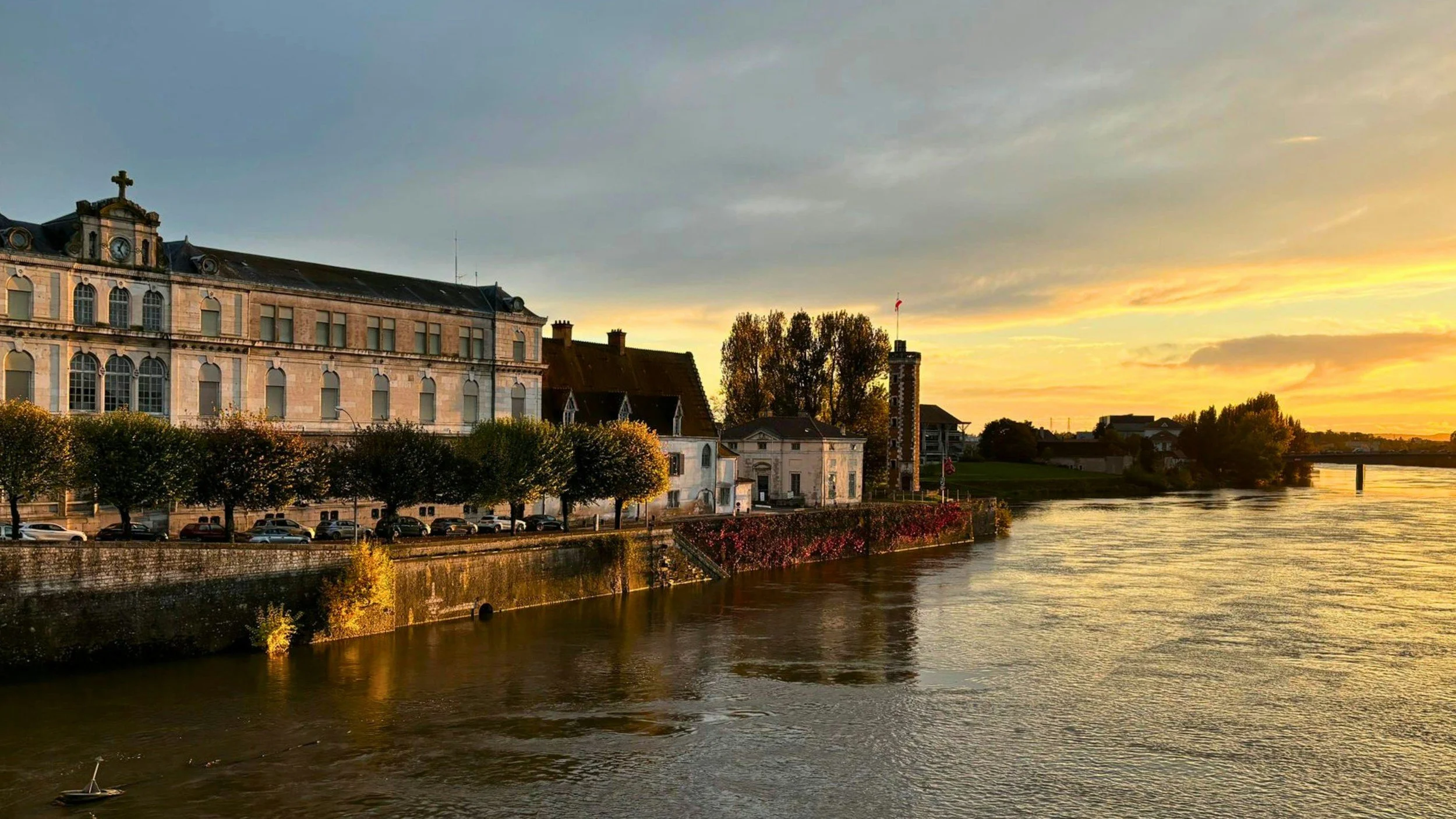
The Burgundy town that feels easiest when you're travelling alone
Dijon is probably the Burgundy base I'd recommend most often to solo travellers.
Not because it's the most beautiful place in the region or because there's more to see than everywhere else. It's because the city gives you enough life around you that being alone rarely becomes something you're consciously aware of.
That isn't always true elsewhere in Burgundy.
A village like Meursault can be wonderful for an afternoon. So can somewhere like Saint-Romain or even parts of Beaune. But after the tasting rooms close and dinner service settles in, some smaller wine towns can start feeling surprisingly quiet if you're travelling by yourself. You suddenly realise there are only a handful of places open, most tables are occupied by couples or small groups, and the evening has become much shorter than you expected.
Dijon doesn't really have that problem.
You can spend the morning wandering through Les Halles, stop for coffee near Rue Bannelier, browse the bookshops around Place Grangier, then disappear into the smaller streets around Rue Jeannin or Rue Vauban without ever feeling as though you're doing something unusual by yourself. The city is full of students, office workers, shoppers, people meeting friends after work and locals going about their day, so a solo traveller naturally blends into the background.
That becomes even more noticeable in the evenings. Around Place François Rude, Rue Berbisey, Rue des Forges and Place du Théâtre, there are enough wine bars, cafés and restaurants that nobody pays attention to whether you've arrived alone or with a group. You can order a glass of Bourgogne rouge, sit outside for an hour watching the city move around you and it simply feels normal.
I also think Dijon handles slower days better than anywhere else in Burgundy. Not every day of a trip needs to be a vineyard excursion or a perfectly planned train journey. Sometimes it's raining. Sometimes you've spent too long over lunch. Sometimes you just want a coffee, a pastry and somewhere comfortable to sit for a while. Dijon gives you plenty of places to do exactly that without feeling as though you've run out of things to occupy the afternoon.
That's ultimately why the city works so well on your own. It gives you enough activity when you want company, enough quiet streets when you don't, and enough ordinary life around you that being alone never becomes the main story of the day.
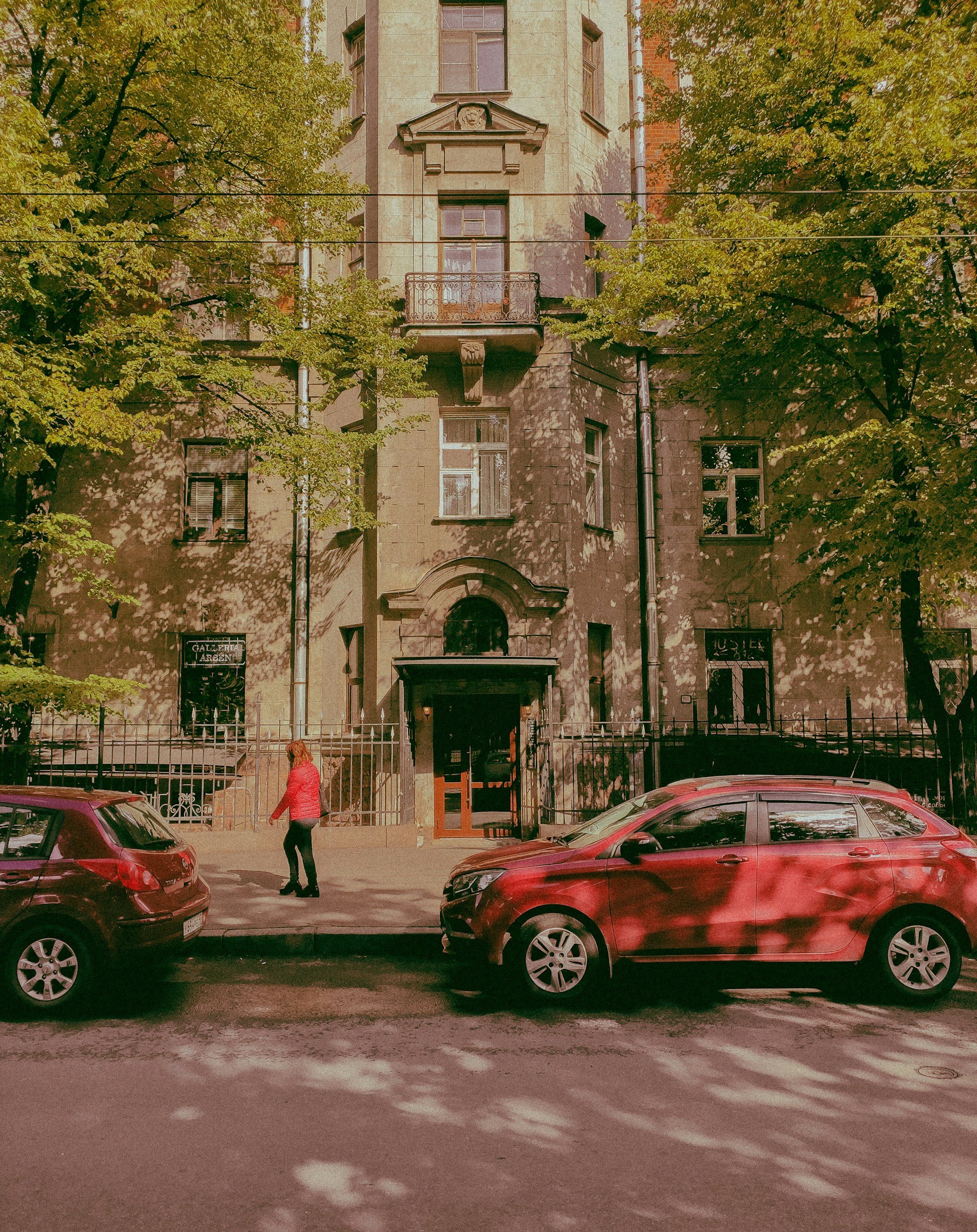
The transport mistakes that look small on a map and much bigger in real life
One thing that surprised me about Burgundy without a car is that the trains themselves are rarely the difficult part.
Most of the TER journeys between Dijon, Beaune, Chalon-sur-Saône, Mâcon and Lyon are straightforward enough. The little frustrations usually happen at the beginning or end of the day when you're carrying luggage, arriving later than planned, trying to find your hotel, or wondering whether that village restaurant was actually as close to the station as it looked on Google Maps.
Beaune is probably where this catches people most often. A lot of hotels sit just outside the old town around Avenue Charles de Gaulle, Rue du Faubourg Madeleine or the roads leading back towards the station. When you're booking, the difference between those areas and somewhere near Place Carnot or Rue Monge doesn't look very dramatic. Then you arrive with a suitcase, a backpack and three bottles of wine you absolutely didn't intend to buy, and suddenly those extra ten minutes feel much longer than they did on the map.
Tournus has its own version of the same problem. In good weather, the walk from the station towards Rue de la République and Saint-Philibert is easy enough that most people won't think twice about it. In heavy rain, though, it feels like a completely different town. The puddles appear, umbrellas come out, the narrow pavements feel smaller, and suddenly being a few minutes closer to the centre starts looking like a very good decision.
Dijon is the opposite. You step out of Dijon-Ville and you're already in the middle of things. There are trams crossing Place Darcy, cafés still open, supermarkets, takeaway places, people heading home from work, students drifting through Rue de la Liberté. If your train is delayed, it's annoying, but it rarely changes the evening very much because the city keeps moving around you anyway.
The same thing happens with day trips. Burgundy feels wonderfully easy by train in the middle of the day, but some places become a little less forgiving once dinner enters the picture. Around Solutré, Vergisson and Fuissé, everything seems perfectly connected at lunchtime. Then the afternoon drifts on, another glass appears, nobody wants to leave yet, and suddenly you're working out taxi options in a village that's gone very quiet after sunset.
Mercurey can be similar in a less obvious way. At lunch, the village feels busy and lively, with people moving between tastings, restaurants and wine producers. By evening, especially outside summer, you start noticing how many people's plans quietly revolve around one particular TER back to Chalon.
That's usually why the easiest Burgundy trips are the ones where every hour isn't planned too tightly. A hotel close to the station, a little flexibility in the evenings, and a willingness to stay longer somewhere if you're enjoying yourself will solve most of the transport problems people worry about before they arrive.
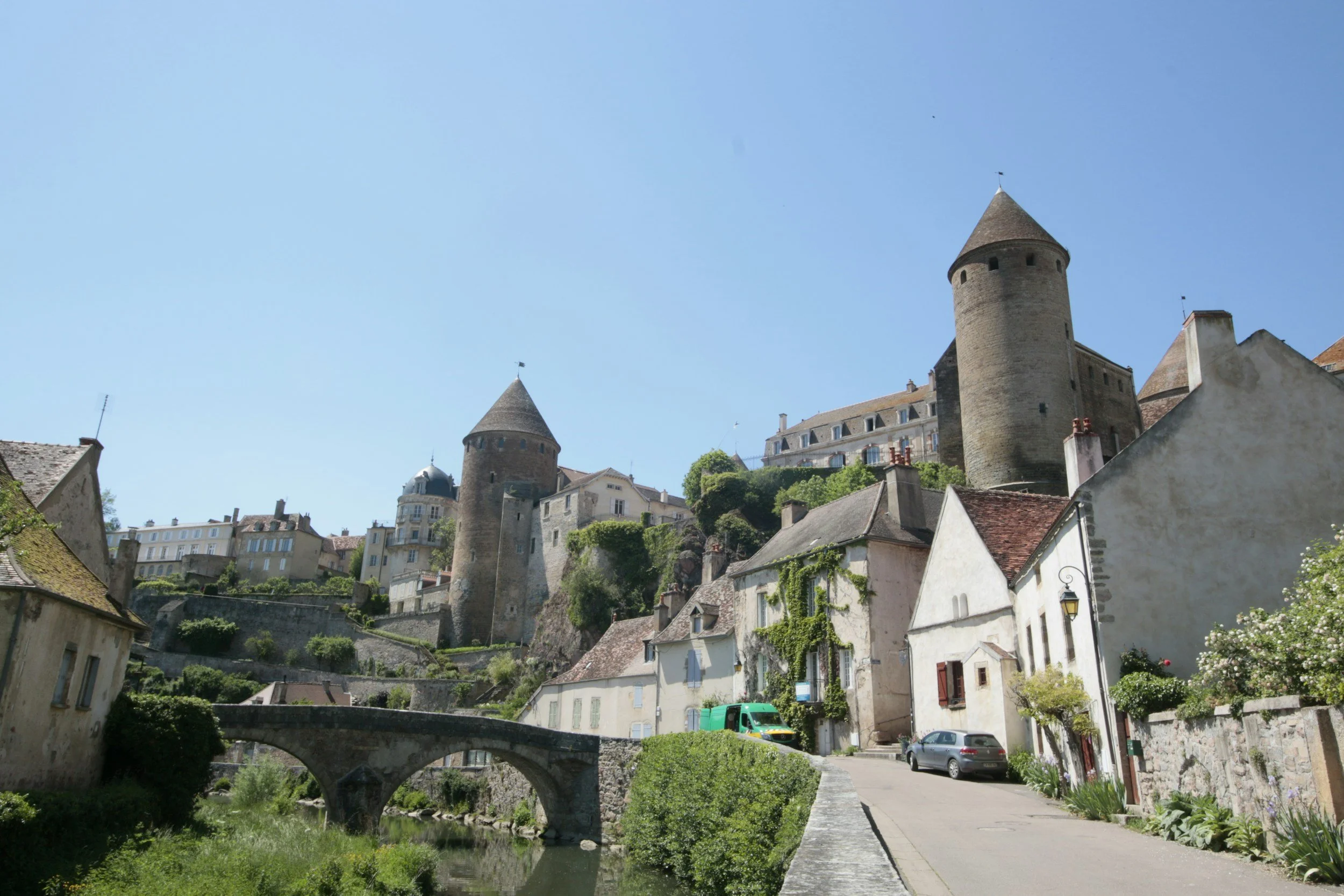
Why Sundays feel very different depending on where you stay in Burgundy
Sundays are probably the one day that reveals the biggest difference between Burgundy bases when you're travelling without a car.
During the rest of the week, it's fairly easy to move around the region. Trains run regularly, cafés stay open, market days create movement in the town centres and there's usually enough flexibility that a delayed lunch or a missed connection isn't a big deal. Sundays are different.
Dijon handles Sundays better than anywhere else in Burgundy.
You still have people wandering around Les Halles in the morning, cafés filling near Place François Rude, families out around Place Darcy and plenty of restaurants open around Place Émile Zola and Rue des Forges. The city feels quieter than a Saturday, but it still feels like a city. If you wake up without a plan, it's easy to fill the day. You can wander through the centre, spend an hour in a café near Rue Musette, stop for lunch, browse bookshops around Place Grangier or simply walk until you find somewhere that looks inviting.
Chalon-sur-Saône is similar, although in a more local way. Around Place Saint-Vincent and Rue aux Fèvres, people are still meeting for lunch, sitting outside cafés if the weather is good and walking along the Saône in the afternoon. The city slows down, but it doesn't shut down. If your train arrives late or the weather turns bad, there are still enough cafés, restaurants and ordinary life around you that the day doesn't feel disrupted.
Beaune is where the difference becomes more noticeable.
Sunday mornings are lovely around Place Carnot and the streets near the Hospices. The cafés fill up, people enjoy breakfast and the centre still feels busy enough. By late afternoon, though, the town starts changing. Day visitors drift back towards Dijon, tasting rooms close, and some of the energy that feels so obvious on Friday and Saturday begins to fade. If you're staying near Rue Monge or the historic centre, that's usually not a problem. If you're relying on taxis, evening transport or spontaneous plans, Sundays can suddenly feel a little less flexible.
The smaller wine villages are where Sundays require the most planning.
Places like Rully, Saint-Romain, Volnay or parts of the Mâconnais can feel wonderful on a sunny Sunday lunch. The challenge comes later. Once lunch service ends and people head home, the villages quiet down quickly. Buses are limited, taxis aren't always easy to find, and there may be very few places left open if you decide you want one more coffee or a glass of wine before heading back.
That's usually why Dijon and Chalon make such comfortable bases without a car. You don't need to think about Sunday very much. The day unfolds naturally. In the smaller villages, Sundays can still be enjoyable, but they're the one day where a little planning goes a long way. Knowing which restaurants are open, when the trains run and how you're getting back afterwards makes the difference between a relaxed day and one that ends with you staring at a timetable wondering where everybody went.
Dragging suitcases through Burgundy stations suddenly feels very real after reading this article, and this brocante guide may honestly convince you to pack lighter before the trip.
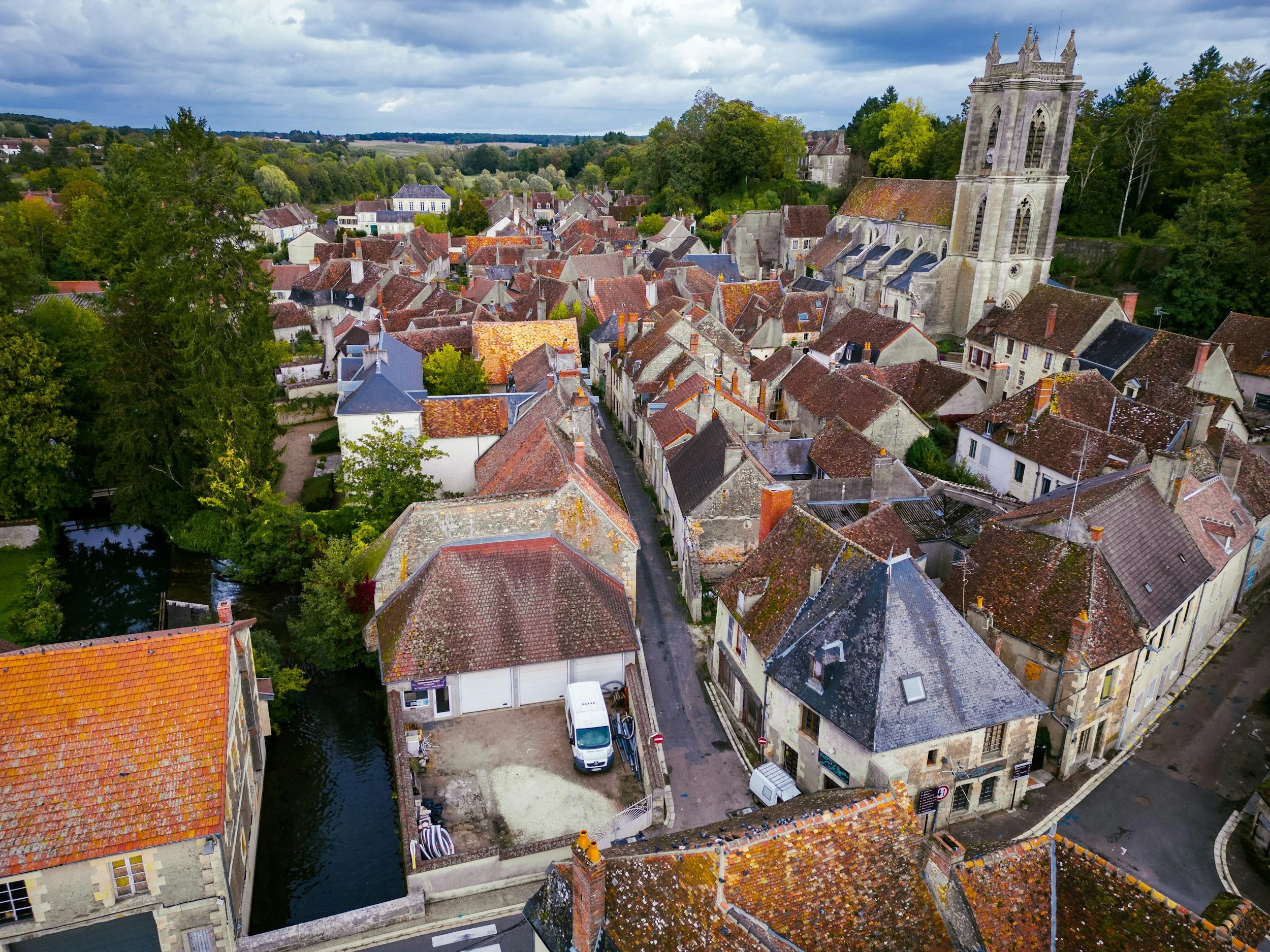
Most France guides recycle the exact same destinations, but these hidden France picks feel much more useful once you start wanting quieter bases and fewer crowds.
One thing I would do differently next time
If I went back and did the same trip again, I'd probably spend less time worrying about which Burgundy town is technically the best base.
That's usually where people start when planning. Dijon or Beaune? Chalon or Mâcon? Two nights here? Three nights there? Which village deserves a day trip and which one doesn't?
After a while, those questions start mattering less than I expected.
What ended up making the biggest difference wasn't choosing the perfect town. It was choosing somewhere that made the trip feel easy enough that I didn't have to think about logistics every few hours.
Because Burgundy has a habit of changing the shape of your day.
You leave for what looks like a quick morning in Beaune and somehow you're still there at dinner. You arrive in Dijon planning to spend most of the day elsewhere and end up lingering around Les Halles, Place François Rude and Rue des Forges much longer than expected. You stop in Tournus for lunch and realise it's already late afternoon when you eventually walk back towards the station.
The funny thing is that none of those moments feel particularly important while they're happening.
Nobody goes home talking about the TER they caught from Chalon-sur-Saône or the timetable they followed perfectly. What people remember are usually the places where they unexpectedly wanted to stay longer.
And that's probably why choosing a good base matters more than choosing a perfect itinerary.
The best Burgundy trips aren't necessarily the ones where you saw the most villages or tasted the most wine. They're usually the ones where there was enough room to change your mind halfway through the day without feeling like the entire plan was falling apart.
That's a surprisingly useful thing to know before you arrive because most guides will tell you where to go.
Very few tell you to leave enough space to stay when you find somewhere you like.
Spring weekends become much easier once you stop trying to squeeze too many regions into one route, and this Périgord Noir weekend fits beautifully after Burgundy or Lyon.
FAQ: Burgundy without a car
Is Dijon or Beaune better if you don’t want to rent a car?
Dijon is usually much easier without a car, especially for first-time Burgundy trips.
The station sits directly beside the centre, trams run across the city, and the areas around Rue Musette, Place Darcy, and Les Halles stay lively enough that you can arrive late, walk to dinner, buy groceries, or catch early TER trains without needing taxis.
Beaune works better for shorter wine-focused stays, but the town becomes noticeably less convenient once you stay outside the old walls near Place Carnot or Rue Monge. Evening transport options shrink faster there, especially after tastings.
Can you realistically visit Burgundy wine villages without driving?
Some villages, yes. Most villages, not fully.
Places near Chalon-sur-Saône and Mâcon work best because you can combine TER trains with short taxi rides. Villages like Mercurey, Givry, Fuissé, and Vergisson are possible without a car if you plan one area per day instead of trying to cover half the region at once.
The mistake many people make is assuming Burgundy villages connect to each other easily once they’re already there.
They usually don’t.
How late do Burgundy TER trains actually run?
Later between major towns than between villages.
Dijon ↔ Beaune ↔ Chalon-sur-Saône generally stays manageable into the evening, especially Thursdays to Saturdays. Smaller routes thin out much earlier than people expect, particularly Sundays.
One thing visitors notice quickly is that Burgundy rail schedules are built around regional commuting more than wine tourism. A route that feels frequent at 14:00 can suddenly become awkward after dinner.
Always check the final return train before long lunches or tastings outside the cities.
Can you rely on Uber in Burgundy?
Not really outside Dijon and Lyon.
In Dijon, Uber works relatively normally around the station and centre. In Beaune, Chalon-sur-Saône, Tournus, and the vineyard villages, local taxis are far more common and often need advance booking — especially evenings, Sundays, and harvest season weekends.
Around villages like Fuissé, Meursault, or Mercurey, it’s completely normal for no rides to appear at all on apps after dinner.
Which Burgundy town is easiest with luggage?
Dijon by far.
The walk from Gare de Dijon-Ville into the centre is flat, busy, and practical. There are lifts, tram stops, grocery stores, pharmacies, cafés, and plenty of hotels within easy walking distance around Place Darcy and Rue du Docteur Maret.
Beaune becomes tiring much faster with luggage because of the stone streets near Rue Maufoux and the quieter roads outside the old centre. Tournus gets awkward in rain because the older surfaces near Rue du Pont become slippery and uneven very quickly.
Do Burgundy train stations have luggage lockers?
Dijon is the safest option if luggage storage matters.
Smaller Burgundy stations often have very limited facilities or inconsistent opening hours. Beaune catches people with this constantly because many travellers arrive early expecting to store bags before tastings, then realise they’ll be dragging suitcases through the centre instead.
Tournus and smaller regional stations are especially limited.
If you’re travelling with wine purchases, large suitcases, or market shopping, it’s worth planning accommodation check-in timing carefully.
What shuts down on Sundays in Burgundy?
Much more than people expect.
Smaller grocery shops, some cafés, taxi availability, bakery hours, and certain restaurant services all become more limited by late Sunday afternoon, especially outside Dijon.
The Mâconnais changes noticeably after lunch on Sundays. Villages around Vergisson and Fuissé can feel busy and social at 13:00, then surprisingly quiet by early evening once terraces empty and transport options thin out.
Sunday evenings are usually better for slower dinners and staying local rather than trying to move between towns.
Which Burgundy town still feels lively in winter without a car?
Dijon and Chalon-sur-Saône both work very well outside peak season because they still function as real cities year-round.
Around Rue Berbisey in Dijon or Rue aux Fèvres in Chalon, cafés and wine bars stay busy even during colder months because locals actually use them regularly outside tourism season.
Smaller wine villages become much quieter in January and February, especially during rainy periods when terraces disappear and some restaurants close midweek.
Is Burgundy tiring without a car?
It can be if you try to move too much.
The trips that work best without a car are usually slower and more regional. One base. Fewer hotel changes. Longer stays in each place.
People who struggle most are usually trying to sleep in multiple wine villages across a single week while carrying luggage through stations, stairs, stone streets, and taxi connections every other day.
Burgundy becomes much easier once you stop trying to “cover” the whole region.
Should you stay in Lyon before Burgundy?
Honestly, sometimes yes.
Lyon absorbs travel stress much better than smaller Burgundy towns. If you’re arriving internationally or coming down from Paris late, staying one night near Part-Dieu before continuing north can make the entire Burgundy trip feel calmer and less rushed.
It also helps practically because Lyon has easy luggage storage, late-night food, reliable taxis, supermarkets, pharmacies, and much better evening transport infrastructure than smaller Burgundy stations.
Which Burgundy station feels most awkward after dark?
Mâcon-Loché TGV catches people off guard constantly.
During the daytime it feels simple enough, but late arrivals can feel isolating because the station sits outside the actual city surrounded mostly by roads, hotels, and parking areas. If trains run late or taxis disappear, there’s very little nearby apart from the station itself.
Dijon handles late arrivals much better because the city still feels active around Gare de Dijon-Ville even after 22:00.
How many nights should you stay in one Burgundy base?
Usually at least 3–4 nights.
Burgundy works much better once you stop treating every village like a separate overnight stop. Staying longer in one place means fewer train changes, fewer taxi problems, and far less time dragging luggage through stations.
It also changes the feeling of the trip completely because you start learning the rhythm of a place instead of constantly arriving and leaving.