Love Beaune? These Burgundy towns deserve your attention too.
Beaune is usually the first place people book when planning a trip to Burgundy. It makes sense on paper. The wine houses are there, the old town is beautiful, and it's well connected by train.
Then you start looking a little further out.
Within half an hour of Beaune are market towns where finding a parking space isn't something you think about, cafés are still busy with locals on weekday mornings, and dinner doesn't need to be booked weeks ahead in September. Some are surrounded by vineyards, others sit beside quiet rivers or among rolling farmland, but they all feel very different once the day-trippers have gone home.
That doesn't mean Beaune isn't worth visiting. It absolutely is! But staying there isn't always the experience people imagine, especially during the busiest months. Hotel prices climb quickly, the centre stays busy well into the evening, and it can feel more like a place people pass through than somewhere to settle into for a few days.
If you're happy spending your days exploring Burgundy and your evenings somewhere a little quieter, there are several towns that make more enjoyable bases without putting you far from Beaune. Most are close enough for an easy day out, whether you're driving or using the regional TER trains, but each has its own character, market day and way of experiencing the region.
These are the Burgundy towns that are easy to overlook when planning a trip, yet often end up being the places people wish they'd booked in the first place.
If you're still deciding whether you even need a car for Burgundy, this car-free guide makes that decision much easier before you book anything.
Understanding the area around Beaune
Beaune sits in the southern part of Burgundy's Côte-d'Or department, almost exactly where many visitors begin exploring the region's vineyards. Dijon is around 40 minutes north by TER train, while Lyon can be reached in roughly two hours by train or about an hour and forty minutes by car. If you're arriving from Paris, the fastest route is usually a TGV to Dijon, followed by a short regional train to Beaune.
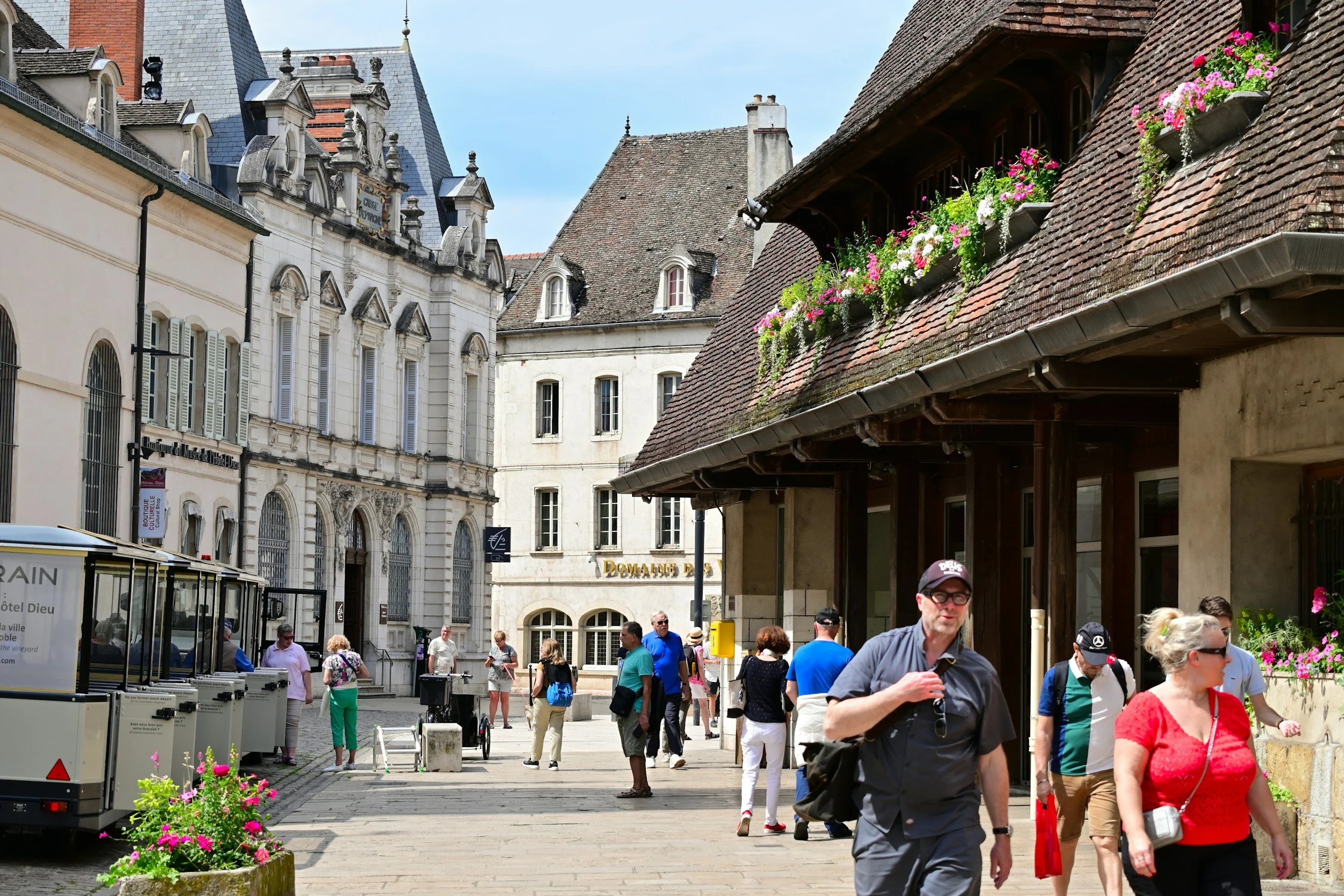
One thing that's easy to underestimate when looking at a map is how close many of Burgundy's towns actually are. Places like Nolay, Meursault, Chagny, Santenay and Châteauneuf-en-Auxois may look scattered across the countryside, but most are within a 15 to 40-minute drive of Beaune. That makes it surprisingly easy to stay somewhere quieter while still spending a day wandering Beaune's wine shops, visiting the Hospices or browsing the Saturday market.
Friday markets have a habit of turning into overnight stays, and these French market towns are all places that deserve more than a quick stop.
Getting around depends quite a lot on where you decide to stay. If you're hiring a car, the region is straightforward to explore. The roads between villages are generally quiet, distances are short, and driving through the vineyards often becomes part of the day rather than simply a way of getting from A to B. Parking is also much easier once you're outside Beaune's historic centre, where spaces can fill quickly during weekends and the wine harvest.
Travelling without a car takes a little more planning, but it's certainly possible. Beaune, Chagny and Dijon all sit on the regional TER rail network, making them practical bases for train travel. Once you move into smaller villages, buses become less frequent and some routes don't operate much at all on Sundays. Taxis are available but can be expensive in rural Burgundy, particularly during evenings, so it's worth checking train and bus timetables before choosing where to base yourself.
The region also changes noticeably depending on the season. July, August and September bring the busiest wine tourism, while spring and October often feel much calmer despite many wineries remaining open. Outside the main towns, Sundays can be particularly quiet. Bakeries usually open in the morning, but many cafés and independent shops close after lunch, especially in the smaller villages. If you're imagining long afternoons browsing boutiques or finding somewhere for a late coffee, Beaune and Dijon offer far more choice than the surrounding countryside.
The towns below all sit within easy reach of Beaune, but they offer very different experiences once you arrive. Some are surrounded by vineyards and cellar doors, others have lively weekly markets or quieter historic centres where evenings wind down early. None are trying to replace Beaune. They simply make different places to come home to after a day exploring Burgundy.
Regional trains work brilliantly in some parts of Burgundy and become surprisingly awkward in others. Before choosing your base, it's worth understanding how the TER network actually works.
Meursault: close enough to Beaune, but much quieter
Only around ten minutes south of Beaune, Meursault is often the first place people consider when looking for somewhere quieter to stay. It's close enough that you can easily spend the morning exploring Beaune before returning to a much calmer evening, yet it feels like a completely different place once you arrive. Rather than souvenir shops and busy pedestrian streets, the village is built around its wineries, small squares and everyday village life.
Most people naturally end up around Place de l'Hôtel de Ville, where the striking twelfth-century church and the old town hall overlook a cluster of cafés and wine producers. Early in the morning, locals queue at the boulangerie before work, cyclists stop for coffee on their way through the vineyards, and vans loaded with wine barrels or vineyard equipment are a far more common sight than tour buses.
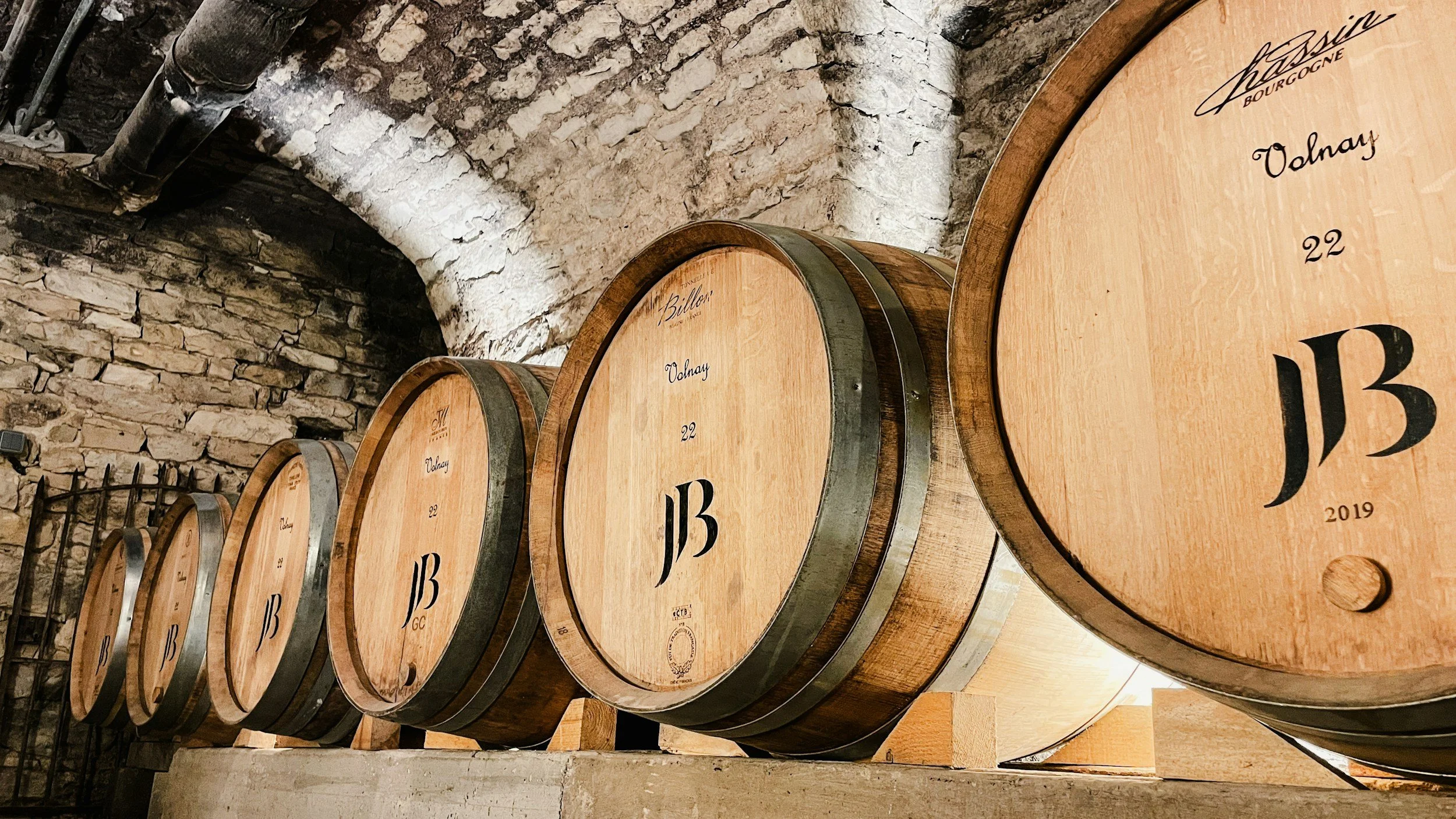
Meursault doesn't have dozens of independent boutiques to browse for an afternoon, and that's partly why it works so well as a base. Instead, much of the day revolves around visiting family-run domaines, walking the vineyard lanes and lingering over lunch. If you're interested in Burgundy's wine culture rather than simply tasting a few glasses, producers such as Domaine Michelot, Domaine Matrot and Château de Meursault all offer very different experiences within walking distance of the centre.
When it comes to food, there are several places that justify staying overnight instead of simply visiting for lunch. La Cueillette's restaurant combines local produce with views across the surrounding vineyards, while Le Bouchon serves classic Burgundian dishes in a relaxed setting that feels much more local than many restaurants in central Beaune. For something special, the Michelin-starred La Table de Levernois is only a short drive away and makes an easy evening reservation without staying in the busier town itself.
Coffee is a little different here than in Beaune. You'll find a handful of cafés around the main square, but Meursault isn't somewhere people spend hours café hopping. Most visitors settle onto a terrace with a glass of Aligoté or Chardonnay instead, particularly during the warmer months when tables spill out into the square.
The village is also surprisingly enjoyable simply to wander. Rue Charles Giraud and the small streets branching away from the centre are lined with honey-coloured limestone houses, heavy wooden gates hiding wine cellars and neatly kept courtyards overflowing with climbing roses in early summer. It's the sort of place where a short evening walk easily stretches into an hour without much planning.
One thing visitors often overlook is how pleasant the surrounding vineyard roads are on foot. The path leading towards the famous Les Charmes and Les Perrières vineyards gradually opens up views across the Côte de Beaune, with church towers and patchwork vines stretching towards Puligny-Montrachet. Late afternoon, when the light catches the limestone walls and the tractors have mostly finished for the day, is one of the nicest times to head out.
If you're hoping for galleries, design shops and bookshops, Beaune is still the stronger choice. Meursault has a handful of wine boutiques and artisan producers, but its appeal comes from spending time outdoors rather than browsing shops. Beaune's independent bookshop Athenaeum, one of France's best-known specialist bookshops for wine and gastronomy, is only a short drive away and easy to combine with a morning in town before returning to the quieter surroundings of Meursault.
Without a car, Meursault remains one of the easier villages to reach thanks to its TER station on the Dijon–Chalon-sur-Saône line, although services are less frequent than those serving Beaune. Many visitors also cycle between the villages using the vineyard roads, stopping in Volnay and Pommard along the way. If your ideal Burgundy trip revolves around long lunches, cellar visits and ending the day somewhere peaceful rather than walking busy shopping streets, Meursault makes a convincing alternative to staying in Beaune itself.
Nolay: where Friday market still feels local
Around twenty minutes west of Beaune, the vineyards begin to thin out and the road starts climbing gently towards the hills of the Hautes-Côtes. The change is gradual, but you notice it. The traffic becomes lighter, the villages are smaller and Burgundy starts feeling less like a famous wine region and more like somewhere people simply happen to live.
Nolay sits right on that edge.
The town revolves around Les Halles de Nolay, a remarkable fourteenth-century covered market hall supported by oak beams that have watched over the square for more than six hundred years. Friday morning is still market day, and unlike many markets closer to Beaune, this one is largely for locals. By eight o'clock, shoppers are already filling baskets with Époisses cheese, Charolais beef, asparagus in spring, tomatoes in late summer and fresh bread from Boulangerie Pâtisserie Les Gourmandises de Nolay before heading home for lunch.
Once the market winds down, the streets become noticeably quieter. Around Place Monge, you'll find a handful of cafés where people seem to know each other by name. Le Bistrot Bourguignon is a good place to settle in for lunch if you're looking for traditional dishes without the formality of Beaune's better-known restaurants, while Restaurant La Gremelle focuses on seasonal Burgundian cooking using ingredients from the surrounding countryside.
If you're the kind of traveller who always slows down for antique shops and flea markets, knowing what makes a good brocante makes the experience far more interresting.
The centre is small enough to wander without thinking too much about where you're going. Narrow streets such as Rue de la République and Rue de la Gare still have old stone houses with painted shutters, tucked-away courtyards and the occasional wine cellar hidden behind heavy wooden doors. Just behind the market hall, small lanes open unexpectedly onto tiny squares where benches sit beneath mature plane trees. They're the sort of places you rarely notice unless you're staying overnight rather than rushing through for an hour.
If you're interested in local crafts rather than souvenir shops, it's worth stepping into Atelier Potier de Nolay, where traditional pottery is still made by hand. There are also a couple of small antique dealers and second-hand shops that change stock regularly, particularly around market day, although opening hours can be unpredictable outside the main season.
One of Nolay's biggest advantages is what surrounds it. The former railway line, now the Voie Verte de Nolay, begins just outside town and follows a gentle route towards Santenay, passing vineyards, woodland and old railway tunnels along the way. You don't need to be a serious cyclist to enjoy it. Walking even a short section in the early evening gives you wide views back across the rolling countryside without seeing another village for several kilometres.
Unlike Meursault, wine isn't constantly in front of you here, but you're still only about fifteen minutes from producers in Santenay, Saint-Aubin and Puligny-Montrachet. That makes it surprisingly easy to spend the day tasting wines before returning somewhere that feels considerably quieter once evening arrives.
Nolay isn't the easiest place to reach without a car. There isn't a railway station, and buses from Beaune are fairly limited, particularly on Sundays. That's one reason it escapes many itineraries…
Chagny: an easy base if you're exploring by train
If you're travelling around Burgundy by train, Chagny is one of the easiest places to overlook. Most people simply watch it pass from the train window between Beaune and Chalon-sur-Saône without realising it makes one of the region's most practical bases. It has its own TER station right in town, enough restaurants to happily fill a long weekend and a centre that's busy with everyday life rather than wine tours.
From the station it's less than a ten-minute walk to the heart of town. You cross the Canal du Centre, pass a few waterside cafés and arrive at Place d'Armes, where the Wednesday morning market takes over much of the centre. It's one of those markets where you'll see more shopping trolleys than cameras. Local growers sell cherries in June, mushrooms in autumn and bunches of asparagus in spring, while stalls around the edges offer regional cheeses, saucisson, fresh flowers and rotisserie chickens that quickly disappear around lunchtime.
The canal gives Chagny a completely different feel from Beaune. Instead of old ramparts and wine merchants, you'll find tree-lined towpaths where people walk their dogs in the evening or stop to watch pleasure boats move slowly through the locks. The section between Écluse de Chagny and the marina is particularly pleasant around sunset, when the restaurants begin filling up but the paths remain surprisingly peaceful.
Food is one of the town's strongest reasons for staying overnight. Maison Lameloise has been attracting diners from across France for decades and remains one of Burgundy's landmark Michelin-starred restaurants. Even if that's beyond your budget, its bakery and boutique, Lameloise Boutique Gourmande, are well worth visiting for pastries, chocolates and regional specialities that make excellent picnic supplies.
For something more relaxed, Pierre & Jean has built a strong reputation for seasonal cooking with a modern touch, while Le Chagny serves classic Burgundian dishes in an elegant but approachable setting. If you're after a simple lunch or an apéritif outside, Le Comptoir des Tontons is a popular local choice, especially when the terraces are busy during warmer evenings.
Coffee culture here is quieter than in Beaune, but that's part of the appeal. Small cafés around Place d'Armes and Rue de la République fill steadily throughout the morning with locals reading newspapers rather than visitors planning wine itineraries. It's an easy town to settle into for a few days without feeling you constantly need to be doing something.
There are a few independent shops worth stepping into, particularly if you enjoy food shopping. Caveau de Chagny offers wines from both the Côte de Beaune and Côte Chalonnaise, often including smaller producers that are harder to find elsewhere. Nearby delicatessens stock Dijon mustard, blackcurrant liqueurs, pain d'épices and local terrines that are easy to take home.
If you're hoping for galleries and specialist bookshops, Chagny is more limited than Beaune, although Galerie d'Art Le Village regularly exhibits local artists and photographers. Many visitors combine a morning in Chagny with an afternoon in Beaune, where Athenaeum remains one of France's finest independent bookshops dedicated entirely to wine, gastronomy and regional culture. It's only around fifteen minutes away by train, making it an easy half-day outing before returning to quieter surroundings.
One of the nicest walks starts just beyond the marina, following the Canal du Centre south towards Rully. The landscape gradually opens into vineyards, old lock houses and open countryside, with benches dotted along the towpath if you simply want somewhere quiet to read for an hour. If you're travelling by bike, this stretch connects with several cycling routes into the Côte Chalonnaise, where villages like Rully, Mercurey and Bouzeron produce excellent wines but attract a fraction of the visitors found around Beaune.
Chagny also works surprisingly well if you don't want to unpack every night. Dijon, Beaune and Chalon-sur-Saône are all straightforward day trips by TER, while the station makes it easy to arrive from Lyon or Paris without hiring a car. By the time evening arrives and the last commuters have gone home, the centre settles into a quiet rhythm of restaurant terraces, canal walks and locals meeting for dinner. It doesn't have Beaune's postcard streets, but for many travellers that's exactly the point.
The place you stay often shapes the trip just as much as the destination itself, which is why these family-run guesthouses are worth browsing before you book.
Semur-en-Auxois: Burgundy beyond the wine route
Semur-en-Auxois asks you to think about Burgundy differently.
If your image of the region is vineyards, cellar doors and tasting menus, this little medieval town might come as a surprise. Sitting around an hour northwest of Beaune on a granite outcrop above the River Armançon, Semur belongs to a different side of Burgundy. Wine still appears on every restaurant menu, but everyday life isn't built around wine tourism. People come here for the weekly market, to meet friends for lunch, to pick up bread before work or to stroll along the old ramparts after dinner.
The first thing most visitors do is stop on Pont Pinard for the classic photograph across the river. It's an excellent view, but it's rarely the quietest one. Walk another couple of minutes towards Pont Joly, then follow the riverside path beneath the town walls instead. Looking back from the lower bank, the towers rise almost vertically from the granite cliffs, and the reflections in the Armançon completely change depending on the light. Early morning is particularly peaceful, before cafés begin filling and the old town fully wakes up.
From there, climb back into the medieval centre through Porte Sauvigny rather than returning the same way. The uphill walk is steeper than it first appears, especially over the uneven cobbles, but it brings you into one of the quieter corners of town where the flow of visitors quickly thins out. Streets like Rue Buffon, Rue Févret and Rue du Pavé-Saint-Lazare are some of the nicest to wander because they still feel residential. Behind heavy wooden doors are private courtyards, old townhouses and timber-framed buildings that rarely appear in the guidebooks, yet they give Semur much of its character.
Around Place Notre-Dame, life becomes a little busier. The Gothic Collégiale Notre-Dame dominates the square, while bakeries, cafés and small independent businesses spill into the surrounding streets. One place worth browsing is L'Écritoire, an independent bookshop where the shelves lean heavily towards French literature, regional history and beautifully illustrated books about Burgundy. Even if your French is limited, it's an enjoyable place to spend half an hour because the selection feels carefully chosen rather than aimed at tourists.
For lunch, Restaurant Le Refuge on Rue Buffon has quickly become one of the town's most consistently praised addresses, serving refined Burgundian cooking in an intimate dining room tucked into one of the old cobbled streets. If you're staying for a special occasion, La Cuisine de la Fontaignotte offers a more contemporary approach to regional ingredients in a quieter setting just outside the busiest part of the old town. Both feel rooted in the region rather than trying to recreate a Michelin experience found elsewhere.
One thing that's easy to miss if you're only visiting for a few hours is how pleasant Semur becomes once the afternoon visitors leave. By six or seven o'clock, many people have already driven back towards Beaune or Dijon. The streets around Rue Varenne and the old ramparts become unexpectedly quiet, while the restaurant terraces begin filling with locals rather than tour groups. It's one of the reasons Semur works so well as a base. You experience a completely different atmosphere from someone arriving for a quick stop between destinations.
There are small details that only really become obvious after a couple of days. The independent shops generally close for lunch, often between midday and two o'clock. Sunday afternoons are particularly quiet. Bakeries usually open in the morning, but by late afternoon the town settles down considerably, and coffee options become more limited than visitors often expect. Planning a longer lunch instead of saving it until three or four o'clock makes a noticeable difference.
If you enjoy walking, don't stop at the town walls. Continue beyond Parc Joly, recently opened more fully to the public, or follow the paths along the Armançon where old washhouses, stone bridges and the railway viaduct gradually come into view. None of these walks are especially long, but they give you a much better sense of how dramatically the medieval town sits above the valley.
Semur also works well if you want to explore northern Burgundy without changing hotels every night. Flavigny-sur-Ozerain is around twenty minutes away, Fontenay Abbey can be reached in less than half an hour, and MuséoParc Alésia makes an easy half-day trip if you're interested in Roman history. They're all close enough that you can be back in Semur before dinner without feeling rushed.
Getting here without a car takes a little planning. The nearest railway station is Montbard, around fifteen kilometres away, with direct TGV services from Paris and Dijon. Local buses and taxis connect with the town, although Sunday services are much more limited than during the week. If you're already planning a road trip through Burgundy, though, Semur-en-Auxois becomes one of those places that quietly changes the way you think about the region. It isn't trying to compete with Beaune. It simply offers a very different version of Burgundy, one that's built around medieval streets, everyday local life and evenings that become remarkably peaceful once the last visitors have left.
If Semur-en-Auxois has caught your attention, you'll probably appreciate a deeper look at the town before deciding how many nights to spend there.
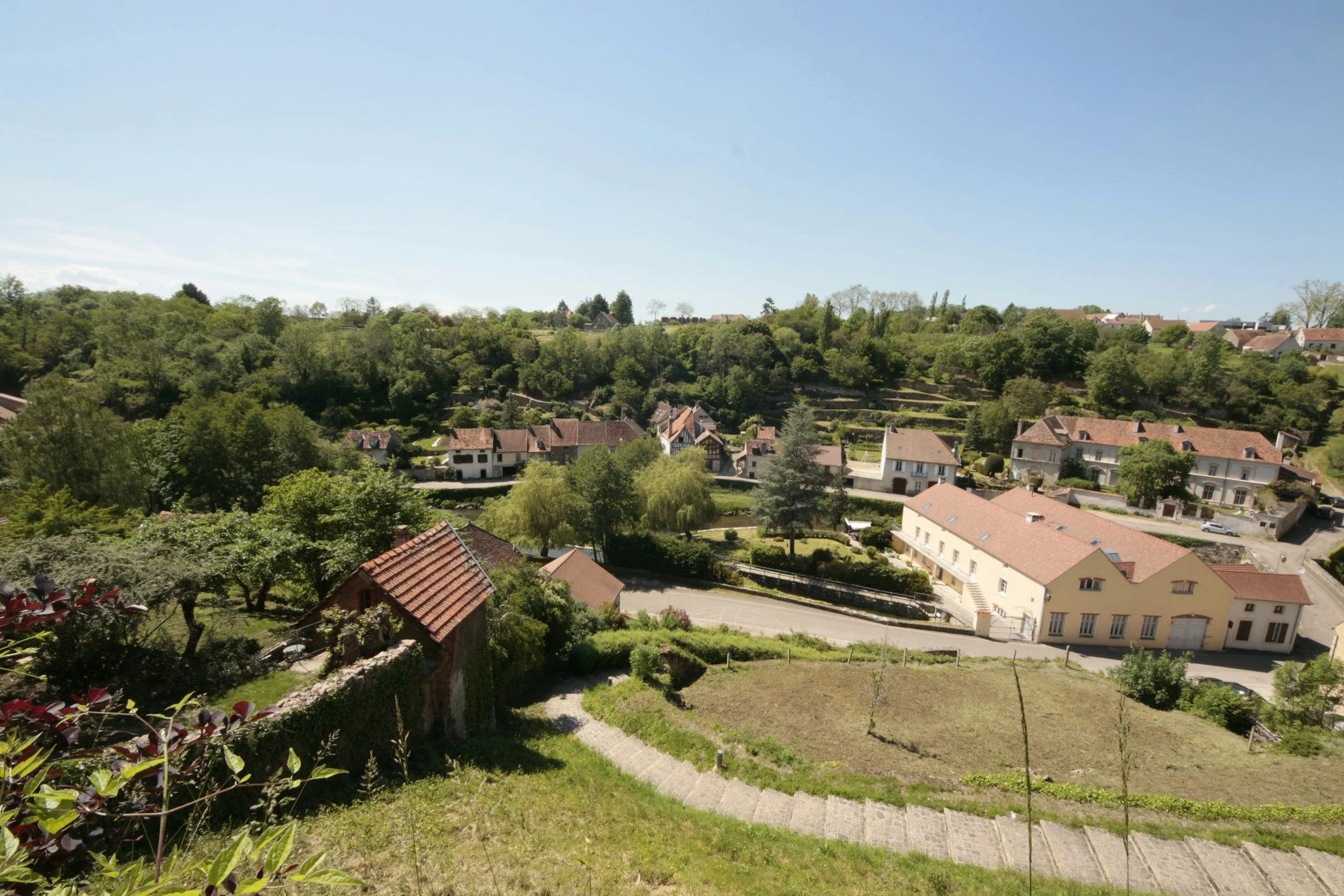
If you're still deciding between Burgundy and somewhere further south, these quieter alternatives to Provence make the comparison much easier.
Châteauneuf-en-Auxois: stay after the day visitors leave
Getting to Châteauneuf-en-Auxois is easiest by car. From Beaune, the drive takes around 45 minutes via the A6 before joining smaller country roads for the final stretch up to the village. Dijon is roughly 40 minutes away, making it an easy day trip or overnight stop if you're exploring northern Burgundy.
Travelling without a car takes a little more planning, but it's certainly possible. The nearest railway station is Montbard, which has direct TGV services from Paris, Dijon and Lyon. From Montbard, you'll need to continue by taxi or regional bus, although bus services are fairly limited outside school days and become much less frequent on Sundays. Another option is taking the train to Dijon and hiring a car there, especially if you're planning to explore villages like Commarin, Semur-en-Auxois and the Canal de Bourgogne during the same trip.
Parking is straightforward once you arrive. Visitor car parks sit just outside the medieval centre, and from there it's only a short uphill walk through the village gates. Cars aren't allowed through much of the historic core, which helps keep the narrow streets surprisingly peaceful even during the busiest weeks of summer. If you're staying overnight, check with your accommodation before arriving, as some hotels can arrange closer access for luggage before you move your car to the public parking area.
Châteauneuf-en-Auxois is one of those villages that changes completely once the afternoon visitors leave.
Most people arrive sometime between eleven and three, walk up Grande Rue towards the château, stop for the familiar photograph over the rooftops and continue towards Beaune or Dijon. By six o'clock, the atmosphere has shifted. The coach groups have disappeared, shutters begin closing on the small artisan shops and you can often walk from one end of the village to the other hearing little more than footsteps on the cobbles and the church bells carrying across the valley.
That alone makes it one of the most convincing alternatives to staying in Beaune.
The village sits about 45 minutes northwest of Beaune on a limestone ridge overlooking the Canal de Bourgogne and the open farmland of the Auxois. Unlike Meursault or Pommard, vineyards aren't the landscape here. Instead you'll see grazing cattle, wooded hills, hedgerows and quiet country roads stretching towards the Morvan. It feels like a different Burgundy altogether.
Rather than walking directly to Château de Châteauneuf, take your time through the village first. Grande Rue is lined with beautifully restored merchant houses built from warm local limestone, but it's the smaller lanes branching away from it that reward a slower wander. Tiny passages open unexpectedly onto stone terraces overlooking the valley, climbing roses spill over old garden walls in June and July, and almost every corner seems to frame another view of the surrounding countryside.
One of the nicest viewpoints isn't inside the château at all. Walk beyond the northern entrance and continue along the path beside the old defensive walls. Looking back from here, you see the castle rising above the village while the Canal de Bourgogne winds quietly through the fields below. Early evening is usually the best time to come, when the sun catches the western façades and the valley becomes noticeably quieter.
The château itself deserves more than a quick visit. It's one of Burgundy's best-preserved medieval fortresses, and because restoration work has been carried out over many years, you can see traditional masonry techniques alongside original defensive architecture. The views from the ramparts stretch for miles across the Auxois, particularly on clear autumn mornings after light mist has lifted from the valley.
Although the village is small, it has several places worth lingering in. Hostellerie du Château – La Table de Guillaume, just below the fortress, is easily the standout restaurant. Chef Guillaume Royer, a Meilleur Ouvrier de France, focuses on seasonal Burgundian ingredients rather than elaborate tasting menus, making it an excellent choice if you're staying overnight. The terrace is especially pleasant on warm evenings, when the last day visitors have already left the village.
If you're after something less formal, Le Bistrot des Prés Verts offers a more contemporary setting tucked away in a side street not far from the château. It's quite different from the traditional village restaurants and works well for lunch after exploring the fortress. Just outside the village, L'Orée du Bois has built a loyal local following for its galettes, crêpes and generous regional cooking, while Auberge du Marronnier is another reliable stop if you're exploring the surrounding countryside by car. Reservations are worthwhile during weekends, particularly from May through September.
Coffee isn't really the reason people come to Châteauneuf, and that's worth knowing before you arrive. There are a couple of places to sit with an espresso or a glass of local wine, but this isn't Beaune, where you can spend an afternoon moving between cafés. Mornings feel livelier than afternoons, and outside the main season it's not unusual for businesses to close for a couple of hours after lunch.
Instead, much of the pleasure comes from wandering. A handful of artists and craftspeople have workshops scattered through the village, selling ceramics, paintings, jewellery and woodwork inspired by Burgundy's landscapes. Some open daily in summer, while others only welcome visitors on weekends or during local events, so it's worth keeping an eye on handwritten signs outside the workshops rather than expecting fixed opening hours.
One practical detail that catches people out is how small the village actually is. You can comfortably walk every street in less than an hour, which means Châteauneuf works best as somewhere you return to rather than somewhere that fills every day. That's where its location becomes such an advantage.
The towpath along the Canal de Bourgogne, just a few minutes below the hill in Vandenesse-en-Auxois, is one of the nicest walks in this part of Burgundy. You can spend the morning cycling or strolling beside the locks before returning uphill for lunch, or continue towards Pouilly-en-Auxois, where pleasure boats drift through the canal during summer. Château de Commarin, one of Burgundy's oldest continuously inhabited châteaux, is only around fifteen minutes away and makes an easy afternoon visit without the crowds found at some of the region's better-known landmarks.
The village itself becomes remarkably quiet on Sunday afternoons. The bakery often sells out before lunch, several artisan shops close completely and, by early evening, the streets belong almost entirely to overnight guests. If you're hoping for lively nightlife or lots of independent shopping, Beaune is still the better choice. But if you're looking for somewhere to open the window in the morning and hear swallows circling above medieval rooftops instead of traffic, Châteauneuf-en-Auxois offers one of the most peaceful stays anywhere within easy reach of Beaune.
If Châteauneuf-en-Auxois feels like your kind of place, you'll find plenty more French countryside towns with the same peaceful feel.
Heading back towards Paris instead? Breaking up the journey with one of these small towns makes the drive feel like part of the trip rather than simply getting home.
Which one would I choose?
This really comes down to what you picture yourself doing when you're not out exploring Burgundy.
If your idea of a good day involves wandering between wine producers without constantly getting back in the car, then Meursault is hard to beat. You can spend the morning visiting domaines, stop for a long lunch and still be back at your hotel before the evening light settles over the vineyards. It feels connected to everything people come to Burgundy for, just without quite the same crowds as Beaune.
Nolay is the one I'd pick for market mornings and quiet afternoons. Friday is the obvious day to be here, but even outside market day it has that everyday feel that's becoming harder to find. You don't arrive with a list of attractions. You buy some cheese, wander a few streets, sit down for coffee and suddenly half the afternoon has disappeared.
If you're travelling by train, Chagny simply makes life easier. The station is right in town, restaurants are genuinely good, and you can reach Beaune, Dijon or Chalon-sur-Saône without thinking too much about logistics. It's practical, but it never feels like you've chosen convenience over atmosphere.
Semur-en-Auxois suits a completely different kind of trip. Instead of vineyards, you have medieval streets, riverside walks and one of those town centres where it's easy to spend an hour without really having a destination in mind. If your first instinct on holiday is to wander into a bookshop, stop for coffee and keep following whichever street looks interesting, this is probably the one you'll connect with most.
Then there's Châteauneuf-en-Auxois. I'd save this for when the countryside itself is the reason for going. The views are wider, the evenings are quieter and once the last visitors have left, the village feels surprisingly peaceful. It's the place I'd choose if the plan was to slow down for a few days rather than fit as much as possible into a weekend.
The nice thing is that none of these places takes you far away from Beaune. You can still spend a morning browsing the Saturday market, visit the Hospices or stop for a tasting before heading back somewhere that feels completely different by dinner. That's probably what surprised me most about this part of Burgundy. You don't have to stay in the place everyone books to experience the best of the region. Sometimes staying twenty or thirty minutes away gives you exactly the kind of trip you were hoping for in the first place.
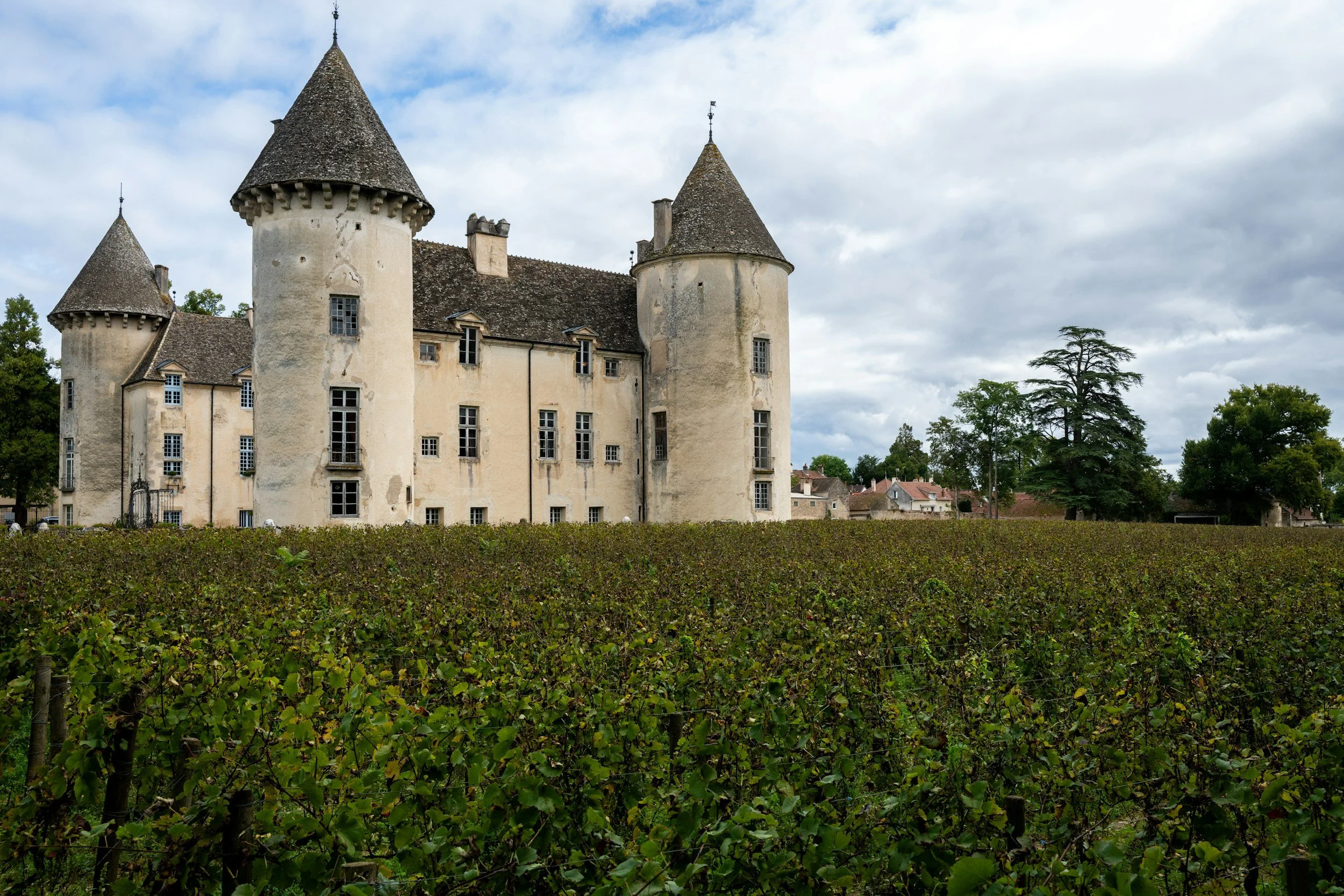
Already thinking about your next road trip? These Loire Valley market towns have a very similar feel and fit naturally before or after Burgundy.
One thing people often get wrong about staying in Burgundy
When people start planning a trip to Burgundy, they almost always begin with Beaune. It's where the famous wine houses are, it's the town that appears in nearly every guidebook, and if you're only looking at a map, it feels like the obvious place to book a hotel before exploring everything else.
Once you're actually travelling around the region, though, that decision doesn't feel nearly as obvious.
Burgundy is much more compact than many first-time visitors expect, and it doesn't take long before you realise that driving twenty or thirty minutes between villages is simply part of the day rather than something that interrupts it. You can spend the morning wandering around the Hospices de Beaune, browse the stalls at the Saturday market, stop by Athenaeum to pick up a book on Burgundy's wine history, enjoy a long lunch, and still be back in Meursault, Chagny or one of the smaller villages well before the evening settles in.
That's when the place you've chosen to stay starts making a much bigger difference than you might have imagined while planning the trip.
After spending the day out exploring, returning somewhere that feels genuinely quiet has its own appeal. In Semur-en-Auxois, that might mean walking once more along the ramparts as the light begins to soften across the Armançon Valley before finding a table for dinner. In Châteauneuf-en-Auxois, it could simply be sitting for a while on one of the stone viewpoints overlooking the Auxois countryside after most of the visitors have left, while in Meursault it's often enough to wander through the village as people finish work and the vineyards become quieter again after a busy afternoon of tastings.
Those aren't necessarily the moments people plan for before they arrive, but they're often the ones they remember afterwards.
Beaune is still somewhere I'd recommend spending plenty of time. The old centre is beautiful, the Hospices deserve more than a quick visit, and the Saturday market remains one of the highlights of the week if you're in town. But staying there isn't the only way, or even always the most enjoyable way, to experience Burgundy.
Choosing one of the surrounding towns doesn't mean missing out on Beaune. More often, it means seeing just as much during the day while ending it somewhere that feels a little calmer, a little more local and a little easier to settle into. If your idea of a good trip isn't built around trying to fit in as many sights as possible but around enjoying long lunches, village markets, country roads and unhurried evenings, there's a good chance you'll leave Burgundy feeling happier that you looked a little further than Beaune when it came time to book somewhere to stay.
Continuing south after Burgundy? Tournus is one of those towns that's incredibly easy to overlook until you spend a night there.
FAQ:s about staying near Beaune
Is Beaune too busy to stay in during summer?
Beaune is at its busiest from late May through the grape harvest in September, especially on Saturdays when the weekly market, wine tastings and weekend visitors all overlap. That doesn't mean it feels overcrowded all the time, but restaurants often need booking in advance, hotels are more expensive and the old centre stays lively well into the evening. If you've imagined finishing the day somewhere quieter, staying in Meursault, Chagny or one of the smaller villages nearby often gives you the best of both worlds. You can still spend the day in Beaune before returning somewhere much calmer for the evening.
Is it worth staying outside Beaune?
For many travellers, yes. Burgundy is surprisingly compact, so staying twenty or thirty minutes from Beaune rarely changes what you can see during the day. What it does change is the atmosphere when you come back. Smaller towns often have easier parking, more space, lower hotel prices and evenings that feel much more relaxed. If you're planning to explore the region rather than spend every hour in Beaune itself, staying elsewhere can actually make the trip feel more balanced.
Which village near Beaune has the best restaurants?
It depends on the kind of meal you're looking for. Meursault is an excellent choice if food and wine are the focus, with several highly regarded restaurants and wineries within walking distance. Chagny is another standout thanks to Maison Lameloise and a surprisingly strong local food scene for a town of its size. Châteauneuf-en-Auxois has fewer restaurants, but places like Hostellerie du Château make the journey worthwhile if you'd like a memorable dinner before returning to a peaceful village.
Can you stay in a wine village instead of Beaune?
Absolutely, and Meursault is probably the best example. Instead of driving back and forth every day, you can walk between wineries, cafés and restaurants while still being only a short drive or train ride from Beaune. Villages like Meursault feel much quieter once the tasting rooms begin closing, and they offer a completely different side of Burgundy after the day visitors have gone home.
Which Burgundy town is easiest without hiring a car?
Chagny is one of the most practical alternatives to Beaune if you're travelling by train. The TER station sits within easy walking distance of the centre, making it simple to visit Beaune, Dijon and Chalon-sur-Saône without needing a car. Meursault also has a small railway station, although trains are less frequent. Places like Nolay and Châteauneuf-en-Auxois are much easier to enjoy with your own car, particularly if you're planning to explore the surrounding countryside.
Is Meursault quieter than Beaune?
Yes, especially in the evenings. During the day you'll still see visitors arriving for tastings, but once the wineries begin closing, the village settles down quickly. Instead of busy shopping streets and wine bars, you'll find quiet residential lanes, vineyard walks and a handful of restaurants where most people are staying overnight. If you're looking for Burgundy's famous vineyards without the busier atmosphere of Beaune, Meursault is one of the strongest choices.
Are Burgundy's smaller villages too quiet to stay in?
That depends on what you're expecting. If you're looking for nightlife, lots of shopping or dozens of restaurants to choose from every evening, Beaune is a better fit. Smaller villages tend to slow down after lunch, particularly on Sundays when cafés and independent shops often close earlier than visitors expect. On the other hand, if you're travelling for village markets, countryside walks, long lunches and relaxed evenings, that's exactly what makes them appealing.
Should you stay in one place or move around Burgundy?
Unless you're planning a much longer trip, staying in one place usually makes more sense. Distances between towns are short, and changing hotels every night often means spending more time packing and driving than actually enjoying the region. Choosing one well-located base and taking day trips allows you to settle in, discover local cafés and markets and experience Burgundy at a much more relaxed pace.
Is it cheaper to stay outside Beaune?
Quite often, yes. Hotel prices in Beaune can rise quickly during the wine harvest, weekends and summer holidays, while smaller towns nearby often offer more space and better value. You'll also find that parking is usually simpler and, in many cases, free. Even if you factor in a short drive to Beaune, staying elsewhere can still work out as the better option.
Which Burgundy town would suit a solo traveller?
If wine is your main reason for visiting, Meursault is hard to beat. For market mornings and local food, Nolay has a wonderfully everyday feel. Chagny suits travellers arriving by train, while Semur-en-Auxois is ideal if you're drawn to medieval streets, independent bookshops and riverside walks rather than vineyards. If you'd rather wake up to wide countryside views than busy town squares, Châteauneuf-en-Auxois is probably the place you'll remember most after the trip is over.