
How I'd plan a French brocante weekend from start to finish
The first time you try to plan a brocante weekend in France, it’s a bit confusing.
You search for “vintage markets,” expect to find one main place to go, and instead you get a list of small towns, each with something happening on different days. Nothing central, nothing obvious.
That’s because most of it happens at a very local level.
One village will have a vide-grenier set up along the main street for a few hours on Sunday morning. The next town over might have a brocante on the square the day before. They’re not designed to be big events. They’re part of how people use those spaces anyway.
In L’Isle-sur-la-Sorgue, it’s easier to understand at first because there are permanent antique shops along streets like Quai de la Charité and regular markets that fill the centre. But that’s not how most weekends look.
More often, you’ll arrive in a smaller place, park just outside, and walk into a stretch of stalls set up along a road or around a square. Maybe it’s behind the church, maybe it runs along a river, maybe it’s just a loop through a few streets. You walk it once, then again, and then it’s done.
Timing matters more than where you go. If you arrive at 8:30–9:30, it feels local and easy to move through. By 11:30, it’s fuller, slower, and already starting to wind down. By early afternoon, many of them are gone completely.
A typical weekend isn’t about finding one perfect market. It’s about understanding how to move between them without overplanning. Starting early in one place, then letting the rest of the day unfold somewhere nearby, even after the stalls have disappeared.
This guide is built around that. What to expect when you arrive, how to time it properly, and how to avoid turning up just as everything is packing away.
Understanding the difference between brocantes, vide-greniers, and marchés aux puces
French market terminology is slippery, partly because people use it casually and partly because the feel changes by region. Still, the distinctions matter if you’re planning a weekend around vintage shopping.
A brocante is usually what you want if you’re hoping for objects with age and character: old cookware, vintage linens, framed prints, ceramics, brass bits, postcards, furniture that’s been around. Brocantes often include professional sellers alongside locals, so prices can be higher and the best items may be cleaned, sorted, and presented with intention.
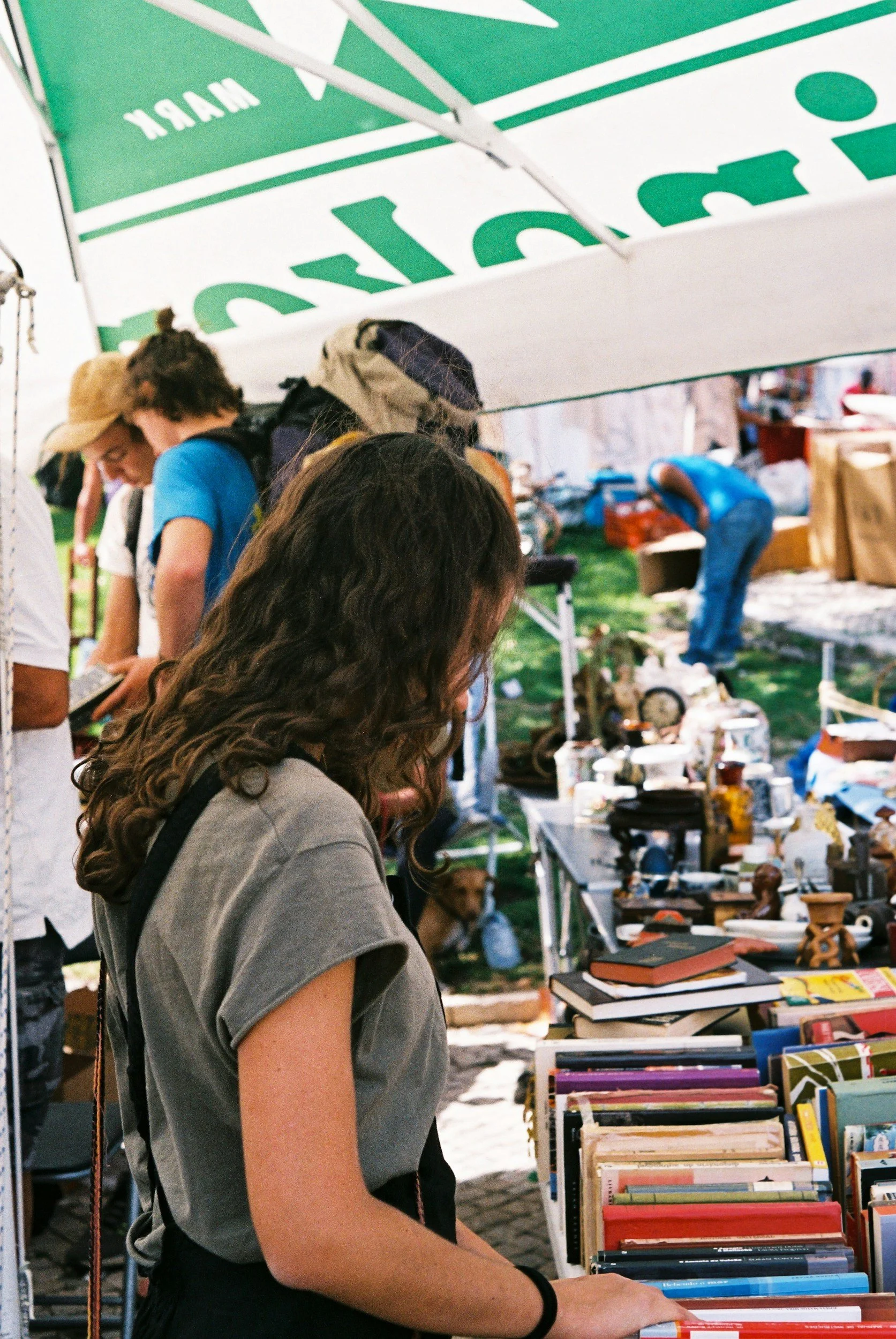
A vide-grenier literally means “emptying the attic”. It’s closer to a community sale. Expect a lot of everyday objects: kitchen items, books, clothes, toys, household clutter, sometimes genuinely great vintage pieces mixed in by accident. If you like the hunt and don’t mind sifting, vide-greniers can be surprisingly good. If you want curated antique dealer energy, they can feel messy.
Marchés aux puces is the umbrella term people often translate as “flea market”. Sometimes it refers to a regular, semi-permanent market in a city. Sometimes it’s used for bigger event-style markets. It doesn’t automatically mean better. It usually just means larger.
If you enjoy the cultural side as much as the shopping, it helps to see these markets as part of a broader French market landscape. If you already love market towns, you’ll probably enjoy reading this alongside these quieter Provence market towns, because the pacing and the atmosphere are half the reason a weekend like this works.
Why these markets happen when they do (and why Sundays matter)
If you try to build a vintage-shopping weekend like you’d build a city itinerary, you’ll fight the structure of the country. Brocantes and vide-greniers are weekend events because that’s when local life allows it. Sundays are the anchor. It’s the day people are off, families can set up stalls, small towns can close a few streets, and everyone can pretend they’re “just browsing” while carrying a baguette, a coffee, and somehow a chair.
Most smaller-town markets start early, even if the official hours don’t make it sound that way. By 8:00, the serious browsers are already out. By late morning, the market is often still active but the best early finds have either been snapped up or moved into the “not negotiable” pile. Around midday, the energy can drop quickly. Some markets keep going into the afternoon, but many start packing up earlier than you expect, especially in smaller villages.
Season also changes the experience more than people admit. Spring markets can feel fresh, busy, and sometimes slightly chaotic because everyone wants to be out again. July and August bring holiday traffic, which can be fun in certain towns and tiring in others, and it can push prices up if the sellers know visitors are watching. In autumn you often get a calmer feel, and the objects can be better because people are clearing out homes before winter. In parts of France, winter markets exist, but they’re less reliable and more dependent on weather and local calendars.
This is why building a weekend around one market day is smarter than chasing multiple locations. If you want the “weekend” to feel like a weekend, you plan around the reality: early start Sunday, slower Saturday, and a soft landing afterwards.
If you tend to enjoy towns that hold your attention for more than a quick stop, you’ll also like the logic behind French towns worth staying 3–5 nights. The same thing applies here: the market is an anchor, but the place has to be worth being in once the stalls disappear.
What you’ll actually find on the tables (and what you won’t)
It helps to remember that you’re not shopping in a shop… You’re browsing what other people happen to be done with.
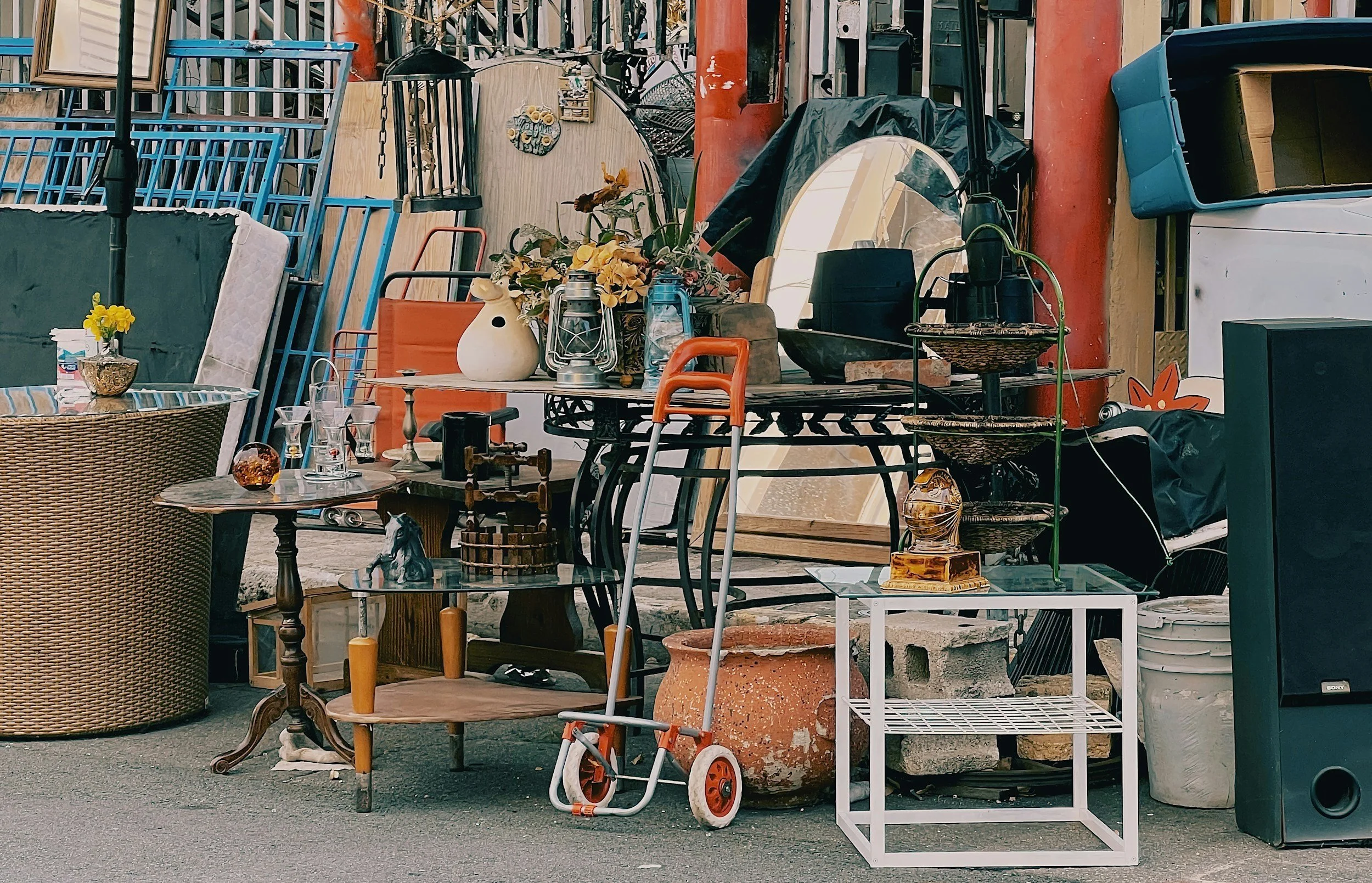
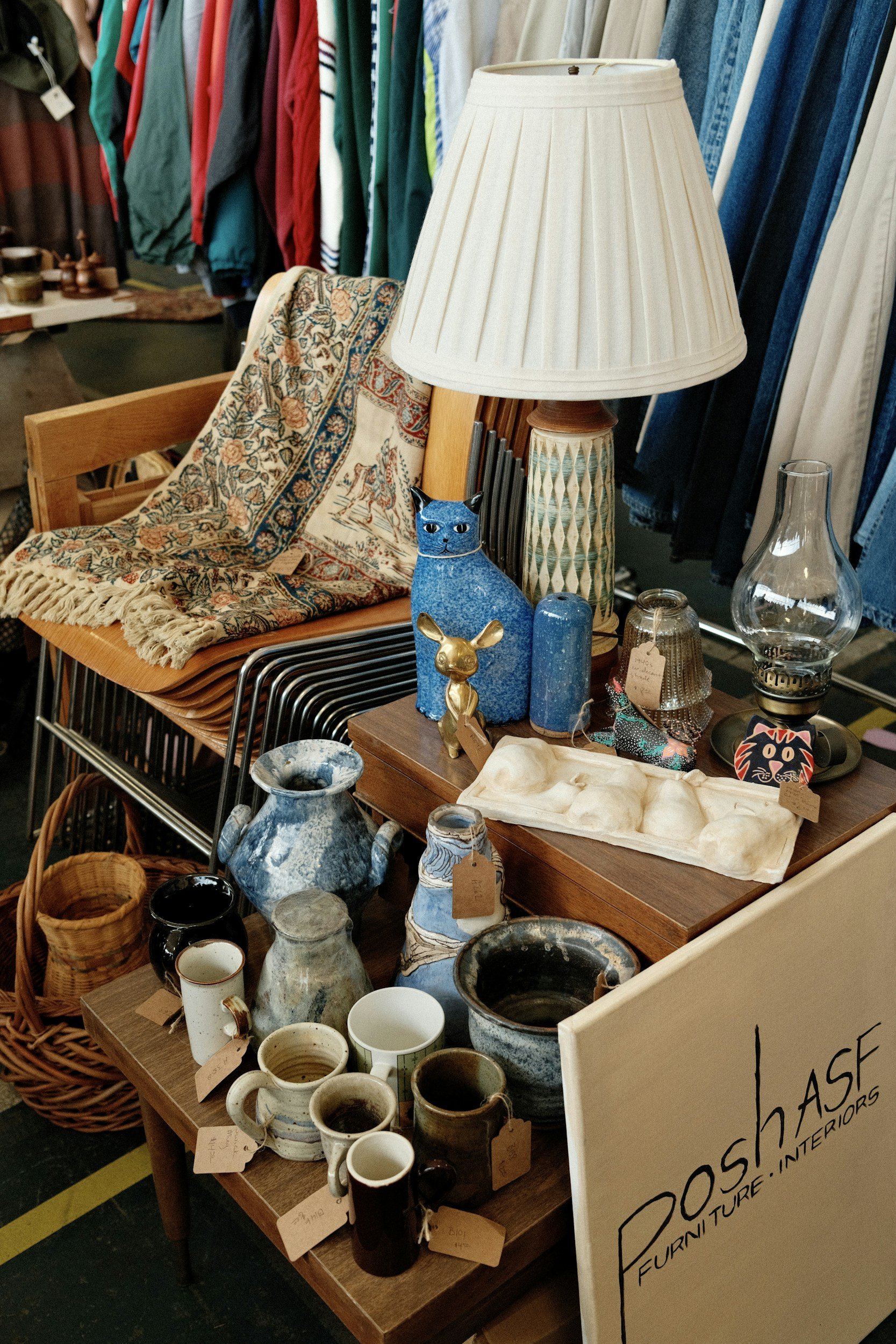
At a good brocante, you’ll likely see French domestic life in object form. Heavy café glasses. Mismatched cutlery. Copper pans that have lived hard lives. Old linen napkins with initials embroidered into them. Ceramic bowls that look like they’ve held a thousand breakfasts. Small framed prints and faded maps. Lamps that make you wonder how they ever passed a safety standard. Occasionally, genuinely beautiful furniture, but often too large to be realistic unless you’re local or you’ve planned transport.
At a vide-grenier, you’ll see more of the everyday and the random: children’s toys, stacks of DVDs, sports gear, kitchen gadgets, clothes on hangers, and boxes of “maybe you want this?” items. But the surprise is that some of the best finds appear here because people don’t always know what they have, or they don’t want the hassle of selling online. If you like the idea of finding something lovely in a cardboard box at 7:45 on a Sunday morning, vide-greniers are where that happens.
What you shouldn’t expect, especially if you’ve been influenced by social media: endless perfect French vintage at bargain prices. Dealers know what sells. Many sellers check prices online. And some items are simply more expensive now, because everyone is collecting them. If you’re looking for very specific categories like vintage designer pieces or rare French pottery, you might find them, but you’ll need patience and a realistic budget.
Also, not every market is good. Sometimes it’s weather. Sometimes it’s the town. Sometimes it’s just the week. That’s why a weekend built around the overall experience matters more than any single “find”. If you go home with nothing but a good lunch and the sense that you saw something real, that can still be a successful weekend.
If you enjoy planning around antique-focused towns, it’s worth checking out European towns known for antique markets in summer. The value is not in “maximising”. It’s in choosing places where the culture supports the kind of shopping you actually like.
How locals approach buying, browsing, and bargaining
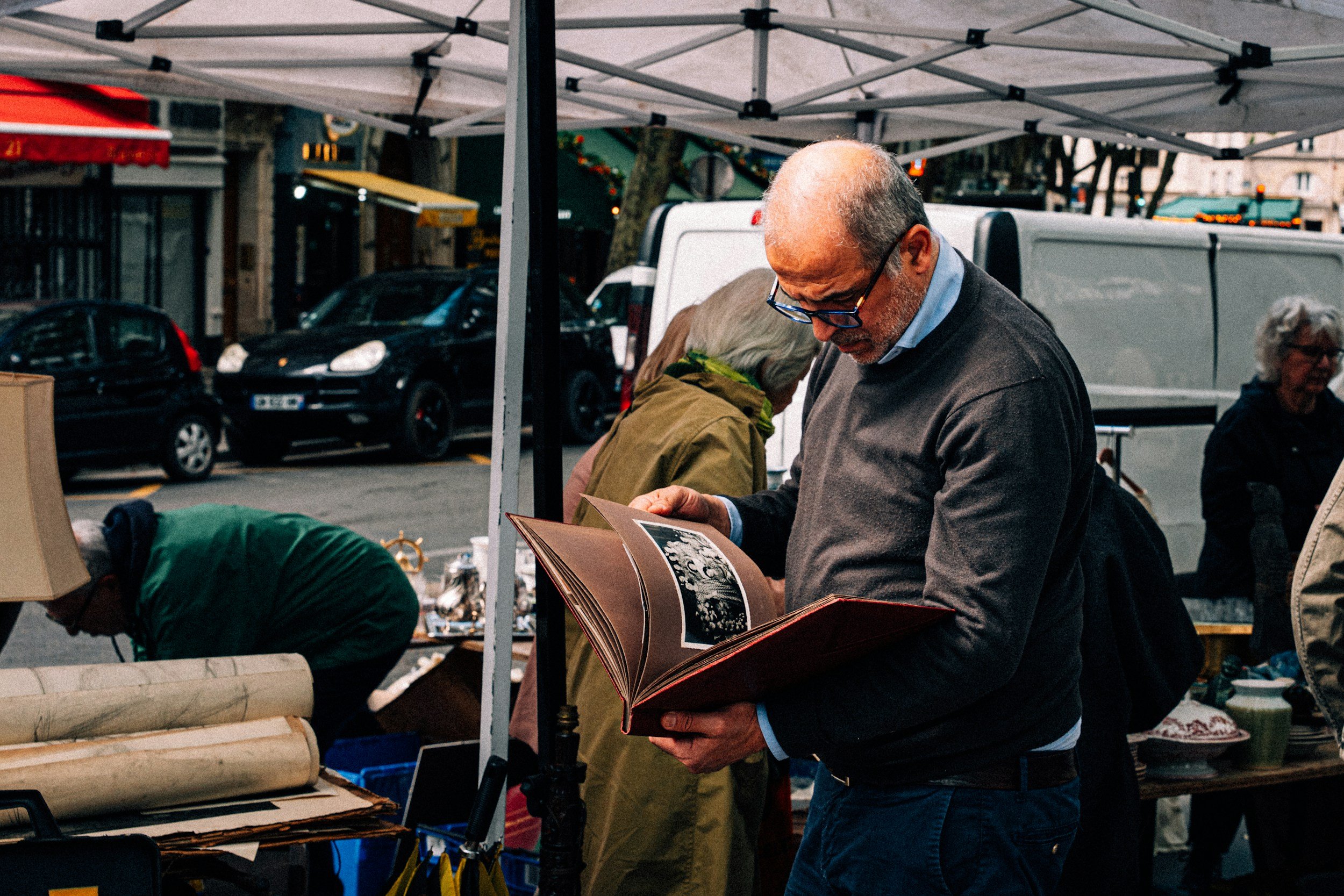
There’s a particular French way of browsing a market that looks casual but is quietly strategic. People take their time, but they move with purpose. They pick things up, turn them over, and put them back without comment. They don’t apologise for handling objects, and they don’t over-explain. It’s not rude. It’s normal!
If you’re used to being overly polite in shops, the best thing you can do is relax into the pace of the town. Ask questions when it matters. Keep it simple. “Ça, c’est combien?” (How much is this?) gets you further than a whole story about why you love it. If you want to negotiate, do it calmly, without drama. Bargaining exists, but it’s not theatre.
A few things make bargaining more natural. Buying multiple items helps. Showing you’re serious helps. Asking early can help, but sometimes sellers are more flexible later in the day when they don’t want to pack things back into the van. The flip side is that the item might be gone by then. That tension is part of the market logic.
It also helps to know when not to bargain. If someone is clearly a local clearing out their attic at a vide-grenier, pushing too hard over a couple of euros can feel awkward. If you’re dealing with a professional seller at a brocante who has priced things carefully, bargaining may be minimal. You’re allowed to ask, but it’s fine if the answer is simply “non”.
One detail people rarely mention: markets are social spaces. Sellers chat with neighbours. People stop to talk. The browsing is often slower than you expect because it’s not purely transactional... If you plan your weekend as if it’s a timed shopping errand, you’ll miss what makes it worth doing in France in the first place.
Choosing the right town for a full weekend, not just a morning market

A vintage-shopping weekend falls apart if the town feels like a backdrop rather than a place. You don’t want to spend Sunday morning in a market and then realise there’s nowhere you actually want to sit, eat, walk, or decompress afterwards.
The most successful weekends tend to happen in towns with a real centre, a handful of good cafés, and a sense of everyday life that continues once the stalls disappear. Somewhere you can walk without feeling like you’re searching for things to do. A river path, a small museum, a food market, a calm old town, a place to sit down for lunch that isn’t built around speed.
It’s also worth thinking regionally rather than obsessing over one specific village name. Provence works well for this style of weekend because there are so many small towns with market culture baked into daily life. If you’re planning there, this pairs naturally with a fuller guide to market towns in Provence, because you can choose a base that suits your pace and then treat the brocante as one highlight rather than the entire point.
Other regions can be brilliant too, especially if you want something less summer-heavy. The Dordogne in autumn can be excellent for markets and for the overall weekend feel, with quieter roads and a slightly more local atmosphere. If that sounds like your kind of trip, this look at autumn markets in the Dordogne is a good way to extend the idea into a season where vintage shopping often feels calmer and actually nicer.
The simplest test is also the most useful: would you enjoy staying here if the market turned out to be average? If the answer is yes, the weekend usually takes care of itself.
Plan your weekend around one market day (not the other way around)
A good vintage-shopping weekend has a clear shape. Not a rigid schedule, but a structure that matches how the weekend actually unfolds.
Saturday is your soft entry. Arrive, check in, walk a little, get your bearings. If there’s a Saturday food market, that’s the perfect warm-up. It puts you into local life without the pressure of “finding something”. It also helps you spot what the town feels like when it’s not busy with an event. Saturday evening is ideally simple: a good meal, a glass of wine if you want it, and an early-ish night. Not because you’re trying to be virtuous, but because Sunday markets reward early starts.
Sunday morning is the focus. You want to be there before it gets crowded, not so you can elbow your way through, but so you can browse calmly. The first hour often feels surprisingly quiet, especially in smaller towns, and it’s easier to scan stalls when you’re not constantly stepping around other people. After that, you can slow down. Pause for coffee. Circle back. Make a decision. If you find something larger or fragile, you’ll appreciate having time to think about how you’ll carry it.
By late morning, it’s often time to pivot into lunch, and this is where planning matters. Some towns do lunch beautifully. Some towns become a queue. If you can, aim for a slightly later lunch or choose a place away from the main square. After lunch, you’re in the “bonus” part of the day: a walk, a small gallery, a slow coffee, a second pass through the market if it’s still active, or just the satisfaction of being done.
Monday morning is your exit, and it’s worth leaving space for it. A final breakfast, a last wander, maybe a small food purchase to take with you. It’s the part that makes the weekend feel complete instead of compressed.
If you’re someone who likes having a base and building around it rather than constantly moving, it can be useful to look at a town-specific guide like a slower few days in Uzès. Even if you don’t go to Uzès, it shows the kind of pacing that makes a market weekend feel lived-in rather than rushed.
Practical realities no one tells you (cash, parking, early starts)
This is the unglamorous layer, but it’s what makes the day work smoothly.
Cash matters. Some sellers will accept cards now, but many won’t, especially at vide-greniers. Even when card readers appear, connections fail. If you’re serious about shopping, carry cash in mixed notes and coins. It’s not about being old-fashioned. It’s about removing friction when you find something you want.
Parking can quietly ruin your mood if you haven’t thought about it. In many towns, market streets are closed or partly blocked off, and the remaining parking fills early. The easiest approach is to arrive early enough that parking is still simple, then walk in. If you’re arriving later, expect to park further out and treat the walk in as part of the day rather than something to resent.
Bring a bag you can actually carry. Not a tiny tote that turns into pain after ten minutes, and not a suitcase-looking situation that makes you feel like you’re doing a shopping performance. Something sturdy, comfortable, and easy to open and close.
If you’re buying breakables, sellers often have paper, but not always enough. Sometimes you’ll end up wrapping a ceramic bowl in yesterday’s newspaper and hoping for the best. If you’re travelling by train and planning to buy fragile items, it’s worth having a small scarf or extra layer that can act as padding. It’s not “packing advice” in the travel-blog sense. It’s just reality if you’re serious about shopping.
Early starts are not optional if you want the day to feel calm. Arriving late turns the market into a crowd-management exercise. Arriving early turns it into a slow browse with time for coffee and a second lap.
Also, accept that toilets are inconsistent... Yep. Some towns have public toilets. Some cafés will be kind. Some won’t. If you’re building a full day around a market, this is the sort of detail you want to have loosely mapped in your head…
Knowing when to skip a market entirely
Not every market deserves your Sunday morning, and not every weekend needs one.
Sometimes the market is too small, or too far, or badly timed for your trip. Sometimes it’s the peak of August and you can already tell the town will be overwhelmed. Sometimes you’re staying somewhere lovely and the idea of waking up early to fight for parking feels like the wrong choice. Skipping can be the most intelligent decision.
There’s also a quieter truth: the best vintage-shopping weekends are the ones where you’re not desperate to “make it worth it”. If you need the market to be amazing, you’ll push too hard, buy things you don’t love, or feel disappointed by normal reality. If you’re calm about it, you’ll notice the small things: the way people greet each other, the food stalls, the stacks of old postcards, the dog sleeping under a table of copper pans.
If you find yourself forcing a market into a trip simply because it sounds very French, it’s usually a sign to step back. Choose a place you genuinely want to spend time in and let the market be a bonus.
FAQs about brocantes and vide-greniers in France
What is the difference between a brocante and a vide-grenier in France?
A brocante usually includes more professional sellers and tends to skew toward vintage and antiques, while a vide-grenier is closer to a community sale where locals sell household items and you sometimes find vintage pieces by chance.
Are French brocante markets worth visiting if you don’t collect antiques?
Yes, if you enjoy browsing and the feeling of local weekend life. Even without buying, brocantes can be a good way to understand a place, especially in towns where cafés and markets are part of the same social scene.
What time should you arrive at a vide-grenier?
If you want the day to feel calm and you’d like first pick of the tables, arriving around 8:00 to 9:00 is usually the sweet spot. Arriving late often means crowds and fewer interesting finds.
Do you need cash at brocante markets in France?
In many cases, yes. Some sellers take card, but cash is still the most reliable way to buy, especially at vide-greniers and smaller-town markets.
Can tourists bargain at French flea markets?
Yes, politely. Bargaining is normal in some situations, especially if you’re buying multiple items, but it’s not guaranteed and it’s fine to accept a seller’s price if they’re firm.
How do you find local vide-greniers when travelling in France?
The most reliable way is to search the town name plus “vide-grenier” and the date range you’re travelling, then cross-check with local mairie pages or regional event listings. Posters in town and word-of-mouth still matter too.
Are brocantes held every weekend in France?
In many regions, yes, especially in spring through autumn, but it varies by town. Some markets are monthly or seasonal, and weather can affect turnout and timing.