These European towns still feel like themselves in summer
Most summer travel lists end up pointing to the same places, just described in slightly different ways. This isn’t one of those. The towns in this guide aren’t here because they look good in photos, but because they actually work when you spend a few days in them.
What matters in these places isn’t a checklist. It’s how the day unfolds once you’re there. Where you arrive, how far you have to walk before things start to make sense, what time lunch is still being served, and how the streets feel once the day slows down again. In Santillana del Mar, everything happens along one short stretch that you end up walking more than once without thinking about it. In Valle Maira, the distance between villages decides your day for you. In Uzès, the same square feels completely different depending on whether it’s market morning or late afternoon. And in places like Dieulefit or along the Alentejo coast, you notice how little is actually scheduled once you settle in.
That’s what this guide is built around. Not highlights, but how each place functions when you’re actually there, so you don’t have to figure it out on the go or overplan something that doesn’t need it.
Santillana del Mar, Northern Spain
Cantabria Region, northwestern Spain
Santillana del Mar is about 30 minutes west of Santander, and most people arrive by car since there’s no train station in town. You’ll usually park at Parking Santillana del Mar just below the old center, then walk five minutes uphill into the village. The transition is quick. One moment you’re next to parked cars and tour buses, and a few steps later you’re on stone streets where everything slows down and traffic disappears.
The main route runs along Calle de Juan Infante, which connects into Calle Santo Domingo, and that’s where most of the day unfolds. It’s not a place where you move from one landmark to another. You walk, stop, double back, and notice different things each time. There are small food shops built into the ground floors of old houses, like Casa Quevedo, where locals pick up sobaos and quesada pasiega in the morning, and a few doors down you’ll find cheese shops selling wedges of queso de Cantabria wrapped in paper rather than plastic. Around midday, the terraces start to fill quietly, especially near Plaza Mayor, but it never turns into a loud lunch scene.
If you keep walking, you’ll reach Colegiata de Santa Juliana, the old Romanesque church at the far end of the village. It’s one of the few places where people pause for longer, but even there it stays calm, with a steady flow rather than a crowd. From that point, you’re only a few minutes from the edges of town again, which makes it easy to step out, take a break, and come back later.
The name suggests the sea, but the coast is actually about 10 minutes away by car, around Ubiarco or Santa Justa, and that distance changes the feel of the place. There are no beach shops or evening promenades here. Instead, the days are slower. Shops open around 10:00, many close briefly in the afternoon, and restaurants start setting tables again around 19:30. If you stay into the evening, you’ll notice how quickly it quiets down once day visitors leave, especially on weekdays. It’s one of those towns where timing matters more than planning, and where most of the experience comes from how you move through it rather than what you try to see.
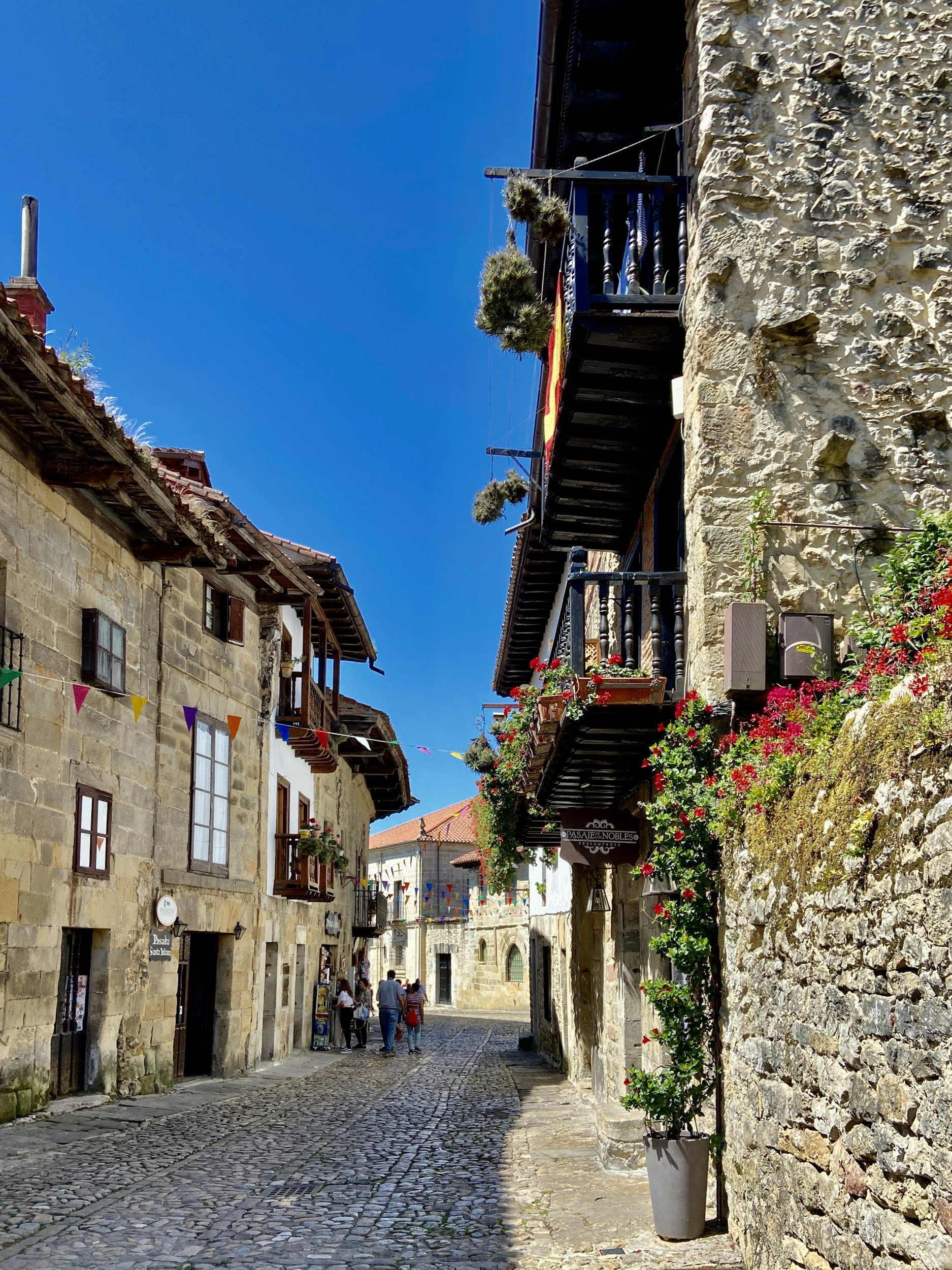
If you arrive in Santillana del Mar in the morning, it’s worth slowing things down straight away rather than trying to cover it quickly. From the main parking area, you walk uphill for a few minutes and almost everyone ends up on Calle de Juan Infante first. Around 09:30 the town is still setting up. Deliveries are coming in, shutters are opening, and cafés are just putting tables outside. It’s one of the few moments where the street feels more local than visitor-focused.
A simple way to start is to sit down early rather than walk through everything at once. Café Concana opens early and is an easy first stop for coffee, and just along the street Casa Quevedo usually has fresh sobaos and quesada pasiega ready by mid-morning. If you go later, there’s often a small queue, but before 10:30 it’s mostly locals picking things up rather than people browsing.
From there, walk toward Colegiata de Santa Juliana, which sits at the far end of the old town. The walk only takes a few minutes, but the pace changes slightly as you move away from the busiest stretch. Inside the cloister, it’s compact and straightforward, and most people don’t stay long. It’s better to go either before 11:00 or later in the afternoon, because the middle of the day tends to bring in short visits from people driving in from the coast.
After that, it makes more sense to double back slowly instead of continuing forward. The main street is short, and you’ll pass the same places again, but they feel different depending on the time. There are a few smaller stops that are easy to miss if you rush, like the ceramic workshops along the side streets off Calle Santo Domingo, where pieces are often set out in open courtyards rather than inside shops. Most of these don’t have clear signage, so you notice them by walking, not by planning.
Around midday, the area near Plaza Mayor starts to fill slightly, but it never turns into a busy lunch scene. Restaurants like Restaurante El Pasaje de los Nobles and La Villa open quietly, and tables fill gradually rather than all at once. Lunch tends to start from 13:30 onwards, and if you sit down closer to 14:30 it’s usually calmer.
If you’re there on a Sunday, there’s sometimes a small local market just outside the historic center, near the road where the parking areas are. It’s not guaranteed every week, but when it’s on, it’s simple. A few stalls with honey, local cheese, and produce, and most people move through it fairly quickly. It’s more something you pass by on your way in or out rather than a reason to stay.
In the afternoon, it helps to step slightly away from the center for a bit. If you follow the road out toward Camplengo, you’re in open countryside within ten minutes. It’s flat and easy to walk, and you’ll see a mix of small farms, stone houses, and grazing animals. It’s not marked as a viewpoint or attraction, but it gives you a clearer sense of how small the town actually is once you’re outside the main streets.
If you want to add something nearby, the Altamira Museum is five minutes away by car. The replica cave is the main part, and you can move through it in under an hour without needing to plan ahead. It works well mid-afternoon when the center of Santillana is at its busiest.
For the coast, Playa de Santa Justa is about 15 minutes away. The last stretch of road is narrow, and the parking area is small, so it’s easier to go later in the day rather than midday. From the parking, it’s a short walk down to the beach and the small hermitage built into the rock. Most people don’t stay long, but it’s an easy addition if you already have a car.
Getting here is straightforward from Santander in about 30 minutes or Bilbao in around 90. There are buses, but they’re limited, and you’ll feel that quickly if you try to combine Santillana with the coast or Altamira in the same day.
If you stay overnight, most places are small and set inside the old stone buildings you’ve already walked past during the day. Posada La Solana Montañesa and Hotel Casa del Marqués are two of the more established options. Breakfast is usually served between 08:30 and 10:30, simple and local, and the main difference is that you’ll see the town before anyone else arrives.
By early evening, the shift is noticeable. Day visitors leave, shops start closing, and the streets open up again. Restaurants begin setting tables around 19:30, but it stays low-key, especially midweek. You end up walking the same streets again, but with more space, and that’s often when the town feels easiest to take in without interruption.
If you’re planning to continue your trip through Spain, it helps to compare places like Madrid in autumn, the coastal feel of Sitges, or even slowing things down over coffee in Seville cafés.
Valle Maira, Piedmont, Italy
Cuneo Province, Italian Alps
Valle Maira starts to make sense once you leave Dronero and follow the SP422 into the valley. The road narrows quickly, and within 20 minutes you’re already passing through places like San Damiano Macra and Macra, where the houses sit right against the road and there’s very little separation between village and landscape. Most people continue further in, toward Stroppo, Elva, or Acceglio, depending on where they’re staying, but it’s not a valley you cover in one go. You pick a section and stay there.
There isn’t a main town or a central street where everything happens. Instead, each village has a few scattered buildings, sometimes split into upper and lower parts, and you’ll often park on the roadside and walk the last stretch uphill. In Stroppo, for example, you leave the car below and walk up toward San Martino Superiore, where the houses are tightly grouped and the paths between them are too narrow for cars. It takes a few minutes, but that short walk is part of how the place works. You arrive on foot, not directly at the door.
Walking here is built around the Percorsi Occitani, and the routes are clearly marked with red-and-white signs at regular intervals. Distances are usually given in hours rather than kilometers, so a typical day might be 3 to 4 hours between villages. One stretch that’s easy to plan is from San Martino Inferiore up toward Stroppo, where the path moves through chestnut forest before opening out onto terraces above the valley. There are no cafés or stops along the way, so most people carry water and keep moving until they reach the next village. It’s common to arrive mid-afternoon, sit down somewhere quiet, and then wait for dinner rather than trying to fill the day with more activity.
Food is tied to where you’re staying. In Locanda Mistral in Acceglio, dinner is usually served around 19:30 and follows a fixed menu, often starting with small local dishes before moving into pasta, meat, and dessert. In smaller rifugi, it’s similar, just simpler, and you’re expected to be there at the set time. Lunch is less predictable. Some days you’ll find a small café open, like in San Damiano Macra, but often you won’t, which is why most people pick something up earlier or bring food with them.
If you stay in Elva, which sits higher up the valley, the layout changes again. The village is spread out, with houses and small clusters connected by narrow roads, and you’ll notice how quiet it gets once you’re off the main route. The frescoes inside Chiesa di Santa Maria Assunta are one of the few defined stops, but even there, visits are short and spaced out rather than continuous.
Getting around without a car is difficult. There are buses from Cuneo into the valley, but they don’t run often, and once you’re in, moving between villages becomes complicated. With a car, you can move between places like Acceglio, Stroppo, and Elva in under an hour, but the roads are narrow and winding, so distances take longer than they look on a map.
Most people stay for a few days and move between villages rather than staying in one place. It makes the experience easier, because you’re not doubling back on the same roads or trails, and you get a better sense of how the valley is laid out. Days tend to follow the same structure without much variation. You walk in the morning, arrive in the afternoon, and everything slows down toward the evening when dinner is served and there’s not much else scheduled around it.
Once you’re a bit further into Valle Maira, the details start to show up in small ways rather than as clear stops. You’ll pass roadside chapels with faded frescoes, often just a few meters off the trail, and clusters of old stone houses where it’s not always clear if anyone still lives there. These aren’t marked sights, and most people don’t stop for long, but they break up the walks in a way that feels natural rather than planned.
If you base yourself around Elva, it’s worth taking a bit of time to move between the different parts of the village rather than only visiting the church and leaving. The houses are spread out along the ridge, and the road between them is narrow enough that you’ll often end up walking sections even if you arrived by car. Chiesa di Santa Maria Assunta is the main point people come for, mostly for the frescoes by Hans Clemer, but the setting matters just as much. From the open space just outside, you get a clear view down into the valley, and it’s one of the few places where people tend to pause rather than pass through.
Further up the valley, Chiappera sits at the end of the road, and you notice the change as soon as you arrive. The valley tightens, the peaks feel closer, and there’s very little beyond a few buildings and trailheads. It’s a practical place to start a walk rather than somewhere to spend hours moving around. From here, routes lead toward Colle Maurin and up toward the French border, and even short sections give you a sense of how open the area is. If you’re not planning a longer hike, it still works to walk 30–40 minutes out and back before heading on.
There aren’t many places to stop along the way, but in Chiappera you’ll usually find somewhere simple for a break, like Rifugio Campo Base, where people stop for coffee or a light lunch before continuing. Timing matters more than choice here, since kitchens don’t stay open all day, and outside of peak summer you may find only one place serving food.
Staying in the valley works best if you keep expectations practical. In villages like Acceglio, San Damiano Macra, or higher up near Elva, most accommodation is in small rifugi or guesthouses with a handful of rooms. Places like Locanda Mistral or Rifugio Campo Base run on fixed routines, with breakfast in the morning, dinner at a set time in the evening, and not much happening in between. Some will prepare a simple packed lunch if you ask the night before, especially if you’re planning a longer walk the next day.
Driving in and out of the valley takes longer than it looks on a map. From Turin, you’re looking at around two hours to Dronero, and then another 45–60 minutes depending on how far into the valley you’re going. From Milan, it’s closer to three hours before you even reach the valley road. The last stretch is slow, with tight bends and sections where you’ll need to pull in to let another car pass, especially beyond Stroppo. It’s not difficult, but it requires a bit of patience, particularly in the late afternoon when people are arriving or leaving.
There are no large shops, no visible tourist infrastructure, and very few signs pointing you toward anything specific. Most of the time, you’re moving between the same few elements: the road, the trail, the place you’re staying, and the next village along. That consistency is what shapes the experience more than any individual stop.
If you’re continuing through northern Italy, it’s worth comparing the slower feel here with Piedmont wine villages, the coast around Levanto, a stay in Ascoli Piceno, the early-season quiet of Lake Orta, or even building it into a simple weekend by train.
Uzès, Southern France
Occitanie Region, near Nîmes
Uzès is about 25 minutes from Nîmes, and most people arrive by car or the 151 bus, which stops near Esplanade just outside the old town. From there, you walk in within a few minutes, usually along Boulevard Gambetta, and then the streets narrow quickly as you move toward Place aux Herbes. It’s not a big town, and after a few turns you start recognising the same routes without needing to check anything.
If you’re there on a Wednesday or Saturday, the market shapes the whole morning. Stalls are set up early, and by 08:30–09:00 the square is already full. The food stalls sit closer to the center, with produce from nearby villages, rotisserie chickens, olives, and cheeses laid out on long tables, while the outer ring shifts into things like linen, baskets, and soaps. It’s not organised into neat sections, and people don’t move through it once and leave. You’ll see the same faces circling back, stopping to talk, picking something up, then returning again later.
A good way to handle it is to walk through once, then step out. Streets like Rue Jacques d’Uzès or Rue du Docteur Blanchard are just a minute away and noticeably quieter, with smaller shops and a few places open for coffee if you don’t want to sit in the middle of the square yet. Then you come back closer to 11:00 when the pace shifts. By then, places like Café de l’Univers and Le Bec à Vin are full, and most people have stopped shopping and are sitting down instead. That second visit often ends up being the longer one.
On the days without the market, Place aux Herbes feels completely different. The same cafés are there, but you can walk across the square without adjusting your pace, and the arcades become more noticeable because nothing is blocking them. It’s easier to take the smaller streets slowly, especially the ones leading slightly uphill toward the Duché d’Uzès, where the layout becomes less direct and more residential.
If you walk up toward the Duché, you’ll pass through narrower streets where there are fewer shops and more houses, and it’s easy to lose the flow of the square for a bit. Most people spend a short time there and then drift back down, often along a different street without planning it. Everything connects back to the same central area anyway.
The Pont du Gard is close, around 15 minutes by car, but it works better as a short visit early or late in the day. Midday gets busy, and once you’re back in Uzès, the pace feels noticeably slower again. A lot of people plan to split the day and then end up staying in town longer than expected.
In the afternoon, especially in summer, the heat changes how you move around. Shops close between roughly 13:00 and 15:00, and the streets empty out. That’s when it makes sense to step away from the center for a bit or take a break somewhere shaded. By 16:00, things start opening again, but it never returns to the same level as the morning.
Evenings build slowly. Around 19:00, tables are set out again, and people start gathering back around Place aux Herbes and the nearby streets. It’s not spread out across the town. Most of the movement stays within the same small area, and you’ll see people doing the same loop between the square and the streets leading up toward the Duché before choosing where to sit.
If you’re staying overnight, being within a five-minute walk of the center makes a difference, since you’ll pass through the same streets several times a day. Small guesthouses and apartments are common in the old buildings around the square or just outside it, especially along streets like Rue Grande Bourgade. The main advantage is that you can step out early, before the day starts, and see the town in a quieter state before everything resets again.
If you’re trying to get the timing right for Uzès, it’s worth a quick look at Uzès in spring compared to Uzès in autumn, then deciding whether to stay in that slower rhythm or shift the trip toward somewhere like Menton or Montolieu, or even contrast it with small towns near Paris, especially if your plans revolve around catching the right days for summer markets or seeing how they differ from markets near Paris.
Alentejo Coast, Portugal
Southwest Coast between Lisbon and the Algarve
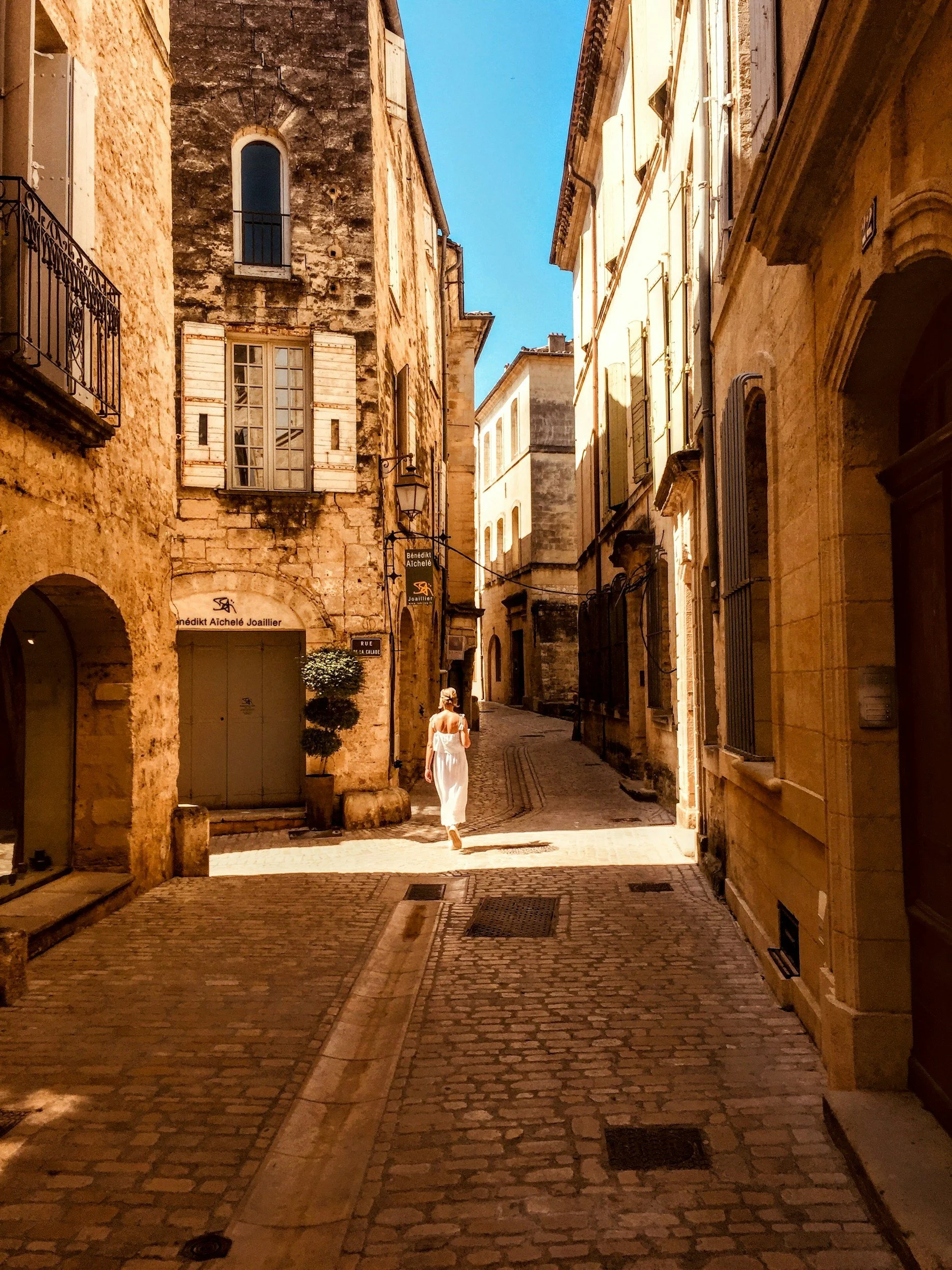
The Alentejo coast starts to feel different once you leave the A2 and cut across toward the sea around Grândola. The roads narrow, traffic drops off, and the last stretch into places like Vila Nova de Milfontes or Porto Covo runs through open land with very little along the way. Most people base themselves in one of those two, or slightly further south near Zambujeira do Mar, and then move up and down the coast by car.
If you want to walk part of the Rota Vicentina, it’s easier to treat it as a short section rather than a full-day plan. A good stretch is from Porto Covo heading south toward Praia do Malhão. You pick up the trail just outside the village, and within a few minutes you’re on the cliffs with nothing built up around you. The ground is sandy in parts, which slows the pace, and there’s no shade or water stops, so going early matters. It usually takes around 2–3 hours depending on how often you stop, and most people either turn back at Malhão or arrange a lift rather than looping it.
After a walk, Odeceixe is one of the easier places to land for food, but timing matters more than choice. Kitchens tend to close mid-afternoon, so arriving before 14:30 avoids having to wait until evening. Around Rua Nova and the streets just behind it, you’ll find a handful of small restaurants serving grilled fish, bread, olives, and whatever came in that day. In Almograve, it’s even simpler, with a few places near the center and the road down to the beach, so you usually just stop where is open rather than looking for something specific.
If you’re driving, the stretch between Porto Covo and Zambujeira do Mar is where the day fills itself without much planning. The main road, M1109, sits slightly inland, and every few minutes there’s a turn-off toward the coast. Some are paved, others turn into short dirt tracks, like the one leading down to Praia da Samoqueira or further south toward Praia dos Alteirinhos. Parking is usually just a small cleared area, and from there it’s a short walk down, sometimes a few minutes, sometimes a bit longer depending on the beach. It’s common to miss a turning, drive past, and then come back rather than following a set route.
Getting there from Lisbon takes about two hours to Vila Nova de Milfontes if you stay on the main roads. If you go via Odemira, it’s slower but gives you a better sense of how spread out everything is. Public transport will get you to the main towns, but once you’re there, moving between beaches and villages without a car becomes difficult very quickly.
Where you stay changes how the trip feels. Inland around São Luís, many of the smaller agroturismos sit down unmarked gravel roads, sometimes a few minutes off the main route, and you wouldn’t find them without directions. Closer to the coast, around Milfontes or Zambujeira, places are easier to reach but still small, usually with a handful of rooms rather than anything large. Breakfast is often served at a set time, and that ends up shaping the start of your day more than anything else.
Evenings stay local to wherever you are. In Vila Nova de Milfontes, people gather along Avenida Marginal by the river, while in Zambujeira do Mar it’s closer to the square near the cliffs. Restaurants open around 19:30, and outside of peak summer, you can usually just walk in earlier in the evening without booking.
After a day or two, you realise most of the time is spent moving between short drives, walks, and meals rather than following a plan. Distances are small, but everything takes slightly longer than expected, and that’s what ends up setting the pace.
If you’re mapping out a route around the Alentejo coast, it helps to weigh a few directions side by side, a few slower days in Lisbon spots, something more remote like the Azores, or keeping it on the mainland with stops like Tomar and Figueira coast, then narrowing it down to the kind of place you’d actually book from this Alentejo stays.
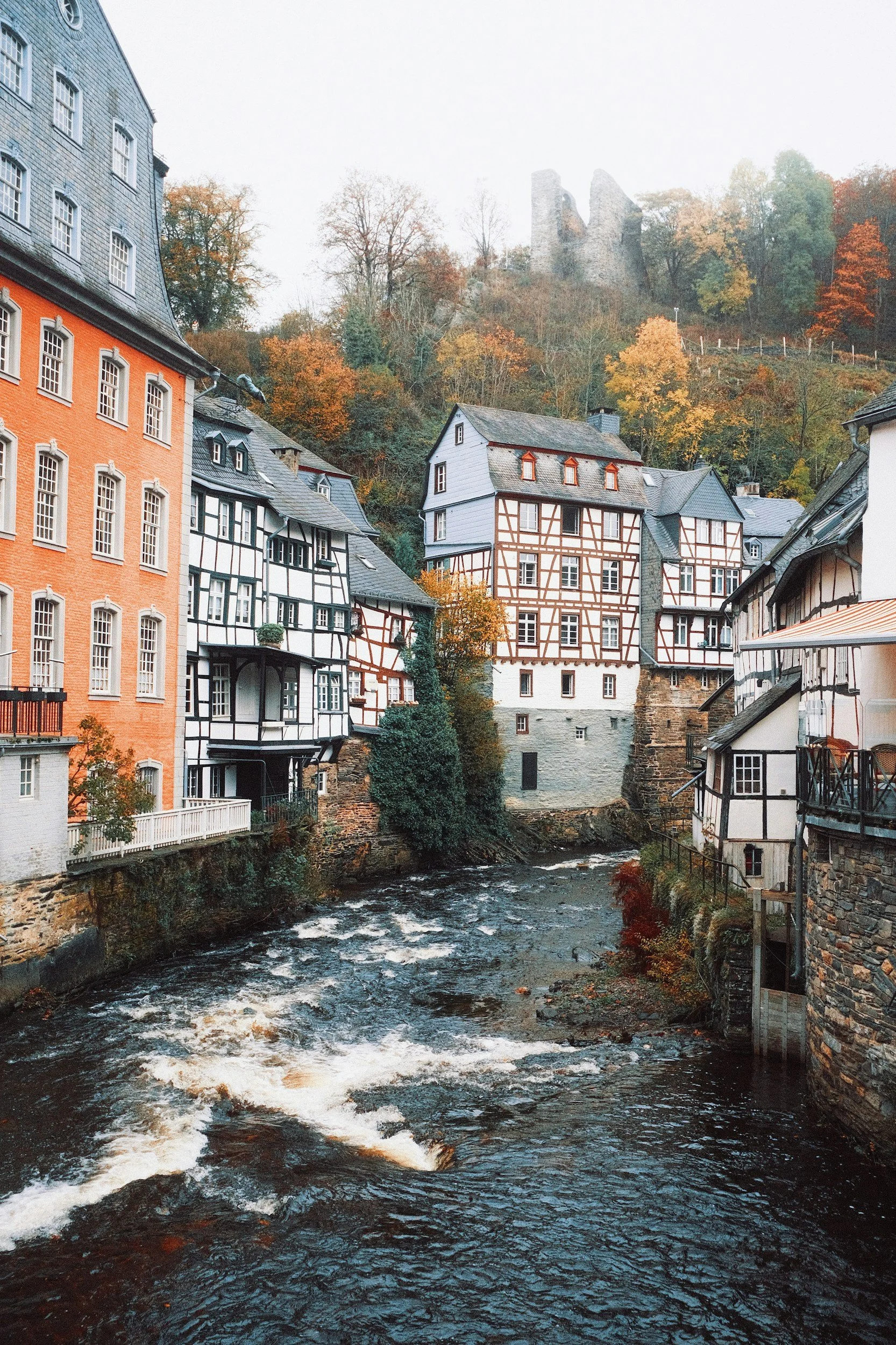
Monschau, Germany
Eifel National Park, near Belgian border
Monschau sits close to the Belgian border, about 40 minutes from Aachen, and most people arrive either by car or by bus from Aachen Hauptbahnhof. If you’re driving, you’ll usually leave the car in one of the car parks just above the town, like Parkhaus Stadtmitte or Burgau, and walk down into the center. The descent only takes a few minutes, but it’s steep enough that you notice it, especially on the way back up later in the day.
Once you’re down by the river, everything is within a small loop. The main street, Laufenstraße, follows the water and connects into Rurstraße, where most of the cafés and shops are. Early in the morning, before 09:00, this area is still quiet. Bakeries are just opening, chairs are being set out, and the only movement tends to be locals crossing the bridge or opening their shops. That’s the easiest time to sit down somewhere like Café Kaulard, before it fills up later in the morning, and it’s when the river feels like part of the town rather than something people are photographing.
By late morning, more people arrive, but the flow stays concentrated along the same few streets. If you want to step away from that, it only takes a couple of turns. Small lanes like Eschbachstraße or the paths leading slightly uphill toward the residential areas clear out quickly, and within a few minutes you’re out of the main movement without needing to go far.
If you follow the path up toward Burg Monschau, the walk takes about 10–15 minutes from the center. The incline is steady rather than steep, and most people take it slowly, stopping along the way where the view opens up over the rooftops. At the top, you get a clear view of how compact the town is, with the river running through it and hills on all sides. It’s one of the few places where people tend to stay a bit longer rather than just pass through.
Back down in the center, the Red House Museum sits directly along the main street and is easy to include without planning for it. It doesn’t take long to go through, and it gives some context to the textile history that shaped the town. Most visits are short, often under an hour, so it fits naturally into the middle of the day.
If you’re staying longer, the area around Monschau connects directly into the trails of Eifel National Park. You don’t need to drive far. Paths start just outside the town, especially toward Höfen, and lead into forested areas with marked routes of different lengths. These walks are straightforward to follow, and even shorter routes, around 1–2 hours, give you a break from the built-up center without requiring much planning.
Evenings depend on timing. As day visitors leave, usually late afternoon into early evening, the center opens up again. Around 18:30–19:00, restaurants begin to fill gradually, but it stays contained within the same streets you’ve already walked during the day. You’ll notice the difference more in the spacing between people than in any change to the layout.
If you stay overnight, choosing somewhere close to the river or near the small square around Markt makes it easier to move in and out without needing to think about routes. Most guesthouses are in older buildings, often with narrow staircases and a limited number of rooms, and breakfast is usually served within a fixed time window in the morning.
Getting out is as straightforward as arriving. Buses run regularly back to Aachen, and if you’re driving, the roads leading out toward Belgium or deeper into the Eifel are quiet and easy to follow. The town itself doesn’t take long to understand, but the timing of when you move through it changes how it feels from one part of the day to another.
If you end up staying longer than planned, it’s easy to build this into a wider route, starting with a closer look at Monschau in spring, then choosing between a quieter stay from these boutique hotels or heading further out, either north toward the North Sea islands, into something more active like this castle hiking route, or south into the forest around the Black Forest.
Folegandros, Greece
Southern Cyclades, between Santorini and Milos
Folegandros is a small island, and most visits revolve around Chora, which sits up on the cliff about 10–15 minutes from the port at Karavostasis. When you arrive by ferry, you’ll either take the local bus waiting at the port or a short taxi ride up the hill. Once you reach Chora, you leave the car outside and walk in. The village is car-free, and everything happens within a few connected squares rather than along one main street.
The first stretch most people walk is from the entrance near the bus stop into Plateia Dounavi, and then further into Plateia Piatsa. These two squares are where the day resets itself over and over. In the morning, around 09:00–10:00, only a couple of cafés are open, and you’ll see people sitting with coffee while deliveries are still being made through the narrow lanes. By late afternoon, chairs have filled out across the squares, and people start moving between them rather than staying in one place.
It helps to walk through Chora once without stopping, just to understand how small it is. From one end to the other takes less than 10 minutes, and most of the smaller alleys loop back into the same squares. If you turn off into side streets behind Plateia Piatsa, you’ll find quieter corners with houses rather than shops, and that’s usually where it clears out even in the middle of the day.
The path up to Panagia Church starts at the far edge of the village and takes about 10 minutes on a stone walkway that zigzags up the hill. There’s no shade, and the stones can be slippery, so early morning or later in the evening is easier. Most people go up, stay for a short time, and come back down the same way, often just before dinner when the light changes and the village below starts to fill again.
For swimming, Agali Beach is the most straightforward option from Chora. You can drive or take the bus in about 10 minutes, then walk down to the beach in a few minutes more. From Agali, there’s a path along the coast toward Fira Beach, which takes around 20–30 minutes on foot. It’s uneven in parts, but it’s one of the easier ways to reach a quieter spot without needing a boat. Katergo Beach sits on the opposite side of the island and is harder to reach. Most people take a small boat from Karavostasis in the morning and return a few hours later, since the walking route is longer and less direct.
If you want to explore more of the coastline in one go, small boat rentals are arranged directly at Karavostasis. You don’t need to plan much in advance, but weather matters, and on windy days the boats don’t go out. Most routes stay along the southern coast, stopping at beaches that don’t have road access.
Back in Chora, dinner doesn’t really start before 19:30–20:00. Places like Pounda and Irini’s sit just outside the busiest squares, so you’ll walk a few minutes to reach them. People don’t rush through meals here. Tables turn slowly, and it’s normal to stay for a couple of hours rather than moving on.
Getting to Folegandros takes a bit more effort than some other islands, and that’s noticeable as soon as you check ferry times. From Piraeus, it’s usually 4–5 hours depending on the boat, and connections from Santorini or Milos vary by day. There aren’t constant departures, so your arrival time often sets the structure of your stay.
Where you stay depends on how much you want to move around. Staying just outside Chora, within a 5–10 minute walk, means you can go in and out easily in the morning and evening without thinking about transport. Staying near Karavostasis is quieter, but you’ll rely on the bus or a car to get up to Chora, especially at night.
After a couple of days, you realise most of the time is spent repeating the same short routes. Walking into Chora, sitting in one of the squares, heading out to a beach, then coming back again in the evening.
Folegandros tends to sit right in that moment where you start wondering what comes next, whether to stay in that same quiet island feeling like Sifnos in autumn or Tinos in summer, loop back through Athens in 48 hours for a few grounded days, or change the pace entirely with something more raw like the Menalon trail or the stone villages and coastline around the Mani peninsula.
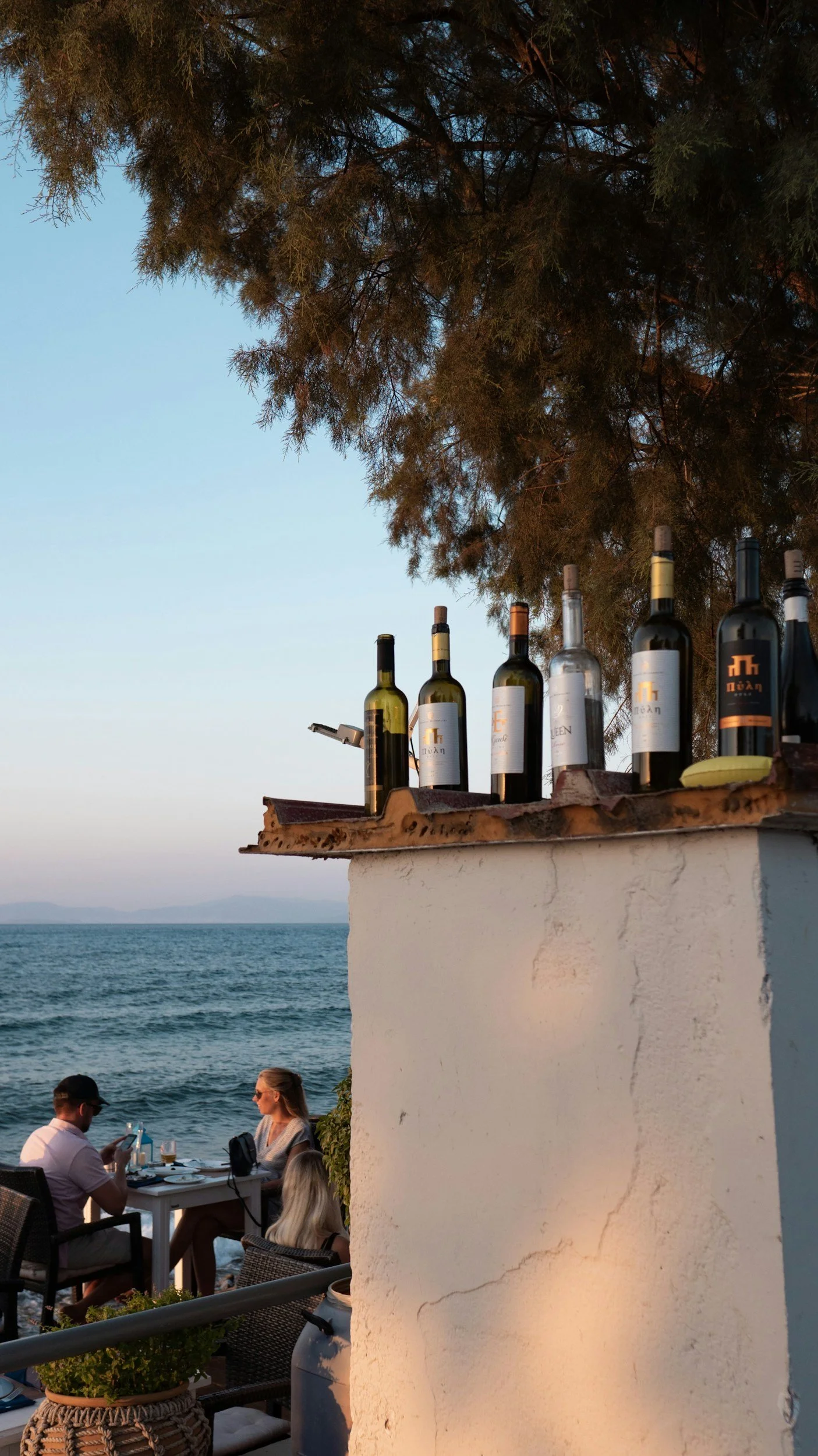
Dieulefit, France
Drôme Provençale, southeastern France
Dieulefit sits inland from Montélimar, about 30 minutes by car, and the last stretch in runs through smaller roads past La Bégude-de-Mazenc before you arrive without much build-up. You usually come in along Route de Montélimar, and within a minute or two you’re in the center near Place de l’Abbé Magnet, where most things are clustered.
If you’re there on a Tuesday, the market takes over the morning. It spreads through the square and into nearby streets like Rue du Bourg and Rue Justin Jouve, starting around 08:00 and building steadily rather than all at once. The food stalls sit closer to the middle, with vegetables, goat cheese, olives, and bread, while pottery and textiles are mixed in around them rather than separated. It’s not a quick pass-through market. People stop, talk, come back to the same stall, and it’s common to walk the same stretch twice without noticing.
A better way to handle it is to walk through early, then step away for a bit. The side streets clear quickly, and within a minute you’re out of the flow. Then come back closer to 11:00 when everything is fully set up and the cafés start filling. That second round is usually slower and more about sitting down than buying anything.
On other days, the same streets feel much quieter. Rue du Bourg is where most of the pottery workshops are, and you’ll see finished pieces sitting in the doorway or just inside, rather than behind big displays. Some studios open late, closer to 10:30 or 11:00, and a few offer short workshops, but it’s usually something you ask about in person rather than book ahead.
For a walk, the Sentier des Sources is the easiest option without needing to drive anywhere. You can reach the start in about 10–15 minutes on foot from the center, depending on where you’re staying. The path isn’t marked as a big attraction, but it’s easy to follow once you’re on it. It loops through low woodland and open stretches with dry stone walls and a few small springs. Most people take around 1.5 to 2 hours without rushing, and there aren’t any cafés or stops along the way, so it’s something you do between meals rather than around them.
Lunch in Dieulefit isn’t something you leave open-ended, because most places follow a fairly fixed service window and don’t adapt much once it’s over. At Le Quartier, which sits just off the main stretch near Place de l’Abbé Magnet, there are only a handful of tables, and once the first sitting fills, there isn’t much turnover. On a Tuesday, when the market is on, it’s common for people to move straight from the stalls to lunch, so arriving closer to 12:30 rather than waiting until after 13:30 makes a noticeable difference. If you leave it later, especially past 14:00, kitchens start closing rather than winding down slowly, and you’ll see chairs being stacked or menus taken away, which leaves you with cafés that will serve drinks but not much more. It’s less about choosing between places and more about catching them while they’re still fully operating.
If you want to get out of town for a few hours, Grignan is the easiest option to pair with a short drive through the surrounding countryside. The road there takes around 20 minutes, passing through smaller villages and open stretches with vineyards and low stone houses, and you arrive just below the château where most people park and walk up. It’s compact enough to see in under an hour without rushing, especially if you stay within the upper part of the village. La Garde-Adhémar sits further out, closer to the Rhône valley, and the drive takes closer to 30–35 minutes. The approach is slightly different, with the village set along a ridge, so you park below and walk up through a few narrow streets before reaching the main viewpoint. Both places work as short stops that fit around the rest of the day rather than something you need to build a full itinerary around.
Arriving by train means stopping in either Montélimar or Valence, and from there you’re relying on a bus connection or a taxi for the final stretch. The bus route into Dieulefit exists, but departures are limited and don’t always line up well with train arrivals, which can leave you waiting or arriving at awkward times of day. Once you’re in town, everything in the center is walkable, but reaching places like the surrounding villages, trailheads, or countryside stays becomes difficult without a car, so most people end up renting one at the station rather than trying to coordinate connections.
Where you stay has a practical impact on how your days unfold. In the center, around Rue du Bourg, Rue Justin Jouve, or near Place Chateauras, you step straight into town in the morning and can move between the market, cafés, and shops without thinking about transport. Just outside, especially along the road toward Le Poët-Laval, accommodation is more spread out, often set back slightly with views over the hills, but you’ll need the car even for short trips in and out. That changes the rhythm, because instead of drifting back into town on foot in the evening, you plan when to go and when to leave.
Evenings settle in early… Shops begin closing late afternoon, and by the time restaurants open around 19:30, the streets are already quieter. Most people stay within a small area near the center, moving between a few streets rather than covering distance, and after dinner there isn’t anything pulling you further out, so you usually end up walking the same short loop once or twice before heading back.
Dieulefit usually ends up being the kind of place you extend without planning to, especially once you start comparing it with somewhere like Uzès in spring or heading further out into the Lot Valley. Maybe you’re reshaping the trip entirely through quieter picks like these France alternatives, while still keeping it simple with something like solo travel south?
FAQs about quiet European towns to visit in summer
What are the quietest towns in Europe to visit in summer without crowds?
Some of the quietest towns in Europe during summer include Santillana del Mar in northern Spain, Dieulefit in the Drôme region of France, and villages in Valle Maira in northern Italy. These places don’t rely on mass tourism, which means visitor numbers stay relatively low even in July and August, especially outside late morning and early afternoon.
Where in Europe can I go in summer that isn’t overcrowded but still beautiful?
Regions like the Alentejo coast in Portugal and inland Provence around Dieulefit offer coastal and countryside scenery without the density you’ll find in places like the Algarve or Côte d’Azur. Smaller towns such as Uzès also stay manageable because most visitors come for the market and leave the same day.
Which European summer destinations are still local and not touristy?
Towns like Dieulefit and Santillana del Mar still function as working towns, not just visitor destinations. You’ll notice it in things like market structure, shop opening hours, and how the day slows down in the afternoon. Valle Maira is even less tourism-driven, with villages spread out and very limited infrastructure.
Are there quiet coastal destinations in Europe during peak summer?
Yes, but they’re usually less accessible. The Alentejo coast between Porto Covo and Zambujeira do Mar has long stretches of undeveloped coastline, and fewer large hotels limit visitor numbers. On Greek islands, Folegandros stays quieter than Santorini because of fewer ferry connections and less accommodation overall.
Is Uzès crowded in summer or still worth visiting?
Uzès gets busy during market mornings, especially on Wednesdays and Saturdays, but outside those hours it’s much calmer. Early mornings, late afternoons, and evenings feel noticeably quieter, and staying overnight changes the experience compared to visiting on a day trip.
Do you need a car to visit small towns in Europe like Dieulefit or Valle Maira?
In most cases, yes. Dieulefit, Valle Maira, and the Alentejo coast are difficult to explore without a car due to limited public transport and the distance between places. Towns like Uzès and Santillana del Mar are easier to reach, but having a car still gives more flexibility once you’re there.
What time of day are small European towns the quietest in summer?
Before 10:00 and after 18:30 are usually the quietest times. Midday tends to be slower due to heat and lunch closures, but also when day visitors are most present. Evenings often feel calmer again, especially in places where people don’t stay overnight.
How many days do you need in towns like Santillana del Mar or Dieulefit?
Two to three days is usually enough. Santillana del Mar can be seen in a day, but staying longer lets you experience it outside peak hours. Dieulefit works better with at least two nights, especially if you want to include the market and a walk in the surrounding hills.
Is Valle Maira worth visiting in summer for hiking?
Yes, Valle Maira is one of the better areas in northern Italy for multi-day walking in summer. The Percorsi Occitani connects villages across the valley, and you can plan routes between places like Stroppo, Elva, and Acceglio without needing to return to the same base each day.
What should you plan in advance when visiting quieter places in Europe?
Accommodation and dinner. Smaller towns often have limited places to stay and fixed dinner times, usually around 19:30–20:00. Lunch also follows a set window, so arriving too late can leave you without many options.
Are there quiet European towns in summer that are still walkable without a car?
Yes, but they’re limited. Towns like Uzès and Santillana del Mar are compact enough to explore entirely on foot once you arrive, with cafés, markets, and main streets all within a few minutes’ walk. However, reaching them without a car can take longer, and places like Dieulefit or Valle Maira are much harder to manage without one.
Which small towns in Europe are cooler in summer and not too hot?
Northern Spain, including Santillana del Mar, tends to stay milder than southern Europe in July and August. Valle Maira in northern Italy is also cooler due to elevation, especially in villages like Elva. In contrast, towns like Uzès and Dieulefit can get hot midday, which is why most activity shifts to morning and evening.
Where can I experience a real local market in France without large crowds?
Dieulefit’s Tuesday market is one of the more local-feeling options, with fewer tour groups and a slower pace compared to larger Provençal markets. Uzès is more well-known, especially on Saturdays, but still manageable if you go early or return later in the morning once the initial rush settles.
Is the Alentejo coast less crowded than the Algarve in summer?
Yes, significantly. The Alentejo coast has stricter development rules, fewer large hotels, and longer distances between towns, which naturally limits visitor numbers. Areas between Porto Covo and Zambujeira do Mar stay relatively quiet even in peak summer compared to most of the Algarve.
What Greek island is quieter than Santorini but still easy to reach?
Folegandros is one of the more accessible quieter islands. It has regular ferry connections from Santorini and Athens, but fewer hotels and no large-scale resorts, which keeps overall numbers lower. Staying near Chora also means you can walk most places without needing to travel far.
Are there places in Italy without crowds in summer that still feel authentic?
Yes, but they’re usually inland or in mountain regions. Valle Maira is a strong example, where villages like Stroppo or Acceglio don’t have mass tourism infrastructure, and daily life is built around walking routes and small guesthouses rather than short-term visitors.
When is the best time to visit quiet towns in Europe during summer?
Late June and early September are the easiest times if you want fewer people but still good weather. July and August are still manageable in smaller towns, but you’ll notice more activity late morning and early afternoon, especially in places with markets or coastal access.
Why do some European towns stay quiet even in peak summer?
Usually because of access and infrastructure. Towns without train stations, large hotels, or major attractions don’t receive the same volume of visitors. Places like Dieulefit, Valle Maira, and parts of the Alentejo coast are good examples where limited access naturally keeps numbers lower.