
The best way to spend a day in Uzès starts at the market
If you’re planning a trip to Provence in spring but don’t feel like dealing with the crowds in Gordes or waiting your turn outside lavender shops, go to Uzès instead.
It sits between Nîmes and Avignon, close enough to reach easily, but far enough away to feel separate from the busier routes. The centre is compact. Stone buildings, faded shutters, narrow streets that don’t follow any clear plan. You don’t really “navigate” Uzès, you just walk and see where you end up, usually somewhere between Place aux Herbes and the quieter streets leading towards the Duchy.
Most of it revolves around Place aux Herbes, the main square. In spring, the market starts to pick up again, especially on Wednesdays and Saturdays. Stalls fill the square under the plane trees with strawberries, asparagus, local cheeses, olive oil, and bunches of herbs laid out on simple wooden tables. Cafés like Café de l’Esplanade and the terraces around the square open up fully, and people take their time. You can sit down mid-morning without needing to think about how long you’ll stay.
Just a few streets away, things change quickly. Walk up towards Rue Jacques d’Uzès or continue in the direction of the Duchy (Duché d’Uzès), and it gets noticeably quieter. Fewer people, more everyday movement. Doors left open, small shops that don’t try to draw you in, the occasional boulangerie where you’ll see locals coming and going rather than queues forming outside.
Spring is probably the easiest time to be here. The town is open, but not busy. You can walk into most places without planning, find a table without waiting, and move through the streets at your own pace. From Uzès, it’s also easy to reach the Pont du Gard (about 20 minutes by car), visit nearby vineyards in the Duché d’Uzès wine region, or take short drives into smaller villages that don’t appear on most itineraries.
If you’re looking for somewhere in southern France where you can slow things down without needing to plan too much, Uzès is an easy place to start.
If you’re looking for places like this, there are a few quieter market towns across Provence that feel similar - some even smaller than Uzès.
If you’re going to Provence in May and want more tips and ideas, this gives you a clearer picture.

Getting to Uzès
You don’t need a car to reach Uzès, but it makes a difference once you’re there. If you plan to visit nearby villages, stop at vineyards, or head out to places like Pont du Gard without checking timetables, having one is easier.
By car:
The closest airports are Nîmes and Montpellier. From Nîmes, it’s about 30–40 minutes to Uzès. From Montpellier, closer to an hour. The last part of the drive takes you off the main roads and into smaller routes lined with vineyards, olive trees, and low stone houses. Traffic is usually light, and once you’re close, signs for Uzès are clear.
By public transport:
The simplest route is via Nîmes. Take a train to Nîmes Centre, then continue by regional bus (line B21) to Uzès. The bus takes around 40 minutes and runs several times a day. It stops near Esplanade, just outside the historic centre, so you can walk in within a few minutes.
From Avignon, you can either connect via Nîmes or take a bus directly, but the Nîmes route is usually more straightforward.
If you’re doing more of this by train, this makes it easier to figure out what ticket actually makes sense.
If you’re arriving by bus, sit on the right-hand side. As you approach, you’ll catch a stunning view of the Duché’s tower rising above terracotta rooftops, framed by the surrounding hills. It’s a moment that feels like the official start of your trip.
Where to Stay in Uzès: courtyards, shutters & bell towers
You want charm, walkability, and ideally, a courtyard with lemon trees or a view of a bell tower. A few beautiful options:
La Maison d’Uzès
Just a short walk from Place aux Herbes, on a quieter street behind the main square, La Maison d’Uzès sits in a restored townhouse that you could easily miss if you didn’t know it was there. Inside, it’s more refined than most places in town, but still grounded in the setting. Stone walls, tall windows, and rooms that stay cool even when the streets outside start to heat up.
There’s a small spa on-site, which makes a difference if you’re staying more than one night and not planning to move around too much. The rooftop terrace is worth going up to in the early evening. From there, you see the rooftops stretching out towards the Duchy of Uzès and the bell tower rising above everything else.
You’re close enough to walk straight out into the centre in the morning, but far enough from the busiest cafés around Place aux Herbes that it stays quiet at night.
Les Toits d’Uzès (Airbnb)
Les Toits d’Uzès is set within the old town, a few minutes’ walk from Place aux Herbes, but slightly tucked away on one of the smaller streets where things calm down quickly. You reach it via a narrow staircase, and once you’re inside, it opens up onto the rooftops.
The apartment keeps its original details. Patterned tile floors, thick walls, slightly uneven edges that remind you the building has been there a long time. The terrace is what makes it stand out. It’s simple, private, and positioned above the street, so you’re removed from the movement below without being far from it.
It works well if you want a bit of independence. You can step out into the centre within minutes, but it never feels like you’re staying right in the busiest part of town.
L’Alcôve
L’Alcôve sits just outside the centre, in a residential part of Uzès where the pace shifts slightly. It’s still walkable, around 10 minutes to Place aux Herbes, but you notice the difference once you’re back. Fewer people, less movement, more everyday life.
The garden is where most of your time ends up being spent. Not in a planned way, just because it’s there. A few shaded corners, simple seating, nothing overly designed. In the morning, breakfast is served outside when the weather allows, with bread from a local bakery, fruit, and a few homemade elements depending on the day.
The rooms are straightforward and comfortable, with details that feel personal rather than styled. It’s the kind of place that suits a slower stay, especially if you don’t need to be in the centre all the time.
If you’d rather stay outside town next time, these are the kinds of places that make that work.
How to spend a day in Uzès
Saturday mornings centre around Place aux Herbes. By mid-morning, the square is full, but it builds gradually rather than all at once. Stalls sit under the plane trees, set up with strawberries, asparagus, local cheeses, olives, and bunches of herbs laid out on wooden tables. In April and May, it still feels mostly local. People move slowly between stalls, stopping to talk, buying a few things at a time rather than doing one big shop.
If you can, get there around 8:30–9:30. It’s easier to walk the square before it fills up completely. Do one full loop first, then go back for what you want. The layout makes more sense that way.
There’s a small bakery, La Nougatine, just off the square towards the side streets leading to Rue Jacques d’Uzès. People drift in and out rather than queueing. Grab something simple, then step back towards the edge of the square instead of sitting in the middle. The corners near the arcades are quieter, and you can see the whole market without being in the flow of people.
If you keep walking past the square, you’ll notice how quickly it shifts. Within a few streets, the noise drops and you’re back in the narrower lanes where the market feels further away than it actually is.
If you come across a brocante while you’re here and aren’t sure what you’re looking at, this explains how they work locally.
If you’re planning more trips around markets, this one is useful to have.
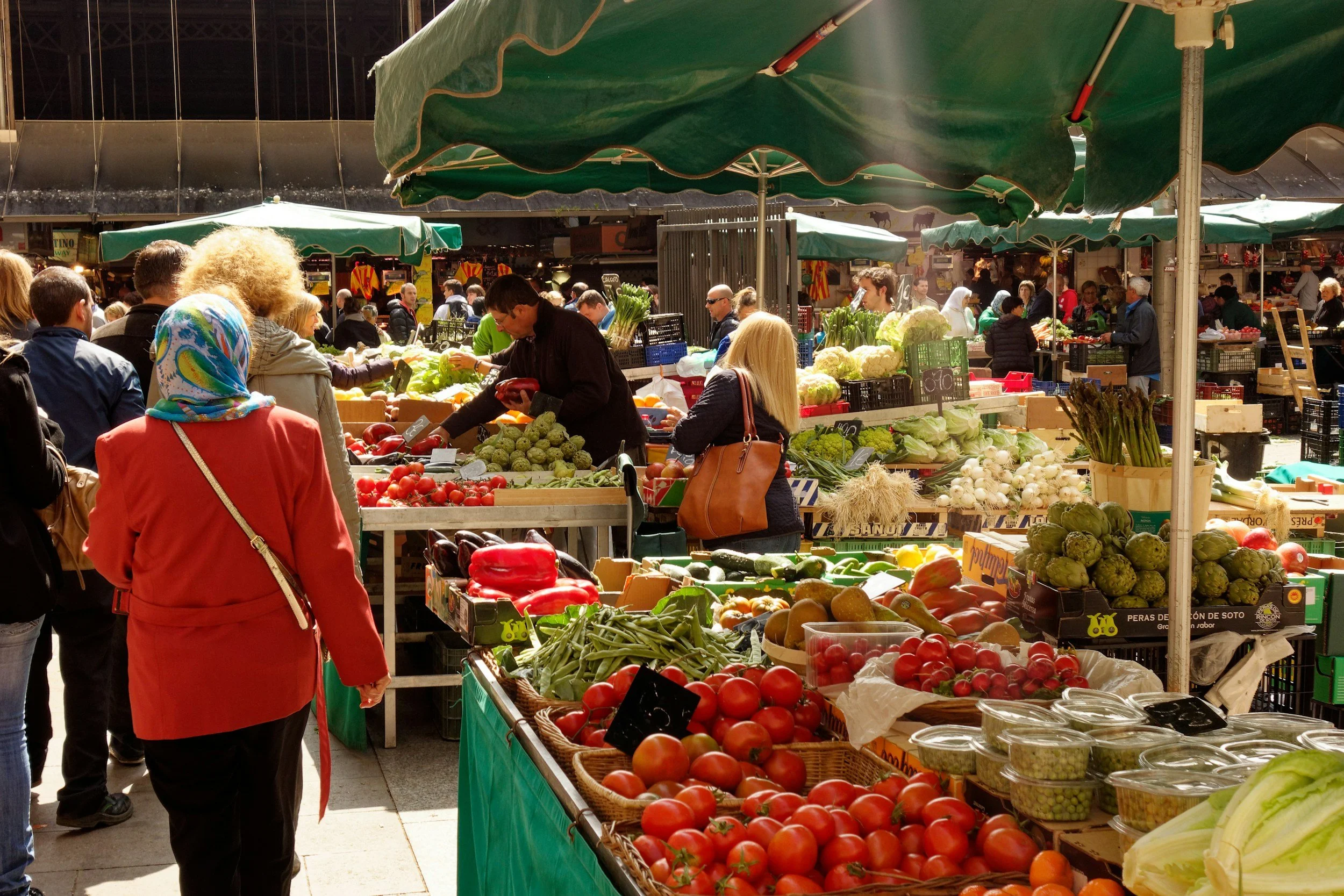
Market mornings are the coziest
Wisteria Walks
In spring, you start noticing wisteria without really looking for it. It shows up across the old town in bits and pieces rather than all in one place. One doorway covered in purple, then nothing for a few streets, then a whole façade where it’s taken over completely.
Most of it sits just outside Place aux Herbes, once you move away from the square and into the narrower streets where there’s less movement. The buildings are closer together there, which makes the wisteria hang lower and feel more present as you walk past.
If you want a loose route, start near the edge of the square and head towards Rue du Dr Blanchard. There are a few spots where it stretches across the street rather than just along the walls. From there, continue towards Rue du 4 Septembre, where you’ll find buildings with heavier growth along the façades, especially on the quieter side of the street.
Then walk in the direction of Rue Saint-Théodorit, which brings you back towards the cathedral and into slightly busier streets again. You’ll pass a mix of small shops, open doorways, and the occasional shaded corner where people stop briefly before moving on.
What works here is that it’s not concentrated. You don’t move from one “best spot” to another. You just walk, and it appears where it appears. Some of the better sections are on streets that don’t lead anywhere in particular, so it’s worth turning off if something looks quieter.
Timing changes the feel quite a bit. Earlier in the morning, it’s mostly locals setting up their day, and you have the streets to yourself. Later on, especially towards the evening, the light hits the stone walls and the colour stands out more. Both are worth seeing, depending on when you’re out.
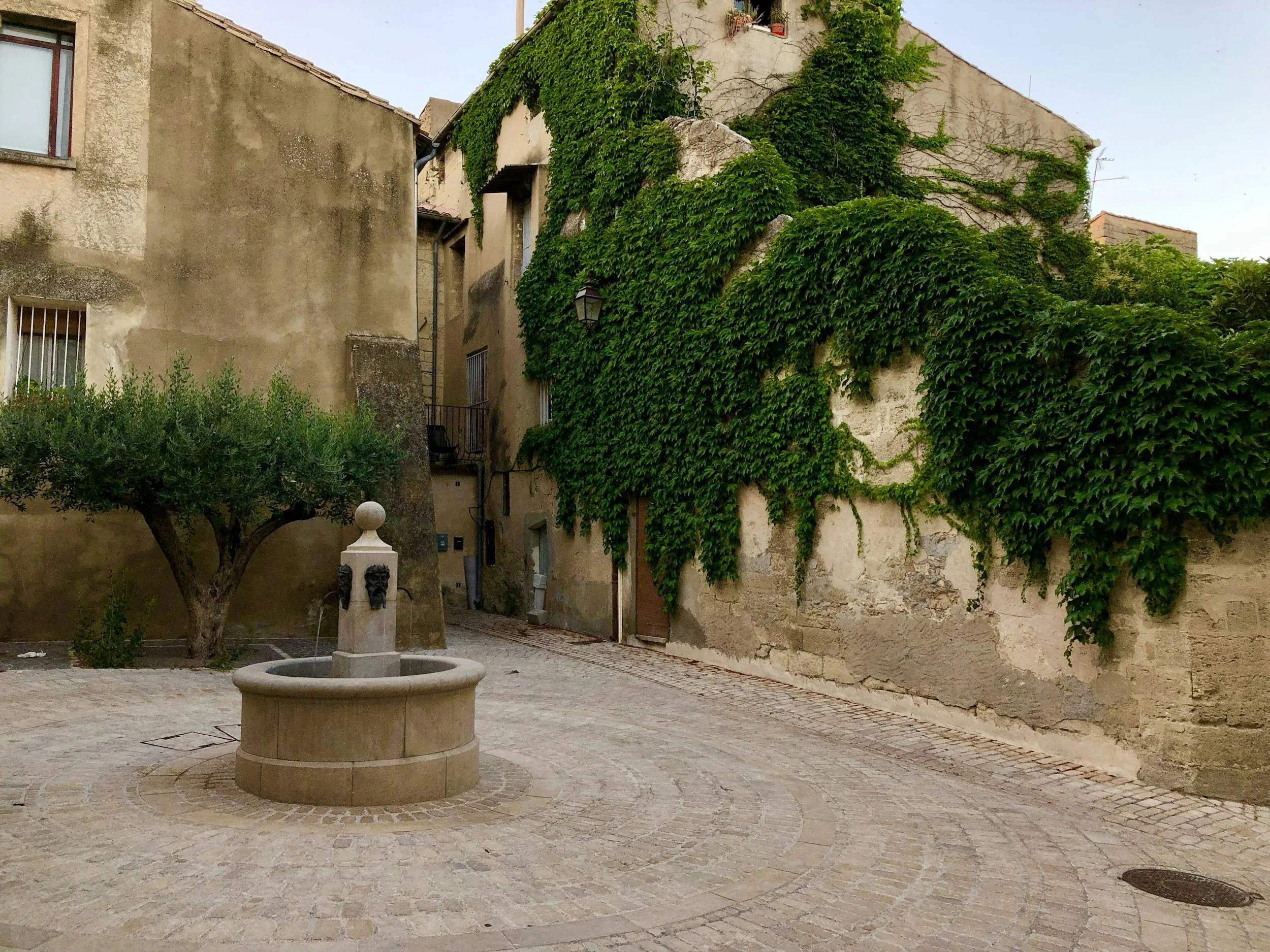
Long, seasonal lunches
Lunch in Uzès isn’t quick, especially in spring. You sit down thinking it’ll be an hour and then realise it’s mid-afternoon and you haven’t moved.
If you want something a bit more structured, La Table d’Uzès sits just behind the centre, a few minutes from Place aux Herbes and close to the Duchy. It has a Michelin star, but it doesn’t feel like you need to dress up for it. The menu follows the season, so it shifts, but you’ll usually see things like asparagus, lamb, herbs - ingredients that make sense for where you are. Nothing complicated, just done properly.
The wine list leans local, mostly Duché d’Uzès AOP, which makes it easy to try something from the area without spending too much time deciding.
If you’d rather keep it simple, Ma Cantine is the kind of place you end up at without planning it. It’s set within the old town streets, a short walk from the square, with tables edging out towards the street. People come and go throughout lunch. Some stay for a full meal, others just stop briefly. The menu changes depending on what’s available that day, so it’s easier to read what’s on the board and choose from there.
In spring, strawberries show up everywhere around town, especially in cafés near Place aux Herbes. If you see a fraisier, order it. Most places make it fresh while strawberries are in season, and you can taste the difference straight away.
If you want coffee later in the day, Café de l’Esplanade sits just outside the busiest part of the centre, on the edge of Place aux Herbes. It’s one of those places people return to rather than just pass through.
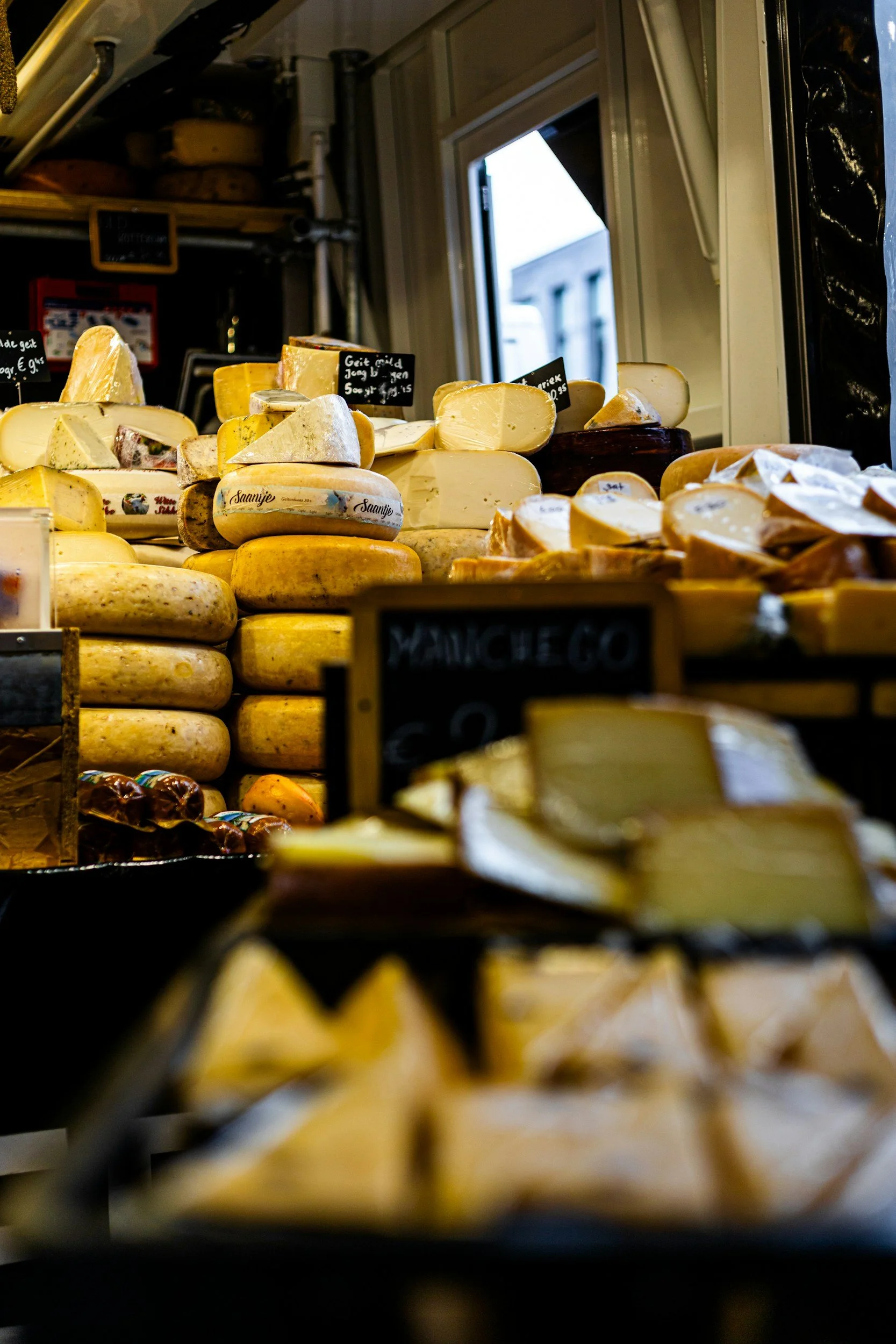
Rue Saint-Théodorit
Walk to Vallée de l’Eure
After lunch, it makes sense to leave the centre for a while. The easiest way is to walk down to the Vallée de l’Eure, starting from the edge of the old town near Place du Duché, then picking up Chemin des Capitelles as the streets start to open out.
You don’t need to follow a strict route. Once you’re past the last of the stone buildings, it becomes clear. The path runs downhill, bordered by low dry-stone walls, with wild herbs growing along the edges. Every so often, you pass a small capitelle, the round stone huts built without mortar. Some sit right next to the path, others slightly further back, half hidden.
It’s about a 20-minute walk, and you notice the change as you go. The sounds from town drop away, and there’s more space between everything.
At the bottom, the valley opens up under large plane trees. There’s a stretch of grass along the river where people sit or lie down, especially later in the afternoon. If you walk a little further, you’ll come across parts of the old Roman aqueduct. It’s not heavily signposted, but you can see the structure if you look for it along the edges of the valley.
If you’re thinking of turning this into a full vineyard day, this gives you a few easy options nearby.
Evening in Place du Duché
By the time you head back, things have slowed down in town.
Place du Duché is where people tend to end up without really planning it. You’ll see it as you walk back in. A few people already sitting on the steps, others arriving with a bottle in hand.
If you want something to drink, Le Jardin des Vins is nearby and easy. You go in, pick something local, and that’s it. No need to stand around deciding.
Most people don’t bother with a table at this point. They just sit on the stone steps in front of the Duchy. It’s informal, a bit uneven, and no one’s trying to organise anything.
People come and go. Someone leaves, someone else takes their spot. Bikes pass through the square, voices carry a bit more as it gets quieter, and the temperature drops once the sun disappears behind the buildings.
Things to do around Uzès (if you stay longer)
If you stay more than a night, you stop thinking in terms of “what to do” and just start heading a bit further out - or taking longer in places you’d normally pass through. Here’s where to go when you’ve seen the Saturday market, walked the wisteria loop, and claimed your favorite café table.
The Pont du Gard
The easiest one is Pont du Gard, about 20 minutes from Uzès by car, heading out past Route de Bagnols-sur-Cèze.
You park, walk a few minutes, and then it’s just there. Larger than it looks in photos. In spring, it’s still manageable. You can walk across without being pushed along, and along the riverbanks there’s enough space to sit without looking for it.
A lot of people bring something from Uzès - usually from the market around Place aux Herbes. Bread, cheese, fruit. You’ll see people spread out along the water rather than gathered in one place. Some stay for a while, others just pass through.
If Uzès feels right, there are a few more places in southern France with the same pace, just less talked about.
Wine Tasting in the Duché d’Uzès Region
Once you leave town, you’re already in the Duché d’Uzès AOP area. It doesn’t feel organised or signposted in a big way. Vineyards sit between small roads and low stone houses, and you come across them more than you actively search for them.
You don’t need much of a plan. You can drive out and stop where it looks open, or choose one or two places ahead of time.
Domaine Deleuze-Rochetin is slightly outside town, in the direction of the countryside north of Uzès. Family-run, organic, and usually quiet. Tastings tend to be informal.
Domaine Saint-Firmin is closer, just outside Uzès, and easier if you don’t want to go far. Most people start with the rosé and take it from there.
The Haribo Museum
Yes, that Haribo! The gummy bear. The Haribo Museum sits about a 15-minute walk from the centre, along Route de Bagnols-sur-Cèze, in the same direction as Pont du Gard.
It’s basically a mix of production history, older displays, and a few interactive sections. Not something you need to plan your day around, but easy to add if you’re already walking out that way.
There’s a large shop at the end with more varieties than you’d normally see, so make sure to buy some and bring home!
The Medieval Garden (Le Jardin Médiéval d’Uzès)
Right behind Cathédrale Saint-Théodorit, just a few steps up from Place du Duché, there’s a small gate you could easily walk past without noticing. It leads into Le Jardin Médiéval d’Uzès, tucked between stone walls and slightly removed from the movement around the cathedral.
Inside, it’s simple and compact. Narrow paths, low stone borders, and sections of plants grouped by use rather than decoration. You’ll see herbs that would have been used for cooking, others for remedies, all labelled but not in a way that turns it into a museum. It’s the kind of place you walk through slowly without thinking about it.
Because it’s enclosed, the sound changes as soon as you step in. You still hear the town, but more faintly. People tend to move quietly here, or sit for a bit on the benches along the edges before heading back out.
There’s a narrow stone tower inside the garden. The staircase is tight and slightly uneven, but it only takes a minute or two to reach the top. From there, you get a clear view over the rooftops of Uzès, the cathedral close by, and the countryside stretching out beyond. It’s one of the easier viewpoints in town, mostly because not many people stop here long enough to go up.
Evening concerts and cultural events
Uzès doesn’t make a big deal out of what’s on. You usually come across it while you’re walking around.
The first place to check is Place aux Herbes. Look at the walls under the arcades and near the café entrances. Posters get stuck up there for concerts, exhibitions, small events. They’re easy to miss if you’re just passing through, so it’s worth slowing down for a second.
Around Place du Duché and by Cathédrale Saint-Théodorit, you’ll find a few more. The cathedral sometimes has concerts, and there’s usually a paper notice on the door or just outside. Nothing fancy, just the basics - time, date, what it is.
If you walk past galleries or smaller shops, check the windows. A lot of things are only mentioned there. No website, no booking link. Just a printed sheet taped inside.
There’s also the tourist office near Place Albert 1er if you want everything in one place. But most of the time, you don’t need it. You’ll see something earlier in the day, remember roughly when it starts, and come back later.
That’s usually how it works here.
Planning a stay in Uzès
Uzès is small, but how you structure your time still makes a difference.
If you only have one day, keep it centred around the old town. Start at Place aux Herbes in the morning, walk out towards Rue Jacques d’Uzès and the quieter streets, then head up past Place du Duché and the Duchy of Uzès. In the afternoon, you can walk down to the Vallée de l’Eure without needing transport.
If you’re staying longer, it’s easier to spread things out. Do the market one morning, visit the Pont du Gard another day (it’s about 20 minutes by car, or longer by bike), and leave time to explore the smaller streets without a plan. The area between Place aux Herbes and the cathedral is where you’ll end up passing through most often.
Where you stay matters more than it seems. Being within a few minutes of Place aux Herbes or Place du Duché means you can move in and out of the centre throughout the day without thinking about it. That’s what makes it feel relaxed rather than scheduled.
If you’re visiting in spring, timing your day helps. The market is busiest from late morning onwards, especially on Saturdays. Go earlier if you want space, or later in the afternoon when things have thinned out. Evenings around Place du Duché tend to be more local, with fewer people passing through.
If you’re staying a bit longer in Provence, both Drôme Provençale and Aix-en-Provence are worth adding - they each give you a slightly different feel of the region.
What to keep in mind
Uzès doesn’t require much planning once you’re there, but a few small things make it easier.
Most of the old town is walkable, but the streets are uneven and slightly sloped, especially around the edges leading down towards the valley. Comfortable shoes make more difference here than you’d expect.
Parking is outside the centre, so if you’re arriving by car, you’ll likely leave it near Place Albert 1er or one of the surrounding parking areas and walk in from there.
Restaurants around Place aux Herbes fill up in the middle of the day, but it’s usually easier to find a table later in the afternoon or in the streets just outside the square.
And if you’re unsure what to do in the evening, just walk between Place aux Herbes and Place du Duché. You’ll usually come across something, like a small event, a place that looks open, or just somewhere that feels right to stop for a while.
Uzès feels different in autumn as well, especially once things quiet down.
If you don’t want to figure it all out yourself, this 3 day itinerary for Uzès is full of ideas.
FAQs about visiting Uzès, France
Is Uzès worth visiting or is it too small?
Uzès is small, but that’s the point. The centre around Place aux Herbes is compact, so you don’t need to plan much. It works best if you stay at least one night rather than trying to see it in a few hours.
What is Uzès known for in Provence?
Uzès is known for its Saturday market in Place aux Herbes, its old town streets, and the Duchy of Uzès above Place du Duché. It’s also close to the Pont du Gard, about 20 minutes away.
How many days do you need in Uzès, France?
One day is enough for the town itself. Two days gives you time to visit the Pont du Gard, walk to the Vallée de l’Eure, or explore nearby vineyards without rushing.
When is the best time to visit Uzès?
Spring (April to early June) is one of the easiest times. The market is active, cafés are open, and it’s less crowded than mid-summer. Saturdays are busiest, especially late morning.
Is Uzès walkable for a weekend trip?
Yes, everything in the centre is within walking distance. Streets are cobbled and slightly uneven, especially on the way down towards the Vallée de l’Eure, so good shoes make a difference.
How do you get to Uzès from Nîmes or Avignon?
From Nîmes Centre, take the B21 bus (about 40 minutes) to Uzès, stopping near Place Albert 1er. From Avignon, the simplest route is usually via Nîmes.
Can you visit Pont du Gard from Uzès without a car?
Yes, but it’s easier with one. By car it’s about 20 minutes. Without a car, you can cycle or combine bus + walking, but it takes longer and requires a bit more planning.
Are there good wineries near Uzès, France?
Yes, the area is part of the Duché d’Uzès AOP. Small producers like Domaine Deleuze-Rochetin and Domaine Saint-Firmin are easy to visit and don’t feel commercial.
What day is the market in Uzès?
The main market is on Saturdays in Place aux Herbes. There’s also a smaller one on Wednesdays, but Saturdays are larger and busier.
For more soul-soothing, spring-ready travel like this, sign up for the Trippers Terminal newsletter.
We’ll send you local gems, seasonal tips, and real recommendations - just travel that feels good.