
Why Figueira da Foz deserves more than a beach day
If you’d rather spend your morning at a flea market than in a museum queue, and you prefer the sound of waves to traffic, Figueira da Foz is an easy place to settle into for a few days.
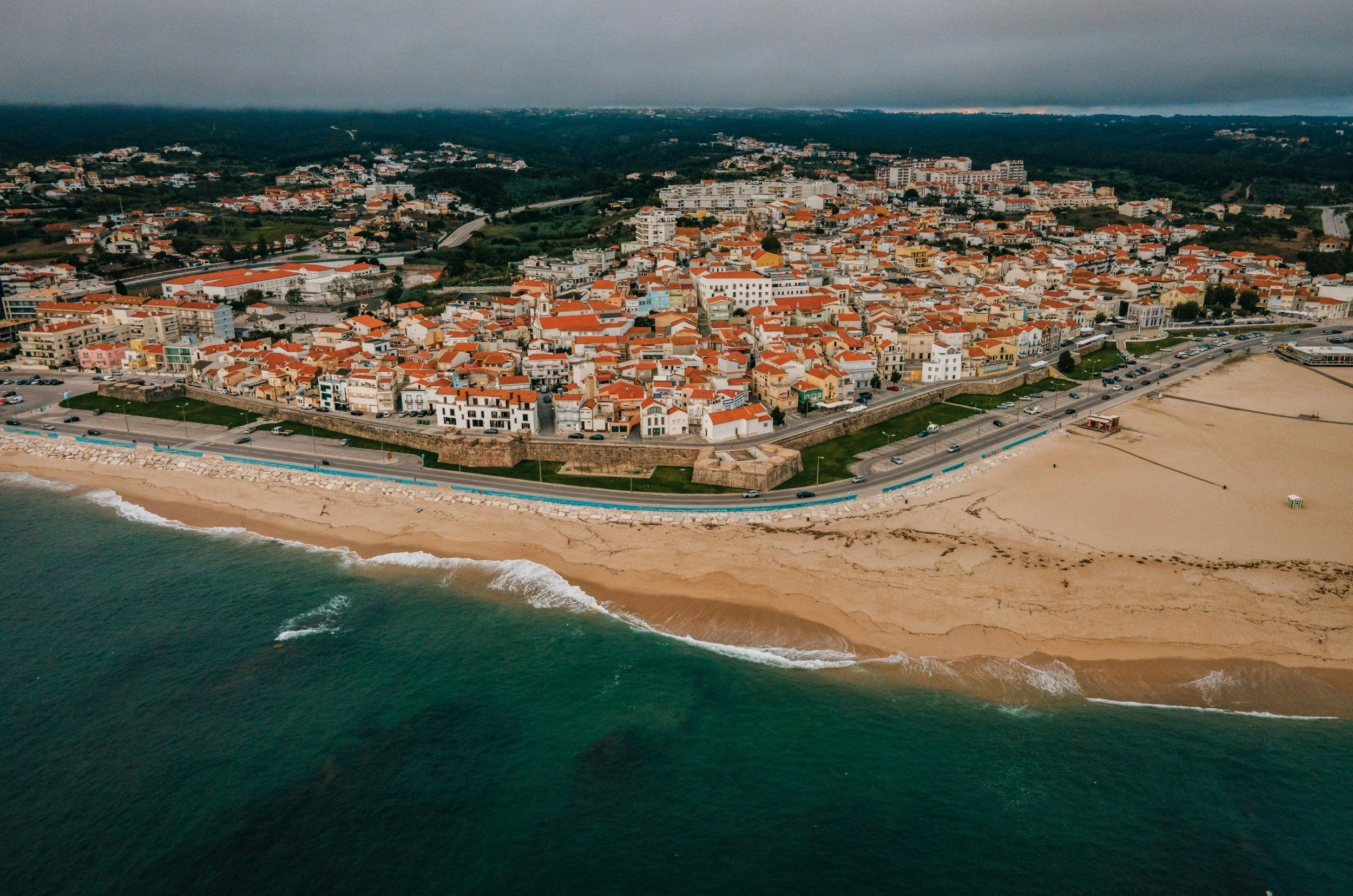
It sits on Portugal’s central coast, right where the Mondego River opens out into the Atlantic. You notice the layout almost immediately. The seafront runs long and open, cafés spill out along Avenida 25 de Abril, and most things feel like they belong to the people who live here rather than to visitors passing through.
It doesn’t get much attention compared to other places between Lisbon and Porto, which is part of why it still feels the way it does. Early summer is probably the best time to see it. The beach around Praia da Claridade stretches out so far that even on a warm day you don’t feel crowded. You can walk for quite a while without really needing to adjust your pace for anyone else. Closer to Forte de Santa Catarina, people tend to gather toward the end of the day, sitting along the edge and watching the light change over the water.
Food here follows the same pattern. Nothing complicated, just done properly. Along the seafront, places like A Ver o Mar serve grilled sardines and clams that arrive straight from the kitchen without much presentation, but that’s not really the point. You come here to eat well and take your time.
Weekends feel slightly different. Around Mercado Municipal Engenheiro Silva and further into Bairro Novo, small flea markets start to take shape. Tables appear gradually, and before long they’re covered in ceramics, old kitchenware, postcards, things that clearly come from people’s homes rather than from suppliers. If you arrive earlier in the morning, you’ll notice it’s mostly locals walking between the stalls, and the more interesting pieces don’t stay for long.
There isn’t really a list of things you need to do here, which is probably why people either love it or don’t quite get it. A morning might start with coffee at Café Nau near Praça 8 de Maio, then drift toward the market without much of a plan. Lunch has a habit of stretching out, especially at Caçarola Dois, where it’s easy to lose track of time over grilled fish and a glass of vinho branco. Later in the day, if you walk up toward Buarcos and keep going a little further than expected, the wooden paths along the dunes tend to quiet down.
Evenings follow the same pace. Usually a drink near the marina, the ocean somewhere in the background.
If that sounds like your kind of weekend, this Figueira da Foz travel guide focuses on the places and small details that make the town work the way it does.
In case you’re looking at other coastal areas in Portugal, the pace shifts quite a bit depending on where you go. Down south, the Algarve in the off-season has a similar sense of space, but feels more spread out and seasonal.

Morning at the Mercado in Figueira da Foz: Flea Markets and Secondhand Finds
Every Saturday and Sunday, the Feira de Velharias takes over Praça General Freire de Andrade: a broad, leafy square that feels like the center of small-town life. Get there around 9 am if you want first pick of the good stuff before the sun gets too high and the heat sets in. Even then, there’s no rush; people here take their time, and you can too.
The market is a real mix. Tables and crates overflow with chipped but beautiful Portuguese porcelain, well-worn vinyl records, rustic fishing tools, sturdy enamelware, and stacks of books that still carry that lovely scent of someone’s attic. Many of the sellers come in from nearby villages, and if you show a bit of interest (or do your best to speak a few words of Portuguese) they’re usually happy to chat and share the story behind a particular plate or postcard.
If you like hunting for decorative pieces or just enjoy the feeling of rummaging, plan to spend a few hours. The pace here is easy, and once you’ve seen enough treasures for one morning, there’s a pastelaria nearby where you can refuel with a bica (espresso) and a tosta mista (the local version of a toasted ham and cheese). Bring some cash (most sellers don’t take cards), and a sturdy canvas bag for whatever you end up bringing home.
And if you’re in the mood for a more curated version of treasure hunting after the market, wander into Loja das Tralhas, a tiny shop tucked into one of the side streets. It’s the kind of place you could easily miss if you’re not looking. Inside, you might find an old radio with a dial that still crackles to life, handmade ceramic lamps with imperfect glazes, or a box of vintage postcards from 1970s Portugal. It’s small, a bit chaotic in the best way, and easy to lose yourself in for an hour - just don’t be surprised if you leave with something you didn’t plan to buy.

Cafés in Figueira da Foz Worth Sitting In
Mornings tend to stretch out here, especially once you’ve left the market near Mercado Municipal Engenheiro Silva and don’t really have a plan for the rest of the day. It’s very easy to sit down somewhere and stay longer than you meant to.
Café Nau is in Bairro Novo, a short walk from Avenida 25 de Abril, and it’s one of those places people don’t rush through. You’ll notice it as soon as you step inside. Shelves with books and ceramics, a big window facing the street, people sitting with their coffee a bit longer than usual. Most orders are simple. Espresso, a galão, something small to eat. Then another coffee a while later. No one seems to be keeping track of time, including the staff.
A few streets over, Café Nicola feels more like a regular stop in someone’s day. Smaller space, tiled walls, a few tables that fill up quickly. Some people stay for a bit, others just stop at the counter for a quick espresso before heading out again. Conversations carry across the room, and even if you’re not part of them, you still end up listening.
If you walk toward Praça 8 de Maio, there are a few quieter spots where you can sit outside with a coffee and not feel like you need to move on. It’s only a few minutes away, but it already feels a bit slower than the seafront.
There’s a similar café culture in Lisbon too, just more layered. These local spots in Lisbon have that same sit-and-stay kind of pace.
Where to Stay in Figueira da Foz
Finding a place to stay here is pretty easy. The town isn’t big, and most things sit either along the seafront or just a few streets back, so you end up walking the same routes without really thinking about it.
Vila Galé Collection Figueira da Foz is right on Avenida 25 de Abril, facing the ocean and the main stretch of Praia da Claridade. The building dates back to the 1950s, and you still feel that a bit in the layout, even though everything’s been updated. If you’re booking, go for a sea-facing room. Opening the balcony door in the morning and hearing the waves before the promenade fills up is kind of the point. Step outside and you’re on the sand within a minute. Early in the day, the rooftop pool is usually quiet, before people start drifting up after lunch.
Hostel 402 sits just behind Bairro Novo, on the grid of smaller residential streets between the seafront and the centre. It’s calmer here, especially in the morning. The name makes it sound more basic than it is! It feels more like a small guesthouse. Rooms are light, simple, and quiet, and the shared kitchen means you can ease into the day with your own coffee before heading out. From here, it’s about five minutes on foot to Avenida 25 de Abril and the beach, and the same in the other direction toward the cafés and shops.
Casa Pinha is up in the Serra da Boa Viagem hills above town, about a ten-minute drive if the road is clear. It’s a different pace up here. Fewer buildings, more open views, and a clear line out across the coastline. Breakfast is usually served on the terrace, and mornings tend to stay quiet for longer. You’ll need a car or taxi to get back down to the seafront, but that’s part of why it feels separate. It suits you better if you’re planning to slow things down rather than move back and forth during the day.

Cozy bar at Vila Galé Collection
Ps. Book ahead for summer weekends. This town isn’t overrun, but the best spots fill up fast when the weather turns warm.
Walking the Beaches in Figueira da Foz: From the Promenade to Praia do Cabedelo
Figueira da Foz has one of the widest urban beaches in Europe, but most people don’t go much further than the stretch along Avenida 25 de Abril. If you keep walking, it changes pretty quickly.
Start near Forte de Santa Catarina, right where the Mondego River meets the ocean. It’s worth walking up for a minute first, just to see how the coastline opens out on both sides. Then head south, keeping the water on your left.
At the beginning, you’re still close to the promenade. People walking dogs, a few cafés open, bikes passing by. After ten minutes or so, that starts to fade. The pavement gives way to sand and low wooden walkways, and you stop hearing much from the town behind you.
By the time you reach Praia do Cabedelo, it already feels different. There’s more space between people, and usually a couple of surfers sitting out beyond the break. If you keep going past the main access points, the path becomes less clear. Some parts are just sand, others are boardwalk, and you end up following whatever feels easiest under your feet.
Out here, it’s mostly wind and the sound of the sea. It can get breezy even on warm days, especially in the afternoon, so it’s worth bringing something to throw on. Every now and then you pass a small beach bar, easy to miss unless you’re paying attention, with a few chairs and not much else going on.
If you want to change it up, head inland to the Serra da Boa Viagem. It’s about ten minutes by car from the centre, and the shift is immediate. Pine trees, shade, and quieter air. From places like Cabo Mondego or Miradouro da Bandeira, you can look back across the entire stretch you’ve just walked, which gives you a better sense of how wide the coastline actually is.
If you enjoy this kind of coastline, the Alentejo coast has a similar feel, with longer, emptier beaches and fewer built-up areas between them.
Where to Eat in Figueira da Foz: Seafood, Local Spots and Long Lunches
Eating out here is pretty straightforward. Most places follow the same rhythm. Lunch runs long, menus are short, and you’ll often end up ordering whatever sounds good in the moment rather than planning it.
Tasca Maria sits a few streets back from Avenida 25 de Abril, not far from Praça 8 de Maio, and it’s the kind of place people clearly return to. There’s usually a small board with a handful of dishes written up. Bacalhau à brás, seafood rice, grilled fish if it’s come in that day. If you arrive around 13:00, it fills up quickly. Tables close together, people talking across them, plates coming out when they’re ready rather than all at once. It’s the kind of lunch that takes longer than you expect!
Down by the marina, O Pescador is exactly what it looks like. Tables outside when the weather holds, boats moving slowly in and out, and a menu built around seafood. The arroz de marisco is what most people end up ordering, usually served in a large metal pot meant for sharing. It comes out hot, with prawns and mussels still in their shells, and tends to turn into a longer meal than planned.
Casa Havanesa sits closer to the seafront, within walking distance of the promenade, and feels slightly more put together without being formal. It works well in the evening. The octopus is a safe choice here, usually served with seasonal vegetables, and the wine list leans local. People tend to stay a bit longer, especially later in the evening when the pace slows down.
For something sweet, Pastelaria Dionísio in the centre is an easy stop. You’ll see people standing at the counter with an espresso and a pastel de nata, often mid-morning or mid-afternoon. It’s quick, simple, and part of the daily routine. And if you’re down by the beach, the bola de Berlim vendors usually pass by in the afternoon. You’ll hear them calling out before you see them, carrying trays wrapped in cloth.
Don’t miss: A bola de Berlim on the beach - the custard-filled doughnut every Portuguese beach trip needs.
Evenings in Figueira da Foz: Sunset on the Promenade and Cabedelo
Toward the end of the day, people start heading back down to the seafront. Not all at once, just gradually. By early evening, the stretch along Avenida 25 de Abril fills up again.
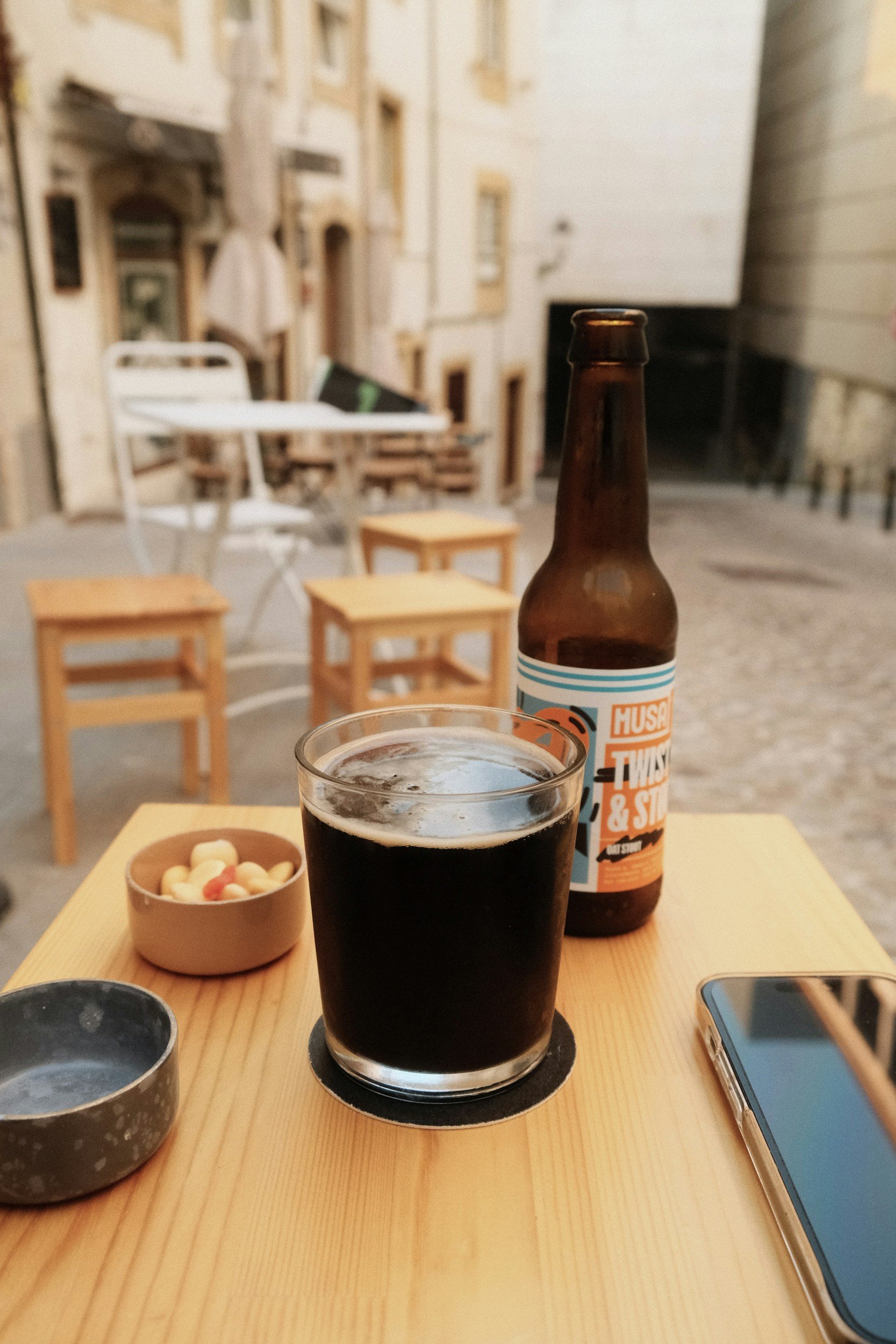
Esplanada Silva Guimarães is an easy place to stop. People line up along the wall facing the ocean, some sitting, some just leaning there with a drink. There’s always a bit going on around you. Kids skating past, someone playing music, groups talking across each other. If you grab a beer or a glass of wine from one of the cafés nearby, you can stay there as long as you like. No one’s paying attention to how long you’ve been there.
If you feel like moving, walk south toward Cabedelo. It’s not far, but it’s enough for things to quiet down. The lights from town fade a bit, and there’s more space between people.
Cabedelo Beach Bar sits low by the dunes. Easy to miss if you’re not looking for it. A few tables, sand under your shoes, and the ocean right in front of you. Most people keep it simple. Beer, maybe a white port and tonic if it’s still warm.
This is usually where the evening settles. The sun drops into the water from this side, and once it’s gone, people stay a bit longer without really deciding to. Finish their drink, sit for a while, then slowly head back.
Who Figueira da Foz Suits: Markets, Beaches and Unplanned Days
Figueira da Foz tends to suit people who are comfortable letting the day build itself around what’s nearby.
It makes sense if you’re the kind of person who’s happy starting the morning around Mercado Municipal Engenheiro Silva, picking up something small, and then drifting toward a café in Bairro Novo without really deciding on one in advance. The kind of day where you sit down for a coffee and end up staying longer than planned because nothing is pushing you to leave.
It also works if you don’t need a full itinerary to feel like the day has been well spent. Walking from Forte de Santa Catarina down toward Cabedelo, stopping when it feels right, or taking the longer way back through the quieter streets near Praça 8 de Maio instead of heading straight to the seafront.
Eating here are similar... You order what’s available, not what you’ve researched. Seafood that comes whole, dishes meant to be shared, lunches that stretch out because no one is trying to turn the table. Places like Tasca Maria or the restaurants by the marina only really make sense if you’re willing to slow down to their pace.
It’s also an easy place to be on your own. Sitting at a café with a book, walking along the promenade in the early evening, or stopping for a drink near Esplanada Silva Guimarães without needing to fill the time with anything specific.
Figueira da Foz basically gives you a few good places, all within walking distance, and leaves the rest up to you. If that’s how you like to travel, it tends to work without much effort.
If you’re planning to explore more of central Portugal, places like Tomar offer a different kind of pace, with more history but the same sense of not needing to rush.
How to Get to Figueira da Foz
From Lisbon: Around 2 hours by train (Comboios de Portugal) from Santa Apolónia or Oriente station, with one change at Coimbra-B. Driving takes about 1h45 via the A1 and A14 highways.
From Porto: Roughly 2 hours by train with a change in Coimbra-B, or 1h45 by car along the A1.
Closest airport: Porto (OPO) and Lisbon (LIS) are both options. From either, rent a car or take the train.
Best way? The train is easy and scenic if you’re traveling light, but having a car lets you explore nearby salt pans, villages, and hidden beaches.
If you’re coming via Lisbon, it’s worth spending some time in Alfama before heading north, especially if you want a contrast between the city and the coast.
Figueira da Foz: What to Know Before You Go
Is Figueira da Foz worth visiting?
Yes, especially if you’re looking for a coastal town that still feels local. It’s not about ticking off sights. Most people come here for the beaches, the market, and the pace of the place rather than specific attractions.
How many days do you need in Figueira da Foz?
Two to three days is enough. That gives you time to walk from Forte de Santa Catarina to Praia do Cabedelo, spend a morning around Mercado Municipal Engenheiro Silva, and try a few cafés and restaurants without rushing.
What are the best things to do in Figueira da Foz?
Most days revolve around a few simple things. Walking the seafront along Avenida 25 de Abril, visiting the market, spending time at Praia da Claridade or Praia do Cabedelo, and stopping for long lunches or coffee. Evenings are usually spent along the promenade or further out toward Cabedelo.
When is the best time to visit Figueira da Foz?
May, June, and early autumn tend to work best. You get warm weather, but the beaches still feel spacious. July and August are busier, especially around the main promenade.
Are there flea markets in Figueira da Foz?
Yes, mainly around weekends near Mercado Municipal Engenheiro Silva and in Bairro Novo. They’re informal rather than scheduled, so mornings are the best time to go.
What are the best beaches in Figueira da Foz?
Praia da Claridade is the main beach and one of the widest urban beaches in Europe. If you walk further south, Praia do Cabedelo is quieter and usually less crowded.
Where should you stay in Figueira da Foz?
Staying near Avenida 25 de Abril or Bairro Novo makes things easiest if you’re visiting without a car. That puts you within walking distance of the beach, cafés, and most restaurants. If you prefer something quieter, the Serra da Boa Viagem hills offer more space and views.
What is the food like in Figueira da Foz?
Food here is simple and seafood-focused. Expect grilled fish, arroz de marisco, and traditional dishes like bacalhau à brás. Meals are usually relaxed, and lunch often runs longer than expected.
Can you visit Figueira da Foz without a car?
Yes. The town is compact and easy to walk around. You only really need a car if you’re staying outside the centre or exploring the hills.
How do you get to Figueira da Foz from Lisbon or Porto?
From Lisbon, take a train via Coimbra (around 2.5–3 hours). From Porto, travel south to Coimbra and change there (around 1.5–2 hours total). Buses also run from both cities.