
Southern France is surprisingly easy to explore solo. Start with these towns.
A lot of people picture the south of France as something quite polished, but when you stay in smaller towns, it feels much more lived-in. Places like Uzès, Pézenas, or Saint-Rémy-de-Provence aren’t built around sightseeing lists. They’re built around daily life. You have morning markets a few times a week, cafés that people return to every day, small streets where you start recognizing faces quite quickly. It makes a big difference when you’re traveling alone, because you’re not just passing through, you’re part of the place, even if it’s only for a few days.
The practical side of it is also what makes this region such a good choice. Most of these towns are easy to reach by train or bus, especially if you arrive via Avignon TGV, Nîmes, or Montpellier. From there, local transport or a short taxi ride gets you into town without any stress. Once you’re there, you don’t really need to think about logistics. Everything is walkable. You can step out in the morning, pick up fruit from a small shop, sit down at the same café two days in a row, and it all starts to feel familiar very quickly.
What stands out, though, is how easy it is to spend time on your own without feeling out of place. Sitting alone at a café table in Place aux Herbes in Uzès or along Cours Jean Jaurès in Pézenas feels completely normal. No one rushes you, and no one expects anything from you. You can take your time, read, people-watch, or just sit there and do nothing for a while, which is often exactly what you need.
If you’re planning a solo trip and want somewhere that feels calm, safe, and easy to settle into from the first day, these towns in Southern France are a really good place to start. Not because they’re “hidden” or hard to find, but because they’re places people actually live in, which is exactly what makes them work so well.
If you’re still deciding where to base yourself, you might want to look into hidden villages in Southern France that feel more local and less exposed than the well-known spots.
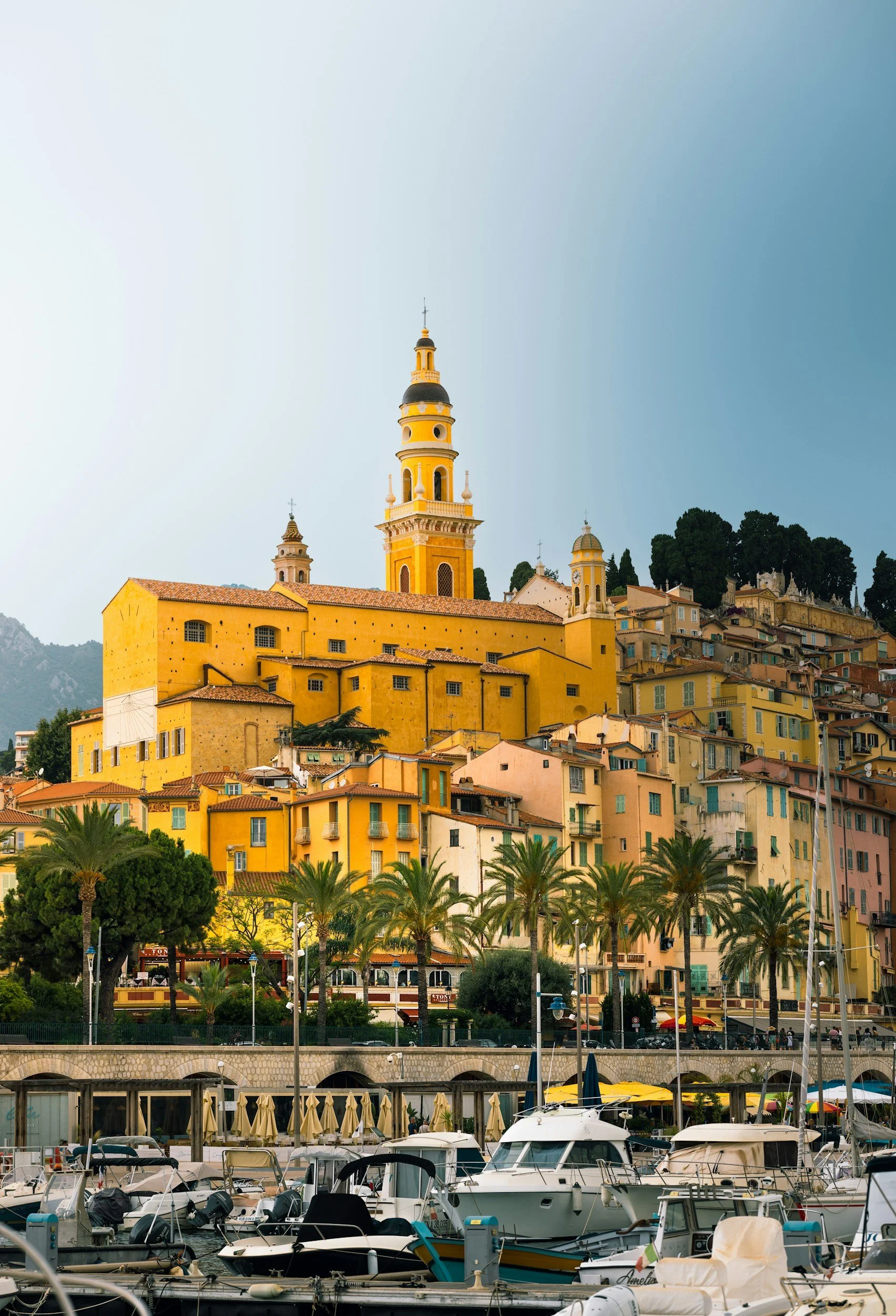
Uzès, France: A Calm, Walkable Town That Works Perfectly for Solo Travel
Uzès is the kind of place where your day starts the moment you step outside. If you’re staying somewhere in or near the old town, you’ll likely walk out onto streets like Rue Jacques d’Uzès or Rue du Docteur Blanchard without really thinking about direction. Within a few minutes, everything leads you toward Place aux Herbes.
That’s where mornings tend to begin. Not because you planned it, but because it’s where the town naturally gathers. Early in the day, before it fills up, it’s quieter than you’d expect. A few locals standing at the bar inside Café de la Poste, others sitting outside at Terrasse des Marronniers with a short espresso before work. If you take a seat outside, you’ll notice how the square slowly comes to life rather than all at once. Someone unlocking their shop, someone else arriving with a basket, chairs being adjusted one by one. It’s an easy place to sit on your own without feeling like you need to do anything.
If you’re in Uzès on a Saturday, the market changes the entire feel of the town. It starts early, and by mid-morning it spreads from Place aux Herbes into streets like Rue Grande Bourgade and Rue Xavier Sigalon. It does get crowded around 10:30–12:00, especially in summer, but if you arrive closer to 8:30 or stay past noon, it feels much more manageable. This is where people actually shop, not just browse. You’ll see locals picking out vegetables, discussing cheeses, returning to the same stalls. It’s easy to follow along. Buy a small piece of chèvre from a producer, some figs or apricots depending on the season, and a slice of pissaladière or something warm you eat straight away. That becomes lunch without you needing to sit down anywhere.
Uzès is one of the easiest places to settle into solo, especially if you like slower mornings and markets. If you’re curious what it’s like outside peak season, this guide to autumn in Uzès gives a much more realistic picture of the pace.
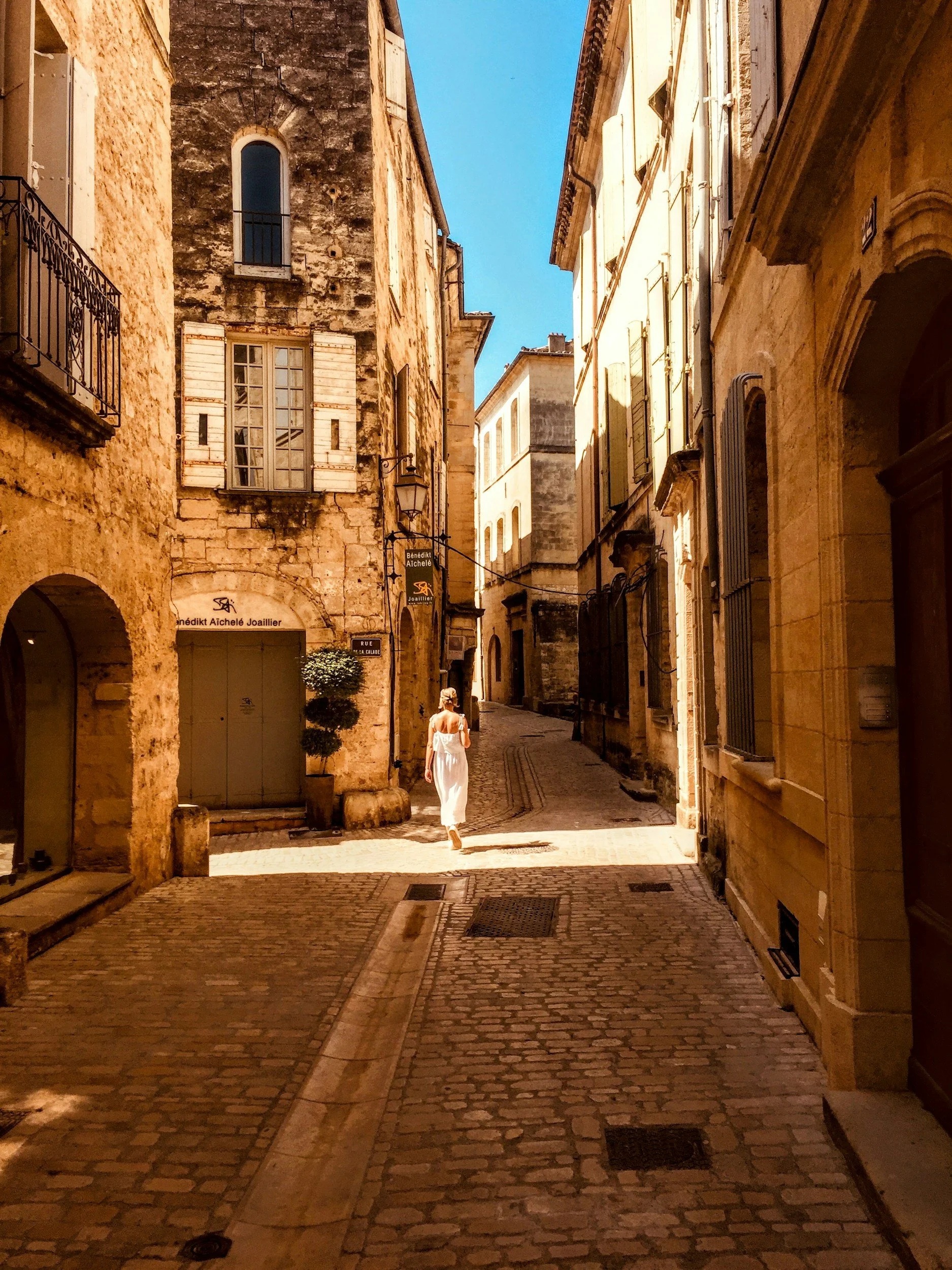
The rest of the day tends to unfold in a similar way. You walk without much direction, loop back through the same streets, maybe pass through Place Dampmartin or along Boulevard Gambetta where things feel a bit more local and less centered around the square. If you want a quieter walk, head toward the Duché and continue past it into the Jardin Médiéval. Most people stop at the Duché itself, so the garden just behind it often stays relatively calm. From there, you get open views across the surrounding countryside, especially later in the afternoon when the light softens.
Food in Uzès doesn’t require much planning, which makes it easier when you’re on your own. You can find small places around the square or just outside it where sitting alone feels completely normal. If you want something more structured one evening, La Table d’Uzès is one of the more refined options in town. Otherwise, it’s often better to just walk and choose somewhere that feels right at the time.
If you’re staying a few days, it’s worth leaving town for a lunch at Le Bistrot de Lussan. The drive takes around 20 minutes and passes through dry countryside and small villages that feel unchanged. Lussan itself is quiet, even in peak season. The restaurant sits on the edge of the village, and if you sit outside, you’ll have a clear view across the landscape. Meals here are simple but well done, and no one rushes you through it.
For where to stay, La Maison d’Uzès is one of the most central options, located just a short walk from Place aux Herbes. It’s set inside a restored townhouse, and once you step inside, it feels noticeably quieter than the streets outside. There’s a small internal courtyard where guests tend to sit in the afternoon, and the rooms are comfortable without feeling overly styled. If you prefer something a bit more low-key, there are also smaller guesthouses tucked into the old streets, especially around Rue Grande Bourgade.
Uzès works well for solo travel because you don’t need to organize your days or move quickly between places. You’ll likely end up returning to the same café, walking the same streets, and noticing small details you missed the first time. It’s a place where doing very little still feels like a full day, which is often exactly what you want when you’re traveling alone.
How to get there:
Getting to Uzès is relatively straightforward. The closest train station is Nîmes, which is well connected by TGV from cities like Paris, Avignon, and Montpellier. From Nîmes, the regional bus (line 121) runs regularly to Uzès and takes around 45 minutes, dropping you just outside the historic center. If you arrive later in the day, a taxi is usually the easier option. Once you’re in Uzès, you won’t need a car. The town is compact, and most places you’ll go are within a 5–10 minute walk.
If you prefer moving around without a car, there are also several castle towns in Southern France you can reach by train, which makes planning a solo trip much simpler.
For longer routes or multi-stop trips, it’s worth understanding which Eurail pass makes sense for slow regional travel, especially if you’re not rushing between places.
Roussillon: Ochre Village, Best Cafés & the Ochre Trail
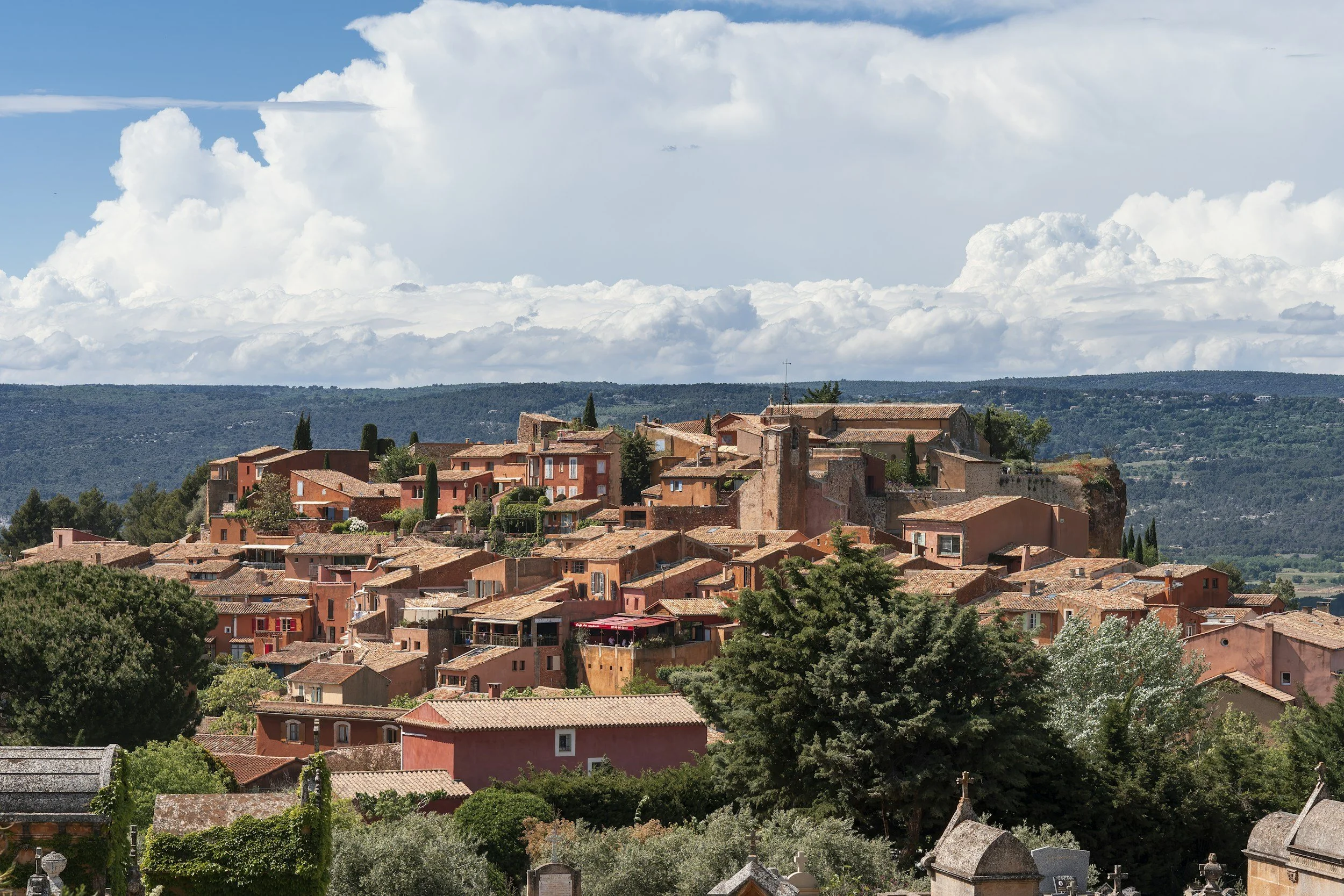
Roussillon is a small village in Provence, about 45 minutes from Avignon, and it looks different the second you arrive. The buildings aren’t painted in those warm reds and oranges, they come from the ochre in the ground, so every wall, stair and corner has that soft, dusty tone to it. It’s one of those places that can feel busy mid-day, but if you come early or stay a bit later, it slows right down and becomes exactly the kind of place you want to spend time in on your own.
Start around Place de la Mairie and just walk without a plan. The streets are short and slightly uneven, with small turns that open up into little squares or viewpoints. Rue Richard Casteau is one of the nicer ones to wander, with a mix of proper working studios and small shops selling ceramics and prints that actually feel connected to the place. Some doors are open, and you can see artists inside working, which makes it feel a bit more real than just browsing.
For coffee, Café des Couleurs is an easy choice right in the center. It’s simple, a few tables outside, but the location makes it good for people-watching without it feeling too crowded if you go early. If you want something slightly quieter, walk a few minutes further and you’ll find smaller cafés tucked into side streets where you can sit with a book and just relax. Ordering something small and just staying a while feels completely normal here.
The Sentier des Ocres starts just below the village, and it’s worth doing even if you’re not into hiking. It’s more of a walk than anything else. You follow a marked path through what used to be an ochre quarry, with soft sand under your shoes and those deep orange cliffs rising around you. Some parts have wooden walkways, others are just natural ground. It takes about 30–40 minutes if you walk straight through, but it’s better to take your time. The colors shift depending on the light, especially later in the day when everything feels a bit softer.
Back in the village, walk towards the edges instead of staying in the center. Near Place de la Poste, there are a few open viewpoints where you can see out over the Luberon valley. Vineyards, low hills, cypress trees, it’s all there, but without big crowds if you time it right. Most people stop for a photo and leave, so if you stay a bit longer, you’ll often have the view almost to yourself.
If you’re in Roussillon and haven’t made dinner plans yet, Restaurant Omma is one of those spots you’ll want to remember. The food here feels fresh and inventive - think creative takes on classic Provence flavors, with some surprising twists. What really sets it apart, though, is the atmosphere: you’ve got amazing views of the ochre cliffs and Luberon valley while you dine, which adds a whole new layer to the experience. It’s the kind of place that feels special but not fussy, and perfect for a relaxing meal after exploring the village. Definitely try to grab a table on the terrace if you can!
Roussillon works really well if you’re traveling on your own. It’s small enough to feel easy, but there’s enough to see and do that you don’t get bored. You can fill a day without trying, or just move slowly between coffee, walking, and sitting somewhere with a view.
Markets are a big part of daily life here, and some towns do them much better than others. These quiet Provence market towns are a good starting point if you want something more local.
How to get there:
Getting here is easiest by car. From Avignon it’s around 45 minutes, and from Aix-en-Provence just over an hour. There’s no train station in Roussillon, so if you’re relying on public transport, you’ll likely come via Apt and then take a bus. It works, but it’s not frequent, so you’ll need to plan your timing.
Looking for solo travel ideas on a budget? No problem! In my Affordable Solo Travel in Europe guide, I’ve rounded up some amazing cities where you can travel solo without spending a ton. You’ll get the best experiences without worrying about your wallet.
Gordes: Best Walks, Cafés & Quiet Spots in the Luberon
Gordes sits high above the Luberon valley, about 40 minutes from Avignon, and you’ll see it before you reach it. The whole village rises in layers of pale stone, almost blending into the cliffs behind it. It’s one of the more photographed places in Provence, but once you’re actually inside the village, especially early in the morning, it feels much calmer than you’d expect.
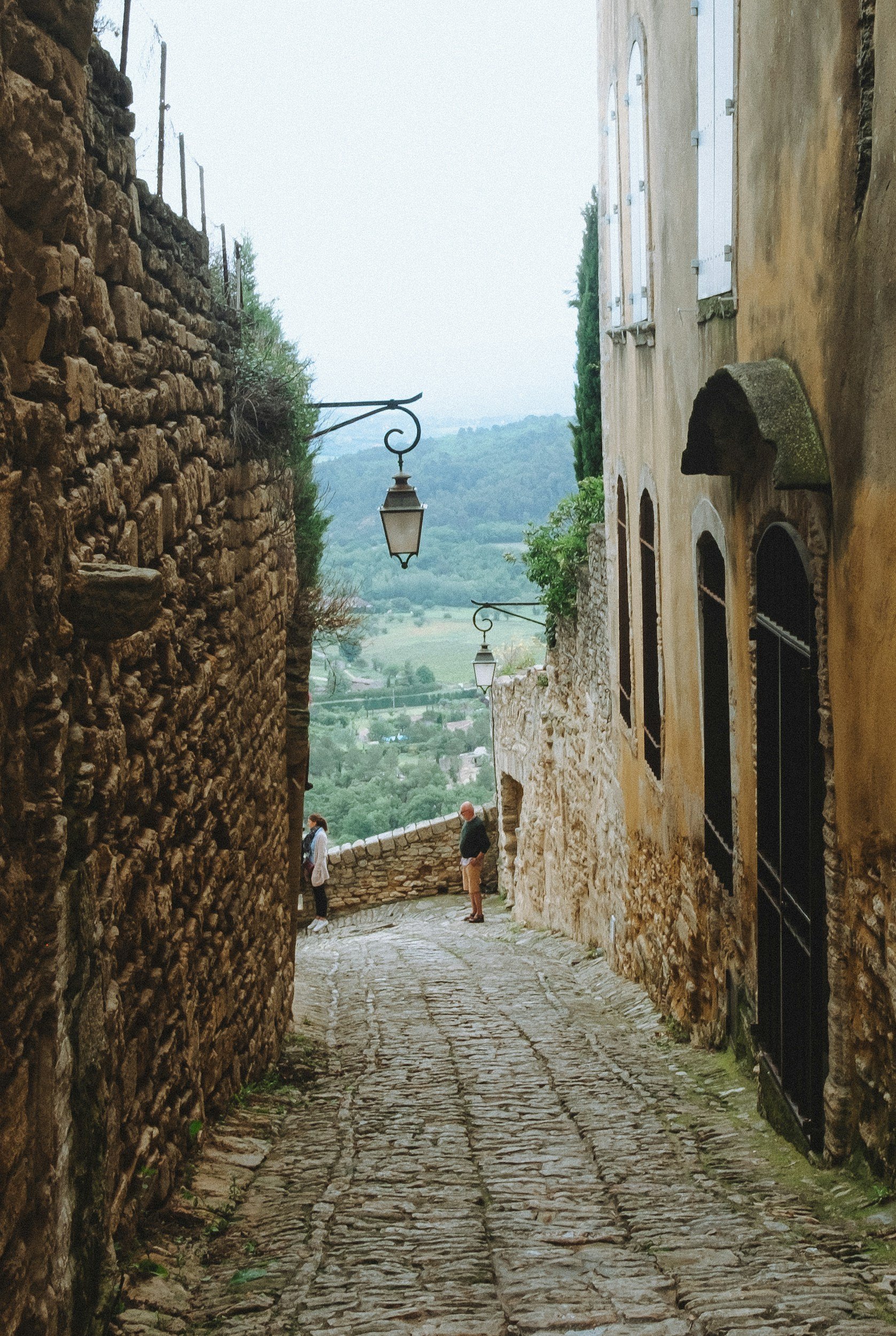
Start your walk near Place Genty Pantaly, which is the main square, but don’t stay there too long. The real charm is in the smaller streets that branch off from it. Head down Rue de l’Église or just take any of the narrow lanes leading away from the center. The streets slope gently, with uneven stone under your feet, and every turn feels slightly different. Some corners open up to wide views over the valley, others lead into quiet little pockets with shuttered windows, climbing plants, and old wooden doors that look like they haven’t changed in decades.
If you’re up early, it’s worth walking through the village before the cafés properly fill up. Around 8–9am, you’ll mostly see locals opening shops or setting up for the day. Grab a coffee at a small place near the square, or pick somewhere slightly tucked away where you can sit without too much noise. It’s the kind of place where sitting alone doesn’t stand out at all.
If you want a proper break from the center, Lyly O’Clock in Saint-Pantaléon is worth the short trip. It’s about 4 km from Gordes, and you can walk there if you feel like stretching your legs. The route takes you along quiet country roads with low stone walls, vineyards, and open views of the Luberon hills. It’s not a dramatic hike, just an easy, steady walk. The café itself is small and personal, known for homemade cakes, pastries, and good tea. It feels more like visiting someone’s home than going to a café, which makes it a nice contrast to Gordes.
Back near the village, the Sentier des Bories is one of the best ways to see the landscape properly. The trail starts just outside Gordes and leads you through a series of dry-stone huts, built without mortar and still standing after hundreds of years. The path is easy to follow, mostly flat, and takes about an hour depending on how often you stop. You’ll walk past olive trees, low shrubs, and open fields, with the huts appearing quietly along the way. It’s simple, but that’s what makes it good. No crowds, no noise, just space.
If you’re staying into the evening, it’s worth leaving Gordes for dinner and heading to Le Bistrot du Paradou in the nearby village of Paradou, about a 30-minute drive. It’s the kind of place where the menu is written on a chalkboard, based on what’s available that day. Long wooden tables, a relaxed atmosphere, and food that feels honest and well-made without trying too hard. It’s very easy to sit there longer than planned!
Gordes can feel busy in the middle of the day, especially in summer, but the timing makes all the difference. Early morning and late afternoon are when it feels most like itself. If you plan your day around that, with a slow start, a walk outside the village, and dinner somewhere nearby, it becomes a place that’s easy to enjoy without feeling overwhelmed.
If you’re traveling later in the year, you’ll notice a different atmosphere altogether. The autumn markets in Dordogne show how much calmer and more grounded things feel outside summer.
How to get there:
Gordes is a bit tricky to get to by public transport, so I definitely recommend renting a car. It’s about 45 minutes from Avignon, and the drive through the Luberon is stunning. If you’re coming from Aix-en-Provence, it’s just over an hour by car. Once you’re there, you’ll find it easy to explore the town on foot. The streets are narrow and charming, and you’ll want to take your time anyway.
Dreaming of a peaceful summer escape, and go rural this time?
Check out my Solo Travel in Europe’s Countryside guide.
It’s full of quiet spots where you can enjoy nature, chill in cozy villages, and get away from the crowds!
Aigues-Mortes: Medieval Walls, Salt Flats & Quiet Walks in the Camargue
Aigues-Mortes is a small walled town in the Camargue, about 40 minutes from Montpellier, and it’s one of the few places in southern France where the setting really shapes the experience. Completely flat landscape, salt air coming in from the marshes, and then these thick medieval walls rising almost perfectly intact around the town. It’s not a place you rush through. It works best when you slow it down and let the details come to you.
Start your morning at the main entrance by Porte de la Gardette, just next to the Tour de Constance. This is where most people enter, but if you’re there before 9am, it’s still quiet enough to feel local. You can buy a ticket and go straight up onto the ramparts from here. The full walk along the walls takes about an hour if you move slowly, and it’s worth doing the whole loop rather than just a section.
Up there, you get a clear contrast that makes Aigues-Mortes stand out. Inside the walls, tight streets, pale stone, small courtyards. Outside, it opens up completely. Salt flats, shallow water channels, and long stretches of land with almost nothing on them. On warmer days, you’ll notice the heat coming off the stone under your feet, and a slight smell of salt in the air when the wind picks up. If you go early or later in the day, the light softens everything and the pink tones in the salt ponds become more visible.
Back down in the town, head towards Place Saint-Louis but don’t stay right in the center. The square itself can feel a bit busy by late morning, so take one of the smaller streets leading off it, Rue Émile Jamais or Rue Louis Blanc are good ones to follow. A few minutes away from the main square, it gets noticeably quieter. You’ll find smaller cafés, local bakeries, and shops that feel less like souvenirs and more like everyday places.
For a coffee break, pick somewhere just off the main flow rather than directly on the square. Order something simple and sit for a while. This is one of those towns where sitting alone doesn’t feel out of place at all. People come and go, bikes pass through the streets, shutters open and close above you. Nothing dramatic, but enough to keep you present.
If you’re staying for lunch or dinner, Boem is one of the more thoughtful places inside the walls. It’s small, with a menu that changes depending on what’s in season, and the food leans modern without losing the local feel. It’s a good option if you want something a bit more considered than the standard tourist menus. If you’d rather keep things simple, there are plenty of bakeries where you can pick up something and eat it along the inner edge of the walls where it’s quieter.
The landscape around Aigues-Mortes is just as important as the town itself. Just outside the walls, you’ll find paths running alongside the canals and salt marshes. Renting a bike makes it easier to explore properly. Head towards the Salins d’Aigues-Mortes area, where the salt is still harvested. The terrain is completely flat, so it’s an easy ride even if you’re not used to cycling. Along the way, you’ll pass water channels, white salt mounds, and open stretches where flamingos are often visible, especially in the early morning or late afternoon.
If you prefer walking, you can follow the paths along the canal towards Le Grau-du-Roi. It’s a longer route, but even doing a short section gives you a feel for the area. It’s quiet in a very different way than the hill towns in Provence. More open, more exposed, but also more peaceful.
If you’re planning a slightly longer stay, it helps to know which places are worth settling into. These French towns worth staying 3–5 nights give you a better sense of where you won’t feel the need to move on too quickly.
How to get there:
Getting here is easier than most people expect. Aigues-Mortes has its own small train station with direct connections from Nîmes and Le Grau-du-Roi, which makes it a good option if you’re not driving. By car, it’s around 35 minutes from Nîmes and about 45 minutes from Montpellier, with straightforward roads the whole way.
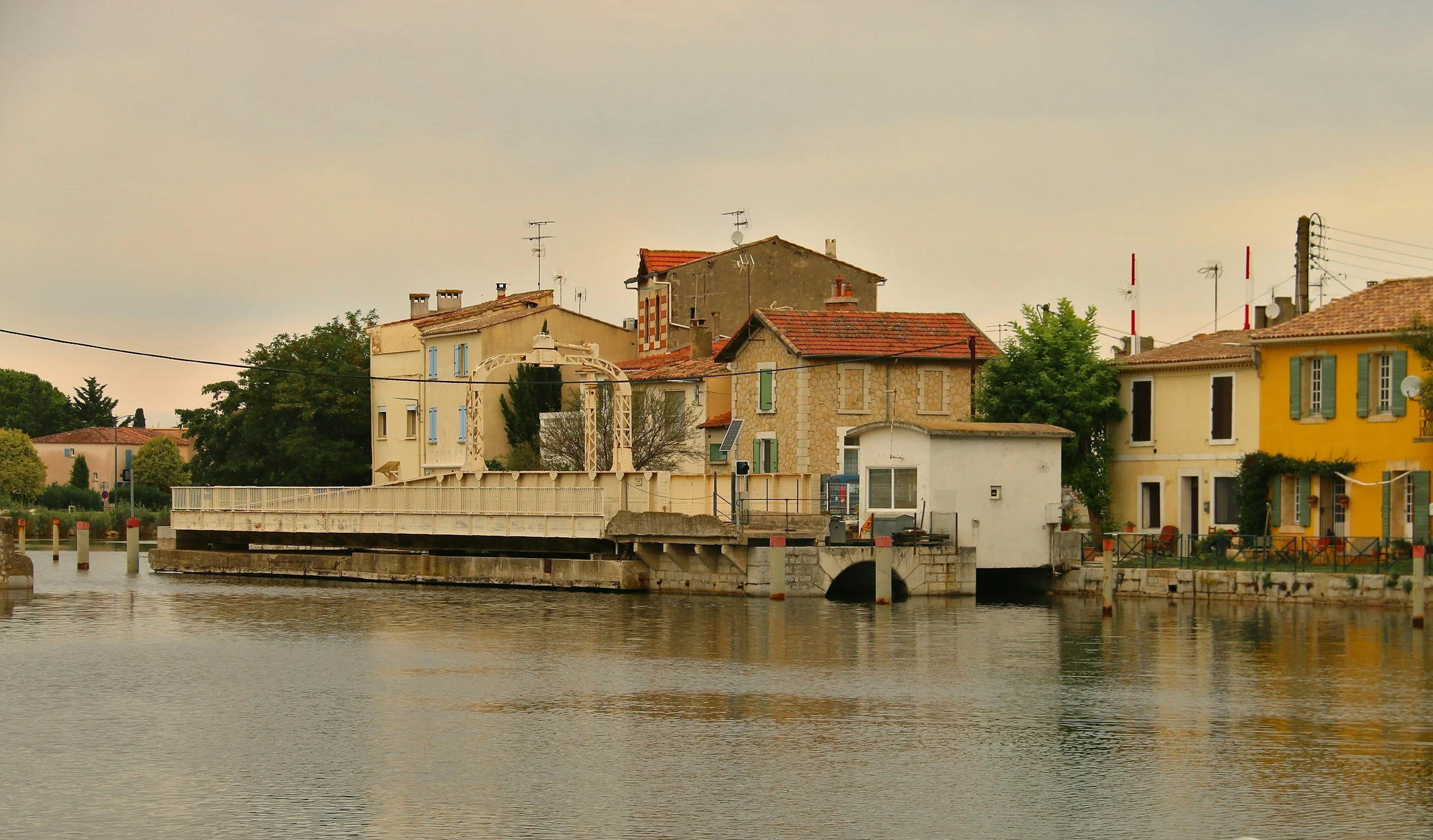
Arles: Where to Go for Roman Ruins, Quiet Streets & Easy Access to the Camargue
Arles is one of those places that doesn’t try too hard, and that’s exactly why it works. It’s about 20 minutes from Avignon by train, and while it has Roman ruins and all the Van Gogh references, it still feels like a normal town. You’ll see laundry hanging between buildings, people doing their grocery shopping, scooters passing through narrow streets. It’s not polished, and that makes it easier to settle into, especially if you’re on your own.
Start early at the Amphithéâtre d’Arles. Go right when it opens if you can. Walk through the stone entrance tunnels while it’s still cool, then head up to the top rows. Most people don’t stay long, but if you sit there for a few minutes, you’ll notice how quiet it actually is. You can see across the rooftops, hear the occasional church bell, and feel the warmth of the stone starting to build as the sun comes up.
From there, walk over to the Théâtre Antique. It’s just a few minutes away. It’s more open, a bit rougher, and you’ll probably spend less time there, but it’s worth seeing how it sits right in the middle of the town. After that, head down towards the Rhône and find the Thermes de Constantin. This is where it slows down again. Fewer people, more shade, and the river just behind it. It’s a good place to pause for a bit.
Late morning is when Arles gets busier, especially around Place du Forum. You’ll see the bright yellow Café Van Gogh straight away. It’s fine to walk past and take a look, but it’s not where you want to sit if you’re after something calmer. Instead, turn off into one of the smaller streets nearby, Rue du Palais is a good one, or just follow any quieter lane. You’ll find cafés where you can sit without feeling like you need to leave after ten minutes. Order a coffee, maybe something small, and just stay a while.
If you’re curious about the Van Gogh side of Arles, there’s a marked walking route through the town. You don’t need to follow all of it. Just pick a few stops and let it guide your route through different parts of the center. Late afternoon is the best time for this. The light softens, the streets empty out a bit, and everything feels more relaxed.
If you want a break from the town completely, head out to the Camargue. It’s very close, around 15–20 minutes by car. You can go towards places like Parc Ornithologique du Pont de Gau or just drive out along the smaller roads near Mas du Pont de Rousty. The landscape opens up straight away. Flat land, water channels, reeds, and big skies. You’ll often see flamingos standing in the water, especially later in the day, and sometimes the white Camargue horses further out. It’s quiet in a different way than Arles. More open, more still.
Back in town in the evening, things calm down again. L’Antonelle is a good spot if you want a proper meal without it feeling too formal. If you’d rather keep it simple, there are plenty of small wine bars around the old town where you can just sit outside with a glass of wine and something light to eat.
How to get here:
Getting here is easy. There are regular trains from Avignon (about 20 minutes) and Marseille (around 50 minutes). The station is a short walk from the center, so you don’t need a car unless you want to explore the Camargue. If you are driving, park outside the old town and walk in.
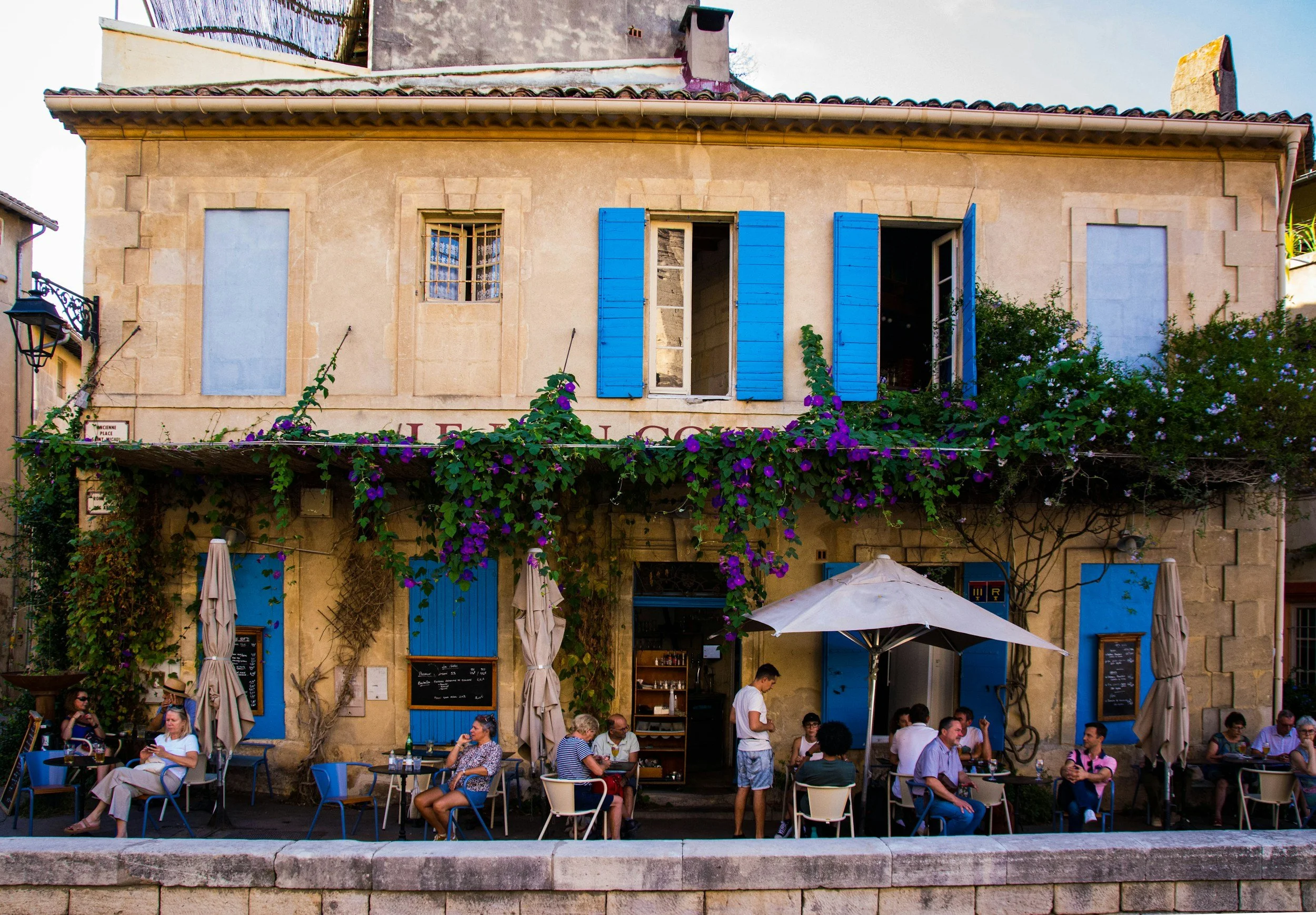
Why Southern France is Ideal for Solo Weekends
Southern France is a good place to travel on your own because things are simple. You don’t have to plan every hour to make the day feel full. You can arrive in a town like Uzès, Arles, or Aigues-Mortes, walk around a bit, and quickly get a feel for how it works. That takes a lot of pressure off.
Most days start quietly. Bakeries open early, cafés set out a few tables, and markets slowly come together in the main squares. In Uzès, Place aux Herbes fills with stalls in the morning, and people stop for coffee before doing anything else. In Arles, if you go out before 9, the streets are still calm, with shop doors opening and deliveries coming in. It’s easy to just follow that rhythm without thinking too much about it.
Getting around is straightforward. Trains between Avignon, Arles, and Nîmes run often, and once you arrive, you can walk almost everywhere. If you rent a car for a day, villages like Gordes or Roussillon are within an hour, and the roads are simple to follow. You don’t need to figure out complicated routes or schedules.
One thing that stands out is how normal it feels to be alone. Sitting at a café table by yourself, having lunch, or walking through a market doesn’t feel unusual. In smaller places especially, people are used to it. You can order something small and stay for a while without anyone bothering you.
There’s also enough variety nearby to change the pace if you feel like it. From Arles, you can be out in the Camargue in under 20 minutes, walking or cycling past canals and open land. Around the Luberon, you can move between villages, vineyards, and short walking trails without needing much planning. It keeps things interesting without making the day feel busy.
It also helps to adjust your timing slightly. Early morning and later in the afternoon are when these places feel at their best. Midday can be busier in certain spots, but it’s easy to step away from the main squares or take a longer break somewhere quieter.
Southern France doesn’t rely on big attractions to fill your time. You have cafés, small streets, local markets, and nearby countryside, and that’s usually enough. If you’re traveling solo this year and want somewhere that feels manageable from the start, this is a good place to begin.
And if you’re unsure about Provence because of the crowds, there are still plenty of quiet alternatives to Provence in Southern France that offer a similar landscape but calmer.
Solo Travel in Europe: A Hands-On Guide for First-Time Travelers
Thinking about going solo in Europe, or still wondering if it’s the right thing for you?
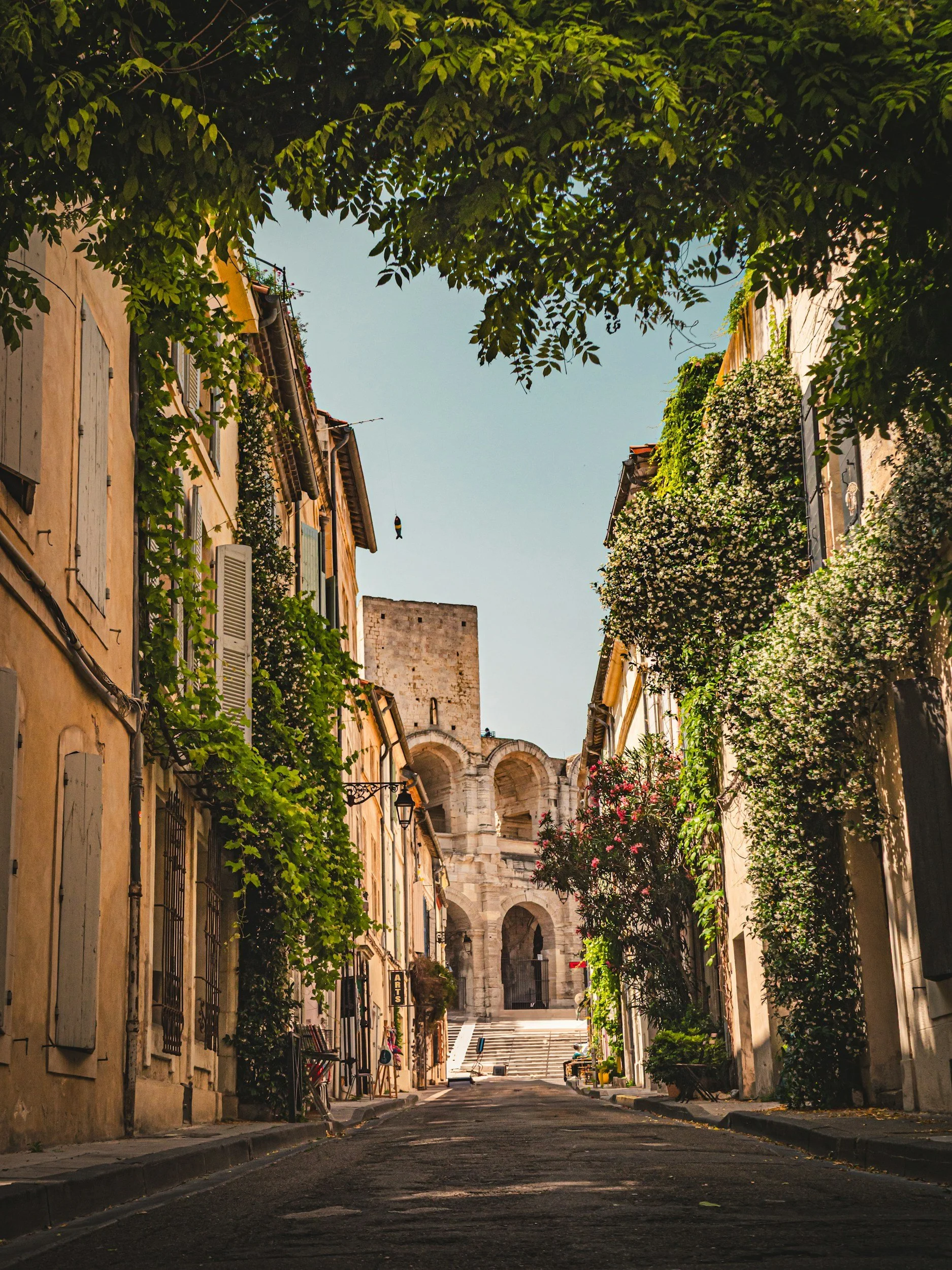
Ready for your solo adventure?
Download our Market Guide or grab the 3-day itinerary for Uzès for your next getaway. You’ll find more hidden gems and peaceful spots to make your solo trip unforgettable.
Solo Travel in Southern France: FAQs
What are the best places for solo travel in Southern France?
The easiest places for solo travel are Uzès, Arles, Aigues-Mortes, Roussillon, and Gordes because they’re compact, walkable, and have a clear center where everything happens. Uzès is a good base if you like markets and slower mornings around Place aux Herbes, Arles works if you want a mix of everyday life and history, and Aigues-Mortes is the simplest to navigate since it’s fully enclosed by walls and easy to understand within an hour.
Is Southern France safe for solo female travelers?
Yes, Southern France is generally safe for solo travelers, especially in smaller towns where life is centered around main squares and cafés. In places like Uzès or Arles, you’ll still see people out in the evenings around central streets, but it’s best to stay within those areas after dark rather than walking out towards quieter residential edges. During the day, you can move around freely without thinking too much about it.
When is the best time to visit Southern France to avoid crowds?
May, June, September, and early October are the best months if you want fewer people and comfortable weather. In popular spots like Gordes or Roussillon, the difference is noticeable, early mornings (before 9) and late afternoons feel completely different from midday, when most visitors arrive. Planning your day around that makes a bigger impact than the season itself.
Can you visit Southern France without a car?
Yes, if you base yourself in a well-connected town like Arles, Avignon, or Nîmes, where trains run frequently and everything is walkable once you arrive. For villages in the Luberon, like Gordes or Roussillon, a car is much more practical since buses are limited and don’t run often. A good approach is to stay in a train hub and rent a car for one or two days to explore the surrounding area.
What does a realistic solo day in Southern France look like?
Most days start slow, coffee and something small to eat in a square, then a walk through the town before it gets busy. Around midday, things quiet down again as people step out of the heat, which is a good time to take a longer break. In the afternoon, you might visit a nearby village, walk somewhere like Sentier des Ocres in Roussillon, or head out towards the Camargue from Arles. Evenings are usually simple, a relaxed dinner or a glass of wine outside.
Are there quieter alternatives to the most popular towns?
Yes, and small adjustments make a big difference. Instead of staying directly in Gordes, nearby villages like Saint-Pantaléon feel much calmer and still give you access to the same area. In Aigues-Mortes, the main streets can feel busy mid-day, but walking along the canals or towards the salt marshes just outside the walls is noticeably quieter. In Arles, stepping one or two streets away from Place du Forum changes the pace completely.
What do people often get wrong about solo travel in Southern France?
Most people try to do too much in one day. Distances are short, but each place is better when you give it time, especially early morning and late afternoon when it feels calmer. Another common mistake is staying only in the most well-known villages without exploring just outside them, which is often where things feel more relaxed and easier to enjoy on your own.