
These French markets are at their best in summer
Summer markets in France follow a weekly pace, but once you’re there, they don’t feel the same from place to place. In Uzès, everything gathers in Place aux Herbes, and the square changes quickly as it fills. In Apt, the market spreads out across several streets, so where you start matters more than you expect. In Pézenas, you move from a wide boulevard into much tighter streets within a few minutes, and the pace shifts with it.
That difference becomes clearer when you move between regions. In places like Saint-Rémy or Dieulefit, the market sits more naturally within the town, while in Coutances or Vannes the layout is more open, with wider streets and fewer points where things slow down all at once.
Timing plays a bigger role than most people plan for. Early in the morning, people move through with a purpose, buying what they need and leaving again. Later on, the same spaces slow down, and how easy it is to move depends on how the market is laid out and how much of the town it covers.
If you plan around that instead of just turning up mid-morning, the experience feels completely different. The sections below walk through each market in a practical way, based on how they’re set up and how people actually move through them during the day.
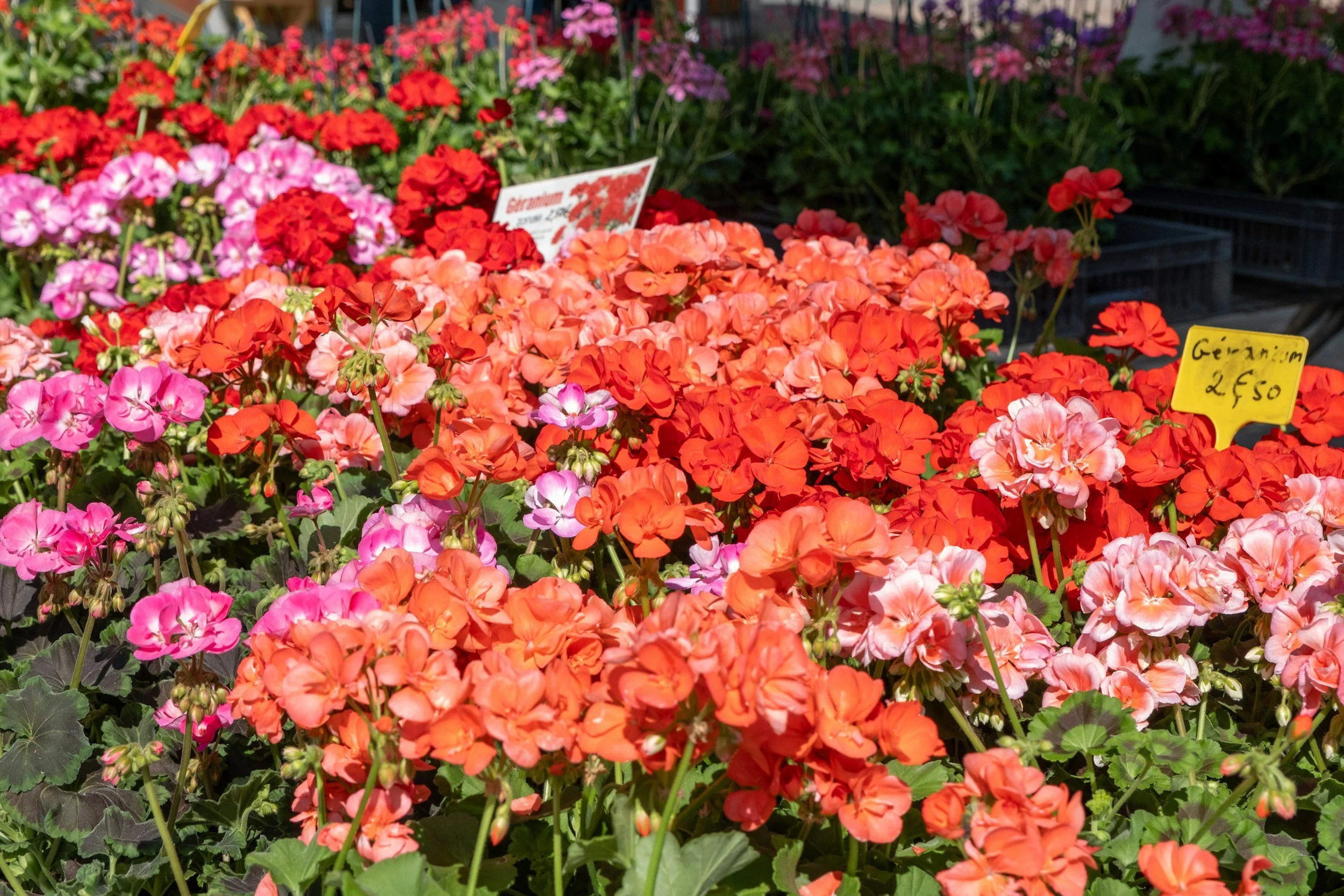
If you want to take a market guide with you, we’ve created a custom printable version with dates, regions, and market days for some of our favourite markets in Spain, France & Italy
Marché de Saint-Antonin-Noble-Val (Occitanie)
Tarn-et-Garonne | Every Sunday
Saint-Antonin-Noble-Val sits in the Aveyron valley, about 45 minutes north-east of Montauban and just over an hour from Toulouse. There’s no train into the village, so most arrivals are by car, usually via Caussade before the road narrows and follows the river into the valley. The final stretch slows down more than expected, particularly once you start descending toward the town. On Sundays, it helps to arrive before 9:30, as parking areas along Avenue du Dr Paul Benet and near the river begin to fill. After that, you’re likely to park further out and walk in along the river edge before entering the old town.
Most people enter the market from the bridge side, crossing into the centre and moving directly toward Place des Moines. This is where the first compression happens later in the morning, as the space narrows under the arcades and people slow down. The market itself spreads outward from the square into streets like Rue Droite and Rue Guilhem Peyré, but these don’t open up in a straight line. You move in short sections, turning frequently, and often stepping aside to let others pass in the tighter parts.
Between 8:30 and 9:30, the movement is still direct. Locals cross the square quickly, often without stopping until they reach a specific stall. You’ll see the same pattern repeated at the cheese stands and olive vendors under the arcades, where people queue briefly and then leave again. Bread is usually collected early, and by mid-morning some of the smaller stalls have already sold through their first batches rather than restocking.
From around 10:30, the square becomes noticeably slower to cross, and the narrow streets feeding into it start to back up in short sections rather than all at once. Rue Droite is usually one of the first to feel this, especially where the street narrows closest to the centre. At that point, it’s easier to step out toward the river and re-enter from another side than to push through the same route.
Food stalls are concentrated around Place des Moines and just beyond the arcades, with prepared items set up where there’s enough space to stop briefly. Most people don’t stay there to eat. Instead, they walk two to three minutes toward the Aveyron, either crossing the old bridge or following the path along the near side of the river. The area just past the bridge tends to fill first, while the paths further along remain quieter even at midday.
Cafés around the square begin filling from around 10:30, and by 12:00 most tables are taken. Service slows during this window, largely because everything is concentrated within a small area. Walking a few minutes uphill or away from the square usually makes a noticeable difference, both in availability and in pace.
What defines this market is how quickly it transitions. Within a few minutes, you move from tightly packed streets under the arcades to open space along the river. Most people who return regularly don’t stay in the centre once they’ve finished buying what they need. They shift outward, either to eat or to walk along the water before leaving, which changes the experience completely depending on when you choose to move.
If this summer market make you want to slow down completely, this guide to quiet towns in the Loire Valley is a good place to look next, especially if you like small places where everyday life still sets the pace.
Combine this with a slow kayak trip down the Aveyron River or a hike in the surrounding limestone cliffs. It's such a wonderful experience and you’re surrounded by stunning nature.
Marché de Dieulefit (Drôme Provençale)
Auvergne-Rhône-Alpes | Every Friday
Dieulefit is in the Drôme Provençale, about 30 minutes south-east of Montélimar. There’s no train station in the town, so most arrivals are by car, either from Montélimar or from villages in the surrounding hills. The approach roads narrow slightly as you get closer, but access is straightforward. On Fridays, arriving before 9:30 makes a noticeable difference. Parking along Avenue du Général de Gaulle and near Place de l’Abbé Magnet fills steadily through the morning, and after 10:00 you’ll usually need to park further out and walk in.
The market runs along Grande Rue and continues into connecting streets like Rue du Bourg and Place Châteauras, rather than forming around a single square. This creates a different kind of movement. You don’t gather in one place. Instead, people join at different points depending on where they arrive, and the flow stretches out along the length of the town.
Most people enter from the lower end near Place de l’Abbé Magnet, especially coming from the main parking areas. This section becomes slower first, particularly where the street narrows slightly as it moves toward the centre. The upper end, closer to Rue du Bourg, usually stays easier to navigate even later in the morning. If you arrive after 10:30, starting at the quieter end and moving downward avoids the heaviest sections.
Between 8:30 and 9:30, movement is direct. Residents move quickly between stalls, often stopping only at the same vendors each week. Transactions are short, and people tend to buy small quantities rather than browse. By late morning, visitors from nearby villages begin to fill in, but because the market is spread along a long street, the pressure never concentrates in one place. You can still move steadily without needing to stop every few steps.
Food is distributed throughout the market rather than grouped together. Cheese, olives, fruit, and bread appear at regular intervals, so most people buy gradually as they walk. Prepared food becomes more relevant closer to midday, but unlike larger markets, people rarely stay in the centre to eat. Instead, they step into side streets or continue walking, often leaving the main route once they’ve finished shopping.
The ceramics are part of the same flow rather than something separate. Along Rue du Bourg and nearby streets, workshops and small shops remain open during market hours, and people move in and out of them as they go. It’s common to step inside briefly between stalls rather than treating it as a separate stop later in the day. This changes the pace slightly, as movement alternates between the street and indoor spaces.
By around 11:30, the pattern shifts. Most local residents have already left, and the people who remain are either browsing more slowly or arriving later from outside the town. The atmosphere doesn’t become crowded in the same way as larger markets, but it becomes less direct, with more stopping and less clear movement along the street.
A few minutes away from Grande Rue, the town becomes noticeably quieter. The transition is quick, and most people who know the market well step out once they’ve bought what they need, rather than staying in the main flow. Moving into the side streets or slightly uphill changes the pace immediately, which is often where the rest of the morning continues.
Turning a market trip into a longer stay often makes the experience feel less rushed. This look at cottage stays in Drôme Provençale gives you a few ideas if you want space, calm mornings, and countryside drives between market days.

The town is surrounded by hiking trails and lavender fields. You can spend the morning at the market, then explore the hills or picnic along the nearby Roubion River.
Marché de Saint-Rémy-de-Provence
Provence-Alpes-Côte d’Azur | Every Wednesday
Saint-Rémy-de-Provence is in the Alpilles, about 25 minutes south of Avignon. Most people arrive by car, as there’s no train station in the centre, and on Wednesdays the outer roads begin filling early. Parking along Boulevard Marceau and Avenue de la Libération is the most practical, but after 10:00 you’ll usually need to park further out and walk in. The walk itself often brings you toward Boulevard Mirabeau, which is where many people first enter the market flow.
The market runs across several streets rather than forming around a single square, with the main concentration along Boulevard Mirabeau and extending into Avenue de la Résistance and the surrounding streets closer to the centre. Boulevard Mirabeau is wider and draws the highest number of stalls, which also makes it the first area to slow down. Avenue de la Résistance, by contrast, narrows slightly and tends to keep a more consistent pace for longer, especially earlier in the morning.
Between 8:30 and 9:30, movement is still direct. Residents cross sections of the market without stopping much, heading toward specific stalls rather than walking the full route. You’ll see people buying vegetables, bread, and cheese in small quantities, often returning to the same vendors each week. By around 10:30, the dynamic shifts. Boulevard Mirabeau becomes slower to cross, with people pausing more frequently, while the connecting streets begin to fill in shorter, denser sections.
If you arrive later, it’s usually easier to enter through the smaller streets closer to the centre and then move outward rather than starting on the main boulevard. The difference is noticeable, as the side streets allow for more continuous movement, while the wider sections tend to collect people.
Food is distributed across the market, but prepared items become more relevant closer to midday. Many people buy what they need and continue walking rather than stopping immediately. Cafés around Place de la République begin filling from around 10:30, and by midday most tables are taken. Moving just a few streets away from the main boulevards usually makes it easier to find space and changes the pace at the same time.
One of the clearer shifts happens once you step into the narrower streets of the old town. Within a few minutes, the density drops, and the movement becomes more consistent again. This is where many local residents go once they’ve finished shopping, while the main boulevards continue to fill. By late morning, most of the practical shopping is already done, and the remaining movement is slower and more spread out.
The market covers a large area, but most people don’t walk all of it. They move through one or two sections, buy what they need, and then leave the busiest streets. Trying to see everything usually means staying in the most crowded parts longer than necessary, while stepping away earlier gives a clearer sense of how the town actually functions on a Wednesday morning.
Not every market in Provence feels the same. This guide to quiet Provence market towns helps you find places where you can actually browse without crowds pushing past you.
Aix is often used as a base for exploring Provence. This guide to Aix-en-Provence gives you a clearer sense of how the city feels outside peak tourist hours.
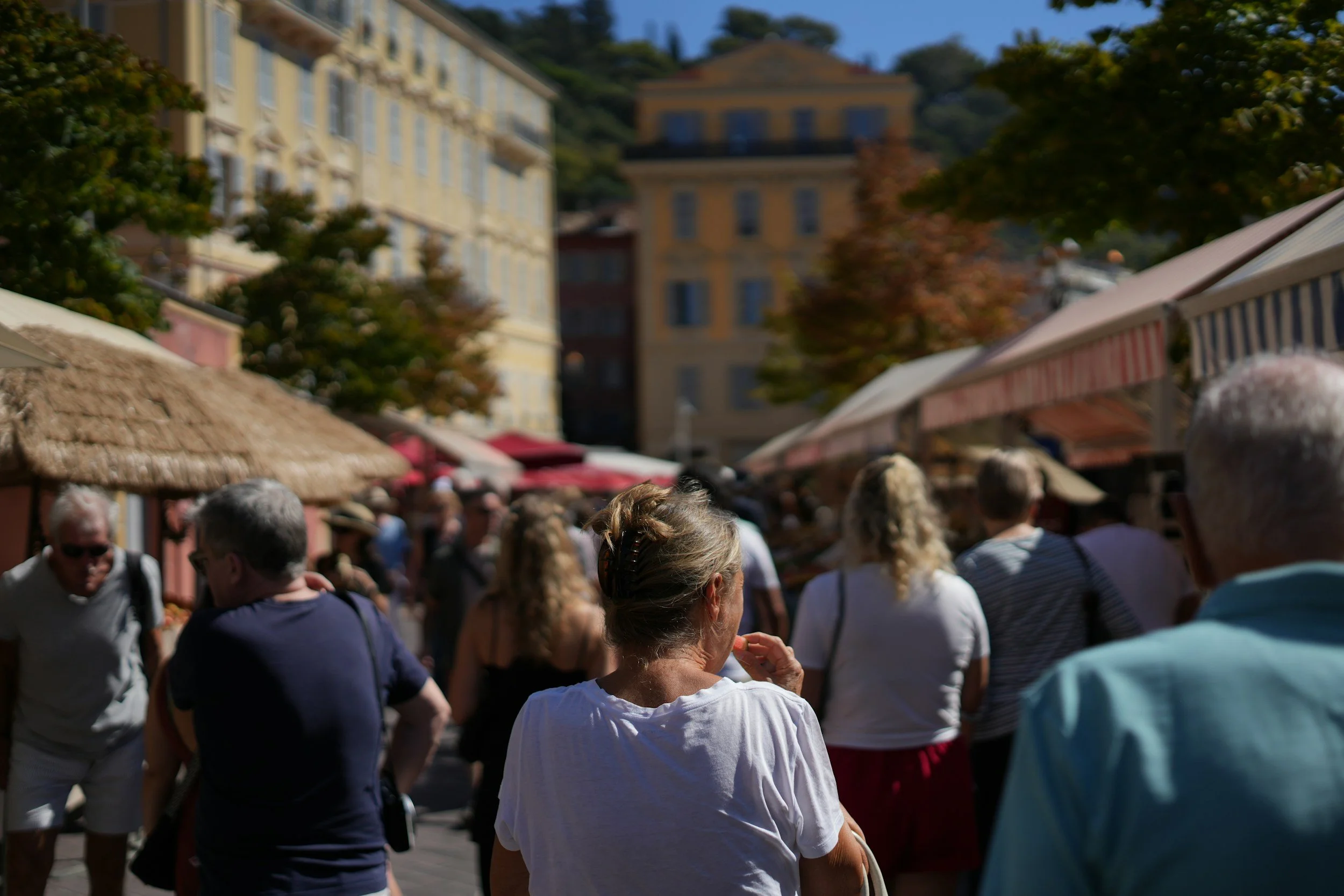
Combine with a stop at the nearby archaeological site of Glanum or have lunch under the plane trees with market-fresh bread and chèvre. You’ll see plenty of locals doing the same.
Marché d’Uzès (Gard)
Occitanie | Saturdays (main) + Wednesdays (smaller)
Uzès is in the Gard department, about 30 minutes north of Nîmes and around 40 minutes west of Avignon. There’s no train station in the town itself, so most people arrive via Nîmes and continue by car or bus. On Saturdays, parking is spread around the outer ring roads, with Parking des Cordeliers and Parking Gide among the closest options. Arriving before 9:30 makes a clear difference. After 10:00, traffic begins to slow as cars circulate for spaces, and the walk into the centre usually leads you toward Boulevard Gambetta or one of the smaller streets feeding into the old town.
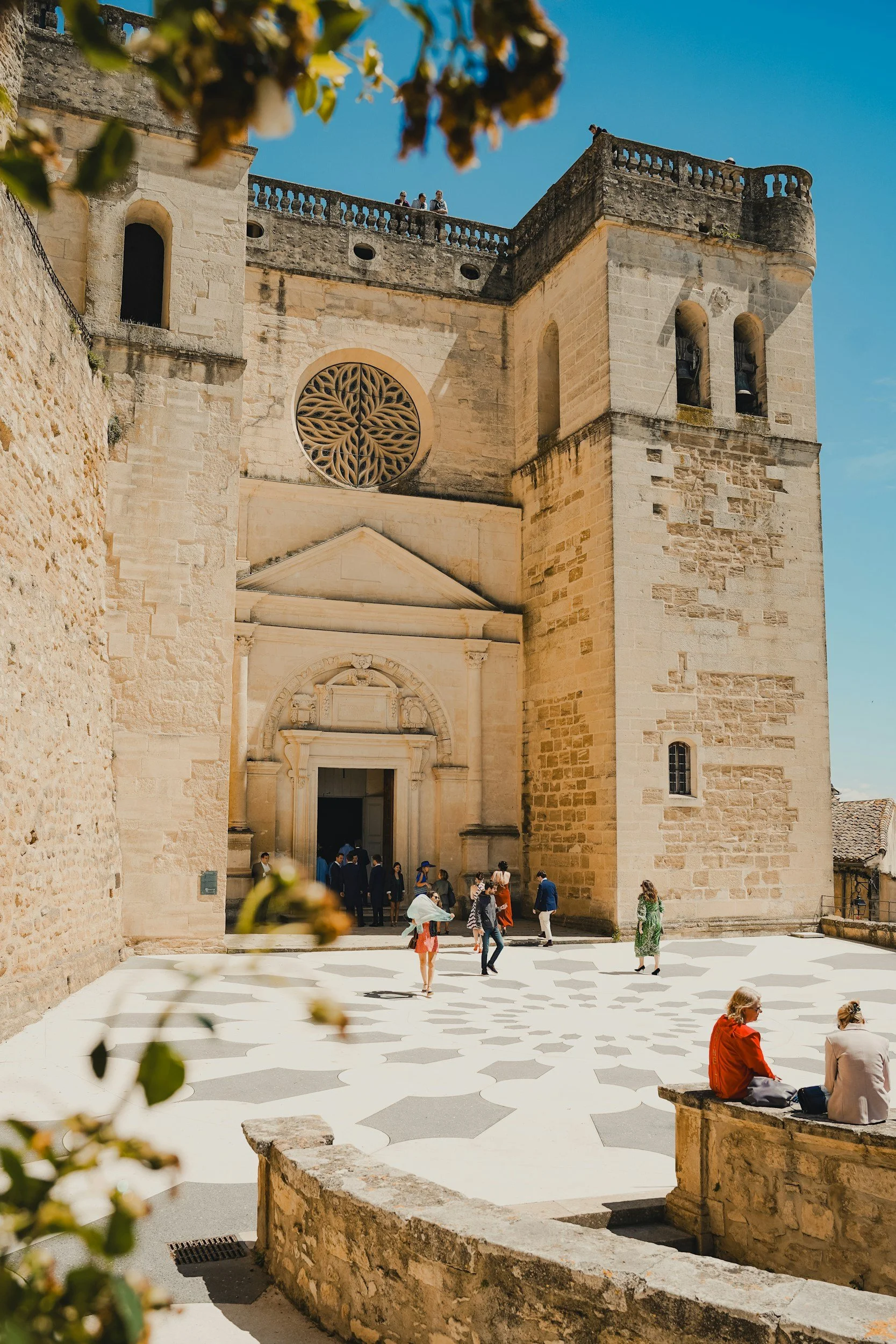
Most people enter the market through these outer streets and are drawn directly toward Place aux Herbes. The square is the centre of the market and is fully occupied with stalls, with the arcades forming a defined edge around it. The first compression usually happens at the entry points into the square, particularly where streets like Rue Jacques d’Uzès narrow before opening into the central space.
Between 8:30 and 9:30, it’s still possible to cross Place aux Herbes without stopping. Residents move through the square with a clear purpose, often following the same route each week and stopping only at specific vendors. You’ll see people buying vegetables, cheese, and bread in small quantities, with short, familiar exchanges. The centre of the square remains open enough to pass through, while the edges under the arcades are used more for brief stops.
From around 10:30, the dynamic changes. The middle of Place aux Herbes slows first, as people begin to pause rather than move through. The arcades remain slightly easier to navigate, but the entry streets start to back up in short sections. Rue Jacques d’Uzès is usually one of the first to feel this, as the narrowing before the square creates a bottleneck. At that point, many people step out toward the surrounding streets and re-enter from another side rather than continuing in the same direction.
Food is concentrated within the square and along the immediate streets around it. Early purchases focus on produce and bread, while prepared food becomes more relevant closer to midday. Most people don’t stay in the square to eat. Instead, they leave the central area and move into quieter streets within a few minutes. Cafés under the arcades begin filling from around 10:30, and by midday most tables are taken, while streets just beyond the square still offer space.
By around 11:30, the pattern shifts again. Most local residents have already finished their shopping and left, and the remaining movement is slower and more fragmented. People tend to stay within the square rather than moving through it, which makes the centre feel more crowded than the outer streets.
What defines the market in Uzès is how concentrated it is around a single space. The experience changes quickly depending on where you stand and how long you stay. Moving just one or two streets away reduces the pressure immediately, and most people who know the market well step out once they’ve finished buying what they need rather than remaining in the square.
Uzès comes up again and again when people talk about markets. This guide to spring in Uzès gives you a feel for the town when the markets and cafés start filling up again.
Later in the year, Uzès shifts mood completely. This piece on autumn in Uzès is worth a look if you’re weighing summer energy against quieter months.
Visit Wednesday if you prefer fewer crowds. Saturday is larger and livelier but gets busy by 10:00 am. Arrive early for bread, fruit, and shaded seating around the square’s fountains.
Marché de Coutances (Normandy)
Manche | Every Thursday
Coutances is in western Normandy, about 15 minutes inland from the coast and just over an hour from Caen. The town has a train station, but most people arrive by car from nearby villages. On Thursdays, parking fills steadily around the centre, particularly near Place de la Gare and along Boulevard Alsace-Lorraine. Arriving before 9:30 usually means a short walk into town, while later arrivals often park further out and walk in along the main streets leading toward the cathedral.
Most people enter the market from the direction of Rue Saint-Nicolas or the streets leading down from the cathedral, which naturally pull you toward Place Saint-Nicolas. This square forms the core of the market and is where the first concentration of stalls appears, particularly food. The surrounding streets extend outward in a more regular layout than southern markets, which makes movement more predictable and less fragmented.
Between 8:30 and 9:30, the pace is steady and direct. Residents move through the square and into the adjoining streets with a clear purpose, often stopping only at the same vendors each week. You’ll see a strong focus on regional products, especially dairy, cheese, and fresh items that reflect the surrounding farmland. Transactions are quick, and most people don’t stay in one place for long.
From around 10:30, Place Saint-Nicolas begins to slow as more people gather in the centre. The square fills first, while Rue Saint-Nicolas and the surrounding streets remain easier to navigate. Because the layout is wider and more structured, the pressure spreads more evenly, and it’s still possible to move without needing to stop constantly. If the square becomes too slow, stepping into the adjoining streets allows you to continue moving without leaving the market.
Food is concentrated around the square, with fresh produce and dairy dominating earlier in the morning. Prepared food becomes more visible closer to midday, but unlike smaller southern markets, more people stay within the central area rather than moving away immediately. The wider streets make it easier to pause without blocking the flow, which changes how long people remain in the same space.
Cafés around Place Saint-Nicolas begin filling from late morning, and by midday most tables are occupied. The area near the cathedral tends to stay slightly less crowded, and many people drift in that direction once they’ve finished shopping rather than remaining in the square.
By around 11:30, the pattern shifts. Most residents have already left, and the remaining movement becomes slower and more dispersed. People tend to stay within the central area rather than moving through it, while the outer streets continue to flow more easily.
What defines the market in Coutances is the structure. The wider streets and more regular layout mean that even at its busiest, movement remains possible. The experience changes depending on where you are, but it doesn’t compress in the same way as markets built around tighter medieval streets, which affects how long people stay and how they move through the different sections.
If the idea of coastal Normandy sounds tempting after the markets, this guide to Cabourg in Normandy gives you a sense of what the town is actually like beyond the postcard images.
Normandy is also a great place to combine markets with food trails. This look at the Normandy cider route in autumn shows how the region feels once the orchards and villages slow down.
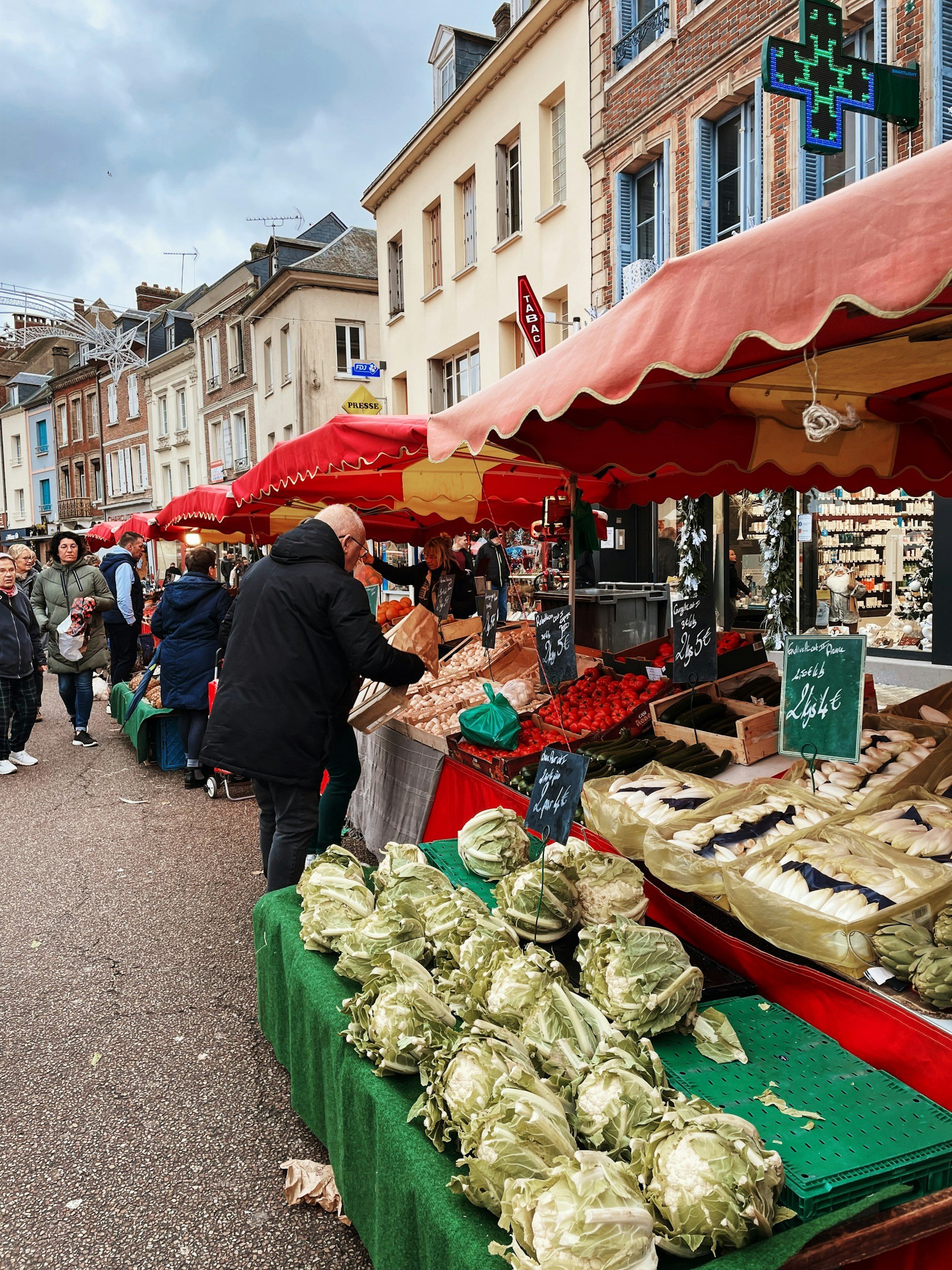
Visit the cathedral after your market stroll, and grab a galette or crêpe from a nearby café. Coutances is well connected by train if you’re coming from Caen or Granville.
Marché de Vannes (Brittany)
Morbihan | Wednesdays and Saturdays
Vannes is in southern Brittany, about 1 hour from Rennes, with a train station around a 10–15 minute walk from the historic centre. Many visitors still arrive by car from nearby coastal areas, particularly on Wednesdays and Saturdays. Parking around Place de la Libération and Parking du Port is the most practical, but after 10:00 spaces become limited and the walk into the old town usually brings you past the harbour and up toward the ramparts.
Most people enter from the port side and move inward toward Place des Lices, which acts as the main anchor. The transition is gradual, but the first noticeable slowdown happens as you approach the square, especially near the entrances to the covered market hall. This is where movement starts to concentrate early, even before the rest of the market fills.
The market is divided between Place des Lices and Place du Poids Public, with connecting streets linking the two. Place des Lices holds the covered market and the highest concentration of food stalls, while Place du Poids Public and the surrounding streets remain more open and easier to move through for longer. The difference between the two becomes more apparent as the morning progresses.
Between 8:30 and 9:30, the pace is still direct. Residents move quickly into the covered hall, often starting there before continuing outside. You’ll see people buying fish, shellfish, vegetables, and bread in small quantities, with short, familiar exchanges. The hall fills first, but at this stage it’s still possible to move through without stopping.
From around 10:30, the entrances to the covered market become the main points of congestion. People pause, queue, and gather in these areas, which slows movement across Place des Lices as a whole. At the same time, the connecting streets and Place du Poids Public remain more fluid, and many people shift their route to continue browsing without staying in the densest sections.
Food is concentrated in and around the covered hall, where seafood and regional products are more prominent than in markets further south. Prepared food becomes more visible closer to midday, but most people continue moving rather than staying in one place. Cafés around Place des Lices begin filling from late morning, while the streets slightly away from the square remain easier to navigate.
By around 11:30, the pattern shifts. Most local residents have already passed through the covered hall and left, while visitors tend to remain in and around Place des Lices for longer. The hall stays busy, but the surrounding streets continue to move at a steadier pace, and this is where most people spend time once they’ve finished shopping.
What defines the market in Vannes is how it splits between enclosed and open space. The covered hall concentrates movement early, while the surrounding streets absorb it later. Moving between these areas changes the experience quickly, and most people who know the market well adjust their route rather than staying in one section for too long.
If you prefer small places with fewer visitors, this guide to quiet French villages in Auvergne and Limousin is a good follow-up after a summer market trip.
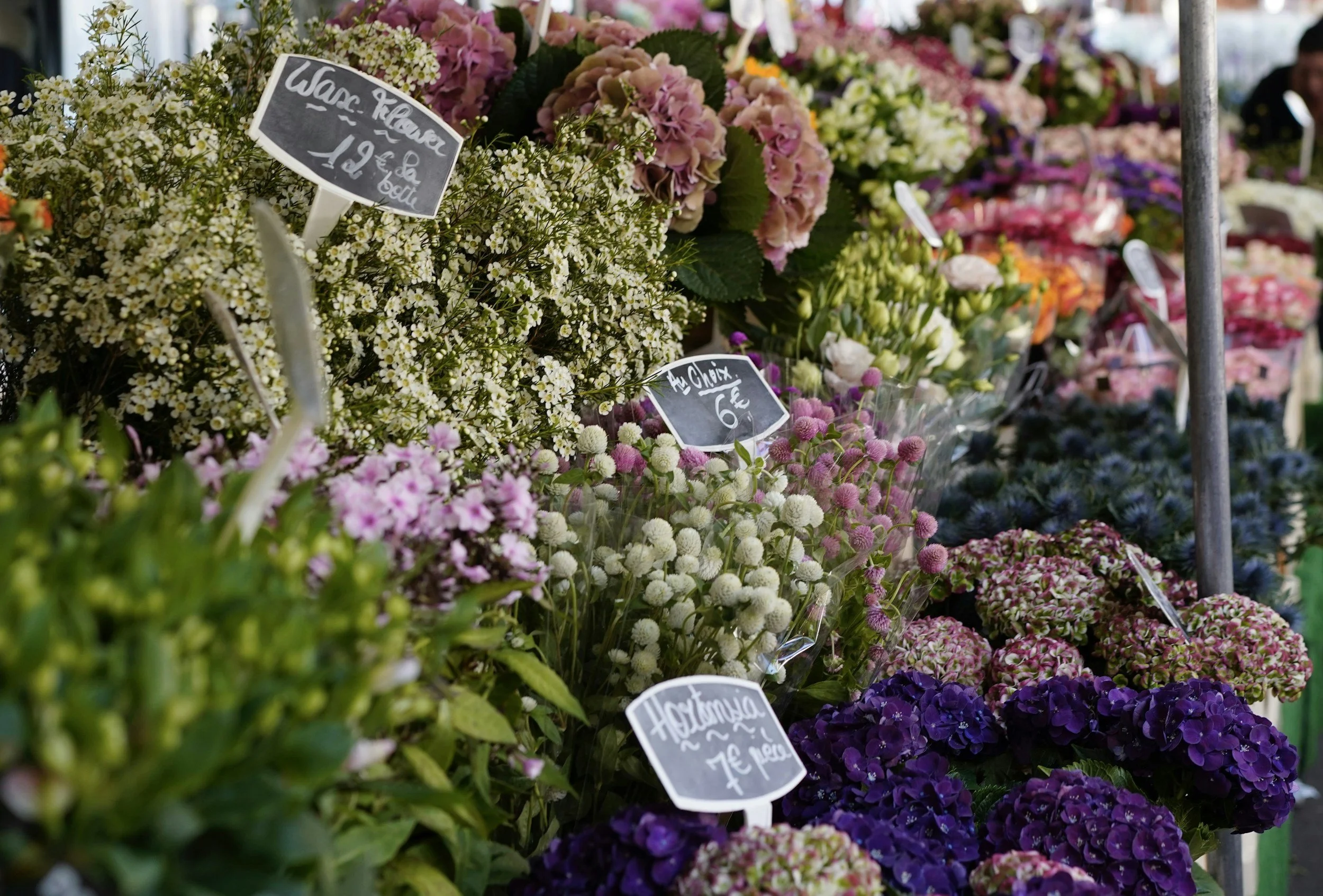
Bring your own tote and try the local kouign-amann. If you’re staying near the coast, this is a great stop before heading to the Gulf of Morbihan for a ferry ride or picnic.
Marché de Apt (Luberon)
Vaucluse | Every Saturday
Apt is in the Luberon, about 1 hour east of Avignon. There’s no train station in the town, so most people arrive by car, often from nearby villages across the Luberon. On Saturdays, parking fills steadily around the outer streets, particularly near Cours Lauze de Perret and Avenue Victor Hugo. Arriving before 9:00 makes access easier. After that, traffic slows as cars move through the centre looking for spaces, and most people end up parking further out and walking in along the main roads that lead directly into the market.
The market runs across a large part of the town, centred around Place de la Bouquerie and extending along Cours Lauze de Perret, Rue des Marchands, and multiple connecting streets. Unlike smaller Provençal markets, it doesn’t gather in a single square. Instead, it stretches across several routes, and people join it from different points depending on where they arrive.
Most people enter along Cours Lauze de Perret, which acts as one of the main access points from the outer parking areas. This section fills steadily through the morning, particularly where the street narrows closer to the centre. Moving inward, Place de la Bouquerie becomes the main concentration point, with a dense cluster of food stalls that slow down earlier than the surrounding streets.
Between 8:30 and 9:30, movement is still direct. Residents move quickly through the market, often following the same route each week and stopping only at specific vendors. You’ll see people buying vegetables, fruit, cheese, and bread in small quantities, with short exchanges rather than browsing. At this stage, it’s possible to move across several sections without needing to change direction.
From around 10:30, the centre begins to slow. Place de la Bouquerie fills first, especially in the tighter areas where stalls are positioned closer together. Rue des Marchands, where the street narrows further, is usually one of the first to back up in short sections. The outer parts of Cours Lauze de Perret remain easier to navigate for longer, and many people shift their route to continue moving rather than staying in the centre.
Food is distributed across the market, but the densest concentration remains in the central areas. Early in the morning, the focus is on produce and bread, while prepared food becomes more visible closer to midday. Unlike smaller markets, fewer people stop immediately to eat. Most continue walking or leave the centre once they’ve finished shopping.
By around 11:30, the pattern shifts. Most local residents have already left, and the remaining movement becomes slower and more dispersed. People tend to stay within the central areas, while the outer streets continue to flow more steadily. Because of the size of the market, many visitors don’t see all of it. They move through one or two sections and leave, rather than covering the full route.
What defines the market in Apt is its scale and how it spreads across multiple streets rather than concentrating in one place. The experience changes depending on where you are, but also on how much of it you try to cover. Moving between sections is often more useful than staying in the busiest areas, especially once the centre begins to slow.
Travelling by train instead of driving changes the trip completely. This guide on choosing the right Eurail pass for slow regional travel helps you plan longer, calmer journeys between towns.
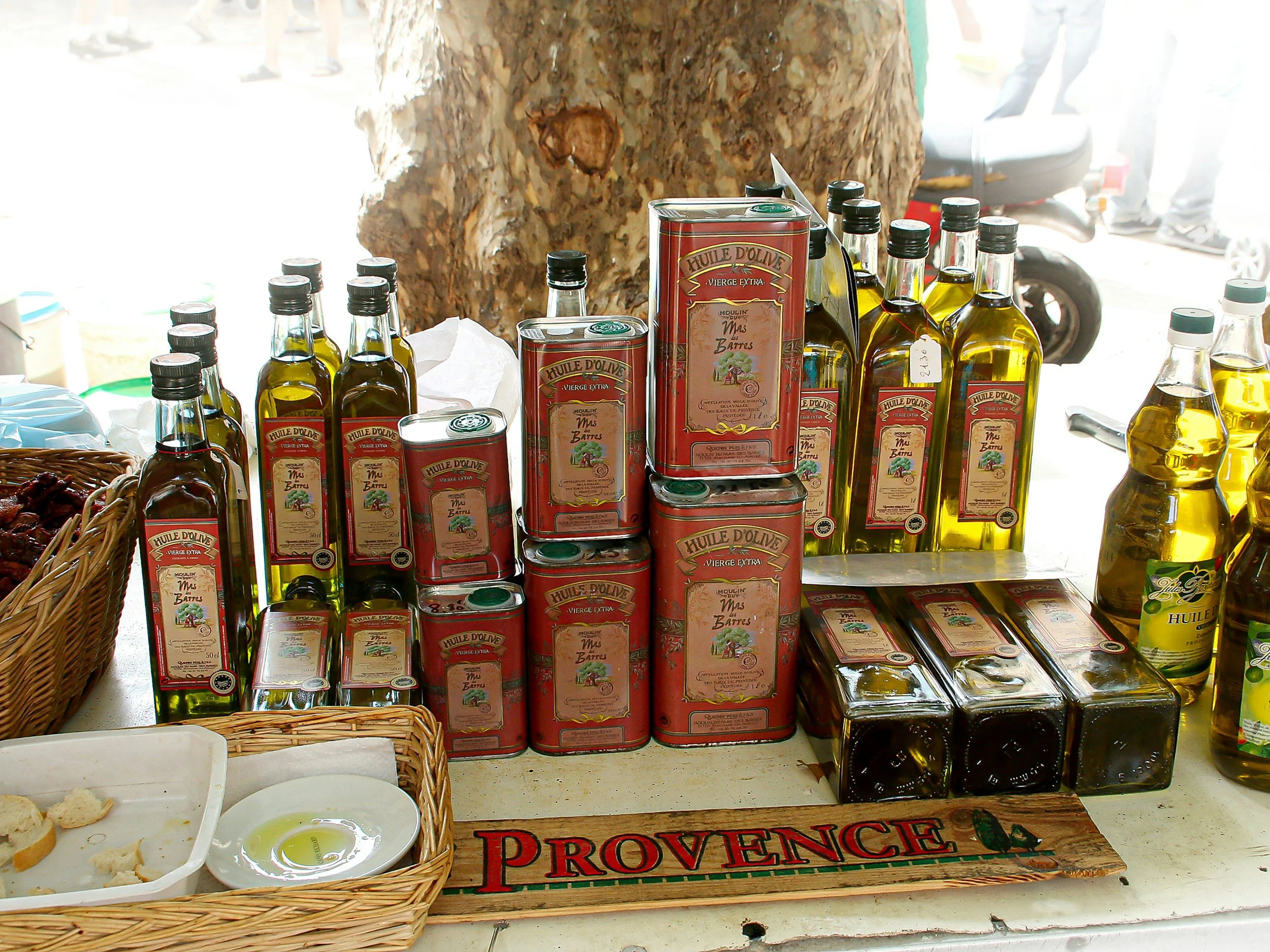
Plan to arrive by 8:30–9:00 am. It gets warm and busy quickly. This is a great spot to buy gifts, but also kitchen staples… many local Airbnbs stock their pantries from Apt on Saturdays.
Marché de Pézenas (Hérault)
Occitanie | Saturdays
Pézenas is in the Hérault department, about 25 minutes west of Béziers and just under an hour from Montpellier. There’s no train station in the town itself, so most people arrive by car, usually via Béziers. On Saturdays, parking fills steadily around the outer ring roads, particularly near Cours Jean Jaurès and Avenue de Verdun. After 10:00, traffic slows as cars circulate for spaces, and most people walk in along the boulevard, which leads directly into the market.
The market runs along Cours Jean Jaurès and extends into the surrounding streets and into the old town. The boulevard acts as the main spine, with wide space and long rows of stalls, while the streets leading into the historic centre narrow quickly and change the pace. Most people begin on the boulevard and then move inward, which is where the first noticeable shift happens.
Between 8:30 and 9:30, movement is still direct. Residents walk along Cours Jean Jaurès with a clear purpose, often stopping briefly at specific vendors before either continuing into the old town or leaving again. You’ll see people buying vegetables, bread, cheese, and other staples in small quantities, with short exchanges rather than browsing. The boulevard remains easy to move through at this stage.
As you enter the old town, the layout changes immediately. Streets narrow and stalls sit closer together, particularly in the lanes just off the boulevard. By around 10:30, these sections are usually the first to slow, with short bottlenecks forming where space tightens. The difference between the two areas becomes clear at this point, as the boulevard continues to flow while the inner streets require more stopping and changing direction.
Food is spread across both sections, but the boulevard holds larger produce stalls and more space to move, while the old town mixes food with smaller items and non-food stalls. Prepared food becomes more visible closer to midday, but most people don’t stay in the narrower streets to eat. Instead, they return to the boulevard or move away from the centre once they’ve finished shopping.
Cafés along Cours Jean Jaurès begin filling from late morning, while those deeper in the old town tend to feel more congested due to the limited space. By midday, most central tables are taken, and movement in the narrower streets slows further.
By around 11:30, most local residents have already left the old town sections, and the remaining movement is slower and more dispersed. People tend to stay on the boulevard, where there is more space, rather than continuing through the tighter streets.
What defines the market in Pézenas is the contrast between the wide, continuous flow of Cours Jean Jaurès and the compressed movement of the old town. The experience changes quickly depending on where you are, and most people who know the market well move between these two areas rather than staying in the narrower sections once they begin to slow.
And if you’re worried about visiting smaller places outside peak season, this piece on quiet town vs closed town in the off-season explains what to expect and how to plan around it.
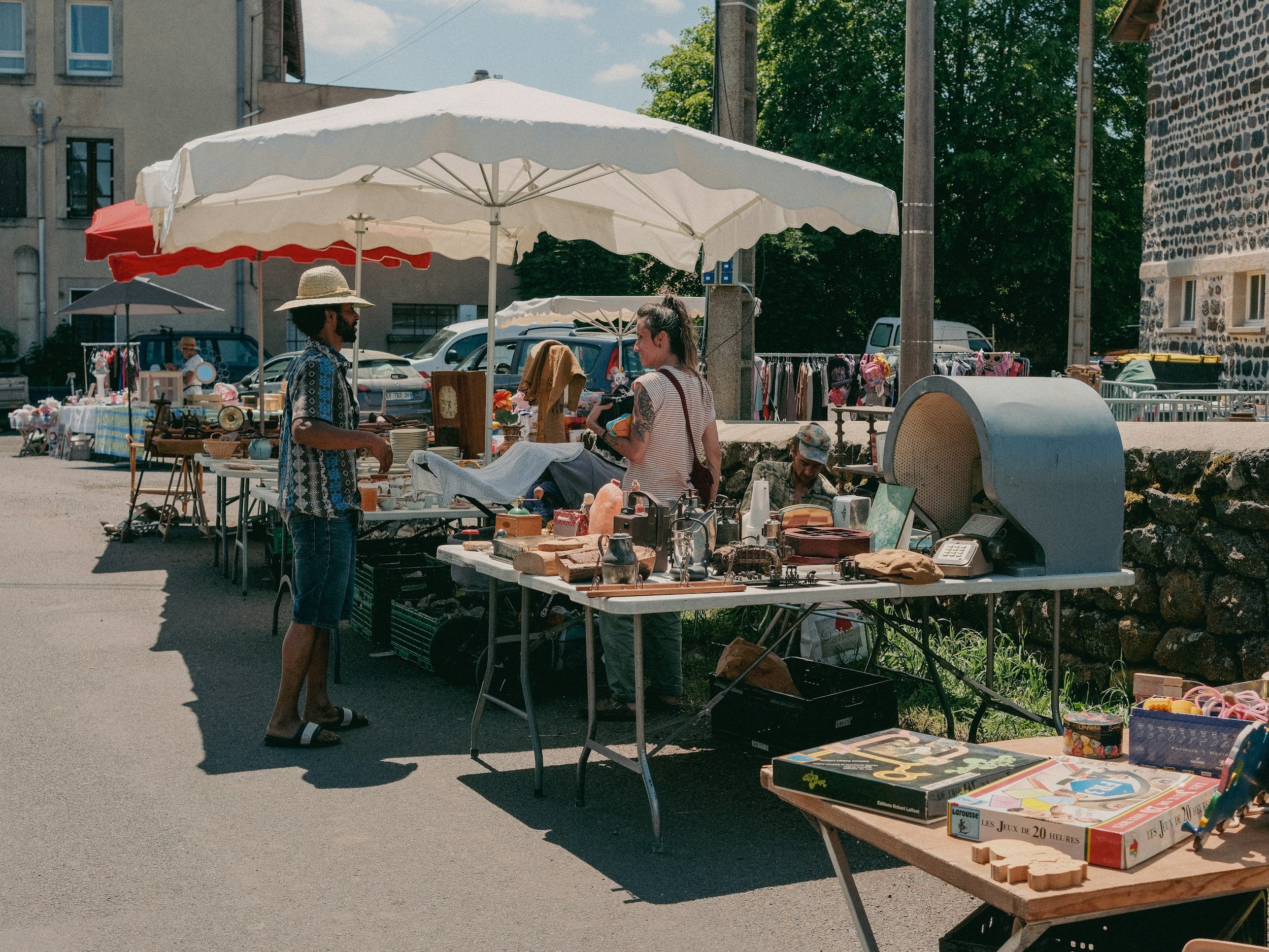
Visit the market early, then spend the afternoon wandering the ateliers and wine bars tucked into side streets. Pézenas is also known for its slow-food bistros, many of which use ingredients sold just hours earlier at the market.
Weekly summer markets in France
If you’re planning to visit more than one of these markets on the same trip, it helps to avoid stacking them too closely. Even though they follow similar weekly patterns, they require the same kind of attention and timing, and doing two back-to-back often ends up feeling repetitive rather than useful. Leaving a day in between gives you time to use what you’ve bought, walk through the town without the market, and arrive at the next one with a clearer sense of how you want to move through it.
One detail that often gets overlooked is how little storage vendors actually have. In smaller markets especially, once something is sold out, it’s usually gone for the day. Bread is one of the first things to go, particularly from smaller baker stalls, and certain produce disappears earlier than expected. If there’s something specific you’re looking for, it’s better to buy it when you first see it rather than assuming you’ll come back later.
It’s also worth paying attention to how different stalls operate. Some vendors serve in a fixed order and expect you to wait your turn, while others move more loosely depending on how people approach the stand. In busier markets like Apt or Saint-Rémy, that difference affects how long you spend in one place, especially later in the morning when queues aren’t always clearly formed.
Finally, not every market needs the same amount of time. Larger ones like Apt can take longer simply because of how far they spread, while smaller or more contained markets are often more effective as a shorter visit. Staying longer doesn’t always add more, especially once the pace has shifted and movement slows. Knowing when to leave is just as useful as knowing when to arrive.
Common questions about weekly markets in France
What are the best summer markets in France to plan a trip around?
Markets like Uzès (Place aux Herbes), Apt (Cours Lauze de Perret), and Pézenas (Cours Jean Jaurès) are among the most consistent to build a trip around because of how they’re structured. They’re large enough to spend time in, but still follow a clear weekly rhythm, which makes planning easier.
What time should you arrive at markets like Uzès or Apt?
Between 8:30 and 9:30 gives the most flexibility. In Uzès, you can still cross Place aux Herbes without stopping. In Apt, you can move between sections before the central streets slow down. After 10:30, the busiest areas become harder to navigate, especially in tighter streets.
Which French markets are easiest to navigate in summer?
Markets that stretch along longer streets, like Dieulefit or parts of Apt, tend to stay easier to move through than those centred in one square. In Vannes and Coutances, wider streets also help distribute movement more evenly, even later in the morning.
Do you need a car to visit these markets?
For most of them, yes. Apt, Dieulefit, and Pézenas don’t have direct train access, and arrival time affects both parking and how you enter the market. Vannes and Coutances are reachable by train, but you’ll still walk into the centre from the station.
What’s different about markets in Provence compared to Normandy or Brittany?
In Provence, markets are often built around tighter streets or central squares, like in Uzès or Saint-Rémy, which creates more compression as the morning progresses. In Normandy and Brittany, like in Coutances or Vannes, the layout is more open, with wider streets and fewer bottlenecks.
What should you buy at markets like Apt or Saint-Rémy?
Early in the morning, most purchases are produce, bread, and cheese. In Apt, people move between multiple sections buying gradually, while in Saint-Rémy the central streets fill quickly and buying tends to be more direct. Waiting too long often means certain items are already gone.
How long should you spend at a French market?
Most markets work best over one to two hours. Larger ones like Apt can take longer because they spread across several streets, while more contained markets like Uzès are quicker to move through once the square fills.
Are midweek markets better than Saturday markets in France?
Midweek markets, like Saint-Rémy on Wednesdays, are usually easier to navigate because fewer people travel in for them. Saturday markets, like Uzès or Apt, tend to be busier and require earlier arrival to avoid the slowest periods.
Is it worth visiting more than one market in the same trip?
Yes, but spacing them out makes a difference. Visiting Uzès and Apt on consecutive days often feels repetitive, while leaving a day in between gives you time to experience the towns themselves without the market.
Why do some markets feel crowded even when they’re not that big?
It usually comes down to layout. In places like Uzès or Pézenas, narrower streets and central squares create pressure points where movement slows quickly. In more spread-out markets, the same number of people feels easier to manage.
Timing really changes the feel of these towns. This guide to Provence markets by season is useful if you’re trying to decide when to go for the best atmosphere and produce.
Stay Updated
Want more hand-picked places like these?
Join our newsletter and be the first to know when new market guides, slow travel tips, and destination roundups drop.