
Before you book Lake Como, look at Lake Orta
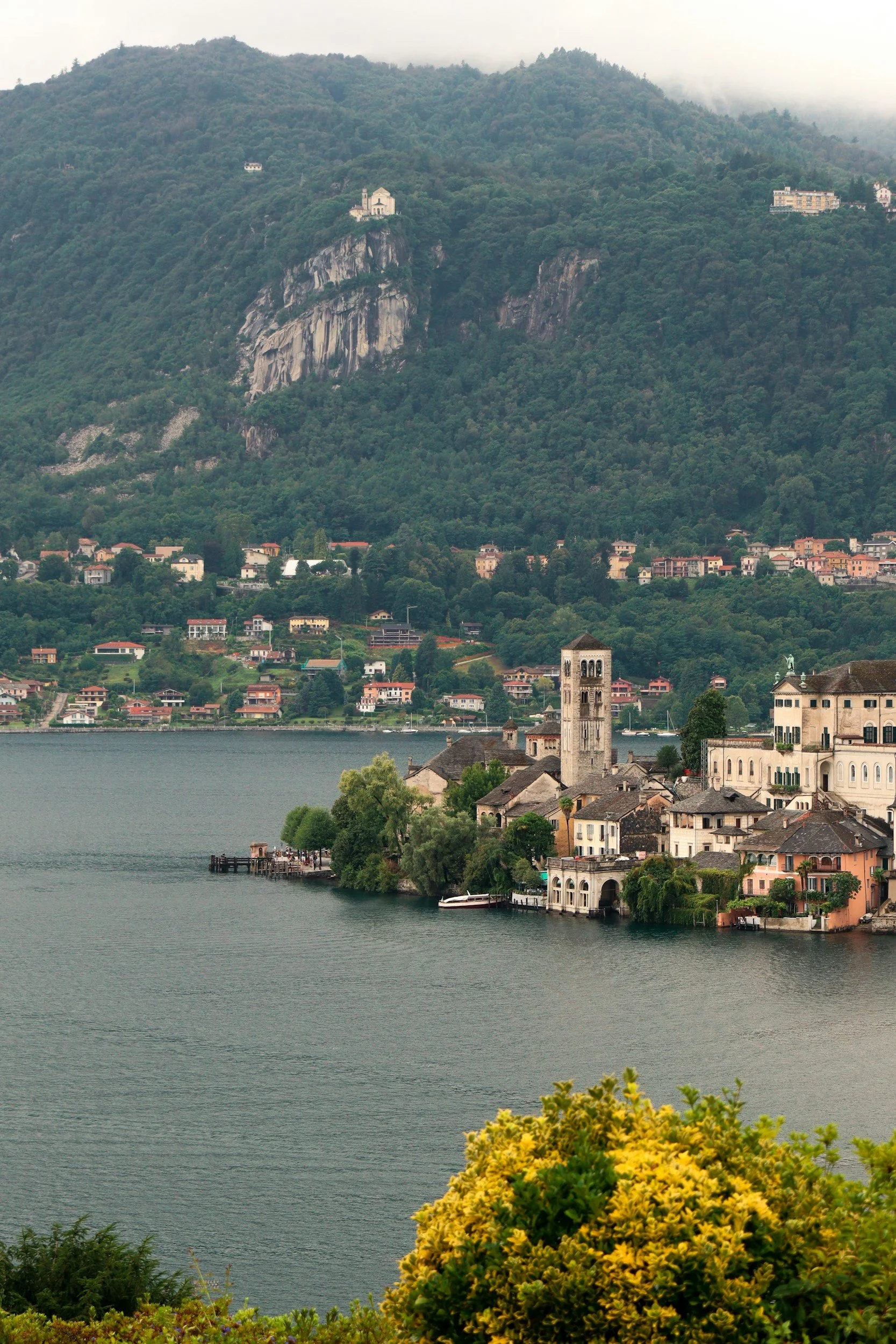
You arrive in Orta San Giulio and it doesn’t really feel like an arrival in the usual sense, more like the road just runs out and you step straight into it, walking down the last stretch past stone houses and uneven walls until you reach Piazza Motta, where the lake opens up in front of you and Isola San Giulio sits directly across the water, closer and more grounded than it looks in photos.
The square is already in its own rhythm. A couple of people sitting outside the cafés along the edge of the water, someone carrying crates into a small shop near Via Panoramica, and the boats doing short crossings to the island from the little dock at the corner of the piazza, not waiting for anything, just moving back and forth as part of the day.
This is Lake Orta in spring, and what stands out isn’t what’s happening, but how little you need to adjust to it. You’re not checking schedules or planning routes between towns because everything you actually end up doing sits within a short loop from here, and the village doesn’t push you into any structure.
If you leave the square and follow Via Olina, the atmosphere shifts almost immediately. The street narrows between stone façades, shutters half open, doorways that look like they’ve just been unlocked for the season, and small shops that are clearly still easing back into daily rhythm after winter rather than running at full pace. You pass a bakery with the door open, a small grocery where someone is setting things out slowly, then a bend where the street tightens again and you realise you’re already higher than you thought.
There isn’t really a defined route through it. You take a turn because it feels natural, not because it leads somewhere specific, and suddenly there’s a break between the buildings where the lake appears again, this time slightly below you, quieter than it felt from the square, with the island now sitting further out and more still in the water.
Back down at Piazza Motta, the boats to Isola San Giulio run continuously from the small landing point at the edge of the square. You don’t think about timing it. You just walk over, step on, and within a couple of minutes you’re crossing, close enough to see the stone walls of the island getting sharper as you approach, the sound of the water filling the space between departures.
On the island itself, there’s a single path that loops around the edge, passing the Basilica di San Giulio, small courtyards, and quiet stretches where the buildings sit close to the water. It doesn’t take long to walk, and it doesn’t try to become more than it is. You go around once, maybe stop where the path opens slightly toward the lake, then head back without needing to decide anything.
When you return, the square has shifted slightly but not in a dramatic way. A few more tables taken, more chairs pulled out along the edge, the same slow movement of people settling into the morning without urgency. You might sit somewhere like Enoteca Re di Coppe or one of the cafés just off the piazza, not because you planned to, but because it’s there and open and it makes sense in the moment.
That’s really what Lake Orta in spring feels like. You’re not building a day around it or trying to cover different parts of the lake, you’re just moving between the square, the narrow streets of Via Olina, and the short crossing to the island, and somehow that small loop is enough to fill a whole morning without it ever feeling repetitive or forced.
If you're trying to figure out whether Lake Orta actually works without a car, this lake towns guide shows how these smaller places connect by train and ferry in April


If you're curious how different southern Italy feels right now, this Sicily food shift explains it in a very real way.
Where to stay in Orta San Giulio: best guesthouses, airbnb stays & lakeside B&Bs
Where you stay in Orta San Giulio really changes how the place feels, mostly because everything is so close together that even a few streets up or down makes your mornings feel different.
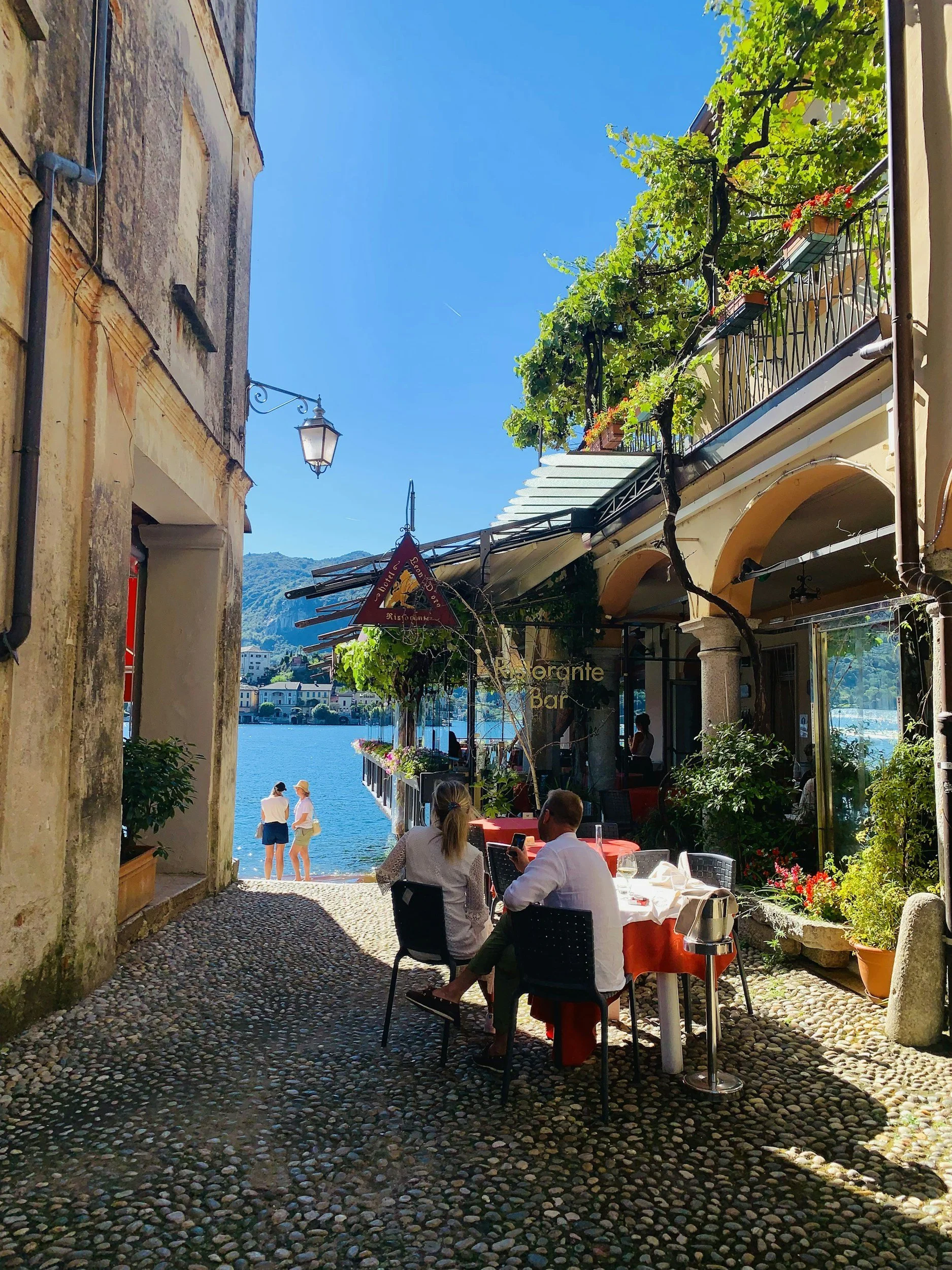
If you stay right on Piazza Motta, you’re basically on the lake. You step outside and you’re already there with the water in front of you, boats heading over to Isola San Giulio, and cafés setting up along the edge while the village wakes up. This is where you’ll find places like Hotel Leon d’Oro, right on the square, plus a few smaller rooms above restaurants where the location is the main thing you’re paying for.
Just behind the square, around Via Olina, it shifts quickly. The street gets narrower and quieter, and you’re in small stone buildings where guesthouses and apartments sit between lived-in homes, so you’re still only a minute or two from the water, but your day starts with a short walk down instead of stepping straight into the square. You’ll find simple places like Casa Vacanze La Corte here, along with a mix of small apartments and family-run stays tucked into old buildings.
Go a bit higher above Via Olina and it gets noticeably calmer again. You’ll catch small glimpses of the lake between houses instead of having it right in front of you, and you always walk down into the centre rather than straight into it, which changes the rhythm of the day in a subtle but real way once you’re there. This is where places like Piccolo Hotel Olina sit, along with a few quieter guesthouses where things feel more low-key.
There are also a few stays just outside the centre on the road above the village, more like small B&Bs and countryside houses looking back over the lake. You’ll need to walk or drive down each time, but the trade-off is more space and quieter evenings once the day slows down.
Most places in Orta are small (guesthouses, simple apartments, a few boutique-style stays) nothing big or resort-like, which is a big part of why the village still feels the way it does.
In the end, it really comes down to how you want to start your day. Straight into Piazza Motta, a short walk down from Via Olina, or a slower start from higher up before you head into the centre. Everything is close anyway - you’re just choosing how quickly you want the lake in front of you.
If you're mapping out a slower route through northern Italy, this weekend by train makes it easier to see how a place like Orta fits in without overthinking it
What to do in Lake Orta in spring
You don’t really arrive in Lake Orta in spring with a plan. You end up in Piazza Motta, probably with a coffee in hand before you’ve even decided what the day is supposed to look like, and then you just stay there longer than expected because the square already has its own rhythm, with boats crossing to Isola San Giulio every few minutes and people sitting along the edge of the water like there’s no rush to move.
Most days start like that.
From the square, it’s a short walk into Via Olina, and the shift is immediate. You go from open water to narrow stone streets in a couple of turns, and in spring you’ll notice things just starting again rather than fully running, doors open, a few small shops setting out displays, cafés not quite full yet. You don’t need to follow a route here, you just walk a bit uphill, take a turn when it feels natural, and suddenly you’re looking back down over the lake between buildings without really planning to end up there.
The boat to Isola San Giulio is the one thing almost everyone ends up doing, but even that doesn’t feel like an “activity” in the usual sense. You walk a few steps from the square, step onto a small boat, and a couple of minutes later you’re across. The island is simple in a way that doesn’t ask much from you. A single path around the Basilica di San Giulio, stone walls, quiet corners, and views back across to Orta that keep appearing and disappearing as you walk. You don’t need long there, and most people don’t try to stretch it into more than it is.
Back in the village, you don’t really switch gears, you just drift. You might sit somewhere along the edge of Piazza Motta, or move slightly back into the side streets where places like Enoteca Re di Coppe start to fill up later in the morning, and everything just continues at the same pace without ever feeling like there’s a “next step”.
If you want a bit more movement, you walk upward through the old village above Via Olina, where the streets tighten and the lake starts appearing in smaller pieces between buildings rather than all at once. It doesn’t take long before you’re above the rooftops looking back down, and it changes the feeling of the place without needing a proper viewpoint or marked stop.
That’s pretty much what you do here in spring. You sit, you walk a little, you cross the water, you walk back, and you don’t really structure it beyond that.
If you’re debating whether to stay by the lake or move inland after a few days, these countryside stays give a better sense of what that shift actually feels like
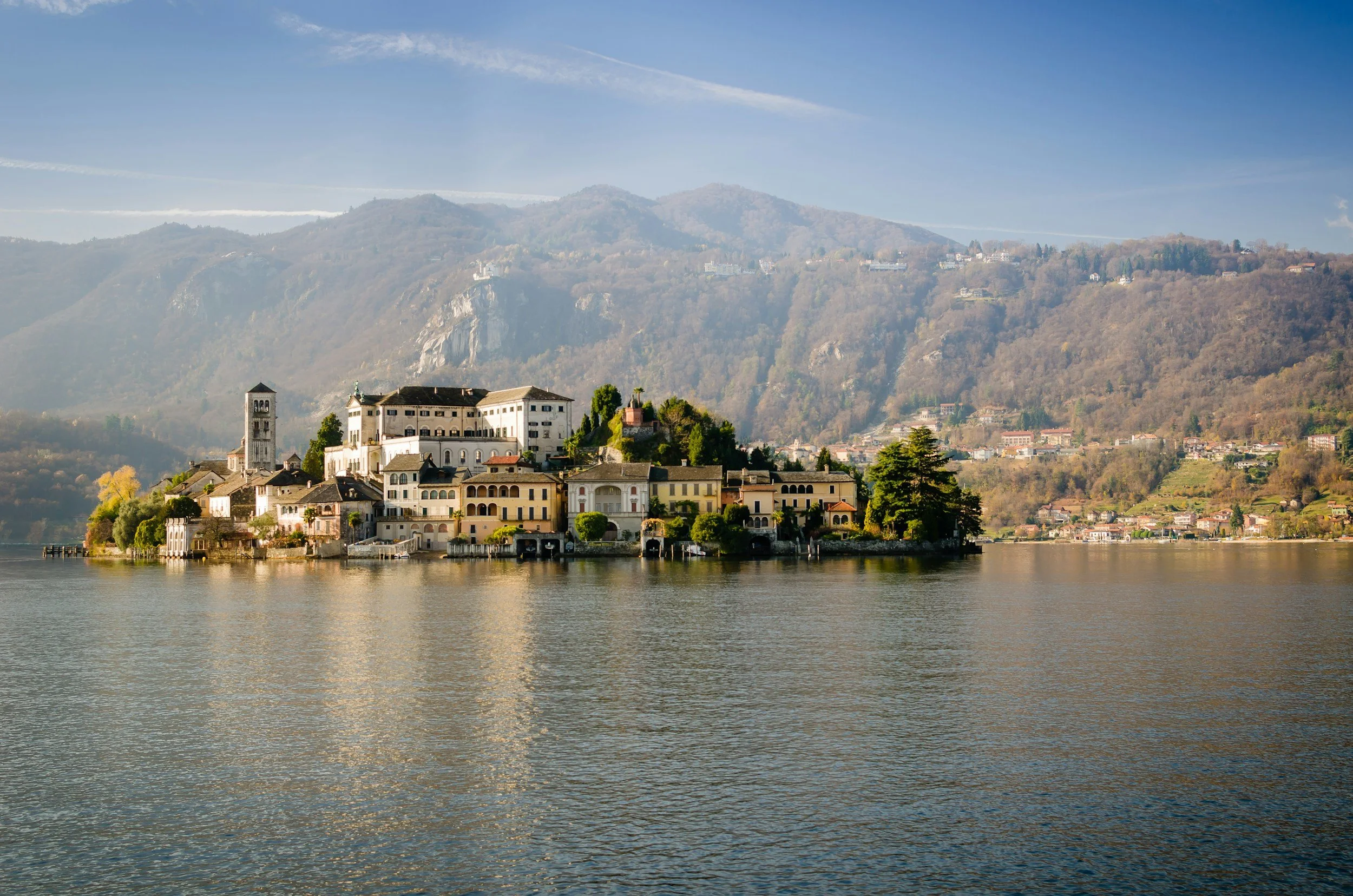
Isola San Giulio
Sacro Monte di Orta and the hillside above the village
You can walk up to Sacro Monte di Orta straight from the village, and it doesn’t feel like a big “hike out” so much as the streets just quietly turning into a path without much warning. One minute you’re near the centre, the next you’re under trees, and the sound from the lake is gone even though you’re still right above Orta San Giulio.
The path moves past a series of small chapels set into the hillside, nothing dramatic or crowded, just stone buildings between the trees and openings where you catch the lake again through the branches, with Isola San Giulio sitting further out than it looked from the square. In spring, you can often walk it without seeing many people at all, which makes it feel more like part of the village than something separate from it.
On the way back down, it’s nicer not to head straight to the water but to wander through the quieter streets behind the centre, where you’ll come across small independent places that don’t really announce themselves - a ceramic workshop, a tiny shop selling olive oil from nearby hills, handwritten cards, simple things that feel local rather than designed for visitors, especially around the upper streets off Via Olina.
If you feel like stopping later in the day, Caffè Il Pozzo is one of those easy places just off the square where you end up without planning to, maybe for a glass of wine or something simple to eat while people drift in and out of Piazza Motta.
And if you stay until the evening, you don’t really need to find a special viewpoint. People just naturally end up along the edge of the water near the ferry dock or sitting on the stone steps by the lake, watching the light change over Isola San Giulio.
If your trips usually revolve around markets, these small town markets are worth saving for later
If you're torn between lakes and wine regions, these Tuscan vineyard stays give you a completely different direction to consider.
How to get to Lake Orta
Getting to Lake Orta (Orta San Giulio) is fairly straightforward once you’re in northern Italy, but it does feel a bit more “step-by-step” than the bigger lakes, mainly because the final stretch always ends with smaller roads and a short walk down into the village.
By train (and a bit of walking)
The closest main train station is Orta-Miasino, which is on the line between Novara and Domodossola. From Milan, you’ll usually travel via Milan Centrale → Novara → Orta-Miasino, which takes around 1.5–2 hours depending on connections.
From the station, it’s about a 20–25 minute walk down to Orta San Giulio, mostly along quiet roads and lakeside stretches, or you can take a short local taxi if you have luggage or don’t want to walk downhill.
It’s not the most direct train journey in Italy, but it’s simple enough once you know the route, and it drops you close enough that you don’t need a car to reach the village itself.
By car (most flexible option)
Driving is the easiest way to reach Lake Orta if you’re combining it with other lakes or small towns in the region.
From Milan, it’s around 1 hour 15 minutes, mostly via the A8 and A26 motorways, then smaller roads toward Omegna or Pettenasco depending on where you’re staying. The last part of the drive always narrows slightly as you approach the lake, but it’s straightforward.
Parking in Orta San Giulio is not inside the old centre. You’ll leave the car in one of the car parks above the village, then walk down into Piazza Motta, which takes just a few minutes and is part of the normal arrival here.
If you're thinking of continuing south after the lakes, this Tuscany without car guide makes it clear what’s actually doable without complicating things
From Lake Maggiore or Lake Como
If you’re already in the area, Lake Orta fits easily into a wider route.
From Stresa (Lake Maggiore), it’s about 40–50 minutes by car. From Arona, around 30–40 minutes. From Lake Como, expect closer to 1.5–2 hours depending on where you’re starting, usually via A9/A26 connections.
It’s not really a place you pass through by accident, but it works well as a quieter stop between the better-known lakes.
Getting around once you’re there
Once you’re in Orta San Giulio, you don’t really need transport. The village is fully walkable, and most things sit around Piazza Motta, Via Olina, and the short boat ride to Isola San Giulio.
Boats run frequently between the shore and the island, and everything else is done on foot, including the short walk up into the older streets above the centre.
If you're comparing the lakes with something quieter closer to Rome, this Sabina Hills escape helps you picture the difference pretty quickly.
Leaving Lake Orta in spring
There’s usually a moment late in the day when you end up back in Piazza Motta, not because you planned to, but because everything in Orta San Giulio loops back there naturally, and you realise you’ve probably sat in the same spot longer than you meant to, watching the boats cross to Isola San Giulio again and again without really thinking about it anymore.
That’s often the part people remember most, not the island itself or the walk up Via Olina, but that slow return to the square when nothing feels like it needs to be done next. Even if you’ve walked the island, been up into the village, had lunch somewhere along the water, it still doesn’t feel like there’s anything you’ve “missed”.
If you stay overnight, the early morning changes it again in a small way. The square is almost empty, a few chairs being set out, the lake completely still, and you can walk down from the upper streets without seeing anyone, which makes the whole place feel even smaller and more local than it does during the day.
Most people don’t rush here, and they don’t really need to. You arrive, walk a bit, cross the water, sit down, walk again, and at some point you stop checking what comes next because there isn’t really a next thing in the usual sense.
And that’s probably the most useful thing to know before you come in spring.
If you're going in spring and not sure what’s actually in season, this Italian food seasons breakdown is surprisingly useful to check.
FAQ: Lake Orta in spring
Is Lake Orta worth visiting in spring?
Yes, spring is one of the best times to visit Lake Orta. The village of Orta San Giulio is open and active, but without the summer crowds you get at nearby lakes like Como and Maggiore, so you can walk the lakefront, take the boat to Isola San Giulio, and explore the streets around Via Olina at a much slower pace.
What is Lake Orta like in April and May?
In April and May, Lake Orta feels in-between seasons. Cafés in Piazza Motta start opening their outdoor tables again, boats run regularly to the island, and small shops in the old village reopen gradually, but everything still feels calm and unhurried compared to peak summer.
How many days do you need in Lake Orta?
Most people only need 1–2 days in Lake Orta, especially if you’re staying in Orta San Giulio. You can walk the village, visit Isola San Giulio, and explore nearby streets and viewpoints like the upper lanes above Via Olina within a short stay.
What is there to do in Orta San Giulio?
The main things to do include walking through Piazza Motta, taking the boat to Isola San Giulio, exploring the narrow streets of Via Olina, and walking up to viewpoints above the village where you can see across the lake and back toward the Alps.
How do you get to Lake Orta from Milan?
The easiest way is by train from Milan Centrale to Novara, then continuing to Orta-Miasino station. From there it’s about a 20–25 minute walk or short taxi ride down to Orta San Giulio. By car, the drive takes around 1 hour 15 minutes depending on traffic.
Do you need a car in Lake Orta?
You don’t need a car once you’re in Orta San Giulio, as everything is walkable and the boat to Isola San Giulio runs frequently. A car is only useful if you want to combine Lake Orta with other lakes or nearby towns in the Piedmont region.
What is the best place to stay in Lake Orta?
The most convenient place to stay is Orta San Giulio, especially near Piazza Motta if you want to be right by the lake, or slightly above Via Olina if you prefer something quieter but still within a few minutes’ walk.
Can you visit Isola San Giulio?
Yes, boats run regularly from Piazza Motta in Orta San Giulio and the crossing takes only a few minutes. On the island, there is a walking path around the Basilica di San Giulio, and most visits take less than an hour.
Is Lake Orta crowded in spring?
No, spring is one of the quieter times. You’ll see activity in the village and on the water, but it rarely feels crowded, especially compared to Lake Como or Lake Garda later in the year.
What is Lake Orta known for?
Lake Orta is known for its small scale, the historic centre of Orta San Giulio, and Isola San Giulio, which sits just offshore and can be reached by a short boat ride from the main square.
Is Lake Orta better than Lake Como in spring?
Lake Orta is smaller, quieter, and easier to explore on foot, while Lake Como feels more spread out and busier even in spring. If you want something slower and less structured, Lake Orta usually works better at this time of year.
Is Lake Orta walkable?
Yes, especially around Orta San Giulio, where everything sits within a short walk between Piazza Motta, Via Olina, and the boat landing for Isola San Giulio. You don’t need transport once you’re in the village.
Where do you park in Orta San Giulio?
Parking is outside the historic centre, usually in the upper car parks above the village. From there, it’s a short walk down into Piazza Motta, which is the main lakefront area.
Can you combine Lake Orta with Lake Maggiore?
Yes, they are only about 40–50 minutes apart by car, which makes it easy to combine both in one trip, although Lake Orta feels much smaller and slower compared to Maggiore.