
These market towns are all less than 90 minutes from Paris
Paris has plenty of markets, but most of them still feel like you’re in Paris. You step out of a métro station, walk straight into a busy square, and spend more time navigating people than actually looking at anything. Even the well-known ones like Marché Bastille or the stalls along Boulevard Raspail follow the same pattern, especially late morning when everything is already crowded.
If you take a short train ride instead, the pace changes quite quickly. You arrive at a smaller station, walk a few streets without traffic, and then the market appears more gradually, often set around a square or stretching through a few connected streets. It feels more like something people rely on every week rather than something built for a quick visit.
Within 90 minutes from Paris, there are several towns where this still holds. Places like Saint-Germain-en-Laye, Versailles, and Fontainebleau all run markets that locals plan their mornings around, and you notice it in small details. People bring their own baskets, stall owners recognise regulars, and cafés nearby fill up at a slower, more predictable pace around 10:30 or so.
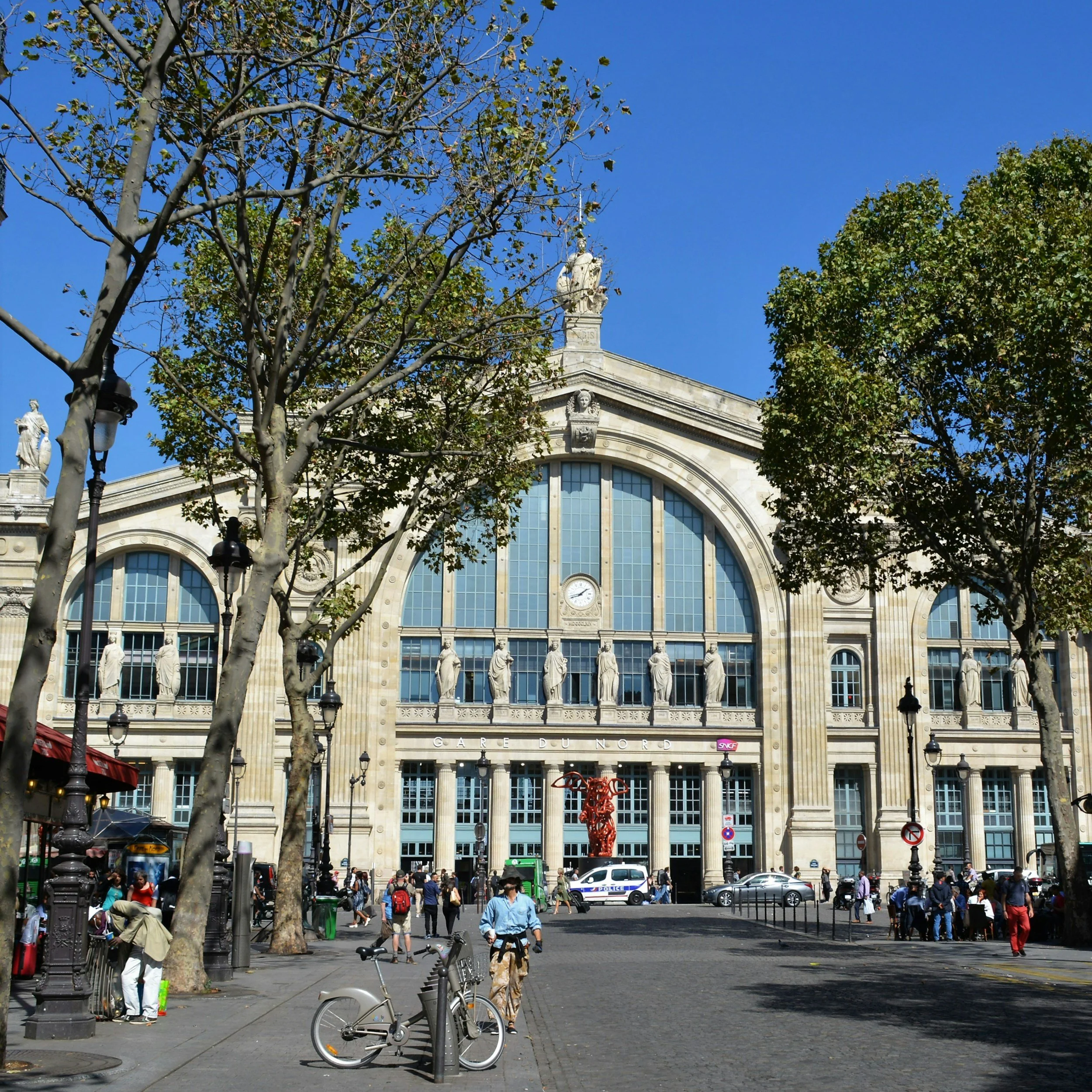
The advantage is that none of these places require much planning. You can leave from Gare Saint-Lazare, Gare du Nord, or Gare de Lyon, arrive before 10:00, walk through the market properly, and still have time to sit down somewhere for something simple like coffee and a tart or a small lunch. By early afternoon, you’re back in Paris again, but the morning feels separate enough that it doesn’t blend into the rest of the week.
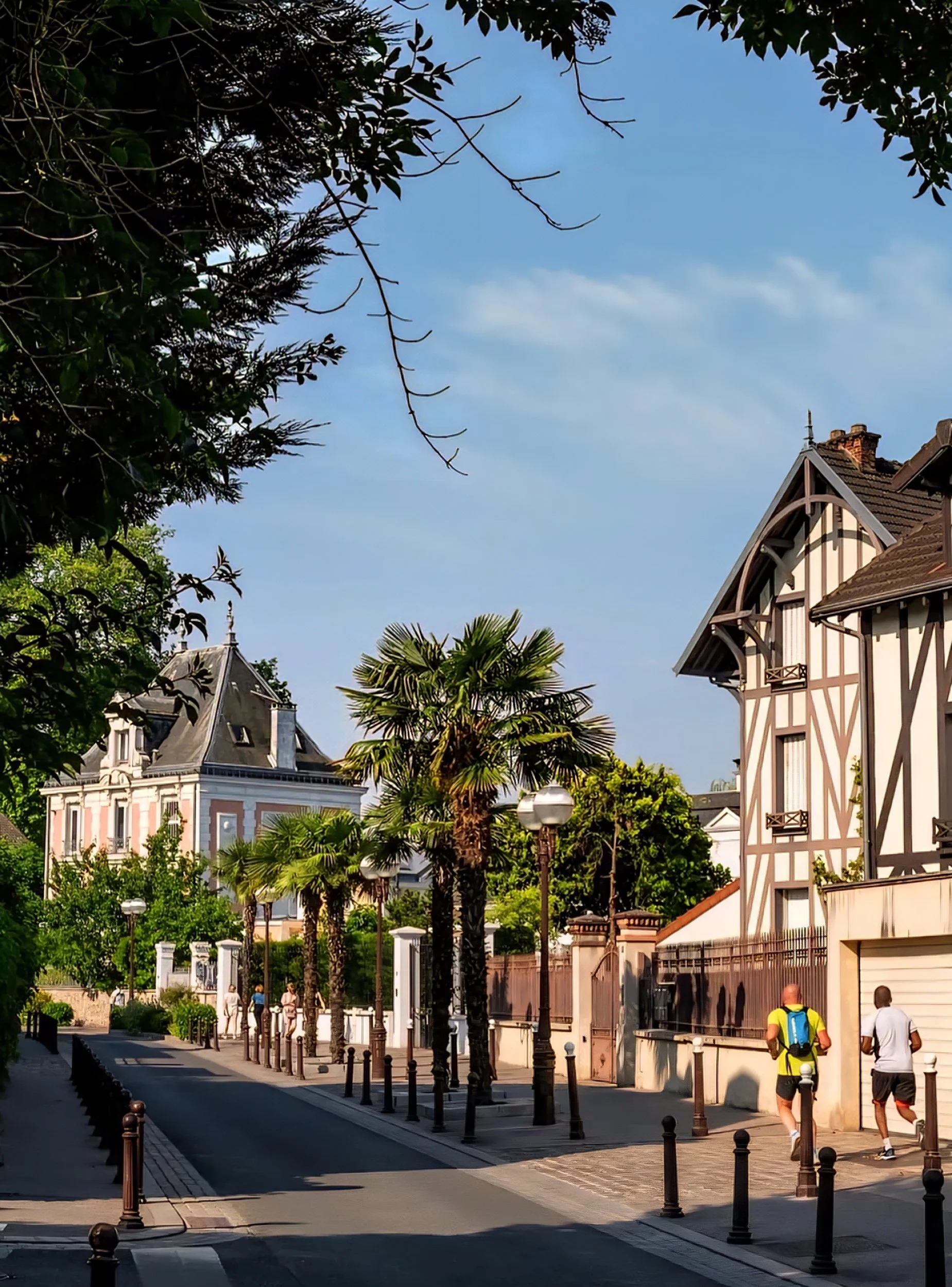
If you’re already looking at places just outside Paris, there are a few small towns near Paris that are easy to reach by train where the pace feels similar, just without the market crowds.
How far “90 minutes from Paris” actually gets you
“Within 90 minutes” sounds like you’re going quite far, but in reality most of these places are much closer. Saint-Germain-en-Laye is about 25 minutes on the RER A, Enghien-les-Bains even less, and Versailles usually sits around 35 to 40 minutes depending on which line you take. You’re not planning a full day out, just shifting your morning slightly outside the city.
What makes the bigger difference is not the time, but where you’re starting from in Paris. If you’re near Saint-Lazare, Versailles Rive Droite is easy. From Châtelet or the Right Bank, the RER A to Saint-Germain-en-Laye is usually the easiest option. Gare du Nord works well for Enghien-les-Bains and Compiègne, while Gare de Lyon is where you’ll leave from for Fontainebleau.
It’s also worth paying attention to the exact station you arrive at. In Versailles, the three stations are not interchangeable, and it can add an extra 10–15 minutes of walking if you pick the wrong one. Fontainebleau is similar, where you arrive at Fontainebleau-Avon and then either walk along Avenue Franklin Roosevelt into town or take the local bus that stops closer to Place de la République where the market is held.
Weekend trains are generally reliable, but they don’t always run as frequently early in the morning. If you’re aiming to be at the market before 10:00, it helps to check the first departures rather than assuming you can just turn up and go. Choosing a direct train keeps things simple, especially on a Saturday when you don’t want to think too much before you’ve had coffee.

Saturday vs Sunday markets near Paris
Not all of these markets run both days, and it does change the morning more than you might expect. Saturday is when people tend to do their proper shop. If you arrive around 9:30 in Versailles or Saint-Germain-en-Laye, you’ll notice people moving quite quickly between stalls, buying specific things, and heading off again before it gets too busy.
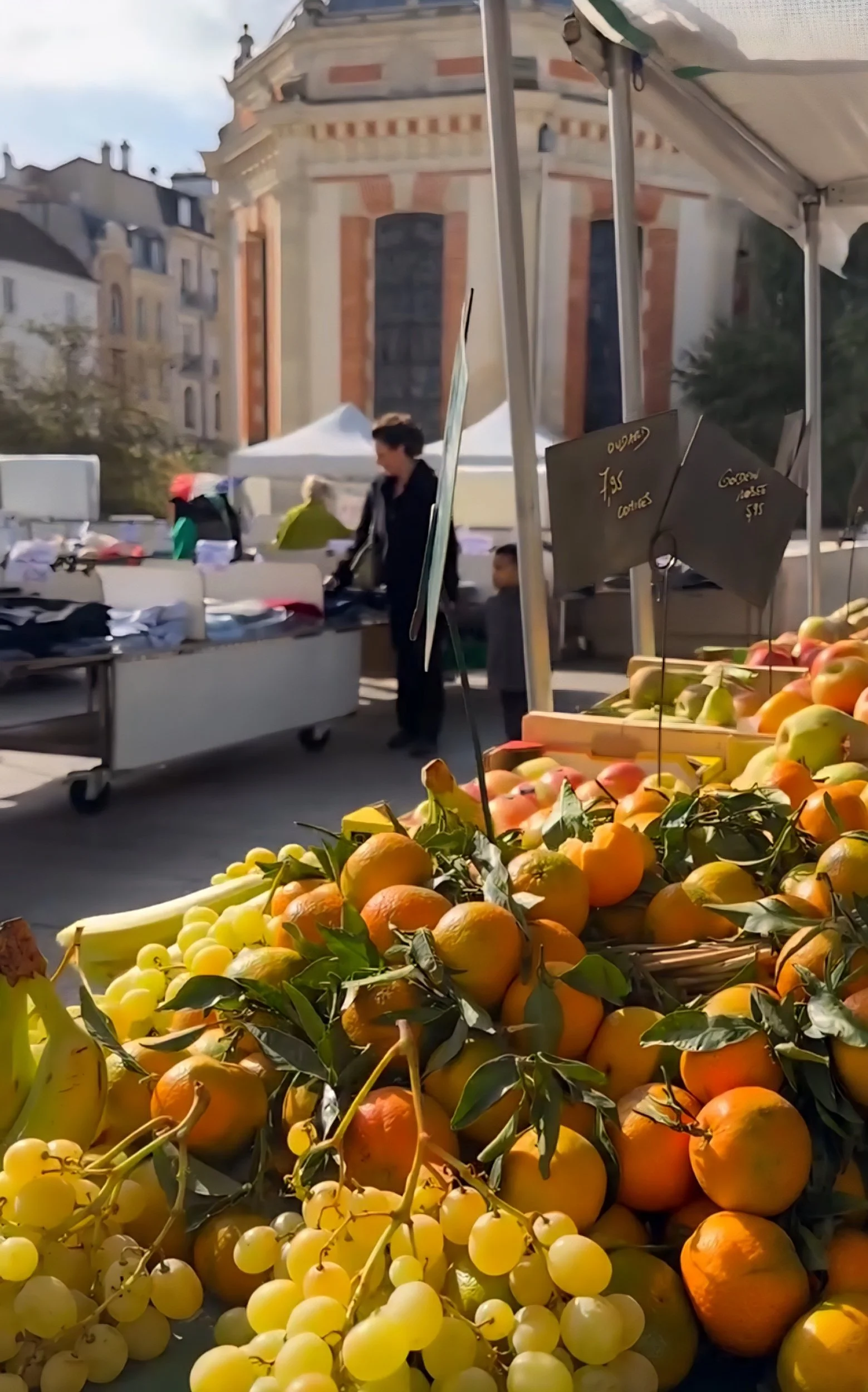
Sunday feels a bit different. The same markets are still active, but people stay longer. In Versailles, around Place du Marché Notre-Dame, you’ll see more people standing by the food stalls with a glass of wine or ordering oysters and eating them on the spot. The cafés nearby start filling up closer to midday rather than earlier in the morning, and the whole area feels less rushed.
Some towns only have one main market day, so it’s worth checking before you go. Fontainebleau, for example, has its larger market on Sundays (and also midweek), while smaller towns might only run a proper market on Saturdays. If you’re planning around a weekend, Versailles, Saint-Germain-en-Laye, and Enghien-les-Bains are the easiest to rely on.
If you want everything fully stocked and easy to walk through without stopping too much, Saturday usually works better. If you’d rather take your time, maybe stop for something to eat and stay a bit longer, Sunday tends to suit that more.
When to arrive if you want the good stalls
Most markets start around 8:00 or 8:30, but that early window is mostly locals doing their regular shop. In Versailles or Saint-Germain-en-Laye, people arrive with a clear plan, go straight to their usual stalls, and leave again. It’s efficient, but not the easiest time if you actually want to walk around and take your time.
Around 9:30 is when it settles into a better flow. Everything is open, the bread stalls have fresh batches out, and you’re not dealing with tight crowds yet. If you enter from a side street rather than straight into the main square, it’s easier to move through without feeling rushed.
By 11:30, you start to notice the difference. In Fontainebleau and Compiègne, some of the smaller stalls begin packing up, and the popular things go first. Pastries, roast chicken, certain cheeses - the things people come early for are often gone by then. You can still walk around, but you’re picking from what’s left rather than what’s just come out.
If you’re planning to eat something at the market, it’s easier before 10:30. That’s when the food stalls are fully set up, and you can actually stop without waiting too long or trying to find somewhere to stand with a plate.
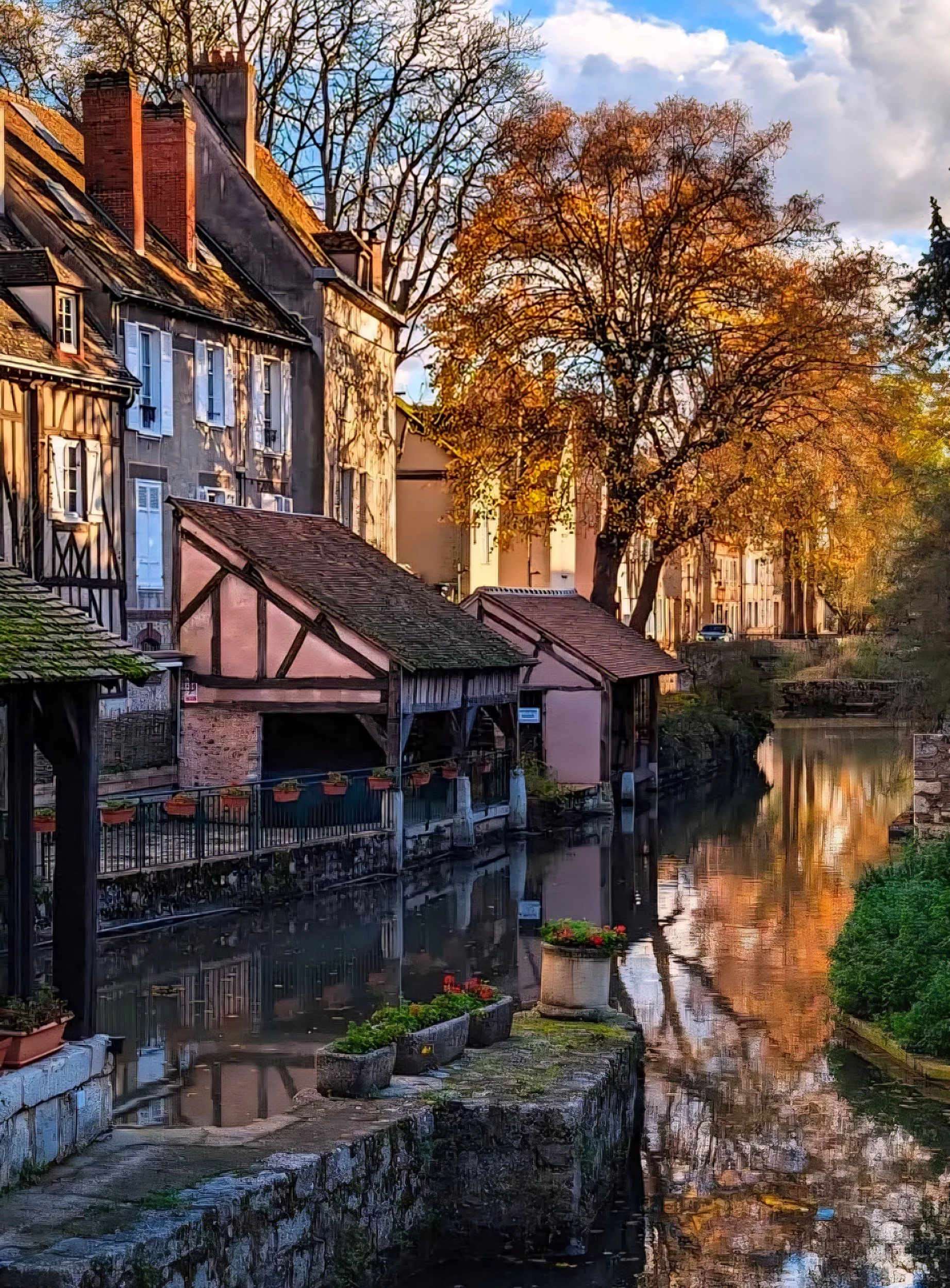
If this kind of morning works for you, the same feeling shows up again in the south, especially in these quiet Provence market towns where markets still feel like part of everyday life.
Easy train routes from Paris to market towns:
Direct routes from Gare Saint-Lazare, Gare du Nord, Montparnasse
Most of these towns are straightforward to reach, and that’s part of why they work so well for a market morning. You don’t need to change trains or think too much about timing. From Saint-Lazare, Versailles Rive Droite takes around 35 minutes and runs often enough that you don’t have to plan it down to the minute.
From Gare du Nord, Enghien-les-Bains is barely 15 minutes, which almost feels like you’re still in Paris, just with more space and less noise. Compiègne takes closer to an hour on a TER, but it’s a direct train and easy to manage.
For Fontainebleau, you’ll leave from Gare de Lyon and get off at Fontainebleau-Avon. From there, it’s about a 15-minute walk along Avenue Franklin Roosevelt into town, or you can take the local bus that drops you closer to Place de la République where the market is. Chartres is the longest of these, just over an hour from Montparnasse, but still simple as long as you’re on a direct train.
Weekend mornings at these stations can get a bit busy, especially between 8:30 and 10:00. At Saint-Lazare, people tend to gather near the platforms before they’re announced, and it can feel slightly chaotic if you arrive last minute. Getting there 10 minutes earlier makes it a lot easier.
TER vs Transilien vs RER (what you’ll actually end up taking)
For the closer places, you’ll usually be on the RER or a Transilien train. They run often, you just walk on, and there’s nothing to book. The only thing you’ll notice is that they stop quite a lot, so even short distances can take a bit longer than expected.
For somewhere like Chartres or Compiègne, it’s usually a TER. These feel calmer, with fewer stops and more space to sit. If you’ve picked up things at the market, it’s a bit more comfortable on the way back.
You don’t really need to plan around train types though. Once you’ve chosen the destination, the route is usually obvious, and everything runs in a way that’s easy to follow.
First trains out vs slightly later departures
The early trains are quieter, and if you take one around 8:00, you’ll arrive while everything is still being set up or just opening. It’s a nice way to see the market before it fills up, especially in places like Versailles.
But it’s also a weekend, and leaving that early doesn’t always feel realistic. Taking a train around 9:00 works just as well. You’ll get there closer to 10:00, when everything is open and the market feels more settled, without it being too crowded yet.
Some of these places are easy to turn into something longer. There are a few French towns that worth staying a few nights in where you stop thinking about day trips altogether.
Market towns near Paris that are worth the train ride
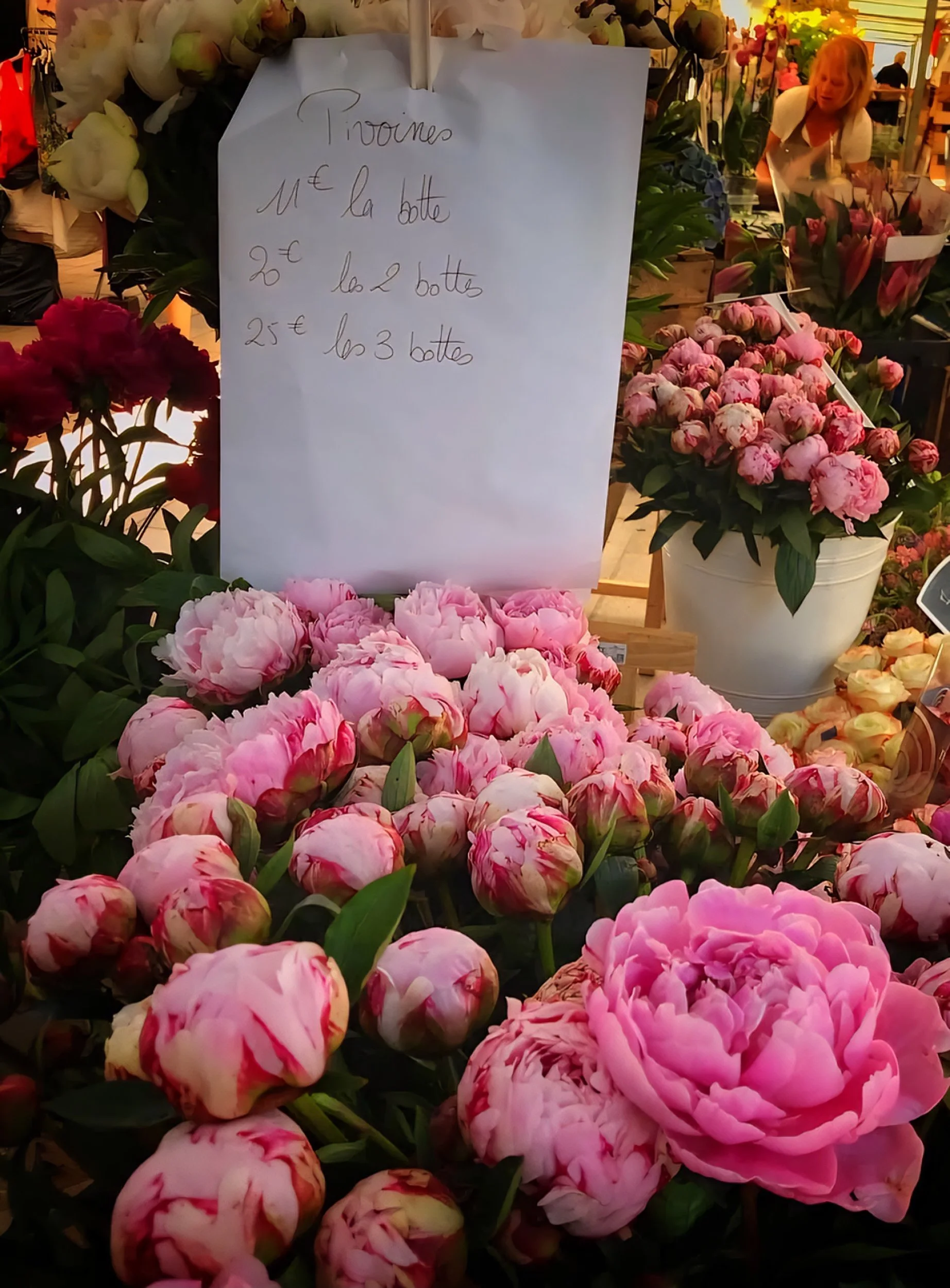
Saint-Germain-en-Laye market (RER A, ~25 min)
Saint-Germain-en-Laye is one of the easiest places to get to, and it shows in how simple the whole morning feels. The RER A drops you right at the edge of town, and when you come out of the station you’re already on Rue de la République. Walk straight down for a few minutes, pass a couple of bakeries, and you’ll reach Place du Marché Neuf where the market is.
It doesn’t hit you all at once. You sort of walk into it gradually, first a few stalls, then the full square, and then a bit more spilling into the nearby streets. It makes it easier to settle into it instead of feeling like you’ve stepped into the busiest part straight away.
If you start on one side and just move across without thinking too much about it, you’ll pass everything naturally. Fruit and vegetables first, then cheese and charcuterie, and further in you’ll find the stalls selling things you can eat on the spot. Around 10:30, people start drifting away from the stalls and into the cafés nearby, especially along Rue de Paris where tables fill up pretty quickly.
One of the easiest market mornings from Paris
This is one of those places you can decide on the same morning without overplanning it. From central Paris, it’s about 25–30 minutes on the RER A, and then a short walk straight into town. There’s no moment where you need to check a map or figure out directions.
Because everything is so close, you can take your time without thinking about getting back. Walk through the market, stop if something catches your attention, then sit down somewhere nearby before heading back.
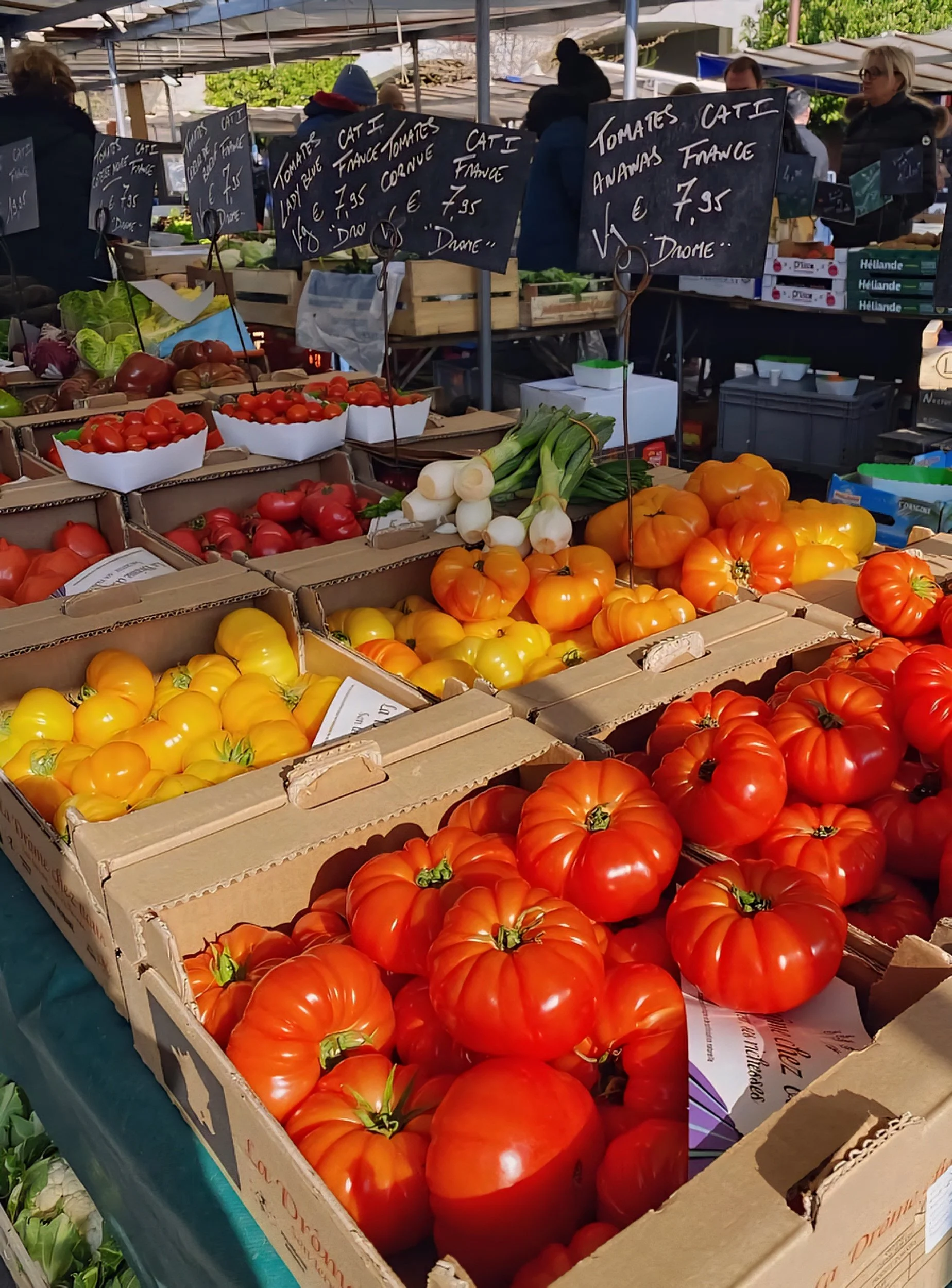
Where the market actually spreads out and how to enter it
Most of it is centred around Place du Marché Neuf, but it doesn’t stop there. A few stalls stretch into the surrounding streets, which makes it feel a bit more open than it looks at first.
If you come in from one of the side streets like Rue de Pontoise, it’s a bit easier to get into it without dealing with the busiest part straight away. From there, you can just move through it in whatever direction feels natural.
What sells out early vs what you can leave for later
Bread and pastries go first, especially from the stalls that people clearly come back to every week. By late morning, the most popular things are usually gone.
The same with anything hot, like roast chicken or prepared dishes. Those tend to sell out earlier than you’d expect.
Cheese, fruit, and vegetables are easier to leave until later. Even closer to midday, there’s still plenty to choose from, and you’re not just picking through what’s left.
If you end up doing more than one of these markets by train, it’s worth understanding which Eurail pass actually makes sense for slower regional travel, especially outside the main routes.
Versailles Notre-Dame market (Transilien L, ~40 min)
Versailles is larger than the other towns in this guide, and the market feels more like a full weekly shop than a quick stop. From Versailles Rive Droite, it’s about a 10-minute walk. You leave the station, follow Avenue de Saint-Cloud for a few minutes, then cut into the smaller streets where you start passing boulangeries and food shops already busy with people picking things up on their way to the market.
You don’t arrive all at once. First a few stalls, then more, and then the full square opens up around Place du Marché Notre-Dame. The covered halls sit in the middle, and the outdoor stalls wrap around them and continue into streets like Rue de la Paroisse and Place Hoche. It’s bigger than it looks on a map, so it helps to just start on one side and move through it once rather than trying to loop back.
Covered market vs outdoor stalls
Inside the covered halls, it’s tighter and more focused. You’ll find rows of cheese counters, butchers, fishmongers, and prepared food. The aisles are narrow, and people tend to move with a purpose, stopping briefly, ordering, and moving on. Around mid-morning, you’ll start seeing queues form at certain stalls, especially for things like roast chicken, oysters, or fresh seafood.
Outside, it opens up a lot more. Around Place du Marché Notre-Dame and into the surrounding streets, you’ll find fruit and vegetable stalls, flowers, eggs, honey, and seasonal produce depending on the time of year. It’s easier to slow down here, and you’re not squeezed between people in the same way as inside the halls.
Best time to arrive before it gets crowded
Arriving around 9:00–9:30 works well. Everything is set up, but you can still move between the covered halls and the outdoor stalls without stopping constantly. By 10:30, especially on Saturdays, the central areas start to fill up, and inside the halls it becomes noticeably slower to get through the aisles.
If you’re planning to buy something specific, it’s worth doing that earlier. The more popular food stalls tend to build queues quickly, and some things sell out before midday.
Walking beyond the palace area after the market
Once you’ve finished at the market, it’s better to stay around the Notre-Dame area rather than heading towards the palace, where most people go. Walk along Rue de la Paroisse or towards Place Hoche instead. There are smaller cafés and bakeries here where people stop after shopping, and it feels more like part of the town’s normal routine.
Places like Café Marion on Rue de la Paroisse or the bakeries along that street are good for something simple after the market, whether that’s coffee, a tart, or something savoury. If you keep walking a bit further, the streets quiet down quickly, and you’re away from the main flow of people heading towards the château.
Enghien-les-Bains market (Transilien H, ~15 min)
Enghien-les-Bains is the closest one on this list, and it really feels like it. From Gare du Nord, the train takes around 12–15 minutes, and once you step out at Enghien-les-Bains station, you’re already in the centre. Walk straight down towards Rue du Général de Gaulle, and within a few minutes you’ll start seeing the first stalls set up along the street and around Place Foch.
The market is smaller, but it’s active and used properly. You’ll see people stopping at the same stalls, chatting, picking up bread, cheese, flowers, and leaving again. Very casual.

Closest option if you don’t want to plan much
This is the easiest one to decide on without planning ahead. You can wake up, check the weather, and just go. Trains from Gare du Nord run often, and you don’t need to time it perfectly.
Even if you leave a bit later, it still works. You can get there around 10:30 or even closer to 11:00 and still find everything open without feeling like you’ve missed the best part of it.
Small but consistent, and easy to combine with the lake
After the market, it’s about a 3–4 minute walk down towards Lac d’Enghien. You just follow Rue du Général de Gaulle straight down and you’ll reach the water. The path around the lake is wide and flat, and people tend to continue their morning there after shopping.
Along Boulevard du Lac, there are a few cafés with outdoor seating where people sit for coffee or something simple like a tart or a sandwich. It’s easy to pick something up at the market and then walk down to the lake instead of staying in the busier part of town.
Works well even on slower mornings
Because it’s not very big, the timing matters less here. If you arrive later, you’re not dealing with half the stalls packing up already. Most of them stay open longer, and the pace doesn’t change as much as it does in places like Versailles.
You can walk through everything once, maybe loop back to a stall you passed earlier, and then head down to the lake without feeling like you’re trying to fit everything in quickly.
Fontainebleau market (Transilien R, ~40 min)
Fontainebleau’s market sits around Place de la République and spills out into the surrounding streets like Rue Grande and Rue des Sablons. It’s bigger than Enghien, but it doesn’t feel tight or crowded in the same way as Versailles. The streets are wider, and there’s more space between the stalls, so you’re not constantly stopping to let people pass.
From Paris, you’ll leave from Gare de Lyon and arrive at Fontainebleau-Avon. From there, it’s about a 15-minute walk into town. The route is straightforward, mostly along Avenue Franklin Roosevelt, and you’ll pass quiet residential buildings before it opens up into the centre where the market is. There are buses as well, but most people just walk.
A better reason to visit than the château on busy days
Most people come to Fontainebleau for the château, especially on weekends, and that area fills up quickly. The market is in a different part of town, and it feels separate from that. You’re not dealing with tour groups or queues, just people doing their weekly shop and moving between stalls.
If you’ve been to Fontainebleau before, this gives you a different way to spend the morning without going anywhere near the main tourist flow.
Where locals actually shop vs where visitors gather
The central part around Place de la République is where you’ll see more visitors, especially mid-morning. If you move a bit further out into the side streets, it changes slightly. Along Rue des Sablons and the smaller streets nearby, people are shopping more directly, picking things up and leaving rather than walking through the whole market.
It’s worth starting in the centre and then drifting outwards rather than staying in one place the whole time.
Pairing the market with a forest walk
Once you’ve finished at the market, the forest is close enough to reach on foot. From Place de la République, it’s about a 10–15 minute walk towards the edge of the Forêt de Fontainebleau, depending on which direction you go.
You don’t need to plan a route. Just walking a short loop into the forest is enough to change the pace after the market.
If you like the idea of combining markets with somewhere quieter, this guide to parts of the French countryside that still feel lived in year-round gives you a similar kind of experience away from the bigger towns.
Chartres market (TER, ~1h15)
Chartres takes a bit longer to reach, but it feels different in a way that’s noticeable straight away. From Montparnasse, the train takes just over an hour, and when you arrive, it’s about a 15-minute walk into town. You cross the bridge over the Eure, walk uphill through a few quieter streets, and then the cathedral comes into view just before you reach the market area.
The market isn’t set up in one clear square. It spreads through streets like Place Billard, Rue de la Pie, and the smaller lanes around them. You’re moving between stalls and regular shops at the same time, which makes it feel more part of the town rather than something separate.
Slightly further, but very different atmosphere
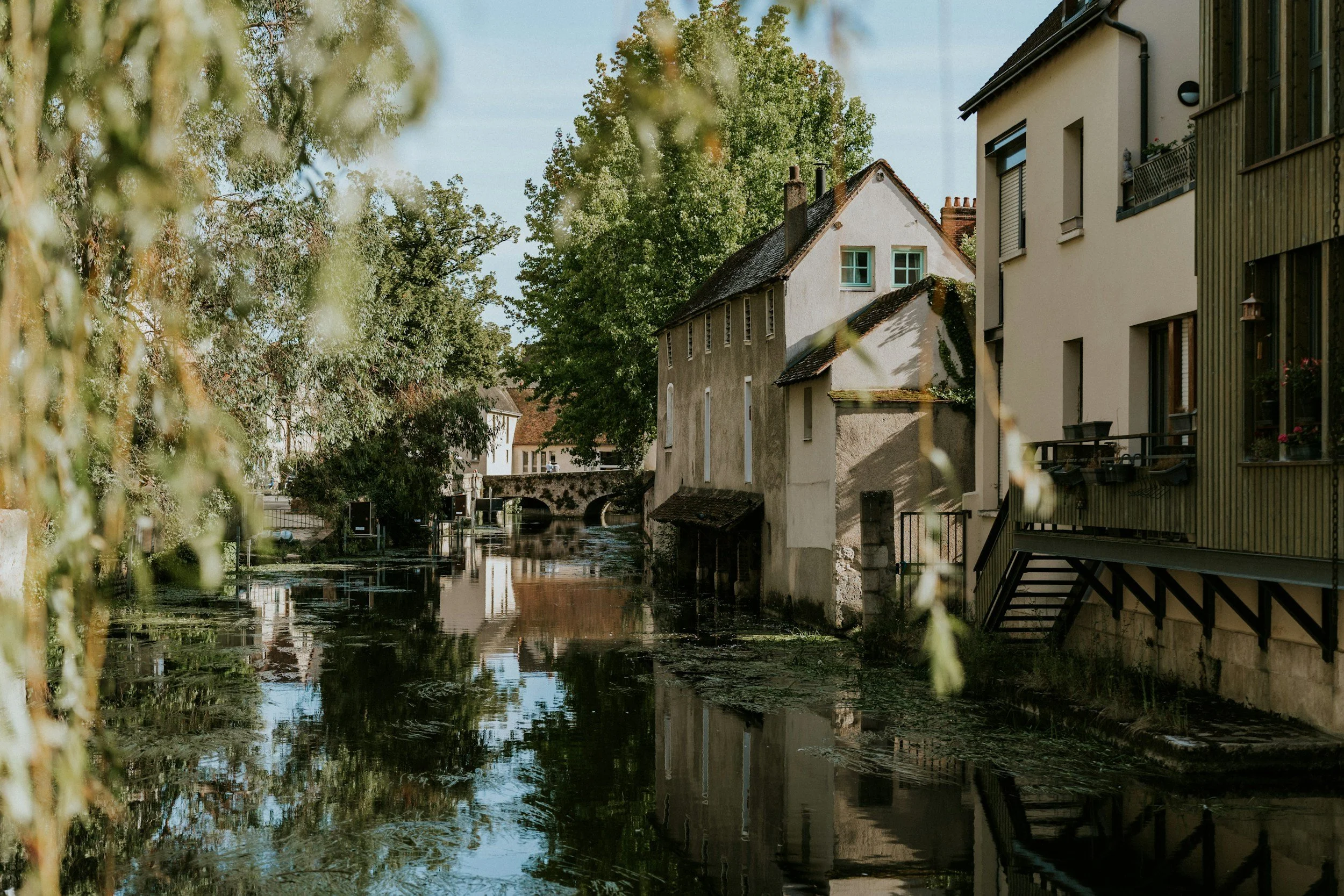
Because it’s further out, it doesn’t feel like a quick extension of Paris. People aren’t just coming in for an hour and leaving again. You’ll see more people staying longer, picking up a few things, then stopping somewhere nearby rather than moving through it quickly.
The whole morning feels a bit more spaced out, especially compared to places like Versailles where everything fills up earlier.
Market streets vs quieter areas nearby
The busiest part is around Place Billard and the streets leading up towards the cathedral. That’s where it gets tighter late morning, especially near the food stalls.
If you turn off into smaller streets like Rue des Changes or head down towards the river, it gets quieter almost immediately. You don’t have to go far, just a couple of streets over, and it feels completely different.
When to time the cathedral without interrupting the market
The cathedral is right above the market, so it’s easy to drift up there halfway through, but it usually works better to keep things separate.
Either go up early before the market gets busy, or leave it until after you’ve walked through everything.
Compiègne market (TER, ~1h)
Compiègne is one of those places where the market just blends into the town instead of sitting in one obvious square. From Gare du Nord, the TER takes about an hour, and when you arrive it’s a simple 10-minute walk. You leave the station, follow Avenue de la Résistance straight down, and after a few minutes the streets start filling with stalls around Place du Change and into Rue des Lombards.
It doesn’t feel tight or crowded. The stalls are spread out across several streets, so you’re not pushed in one direction or stuck behind people. You can walk through it once, then turn into a side street and end up back in a different part of the market without really planning it.
Less crowded than Versailles but just as satisfying
The size is similar to Versailles, but it feels easier. There’s more space between stalls, and most people are there to shop rather than walk around. You’re not dealing with the same busy central point where everything gets packed.
You still get a full market though. Fruit and vegetables, cheese, bread, flowers, and a few food stalls where people stop for something quick before heading home.
How the market flows through the town
The market follows the streets instead of being contained in one place. If you start around Place du Change and keep walking towards Rue Saint-Corneille, you’ll pass through most of it without needing to turn back.
It’s easier to just keep moving forward and then loop back through a different street rather than trying to cover everything in one go.
Easy loop after: streets, cafés, and quieter corners
When you’re done, you can just keep walking. Rue Saint-Corneille has a few cafés where people sit after the market, and if you continue further, the streets get quieter as you move towards the château and the park.
You don’t need to plan anything here. Just keep walking a bit longer, stop somewhere if you feel like it, and then head back when you’re ready.
If you like places like Compiègne, there are also quiet towns near Lyon with a similar feel, just in a different part of the country.
Which market to choose?
Closest markets (under 30 minutes from Paris)
If you don’t want to think too much about timing or trains, Enghien-les-Bains and Saint-Germain-en-Laye are the easiest to work with. From Gare du Nord, Enghien is about 15 minutes, and once you arrive you’re at the market within a few minutes on foot. It’s a good option if you wake up late or don’t feel like committing to a full morning out. You can still walk through the market, pick up something small, and sit by the lake along Boulevard du Lac without needing to rush.
Saint-Germain-en-Laye takes a bit longer, around 25 minutes on the RER A, but it’s just as simple. You step out at the station, walk down Rue de la République, and you’re at Place du Marché Neuf in under five minutes. It works well if you want something slightly larger than Enghien, with more stalls and more choice, but still without needing to plan your route or timing too carefully.
Both of these are easy to fit into a slower morning. You can leave Paris around 9:00, arrive before 10:00, and still have enough time to walk through everything and sit down somewhere nearby before heading back.
Markets that feel more “local” vs more visited
The difference is quite big depending on where you go. In Versailles, especially around Place du Marché Notre-Dame, you’ll see a mix of locals and people coming in for the morning. It gets busy quickly, especially inside the covered halls, and you’re often moving with the crowd rather than at your own pace.
Compiègne feels different. Around Place du Change and Rue des Lombards, most people are there to shop and leave. There’s less standing around, fewer people taking photos, and more of a steady flow through the stalls. It’s easier to stop, look properly, and move on without being pushed along.
Fontainebleau sits somewhere in between. Around Place de la République, you’ll see more visitors, especially later in the morning. If you move out into streets like Rue des Sablons, it changes slightly. People are shopping more directly, and it feels less like a place people are walking through just to see it.
If you only have half a day vs a full day
If you only want to be out for a few hours, the closer places work better. Enghien-les-Bains and Saint-Germain-en-Laye both fit into a half day without needing to rush. You can leave Paris mid-morning, walk through the market, sit down somewhere nearby, and be back early afternoon without it feeling cut short.
Versailles and Fontainebleau sit in the middle. You can do them in half a day, but it’s easier if you leave a bit earlier so you’re not arriving when everything is already busy. In Fontainebleau, the extra walking distance from the station and the option to head into the forest afterwards means you might want a bit more time.
Chartres is better treated as a longer morning or closer to a full day. The train takes just over an hour, and once you’re there, it makes sense to stay a bit longer, walk through the market properly, and then continue around the town rather than heading straight back.
Planning a market morning from Paris
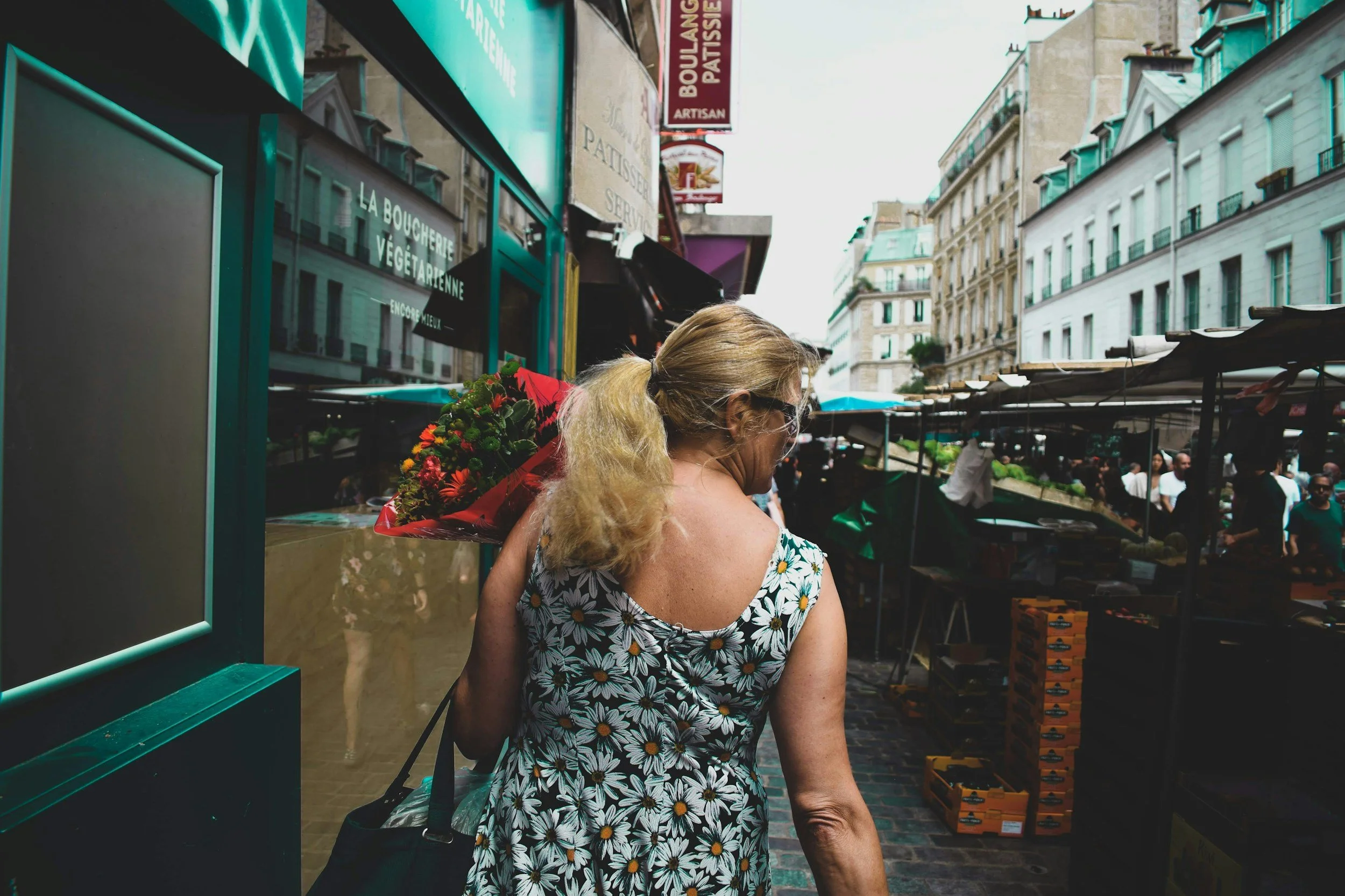
Leaving early enough without making it stressful
You don’t need the first train of the day for this to work. A departure between 8:45 and 9:20 usually lands you at the market at the right time, especially for Versailles, Saint-Germain-en-Laye, or Fontainebleau. You arrive when everything is open but before the busiest stretch around late morning.
It helps to check one specific train the night before rather than scrolling options in the station. At Gare Saint-Lazare and Gare de Lyon, platforms are often announced 10–15 minutes before departure, and people start moving quickly once it appears. If you already know the train time, you can go straight to the right area instead of watching the board.
If you’re staying near Châtelet, taking the RER A westbound is usually the easiest start. If you’re closer to the Right Bank, Saint-Lazare saves time compared to crossing the city for another line.
What to bring vs what to buy there
A simple tote or shoulder bag is enough. You’ll see most people carrying the same, often with bread sticking out the top or a small paper bag from a cheese stall.
It’s easier to buy as you go rather than planning in advance. Bread, fruit, cheese, and small things travel well on the train. Anything hot, like roast chicken or prepared dishes, is better eaten there while it’s still warm rather than packed away.
Most stalls take cards now, but not all of them. Smaller vendors, especially for produce or eggs, still prefer cash. Having a few notes avoids needing to skip a stall you would have stopped at otherwise.
Staying for lunch or heading back before midday
If you take a train around 9:00, you’ll usually be walking through the market just before 10:00. That gives you enough time to go through it properly without doubling back.
If you plan to eat, it’s easier to stay until around 11:30 or slightly later. That’s when the food stalls are fully set up, and people start ordering things to eat on the spot rather than just shopping. In Versailles, this happens around Place du Marché Notre-Dame and the surrounding streets, where people stand with oysters or sit down nearby for something simple.
If you’d rather keep it short, you can walk through once and leave before midday. After 12:00, the pace changes and the busiest markets start to feel more crowded, especially in the central areas.
If you’re curious about the non-food side of this, there’s a whole separate culture around brocantes and vide-greniers in France that works very differently from regular markets.
Seasonal differences that actually change the experience
What’s on the stalls changes quite a bit depending on when you go, and you notice it straight away when you walk through. In late spring and early summer, places like Saint-Germain-en-Laye and Versailles are full of strawberries, cherries, bunches of herbs, and lighter things people pick up for the same day. You’ll see more picnic-style shopping, people buying a few things and heading off rather than doing a full shop.
By the time you get into September and October, it shifts. In Fontainebleau and Compiègne, you start seeing mushrooms, apples, pears, and more root vegetables. The food stalls change too, more roast chicken, potatoes, and dishes that feel a bit heavier. People tend to buy more to take home rather than eat straight away.
If you’re planning this later in the year, these autumn markets in Dordogne show how different the same kind of morning can feel once the seasons change.
Rainy mornings and which towns still feel worth it
Rain changes the pace quite a lot, especially in the smaller markets. In Enghien-les-Bains, most of it is outdoors, so if it’s raining, people move through quickly and don’t stay long. You can still go, but it feels more like a quick stop than a slow morning.
Versailles is much easier in bad weather because of the covered halls. You can spend most of your time inside, then step out to the outdoor stalls if the rain eases. Saint-Germain-en-Laye works as well since everything is close together and you’re not walking long distances between sections.
Chartres is a bit trickier in the rain. The streets are narrower, and once it gets busy, it can feel tight, especially near Place Billard where most people gather.
Winter markets near Paris that are still active
Most of these markets run all year, but they feel slightly smaller in winter. Some of the outer stalls don’t show up, especially the ones selling flowers or more seasonal produce. These winter markets in northern France that locals actually use give a better idea of what it looks like outside peak season.
Versailles and Saint-Germain-en-Laye stay the most consistent because of the covered parts. In Fontainebleau and Compiègne, the market is still there, just more focused on things like cheese, bread, eggs, and preserved products rather than fresh fruit.
People don’t stay as long either. You’ll see more people walking through, picking up what they need, and leaving rather than stopping for food or sitting outside afterwards.
Small details that make these trips smoother
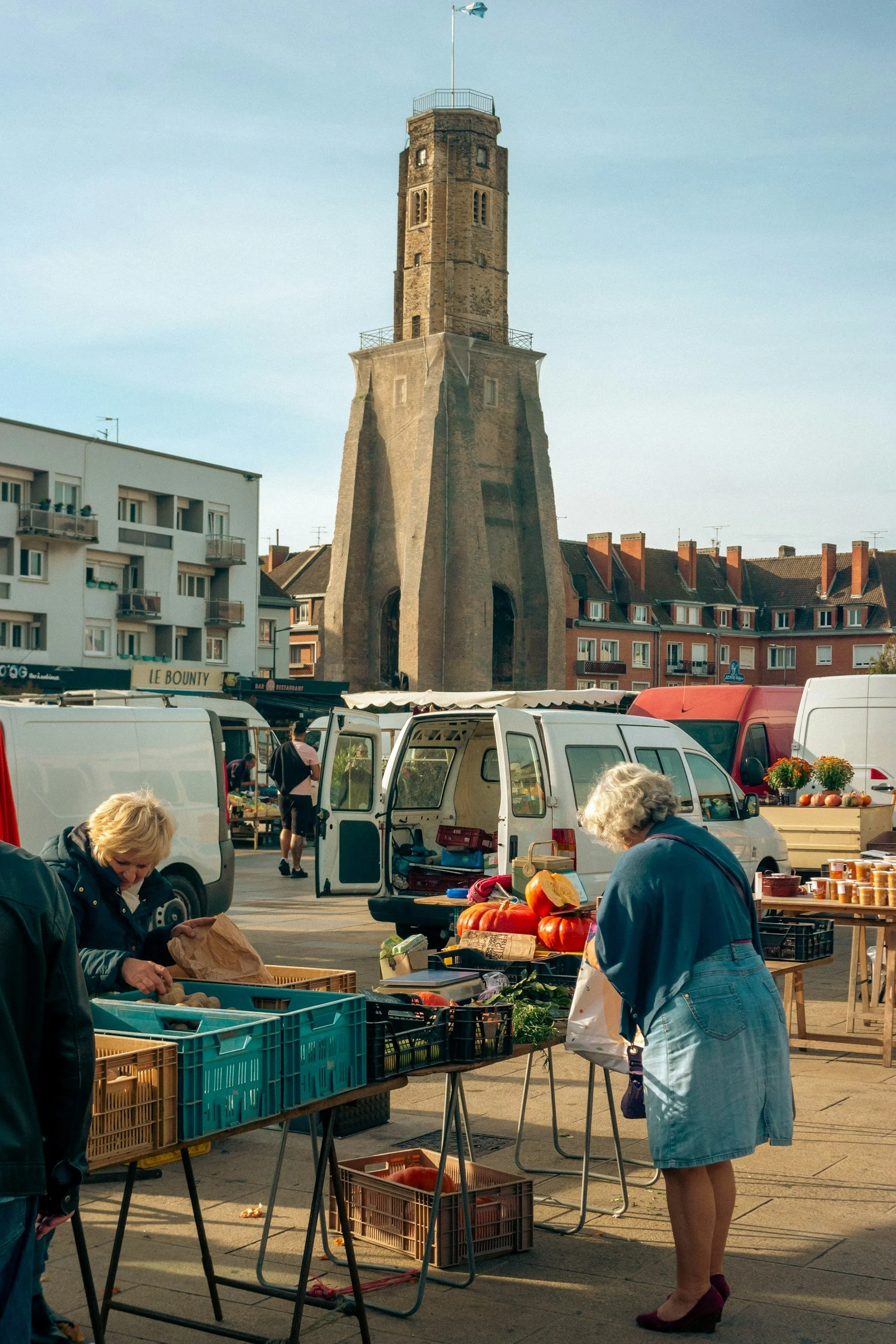
Buying things you can realistically carry on the train
It’s easy to pick up more than you planned, especially in places like Versailles where the stalls are close together and you keep adding small things along the way. A bag of fruit, a piece of cheese, a loaf of bread, and suddenly your tote is full.
A simple tote works, but it helps to keep it light. Bread and cheese are easy to carry, but heavier things like bottles, jars, or multiple produce bags add up quickly, especially if you end up standing on the train back to Paris.
If you’re unsure, it’s usually better to buy one or two things you actually want rather than carrying a full bag for the rest of the morning.
And if you ever decide not to rush back to Paris the same day, these family-run guesthouses in rural France are the kind of places people end up extending their stay for.
You can also look at cozy stays in Champagne if you want something within a similar distance but with a slightly different setting.
Taking breaks instead of rushing through
Most markets here aren’t designed to be done in one loop. In Saint-Germain-en-Laye, for example, it’s easy to walk through one side of Place du Marché Neuf, step away towards Rue de Paris for a coffee, and then come back in from another street.
The same in Compiègne, where the market stretches across several streets. You can walk part of it, stop somewhere along Rue Saint-Corneille, and then continue without needing to retrace your steps.
Stopping for 15–20 minutes somewhere nearby makes a difference. You’re not trying to take everything in at once, and you notice more when you go back in.
Keeping your return flexible
It’s easier not to lock in a specific return train too early. Some mornings you’ll move through quickly and feel done after an hour. Other times, especially in places like Fontainebleau, you might end up walking a bit further or sitting down longer than planned.
Most of these routes run regularly, so you can check the next train when you’re ready. At stations like Versailles Rive Droite or Fontainebleau-Avon, there’s usually a departure every 20–30 minutes, sometimes more often.
Not having to leave at a fixed time changes the feel of the morning quite a lot. You’re not watching the clock while you’re still walking through the market.
What to know before visiting markets near Paris
Which markets near Paris are easiest to reach by train?
The easiest ones are Saint-Germain-en-Laye and Enghien-les-Bains. Both are direct, short journeys and you don’t need to think much about planning. Saint-Germain-en-Laye is about 25 minutes on the RER A, and Enghien-les-Bains is around 15 minutes from Gare du Nord. You step off the train and walk straight into town without needing directions.
Are there good markets near Paris open on Sundays?
Yes, and it makes a difference which ones you choose. Versailles Notre-Dame is one of the most reliable Sunday markets, and Saint-Germain-en-Laye also runs on Sundays. Fontainebleau has a Sunday market as well, but it’s a bit more spread out, so it helps to know roughly where you’re going once you arrive.
How far are these markets from central Paris?
Most of them are closer than people expect. Enghien-les-Bains is about 15 minutes, Saint-Germain-en-Laye around 25 minutes, and Versailles usually 35–40 minutes. Fontainebleau and Compiègne take closer to an hour, and Chartres is just over an hour from Montparnasse.
What time should you arrive at a market near Paris?
Arriving around 9:30 works well in most places. Everything is open by then, but it’s not too crowded yet. If you arrive after 11:30, you’ll notice some stalls starting to pack up, especially the smaller ones or the popular food stalls.
Are these markets worth visiting if you only have half a day?
Yes, especially the closer ones. Enghien-les-Bains, Saint-Germain-en-Laye, and even Versailles can easily fit into a half day. You can leave Paris in the morning, walk through the market, sit down for something small to eat, and be back early afternoon without feeling rushed.
Do you need cash at French markets?
Most stalls accept cards, but not all of them. Smaller vendors, especially for produce or eggs, often prefer cash. It’s easier to have a small amount with you so you don’t have to skip something you would have bought otherwise.
Can you bring food back on the train from these markets?
Yes, and many people do. Bread, cheese, and fruit are the easiest things to carry. Anything hot or freshly prepared is better eaten there rather than packed away, especially if you have a short train ride back.
Which market near Paris feels the least crowded?
Compiègne and parts of Fontainebleau tend to feel less crowded than Versailles. The markets are spread out across several streets, so you’re not moving through one tight space with everyone else.