Spring is when I'd visit Monschau every time
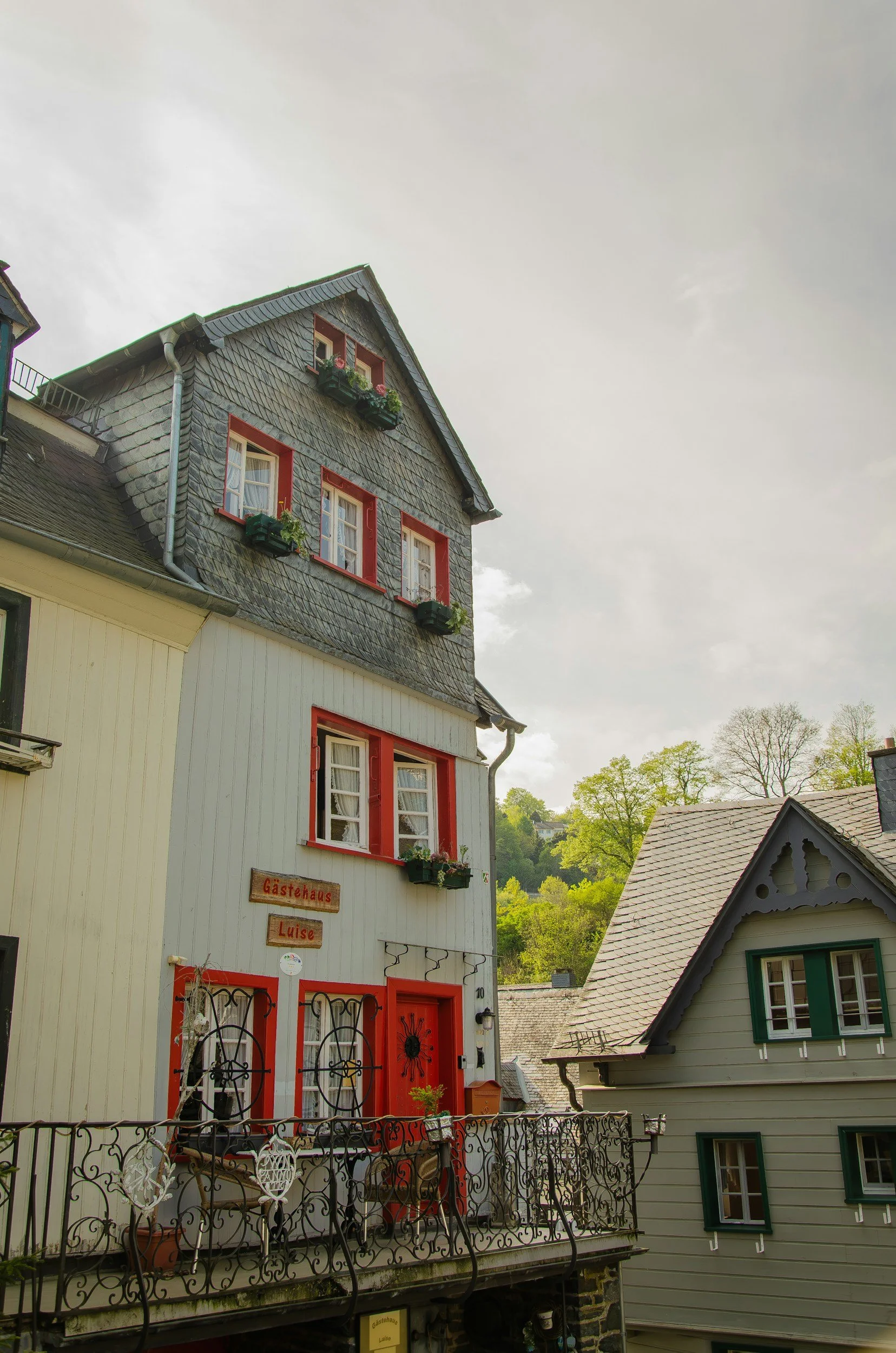
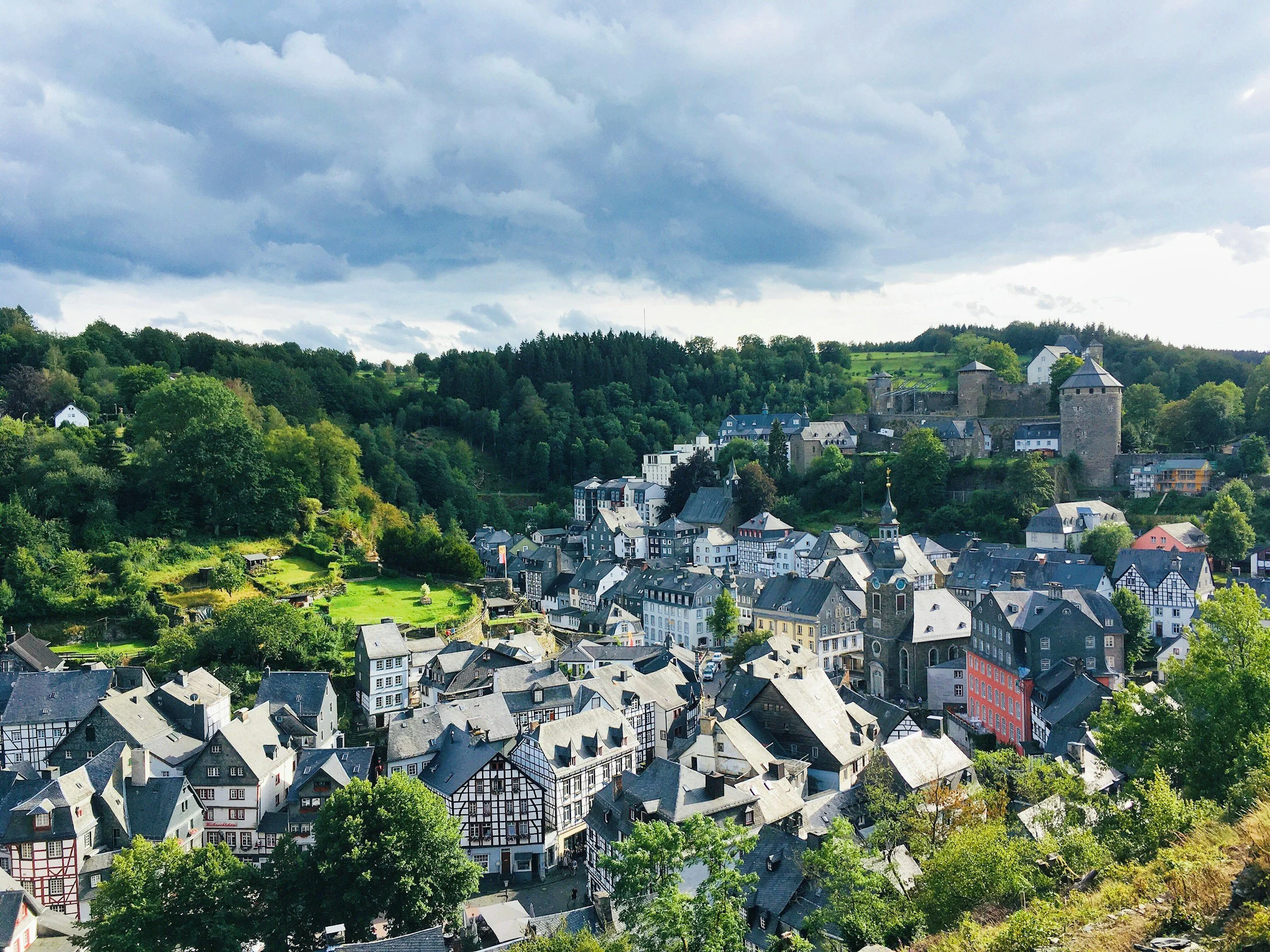
When you arrive in Monschau, the town doesn’t reveal itself gradually. If you’re coming by bus from Aachen, you’ll likely get off at Burgau or Parkhaus/Altstadt. From there, you’re already above the old town, looking down over a cluster of slate roofs and half-timbered houses pressed tightly along the Rur. The walk down into the centre takes only a few minutes, and by the time you reach Markt, you’re already surrounded by the part of Monschau people travel here to see.
That layout changes how you experience the town. From Markt, you can reach almost everything on foot without planning much. Walk along Rurstraße and you’re following the river through the centre. Turn onto Eschbachstraße and you’ll pass small shops and bakeries before reaching quieter lanes that curve behind the main streets. If you want a view over the town, the path up to Monschau Castle starts just behind the old town and takes about ten minutes on foot. It’s short but steep, and once you’re at the top, you’re looking straight down onto the rooftops and the river.
Spring is when this setup works especially well. The cafés along the Rur start putting tables outside again, particularly near Markt and along the riverside, and the walking paths around the town are open without being crowded. The hills around Monschau are green at this time of year, and the paths above the town are dry enough for easy walking without proper hiking gear. You can spend the morning wandering the streets, climb up to the castle for a view, and be back down by lunchtime without feeling like you’ve rushed anything.
This guide focuses on how to actually use Monschau once you’re here. Which streets are worth taking your time on, where to walk for views without long hikes, and how to plan your time so the days feel easy.
If you’re only here for a short stop and wondering what else is nearby, this Eifel guide helps you make the most of the area without overplanning it.

How to get to Monschau
Getting to Monschau is simple once you know the route, but it’s not directly connected by train, so the last part of the journey is always by bus or car.
Most people arrive via Aachen. From Aachen, bus SB66 runs regularly to Monschau, and the journey takes about 1 hour. The bus route itself is part of the experience, as it passes through forested areas of the Eifel region before reaching the town. You’ll usually get off at Parkhaus/Altstadt or Burgau, both of which sit just above the old town. From either stop, it’s a short walk downhill into the centre, and within a few minutes you’re at Markt.
If you’re coming from Cologne, the easiest option is to take a train to Aachen (around 40–60 minutes depending on the service), then continue by bus. The connection is straightforward, but it’s worth checking the bus timetable in advance, as departures are less frequent in the evening.
Driving is the most flexible option if you want to explore beyond the town itself. From Aachen, it’s about a 40-minute drive to Monschau. The roads become narrower and more winding as you get closer, especially through the Eifel hills, but they’re well maintained. Parking is located just outside the old town, mainly at Parkhaus Altstadt or the Burgau area. You can’t drive into the centre itself, so you’ll always park and walk the final stretch.
If you’re arriving by car from Belgium or the Netherlands, Monschau is also an easy cross-border stop, with similar driving times from places like Liège or Maastricht. The town sits close to the borders, which makes it a practical addition to a wider regional trip.
Once you arrive, you won’t need transport. The old town is compact, and everything is within walking distance. Most of the walking you’ll do here starts directly from the centre or just above it, so there’s no need to plan additional travel once you’ve reached Monschau.
Monschau often gets grouped in with other smaller towns, and this take on fairy tale towns gives you a better sense of how they compare.
Monschau might well be the most underrated town in Germany
Morning walk in the Eifel forest
A good way to start the day in Monschau is to walk out into the forest before the streets fill up. You don’t need to travel anywhere first. From Markt, head down Rurstraße with the Rur on your left, and keep following the road past the last row of houses in Burgau. Within ten minutes, the buildings thin out and the path turns into a wide forest track that leads into the Eifel hills.
This route works well in the morning because the main path is broad and easy to follow, so you can simply keep walking along the river without checking a map. The first stretch stays fairly flat, which makes it manageable even if you’re not looking for a proper hike. If you want a bit more elevation, keep an eye out for the smaller paths that branch off to the right as you move away from town. Those short climbs bring you up above the valley, and you get quick views back over the rooftops of Monschau without committing to a long trail.
Early in the day, the path is noticeably quiet. Before around 9:00, it’s mostly locals walking dogs or people heading out for a short loop before work. Later in the morning, you’ll start to see more visitors, especially near the sections closer to town.
One thing that makes this walk particularly easy to build into your day is how naturally it connects back into the town. After 30–60 minutes, you can turn around at any point and follow the same path back along the river. When you return, you’ll come straight back onto Rurstraße, which means you’re only a few minutes from coffee or breakfast.
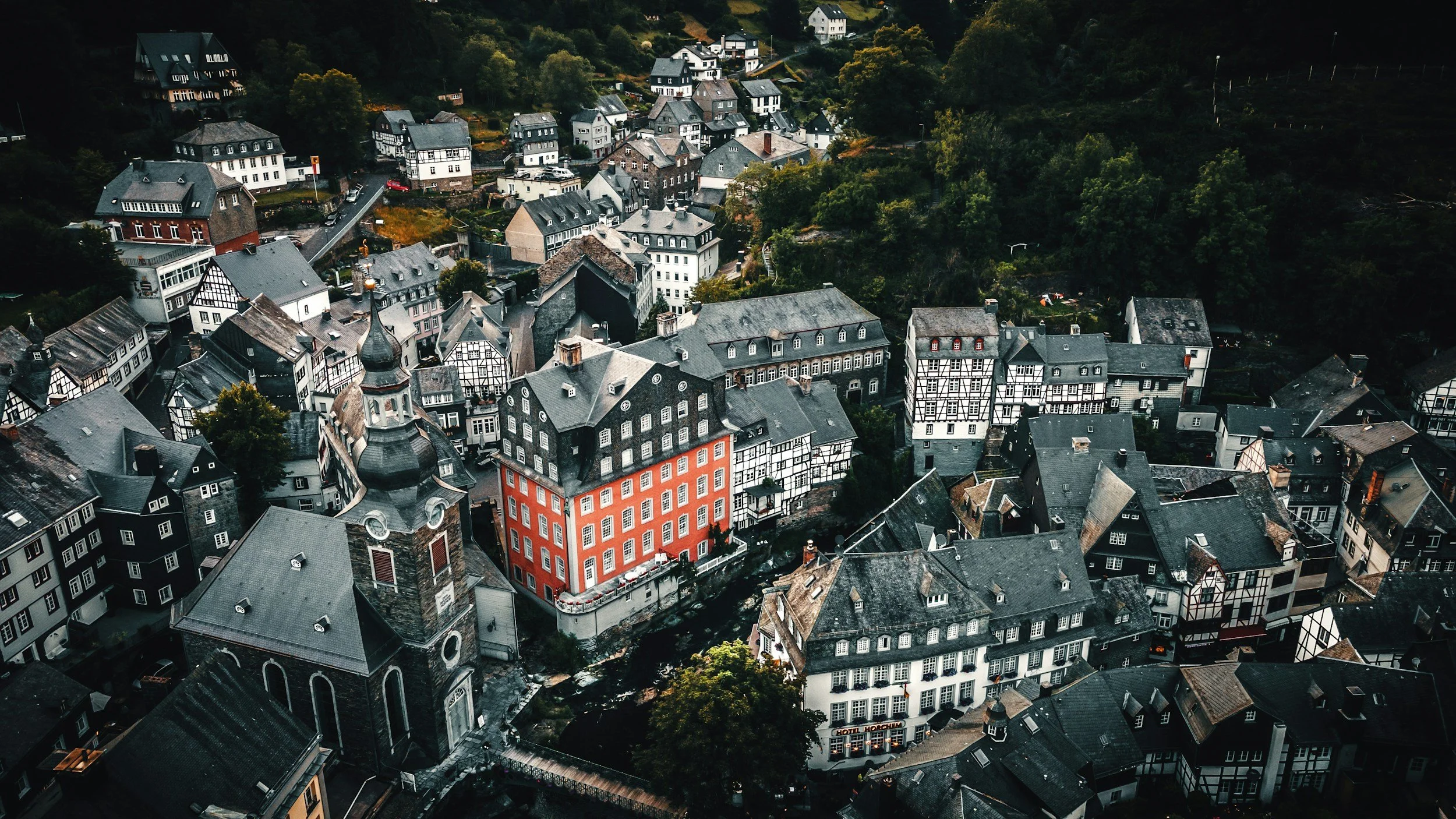
A practical stop after the walk is Café Kaulard, right by the river near Markt. It’s a reliable place for coffee and a simple breakfast, especially if you’re heading out early. If you’re walking a bit later in the morning, Flosdorff Café on Rurstraße is another good option, with pastries and coffee that work well after being out in the forest.
If you’re thinking about staying longer in Germany but want a different atmosphere, these days in Görlitz show a more architectural, cultural side of the country.
Café Kaulard has some of the best cakes
Visit the Saturday craft market in Monschau
If you’re in Monschau on a Saturday, it’s worth timing your morning so you’re around Markt rather than heading straight out of town. The small square between Rurstraße and Stadtstraße is where the local market usually sets up. It isn’t a big market and it doesn’t take over the whole town, but that’s exactly why it fits so naturally into a visit here.
The stalls tend to appear from around 9:00 in the morning and run until about midday or early afternoon. What you’ll find depends on the week, but it’s usually a mix of handmade crafts, small leather goods, woodwork, local honey, preserves, and sometimes baked goods or regional products from the Eifel area. It’s not the kind of market you plan your entire trip around, but it adds a layer to the morning that you don’t get if you only walk the streets.
Because the market sits right on Markt, you’re already surrounded by cafés and small shops. Café Kaulard is right by the river and opens early enough that you can have coffee before or after browsing the stalls. A few steps away, Flosdorff Café on Rurstraße is another reliable stop, especially if you want something more substantial than just coffee.
One practical thing to know is that the square gets busier as the morning goes on, especially in spring when more visitors come for the day. If you want a quieter experience, aim to be there earlier rather than later. The market doesn’t last all day, and by early afternoon most stalls are packing up, so it’s best seen as part of a morning wander rather than a standalone event.
It also fits naturally into the way you’ll likely move through Monschau anyway. From Markt, you can walk straight along the river, head towards the path up to Monschau Castle, or follow Eschbachstraße into the quieter lanes behind the centre.
Walking in Monschau: riverside paths, forest trails and old town lanes
Walking in Monschau works because everything connects without you needing to plan it. The town sits tightly along the Rur, and most routes naturally lead back towards the centre, so you can walk in one direction, turn off when something looks interesting, and still end up back near Markt without checking a map.
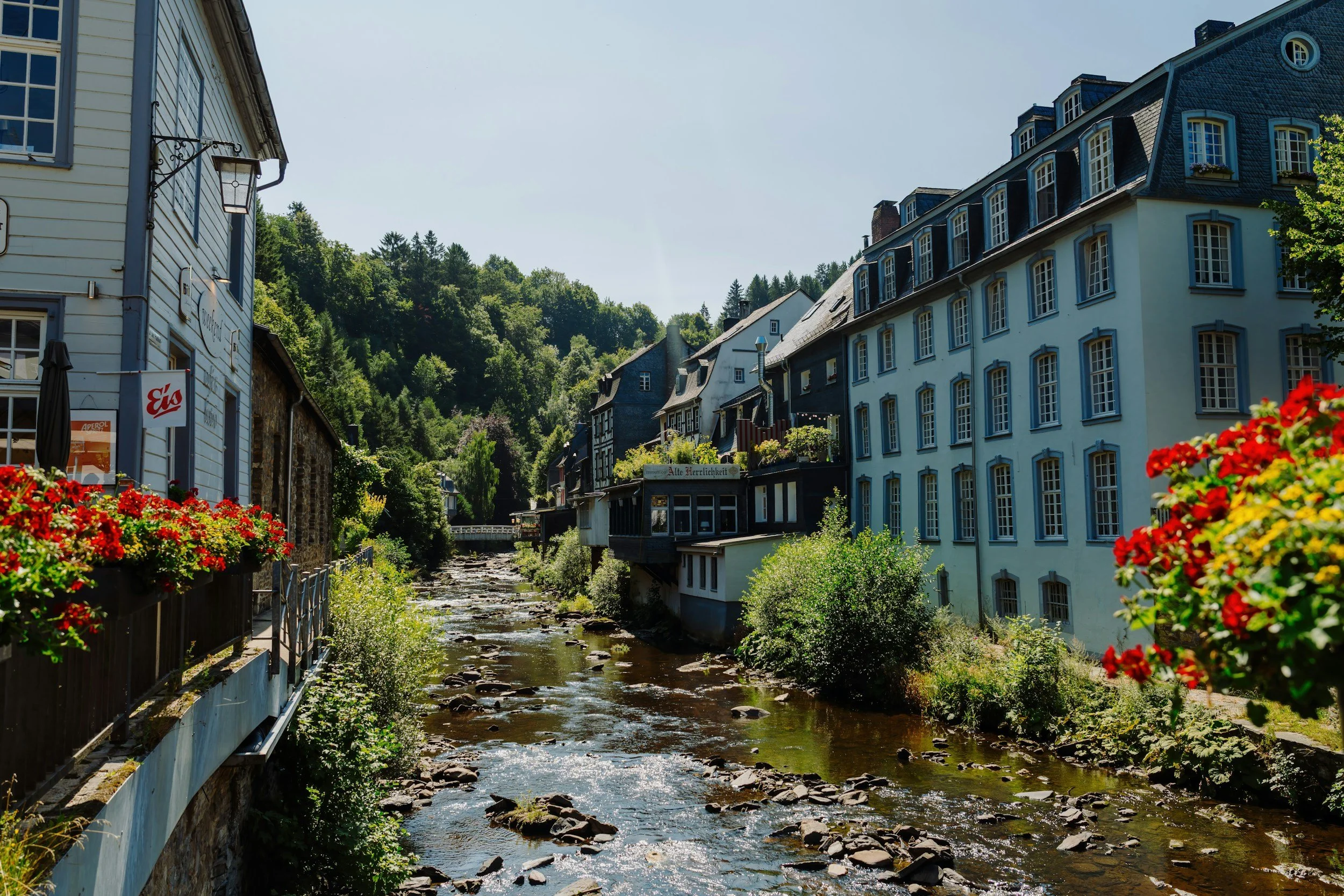
A simple way to start is from Markt. Head down to Rurstraße and follow the river south. Within a few minutes, you’re past the busiest part of town and walking towards Burgau, where things start to open up. The path stays close to the water, and you’ll pass small bridges and stretches where the river runs right beside the road. This is one of the easiest walks to do without thinking about distance. You can walk for 20–30 minutes, turn around, and be back in the centre without it feeling like a set route.
If you want a view without committing to a long hike, the path up to Monschau Castle is the quickest option. The turn-off is just behind the old town, near Stadtstraße. It’s a short climb, around 10 minutes, but it’s steep enough that you feel it. At the top, you’re looking straight down over the rooftops and the narrow bend of the river. It’s one of those places where you don’t need to stay long, but it’s worth doing once.
For something quieter, walk the smaller streets behind the centre. Eschbachstraße is a good one to follow, as it runs slightly away from the main flow and leads into narrower lanes that climb gently up the hillside. Streets like Kirchstraße and the side alleys between them don’t feel like “routes,” but they loop you back towards Markt or down to the river without needing to retrace your steps. This is where the town feels less busy, even in spring.
If you want to extend the walk, continue past Burgau into the Eifel forest. The main path follows the river and stays fairly flat at first, which makes it easy to keep going without needing proper hiking gear. After about 15–20 minutes, you’ll see smaller paths branching off uphill. Those lead to higher sections of the forest where you get wider views back over the valley, but you don’t need to follow them unless you want a longer walk.
What makes Monschau easy is that you don’t have to choose between town and nature. You can walk out of the centre, be in the forest within minutes, then come back the same way and be sitting at a café on Rurstraße shortly after. Most walks here are short, flexible, and easy to adjust depending on how much time you have.
Flowers brighten up your morning stroll
Where to stay in Monschau: timber-framed stays in the old town
Staying in Monschau is less about big hotels and more about choosing where you want to wake up. The old town is small, and most guesthouses sit along the river or in the narrow streets around Markt, Rurstraße, and Stadtstraße. If you stay here, you don’t need to think about transport at all. You step out of the door and you’re already among the half-timbered houses, cafés, and walking routes.
Haus Stehlings
Haus Stehlings is one of the most practical places to stay if you want to be right in the centre without paying high hotel prices. It sits on Stehlings, a narrow street that runs parallel to the Rur, so some rooms look straight over the river. The building is historic, but the rooms are bright and simple rather than old-fashioned. Because it’s right by the water, you’ll hear the river at night, and in the morning you can walk to bakeries on Rurstraße in a couple of minutes. This is a good base if you’re here for walks and want everything close by rather than hotel facilities.
Hotel Horchem
Hotel Horchem sits directly on Markt, in one of the most photographed timber-framed buildings in the old town. The location means you’re right where the town gathers: cafés, small shops, and the Saturday craft stalls set up just outside the door. Rooms facing the square have views over the old town and the river, which makes mornings and evenings particularly easy if you like being able to step out without planning. The restaurant downstairs serves classic regional dishes, and breakfast here is more substantial than what you’ll find in most small guesthouses.
Both of these stays work well if you want to avoid driving during your time in Monschau. From either place, you can reach the path up to Monschau Castle in about ten minutes on foot, and the start of the riverside walk towards Burgau is even closer. If you’re here for a night or two, staying in the old town makes the whole trip simpler, especially if you plan to walk rather than drive.
If you’re coming here more to slow down than move around, these boutique hotels help you figure out where it actually makes sense to stay a bit longer.
Why spring is the best time to visit Monschau
Spring is when Monschau feels easiest to enjoy on foot. From late April onwards, the trees along the Rur start to fill in again, and the narrow streets around Markt, Rurstraße, and Eschbachstraße feel more open and pleasant to walk through. You’re not pushing through crowds, but the town isn’t shut down either, which makes a noticeable difference if you want to spend time outside rather than just passing through.
Walking is also simpler at this time of year. The riverside path from the centre towards Burgau is usually dry and easy underfoot, so you can follow the water without worrying about muddy ground. If you want a view over the town, the short but steep climb up to Monschau Castle is more manageable in cooler spring temperatures than later in the summer. Once you’re at the top, you get a clear view over the slate rooftops and the curve of the river below, which feels different when the trees are just coming into leaf.
Another reason spring works well here is how the town moves through the day. Early mornings are quiet, especially before the first buses arrive from Aachen. You can walk through Brogade and Stadtstraße with only a handful of people around, and cafés along the river begin to open without feeling busy. By late morning, places around Markt and along the water start to fill, but you can usually still find a seat outside without waiting.
Practical details make a difference too. Bus services from Aachen run frequently enough in spring to make day trips straightforward, and most cafés, small shops, and guesthouses have moved back to their regular opening hours after the quieter winter months. That means you don’t have to plan around limited hours in the same way you might earlier in the year.
Overall, spring gives you the combination that works best here: paths that are easy to walk, enough places open to fill a day without planning every stop, and a town that feels active but not crowded.
You might also find yourself browsing a bit while you’re here, and this look at second-hand shops gives you an idea of where that’s actually worth doing.
How to make the most of your time in Monschau
The easiest way to enjoy Monschau is to pay attention to when you do things rather than trying to cover more ground. If you’re staying overnight, go out early. Around 07:30–09:00, the streets are almost empty. You can walk Rurstraße along the Rur, cross the small bridges near Markt, and wander through Brogade and the lanes behind Eschbachstraße without weaving around people. That’s the time to explore the old town itself.
Once the buses start arriving from Aachen, the centre gets noticeably busier. That’s a good time to head out of town. Follow the river south towards Burgau and continue into the Eifel forest, or take the short climb up to Monschau Castle. Both options take you out of the narrow streets and into open paths within minutes.
Keep an eye on opening hours. A lot of cafés around Markt and Rurstraße don’t stay open late, especially outside peak summer. If you want to eat somewhere specific, it’s better to check earlier in the day rather than leaving it until the evening.
Monschau is small enough that you don’t need to commit to a full-day plan. You can do a short loop, come back into town for a break, then head out again later without feeling like you’ve lost time. That’s usually how a day here ends up working.
FAQ: visiting Monschau in spring
How do you get to Monschau from Aachen?
The easiest way to reach Monschau from Aachen is by bus SB66. It runs regularly and takes about one hour. Most visitors get off at Parkhaus/Altstadt or Burgau, both a short downhill walk into the old town. There is no train station in Monschau, so the last part of the journey is always by bus or car.
Is Monschau worth visiting in spring?
Yes, spring is one of the most practical times to visit. The streets around Markt, Rurstraße, and Brogade are easier to walk without heavy crowds, and the paths along the Rur and into the Eifel forest are usually dry and accessible. Most cafés and small shops are open again after winter, but the town hasn’t reached peak summer levels.
How long do you need in Monschau?
One day is enough to walk the old town, visit Monschau Castle, and follow the riverside path towards Burgau. Staying one night gives you access to the quieter hours in the morning and evening, which is when the town feels most relaxed.
Where should you stay in Monschau?
Staying in the old town near Markt, Rurstraße, or Stadtstraße makes everything easier. From here, you can walk to the main sights, cafés, and forest paths without needing transport. Places like Haus Stehlings and Hotel Horchem are both located in this central area.
Some people continue north after this kind of trip, and these North Sea islands give you a quieter coastal version of Germany.
What are the best things to do in Monschau?
The most practical things to do are walking-based. Follow the river along Rurstraße, climb up to Monschau Castle for a view over the town, and walk out towards Burgau into the forest. The small streets behind the centre, like Eschbachstraße and Kirchstraße, are also worth exploring.
If you’re staying a few extra nights and want something completely different in the evening, these dark sky spots are surprisingly easy to reach without a car.
Can you visit Monschau without a car?
Yes. Monschau is easy to visit without a car, especially as a day trip from Aachen. The town itself is compact, and everything is within walking distance once you arrive. Buses connect Monschau with Aachen and nearby areas in the Eifel region.
What is Monschau known for?
Monschau is known for its well-preserved half-timbered houses, narrow streets, and its setting along the Rur river. The town sits within the Eifel region, which makes it a starting point for short forest walks and longer hiking routes.
Is Monschau crowded?
It can be busy in the middle of the day, especially between late morning and mid-afternoon when day visitors arrive. Early mornings and late afternoons are noticeably quieter, particularly in spring.
Join our newsletterfor hand-picked slow travel guides, stunning European getaways, and cozy recommendations every month.