
These German islands are much easier to enjoy without a car
When you step off the ferry, the shift is practical before it’s scenic. There are no cars waiting at the harbour and no taxis lined up. People walk straight off with small suitcases, or they head to the row of rental bikes near the quay. On Juist, you arrive at the harbour and follow the same road everyone else uses, Strandstraße, which runs past the bike rentals, the bakery, and the small supermarket. Everything you need sits along that same stretch, and you can reach your accommodation on foot within ten minutes if you’re staying in the main village.
Getting here is already different from most places in Germany. The ferry from Norddeich doesn’t run on a fixed hourly schedule because the channel is too shallow at low tide. Some days there’s only one crossing, and the timing shifts with the tide table. That affects how you plan your trip from the start, and it’s part of why the islands stay quieter than mainland destinations.
These car-free islands sit along the chain of the East Frisian Islands off the coast of Lower Saxony. The three most useful options if you want a calm spring trip are Juist, Spiekeroog and Baltrum. Juist is long and flat with long beach walks stretching west from the village. Spiekeroog has no private vehicles at all and even deliveries are done by handcart. Baltrum is smaller and easier to navigate on foot in an afternoon, with a simple path linking the harbour to the dunes and the main cluster of cafés.
Spring is when the islands feel easiest to navigate. The main paths like Deichweg on Juist or the route out toward Westend on Spiekeroog are dry and open by April, and the island cafés start to reopen with limited hours, often mid-morning to late afternoon. Dinner service is shorter outside the summer months, usually between six and eight in the evening, which means you plan your day around ferry times, walks, and meal windows. It’s a simple rhythm, but one that works especially well if you’re coming for long walks, quiet beaches, and a slower few days without needing a car.
If you’re coming up from western Germany, it’s worth breaking the journey somewhere that doesn’t feel like a stopover, and Monschau is one of the few places where you naturally slow down before continuing north.
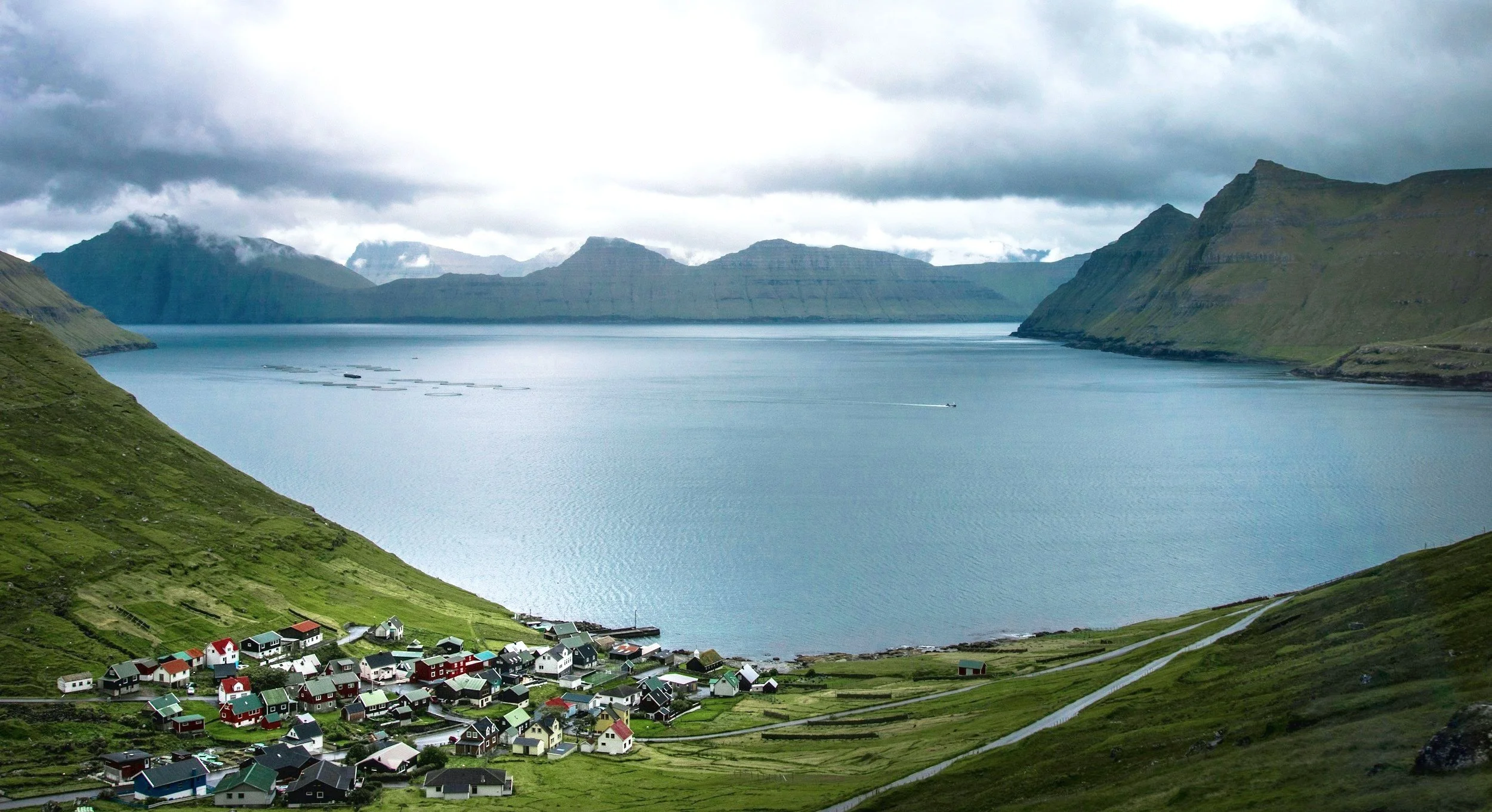
What it’s actually like to travel solo on Germany’s car-free islands
Travelling alone on these islands doesn’t feel awkward or forced, because daily life here is built around doing simple things on your own anyway. On Juist, the moment you leave the harbour you’re already on the main village stretch, Strandstraße. You don’t have to orient yourself or work out bus routes. You pass the bike rentals almost immediately, then the bakery that opens early for fresh rolls, and the small EDEKA Markt Juist where people pick up groceries before heading to their apartments. Even if you’re staying a bit outside the centre, you’ll still be within a short walk of everything, so you’re never navigating unfamiliar transport systems or trying to figure out how to get back at night.
Days naturally revolve around walking. On Juist, one of the most straightforward solo routes is the stretch out to the Billriff viewpoint at the western end of the island. You follow the sandy path through the dunes, with the North Sea on one side and the Wadden Sea on the other. It takes roughly two hours each way, and you can walk the whole thing without worrying about road crossings or traffic. If you want something shorter, the loop that circles the village, past the Kurplatz, the small harbour, and the dunes, takes about forty minutes and is easy to do at any time of day.
On Spiekeroog, walking east towards Ostend feels even quieter. The path runs through dunes and open salt marsh, and in spring it’s common to walk for long stretches without seeing anyone else. The village itself sits around Noorderloog, where you’ll find a few cafés, a small shop, and the bakery. There are no cars, and even delivery carts are small and slow, which makes moving around on foot feel completely normal.
Meals are simple and practical when you’re on your own. Most cafés open mid-morning, often around ten, and stay open through the afternoon. On Juist, you’ll see plenty of people sitting alone with a book or notebook in the cafés along Strandstraße, so you don’t stand out. Dinner is typically served between six and eight in the evening, and places can fill quickly even outside peak season, so it’s worth booking a table in the afternoon rather than waiting until you’re hungry.
The ferry schedule sets the rhythm of your stay. Crossings are tied to the tide, so departure times change daily, and on some days there’s only one boat. That removes the pressure to pack in too much. You plan around the ferry, not the other way around. Once you’re on the island, everything happens within a small radius, which makes travelling alone here feel uncomplicated and genuinely restful without needing to think too far ahead.
Choosing the right German island
The islands off the coast of Lower Saxony might sit in the same stretch of sea, but they feel noticeably different once you arrive. They’re all part of the East Frisian Islands, but the way you get there, how the villages are laid out, and what a normal day looks like on each island changes the experience quite a bit. Choosing the right one matters, especially if you’re travelling alone or planning to walk a lot.
If you’re drawn to longer walks and open landscapes, Juist is the most practical choice. The ferry arrives at the harbour on the south side of the island, and from there you’re already on Strandstraße, the main street that runs through the entire village. You’ll pass bike rentals right by the harbour, then small guesthouses, cafés, and the local supermarket within a few minutes’ walk. The island itself stretches about 17 kilometres from end to end, which gives you real distance to cover. A popular route runs west toward Billriff, where the beach widens and the crowds thin out even further. On a clear day, you can walk for hours with the North Sea on one side and the Wadden Sea on the other, with nothing but sand, dunes, and occasional benches along the way. Juist also has the most options for cafés and places to eat, especially around Kurplatz and along Strandpromenade, which makes it easier to find somewhere open in spring.
Spiekeroog is a better fit if you want something smaller and more compact. You arrive by ferry into a small harbour on the south side of the island, and the village sits just a short walk inland. The centre is focused around Noorderloog, where you’ll find the main bakery, a handful of cafés, and small shops. There are no private cars here at all, not even for deliveries, so goods are moved by handcart or small electric vehicles. The main walking route heads east out of the village toward Ostend, passing through dunes and open salt marsh. It’s flat, easy to follow, and feels genuinely quiet in spring, especially on weekdays. The island also has a well-used walking path behind the dunes that locals use for daily walks, which makes it easy to settle into a simple routine.
If you want the smallest scale and the least amount of planning, Baltrum is the easiest to manage. The harbour sits on the south side, and a single main path leads through the village to the beach. Most accommodation, cafés, and small shops sit close to that central route, so you’re never far from anything. You can walk the length of the island in under an hour, which makes it ideal if you prefer short, unstructured walks rather than long hikes. The beach on the north side is wide and open, and even in spring you’ll often find long stretches without many people around.
Each island suits a slightly different kind of trip. Juist works best if you want long walking days and a bit more choice for eating out. Spiekeroog fits if you prefer a compact village and quieter paths. Baltrum makes sense if you want everything within a short walk and don’t want to think much about logistics once you arrive.
Spiekeroog: Germany’s quietest island
Spiekeroog suits you if you want an island that’s genuinely easy to manage on your own, but still has enough going on that you don’t feel stuck with nothing to do. The ferry drops you at the small harbour on the south side, and from there it’s an easy, flat ten-minute walk into the village. You don’t need to pre-book transfers or worry about luggage; people just roll their bags along the path or wait for the electric baggage carts that shuttle between the harbour and the guesthouses.
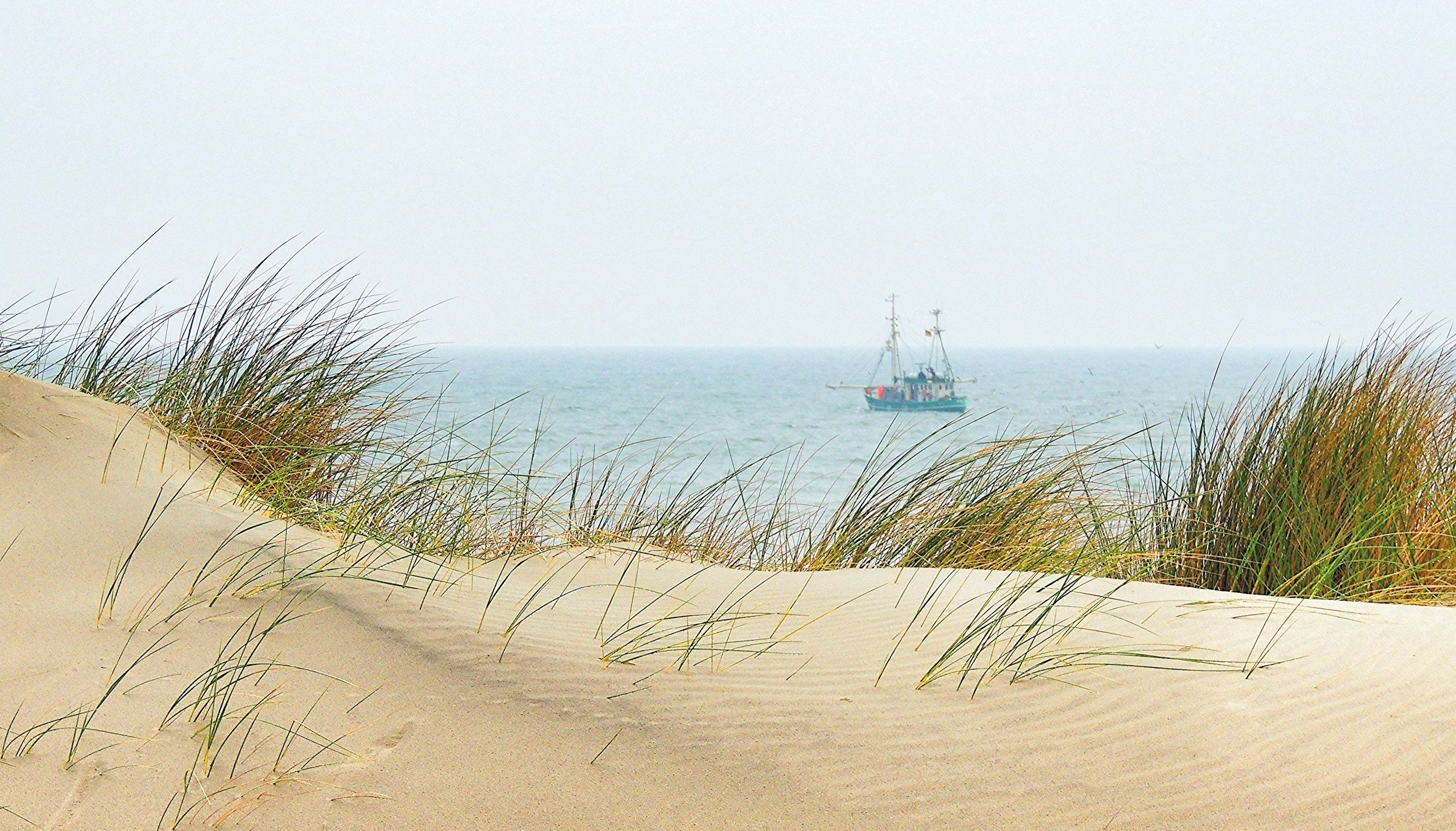
The centre of the village sits along Noorderloog, the main street where most of the island’s everyday life happens. This is where you’ll find the island bakery (usually open early for fresh rolls and coffee), a small grocery store, a pharmacy, and a handful of cafés and casual restaurants. If you’re staying here, you’ll pass these spots multiple times a day without trying. It’s the kind of place where you can wake up, walk five minutes for breakfast, then head straight to the dunes without planning a route.
Walking is what people come here for. The most popular path heads east from the village through low dunes and open salt marsh toward Ostend, the eastern tip of the island. The path is flat, clearly marked, and doesn’t require a map. It takes around 60–90 minutes one way at a steady pace. On the way, you’ll pass a few benches and dune crossings that lead directly down to the beach. In spring, you’ll often walk long stretches without passing more than a handful of people, especially mid-week.
The beach itself runs along the entire north side of the island and is accessed through short paths cutting through the dunes from the village. The sand is wide and open, and even on sunny days in April or May it rarely feels busy. Most people stick to the area near the main beach entrance; if you keep walking ten or fifteen minutes east or west, you’ll usually have long stretches of sand mostly to yourself.
Spiekeroog isn’t a place where you bounce between lots of attractions. The rhythm here is simple: walk, sit, eat, repeat. Cafés generally open around 10:00 and stay open until mid-afternoon. If you want coffee early, you’ll usually head to the bakery on Noorderloog. Dinner service typically starts around 18:00, and outside summer, many places close by 21:00. Restaurants often take a weekly rest day in spring, so it’s worth checking opening days when you arrive rather than assuming everything runs daily.
Accommodation is mostly small guesthouses and family-run hotels, many of them clustered around Noorderloog and the lanes running off it. Staying in the centre means you’re within a five-minute walk of the bakery, shops, and the main beach access. If you stay slightly further out toward the dunes, you’ll still be no more than a ten-minute walk from the village.
If you want somewhere calm without being isolated, where you can walk straight from your room into open dunes or sit in a café without booking ahead, Spiekeroog is one of the most practical choices among the East Frisian islands.
Langeoog: quiet island life with sunning views
Langeoog works well if you want a car-free island but still like having more cafés, small shops, and a bit of structure to your day. It’s not as small as Baltrum, and it doesn’t feel as spread-out as Juist, which makes it a comfortable middle ground if you’re travelling alone.
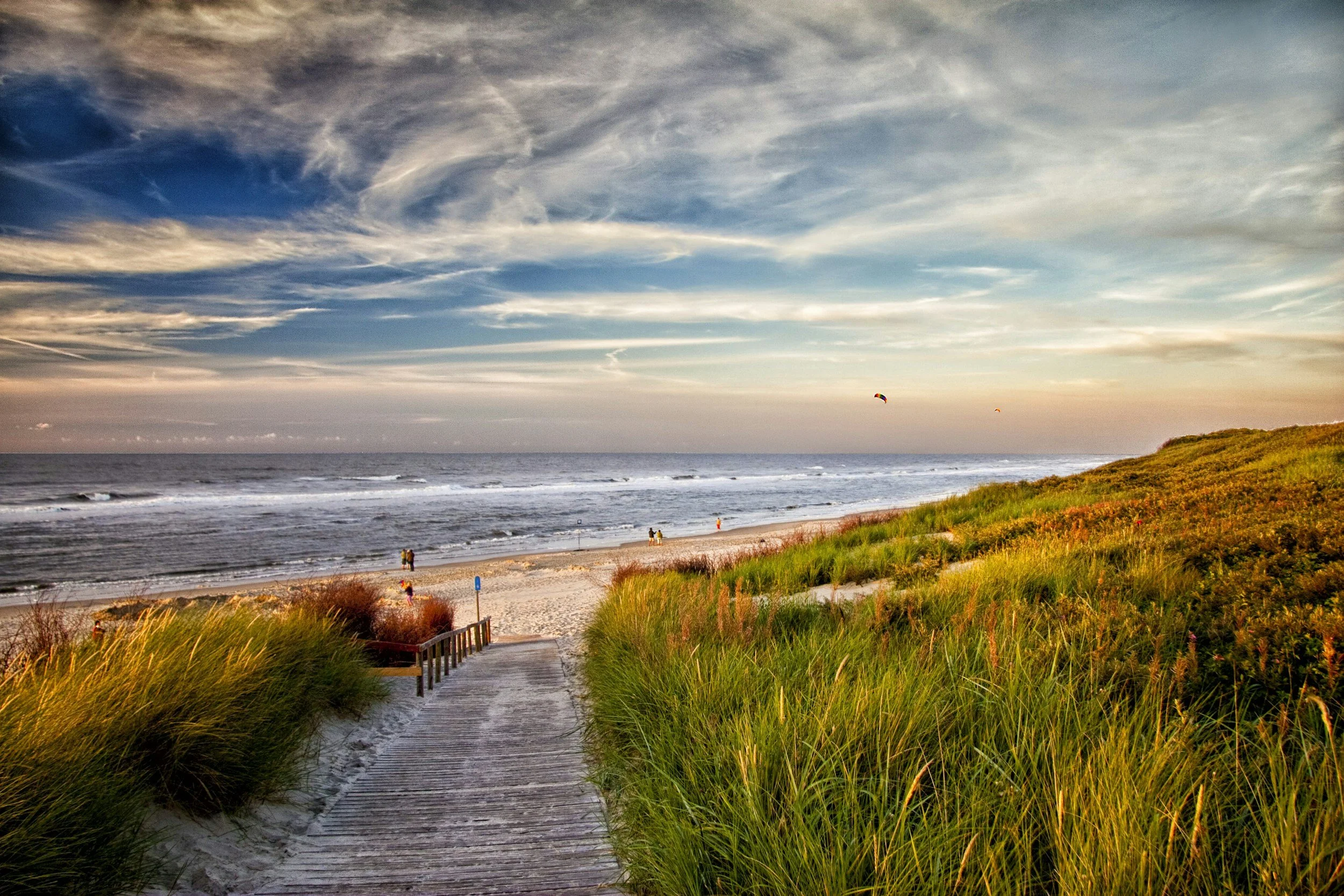
Getting here is slightly different from the other islands. The ferry from Bensersiel docks at Langeoog’s harbour on the south side of the island. From there, a small island train takes you directly into the village in about five minutes. It’s not just for tourists; locals use it for daily errands and deliveries, and it’s the easiest way to reach the centre without a long walk carrying luggage. If you prefer to walk, the distance from the harbour to the village is around 2.5 kilometres on a flat, paved path that runs past salt marsh and grazing sheep.
The main village is centred around Barkhausenstraße, a long pedestrian street lined with cafés, small restaurants, bakeries, and a few independent shops. You’ll find the island’s main supermarket here too, which makes it easy to pick up groceries or picnic supplies without needing to plan ahead. Most accommodation sits within a short walk of this street, and you can get from one end of the village to the other in about fifteen minutes on foot.
Walking is straightforward here, and you don’t need to plan complex routes. From the village, it’s about a ten-minute walk north to the beach via clearly marked paths through the dunes. Once you’re on the beach, you can walk for kilometres in either direction. Heading east takes you toward Melkhörn, the highest natural elevation on the island, which offers a wide view across the dunes and out toward the Wadden Sea. The route west along the beach is quieter, with fewer access points and longer uninterrupted stretches of sand.
In spring, the island feels calm without being empty. Most cafés and bakeries open from mid-morning, often around 9:30 or 10:00, and stay open through the afternoon. Dinner usually starts around 18:00, and many restaurants close by 21:00 outside the main season. Because the village is compact, it’s easy to drop into a café for a break without planning ahead, and eating alone doesn’t feel unusual here.
Langeoog suits travellers who want a balance between quiet and convenience. You can walk everywhere, there are enough places to eat and stop for coffee, and the train from the harbour makes arrival and departure simple, especially if you’re carrying luggage or arriving later in the day.
Juist: Germany’s island of stillness (literally)
Juist is the island you pick when you want space to move without running into people every few minutes. The shape of the island is long and thin, which naturally spreads everyone out. Getting here already sets the tone for how things work. The ferry from Norddeich doesn’t run on a simple timetable because the harbour can only be reached when the tide is high enough. Some days there’s just one crossing. That means you plan your arrival around the sea, not your own schedule, which already slows things down in a practical way.
When you step off the ferry, you walk straight along Hafenstraße toward the village. You’ll pass the bike rentals almost immediately, then a couple of cafés and the small grocery store before reaching Strandstraße, the main street. Strandstraße is where most things happen: bakeries opening early for fresh Brötchen, a handful of restaurants, the local EDEKA supermarket, and small shops selling practical things rather than souvenirs. Most accommodation is within a few minutes’ walk of this street, so you don’t spend time getting from A to B. If you’re carrying luggage, you’ll see small electric carts moving bags between the harbour and guesthouses, but most people simply walk.
Juist is made for walking, and that’s what most people come here to do. One of the most straightforward routes is the path west toward Billriff at the far end of the island. It’s a flat, sandy route that runs between the dunes and the beach, and it takes about two hours each way at an easy pace. Along the way, you’ll pass the Hammersee area, a small freshwater lake surrounded by low vegetation and wooden benches. In spring, this stretch is quiet, with plenty of long sections where you might not pass anyone for twenty minutes or more.
If you don’t feel like committing to a long walk, you can follow the dune paths just north of the village or walk east toward the Otto-Leege-Pfad nature trail, which has boardwalk sections and small platforms where you can stop and look out across the salt marsh. The beach itself runs the entire length of the island, and access points are marked from the village, so you can step onto the sand within minutes.
Daily life here stays simple. Most cafés open mid-morning, and you’ll often see people sitting outside along Strandstraße with a coffee or cake, especially when the weather clears. Dinner usually starts around 18:00, and in spring many restaurants close by 21:00. It’s worth checking opening days when you arrive, as some places take a day off during the week outside the main season. Because everything is clustered in the village, it’s easy to eat out without planning too far ahead.
Juist works particularly well if you’re travelling alone. You don’t need to figure out transport, you don’t need to plan complicated routes, and you don’t need to worry about getting back late in the evening. The long, flat landscape makes it easy to spend full days walking, and the compact village means you always have somewhere to stop for a meal or a coffee without needing a plan.
How to get to the East Frisian Islands
Getting to the car-free islands along the East Frisian Islands is straightforward, but the journey works a little differently compared to travelling on the mainland. Because these islands sit in shallow tidal waters off the coast of Lower Saxony, ferry times change daily and depend on the tide rather than a fixed schedule. It’s not something you book weeks ahead and forget about; you check the timetable close to your travel day.
If you’re heading to Juist, the ferry leaves from Norddeich. The port is directly next to the train station, so you can arrive by train and walk straight to the ferry terminal without needing a taxi. The crossing takes around 90 minutes, and because the water level needs to be high enough for the ship to pass the sandbanks, there’s often just one departure per day. It’s common to see people waiting by the harbour with luggage, and there’s a small terminal building with ticket desks and a café if you arrive early.
For Spiekeroog, you travel via the port at Neuharlingersiel. The harbour here is compact, with parking available on the mainland if you arrive by car. Most people come by train to nearby towns and then take a bus or taxi the final stretch to the port. The ferry crossing takes just under an hour. Once you arrive on Spiekeroog, you walk directly into the village from the pier, which takes around ten minutes on foot.
If you’re going to Baltrum, the departure point is Neßmersiel. The crossing is shorter here, usually around 30 minutes, but it’s still dependent on the tide. The harbour on Baltrum is small, and from there it’s a simple walk into the village along a single paved route that leads straight from the pier into the centre.
Because ferry times shift with the tide, it’s worth checking schedules a few days in advance rather than relying on assumptions. On some days, ferries run in the morning; on others, they depart in the afternoon. This also affects your return journey, so it’s practical to plan your final day around the ferry rather than booking tight train connections. Once you’re on the island, you don’t need transport at all, which makes the initial planning worthwhile.
Tip: Use the Deutsche Bahn app to plan the entire trip in one go - train and ferry included.
Where to stay on the islands (and why it matters)
Where you stay on these islands changes how your days unfold, especially if you’re travelling alone or don’t want to spend time figuring out transport. Even though the distances are small, the location of your guesthouse can make the difference between stepping straight out for coffee or walking an extra 15–20 minutes each way.
On Juist, most places to stay are clustered around Strandstraße and the surrounding side streets near Kurplatz. If you stay here, you’re a few minutes from the bakery, the small supermarket, and the cafés that open in the morning. This is also the most practical area if you’re arriving with luggage, since the walk from the harbour is short and flat. If you choose accommodation further west, closer to the open dune paths, you’ll get more quiet and direct access to long walks, but it also means planning ahead for meals and groceries because the walk back to the centre adds up over a few days.
On Spiekeroog, staying near Noorderloog is the most convenient option. This is where the bakery, cafés, and small shops are located, and it’s where most people pass through during the day. Guesthouses here are mostly family-run pensions rather than large hotels, and rooms tend to be simple but comfortable. If you stay closer to the dunes on the edge of the village, you get quicker access to the walking paths and the beach, but you’ll have a slightly longer walk back for meals or supplies, especially in the evenings when things close earlier.
On Baltrum, the scale of the island means location matters less, but there are still small differences. Most accommodation sits along the main path that runs from the harbour through the village toward the beach. Staying somewhere between the harbour and the main beach access keeps everything within a short walk, whether that’s the bakery in the morning or a restaurant in the evening. Because the island is small, even staying slightly outside the central stretch doesn’t add much distance, but it can mean quieter surroundings.
Across all three islands, booking something within easy walking distance of the village centre makes everyday logistics simpler. With limited opening hours in spring and no cars to fall back on, being able to reach cafés, shops, and the harbour on foot makes the trip feel smoother and less dependent on timing or planning.
If you’re splitting your trip between coast and inland, it helps to choose places where you can properly switch off, and these stays are a solid starting point.
On the islands, especially outside peak months, you’ll come across small flea markets and secondhand spots that aren’t really marked anywhere, and having a sense of what’s worth stopping for makes a difference when you’re deciding on the spot.
Before you go
What catches most people off guard isn’t just the quiet, it’s how the practical details shape your days once you’re actually here. On these islands, everyday things run on a different timetable. Bakeries on Juist open early along Strandstraße, and by mid-morning the fresh bread is already gone. Cafés on Spiekeroog tend to cluster around Noorderloog, but in spring many of them close mid-afternoon, so if you like a late coffee you’ll need to plan for it. On Baltrum, the pace is even slower, and restaurants often take one or two days off each week outside the summer season. It helps to check opening times locally instead of assuming places are open every day.
Weekends also feel different. Day visitors come across from the mainland on the morning ferries, especially on sunny days in April and May. You notice it most around the main access points: the harbour area on Juist, the village centre near Noorderloog on Spiekeroog, and the main path leading from the harbour on Baltrum. By late afternoon, many of those visitors leave on the return ferries, and the islands quiet down again. If you’re staying overnight, early mornings and evenings are when the paths and beaches are at their calmest.
The weather is another thing to keep in mind. These islands are flat and open, with little shelter once you leave the villages. A calm morning can turn windy quickly, especially along the dune paths and the longer routes toward Billriff on Juist or the eastern end of Spiekeroog. It’s normal to see people carrying light jackets or windbreakers even on bright days. If you’re planning to walk for a couple of hours, it’s worth doing the same.
Finally, it helps to arrive with a loose plan rather than a packed schedule. Check the ferry times before you book anything else, because they shape your arrival and departure more than anything else. Book somewhere within walking distance of the village centre, and once you’re here, let the days settle into a simple pattern: a morning walk, a coffee stop, time on the beach or in the dunes, and an early dinner. It’s a simple way to spend a few days, and it’s great if you’re travelling alone or just want a quieter stretch of time by the sea.
If you’re unsure whether you actually need the coast for this kind of trip, or if a well-preserved town would give you the same feeling, it’s worth looking at Görlitz as a reference point, because everything sits close together and the days tend to structure themselves.
Want more cozy travel guides like this?
Sign up for the Trippers Terminal newsletter (solo-friendly, slow-living travel inspiration for people who don’t follow the crowds!)
FAQ about Germany’s car-free North Sea islands
Which German islands don’t allow cars?
Several of the islands in the East Frisian Islands chain are car-free. The most practical options for visitors are Juist, Spiekeroog and Baltrum. Private cars aren’t allowed on these islands, so you get around by walking, cycling or using small electric carts for luggage.
How do you get to Juist, Spiekeroog or Baltrum without a car?
Each island has its own ferry port on the mainland. Juist is reached from Norddeich, Spiekeroog from Neuharlingersiel and Baltrum from Neßmersiel. Trains run to nearby towns, and from there you continue by bus or taxi to the harbour. Ferries run according to the tide, so departure times vary daily and it’s important to check schedules before you travel.
Is it possible to walk everywhere on the islands?
Yes. The villages on Juist, Spiekeroog and Baltrum are small and walkable. On Juist, most cafés, guesthouses and shops sit along Strandstraße. On Spiekeroog, the centre is around Noorderloog, and on Baltrum everything lies along the main path between the harbour and the beach. Walking from the harbour to your accommodation rarely takes more than 10–15 minutes.
What is the best time to visit these islands in spring?
Late March through May works well. Cafés and bakeries begin to open regularly again after winter, walking paths through the dunes are clear, and ferry services run more consistently than in deep winter. It’s also before the peak summer season, so paths and beaches are quieter.
Are there cafés and restaurants open in spring?
Yes, but with shorter hours than in summer. On Juist, many places along Strandstraße open mid-morning and close by late afternoon, with dinner service starting around 18:00. On Spiekeroog, cafés around Noorderloog usually open mid-morning, while on Baltrum many restaurants open for dinner but may take a rest day during the week outside the peak season. Checking opening times locally is useful.
Do I need a bike on the islands?
Not necessarily. On Juist, a bike can be useful if you want to cover the full length of the island, especially the stretch out to Billriff. On Spiekeroog and Baltrum, most places are close enough to walk comfortably, though bikes are available to rent near the harbour if you prefer.
Can you visit these islands on a day trip?
You can, but the tide-dependent ferry schedule means you won’t always have many hours on the island. If the ferry arrives late morning and leaves mid-afternoon, your time will be limited. Staying overnight makes the trip feel more relaxed and gives you access to quieter early mornings and evenings when day visitors have left.
A lot of people head to the islands for that compact, easy-to-navigate feeling where you don’t need to plan much, and you’ll notice a similar setup in these smaller German towns, just without the coastal element.
Is it easy to travel solo on these islands?
Yes. The compact layout of the villages, lack of cars, and clear walking routes make it straightforward to travel alone. Accommodation, cafés and walking paths are close together, so you don’t need to plan complicated transport or worry about getting around after dark.
Going straight from a bigger city to the islands can feel a bit abrupt, so breaking it up in the Eifel makes the transition feel more gradual, especially if you take a slower route through the smaller villages rather than staying on the main roads.
What should I pack for spring on the North Sea coast?
Bring layers and a windproof jacket. The islands are flat and exposed, so wind can pick up quickly, even on sunny days. Comfortable walking shoes are essential, as most days are spent on paths, dunes and beach stretches rather than paved streets.
Do shops and restaurants close on certain days?
Often, yes. In spring, many cafés and restaurants operate with reduced hours or close one or two days a week. This is especially noticeable on smaller islands like Baltrum. It’s best to check opening days once you arrive rather than assuming everything is open daily.