
Not sure which Azores island to choose? Start here.
The Azores are one of the easiest places in Europe to travel slowly, but only if you approach them the right way.
Most people try to fit in too many islands, move too quickly, and end up spending more time in transit than actually being anywhere. It works better if you keep things simple.
Choose one or two islands, stay a few nights in each, and build your days around what’s nearby instead of trying to cover everything.
This guide focuses on how to do that. Which islands to choose, where to stay, and how to move through the Azores at a pace that actually feels good once you’re there.
How to Get to the Azores (and Move Between Islands)
Most trips to the Azores start with a flight into São Miguel, which is the easiest island to reach. You can fly into Ponta Delgada directly from cities like Lisbon, Porto, London, or even some seasonal routes from mainland Europe.
From Lisbon or Porto, the flight takes around 2 to 2.5 hours. Most trips to the Azores start from Lisbon, so it’s worth spending a couple of days there first. This insider guide to Alfama gives you a quieter way to experience the city before heading out to the islands.
If you’re passing through the capital, it’s easy to build in time for cafés and slower mornings. This guide to Lisbon’s more local spots is a good place to start.
If you’re planning to visit more than one island, there are two options. The quickest is to fly between islands with SATA Air Açores. Flights are short, often under an hour, and run regularly between the main islands like São Miguel, Pico, Faial, and Terceira.
The second option is the ferry, which works best in summer and between islands that are close together, like Pico and Faial. It’s slower but more relaxed, and on calm days it’s an easy crossing.
Once you’re on an island, renting a car makes a big difference. Public transport exists, but it’s limited and doesn’t reach many of the places you’ll actually want to go. With a car, you can stop at viewpoints, drive out early in the morning, or stay somewhere a bit more remote without having to plan everything in advance.
São Miguel: Crater Lakes, Hot Springs, and Days That Fill Themselves
We love it for: Quiet hikes, peaceful lakes, and volcanic landscapes.
Most trips to the Azores start on São Miguel, and it’s also the easiest place to slow down properly.
You land in Ponta Delgada, pick up a car at the airport, and within 10–15 minutes you’re already out of town. Head west on the EN1-1A, and the scenery changes quickly. Hydrangeas lining the roads, open views, and stretches where you don’t pass much at all.
Sete Cidades is the obvious place to start, but it works better if you don’t treat it like a quick stop. Drive up to Vista do Rei, park, and walk a bit along the crater rim instead of staying at the viewpoint. Even a short walk towards Boca do Inferno makes a difference. The view opens up, and it feels quieter straight away.
After that, don’t turn back. Take the road down into the crater towards the village of Sete Cidades itself. It’s a slow drive, with a few places to pull over along the lakes. If you want a simple stop, Green Love Restaurant & Bar sits right by the water and is easy for coffee or something small without it turning into a full stop.
On the way back, you can loop via Mosteiros on the west coast. The black volcanic rocks and open Atlantic feel completely different from the lakes, especially later in the day when the light drops. O Americo de Barbosa is a good place to stop if you stay for sunset.
Across the island, Furnas is worth giving half a day rather than rushing through. You’ll smell it before you arrive. Sulphur in the air, steam rising from the ground, and locals checking the pots of cozido near Lagoa das Furnas.
Walk along the lakeside path and you’ll see where the food is buried underground. It’s simple, but it makes the place feel real rather than just something to look at.
For hot springs, skip the middle of the day. Poça da Dona Beija works best in the evening, especially close to closing time. Smaller pools, warm water, and fewer people. If you want something more natural, stop at Caldeira Velha on the way back towards Ribeira Grande. There’s a short path down through the forest, and the main pool sits just below a small waterfall.
Lagoa do Fogo is another place that’s easy to do quickly, but better if you don’t. You can park near the top, but if you have time, walk part of the trail down towards the water. It’s steep, but once you’re lower down it feels completely different from the viewpoint above.
On the north coast, Ribeira Grande is a good base for slower mornings. Praia de Santa Bárbara stretches wide and open, with surfers in the water most of the day. For coffee, Surf Café by Areal de Santa Bárbara is right by the beach. Simple, relaxed, and easy to stay longer than planned.
If you want to stay somewhere that gives you space but keeps everything within reach, Santa Bárbara Eco Beach Resort works well. It’s just outside Ribeira Grande, right on the coast, so you can start the day by the ocean and still reach most parts of the island within an hour.
For something smaller and more personal, White Exclusive Suites & Villas near Lagoa feels more tucked away. Fewer rooms, quieter setting, and views out over the water.
Getting around is straightforward once you have a car. Most drives across the island take 30–45 minutes, so you don’t need to change base unless you want to. It’s easier to stay in one place and explore in loops rather than moving every night.
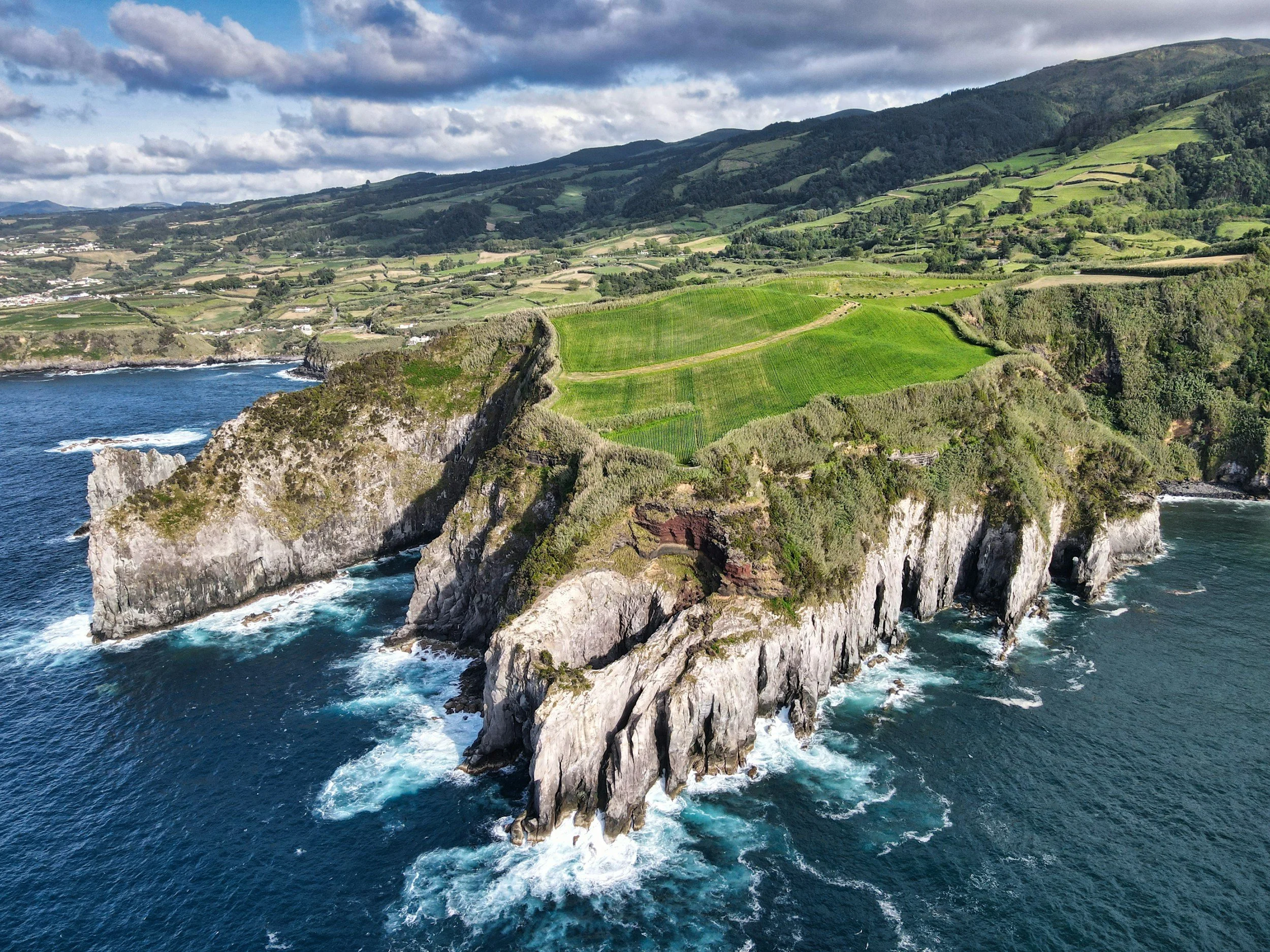
Pico: Black Stone, Vineyards by the Sea, and Long Quiet Drives
Best for: Tranquil views, whale watching, and volcanic hikes.
You don’t really “arrive” in Pico the same way you do on São Miguel.
Most people come over by ferry from Faial. It’s about half an hour from Horta, and somewhere in the middle of that crossing the mountain starts to take over the view. By the time you dock in Madalena, it’s all you see.
You step off near Rua do Cais, pick up your car, and within minutes you’re already out of the town. It happens quickly. One turn, then another, and suddenly it’s just road, stone walls, and the ocean.
Head towards Criação Velha first. It’s only a few minutes from Madalena, but it feels like a different place. The vineyards are set in black lava rock, low walls built to protect the vines from the wind. You park somewhere along the road, step over a stone wall, and that’s it, you’re in. No ticket, no entrance, no one telling you where to go.
It’s quiet in a very specific way. Not empty, just still.
If you keep driving along the coast, you’ll pass places where it makes sense to stop even if you hadn’t planned to. A break in the wall, a view, the sound of the sea hitting the rocks a bit harder than before.
Arcos do Cachorro is one of those stops. It’s quick, but you end up staying longer than expected. The lava has formed these rough arches, and the water pushes through them constantly. You stand there for a bit, then realise you’ve been there longer than planned.
Further along, São Roque do Pico is the kind of place where you don’t need a plan. A few cafés, a harbour, not much else. Sit somewhere along Avenida do Mar, order a coffee, and just stay there for a while. On a clear day, you can see Faial across the water.
Mornings here are slow. If you’re going whale watching, boats leave early, usually from São Roque or Lajes. It’s not dramatic at first. A lot of waiting, scanning the water, people quietly watching. Then something appears, and everything shifts for a moment.
The mountain is always there, even when you’re not thinking about it. Some people climb it, starting from Casa da Montanha, usually before sunrise. It’s not an easy hike. Steep, uneven, and the weather changes fast. If you’re not fully into it, it’s better to leave it.
You don’t need to climb it to feel it anyway. Just driving inland a little, stopping somewhere without a name, is often enough.
Later in the day, take the road down towards Lajes do Pico. It’s quieter on this side. Fewer cars, smaller villages, and stretches where it feels like nothing is really happening.
Walk down Rua do Castelo towards the harbour. It’s simple. Boats, a few people, not much else to do except sit for a bit. If you stay for food, Restaurante Ritinha is easy. No menu you need to think about too much, just something warm after being outside all day.
Back near Madalena, Cella Bar is one of those places you end up staying longer than planned. Right by the water on Rua do Farol, curved wooden building, soft light in the evening. It’s a good place to slow the day down before heading back.
Where you stay changes how Pico feels.
If you go for something like Aldeia da Fonte near Silveira, you’re properly away from things. Trees, ocean, not much around you. At night, it gets very quiet. If you stay closer to Criação Velha, you’re still out of town but everything is easier to reach.
You’ll need a car. Not in a stressful way, just because nothing is really connected otherwise. Most drives are short, 20 to 40 minutes, but they don’t feel like it because you keep stopping.
That’s the thing with Pico.
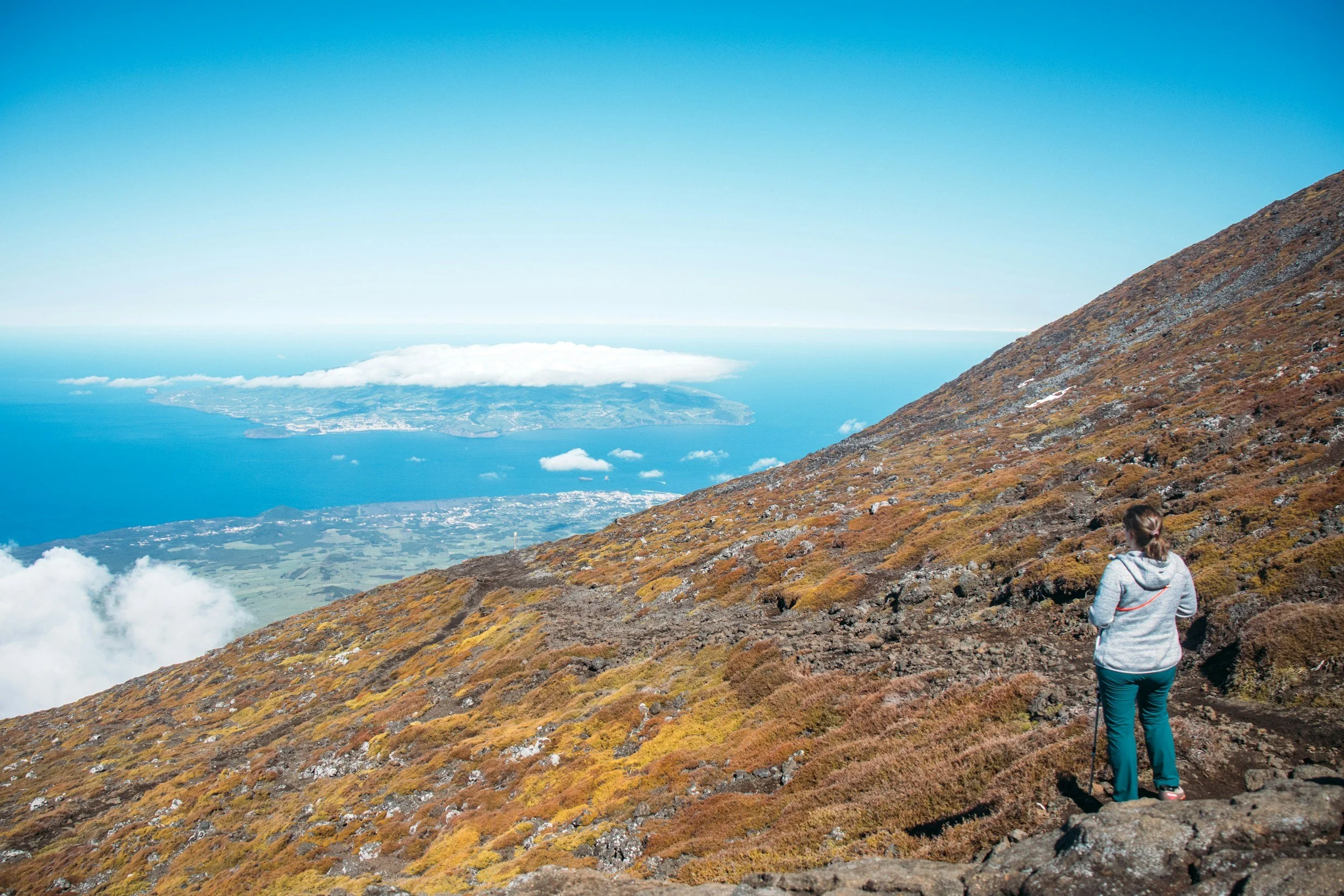
Nature is wonderful here.
Faial: Blue Hydrangeas, Harbour Evenings, and a Landscape That Feels Half-Finished
Best for: Secluded walks, stunning coastal views, and peaceful beaches.
Faial feels calmer as soon as you arrive.
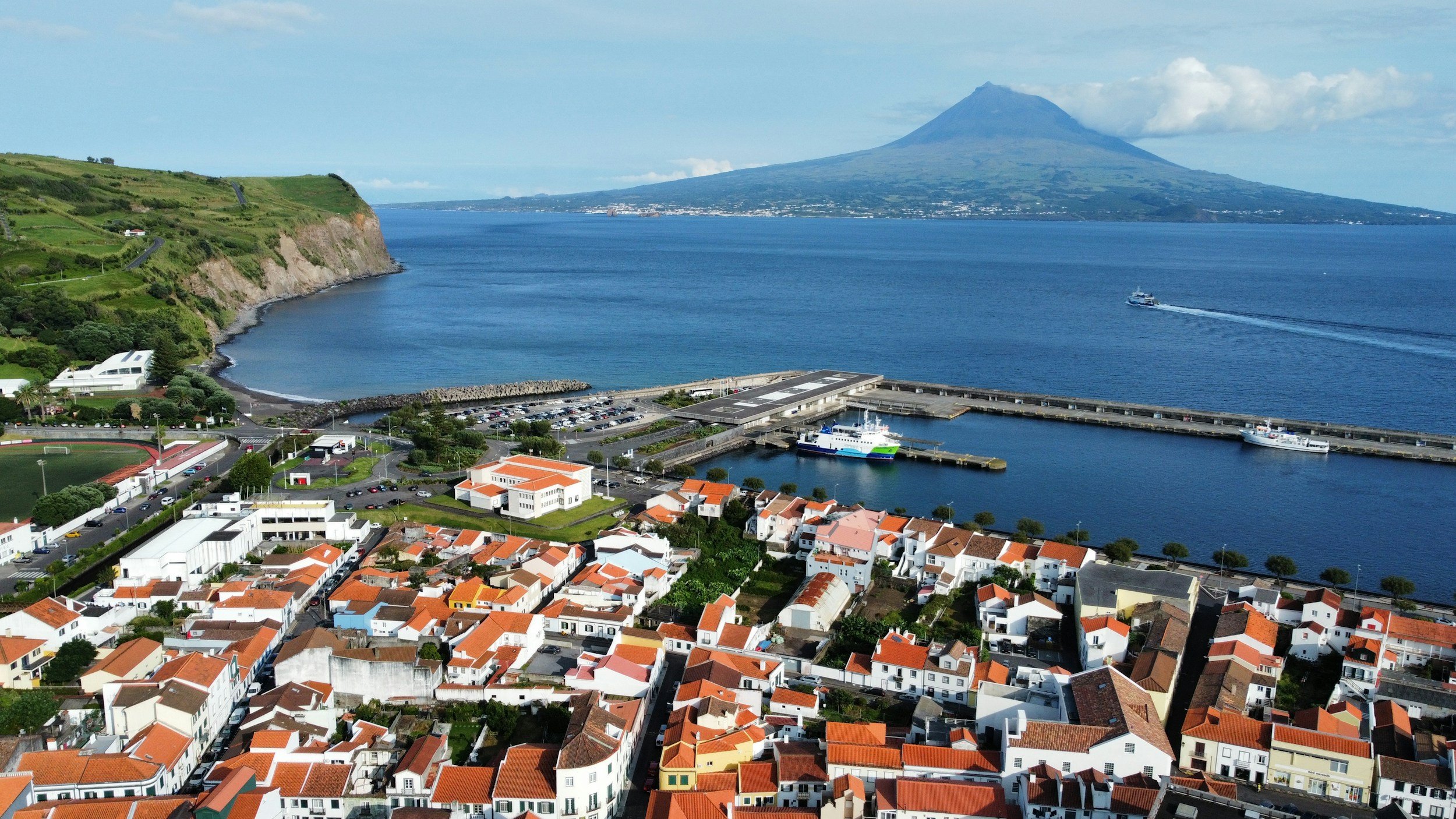
If you’re coming from Pico, the ferry drops you into Horta, and it’s a different kind of arrival. Less dramatic than Pico, but easier. You step off near the marina, walk a few minutes along Avenida 25 de Abril, and you’re already in the middle of things.
Horta isn’t big, but it has just enough going on.
You’ll probably pass Peter Café Sport at some point without trying. It’s right by the harbour, on Rua Tenente Valadim, and it’s one of those places people always mention. Sailors, travellers, locals, everyone seems to end up there at some point. It works best earlier in the day or later in the evening, when it’s quieter.
Walk along the marina and you’ll notice the painted walls. Every boat crew leaves something behind before crossing the Atlantic. Names, dates, small drawings. Some fresh, some faded. It’s the kind of thing you don’t rush past.
From Horta, the island opens up quickly.
Drive up towards Caldeira do Faial in the centre of the island. The road climbs steadily, and the weather often changes on the way. Clear at sea level, then suddenly mist as you get higher.
At the top, there’s a wide crater, almost perfectly round, covered in green. There’s a walking trail around the rim, but even just standing there for a while is enough. Sometimes you see everything. Sometimes you see nothing but cloud moving across it.
On the western side of the island, things feel different again.
The drive out to Capelinhos is one of the best on Faial. The landscape slowly shifts from green to grey. Less vegetation, more exposed ground, until it starts to look almost like another place entirely.
Capelinhos doesn’t feel like the rest of the Azores. It’s quieter, more open, and a bit raw. The old lighthouse is half buried in ash from the eruption in 1957, and the ground still feels unfinished somehow.
You can walk out across the volcanic landscape towards the sea. It’s flat, windy, and there’s not much to break the horizon. You stay longer than you expect, even though there’s not much “to do.”
On the way back, you’ll pass small villages where nothing much seems to change. A few houses, a café, someone sitting outside.
If you want a slower stop, head down towards Praia do Almoxarife on the east side. It’s one of the easier places to sit by the water. Black sand, calm sea on most days, and a view back towards Pico if the sky is clear.
Food here is simple.
Back in Horta, Genuíno Restaurante on Rua Conselheiro Medeiros is a good place if you want something slightly more polished without it feeling formal. Fresh fish, local ingredients, and a space where people actually sit and stay for a while.
If you want something easier, just walk along the harbour and stop where it feels right. Most places are straightforward, and you don’t need to plan ahead.
Where you stay on Faial depends on how quiet you want it.
If you stay in Horta, everything is within walking distance. Cafés, the marina, a few restaurants. It’s easy. If you’d rather have more space, look just outside the town or towards the countryside where it gets quieter at night.
Getting around is simple with a car. The island is small, so most drives take 20–30 minutes. You can cross from one side to the other without thinking too much about it.
If you want to balance coast with something more historic, Tomar is an easy addition inland, with a completely different pace.
Terceira Island: A Peaceful Escape for History and Nature Lovers
Best for: Walking tours, historical sites, and nature walks.
Terceira doesn’t feel dramatic when you arrive. It just feels… lived in.
You land at Lajes Airport, pick up a car, and drive towards Angra do Heroísmo. The road is wider than on the other islands, a bit more built up, but once you get into town it slows down again.
You park somewhere near Alto das Covas or along Rua Direita, and from there you just walk.
Angra isn’t somewhere you try to “see.” It’s somewhere you move through. You pass Praça Velha, maybe cut down a side street without knowing the name, and end up near the water without really planning to.
In the morning, the light hits the pastel buildings in a way that makes everything feel softer. Shops are open, but not busy. Someone sweeping outside, someone else standing in a doorway talking. If you stop for coffee, it’s usually somewhere small along Rua da Sé. Nothing styled, just a counter, a few tables, and people coming in and out.
Walk down towards the harbour and you’ll see people climbing down the ladders into the water. It’s right there in town. No beach setup, just concrete edges and the sea. Some stay for five minutes, others longer.
Later on, you’ll probably get in the car without much of a plan.
Drive up to Monte Brasil first. It’s right next to Angra, and the road loops all the way around. You can stop at the viewpoints or just pull over where it feels right. At Miradouro do Pico das Cruzinhas, you get a full view back over the town and the coastline. It’s quiet up there, even in the middle of the day.
From there, head inland towards Algar do Carvão.
It’s one of those places that’s hard to picture until you’re inside it. You walk in from ground level, then start going down. Spiral stairs, damp walls, a drop in temperature. At the bottom, it opens up into this large hollow space with moss and water and light coming through the top. It’s quiet in a different way down there.
A few minutes away, Furnas do Enxofre feels more open. Wooden walkways over steaming ground, the smell of sulphur, wind moving across the field. You don’t stay long, but it’s worth stopping.
If you keep driving, you’ll end up on the north coast near Biscoitos.
This is where the island slows down again. Natural pools carved into the lava rock, clear water, and space to sit without it feeling crowded. You’ll see locals here, especially later in the day. People coming down with towels, staying for a bit, then leaving again.
There’s usually somewhere nearby for a drink or something small. You don’t need to look it up, just follow where people are going.
By the time you head back to Angra, it’s already starting to get dark.
Evenings are simple. A few streets lit up, people out for dinner, but nothing loud. You might end up at O Chico on Rua de São João without planning it. It’s the kind of place where you sit down, order whatever’s being cooked that day, and stay longer than expected.
Where you stay here is less important than on the other islands.
If you’re in Angra, you can walk in the evenings, which makes a difference. If you stay just outside, it gets quiet quickly. Both work, it just depends on whether you want to be able to step out at night or not.
You’ll still want a car, but you won’t spend much time driving. Most places are 15–25 minutes away, and nothing feels far.
If what you liked most here was the sense of space, the Alentejo coast has a similar feel, just stretched out along the mainland.
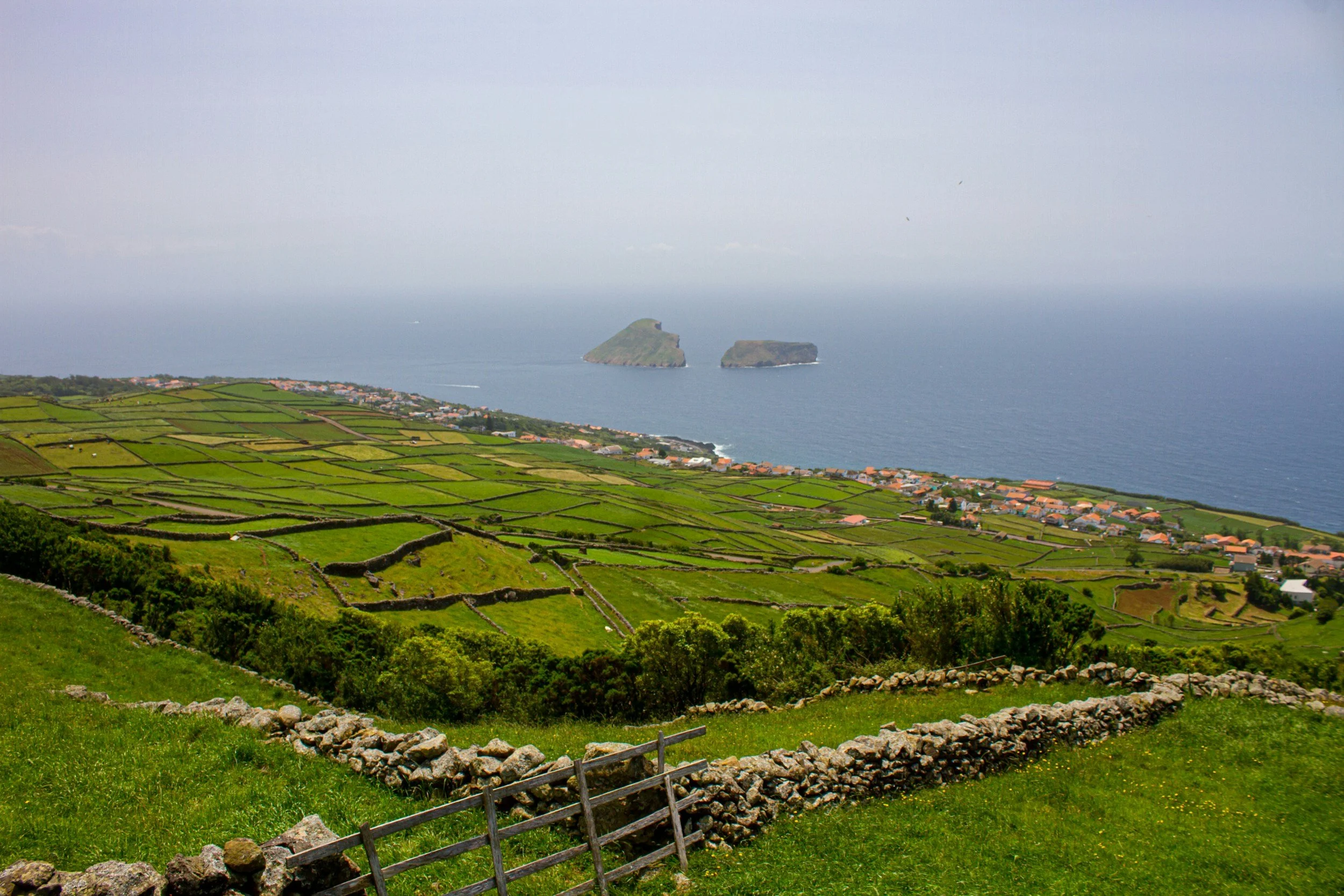
Santa Maria: Warmer Air, Pale Sand, and a Slower Kind of Quiet
Best for: Secluded beaches, quiet strolls, and nature-filled adventures.
Santa Maria feels different straight away.
You land, step outside, and it’s warmer. Drier. The light looks softer, almost faded compared to the deeper greens on the other islands.
It’s about a 10-minute drive into Vila do Porto, and there’s not much build-up to it. A few houses, a turn, and suddenly you’re by the harbour. That’s the centre.
Park somewhere near Largo Coronel Costa Santos and just walk. You don’t need to “see” anything. You’ll pass a bakery, maybe someone sitting outside with a coffee, a couple of quiet streets that don’t really lead anywhere in particular.
If you stop for coffee, it’ll probably be along Rua Teófilo Braga. Small place, a few tables, people coming and going without rushing. You sit longer than you meant to.
Most days end up drifting towards the coast.
Praia Formosa is the one people talk about, but it doesn’t feel like a main attraction. The road down curves slowly, and then the beach just opens up. Pale sand, which you don’t really get on the other islands, and enough space that you don’t have to think about where to sit.
In the morning it’s almost empty. Later on, a few more people arrive, but it never turns into anything hectic.
If you keep driving, you’ll start stopping without really deciding to. A viewpoint, a bend in the road, a stretch where the ocean looks different.
Miradouro da Macela is one of those. You pull over, get out, stand there for a minute or two, then leave again.
Further along, the road drops down towards São Lourenço. You take it slowly without thinking about it. Vineyards on the slopes, the bay opening up below, a few houses near the water.
There’s usually a small café down there. Sometimes it’s open, sometimes not. If it is, sit for a bit. If not, just walk along the edge of the bay and head back up.
At some point, you’ll probably drive inland just to see what’s there.
The road out to Barreiro da Faneca feels almost empty. Dry ground, reddish tones, not much around. It’s not somewhere you stay long, but it breaks up the day in a way that makes sense.
By the time you get back to Vila do Porto, it’s already evening.
You walk a bit, maybe end up at Mesa d’Oito without planning it. Or somewhere else that just looks open. Food here isn’t something you overthink. You sit down, order something simple, and stay longer than you expected.
Where you stay changes how quiet it feels.
If you’re in Vila do Porto, you can step out in the evening without getting in the car. If you stay further out, especially towards São Lourenço, it gets properly quiet at night. Fewer lights, less noise, slower mornings.
You’ll still want a car, but you won’t use it in a rushed way. Most drives are short, and you’ll stop along the way anyway.
Further north, places like Figueira da Foz offer the same kind of open coastline, but in a quieter, less visited part of Portugal.
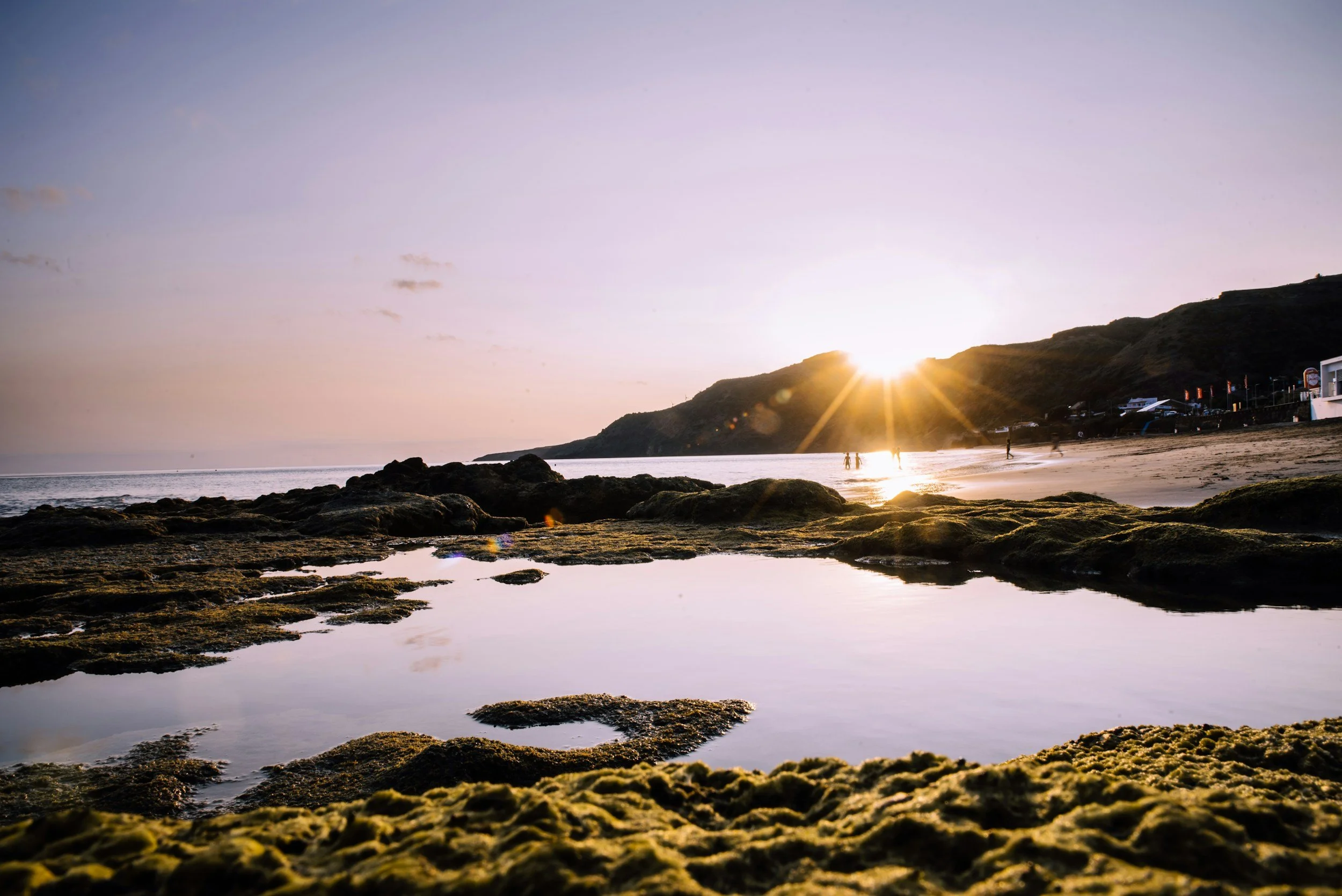
How to Actually Plan a Slow Trip to the Azores
This small Portuguese archipelago in the middle of the Atlantic wins you over in quieter ways: green hills that seem to roll forever, volcanic lakes you can walk around without seeing another person, and fishing villages where life still runs on its own schedule.
If you’re trying to decide how to turn this into a real trip, keep it simple.
Don’t try to see all the islands. Pick one, maybe two, and stay there. São Miguel works well if it’s your first time. Pico and Faial are easy to combine if you want something a bit quieter. Santa Maria is the one to choose if you want as little going on as possible.
If you’re combining the Azores with mainland Portugal, the Algarve off-season guide has a similar pace, just with coastal towns instead of volcanic landscapes.
Plan your days loosely. One place in the morning, something small in the afternoon, and leave the rest open. Distances are short, but you’ll stop more than you expect.
Rent a car, stay somewhere slightly outside the main town if you can, and don’t build your trip around “must-sees.” Most of the time, the better moments aren’t planned anyway.
That’s really it.

If you liked this guide, we think you may enjoy these as well:
Dreaming of even quieter countryside?
For something even more off-radar, these quiet French villages in Auvergne and Limousin are perfect for slow days, silent walks, and cozy stays far from the noise.
For those who love castles and calm:
Explore these stunning slow travel towns in the Loire Valley : château-filled, peaceful, and made for lovers of history, wine, and unhurried mornings.
FAQ: Planning a Trip to the Azores
Which Azores island should I visit first?
São Miguel is the best choice for a first trip. It has the most variety, including crater lakes, hot springs, coastal drives, and good infrastructure. It’s also the easiest island to reach with direct flights.
Which Azores islands are best to combine?
Pico and Faial are the easiest to combine because they’re only about 30 minutes apart by ferry. São Miguel works better as a standalone trip, while Terceira can be added if you want a mix of nature and small-town atmosphere.
How many days do you need in the Azores?
A minimum of 5–7 days works well if you’re staying on one island. If you want to visit two islands, aim for 7–10 days so you don’t feel rushed.
How do you plan an Azores itinerary?
Start by choosing one or two islands based on what you want to experience. Build your days loosely, with one main area or activity per day. Distances are short, but you’ll stop more than you expect along the way.
Is it better to visit one or multiple Azores islands?
For a slower, more relaxed trip, it’s better to focus on one or two islands. Travelling between islands takes time, and staying longer in one place makes the experience feel more grounded.
Do you need a car in the Azores?
Yes, in most cases. Public transport is limited, and many of the best viewpoints, hiking areas, and coastal spots are only accessible by car. Renting a car gives you the flexibility to explore without strict planning.
What is the best time to visit the Azores?
May to June and September to October are ideal. You’ll get good weather, green landscapes, and fewer visitors compared to peak summer.
Is São Miguel or Pico better for a first trip?
São Miguel is better for first-time visitors because it’s easier to navigate and has more variety. Pico is quieter and more rugged, with a stronger focus on nature and fewer built-up areas.
How do you travel between Azores islands?
You can fly between islands with SATA Air Açores, with most flights taking under an hour. Ferries run between nearby islands like Pico and Faial, especially in summer.
Where should you stay in the Azores for a quieter experience?
Look just outside the main towns rather than in the centre. Coastal areas, countryside stays, and small guesthouses tend to feel quieter while still being within easy driving distance.
What is the best Azores island for beaches?
Santa Maria has the best sandy beaches, especially Praia Formosa. Most other islands have volcanic rock coastlines and natural swimming areas instead of traditional beaches.
Are the Azores good for a relaxed, slow-paced trip?
Yes. The islands are well suited to a slower pace, with short driving distances, quiet roads, and plenty of places where you can stop without planning ahead.