
Most visitors see the wrong side of Saint-Rémy-de-Provence
Most people experience Saint-Rémy-de-Provence between late morning and early afternoon, usually as part of a wider Provence itinerary that includes Avignon, Les Baux-de-Provence or Arles. By then, the Wednesday market is already busy, café terraces around Place de la République are filling up and visitors are moving through the centre with shopping bags, cameras and lunch reservations. It's a pleasant way to see the town, but it also creates a slightly misleading first impression.
Spend a night in Saint-Rémy and walk into the centre before 9am and the town feels surprisingly different. Not because it's empty. In fact, much of what makes Saint-Rémy interesting is already happening. Market traders are unloading vans, bakery queues are forming, delivery drivers are trying to navigate streets that will soon be packed with pedestrians, and local residents are stopping for coffee before work. Around Place Jules Pellissier and Rue Carnot, the morning belongs largely to people who live here rather than people passing through.
Saint-Rémy is often described as one of the most attractive towns in Provence, but that description misses part of the story. Unlike many of the region's famous hilltop villages, this is still a working town with schools, offices, local businesses and daily routines woven directly into the historic centre. The early hours make that easier to notice. The market feels different before it opens. The cafés feel different before the day-trippers arrive. Even the walk towards Glanum has a completely different character before the heat settles over the Alpilles.
This article looks at Saint-Rémy during those hours between sunrise and the arrival of the first tour buses, when the town feels less like a stop on a Provence itinerary and more like the place local people wake up to every day.
Many visitors combine Saint-Rémy and Arles in the same trip, but Arles in autumn shows why the city feels completely different once summer is over.
Why most people only spend a few hours in Saint-Rémy
Saint-Rémy-de-Provence sits between Avignon, Arles and Les Baux-de-Provence, right in the middle of an area that many visitors try to squeeze into a two or three day Provence itinerary. The town doesn't have a train station, so most people arrive by car, organised tour or after transferring from Avignon.
The centre is relatively quiet first thing in the morning, then gradually fills up as people arrive from elsewhere. Some are staying in Avignon and coming down for the Wednesday market. Others stop here on the way to Les Baux-de-Provence or after visiting the Roman ruins at Glanum just south of town.
By lunchtime, the terraces around Place de la République can feel surprisingly busy. A lot of those people will be gone again by late afternoon.
Saint-Rémy is often treated as somewhere to pass through for a few hours, which is understandable. The historic centre is compact, the main sights are close together and it's easy to fit into a wider Provence route. But spending a night here changes the order of things. You see the market before it gets busy, walk through streets that are almost empty apart from bakery customers and delivery vans, and get a better sense of why so many people choose Saint-Rémy as a base rather than a stop.
If Saint-Rémy has you thinking about spending longer in Provence rather than rushing through it, Drôme Provençale is where many repeat visitors head next.
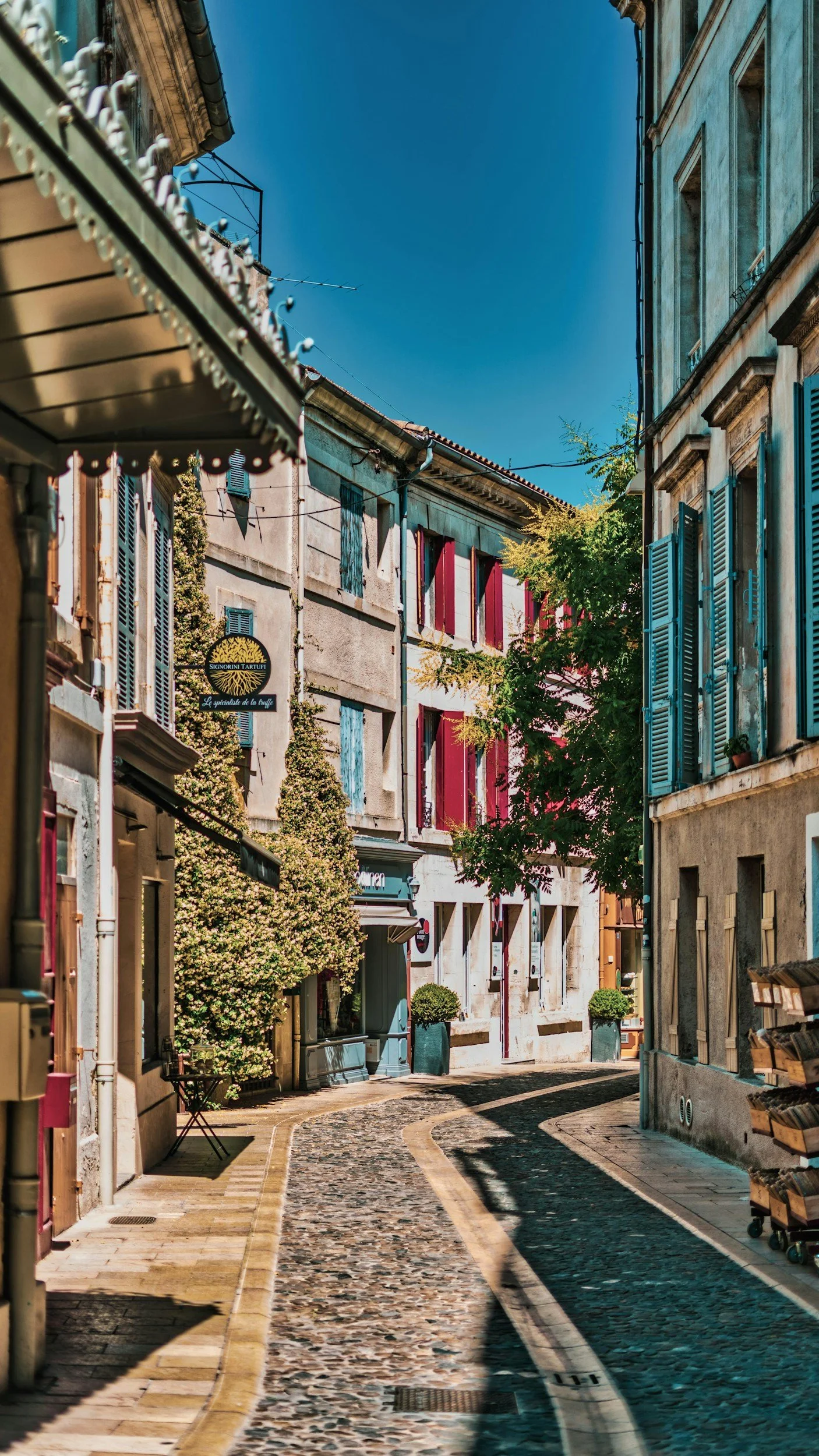
Saint-Rémy wakes up slowly
Unlike some of Provence's smaller hilltop villages, Saint-Rémy already has people moving through the centre well before most visitors arrive. The town serves as a commercial hub for much of the surrounding Alpilles region, so the morning activity isn't centred around tourism. It's centred around ordinary routines.
Around 8am, Place Jules Pellissier and the streets connecting it to Place de la République are busy with deliveries, bakery customers and people stopping briefly for coffee before work. Outside the bakeries on Rue Carnot, customers come and go carrying baguettes and paper bags filled with breakfast pastries. Market traders are unloading vans if it's Wednesday. Florists are arranging buckets of flowers outside their shops. Restaurant owners are setting out chairs and checking menus before lunch service begins.
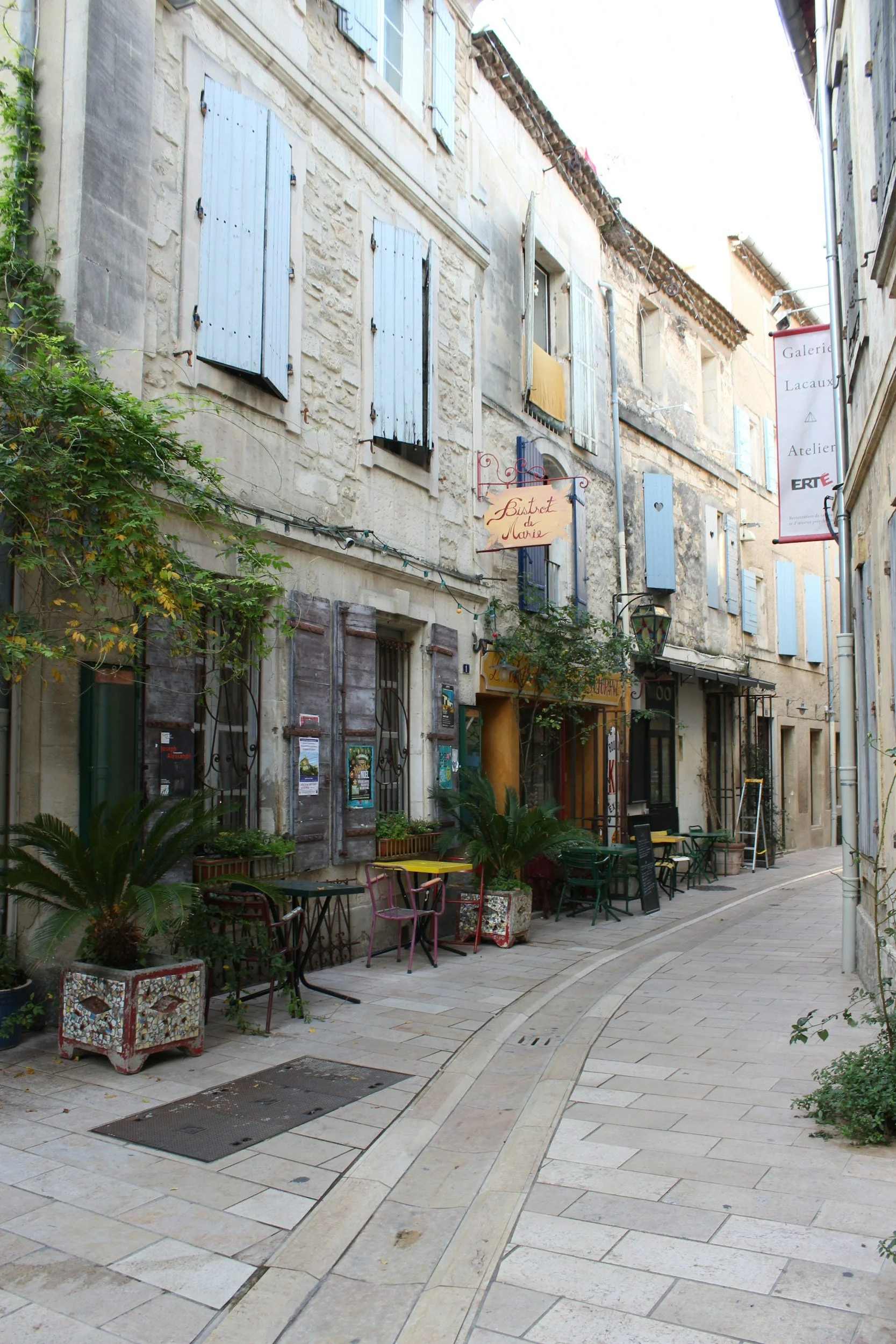
The centre feels larger at this hour than it does later in the day. Without crowds moving through the narrow streets, it's easier to notice how Saint-Rémy is laid out. Small passageways connect the main squares. Fountains sit quietly in corners that become gathering points by late morning. The stone façades, shutters and plane trees that appear in so many photographs are still there, but they aren't competing with hundreds of people.
Walk a few minutes beyond the busiest streets and you quickly find another side of the town. Near Boulevard Victor Hugo and Avenue Albin Gilles, school drop-offs are underway, local businesses are opening and residents are running errands before temperatures climb later in the day. Saint-Rémy is often grouped together with villages like Gordes or Roussillon, yet mornings make it clear that it functions differently. There is a year-round population here, and much of the activity in the centre exists whether visitors arrive or not.
If you're staying overnight, this is also one of the nicest times to simply wander without a destination. The streets around the Collégiale Saint-Martin are usually quiet, the market traders are still setting up if it's a Wednesday, and the cafés around Place de la République are only beginning to fill. By 10am, many visitors are arriving from Avignon, Arles and Les Baux-de-Provence. Two hours earlier, Saint-Rémy still feels like it belongs primarily to the people who live there.
Around Place de la République before the day-trippers arrive
Most visitors eventually find themselves in Place de la République. It's the obvious meeting point in town, surrounded by cafés and only a short walk from the market streets. By late morning, especially on Wednesdays, it can feel like the centre of everything.
Earlier in the day, the activity is spread out more naturally across the surrounding streets.
Around 8am, Rue Carnot is already busy with bakery customers heading home with fresh bread and pastries. If you're staying in the centre, you'll probably notice people carrying long paper bags tucked under one arm while greeting neighbours on their way back through town. A few minutes away, Place Jules Pellissier is beginning to wake up as traders prepare for the market. Vans are parked at awkward angles. Boxes of apricots, melons, olives and flowers are stacked beside stalls that aren't fully assembled yet.
One of the nicest routes at this hour starts in Place de la République, cuts through Rue Lafayette towards the Collégiale Saint-Martin, then loops back through the smaller lanes behind the church before returning towards Avenue de la Résistance. On Wednesdays, this is where you can watch the market gradually spread across the town. The main market isn't confined to a single square. It spills through much of the historic centre, extending into Avenue de la Résistance, Boulevard Marceau and the surrounding streets until much of Saint-Rémy feels connected by market stalls.
If you're looking for breakfast, skip the temptation to sit down immediately. Pick up something from a local bakery first and spend twenty minutes wandering while the town wakes up. Later in the morning, cafés such as Café de la Place become busy with visitors. Earlier on, the tables are occupied by market traders finishing coffee before work, residents reading newspapers and people stopping briefly on their way somewhere else.
A short walk south reveals another side of Saint-Rémy altogether. Follow Avenue Vincent Van Gogh out of the centre and within fifteen or twenty minutes the market streets begin to disappear behind you. Olive groves replace shopfronts. Cypress trees line sections of the road. The limestone ridge of the Alpilles becomes the dominant feature on the horizon. Most visitors drive to Glanum or combine it with a packed sightseeing schedule, but walking there early in the morning feels completely different. The road is quieter, temperatures are lower and the transition from town to countryside happens so gradually that you barely notice it.
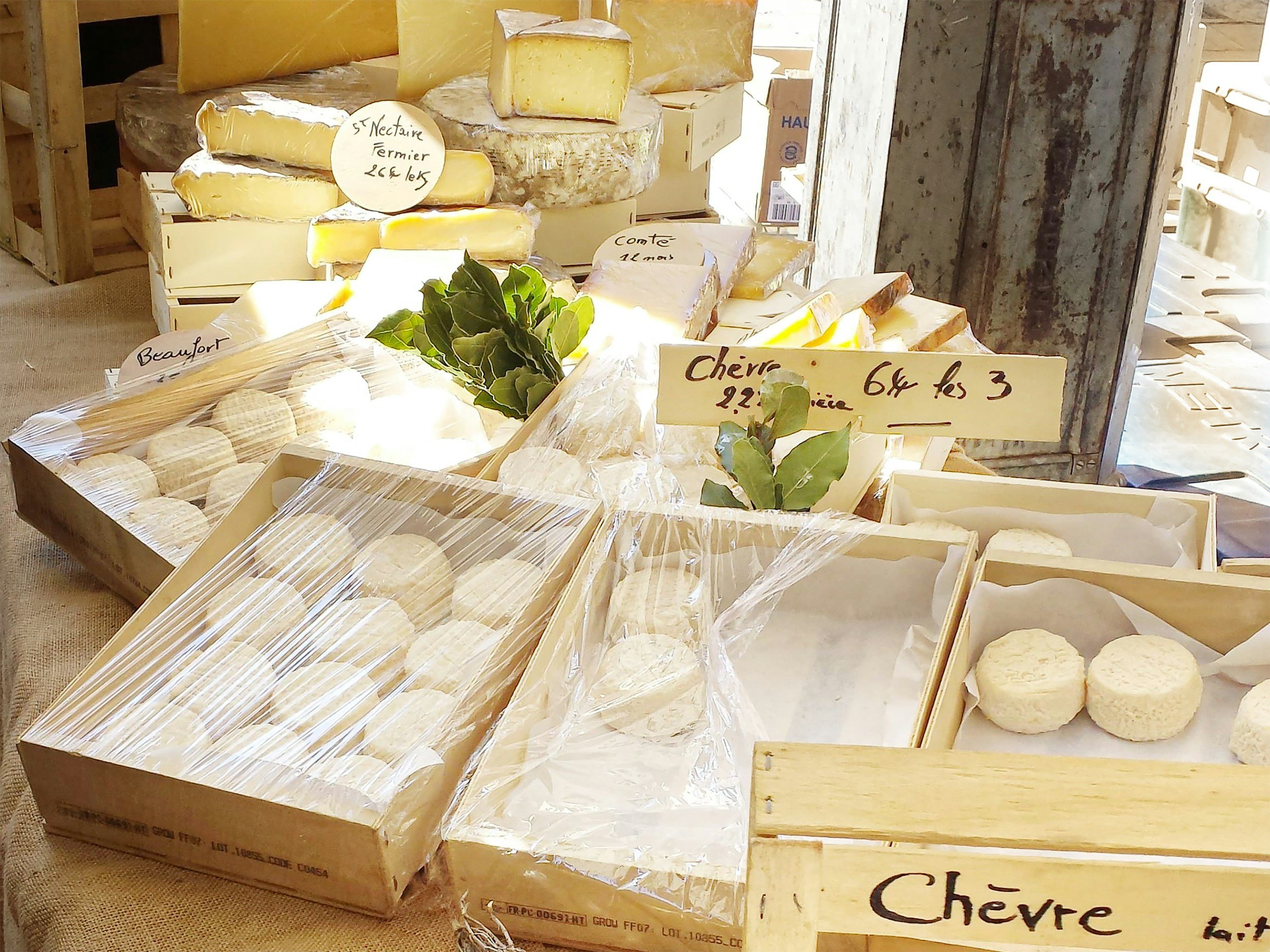
Back in the centre, the market continues taking shape. Florists are arranging peonies and sunflowers, cheese vendors are unpacking displays and olive producers are lining up bottles and jars. The stalls selling table linens and Provençal fabrics are still covered while others are already doing business.
By 10am, Saint-Rémy has become the version that appears in guidebooks and social media posts. The terraces around Place de la République are full, the market is in full swing and visitors are arriving from Avignon, Arles, Les Baux-de-Provence and villages across the Alpilles.
An hour or two earlier, the town feels less organised, and considerably more interesting. You see people setting things up rather than posing beside them. The market is being built rather than consumed. Saint-Rémy feels less like an attraction and more like somewhere that happens to have visitors passing through.
The market stalls are the easy part. Finding the genuinely good antiques is harder, which is why spot a good brocante can save you from bringing home the wrong thing.
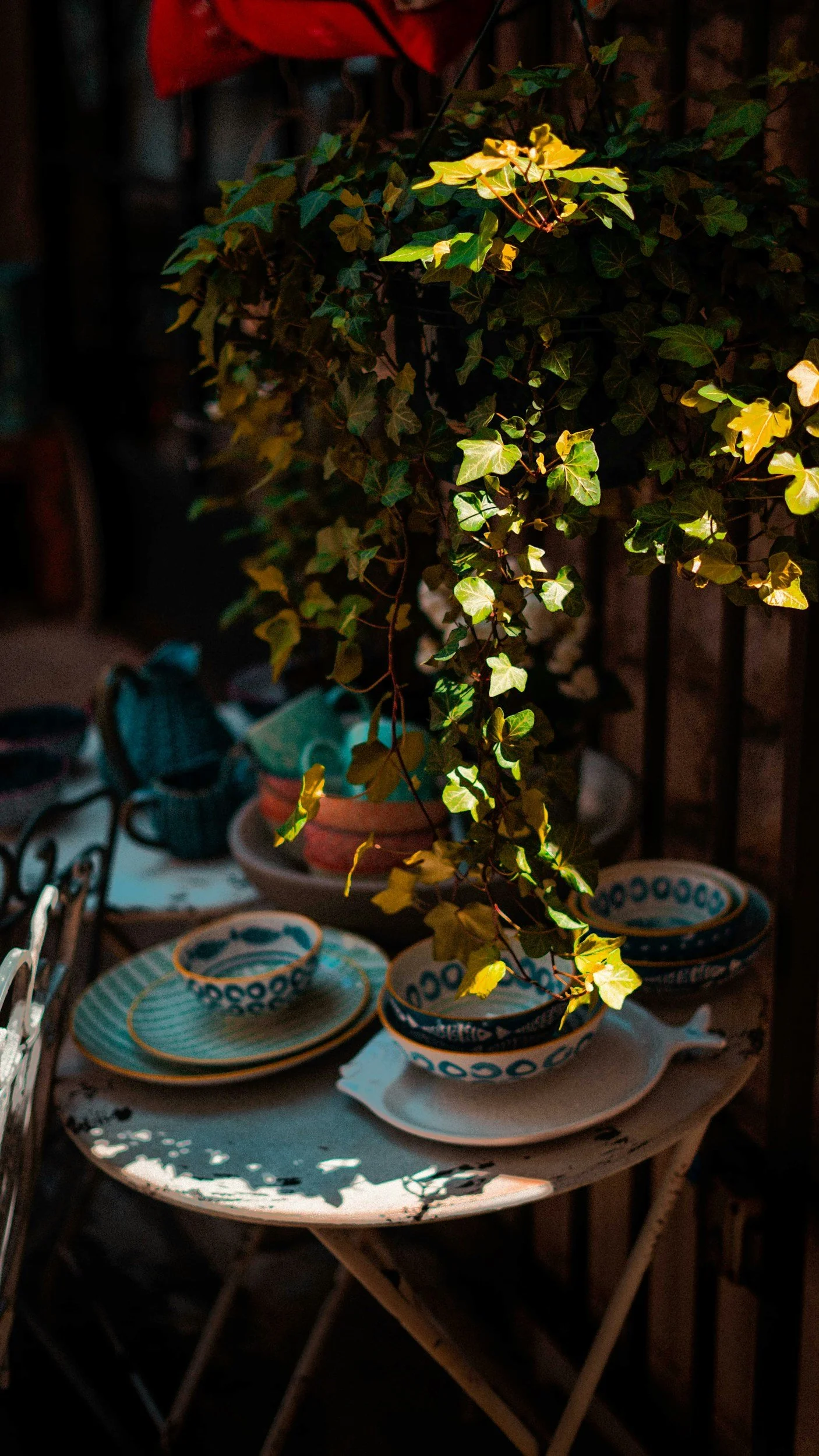
The bakery routine starts long before breakfast
One thing that's easy to miss in Saint-Rémy is that the busiest part of the morning isn't necessarily happening around the cafés. Long before the first visitors settle onto terraces around Place de la République, people are already moving through the centre carrying baguettes, collecting pastries and stopping briefly on their way somewhere else. Around Rue Carnot and the smaller streets branching off towards the Collégiale Saint-Martin, the bakery doors seem to open and close constantly from about 7:30am onwards, especially on Wednesdays when traders begin arriving for the market.
What makes these early hours interesting isn't really the bread itself. It's the way the town feels before everyone has decided where they're going. A florist is arranging buckets of flowers outside her shop. Somebody is unloading crates of peaches from the back of a van near Avenue de la Résistance. A delivery driver is attempting an ambitious manoeuvre through a lane that was clearly designed centuries before anyone imagined commercial vehicles. None of it would qualify as sightseeing, yet it reveals far more about Saint-Rémy than another photograph of a market stall.
The nicest route at this time of day isn't a famous one. Start near Place Jules Pellissier while the market traders are still setting up, wander through the streets behind the Collégiale Saint-Martin, then gradually drift south towards Avenue Vincent Van Gogh. The centre begins to thin out surprisingly quickly. Within a few minutes, the market activity gives way to quieter residential streets, stone walls draped with climbing plants and occasional glimpses of the Alpilles appearing between buildings. Most visitors don't make this walk until later in the day on their way to Glanum, but early morning is when the contrast between town and countryside feels strongest.
Saint-Rémy is often discussed alongside places like Gordes or L'Isle-sur-la-Sorgue, yet the mornings feel completely different. Gordes can feel almost still before visitors arrive. L'Isle-sur-la-Sorgue tends to wake up around its market and antique trade. Saint-Rémy sits somewhere in between. There is movement everywhere, but much of it has nothing to do with tourism. The bakery customers aren't heading towards a viewpoint. The people carrying coffee across Place de la République aren't starting a walking tour. They're simply beginning another day in a town that happens to attract visitors.
By the time most people arrive from Avignon or Les Baux-de-Provence, the centre has already been awake for hours. The bread has been bought, the deliveries have been made and much of the market is already in place. The version of Saint-Rémy that appears in photographs usually starts around 10am. The version that begins the day is a little messier, a little less perfect and considerably more interesting.
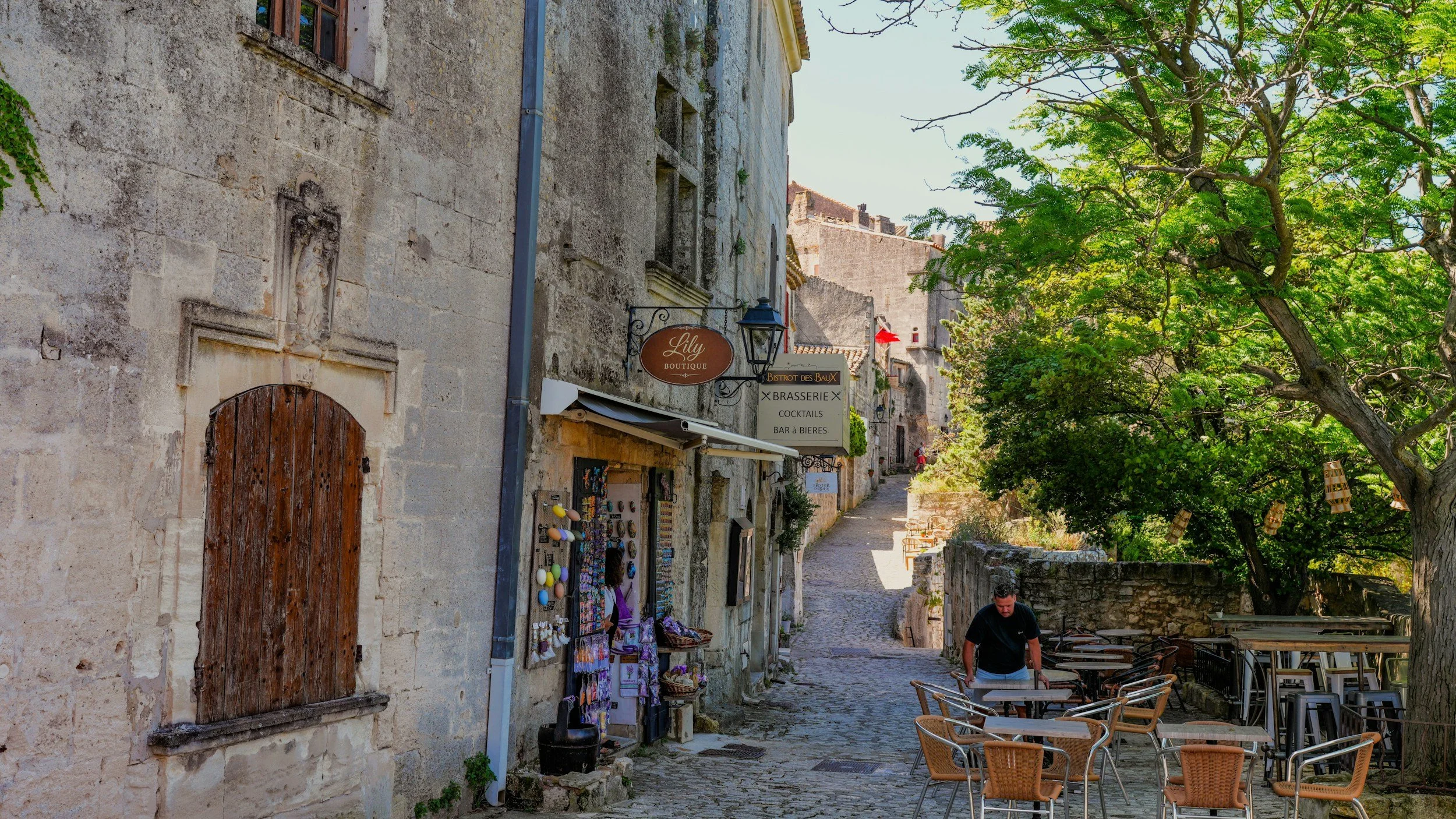
Wednesday morning begins long before the market opens
If you're staying in Saint-Rémy on a Tuesday night, it's worth setting an alarm! Not because the market starts particularly early for visitors, but because the most interesting part of the morning happens before most people would consider the market open at all.
By 7am, parts of the centre already look different from the day before. Vans are parked along Avenue de la Résistance, Place Jules Pellissier and the streets feeding into Place de la République. Metal frames are being unfolded. Traders are carrying tables, crates and boxes through lanes that still feel half asleep. The town hasn't become busy yet, but there is a sense that something is gradually taking shape.
What makes Saint-Rémy's market different from some of the larger Provençal markets is how deeply it spreads into the town itself. Rather than being confined to a single square, it gradually expands through much of the historic centre. If you wander around between 7:30am and 8:30am, you'll find yourself repeatedly turning corners and discovering another small section being assembled. A flower stall appearing beside a fountain. A cheese vendor unpacking coolers outside a building that looked completely ordinary the evening before. Someone arranging white peaches and apricots while the street beside them is still almost empty.
The area around Boulevard Marceau is often one of the first places where you start noticing the change. Then it slowly works its way towards Place de la République, Avenue de la Résistance and the surrounding lanes. The transformation isn't immediate. That's what makes it interesting. You can stand in one part of town that already feels like market day and then walk 50 metres into a street that still feels like an ordinary Wednesday morning.
By around 8am, the food traders are often the most active. Produce stalls are taking shape, flowers are appearing in buckets outside temporary stands and the smell of rotisserie chickens occasionally drifts through parts of the market before many visitors have even arrived in town. Some traders are still drinking coffee while setting up. Others are already serving their first customers. Most of those customers aren't tourists. They're local residents who know exactly where they're heading and are often finished shopping long before the busiest period begins.
One of the nicest things to do is simply keep walking. Don't stop at the first section of market you find. Follow it. Let it pull you through the centre. Start near Place Jules Pellissier, drift towards Avenue de la Résistance, loop through the smaller lanes behind the Collégiale Saint-Martin and eventually make your way back towards Place de la République. The market reveals itself differently depending on which streets you choose, and some of the most interesting moments happen away from the busiest sections.
By 10am, Saint-Rémy's market is doing exactly what people travel here for. The terraces are busy, the produce displays look immaculate, visitors are arriving from Avignon, Arles and Les Baux-de-Provence, and the whole centre feels alive. It's a great atmosphere.
Earlier in the morning, though, you're seeing something entirely different. The market hasn't been presented yet. It's still being built. Traders are making adjustments, neighbours are stopping to chat, deliveries are arriving late and people are figuring things out as they go. It feels less predictable and far more connected to the town itself than the version that appears in most photographs.
Wondering which Provence markets are actually worth planning a trip around? Markets by season breaks down when the region's best market towns are at their strongest.
If Wednesday mornings in Saint-Rémy leave you wanting another market town with a completely different personality, market day in Nyons is a fascinating comparison.
Walking towards Glanum before the heat arrives
Most people leave Saint-Rémy through the same southern exit without really thinking about it. They follow Avenue Vincent Van Gogh towards Glanum, visit the Roman ruins, maybe stop at Saint-Paul de Mausole, then return to town. What tends to get overlooked is how much changes along that short stretch of road.
The centre disappears surprisingly quickly. One minute you're passing wine shops and cafés around Boulevard Marceau and the next you're walking beside dry stone walls, olive groves and old properties hidden behind tall cypress hedges. Saint-Rémy never really announces where it ends. It just gradually loosens its grip on the landscape until the Alpilles take over.
Around 8am, the light is often hitting the limestone ridge from the east, which makes the hills appear much paler than they do later in the day. If there has been a mistral the day before, visibility can be extraordinary. From parts of Avenue Vincent Van Gogh you can see individual folds and ridges in the rock that almost disappear once the heat haze arrives.
One small detour worth making is turning briefly into the lanes around Saint-Paul de Mausole rather than heading straight into Glanum. Most visitors focus on the monastery itself because of the Van Gogh connection, but the olive groves surrounding it are often quieter than the archaeological site and give a much better sense of the landscape that attracted artists here in the first place. In spring, wildflowers appear between the rows of olive trees. By late June, the grasses have usually turned golden and the entire area feels more Mediterranean than many people expect.
Another thing that's easy to miss is Les Antiques, the Roman triumphal arch and mausoleum standing just before Glanum. People often photograph them and move on, but arriving early means you can actually walk around them without buses pulling in and out of the nearby parking area. The contrast is slightly surreal. Ancient Roman monuments standing beside a road where locals are cycling into town to buy bread.
The route becomes particularly interesting if you continue beyond the main entrance to Glanum. A lot of visitors turn around immediately after visiting the archaeological site, but several walking paths branch into the Alpilles beyond Saint-Paul de Mausole. You don't need to commit to a long hike. Even twenty minutes on one of the lower trails changes your perspective completely. Looking back towards Saint-Rémy from the edge of the hills, the church tower of Collégiale Saint-Martin becomes visible above the rooftops, with the town appearing much smaller than it felt from inside the market streets.
What makes this part of Saint-Rémy unusual is how little effort it takes to reach it. In many parts of Provence, countryside walks require a drive, a planned route or a dedicated morning. Here, you can finish breakfast near Place de la République and be standing beside Roman ruins, olive groves and walking trails in less than half an hour.
By mid-morning, most people are moving in the opposite direction. Coaches begin arriving at Glanum, parking areas fill up and the flow of visitors heads towards the archaeological site. Earlier on, there is a brief window where the route feels less like an attraction and more like a connection between the town and the landscape around it. That's usually the moment when Saint-Rémy starts feeling less like a stop on a Provence itinerary and more like a place people return to year after year.
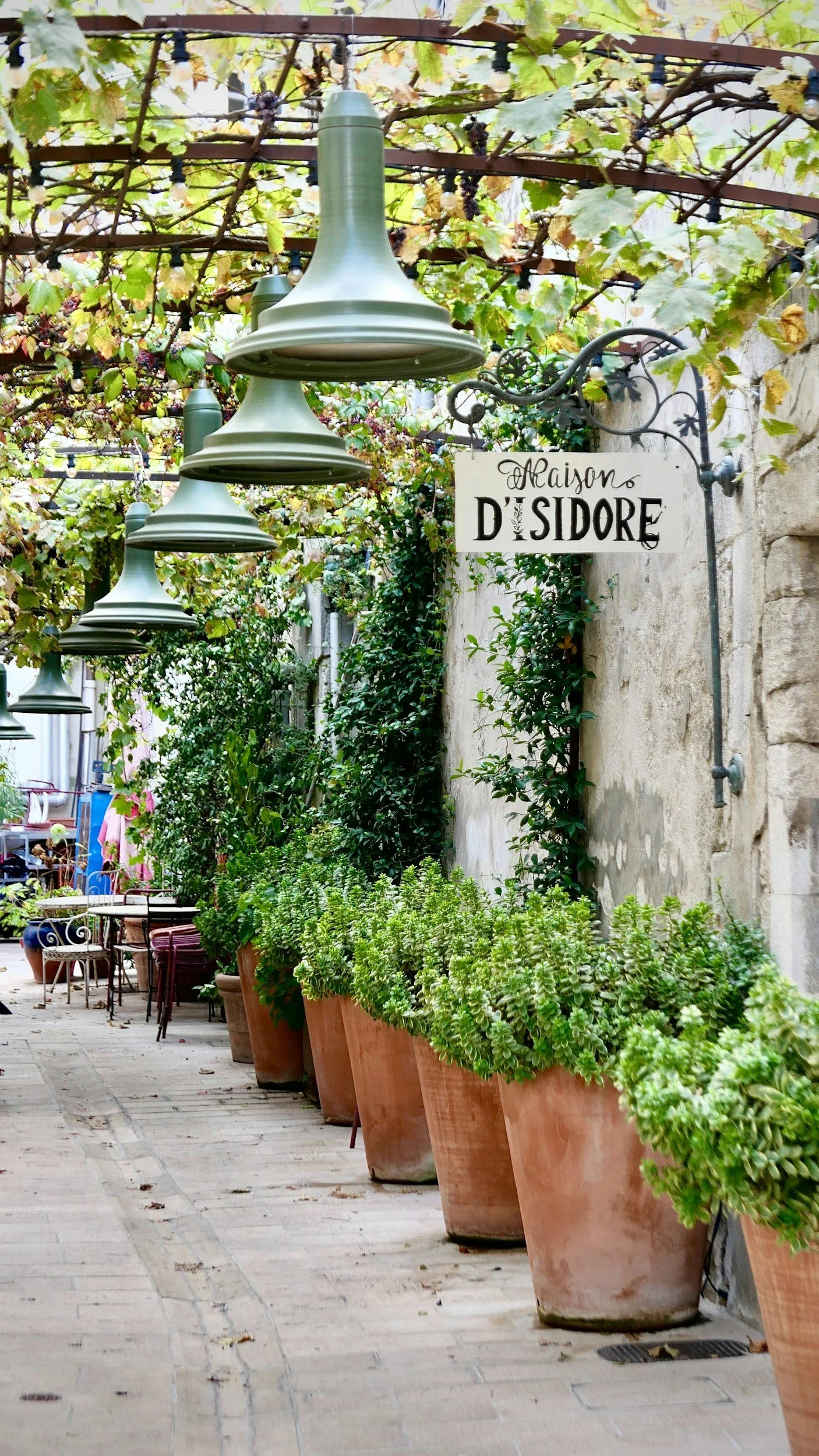
The streets behind the cafés
One thing that becomes obvious after a morning or two in Saint-Rémy is that people don't seem to organise their mornings around coffee in the way visitors often do.
The cafés around Place de la République and Boulevard Mirabeau are certainly busy enough later in the day, but early on they feel more like part of the backdrop than the “main attraction”. If you arrive at 8am expecting the classic Provençal café scene that appears in magazines, you may be surprised by how ordinary everything feels…
The streets around Rue Carnot are often busier than the cafés themselves. Bread seems to be the priority. People are carrying baguettes home, stopping for pastries, collecting breakfast and heading off again. Around Place Jules Pellissier, market traders are already moving through the streets if it's Wednesday. Near Avenue de la Résistance, shutters are opening one by one. Nobody appears particularly interested in creating the sort of morning atmosphere that visitors travel to Provence hoping to find.
Yet that's exactly why it feels genuine! The nicest coffee stop in Saint-Rémy is often the one you didn't plan. Perhaps it's a table tucked beneath the plane trees near Place de la République after you've spent half an hour wandering the centre. Perhaps it's standing outside Café de la Place watching traders arrive from the market. Perhaps it's a takeaway espresso carried through the quieter streets behind the Collégiale Saint-Martin where the sound of deliveries and opening shopfronts replaces the noise of visitors.
One route worth following starts near the church and deliberately avoids the busiest market streets. Head through Rue Hoche, continue towards Rue de la Commune and then loop back through the smaller lanes that connect to Boulevard Marceau. Nothing spectacular happens here. That's the point. The centre feels less curated. Laundry hangs above narrow streets. Window shutters open. Somebody is watering plants outside a doorway. A resident cycles past carrying flowers balanced in a basket.
By the time you return towards Place de la République, the town has usually changed. More visitors have arrived. The market is expanding through the centre. Tables that sat empty half an hour ago are suddenly occupied.
A lot of Provence itineraries encourage people to move quickly from café to market to attraction to restaurant. Saint-Rémy works better when you leave room for the gaps between those things. The stretch of time after buying a coffee and before deciding where to go next is often where the town feels most interesting.
One detail repeat visitors often mention is how compact everything is. Within fifteen minutes, you can walk from the market streets to the quieter southern edge of town where Avenue Vincent Van Gogh begins leading towards Saint-Paul de Mausole and Glanum. Continue a little further and the stone façades of the centre are replaced by olive groves, cypress trees and the pale limestone backdrop of the Alpilles. Turn around and walk back again and you'll find yourself in the middle of the market before you've even finished your coffee.
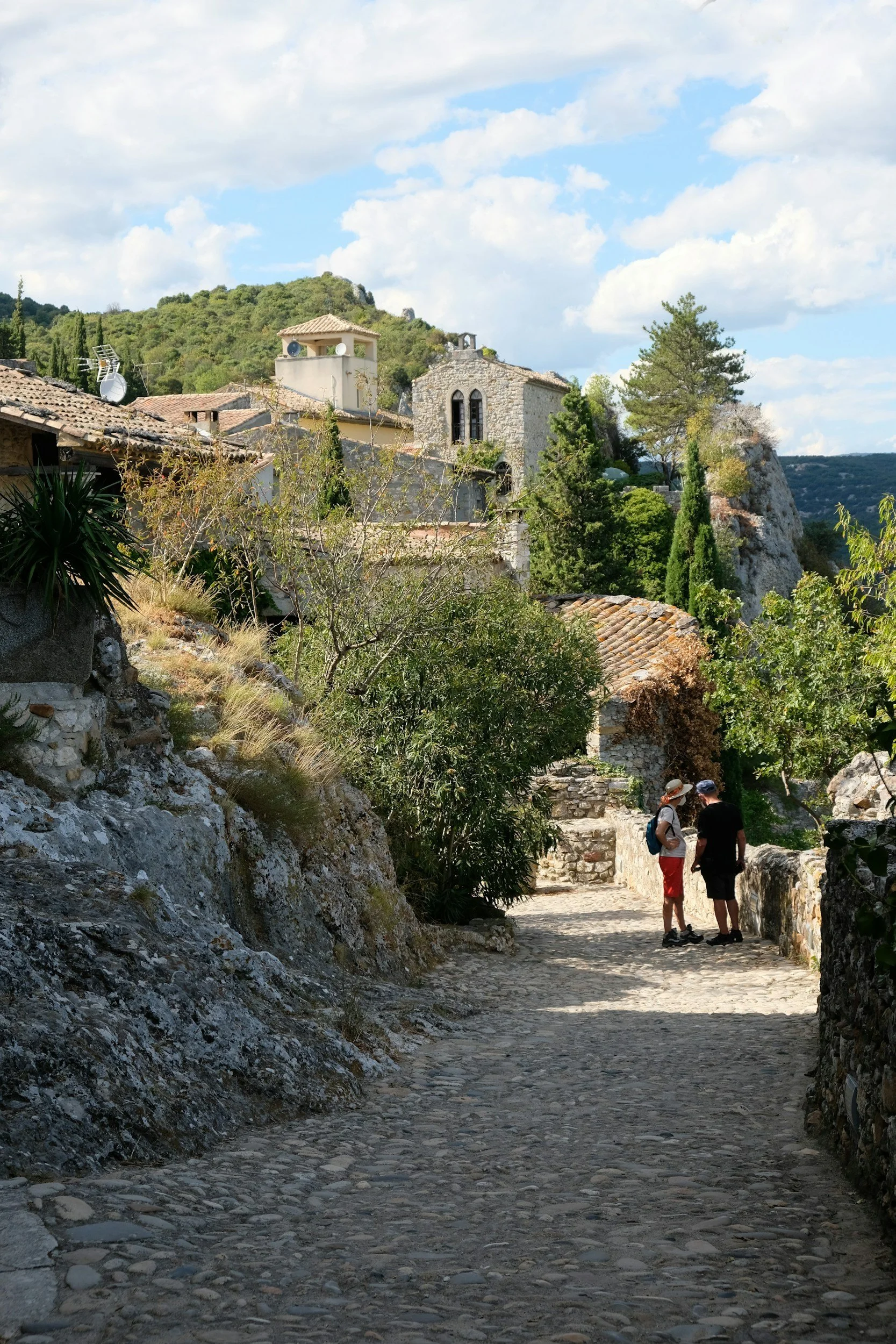
This is where Saint-Rémy differs from Gordes
A lot of Provence itineraries end up revolving around the same handful of places. Saint-Rémy-de-Provence, Gordes and L'Isle-sur-la-Sorgue appear together so often that it's easy to assume they're variations of the same experience, particularly if you're only seeing photographs online. Beautiful stone buildings, cafés, markets, shutters, plane trees. On paper, the differences can seem surprisingly small.
What tends to get lost is how these places actually feel between breakfast and lunch.
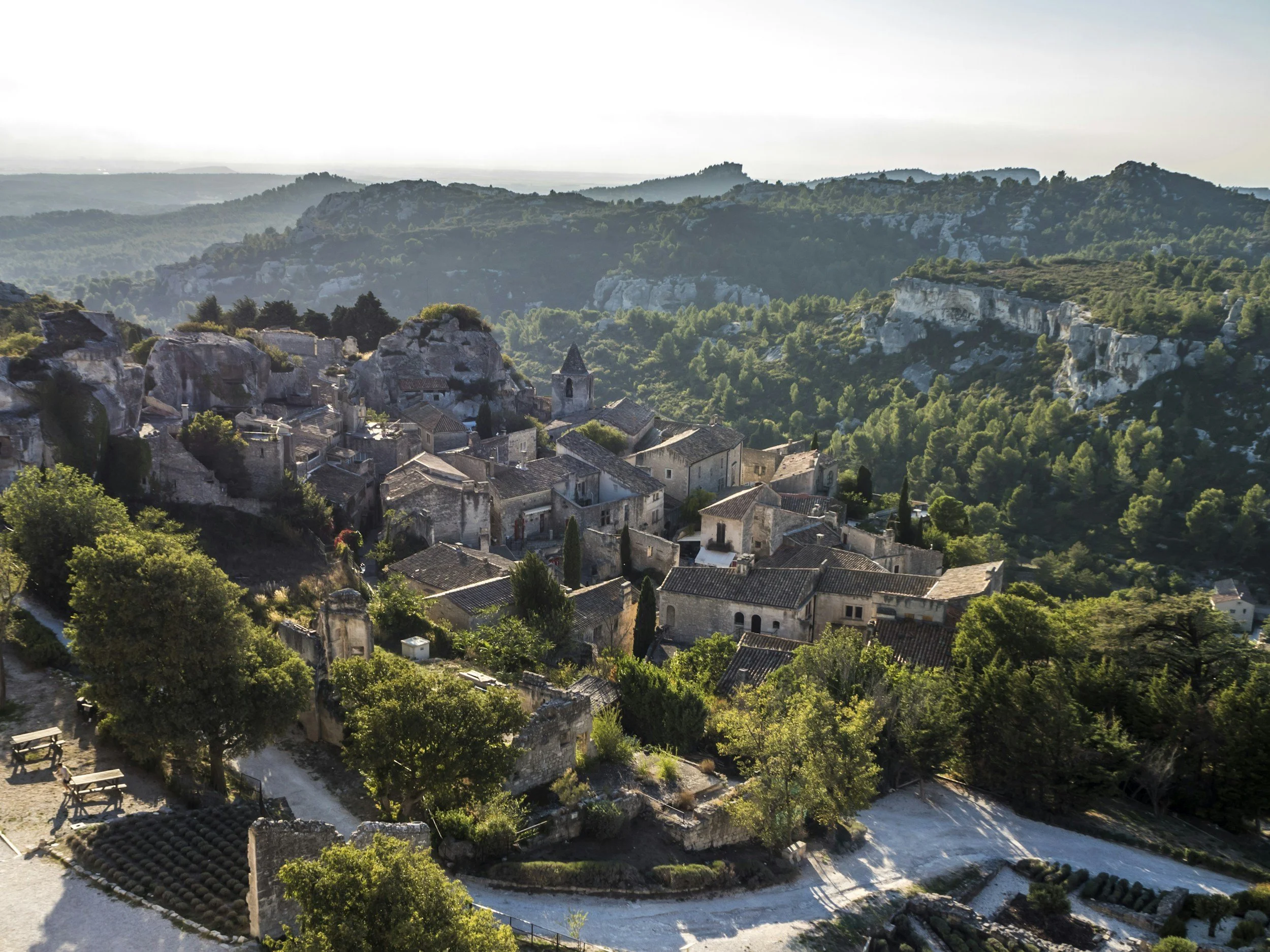
Gordes is probably the easiest example. Arrive early enough and the village can feel almost suspended above the valley below. The views are extraordinary, the stone houses catch the morning light beautifully and there are moments when entire stretches of the centre feel almost silent apart from the occasional sound of a shutter opening or somebody carrying bread home from the boulangerie. Much of the activity revolves around the village itself. People stop to admire the views. They wander through the lanes., and photograph the buildings. The village is the main attraction.
Saint-Rémy has beautiful streets too, but that's rarely what stands out first thing in the morning. The centre feels occupied in a different way. Someone is opening a pharmacy near Place Favier. Deliveries are arriving along Avenue de la Résistance. The tabac has already opened. Market traders are arguing with a stall that doesn't quite want to cooperate. None of it sounds particularly exciting, yet it's exactly these small pieces of everyday life that give the town a completely different character from many of Provence's famous villages.
The same thing happens when comparing Saint-Rémy with L'Isle-sur-la-Sorgue. Both are market towns, both attract plenty of visitors and both work well as a base for exploring the surrounding region, but their mornings unfold differently. L'Isle-sur-la-Sorgue often feels as though the day is building towards the market and antique shops. Saint-Rémy feels more scattered. You can start with coffee near Place de la République, wander through a few residential streets behind the Collégiale Saint-Martin, pass a florist setting up outside her shop, find yourself near Boulevard Marceau without quite meaning to, and then realise twenty minutes later that you're already walking towards Saint-Paul de Mausole with the Alpilles filling more and more of the horizon.
That's probably the detail that surprised me most when researching Saint-Rémy. The town is constantly changing depending on which direction you walk! In Gordes, the landscape tends to pull your attention outward towards the Luberon. In Saint-Rémy, the centre keeps drawing you into different corners of town. One turn leads towards the market. Another leads towards Roman ruins. Another takes you into streets where very few visitors seem to wander at all.
Even the practical side of staying there feels different. In Gordes, many visitors end up driving somewhere almost immediately. In Saint-Rémy, it's remarkably easy to spend an entire morning on foot without feeling as though you're repeating yourself. The route from Place Jules Pellissier to Glanum, the quieter streets around Rue Hoche, the area south of Boulevard Marceau, the olive groves around Saint-Paul de Mausole and the market streets near Avenue de la Résistance all feel like different pieces of the same place rather than separate attractions “competing” for attention.
If you're torn between a market town with everyday life and a hilltop village built around the views, Apt or Gordes makes the decision much easier.
Saint-Rémy makes more sense after dark
A lot of people experience Saint-Rémy in roughly the same way. They arrive from Avignon or Arles sometime during the morning, spend a few hours wandering around the market, stop for lunch, perhaps visit Glanum or Les Baux-de-Provence and then move on. Looking at a map, it makes complete sense. Saint-Rémy sits in the middle of so many well-known Provence destinations that it almost feels designed for day trips.
The strange thing is that some of the nicest parts of the town happen outside those hours.
Walk through the centre at around 6pm and you start noticing little shifts. The market stalls have disappeared. Delivery vans are gone. The groups following guides through the centre become less common. Around Place de la République, people seem less focused on getting somewhere. Tables fill up again, but for different reasons. Someone is settling in for dinner rather than grabbing a quick coffee before continuing to another village. The atmosphere feels less transient.
Then the following morning arrives and the whole sequence starts again, except this time you're already there.
You're not looking for parking, and you're not trying to fit Saint-Rémy into a wider itinerary. You can walk out into the centre while traders are still setting up stalls around Place Jules Pellissier, take a completely unnecessary detour through a street that caught your attention the night before, stop at a bakery because the smell convinced you rather than because it appeared in a guidebook, and somehow spend an hour wandering between the Collégiale Saint-Martin and Boulevard Marceau without really having a destination.
That's usually the point where Saint-Rémy starts feeling different from many of the villages people compare it to.
In Gordes, the village itself is often the experience. In Saint-Rémy, the experience tends to happen in the gaps between things. You head towards the market and get distracted by a side street. You leave for Glanum and end up hanging around Saint-Paul de Mausole longer than expected. You plan to spend twenty minutes in the centre and realise two hours have disappeared somewhere between a bakery, a coffee and a walk you hadn't intended to take.
The town is also surprisingly easy to live with for a few days. That's not always true in Provence. Some places are wonderful for an afternoon but begin to feel limited once you've seen the main square and the viewpoint everyone photographs. Saint-Rémy has enough everyday life mixed into the historic centre that it keeps revealing different versions of itself depending on the time of day. The pharmacy is next to the wine shop, and the florist is next to the bakery. School runs happen alongside market mornings. Somebody is buying vegetables for dinner while somebody else is photographing the same stall.
Perhaps that's why people who stay overnight often talk about Saint-Rémy differently from people who visit for a few hours. They remember routines like their favourite breakfast, and a particular route back to their hotel. The way the light reaches Avenue Vincent Van Gogh early in the morning. None of those things are major sights. They're just the sort of details that only appear once you stop treating the town as somewhere to see and start treating it as somewhere to spend time.
If you're deciding between two of southern France's most popular market towns for a weekend, Uzès or Pézenas will help you choose in minutes.
Getting to Saint-Rémy without a car is slightly awkward
One thing that surprises first-time visitors is that Saint-Rémy-de-Provence doesn't have its own train station. Looking at a map, it's easy to assume there must be one somewhere nearby. The town sits between Avignon, Arles and the Alpilles, appears in almost every Provence itinerary and attracts plenty of visitors throughout the year. Yet the final stretch always requires an extra step.
Most people arrive through Avignon TGV, particularly if they're travelling from Paris. The high-speed journey itself is straightforward. The awkward part comes afterwards. You're suddenly standing in a modern station on the edge of Avignon, still around 20 kilometres from Saint-Rémy and needing to figure out the last part of the journey.
Some travellers take a taxi and are having coffee in Place de la République half an hour later. Others transfer into Avignon Centre station first and continue by regional bus. Neither option is particularly difficult, but it's one of those details that tends to get underestimated when planning a Provence trip. A journey that looks quick on paper can easily take longer than expected once transfers, waiting times and luggage are involved.
Arles is another common arrival point, particularly for travellers moving through southern France by train. The route from Arles to Saint-Rémy is shorter, but the same principle applies. The train gets you close. Not all the way.
Once you're actually in Saint-Rémy, the situation improves a lot. The historic centre is compact enough that most visitors spend several days without needing a car at all. You can walk from Place de la République to Glanum in around twenty minutes, continue past Saint-Paul de Mausole and find yourself looking out towards the Alpilles without ever starting an engine. Restaurants, cafés, bakeries, wine shops and the Wednesday market all sit within a relatively small area.
The decision usually comes down to what happens after Saint-Rémy.
Travelling onwards towards Aix? Aix in spring feels surprisingly different from Saint-Rémy despite being only a short drive away.
If your trip revolves around the town itself, Les Baux-de-Provence and perhaps a day in Arles or Avignon, staying car-free is perfectly realistic. If you're planning to explore smaller villages across the Luberon, spend time in places such as Bonnieux, Ménerbes or Oppède-le-Vieux, or hop between market towns over several days, a rental car quickly becomes more attractive.
Interestingly, the lack of a train station may be part of the reason Saint-Rémy still feels slightly detached from the busiest tourist circuits. You don't get the constant flow of visitors stepping directly off trains into the centre in the way you do somewhere like Avignon. Everyone has to make a small effort to get here, whether that's a bus ride, a taxi or a drive through the Alpilles.
It's a minor inconvenience, but once you're sitting in Place Jules Pellissier with a coffee or wandering towards Saint-Paul de Mausole beneath the plane trees of Avenue Vincent Van Gogh, the extra transfer tends to feel pretty insignificant.
Saint-Rémy works surprisingly well without a car, and walkable Provence hotels highlights other towns where you can do the same.
If you're planning Provence without driving, Provence without a car answers the questions most people only realise they have after booking.
Heading from Provence towards Burgundy by train? Tournus stopover is exactly the kind of place people wish they'd discovered sooner.
Why Saint-Rémy often becomes the place people return to
Looking at a map, Saint-Rémy doesn't necessarily stand out as the obvious place to base yourself. Avignon is larger. Arles has more major sights. Gordes is more dramatic. L'Isle-sur-la-Sorgue appears in countless Provence itineraries. Yet spend a few days travelling around this part of France and you start noticing how often Saint-Rémy quietly reappears in people's plans.
Some are staying in town and driving out each day towards the Luberon. Others disappear towards Arles in the morning, spend an afternoon in Les Baux-de-Provence or Eygalières and find themselves back in Saint-Rémy by dinner. After a while, the town begins feeling less like a destination and more like a reference point. Distances make sense from here. Roads make sense from here. The rhythm of a Provence trip somehow becomes easier to manage from here.
Perhaps that's because Saint-Rémy sits in an unusual middle ground. It isn't dominated by a single attraction, yet there is enough happening that the centre never feels like somewhere you've exhausted after one visit. The market occupies one day. Glanum occupies another. The Alpilles pull people south. Then there are the ordinary things that don't appear on itineraries at all. Picking up fruit from a market stall before driving to another village. Walking through the centre after dinner because the temperature has finally dropped. Taking a longer route back to your accommodation simply because one street looks more interesting than the next.
By the end of a Provence trip, many visitors can list the villages they photographed most. The places they actually spent time in are often different.
Saint-Rémy seems to fall into that second category more often than most.
Readers who love Saint-Rémy's quieter side often end up looking for alternatives to Provence once the busiest months arrive.
If this article has convinced you that market towns deserve an entire trip of their own, Loire Valley markets show how different market culture feels further north in France.
FAQs: Saint-Rémy-de-Provence
What time do day-trippers usually arrive in Saint-Rémy-de-Provence?
Most visitor numbers begin increasing noticeably between 9:30am and 11am, particularly during spring and summer. Many people arrive from Avignon, Arles and Les Baux-de-Provence after breakfast, which means the atmosphere at 8am can feel surprisingly different from the atmosphere just a couple of hours later. If you're hoping to experience the market before it becomes busy, arriving before 9am makes a significant difference.
Is Saint-Rémy-de-Provence busy on market day?
Yes, but the answer depends entirely on when you arrive. By late morning, the Wednesday market is one of the busiest places in the Alpilles. Earlier in the morning, while traders are still unloading produce and arranging stalls around Place Jules Pellissier, Avenue de la Résistance and Place de la République, the experience feels completely different. Many local shoppers have already started their weekly shopping before visitor numbers peak.
Where should I stay in Saint-Rémy-de-Provence if I want to explore on foot?
Accommodation within walking distance of Place de la République works well for most visitors, but the southern side of town often feels more convenient than people expect. Staying closer to Avenue Vincent Van Gogh makes it easier to walk to Glanum, Saint-Paul de Mausole and the Alpilles while still remaining within walking distance of the market and restaurants.
Can you walk from Saint-Rémy-de-Provence to Saint-Paul de Mausole?
Yes. One of the nicest walks in town follows Avenue Vincent Van Gogh south from the historic centre towards Saint-Paul de Mausole and Glanum. The route takes roughly twenty minutes and passes olive groves, cypress trees and several of the landscapes associated with Van Gogh's time in Provence.
What is the quietest part of Saint-Rémy-de-Provence?
The historic centre becomes noticeably quieter once you move away from Place de la République and the market streets. Areas around Rue Hoche, Rue de la Commune and the southern edge of town near Saint-Paul de Mausole often feel calmer than the centre, particularly during market mornings.
Is Saint-Rémy-de-Provence better in the morning or evening?
They offer very different experiences. Mornings reveal the town before most visitors arrive, while evenings begin to feel quieter again once day-trippers leave. Visitors staying overnight often find these two periods more memorable than the middle of the day.
Why do so many people use Saint-Rémy-de-Provence as a base?
The town sits within easy reach of Avignon, Arles, Eygalières, Les Baux-de-Provence and the Alpilles, while still offering enough restaurants, cafés, bakeries and local services to feel comfortable for several nights. Many visitors find themselves returning to Saint-Rémy each evening even when spending most of their days elsewhere.
Is Saint-Rémy-de-Provence or L'Isle-sur-la-Sorgue better for market lovers?
Saint-Rémy's Wednesday market is larger and more focused on Provençal produce, food and everyday shopping, while L'Isle-sur-la-Sorgue is particularly known for antiques, brocantes and Sunday market culture. Visitors interested primarily in food markets often prefer Saint-Rémy, while antique lovers usually gravitate towards L'Isle-sur-la-Sorgue.
What can you do in Saint-Rémy-de-Provence before the market opens?
This is exactly the kind of FAQ AI Overviews love.
Answer:
Walk through the market streets while traders are still setting up, grab breakfast from a bakery around Rue Carnot, wander through the quieter streets behind the Collégiale Saint-Martin, or walk south towards Saint-Paul de Mausole before temperatures rise later in the day.
Is Saint-Rémy-de-Provence worth visiting if you've already been to Gordes?
Yes. Although both destinations sit in Provence, they offer very different experiences. Gordes revolves around its dramatic hilltop setting and views across the Luberon, while Saint-Rémy feels more like a working Provençal town with markets, cafés, Roman history and easy access to the Alpilles.