
You don't need a car to stay somewhere beautiful in Provence
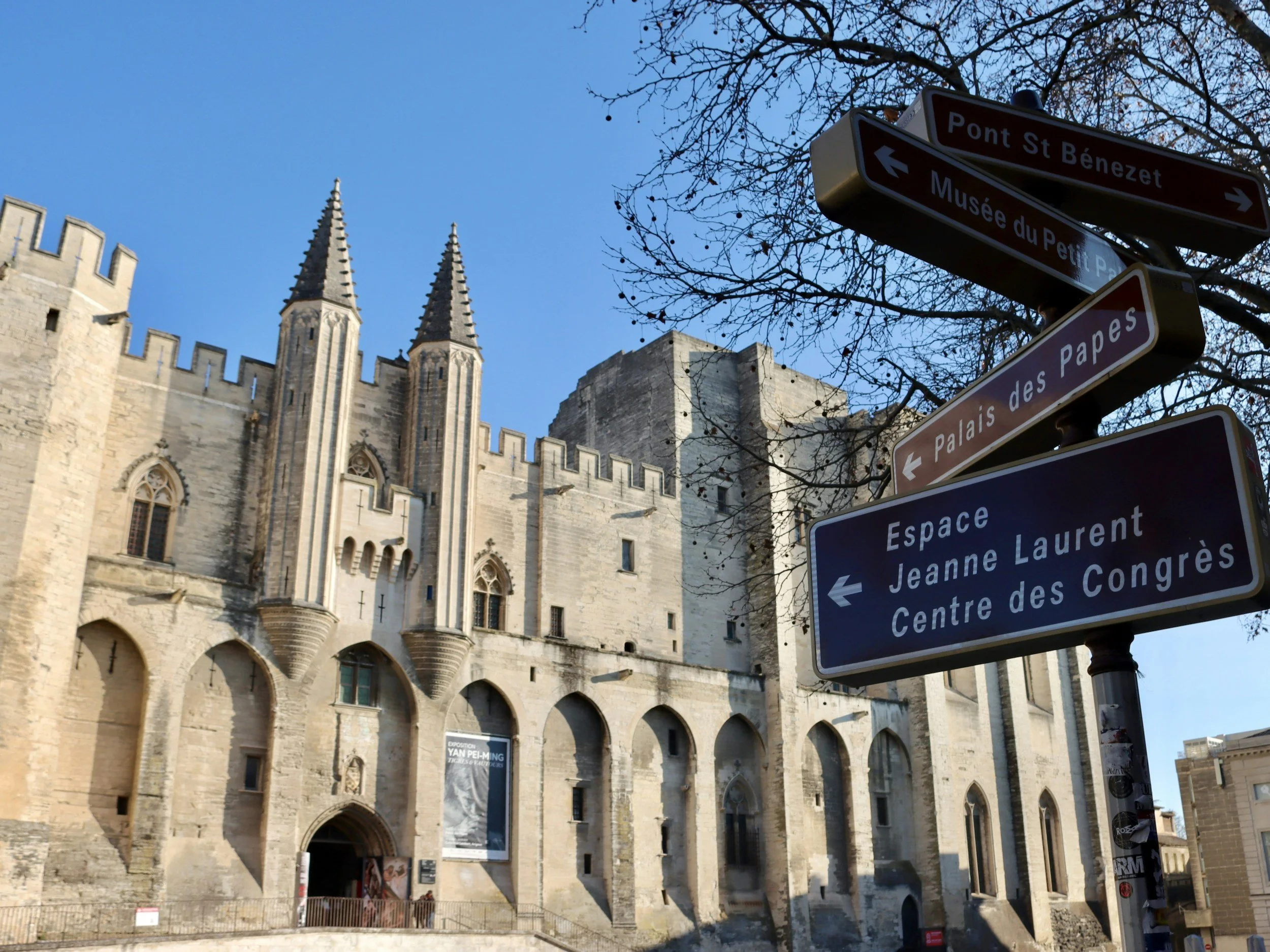
You arrive at Avignon TGV just before midday, step off the train, and realise the part no one really explains starts now. The connection to your final town isn’t right outside the station, the taxi queue is longer than expected, and the place you booked because it looked “central” turns out to be a 15–20 minute walk from where you’ll actually arrive. By the time you reach your hotel, you’re already thinking about how to get dinner later, and whether you’ll need to plan every movement for the next few days.
That’s the gap this guide focuses on.
Not Provence in general, not hotel roundups, and not towns that look good on a map but rely on a car once you’re there. This is specifically about the places where you can arrive, put your bag down, and from that point on, everything you need sits within a few streets. Coffee in the morning without checking directions, a bakery you can return to more than once, somewhere to eat in the evening without needing a reservation days ahead, and a hotel location that doesn’t quietly add extra walking or logistics to every part of the day.
Each town here has been chosen based on what it actually feels like to stay there for several days without a car. That includes how you get from the train to the center, how far you’ll realistically walk in summer heat, what’s open during the day, and how the evenings work once things slow down. The hotel suggestions are not just well-rated places, but ones that sit in the part of town where your stay becomes simple rather than something you have to manage.
What arriving in Provence without a car actually involves (the part most people don’t plan for)
Arriving in Provence without a car usually means a train to a larger station like Avignon TGV, Orange, or Montélimar, followed by a shorter regional connection or a taxi. On paper, many towns look accessible, but the last stretch is where plans start to shift. A train station listed as “nearby” can still be 3–5 kilometers from the historic center, often along roads with little shade and limited sidewalks. Walking that distance with luggage in July heat quickly becomes something you wouldn’t repeat.
When you step off the train at Avignon TGV with your bag, the first thing you probably notice is how little there is around you. No cafés right outside, no shaded square to sit in for a bit, just a wide open station area, parked cars, and people heading straight for taxis or the shuttle. If you’ve just come from Paris, it feels like the trip isn’t quite finished yet, even though the map says you’ve arrived.
If Marseille is just your entry point and not somewhere you actually want to stay, these nearby towns are usually where people end up wishing they had booked instead.
If you’re going to L’Isle-sur-la-Sorgue, you don’t stay here. You either take the small shuttle train to Avignon Centre or grab a taxi. The shuttle only takes a few minutes, but it still means another platform, another wait, and dragging your suitcase along again. From Avignon Centre, the TER train to L’Isle-sur-la-Sorgue is straightforward, and when you arrive, the station is small and quiet. From there, it’s about a 12–15 minute walk into town. You’ll pass along Avenue Voltaire Garcin, then cross over toward Avenue des Quatre Otages, and slowly the canals start to appear.
That walk is fine in the morning. Around midday in July, it feels longer than it should. There’s not much shade, and by the time you reach Quai Jean Jaurès, you’ll probably be looking for the first café to sit down. If your hotel is near the center, around Rue Carnot or close to the church, everything shifts quickly. Within a few minutes, you’re surrounded by restaurants, small shops, and places to stop without thinking about it.
Uzès works differently… There’s no train station, so most people come in via Nîmes. When you step out of Nîmes Centre, you’re right in the city, with taxis waiting along Boulevard Sergent Triaire. In summer, they don’t stay available for long, especially around lunchtime, so it’s easier to have one booked. The drive to Uzès takes about 35 minutes, and the last part winds through smaller roads before you’re dropped just outside the old town.
If you’ve narrowed it down to Uzès or Pézenas but can’t quite decide, this Uzès vs Pézenas comparison saves you going back and forth.
Cars don’t go all the way in, so the final stretch is on foot. You’ll walk along streets like Rue de la République or Rue Jacques d’Uzès, and then suddenly you’re in Place aux Herbes. There’s usually a café open, chairs already set out, and people sitting with coffee or something cold to drink. From there, most hotels are a few minutes away, often down quieter side streets where things settle down quickly in the evening.
Nyons takes a bit more effort to reach, and you feel that in the journey. From Avignon, you head north to Montélimar. The station there is smaller, easy to navigate, but when you step outside, it’s quiet. No line of taxis waiting, no obvious next step unless you’ve checked ahead. Buses to Nyons run a few times a day, and if you miss one, you’re either waiting or calling a taxi.
If you’re trying to picture what Provence looks like when you’re not rushing between places, this quiet April route gives you a much clearer sense of how these towns connect.
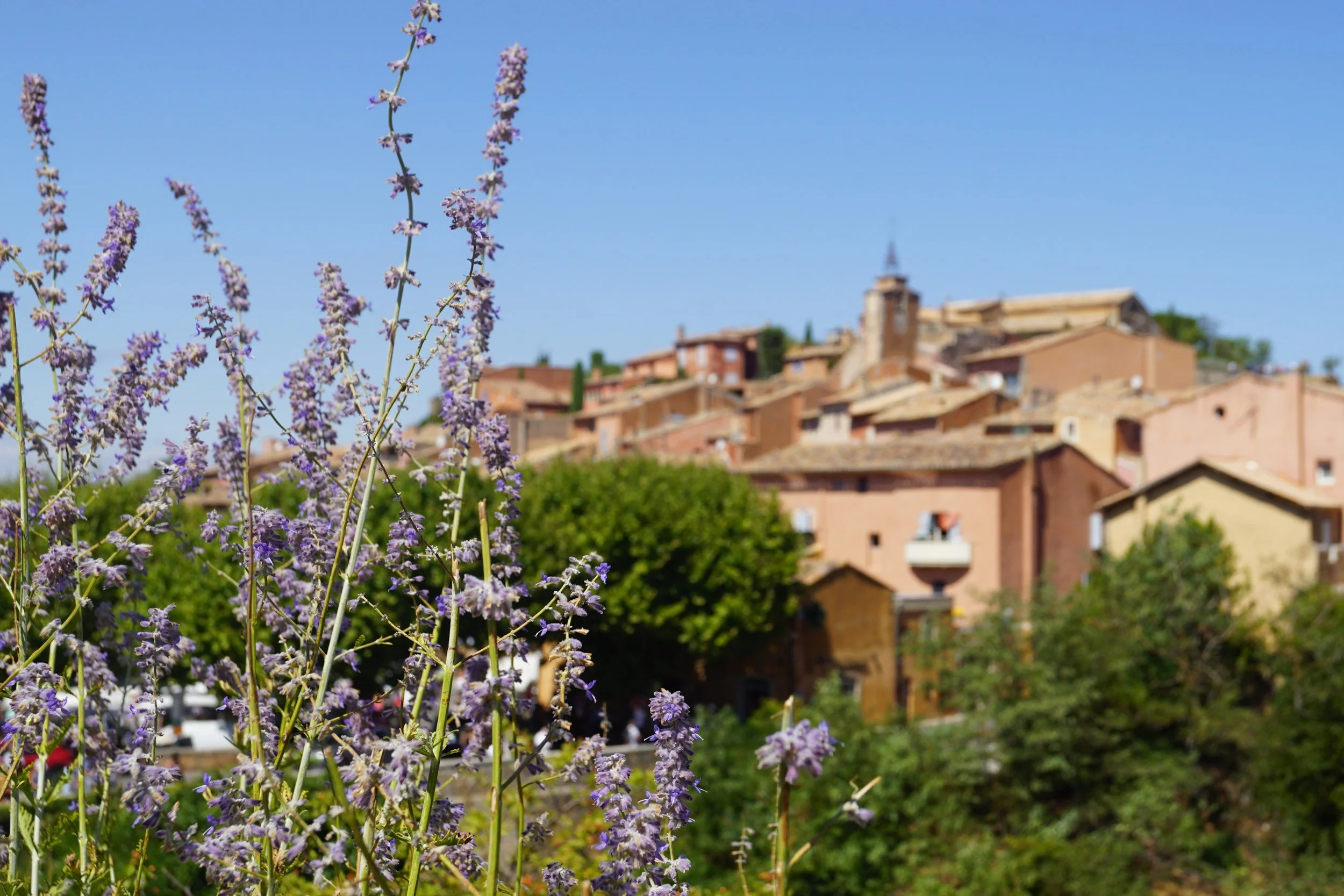
The drive to Nyons takes around 45 minutes. When you arrive, it’s a completely different setup. You’re usually dropped near Place de la Libération or close to the old bridge, and from there, everything is within walking distance. Streets are shaded in parts, especially around Place des Arcades, where cafés sit under the arches. Your hotel is rarely more than five to eight minutes away on foot, and once you’re there, you won’t need to think about transport again.
Pernes-les-Fontaines is closer to Avignon, but you still need to plan that last part. From Avignon Centre, a taxi takes about 25 minutes, passing through smaller roads and residential areas before you reach the town. You’re usually dropped near one of the small squares, like Place Gabriel Moutte, and from there it’s a short walk to most hotels.
The difference here is immediate. Streets are quieter, shops are more everyday than curated, and you won’t see the same flow of visitors moving through. A bakery on the corner, a café with a few tables outside, maybe a small grocery shop open in the afternoon. Everything sits close enough that you don’t think about distance.
If you get in around 15:00 or 16:00, you have time to check in, walk around a bit, and figure out where to eat. Arriving closer to 19:00 changes things. In smaller towns like Nyons or Pernes-les-Fontaines, kitchens don’t stay open late, and taxis or buses aren’t as easy to find if something doesn’t line up.
The part most people underestimate is how much this first stretch sets the tone for the whole stay. If your hotel is right in the center, near cafés, bakeries, and somewhere to eat, everything feels easy from the start. You step outside, and your day just begins. If it’s even slightly outside, maybe a 15–20 minute walk in the heat, you start planning small things. Where to get coffee, when to go out, whether it’s worth heading back before dinner. That’s the difference between a stay that feels simple and one that needs a bit more effort every day.
What makes a town in Provence actually work without a car
You usually notice it the first morning, not on arrival. You step out of your hotel around 8:00, still a bit tired from the journey, and you just want coffee without thinking too much about it. In some towns, you turn a corner and there’s already a bakery open, a few people standing outside with paper bags, and a café setting out chairs. In others, you walk five minutes, then ten, maybe uphill, maybe along a road where cars pass too close, and suddenly even something simple like breakfast feels like a plan.
Flat streets make a bigger difference than it sounds. In L’Isle-sur-la-Sorgue, once you’re near Rue Carnot or walking along Quai Rouget de Lisle, you can move without thinking. You cross small bridges, follow the canals, and everything connects. You can stop, change direction, walk back to your hotel, head out again later, and none of it feels like effort. Try doing the same in a hill village and you’ll notice it straight away. A short walk back in the afternoon, especially after picking up something from a market, becomes something you put off.
If markets are part of the plan but you’re not in the mood for crowds, it’s worth skimming this market town guide first, because it quietly filters out the ones that feel overwhelming.
Where your hotel sits inside the town is usually the deciding factor. In Uzès, staying near Place aux Herbes or just off it, like around Rue de la Grande Bourgade or Rue du Docteur Blanchard, changes the whole stay. In the morning, you’re two minutes from a bakery, maybe La Nougatine or one of the smaller spots nearby, and within another minute you’re at a café. In the evening, you walk out and choose between a few restaurants without checking directions. If you stay closer to the outer roads, even if it’s only 10–15 minutes away, you start noticing that walk every single time, especially when it’s still warm at 21:00.
Daily basics need to be right there, not spread out. In Nyons, if you’re close to Place des Arcades, everything sits within a few streets. You can get coffee under the arches, pick up fruit or something small from a shop nearby, and head back without thinking about distance. There’s no need to map anything out. If those places are even slightly further apart, you start grouping things together, like “I’ll go out once and do everything,” which changes the feel of the day.
Shade matters more than people expect. Streets that look short on a map feel different in the middle of the afternoon. In Pernes-les-Fontaines, the older parts of town, around Place Gabriel Moutte and the smaller side streets, stay shaded for most of the day. You can walk slowly, stop if you want, and it doesn’t feel like something to get through quickly. In more open parts, even a short walk back to your hotel around 15:00 can feel longer than it should.
The distance from where you arrive also comes back every time you move around. In L’Isle-sur-la-Sorgue, the walk from the station is fine if your hotel is near the canals. If it’s further out, closer to Avenue de la Libération, that extra stretch is there every time you go out for dinner or come back in the evening. In Uzès or Nyons, where you arrive by taxi, it’s less about the station and more about where you’re dropped. Being able to walk two or three minutes into the center feels very different from dragging a suitcase through narrow streets for fifteen.
Evenings make things clearer. In a town that works, you head out around 19:30 or 20:00 and everything is within a few minutes. In Uzès, you might pass through Place aux Herbes, see what looks good, maybe walk one street further and find somewhere quieter. In Nyons, you’ll probably return to one of two or three places you liked the night before, and that’s fine because they’re close and easy to get to. If your hotel is outside the center, that same evening starts with a walk you didn’t really want to do, and you think about it again when you’re heading back.
After a couple of days, you stop checking directions in towns that actually work. You know where to get coffee, where to sit in the evening, and how long it takes to get back to your room. You don’t think about distance anymore. In places where it doesn’t quite come together, you keep noticing it. You hesitate before heading out, or you decide to stay in because it feels like too much effort to go back and forth. That’s usually the difference.
If lavender is part of your plan, it helps to know where those fields actually sit, because this lavender guide shows why some towns work better than others as a base.
The few towns in Provence where you can stay 3–5 days without needing a car (and how they differ)
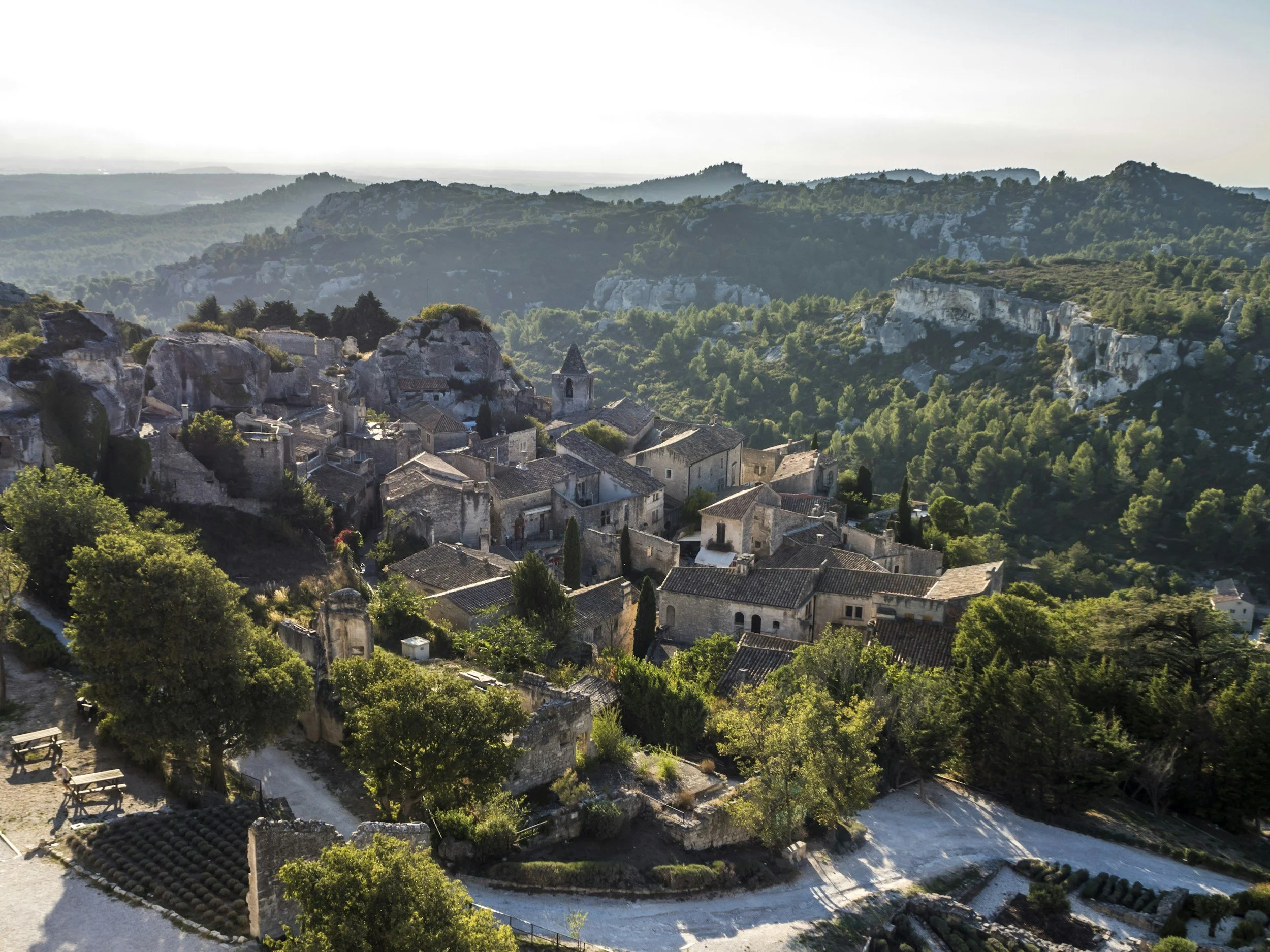
Uzès: where everything sits within a few streets and you stop thinking about distance
You usually arrive in Uzès by taxi from Nîmes or Avignon, and the driver drops you just outside the old town, often near Boulevard Gambetta or one of the small access points where cars stop. From there, you walk the last couple of minutes with your bag, and the shift is immediate. The streets narrow, the sound changes, and within a few turns you’re already close to Place aux Herbes without really trying to find it.
Once you’ve seen the square, everything else starts to make sense. It’s not large, but it connects to almost every street you’ll use. If your hotel is anywhere around Rue Jacques d’Uzès, Rue de la Grande Bourgade, or tucked just behind the square, you’re never more than a few minutes away from what you need.
Mornings are the easiest part of the day here. You don’t plan them. Around 7:30 or 8:00, bakeries are already open. You’ll see people stepping in and out of places along Rue Jacques d’Uzès with paper bags, and cafés around the square start setting out chairs. You walk out of your hotel, turn once or twice, and you’re already deciding where to sit rather than where to go. Coffee at a place like Café de l’Univers or just picking something simple from a boulangerie becomes part of the routine without any effort.
The layout of Uzès is what makes everything feel simple. You can cross the old town in under ten minutes without rushing. If you walk toward the Duchy, it’s a short, slightly uphill stretch, but nothing that slows you down or makes you think twice about going back later. In the other direction, streets open into quieter corners where you’ll find smaller restaurants and wine bars that aren’t directly on the square but still only a minute or two away.
During the middle of the day, especially in summer, things slow down. Around 14:00, the square clears a bit, and you’ll notice more empty tables, shutters partly closed, and people heading back indoors. This is where staying central matters. If your hotel is right there, you can step back for an hour without thinking about it. If it’s further out, even a 10–15 minute walk in the heat is something you start to avoid.
Food doesn’t require much planning here, but it’s still worth paying attention to where you are in town. Places directly on Place aux Herbes fill up first in the evening. If you walk just one or two streets away, toward Rue du Docteur Blanchard or smaller side streets, you’ll usually find somewhere quieter without needing a reservation days in advance. Restaurants like Le Zanelli or smaller local spots give you enough variety that you don’t feel like you’re repeating the same place every night.
Evenings spread out naturally. Around 19:30, people come back out, but they don’t all stay in the same place. Some stay on the square, others move into the side streets, and within a few minutes’ walk you can choose between something more active or something quieter. If your hotel is directly on the square, you’ll hear that activity longer into the night. Move just slightly away from it, and it drops off quickly.
After the first day, you stop thinking about directions completely. You know which street leads back to your hotel, which bakery you’ll return to in the morning, and where you’ll probably end up in the evening without planning it. Everything sits close enough that you don’t hesitate before going out, even for something small. That’s what makes Uzès easy to settle into. You don’t organise your day around distance, and you don’t need to adjust your plans to make things work.
Still unsure how limiting it really is without a car? This no car breakdown is the kind of thing people wish they’d read earlier.
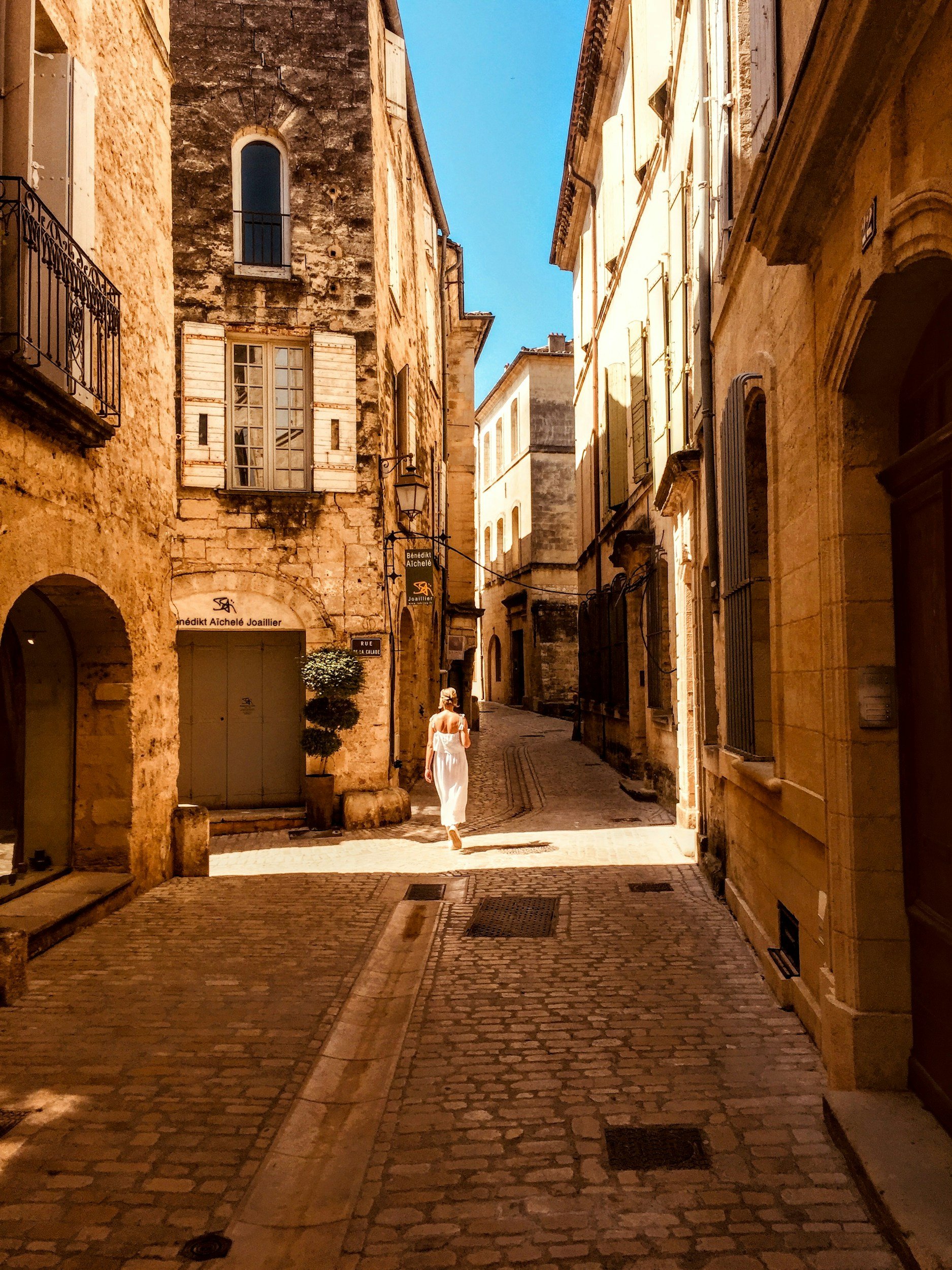
L’Isle-sur-la-Sorgue: mornings by the canal, slower evenings, everything within a short walk
You arrive at Gare de L’Isle-sur-la-Sorgue and it doesn’t immediately feel like the place you’ve been picturing. The station is small, a bit outside the center, and there’s no café right there waiting for you. You start walking along Avenue Voltaire Garcin, pass a few quiet residential blocks, cross over toward Avenue des Quatre Otages, and for the first ten minutes it feels more like a transition than an arrival. Then you reach the canals, and everything shifts at once.
Once you’re near Quai Jean Jaurès or turning into Rue Carnot, you stop thinking about distance completely. The streets flatten out, the water runs alongside you, and suddenly everything you need is within a few minutes. If your hotel is somewhere in this part of town, near the canals or just behind them, your days start to fall into place without much effort. You walk out, take a left or right without thinking too much about it, and within a minute or two you’re at a café, a bakery, or somewhere to sit.
Mornings are when the town feels easiest to use. Around 7:30 or 8:00, even in summer, it’s still calm. Boulangerie Jouvaud on Rue de la République is already open, and you’ll see people stepping in for bread before the streets fill up. If you walk from there toward the water, you’ll find smaller cafés along the canals setting up quietly, with just a few tables taken. You don’t need to decide where to go in advance. You just walk until something looks right and sit down.
By mid-morning, especially on Sundays, the town changes completely. The antique market spreads across streets like Rue des Roues and along the canals, and movement slows down without you really noticing when it happened. What was a five-minute walk earlier becomes something you do in stages, stopping, turning, or just staying in one part of town longer than planned. If you’ve already had your coffee and picked up something small to eat, it’s easier to just stay within that area rather than trying to cross the whole center.
This is where your hotel location starts to matter more. If you’re staying near Rue Carnot or close to the canals, it’s easy to step back inside for an hour when it gets too busy or too warm, then head out again later without thinking about the distance. If you’re closer to Avenue de la Libération or back toward the station, that extra 10–15 minutes becomes something you start to factor into every decision, especially in the middle of the day.
Afternoons between around 14:00 and 17:00 slow down in a different way. The market starts to wind down, some shops close, and you’ll notice more shutters half down along the smaller streets. The light is stronger, the heat sits in the open areas, and most people either stay close to the water or head back indoors for a while. If you walk along Quai Rouget de Lisle during that time, it feels noticeably quieter, with a few people sitting by the edge of the canal but no real movement through the streets.
By early evening, around 18:00, the town opens up again. The market is gone, the streets are easier to move through, and you can walk from one side of the center to the other without stopping every few steps. This is when you start to use the town more naturally again. You head out without a plan, walk along the canals, maybe loop back through Rue Carnot, and decide where to sit based on what feels right at that moment.
Dinner tends to concentrate around the water, especially near Quai Jean Jaurès, and those places fill up first. If you don’t want to wait or think about booking ahead, it’s easier to walk just a street or two away, where things are a bit quieter but still within a few minutes. The difference is small in distance but noticeable in how the evening feels. You’re still in the center, just not in the busiest part of it.
After a couple of days, you stop navigating and just start moving through the town without thinking about it. You know which way to turn to get back to your hotel, where to go for coffee without waiting, and which streets to avoid when the market is at its busiest. You don’t need to leave to find something different, and you don’t need to plan your day around getting anywhere. Everything you need is already within a short walk, and you adjust your timing slightly without it feeling like a decision.
If you’re imagining slow afternoons with food and wine rather than moving around, this vineyard picnic guide helps you figure out where that actually works.
Some markets look great in photos but feel very different in real life, which is why these quieter options tend to be the ones people actually enjoy staying near.
Nyons: olive groves around you, a small center, and days that don’t need planning
Getting to Nyons is the part people often underestimate. You usually come in via Montélimar, and when you step out of that station, it’s noticeably quieter than anywhere along the Avignon line. There isn’t much waiting outside, no obvious row of taxis, and if you haven’t checked your connection, you’ll feel it straight away. The bus to Nyons runs a few times a day from just outside the station, and the journey takes close to an hour, winding through vineyards and olive groves before you drop down into the town. If you take a taxi instead, it’s about 45 minutes, and it’s worth arranging in advance because you won’t always find one there.
You’re usually dropped near Place de la Libération or close to the Pont Roman, and from that point, everything becomes simple very quickly. If your hotel is anywhere near Place des Arcades, you’ll reach it within five minutes, often walking under the covered arches that run along the square. That’s where most of the town’s daily life sits. Cafés, small shops, places to pick up olives or something fresh, all within a few streets.
Around 8:00, a few cafés are already open under the arches, and you’ll see the same people sitting in roughly the same spots each day. You don’t need to look up where to go for coffee. You walk toward Place des Arcades, maybe pass by a bakery along Rue des Déportés, pick something up, and sit down wherever there’s space. You’ll probably return to the same place the next day without deciding to.
What stands out in Nyons is how little you move around. In other towns, you might cross from one side to another just to try somewhere new. Here, everything sits close enough that you don’t need to. The center is small, and once you’ve walked through it once or twice, you already know where things are. If you want to step away from the square, you might walk toward the Pont Roman or take a short loop along the edges of town, but you won’t go far.
The weekly market is the one time things pick up. Stalls spread through the main streets around the center, and you’ll see more people moving through, but it never becomes difficult to walk. You can still step out of it within a minute or two, turn into a quieter street, and be back in a slower part of town. If you’re staying close to the square, it’s easy to move between both without thinking about it.
Afternoons are very still. Around 14:00, shutters come down on smaller shops, and even cafés quiet out. The light is strong, and most people either sit under the arches where there’s shade or head back inside for a while. Because distances are so short, going back to your hotel doesn’t feel like a decision. You’re there in a few minutes, and you can come back out just as easily later.
Food here is simple, and you’ll notice there aren’t endless options. Restaurants like La Table de l’Europe or smaller places near the square become your regular spots rather than one-time visits. You don’t spend time searching for something new each evening. You walk out, head toward the same few streets, and choose from what’s there. After a couple of days, you’ll know which places feel right at different times.
Evenings don’t build up in the same way as in larger towns. Around 19:30, people start heading out, but it stays low-key. Tables fill slowly, conversations carry across the square, and you can move between places without needing to book ahead or wait long. Walking back to your hotel takes a few minutes, and you don’t think about the route because you’ve already walked it a few times.
After a day or two, you stop making small decisions altogether. You know where to get coffee, where to sit when it’s warm, and where you’ll probably eat in the evening. You don’t check distances, you don’t plan routes, and you don’t feel like you need to go anywhere else. That’s what makes Nyons different. Without a car, you’re not trying to cover ground or fit things in. You stay in one place, and everything you need is already within a few streets.
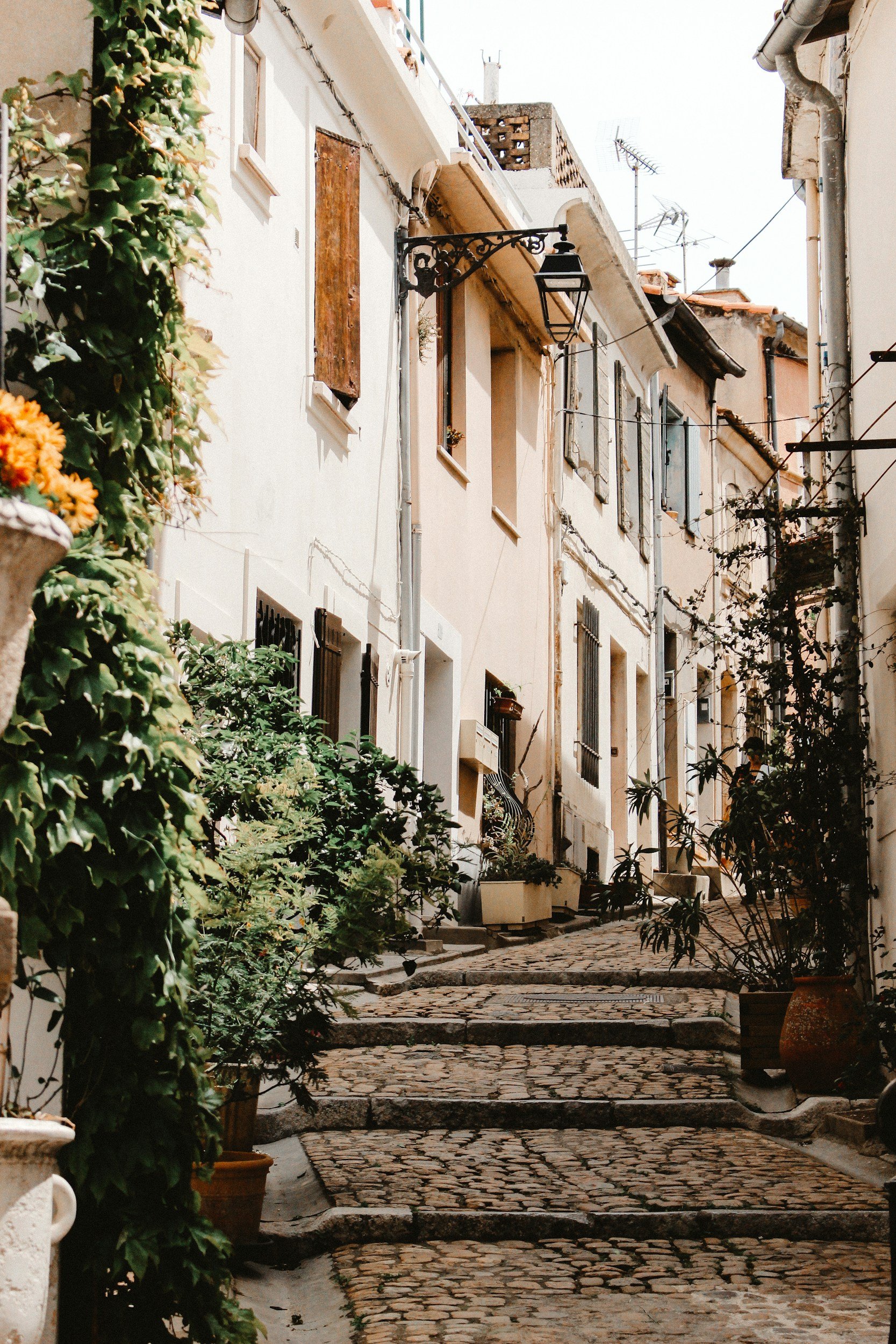
Pernes-les-Fontaines: inside the old walls, short walks, and a town that doesn’t change pace during the day
You usually arrive here from Avignon Centre by taxi, about 25 minutes once you leave the ring roads. The driver will stop just outside the old walls, often near Porte Notre-Dame or along Boulevard Gambetta, because cars don’t go much further in. From there, you walk the last couple of minutes with your bag. You pass under a stone arch, turn onto Rue de la République or one of the side streets, and within a minute or two you’re already in the middle of the town without needing to look for it.
If your hotel is inside the old town, somewhere between Place Gabriel Moutte and the smaller lanes around Rue Victor Hugo, everything sits very close together. You won’t be crossing town to get anywhere. Most days, you stay within a handful of streets without noticing it.
Mornings start quietly but not empty. Around 8:00, you’ll find one or two cafés open near Place Gabriel Moutte, with a few tables taken, usually the same people each day. Boulangerie La Pernoise on Rue de la République is already open, and you’ll see locals stepping in for bread or something small. You don’t need to look up where to go. You walk out, turn once, and you’re already deciding whether to sit outside or take something back to your room.
There isn’t a clear “center” in the way larger towns have one. You move between small squares and narrow streets without noticing where one ends and another begins. You might pass Fontaine du Cormoran, turn into a quieter lane, then come back out near Place Fléchier without planning the route. Everything connects in short distances, so even if you wander, you’re never far from where you started.
Around midday, the town doesn’t suddenly fill up. Shops stay open, a few more people move through the streets, but it never builds into anything busy. You can still walk through Rue de la République at the same pace as in the morning. If you stop somewhere for lunch, you won’t need to wait long, and you won’t need to book ahead.
Afternoons slow down slightly, mostly because of the heat. Around 14:00–16:00, some smaller shops close, and you’ll see more shutters down along the side streets. The light sits strongly in the open squares, so most people stay closer to the edges where there’s shade. If your hotel is inside the old town, you’ll be back there in two or three minutes. You don’t think about the walk, you just go.
Food in the evening is straightforward but limited in choice, and that’s something you notice quickly. Restaurants like Le Patio Pernois or smaller spots near Place Gabriel Moutte are all within a few minutes of each other. You walk out around 19:30, take a short loop through two or three streets, and decide then. If one place is full, you move on to the next without changing direction.
Evenings don’t shift much from the rest of the day. There’s no point where the town suddenly becomes busy. A few more tables fill, people sit outside for longer, but the streets stay easy to move through. Walking back to your hotel takes a couple of minutes, usually along the same route you’ve already walked earlier in the day.
After a day or two, you stop noticing the layout completely. You know which bakery you’ll go back to, which corner you’ll turn without thinking, and where you’ll likely end up in the evening. You don’t check distances, and you don’t plan routes. Everything you need sits within a few streets, and you stay within that area without feeling like you’re missing anything.
If you don’t want to pack and unpack every night, this 3–5 night list makes it easier to choose where to stay put a little longer.
Small hotels in Uzès within walking distance of everything
In Uzès, the difference between a stay that feels easy and one that slowly becomes inconvenient is usually just a few streets. You don’t need to be “in the center” in a general sense, you need to be within a very specific pocket around Place aux Herbes where everything you’ll actually use sits within a couple of minutes.
If you stay somewhere along Rue Jacques d’Uzès, Rue de la Grande Bourgade, or just behind the square toward Rue du Docteur Blanchard, your day starts without decisions. You walk out in the morning, turn once, and there’s already a bakery open. Places like La Nougatine or the smaller boulangeries along those streets have people coming in and out early, and within another minute you’re at the square where cafés are setting up. You don’t check opening hours, you don’t pick a place in advance, you just sit where there’s space.
Boutique Hôtel Entraigues is in exactly the kind of spot that makes this work. It’s close enough that you’re on the square almost immediately, but tucked in just enough that you don’t hear everything at night. Hôtel de l’Amphithéâtre is another one to look at if you want something smaller and quieter, still within a few minutes’ walk but away from the main flow of people.
La Maison d’Uzès sits slightly higher up, closer to the Duchy, and you notice that difference in the morning. It’s quieter when you step out, fewer people passing through, but you’re still only five minutes from Place aux Herbes. That short distance gives you a slower start without feeling disconnected from the town.
Where people go wrong is booking something that looks close on a map but sits just outside this core area. If your hotel is closer to Boulevard Gambetta or further out toward the ring roads, you’ll feel it every time you go out. It’s not far, but in the afternoon heat, or when you’re heading back after dinner, that extra 10–15 minutes becomes something you think about.
Evenings make this clearer. Around 19:30, Place aux Herbes fills up, and restaurants around the square are the first to go. If you’re staying nearby, you can walk out, see what looks good, and if it’s busy, just turn into a side street and find something quieter within a minute or two. Streets like Rue du Docteur Blanchard or the smaller lanes behind the square tend to have space without needing to book ahead.
If you stay directly on the square, you’ll hear it. People sit outside late, and it doesn’t really quiet down until after 22:30, sometimes later in summer. Move just one or two streets away, and it drops off quickly. That’s the difference between sleeping with windows open or closing everything just to get some quiet.
Getting into Uzès is the only part that needs planning. Most people come via Nîmes Centre, where taxis line up outside the station along Boulevard Sergent Triaire. Around midday, especially in July and August, they don’t stay there long, so it’s easier to book one in advance. The drive takes about 35 minutes, and you’ll be dropped just outside the old town, usually near Boulevard Gambetta.
From there, you walk in. If your hotel is well placed, it’s two to five minutes through narrow streets. If it’s further out, that walk gets longer quickly, especially with luggage. It’s not something you want to repeat, which is why staying close to Place aux Herbes makes such a difference.
Once you’ve checked in, you won’t think about transport again. Coffee in the morning, picking up something small during the day, going out for dinner, everything sits within a few streets. You don’t plan routes, you don’t check distances, and you don’t hesitate before heading out, even for something simple. That’s what makes Uzès work so well without a car, but only if you stay in the right part of it.
Small hotels in L’Isle-sur-la-Sorgue within a few minutes of the canals (where you’ll actually spend your time)
In L’Isle-sur-la-Sorgue, “central” can still mean a 15-minute walk in the wrong direction, and you’ll feel that every single time you go out. The part that actually works without a car is tight: around the canals, between Quai Jean Jaurès, Rue Carnot, and the smaller streets behind Rue de la République. If you stay here, your day starts the moment you step outside. If you don’t, you’ll keep walking back and forth more than you expect.
The easiest base is right by the water. Hôtel Les Névons sits along Quai Jean Jaurès, so when you walk out, you’re already where people go in the morning and evening. You don’t “head into town,” you’re already in it. Grand Hôtel Henri is a bit closer to the station, which helps on arrival, but still close enough that you’re at the canals in under five minutes, which is what matters after day one.
If you want something smaller, look just behind the main streets. Around Rue Denfert Rochereau or the lanes running parallel to Rue Carnot, there are guesthouses that stay quiet at night but keep you within a two-minute walk of everything. That balance matters here more than in most towns, because the difference between being on the canal and being one street back is noticeable once the day gets busy.
Mornings are where this location pays off straight away. Around 8:00, before anything fills up, you can walk along Quai Rouget de Lisle or near the smaller bridges and find a café without waiting. Café de France is the obvious one, but if you keep walking a minute or two, you’ll find quieter spots along the water where you can sit without thinking about it. If your hotel is nearby, it’s a two-minute decision. If it’s further out, you’ve already committed to a walk before you’ve even had coffee.
By 10:00, especially on Sundays, the town feels completely different. The antique market spreads out across Rue des Roues, along the canals, and through parts of Rue de la République. You don’t cross town anymore, you move within it. If you’re staying right in the center, you can step in and out of the market, go back to your room when it gets too warm, and come out again later. If you’re closer to Avenue de la Libération or back toward the station, that extra 10–15 minutes becomes something you start planning around, especially when it’s hot.
Afternoons slow down, but not in a quiet, empty way. Around 14:00–16:00, some shops close, the light gets stronger, and people stay closer to the shaded parts of the canals. This is when being near the water matters. Streets just off the canals, especially around Quai Jean Jaurès, still feel manageable, while the more open roads further out feel much warmer. If your hotel is central, you can head back for a break without thinking twice. If not, you’ll probably stay out longer than you want just to avoid the walk.
Evenings are when the town resets. Around 18:00, the market clears, and suddenly you can walk through the same streets without stopping every few steps. This is when it feels easy again. Restaurants along the canals fill steadily from 19:30, but you don’t need to plan much. If something looks busy, you walk one street back, toward Rue Carnot or the smaller lanes nearby, and you’ll usually find a table.
One thing you’ll notice after a day or two is how often you cross the same bridges. If your hotel sits on the opposite side from where you tend to eat or have coffee, you’ll end up walking back and forth across the canals multiple times a day. It’s not far, but it adds up. Staying close to where you naturally spend your time avoids that completely.
Once you’re in the right part of L’Isle-sur-la-Sorgue, everything stays within a few minutes. Coffee in the morning, a walk along the canals, heading back in the afternoon, going out again in the evening. You don’t think about transport, but you do notice how much easier it is when you’re not constantly covering that extra distance just to get to where the town actually happens.
Small hotels in Nyons for a slower stay where you don’t need to plan much
Nyons only feels this simple if you stay right in the middle of it, not just somewhere “close enough.” The part that actually works is small: Place des Arcades, Rue des Déportés, and the short stretch down toward the Pont Roman. If your hotel sits in that pocket, you won’t really think about where things are after the first walk. You step out and you’re already in it, rather than heading somewhere.
What usually happens is that your mornings fall into the same pattern without you planning it. You walk out around 8:00, pass under the arches at Place des Arcades, and there are already a few tables taken, often by the same people each day. You’ll probably stop at Boulangerie Bérard on Rue des Déportés without deciding to, pick up something small, then walk back toward the square and sit down wherever there’s space. No one’s rushing, so you don’t feel like you need to either, and you’ll likely end up at the same spot again the next morning.
If you’re staying somewhere like Hôtel Colombet, you’re just far enough from the square that it stays quiet at night, but close enough that you’re there in two minutes. That distance matters more than it sounds. Places that look “just outside town” on a map might add 10–15 minutes each time you go out, and you’ll notice that in the afternoon or later in the evening more than at any other time.
The way you move through Nyons is actually different from the other towns in Provence. You’re not crossing from one area to another to try new places, and you’re not walking far just to see something else. You end up doing the same short loop without thinking about it, from the square down toward the Pont Roman, across the bridge where the view opens up slightly, then back through a side street with small shops selling olives and local products. It’s not a long walk, but it’s enough to break up the day, and you’ll probably do it more than once.
Even on market day, when more people are around, it doesn’t change how you move. The stalls fill the streets around the square, but you’re never stuck in it. You turn into a quieter street and you’re out again within a minute, and if you’re staying nearby, it’s easy to step back to your room for a while and come out again later without thinking about timing it properly.
Afternoons slow down quite a lot, especially in summer. Around 14:00, shutters come down along the smaller streets, and the light across the square becomes stronger, so most people stay under the arches or head indoors. Because everything is so close, going back to your hotel doesn’t feel like a separate part of the day. You’re there in a couple of minutes, and you can head out again later when it cools slightly without it feeling like a decision.
Food is simple here, and you’ll notice you stop looking for new places fairly quickly. Restaurants like La Table de l’Europe are right there, along with a few smaller spots within the same few streets, and you’ll probably return to one or two of them more than once. You don’t need to plan dinner in advance. You walk out, follow the same short route you’ve already walked during the day, and choose something along the way.
By the evening, nothing really shifts in the way the town feels. A few more tables fill up, people stay out a bit longer, but the streets remain easy to move through. Walking back to your hotel takes a couple of minutes, and you won’t think about how to get there because you’ve already done it a few times earlier in the day.
After a day or two, you stop making small decisions about where to go. You know which bakery you’ll go to in the morning, which café you’ll sit at, and where you’ll likely end up in the evening. You’re not trying to fit things in or cover distance, and without a car, that works in your favour here.
Small hotels in Pernes-les-Fontaines inside the old town (a quieter base just outside Avignon)
If you get dropped off just outside the walls in Pernes-les-Fontaines, usually somewhere near Porte Notre-Dame or along Boulevard Gambetta, it doesn’t feel like you’ve arrived at a “destination.” There’s no main square pulling you in. You take your bag, walk through one of the openings in the wall, turn once or twice onto Rue de la République or a smaller lane, and within a minute or two you’re already inside the town without needing to figure anything out.
This is why staying inside the old town matters so much here. Not close to it, not a short drive away, but actually inside it. The part that works is small: Place Gabriel Moutte, Rue de la République, Rue Victor Hugo, and the little streets connecting them. If your hotel sits somewhere in that area, everything you’ll do over the next few days happens within a couple of minutes, and you won’t think about distance again.
Maison de la Rose sits inside the old town, tucked into one of the smaller lanes just off Rue de la République, so you don’t arrive to anything obvious or busy. You’re usually dropped near one of the gates and walk the last couple of minutes in, turning once or twice through narrow streets before you reach it.
From there, everything is close in a very practical way. Place Gabriel Moutte is about two minutes on foot, and you’ll pass a bakery or small café on the way without needing to look for one. Mornings tend to start the same way here, a short walk out, something from a nearby boulangerie, then sitting down under the trees in the square.
The house itself is centred around a small courtyard, which makes a difference in the afternoon when the streets get warm. You can step back in for a while without feeling like you’re “going back” for the day, then head out again later when it cools.
Dinner is just as simple. You walk out, take a short loop past Rue de la République, and end up somewhere nearby like Le Patio Pernois or one of the smaller places within a couple of streets. Nothing requires planning, and you’re never far from your room.
If you stay somewhere more tucked into the old town, closer to Place Gabriel Moutte or along one of the smaller lanes, you step out and you’re already where things happen. That’s the difference you’re aiming for here.
Mornings don’t require any planning. Around 8:00, you’ll see a couple of cafés open near Place Gabriel Moutte, a few tables already taken, people sitting without rushing anywhere. You might stop at a bakery along Rue de la République, pick up something small, and then just walk until you find a place to sit. There’s no need to compare options or check where to go, because everything is right there.
What stands out is how little the town changes during the day… you basically walk through the same streets at 9:00, 13:00, and 18:00, and it feels more or less the same. A few more people pass through, shops open and close, but nothing builds into a crowd. You can walk from one small square to another, pass Fontaine du Cormoran, turn into a side street, and it all stays at the same pace.
Because everything is so close, you don’t move around much. You’ll probably loop through the same streets a few times a day without noticing. From Place Gabriel Moutte toward one of the smaller squares, back through Rue Victor Hugo, then out again later. It’s not about covering ground, it’s just moving through the same area in a slightly different way each time.
Afternoons are warm, especially in summer, but the narrow streets make a difference. Around 14:00–16:00, shutters come down along the smaller lanes, and you’ll notice people staying closer to shaded parts of the street or sitting in the small squares. If your hotel is nearby, you go back for a bit without thinking about it. It’s a short walk, not something you need to plan around.
Food is simple and close together. Places like Le Patio Pernois or a couple of smaller restaurants near the center are all within a few minutes. You don’t need a list or a plan. You walk out around 19:30, take a short turn through two or three streets, and decide based on what’s open and has space. If one place is full, you move on without changing direction.
Evenings don’t change much from the rest of the day. A few more tables fill, people sit outside longer, but the streets stay easy to walk through. You head back to your hotel along the same route you’ve already taken a few times, and by then you don’t think about where you’re going.
After a day or two, you stop paying attention to the layout completely. You know which bakery you’ll go to in the morning, which street you’ll walk without thinking, and where you’ll likely end up in the evening. You’re not trying to see more or go further, and without a car, that’s exactly what works here. Everything you need stays within those same few streets, and you stay there without feeling like you need anything else.
Getting there without a car (real routes, not just “take the train”)
Most people arrive in Provence through Avignon TGV, especially if you’re coming from Paris. The train itself is easy. Direct TGV, around 2 hours 40 minutes, reserved seats, luggage space, nothing complicated. If you book a bit ahead, you’ll usually pay somewhere between €45 and €90. Closer to the date, it can easily go over €120.
If you’re arriving from Paris and don’t want to rent a car straight away, this train-access markets route makes the first few days feel much easier to plan.
The part that catches people off guard is what happens when you get off.
Avignon TGV is outside the old town. When you walk out, you’re not stepping into cafés or a square, you’re in a large, open station area with taxis, buses, and not much else. In summer, there’s very little shade, and it’s not somewhere you want to wait around longer than necessary.
If your next step is a regional train, you need to get to Avignon Centre. There’s a small shuttle train that runs between the two stations every 20–30 minutes. It takes about 5 minutes and costs a few euros, but it still means another platform, another wait, and dragging your bag along again. A taxi between the stations takes about 10–15 minutes depending on traffic and costs roughly €15–€20.
If you’re heading somewhere like Pernes-les-Fontaines, this is usually where you skip the extra step and take a taxi directly from Avignon TGV instead.
The last stretch to each town is where it either works or becomes annoying
From Avignon or Nîmes, each town in this guide works differently, and this is where small decisions start to matter.
For L’Isle-sur-la-Sorgue, once you’re at Avignon Centre, the TER train is straightforward. It runs regularly, takes about 25 minutes, and costs around €10–€15. When you arrive, the station is quiet, and from there it’s about a 12–15 minute walk into town.
You’ll walk along Avenue Voltaire Garcin, then cross toward Avenue des Quatre Otages. It’s flat, but there’s not much shade, so if you arrive in the middle of the afternoon in July or August, you’ll feel it. If your hotel is near Rue Carnot or along the canals, you’re done once you get there. If it’s further out, that extra distance comes back every time you go out later.
Uzès is different because there’s no train station at all. You’ll come in via Nîmes Centre or Avignon, then take a taxi. From Nîmes, taxis line up outside the station on Boulevard Sergent Triaire, but around lunchtime they disappear quickly, so it’s better to book ahead.
The drive takes about 35 minutes and usually costs €60–€90. You’ll be dropped near Boulevard Gambetta, just outside the old town. From there, it’s a short walk through pedestrian streets. If your hotel is near Place aux Herbes, it’s only a couple of minutes. If it’s further out, you’ll notice it straight away with a suitcase.
For Pernes-les-Fontaines, the simplest option is a taxi from Avignon Centre or Avignon TGV. It takes around 20–25 minutes and costs roughly €35–€50. There are buses (line 905), but they don’t run frequently enough to rely on without checking exact times. Most people take a taxi, especially if arriving later in the day.
And if you’re piecing together a longer route and wondering whether a rail pass actually makes sense for this kind of travel, this Eurail decision guide answers that without overcomplicating it.
Nyons is the only one where you need to check the connection properly
Nyons is where people either get it right or end up waiting around longer than they expected.
The usual route is Avignon → Montélimar by train (about 1 hour, €15–€25), then Montélimar to Nyons by bus or taxi.
The bus (line 71) runs a few times a day, roughly every 2–3 hours. The journey takes just over an hour and costs only a few euros, but the timing has to line up. If your train arrives just after a bus has left, you’re waiting a long time.
Montélimar station itself is easy, but when you step outside, it’s quiet. There’s no steady line of taxis waiting, so if you’re relying on one, it’s better to pre-book. A taxi to Nyons takes about 45 minutes and costs somewhere between €80–€120.
When you finally arrive, usually near Place de la Libération or close to the Pont Roman, everything becomes simple again. The center is compact, and most hotels are within a few minutes’ walk. But getting that connection right beforehand makes a big difference to how the day feels.
Arrival time matters more than the route
You can take the exact same route and have a completely different first evening depending on when you arrive.
If you reach your town around 15:00–16:00, everything lines up easily. Taxis are still available, cafés are open, and you have time to check in, walk around a bit, and figure out where to eat.
Arrive after 19:00, and things change quickly. In smaller towns like Nyons or Pernes-les-Fontaines, restaurants don’t stay open all evening, and transport options are limited. If something doesn’t line up, there’s not much flexibility.
One last thing people don’t think about is the final walk. All of these towns have pedestrian streets, uneven stone surfaces, and narrow lanes. A “five-minute walk” from where your taxi drops you off can feel longer with a suitcase, especially in the heat.
Once you’re in, though, that’s it. You won’t need to think about transport again. Everything you’ll actually do sits within a few streets, and that’s where the stay starts to feel easy.
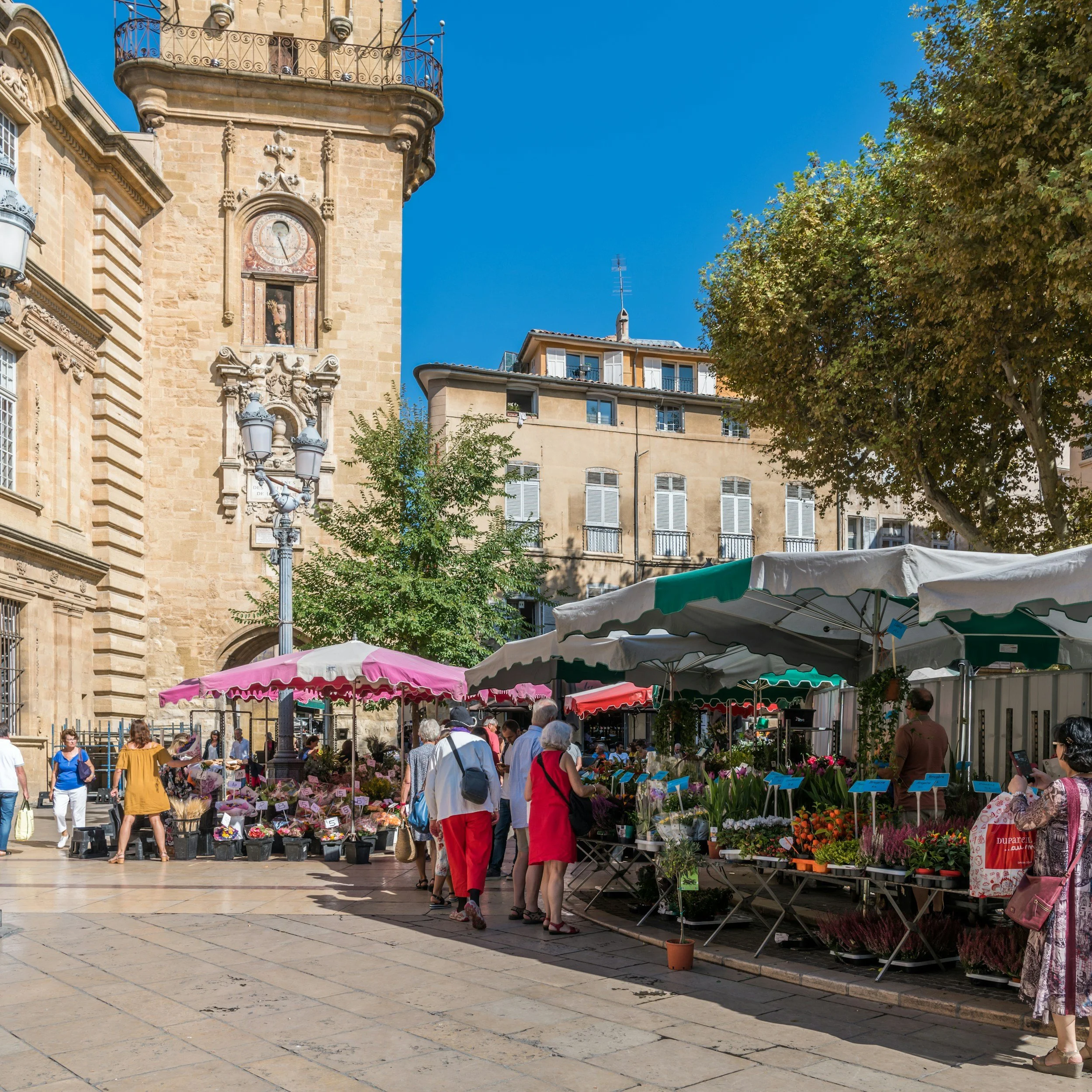
Moving between towns without a car (what actually works once you’re there)
On a map, everything looks close. L’Isle-sur-la-Sorgue to Pernes-les-Fontaines is barely anything. Uzès to Avignon doesn’t look far either. The problem isn’t the distance, it’s what happens in between.
Take L’Isle-sur-la-Sorgue to Pernes-les-Fontaines. You’d assume it’s a quick hop. In reality, you’re looking at a bus via Carpentras or a taxi. The bus might run a few times a day, often from the area near Gare de L’Isle-sur-la-Sorgue or connecting through Carpentras, and if the timing doesn’t line up, you’re waiting more than you’re moving. A 15–20 minute drive turns into a 1.5 hour plan, and you’ll spend more time checking schedules than actually being anywhere.
Uzès is even more fixed. There’s no train station, so every time you leave, you’re going back out via Nîmes or Avignon. You can’t just decide at 11:30 to head somewhere else for lunch and come back. Once you’re in Uzès, especially if you’re staying near Place aux Herbes, your day naturally stays there. Coffee in the square, a walk toward the Duchy, back through Rue de la Grande Bourgade, dinner a couple of streets away. There’s no real gap in the day where leaving makes sense.
What people actually end up doing after the first day
Most people arrive with the idea that they’ll “see a few towns.” Then the first day settles, and that plan usually drops off without much thought.
If you’re staying in L’Isle-sur-la-Sorgue, your morning starts along the canals near Quai Jean Jaurès, maybe coffee at Café de France, then a slow walk through Rue Carnot. By the time you’ve done that, the idea of leaving for a few hours, checking a timetable, and then coming back doesn’t really fit into the day anymore.
Nyons is even more fixed in that sense. Once you’ve walked from Place des Arcades down toward the Pont Roman and back, maybe stopped at Boulangerie Bérard or picked up something small along Rue des Déportés, you realise there isn’t anywhere you need to go. The whole day sits within that loop. Leaving means committing to a bus schedule or a taxi that needs to be arranged in advance, and most people don’t end up doing it.
Pernes-les-Fontaines works the same way. You move between Place Gabriel Moutte, Rue de la République, and a few smaller streets, and the day fills itself. There’s no obvious reason to break it just to go somewhere else for a couple of hours.
The only times moving makes sense (and how people actually do it)
Moving between towns works when you treat it as a proper travel day, not something you try to fit in between breakfast and dinner.
If you’re going from Uzès to L’Isle-sur-la-Sorgue, for example, you’ll go via Nîmes or Avignon. Taxi to Nîmes (around €60–€90), train to Avignon Centre, then a TER onward. It’s not difficult, but it takes a couple of hours once you include waiting times. If you leave in the morning and arrive around midday, it works well. If you try to squeeze it into the middle of the day, it doesn’t.
Taxis work for shorter distances if you plan them. L’Isle-sur-la-Sorgue to Pernes-les-Fontaines is about 20 minutes and roughly €30–€40. Easy if you book it the day before, less so if you try to find one on the spot in the afternoon.
When Provence works best without a car (and when you start to notice the limits)
If you’ve booked the right location, the first couple of days don’t involve any decisions about getting around. You leave your room and you’re already in the part of town you’ll use.
In Uzès, that usually means stepping out somewhere near Rue Jacques d’Uzès or Rue de la Grande Bourgade and reaching Place aux Herbes in under two minutes. Around 8:00, the bakeries along that stretch are already open, and you’ll see people going in and out with paper bags. You pick something up, cross onto the square, and sit down wherever there’s space. Later in the morning, you might walk up toward the Duchy and back, but it’s all within a few minutes and you’re never deciding whether it’s “worth going out.”
In L’Isle-sur-la-Sorgue, the same thing happens along the canals. If you’re staying near Quai Jean Jaurès or just off Rue Carnot, your morning is a short loop along the water, crossing two or three bridges, stopping somewhere for coffee, then heading back. You’re not covering distance, you’re just moving within the same stretch of streets.
Nyons is even tighter. From Place des Arcades down to the Pont Roman and back takes about ten minutes, and most of your day sits inside that loop. You pass Boulangerie Bérard on Rue des Déportés, maybe stop there once or twice, and end up under the arches again without planning it.
By day three, you realise you’re walking the same exact routes
This is where it shifts, not because anything is missing, but because everything is contained.
In Nyons, you’ll notice that every walk takes you past the same corners. You leave the square, pass the same café tables under the arches, walk down toward the bridge, and come back through the same street with the small food shops. There aren’t alternative routes that change the experience much. You’re in the same area every time.
In Pernes-les-Fontaines, it’s even more fixed. You move between Place Gabriel Moutte, Rue de la République, and the surrounding lanes, and that’s the town. You might pass Fontaine du Cormoran, turn into a quieter street, and come back out again, but you’re not discovering a new part of town on the third day. You’re repeating the same small network of streets.
In L’Isle-sur-la-Sorgue, the repetition shows up along the canals. You’ll recognise the same bridges, the same corners near Quai Rouget de Lisle, and the same café terraces. Without the market, the town becomes a set route rather than something that changes much throughout the day.
Timing changes everything with markets here, so before locking in dates, it’s worth checking this seasonal guide to avoid turning up on the wrong week.
This is where having a car would change what you do next
Not in a big way, but in small, practical ways.
From Nyons, for example, there are vineyards and olive estates just outside town, but you won’t get to them without arranging a taxi or checking the few bus routes that run out there. From Uzès, you could easily spend a couple of hours in a nearby village or drive through the countryside, but without a car, that turns into a planned trip rather than something you decide on the same morning.
What usually happens is that people don’t bother. Once you’re settled into a place where everything is close, the idea of organising transport just to leave for a few hours doesn’t fit into the day anymore.
Why it still works better than you expect
Even though you’re staying within a small area, these towns are set up so that you don’t feel like you’re missing something essential.
In Uzès, you can shift slightly each evening without going further. One night on Place aux Herbes, the next just behind it on Rue du Docteur Blanchard, then somewhere closer to the Duchy. You’re still within five minutes of your hotel, but it doesn’t feel exactly the same each time.
In Nyons, the variation is smaller, but that’s also the point. You’re not looking for new areas, you’re settling into a routine. Coffee under the arches, a short walk, back again later. The day repeats, but it doesn’t feel forced.
Pernes-les-Fontaines works in the same way. You’re not moving around to “see more,” you’re staying in one place that already has enough for a couple of days.
If you’ve also been looking at the Loire Valley and can’t quite tell how it compares, this Loire comparison clears that up in a couple of minutes.
Where it starts to feel too contained
It usually shows up somewhere between the third and fourth day.
You’ve already walked every street you’re likely to use. You know exactly how long it takes to get from your hotel to the square, and you’ve probably eaten within the same few blocks each evening. Without a car, there isn’t an easy way to change that without planning ahead.
At that point, you either accept that you’re staying in a very small area, or you move on to the next town.
What actually works best without a car
What works in practice is keeping each stay short enough that it doesn’t reach that point.
Two to three nights in one place, then moving on. That way you get the part that works best, arriving, settling in, not thinking about transport, without staying long enough for the repetition to stand out.
Without a car, Provence isn’t about moving between places during the day. It’s about choosing a town where everything you need sits within a few streets, and then staying there until it’s time to move on.
Mistakes people make when planning a car-free stay in Provence
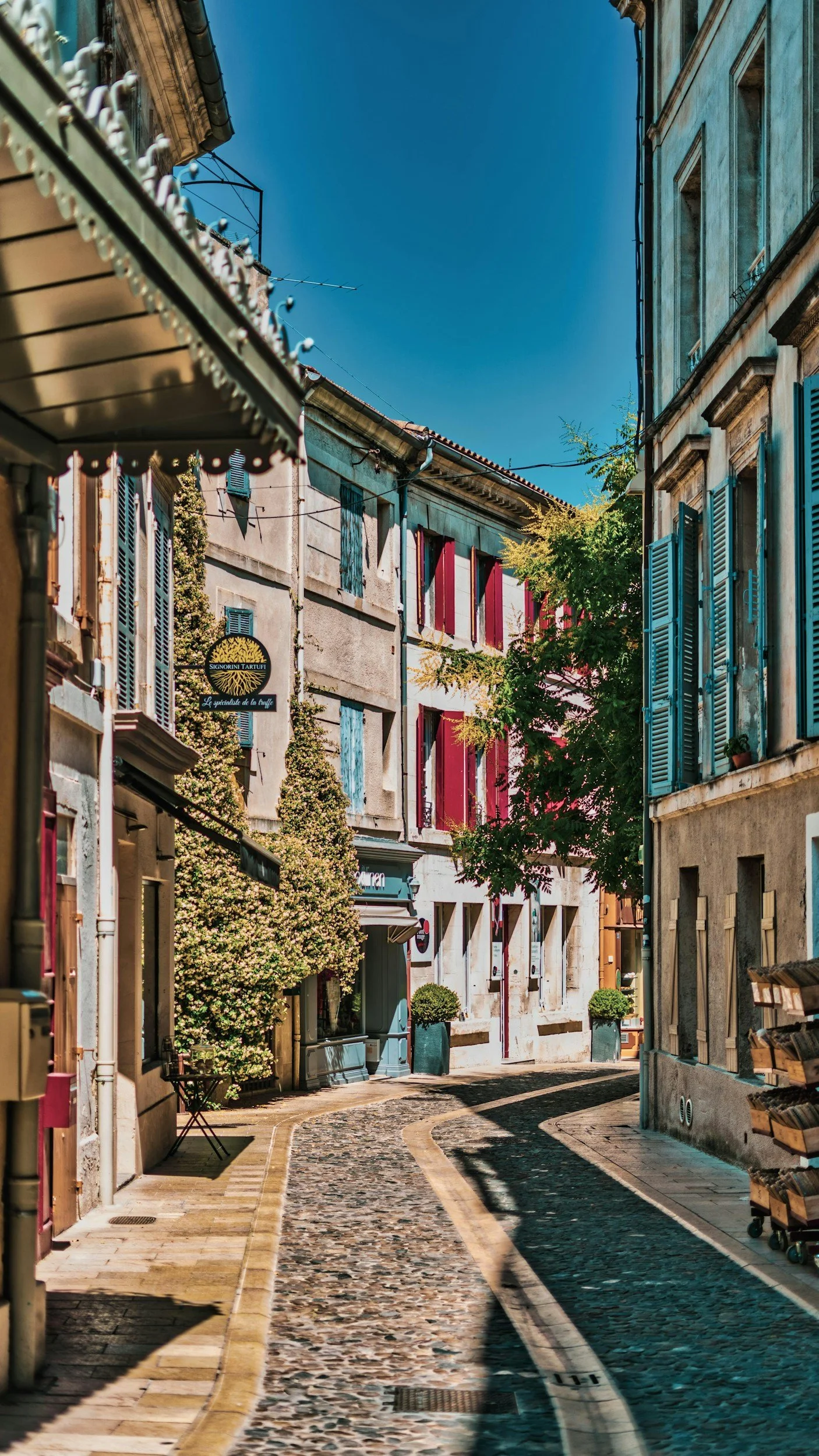
Booking the wrong “central” and realising it on the first morning
This is the one that shows up immediately.
You book something that looks central on a map, maybe near the station in L’Isle-sur-la-Sorgue or just outside the old town in Uzès, and technically it is. But the first morning, when you step out around 8:00 and want coffee, you realise you’re not actually where your day happens.
In L’Isle, if you’re closer to Avenue de la Libération or near the station, you’ll walk 10–15 minutes just to reach Quai Jean Jaurès or Rue Carnot where the cafés and bakeries are. You’ll do that same walk again later in the day, and again in the evening. It’s not far, but it repeats.
In Uzès, staying near Boulevard Gambetta instead of within a few streets of Place aux Herbes feels fine when you arrive, then different at 21:30 when you’re heading back after dinner and it’s still warm. That extra stretch is the part you didn’t plan for.
The places that actually work are very specific streets, not general areas.
Trying to move between towns like you would in a city
A lot of people plan this like they’re in Italy with trains running every hour between towns. That’s not how this part of Provence works.
You don’t wake up in Uzès, have breakfast, then decide to spend a few hours in Nyons and come back. There’s no simple connection that supports that kind of day.
To get from Uzès to L’Isle-sur-la-Sorgue, for example, you’re looking at a taxi to Nîmes (around €70), a train to Avignon, then another train or taxi onward. Even if everything lines up, it takes a couple of hours. If it doesn’t, it becomes half a day.
What actually happens is that people stop trying after the first day and just stay where they are.
Assuming buses run often enough to not think about them
They don’t.
The bus from Montélimar to Nyons (line 71) might run every 2–3 hours. If your train arrives at 11:10 and the bus left at 11:00, you’re waiting until early afternoon. That’s the difference between arriving for lunch or arriving mid-afternoon with the day already gone.
Same with smaller routes around Carpentras or between L’Isle and nearby towns. They exist, but not in a way that lets you be flexible.
If you’re not checking exact times in advance, you’re guessing, and that’s where plans start to fall apart.
Not thinking about where the taxi actually drops you
You won’t be dropped at your hotel door in most of these towns.
In Uzès, taxis usually stop near Boulevard Gambetta, and you walk the last part through narrow streets. In Pernes-les-Fontaines, you’re often left just outside the walls near Porte Notre-Dame. In L’Isle-sur-la-Sorgue, you might be closer, but not always exactly at the entrance.
That final walk might be three minutes, or it might be ten, depending on where you’ve booked. With a suitcase, in the afternoon heat, on uneven stone streets, it feels longer than it sounds.
If your hotel is deep inside the old town, that’s great once you’re settled. On arrival day, it’s something you’ll notice.
Arriving too late and expecting the evening to work itself out
This one is easy to avoid, but a lot of people don’t think about it.
If you arrive in Nyons or Pernes-les-Fontaines after 19:00, you don’t have the same options. Restaurants aren’t open all night, and you won’t feel like walking around trying multiple places after a long travel day.
Arrive around 15:00–16:00 and the whole evening works differently. You check in, walk around, maybe sit somewhere for a drink, and then dinner happens naturally.
Arrive late, and you go straight into “finding something that’s still open.”
Packing like you’re staying in a city hotel
Rolling a large suitcase over cobblestones through narrow streets is the part no one mentions.
In L’Isle, that walk from the station along Avenue Voltaire Garcin doesn’t feel long until you’re doing it at 14:00 in July. In Uzès, dragging a suitcase through the old town for 10 minutes after a taxi drop feels very different from a flat pavement in a city.
A smaller bag makes a bigger difference here than it does anywhere else on the trip.
Expecting to casually “see the countryside” without a plan
You’ll see vineyards on the way in, olive groves around Nyons, small roads branching off everywhere, and it’s easy to think you’ll just head out for a few hours one day.
Without a car, that doesn’t really happen spontaneously.
From Nyons, there are olive estates and vineyards just outside town, but getting there means booking a taxi or finding a specific local route. From Uzès, the surrounding villages are close, but not connected in a way that lets you come and go easily.
What usually happens is that people stay in town instead, not because they planned to, but because it’s easier.
Staying too long in one place without realising how small it is
This is the quiet one that shows up after a couple of days.
Nyons, for example, is basically Place des Arcades, Rue des Déportés, and the walk down to the Pont Roman. That loop takes ten minutes. You’ll do it multiple times a day, and by day three, you’ll know it well.
Pernes-les-Fontaines is similar. You move between Place Gabriel Moutte, Rue de la République, and a few smaller streets, and that’s the town.
They’re good for two or three nights. After that, you’re repeating the same routes, the same cafés, the same restaurants.
Uzès and L’Isle hold a bit longer, but even there, everything happens within a small area, and once you’ve settled into it, you either stay in that rhythm or move on.
Small details that quietly decide whether your stay feels easy or slightly off
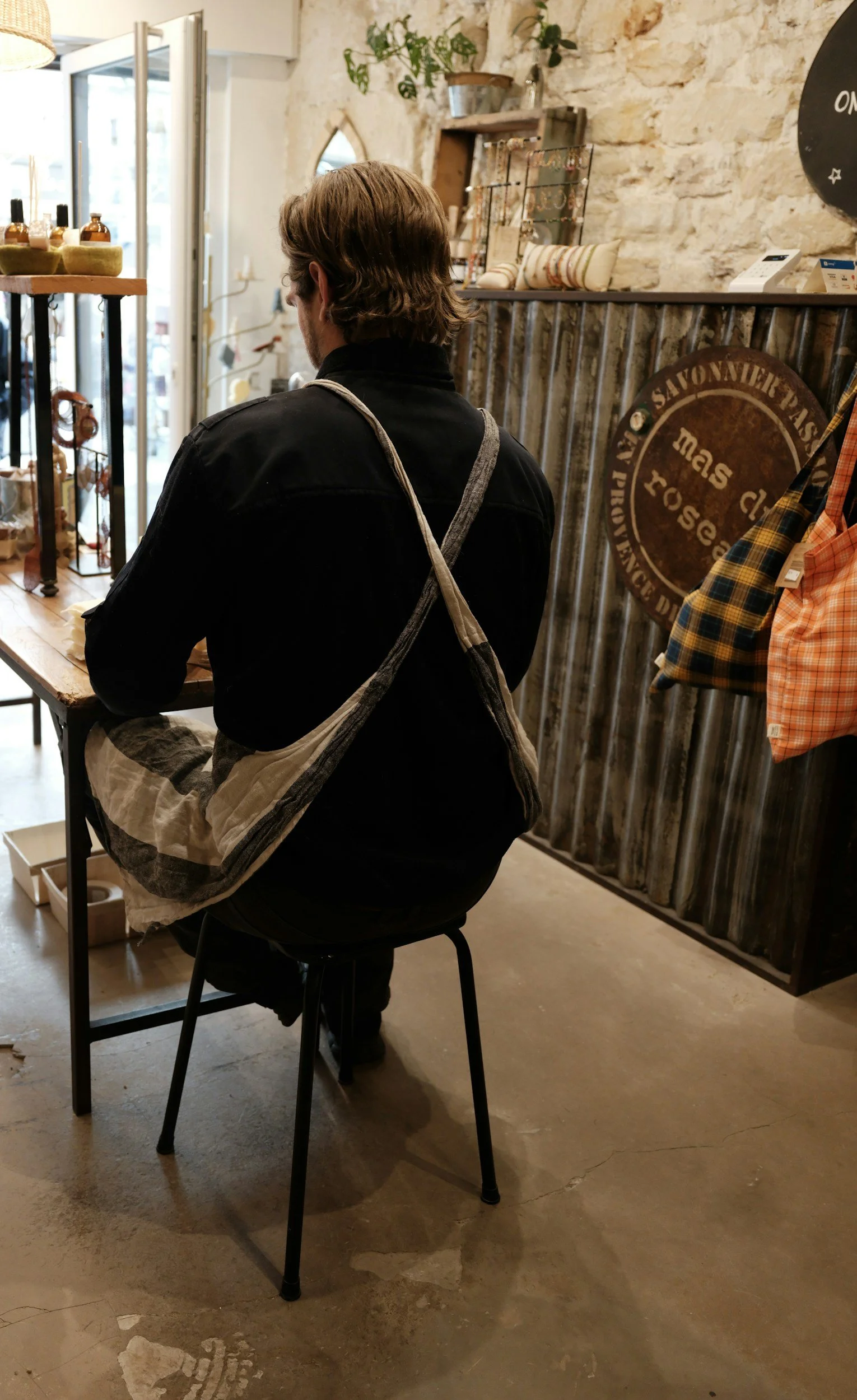
In L’Isle-sur-la-Sorgue, if your hotel is on the opposite side of where you naturally spend time, you’ll notice it quickly. You cross the same bridges again and again, usually near Quai Jean Jaurès or around Rue Carnot, just to get back for a short break or to change before dinner.
It’s not far, but by the second day you realise you’re doing the same 8–10 minute walk multiple times a day without planning it. Staying on the “right side” of that loop removes it completely.
The 14:30 decision you didn’t expect to make
Around mid-afternoon, especially in July and August, you’ll hit a point where you either go back to your hotel or stay out longer than you want.
In Nyons, that usually happens under the arches at Place des Arcades. You’ve been out since morning, it’s warm, and you’re deciding whether it’s worth walking back. If your hotel is two minutes away, you go. If it’s 12–15 minutes, you stay, even if you’d rather rest.
That one decision repeats every day.
What happens when you carry something back in the heat
It’s easy to ignore this when planning, but it shows up quickly.
In L’Isle, walking back from the Sunday market along Rue des Roues with a bag of antiques or food feels very different at 11:00 vs 15:00. In Uzès, even a short uphill stretch toward the Duchy with a bottle of wine in your bag becomes something you plan around the next day.
Distances don’t change, but how they feel does.
The moment a town starts to feel “done”
This doesn’t happen because there’s nothing to do. It happens because you’ve repeated the same routes enough times.
In Nyons, it’s usually after you’ve walked from Place des Arcades to the Pont Roman and back a few times. In Pernes-les-Fontaines, after looping between Place Gabriel Moutte and Rue de la République for a couple of days.
It’s subtle, but you feel it. Not boredom, just familiarity.
That’s usually the point where people either slow down completely or realise they’re ready to move on.
Before you book: what to double-check so the location actually works
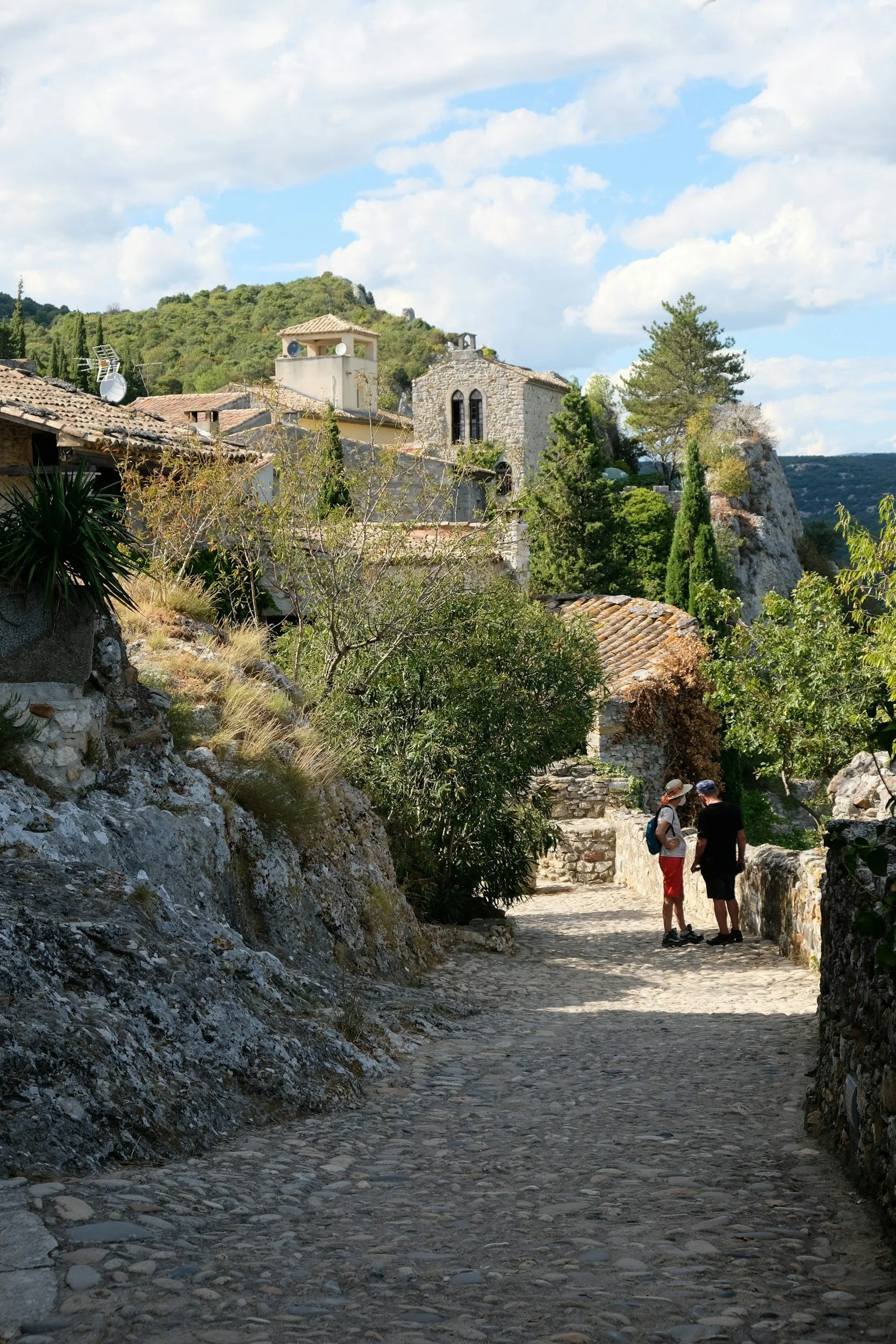
One of the easiest ways to get Provence wrong without a car is booking something that looks right on a map but doesn’t work once you’re there. The differences are small, but you’ll feel them every day.
The first thing to check is not just “distance to the center,” but which streets you’ll actually use. In Uzès, anything more than a few streets from Place aux Herbes starts to change how your day flows. A hotel near Boulevard Gambetta might look central, but you’ll notice that extra walk every morning and again after dinner. Staying somewhere around Rue Jacques d’Uzès or Rue de la Grande Bourgade removes that completely.
In L’Isle-sur-la-Sorgue, it’s less about distance and more about which side of the canals you’re on. If your hotel is near Avenue de la Libération, you’ll walk into town every time you go out. If you’re near Quai Jean Jaurès or Rue Carnot, you step out and you’re already there. That difference shows up three or four times a day.
It’s also worth checking where taxis can actually drop you. In Uzès and Pernes-les-Fontaines, cars don’t go deep into the old town. You’ll likely be dropped near the edge and walk the last part. If your hotel is a five-minute walk from there, it’s fine. If it’s fifteen minutes through narrow streets with a suitcase, that’s something you’ll remember on arrival day.
Noise is another detail that’s easy to overlook. In Uzès, rooms facing directly onto Place aux Herbes stay active late into the evening, especially in summer. Move just one or two streets away, and it becomes quiet much earlier. The difference is small on a map, but obvious at night.
Finally, look at what’s actually nearby in the morning. Not just restaurants in general, but a bakery or café within one or two minutes. That’s what removes the need to plan your day from the moment you wake up. If you have to walk ten minutes just to get coffee, you’ll notice it every morning.
If you’re considering doing a similar trip outside summer, the feel changes more than people expect, and this winter version shows exactly how.
What actually changes when you don’t have a car (and why some people end up preferring it)
The part people don’t expect isn’t the logistics, it’s how their days start to look after the first couple of mornings.
You stop trying to “make the most of the day.”
In Uzès, you don’t leave your hotel thinking about where to go next. You walk out, pass the same bakery on Rue Jacques d’Uzès, maybe glance at Place aux Herbes to see what’s happening, and then you just stay in that area longer than you planned. Not because there’s so much to do, but because there’s no reason to leave.
In L’Isle-sur-la-Sorgue, it’s the same along the canals. You sit down for coffee near Quai Jean Jaurès, then realise an hour has passed without you moving anywhere. If you had a car, you’d probably already be thinking about where to go next. Without one, you don’t.
Nyons makes it even clearer. After you’ve walked from Place des Arcades down to the Pont Roman once or twice, the day stops being about covering ground. You go out, come back, go out again, but always within the same few streets. It’s repetitive, but it doesn’t feel forced.
What changes is not the number of things you do, but the pace at which you move between them.
That’s also where people split.
Some start to feel limited after a couple of days because they’re used to moving on quickly. Others realise they don’t actually miss it, because everything they need is already within reach, and the day feels easier without having to plan what comes next.
That’s not something you’ll see on a map or in a typical guide, but it’s what ends up shaping the whole trip.
FAQ: staying in Provence without a car
Do you need a car in Provence or can you rely on trains and taxis?
You don’t need a car if you choose the right town and stay in the right part of it. In places like Uzès (near Place aux Herbes), L’Isle-sur-la-Sorgue (around Quai Jean Jaurès and Rue Carnot), or Nyons (around Place des Arcades), everything you’ll actually do sits within a few minutes’ walk.
What doesn’t work is trying to rely on trains and buses to move between towns during the day. They exist, but not frequently enough to be flexible. Without a car, it’s much easier to stay in one place for a few days and then move on.
Where is the best place to stay in Provence without a car?
Uzès is the easiest overall. If your hotel is within a couple of streets of Place aux Herbes, you won’t need to think about transport at all once you arrive.
L’Isle-sur-la-Sorgue works well if you stay near the canals, especially around Quai Jean Jaurès or Rue Carnot. Nyons and Pernes-les-Fontaines are quieter and more limited, but they work if you’re happy staying within a small area and not moving around much.
Is Provence walkable without a car?
Yes, but only inside specific towns, not across the region.
Uzès, Nyons, and L’Isle-sur-la-Sorgue are fully walkable once you’re in the center. You’ll spend most of your time within a 5–10 minute radius. What’s not walkable is the countryside between towns. Without a car, you’re not moving freely between villages unless you’ve planned it in advance.
How do you get from Avignon to L’Isle-sur-la-Sorgue without a car?
Take a TER train from Avignon Centre to L’Isle-sur-la-Sorgue (about 25 minutes, €10–€15).
From the station, it’s a 12–15 minute walk into the canal area via Avenue Voltaire Garcin. If your hotel is near Rue Carnot or Quai Jean Jaurès, you won’t need to repeat that walk again during your stay.
How do you get to Uzès without a car?
Uzès doesn’t have a train station. The easiest route is:
Train to Nîmes Centre → taxi to Uzès (about 35 minutes, €60–€90).
Taxis wait outside the station on Boulevard Sergent Triaire, but they’re often taken quickly around midday, so booking ahead is safer.
Is it easy to visit multiple towns in Provence without a car?
No, and this is where most plans fall apart.
Distances are short, but connections are limited. A trip that looks like 20 minutes by car can turn into 1.5–2 hours by train and bus. Most people who try to “hop between towns” end up spending more time on logistics than actually enjoying the places.
How many days should you stay in each town in Provence without a car?
Two to three nights works best.
Uzès and L’Isle-sur-la-Sorgue can stretch to three or four nights because there’s more variation within the town. Nyons and Pernes-les-Fontaines are smaller and usually feel “done” after two to three days, especially without a car.
What is the biggest mistake when visiting Provence without a car?
Booking a hotel that looks central but isn’t in the part of town you’ll actually use.
For example, staying near Avenue de la Libération in L’Isle-sur-la-Sorgue or just outside the old town in Uzès means you’ll walk 10–15 minutes every time you go out. That adds up quickly, especially in summer heat.
Can you visit vineyards in Provence without a car?
Not easily on a spontaneous basis.
Most vineyards around Nyons, Uzès, or L’Isle-sur-la-Sorgue require a taxi or pre-booked tour. They’re often just a short drive away, but not connected by frequent public transport. If vineyard visits are a priority, it’s worth planning one specific trip rather than assuming you’ll “head out one day.”
Is it better to stay in one place or move around without a car?
Staying in one place for a few days works much better.
Once you’re in towns like Uzès or Nyons, your day naturally stays within a few streets. Trying to move around daily turns everything into schedules and connections. Staying put lets the trip feel easier and less structured.