

The best way to experience Aix starts at the market
Aix-en-Provence in spring is the kind of place you understand pretty quickly, not because there’s a lot to “see,” but because everything just starts to make sense once you’re there. By mid-morning, the stalls at Place Richelme are already in full swing, with strawberries laid out in neat rows, wedges of cheese wrapped in paper, and regulars stopping to chat while buying the same things they probably bought last week. You catch the smell of bread as you pass Rue Gaston de Saporta, then something saltier near the olive stands, and without really thinking about it, you slow down.
It sits about 30 minutes from Marseille, but the atmosphere feels completely different. The centre is compact, easy to walk, and doesn’t feel designed around visitors. Cours Mirabeau is the obvious starting point, with its wide stretch of plane trees and slightly worn façades, but it’s the smaller streets just off it that you’ll end up enjoying the most. Around the Mazarin district, doors are left slightly open, galleries feel quiet, and there’s a sense that people are going about their day without adjusting anything for outsiders.
Spring fits the city especially well because daily life is still intact. Mornings revolve around the markets, particularly around Place Richelme, where people shop with intention rather than browsing. By lunchtime, tables fill up along Rue Espariat and nearby streets, and meals tend to stretch longer than planned. No one is in a rush to turn tables, and you notice it. Later in the day, places like Librairie Goulard stay open with a steady flow of locals drifting in and out, and the evenings build slowly, with wine bars opening without much noise or fuss.
There’s also a quieter connection to art here that doesn’t feel packaged. You’ll see references to Cézanne here and there, but more than that, it’s the light and the way the city is laid out that makes you notice things differently. If you walk up towards Atelier Cézanne on Avenue Paul Cézanne, just outside the centre, the shift is subtle but noticeable. The streets open up slightly, the views stretch further, and you start to see why he stayed here.
The weather in April and May usually sits somewhere between 18 and 22 degrees, which makes it easy to spend most of the day outside without thinking about it too much. You move between neighbourhoods without planning it, stop when something catches your attention, and the day builds naturally rather than around a schedule.
There aren’t major sights pulling you from one end of the city to the other in Aix, and if you arrive with that expectation, it might feel underwhelming at first. But give it a day or two, and it shifts. You start returning to the same café on Place des Cardeurs, noticing which bakery on Rue d’Italie has a queue forming just before noon, or recognising faces at the market.
If you’re enjoying the feel of Aix but want something slightly less polished, it’s worth looking further north. Drôme Provençale has a similar mix of markets and stone villages, just with fewer people passing through.
The atmosphere there shifts quite a bit later in the year as well. Autumn in Drôme Provençale feels a lot quieter, especially around the smaller village markets.
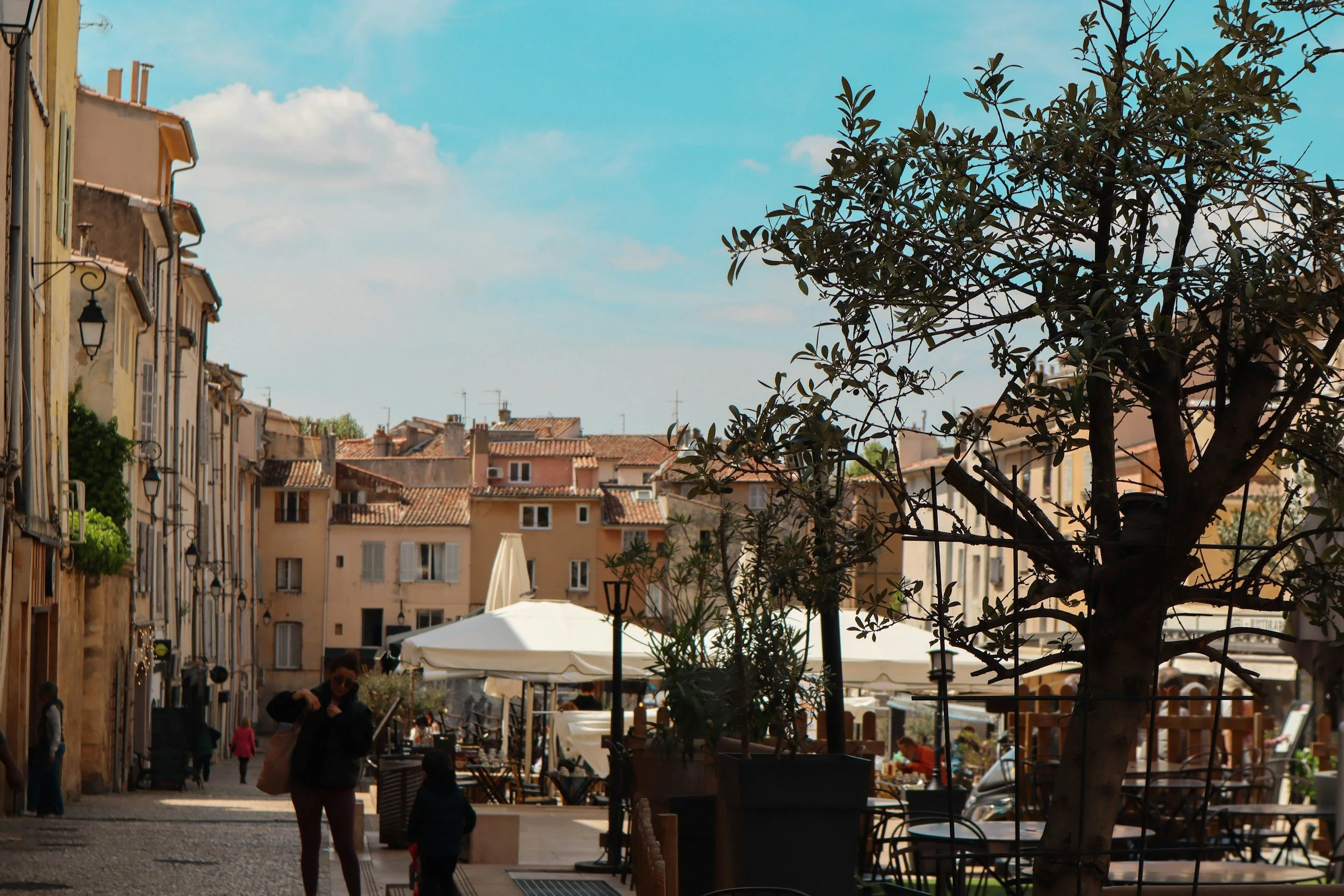
Things to do in Aix-en-Provence in Spring (markets, cafés and local spots)
Markets in Aix-en-Provence are where locals shop here regularly, and you can feel that right away. There’s no “market voice” yelling prices, no pressure to buy. Just quiet conversations, messy handwritten signs, and a mix of regulars picking up what they actually need for dinner.
Start at Place Richelme, the small square just off the main drag, where a fresh food market sets up every morning (including Sundays). It’s compact, but there’s always a good mix: early-season strawberries, artichokes, glossy olives, wheels of Tomme and Comté, homemade nougat, eggs with feathers still on them, and florists selling armfuls of mimosa or tulips depending on the week.
If you’re here on a Tuesday, Thursday, or Saturday, the market scene stretches further into Place des Prêches, Place Verdun, and the surrounding streets. These days are worth planning around. You’ll find a full mix of farmers, food producers, and local makers: think Marseille soaps, linens, ceramics, old books, secondhand leather bags, vintage tableware, and thick blocks of tapenade and aioli sold by weight.
Spring is a particularly good time to visit because the produce is changing week by week. Winter citrus gives way to asparagus, fresh herbs, and the early signs of summer vegetables… Plus, it’s not yet peak tourist season, so it’s easier to move at your own pace.
Bring a tote bag or basket if you can. A simple lunch of market bread, olives, and cheese tastes better when you’ve picked it out yourself. There are benches tucked into the quieter edges of town - make sure to soak in the vibe.
Markets are a big part of the experience here, but they’re not all the same. Quiet market towns in Provence tend to feel more local and less curated than the ones in larger destinations.
If you’ve spent time around Paris before coming south, you’ll notice the difference quite quickly. Markets near Paris are usually more structured, while here they follow the season more closely.
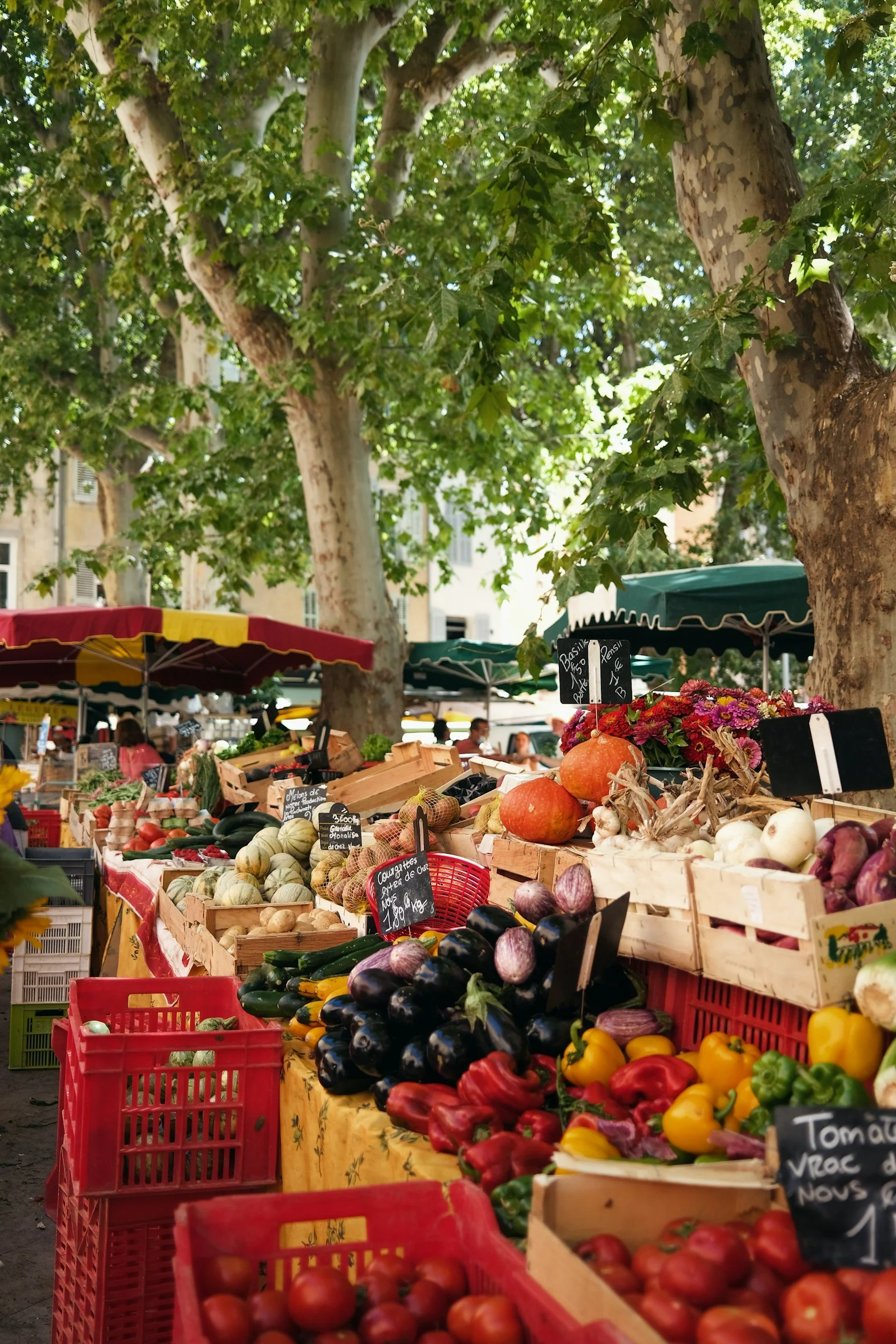
Visit Cézanne’s Studio (Atelier de Cézanne)
Cézanne’s studio sits just outside the old town, about a 20-minute walk uphill from the center. It’s a simple, one-room space where he worked for the last few years of his life. If you’ve seen his still-life paintings, you’ll recognize some of the objects right away (bottles, fruit bowls, a plaster skull) all still arranged on the shelves and tables where he left them.
There isn’t much interpretation or storytelling here, which is part of what makes it interesting. You’re just standing in the room where he worked every day. It’s quiet, not crowded, and doesn’t take long to see (around 30 to 45 minutes) but it gives you a better sense of the person behind the paintings than most galleries do.
It’s best to go on a weekday morning when it’s calm. You can either walk there or take a local bus (there’s a stop nearby). Afterward, if you’re in the mood, there’s a short walking route through town called the Cézanne Trail, with markers in the pavement that connect key spots from his life: his school, painting locations, and places he lived. It’s a good way to explore more of the city without needing a map or a schedule.
Slow Mornings at Cafés and Bookshops
Aix really is the kind of place where people still take their time over coffee. And in spring, it’s warm enough to sit outside, but not so hot that you’re fighting for shade. Whether you’re starting your day or taking a break mid-afternoon, there are plenty of spots to sit down, read, write, or just watch what’s going on around you. If you’re still figuring out how to structure your time here, it can help to see it laid out properly. This Aix-en-Provence guide walks through the city in a way that feels realistic rather than overplanned.
If you’re looking for a low-key place to spend a morning, Book in Bar is a good place to start. It’s a bilingual English-French bookshop tucked away on a quiet street just off the city center. There’s a small café inside with teas, coffee, and simple cakes (nothing fancy, but good). You’ll see students working, travelers flipping through guidebooks, and locals reading quietly. It’s not trendy, just a genuinely calm place to be.
La Brûlerie Richelme is great for a cozy coffee break. They roast their own beans, and it’s a small, local spot that tends to draw people who know good coffee. Great for an espresso or a slow break while you watch the market stir to life nearby.
Café Yoyo is a newer café with a relaxed vibe, nice specialty coffees (and some non‑coffee options), and a friendly, unpretentious atmosphere. Good if you want a modern café feel without the bustle of touristy spots.
If you do want something more breakfast-y, Maison Nosh is a modern spot that does things like pancakes, eggs, or avo toast, alongside French classics. It’s nicer, more styled, and more popular with younger locals and travelers, but the food is good and the staff are friendly. They also open earlier than many other places in town, which helps if you’re an early riser.
There’s also Café Voltaire, near the university buildings, which has a more traditional feel - it’s been around a long time and still attracts a mix of regulars. On certain days, there are students spilling out onto the terrace; on others, it’s mostly older locals with a paper and a glass of wine, even before lunch.
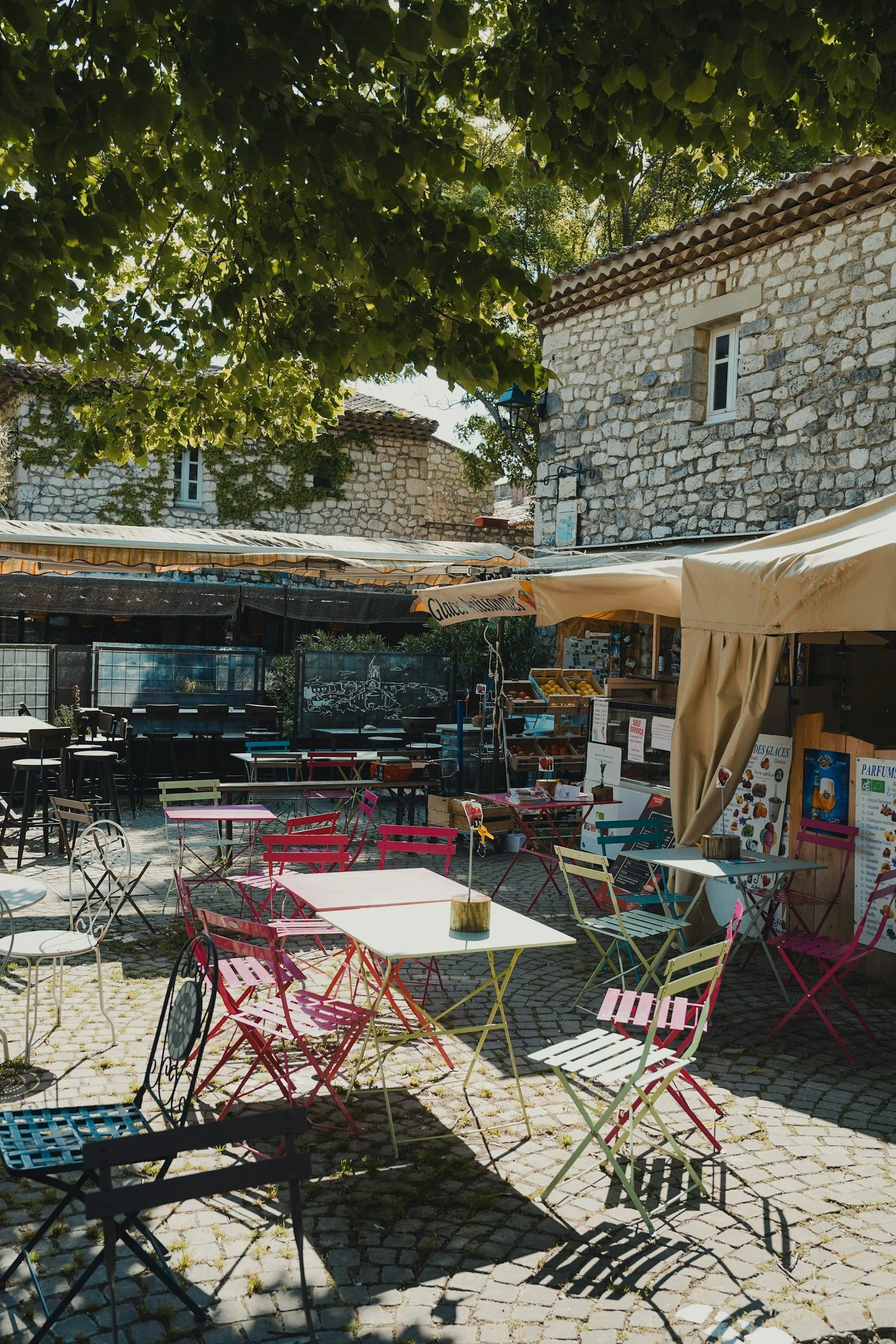
Explore the Mazarin Quarter
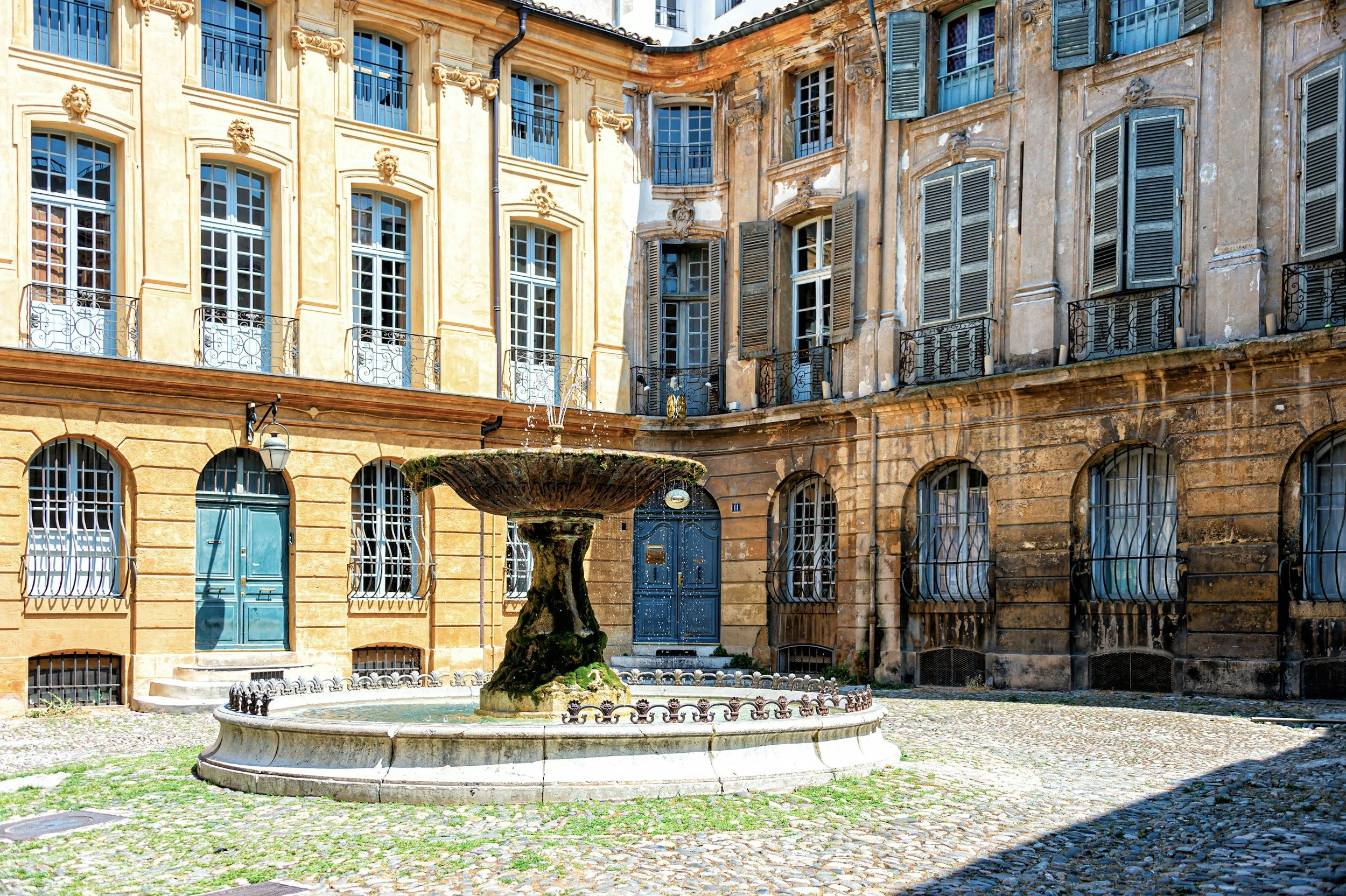
Just a few steps south of Cours Mirabeau, the Mazarin Quarter is one of the calmest parts of the city to walk through. No big shops, no noise, just quiet streets with worn cobblestones, tall façades, and the occasional fountain tucked into a corner.
This neighborhood was built in the 17th century for the city’s upper class, and it still feels slightly set apart. The streets follow a neat grid pattern (unusual for older European cities), which makes it easy to explore without getting lost, even if you’re walking aimlessly - which is half the point here.
If you like architectural details, you’ll notice how much variation there is behind the repetition: different shades of faded green and dusty blue shutters, carved door knockers, worn marble steps. In spring, vines start creeping back over the stone walls, and the light filtering through the narrow alleys gives everything a soft, slightly cinematic look. Even if you’re not someone who usually takes photos, you’ll probably end up reaching for your phone here.
Along the way, you’ll come across Église Saint-Jean-de-Malte, a gothic-style church with a simple interior and a stillness that offers a nice pause from the street. Just next door is the Musée Granet, which is on the smaller side but worth a visit! Especially if you want an hour or two of calm, curated culture. The collection includes works from Cézanne, Ingres, Rembrandt, and some interesting modern pieces, too. It’s well-organized and rarely crowded, which makes it an easy stop if you’re looking for something to do between breakfast and a late lunch.
You won’t find cafés or shops crammed into every corner here, and that’s totally fine. This part of Aix is less about doing, more about noticing. Bring a book, walk slowly, and enjoy this French region.
And if Aix is just one stop on a longer trip, it helps to zoom out a little. A Provence itinerary in May gives a clear sense of how to move between places without rushing.
Take a half-day trip to Puyricard or Vauvenargues
If you feel like stepping just outside the city without committing to a full-day tour, Puyricard and Vauvenargues are two nearby villages that are easy to reach and give you a very different sense of the region. They’re quieter, more rural than the bigger Provencal towns.
Puyricard, about 7 km north of Aix, is best known for its handmade chocolate and local wine estates. There’s a family-run chocolate factory here called Chocolaterie de Puyricard that’s been around since the '60s. It’s not a fancy setup, but you can visit the boutique and buy directly. They do proper seasonal selections in spring, including pralines, orangettes, and their signature ganache. You can also visit nearby vineyards like Château La Dorgonne or Domaine La Brillane, which often welcome visitors for tastings (though it’s a good idea to call ahead or check opening hours online).
You can take Bus 140 from Aix-en-Provence’s main bus station. It runs often on weekdays and drops you in the center of Puyricard. If you're going just for chocolate and a short walk, that’s all you need.
Vauvenargues, on the other hand, is more of a scenic stop - a tiny village at the foot of Montagne Sainte-Victoire, the mountain that Cézanne painted over and over again. Picasso actually bought the chateau here and is buried on the grounds, though the property isn’t open to the public. Still, the village itself is quiet and photogenic, and seeing it from the outside adds a surprising bit of context to the landscape, especially if you’ve seen Cézanne’s paintings of the same mountain. You’ll see wildflowers, almond blossoms, and long open stretches of road without much traffic. It’s a great place for a relaxed walk or a slow picnic outside if the weather’s nice.
Both villages are reachable by car in under 30 minutes. If you’re relying on public transport, Puyricard is easier. You can take local bus line 140 from Aix’s main station, which runs fairly regularly. Vauvenargues is harder without a car, but doable if you check bus line 110 in advance (service is limited, especially on weekends).
Ps. There’s a small épicerie and a bakery in the village - perfect to grab some bread, cheese, and fruit for a casual picnic. There are also picnic tables just outside the village along the trailheads if you feel like staying out in nature for a bit.

Where to Stay in Aix-en-Provence
If you’re staying in Aix for more than a night or two, this is the kind of place that makes a difference. Maison du Collectionneur is a small, independently run guesthouse in the Mazarin Quarter, one of the quietest, most elegant corners of the city. It feels more like being invited to stay in someone’s beautifully designed French home than checking into a hotel.
There are only a handful of rooms, each one styled a bit differently, with vintage furniture, curated art, thick linen curtains, books on the shelves. Nothing feels generic or mass-produced. Some rooms look out onto the street, but the best part might be the private garden out back, where breakfast is served when the weather allows. Sitting under the trees with fresh pastries, jam, and coffee - it’s exactly the kind of slow morning you come to Provence for.
It’s ideal if you like places with a bit of character and calm. No restaurant or 24-hour desk, but that’s part of the charm! It’s quiet, intimate, and best suited to travelers who value atmosphere over amenities. The hosts are thoughtful and know the city well, so if you need help with restaurant bookings, walking routes, or transport tips, they’re happy to share what they know.
The hotel is tucked just a few minutes’ walk from Cours Mirabeau, but the area itself stays peaceful, even during busier seasons. Everything in the old town is walkable from here.
Les Quatre Dauphins
If you’re looking for something central, well-priced, and full of local charm, Les Quatre Dauphins is a great choice. It’s set just a few steps from the Fontaine des Quatre Dauphins - a small, sculpted fountain tucked into one of the most elegant corners of the Mazarin Quarter. From here, you’re five minutes to the cafés on Cours Mirabeau, ten to the markets, and close to nearly everything you'd want to reach on foot.
The hotel itself is small and a little old-fashioned - in the best way. Think vintage tile floors, wooden furniture, and framed prints that feel like they've been there for decades. Rooms are simple but spotless, and while there’s no attempt at boutique design, that’s part of the appeal. It just feels French.
Because it’s not trying to be trendy, the vibe stays relaxed. It’s quiet at night, and the staff are friendly in that unfussy, efficient way that’s easy to appreciate when you’ve been traveling for a while. Many guests return year after year, which says a lot - it’s the kind of place people come back to not because it’s luxurious, but because it’s dependable.
There’s a small breakfast room downstairs that serves a traditional French breakfast (coffee, croissants, baguette, butter, jam) nothing extravagant, but good quality and convenient if you’re heading out early.
Une Chambre en Ville
If you prefer small-scale places with a bit of design sense and a low-key atmosphere, Une Chambre en Ville is a great fit. It’s a modern B&B tucked into a quiet side street just off the main shopping area, so you’re close to everything without being right in the middle of the tourist flow.
The style here is minimalist but warm with clean lines, light woods, neutral tones, and a few thoughtful details like books on the bedside tables or local ceramics in the breakfast room. It feels calm and uncluttered, which is ideal if you’re trying to disconnect or just need somewhere restful to come back to after a day of wandering.
There are only a few rooms, which keeps things peaceful, and the hosts are genuinely helpful without hovering. If you’re traveling solo, this is one of those places where you won’t feel out of place - it’s quiet, secure, and relaxed, with just the right amount of social interaction over breakfast if you're up for it.
A fresh, French-style breakfast is served in a small dining space or courtyard, depending on the season. Think warm croissants, local honey, fruit, and coffee… simple, but well done.
It’s an easy walk to the Mazarin Quarter, the daily markets, and several good cafés, but far enough off the main streets that you won’t hear late-night noise.
Shops, studios and small galleries worth stepping into
If you’re someone who makes space in your travel days for browsing, looking, and learning (not just sightseeing) Aix has a lot to offer. It’s a city with a strong tradition of craftsmanship and culture. You’ll find thoughtful makers, galleries with real depth, and shops where people still talk about how things are made. These stops aren’t for rushing through!
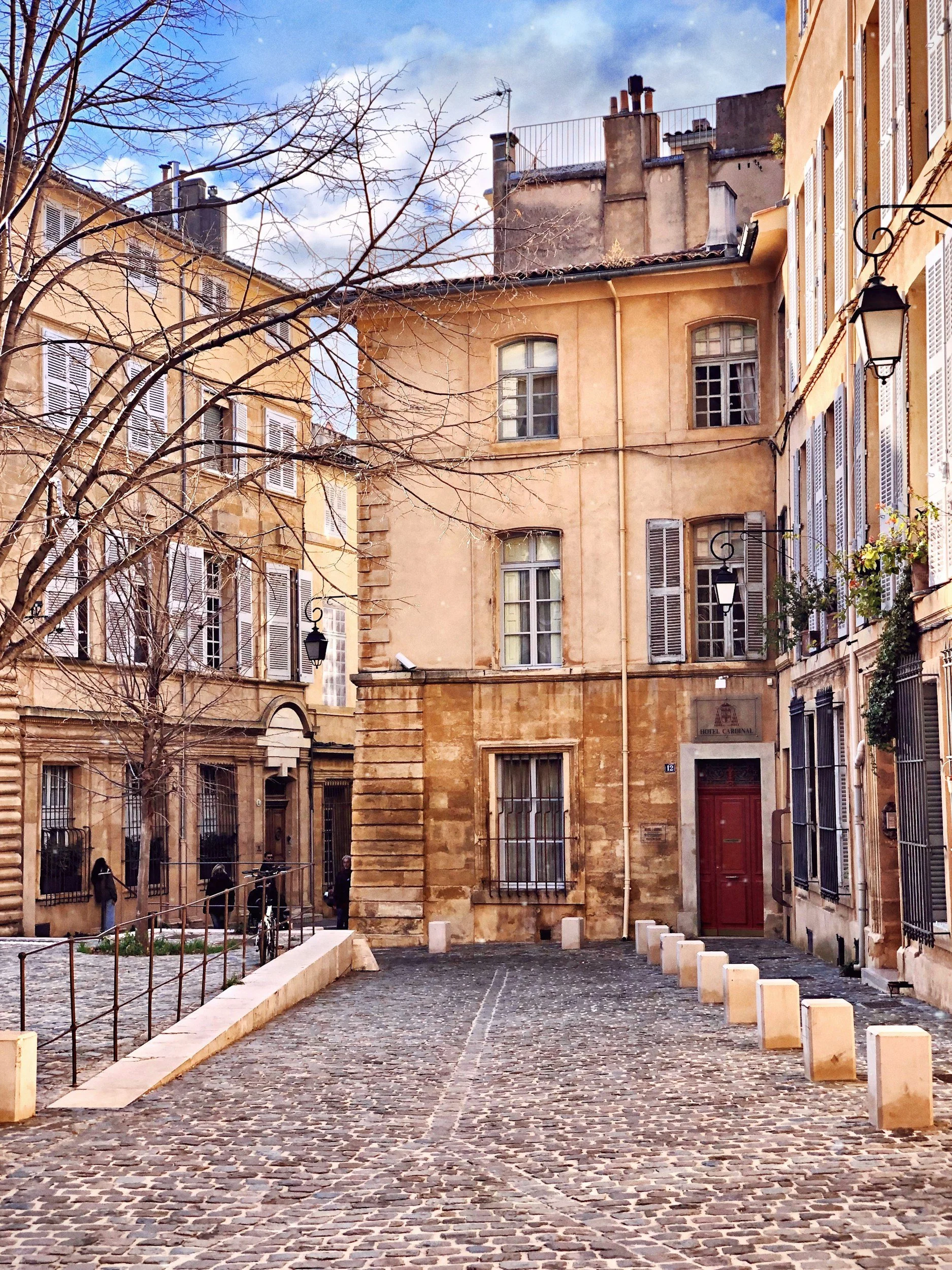
La Savonnerie de l’Avenir
This small soap workshop stands out for being truly local and low-intervention - no modern branding, no mass-produced packaging. Everything here is made using traditional cold-process methods, using ingredients that come straight from Provence: olive oil, lavender, rosemary, honey. The soaps are natural and simply wrapped, and the staff are open to explaining how everything is made.
It’s a good stop if you’re looking for useful souvenirs that won’t get tossed or sit on a shelf. And because it’s small-scale and not part of a tourist circuit, you’re buying something that actually supports the maker.
You’ll find it on Rue Granet, not far from the Musée Granet which makes it easy to build into a morning of walking and exploring nearby cafés.
La Manufacture de Provence
This shop has a more modern look, but the products are still deeply rooted in Provençal craft and tradition. The focus is on natural cosmetics (think linen sprays, hand creams, soaps, and essential oils) all made locally with clean ingredients and understated packaging.
What makes it special is the care taken with presentation and scent. The staff are helpful without being “pushy” and the space itself is quiet and inviting. It’s a good place to find gifts, but just as appealing if you’re shopping for yourself and want something that doesn’t feel mass-produced.
Located on Rue Espariat, it’s close to several independent shops and design stores, so it’s worth setting aside an hour or so to explore the area on foot.
Musée du Calisson
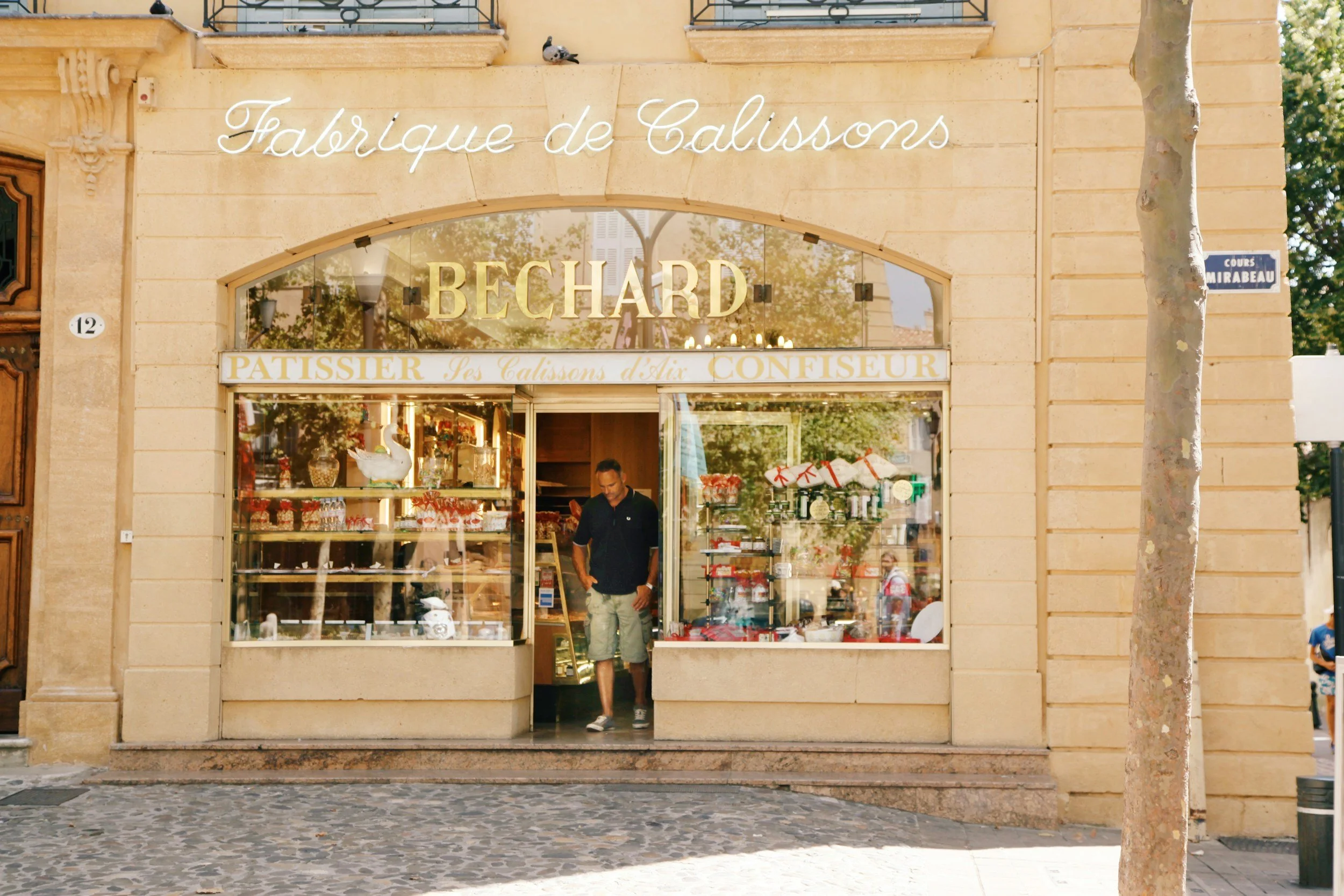
Aix is known for its calissons: almond-shaped sweets made from candied melon, orange peel, and ground almonds, finished with a thin layer of icing. You’ll see them in shops all over the city, but the Musée du Calisson, located just outside the center, gives you a deeper look at the history and process behind them.
It’s a small museum attached to the production site of Roy René, one of the region’s most respected makers. The exhibition is short (about 30 to 45 minutes) but well laid out, and includes a tasting at the end. It’s a nice option if you’re interested in regional food traditions but want something lighter than a full food tour.
To get there without a car, take Bus 5A from Aix-en-Provence’s main station. IT’s a short ride, and the bus stops just a few minutes from the entrance.
Other Worthwhile Stops
Atelier M - A local ceramic studio that produces hand-thrown tableware in natural, earthy tones. Pieces are functional, timeless, and often one-of-a-kind. It’s a good option if you’re looking for something to take home that doesn’t feel like a souvenir.
Marché des Arts et des Créateurs - An open-air weekend market that rotates locations throughout the city. Local artists, jewellers, illustrators, and textile makers set up stalls here. If you’re in town on a Saturday or Sunday, ask at your hotel or guesthouse where it’s happening.
Le Boudoir du Regard - A compact gallery and shop space that focuses on photography and contemporary art. There’s usually a small exhibition on, along with framed prints and books for sale.
These places are easy to miss if you’re just following the popular travel guides - but they’re part of what makes Aix a rewarding place to explore at a slower pace. They give you a sense of what’s being made here right now, and what the city values outside of its monuments and markets.
If you’re curious about lavender but not the peak-season version of it, timing makes a big difference. Provence Verte in spring tends to bloom earlier than people expect.
Where to eat and sit for a while in Aix-en-Provence
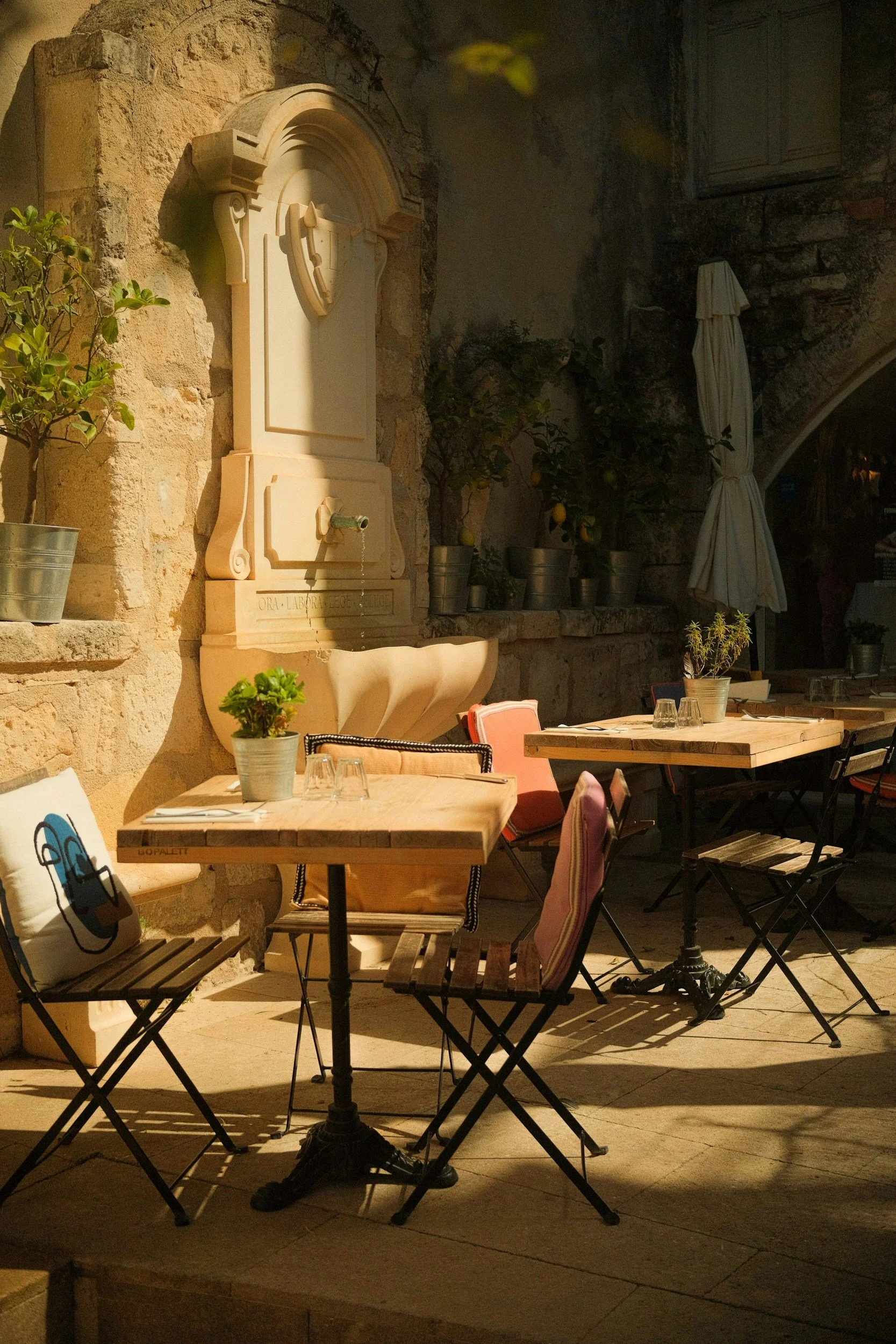
While putting this together, I wasn’t looking for the most talked-about places or the ones with the longest wine lists. I was more interested in where people actually go. Places that feel good to sit in, where the food is seasonal and well-made, and where you’re not rushed in or out.
These spots are full of character. Some are better for a quiet coffee in the morning, others for a simple lunch or a glass of wine when the day slows down. If you like places that get the basics right (good ingredients, calm setting, people who care about what they’re serving) these are probably the ones you’ll want to know about.
Coffee, Breakfast & Brunch Spots
KAVA Aix
A modern, relaxed spot for coffee and brunch. The menu changes often, but expect things like soft-boiled eggs, toast with seasonal toppings, good granola, and proper coffee. The vibe is clean and calm!
Maison Weibel
A local institution (part pâtisserie, part tearoom) and perfect if you’re in the mood for something classic. Their calissons are worth trying, and they do excellent fruit tarts and pastries. Sit upstairs or outside, take your time, and let the morning unfold slowly.
Book in Bar
Not technically a café, but a bookshop with a small tea counter tucked inside. A great choice if you want a quiet corner, a good pot of tea, and something to read. It’s one of those places where you don’t feel like a tourist, even if you are one.
Wine Bars & Light Dinners
La Méduse
Casual, welcoming, and focused on natural wines. It’s the kind of place where the staff actually enjoy talking about what they’re pouring, and where you can take your time over a few small plates. It fills up in the evenings, but the pace stays relaxed.
Le Vintrépide
A reliable spot if you’re looking for a proper sit-down dinner without the fuss of fine dining. Their wine list leans local and the menu is short, which usually means everything is fresh and well thought out. The service is quiet and professional, and the atmosphere suits solo diners just as well as couples.
Provençal Flavours & Seasonal Dishes
Côté Cour
For something a little more refined, Côté Cour blends traditional Provençal ingredients with a more modern, creative approach. It’s not cheap, but the attention to detail shows - and the setting is beautiful, especially if you can sit outside.
La Coupole
If you’re after something generous and no-nonsense (fresh seafood, roasted vegetables, good local wine) this is an easy pick. The menu covers a lot of southern French classics, but without the tourist gloss. It's the kind of place you go back to before your trip is even over.
Food here doesn’t always need to mean a restaurant booking. A picnic in Provence can easily end up being one of the better meals of your trip.
Why Visit Aix-en-Provence in Spring?
Spring is when Aix feels easy to be in. Not quiet, not empty, just… balanced. You notice it straight away on Cours Mirabeau where the café tables are back outside, but people aren’t competing for them yet. Someone is reading the newspaper, another table has a long coffee that’s clearly been sitting there a while, and no one is in a hurry to leave.
If you’re visiting earlier in spring, the region feels slightly different again. Provence in April still has that just-before-season feeling, especially out in the countryside.
In the mornings, Place Richelme fills up properly again. You’ll see strawberries that actually smell like strawberries, bunches of herbs still slightly damp, and regulars moving quickly between stalls because they already know where they’re going. If you walk through around 9:30 or 10:00, it feels active without being crowded, and you can still stop without being in anyone’s way.
The temperature sits in that range where you don’t really think about it. A light jacket early on, then by midday you’re fine sitting outside, even in the shade. Streets like Rue Espariat or the smaller lanes behind Place des Prêcheurs start to fill up slowly rather than all at once, and lunch stretches longer than you expect. You order something simple, maybe a salade chèvre chaud or a plate of pasta, and before you know it, an hour has passed without you checking the time.
What makes spring work so well here is that you’re not adjusting your day around heat or crowds. In summer, the middle of the day can feel a bit too intense, and the centre fills up in a way that changes how you move. In spring, you can cross the old town without thinking about it. You can walk into a café and find a table. You can change your plan halfway through the day and it doesn’t feel like a mistake.
If you leave the centre, the difference is even clearer. The road out towards Vauvenargues feels green again, not dry, and if you go in the direction of Puyricard you’ll pass small stretches of almond trees just starting to bloom. Montagne Sainte-Victoire is still quiet enough in the morning that you hear your own steps on the path, and the air feels cooler the higher you go.
It’s also a much easier time to be flexible. You don’t need to book everything in advance, and places aren’t operating at full capacity yet. That means you can decide things as you go, stop somewhere because it looks good rather than because it was recommended, and stay longer when something feels right.
If you’re the kind of person who prefers figuring things out as you go rather than following a plan, this is when Aix works best!
Some nearby villages shift your pace almost immediately. Moustiers-Sainte-Marie is one of those places where you naturally slow down.
How to Get to Aix-en-Provence
You don’t need a car to visit Aix-en-Provence, especially if you’re planning to stay in or around the city exploring at a slower pace, and maybe add in a few short day trips. The city is compact, easy to walk around, and well-connected by public transport.
If you’re planning to move around without a car, it’s worth thinking about this early. Choosing the right Eurail pass can make a big difference for slower regional trips.
From Paris
The fastest and easiest way to reach Aix from Paris is by TGV (high-speed train). Trains depart regularly from Gare de Lyon, and the journey takes around 3 hours to Aix-en-Provence TGV station, which is located about 15–20 km outside the city.
From the TGV station, a dedicated shuttle bus (Le Car 40) runs frequently into the city centre (journey time: about 20–30 minutes, tickets available onboard or online). The bus drops you at the main bus terminal in Aix, which is walkable to most central hotels and guesthouses.
From Marseille
If you’re coming from Marseille, you’ve got a few easy options. The regional TER trains connect Marseille Saint-Charles station to Aix’s Gare d’Aix-en-Provence (the local station), with the ride taking about 35–40 minutes.
Alternatively, if you’re flying into Marseille Provence Airport, you can take the direct shuttle bus (Le Car 40) from the airport terminal to Aix-en-Provence’s bus station. The trip takes roughly 30 minutes, and buses run every 30–60 minutes throughout the day.
Getting around once you’re in Aix
The historic city centre is walkable, and most of what you’ll want to see (markets, galleries, shops, and cafés) is within a 10–15 minute radius on foot. If you’re staying centrally, you won’t need public transport for day-to-day exploring.
For short trips to nearby villages like Puyricard or Venelles, the local Aix en Bus network is reliable and straightforward. You can buy tickets at kiosks or directly on board.
Do you need a car?
If your plan is to base yourself in Aix and explore the town, visit markets, and do one or two light day trips nearby, you don’t need a car. Public transport covers the essentials, and walking is often the best way to experience the city.
However, if you want to explore the Luberon, multiple villages in a single day, or more rural areas like lavender fields in June/July, then renting a car for a day or two is worth considering. Otherwise, you’ll be fine without one.
A few things worth knowing before your visit to Aix
Before going to Aix, it helps to think about how you want your days to feel rather than what you want to fit in.
It’s very easy to start making a list here. Markets, museums, cafés, maybe a walk up towards Cézanne’s studio or a day trip out towards Montagne Sainte-Victoire. And you can do all of that. But if you try to plan it too tightly, the days end up feeling a bit forced. Aix isn’t really built for that. It works better when you leave some space in between things.
You’ll notice it quite quickly once you arrive. You sit down for a coffee on Cours Mirabeau and stay longer than you meant to. Or you take a small street without thinking about it and end up somewhere quieter, where nothing much is happening but you don’t feel like leaving straight away.
The timing of the day matters more than you expect. Mornings are the best part. The market at Place Richelme is properly alive before midday, and cafés still feel like part of people’s routines rather than somewhere to pass time. Early afternoon slows down a bit. Some shops close, especially the smaller ones, and things go quieter for a while. Then later on, it picks up again around places like Place des Cardeurs, but it never turns into anything hectic.
When it comes to food, it’s easier not to overthink it. You don’t need a list of “best places.” If a bakery on Rue d’Italie still has people waiting outside late in the morning, it’s usually worth stopping. If a café has people sitting for a while rather than coming and going quickly, that’s usually a good sign too.
If you’re there for a few days, you’ll start to recognise things without trying. Like which streets feel calmer, and where you end up going back to. What time you actually feel like eating. That’s usually when the trip starts to feel settled.
Aix isn’t somewhere you need to figure out. You just spend time there, and it sort of comes together on its own.
If this is the kind of trip you’re looking for, it’s probably worth saving this for later - or sending it to someone you’d want to go with.
If Provence feels a bit too obvious, there are other options nearby. Some places in the south have a similar feel without as many people.
FAQ: Visiting Aix-en-Provence in Spring
Is Aix-en-Provence worth visiting?
Yes, especially if you enjoy places that are easy to move through without needing a strict plan. Aix-en-Provence isn’t built around major landmarks, but around daily life - markets on Place Richelme, long lunches around Place des Cardeurs, and small streets where you’ll often end up stopping without intending to. It’s the kind of place that becomes more interesting the longer you stay, rather than something you “see” quickly.
What are the best things to do in Aix-en-Provence?
Most of the best things to do in Aix-en-Provence are simple and close together. Start with the morning market at Place Richelme, then walk through the old town towards Cours Mirabeau, stopping where it feels right rather than following a fixed route. Spending time in smaller streets like Rue Espariat or around the Mazarin district tends to be more rewarding than focusing on major sights. A visit to Musée Granet or a walk up towards Atelier Cézanne also fits naturally into a slower day.
What is the best time to visit Aix-en-Provence?
Spring is widely considered the best time to visit Aix-en-Provence. Between March and May, the city feels active but not crowded, with temperatures usually between 15°C and 22°C. Markets are at their best, cafés are fully open again, and you can spend most of the day outside without dealing with extreme heat or peak-season pressure.
How many days do you need in Aix-en-Provence?
Two to three days is usually enough to experience Aix-en-Provence properly. That gives you time to explore the old town, visit markets, sit down for longer meals, and take at least one short trip outside the centre. If you prefer a slower pace, staying four or five days works well, especially if you include nearby villages or walks around Montagne Sainte-Victoire. If you’re unsure how long to stay, it helps to think beyond quick visits. French towns worth staying 3–5 nights explains why places like this are better experienced over a few days.
What is a good Aix-en-Provence itinerary?
A simple itinerary works best here. One day can be spent entirely in the old town, starting at Place Richelme, walking through Cours Mirabeau, and ending around Place des Cardeurs for dinner. Another day can include a visit to Musée Granet or Atelier Cézanne, followed by time in the Mazarin district. If you have a third day, use it for a short trip outside the city, for example towards Vauvenargues or Montagne Sainte-Victoire.
Where should you stay in Aix-en-Provence?
Staying in or near the old town makes the biggest difference. Areas around Cours Mirabeau, the Mazarin district, or close to Place des Prêcheurs allow you to walk everywhere, including markets, cafés, and restaurants. If you stay slightly outside the centre, it’s often quieter and more affordable, but you’ll rely more on transport to move around.
Is Aix-en-Provence expensive to visit?
Aix-en-Provence is slightly more expensive than many smaller towns in the region, but manageable, especially in spring. A coffee typically costs around €2–3, lunch in a casual restaurant might be €15–25, and dinner higher depending on where you go. Accommodation varies widely, but prices are noticeably lower in spring than during peak summer months.
How do you get to Aix-en-Provence?
The easiest way to reach Aix-en-Provence is via Marseille. The train from Marseille Saint-Charles to Aix-en-Provence takes around 30 minutes. There is also a separate TGV station (Aix-en-Provence TGV), which is about 15–20 minutes outside the city centre, connected by bus and taxi. Buses run regularly between Marseille Airport and Aix as well.
Are there good day trips from Aix-en-Provence?
Yes, and spring is one of the best times to explore them. Vauvenargues is a short drive away and offers views of Montagne Sainte-Victoire in a quieter setting. Puyricard is even closer and known for small food producers and local chocolate shops. Both are within 20–30 minutes of the centre and easy to visit without needing a full day.
What are the best markets in Aix-en-Provence?
The most consistent market is the daily food market at Place Richelme, which focuses on fresh produce, cheese, bread, and local products. Larger markets take place at Place des Prêcheurs on Tuesdays, Thursdays, and Saturdays, with a mix of food, textiles, and antiques. Cours Mirabeau also hosts markets on certain days, adding more variety across the city. That timing matters more than most people expect. Provence markets by season shows how much actually changes depending on when you visit.
Can you visit Aix-en-Provence without a car?
Yes, the city itself is fully walkable. Most of the main areas, including the old town, markets, cafés, and museums, are within a short walking distance of each other. A car is only useful if you plan to explore the surrounding countryside more freely, but it’s not necessary for staying within Aix.
What are the best cafés in Aix-en-Provence?
Many of the best cafés in Aix-en-Provence are located around Cours Mirabeau, Rue Espariat, and the smaller streets branching off Place des Prêcheurs. Rather than focusing on specific names, it’s often better to choose a place that feels right in the moment. Some of the most enjoyable spots are the ones where people are already sitting for a while, rather than moving quickly through.