
Uzès or Pézenas: which should you choose for a weekend in southern France?
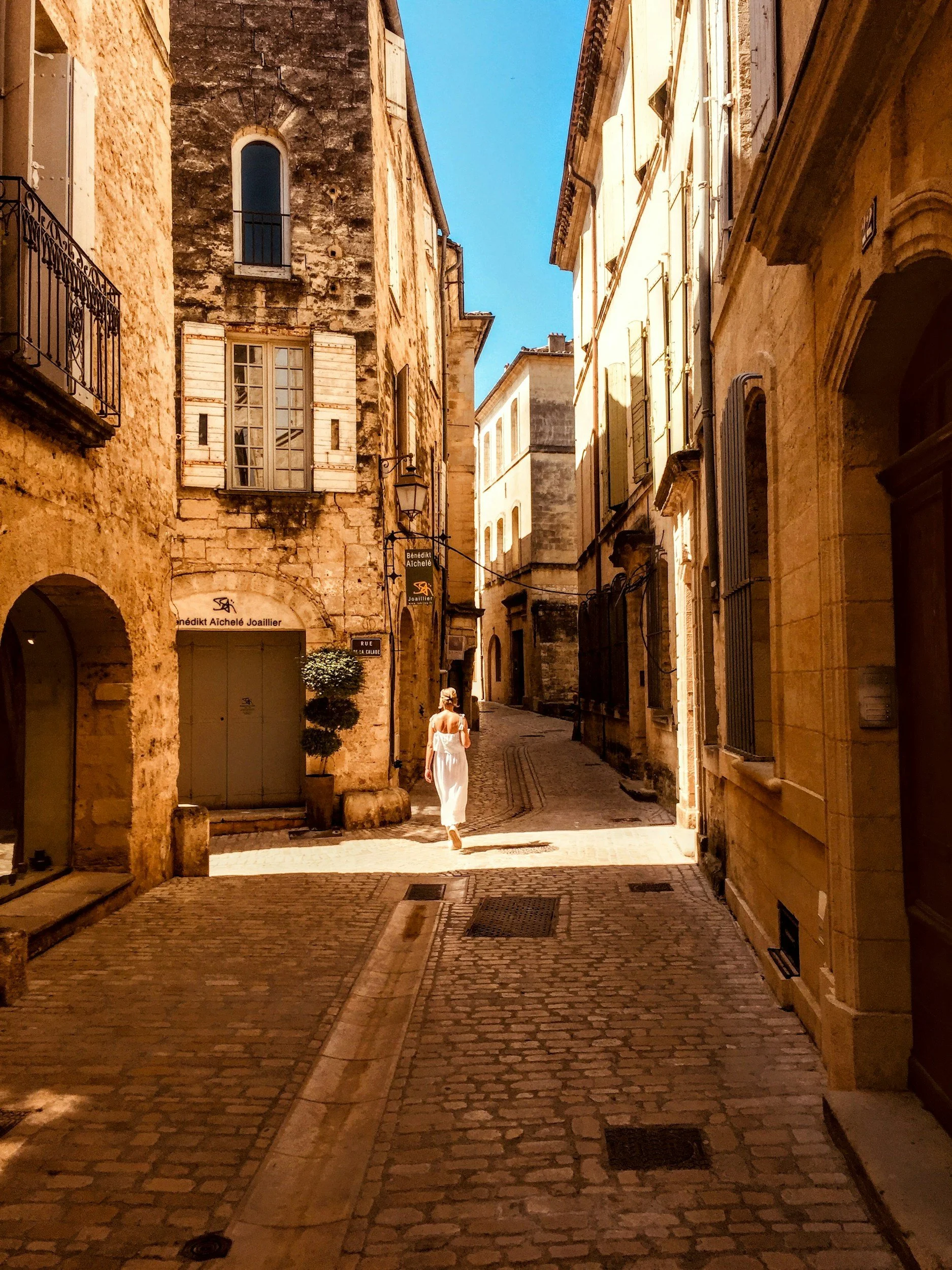
You’re probably planning a weekend in the south of France and keep coming back to the same two names, Uzès and Pézenas, because they seem close enough in style that it shouldn’t really matter which one you choose. Small towns, markets, old streets, somewhere to sit outside with a coffee or a glass of wine. It looks like one of those decisions you can make quickly and move on from.
But once you actually picture the weekend from the moment you arrive, the differences start to matter more than expected. You get off the train in Nîmes or Béziers, make your way into town, and within that first hour you can already tell how the next two days are going to feel. In Uzès, you’re usually a short walk from a central square where everything is already happening, so you drop your bag, head out, and you don’t really need to think about where to go first. In Pézenas, it takes a bit longer. You walk more, pass through quieter streets, and only after a while do you start to find the places you’ll come back to later.
That small difference carries through the whole weekend. It shows up on Saturday morning when the market either takes over your day or just sits alongside it, in the afternoon when you either move in a loose loop or keep heading in new directions, and in the evening when dinner is something you decide on the spot or something you need to have thought about earlier. It’s not about one being better than the other, it’s about how much you want the place to do for you versus how much you’re happy to figure out as you go.
This guide stays focused on those practical differences, the kind that are hard to judge from photos or short descriptions but become obvious once you’re there. Walking distances that either keep everything within reach or stretch your day out more than expected, arrival logistics that are straightforward or require a bit of planning, and small routines like coffee, lunch, and dinner that end up feeling either effortless or slightly less predictable depending on where you base yourself.
Getting there without overcomplicating it

Uzès via Nîmes or Avignon (and the last 20 minutes that matter)
Most people end up coming into Uzès through Nîmes, and once you’ve done it, it’s quite clear why. The train station is central, car rentals are right outside, and within a few minutes you’re already leaving the city behind. The drive itself isn’t something you need to think about, it’s mostly roundabouts and straight roads past vineyards and low stone walls, but the timing matters more than the route. Late Friday afternoon, around 16:30–18:30, it slows down a bit as people head out of Nîmes and into smaller towns like Uzès for the evening, so what should be a 25-minute drive can stretch closer to 35 without it being obvious why.
If you’re not renting a car, this is the point where people either get it right or make it harder than it needs to be. There is a regional bus from Nîmes, usually departing from near the station, but it doesn’t run often enough to treat it casually, and if your train is delayed, you can easily miss it and wait another hour. Taxis are straightforward, but they’re not lined up outside the station in the way you might expect, so booking one ahead saves time and avoids standing around at the end of the journey.
Coming from Avignon works well too, especially if you’re arriving at Avignon TGV Station, but it feels slightly longer in practice. The first part is fast, then the road opens out into quieter countryside with fewer signs and longer stretches between villages. It’s still easy driving, but it doesn’t have the same “in and out” feel as Nîmes, so it suits better if you’re already planning to explore a bit more of the area.
The part most people don’t think about is what happens when you actually reach Uzès. You don’t drive into the centre and park outside your door. Instead, you follow signs toward parking areas like Parking Gide or Parking des Cordeliers, both just outside the historic core, and then continue on foot. From there, it’s usually a short walk, but not always a flat one, and if you’re staying deep inside the old town, you’ll likely be pulling a suitcase over cobblestones for a few minutes.
That last stretch is where the town starts to make sense. You pass through narrower streets almost immediately, often via Boulevard Gambetta or one of the smaller side streets, and within five minutes you’re likely to step into Place aux Herbes without planning it. If you arrive around 17:00 or later, most tables are already taken or filling up, especially on weekends, and you’ll see people settling in for the evening rather than just passing through.
It’s a very clear transition compared to a lot of other towns in the region. One moment you’re dealing with parking and directions, and then quite quickly you’re in a space where everything is within a few minutes’ walk and you don’t need to think about logistics anymore. That’s why the last 20 minutes matter more than the journey itself, because once you’ve handled that part, the rest of the weekend tends to run quite easily.
If you're leaning towards Pézenas because you want somewhere with a stronger local feel and easier access to the Mediterranean, Béziers without a car shows what a nearby car-free base actually looks like.
Pézenas via Béziers (and why it feels more spread out on arrival)
Most people reach Pézenas through Béziers, and on paper it looks just as simple as Uzès via Nîmes. The train station is easy to navigate, taxis are usually available, and the drive inland is short, around 20–25 minutes depending on traffic. But the difference isn’t the route, it’s what happens once you get there.
Leaving Béziers, you’re on the D13 or D612 fairly quickly, and the landscape opens up almost immediately. It’s flatter than around Uzès, with long stretches of vineyards and fewer villages along the way. You don’t get that gradual build-up into a town, it stays quite open until you’re suddenly at the edge of Pézenas without much warning.
If you’re picking up a rental car, it’s straightforward, but the arrival doesn’t guide you in the same way. There isn’t one clear point where you stop, get out, and understand the layout. Instead, you’ll follow signs toward the centre and then start deciding where to park based on what you see. Parking areas like Parking du 14 Juillet or around Cours Jean Jaurès are common options, and from there you walk in, but depending on where you end up, that walk can feel less direct.
Without a car, the transfer from Béziers is usually done by taxi. It’s easy enough to arrange, and unlike Nîmes, you’re less likely to be waiting around, but you’ll still want to book ahead if you’re arriving later in the day. There are buses, but similar to Uzès, they don’t run frequently enough to rely on unless your timing matches perfectly.
The difference really shows in the first 30–45 minutes after you arrive. In Uzès, you’re quickly pulled into Place aux Herbes without needing to think about it. In Pézenas, you might walk in via Cours Jean Jaurès, pass a few shops, turn into Rue de la Foire, and still not feel like you’ve reached the “centre” yet. The town doesn’t reveal itself all at once, and it takes a bit more walking before you find the streets where people are actually spending time.
Some of the main areas, like around Place Gambetta or the smaller lanes leading toward Rue de la Halle, have cafés and shops, but they’re more spread out. You might find one good spot, then walk a few minutes before finding another, rather than having everything concentrated in one place.
That’s why arrival feels different here. It’s not complicated, but it’s less immediate. You don’t step into a single square where everything is already happening. You move through the town a bit first, notice where things are, and then gradually settle into it.
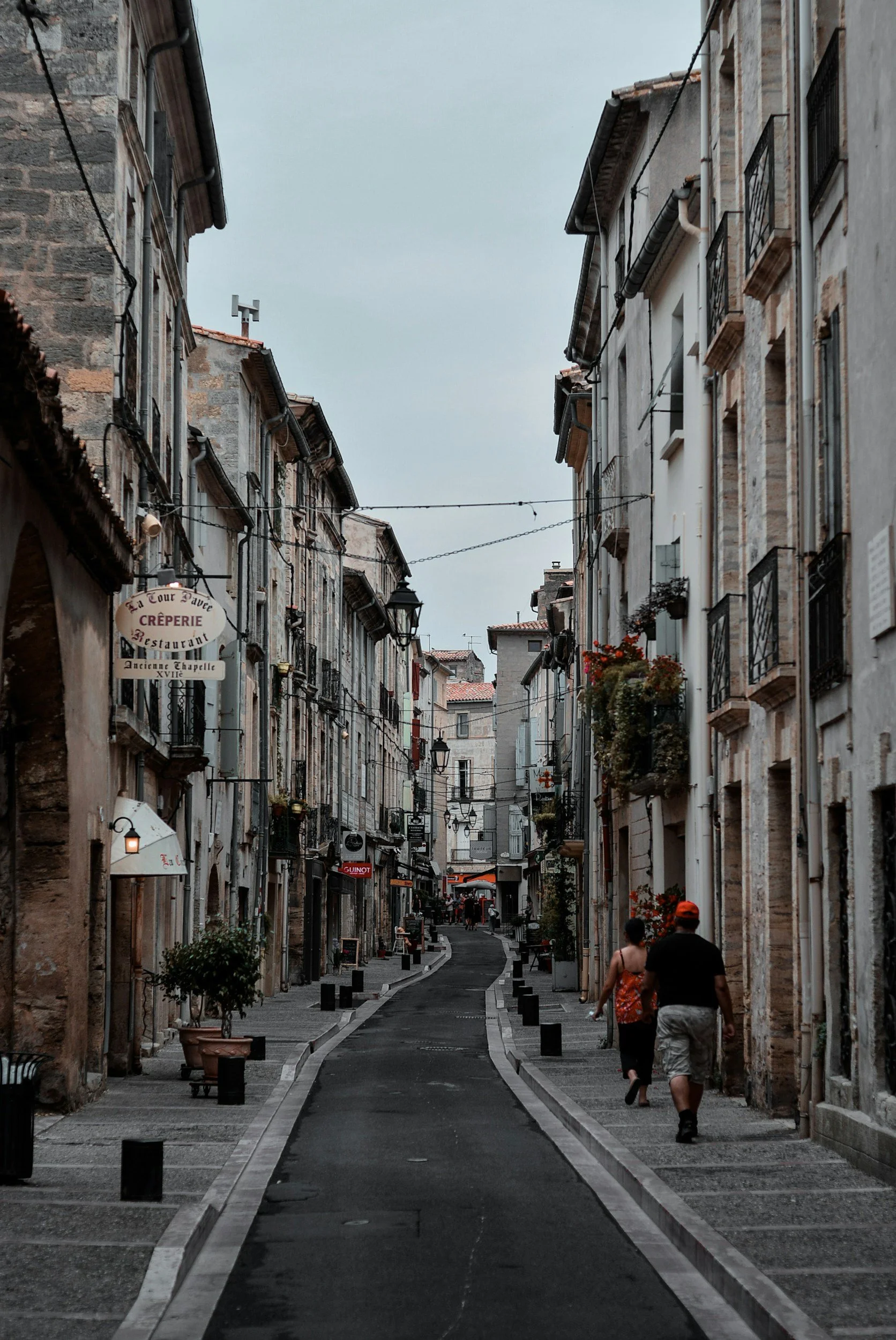
Planning a longer France itinerary? Paris to Lyon is full of smaller stops that pair surprisingly well with a few days in Occitanie.
Not sure whether you want to stay in one town or move around the region? Occitanie market towns compares several places that appeal to the same type of traveller as Uzès and Pézenas.
Uzès feels like you’ve arrived somewhere people planned to visit
If you arrive in Uzès late on a Friday, the first few minutes are quite practical. You follow signs toward Parking Gide or Parking des Cordeliers, park just outside the centre, and then everything switches to walking. From Parking Gide, you usually come in via Boulevard Gambetta, which looks fairly ordinary at first, but within a couple of minutes the streets narrow and the pace changes. You start passing small storefronts, a pharmacy, a bakery that’s still open, people carrying weekend bags, and others already heading toward dinner.
From there, it’s rarely more than a 3–4 minute walk before you step into Place aux Herbes, and that’s where things become very clear. The square is large but contained, lined with cafés and restaurants on all sides, and by around 17:00 most tables are already taken or being set for the evening. You’ll see people sitting at places like La Fille des Vignes or Le Bec à Vin, ordering a first drink, while others are scanning menus for later. It doesn’t feel like people are just passing through, they’ve come here to stay for a few hours.
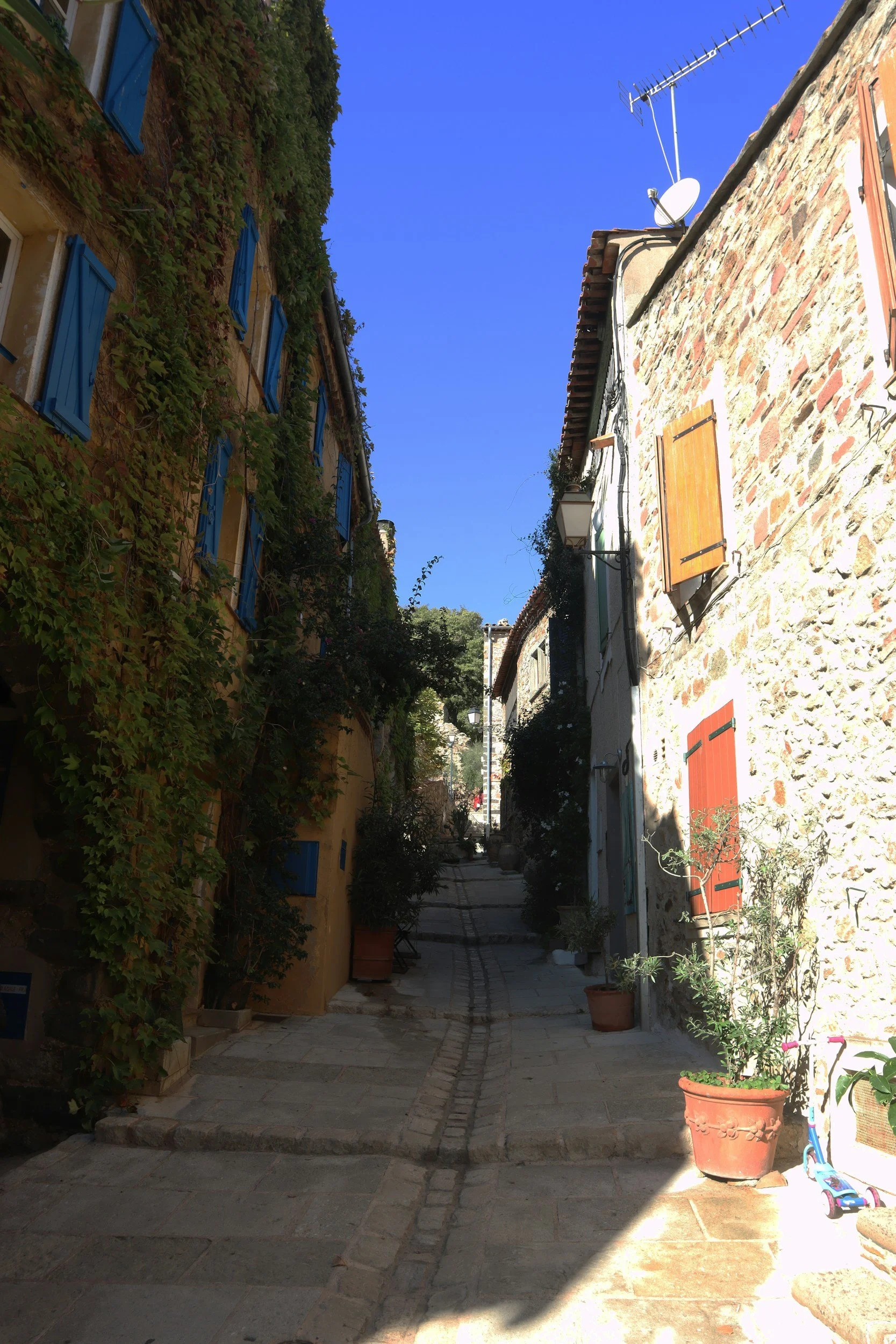
If you’ve checked into a place inside the old town, the routine is almost always the same. You meet your host near the edge of the centre, walk in together through a couple of narrow streets, drop your bag, and then head straight back out because everything is right there. Streets like Rue Jacques d’Uzès or Rue de la République are where you’ll naturally wander next, and within a few minutes you’ve already seen most of what you need for the evening. A quick stop at a boulangerie or a small épicerie for something simple, then back toward the square again.
What stands out is how little you need to figure out. You don’t spend time wondering where the centre is or where people are gathering. Even if you try to explore further, maybe heading toward Place Dampmartin or walking past the Duchy, you’re never more than 5–7 minutes from Place aux Herbes, and you end up looping back without thinking about it.
Dinner decisions happen quite early here. Around 18:30, restaurants start confirming bookings, and you’ll notice which places are already full for the first seating. If you haven’t reserved anything, it’s still easy to walk around and check options, but you’ll see quickly that this is a town where people tend to plan ahead for the evening, especially on weekends.
Within about an hour of arriving, you’ve parked, walked into town, had a drink, and likely chosen where to eat, all within a very small area. It feels easy in a way that works well for a short stay, where you don’t want to spend time figuring things out before the weekend really starts.
Many people looking at Uzès eventually start wondering whether Provence might be a better fit, and Apt or Gordes is one of the easiest ways to understand the difference.
Pézenas feels like you’ve arrived somewhere people just live
Arriving in Pézenas is quieter and a bit less obvious. You come in from Béziers, usually along the D13 or D612, and instead of a clear “this is it” moment, you’re suddenly just in the town. Traffic slows slightly, you pass a few supermarkets and residential streets, and then you’re already close to the centre without it being clearly marked.
Most people park somewhere around Cours Jean Jaurès or near Parking du 14 Juillet. From there, you walk in, but the first few minutes don’t immediately lead you to a central square in the same way as Uzès. You might pass a tabac, a pharmacy, a few local shops, and then turn into Rue de la Foire or Rue Conti, where the streets narrow and start to feel older, but it still takes a bit longer before you feel like you’ve reached the main part of town.
The centre reveals itself gradually. You walk for five minutes, then another five, and only then do you start to notice where people are actually stopping. Around Place Gambetta or deeper into the old town toward Rue de la Halle, you’ll find cafés and small restaurants, but they’re not all gathered in one place. You might see one table with people having a drink, then a quieter stretch, then another small cluster further along.
If you’ve just checked in, the routine feels less immediate. You drop your bag, head back out, and instead of returning to one obvious spot, you walk a bit more to decide where to go. You might pass a few antique shops still open, especially along Rue Conti or near Place des États du Languedoc, where Pézenas is known for its brocante and artisan workshops. Some places stay open into the early evening, which gives you something to do before dinner without needing to sit down straight away.
Food and drink decisions happen a bit differently here. Around 18:00–19:00, you’ll see some restaurants preparing for service, but it’s not as immediately clear where to go first. Places like Les Enfants Terribles or La Ripaille are tucked into smaller streets rather than facing a main square, so you often come across them while walking rather than spotting them from a distance.
The first hour is more about moving through the town, noticing where things are, and gradually finding the places you’ll return to later. You might walk 10–15 minutes before deciding to stop somewhere, and even then, you’re less likely to stay in the same spot for long because there isn’t one area that pulls you back in the same way.
It doesn’t feel disorganised, just less set up for a short, structured stay. You’re fitting into a place where daily life is already happening, rather than stepping into a space that’s clearly arranged around a weekend routine.
The centre of town: where you actually spend most of your time
In Uzès, your day keeps folding back into Place aux Herbes, and it happens in a very practical way rather than something you notice immediately. You leave your accommodation, walk a few minutes through streets like Rue Jacques d’Uzès or Rue de la République, and without checking anything you’re already at the edge of the square again, usually from a slightly different angle than the last time.
If you start the morning around 08:30 or 09:00, the square is already in use, just not full yet. A few tables are taken at places like Le Comptoir du 7, where people are having coffee and something small, and there’s usually a short queue at one of the nearby bakeries just off the square. By 10:00, more people arrive, and if it’s a Saturday, the entire space changes quickly. Stalls fill every part of the square, running close together under the trees, and it becomes difficult to cross in a straight line without stopping or adjusting your route.
What’s noticeable is how little distance you actually cover during the day. If you walk out of the square toward Rue du 4 Septembre or take a turn past the Duchy, you’re only a few minutes away from quieter streets, but those streets don’t lead you far before bringing you back again. Even when you think you’re heading somewhere new, you end up circling back without needing to check directions.
Around midday, people start shifting from walking to sitting down. Tables that were used for coffee earlier are now set for lunch, and the same places fill up again, just with a different pace. You’ll see people who were at the market earlier now sitting down for a longer meal, often staying well into the afternoon. It’s common to pass the same tables more than once and notice the same people still there.
In the late afternoon, when shops reopen, the movement starts again. People head out from their accommodation, walk through the same few streets, stop briefly at a shop, and then return to the square for a drink. Places like Le Zanelli start filling up again, not just for dinner but for that period between late afternoon and evening where people sit without a fixed plan.
Because everything is so close, you don’t need to decide in advance what you’re doing next. If you leave the square, you’re never more than 5–7 minutes away from returning, so there’s no pressure to “get it right” with each decision. You can walk off in one direction, realise there’s nothing you need there, and be back in the centre almost immediately.
By the second day, it becomes quite clear that you’re moving within a very small area, but it doesn’t feel repetitive because the square changes throughout the day. Morning coffee, market activity, lunch, late afternoon drinks, dinner, all happening in the same place but with a different pace each time.
Pézenas is more scattered (better if you like figuring things out)
In Pézenas, you don’t arrive and immediately know where to stay for the next few hours. You arrive, walk a bit, pass through a few streets, and only gradually start to understand where things are. That first stretch usually begins around Cours Jean Jaurès, which is where a lot of people park or get dropped off. It’s practical rather than charming, a mix of passing traffic, small local shops, and people going about their day, and then you turn off into the older part of town almost without noticing it.
Rue de la Foire is one of the streets that pulls you in, but even there it doesn’t lead you directly into a single centre. You keep walking, the streets narrow slightly, the buildings feel older, but you don’t step into a main square the way you do in Uzès. Instead, you reach Place Gambetta after a few minutes, and while it does have cafés and a bit of movement, it doesn’t gather everyone in one place. Some people are sitting outside having a drink, others are crossing the square and continuing straight through without stopping, and it doesn’t feel like the place where you automatically stay.
If you keep walking from there, that’s when Pézenas starts to open up properly. Rue Conti is usually where people slow down, not because it’s crowded, but because there’s more to look at. Antique shops with furniture placed just outside the door, small galleries, workshops where you can see people working inside. It’s the kind of street where you step in somewhere for a few minutes, come back out, then walk a little further before the next place catches your attention. There’s no rush between those moments, and there’s also no pressure to stay in one spot once you’ve found something you like.
From Rue Conti, you might turn toward Rue de la Halle or drift closer to Place des États du Languedoc, where there are a few more cafés and restaurants, but again, they’re not all grouped together. You might sit down somewhere for a drink, but when you leave, you don’t necessarily return to the same place later. You keep moving, often in a different direction than before, because there isn’t one clear route that connects everything.
During the middle of the day, around lunch, you’ll notice that people are spread out across different parts of the town rather than gathered in one area. A few tables here, a couple of people sitting outside somewhere else, others walking between streets. Even at busier times, it doesn’t concentrate in the same way as Uzès. You can walk for five minutes without seeing much, then turn into a street where there’s more activity again.
The afternoon makes this even more noticeable. Around 15:00–17:00, when some shops close, the town becomes quieter, but not empty. People are still walking through, but they’re dispersed. You might go from Place Gambetta toward Rue Conti and barely pass anyone, then turn into a side street and find a small café with a few tables occupied. It keeps shifting, and you end up adjusting your route as you go rather than following a pattern.
By early evening, when restaurants start opening properly, you begin to notice where you might want to eat, but it’s not something you decide all at once. You might pass Les Enfants Terribles, keep walking, then later come across La Ripaille, and only after seeing a few places do you decide where to go back to. It often involves a bit of doubling back, which is normal here because nothing is laid out in a way where you can see all your options at once.
Walking distances are still short if you measure them, but they don’t feel short in the same way. You’re not looping the same few streets, you’re covering new ones each time. You might spend the afternoon moving between Rue de la Foire, Rue Conti, and the smaller connecting streets without realising how much ground you’ve covered, simply because you haven’t repeated the same route.
By the end of the first day, you usually have a sense of where you prefer to be, maybe one or two streets where you’d go back the next day, but it’s something you’ve worked out gradually.
Travellers who enjoy Pézenas often end up loving Collioure without a car too, particularly if they're looking for somewhere with more sea views but the same easy-to-explore feel.
Saturday morning changes everything (especially if you care about markets)
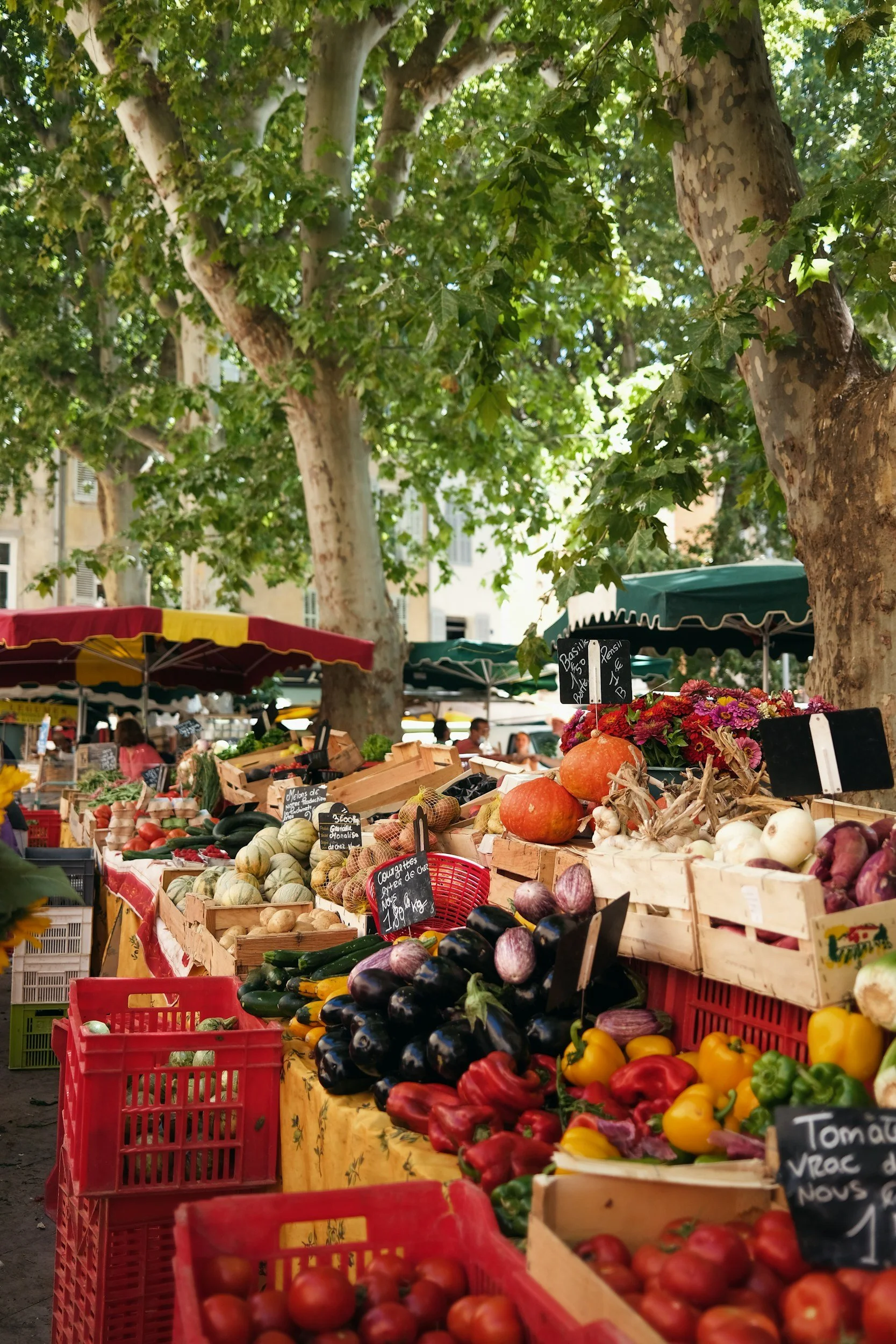
Uzès market sets the tone for the whole weekend
Saturday morning in Uzès starts with the sound of vans unloading around Place aux Herbes before most cafés are fully open. By the time you walk in from Rue de la République or Rue Jacques d’Uzès around 08:30, the square is already lined with stalls under the plane trees, each section settling into its usual spot.
Closest to the edges, you’ll often find the produce stalls first. Tables stacked with tomatoes in different varieties, courgettes, aubergines, herbs tied in small bunches, and seasonal fruit depending on the time of year. People are already choosing carefully here, not browsing quickly, but pointing, asking questions, and filling baskets. A few steps further in, the cheese stalls stand out because you smell them before you see them. Rounds of goat cheese, wedges of tomme, and small labelled pieces laid out in rows, with sellers cutting portions to order and wrapping them in paper.
Bread stalls are easy to spot because of the queues. Long wooden tables with loaves stacked in uneven piles, baguettes, country bread, and fougasse laid out side by side. People tend to wait here rather than move on, so this is where the flow of the market slows down. If you arrive before 09:00, you can walk straight up and choose what you want. After that, you’re usually joining a short line.
As you move deeper into the square, the layout becomes tighter. Olive stalls with large trays in different colours and marinades, jars lined up behind them, and people sampling before buying. Nearby, you’ll often find charcuterie, sliced to order, wrapped, and handed over while the next person steps forward. These stalls are close together, so you move through them more slowly, stopping almost by default because there’s always something happening in front of you.
There are also non-food stalls mixed in, especially toward the centre and edges. Linen clothing, woven baskets, soaps, and small handcrafted items laid out on tables or hanging from rails. These don’t usually create queues, but they do break up the movement because people stop to look more closely, turning slightly to one side and causing others to adjust around them.
By around 10:00, the square is full enough that you stop walking in straight lines. You move where there’s space, pause when someone else pauses, and occasionally step out toward the edge just to get a bit of room. If you try to cross from one side to the other, it takes longer than expected, not because the distance is far, but because of how many small stops you make along the way.
Food starts blending into the rest of the morning at this point. People aren’t just buying ingredients, they’re eating as they go. A piece of fougasse from one stall, olives in a small container from another, sometimes something sweet picked up on the way through. Within a few minutes, you’re looking for somewhere to sit, and that’s when the cafés around the square come into focus again.
Places like Le Comptoir du 7 are already full or close to it by 10:30, especially the tables directly facing the square. If you want to sit down without waiting, you either arrive earlier or keep walking around the perimeter, watching for tables that are just becoming free. It’s common to see people hovering slightly, waiting for someone to leave, then taking the table immediately.
Around 11:30, the pace shifts. Fewer people are actively shopping, and more are sitting down. The stalls are still there, but the focus moves toward eating and staying put. You’ll notice the same people you passed earlier now settled at tables with bread, cheese, and a bottle of something, often staying for quite a while.
When the stalls begin to pack up around 13:00, it doesn’t feel like a clear end. The square doesn’t empty, it just opens up again. The space that was tightly packed in the morning becomes easier to move through, and the tables that were used for coffee are now used for longer lunches.
The market is often the deciding factor between these two, and this market overview makes it obvious which towns actually revolve around it.
If you're choosing Uzès because of the market, atmosphere, and walkable centre, market day in Nyons is worth a quick look before finalising your itinerary.
Pézenas market is part of the town, not the main event
Saturday morning in Pézenas doesn’t start with one obvious direction. You step out somewhere near Cours Jean Jaurès, maybe grab a coffee nearby, and then walk into the old town without feeling like you’re heading toward a single focal point. The market is already there, but it’s not something you arrive at all at once. You come across it gradually.
If you turn into Rue de la Foire, you’ll see the first few stalls set up along the edges, usually produce. Tomatoes in crates, bunches of herbs laid out in shallow trays, melons stacked on wooden tables depending on the season. A few people stop, but others keep walking past because there’s no pressure to stay in that exact spot. You continue a bit further, and only then does it become clear that the market is spread through several streets rather than gathered in one place.
Around Place Gambetta, there’s a bit more concentration, but it still doesn’t pull everything together. You might see a cheese stall set up near the edge of the square, with rounds cut and wrapped to order, then a bread stand a few metres away with a small line forming, but the gaps between them matter. You’re not standing shoulder to shoulder with other people, and you’re not moving in one direction with a crowd. You can step back, look properly, and decide where to go next without adjusting to anyone else’s pace.
If you keep walking toward Rue Conti, the market blends into the rest of the town. Antique shops are open at the same time, with furniture and smaller items placed outside, so it’s not always clear where the market ends and the town begins. You might stop at a stall selling olives or tapenade, then a few minutes later find yourself inside a shop looking at ceramics or old wooden pieces, then back outside again passing another food stall you didn’t notice before.
That’s what changes the morning here. You don’t move through it in a straight line. You move in small sections. A few minutes at a stall, then walking, then stopping again somewhere else entirely. You might not even see every part of the market unless you go out of your way to cover more streets.
By around 10:30–11:00, there are more people, but they’re still spread out. You don’t get that moment where it suddenly feels full. Instead, you notice slightly more activity in each street, a few more tables taken at cafés, a few more people browsing, but no single place where it all gathers.
Food fits into this differently as well. You might pick something up, but you don’t immediately look for a table. Instead, you keep walking, maybe turn back toward Place des États du Languedoc, where there are a few cafés, or continue along a quieter street before deciding where to sit. It’s common to pass a place, keep going, then return later once you’ve seen what else is around.
Around midday, some stalls begin packing up, but there’s no clear shift. You might walk past one stall closing while another is still serving customers a few streets away. Restaurants start filling slowly, but again, not all in one area. You’ll see a couple of tables taken in one street, then a few more somewhere else, rather than one square filling up at once.
You can spend as much or as little time in it as you want without it changing the rest of your plans. You might walk through it for 20 minutes and move on, or keep returning to different parts of it throughout the morning without realising you’re doing that.
Peak summer changes the experience more than most people expect, and this summer markets guide helps you avoid ending up in the busiest version of both.
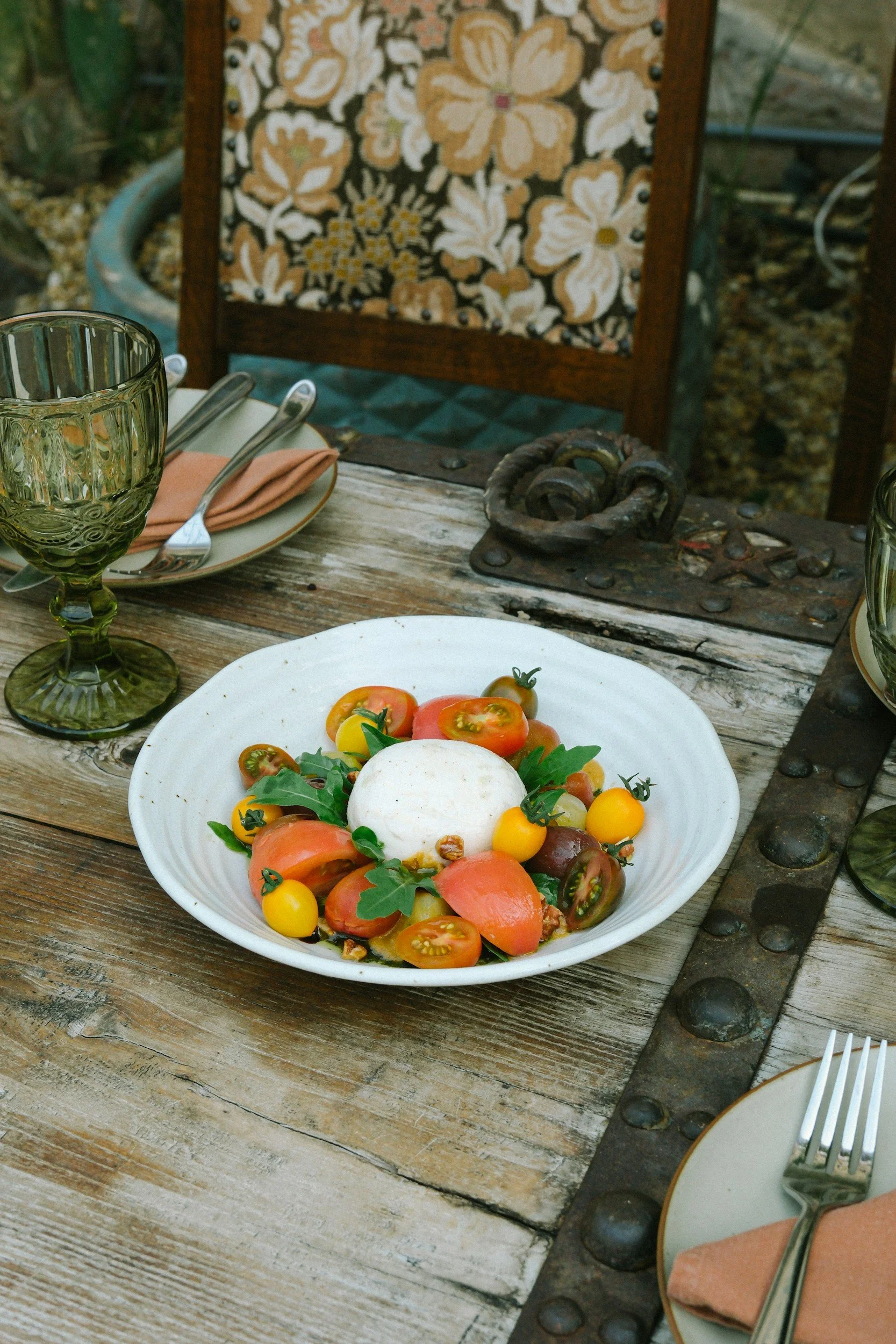
Pézenas tends to pull you in through antiques and slower browsing rather than big highlights, and this brocante guide shows what that actually looks like once you’re there.
After lunch: how the afternoon plays out in Uzès vs Pézenas
After lunch in Uzès, you don’t really switch to a new part of town. You leave the restaurant, step out onto Place aux Herbes, and even if you think “let’s walk somewhere else,” you’re still within the same few streets the whole time.
Say you’ve had lunch on or just off the square. You walk out around 14:30, cross the square, and head into Rue de la République. A few shops are still open, maybe a wine shop or a small food store, but others are already closing for the afternoon. You keep walking, pass one or two people, then turn into a quieter street like Rue Jacques d’Uzès where it feels more residential. At that point it seems like you’ve left the centre, but you haven’t really. After a couple of turns, you’re back near the square again without trying.
If you go the other way, toward Place Dampmartin or around the Duchy, it’s similar. You get a few minutes of quieter streets, then you’re back somewhere familiar. Nothing is far enough away to feel separate, so you don’t get that sense of moving from one area to another.
Mid-afternoon is when this becomes most obvious. Around 15:00–16:30, a lot of shops are closed, so there’s less reason to keep walking just for the sake of it. People slow down and start sitting again. You walk through Place aux Herbes once, see that most tables are taken, keep going, then come back a few minutes later and find a spot opening up because someone has just left.
You sit for a bit, then get up again, walk a different street, maybe Rue du 4 Septembre this time, but it leads you back in the same direction. You don’t plan a loop, but that’s what it turns into.
By late afternoon, around 17:00–18:00, things pick up again. Shops reopen, more people come out, and the same streets start filling slowly. You’ve already walked past most of the restaurants by then, so when you start thinking about dinner, it’s not about searching. You already know what’s there because you’ve seen it earlier in the day. Places like Le Comptoir du 7 or Le Zanelli feel familiar at that point.
What stands out is that you don’t go far, but you don’t feel stuck either. You’re just moving around the same small area in different directions, stopping when something catches your attention, then moving again.
In Pézenas, you keep changing direction as you go
After lunch in Pézenas, there isn’t one place you drift back to. You leave the table and keep walking, usually in a different direction than you arrived from, because nothing is pulling you back to a single square.
If you’ve had lunch somewhere near Place Gambetta or just off it, you step out and the streets don’t guide you anywhere in particular. You might head down Rue de la Halle, pass a few cafés with people still sitting outside, then continue straight because nothing tells you to stop there. A couple of minutes later, you turn into Rue Conti again, or one of the smaller connecting streets, and it feels like a new part of town even though you’re still close by.
The afternoon tends to stretch out because of this. You walk a bit, stop somewhere, then move on again rather than settling. On Rue Conti, a lot of the antique shops stay open into the afternoon, and people spend time inside them. You might step into one, look around for 10–15 minutes, come back out, then walk a few metres and find another place to stop. In between, there are short stretches where nothing much is happening, so you just keep going.
If you loop back toward Place des États du Languedoc, you’ll find a few more places to sit, but again, they’re spread out. You might take a table for a drink, then leave and continue walking rather than staying in the same area. It doesn’t naturally turn into a long stop in one place.
Around 15:00–16:30, when some shops close, the town feels more open. You walk further between places where you want to stop. You might go from Rue de la Foire to Place Gambetta and not see much in between, then suddenly find a small café with a couple of tables taken. It’s less about staying somewhere and more about moving until something catches your attention.
Later in the afternoon, when shops reopen, you don’t return to the same route, you take a different one. Maybe you pass a restaurant you noticed earlier, then keep going and come back to it later once you’ve seen what else is around. Places like Les Enfants Terribles or La Ripaille aren’t all visible at once, so you piece together your options as you move through the town.
By early evening, you’ve usually covered more ground than you realise. You’ve walked through several streets, stopped in different places, and seen parts of the town that aren’t connected in a simple loop. When you decide where to go for dinner, it’s based on what you’ve come across along the way rather than one area where everything is gathered.
If you're still undecided between several towns in southern France, Cahors or Figeac answers many of the same questions from a completely different part of the country.
Turning this into a longer trip instead of just one weekend becomes much easier once you see what’s nearby, and this Provence Verte piece lays that out clearly without overcomplicating it.
Uzès has more energy and easier restaurant choices
If you’re in the mood for something more refined and you want the evening to revolve around the meal, then it’s worth booking La Table d’Uzès ahead of time. This is where you go for a longer dinner, where you sit down and stay, rather than moving on after. It’s not the place for a quick decision at the last minute. If you do go, lean into it and order properly, usually a full menu works better than picking one or two dishes, and it’s the kind of place where you let the kitchen decide rather than trying to control the meal too much.
For something that still feels like a proper dinner but without that level of commitment, Terroirs is one of the easiest choices. It’s central enough that you’ll pass it anyway, and it’s the kind of place where you can decide on the spot. This is where you go if you want local food done well without it turning into a full evening event. If you see duck on the menu, it’s usually a safe choice here, and if there’s a daily special, it’s worth ordering rather than sticking to the standard options.
If you’ve walked around for a while and just want something that feels relaxed and straightforward, then Ma Cantine works well. It’s slightly away from the main square, which makes a difference once the centre fills up. This is where you go when you don’t want to sit through a long dinner but still want something good. Order something simple and let it be that kind of evening rather than trying to make it into more than it needs to be.
If the evening is more about wine than food, then go straight to Le Bec à Vin. This is where you end up if you want to sit with a glass and stay there for a while without thinking about moving on. It’s small, so if you see a table, take it. Order a glass from the region rather than something international, and if you’re unsure, just ask for a recommendation and go with it. Pair it with something simple like charcuterie or cheese rather than ordering a full meal.
Another place that people often end up at without planning to is Le Zanelli, mainly because it’s right there on the square and easy to decide on after doing a full walk around. It’s a good fallback when everything else feels either too planned or too busy, and it works well if you just want to sit down and eat without overthinking it.
What actually makes Uzès easy in the evening is that you don’t need to decide too early. Walk the full loop first, take your time, notice what’s already filling up, and then go back to the place that felt right. Because everything is within a few minutes, you’re not losing time by doing this, and it means you’re choosing based on what’s actually happening in that moment.
If you head out around 18:30–19:00, you can still choose freely and usually get a table where you want. If you leave it until 20:00 or later, you’ll notice that many places are already full, especially around the square, and you’ll either wait or adjust. It’s not a problem, but it changes how relaxed the evening feels.
After dinner, you don’t need a second plan. Stay around Place aux Herbes, maybe go back for a drink, or just walk slowly through the same streets you’ve already been in.
Uzès can feel slightly too formal depending on what you’re looking for, and this quiet alternatives guide helps you sense-check that quickly.
In Pézenas, evenings wind down earlier than you might expect
Pézenas in the evening is good, but you need to approach it a bit differently, otherwise it can feel like it ends too soon. The mistake most people make is treating it like Uzès, going out late and expecting to figure things out as they walk around. That doesn’t really work here.
If you’re staying near the centre, you’ll probably head out via Cours Jean Jaurès or already be somewhere around Place Gambetta. Around 18:30–19:00, the town still feels open. People are walking through Rue de la Foire, a few tables are taken, and restaurants are just starting to fill. This is the window where Pézenas works best, when you can still walk a bit, look at a few menus, and decide without pressure.
Start by walking through Rue Conti, because that’s where you’ll naturally pass a few of the better spots without needing to search for them. This street has more going on in the evening than some of the others, with antique shops closing up and restaurants opening at the same time, so there’s a bit more movement.
If you want a proper dinner, go for Les Enfants Terribles. It’s tucked into a smaller street, not somewhere you see immediately from a main square, so it’s easy to miss if you don’t walk that way. Once you’re there, it’s the kind of place where you sit down and stay. If there’s duck or something slow-cooked on the menu, order that rather than playing it safe, this is where you want a full meal, not something quick.
Another good option is La Ripaille, which feels a bit more relaxed but still solid. It’s the kind of place you might walk past, read the menu, and decide on the spot. If you’re unsure, go for whatever is listed as the special rather than sticking to the standard dishes.
If you’re more in the mood for something lighter or want to start with a drink, it’s better to do that before dinner rather than after. There isn’t one clear wine bar area, but if you find a place you like early in the evening, take a table and stay for a bit. Don’t assume you’ll find something later, because that’s where Pézenas feels different.
By around 20:30, you’ll notice the change. Streets like Rue de la Halle or parts of Rue Conti that had a bit of movement earlier start to quiet down. It’s not empty, but it’s noticeably calmer. You come out of a restaurant and instead of seeing people moving between places, most are already seated, and once they leave, they’re usually heading back rather than continuing somewhere else.
That’s why it works better to treat dinner as the main part of the evening here. Pick a place, settle in, and don’t rush it. If you try to stretch the night by moving between different spots afterward, you’ll find fewer options than you expect.
Possible to visit Uzès vs Pézenas without a car?
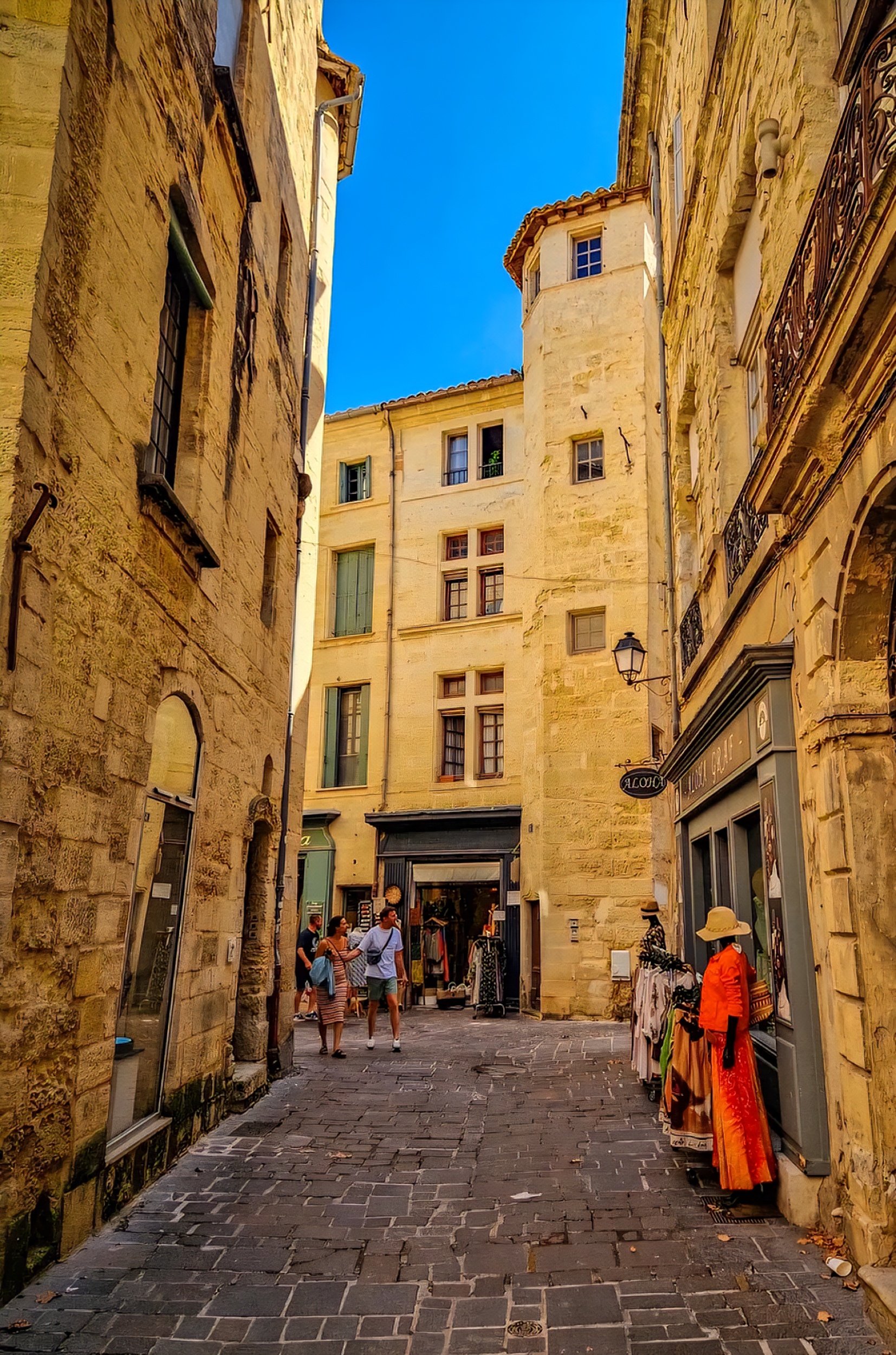
Uzès: doable but slightly limiting
Most arrivals without a car come through Nîmes. From the station, you’ve got two realistic options: bus or taxi. The regional bus (line 121) leaves from near the station and takes roughly 35–40 minutes to reach Uzès, dropping you at Esplanade, which is just outside the centre. It’s cheap and straightforward, but the timing matters. If your train doesn’t line up, you can easily end up waiting close to an hour, especially later in the day or on weekends.
A taxi is the easier option if you don’t want to deal with that. The ride is around 25 minutes, and if you book it ahead, it’s smooth, but don’t assume you’ll find one immediately outside the station, especially on a Friday evening when demand is higher.
Once you arrive in Uzès, everything becomes simple again. If you’re staying inside the old town, you’ll likely be dropped near Boulevard Gambetta or one of the nearby access points, and from there it’s a short walk in. You don’t need a car for anything once you’re settled. From Place aux Herbes to most restaurants, cafés, and shops, you’re looking at 2–5 minutes on foot, and even the edges of the old town are rarely more than 10 minutes away.
Where it becomes slightly limiting is when you want to do more than just stay in Uzès. A place like Pont du Gard looks close on a map, but without a car, getting there requires planning. There are buses, but not frequently enough to treat it as a spontaneous outing, and taxis need to be arranged in advance. The same applies if you want to visit nearby villages or vineyards, they’re all within short driving distance, but not easily accessible without organising transport.
Even small things can feel less flexible. If you want to go out for dinner slightly later, you’re relying on being within walking distance of everything, which is fine in Uzès itself, but you don’t have the option to quickly head somewhere else if you feel like a change.
So the way to approach Uzès without a car is to treat the town as the destination, not the starting point for exploring. Arrive, settle in, and plan to spend your time within the centre. For a short weekend, that usually works well, because there’s enough to do within walking distance, but it does mean giving up the idea of spontaneous trips just outside town.
Doing this trip without a car changes more than just transport, and this rail pass guide answers the practical questions most people don’t think about early enough.
Pézenas: easier to reach, but you need to plan your day a bit more
Getting into Pézenas without a car is usually more straightforward than Uzès. You come in via Béziers, and from the station it’s a short transfer, around 20–25 minutes by taxi. You can also take a local bus (line 660), which runs more regularly than the Nîmes–Uzès route, and it drops you close to Cours Jean Jaurès. From there, you walk straight into town. It’s not complicated, and you don’t need to time it quite as carefully.
Once you arrive, though, the difference shows up in how you move around. Pézenas isn’t difficult on foot, but it doesn’t naturally guide your day in the same way as Uzès. If your accommodation is near Place Gambetta or Rue de la Foire, you’re already in a good position, but if you’re slightly further out, you’ll notice the walking distances more because you’re not looping back to one central point all the time.
In the morning, you’ll probably head into the old town and pass through a few streets before deciding where to stop. Maybe you walk along Rue Conti, step into a couple of antique shops, then continue toward Place des États du Languedoc where there are a few cafés. There isn’t a single place where everything is happening, so you’re choosing where to go next more often.
The same applies if you want to structure your day a bit. Without a car, you’re staying within Pézenas itself, but that works differently here than in Uzès. You might spend time in one part of town, then realise the next place you want to go is a 7–10 minute walk away through quieter streets. It’s not far, but it breaks up the flow of the day more.
If you want to leave Pézenas for a few hours, it’s possible but needs a bit of planning. For example, going toward the coast, somewhere like Marseillan, means checking bus times or arranging a taxi in advance. It’s not something you decide on the spot in the same way you might with a car.
Even in the evening, this shows up. Restaurants aren’t all grouped together, so you might walk a bit more between options before deciding where to eat. It’s still manageable, but you don’t get that immediate overview you have in Uzès.
So Pézenas without a car works well if you’re happy to move through the town gradually and don’t mind a bit more walking between places.
Where you stay ends up shaping the entire weekend more than expected, and this guesthouse guide makes it easier to get that decision right the first time.
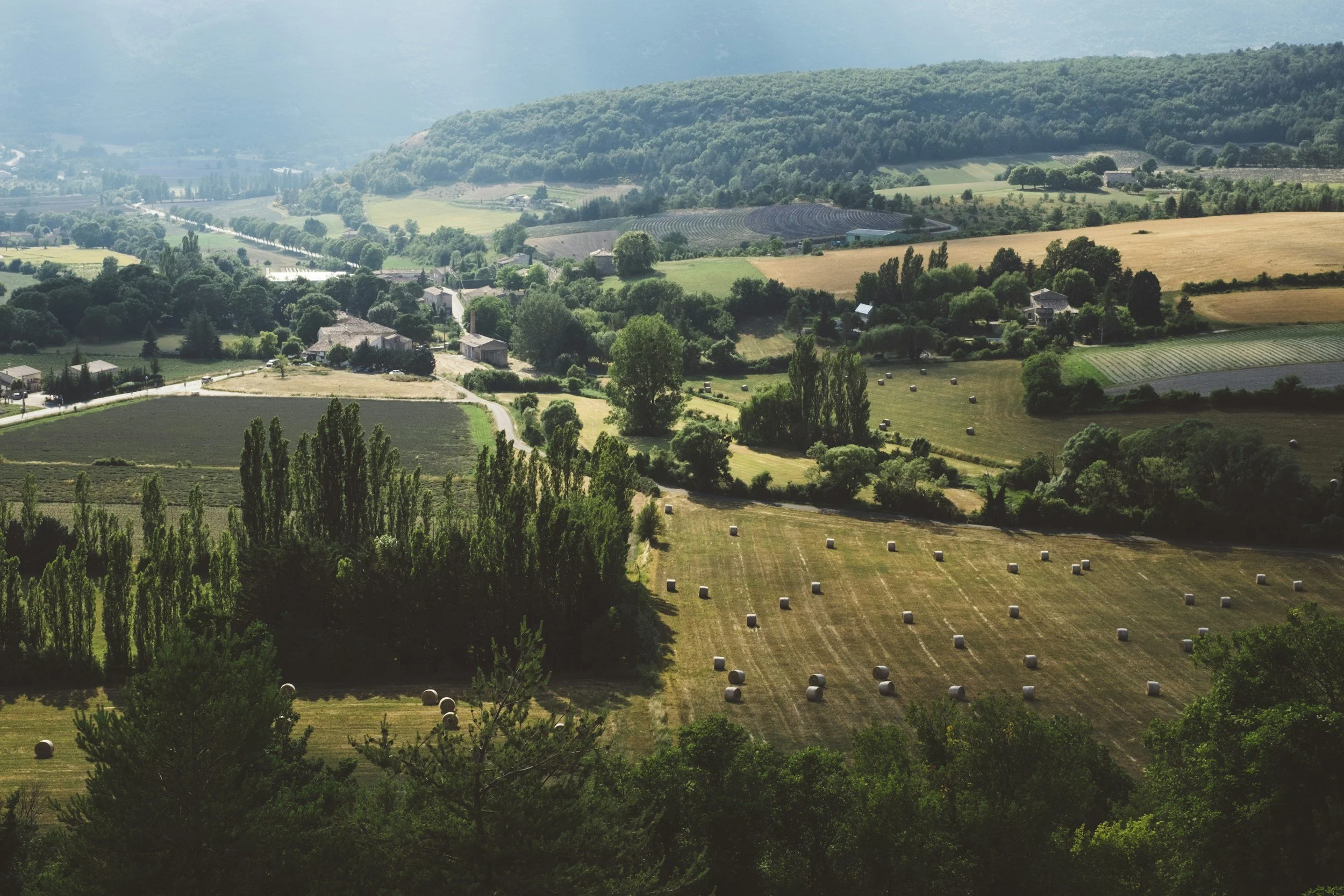
Where Uzès is easier - and where Pézenas is more interesting
The easiest way to understand the difference is to picture what you actually end up doing between meals, not just where you sleep.
In Uzès, most of your time stays within a very small area, but that doesn’t mean you’re stuck. You’ll start on Place aux Herbes without thinking about it, then drift out for a bit, maybe walk up toward the Duchy and around Duché d’Uzès, where the streets are slightly quieter and you get a different view back over the rooftops. From there, you might continue down toward Place Dampmartin, which feels more local, fewer people, a couple of benches, and then within a few minutes you’re back in the centre again.
One thing that stands out in Uzès is how easy it is to mix in something just outside the town without turning it into a full day plan. If you have a car, you can be at Pont du Gard in under 15 minutes, park, walk along the river, and be back in time for lunch without it feeling like a separate excursion. Even without a car, people often don’t realise how close it is, but you do need to plan it rather than decide on the spot.
Back in town, the streets around Rue de la République and Rue Jacques d’Uzès are where you keep passing the same small places, a bakery you return to in the morning, a wine shop you noticed earlier, a café where you end up sitting twice without planning to. It’s not that there’s a huge amount to “see,” it’s that everything you need is right there and works without effort.
Pézenas is different in a way that becomes obvious once you start walking without a plan. You don’t have one central place to return to, so you end up covering more ground. You might start near Place Gambetta, walk through Rue de la Foire, then head into Rue Conti where the antique shops are, and that’s usually where people slow down. You’ll see furniture placed outside, old wooden pieces, ceramics, things you don’t really find in the same way in Uzès, and you can spend quite a bit of time going in and out of those shops.
If you keep going, the town doesn’t loop back on itself as quickly. You might end up near Place des États du Languedoc, stop for a drink, then later take a completely different route back without realising it. It feels more spread out, not in distance, but in how you move through it.
What Pézenas has that Uzès doesn’t is how close it is to the vineyards around Languedoc wine region. If you have a car, you can leave town and within 10–15 minutes be driving through rows of vines with small producers where you can stop and taste without it being set up as a formal visit. It’s less structured, and you won’t always see clear signs, but that’s part of it. Even the drive itself, especially toward places like Marseillan, feels different from Uzès because the landscape opens up more and stays flatter.
Timing also changes things in a very practical way. In Uzès, if you arrive on a Saturday in summer and walk into Place aux Herbes around 10:30, you’ll be moving slowly through the market whether you planned to or not. It becomes the main activity of the morning, and everything else fits around it. In Pézenas, the market doesn’t take over in the same way, so your day doesn’t depend on it. You can pass through, or skip it, and nothing really changes.
Even small details end up mattering more than expected. In Uzès, you’ll likely carry your bag through narrow streets from a parking area outside the centre, which is fine once you know it, but not ideal if you arrive late or with heavy luggage. In Pézenas, you might park closer, but you’ll walk more during the day because you’re not staying within the same few streets.
So it comes down to how you want to spend those in-between hours. If you want everything to sit within reach and not have to think about where to go next, Uzès makes that very easy. If you prefer a place where you walk more, discover things in smaller sections, and don’t mind a bit of back and forth before you settle somewhere, Pézenas gives you that instead.
If you’re already leaning toward Uzès but still not sure if it’s too structured for a full weekend, this Uzès weekend shows exactly how your days would fall into place once you arrive.
And in case Pézenas feels appealing but you’re wondering how quiet is too quiet, this Montolieu stay helps you gauge that difference properly before you commit.
FAQ: Uzès vs Pézenas for a weekend in southern France
Is Uzès or Pézenas better for a first trip to southern France?
Uzès is the easier first choice because everything is concentrated around Place aux Herbes and you don’t need to figure out where to go once you arrive. You can walk out, find a café within minutes, and the town carries the weekend for you. Pézenas takes longer to get into because the centre is more spread out, so it works better if you’re already comfortable navigating smaller towns without a clear focal point.
Is Uzès worth visiting without a car?
Yes, but only if you treat Uzès as your main destination rather than a base. You can arrive via Nîmes and take a taxi or bus into town, and once you’re there, everything is within walking distance. What you lose is flexibility for short trips outside town, for example visiting Pont du Gard, which requires planning without a car.
Is Pézenas easier than Uzès without a car?
Getting to Pézenas is simpler because it’s a short transfer from Béziers, and taxis are easier to arrange. Once you’re there, you’ll walk more because the town isn’t centred around one square, but you don’t need to plan transport during your stay.
Which town has the better Saturday market: Uzès or Pézenas?
Uzès has the stronger market experience because it fills Place aux Herbes completely and shapes the entire morning. Pézenas has a good market, but it’s spread across streets like Rue de la Foire and Place Gambetta, so you move through it rather than build your day around it.
Is Pézenas too quiet in the evening?
It can feel that way if you’re expecting a lively evening after dinner. Restaurants like Les Enfants Terribles and La Ripaille are good, but once people finish eating, most head back rather than moving to another place. If you want a longer evening, Uzès works better.
Do you need to book restaurants in Uzès in advance?
If you want specific places or you’re visiting in summer or on a Saturday, it’s worth booking. Otherwise, going out around 18:30–19:00 gives you more flexibility to choose on the spot. Later than that, and options become limited around Place aux Herbes.
Which town is better for a short 2-day weekend?
Uzès is better for a short stay because everything is close together and easy to access. You don’t lose time moving between areas. Pézenas works better if you have slightly more time or prefer a slower pace where you don’t rely on one central location.
Is Uzès or Pézenas more crowded in summer?
Uzès gets significantly busier, especially on Saturdays when the market fills the square and restaurants book up early. Pézenas stays more spread out, so even when it’s busy, it doesn’t feel concentrated in one place.
Which town is better for wine and vineyards?
Pézenas is better positioned for exploring the Languedoc wine region, especially if you have a car. Uzès has wine bars and restaurants, but fewer nearby vineyard visits without planning transport.
Which one should I choose if I don’t want to overplan my weekend?
Choose Uzès. You can arrive, walk into Place aux Herbes, and everything from coffee to dinner happens within a few minutes’ walk. Pézenas requires a bit more decision-making throughout the day because the town doesn’t organise your time in the same way.
Is Uzès actually worth the hype, or is Pézenas a better pick?
Uzès lives up to expectations if you want something that works immediately. You arrive, walk into Place aux Herbes, and everything is already happening around you. Pézenas doesn’t feel as obvious at first, but if you give it a few hours and start exploring streets like Rue Conti, it can feel more interesting because you’re not just staying in one central spot.
Which one feels less touristy: Uzès or Pézenas?
Pézenas feels less structured and slightly more local because activity is spread across different streets and there isn’t one square where everyone gathers. Uzès feels more “set up” for weekends, especially around Place aux Herbes, where most visitors naturally spend time.
If you only have one full day, should you choose Uzès or Pézenas?
Uzès is the safer choice for one full day because you don’t lose time figuring things out. You can arrive in the morning, walk straight into the centre, and your whole day builds from there. In Pézenas, it takes longer before you find the streets and places you actually want to spend time in.
Which town is better for wandering and antique shops?
Pézenas is stronger for this, especially along Rue Conti and the surrounding streets where you’ll find brocante shops, small galleries, and workshops. It’s the kind of place where you walk, stop, walk again, and keep discovering things as you go rather than staying in one area.
Which one feels better in the evening: Uzès or Pézenas?
Uzès works better if you want an easy evening where you can walk out, choose a restaurant, and stay out without thinking about what’s next. Pézenas is quieter after dinner, so it works better if you’re happy to choose one place, settle in, and end the evening there rather than moving between different spots.