
How to spot a good brocante in France (and avoid the disappointing ones)
You turn off a small departmental road somewhere between Uzès and Sommières just after 7:30, following a handwritten sign tied to a lamppost that says “vide-greniers.” There’s no official parking, just a few cars already pulled in along a gravel edge near the cemetery. A couple in their 60s walk past you carrying a folded trolley and a canvas bag from a local bakery, which usually means they’ve done this before and know it’s worth getting there early.
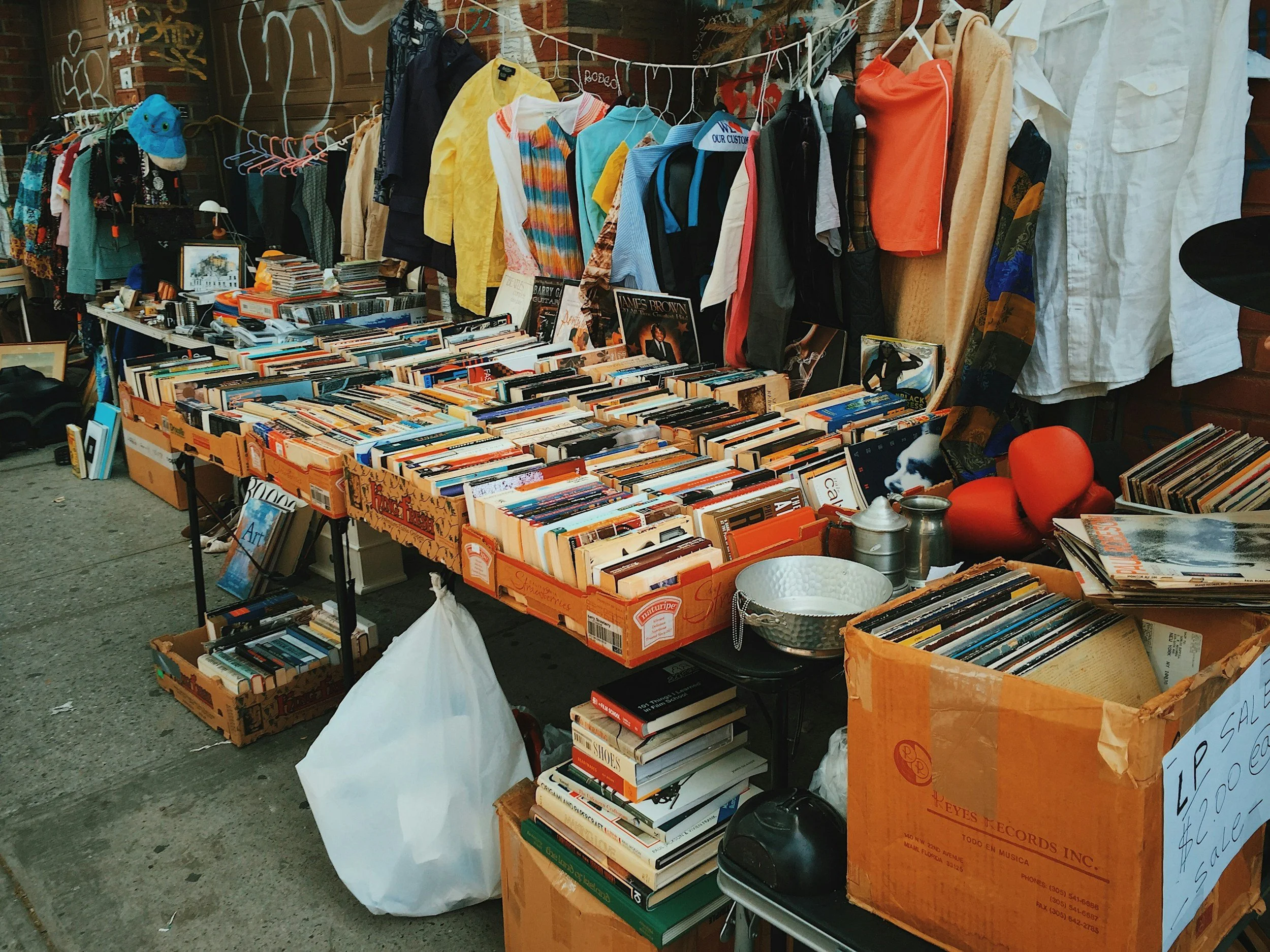
The first stretch runs along the main street into the village. Tables are still being set up outside pale stone houses, someone is unwrapping stacks of plates on a striped cloth, and a seller has lined up old café glasses next to a cardboard box of cutlery that clearly hasn’t been sorted yet. You slow down without really deciding to. Two buyers ahead of you are already checking the bottom of a crate, lifting things properly, not just scanning from above. Someone buys a set of mismatched bowls before they’ve even been priced.
That’s usually the moment you know you’re in the right place.
On a different Sunday, in a larger town closer to the coast near Trouville or Cabourg, the setup looks more organised. Proper rows, cleaner displays, prices already written, more space between stalls. It looks better at first, but after ten minutes you realise you’re seeing the same enamel signs, the same polished copper pans, the same stacks of linen arranged in exactly the same way. People are browsing, but no one is really buying, and you keep walking without stopping.
That’s also a clear answer, just in the other direction.
Most brocantes don’t make this obvious in advance. The listing might say 120 exhibitors, the town might look promising on a map, and the photos, if there are any, won’t show you the part that actually matters. The difference between a brocante where people are quietly buying from local tables at 8:00 and one where everything has already been filtered, priced, and repeated isn’t written anywhere. It’s something you start to recognise after a few mornings, usually by getting it wrong first.
This is where the useful details sit. Not in general advice, but in the small things that happen before you arrive, the way a village sets up its stalls, how early buyers move, where people park, how objects are laid out on tables, and how quickly you can tell whether to stay or leave. Once you notice those patterns, you stop relying on luck, and brocante mornings become much more consistent, even when the listings all look the same.
Start with the listing, not the town name
The biggest mistake is choosing a brocante because the town looks pretty on Google Maps. A good-looking village can still have a weak brocante, and an ordinary-looking commune can have the kind of Sunday morning where half the village has emptied cupboards, barns, garages, and inherited boxes onto folding tables.
Start with the wording in the listing. A “vide-greniers” is usually more local and mixed, with children’s clothes, kitchen things, toys, garden tools, old books, baskets, lamps, and the occasional brilliant find sitting between very ordinary items. A “brocante” can mean something more curated, but it is not a guarantee. In some areas, especially around Provence, Dordogne, and Normandy, the word is used quite loosely. A “foire à la brocante” or “salon des antiquaires” normally leans more professional, which can be good if you want proper antiques, but less interesting if you’re hoping for affordable home pieces or the slightly random things that make French secondhand shopping worth the effort.
The stall number matters. If a listing says 80, 120, or 200 exposants, that gives you a better first filter than a pretty town name. Under 30 stalls can still be lovely if it is a small village with a strong local community, but it is more of a gamble if you are driving 45 minutes. Over 100 stalls usually gives you enough variety to make the trip worthwhile, especially if there are several nearby cafés or a bakery open early.
If you are planning a longer market-focused trip through France, it helps to separate brocantes from regular food markets. This guide to French weekly markets is useful, especially if you want to build a weekend around both.
Check the date against real French village routines
A Sunday brocante in mid-June outside Uzès does not behave the same way as one in early August near the coast in Normandy, even if the listing looks stronger on paper. The date tells you who is likely to be selling, who will show up to browse, and how long the morning will actually last.
Start with school holidays. In many parts of France, once July begins, villages in the south fill with second-home owners and visitors, which increases the number of stalls but often changes the mix. You may see more decorative pieces, more curated tables, and fewer of those mixed household clearouts where things haven’t been sorted too carefully. In contrast, a brocante in late May or mid-September in the same village often leans more local, with sellers bringing out everyday objects from homes rather than things “prepared” for visitors. The messier, the better!
Sunday routines matter just as much. In smaller towns, people still build the morning around the bakery, the café, and the market square. If the brocante runs along the same street as the boulangerie, you’ll notice a steady flow of locals picking up bread and stopping briefly at stalls. If the brocante is set slightly outside the centre, for example near a salle des fêtes or a sports field, you lose that natural foot traffic, and the morning can feel quieter even if the stall count is high.
Arrival times actually shift depending on the region. In the Gard or Hérault, sellers often start early to avoid heat, which means the best browsing window can be between 7:30 and 9:30. By late morning, some tables are already half-packed, especially in full sun. In inland Burgundy or parts of the Dordogne, the pace is slightly slower. Sellers may still be unpacking closer to 8:30, and the brocante can hold its energy longer into the morning, especially if the village has shade from trees or narrow streets that keep temperatures down.
Public holidays and village fêtes are worth checking before you go. If the brocante is part of a larger event, you’ll often see food stalls setting up alongside it, maybe a rotisserie van, a crêpe stand, or a temporary bar near the square. That can make the morning feel lively, but it also changes the focus. People come to spend time rather than browse seriously, and sellers may bring different stock knowing the crowd will be less focused on buying.
There’s also a big difference between Saturdays and Sundays that isn’t always mentioned in listings. Saturday brocantes near larger towns like Nîmes or Avignon can attract more casual visitors and resellers, while Sunday mornings in nearby villages tend to stay more consistent with local routines. If you only have one day to choose, Sunday is usually the safer option unless the Saturday event is well-known and clearly established.
One small detail that helps: check whether the listing mentions a specific association organising the brocante, like a local sports club or school group. In villages where the same association runs the event every year, the structure is often more reliable. Stalls are spaced properly, timings are respected, and the same mix of sellers tends to return. If the listing is vague and only appears on one website without any local reference, expectations should stay lower, even if the location looks promising.
All of this sounds minor until you start noticing the difference on the ground. The same village can feel completely different depending on the date you choose, and once you pay attention to these things, you start picking mornings that work in your favour instead of hoping the listing tells you everything.
Look at the map properly, not just the pin
The pin usually lands on the mairie or a general point in the village, but it doesn’t tell you where the brocante is actually set up. That difference is more important than people expect, especially in smaller places where one street can carry everything and anything slightly outside the centre feels disconnected.
Open the map and zoom in properly. If you see a tight cluster of streets around a church square, a mairie, and maybe a small café with outdoor tables, that’s usually where the brocante will sit if it’s well integrated into the village. These are the ones where you can loop naturally, double back to a stall, stop for coffee without leaving the flow, and keep browsing without thinking about logistics.
If the pin is near a stade municipal, salle des fêtes, or a large open field on the edge of the village, expect a different setup. These brocantes can have more space and sometimes more stalls, but they often feel flatter. Sellers line up in rows, people walk up and down once, and there’s less reason to stay longer unless the stock is particularly strong. You also lose the rhythm of the village, which is part of what makes a brocante morning work.
In villages where the brocante runs along a single long road, especially one that still allows traffic at the edges, you’ll spend more time stepping aside than browsing. It becomes a slow walk rather than a proper look. Compare that to places where two or three small streets are closed off and connected around a square. Even with fewer stalls, those setups feel easier to move through and more worth your time.
Parking is another part that rarely shows up in listings. If you see only one main road leading into the village and no obvious side streets or secondary access, assume you’ll either arrive early or park further out. In places like the villages outside Pézenas or inland from Sommières, locals often park just before the centre and walk in along quieter lanes. If you follow the official parking signs too literally, you sometimes end up further away than necessary.
Satellite view helps here. Look for small details like a school (école), a cemetery (cimetière), or a cluster of houses just outside the centre. These are often the easiest places to park without overthinking it. A cemetery car park in particular is almost always used during brocante mornings, especially in rural areas where space is limited.
It’s also worth checking what sits just outside the brocante area. If there’s a boulangerie within a short walk, you’ll see steady movement through the stalls as people combine errands with browsing. If the nearest café is on the other side of the village or closed on Sundays, the atmosphere changes. People come, walk through once, and leave rather quickly.
Check the surrounding towns too. If there are two brocantes within 20–30 minutes of each other, the morning becomes much stronger. This is especially useful in places like the Dordogne, Lot-et-Garonne, parts of the Drôme, inland Normandy, and Burgundy, where villages sit close enough for a flexible route. If one event is poor, you are not stuck pretending it was worth the drive.
One thing that becomes obvious after a few visits is that two brocantes with the same number of stalls can feel completely different depending on layout. A 70-stall brocante wrapped around a central square in a village near Uzès can keep you busy for over an hour. A 120-stall event stretched along a roadside outside a town in coastal Normandy can feel finished in 20 minutes.
The pin won’t tell you any of this. The map will, if you take a minute to actually read it before deciding it’s worth the drive.
Satellite view tells you more than the description
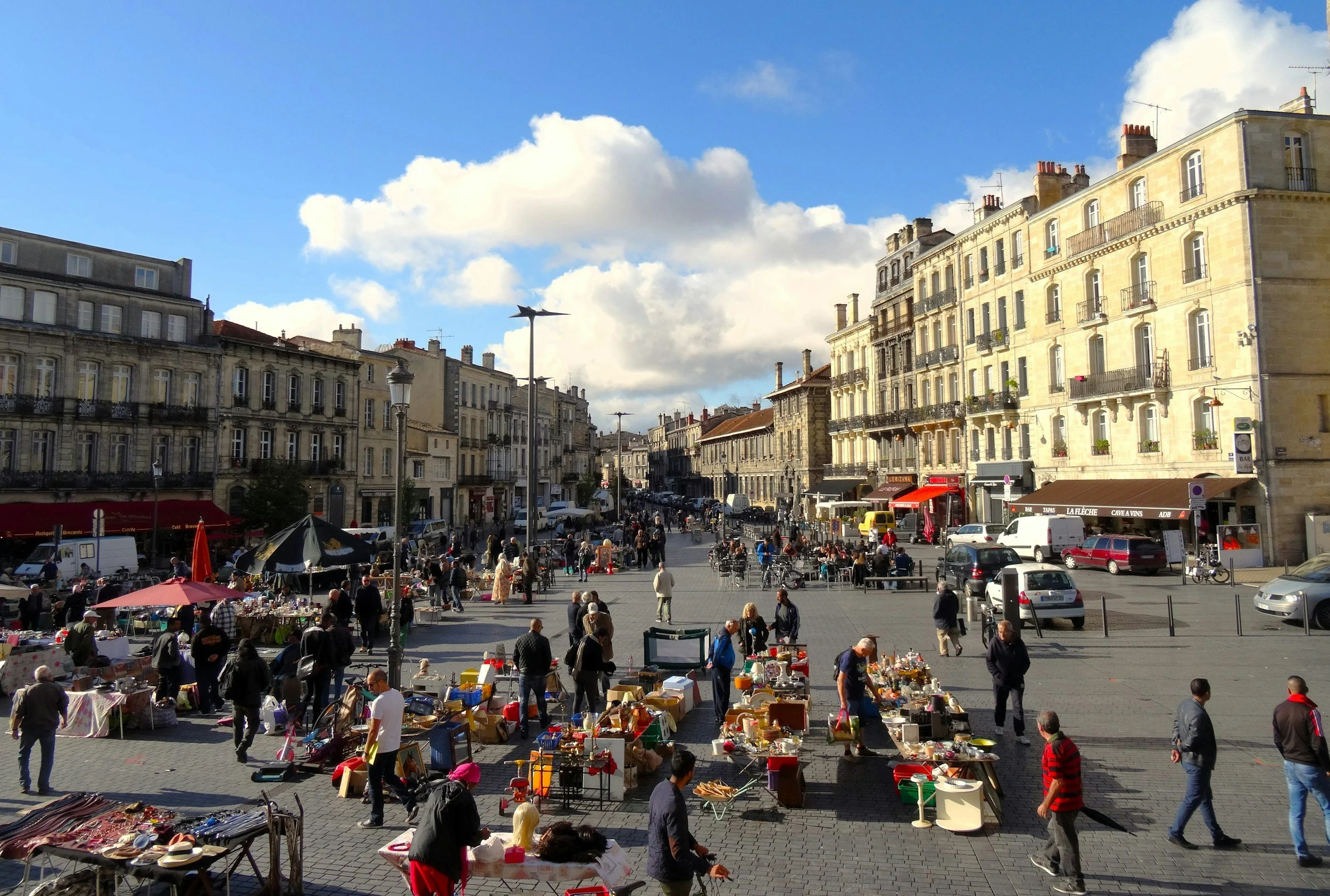
Satellite view is one of the quickest ways to avoid wasting a morning. If the event is marked beside a football pitch, a large open field, or a municipal car park, expect a more practical layout. That can be useful for volume, but it often feels less interesting than a brocante threaded through a village centre.
If the location is around a church square, a mairie, a market hall, or a main street with cafés, it is usually easier to settle into the morning. You can park, browse, pause, and continue without feeling like you are crossing a temporary fairground. In towns like Pézenas, L’Isle-sur-la-Sorgue, or parts of the Dordogne, the built environment also affects the type of buyer and seller. More established antique towns attract dealers and visitors who know what they are doing, while smaller inland villages often keep more of that household-clearout feeling.
Satellite view also helps with parking! If the village has one obvious car park and only one access road, arrive early or choose a backup. If there are several small streets, a school car park, a cemetery car park, or open space just outside the centre, the morning will probably be less stressful.
If you’re already somewhere around Uzès or planning a few days nearby, it helps to zoom out slightly and see how brocantes fit into the area, especially if you’re combining them with markets and small villages, this breakdown of Drôme Provençale makes it easier to plan a full route without overthinking it.
The first 10 minutes on arrival usually tells you everything
When you arrive, look at where the locals have parked. If cars are tucked along side streets, beside the cemetery, near the école, or in small unofficial spots that do not appear on the main event map, the brocante is probably familiar to people nearby. If everyone is being pushed into a far field by volunteers in high-vis jackets, the event may be large, organised, and busy, which is not necessarily bad, but it changes the morning.
In rural France, the best parking is often not the official parking. It is the small lane just before the centre, the gravel area near the salle des fêtes, or the shaded edge of the village where people who know the place leave their cars. If you see older local couples walking in with empty tote bags, baskets, or a folded trolley, that is usually a better sign than a row of visitor cars with rental stickers.
Do not waste too much time trying to park as close as possible. If the brocante is good, a 5–8 minute walk into the centre is fine. If the walk is 20 minutes along a road with no pavement, the event needs to be very strong to justify that effort, especially if you are carrying anything breakable back.
How tightly the stalls are placed
A strong brocante usually feels slightly compressed in a good way. Not crowded to the point where you can’t move, but close enough that you naturally slow down because there’s always another table within reach. You’re not walking gaps, you’re moving from one small discovery to the next without thinking about it.
Take a village just outside Uzès, something like Saint-Quentin-la-Poterie on a Sunday morning. The brocante usually wraps around the main square and spills into the smaller streets leading off it. Tables are pushed right up against the façades, sometimes under half-open shutters, sometimes under trees, and people move slowly through the middle because there’s always something within reach. You turn past the church, and instead of the stalls thinning out, they continue down a side street where someone has set up ceramics directly on the pavement and another seller has books stacked in wooden crates at ground level. You’re not deciding to stay, you just keep going because it doesn’t break.
Now compare that to a brocante set up beside a stade municipal outside a town like Béziers. Everything is laid out in long, straight rows on dry grass. You can see most of it from where you’re standing. There might be more stalls overall, but they’re spaced out so widely that you end up walking ten or fifteen steps between each one. After a while you stop looking properly. You just scan and keep moving, and the whole thing feels finished much faster than it should.
In Burgundy, around places like Tournus or the smaller villages between Beaune and Cluny, the layout tends to follow the main street and then tighten near the centre. You’ll have a stretch that feels slightly spaced out on the way in, then suddenly it compresses near the mairie or the café terrace. That’s usually where people slow down, where someone is holding up a plate to the light or checking the underside of a chair, and where you end up spending most of your time without planning to.
Normandy can go both ways. In inland villages near Pont-l’Évêque or Lisieux, when the brocante sits along a closed road with houses close together, it works well because the stalls naturally stay tight. But if it runs along a wider road or starts drifting toward a car park at the edge, you’ll feel it loosen. You get those stretches where nothing happens for a bit, then a small cluster again, then another gap. That stop-start feeling makes it harder to stay focused.
Even within the same region, it can change from one village to the next. A brocante in the centre of Pézenas, where the streets are narrow and slightly uneven, will always feel more concentrated than one set up in a flat open space just outside town. In Pézenas, you’re moving past antique shops, doorways, shaded corners, and stalls that almost blend into the town itself. Outside town, even with the same number of sellers, it can feel like a temporary setup you walk through once.
The easiest way to read it is to stop early and just look ahead for a few seconds. If your eye keeps catching on tables close together, with no obvious empty patches, it’s usually worth slowing down. If you can already see where the line of stalls ends, or you notice people walking faster than they’re browsing, you’ve probably got your answer.
What’s happening at 7:30–8:30 (the part most people miss entirely)
If you arrive just before 8:00 in a smaller village, the brocante isn’t really “open” yet, but that’s exactly why it’s useful. This is when you see how the morning is actually going to play out.
In places around Uzès or Sommières, sellers are still unloading from cars parked half on the pavement, half in the street. You’ll see cardboard boxes on the ground, tables only half covered, and items being placed out without much order yet. Someone is unwrapping plates in newspaper, another person is lining up old café glasses straight onto the table, and a few locals are already there, not browsing casually, but checking quickly and properly. They don’t look at everything. They go straight to certain tables, bend down, lift things, and move on.
If nothing is happening at that time, it usually stays quiet. You might have a nice walk, but not much else.
In the Gard and Hérault, especially in summer, this early window matters because of the heat. By 9:30 or 10:00, you’ll already notice a shift. Sellers start sitting down, some tables look picked over, and the energy drops. But between 7:30 and 8:30, there’s movement. Small sales, short conversations, people carrying things back to their cars without making a big deal of it. That’s the part you don’t see if you arrive later.
In Burgundy, it’s slightly slower but still active. Around villages near Tournus or Cluny, you might arrive at 8:00 and find sellers still unpacking, but the better buyers are already there. They’re not rushing, but they’re not waiting either. Someone is checking the underside of a chair, another person is opening a drawer in a small wooden cabinet, and a couple is quietly discussing whether something will fit in their car. You don’t see big transactions, just steady ones.
Normandy can be more unpredictable. Near places like Pont-l’Évêque or Lisieux, if the weather is good, early arrivals behave the same way as in the south, just at a slightly slower pace. But if it’s overcast or there’s been rain overnight, you might find sellers arriving later, setting up more slowly, and fewer early buyers. That doesn’t mean the brocante will be bad, but the useful window shifts, and you have to adjust your expectations.
One thing that becomes obvious once you’ve seen it a few times is that serious buyers don’t wait for everything to be perfectly set up. If you see people buying things before prices are even written down, or while items are still being unpacked, that’s a strong sign. It means the stock is good enough that people don’t want to risk waiting.
There’s also a difference in how people move. Early buyers don’t wander. They move table to table with purpose, stop briefly, pick things up properly, and either buy or move on. If everyone is just drifting around with coffee in hand, looking without touching anything, it usually means the morning hasn’t really started, or that it won’t pick up much.
If you only take one thing from this part, it’s that 7:30–8:30 is not about finding everything before anyone else. It’s about reading the brocante while it’s still forming. Within 15–20 minutes, you can usually tell if it’s worth staying, even before you’ve seen the whole thing.
The difference between local-clearout brocantes and dealer-heavy ones
You don’t need to ask anyone what kind of brocante it is. Just look at how things are placed.
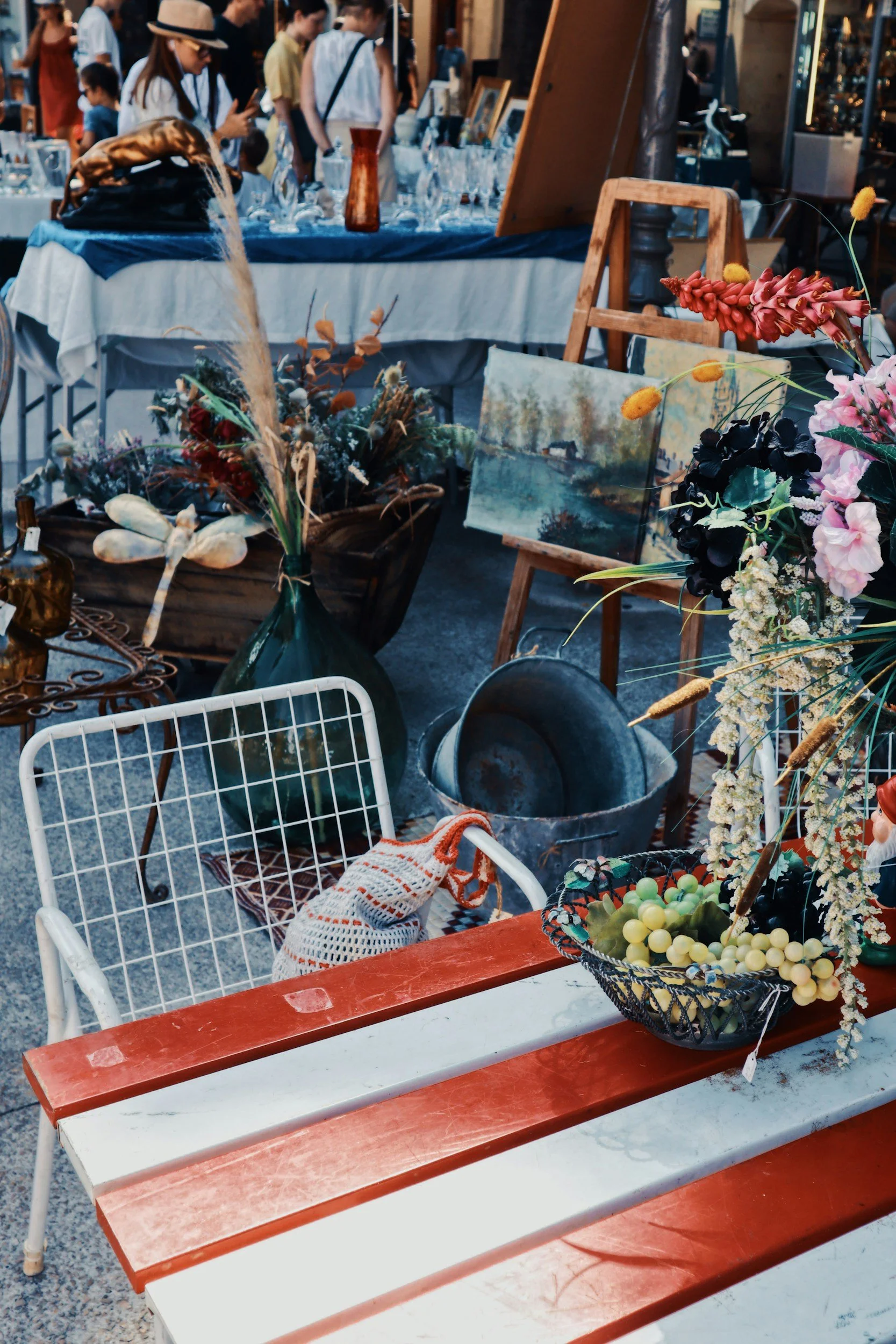
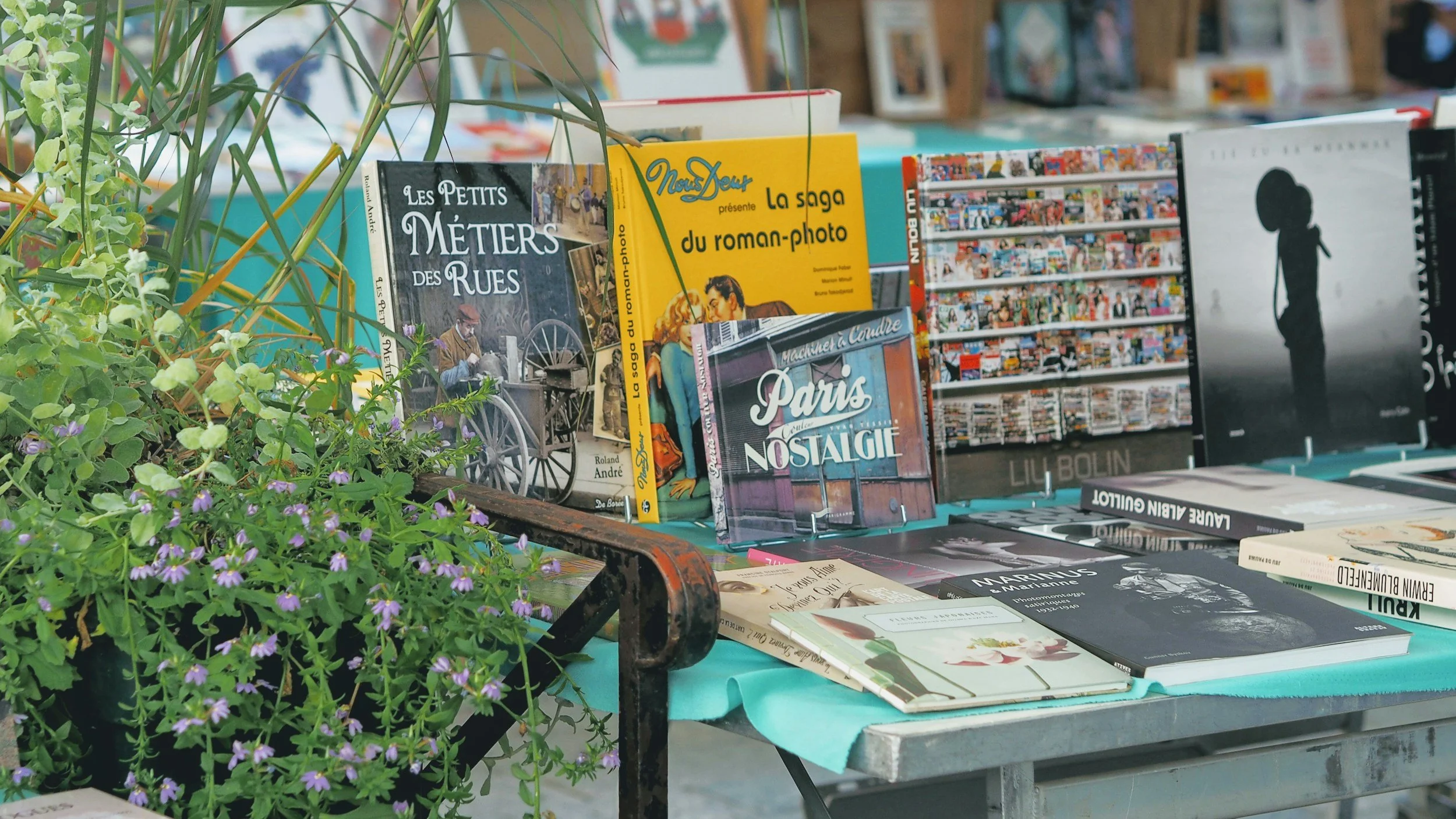
In a village like Saint-Saturnin-lès-Apt or somewhere just outside Uzès, the local sellers tend to arrive with whatever they have at home and put it out quickly. Folding tables, a cloth if they remembered one, boxes underneath, and things placed in a way that only makes sense to them. You’ll see a stack of plates next to old magazines, a drawer full of cutlery beside a lamp, a pile of linens still folded from storage, sometimes even items left in the same crate they were brought in. Nothing is styled. You have to look properly, sometimes bend down, sometimes move things slightly to see what’s underneath.
That’s where a lot of the good pieces sit, especially early on.
Now compare that to a setup you might see closer to L’Isle-sur-la-Sorgue or in a more polished coastal town near Honfleur. Tables are covered neatly, objects are grouped, and everything has space around it. Glassware arranged by size, linens stacked in clean piles, ceramics lined up so you can see everything at once. Prices are often already decided, sometimes even labelled. It looks easier, but it also means someone has already done the sorting for you.
In Burgundy, around smaller towns like Nolay or villages between Beaune and Cluny, you often get a mix. One table looks like a house clearance with things still in boxes, while the next one is clearly run by someone who does this regularly. You’ll see small wooden shelves brought along to display items, or pieces arranged in a way that suggests they’ve been transported and set up many times before. That mix can work well because you can move between both without needing to choose one type of brocante over the other.
Normandy tends to lean slightly more towards display in certain areas, especially near the coast. Around towns like Cabourg or Deauville, even local sellers sometimes present things more neatly, especially if they know visitors will be browsing. Inland, near places like Lisieux or Pont-l’Évêque, it shifts back. More boxes, more mixed tables, more of that slightly unstructured feel where you need to spend a bit more time at each stall.
The key thing is not to assume that a nicer display means better items. It often just means the seller has more experience or is used to selling to visitors. The tables that look less organised are the ones where things haven’t been filtered as much. You might have to move a few items, check underneath, or ask questions, but that’s usually where the more interesting finds come from.
You can read this within a minute of arriving. If every table looks arranged in the same way, with similar objects and similar pricing, you’re probably in a more dealer-heavy brocante. If the setups vary a lot from one table to the next, with some looking almost chaotic and others more put together, you’re in a better position to find something that hasn’t already been picked over.
The best brocantes often have both. A row of local sellers keeps the morning interesting, while a few dealers lift the overall quality. If every stall looks styled, the event may be more of an antique market than a brocante. If every stall looks like a car boot sale with mainly clothes and plastic toys, it may not be worth staying long unless you came for everyday secondhand finds.
Objects that repeat too often (you’ll spot this within the first street if you know what to look for)
You walk into a brocante in a place like Sommières, maybe starting near the bridge and moving into the older streets, and within five minutes you’ve already seen the same enamel sign twice. A Ricard one, slightly different size, but close enough. Then a few tables later, the same kind of copper pans hanging from hooks, all polished to the same finish, all priced in the same range. Then again, a stack of folded linen tied with string, arranged neatly in a way that looks almost identical to the last table.
That’s the moment to pause and register it.
It’s not about one repeated item, it’s when the pattern keeps showing up across different stalls. Same types of objects, same presentation, same condition. It usually means those sellers are pulling from the same places, markets, storage units, or buying routes, then bringing the stock here already sorted.
You see this a lot around L’Isle-sur-la-Sorgue, tourist-heavy parts of Provence and at better-known antique destinations. L’Isle-sur-la-Sorgue is still worth knowing if you care about antiques, but it is not the same as a village vide-greniers where someone is selling their grandmother’s kitchen things from a folding table. For a more focused market-town angle in Provence, this guide to Provence market towns works well as a next read.
In contrast, walk into a smaller village brocante inland from Uzès, something like a Sunday setup near the square in Montaren-et-Saint-Médiers, and it feels completely different. One table has old gardening tools thrown into a wooden crate, another has a mix of plates that don’t match at all, someone is selling books with handwritten names inside the covers, and a third table has random kitchen items that clearly came straight from a cupboard that hasn’t been touched in years. Nothing repeats in a clean way. You have to look properly because nothing is grouped for you.
In Burgundy, around villages near Cluny or on the smaller roads between Beaune and Autun, repetition shows up differently again. You might see similar objects, but they’re not arranged the same way. One seller has glasses mixed with ceramics, another has them boxed under the table, someone else has just placed them loosely in a crate. Even when the category overlaps, the presentation doesn’t line up, which usually means they’re coming from different homes, not from a single buying source.
Coastal Normandy leans back toward repetition, especially in places like Cabourg or the edges of Honfleur. You’ll notice small decorative furniture, similar ceramics, and tableware that fits a certain look. It’s not accidental. It reflects what people are buying for second homes and what sellers know will move quickly. After a few stalls, you can almost predict what the next table will have.
The useful part is not judging it, it’s adjusting quickly. If you came looking for something specific, like enamelware or polished copper, repetition actually helps because everything is already visible and easy to compare. But if you’re hoping to find something that hasn’t been filtered yet, you need to move away from those sections and look for the tables where nothing quite matches.
A small detail that helps is to look at how things are handled. When the same objects appear in the same condition, cleaned in the same way, and placed with the same spacing, it’s usually deliberate. When similar objects appear but look slightly different, maybe one stack is dusty, another is chipped, another is mixed with unrelated items, that’s usually coming from separate homes.
You don’t need to walk the whole brocante to figure this out. Two or three streets is enough. Once you see the pattern, you either stay and browse it for what it is, or you change direction and look for the part of the village where things feel less organised and a bit less predictable.
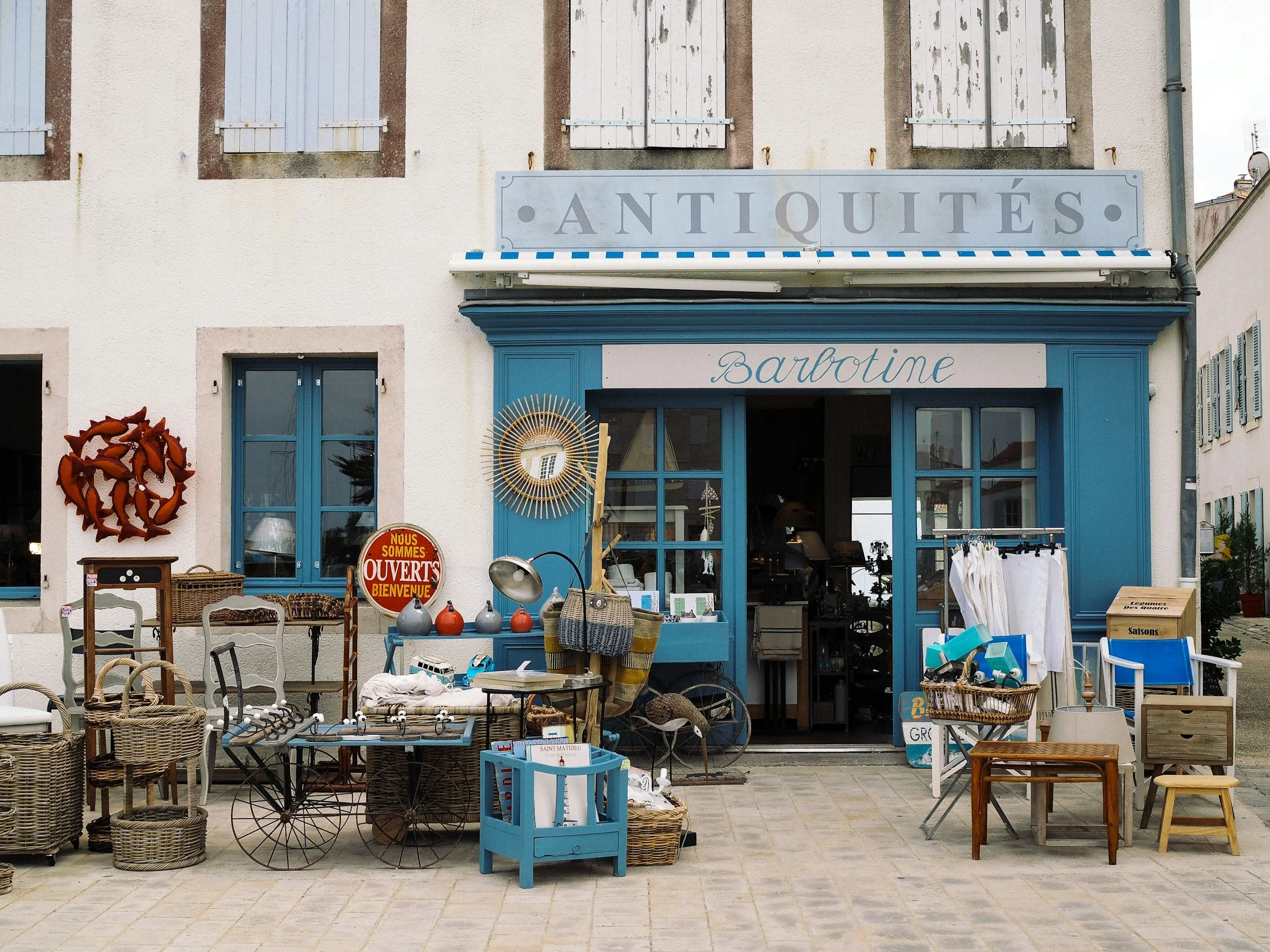
What the condition of things quietly tells you (storage, use, and whether it came straight from a home)
You don’t need to ask where something came from most of the time. The way it looks when you pick it up usually answers that for you.
At a smaller brocante in a village like Montaren-et-Saint-Médiers or inland from Sommières, you’ll often see things exactly as they’ve been stored. Plates with one or two chipped edges sitting at the bottom of a stack, glasses that aren’t perfectly clear, linens folded in a way that suggests they’ve been in the same cupboard for years. Books with names written inside, sometimes with a date or a local address. Nothing has been made to look better than it is, and that’s usually the point.
You pick something up and it doesn’t feel “ready,” it just feels used.
Compare that to a table in or around L’Isle-sur-la-Sorgue or a more polished setup near the centre of Pézenas. Everything looks evenly cleaned. Copper pans shine in the same way, glasses are clear, linens are folded neatly and often grouped by colour or size. Even when the items are old, they’ve been handled in a way that makes them look consistent. That doesn’t mean they’re worse, but it does mean someone has already gone through them carefully before you got there.
In Burgundy, around villages between Beaune and Cluny, you often get a mix that’s easier to read. One table might have furniture with visible wear, marks on the legs, drawers that don’t slide perfectly, while the next has smaller items that look more prepared for sale. You can move between both within a few metres, which makes it easier to compare without needing to think too much about it.
Normandy shifts depending on where you are. Inland, near places like Lisieux, you’ll still find more of that slightly uneven condition, especially with kitchen items and tools. Near the coast, around Cabourg or Deauville, things tend to look more consistent. Not necessarily better, just more aligned in how they’ve been cleaned and presented, especially if the sellers expect visitors rather than locals.
There are a few small things that help when you’re deciding whether to buy something. With textiles, unfold at least part of it before committing. Old French linens can look fine on the surface but have marks from storage or damp if they’ve been kept in a cellar or attic. With ceramics, turn them over. You’ll often see more signs of use underneath than on top. With furniture, open drawers, check the back, and look at how it’s been repaired, if at all.
If the brocante is set up in a field, especially after rain, be a bit more careful. Boxes placed directly on grass can pick up moisture, and anything made of paper, fabric, or untreated wood can be affected. In places where the stalls run along paved streets, especially in village centres, this is less of an issue.
The main thing is not to assume that cleaner means better. It usually just means someone has already done part of the work. The tables where things still look slightly uneven, slightly mixed, or not fully sorted are often the ones where you need to spend a bit more time, but they’re also the ones where something unexpected is more likely to appear.
If you’re wondering why some brocantes feel more polished and others feel completely mixed, it usually comes down to how close you are to established antique towns, and this guide to antique towns helps you understand that difference before you end up in the wrong kind of market for what you’re actually looking for.
What changes from one region to another (and why the same brocante never feels the same twice)
Southwest France brocantes feel different from Burgundy
In the southwest, especially once you’re moving through the Dordogne, Lot, or into parts of the Gers, the brocantes tend to feel more tied to houses that have been lived in for a long time. You see it in the mix straight away. In a village near Sarlat or around somewhere like Eymet on a Sunday morning, one table might have heavy earthenware bowls, another has stacks of old jam jars, someone else has a box of handwritten recipe books, and further down there’s a mix of garden tools, enamel basins, and a chair that clearly came out of a barn without much thought about presentation.
Nothing really matches, and that’s exactly the point.
You also notice how people sell. It’s often slower, more local, less set up for visitors. Sellers chat with each other across tables, someone disappears to grab more things from a car parked just behind the stall, and items keep appearing throughout the morning rather than being fully laid out from the start. If you stay for a while, the table actually changes.
Drive a few hours north into Burgundy, around places like Tournus, Cluny, or the smaller villages between Beaune and Chalon-sur-Saône, and it shifts. The mix becomes more structured without being fully polished. You’ll still find local sellers, but there’s often more furniture, more ceramics, more wine-related objects, and more pieces that feel like they’ve come from houses with a different kind of storage. Old wooden chairs, small cabinets, framed prints, bottles, demijohns, and cellar items show up more consistently.
The layout plays into it as well. In Burgundy, brocantes often follow a main street that tightens as you get closer to the centre, especially near the mairie or a café terrace. Around Tournus, for example, you might start on a slightly open stretch, then move into a denser area near the abbey where stalls sit closer together and people slow down. That central part is usually where you end up spending most of your time.
In the southwest, it’s more spread out. A brocante near a village outside Cahors or in the Lot-et-Garonne might run loosely through a square, then continue down a side street, then open out again near a field or a parking area. It doesn’t always pull you in the same way visually, but it rewards moving through it slowly because the good things aren’t grouped or highlighted.
Even the type of objects you come across reflects how homes are used in each region. In the Dordogne or Gers, kitchens tend to be larger, storage spaces more varied, and outdoor areas more integrated into daily life, so you see more practical items like preserving jars, baskets, garden tools, and mixed tableware. In Burgundy, especially in wine regions, you start noticing more items connected to storage, serving, and display, things that would sit in a cellar, dining room, or along a wall rather than being used outside.
Timing also shifts slightly. In the southwest, especially in summer, everything starts earlier. By 8:00, people are already buying, and by 10:30 some sellers are packing up if the heat picks up. In Burgundy, the morning holds a bit longer, especially in villages with shade or where the streets are narrower. You can arrive slightly later and still feel like you’ve caught the main part of the brocante.
None of this is written in listings, but once you’ve seen both a few times, you stop treating them as the same kind of event. You start planning differently without really thinking about it. In the southwest, you give yourself time to move through a more scattered setup and look properly at mixed tables. In Burgundy, you focus more on the central streets and expect a slightly more structured flow.
It’s not that one is better than the other. They just reward a different kind of attention, and once you adjust to that, it becomes much easier to know what kind of morning you’re actually walking into before you even arrive.
If you are building a France trip around towns that are worth more than a quick stop, this piece on French towns worth staying fits naturally with brocante planning, especially for Burgundy and inland regions where one morning event is rarely enough reason to choose a base.
Coastal Normandy vs inland Normandy
Start near the coast, somewhere like Cabourg, Trouville, or the outskirts of Honfleur, and the brocante often looks more put together from the first few tables. Stalls are spaced a bit wider, objects are easier to see without digging, and there’s a certain consistency to what’s being sold. You’ll notice small painted furniture, sets of tableware that match, glassware arranged neatly, lamps that already look ready to place in a house. It reflects how these towns are used. A lot of second homes, weekend visitors, and sellers who know what people are likely to pick up quickly.
You can walk through a coastal brocante and recognise the pattern within ten minutes. A table with ceramics in soft colours, then one with linen folded into even stacks, then a few decorative pieces that could go straight onto a shelf without needing anything done to them. It’s easy to browse, but you’re rarely the first person to look at anything. The selection has already been filtered.
Parking and layout follow the same logic. In places like Deauville or near the centre of Trouville, you’ll often be directed into proper parking areas, then walk in along a set route. The brocante sits neatly within a defined space, sometimes along a promenade edge or a wider street where there’s room for people to step back and look. It feels organised, but also slightly separate from everyday village life.
Drive 20–30 minutes inland toward Pont-l’Évêque, Lisieux, or smaller villages in the Pays d’Auge, and it shifts quite quickly. The setup becomes less polished and more mixed. You might arrive and find stalls running along a narrower road, tucked around a church square, or spread loosely between houses with cars parked just behind them. There’s less space between tables, and you have to move a bit more carefully, especially if the road surface is uneven or slightly damp in the morning.
The objects change as well. You’ll still find ceramics and glassware, but they’re mixed in with tools, boxes of books, old kitchen items, and things that haven’t been grouped by type. One table might have a crate of farm tools next to a pile of magazines, another has mismatched plates with a chipped one at the bottom, and a third has drawers of cutlery that clearly came straight out of a house without being sorted.
Inland brocantes also feel less predictable as you walk through them. Near Lisieux, you might turn a corner and suddenly find a better cluster of stalls where people are actually buying, then another stretch that feels quieter. It doesn’t present itself all at once. You have to move through it properly to see where it picks up.
Worth noting is that along the coast, especially in summer, people arrive slightly later. You’ll see more browsing after 9:30, more people walking with coffee, and more of a steady flow rather than that early burst of activity. Inland, especially in smaller villages, the stronger window is still earlier. By the time you reach 10:30, some of the more interesting pieces are already gone, and sellers start to slow down.
Weather plays a bigger role in Normandy than in most parts of the south. Along the coast, wind can affect how stalls are set up, especially with lighter objects, paper, or textiles. Inland, overnight rain can change the entire feel of a brocante. If the ground is damp, you’ll see boxes lifted onto tables rather than left underneath, and fewer items placed directly on the ground. Sellers adapt quickly, but it changes what you can comfortably browse.
The easiest way to think about it is that coastal brocantes are easier to move through but more predictable, while inland brocantes take a bit more effort but give you more variation from one table to the next. Once you’ve seen both in the same weekend, you stop treating them as interchangeable, even though they’re only a short drive apart.
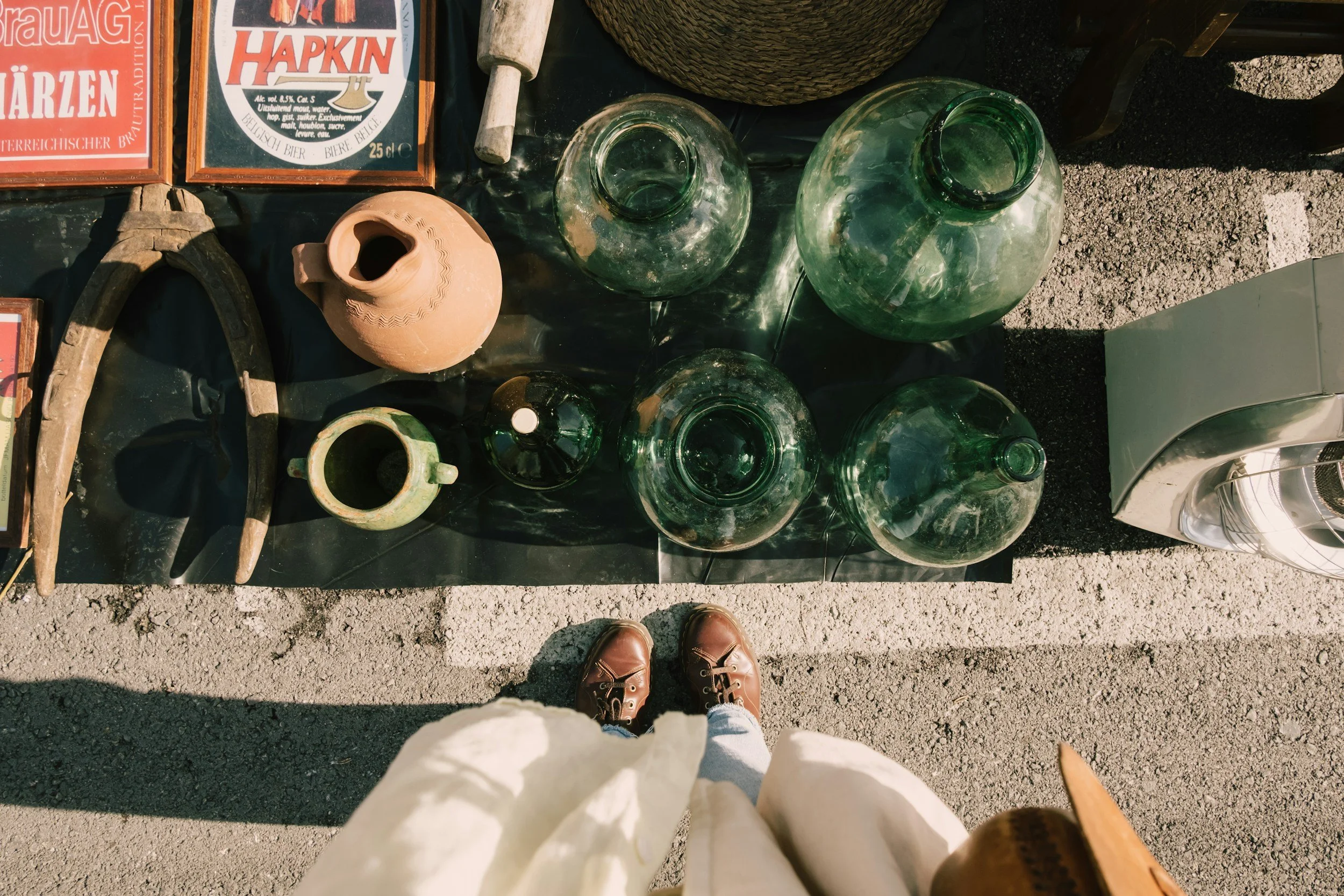
Occitanie villages where brocantes are part of weekly life (you don’t go “to a brocante,” you just show up on a Sunday morning)
In parts of Occitanie, especially around Uzès, Sommières, Pézenas, and the smaller villages between them, the brocante doesn’t feel like an event you plan your day around. You arrive, usually a bit earlier than you meant to, park somewhere slightly random like near the cimetière or along a quiet side street, and walk in with everyone else who’s doing their normal Sunday routine.
In Sommières, for example, you might start near the bridge, cross into the older streets, and realise the brocante is already threaded through everything. A few tables sit just off Place du Marché, then more appear as you move toward the narrower streets behind it. Someone is buying bread from the boulangerie on Rue Général Bruyère while still looking at a table of ceramics next to them. People aren’t separating “shopping” from “browsing.” It’s happening at the same time.
In villages just outside Uzès, like Montaren-et-Saint-Médiers or Saint-Maximin, it’s even less structured. You turn into the centre and the brocante just starts wherever there was space. A few tables near the church, another stretch along a street with parked cars behind them, then a cluster where someone has set up next to a café terrace with three or four tables already taken by locals having coffee. No clear beginning, no clear end…
What makes these places different is that the brocante fits into what the village already does on a Sunday. The boulangerie opens early, people go out for bread, someone sits down for a coffee, and the brocante runs through that same space. You’ll see someone buy a stack of plates, carry them ten metres, stop to talk to someone they know, then continue walking without leaving the flow of it.
In Pézenas, it leans slightly more structured, especially closer to the centre, but even there the brocante doesn’t sit apart from the town. You move through streets where antique shops are already open, then into a square where a few temporary stalls have been added, then back into a street where someone has just put a table outside their door with whatever they had in storage. It blends into the town instead of taking it over.
The way people sell reflects that. Some tables look like proper setups, others look like someone brought a few boxes and decided to join in that morning. You’ll see things still being added after 8:30 because the seller didn’t bring everything out at once. Someone disappears to their car and comes back with another crate. It’s not fixed from the start.
Early morning is still when the better things move, especially in summer when it gets warm quickly, but the atmosphere doesn’t drop off as sharply as it does in other regions. People keep arriving in smaller waves. Some come early to buy, others come closer to 10:00 just to walk through, stop at a café, and see what’s left. It doesn’t feel like you’ve missed everything if you’re not there at 7:30, even though that’s still the strongest time.
What makes these brocantes strong is that they haven’t been “shaped” around visitors in the same way as some of the more well-known antique towns. You’re stepping into something that happens regularly, whether you’re there or not. Once you’ve seen a few of these mornings in Occitanie, you stop chasing specific listings and start looking at the map differently, choosing villages close to each other, knowing that even if one is average, the next one ten minutes away might be better.
Uzès, Pézenas, and L’Isle-sur-la-Sorgue are the names many people find first, but the stronger long-term approach is learning the smaller places around them. For southern France planning beyond one famous market day, this guide to Drôme Provençale markets gives a better sense of how market towns and village routines can shape a trip.
When you arrive changes everything - early vs late feels like a different brocante
Arrive just before 8:00 in a village outside Uzès, something like Saint-Maximin or Montaren-et-Saint-Médiers, and you’re walking into the part most people miss. Cars are still half-parked along the edge of the road, boots open, sellers lifting things out one box at a time. You’ll see a stack of plates still wrapped in newspaper, a crate of mixed glasses not yet sorted, someone placing a chair down without even checking if it’s straight. Prices aren’t always set. You have to ask, and sometimes the answer isn’t fixed yet.
The buyers who are there at that time don’t move slowly. They don’t stop at every table. They go straight to certain spots, bend down, pick things up properly, check underneath, and decide quickly. You’ll see someone carry a set of bowls back toward a car parked near the cimetière before most people have even reached the centre. Another person might already be loading a small table into the back of a van while the seller is still unpacking other items.
By 10:00 in that same village, it’s a different scene. The street is fuller, people are walking with coffee, and the tables look finished. The things that needed a closer look earlier are already gone. What’s left is easier to see because it’s been spread out, but it’s also been passed over. You’ll still find things, but you’re no longer choosing from everything that was there at the start.
In Burgundy, around a place like Tournus or one of the villages just outside it, the shift is slightly slower but still clear. At 8:00, sellers are still adjusting things, opening drawers on small cabinets, moving items from boxes onto tables. Buyers are already there, but it feels less rushed. Someone is checking the back of a chair, another person is holding up a ceramic bowl to look at the base. By 10:30, the central part near the mairie or café is full, and the outer edges start to thin out. You’ll notice more empty spaces where tables have already been packed down.
Near the coast in Normandy, around Cabourg or Trouville, arriving after 10:00 feels more normal because people start later. But even there, the better pieces don’t wait. If you arrive early, closer to 8:30, you’ll see sellers finishing their setups and a few buyers already making decisions before the main flow begins. By 10:30, it’s easier to walk through, but you’re looking at what’s left after that first round of buying.
The practical part of this is simple. If you care about finding things that haven’t already been picked through, you need to be there while the brocante is still forming. That doesn’t mean rushing through everything, it just means arriving when the full range of items is still on the tables, even if those tables aren’t fully set up yet.
If you’re arriving later, treat it as a different kind of morning. Walk through, stop for coffee, take your time, but don’t expect it to feel the same as it did two hours earlier. It won’t, even if you’re standing in exactly the same place.
Midday drop-off isn’t always a good sign (sometimes the morning is already over by 11)
Around 11:00 in a village outside Uzès, you’ll start noticing small changes that aren’t written anywhere. A seller who was standing earlier is now sitting behind the table. Another has pushed a few items back into a box. Someone has already removed half their stock and left the space looking slightly empty, even though the brocante is still technically “open.”
In places like Saint-Quentin-la-Poterie or Montaren-et-Saint-Médiers, especially in summer, the shift can happen quickly once the sun is higher. The streets are brighter, there’s less shade, and sellers who arrived early have already had the part of the morning they needed. If they’ve sold what they wanted, they don’t stay just to fill the time. You’ll see cars being pulled closer, boxes reappearing, and people starting to pack in a quiet, gradual way rather than all at once.
What’s left on the tables tells you more than the time. If you’re walking through at midday and everything looks spread out, with fewer objects per table and more gaps, it usually means the stronger pieces went earlier. You’re not seeing a curated selection, you’re seeing what didn’t move. That doesn’t mean it’s useless, but it’s a different kind of browsing.
In Burgundy, around villages near Tournus or Cluny, the drop-off can feel more uneven. The centre might still be active near the café or mairie, with people sitting outside and a few tables holding attention, but the outer streets start to fade. You walk from a busy section into a quieter one where half the sellers are already packing or have left entirely, leaving empty patches that weren’t there earlier in the morning.
Normandy reacts more to weather than time. Near places like Pont-l’Évêque or inland villages around Lisieux, if the morning has been grey or damp, sellers may stay longer because there hasn’t been a strong early rush. But if the weather clears late in the morning, you sometimes get a second wave of visitors without the same quality of stock to match it. It looks active, but the better things are already gone.
Along the coast, around Cabourg or Trouville, midday can still feel busy because people arrive later, especially in summer. You’ll see more browsing, more movement, and cafés filling up. But if you look closely, the type of interaction changes. People are looking rather than buying. Fewer items are being carried away, and the same objects stay on the tables as you pass them more than once.
The mistake is assuming that staying longer improves your chances. Most of the time, it doesn’t. By midday, you’re no longer seeing the brocante at its full state. You’re seeing what remains after the first round of buyers, plus whatever sellers have decided to keep out.
If your trip is moving north instead of south, and you’re trying to figure out whether brocantes in places like the Loire feel similar or not, this look at Loire markets gives a clearer picture of how those towns function day-to-day, which makes a big difference once you arrive.
End-of-day isn’t always cheaper
The idea that everything becomes cheaper at the end is only partly true. Local sellers may reduce prices because they do not want to reload the car. Dealers often do not. If the item is small, valuable, or easy to transport, there is no reason for them to drop the price just because it is 15:30.
End-of-day works better for bulky, awkward things: chairs, framed pictures, lamps, baskets, garden pots, and boxes of mixed items. It is less useful for ceramics, linens, jewellery, art, or anything easy to pack.
If you are buying something fragile, do not wait too long. Someone else may buy it, or it may be damaged as people start packing. French brocantes are not set up like shops, and once a seller begins loading a van, the browsing becomes awkward.
Quiet signals that a brocante is worth staying for
When buyers arrive with measurements, fabric samples, trolley bags, or photos on their phone, they often know the event is worth the effort. This is common in antique towns, but it also happens at strong village brocantes where regulars know certain sellers turn up every year.
Look for people who move with purpose without rushing. They check under tables, ask prices quickly, and know when to walk away. If several buyers behave like this at different stalls, the brocante probably has enough quality to justify staying longer.
This is also where you learn. Watch what people inspect. Old hinges, wood joints, makers’ marks, the weight of linen, the underside of ceramics, the back of frames, the smell of drawers. The good buyers do not just look at the front of things.
Sellers who don’t chase you
At a good brocante, sellers usually let you browse. They may say bonjour, answer questions, and continue chatting with their neighbour. Heavy selling can be a sign that prices are inflated or the stock is aimed at visitors who are less confident.
A quiet seller is not necessarily unfriendly. In France, especially in smaller towns, there is often less pressure to perform friendliness for buyers. Say bonjour, ask politely, and do not handle fragile objects too casually. If you want a price, “C’est combien, s’il vous plaît?” is enough.
This sets the atmosphere of the whole morning. The best browsing happens when you can take time without being pushed, especially with boxes of books, textiles, old kitchen things, and mixed crates where the good item may be underneath the ordinary ones.
Small clusters where people stop and look longer (this is where the better things usually sit)
You’ll see this without trying to. You’re walking through a brocante, maybe in Sommières just off Place du Marché or in a smaller village near Uzès, and suddenly a few people are standing still around one table while everything else keeps moving. Nobody is blocking the path, but they’re not passing through either. They’re looking properly.
It’s rarely the most obvious stall. It’s not the one with everything laid out neatly or the one with the biggest display. It’s usually a table where things are slightly mixed and not fully arranged. A box of ceramics where people are lifting pieces one by one, a stack of linens being unfolded and checked in the light, or a crate of books where someone has stopped and started going through titles carefully.
In places like Saint-Quentin-la-Poterie, you might notice this near the edge of the main square, where a seller has set up just off the flow rather than directly in it. People step aside, look longer, then either buy or move on. In Pézenas, it often happens in the narrower streets just off the main centre, where the foot traffic slows naturally and gives people space to stop without feeling rushed.
What matters is how people behave in these spots. They’re not scanning quickly. They’re picking things up, turning them over, sometimes placing them back in a slightly different position. You’ll see someone hold a plate up to check the underside, another person run their hand over a piece of fabric, or quietly compare two items without making it obvious. That level of attention doesn’t happen everywhere.
In Burgundy, around a village near Tournus, you might find one of these clusters forming around a furniture piece or a table with mixed cellar items. Two or three people standing slightly apart, looking without talking much, then one of them asking a question and making a decision. It’s slower, but it’s still focused.
In Normandy, especially inland, these clusters can appear and disappear quickly. You might walk past a quiet stretch, then turn into a small square near a church and find a group gathered around one table with old kitchen items or tools. It’s not always easy to see from a distance, but once you notice it, it changes how you move through the brocante.
The useful part is not just joining every cluster, but using them as a guide. They show you where people are actually spending time, not just passing through. If you’ve walked ten minutes without seeing anyone stop like that, it’s usually a sign the brocante isn’t holding attention.
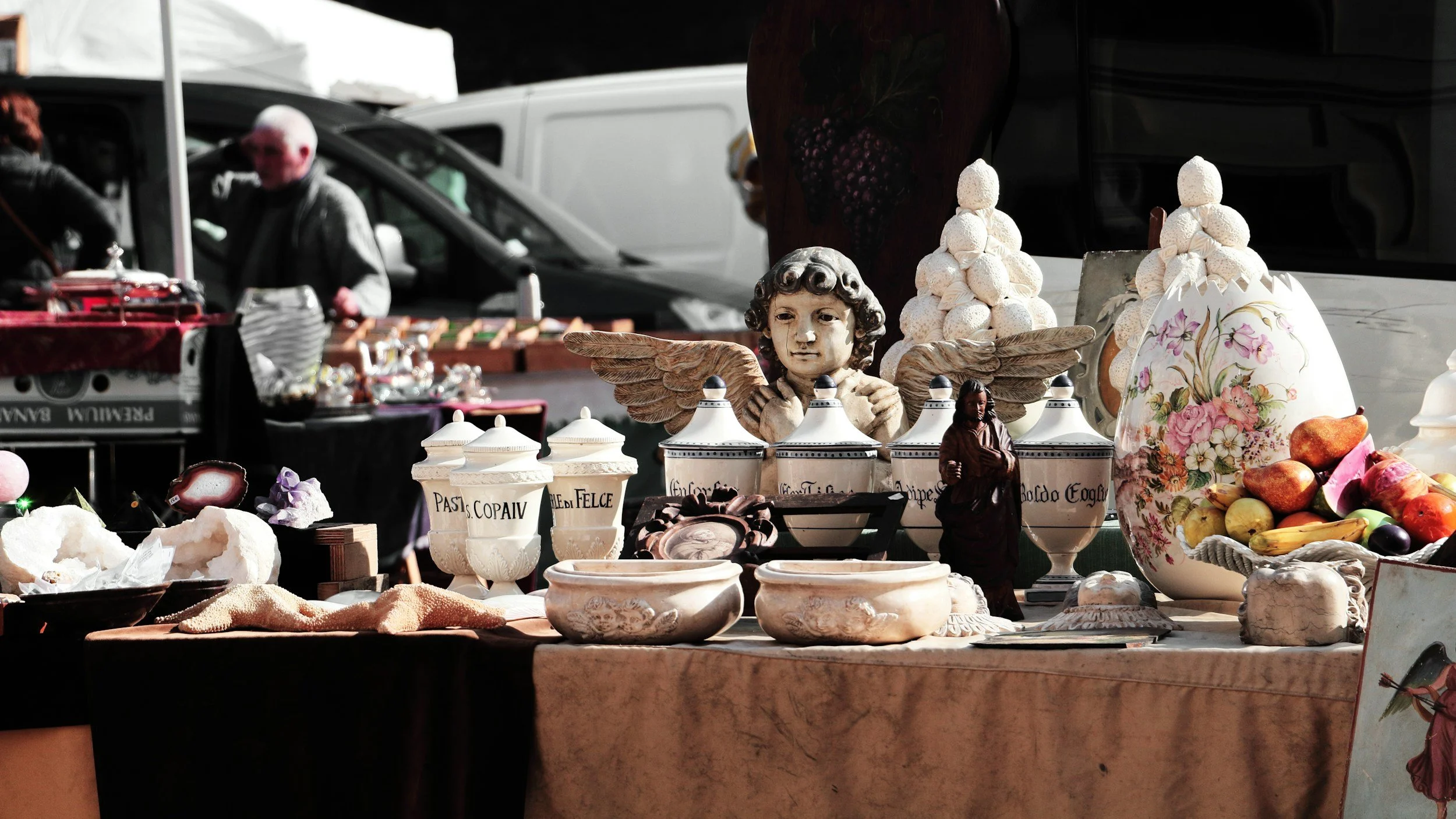
When to leave and try another one nearby
If you are walking quickly past stalls without meaning to, trust that. It usually means the stock is not right, the layout is poor, or the event has already given you its answer. A brocante does not need to be perfect, but it should make you stop regularly.
This is especially important if you planned two events. Do not spend 90 minutes at a weak brocante just because you drove there. Give it a proper first loop, check the side rows, look under tables, and then leave if nothing catches your attention.
A good morning often comes from cutting losses early. That is not impatience… It is practical planning, right?
Too many resellers too early
If the first rows are heavily styled, prices are high, and the same objects repeat, decide whether that matches your reason for coming. If you want proper antiques, stay. If you came for local household finds, move on or reduce the time you spend there.
This is common around better-known antique areas. The quality may be high, but the feeling is different from a village vide-greniers. It becomes more about buying from professionals than browsing local clearouts.
There is nothing wrong with that, but it needs to match the trip. If you want a weekend focused on antique towns, this guide to European antique markets sits closer to that style of travel.
Low turnover of visitors
If the same few people are circling and nobody is buying, the event may have stalled. This is different from a calm brocante. A calm brocante still has small movement: people asking prices, carrying items, returning to cars, chatting at stalls, stopping at the bakery.
Low turnover becomes obvious after 20 minutes. You see the same unsold objects, the same sellers waiting, and the same visitors passing without interest. Unless you have found one specific stall worth checking carefully, it is usually better to leave.
This is where a backup is important. In France, especially in rural departments, one weak brocante does not mean the whole morning is lost. It often means the next village has the better one!
Planning two brocantes in one morning (the only way to get a really good one)
The strongest brocante mornings are rarely built around one event. Choose two within 20–30 minutes, ideally with different profiles. One larger event with 100+ stalls and one smaller village vide-greniers. Or one antique-focused town and one ordinary local event nearby.
Do not choose two famous ones! You will spend the morning driving, parking, and dealing with crowds. The better pairing is usually one known event and one quieter local listing close enough to reach before lunch.
This works especially well in regions with dense village networks: the Dordogne around Sarlat and Bergerac, the Gard around Uzès and Sommières, Burgundy between Beaune and Tournus, or inland Normandy between market towns. If you are travelling without a car, brocante planning becomes much more limited, so it is better to focus on towns with regular markets and walkable centres. This piece on market towns without a car is more useful for that kind of trip.
Starting at the less promising one first
This sounds backwards, but it can work… If the smaller brocante starts early and is close to your base, go there first for a quick scan. If it is good, stay. If not, leave by 8:45 and reach the stronger listing while the morning is still active.
Starting with the big event can trap you. You park far away, walk in, spend too long browsing average stalls, and by the time you leave, the smaller event has already peaked. The smaller one often needs less time to judge.
However, the exception is furniture or serious antiques. If you are looking for specific pieces, start with the event most likely to have them, and arrive early enough that you are not watching someone else carry them away.
Knowing when to cut your time short
Set a quiet limit in your head. If the first loop gives you nothing after 20–30 minutes, and there is another brocante nearby, leave. If you have found two or three interesting stalls, stay longer.
Do not keep browsing out of politeness to the plan. Brocante mornings are uneven by nature. Weather, seller turnout, parking, competing events, village holidays, and school calendars all affect what appears on the day.
A flexible route is much better than a perfect spreadsheet. Know your first choice, your second choice, the driving time between them, and where you can get coffee or bread if both are weak.
If you’re still unsure how brocantes, vide-greniers, and marché aux puces actually differ in practice, especially once you’re standing there trying to decide whether to stay or leave, this quick brocante guide fills in those gaps without overcomplicating it.
What regular buyers quietly do differently
First of all - they don’t rely on one source for listings (and most of what they use isn’t even on the main sites). One listing site is never enough. Regular buyers usually cross-check regional brocante calendars, local Facebook pages, commune websites, printed posters, and signs outside villages.
If you only check one brocante website the night before, you’ll miss half of what’s actually happening. In parts of France, especially in Occitanie, Dordogne, and Burgundy, a lot of the useful information still sits outside the obvious places.
Drive into a village near Uzès on a Saturday afternoon and you’ll often see a paper sign tied to a lamppost at the roundabout on the D982, or taped to a wall near the boulangerie on the main street. “Vide-greniers dimanche” with a date and maybe the name of a local association. No website, no details, just enough for people nearby to know it’s happening. Those are often the ones that feel more local the next morning.
In towns like Sommières or Pézenas, local Facebook groups tend to be more up to date than the bigger listing sites. Not polished posts, just short messages from organisers or residents saying a brocante is on near Place du Marché or along a certain street. If you’re already in the area, those last-minute mentions can be more useful than anything planned weeks in advance.
In Burgundy, especially around Tournus or Cluny, you’ll find notices on the mairie board or outside small supermarkets. Sometimes it’s a printed A4 sheet with the date and number of stalls, sometimes just a handwritten note. It doesn’t look like much, but it usually means the event is organised by a local club or association, which tends to be more consistent from year to year.
In Normandy, particularly inland near Lisieux or Pont-l’Évêque, the same pattern shows up around bakery windows and café entrances. A small poster in the corner of the glass, easy to miss if you’re not looking for it. These aren’t the big, advertised brocantes, but they’re often the ones where the sellers are actually from nearby.
Regular buyers use listings as a starting point, then fill in the gaps once they’re on the ground. You’ll see people checking a phone in the morning, not just for directions but to see if anything else has appeared overnight, then adjusting where they go.
Even road signs help. In the south, it’s common to see temporary arrows placed at junctions early in the morning, pointing toward a brocante that wasn’t obvious online. Follow those and you sometimes end up at a smaller village event you wouldn’t have found otherwise.
They return to the same villages (and remember exactly which street, where to park, and which table was worth it)
People who go to brocantes regularly don’t just remember the village name. They remember where in the village it worked.
In a place like Sommières, it’s not “the brocante in Sommières,” it’s the stretch just off Place du Marché where the stalls tighten near the arches, or the side street that runs toward the river where two or three sellers usually bring better ceramics and books. They know to park slightly out, walk in past the boulangerie, and head straight to that part first before doing a full loop.
Around Uzès, the same thing happens in smaller villages. Someone who’s been before doesn’t just drive in randomly. They know that in Montaren-et-Saint-Médiers the better tables tend to sit closer to the centre near the church, while the outer edges thin out quickly. In Saint-Quentin-la-Poterie, they’ll head straight toward the main square and then double back through the narrower streets where sellers sometimes set up later or bring out additional boxes once the morning has started.
In Burgundy, near Tournus or Cluny, it becomes even more specific. It’s not just the village, it’s the corner near the mairie where a few regular sellers return each year, or the stretch of street that fills in properly while the outer road stays more spaced out. People remember that last time they arrived at 8:15 and still found good pieces, or that arriving after 10:00 meant most of the central stalls had already packed down.
In Normandy, especially inland near Lisieux or Pont-l’Évêque, you probably remember that one brocante felt scattered until you reached the square near the church where everything tightened and became worth looking at. Or that parking near the cemetery gave you quicker access to the better part, instead of following signs that led you to the far edge where the weaker stalls were.
It’s also about remembering how the morning behaved. One village might have looked promising but never really picked up, while another seemed quiet at first and then became better once you moved into a second street or waited while sellers finished setting up. That kind of detail sticks, and it changes how you approach the same place next time.
Regular buyers also remember timing in a very practical way. Not “arrive early,” but “arrive before the bakery queue finishes,” or “be there before the café tables fill up,” because that’s when the better items were still on the tables. In a place like Pézenas, that might mean getting there before 9:00 if you want to catch the more local sellers before the streets fill.
After a few visits, the village stops being a guess. You know where to go first, where not to spend too much time, and whether it’s worth combining with another brocante nearby.
They accept that most brocantes aren’t that good
Most brocantes are average. That is normal. Some have too many clothes, too many plastic toys, too many resellers, too few stalls, bad parking, weak turnout, or prices that make no sense. The point is not to expect every one to be special. The point is to build a morning that gives you options.
This is also the reason not to drive two hours for one vague listing unless the event is large, established, or part of a bigger route. A brocante should fit into the day. It can sit beside a market, a village lunch, a riverside walk, a café stop, or another nearby event.
For those of you planning France around market towns rather than single events, Dordogne autumn markets is a useful companion because autumn changes the whole market experience: fewer casual visitors, better food routines, cooler mornings, and a different kind of browsing.
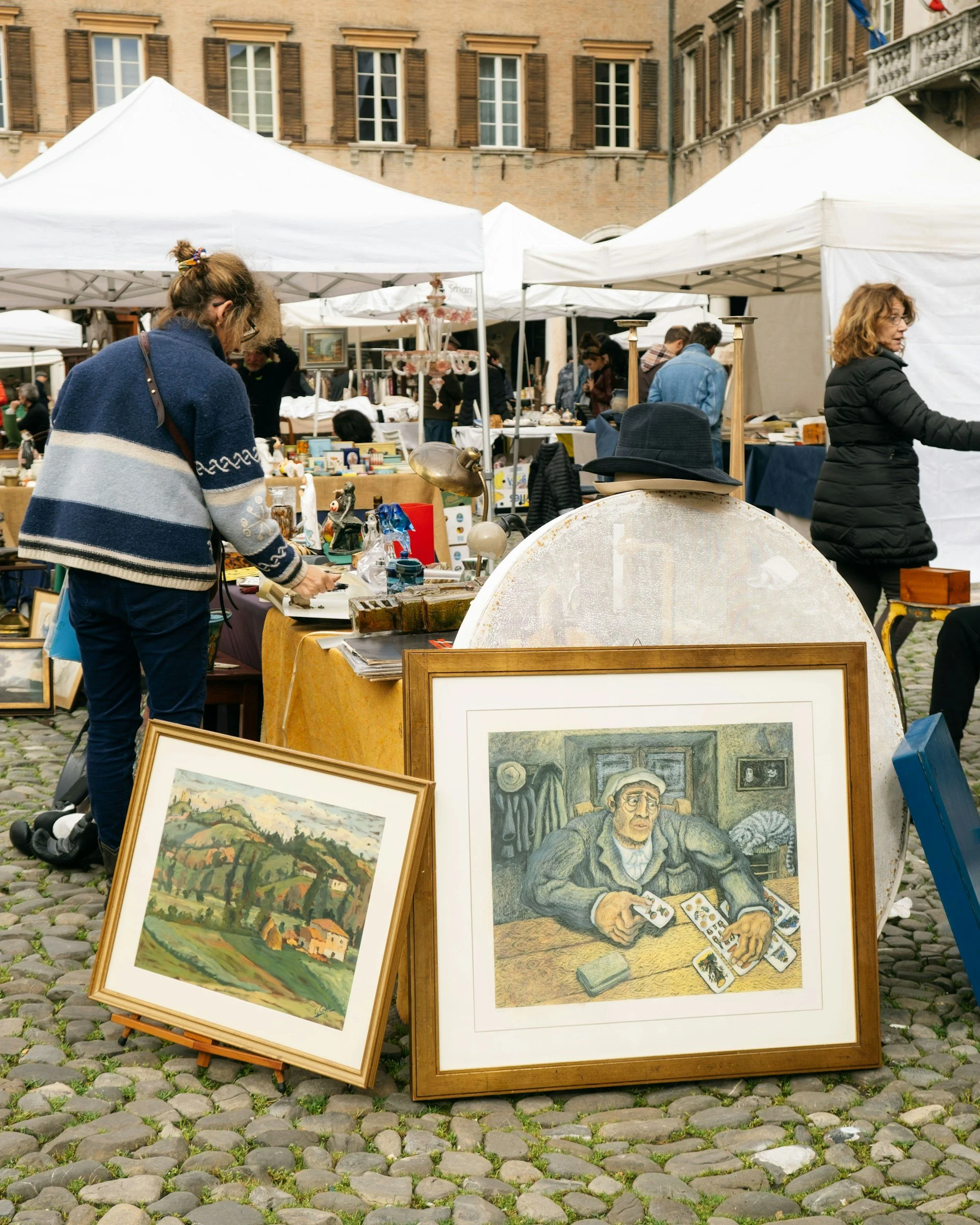
A quick pre-check before deciding it’s worth going
Before committing, check the exact wording, the number of sellers if listed, the location on the map, and whether the stalls are likely to be central or pushed to the edge. Then check nearby towns. A brocante becomes much more worthwhile when there is a second option within 20–30 minutes.
Look for signs that the event belongs to local life rather than only visitor traffic: commune pages, association organisers, village fête connections, repeated annual dates, and mentions on local noticeboards. If the only information is a vague listing with no stall count and no clear location, keep expectations low.
If the event is near a town you already want to visit, the risk is smaller. A weak brocante in or near Uzès, Pézenas, Tournus, Sommières, Sarlat, or a good Normandy market town is still part of a usable morning because cafés, bakeries, and regular markets can carry the rest of the day.
Time of arrival vs travel distance
A 15-minute drive gives you room to be casual. A 45-minute drive needs better evidence. A 90-minute drive should only happen for a known event, a strong antique fair, or a route where the brocante is one part of the plan.
Arrive earlier for rural brocantes, furniture, linens, ceramics, and anything likely to be picked quickly. Arrive later only if you mainly want the social browsing, the café stop, and a relaxed look around. After 10:30, you are no longer seeing the full event.
Check the weather before you leave. Rain in the forecast does not always ruin a brocante, but it changes seller turnout. Wind can be worse than light rain for paper, textiles, and fragile displays. Heat matters too, especially in the south, where sellers may pack early and cafés fill quickly.
Backup option within driving distance
The backup is not optional if you care about the morning. Choose it before you leave, not after you are disappointed. It can be another brocante, a regular market, a village café, a bakery stop, or a town with a good centre where the day still makes sense.
The best backup is close enough that you can leave the first brocante by 9:00 and still arrive while the second is active. If the backup is 50 minutes away, it is not really a backup. It is a second trip.
For a wider France route, combine brocantes with towns that have enough substance outside the event itself. Places with proper cafés, market halls, riverside walks, small museums, antique streets, or good bakeries make the whole day less dependent on one listing. That is also the easiest way to plan a trip that feels grounded rather than built around chasing one “perfect” Sunday morning.
And if you’re building a slower weekend around this, where brocantes are just one part of the day rather than the whole plan, it helps to see how they fit alongside cafés, walks, and quieter routines, this piece on countryside weekends shows what that actually looks like in practice.
Know this before visiting French brocantes
There’s one part of brocante mornings that doesn’t really get written down, and it’s the part that ends up making the biggest difference once you’ve done this a few times.
It’s not the listing, or the number of stalls, or even the village itself. It’s what you do once you’re there, and how quickly you’re willing to adjust.
You arrive somewhere between Uzès and Sommières, walk the first stretch, and within ten minutes you already know more than the listing told you. Either you’re stopping without thinking, looking properly, noticing people buying quietly around you, or you’re walking a bit too fast and nothing is really holding your attention. The useful shift is not trying to force it to work. If it’s good, you stay and take your time. If it isn’t, you leave early and try the next village instead of spending an hour convincing yourself it might improve.
That alone makes brocante mornings more consistent.
The second shift happens when you actually find something worth buying.
It’s usually not one small thing. It’s a set of plates that only works if you take all of them, or a stack of café glasses in a street just off Place du Marché in Sommières, or a bundle of linens in a village near Montaren-et-Saint-Médiers that clearly came straight from one house. And then you pause, not because of the price, but because you’re thinking about how to carry it, how to pack it, whether it fits into the rest of your trip.
Most people stop there and move on.
The ones who don’t have already worked out what to do next.
In most of these towns, the La Poste is never far. In Sommières it’s a short walk from the centre streets, in Pézenas it sits just outside the older part of town, and even in smaller villages there’s usually a post office or a relais point nearby if you’ve paid attention when you arrived. What people do is simple. They buy first, then deal with it after. Sellers often have spare boxes or know where to get one, things get wrapped in newspaper on the spot, and later that day or the next morning it all gets packed properly and sent.
Once you know that’s an option, you browse differently.
You stop filtering everything through what fits in your bag and start deciding based on whether it’s actually worth taking home. You spend more time at the tables that take a bit more effort, the heavier ceramics, the proper glassware, the pieces that don’t make sense unless you take them as a whole. That’s also where fewer people are looking closely.
The rest of it builds naturally from there. You start noticing which villages hold your attention and which ones don’t, not just by name but by street, by layout, by how the morning actually felt when you walked through it. You remember where you parked without thinking, where the better stalls sat, where things thinned out too quickly. None of that is written anywhere, but it becomes more useful than any list.
FAQ: Exploring French brocantes and vide-greniers
How early should you arrive at a brocante in France if you actually want to find good things?
If you care about what’s still on the tables, you need to be there between 7:30 and 8:30. In villages around Uzès, Sommières, or inland Dordogne, people are already buying while sellers are still unpacking. You’ll see items being taken straight from boxes before they’ve even been properly arranged.
By 10:00, the setup looks more complete, but the selection isn’t. You’re choosing from what hasn’t already been picked through earlier in the morning.
Are Sunday brocantes in France better than Saturday ones?
In smaller towns and rural areas, Sunday is usually the stronger day. Around places like Pézenas or villages near Cluny, the brocante fits into an existing routine. People go out early, pick up bread, stop for coffee, and browse at the same time.
Saturday brocantes closer to larger towns can feel more mixed, often with more resellers and less of that local flow that keeps the morning active.
What does “vide-greniers” actually mean in France and is it better than a brocante?
A vide-greniers is closer to a house clear-out. People bring out items directly from their homes, which is why the tables tend to look more mixed and less arranged. You’ll see everyday objects sitting next to each other without much sorting.
In villages inland from Uzès or across the Dordogne, this is usually where you find things that haven’t already been filtered. A brocante can include the same sellers, but often has more dealers mixed in, especially in areas that attract visitors.
How do you know within minutes if a brocante is worth staying at?
You don’t need to walk the whole thing. Within the first ten minutes, you’ll usually see whether people are actually buying or just browsing.
If you notice people carrying items back to their cars, checking underneath tables, and stopping properly at certain stalls, the brocante is active. If everyone is drifting through without picking anything up, it rarely improves later.
Why do some brocantes in France feel repetitive or too curated?
That usually means you’re in a dealer-heavy brocante. Around places like L’Isle-sur-la-Sorgue or parts of coastal Normandy, sellers often work from the same sourcing networks. You’ll see the same types of objects appearing again and again, arranged in similar ways.
It’s easier to browse, but it also means the selection has already been sorted before you arrived.
Are brocantes in southern France different from northern France?
They are, and the difference is easy to notice once you’ve seen both. In Occitanie, around Uzès or Sommières, brocantes tend to feel more mixed and less structured, with items coming straight from local homes.
In Burgundy, especially near Tournus or Cluny, you’ll see more furniture, ceramics, and pieces connected to storage and dining. Coastal Normandy leans more decorative, while inland Normandy tends to feel more practical and less arranged.
Can you ship items home from a brocante in France?
Yes, and it’s more common than people think. Most towns have a nearby La Poste, often within walking distance of where the brocante is set up.
People usually buy first, then sort it out afterwards. Sellers often have spare boxes, items get wrapped in newspaper on the spot, and everything is packed properly later and sent the same day or the next morning.
Is it normal to negotiate prices at French brocantes?
Yes, but it’s usually subtle. At local vide-greniers, small adjustments are common, especially later in the morning when sellers are thinking about packing up.
With dealers, prices tend to be firmer, particularly for items that are easy to carry or already priced carefully.
How many brocantes should you plan for in one morning?
Two is usually the safest approach. Choose one main brocante and have a second option within a short drive.
Most brocantes are average, and the morning becomes much stronger when you’re not relying on just one place to work out.
What should you bring to a brocante in France?
Keep it simple. Cash is still the easiest way to pay, especially in smaller villages. A tote bag or basket helps if you pick up a few things, and something soft for wrapping fragile items makes a difference.
Once you’ve done it a few times, you’ll start thinking more about where to park, how far you’ll need to carry things, and whether there’s a post office nearby if you end up buying more than expected.