
These Provençal market towns still revolve around market day
Markets in Provence depend a lot on where you go and when you arrive. Some only really work early in the morning, some feel too spread out, and some are smaller than you expect once you’re there. The towns in this guide are the ones where the weekly market still fits into how people shop, not just something that happens once a week.
You notice it quite quickly once you arrive. In Forcalquier, people move through Boulevard Latourette before the centre around Place du Bourguet fills up. In Nyons, it builds from Rue des Déportés toward Place des Arcades, and you can follow that flow without needing to check where to go next. In Vaison-la-Romaine, it doesn’t stay in one place at all. It runs across both sides of the river, so you naturally end up walking through different parts of the town.
The layout matters more than the size. In Lourmarin, everything starts along Avenue du 8 Mai 1945 and then spills into the streets just behind it. In Sault, it stays along Avenue de la Promenade, so you see most of it in one pass. In Saint-Saturnin-lès-Apt, it’s centred around Place de la Mairie and you’re through it quite quickly, which changes how long you actually stay.
All of these places are easy to move through on foot. You arrive in the morning, walk the market properly, step into a few quieter streets nearby, and leave again without needing to plan the rest of the day around it.
Some of the best mornings in the south are shaped by local markets, and this guide to more weekly markets in southern France helps you plan which towns to visit on which days.
And if Provence feels too crowded in summer, these quiet alternatives in southern France are worth considering.
Lourmarin – Friday market and the streets just behind it
Lourmarin sits at the southern edge of the Luberon, about 40 minutes from Aix-en-Provence. You’ll need a car to get here comfortably. There’s no train station in the village, and while buses run from Aix, they don’t line up well with market timing. Once you arrive, everything is within a few minutes on foot.
The market takes place on Friday mornings and runs along Avenue du 8 Mai 1945, spilling into the smaller streets behind it. It’s not a large market, but it’s spread out enough that it’s worth arriving before 10:00. Closer to 11:00, the centre fills up quickly, especially around the cafés and the main square.
A good way to move through it is to start near the outer edge of the village, closer to where you park, and walk inward. That way you’re not pushing through the busiest part straight away. The first stalls you’ll pass are usually produce, bread, and cheese. If you arrive around 9:00–9:30, you’ll notice people moving quickly between them, buying what they need rather than stopping.
From the main street, it’s worth stepping off fairly early. Streets like Rue Henri de Savornin and Rue du Temple sit just behind the market and are easy to miss if you stay on the main flow. This is where Lourmarin starts to feel different. You’ll find small food shops, wine stores, and places that stay open regardless of the market, so it’s not dependent on one morning.
For wine, quiet villages and countryside roads, this Bugey wine weekend in Vongnes offers a slower alternative to the classic Provence loop.
The market itself is mostly food-focused. Cheeses, olives, tapenades, seasonal fruit, bread. There are a few stalls with textiles or smaller objects, but it’s not the kind of place where you spend time searching for vintage pieces. It’s more practical than that.
If you’re planning to buy something to eat, it helps to do it early and then leave the centre for a while. Walking a few minutes out toward the edges of the village, past the last row of houses toward the vineyards, gives you space to sit without staying in the middle of everything. Even just five minutes away, it becomes noticeably quieter.
Cafés around the square fill up quickly once the market gets going. Café Gaby is right in the centre, but it’s usually easier to get a table either before 9:30 or later, once people start leaving. Otherwise, stepping into one of the side streets gives you a bit more room without needing to go far.
Parking is just outside the centre, mainly along Avenue Philippe de Girard. It’s a short walk in, but arriving earlier makes a difference if you want to park without circling. By late morning, it slows everything down slightly.
You don’t need a full day here. Two to three hours is enough if you arrive at the right time, walk a few of the smaller streets, and then move on before it gets too busy.
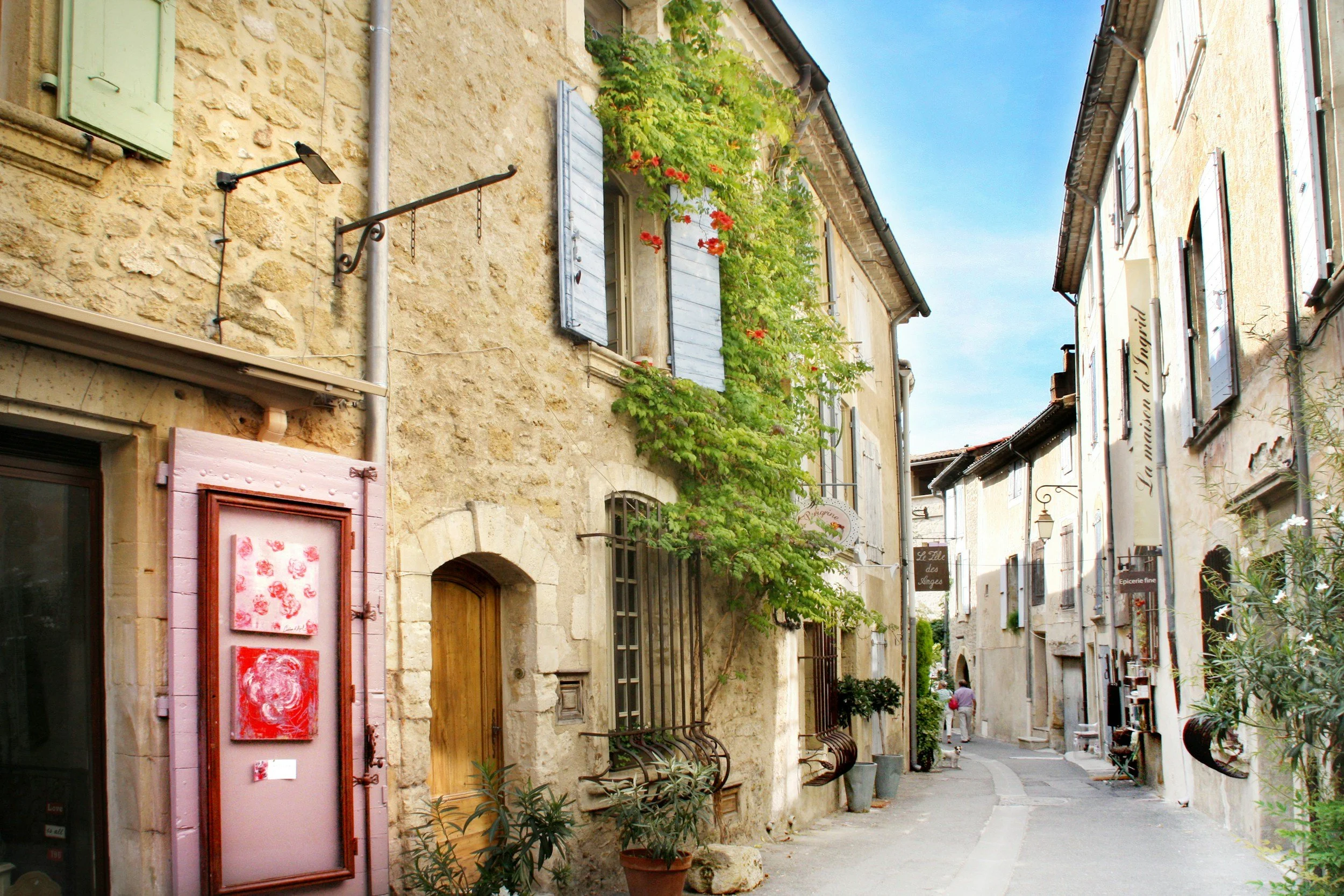
Forcalquier – Monday market and the streets that locals actually use
Forcalquier sits further north in Haute-Provence, about 1 hour 15 minutes from Aix-en-Provence. You’ll need a car to get here properly. The closest train station is Manosque–Gréoux-les-Bains, about 25 minutes away, but from there you’re still relying on a taxi or a lift. Once you arrive, you park just outside the centre and walk in within a few minutes.
The market takes place on Monday mornings and spreads out more than you expect. It doesn’t stay in one square. It runs across Place du Bourguet, along Boulevard Latourette, and into the smaller streets that connect everything together. It’s bigger than Lourmarin and feels less arranged, especially once you move away from the main square.
A good way to start is from the edge of town rather than walking straight into the centre. Parking near Avenue Saint-Promasse or along the outer streets means you enter the market gradually. The first stalls you pass are usually produce, bread, and cheese, set up along the wider roads. If you arrive around 9:00–9:30, most people are there to buy things rather than browse, and it moves quite quickly.
As you move toward Place du Bourguet, it becomes more crowded. It’s worth passing through rather than stopping there too long. The smaller streets just behind it (especially the ones leading off Boulevard Latourette) are where things start to open up again. You’ll find a mix of stalls and regular shops that stay open during the market, so it doesn’t feel like a separate event.
There’s more variety here than in smaller villages. Alongside food, you’ll see textiles, everyday items, and the occasional secondhand-style stall, but it depends on the day. It’s not something to plan around specifically, more something you notice as you move through.
The town is built on a slope, so you’re moving slightly uphill and downhill between streets without always realising it. Distances are short, but if you’ve bought anything, you’ll feel it more on the way back out.
Cafés sit right in the middle of everything rather than on the edges. Around Place du Bourguet, Café de l'Hôtel de Ville fills up quickly once the market is fully going. It’s easier to stop earlier, before 10:00, or wait until things start to thin out closer to midday. If you step just a few streets away, it becomes noticeably quieter without needing to leave the centre.
By early afternoon, the market starts to wind down and the town shifts back to normal quite quickly. It works best as a morning visit rather than something to stretch out over the whole day.

Vaison-la-Romaine – Tuesday market across both sides of the river
Vaison-la-Romaine sits about 50 minutes north of Avignon. You’ll need a car to get here easily. There’s no train station in the town, and buses exist but don’t really line up well with the market. Once you arrive, you park on the newer side of town and walk in within a few minutes.
The market takes place on Tuesday mornings and is larger than it first looks because it runs across both sides of the river. If you only stay near the main square, you miss part of it.
It’s easier to start on the newer side, around Place Montfort and along Cours Taulignan. This is usually where you enter anyway if you’ve parked nearby. The streets are wider here, and the first part of the market is mostly food. Fruit, vegetables, cheeses, bread. If you arrive around 9:00, people are moving through quickly, buying what they need rather than stopping.
From there, it makes sense to walk toward the bridge without rushing. The stalls continue along Avenue Général de Gaulle and then lead naturally toward the Roman bridge. Once you cross over, the layout changes. The streets narrow, and the market becomes less structured.
In the older part of town, the stalls run through streets like Rue des Halles and the smaller lanes around it. You’ll still find food, but also textiles, everyday goods, and occasionally a few secondhand-style stalls depending on the week. It’s not something to plan around, but it appears often enough that it’s worth keeping an eye out as you move through.
It helps not to stay on the main flow the whole time. If you step off into the side streets and walk slightly uphill, things quiet down quickly. Within a few minutes, you’re out of the busiest part of the market, and you start to see more of the older buildings and parts of the Roman ruins without needing to go far.
Cafés sit on both sides of the river. Around Place Montfort, Le Bateleur is one of the easier places to stop earlier in the day, before it fills up. In the older town, there are smaller places tucked into the streets where it’s easier to sit for longer once you’ve stepped away from the main market.
Parking is usually along the outer streets of the newer town or in small lots near Cours Taulignan. From there, it’s about a 5–10 minute walk in. Arriving before 9:00 makes a noticeable difference if you want to park easily and move through the first part of the market without pushing through people.
By early afternoon, the stalls start to pack up and the town becomes quiet again quite quickly. It works best as a morning visit, especially if you want to see both sides of the river properly.
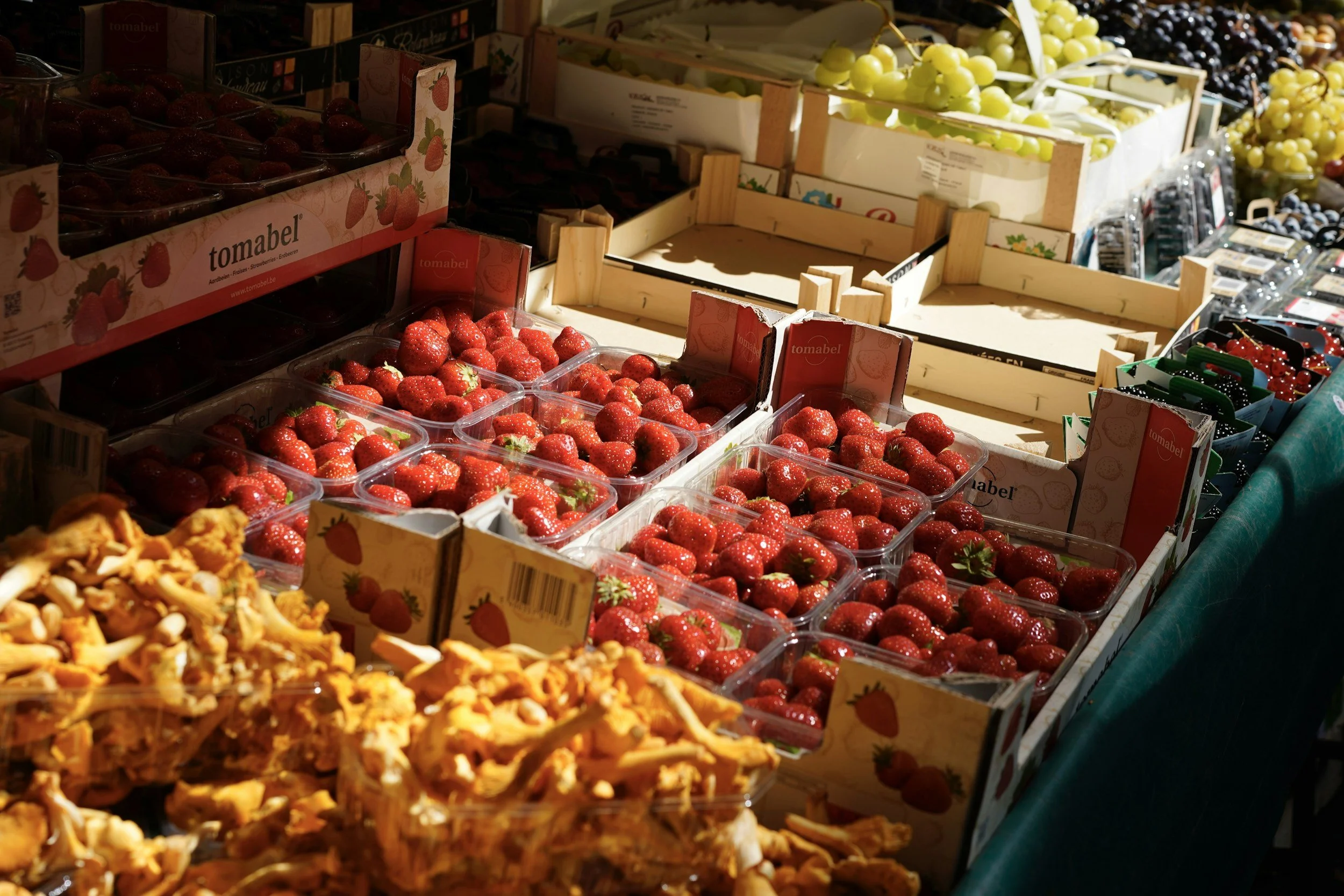
Saint-Saturnin-lès-Apt – a smaller Tuesday market and the streets just above it
Saint-Saturnin-lès-Apt is about 10 minutes from Apt and roughly 50 minutes from Aix-en-Provence. You’ll need a car to get here. Once you arrive, you park just outside the centre and walk in within a few minutes without needing to think about directions.
The market takes place on Tuesday mornings and sits mostly around Place de la Mairie and the streets directly around it. It’s small. If you’ve been to markets in Forcalquier or Vaison-la-Romaine, this will feel very different. You can walk through the whole thing quite quickly, which is part of the point.
Most of the stalls are food. Fruit, vegetables, cheeses, olives, bread. There are usually only a few non-food stalls, and some weeks none at all. It’s not somewhere you spend time searching for things. People come, buy what they need, and leave.
It helps to arrive earlier rather than later, somewhere between 8:30 and 9:30. The village is still quiet, and you can move through the market without needing to step around people. By late morning, it fills slightly around the square, but it never becomes crowded in the way larger markets do.
From the square, it’s worth leaving the market fairly quickly and walking upward into the older part of the village. Streets like Rue des Écoles and the smaller lanes that lead uphill take you away from the centre within a couple of minutes. There’s no clear route, but that’s fine. You just keep going slightly upward.
After about 8–10 minutes, you reach the higher part of the village near the ruins and the reservoir. The ground becomes steeper here, and the streets narrow, but it’s still an easy walk. From this point, you can look out over the surrounding countryside without needing to go any further.
Cafés are limited. Around Place de la Mairie, Café de la Mairie is the most central option, but it fills quickly once the market gets going. It’s easier to stop either before 9:30 or later, once people start leaving. Otherwise, you’ll be waiting for a table.
Parking is along the outer streets and small lots just below the centre. From there, it’s usually a 2–5 minute walk in. Arriving early makes it easier to park close and move through the market before it fills up, even slightly.
This isn’t a place to stretch out over a full day. An hour or two is enough to walk through the market, go up into the older part of the village, and then move on.
Weekends here feel different when you plan around markets, and these French market towns for a weekend trip are worth adding to your route.
Sault – Wednesday market along the main street
Sault sits up on the plateau, about 1 hour 15 minutes from Aix-en-Provence and around 40 minutes from Apt by car. You’ll need a car to get here. The drive opens up as you get closer, and once you arrive, you park just below or just outside the centre and walk in within a few minutes.
The market takes place on Wednesday mornings and runs along Avenue de la Promenade, which is the main street through the village. It doesn’t spread far beyond that, so it’s easy to see everything without needing to figure out where to go.
It helps to arrive before 9:30. Earlier on, people are moving through the stalls quickly, buying what they need. By late morning, it fills a bit more, but it never becomes crowded in the same way as markets further south.
The stalls are mostly food. Fruit, vegetables, cheeses, bread, honey, and lavender products. You won’t find long rows of anything, and you’re not comparing multiple versions of the same stall. It’s more straightforward than that.
If you stay on Avenue de la Promenade the whole time, you’ll be through it quite quickly. It’s worth stepping just slightly off the main street, even if it’s only for a few minutes. Streets like Rue du Marché or the small lanes behind the main road give you a bit of space away from the market without needing to go far.
Cafés sit directly along the main street. Le Sigalon is right there, and it fills up once the market gets going. It’s easier to stop earlier, before 10:00, or wait until things start to slow down closer to midday.
Parking is simple, with small areas just below the village or along the outer streets. From there, it’s a short walk in, usually no more than a few minutes. The village sits slightly higher, so even short walks can feel a bit uphill on the way back.
This isn’t somewhere you need to plan a full day around. An hour or two is enough to walk through the market and see the village before moving on.
If you want to see one of the most loved antique markets in the region, this guide to L’Isle-sur-la-Sorgue’s flea market is a useful starting point.
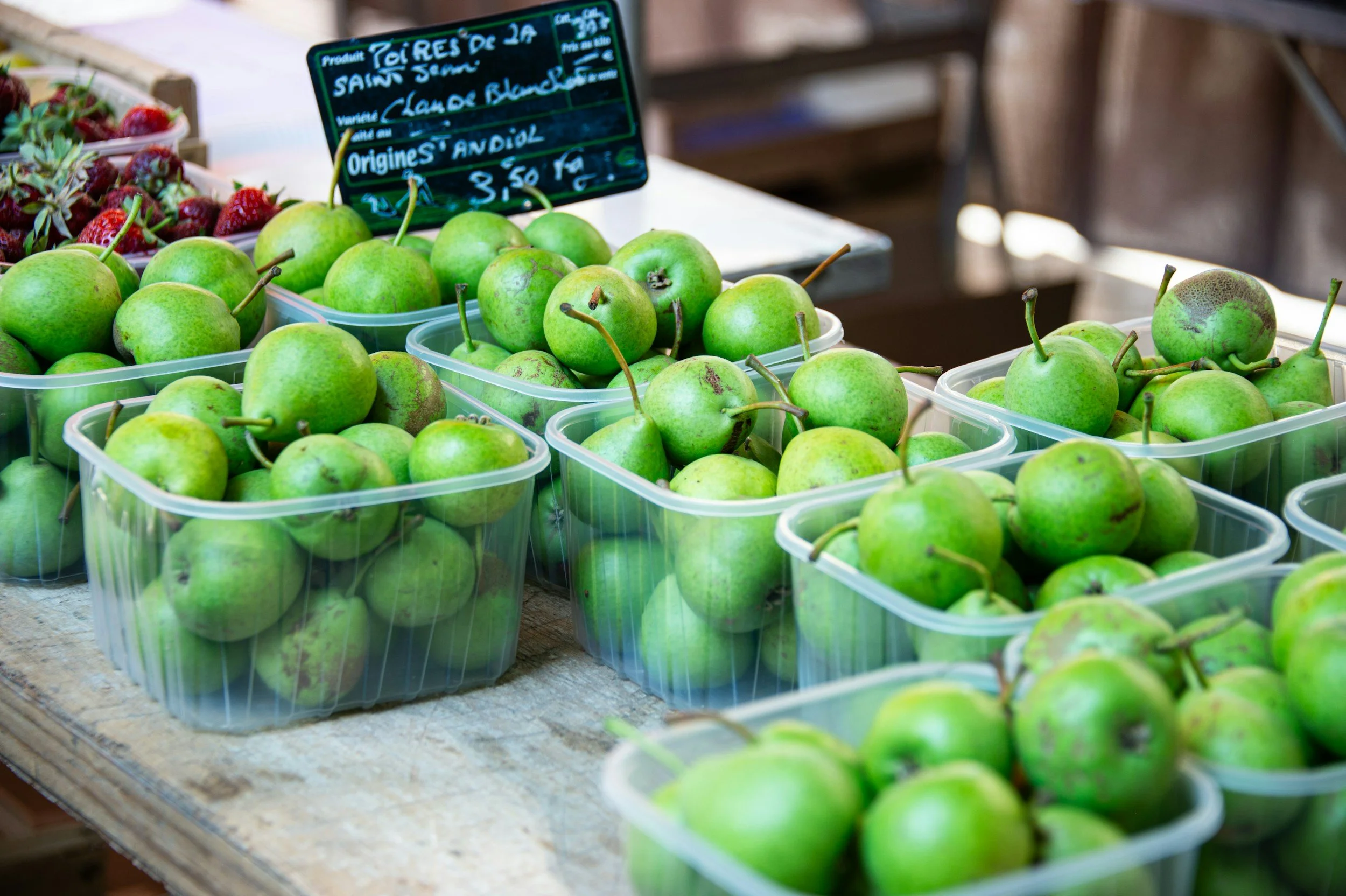
Nyons – Thursday market and the streets just around it
Nyons sits in the Drôme Provençale, about 1 hour 15 minutes from Avignon and just under an hour from Montélimar. You’ll need a car to get here. Once you arrive, you park on the outer streets or in one of the small lots near the centre and walk in within a few minutes.
The market takes place on Thursday mornings and spreads out more than it first looks. It runs through Place des Arcades, along Rue des Déportés, and into the smaller streets around it. If you stay only around the main square, you’ll miss part of it.
A good way to start is from the edge rather than walking straight into the centre. Entering from streets like Rue des Déportés means you move through the produce first. Fruit, vegetables, cheeses, bread, and olives. If you arrive around 9:00–9:30, people are moving through quite quickly, buying what they need rather than stopping.
As you get closer to Place des Arcades, it becomes more crowded. The covered square fills up fast, especially later in the morning. It’s worth passing through and then continuing into the streets just behind it, where things open up again and you don’t have to move at the same pace.
Nyons is known for its olives, and you’ll see several stalls selling different varieties, oils, and tapenades. It’s one of the few markets where it makes sense to stop and compare rather than just picking one.
Beyond food, there are textiles and everyday items, and sometimes a few secondhand-style stalls, but it depends on the week. It’s not something to plan around specifically, but you’ll notice it as you move through.
If you step a few minutes away from Place des Arcades, the streets become quieter quite quickly. You don’t need to go far. Even just moving one or two streets out changes the pace, and you’re back in the part of town that feels more everyday.
Cafés sit throughout the centre. Around Place des Arcades, Café des Arcades is right in the middle of everything and fills quickly once the market is busy. It’s easier to stop earlier in the morning or later once things start to thin out. Otherwise, stepping slightly away from the square makes it easier to find somewhere without waiting.
Parking is along the edges of town or in small lots near the centre. From there, it’s about a 5–10 minute walk in. Arriving before 9:00 makes it easier to park close and move through the first part of the market without needing to work around people.
You don’t need a full day here. A couple of hours is enough to walk through the market, step into the quieter streets, and then move on.
Formore hilltop villages and open-air markets, this exclusive guide to Drôme Provençale shows another side of the region.
Provence changes throughout the year, and this guide to Provence markets by season helps you decide when to go.
How to approach a market morning in Provence
Once you’ve been to a couple of these markets, you start to notice that not all stalls work the same way. Some are there for people doing their weekly shop, others are more occasional, and it usually shows in how people move around them.
If you enter from the outer streets, you’ll often hit the more practical stalls first. In Forcalquier, that’s along Boulevard Latourette. In Nyons, it’s the first stretch of Rue des Déportés. This is where people are buying fruit, vegetables, bread, and cheese without stopping for long. Things are more straightforward, and it moves quickly.
Closer to the centre, around places like Place du Bourguet or Place des Arcades, it changes slightly. There are more stalls selling similar things, and this is usually where it’s worth slowing down a bit. In Nyons, for example, you’ll see several olive stalls close together, and they’re not all the same. It makes more sense to walk past once, see what’s there, and then go back rather than buying from the first one.
Market mornings pair perfectly with slow afternoons, and this guide to vineyards perfect for a Provence picnic gives you ideas for where to go next.
Not everything you see is local, even if it looks like it. Some products repeat across different towns in exactly the same way, which is usually a sign they’re coming from further away. Cheeses, olives, honey, and bread are generally more reliable if you want something from the area, especially in smaller places like Saint-Saturnin-lès-Apt or Sault where the selection is already limited.
Bread is one of the few things where timing really matters. In smaller markets like Lourmarin, the better loaves are often gone by late morning. If you want something specific, it’s easier to buy it earlier and carry it with you rather than waiting.
It also helps not to buy everything straight away. In most of these towns, you’re never more than a few minutes from where you started. Doing one loop, noticing what’s there, and then going back for what you actually want usually works better than deciding on the spot.
None of this is complicated, but it changes how the morning feels once you’re there.
Some places deserve more than a day trip, and these French towns worth staying 3–5 nights help you plan longer stays.
Before you plan your route
If you’re thinking of visiting more than one of these markets, it’s better to spread them out rather than trying to combine two in the same day. Even if the distance looks short, the timing rarely works. By the time one market is properly going, the next one is already at its busiest, and you end up arriving at the wrong moment for both.
Parking is another thing that’s easier if you don’t overthink it. In places like Forcalquier or Nyons, the most practical spots are just outside the centre, along roads like Boulevard Latourette or near Rue des Déportés. Trying to park closer usually means circling for longer than it’s worth. Walking in for a few minutes puts you at the edge of the market instead of right in the middle of it, which makes it easier to start.
Around 12:30, things start to change. In Lourmarin and Vaison-la-Romaine, you’ll see stalls packing up while bakeries and small shops stay open. If you didn’t buy something earlier, this is often the easier moment to do it without waiting. The centre also clears quite quickly once the market starts to wind down.
If you’re buying food, most stalls will wrap things simply. It’s fine if you’re heading back within an hour or so, but less so if you’re driving further. Having a bag you can carry everything in properly makes a difference, especially once it gets warm.
None of this is complicated, but it changes how the morning actually works once you’re there.
If you’re visiting later in the year, this look at Drôme Provençale in autumn shows how the pace changes after summer.
Otherwise May is usually cinsidered one of the best times to visit, and this Provence in May itinerary helps you plan the days.
FAQs about markets in Provence
Which day are the best markets in Provence?
It depends on the town rather than the day itself. Forcalquier works best on Mondays (around Place du Bourguet and Boulevard Latourette), Nyons on Thursdays (spreading from Rue des Déportés into Place des Arcades), Vaison-la-Romaine on Tuesdays (across both sides of the river), Lourmarin on Fridays (around Avenue du 8 Mai 1945), and Sault on Wednesdays (along Avenue de la Promenade). It’s easier to plan your route around these fixed days than trying to find alternatives.
What time should you arrive at a Provence market to avoid crowds?
Between 9:00 and 9:30 is usually the easiest window. Earlier than that, some stalls are still setting up. After 10:30, central areas like Place du Bourguet in Forcalquier or Place des Arcades in Nyons become slower to move through. Starting from the outer streets first makes a noticeable difference.
Which Provence markets are quieter and less touristy?
Saint-Saturnin-lès-Apt and Sault stay consistently quieter throughout the morning. Lourmarin is smaller but fills quickly around the centre. Larger markets like Forcalquier and Vaison-la-Romaine feel busier, but you can step into quieter sections by moving away from the main squares.
If you’re based near the coast, these small towns near Marseille by train make easy market-day trips.
Where do locals shop at Provence markets?
Usually on the edges rather than in the centre. In Forcalquier, that’s along Boulevard Latourette before reaching Place du Bourguet. In Nyons, it starts along Rue des Déportés before the flow builds toward Place des Arcades. These areas are more focused on food and move faster, especially earlier in the morning.
What are the best streets to walk through a Provence market?
In Forcalquier, start along Boulevard Latourette and loop toward Place du Bourguet. In Nyons, move from Rue des Déportés into Place des Arcades and then step into the smaller streets behind it. In Vaison-la-Romaine, walk from Cours Taulignan across the bridge into the older streets like Rue des Halles. In Lourmarin, follow Avenue du 8 Mai 1945 and step into Rue du Temple or Rue Henri de Savornin. In Sault, everything runs along Avenue de la Promenade with a few smaller streets just behind it.
Are Provence markets worth visiting if you’re not buying anything?
Yes, but it works better if you keep moving. Walking a full loop (starting from the outer streets, passing through the centre, and then stepping into quieter streets nearby) gives you more than staying around one square.
Do you need cash at markets in Provence?
Yes. Many stalls, especially in smaller towns like Sault or Saint-Saturnin-lès-Apt, still prefer cash. Some accept cards, but it’s not consistent.
How long should you spend at a Provence market?
Around 2–3 hours is usually enough. That gives you time to walk through properly, stop for a coffee, and step into a few quieter streets before the market starts to wind down around midday.
Where should you park when visiting markets in Provence?
Just outside the centre is usually easiest. In Forcalquier, areas near Avenue Saint-Promasse work well. In Nyons, parking near the outer parts of Rue des Déportés or surrounding streets is more practical than trying to get closer. From there, it’s usually a 5–10 minute walk in.
Can you visit multiple Provence markets in one day?
It’s possible, but rarely works well. Most markets peak between 9:30 and 11:30, so you end up arriving too late to one and too early to another. It’s better to plan one market per day and move between towns across different days.
If you like staying somewhere small and personal, these family-run guesthouses in rural France fit well with slow market mornings.