
April might be Provence's most underrated month
If you’ve ever wanted to see what Provence looks like before the summer rush (before the lavender crowds, the packed patios, and the heat kicks in), April might be your best-kept secret.
Provence is in the southeast corner of France, tucked between the Rhône Valley and the Mediterranean. It’s known for its golden light, its postcard-perfect villages, and that easy pace of life that draws people back again and again. But most people visit in high season (June through August) when it’s hot, busy, and, honestly, a little overhyped.
April is different. It’s softer. Quieter. Local.
Shutters start opening again. Market stalls fill with spring strawberries, early asparagus, and wheels of goat cheese. Hiking trails are lined with wildflowers. You’ll get a table at the café without a reservation. The air still has a bit of chill in the morning, but by afternoon, it’s warm enough to sit on a terrace with a glass of rosé and forget what day it is.
It’s the kind of trip where not much happens…
Instead of big-ticket sights and museum queues, you get long breakfasts, unhurried walks, and evenings spent in stone courtyard stays that smell like lavender soap and warm tile. The kind of travel that makes you feel like you’re actually somewhere.
This guide isn’t about Provence in a rush. It’s a slow, spring loop through the Luberon - one of the most peaceful parts of the region. We’ll walk you through villages like Saignon, Bonnieux, and Oppède-le-Vieux, share where to stay for that cozy, lived-in feel, and give you tips on the best local markets, scenic stops, and seasonal details worth noticing.
If you’re someone who prefers quiet streets to busy squares, and you find yourself lingering in cafés long after your cup is empty: this trip is probably for you.
If you’re picturing one village that really captures Provence in April, Moustiers spring is usually the one people wish they had chosen earlier.

Why April works well in Provence
You’re standing at a stall in Carpentras on a Friday morning, just off Place Aristide Briand, and you realise you didn’t need to check what time to arrive. It’s already busy, but not in a way that blocks you. People step in, buy what they came for, and leave again. You move forward without thinking about it.
The strawberries are there, but not everywhere. A few crates of Gariguette at one stand, another vendor with early asparagus next to them. You notice it because it’s in front of you, not because you were looking for it.
You leave before the market winds down, get in the car, and head toward L’Isle-sur-la-Sorgue. You don’t check traffic. You don’t think about parking. You turn off near the edge of town, find a space within a minute or two, and walk in along the water. The market there feels different. It stretches along the canals, across Quai Jean Jaurès, through smaller streets where it thins out and picks up again.
You don’t try to see all of it. You walk until you’ve had enough, then stop.
Later, the road between Gordes and Bonnieux takes you along the ridge. It’s about twenty minutes, but you don’t treat it like a transfer. You slow down near one of the viewpoints, stay for a bit, then move on. No one is pushing you forward, and you’re not trying to keep to a schedule.
By the time you reach Saint-Rémy, it’s already lunchtime. You walk into the centre, pass a couple of places, and sit down somewhere near Place Favier. No booking, no waiting, no one asking how long you’ll stay.
Nothing about the day depends on getting there at the right time or leaving before it gets busy.
That’s what makes April work here. Everything is open, everything is in use, but it’s not concentrated into a few hours where everyone is doing the same thing. You can move between places like this without planning the exact order, and the day still fits together.
Early spring in Provence isn’t always about lavender, which is why Provence Verte becomes surprisingly relevant once you start looking at timing.

Saignon, Provence
You leave Apt on the D900, pass the supermarket area at the edge of town, and turn off toward Saignon almost without noticing it. Within a minute the road starts climbing, bending around a few tight curves, and you’re already looking back over Apt and the valley without needing to pull over. It’s close, but it doesn’t feel like it once you’re on the way up.
You don’t drive into the village itself. The streets get too narrow, and there’s no reason to. Most people leave the car just below, somewhere near Place de la Fontaine or along the roadside before it tightens, then walk the rest. From there, the layout stops being obvious. You’re not heading toward a main square or following signs, you just keep moving uphill, turning where the street turns, sometimes choosing a steeper path just to see where it leads.
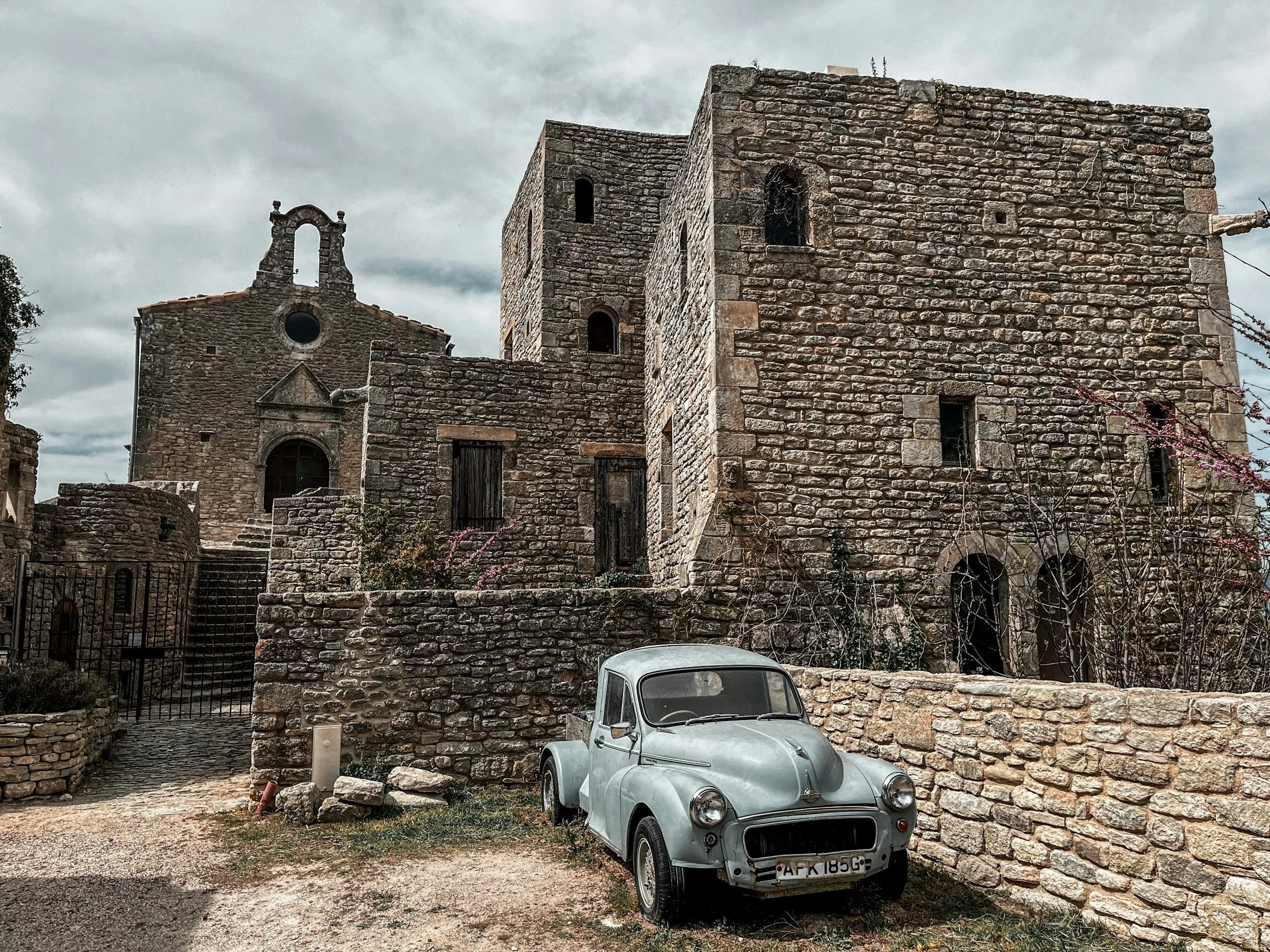
The ground changes as you go. Flat sections give way to uneven stone, the space between houses narrows, then opens again without warning. You pass small details without stopping for them at first, a short set of worn steps, a doorway opening straight onto the street, a quick view back toward Apt that disappears as soon as you turn the corner. After a few minutes, you realise you’ve already climbed higher than expected, even though it never felt like a single steep push.
At some point, there’s a small turn leading up toward the rock above the village. It’s easy to miss because it doesn’t look like much from below. The path gets steeper here and a bit rougher underfoot, but it only lasts a few minutes. At the top, the chapel of Saint-Michel sits against the rock, and the view opens completely. You’re no longer looking over rooftops. The land drops away into the Luberon valley, with Apt below and the roads you just drove cutting through it. There’s nothing set up around it, no barrier or platform, just a flat space where people stop, take it in for a moment, then head back down.
Back in the village, everything feels more spread out again. There’s a small square near the fountain where a couple of streets meet, a few quiet corners where you might pass someone, then stretches where you don’t see anyone at all. It’s not built around one central place, so you don’t move through it in a fixed way. You walk until it feels like you’ve seen enough, then turn back without needing to complete anything.
If you want to stop for something to eat, Un Jardin sur le Toit sits slightly above the village and is worth looking for. It’s not on the main path, so you either follow a small sign or already know it’s there, but once you find it, it’s the kind of place people stay longer than planned, especially if they’ve just come up from the market in Apt. Otherwise, it’s easier to keep things simple and pick something up earlier in Apt, around Place de la Bouquerie, and bring it with you.
Getting here is straightforward as long as you have a car. It’s about ten minutes from Apt, twenty or so from Bonnieux or Lacoste, and there isn’t a reliable way to arrive directly by public transport. That’s part of why it stays quieter. It sits just above everything else, close enough to include without planning around it, but separate enough that once you’re there, it feels like its own place.
If you’re already wondering whether Provence might feel a bit too expected, quiet alternatives helps you compare before you commit.
Bonnieux, Provence
You usually see Bonnieux from the road before you reach it, especially coming from Apt along the D36, where the village rises in layers up the hillside and the old church at the top makes it look smaller and more contained than it actually is. Once you turn in, it stretches out more, and it becomes clear quite quickly that this isn’t a place you move through in one straight line.
It’s easier to leave the car low, near Place Gambetta or along the road just before the streets narrow, because anything higher turns into tight turns and limited space, and you’ll end up coming back down anyway. From there, you start on foot, and the natural entry point is along Cours Elzéar Pin, which cuts across the middle of the village and is the only place that feels slightly anchored, with cafés opening onto the street, a bakery, and a few small shops that people step into and out of without much hesitation.
If you stop here first, it helps you read the rest of the village. A quick coffee at Le Fournil, or picking up something simple to take with you, makes the rest of the walk feel less like moving through and more like staying a while. You’ll notice locals sitting for longer, not just passing through, which changes how you approach the rest of it.
From this level, the only real direction is up, but the way you get there isn’t fixed. Streets branch off in different directions, some narrower than they look at first, some leading into short staircases, others looping back unexpectedly. You’re not following a route, you’re adjusting as you go, and it’s only after ten or fifteen minutes that you realise you’ve gained more height than you thought without ever committing to a single climb.
The views don’t arrive all at once, which is part of why Bonnieux works better than some of the more immediate viewpoints nearby. Instead, you get partial openings between buildings, a glimpse of the Luberon valley, then it disappears again as the street closes in, which keeps you moving rather than stopping too early. It builds slowly, and that buildup makes the top feel more defined when you reach it.
The final stretch toward Église Haute de Bonnieux becomes quieter. Fewer people, less movement, and more space between things. When you step out near the church, it finally opens properly, and the view holds in a way it didn’t before. You can see across the valley toward Apt, the roads you came up on, and the scattered villages in the distance, and because there’s nothing higher beyond this point, people tend to stay here longer without thinking about moving on immediately.
If you keep walking just past the church, you reach the start of the Forêt des Cèdres, and even going a short distance in changes the feel again. The light shifts, the ground softens slightly, and the space closes in compared to the open view you just left behind. It’s a small extension, but it adds contrast to the visit, especially if you’ve been moving through exposed streets the whole way up.
Coming back down, the middle level around Cours Elzéar Pin is where it makes sense to stop properly. This is where you sit down rather than just pause. Places like Le Fournil or nearby cafés are simple but consistent, and they work best after you’ve already walked through the village rather than before, because you’re more likely to stay instead of just passing through.
Bonnieux fits naturally into a day that already includes Apt market or nearby villages like Lacoste or Saignon, and the distances between them are short enough that you don’t need to plan exact timings. It’s about fifteen minutes from Apt, even less from Lacoste, and the road between them is part of the experience rather than just a connection.
A lot of the experience here comes down to which towns you choose for market days, so market towns is worth checking before you lock in your route.
If your dates are flexible, even slightly, markets by season helps you time it so you don’t miss the best ones.
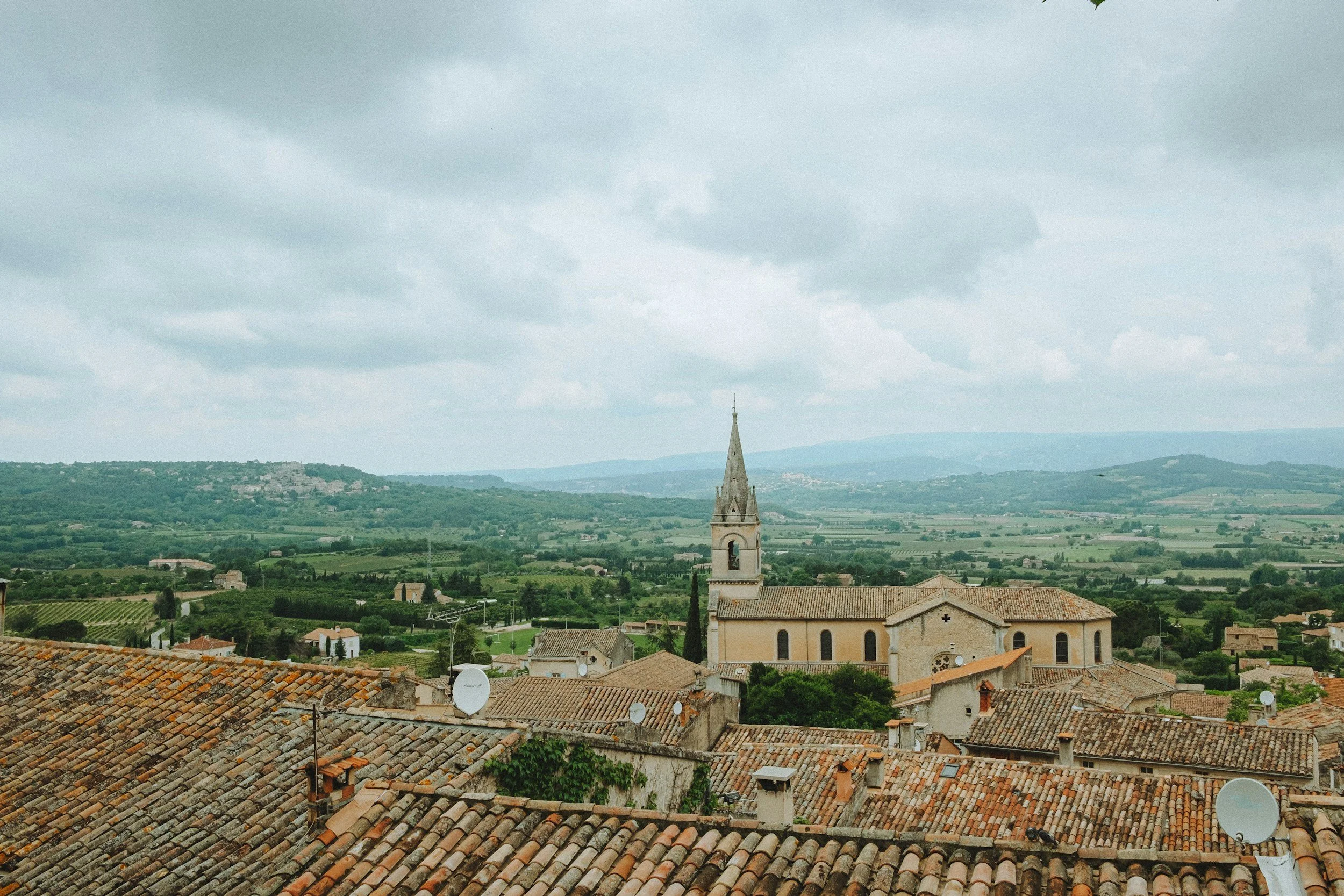
Oppède-le-Vieux, Provence
You reach Oppède-le-Vieux by leaving the D900 near Coustellet, then continuing through Oppède-le-Neuf without stopping, even though it looks like the main village at first. The road keeps climbing slightly and then ends in a small gravel parking area below the old settlement, where you’ll usually find a few cars, maybe a simple drinks stand in warmer months, and not much else to suggest what’s above you.
From here, everything is on foot, and the path starts immediately.
The first stretch is wide and relatively even, running between olive trees and low stone walls that follow the shape of the hill, and it takes around ten to fifteen minutes before you reach the first buildings. During that time, you’re not navigating or making decisions, you’re just walking steadily upward, occasionally passing someone coming down, but otherwise left alone with the sound of your steps on gravel and the view slowly opening behind you.
As you get closer, the path narrows and the surface changes underfoot, becoming more uneven and slightly steeper as it transitions into stone. You pass under a simple arch and enter the lower part of the village without any clear boundary, and this is where it starts to feel different from other places in the Luberon. There’s no main square, no café pulling you in, no obvious centre to gather around. Instead, you’re moving through a series of narrow passages and small open pockets between buildings, some restored and occupied, others left in a more raw state, which gives the whole place a slightly uneven feel.
The layout doesn’t require much thought because there’s really only one way to go, and that’s up. You follow the natural incline, taking whichever turn continues higher, and although there are a few side paths, most of them reconnect quickly or lead nowhere, so you never feel like you’re missing something important. What you do notice is how little there is to interrupt you. No shops, no signage, no background noise from terraces or restaurants, just the physical structure of the village and the path ahead.
About halfway up, the climb becomes more noticeable. The stone underfoot is rougher, the incline steeper in short sections, and you naturally slow down without needing to stop completely. It’s not difficult, but it’s enough to make the final part feel like a proper approach rather than just a continuation of the same walk.
When you reach the top, the space opens suddenly around the church of Notre-Dame-d’Alidon and the surrounding ruins, and it’s the first time since leaving the car that everything feels wide again. You can walk freely between the remaining walls, step right up to the edge, and look out across the Luberon valley without anything blocking the view. From here, you can clearly trace the road you came up on, see the agricultural patchwork around Coustellet, and, on clearer days, pick out other villages further along the ridge.
There’s nothing structured about this part either. No designated viewpoint, no set path telling you where to stand or what to look at. People arrive, walk around for a bit, maybe sit on one of the stone edges, and then leave again without much ceremony.
The way down follows exactly the same route, but it feels quicker, partly because you already know what’s ahead and partly because the incline works in your favour. You’ll notice the uneven sections more on the descent, so it’s worth taking it a bit slower through the steeper parts near the top.
There are no places to eat or shop in Oppède-le-Vieux, and that’s something to plan around rather than expect to find once you arrive. It works best to eat before or after, usually in Coustellet, where you have a few simple options along the main road, or in nearby villages like Ménerbes or Bonnieux, which are both within a 10–20 minute drive and offer more choice without needing to go out of your way.
In terms of timing, it fits most easily into the middle of the day. You might spend the morning at the market in Apt, drive here early afternoon, walk up and back in about an hour to an hour and a half, then continue on without needing to reorganise the rest of your route. There’s very little shade on the lower part of the path, so earlier or later in the day can feel more comfortable, especially in warmer months, but in April it’s usually manageable at any time.
What makes Oppède-le-Vieux worth including isn’t that it has more to see than other villages… You’re not deciding where to eat, where to sit, or what to visit next. You park, walk up, spend some time at the top, and come back down again, and that simplicity is what makes it feel different from the rest of the Luberon.
Some of the nicest days in April end up being simple vineyard lunches rather than planned activities, and vineyard picnic gives you a few places where that actually works.
Le petit cafe
Best spring markets in Provence for food, flowers and second hand
In April, markets in Provence aren’t background activity. They decide where you go, when you leave, and how the rest of the day unfolds. The difference between a good market morning and a frustrating one usually comes down to small things: where you enter, how the streets are laid out, and whether you arrive at a time when you can actually move.
Apt market (Saturday)
Apt is the one that feels most complete if you want to spend a proper morning. It doesn’t sit in one square. You’ll enter somewhere around Place de la Bouquerie, but it quickly spreads into Rue des Marchands, across Place Carnot, and into smaller streets where the stalls thin out and then build again without warning.
If you arrive around 8:30–9:00, you get the best version of it. Everything is open, but you can still walk without stopping constantly. Once it moves past 10:30, the tighter streets near Rue des Marchands slow down a lot, especially around the cheese and produce stalls.
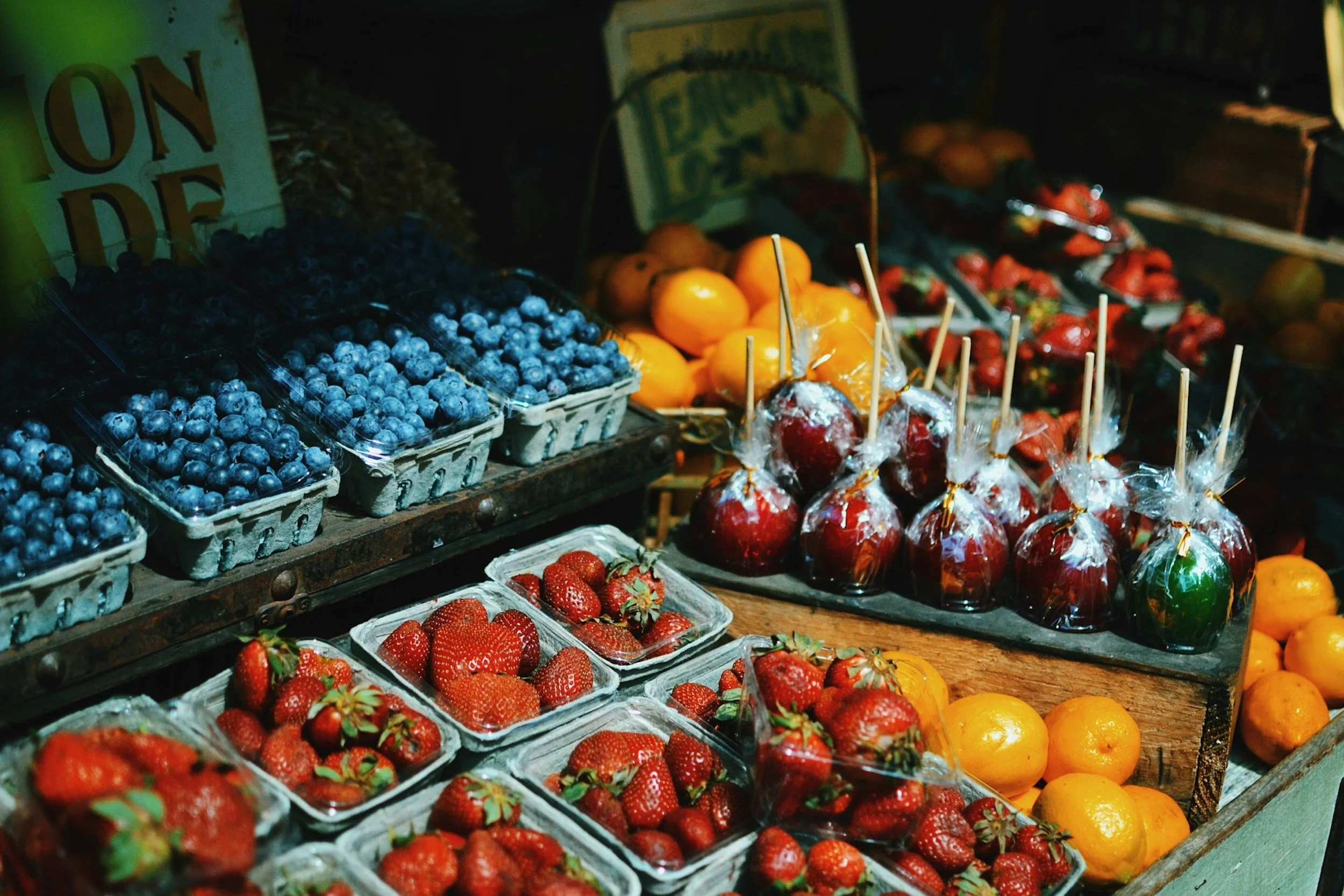
What’s worth paying attention to here is how seasonal it feels. In April, you’ll see white asparagus from Lauris, early green asparagus, goat cheeses from farms around the Luberon, olives from Nyons, and smaller trays of strawberries starting to come in, often from growers closer to Carpentras. You’ll also pass stands selling dried herbs, lavender products, woven baskets, and textiles, but the core of this market is still food that people are buying for the week.
If you want something simple to take with you, the bakeries around the edges of the market, especially near Rue des Marchands, are an easy stop for bread or something quick before you leave.
Parking works best slightly outside the centre, for example along Avenue Victor Hugo, then walking in. Trying to park close to the market usually costs more time than it saves.
L’Isle-sur-la-Sorgue market (Sunday)
This market feels bigger than it is because of how far it spreads, but it’s easier to move through than Apt. You’ll start along Quai Jean Jaurès, then cross one of the small bridges and continue into Rue Carnot or Rue de la République, where the stalls shift between food, antiques, and textiles.
Because it follows the canals, you’re never stuck in one place. If a section feels too busy, you cross a bridge and it opens again. That’s why arriving slightly later, around 9:30–10:00, still works here.
The antique side is what gives this market its identity. Around Place Rose Goudard and along the canal, you’ll see smaller antique dealers extending out from their shops, mixing in with temporary stalls. You’re not just browsing a market, you’re moving through a place that already functions as an antique district during the week.
Food is still there, just less dominant. You’ll find bread, cheeses, olives, seasonal fruit, but most people combine this with browsing rather than focusing purely on produce.
Parking can take longer, especially closer to the centre. It’s often easier to park further out and walk in along the water rather than trying to get close to the market itself.
Carpentras market (Friday)
Carpentras is one of the most practical markets, centred around Place Aristide Briand but extending into Rue de la République and Rue Porte d’Orange, forming a loop that’s easy to follow without thinking about direction.
Arriving around 8:30–9:30 gives you the best balance. It’s already active, but you can still move freely between stalls. By late morning, the square tightens, especially around the produce section.
This is where April becomes noticeable. You’ll see Gariguette strawberries appearing more consistently here than in other markets, usually in small trays at the front of the stall rather than large stacks. Alongside that, there are early vegetables, fresh herbs, cheeses, and cured meats from nearby producers.
What stands out is the pace. People come here to buy what they need, not to spend the whole morning browsing, so there’s a steady flow rather than people stopping for long periods. It feels like part of a weekly routine rather than a visitor-focused experience.
If you want something to eat nearby, the streets just off the main square have a few simple options where you can sit down after walking the market without needing to move far.
Saint-Rémy-de-Provence market (Wednesday)
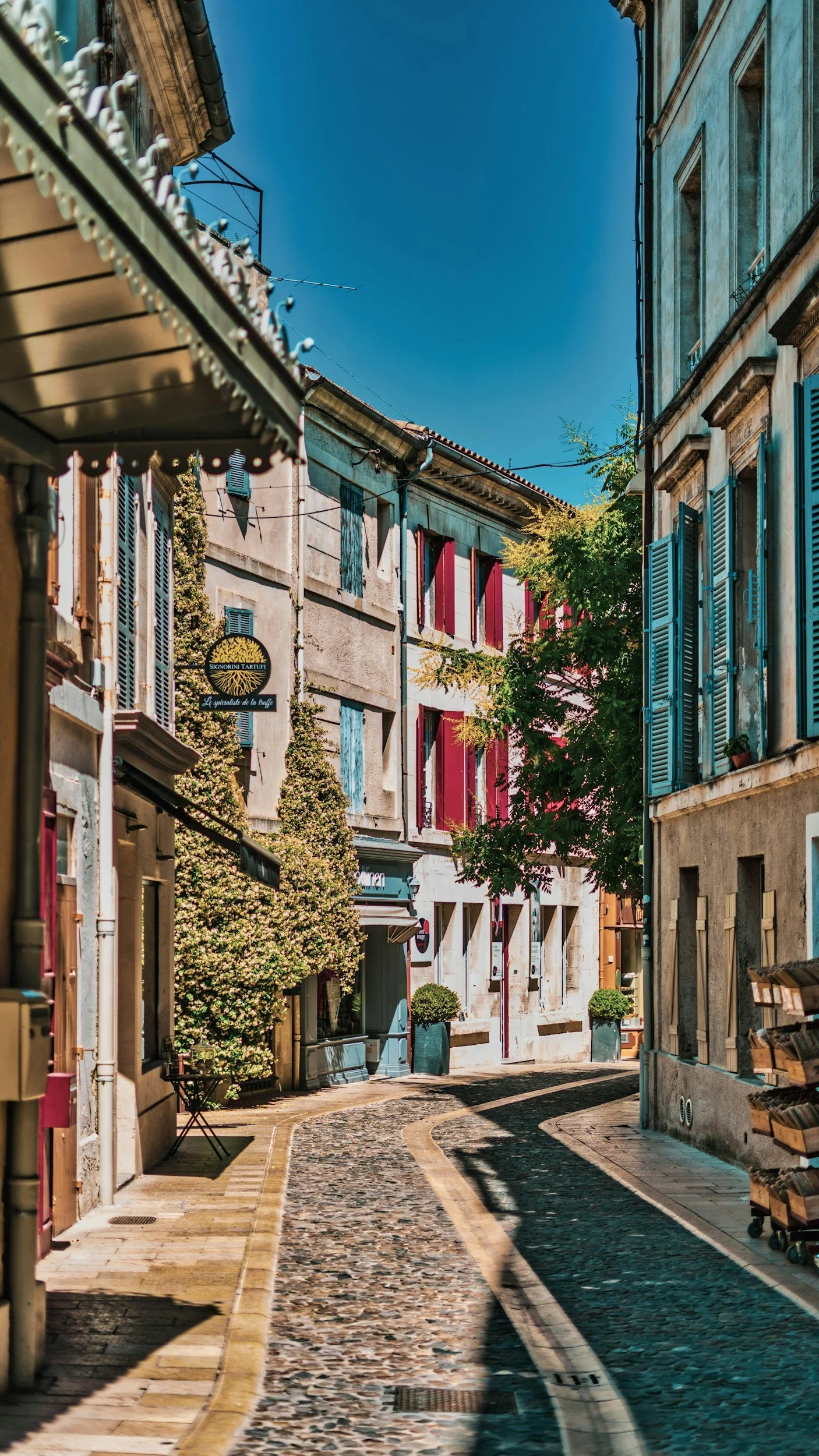
The market in Saint-Rémy spreads through a wider area, including Place Favier, Boulevard Mirabeau, and the smaller streets behind, which makes it easier to walk even when it gets busy.
It works well if you want a slower morning that doesn’t revolve entirely around the market. You can walk through the stalls, then continue into the town itself without needing to relocate or rethink your plan.
In April, you’ll still find early produce, flowers, herbs, and local goods, but there’s a stronger mix of non-food stalls here compared to Apt or Carpentras. Clothing, fabrics, and small crafts take up more space, especially along the wider streets.
Mid-morning is fine here. You don’t need to arrive as early unless you want it quieter. The layout means it doesn’t compress in the same way as narrower markets.
Once you’re done, it’s easy to sit down nearby, especially around the streets just off Place Favier, where you’ll find places to stop without needing a reservation at this time of year.
Coustellet farmers market (Sunday morning)
This market sits just outside the main road near the Musée de la Lavande, and it’s much smaller and more focused than the others.
You won’t spend hours here. It usually takes around 30–45 minutes to walk through, but that’s exactly why it works well if you’re moving between villages like Oppède, Ménerbes, or Bonnieux.
The focus is on local producers. Vegetables, cheeses, bread, honey, and whatever is in season that week. In April, that means early spring produce, but on a smaller scale compared to Apt or Carpentras.
How to get around Provence in April: with or without a car
How you move around Provence in April changes the whole experience more than where you stay. Distances look short on a map, but once you’re actually there, you realise quickly that some places connect easily and others don’t at all unless you plan around it.
If you want to move between markets and villages without thinking too much about timing, a car makes everything simpler.
Driving between places like Apt, Bonnieux, Lacoste and Saignon takes 10–25 minutes at most, but those short distances only stay easy if you’re not relying on fixed schedules. You can leave a market when it feels right, stop somewhere along the road without planning it, and adjust the day as you go.
Towns like Avignon, Aix-en-Provence, Arles and L’Isle-sur-la-Sorgue are well connected by train, and you can build a trip around these without much difficulty. For example, you can take a train from Avignon to L’Isle-sur-la-Sorgue and walk into the centre from the station in about 15–20 minutes.
For a slightly more structured base with cafés, markets, and easy day trips, Aix spring gives you a clearer picture of how that would feel day to day.
Parking is usually straightforward in April. In Apt, you park just outside the centre and walk in. In villages like Bonnieux or Saignon, you leave the car lower down and walk uphill. In places like L’Isle-sur-la-Sorgue, it might take a few extra minutes to find a space, but you’re not circling for long the way you would in summer.
The other advantage is flexibility between stops. You can go from the Carpentras market to a quiet village like Oppède-le-Vieux in under 30 minutes, or leave Saint-Rémy after lunch and still have time for one more stop without needing to check anything.
Fuel stations are easy to find along the main roads like the D900, and driving itself is straightforward as long as you’re comfortable with narrower village streets.
Buses do connect smaller places like Apt, but the schedules are limited, and they don’t always align with market days or timings. If you miss one, the next option might not be for a while, which can shape your day more than you’d like.
Villages like Saignon, Bonnieux or Oppède-le-Vieux are much harder to reach without a car. You can get close, but not directly into them, and the final stretch usually involves walking uphill or relying on a taxi.
One way to make it work is to stay in a larger town and choose one destination per day that’s easy to reach by train or bus, rather than trying to move between multiple smaller places.
What works best in April
If your plan includes markets in places like Apt or Carpentras combined with smaller villages in the Luberon, a car makes a noticeable difference. If you’re focusing more on towns like Avignon or Saint-Rémy, you can manage without one, as long as you build your days around what’s realistically connected.
The key is deciding early which version of Provence you want. The more rural and spread out it is, the more a car becomes part of the experience rather than just a way to get around.
If you’re planning to stay somewhere slower and more rural, Drôme stays shows what that actually looks like beyond hotels.
And in case you want somewhere that feels more personal than a typical hotel, guesthouses is a good place to start before booking anything.

A few things that actually make April in Provence work
One thing you’ll notice after a couple of days is that the best moments don’t usually happen inside the markets themselves, but just after you leave them, when you’re carrying something simple with you and the pace drops without warning.
You finish at the Apt market, walk back through Rue des Marchands with a bag that’s a bit heavier than you planned, and instead of staying in town, you drive ten minutes up to Saignon. You park below the village, walk up without really thinking about it, and end up sitting near the rock above the village eating strawberries you just bought, looking back over Apt. There’s no sign telling you to do that, but it’s the kind of shift that makes the day feel complete.
The same thing happens if you leave L’Isle-sur-la-Sorgue and don’t try to “finish” the market. You cross the last bridge near Quai Jean Jaurès, head back to the car, and within twenty minutes you’re somewhere quieter like Oppède-le-Vieux, where the only thing to do is walk up and back. It sounds simple, but that contrast is what makes it work.
Another detail people don’t usually plan for is how quickly places change in the afternoon. By around 15:30–16:00, even on market days, the upper parts of villages like Bonnieux are almost empty. If you walk up toward Église Haute at that time, you’ll pass a few people on the way down, then reach the top and find it quiet in a way that feels completely different from the morning.
It’s also worth knowing that smaller places don’t run on one continuous schedule. A café that was busy at 11:30 might be closed or slowing down by 14:30, while another place a few streets away is still open without any clear pattern. You don’t need to plan around it, but it helps not to assume everything will be available all day.
What makes April easier than other times of year is that you don’t need to build a tight plan to make it work. You pick one market in the morning, move on when it feels right, and let the next place come naturally. The distances are short, the roads are clear, and you’re not competing for space, which means you can adjust the day as you go without it falling apart.
And if you’re deciding between Provence itself and the surrounding region, Drôme Provençale makes that difference much easier to understand.
FAQ: Provence in April (markets, villages and strawberry season)
Is Provence worth visiting in April?
Yes, especially if you want markets and smaller villages without summer pressure. Places like Apt, Carpentras and L’Isle-sur-la-Sorgue are fully active, but you can still move through them without crowds building up in the same way.
What are the best markets in Provence in April?
The most reliable markets to plan around are:
Apt (Saturday) – large and food-focused, spreads through Place de la Bouquerie and Rue des Marchands
Carpentras (Friday) – best for seasonal produce like strawberries
L’Isle-sur-la-Sorgue (Sunday) – markets + antiques along Quai Jean Jaurès
Saint-Rémy-de-Provence (Wednesday) – easier layout, good for combining with lunch
Where can you find strawberries in Provence in April?
Early Gariguette strawberries start appearing at markets in Carpentras and Apt. They’re usually sold in smaller trays at produce stalls and not available in large quantities yet.
How many days do you need for Provence in April?
Three to five days works best. That allows you to visit 2–3 markets on different days and combine them with villages like Bonnieux, Saignon, and Oppède-le-Vieux without rushing.
Do you need a car in Provence in April?
Yes, if you want to visit villages in the Luberon. Places like Saignon, Bonnieux and Oppède-le-Vieux are difficult to reach directly by public transport. With a car, most distances are only 10–25 minutes.
Can you visit Provence without a car in April?
Yes, but you’ll need to stay in towns with train access such as Avignon, Arles, Aix-en-Provence, or L’Isle-sur-la-Sorgue. Visiting multiple small villages in one day without a car is not realistic.
What is the weather like in Provence in April?
Temperatures are usually around 15–20°C during the day, with cooler mornings and occasional rain. It’s mild enough for walking through villages and markets without the heat you get later in the year.
What time should you visit markets in Provence?
Arriving between 8:30 and 10:00 gives the best balance. Earlier means easier movement through stalls, while later in the morning places like Rue des Marchands in Apt become more crowded.
Is April or May better for visiting Provence?
April is better for easier movement and fewer crowds. May has slightly warmer weather and more produce, but also more visitors, especially in popular villages.
Is Provence crowded in April?
No, not in the same way as summer. Markets are active, but villages like Bonnieux or Saignon can feel quiet by mid-afternoon, especially in the upper parts.
What are the best villages to visit in Provence in April?
Good options to combine with market days include:
Bonnieux – hillside village with views from Église Haute
Saignon – quieter, just above Apt
Oppède-le-Vieux – short walk up to ruins and open views
Lacoste – easy to combine with Bonnieux
What should you buy at Provence markets in April?
Focus on seasonal products:
Gariguette strawberries
White and green asparagus
Fresh goat cheese from local farms
Olives, tapenade, and bread for the day