
These southern French markets still feel like part of everyday life
You can tell within a few minutes whether a market is there for locals or for visitors. It’s not about how pretty it looks or how many stalls there are. It’s how people move. In places where the market still matters, people arrive early, walk with purpose, and leave with full bags. By late morning, it’s already thinning out.
That’s the kind of market this guide focuses on.
Not the ones you wander through slowly with a coffee in hand in places like Antibes in August, and not the ones that feel like they’ve been set up to be looked at. These are markets that still shape the week, the kind you find in towns like Carpentras, Uzès, Nyons, or Saint-Rémy-de-Provence, where people show up because they need to, not because it’s something to do.
In southern France, that difference becomes especially clear once you move away from the coastline and into inland regions like the Luberon, the Drôme Provençale, or smaller towns in the Gard. In July and August, almost any market can feel lively. In October, February, or even a random weekday in May, you start to see which ones actually hold up. Some shrink but stay functional. Others lose their structure entirely and turn into something closer to a backdrop.
If you want to go beyond Provence and explore quieter inland areas, this guide to markets and hilltop villages in Drôme Provençale is a good next step. It’s the same region, but calmer and less obvious.
The markets below are places where the rhythm still makes sense. They happen on the same day each week, often along streets like Boulevard des Lices in Arles or central squares in smaller towns where everything folds into one area. People organise their mornings around them. You don’t need a full itinerary to enjoy them, but it helps to understand how they fit into the day. Most of them peak early, often between 8:30 and 10:30, and by noon, the centre is already shifting back to normal.
They also tend to sit in towns that work well beyond the market itself. You can arrive by train, walk into the centre without overthinking it, spend a few hours moving between stalls, cafés, and small errands, and still have a place that holds your attention after the market winds down.
That’s what makes them worth planning around. Not just the market itself, but the way the whole day falls into place around it.
If you love the markets but also want quieter towns around them, this guide to small market towns in Provence helps you find places that still feel local and aren’t packed on market day.
Marché de Nîmes (Les Halles and surrounding streets)
In Nîmes, the easiest way into the market is through Les Halles, the covered market just behind Maison Carrée. It’s open every morning except Monday, and if you’re coming in by train, you’ll walk straight into it without trying. From Gare de Nîmes, it’s about 12 minutes on foot, down Avenue Feuchères and into the centre. You don’t need directions. Just keep going until the streets tighten and you start seeing people carrying shopping bags.
Inside Les Halles, it’s not set up for browsing. Counters run along the edges, fish, meat, vegetables, cheese, and you move with everyone else. If you’re there before 9:00, it’s quick and slightly intense. People order fast, pay, leave. By 10:00–11:00, it’s easier to slow down and actually look.
One thing that’s worth doing here, instead of just walking through, is stopping at one of the small food counters inside. Chez Tintin is the obvious one, known locally for brandade de morue. You can order something simple, stand at the counter, eat it there, and be done in ten minutes. It’s not a “sit down and enjoy the moment” place. It’s part of the routine.
If you prefer to sit, it’s better to leave Les Halles and go just outside. Café Carré, right by Maison Carrée, works well late morning. Not because it’s hidden or special, but because it’s used properly. People come in, have a coffee, maybe something small, and leave. Sit outside if the weather holds. You’ll see a steady flow of people crossing the square rather than groups lingering.
On Thursdays and Saturdays, the market extends outside into the surrounding streets. That’s when you’ll see more variation, olives, honey, seasonal fruit, clothes, things that don’t fit inside Les Halles. If you want to buy something to take away, this is where it makes more sense than inside.
For lunch, don’t try to turn it into something elaborate. You’re better off staying close to the centre and picking somewhere that matches the pace of the morning. Le Lisita, facing Maison Carrée, is reliable for a simple lunch if you sit inside and keep it straightforward. If you want something slightly more local and less exposed, walk a few streets out toward Restaurant Vincent Croizard. It’s small, focused, and doesn’t try to stretch the meal into something longer than it needs to be.
After that, you don’t need to “plan” anything else. But if you want to keep walking, head toward Jardins de la Fontaine. It’s about 10 minutes away, and the shift is noticeable. Less noise, more space, and a different kind of pace. You can walk up past the Temple of Diana if you feel like it, or just sit for a bit and then head back.
What matters here is timing. If you arrive after 12:30, most of the market is already winding down, and you’ve missed the part where it actually feels like part of daily life. Earlier in the morning, it’s functional. Late morning, it’s usable. After that, it’s mostly over.
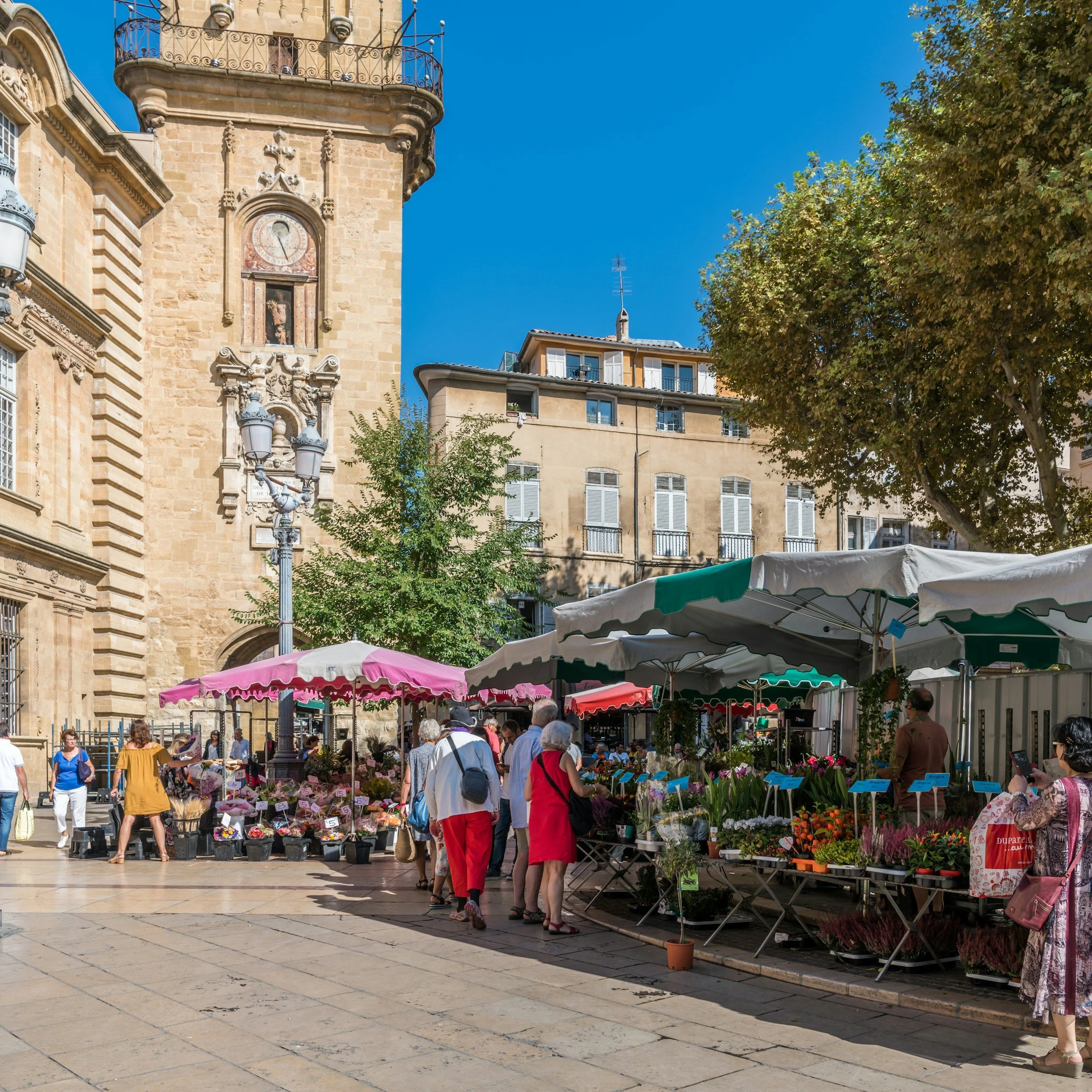
Maison Carrée
Marché Provençal (Antibes Old Town)
Antibes is a very different setup compared to somewhere like Nîmes. You’re on the coast, the light is sharper, and the market sits right inside the old town, just behind the ramparts, a couple of minutes from the sea. It’s easy to reach, but the feeling shifts depending on when you arrive.
From Antibes train station, it’s about a 12–15 minute walk. You head straight down Avenue Robert Soleau, cross into the old town through one of the gates, and then the streets narrow quickly. You’ll know you’re close when everything starts slowing down slightly and the ground turns to worn stone. The market is on Cours Masséna, and you’ll usually hear it before you see it.
This is not a market to arrive late to. If you get there around 8:30–9:00, it still feels relatively grounded. People are shopping, restaurants are picking up produce, and the pace is closer to something real. Fish stalls on one side, vegetables and fruit in the middle, cheeses and prepared foods tucked in between. You can actually move without stopping every few seconds.
By 10:30–11:30, it shifts. More people arrive without a plan, and it becomes slower, slightly congested, especially in the narrower sections. It’s still worth being there, but it’s a different experience. If you’re not comfortable moving through tight spaces, earlier is better.
If you want something to eat while you’re there, don’t overcomplicate it. Inside the market, look for stalls doing simple plates rather than anything trying to be “special.” One of the easiest stops is grabbing a socca or a slice of pissaladière from one of the prepared food counters and eating it standing up or on the edge of the square. It’s quick, salty, and makes sense with how the market moves.
For coffee, step just outside the main flow. Café Clemenceau, right by the edge of the old town, is a good reset point. It’s not hidden, but it works because you’re slightly out of the crowd. Sit outside if you can. You’ll still see people passing through, but you’re not stuck inside it.
If you want something more substantial after, walk a couple of minutes toward the port side and find somewhere slightly away from Cours Masséna. Le Comptoir de la Tourraque is a good option if you want something that still feels local and not overly set up. Keep it simple, a plate of vegetables, fish, something seasonal, and don’t expect a long, slow lunch. Antibes tends to move a bit quicker than inland towns.
What makes this market worth including, despite being more well-known, is how easy it is to combine with the rest of the old town without needing to plan anything. Once you’re done, walk straight down toward the ramparts. The sea is right there, and even a short walk along the edge changes the pace completely. You can loop past the Picasso Museum if you feel like stepping inside, or just continue along the walls and back into the town.
One thing to keep in mind is that Antibes doesn’t quiet down in the same way as inland towns. Even outside peak summer, it still has a steady flow of visitors. The market works best if you treat it as part of the morning rather than the main reason to be there. Go early, move through it once properly, stop briefly, then continue.
In case you arrive expecting a slow, empty Provençal market, it won’t match that. But if you time it right, it still holds together as something real before the day leans more toward the coast. If you’re trying to avoid the busiest spots altogether, this breakdown of quiet Provence market towns focuses on smaller places where you can actually move through the stalls without crowds.

Market finds in Antibes
Marché de Lourmarin (Friday mornings in the Luberon)
Lourmarin only really makes sense on a Friday morning. Come on any other day and it’s quiet, almost too neat. On market day, it shifts just enough to feel like something is actually happening, but it never turns chaotic.
The market runs through the centre of the village, mainly along Avenue Raoul Dautry and around the small square near the cafés. If you arrive early, around 8:30–9:00, it’s still calm. Stalls are fully set up, but there’s space between them, and people move slowly, stopping to talk, picking things up without rushing. You’ll see a mix of locals and people from nearby villages rather than day visitors.
By 10:30, it fills in more, but not in the same way as bigger Provençal markets. It stays compact, slightly spread out, and easy to walk through without getting stuck. You can do a full loop in 20–30 minutes without trying, then circle back to the stalls that actually caught your attention.
What’s here is fairly typical for the Luberon, but done in a way that still feels usable. Seasonal fruit and vegetables, cheeses, olives, honey, a few prepared foods, and then a mix of textiles and small objects that come and go depending on the week. It’s not a place where you browse endlessly. You notice what you want quite quickly.
If you want something to eat, it’s better to step slightly off the main flow. Café Gaby, right in the centre, works if you take a table early before it fills up. It’s one of the few places where you can sit, have a coffee, and actually watch the market without being rushed. If you arrive later, it gets busy fast, and it’s easier to just stand at the bar or move on.
For something more substantial, Le Moulin de Lourmarin is a good option just outside the centre if you’re staying longer and want a slower lunch after the market. If not, it’s often enough to pick up something simple from the stalls, a slice of fougasse, some cheese, fruit, and eat it somewhere quiet.
After the market, Lourmarin doesn’t give you a long list of things to do, which is part of why it works. You can walk up toward Château de Lourmarin, just a few minutes from the centre, or drift into the smaller streets behind the main stretch where it becomes noticeably quieter again. Within half an hour, most of the market energy has faded, and the village returns to its normal pace.
Getting here without a car is possible but slightly awkward. The closest train station is in Cadenet–Lauris, and from there you’d need a taxi or a bus connection, which doesn’t run frequently. Most people arrive by car, and parking fills up quickly on Fridays, so it’s worth arriving earlier rather than trying to time it precisely.
If you don’t want to drive everywhere, this guide to castle towns in southern France by trainshows how to reach some of the prettiest places without renting a car.
This is not a market you plan a whole day around. It’s something you build your morning around, then let the rest of the day stay open. If you come expecting a big, busy Provençal market, it can feel underwhelming. If you treat it as part of a slower morning in the Luberon, it fits exactly.
If you’re planning around seasons rather than a single trip, this guide to Provence markets by season shows when each area feels most alive, from spring herbs to autumn truffles.
Marché de Saint-Rémy-de-Provence (Wednesday mornings)
Saint-Rémy’s market runs every Wednesday and spreads out across a big part of the town, mainly along Boulevard Mirabeau, Place de la République, and into the surrounding streets. It’s larger than Lourmarin and more structured than Antibes, but it still holds onto a rhythm that makes sense if you arrive at the right time.
If you get there around 8:30–9:00, it feels purposeful. Vendors are fully set up, locals are already moving through, and you can actually stop at a stall without blocking the flow. You’ll notice quickly that people aren’t browsing for long. They arrive, buy what they need, and leave. Baskets fill up fast, especially at the produce and cheese stalls.
By 10:30, it changes. More people arrive from outside the town, and the centre becomes noticeably busier, especially along Boulevard Mirabeau where the stalls are tighter together. It’s still manageable, but you’ll spend more time adjusting your pace and stepping around groups. If you want to actually look at things properly, earlier is better.
The market itself is varied but not overwhelming if you move through it in sections. Fresh produce sits alongside olives, tapenades, honey, herbs, and then further out you’ll find textiles, clothing, and household items. Food stalls tend to cluster closer to the centre, and that’s where most of the activity is early in the morning.
For something to eat, it’s easiest to keep it simple and stay close to the market. Maison Drouot, just off the main flow, is a good stop for coffee and something small if you manage to get a table early. It fills up quickly, so before 10:00 is usually your best chance. If not, standing at the bar in one of the smaller cafés nearby works just as well.
If you’re thinking about lunch, it’s better to leave the busiest part of the market and walk a few streets out. Restaurant La Cantina, slightly away from the main square, is a good option if you want something straightforward that doesn’t feel like it’s set up for visitors. Otherwise, picking up something from the market, bread, cheese, fruit, and finding a quieter spot to sit is often the easier choice.
After the market, it’s worth stepping away from the centre fairly quickly. Within 20–30 minutes, the energy drops, and the streets begin to clear out. A short walk toward Saint-Paul-de-Mausole, just outside town, gives you a completely different atmosphere. It’s about 15–20 minutes on foot, and the route takes you out past the last of the market traffic into something quieter.
Getting there is straightforward if you plan it. The nearest train station is Avignon TGV, about 20 minutes away by car. From there, you’ll need to take a bus or taxi into Saint-Rémy. Buses run, but not frequently enough to rely on without checking times in advance. If you’re coming specifically for the market, it’s worth arriving early rather than trying to time a mid-morning arrival. And if you’re flying into Marseille and wondering where to go next, this list of small towns near Marseille you can reach by trainhelps you skip the city crowds and head straight to slower places.
What makes Saint-Rémy work is the scale. It’s large enough that the market feels active and worth coming for, but still contained enough that you can step out of it when you’ve had enough. You don’t need to stay for hours. A full loop, one coffee, maybe something to eat, and then moving on tends to feel right.
If you’re considering Aix as a base, this travel guide to Aix-en-Provence in spring helps you understand whether the city will feel too busy or just right for you.
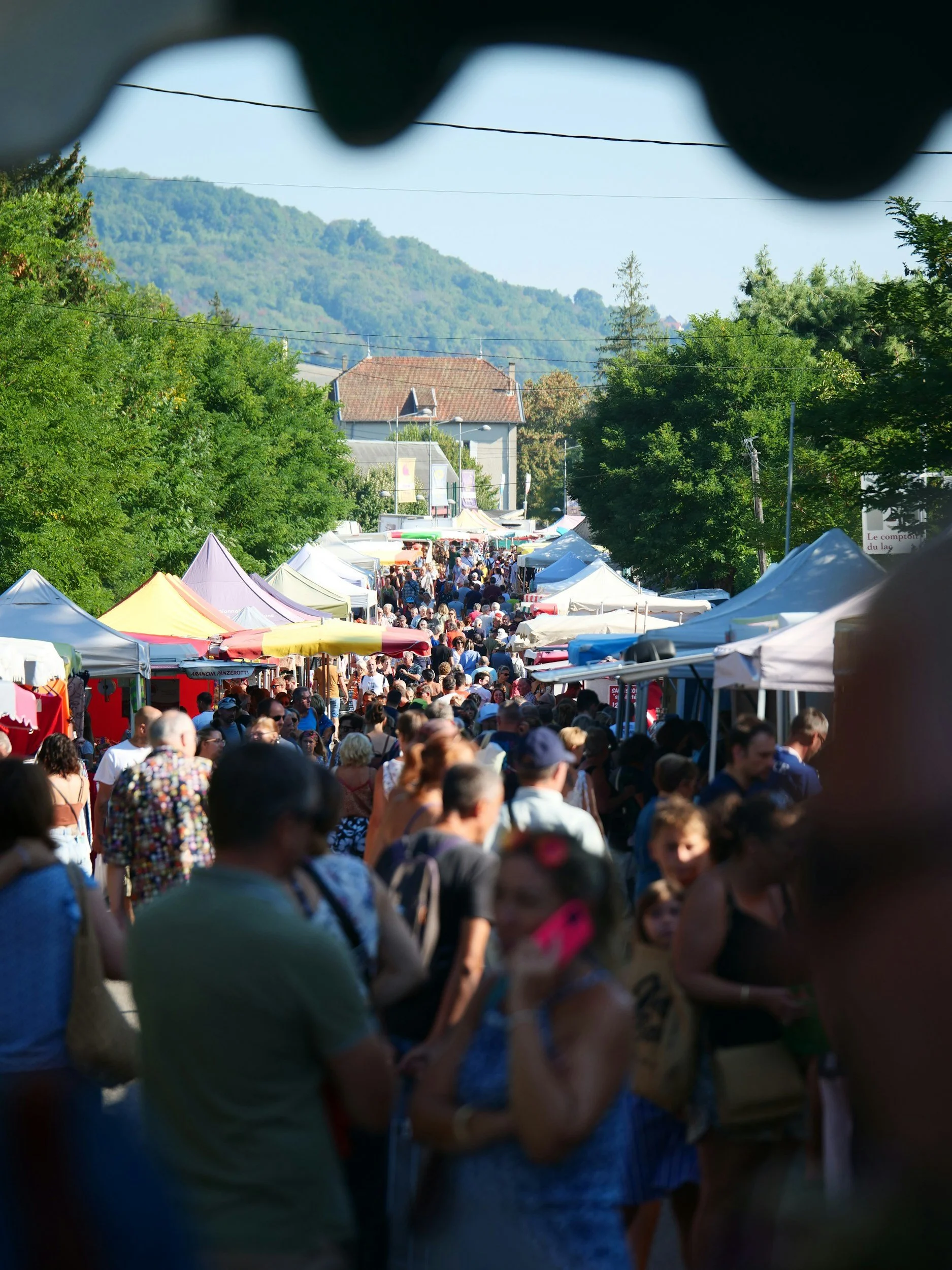
Marché de Carpentras (Friday mornings, Place Maurice Charretier)
Carpentras is one of those markets that still feels like it exists for the town first. It runs every Friday morning around Place Maurice Charretier and spills into the surrounding streets, and if you arrive early enough, you’ll see exactly how it fits into the week.
By 8:30, it’s already fully underway… People arrive with purpose, many carrying proper shopping trolleys or large baskets, and they don’t stop for long. At the vegetable stalls, you’ll see bulk buying straight away, crates of tomatoes in late summer, root vegetables and greens when it’s colder. Cheese stalls are busy early, especially the ones with local goat cheese, and you’ll notice regulars being served without much discussion.
The layout makes it easy to move through without thinking too much about it. Food stalls tend to cluster closer to the centre, fruit, vegetables, cheese, olives, bread, while clothing, textiles, and household goods spread out along the outer streets. If you walk it once, you’ll understand it. If you walk it twice, you’ll start noticing where people actually stop.
By 10:30, it’s noticeably busier, but still functional. This isn’t a market where everything slows down just because more people arrive. You adjust your pace slightly, but you’re still moving forward. What you don’t get here is that feeling of being stuck or circling without direction.
If you want something to eat, it’s best to keep it simple and stay close to how the market works. There are stalls doing roast chicken and potatoes, slices of pissaladière, and small prepared dishes that people take away or eat standing nearby. That’s usually the easiest option if you don’t want to leave the flow completely.
For coffee, step just outside the main stretch. Café de la Poste, near the edge of the centre, is a good place to reset without getting caught in the busiest part of the market. It’s not quiet, but it’s slightly removed, and you can sit for a bit without feeling like you’re holding onto a table that someone else needs.
If you’re staying for lunch, it’s worth walking a few minutes away from the square. Chez Serge is one of the more established options in town, known for truffle-focused dishes in season, but even outside that, it works if you keep expectations realistic and don’t try to turn it into an event. Otherwise, picking up bread, cheese, and something fresh from the market and putting together your own lunch is often the better choice.
Getting there without a car is possible but takes a bit of planning. The nearest train station is Carpentras station, which is connected by regional trains from Avignon Centre. From the station, it’s about a 15-minute walk into the centre, mostly straightforward streets leading toward the market area. If you’re coming from Avignon, trains run regularly enough in the morning to make this an easy half-day trip.
After the market, Carpentras settles quickly. Within an hour, stalls start packing down, and the centre returns to its normal pace. If you want to keep walking, you can head toward Cathédrale Saint-Siffrein, just a few minutes away, or take a slower loop through the quieter streets behind the main square where things thin out a lot.
If autumn is your window to travel, this Drôme Provençale autumn guide goes deeper into the best markets, seasonal food, and how the villages feel once summer ends.
FAQ: weekly markets in southern France
Which weekly markets in southern France are actually worth planning around?
If you’re choosing just one, Marché de Carpentras (Friday) is the strongest. It still functions as a proper weekly shop for locals, especially in the food section around Place Maurice Charretier where people arrive early and buy in quantity.
Saint-Rémy-de-Provence (Wednesday) is a good second option if you want something larger but still structured. Lourmarin (Friday) works better as a shorter, slower morning rather than a full market visit.
What time should you arrive at a Provençal market?
Between 8:30 and 10:30 is the most useful window.
Before 9:00, markets like Carpentras and Nîmes feel fast and very local, people already know what they’re buying.
After 10:30, places like Antibes and Saint-Rémy become noticeably busier, especially along tighter streets like Cours Masséna or Boulevard Mirabeau.
By 12:30, most food stalls are already selling out or packing down.
Are markets in southern France open all year?
Yes, most weekly markets run year-round on fixed days.
What changes is the structure. In winter, markets like Carpentras and Nîmes become more focused on food and everyday goods. In summer, they expand with more stalls, especially clothing and non-food items, but also more visitors.
If you’re travelling in the colder months, this guide to winter markets in southern France in January and February shows exactly which markets are actually running and worth the trip when most people assume everything is closed.
Which markets in southern France are less touristy?
Markets in inland towns tend to feel more local, especially early in the day.
Carpentras stays consistent year-round
Nîmes (Les Halles + surrounding streets) feels local inside the covered market
Saint-Rémy can feel mixed depending on timing
Coastal markets like Antibes are busier, but still work if you arrive early before mid-morning.
Can you visit southern France markets without a car?
Some are easy without a car, others are not.
Nîmes and Antibes are straightforward by train, with markets within a 10–15 minute walk from the station
Carpentras is accessible via train from Avignon Centre, then a short walk
Lourmarin is harder without a car and usually requires a taxi from Cadenet–Lauris
If you want flexibility across multiple markets, having a car makes a noticeable difference.
What can you actually eat at a Provençal market?
Most markets are better for simple, quick food rather than full meals.
You’ll find:
rotisserie chicken with potatoes (Carpentras)
slices of pissaladière or fougasse
socca in coastal markets like Antibes
cheese, bread, olives, and fruit to put together yourself
For a proper sit-down meal, it’s usually better to step away from the busiest market streets.
How long do you need at a market like Carpentras or Saint-Rémy?
Most markets take 1 to 2 hours.
Carpentras is best as a focused visit, one full loop, something to eat, then leave before it winds down.
Saint-Rémy can take slightly longer because of its size, but after late morning, the energy drops quickly.
What should you do after visiting a market?
It depends on the town, but the transition matters.
In Nîmes, walk to Jardins de la Fontaine or past Maison Carrée
In Antibes, head straight to the ramparts or along the seafront
In Saint-Rémy, walk out toward Saint-Paul-de-Mausole
In Lourmarin, a short walk to Château de Lourmarin is usually enough
Most of these towns settle quickly after the market, so it’s better to move on rather than stay too long in the centre. If you’re thinking of coming in May, this Provence in May itinerary is helpful for planning around the best market days, weather, and quieter travel windows.
How do you know if a market is for locals or visitors?
You’ll notice it in how people behave.
In markets like Carpentras, people arrive early, buy in quantity, and leave within minutes. The busiest stalls are food-focused, especially cheese, produce, and rotisserie.
In more visitor-heavy markets, people move slower, browse more, and take photos without buying much. Timing often matters more than location if you want a more local feel.
Which market in southern France is best for a short trip?
If you only have one morning, Carpentras is the best choice. It’s compact, easy to understand, and still functions as a real weekly market.
If you’re already on the coast, Antibes is easier to combine with the rest of your day, but it works best if you go early and move on once it gets busy.