These countryside stays in Italy are much easier without a car than you'd expect
There are plenty of places in Italy where you can arrive by train and then realise quite quickly that you still need a car to make the trip work. You step off at a station like Camucia-Cortona or La Spezia Centrale, look at the map, and notice the town you booked sits uphill or a few kilometres out with no simple way to get there. Or you arrive in the evening and realise the last bus has already gone, and suddenly a short distance turns into a complicated arrival.
This guide focuses on the places where that doesn’t happen. Countryside stays in Italy where you can arrive by train, walk out of the station, and either reach your accommodation on foot, take a short taxi that runs regularly, or use a connection that actually fits how people travel. Places like Lucca, where the station is just outside the city walls on Piazzale Ricasoli, or Levanto, where you can be at your hotel within ten minutes of stepping off the train. Or hill towns like Orvieto, where the cable car from the station takes you straight up into the center without needing to figure anything out.
In practice, the difference comes down to details that aren’t always obvious when you’re booking. Where the station actually sits in relation to the streets you’ll spend time on. Whether there’s a reliable way up into town, like the escalator system in Spoleto or the bus route from Camucia into Cortona. And whether daily life is set up in a way that works without a car, so you can leave your accommodation, walk a few minutes, and already be near a café, a bakery, or a small square where everything you need is within reach.
For shorter trips, Italy by train over a weekend is a good example of how to keep things simple instead of trying to fit too much in.
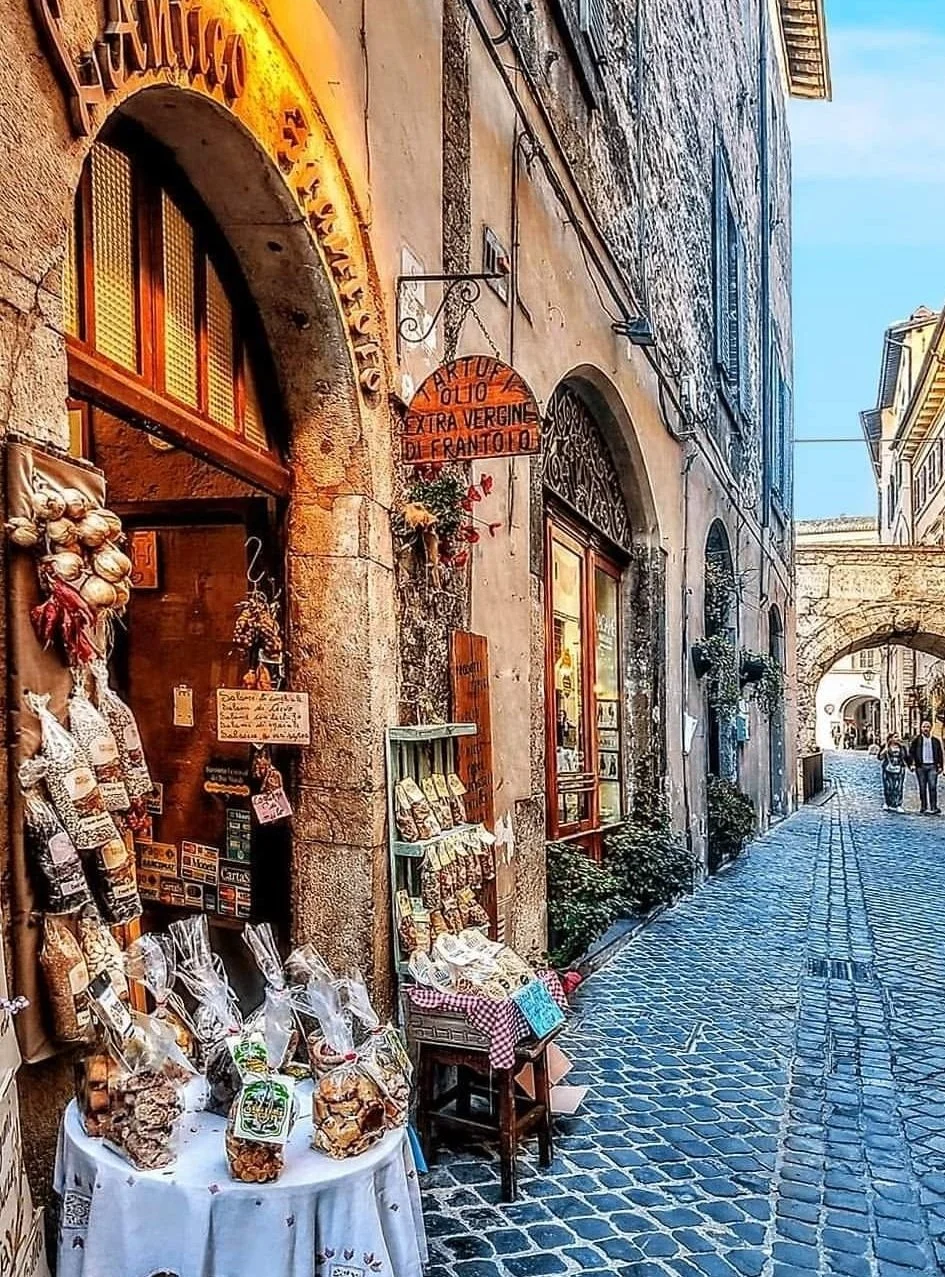
What “No Car Needed” Actually Means in Italy (Train Access, Transfers, Walking Distance)
In Italy, “no car needed” usually sounds straightforward when you’re booking, but it rarely means you can just step off the train and be done with it. Most of the time, it means the train gets you close, and the last part of the journey is what decides whether the trip feels easy or not.
You see it clearly in places like Camucia-Cortona, where the station sits in the flat part of town and Cortona itself is up on the hill. The distance isn’t far, but you’re not walking it with luggage. There’s a bus that runs up to Porta Colonia, and taxis are easy enough to arrange, but it’s something you need to factor in before you arrive, especially if your train gets in later in the day.
Compare that to somewhere like Lucca, where the station on Piazzale Ricasoli is right next to the city walls. You walk across the road, pass through Porta San Pietro, and within five minutes you’re inside the center. No planning, no transfers, nothing to think about once you arrive.
Walking distances also change depending on where you are. In Levanto, you can get from the station to most hotels in under ten minutes on flat streets, even with a suitcase. In Orvieto, the distance isn’t long either, but it involves taking the funicular from the station and then either a short bus ride or a walk through the upper town, depending on where you’re staying.
The other part that matters is how often those connections actually run. In smaller towns, buses might line up with a few key train arrivals during the day, but not all of them. If you arrive at 20:30 instead of 17:00, the options can look completely different. That’s usually where trips start to feel complicated, not because the distance is far, but because the timing doesn’t match up.
So in practice, “no car needed” in Italy really means a mix of things working together. A station that’s either in town or properly connected to it. A short, predictable final stretch, whether that’s walking, a bus, or a taxi you can rely on. And a layout that lets you move through your days without needing to plan every small movement around transport.
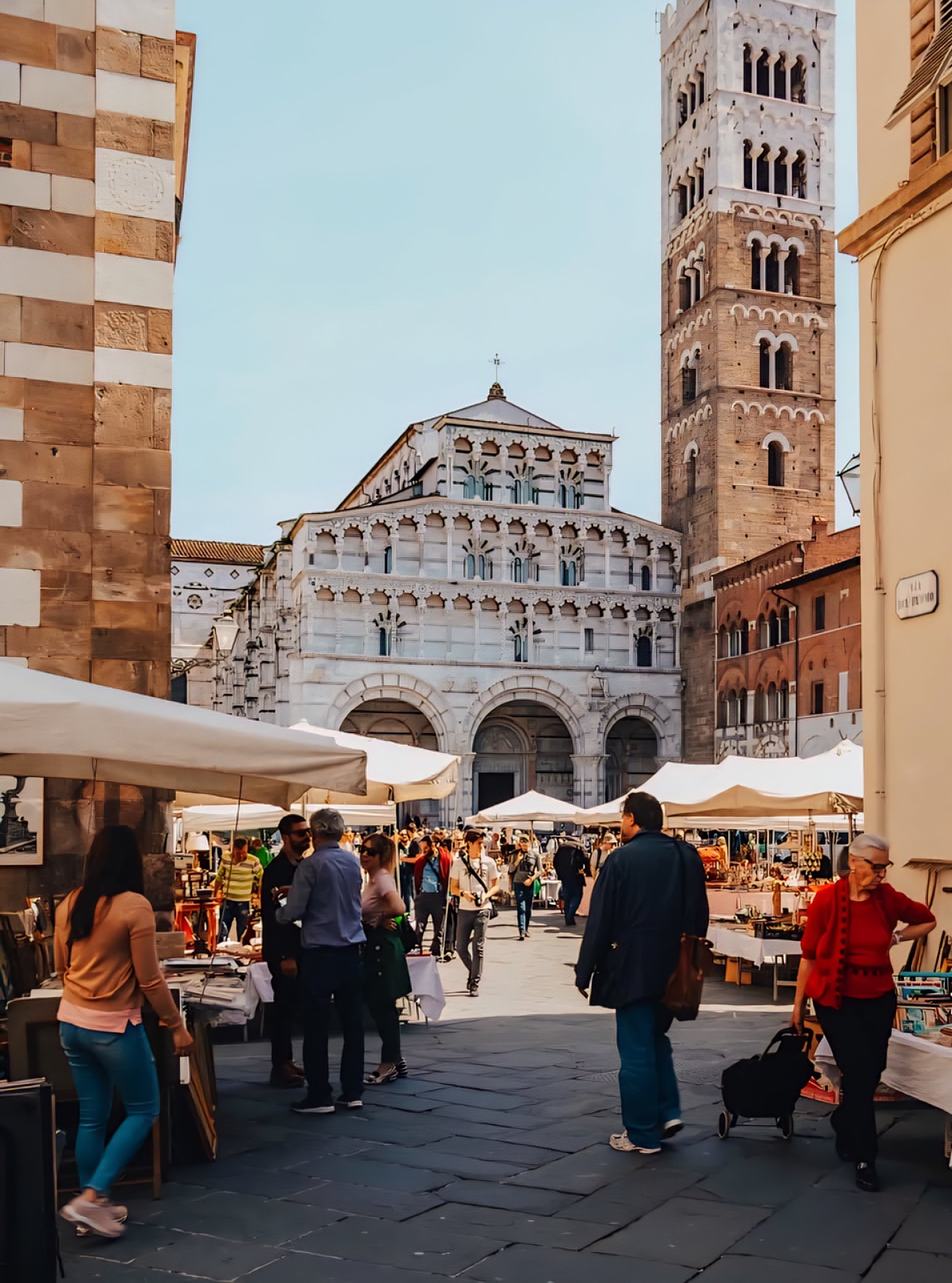
If you’re planning to move between regions, Eurail passes for smooth train travel helps you figure out what’s actually worth buying and what isn’t.
Where this actually works in Italy (regions with usable train access and short transfers)
Northern and central Italy are where this tends to work without friction. Regions like Piedmont, Liguria, Tuscany, and parts of Umbria are built around train lines that actually connect places people stay in. You can move between towns like Torino Porta Nuova, Alba, and Asti on the same line, or follow the coastal route between Genova and Levanto where trains run frequently enough that you don’t need to plan your entire day around them.
Tuscany works if you stay close to the main routes. The line between Firenze Santa Maria Novella and Pisa Centrale passes through smaller stops like Empoli and San Miniato, where the station sits close enough to town that you can walk straight in. Once you move deeper into the countryside, especially into hill towns without stations, the trip shifts. Places like Cortona or Montepulciano are still reachable, but they rely on that extra step from the valley up into town, usually by bus or taxi, and that part doesn’t run continuously throughout the day.
Southern Italy is where timing starts to matter more. The train line along the Cilento coast, stopping at places like Agropoli-Castellabate and Ascea, makes it possible to arrive without a car, but connections beyond that are less consistent. In parts of Puglia, the main Trenitalia and Ferrovie del Sud Est lines reach towns like Ostuni or Martina Franca, but countryside stays outside those centers often depend on pre-booked taxis rather than something you can organise on the spot.
It also comes down to how the region is laid out. Areas that follow a clear train corridor, like the Ligurian coast or the Florence–Pisa route, are easier to move through because towns sit directly on the line. In regions where villages are spread across hills, like parts of southern Tuscany or inland Puglia, distances look short on a map but don’t translate into simple movement without a car.
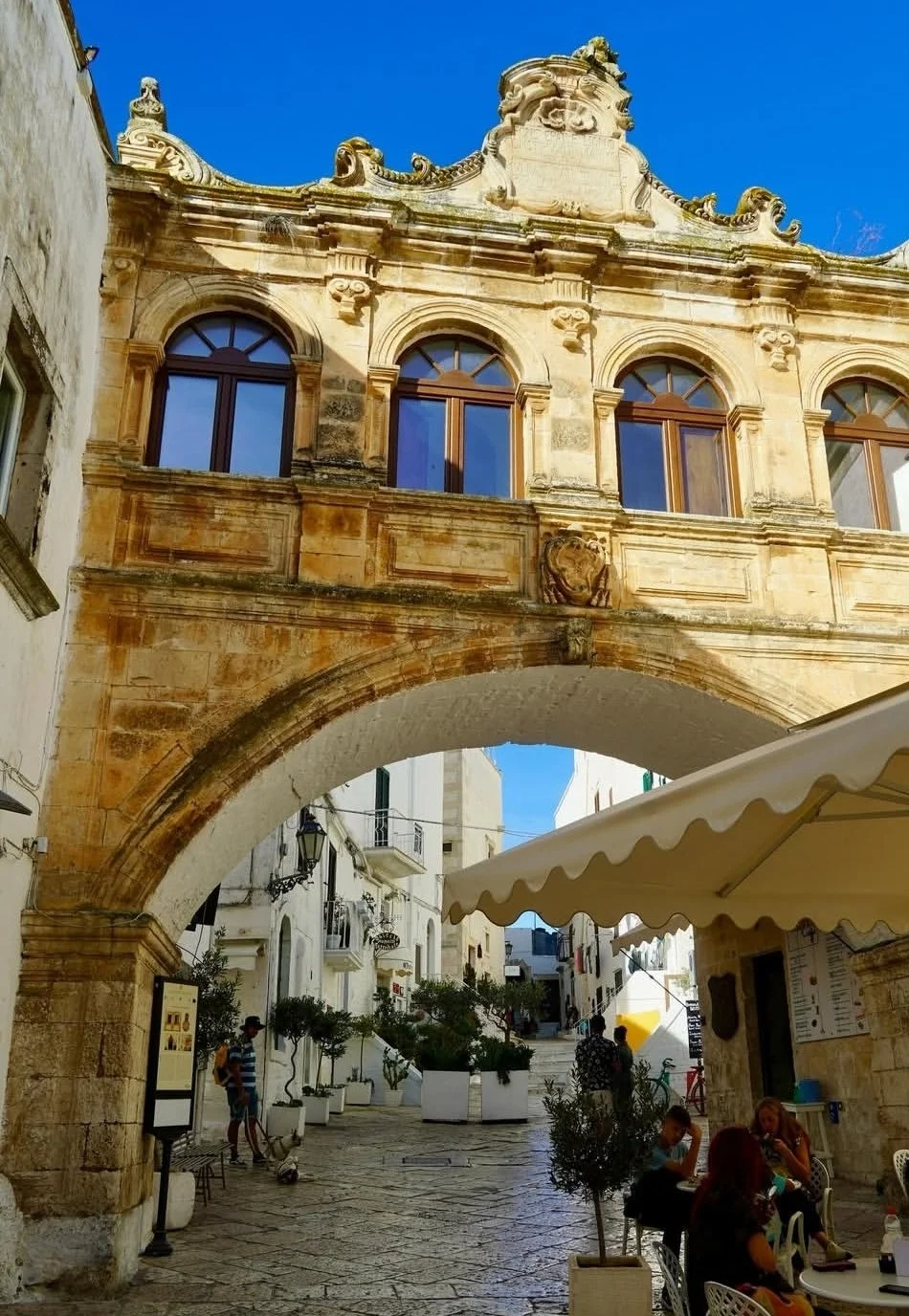
Piedmont countryside stays near small train stations (Alba, Asti, Bra)
Piedmont is one of the easier regions to handle without a car, especially around the Langhe. The train network isn’t extensive, but the main line between Torino Porta Nuova and Savona connects towns like Asti, Alba, and Bra in a way that actually works for a short stay. You can arrive by train, walk into town from the station in under 15 minutes in most cases, and then use that same line to move between places without needing to plan too far ahead.
The limitation shows once you leave those towns. Vineyards and smaller villages like Barbaresco or La Morra sit outside the train network, so the setup becomes about choosing a base like Alba or Asti and treating the countryside as something you access in short, planned stretches rather than moving through it freely.
In Piedmont, it usually clicks once you see what staying in these wine villages in northern Italy actually looks like day to day, especially if you’re deciding between moving around or just staying put.
Staying just outside Alba without a car (Treiso, Barbaresco, short taxi access)
Alba is one of the few places in the Langhe where arriving without a car still feels straightforward. The train station sits just outside the center on Piazza Trento e Trieste, and from there it’s a short, flat walk into town along Corso Fratelli Bandiera. Within a few minutes you’re near Via Vittorio Emanuele, where most of the cafés and small food shops are, so if you’re staying in Alba itself, you won’t need to think about transport again.
The shift happens when you book somewhere just outside town. Many of the quieter stays are set among vineyards along the roads leading toward Treiso, Barbaresco, or Neive, often along Strada Provinciale routes that aren’t designed for walking. These aren’t places you reach on foot from the station, but they’re close enough that a 10 to 15-minute taxi works without overplanning. In practice, most hosts will either arrange a driver from Alba station or give you a local contact, and it’s worth confirming this before arrival rather than assuming taxis will be waiting outside.
Once you’re there, the days stay quite contained. If you head into Alba in the morning, coffee usually happens standing at the bar at places like Caffè Umberto or one of the smaller spots along Via Cavour before the town fills up around mid-morning. From there, you can walk through the historic center toward Piazza Duomo or pick up something simple from a bakery and sit along one of the quieter side streets.
Walking in the Langhe depends entirely on where you’re staying. From Treiso, you can follow local roads between vineyards toward Barbaresco in under an hour, passing small clusters of houses and cellar doors along the way. From more isolated agriturismos, walking tends to mean short loops rather than point-to-point routes, with narrow roads and very little shade during warmer months.
Lunch usually happens between 12:30 and 14:00, either back in Alba or at a trattoria you’ve chosen in advance. Many wineries in the area, especially around Barbaresco, work on scheduled tastings rather than drop-ins, so visits need to be booked and timed around your day. By late afternoon, things quiet down again, and evenings tend to stay close to where you’re based. Taxis are possible, but not something to rely on late at night, so dinner often ends up being either in Alba before heading back or within a short drive of your accommodation.
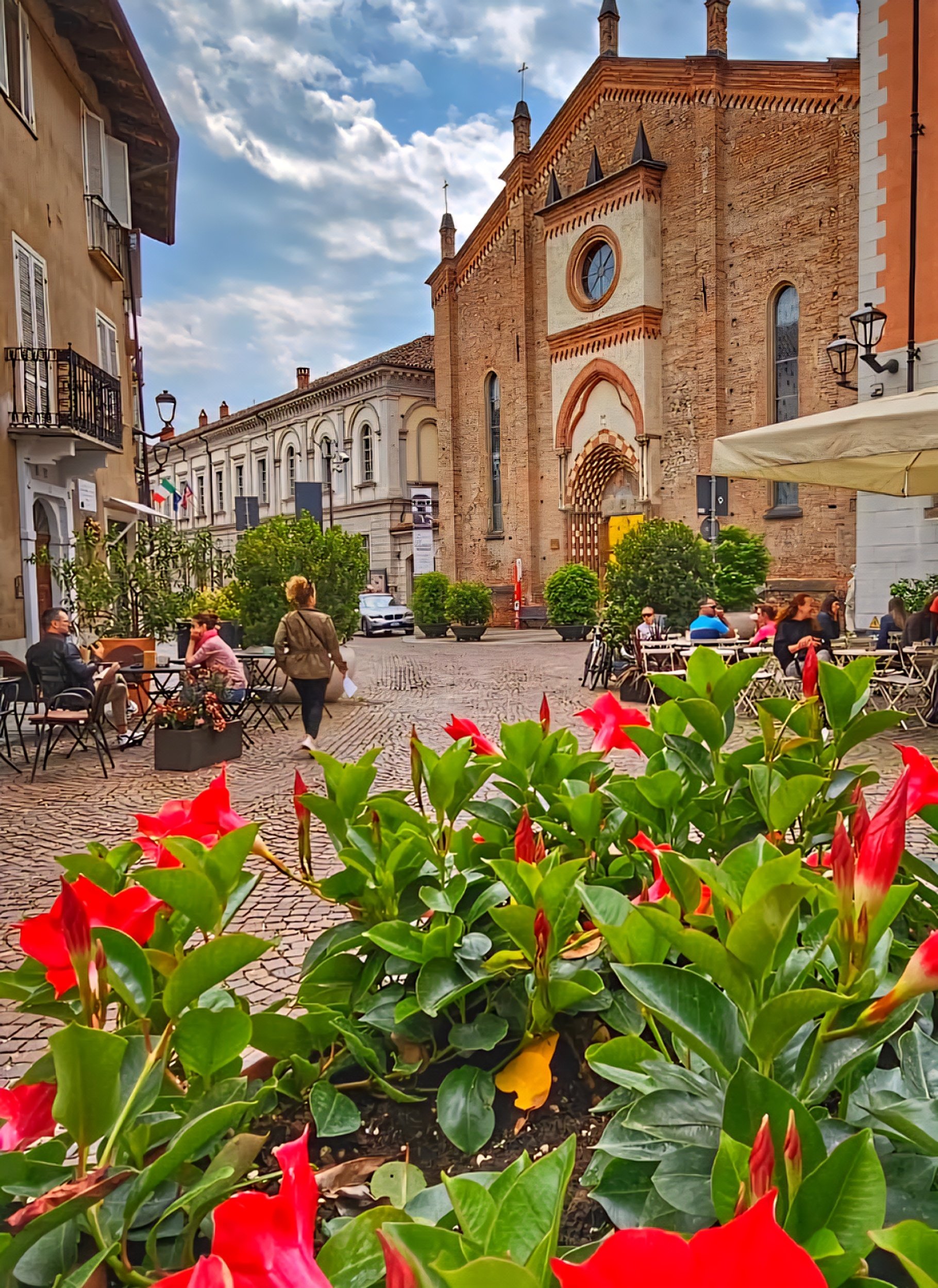
Staying in Asti without a car (central station, Corso Alfieri, easy day trips)
Asti works differently from Alba, and that’s exactly why it makes sense without a car. The train station, Asti Stazione, sits just outside the center, and you can walk straight in along Corso Vittorio Alfieri without needing to think about directions. Within a few minutes, you’re already in the part of town where most things happen, and the walk is flat enough that arriving with luggage doesn’t slow you down.
Most stays sit within a 10 to 15-minute radius of that route, especially around Piazza Alfieri or closer to Piazza San Secondo, so once you’ve checked in, everything you need is already within reach. The town stretches out rather than stacking vertically, which makes it easier to move through compared to hill towns where every errand involves steps or inclines.
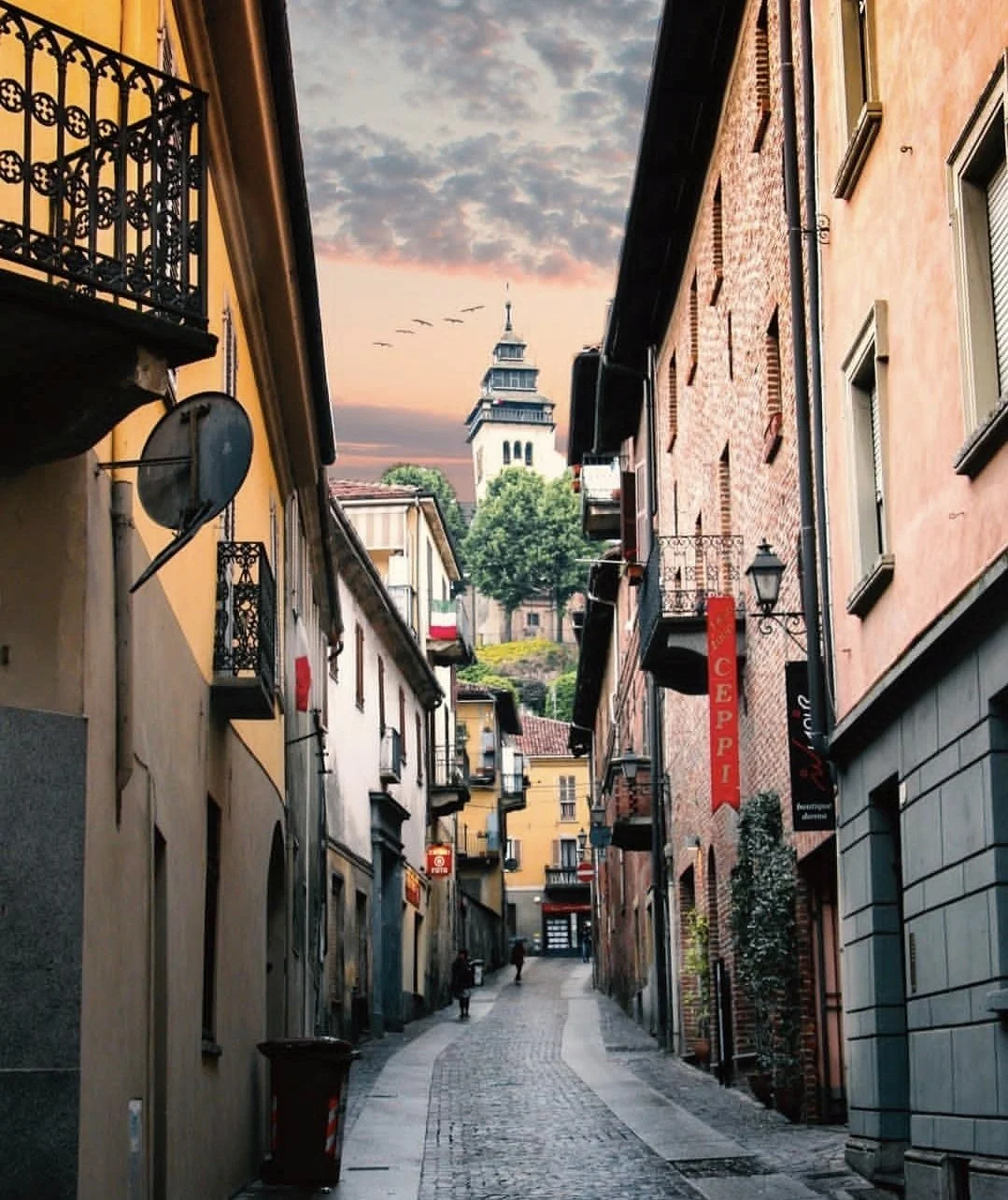
Mornings usually start along Corso Alfieri or just off it, where cafés open early and locals stop for coffee on their way to work. Places like Caffè Vittoria or smaller bars near Via Cavour fill up quickly between 08:00 and 10:00, and it’s one of the few times the town feels busy. After that, it settles again, and you can move between the main squares without needing to plan anything.
On market days, Piazza Alfieri changes completely, with stalls spreading across the square and into surrounding streets, selling everything from produce to household goods. It’s not set up for visitors in the same way as Alba’s weekend market, so you end up moving with locals rather than around them.
Asti works best when you treat it as a steady base. Trains run regularly toward Torino Porta Nuova or down to Alba, so you can leave in the morning and be back by late afternoon without checking schedules more than once. If you want to reach smaller villages or wineries, it usually means arranging a taxi for a set time rather than trying to move between multiple places in one day.
Evenings stay close to where you are. Restaurants cluster around Piazza San Secondo and along the smaller side streets, and because everything is within walking distance, there’s nothing to organise once you head out. That’s really where Asti works without a car, you arrive, settle in, and the rest of the stay runs without needing to think about how to get anywhere.
Staying in Bra without a car (Via Cavour, Slow Food roots, easy train access)
Bra sits on a smaller regional line between Torino Porta Nuova and Alba, but the connections are steady enough that you don’t need to build your day around them. The station, Bra Stazione, is about a 15-minute walk from the center along Via Vittorio Emanuele II, passing residential streets before you reach the busier part of town. The route is flat and direct, which makes arrival simple (even with luggage).
Once you’re in town, everything stays within a small radius. The center gathers around Via Cavour and Corso Garibaldi, with Piazza Caduti per la Libertà and Piazza XX Settembre as the main reference points. You don’t need to think about distances here. After a day or two, you’ll start taking the same routes between streets without checking anything.
Mornings usually begin along Via Cavour, where cafés like Caffè Converso open early and locals stop for a quick coffee before work. Between around 08:00 and 09:30, there’s a short window where the town feels active, then it settles again. By late morning, the streets are quieter, and you can walk through the center without much movement around you.
Bra’s connection to the Slow Food movement shows up in small, everyday places rather than anything you need to seek out. Cheese shops around Via Cavour and small alimentari carry local products, and restaurants focus on regional dishes without trying to stand out. Lunch follows a clear rhythm between 12:30 and 14:00, after which most places close for a few hours.
The afternoons are slower, with fewer places open, especially outside the main streets. Evenings pick up again around Corso Garibaldi and the streets leading off Piazza Caduti per la Libertà, where restaurants fill gradually rather than all at once.
What makes Bra work without a car is that combination of scale and access. You can stay somewhere that feels like a small town, walk everywhere without effort, and still have the option to take a short train to Alba or Asti without needing to organise anything in advance. At the same time, you don’t feel like you need to leave, because everything for a few days is already within reach.
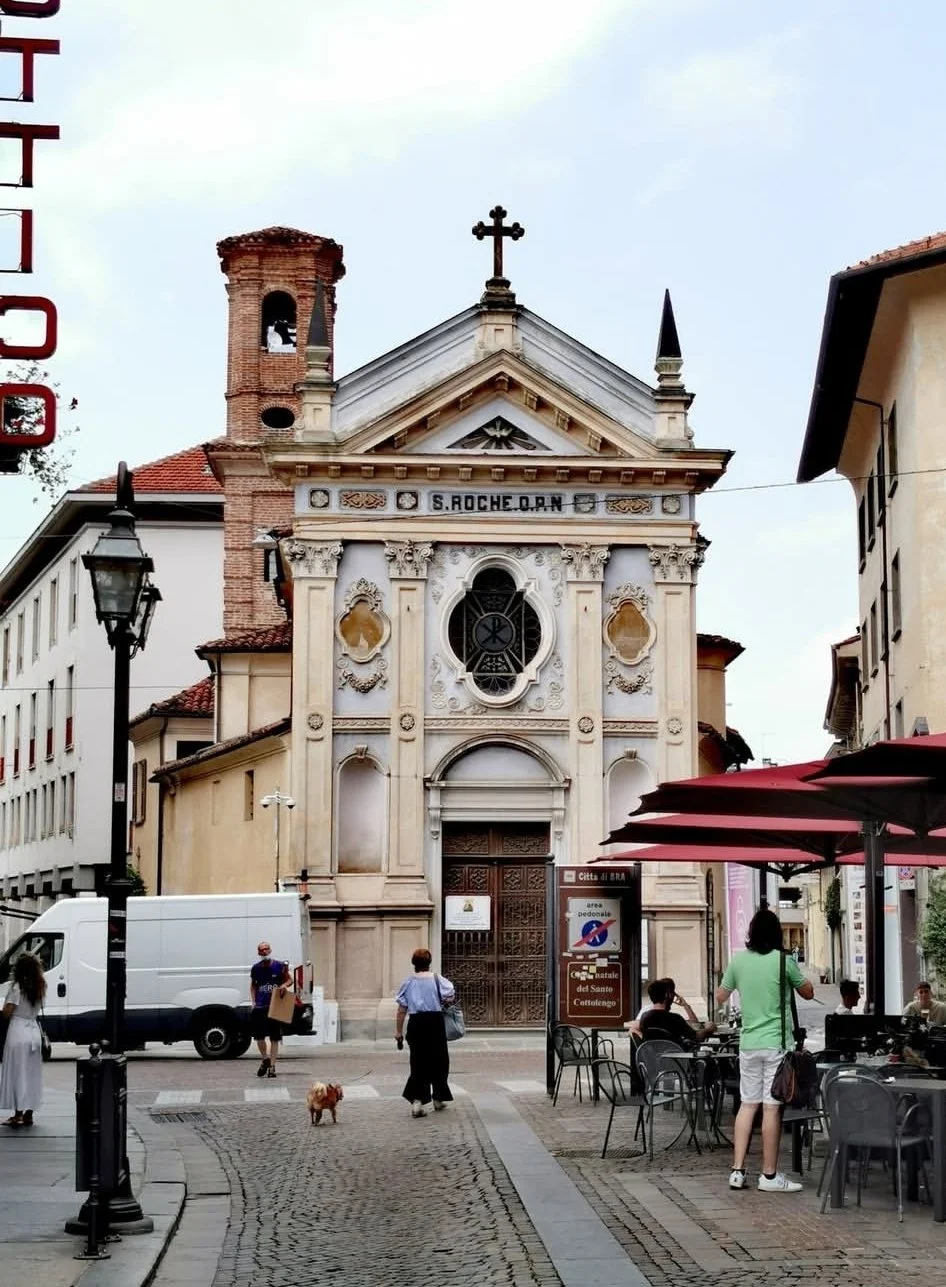
Liguria beyond the main coastal stops (train line towns with access to hills and quieter areas)
The Ligurian train line runs directly along the coast, connecting places like Genova Piazza Principe, Sestri Levante, Levanto, and La Spezia Centrale in a way that makes arrival straightforward. You can step off the train and already be within walking distance of the center, which is what makes this region one of the few in Italy where you don’t need to think too much about logistics at the start.
The challenge is choosing where to stay once you’re there. Many of the smaller coastal towns sit right on the line, but the quieter areas begin just slightly inland, along roads that lead up into the hills behind the coast. The distance isn’t far, but it changes how you move. Some places are still within walking distance of the station, especially in towns like Levanto where the layout stays flat. Others depend on short local buses or a quick taxi ride up from the station, and those connections don’t run constantly throughout the day.
What works best here is staying close enough to the train line that you can arrive easily, while still having access to the hills or quieter streets just outside the main flow of people moving along the coast.
If you’re looking at that stretch of coastline, Liguria towns near Cinque Terre makes it easier to see which towns are actually connected and which ones just look close on a map.
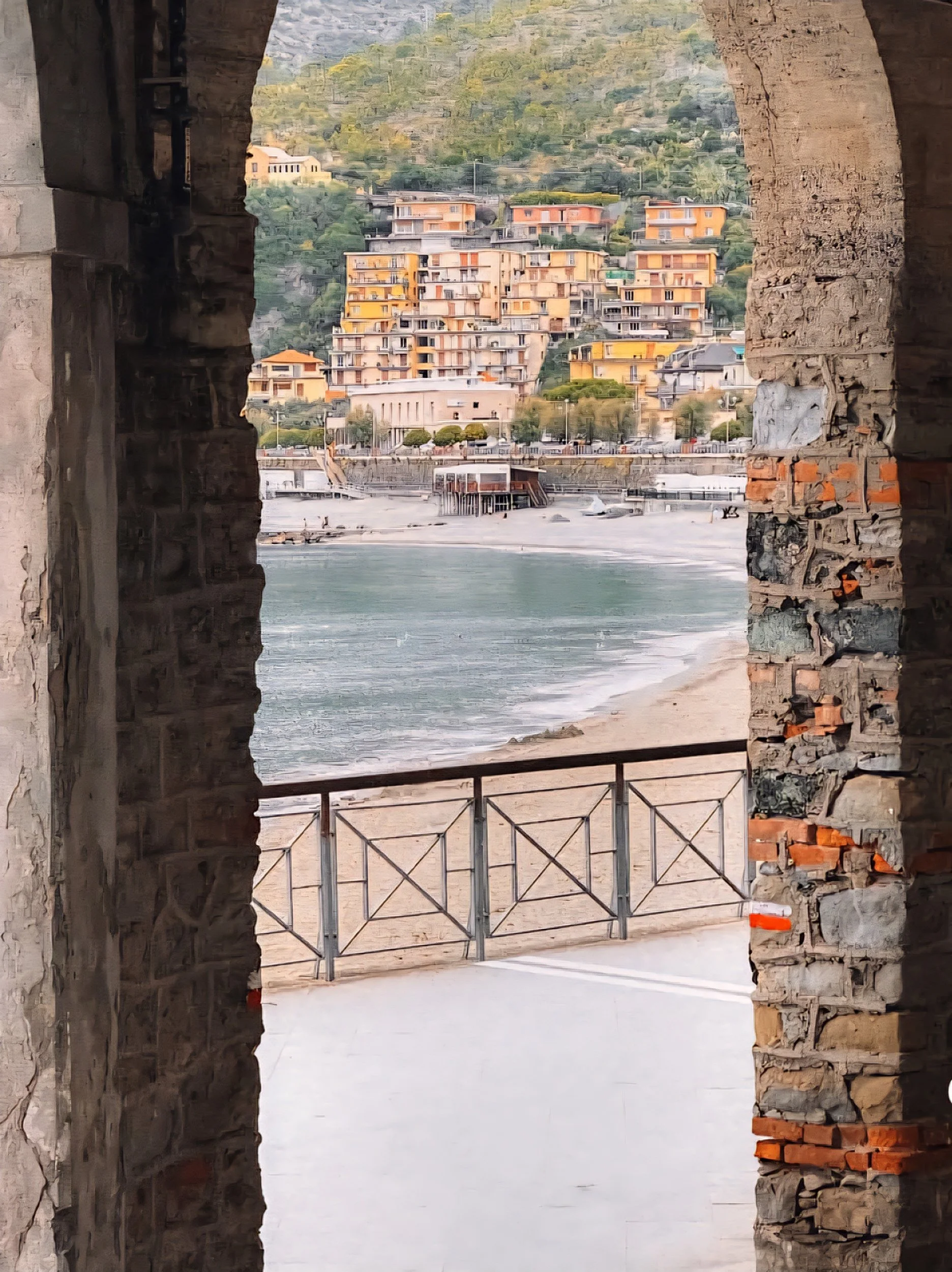
Staying in Levanto without a car (Corso Italia, flat center, coastal walks)
Levanto sits just outside the Cinque Terre, but it works in a completely different way. The train station, Levanto Stazione, is a few minutes from the center, and you can walk straight into town along Corso Italia, passing small apartment buildings before reaching the main streets. The layout stays flat, which makes a big difference compared to the villages further south where you’re dealing with steps almost immediately after arriving.
Once you’re in Levanto, everything sits within a small, clear area between the station, Piazza Cavour, and the seafront along Lungomare Dante Alighieri. Most stays fall somewhere within that triangle, so even with luggage, you’re rarely walking more than 10 minutes. Streets like Via Garibaldi and Via Dante branch off from the center, with bakeries, small grocery shops, and cafés spaced out in a way that feels practical and local.
Mornings usually start around Piazza Cavour, where cafés like Caffè Roma open early and locals stop briefly for coffee before heading out. Between roughly 08:00 and 10:00, there’s a steady flow of people moving through the square, then it quiets down again. If you walk toward the seafront, you’ll notice the beach area filling gradually, especially in summer, while the streets just a few blocks back stay relatively calm.
Walking routes begin almost immediately once you leave the center. You can head up toward Montale along local roads that start behind the town or follow the coastal path toward Bonassola, which runs along an old railway line and stays mostly flat. Both options work without needing to arrange anything, and you can decide in the moment rather than planning ahead.
The train line adds another layer of flexibility. From Levanto, you can take short regional trains to places like Bonassola or Framura in under 10 minutes, or continue south into the Cinque Terre if you want to see it briefly and then return. Trains run frequently enough that you don’t need to check the schedule more than once before leaving.
Lunch usually happens between 12:30 and 14:00, with places near the seafront filling first, especially in warmer months. After that, parts of the town quiet down again, particularly away from Lungomare Dante Alighieri. Evenings stay local, with restaurants gradually filling along the streets leading back toward Piazza Cavour, and because everything is within walking distance, there’s nothing to organise once you head out.
Levanto is one of those places people underestimate until they’re there, and this Levanto travel guide shows why it works so well without needing a car.
Getting to inland Ligurian villages without a car (Levanto buses, fixed schedules)
From Levanto, you can reach smaller inland villages by bus, but it works differently from the train line along the coast. These routes are used by locals rather than set up for visitors, so they follow fixed daily patterns rather than running continuously.
Most buses leave from the area outside Levanto Stazione or from stops along Corso Italia closer to the center. Lines heading inland toward places like Montale, Legnaro, or the villages above Bonassola run a few times in the morning and early afternoon, often spaced around school and work schedules. You’ll usually see people getting on with groceries or heading home rather than day visitors moving between stops.
The journey itself is short, usually 15 to 25 minutes, but the timing matters more than the distance. If you miss one departure, the next bus might not be for another hour or longer, especially outside peak summer months. That’s where the day shifts from feeling simple to slightly restricted, not because you can’t get there, but because you can’t move freely between places once you’ve arrived.
Tickets are typically bought in advance from a tabacchi or small shop near the station rather than on the bus, and it’s worth doing this before you head out, especially in the morning when places open gradually. Once you’re on the bus, the route moves quickly away from the coast, following narrow roads up into the hills with stops that aren’t always clearly marked.
Once you arrive, these villages are quiet and spread out. In places like Montale, you’re dealing with a handful of streets, a small square, and maybe a bar or local restaurant that opens at set times. Walking tends to be along narrow roads or footpaths connecting houses rather than defined routes between villages, and there’s very little transport running between them during the day.
What makes this workable without a car is consistency rather than frequency. The buses don’t run often, but they run in a way that matches how people in the area actually move between the coast and the hills. If you plan around those times, getting inland stays manageable, but it’s not something you leave open-ended.
Where the train line runs vs where it gets quiet (Levanto, Bonassola, Framura)
In Liguria, the train line runs directly along the coast, cutting through tunnels between stops like Sestri Levante, Levanto, Bonassola, and Framura. When you’re on it, you’ll notice the pattern quickly. A few minutes in a tunnel, then a brief stretch where the sea opens up, then straight back into rock again before the next station.
Most towns sit right on that line. You arrive at Levanto Stazione or Bonassola and you’re already within walking distance of the center, often no more than five to ten minutes. In Levanto, for example, you leave the station, cross toward Corso Italia, and within a few blocks you’re already near Piazza Cavour. There’s no transfer or planning involved, which is what makes arrival feel easy compared to inland regions.
The change happens once you step slightly away from that immediate area. In Levanto, if you walk inland past Via Garibaldi or follow smaller streets branching off Corso Italia, the movement drops off quickly. The same thing happens in Bonassola. Near the station and beachfront, there’s a steady flow of people, but a short walk inland or toward the edges of town, and it becomes noticeably quieter.
Framura pushes this even further. The station sits right on the coast, but the town itself is split into small clusters higher up, connected by roads and paths rather than one central street. You can arrive easily by train, but once you move away from the station area, the layout changes completely.
There are also small details you only notice once you’re there. Trains pass frequently, so near the tracks you’ll hear them coming through the tunnels, especially in quieter parts of the day. Beachfront areas fill earlier, particularly in summer, while streets just a few minutes inland stay calm even when the coast is busy.
What makes Liguria work without a car is this exact way. You can stay close enough to the train line that arrival and short trips stay simple, but still step away from it and be in a quieter part of town within minutes. It’s not about travelling far, it’s about knowing where that shift happens.
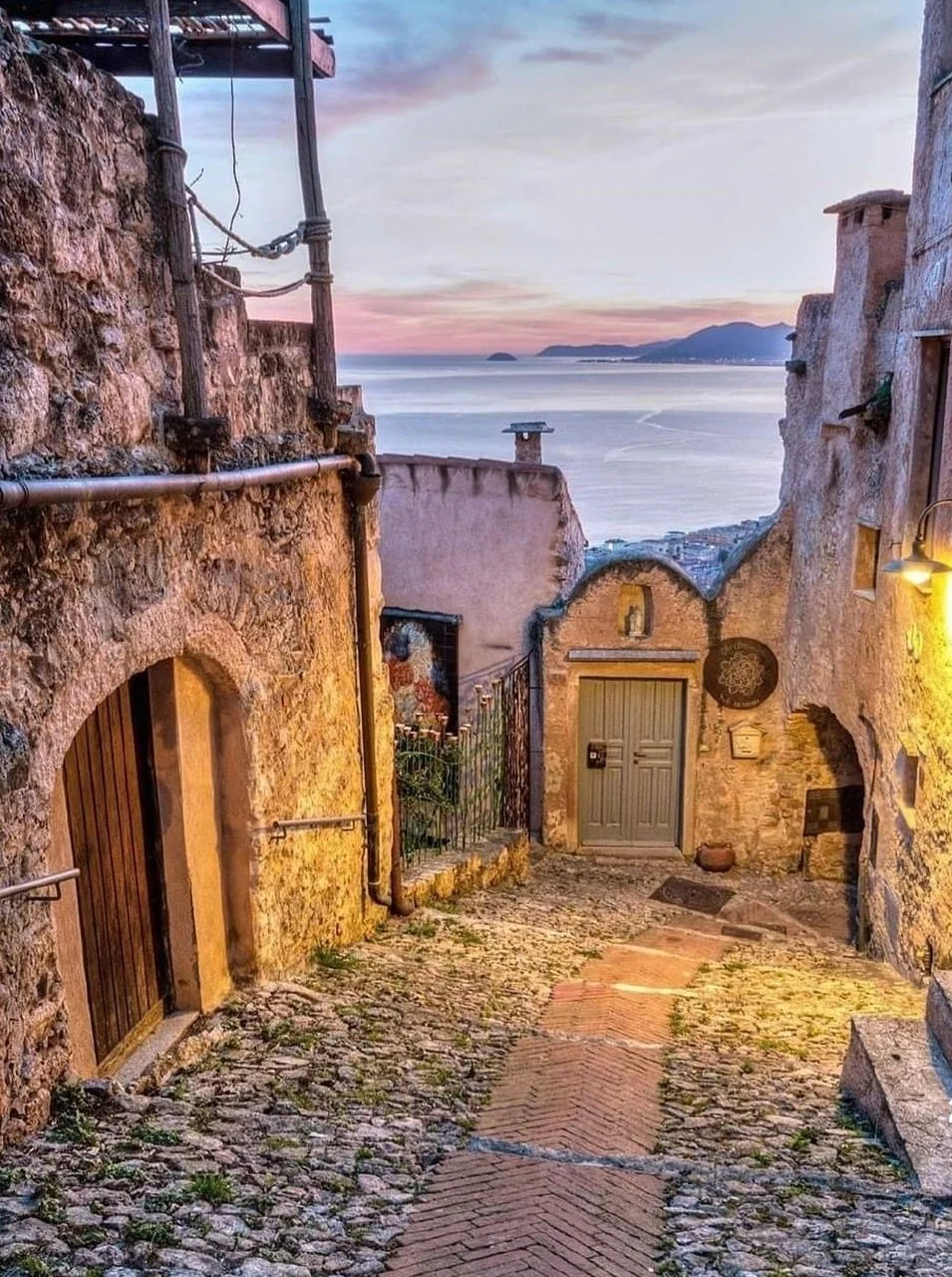
Tuscany without a car (towns near train lines, avoiding hilltop isolation)
Tuscany is usually planned around driving, mainly because many of the well-known countryside stays sit on hilltops without direct access to train lines. Once you look at where the stations actually are, the pattern becomes clearer. The main routes run through flatter areas, connecting places like Firenze Santa Maria Novella, Pisa Centrale, and smaller stops such as Empoli or Montecatini Terme, where you can arrive and walk straight into town without needing to arrange anything.
The difference shows up as soon as the town and the station don’t sit in the same place. In Cortona, you arrive at Camucia-Cortona in the valley and then need to get up to the historic center. Buses run up toward Porta Colonia, but not continuously, especially later in the day, and taxis tend to cluster around train arrivals rather than being available on demand. The ride itself is short, around 10 to 15 minutes, but it’s something you need to time rather than ignore.
Lucca works in the opposite way. You arrive at Lucca Stazione on Piazzale Ricasoli, cross the road, and enter through Porta San Pietro within a few minutes. From there, streets like Via Fillungo and Via Roma lead through the center, with cafés, bakeries, and small shops spaced out in a way that doesn’t require planning. You can leave your accommodation, walk a few minutes, and already be somewhere that fits into your day without thinking about transport.
Even smaller stops along the Florence–Pisa line follow a similar pattern. In Empoli, for example, the station sits close to the center, and you can walk toward Piazza Farinata degli Uberti without needing a map. The layout stays flat, and distances are short enough that you don’t need to factor in travel time once you’ve arrived.
The shift happens again when you move deeper into the countryside. Towns like Montepulciano or Pienza sit higher up, and while they’re reachable without a car, the final stretch depends on buses that run at specific times rather than continuously. The distance isn’t far, but the structure changes how you plan your day.
In practice, staying in Tuscany without a car comes down to where that connection sits. If the station is either in town or linked in a way that runs consistently, the rest of the trip feels simple. If it’s not, you start adjusting your day around transport without necessarily realising it.
For Tuscany, the difference becomes obvious once you look at Tuscany towns with cafés and slower days, especially if you want somewhere you don’t need to leave every day.
Reaching Cortona without a car (Camucia station, Porta Colonia, uphill walk)
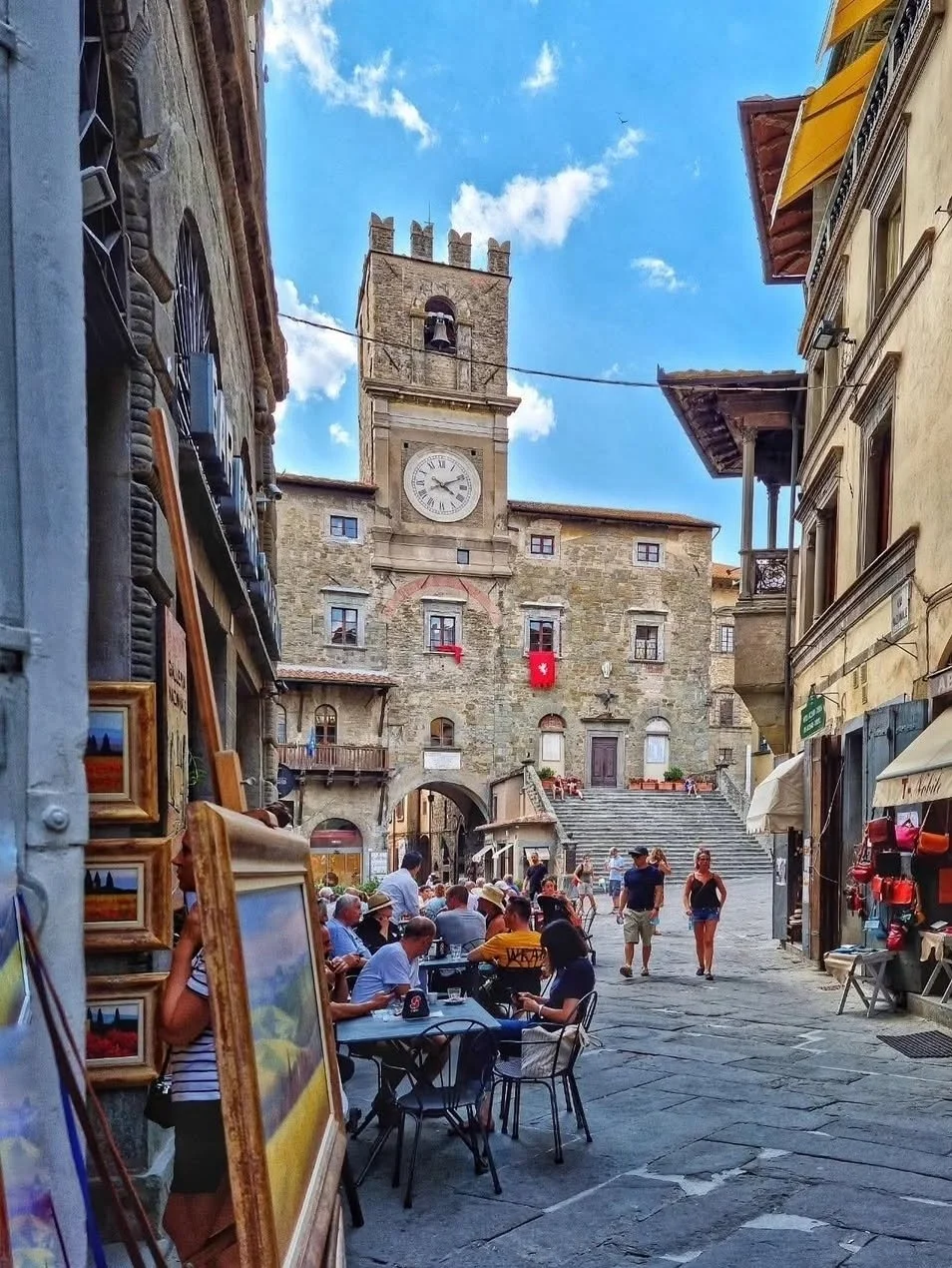
Cortona doesn’t sit on the train line itself, which is where most of the planning comes in. You arrive at Camucia-Cortona, a small station in the flat part of town, and from there the historic center is up on the hill above you. The distance isn’t far, but it’s not something you walk with luggage, especially in warmer months when the road offers very little shade.
Buses leave from just outside the station and run up toward Porta Colonia, one of the main entry points into Cortona. During the day, they generally line up with train arrivals, especially between late morning and mid-afternoon. Outside those times, the gaps become noticeable, and if you arrive in the evening, a taxi is usually the more straightforward option. You’ll often see one or two waiting when trains come in, but not consistently enough to rely on without checking.
The drive up takes around 10 to 15 minutes, following a series of bends as the road climbs toward town. Most drop-offs happen near Porta Colonia or along Viale Passerini, and from there you still have a short walk into the center. This is where the layout becomes clear. Streets are steep, cobbled, and uneven, and even a five-minute walk can feel longer with a suitcase, especially as you move further in toward Piazza della Repubblica.
Once you’re settled, everything stays within the town. Via Nazionale runs through the center and connects most of the cafés, small shops, and restaurants. In the morning, places like Bar Sport or smaller cafés along this street open gradually, and between around 09:00 and 10:30 there’s a steady flow of people moving through. If you step off onto the side streets leading toward quieter residential areas, the movement drops off quickly.
Lunch follows a clear window between 12:30 and 14:00, with restaurants opening and closing in a way that doesn’t shift much throughout the week. Outside peak season, the afternoons can feel noticeably quiet, with fewer places open and very little movement away from the main street.
Evenings stay local. Most activity gathers again along Via Nazionale and around Piazza della Repubblica, and once you’re back inside the town, there’s nothing to organise. The only time you think about transport again is when you’re heading back down to the station.
If you’re thinking about timing your trip around food, Italian food seasons by region adds context that most people only figure out once they’re already there.
And if you want to travel outside peak months, Italian markets beyond summer shows what actually stays open and worth visiting.
Staying in Lucca without a car (Piazzale Ricasoli, city walls, cycling routes)
Lucca works differently from most of Tuscany, and that’s exactly why it makes sense without a car. The train station, Lucca Stazione, sits just outside the walls on Piazzale Ricasoli. You step out, cross the road, pass through Porta San Pietro, and within a few minutes you’re already inside the center without needing to figure anything out.
Once you’re in, everything stays within a compact, walkable area. Streets like Via Fillungo and Via Roma run through the middle of town, connecting cafés, bakeries, and small shops, while the city walls form a continuous loop around the center. Most stays sit within a short distance of these streets, so once you’ve checked in, you don’t need to think about how to get anywhere.
Mornings usually begin along Via Fillungo or near Piazza dell’Anfiteatro, where cafés like Caffè Santa Zita or small bakeries open early. Between around 08:30 and 10:30, there’s a steady flow of people moving through the center, then it settles again. If you walk up onto the walls, you’ll notice the pace changes immediately, with people walking or cycling in a slow loop above the town while the streets below stay quieter.
The main difference with Lucca is how easily the countryside connects. Bike rentals are clustered near the walls, especially around Porta San Pietro and Porta Santa Maria, and once you have one, you can cycle straight out without needing to navigate traffic. Routes toward the Serchio River follow flat paths just outside the walls, while roads heading toward villages like Monte San Quirico or Marlia start almost immediately beyond the city edge.
There are a few small details that make a difference. Bike shops tend to open around 09:00, so if you want to leave early, it’s worth checking times the day before. By late morning, the walls become busier with a mix of walkers and cyclists, while the countryside routes stay noticeably quieter.
Lunch follows a clear window between 12:30 and 14:30, after which parts of the center close for a few hours, especially outside peak season. Evenings build gradually, with people moving back toward Via Fillungo and the main squares, and because everything is contained within the walls or directly connected to them, you don’t need to organise anything around transport at any point.
If you’re deciding where to stay, where to stay in Tuscany without a car is more useful than most lists because it focuses on what actually works in practice.
Smaller stops between Florence and Pisa (Empoli, San Miniato, station access)
Between Firenze Santa Maria Novella and Pisa Centrale, the train line passes through smaller towns that are easy to miss if you’re only looking at major stops. Places like Empoli and San Miniato sit directly on this route, and the difference comes down to how the station connects to the town itself.
In Empoli, the station is right next to the center. You step out onto Piazza Don Minzoni, cross into town, and within a few minutes you’re already moving along streets that lead toward Piazza Farinata degli Uberti. The layout is flat, and everything stays within a short walking distance. Cafés and bakeries open early along these streets, and by around 09:00 to 10:30 there’s a steady flow of people before it quiets down again.
San Miniato works differently. The station, San Miniato-Fucecchio, sits below the historic center, and from there the town rises up the hill above you. There’s a bus that runs up toward the upper part of town, but not continuously throughout the day, so timing matters. A taxi is often the easier option if you’re arriving later. The ride itself is short, but once you’re dropped near the top, you’re dealing with narrow, sloped streets that aren’t designed for luggage.
Once you’re in the center, movement stays local. Around Piazza del Duomo and the surrounding streets, you’ll find a small number of cafés and restaurants, and everything is within a few minutes’ walk. The town doesn’t spread out, so your day tends to follow the same few routes rather than covering distance.
The advantage of staying in towns like these is how little coordination is needed once you arrive. Trains between Florence and Pisa run frequently, so you can move between stops without needing to plan ahead, while still staying somewhere that functions as a working town rather than a stop on a route.
If Tuscany feels a bit predictable, Ascoli Piceno and surrounding areas is a good example of a place that gives you the same feeling without the same level of planning.
Umbria stays you can reach without a car (hill towns with direct links from the station)
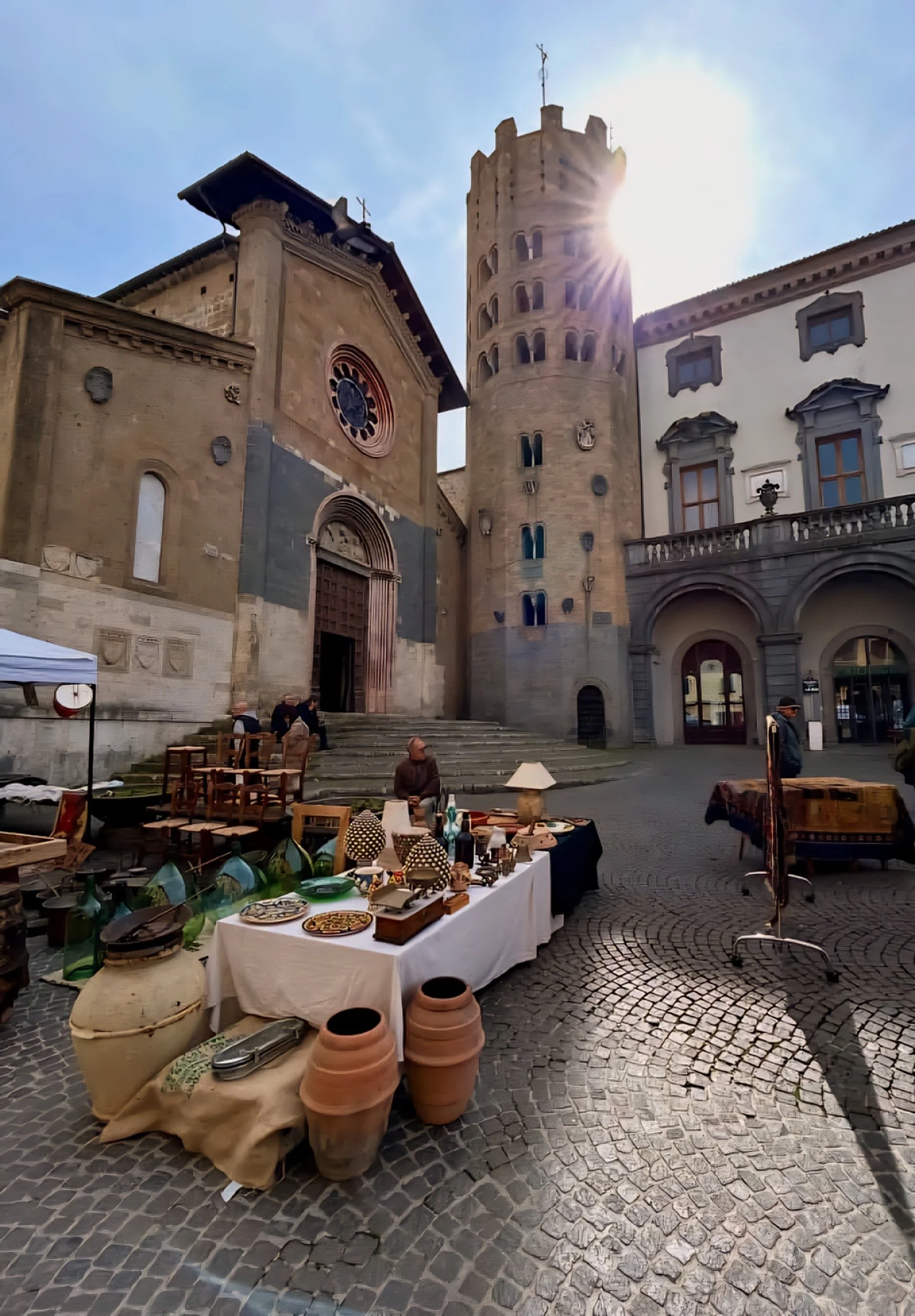
Umbria sits just east of Tuscany, but the way you arrive and move around works slightly differently. Most of the main towns are connected by train lines running through the valleys, with stations like Orvieto, Spoleto, and Perugia Fontivegge sitting below the historic centers rather than inside them.
In Orvieto, you arrive at the station at the base of the cliff and walk straight across to the funicular. The ride up takes a couple of minutes and brings you to Piazza Cahen at the top. From there, it’s a short walk or bus ride into the center along Corso Cavour toward Piazza del Duomo. The transition is direct, and you don’t need to figure anything out once you arrive.
Spoleto works in a similar way, but with a different layout. From Spoleto Stazione, you move through the lower part of town and then take a series of escalators and covered walkways that gradually bring you up toward the historic center. The route connects through different levels of the town, so you’re not dealing with one steep climb, but a sequence of shorter sections that feel more manageable, even with luggage.
Perugia is slightly more spread out. The main station, Perugia Fontivegge, sits below the center, and from there you can take the MiniMetrò, which runs up toward Pincetto at the edge of the historic area. Once you arrive there, it’s a short walk into the main streets around Corso Vannucci and Piazza IV Novembre.
There are small details that make a difference. In Orvieto, the funicular runs frequently during the day, but less so later in the evening. In Spoleto, the escalator system closes at night, which means you’ll need to plan your return if you’re arriving late. These aren’t major obstacles, but they change how flexible your arrival can be.
What makes Umbria work without a car is that these connections are built into the towns themselves. You’re not relying on occasional buses or taxis. Instead, you move from the station to the center through routes that run consistently, which makes arrival feel more predictable and easier to repeat.
Reaching Spoleto without a car (station below town, escalators to Piazza della Libertà)
Spoleto’s station sits below the historic center, but the way you move up into town is more structured than in most hill towns. From Spoleto Stazione, you walk into the lower part of town and quickly reach the first set of escalators, which connect through a series of covered walkways leading upward.
The route takes around 15 to 20 minutes in total, but it’s continuous. You’re not navigating roads or figuring out directions, you follow the escalators and corridors as they move through different levels of the town. At points, the walkways open briefly onto small terraces or quieter streets before continuing upward again, which helps break up the climb.
As you get closer to the top, the route leads you out near Piazza della Libertà, where the layout changes from transitional spaces into the historic center. From there, it’s a short walk toward Corso Mazzini and the main streets that run through town, where cafés, small shops, and restaurants are concentrated.
Once you’re in this part of Spoleto, everything stays within walking distance. Streets branch off in different directions, but distances remain short, and you don’t need to think about transport again until you leave.
Mornings usually begin along the main streets, with cafés opening around 08:30 and a steady flow of people moving through until mid-morning. If you step away from these routes, the town quiets down quickly, especially in the smaller side streets.
Lunch follows a clear window between 12:30 and 14:00, with most places closing again in the afternoon. Evenings build gradually, with people returning to the same central streets rather than spreading out across the town.
One detail that becomes noticeable is timing. The escalator system runs consistently during the day, but not late into the night, so if you arrive in the evening, parts of the route may need to be walked instead. It’s not difficult, but it changes how the arrival feels compared to daytime.
Reaching Orvieto without a car (station below the cliff, funicular to Piazza Cahen)
Orvieto’s station sits at the base of the cliff on the main line between Florence and Rome, which makes the first part of the journey straightforward. As you step out of Orvieto Stazione, the funicular entrance is directly across the road, so you don’t need to look for transport or figure out directions. You cross over, pick up a ticket at the small machine or kiosk, and head straight onto the carriage.
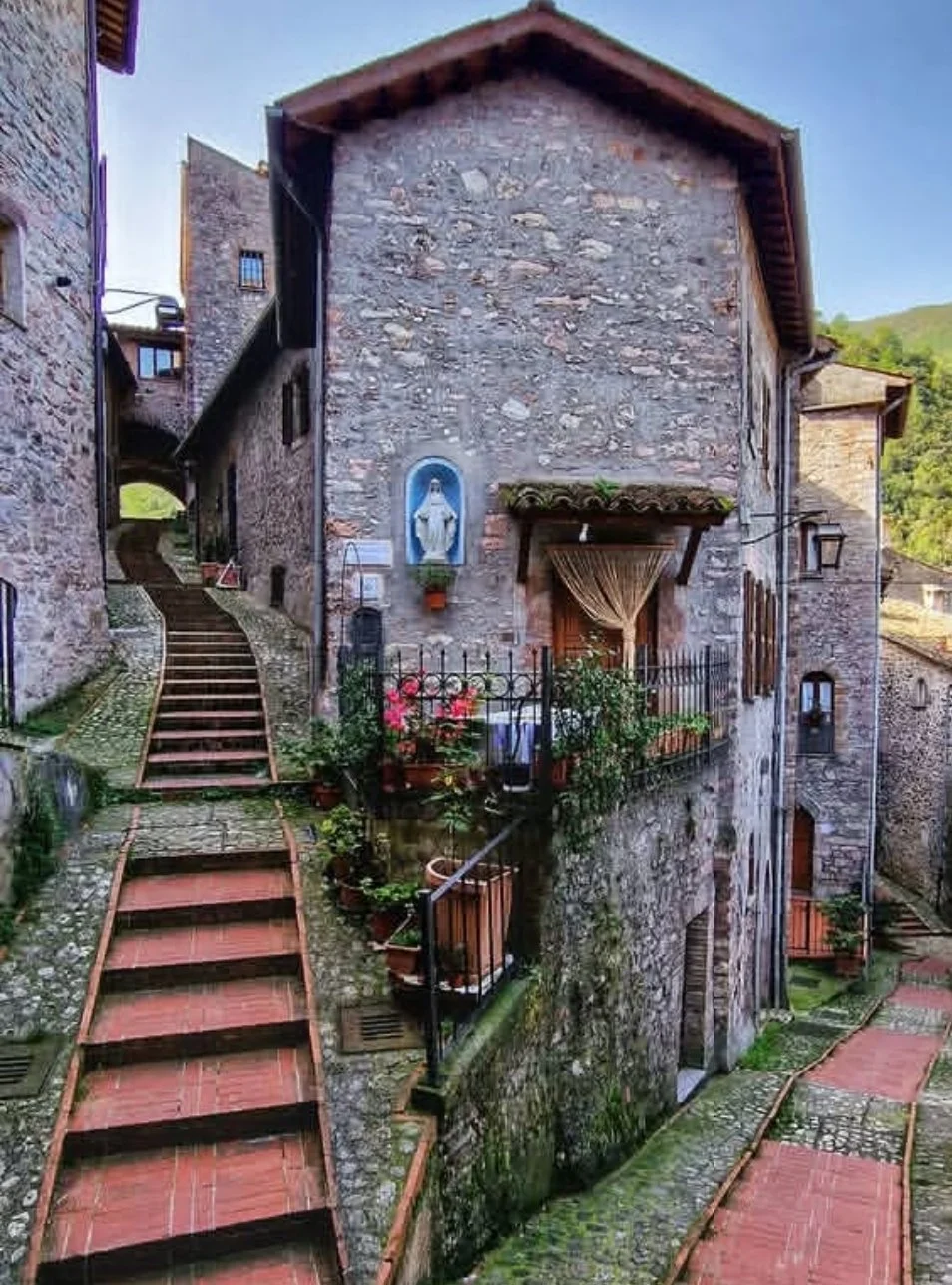
The ride up takes a couple of minutes and brings you to Piazza Cahen at the top. From there, buses wait to continue into the center, but most people walk along Corso Cavour instead. The route is direct, but slightly uphill in parts, and the cobbled streets can feel uneven if you’re arriving with luggage, so it’s usually easier once you’ve settled in.
What makes the arrival different here is how continuous it feels. You move from train to funicular to town without needing to pause or plan anything, and during the day the funicular runs often enough that you don’t need to check times in advance.
Once you’re in the center, everything stays within walking distance. Corso Cavour runs through the town and connects most of the cafés, small shops, and restaurants, leading down toward Piazza del Duomo. In the morning, places like Bar Montanucci or smaller cafés along this route open early, and between around 09:00 and 10:30 there’s a steady flow of people moving through before it quiets down again.
Lunch follows a clear window between 12:30 and 14:00, after which parts of the town slow noticeably, especially away from the main street. Evenings stay contained within the same area, with most activity centered along Corso Cavour and the streets around Piazza del Duomo.
One detail that becomes noticeable is timing later in the day. The funicular runs frequently during daytime hours but slows down in the evening and eventually stops, so if you’re returning late to the station, you’ll need to arrange a taxi down the hill. During the day, though, the connection is simple enough that you don’t need to think about it at all.
Getting around Perugia without a car (MiniMetrò from Fontivegge to Pincetto)
Perugia is more spread out than other towns in Umbria, so the way you move around matters more once you arrive. The main train station, Perugia Fontivegge, sits below the historic center, and from the station exit you walk a few minutes past the bus stops and small shops toward the MiniMetrò entrance at Fontivegge.
The MiniMetrò runs up toward Pincetto, passing through several stops that connect lower and upper parts of the city. The ride takes around 10 minutes, and the car moves steadily without stops for traffic, which makes it feel more reliable than buses that follow the same route.
Once you arrive at Pincetto, you step out near the edge of the historic center. From there, it’s a short walk along Corso Vannucci toward Piazza IV Novembre, where most of the cafés, shops, and restaurants are concentrated. The transition is simple, and you don’t need to check directions once you’re at the top.
What makes the MiniMetrò useful is how regularly it runs during the day. You don’t need to plan your return in advance, and you can move up and down between the station area and the center without relying on fixed bus times.
There are a few small details that become noticeable once you use it. Tickets are bought at machines before entering, and the stations are clearly structured, with platforms that are easy to navigate even if you’ve just arrived. In the evening, the frequency drops slightly, and the system doesn’t run as late as transport in larger cities, so timing matters more if you’re returning later.
Once you’re in the historic center, everything stays within walking distance. Around Corso Vannucci and Piazza IV Novembre, cafés like Sandri open early, and there’s a steady flow of people through the main street in the morning before it quiets down again in the afternoon.
Southern Italy without a car (Cilento coast, Puglia rail lines, timing matters)
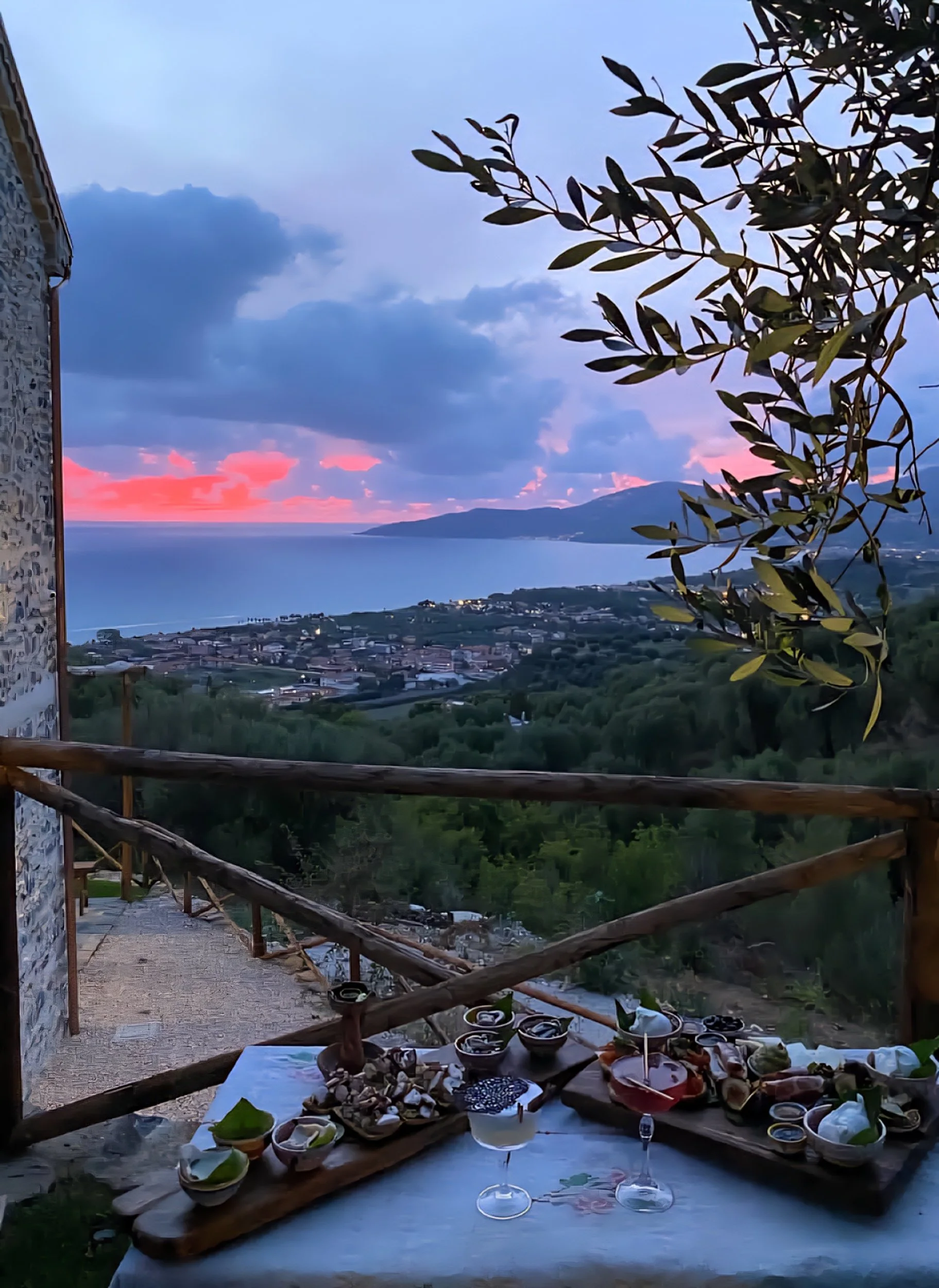
Southern Italy can work without a car, but it relies more on timing than in the north. The main train lines still connect key places, especially along the coast, but once you move beyond those, the gaps between connections become more noticeable, and that’s where the trip either feels simple or slightly restricted.
Along the Cilento coast, the train line between Salerno and Sapri stops at places like Agropoli-Castellabate and Ascea. You step off at Agropoli-Castellabate, for example, and you’re already close to the lower town near the station, but the historic center of Castellabate sits higher up and requires a short taxi ride along winding roads. The distance is small, but you’ll notice quickly that taxis aren’t waiting in the same way they are in northern towns, especially outside peak hours.
In Ascea, it’s easier as the station sits close to the town, and you can walk toward Marina di Ascea in under 15 minutes, passing small streets and local shops along the way. Once you’re there, everything stays within walking distance, but moving beyond that becomes less flexible, since buses inland don’t run continuously.
Puglia works differently again. Main stations like Bari Centrale or Brindisi connect to smaller towns through regional lines such as Ferrovie del Sud Est. In places like Martina Franca or Locorotondo, you arrive close to the center and can walk into town within minutes. The difficulty starts when you stay outside these towns. Many countryside stays, especially masserie, sit along rural roads without direct access, which means arranging a transfer in advance rather than expecting to find transport on arrival.
There are also small details that affect how the day feels. In warmer months, walking even short distances from the station can feel longer in the heat, especially in places without much shade. Transport schedules tend to cluster around morning and early afternoon, and by early evening, options become more limited.
What makes Southern Italy workable without a car is choosing the right structure. Staying close to the train line and treating each place as a base keeps things simple. Trying to move between multiple countryside locations in one day is where it starts to break down.
Cilento coast towns without a car (Agropoli, Ascea, station-to-town access)
The Cilento coast is one of the few areas in southern Italy where you can arrive by train and still stay near the sea without needing a car, but it works differently from northern regions. The line between Salerno and Sapri stops at places like Agropoli-Castellabate and Ascea, and that’s where the setup starts to vary.
In Agropoli, you arrive at Agropoli-Castellabate station in the lower part of town. From there, you can walk toward the seafront along Via Salerno, passing small shops and residential buildings, but the historic center sits uphill above you. Most people take a taxi up toward the old town near the castle, especially if they’re staying close to the historic area, since the walk involves a steady incline and limited shade during warmer months. Taxis tend to appear around train arrival times rather than waiting consistently outside the station, so if you arrive later in the day, it’s worth arranging one in advance.
Ascea is more straightforward. The station sits close to Marina di Ascea, and you can walk toward the coast in around 10 to 15 minutes, following roads like Via Porta Rosa toward the seafront. The route passes low-rise buildings and small local shops, and once you reach the main area near the beach, everything stays within a compact, walkable stretch.
The main difference here is frequency. Trains run along the line, but not as often as in the north, and buses inland are limited to specific times of day. If you miss one connection, the next option might be an hour or more later, which changes how flexible your plans can be.
There are also smaller details that affect how the day feels. In summer, even short walks from the station can feel longer due to heat, especially in places without much shade, and transport options tend to cluster earlier in the day rather than later.
In practice, staying along the Cilento coast without a car works best when you arrive, settle into one place, and plan your movements around the train times that are actually running, rather than expecting to move between towns freely.
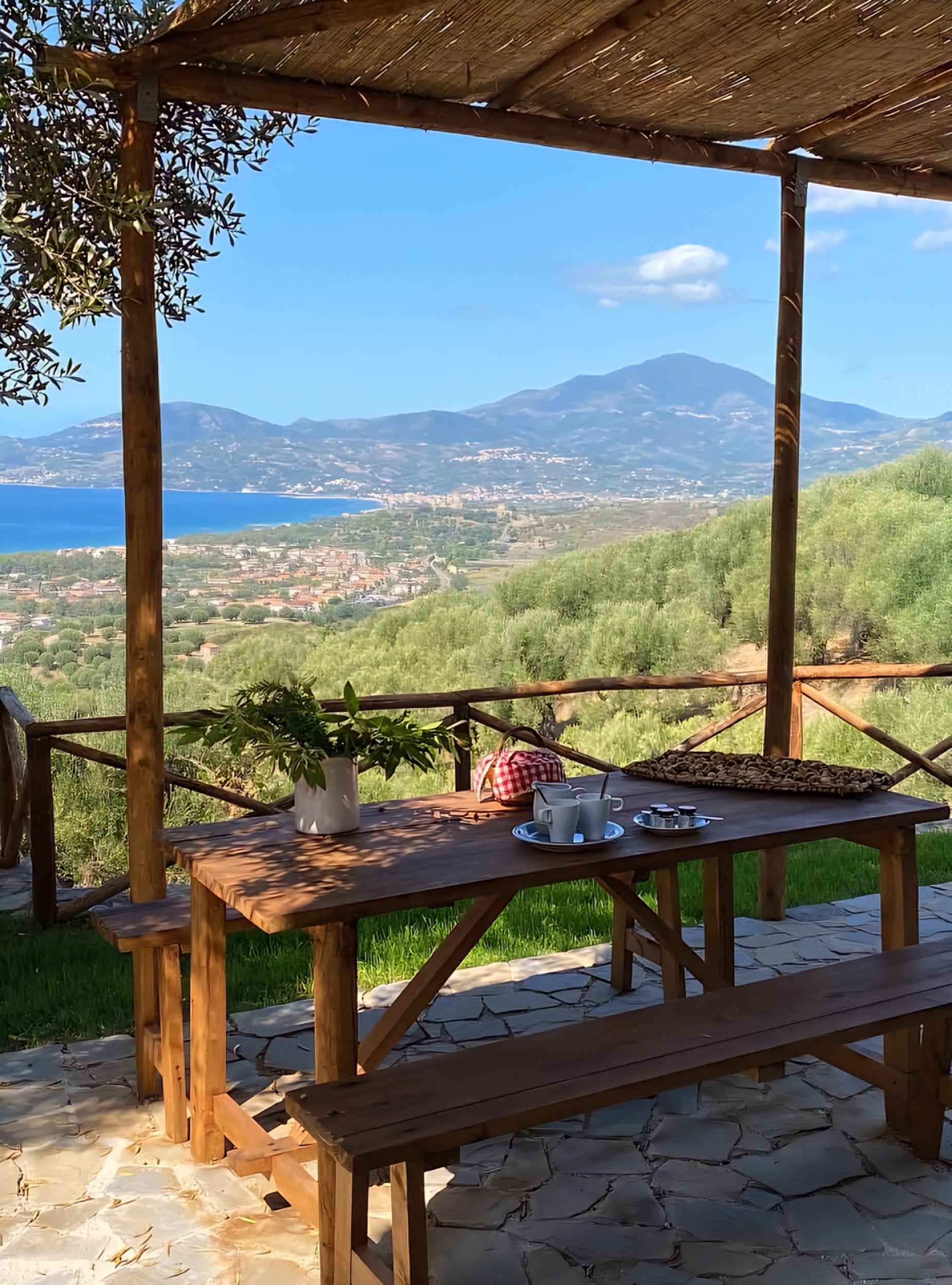
For southern Italy, this insider Cilento coast guide explains what the train line actually gives you access to, and where things start to get less flexible.
Puglia countryside stays without a car (Locorotondo, Martina Franca, regional lines)
In Puglia, the main train line runs along the coast between Bari Centrale, Monopoli, and Brindisi, but the countryside setting most people are looking for sits further inland. That’s where the smaller regional lines come in, especially the Ferrovie del Sud Est routes connecting towns like Martina Franca, Locorotondo, and Cisternino.
In Locorotondo, you arrive at the station just outside the town and walk up toward the center along roads that lead toward Via Nardelli. Within around 10 to 15 minutes, you reach the edge of the old town, where the streets narrow and the layout shifts into small whitewashed lanes. From there, everything stays within a compact area around Piazza Vittorio Emanuele, with cafés and small shops spaced close together.
Martina Franca works in a similar way, but the town is slightly larger. From Martina Franca station, you walk toward the historic center along quieter streets before reaching the main area near Piazza XX Settembre. The route is straightforward, and once you’re there, cafés, bakeries, and restaurants are all within walking distance.
The difference becomes clear when you look at countryside stays outside these towns. Many masserie sit along rural roads between places like Locorotondo and Cisternino, often a few kilometers from the nearest station. On a map, the distance looks manageable, but in practice there’s no pavement, very little shade, and no regular transport connecting them during the day. That’s where you either arrange a transfer in advance or rely on a car.
There are also small details that affect how the day feels. Trains on the Ferrovie del Sud Est lines run, but not frequently, and if you miss one, the next connection might not be for an hour or more. Taxis aren’t always waiting at stations, especially in the afternoon, so it’s worth organising one ahead of time if your accommodation isn’t within walking distance.
Once you’re in town, daily life stays local. Mornings begin around the main squares, with cafés opening gradually, and by around 09:00 to 10:30 there’s a steady flow of people before it quiets down again. Lunch follows a clear window between 12:30 and 14:00, and afternoons slow down, especially away from the central streets.
Where buses actually run reliably (Cilento, inland Puglia, timing gaps)
Bus reliability in southern Italy depends less on distance and more on where you are and what time of day you’re travelling. Along the Cilento coast, for example, buses linking inland villages to towns like Agropoli or Vallo della Lucania tend to run in the morning and early afternoon, often following school and work schedules. You’ll usually find stops near main roads or small squares, sometimes just marked by a sign rather than a station, with people waiting at the same times each day.
The difference becomes clear later in the day. By mid-afternoon, the number of buses drops, and by early evening, some routes stop running entirely. If you’re staying in a village above the coast and miss a bus around 15:00 or 16:00, the next option might be an hour later, or not until the following morning.
In inland Puglia, routes between towns like Martina Franca, Cisternino, and Ostuni exist, but they don’t run continuously. Buses often pass through rather than starting or ending in one place, so timing matters more than the distance between stops. You’ll sometimes see people waiting along roads like Via Martina Franca just outside town centers, rather than at formal stations.
There are also small details that affect how the day works. Tickets are usually bought in advance from a tabacchi or a small shop near the main square, and these places often close in the afternoon. If you arrive at a stop without a ticket, you may not be able to board, even if the bus is running.
Waiting times are also part of the “routine”… Buses don’t always arrive exactly on schedule, and it’s common to see people standing at the same stop for a while before one appears. That doesn’t mean the route isn’t working, just that it isn’t exacly on time.
What tends to work is matching your day to these how things work here in Italy. Early departures are the most reliable, and planning to return before late afternoon avoids most of the gaps. If you’re arriving later in the day, arranging a taxi for the final stretch is often simpler than relying on a connection that may not run.
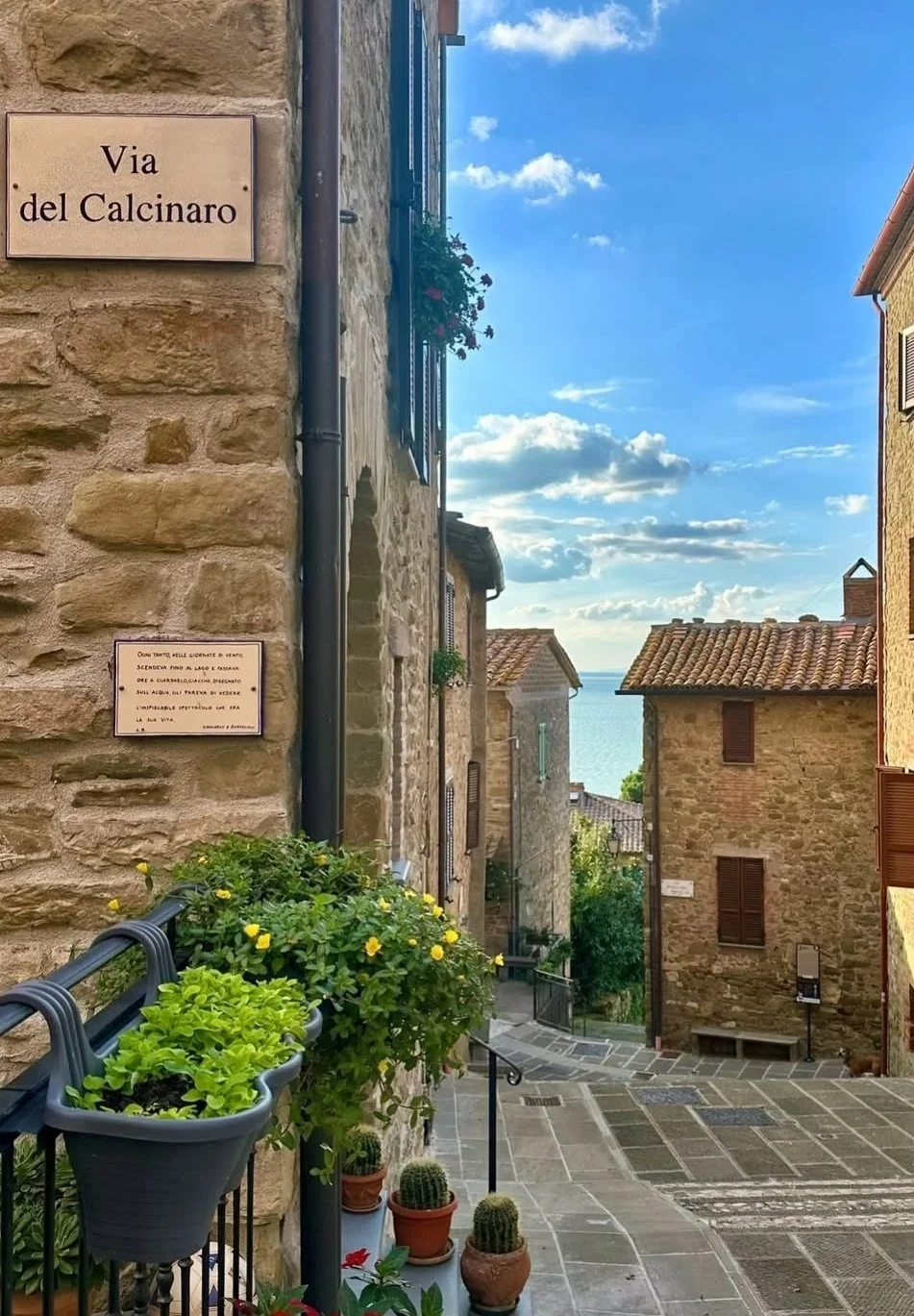
What to check before booking (where most no-car trips fall apart)
Distance from the station in minutes, not kilometers (Lucca vs Cortona reality)
Distance looks simple when you’re booking, but in Italy it rarely tells you what the arrival will actually feel like. A listing might say “2 km from the station,” which sounds manageable, but that number doesn’t show how the route actually works once you’re there.
In Lucca, 2 km might mean walking from Lucca Stazione across Piazzale Ricasoli, through Porta San Pietro, and along streets like Via Fillungo, all on flat ground with pavements the entire way. You can arrive with a suitcase and not think about it.
In Cortona, the same distance from Camucia-Cortona station means heading uphill toward the town walls, following a road that climbs steadily with very little shade. Even if the route looks short on a map, it’s not something you’d realistically walk with luggage, especially in warmer months.
The difference comes down to the final stretch. Some places are built around the station, while others sit above it. In towns like Orvieto, that connection is solved with the funicular, so you don’t need to think about the climb. In places without that setup, the last part of the journey becomes the deciding factor.
It’s worth looking at the exact route rather than relying on the distance shown in the listing. Check how you actually move from the station to the accommodation. Whether you’re walking along a main street with pavement, or along narrower roads that weren’t designed for pedestrians.
There are also small details that only show up once you arrive. Cobbled streets near historic centers can make rolling luggage difficult, and short sections of steps or uneven surfaces can slow you down more than expected, even if the distance is technically short.
In practice, thinking in minutes rather than kilometers gives a more accurate picture. A 10-minute flat walk through Lucca feels very different from a 10-minute uphill approach into a hill town, even though the distance may be the same on paper.
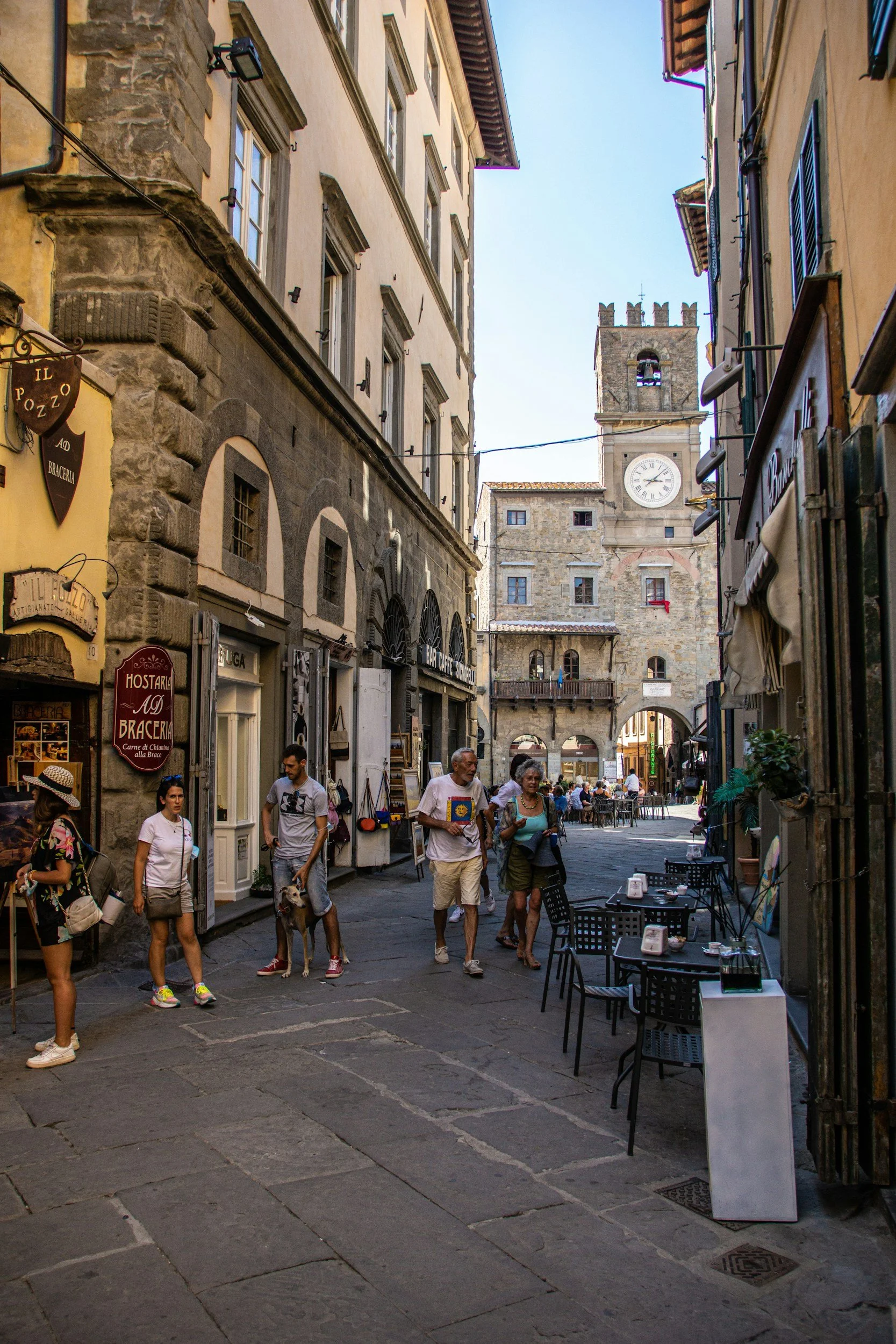
If you want to see where this actually works beyond cities, Italian lake towns you can reach without a car gives you a few places where arriving and settling in is surprisingly straightforward.
Last buses, taxis, and luggage (what actually affects your arrival)
In smaller towns, the last part of the day is where things start to shift. Bus schedules often work earlier on, especially in the morning and early afternoon, but by late afternoon the number of departures drops quickly. In places like the Cilento coast or inland Puglia, the last bus can leave before 19:00, and once it’s gone, there usually isn’t another option until the next day.
That’s where the day either stays simple or becomes more complicated. If you’re in a town like Locorotondo or staying above Agropoli and miss a late afternoon connection, the next step is usually a taxi, but those aren’t always waiting. You’ll often see people gathering near small stops along main roads or just outside the station, checking the time and waiting to see if something arrives, especially in the early evening.
Taxi availability depends heavily on timing. Around train arrivals or near central areas like Piazza Vittorio Emanuele in Locorotondo, you might find one without planning. Outside those windows, especially later in the day, it usually means calling ahead or asking your accommodation to arrange it. It’s not difficult, but it’s not something that happens instantly.
Luggage is the other detail that becomes noticeable as soon as you arrive. In historic centers, even short distances can feel longer because of the surface and layout. In Cortona, the walk from Porta Colonia into the center involves a steady incline on cobbled streets. In Orvieto, moving along Corso Cavour is straightforward once you’re settled, but with a suitcase, the uneven surface and slight slope slow you down more than expected.
There are also smaller details that don’t show up when you’re booking. A short stretch of steps at the end of a street, a narrow road without pavement, or a final turn uphill toward your accommodation. None of these are difficult on their own, but they change how the arrival feels, especially after a train journey.
In practice, these are the things that shape the first hour of your stay. Not the distance on the map, but whether the last bus has already left, whether a taxi is nearby, and how the final stretch into town actually works once you’re carrying your bags.
Or if you’re thinking about something completely different, check out our Dolomites travel guide that shows how this changes once you’re in the mountains, where distances look short but don’t feel it.
When to arrive so the trip actually feels easy (midday vs evening, transport timing)
Arrival time makes more of a difference than it seems, especially in smaller towns where transport runs around fixed patterns rather than continuously. Getting in around midday usually means everything is still working. Buses are running, taxis are easier to find, and places near the station are open if you need to pause before check-in.
You see the difference clearly in places like Camucia-Cortona. If you arrive around 13:00, you step off the train, walk out to the bus stop just outside the station, and there’s usually a connection heading up toward Porta Colonia within a reasonable time. There are people waiting, taxis passing through, and small shops open if you need a moment before heading up.
Arrive closer to 20:00, and the same setup feels completely different. The station area is quieter, buses run less often or not at all, and instead of choosing between options, you’re waiting to see what’s still available. The route hasn’t changed, but the timing has, and that’s what affects how easy the arrival feels.
Weekends shift things again. In smaller regions, bus schedules are often reduced on Sundays, and some routes don’t run at all. Trains usually still run, but less frequently, which means connections don’t always line up in the same way. In places like inland Puglia, where you might rely on one or two buses a day, that difference becomes noticeable quickly.
Seasonal timing also plays a role. Along the Cilento coast, for example, summer brings more frequent connections between stations and coastal towns, while outside peak season, those same routes can drop to a handful of departures per day. A connection that feels simple in July can require more planning in October.
There are also small details that shape the first hour after you arrive. Cafés near stations might already be closed in the evening, leaving fewer places to stop while you figure out the next step. In quieter towns, the period between afternoon closures and dinner service can feel almost still, with very little movement in the streets.
In practice, arriving earlier in the day gives you margin. It allows for small delays, missed connections, or a change of plan without turning the arrival into something you need to solve on the spot.
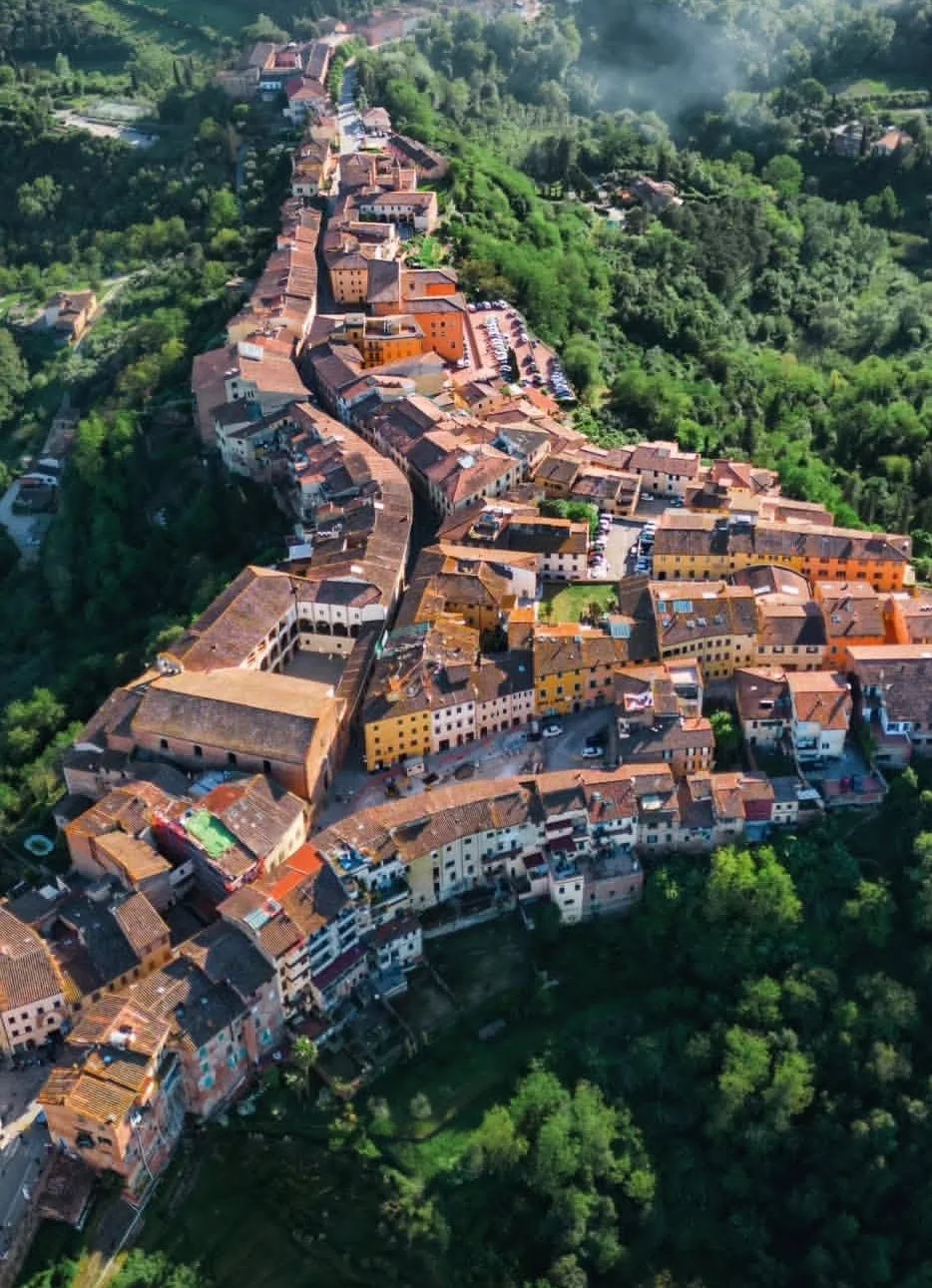
What your days actually look like without a car (walking, timing, staying local)
Mornings tend to start the same way in most of these towns, with a short walk out to the nearest café rather than going anywhere specific. In Lucca, that might mean stepping out onto Via Fillungo and stopping at a place like Caffè Santa Zita, where people stand at the bar for a quick coffee before moving on. In Asti, it’s along Corso Alfieri, where cafés open early and locals pass through on their way to work. In smaller towns like Bra or Locorotondo, the choice is more limited, but you’ll notice the same places filling up at the same time each morning.
By around 09:00 to 10:30, there’s usually a short window where the town feels active. Shops open, people move through the main streets, and then it settles again, especially once you step away from central areas.
Lunch shapes the middle of the day more than anything else. Most places follow a clear window between 12:30 and 14:30. In Levanto, restaurants near Piazza Cavour fill steadily, while in Orvieto, the stretch along Corso Cavour becomes the main focus. If you miss that window, options drop quickly, and outside peak season, you may find only a few places open until dinner.
Afternoons are noticeably quieter. Streets just off the main routes, like the smaller lanes behind Via Fillungo in Lucca or the side streets off Corso Vannucci in Perugia, can feel almost empty for a few hours. Shops close, and there’s very little movement until things pick up again later in the day.
Short trips without a car tend to follow a simple pattern. You choose one place that’s directly connected by train or bus, leave in the morning, and return in the afternoon rather than trying to move between multiple stops. From Levanto, that might be a short train to Bonassola or Framura. From Asti, a quick trip toward Alba. The movement stays contained, and once you’re back, the rest of the day returns to the same small area around where you’re staying.
There are also small details that shape the rhythm. Coffee is often taken quickly at the bar rather than sitting down, shops close without much notice in the afternoon, and evenings build gradually rather than starting all at once.
Who this actually works for (and when it starts to feel limiting)
Not having a car works well when you don’t feel the need to go anywhere in particular. In places like Lucca or Levanto, you step out, walk a few minutes, grab a coffee somewhere along Via Fillungo or near Piazza Cavour, and the day just stays within that area. You’re not thinking about how to get somewhere else, you’re just moving between the same streets without planning it.
It starts to feel different when getting anywhere involves an extra step. In Cortona, for example, you’re already thinking about how to get up from Camucia before the day has even started. If you’re staying outside Alba, it’s the same thing in a different way, you’re checking when a taxi can pick you up or how to get back later in the evening. Nothing is far, but it doesn’t feel as easy.
In Levanto, you can decide on the spot to walk toward Bonassola or take a short train without checking anything first. In parts of Puglia or along the Cilento coast, that same decision usually needs to happen earlier, because the next connection might not be for a while…
Thinking about going further south? These quieter parts of Sicily shows what this kind of travel looks like when you have to plan a bit more around it.
If you’re still figuring out where this kind of travel actually works, Italy for quieter, slower travel gives you a much clearer sense of which places feel easy and which ones don’t.
And you’re not fully set on Italy, underrated European weekend trips is a good way to compare places where you don’t need to overplan every step.
FAQ: Countryside stays in Italy without a car
Where in Italy can you travel without a car?
Northern and central Italy tend to work best. Regions like Piedmont, Liguria, Tuscany, and Umbria have train lines that connect towns in a way that makes it possible to arrive and stay without needing to drive.
Southern regions like Puglia or the Cilento coast can still work, but you need to pay more attention to timing, especially with buses and taxis.
Can you stay in the Italian countryside without renting a car?
Yes, but it depends on where you stay. In places like Lucca or Levanto, you can arrive by train and walk straight into town. In hill towns like Cortona or Orvieto, there’s usually an extra step, like a bus, funicular, or taxi, but it’s still manageable.
The part that matters most is how the station connects to where you’re staying.
Is Tuscany easy to travel without a car?
Some parts are, some aren’t. Towns like Lucca or Empoli are straightforward because the station is close to the center. Hill towns like Cortona or Montepulciano are still possible, but you’ll need to get from the station in the valley up to the town.
That’s where most of the planning comes in.
How do you get to hill towns in Italy without a car?
Most hill towns have a built-in way of getting from the station to the center. In Orvieto, there’s a funicular. In Spoleto, escalators connect different levels of the town. In Cortona, you take a bus or taxi from Camucia up to the town walls.
It’s usually one extra step, not a full journey.
How far can you realistically walk from a train station in Italy?
It depends on the terrain. In flat towns like Lucca, a 10–15 minute walk from the station is easy, even with luggage. In hill towns, the same distance can involve steep roads or uneven surfaces, which makes it less practical.
Looking at the route matters more than the distance itself.
What happens if you arrive late in a small Italian town without a car?
Late arrivals reduce your options. Buses may have stopped running, and taxis aren’t always waiting at the station. You may need to call ahead or arrange a transfer in advance.
Arriving earlier in the day gives you more flexibility if something doesn’t line up.
Are buses in Italy reliable in rural areas?
They can be, but they usually follow limited schedules. In many areas, buses run more frequently in the morning and early afternoon, then drop off later in the day.
They’re reliable if you plan around them, but not something you can always rely on spontaneously.
Do you need to book taxis in advance in small Italian towns?
Often, yes. In larger towns, you can usually find a taxi near the station or main square. In smaller towns or countryside areas, taxis are more limited and may need to be arranged ahead of time, especially in the evening.
Can you stay in a masseria in Puglia without a car?
In most cases, no. Many masserie are located along rural roads outside towns, with no direct transport connections. If you want to stay in one without a car, you’ll usually need to arrange transfers to and from the nearest station.
Staying in towns like Locorotondo or Martina Franca makes things easier.
What should you check before booking a countryside stay in Italy?
Check how you get from the station to the accommodation. Distance alone isn’t enough. Look at whether the route is walkable, whether it’s uphill, and whether you’ll need a bus or taxi.
The last part of the journey is what usually determines how easy the trip feels.
When is the best time of day to arrive without a car?
Midday or early afternoon is usually the easiest. Transport is still running, places are open, and you have time to adjust if something doesn’t line up.
Evening arrivals are possible, but require more planning.
Can you visit multiple towns without a car?
Yes, but it works best if you base yourself in one place and take short trips. Trying to move between several countryside locations in one day is where it becomes more complicated.
Keeping movement simple makes the whole trip feel easier.