The best wine regions in northern and central France to explore by train
I've abandoned more French wine trip ideas at the planning stage than I'd like to admit.
You find somewhere that looks beautiful, save a few wineries, look up the train station and then realise the rest of the trip somehow depends on hiring a car. The hotel is outside the village, the winery you wanted to visit is another twenty minutes away, and the taxi company has one phone number that may or may not answer on a Sunday afternoon. By the time you've opened another five tabs, you're no longer deciding between Burgundy and Champagne. You're deciding whether the trip feels like too much effort.
After a while, I realised the question isn't really which wine region is the best. It's which ones are genuinely easy to enjoy without driving.
Some places make that remarkably straightforward. You arrive by train, drop your bag at a small hotel a few minutes from the station and spend the next couple of days walking between cafés, wine bars, markets and tastings without thinking much about transport at all. Others have an excellent reputation for wine but ask a lot more of you once you've arrived.
That's the difference this guide is interested in.
I've deliberately left out regions that only work well if you're happy renting a car and focused instead on northern and central France, where a train can get you surprisingly close to the vineyards. If you're trying to decide where to book your first wine weekend, or simply want somewhere that feels enjoyable from the moment you step off the platform, these are the regions I'd start with.
Choose the days you want, not just the wine
I don't think the wine is usually the difficult part of planning a trip like this. France has more excellent wine regions than most of us could ever visit, and if you spent a week in any of them you'd almost certainly come home having discovered bottles you'd never heard of before. The harder decision is everything that happens between the tastings, because that's how most of your day will actually be spent.
It's worth imagining an ordinary morning rather than the winery visits themselves. You've finished breakfast, you've got no plans until lunch and there's nowhere you absolutely have to be for another few hours. What naturally sounds appealing?
For me, that's usually a walk before anything else. In Southern Burgundy it's easy to leave Tournus in the morning and find yourself following quiet roads through vineyards towards villages like Lugny, Viré or Chardonnay, passing old stone walls, tiny churches and rows of vines that seem to stretch across every hillside. You might stop at a small domaine on the way back, pick up a bottle for later, then return to town in time to wander around the market or sit on Place de l'Hôtel de Ville with a glass of Mâcon-Villages before thinking about where to have lunch.
Not everyone travels like that, though. You might be far happier spending the morning wandering through a covered market or a neighbourhood fromagerie, choosing a piece of Époisses, buying a still-warm baguette from the bakery next door and carrying everything down to the river for an impromptu picnic. Or perhaps your perfect day starts with a guided cellar tour beneath one of the historic Champagne houses in Reims, before drifting between wine bars around Place Drouet d'Erlon, knowing you can simply stroll back to your hotel afterwards without needing to think about driving anywhere.
Those are very different weekends, even though they're both centred around wine. That's why I always think it's worth choosing the place that suits how you naturally like to travel, rather than starting with a famous appellation and trying to build everything else around it.
That's why I wouldn't choose a wine region based on the bottles alone.
Some regions naturally revolve around a town where cafés, markets, wine bars and restaurants are only a few minutes apart. Others are little more than vineyards, tiny villages and country roads, where having a car opens up places that are awkward to reach any other way. The difference isn't the quality of the wine. It's what your day looks like when you aren't sitting in a tasting room.
Where you stay matters just as much. A room overlooking the vines sounds wonderful when you're booking it, but it can feel rather different at seven in the evening if the nearest restaurant is five kilometres away and you've already opened the bottle you bought that afternoon. Stay somewhere like Tournus, Beaune or Épernay instead and the day has far fewer practical decisions. You leave a tasting, wander back through the centre, stop outside a wine merchant because something in the window catches your eye, order another coffee simply because you feel like sitting for a while, then decide where to have dinner without checking the time or wondering how you're getting back afterwards.
I don't think many people actually want to spend an entire day tasting wine. It sounds appealing when you're planning the trip, but after two or three visits most of us are ready for something else. That's when the place itself starts to matter. In Alsace, you could catch the train to Obernai, wander up into the vineyards above the town and spend the afternoon walking before heading back to Colmar later on. In the Loire Valley, you might browse the market in Tours, cycle beside the river for a while and visit a single winery before dinner. Southern Burgundy sits somewhere between those two. You never have to go far to find another cellar door, but it's just as easy to spend an afternoon walking beside the Saône, sitting on a terrace in Tournus or taking a slow detour through villages like Lugny or Viré without feeling as though you've skipped the main attraction.
Once you've got a picture in your head of how you'd genuinely like to spend those days, choosing between the regions becomes much simpler. You're no longer asking which one is supposed to be the best. You're choosing the one where you'd be happiest waking up each morning.
What actually makes a wine region easy to explore without a car?
I've learnt not to judge a wine region by looking at the railway map. It's easy to assume that if a train stops there, the hard part is over, but that's often the point where the real planning begins. What makes a destination enjoyable without a car has much less to do with reaching the region itself and much more to do with what your weekend looks like once you've stepped off the platform.
The first thing I always look at isn't the wineries. It's where I'll be staying in relation to the station. If I can walk from the train to my hotel in ten or fifteen minutes, leave my suitcase behind and head straight back out into town, I already know the trip is off to a good start. That's exactly what happens in places like Tournus, Beaune and Épernay, where the stations sit close enough to the historic centre that you never feel like you've arrived on the edge of town. Within a short walk you'll usually find cafés for breakfast, wine bars for the evening, independent bottle shops, bakeries and restaurants, so even your arrival day feels like part of the holiday instead of another transport day. Compare that with a rural station where the only hotel is four kilometres away and dinner means arranging a taxi before you've even checked in, and the experience feels completely different.
The wineries themselves make just as much difference. Some regions have producers scattered across dozens of small villages, while others put a surprising number of tasting rooms within walking distance of one another. In Chablis, for example, you can spend the morning visiting producers around the centre before wandering out towards the vineyards on foot. In Épernay, Avenue de Champagne lines up famous houses such as Moët & Chandon, Perrier-Jouët, Boizel and several smaller producers along the same elegant avenue, making it perfectly possible to fill an afternoon without using any transport at all. It's easy to underestimate how valuable that is until you've experienced the opposite, where every tasting involves another taxi or a long walk along country roads simply to reach the next appointment.
That's also why I don't think famous automatically means enjoyable without a car.
Take Bordeaux. Few wine regions have a bigger reputation, and there's no question the wine is outstanding, but the places most visitors want to see are spread across the Médoc, Saint-Émilion, Pessac-Léognan and several other appellations. Without a car, getting between them often means piecing together trains, buses and taxis, sometimes just to visit one producer. It's perfectly possible to do, but you'll spend much more time planning each day than you would somewhere like Southern Burgundy, Chablis or Champagne, where the towns themselves are places you'd happily spend an afternoon even if you didn't visit another winery.
The train network makes a huge difference as well, although it's something many people don't think about until they're actually there. In parts of France, the TER trains run often enough that you hardly pay attention to the timetable. You can have breakfast in Tournus, decide over coffee that you'd quite like to spend the morning in Mâcon, continue to Chalon-sur-Saône for lunch if the weather is nice or simply head back earlier because you've found somewhere you'd rather stay a little longer. None of those decisions feel particularly significant because another train will be along before too long.
The opposite is true in places where services only run a handful of times a day. Miss one departure and the rest of the afternoon suddenly revolves around the next one. You start looking at your watch while you're halfway through lunch, leaving cafés earlier than you'd like and thinking about train times instead of the place you're actually visiting. That's one of the biggest differences I've noticed between French wine regions that work naturally without a car and those that require much more planning before you even leave your hotel.
Local buses are useful in some regions, but I wouldn't plan an entire trip around them. Many of them exist for the people who live there rather than for visitors moving between wineries, so the timetable doesn't always match the kind of day you're hoping to have. A route might run before school, again around lunchtime and once more in the late afternoon, with very little in between. Sundays can be even more limited, and it's not unusual to find a bus that gets you somewhere easily enough but leaves you waiting several hours for the journey back. It's the sort of detail that's easy to overlook until you've already booked your hotel.
A bicycle changes the picture completely in the right region. The Voie des Vignes through Burgundy is probably the best example, linking Beaune, Meursault, Puligny-Montrachet and Santenay along quiet vineyard roads that feel made for spending a day outside. Around Chablis, quiet lanes weave between the vineyards, while the Loire Valley combines dedicated cycle routes with riverside paths, wine villages and plenty of places to stop for lunch.
Hiring a bike is usually much easier than people expect. Most larger wine towns have at least one local cycle hire shop close to the railway station or town centre, and many hotels can recommend somewhere nearby if you haven't booked in advance. In Beaune, for example, you'll find several rental companies within a short walk of the station, while Tours, Colmar and Reims all have bike hire available close to the centre as well. If you're travelling during summer or over a busy weekend, I'd reserve online a few days beforehand, especially if you're looking for an e-bike. Otherwise, it's often as simple as arriving in the morning, showing your ID, choosing a bike and setting off.
That doesn't mean every French wine region suddenly becomes easy without a car. Some villages are much further apart than they appear on a map, the climbs can be surprisingly demanding once you leave the valley floors, and not every road is enjoyable to cycle along. A bike can completely change what's possible in places like Burgundy or the Loire Valley, but in other regions it simply gives you a little more flexibility rather than replacing the need for a car.
How wineries receive visitors varies much more than people often expect. The larger Champagne houses usually publish tour times online weeks or even months in advance, so fitting a visit into a train journey is fairly straightforward. Smaller domaines in Burgundy, Chablis and the Loire Valley are often much less structured. Many are family-run businesses where the same people looking after visitors are also working in the vineyard or the cellar, so tastings are frequently arranged by email or telephone rather than through an online booking system. Lunch closures are still common, some producers only receive visitors on certain days of the week, and during harvest it's not unusual for appointments to be more limited than usual. A quick email before you travel often makes all the difference and usually leads to a much more personal visit than simply turning up at the door.
There's another practical question that doesn't always come up until the journey home: what to do with the wine you've bought. A couple of bottles fit easily into a backpack or small suitcase, but after a few tastings it's surprisingly easy to leave with six or eight. If I'm travelling by train, I normally buy a bottle or two from places I'd genuinely like to remember, then leave any larger purchases until the final day. Quite a few wineries, particularly if you're buying a mixed case, are happy to arrange shipping instead. It's always worth asking, because collecting wine throughout the weekend is much more enjoyable when you don't have to carry it through every station, onto every train and back to your hotel each evening.
The question I keep asking myself when I'm looking at a wine region is whether I'd still enjoy the weekend if I never got into a taxi. It sounds almost too simple, but it usually tells me everything I need to know. If I can walk to dinner, wander around the market the next morning, visit a winery after lunch and still get back to my hotel without checking three different timetables, it's probably somewhere I'd choose over somewhere that's technically more famous but much harder to get around.
That's why I keep coming back to places like Southern Burgundy, Champagne, Chablis and parts of Alsace. Of course the wine is good, but that's only part of it. You can spend an hour in a bookshop, stop at a café because it looks nice, buy a bottle from a local wine merchant instead of directly from a winery or change your plans halfway through the day without everything falling apart. I think those little moments are what make a place enjoyable to return to.
If someone asked me where I'd send them for their first wine weekend in France without a car, I'd probably still say Southern Burgundy. You get off the train in Tournus or Mâcon, drop your bag at the hotel and you're already where you want to be. From there it's just a case of deciding what feels good that day. Maybe that's a market, maybe it's lunch that turns into a long afternoon, maybe it's a tasting you've booked weeks ago, or maybe it's one you only found because you happened to walk past the door.
One thing that makes these trips so easy is France's regional rail network. This TER guide explains how it all fits together before you start piecing your itinerary together.
Southern Burgundy
This is a great pleace to start as you aren't constantly working out how to reach the next village or wondering whether you've left enough time to catch the last bus back. You can visit a producer in the morning, spend an hour wandering around a market, find somewhere for a long lunch and still decide on the spur of the moment to catch a train somewhere else for the afternoon.
For me, Tournus makes the most practical base. It's right on the TER line between Dijon and Lyon, so arriving is refreshingly uncomplicated. The station is only a few minutes from the centre, which means you can step off the train, walk to your hotel, leave your bag behind and be sitting outside with a coffee on Place de l'Hôtel de Ville before the journey has really had time to catch up with you. It's a small thing, but after changing trains or travelling for a few hours, not having to think about taxis, buses or another transfer is something you notice almost immediately.
Tournus also has the advantage of feeling like a proper town rather than somewhere that only exists because of the surrounding vineyards. Walk towards Place de l'Hôtel de Ville and you'll pass independent wine merchants, bakeries and small food shops before reaching Abbaye Saint-Philibert, one of the oldest Romanesque churches in France. On Saturday mornings, the market spreads through the streets around Rue de la République, filling the centre with producers selling Charolais beef, Mâconnais goat's cheese, seasonal fruit, honey, saucisson, flowers and bottles from local wineries. If you're staying over the weekend, I'd make time for it even if you don't intend to buy anything. It's the easiest way to get a feel for the region beyond the vineyards themselves.
I almost always end up leaving with lunch. Fromagerie Chevenet is a good stop if you're putting together a picnic, Maison Chazot is one of those bakeries where it's difficult to leave with only a baguette, and if the weather is kind, the banks of the Saône make a much better lunch spot than another restaurant terrace. Those are the sort of hours I remember afterwards just as much as the winery visits.
People often ask whether Cluny is a better base, and I don't think there's a right answer because the two towns suit different trips.
If medieval towns are just as much your thing as wine, I'd definitely make time for Cluny. The abbey is the reason most people come, and even though only part of it survives today, it's still hard to grasp just how enormous it once was until you're actually walking around it. The whole town grew around the abbey, so you keep coming across bits of old stone walls, towers and historic buildings without really trying.
The centre is small enough that you don't need a plan. Around Place du Marché, you'll find cafés spilling onto the square, a couple of wine shops, bakeries and small independent shops, and on Saturday mornings the market fills much of the centre with local cheeses, fruit, vegetables and producers from around the area. I usually end up wandering down streets like Rue Lamartine without really knowing where I'm going, then stopping for a coffee because somewhere looks nice. If you've got a bit more time, it's worth walking over to the Haras National, which is only a few minutes away and gives you another reason to stay longer than just seeing the abbey.
Cluny is also one of the easiest places in Southern Burgundy to explore by bike. The Voie Verte runs straight through town, following an old railway line that's now a cycle path, so you don't have to worry about busy traffic. There are bike rental shops in the centre during the season, and most places will rent both regular bikes and e-bikes for the day. A lot of people cycle as far as Cormatin, stop to visit the château or have lunch there, then take their time riding back through the countryside.
The only thing that makes me hesitate before recommending Cluny as a base is getting there. The railway closed years ago, so you'll normally take a TER to Mâcon Ville, then walk outside the station and hop on the regional bus for the last part of the journey. It's an easy connection, and the bus drops you close to the centre, but it doesn't give you quite the same flexibility as staying in Tournus. There, if you finish breakfast and suddenly fancy a morning in Mâcon instead, you just wander back to the station and catch the next train. Those little last-minute decisions are much easier when you're already staying somewhere on the railway.
One of the reasons I enjoy staying in Tournus is that I never feel tied to one place. If the weather changes or I wake up and fancy doing something different, it's rarely more complicated than walking back to the station and seeing what's leaving next. The TER line follows the Saône Valley, linking Tournus, Mâcon and Chalon-sur-Saône throughout the day, so changing your plans at the last minute doesn't usually create much of a headache.
Mâcon is less than twenty minutes away and makes an easy morning or afternoon trip. On Saturday, the market spreads around Place Saint-Pierre and into the surrounding streets, with stalls selling everything from local cheeses and seasonal fruit to rotisserie chickens and fresh flowers. Afterwards, it's easy to lose an hour wandering towards the river, browsing the independent food shops or finding a table on Esplanade Lamartine, where people sit outside overlooking the Saône long after lunch has finished.
Head north instead and Chalon-sur-Saône feels different again. It's a bigger town with narrow streets around Place Saint-Vincent, plenty of little wine bars tucked into the old centre and a lively restaurant scene in the evening. If you're staying in Tournus, it's an easy place to spend the afternoon before catching a later train back after dinner.
Where I think people make life much harder for themselves is in the vineyards. On a map, places like Fuissé, Solutré-Pouilly, Lugny, Viré, Chardonnay and Cluny all look close together, so it's tempting to treat them as one day's sightseeing. In reality, travelling without a car changes that completely. I'd rather spend a whole day around Fuissé and Solutré, stop for lunch, visit one producer properly and still have time to sit outside with a glass of wine afterwards than spend the day watching the clock because I'm trying to squeeze in another village before the last bus.
If I only had a few hours to get out into the vineyards, I'd head towards Lugny, Viré and Chardonnay. They're all close enough together that you don't spend half the day travelling, but each feels a little different. Lugny has several domaines scattered around the village and a small square where it's easy to stop for coffee before wandering on. Viré is best known for Viré-Clessé, and it's the sort of place where a tasting can easily turn into a conversation because many of the producers are still family-run. Then there's Chardonnay, a tiny village that people from all over the world recognise by name without always realising it actually exists. There's not a long list of attractions waiting for you there, and that's really why it's worth the detour. You come to walk through the vineyards, visit a producer if one is open and spend a little time in the village where the Chardonnay grape first took its name.
Cycling works particularly well in this part of Burgundy because you don't have to share the roads with much traffic. The Voie Verte follows old railway lines through the countryside, and quiet roads branch off towards villages like Cruzille, Lugny and Chardonnay, so it's easy to put together a route without constantly dealing with busy main roads. If you're arriving by train, I'd simply hire a bike in Tournus or Mâcon. Both towns have rental shops, including e-bikes if you'd rather avoid some of the hills, and most will also provide helmets, locks and route maps. I'd book ahead if you're travelling on a summer weekend, but outside the busiest months it's often enough just to turn up in the morning.
I wouldn't try to cover huge distances. Some of my favourite afternoons have been the ones where I stopped because a cellar door happened to be open, because someone had set up a few tasting tables outside, or because the view across the Mâconnais vineyards made me forget where I was originally planning to go. Those are the moments that are much harder to find when every stop has already been planned.
Before you start emailing wineries, it's worth knowing that tastings in Southern Burgundy usually work a little differently from somewhere like Champagne. Around Reims and Épernay, many of the big houses have several tours running every day that you can book online weeks or even months ahead. Here, a lot of the domaines are still family businesses, and it's often the person making the wine who opens the cellar for visitors. A short email a few days before you arrive is normally enough, and the tasting is just as likely to take place around a barrel or in a working cellar as it is in a fancy visitor centre. If you're travelling over a weekend, I'd try to fit most of your tastings into Saturday, as quite a few smaller producers either close on Sundays or keep shorter opening hours.
If you've only heard of Beaune, you're missing some of Burgundy's most enjoyable places. These Burgundy villages might change where you decide to stay.
Something else I've learned the hard way is not to buy too much too early in the trip. A couple of bottles doesn't feel like much until you're carrying them through stations, lifting your suitcase onto trains and changing platforms in Mâcon or Lyon. These days, I usually buy one or two bottles if there's something I want to enjoy during the trip, then leave any bigger purchases until my last afternoon before heading home. If you discover a bottle you really don't want to leave behind, it's always worth asking whether the domaine ships internationally. Many smaller producers do, even if they don't mention it on their website.
Southern Burgundy suits the kind of trip where wine is only part of the reason you're there. You might spend the morning browsing a market in Tournus, end up catching a train to Mâcon for lunch because it's only twenty minutes away, then finish the afternoon at a small family-run domaine where the tasting lasts twice as long as you expected because you end up talking about the harvest, the village or where to eat dinner. Those are usually the moments I remember long after I've forgotten exactly which bottles I brought home.
If what you've always dreamed about is standing among the famous vineyards around Gevrey-Chambertin, Vosne-Romanée or Puligny-Montrachet, I'd plan the trip around those villages instead. Southern Burgundy has a different feel. The distances are shorter, the transport is simpler and it's much easier to change your plans halfway through the day without feeling like you've ruined the itinerary. When you're travelling without a car, that freedom often ends up shaping the trip just as much as the wine itself.
If Southern Burgundy has caught your attention, don't book anywhere just yet. This where to stay guide explains which towns make the best base and why they suit completely different kinds of weekends, so give it a read!
If you're travelling between Lyon and Dijon, I'd seriously consider breaking the journey in Tournus. It looks like a quick stop on the map, but it's surprisingly easy to spend most of the day there.
Or if your perfect weekend is as much about markets as it is about wine, this Burgundy itinerary brings the two together better than you might expect.
Chablis
If you're starting in Paris and only have a long weekend, I don't think there's an easier wine destination than Chablis.
One of the reasons I recommend it so often is that the journey feels much less complicated than people expect. There isn't a railway station in Chablis itself, which tends to make people assume they'll need a taxi or a complicated transfer, but the connection is actually very straightforward. Take the TER from Paris-Bercy to Auxerre-Saint-Gervais, then continue on the regional bus to Chablis. The whole journey usually takes around two and a half hours, which means you can leave Paris after breakfast and still have plenty of the afternoon ahead of you.
I wouldn't worry too much about that final bus from Auxerre. It doesn't drop you on the outskirts of town or leave you hunting for a taxi. The stop is only a few minutes from the centre, so in most cases you'll be rolling your suitcase through Rue Auxerroise or towards Place Lafayette almost as soon as you arrive. After you've checked in, you can forget about buses altogether. Everything in Chablis is close enough to reach on foot.
I'd stay somewhere around Rue Auxerroise, Rue Jules Rathier or Place Lafayette if you can. That's where the town naturally comes together, with wine merchants, tasting rooms, cafés and restaurants all within a few minutes of each other. It also makes the practical side of the weekend much easier. If you buy a few bottles after a tasting, it's easy to pop back to your room before heading out again, and if you've booked visits at different domaines during the day, you're never far from somewhere to stop for lunch or a coffee in between. In a bigger wine region you spend quite a bit of time thinking about how to get from one place to the next. In Chablis, you hardly think about transport at all once you've arrived.
One of the reasons I enjoy Chablis so much is that the town is small enough for everything to join up naturally. After breakfast, it's only a few minutes' walk to the first tasting. When you're finished, you wander back through the centre, perhaps stop at Le Pilier de Chablis for a coffee on Place Charles de Gaulle, browse the bottles at La Chablisienne's shop or duck into one of the independent wine merchants before heading to your next appointment. If you've bought a couple of bottles, your hotel is usually close enough that you can drop them off and be back in the centre within ten minutes. Instead of checking your phone for the next bus or wondering whether you have time for one more winery, the day just seems to unfold on foot.
That also changes the way tastings fit together. You could start the morning at La Chablisienne, spend an hour at Domaine William Fèvre, walk across town for lunch on a terrace overlooking the Serein, then visit a smaller producer such as Domaine Long-Depaquit or Domaine Servin later in the afternoon. None of those walks are particularly long, so the time between appointments becomes part of the day rather than time spent getting somewhere. You pass little wine shops, boulangeries and cafés along the way, and it's easy to change your plans if somewhere catches your eye.
One walk I'd always make time for doesn't involve a tasting at all. Cross the bridge over the Serein, leave the centre behind and follow the road that climbs towards the Grand Cru vineyards. Within twenty minutes you're standing above the rooftops of Chablis looking across Les Clos, Vaudésir, Blanchot, Grenouilles, Valmur, Bougros and Les Preuses. They're names you've probably seen on restaurant wine lists or bottle labels for years, but from up there you can see how they all fit together on the same hillside. Carry on a little further and you'll reach the viewpoint above the vines, where it's easy to understand why the slope, the exposure and even the position of each parcel matter so much. I learnt more from that short walk than I ever did from looking at vineyard maps before the trip.
I'd also leave plenty of time to enjoy Chablis away from the tasting rooms. Walk along Rue Auxerroise, browse the independent wine merchants, pick up a pastry from Boulangerie Pâtisserie Dupré, then wander back towards Place Lafayette for a coffee before deciding where to go next. Cross the bridge over the Serein, stroll along the river for a while or simply wander whichever street looks interesting. The centre is compact enough that you never feel far from anything, and some of my favourite moments have been the ones between tastings rather than the tastings themselves.
It also feels like a town that happens to produce world-famous wine rather than a place built around visitors. Early in the morning you'll see people collecting baguettes before work, vans unloading deliveries outside restaurants, growers opening cellar doors and cafés filling with locals long before the wine tourists arrive. By lunchtime, the pace changes again as tables start filling and the tasting rooms begin closing for a couple of hours.
I'd work with that rather than trying to squeeze in another appointment. Lunch is a good excuse to slow down for a while, whether that's a plate of jambon persillé, œufs en meurette or a few warm gougères with a glass of Chablis on a terrace around Place Lafayette. Most smaller domaines reopen later in the afternoon anyway, so there's rarely any advantage in rushing from one tasting to the next. Sitting outside for an extra half hour with good food and a bottle you've never tried before has often ended up being just as nice as visiting another winery.
Before travelling, I'd email a couple of the smaller domaines you really want to visit. While some of the bigger producers have online booking systems with fixed tasting times, plenty of family-run wineries still arrange visits personally. Quite often you'll receive a reply directly from the winemaker or someone in the family, agreeing on a time that suits both of you. That usually makes the visit feel much less formal. Instead of joining a group tour, you might find yourself standing in the cellar while this year's barrels are ageing, talking about the vintage, the weather or how one parcel differs from another before sitting down to taste a handful of wines.
If you're planning to visit in September, it's worth getting in touch even earlier. Harvest dates change every year, and once the grapes start arriving, everyone's attention naturally shifts to the winery. Some domaines stop taking visitors altogether for a week or two, while others are still happy to welcome guests if you've arranged it beforehand. If you do catch harvest, expect tractors moving between the vineyards, crates of freshly picked grapes outside the cellars and plenty more activity than you'll see at other times of the year.
I'd also leave the bigger wine purchases until the end of the trip. A couple of bottles are easy enough to carry back to your hotel, but after a few tastings the weight adds up surprisingly quickly, especially if you're travelling onwards by train. I usually buy one bottle if there's something I'd like to open that evening, then come back on my last afternoon for anything else. If you've found a producer you really love, it's always worth asking whether they ship abroad. Quite a few smaller domaines do, even if they don't advertise it on their website.
It's also surprisingly easy to get carried away buying wine. One bottle turns into three, then somebody opens another vintage you'd never planned on tasting, and suddenly you're wondering how you're going to lift your suitcase onto the train back to Paris. These days I usually buy one or two bottles during the trip, then go back on my last morning for anything else I want to take home. If there's a wine I know I'll regret leaving behind, I always ask whether the domaine can ship it instead. Quite a few producers are happy to arrange it, even if they don't mention it on their website.
If you've got three nights rather than two, I'd be tempted to split the trip between Auxerre and Chablis instead of staying in the same place throughout.
Most people only see Auxerre through the window of the bus on the way to Chablis, which is a shame because it's one of the nicest towns in northern Burgundy. Around Place Charles Surugue, you'll find independent bookshops, cafés and wine bars tucked between half-timbered houses, while streets like Rue de l'Horloge gradually climb towards Cathédrale Saint-Étienne. It's the sort of place where it's easy to spend an afternoon without any particular plan, browsing the little shops, stopping for a drink or simply wandering until you reach the cathedral square.
Later in the day, I like walking down towards the Yonne, where people fill the terraces along the river well into the evening, especially in summer. If I were travelling from Paris, I'd happily spend my first night in Auxerre, have dinner by the river, wander through the old town once the day-trippers have gone home, then catch the morning bus to Chablis after breakfast. It breaks up the journey nicely and means you come away having seen two very different sides of northern Burgundy instead of only the vineyards.
If I only had a weekend, I wouldn't spend it chasing every famous label. I'd book a couple of wineries I was genuinely excited about, then leave the rest of the day open. Some of my favourite memories from Chablis haven't come from scheduled tastings at all. They've come from walking back through the town with a bottle under my arm, spotting another cellar door that happened to be open, climbing up towards the Grand Cru vineyards because the weather was too nice to stay in the centre, or sitting outside for another glass when I should probably have been heading back to the hotel.
I think that's what I enjoy most about spending a weekend in Chablis. You arrive expecting the wineries to be the main event, but before long you know your way around the centre, you've already got a favourite café and you're taking the same streets without thinking about it. After the first afternoon, the map usually stays in your pocket because everywhere you want to go is only a few minutes away.
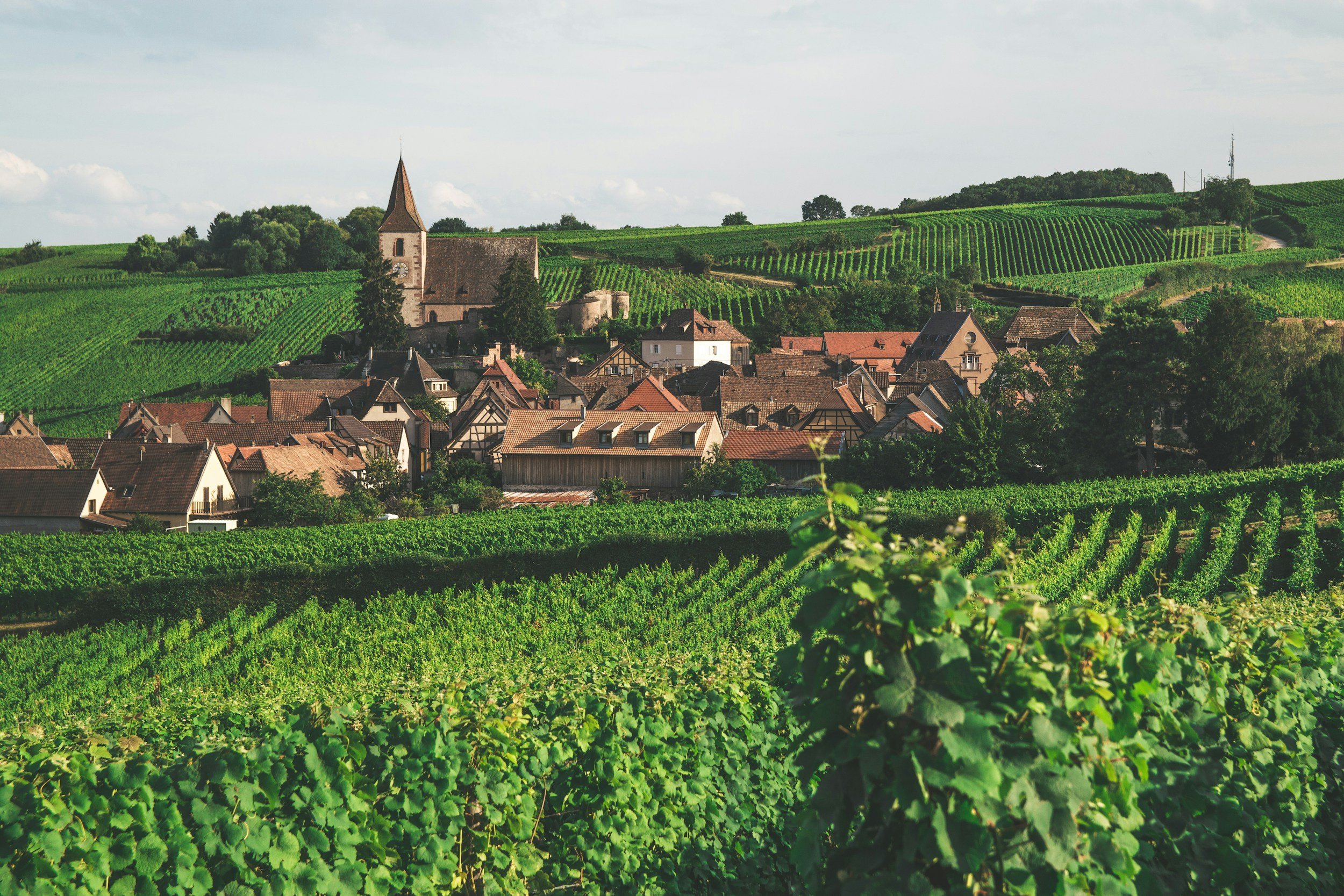
If you're torn between Southern Burgundy and Chablis, don't assume they're interchangeable. This Chablis guide makes the differences obvious once you start planning.
Champagne
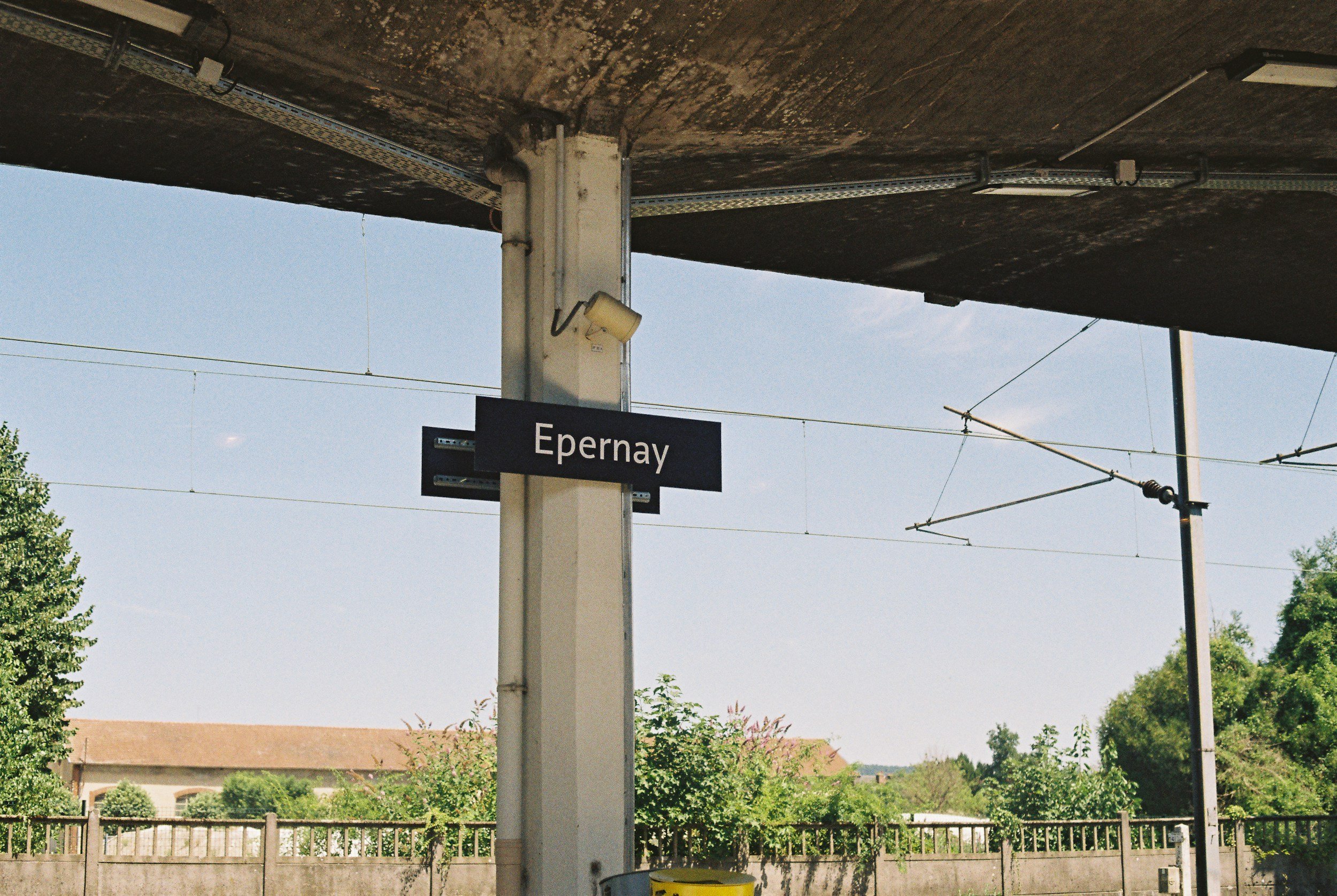
If you've only got a couple of days and you're travelling from Paris, I don't think there's another French wine region that's quite as easy as Champagne. High-speed TGV trains leave Paris Gare de l'Est throughout the day, reaching Reims in as little as 45 minutes, while Épernay is around an hour away with either a direct service or a straightforward change in Reims. It's one of those rare weekends where you can leave home after breakfast and be standing inside one of the world's most famous Champagne houses before lunch, without ever needing to think about hiring a car or coordinating buses between villages.
What usually surprises people, though, is that Champagne doesn't really feel like the picture most of us have in our heads before arriving… If you've just come from somewhere like Southern Burgundy, the contrast is immediate. Instead of quiet vineyard roads, medieval villages and markets that naturally shape the day, you're walking through elegant city streets lined with cafés, grand nineteenth-century buildings and broad boulevards where life carries on regardless of the vineyards beyond the edge of town. The wine is still the reason most people come to Champagne, but it doesn't have to fill every hour of the day. That's one of the things I like most about staying in Reims. You can spend the morning in a cellar, wander through the city for the rest of the afternoon and never feel like you've missed out on the region.
For a first trip, I'd stay in Reims rather than Épernay. Not because Épernay isn't worth visiting, but because it's much easier to mix wine with everything else the city has to offer. One morning might begin with a tour at Taittinger or Ruinart, followed by a walk up to Cathédrale Notre-Dame de Reims, where the French kings were crowned for centuries. If you're there on a Wednesday, Friday or Saturday, it's worth making time for Marché du Boulingrin, where locals come to buy oysters, cheese, bread and seasonal produce before filling the cafés around the market for lunch.
The rest of the city is easy to explore on foot. Wander through Place Royale, browse the independent shops around Rue de Vesle, stop for a glass of Champagne on Place Drouet d'Erlon, or spend an hour at the Musée des Beaux-Arts if you fancy a break from cellar tours. Some afternoons I've only visited one winery because I ended up staying in the city longer than I'd planned, and I've never felt that I'd missed out because of it. That's something I really appreciate about Reims. Wine is always there when you want it, but it never feels like the only reason to leave your hotel.
I'd look for somewhere around Cathédrale Notre-Dame de Reims or Place Drouet d'Erlon. That's the part of the city where I always seem to end up anyway. You can walk to houses like Ruinart, Taittinger and Veuve Clicquot, wander back through the centre afterwards, drop a couple of bottles at your hotel, then head straight out again without giving transport another thought. By the evening, Place Drouet d'Erlon is full of people sitting outside with a drink, and if you decide at the last minute to stop for another glass before dinner or wander over towards the cathedral once it's lit up, everything is close enough that you never need to plan the evening.
The Champagne houses are naturally the highlight, and one of the biggest advantages of staying in Reims is that many of the famous names are genuinely within walking distance. Veuve Clicquot, Taittinger, Pommery, Ruinart, Mumm and several smaller producers can all be reached on foot, which means you spend your time enjoying the city rather than travelling between appointments. At the same time, I'd resist the temptation to fill every available slot simply because the logistics make it so easy. It's probably the biggest mistake first-time visitors make. Looking at a map, four cellar tours across two days seems perfectly reasonable, but after ninety minutes underground learning about pressing, blending, ageing and riddling at one prestigious house, then repeating a very similar experience somewhere else a few hours later, the visits begin to merge together more than most people expect. Personally, I'd rather visit one internationally recognised house such as Ruinart, Taittinger or Veuve Clicquot, balance it with a smaller grower like Champagne Bonnet-Ponson, Champagne Roger Coulon or Champagne J. de Telmont, then spend the rest of the afternoon wandering around Reims instead of squeezing in another cellar tour.
The first time I visited Reims, I hadn't really appreciated how much of Champagne sits underground. From street level, you see elegant buildings, landscaped gardens and rows of vines on the edge of the city, but then a guide opens an ordinary-looking door and you're suddenly walking down flight after flight of stone steps into the chalk. The temperature drops almost immediately, the light changes and before long you're standing in tunnels that seem to disappear into the distance, lined with bottles stacked on top of one another. At Ruinart, parts of the cellars are carved into ancient Gallo-Roman chalk quarries, while Taittinger takes visitors through vast medieval chalk pits beneath the city. Even if you've read about the traditional method of making Champagne, it's very different when you're standing there looking at millions of bottles quietly ageing in front of you.
I'd also leave plenty of time between tours instead of booking one cellar after another. Some of my favourite parts of a weekend in Reims have had nothing to do with guided tastings. Walking back towards the cathedral instead of taking the quickest route, stopping at Cave du Forum to browse grower Champagnes you rarely see outside France, or sitting outside with a glass on Place Drouet d'Erlon before deciding where to eat have all ended up being just as memorable. If you're looking for dinner afterwards, Brasserie du Boulingrin is a classic choice for seafood and Champagne, Le Crypto is only a short walk from the cathedral, and Le Jardin Les Crayères is worth booking if you're celebrating something special. By the time the evening arrives, Reims feels much more like a city where people happen to drink a lot of Champagne than somewhere built purely for visitors, and I think that's part of its charm.
If you've got three nights instead of two, I'd definitely spend a day in Épernay, but I'd still keep Reims as my base. The train only takes around forty minutes, so there's no real advantage to packing your bags and moving hotels for one night. I much prefer arriving after breakfast, spending the day in Épernay and heading back to Reims in the evening.
The first thing you'll probably notice is how different the two places feel. Reims is a city where Champagne happens to be made. Épernay feels like it grew around the Champagne houses themselves. As soon as you reach Avenue de Champagne, it's one famous name after another. Moët & Chandon, Perrier-Jouët, Pol Roger, Boizel and de Venoge all sit along the same broad avenue, with gates, courtyards and elegant buildings that have become as recognisable as the labels on their bottles.
It's worth slowing down here instead of rushing from one cellar tour to the next. Walk the full length of the avenue, look through the gates, stop to read the plaques outside the houses and notice how many of the buildings are still working wineries rather than museums. Beneath the avenue are more than 100 kilometres of chalk cellars, but from the street you'd hardly guess it. People cycle past on their way to work, deliveries arrive at the houses and locals walk their dogs, while millions of bottles are ageing beneath the ground. I always think that contrast is one of the most interesting things about Épernay. It feels like an ordinary French town until you remember what's underneath your feet.
If you've got a little extra time, I'd also head up to Hautvillers for a few hours. Most people know it because of Dom Pérignon, but I'd go just as much for the village itself. It's only a few kilometres from Épernay, sitting above the Marne Valley, and the views over the vineyards are some of the best in Champagne. I like arriving in the morning, before the cafés fill up, wandering past the old stone houses with their wrought-iron shop signs, stepping into the abbey church where Dom Pérignon is buried, then following the footpaths out towards viewpoints like Belvédère Saint-Hélène, where you can look across the vineyards stretching along the Marne. Afterwards, it's an easy taxi ride back to Épernay for lunch, or you can hire a bike and cycle through villages like Cumières on the way.
One thing I'd organise well before travelling is the winery visits. If there's somewhere you've always wanted to see, whether that's Ruinart with its UNESCO-listed chalk cellars, Taittinger, Veuve Clicquot, Pommery or Moët & Chandon, don't assume you'll be able to book a tour once you arrive. The most popular English-language tastings, especially on Fridays and Saturdays between May and September, often sell out weeks or even months in advance.
I'd also try to include at least one smaller grower alongside the famous houses. Producers such as Champagne Roger Coulon in Vrigny, Champagne Bonnet-Ponson in Chamery, Champagne Pierre Paillard in Bouzy or Champagne Gaston Chiquet in Dizy offer a completely different experience. Instead of joining a group of twenty people, you might find yourself standing in the winery with a member of the family, tasting a handful of wines while talking about the latest harvest, the differences between individual vineyard parcels or why one vintage developed differently from another.
If you're travelling in September, I'd get in touch even earlier. Harvest changes everything. Tractors move constantly between the vineyards and the presses run from early morning until late into the evening, so some growers stop taking visitors for a while, while others only welcome guests who arranged their visit beforehand. A quick email a week or two before your trip is often all it takes, and in return you usually get a much more personal visit than you would at one of the larger Champagne houses.
A typical day here doesn't need to be packed to feel worthwhile. I'd book my first cellar visit around 10 am, spend the rest of the morning underground, stop for a proper lunch instead of squeezing in another tasting immediately afterwards, wander through the city for a couple of hours and then finish with one more appointment later in the afternoon before dinner. Two cellar visits in a day are usually plenty. It leaves enough time to appreciate the places between them instead of feeling as though you've spent the entire trip moving from one guided tour to the next.
Before my first trip to Champagne, I expected the famous houses to dominate the whole weekend. In reality, they only filled part of it. Some of the moments I remember best had nothing to do with cellar tours at all. Walking back across Place Royale after dinner while the cathedral was lit up, stopping for one last glass at a wine bar because the evening was still warm, catching the train to Épernay without much more of a plan than a reservation at Moët & Chandon, or sitting outside a café the following morning watching people drift through Marché du Boulingrin all became part of the trip as well. I came for the Champagne, but I left thinking just as much about the cities and the time spent between the tastings.
If someone asked me where to spend their first long weekend in a French wine region, Champagne would always be near the top of the list. It's one of the few places where you can arrive by train, walk to internationally recognised producers like Ruinart, Taittinger, Veuve Clicquot or Pommery, have dinner in a proper city and still wake up the next morning knowing another winery or another train journey is only a few minutes away.
Alsace
If you're looking for a wine region where the experience is about much more than the vineyards themselves, I'd probably send you to Alsace before anywhere else in France.
Unlike Champagne, where most weekends naturally revolve around cellar visits, or Burgundy, where the villages are often destinations in their own right, Alsace is somewhere you experience by moving through it. The trains, the cycle paths, the villages and the landscape all fit together in a way that makes travelling without a car feel remarkably easy, and I think that's why so many people come back. You're never relying on one town to carry the entire trip because there's always another village ten or fifteen minutes further along the line.
The obvious place to base yourself is Colmar, and for a first visit I don't think there's much reason to complicate things. It's well connected by TER trains from Strasbourg, Mulhouse and Basel, the station sits within walking distance of the historic centre, and once you've checked into your hotel, almost everything happens on foot. The walk from the station takes around fifteen minutes through ordinary residential streets before suddenly opening into the old town, where timber-framed houses, canals, flower-filled balconies and narrow cobbled lanes replace traffic almost completely. Even though Colmar attracts plenty of visitors, it's surprisingly easy to escape the busiest streets once you wander beyond Rue des Marchands, Grand Rue or the area around Little Venice, particularly in the early morning or after day-trippers have returned to Strasbourg.
I'd stay somewhere around Place de l'Ancienne Douane, Place de la Cathédrale or the streets around Rue des Têtes rather than close to the station. Colmar is compact enough that the walk with your suitcase only takes ten or fifteen minutes, and once you've checked in you can forget about transport for the rest of the day. In the morning, it's easy to wander out for coffee and a pastry at L'Atelier du Peintre or Au Croissant Doré, spend an hour browsing the covered market at Marché Couvert, then head back to your hotel before going out again. In the evening, I always enjoy walking through the old town after dinner. By then, the day-trippers have usually caught their trains home, the streets around Place de l'Ancienne Douane are much quieter and you'll often have little lanes like Rue des Marchands almost to yourself.
The best part about staying in Colmar, though, is how easy it is to explore the rest of Alsace without packing your bags every morning. One day you could take the TER to Strasbourg and spend the afternoon around La Petite France and the cathedral. Another might be a short train ride to Sélestat for its medieval streets and excellent Saturday market, or to Obernai, where timber-framed houses, wine bars and small squares make it easy to spend a few relaxed hours. If you'd rather get out into the vineyards, local buses connect villages such as Riquewihr, Ribeauvillé, Kaysersberg and Eguisheim, while the cycle paths through the vineyards make it just as easy to hire a bike for the day. That's what I enjoy most about travelling around Alsace by train. You don't spend the weekend in one town. You gradually get to know several places, and each feels slightly different from the last.
One mistake I see quite often is people trying to squeeze Eguisheim, Kaysersberg, Riquewihr, Ribeauvillé, Turckheim and Hunawihr into a single day because they look almost next to each other on the map. In reality, travelling between them still takes time, especially if you're relying on buses, and each village has far more to it than the photo everyone takes on the main street. You might stop for a slice of tarte flambée in a shaded square, wander into a family-run wine cellar because the door happens to be open, browse a little pottery shop or bakery, then realise you've spent an hour without noticing. That's usually when Alsace is at its best. If you're already thinking about the next bus, you'll miss half of it.
I'd almost always choose two villages rather than four. Eguisheim is an easy place to spend the morning because the centre is built in circles around the old castle, so you naturally keep finding little streets you somehow missed the first time round. Walk along Rue du Rempart Sud, look out for the storks nesting on the rooftops, stop by Place du Château Saint-Léon, then pick up a kougelhopf from one of the bakeries before heading back towards the bus.
I'd then spend the afternoon in Turckheim, which has a completely different feel despite being only a few kilometres away. The old town is quieter, the medieval gates are still standing at either end of the main street, and if you're there in the evening you'll often see the Night Watchman setting off on his traditional walk through the town during the summer months. It's the sort of place where I end up sitting in Place Turenne longer than I meant to because there isn't any reason to rush away.
The same goes for Ribeauvillé and Riquewihr. They're often treated as one stop because they're neighbours, but I'd never skip one in favour of the other. Ribeauvillé stretches along the length of the Grand'Rue, with cafés, wine cellars and small shops spread between the old squares, so it feels like a town where people still live their everyday lives. Riquewihr is much smaller and more compact. By late morning the streets around Rue du Général de Gaulle can be busy with visitors, but if you wander a street or two away from the centre, or stay until the late afternoon coaches have gone, it becomes much quieter. Seeing both on the same day works well. Trying to fit them into an hour each rarely does.
Cycling is one of the easiest ways to explore the Alsace Wine Route, even if you don't normally think of yourself as a cyclist. If you're arriving by train, I'd simply hire a bike in Colmar rather than trying to take one with you. Colmar Vélo - Vélodocteurs, a few minutes from the station, rents both standard bikes and e-bikes, while Vélodocteurs also has repair facilities if you need them. During the main season it's worth reserving an e-bike a few days ahead, especially if you're travelling on a weekend.
One of my favourite rides is the short loop from Colmar to Eguisheim, then on to Turckheim before returning through the vineyards. It's only around 20-25 kilometres, so you don't need to dedicate the whole day to it. Leaving Colmar, the cycle route quickly leaves the traffic behind and follows vineyard tracks towards Eguisheim. Before long you're riding past rows of Riesling, Pinot Gris and Gewürztraminer, with the Vosges rising behind the vines. In late September you'll often pass growers loading crates of grapes onto tractors, while in spring the fruit trees around the villages begin to blossom.
I'd stop in Eguisheim for a coffee around Place du Château Saint-Léon, wander a lap of the circular streets, then continue towards Turckheim, passing vineyards belonging to producers such as Domaine Zind-Humbrecht and Domaine Albert Boxler around the edge of the village. Once you arrive, it's worth leaving the bike for a while and walking through the old town. If you're there during the summer, the Night Watchman still walks the streets in the evening, announcing the hour much as he has done for centuries.
If you've hired an e-bike and feel like riding a little further, Kaysersberg makes a brilliant extension. The route follows quiet vineyard roads through Ammerschwihr, where you'll pass wine cellars, old fountains and half-timbered houses before arriving beneath the fortified bridge in Kaysersberg. It's an easy place to stop for lunch before taking a slower ride back to Colmar.
If cycling isn't really your thing, I honestly don't think you'll miss much. The TER trains and regional buses reach almost all of the same places. You could spend the morning in Ribeauvillé, catch the Fluo bus to Riquewihr after lunch, then continue back towards Colmar in the afternoon without ever needing a car.
The train journeys are worth paying attention to as well. Sitting on the left-hand side of the train from Colmar towards Strasbourg, you'll have some of the best views towards the vineyards and the lower slopes of the Vosges, while the outline of Château du Haut-Kœnigsbourg appears above the trees between Sélestat and Kintzheim if the weather is clear. They're only short journeys, but they're the sort where I always end up looking out of the window instead of reaching for my phone!
The time of year changes where I'd spend my time rather than whether I'd visit. In May and June, I'd happily sit outside with a glass of Riesling after cycling back to Colmar while the vineyards are bright green and the villages are still relatively quiet. By October, wine presses are working, cellar doors stay busy and many restaurants start serving seasonal dishes with mushrooms, game and local wines. Then, only a few weeks later, the same streets are filled with wooden Christmas stalls, choirs, decorations and the smell of vin chaud and bredele drifting through the squares. It's still recognisably Alsace, but it feels like a completely different trip.
One thing I realised quite quickly is that I never ended up seeing as much as I thought I would, and I don't mean that as a criticism. I'd arrive in a village planning to stay for an hour, then lose track of time in a wine cellar, stop for lunch that lasted much longer than expected or spend another half hour wandering streets I hadn't planned to explore. That's probably why I enjoy travelling around Alsace by train so much. Missing one village never feels like missing out because there's always a reason to come back, and I'd much rather leave feeling like I got to know three places properly than spend the whole weekend wondering if I had time to squeeze in a fourth.
If you've got four or five nights, I'd split the trip between Colmar and Strasbourg rather than using one base throughout. By the time you've spent two or three days exploring villages like Eguisheim, Turckheim, Ribeauvillé and Riquewihr, it feels refreshing to finish somewhere with a different energy. In Strasbourg, you can spend the morning wandering around La Petite France, browse the bookshops along Grand'Rue, stop for lunch near Place Gutenberg or climb the cathedral tower before catching a tram across the city for dinner. The TER journey from Colmar only takes around half an hour, so moving between the two is much easier than it looks when you're planning the trip.
Looking back, the moments I remember most aren't necessarily the famous places. I remember arriving in Turckheim just as the bakery was putting fresh kougelhopf into the window, sitting outside a winery in Ribeauvillé while somebody loaded cases of wine into the back of a van, buying a bottle in Kaysersberg because the winemaker insisted I should taste one more vintage, and watching the train pull away from Colmar with vineyards stretching away towards the Vosges. None of those moments lasted very long, but together they're what I think of when someone mentions Alsace.
That's probably why I'd send people here before almost anywhere else in France if they're travelling without a car. The trains are frequent, the villages are close together and once you've arrived, the practical side of the trip rarely gets in the way. Instead of spending the weekend working out how to reach the next place, you spend it deciding whether to stay for another coffee, another walk through the vineyards or another glass of Riesling before moving on. I can't think of many regions where travelling without a car feels quite so natural.
Ps. In case autumn is your favourite time to travel, don't book Alsace before looking at these autumn festivals. A few days' difference can completely change the trip!
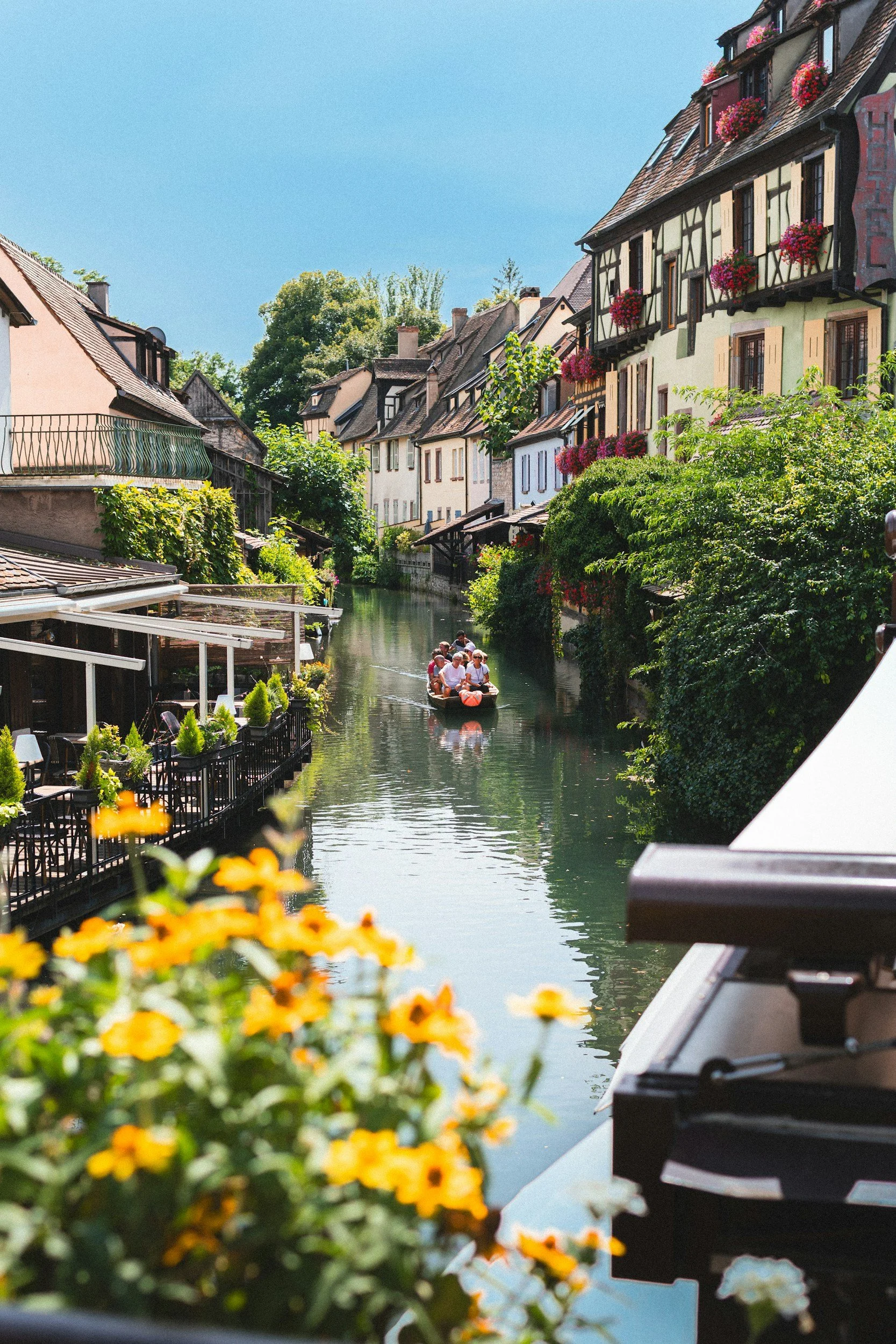
Can't decide whether Alsace is better in spring or at Christmas? This seasonal comparison makes the decision far easier than scrolling through hundreds of photos.
Loire Valley
I never feel as though I have to choose between wine and everything else in the Loire Valley. One morning might begin at Les Halles de Tours, buying cheese, fresh bread and fruit for lunch, before catching a TER to Amboise or Saumur. A couple of hours later you're tasting Vouvray or Cabernet Franc, then walking back through town to find somewhere by the river before deciding whether to stay for another coffee or catch the next train somewhere else. None of it feels rushed, and that's one of the reasons I keep recommending the Loire to people travelling without a car.
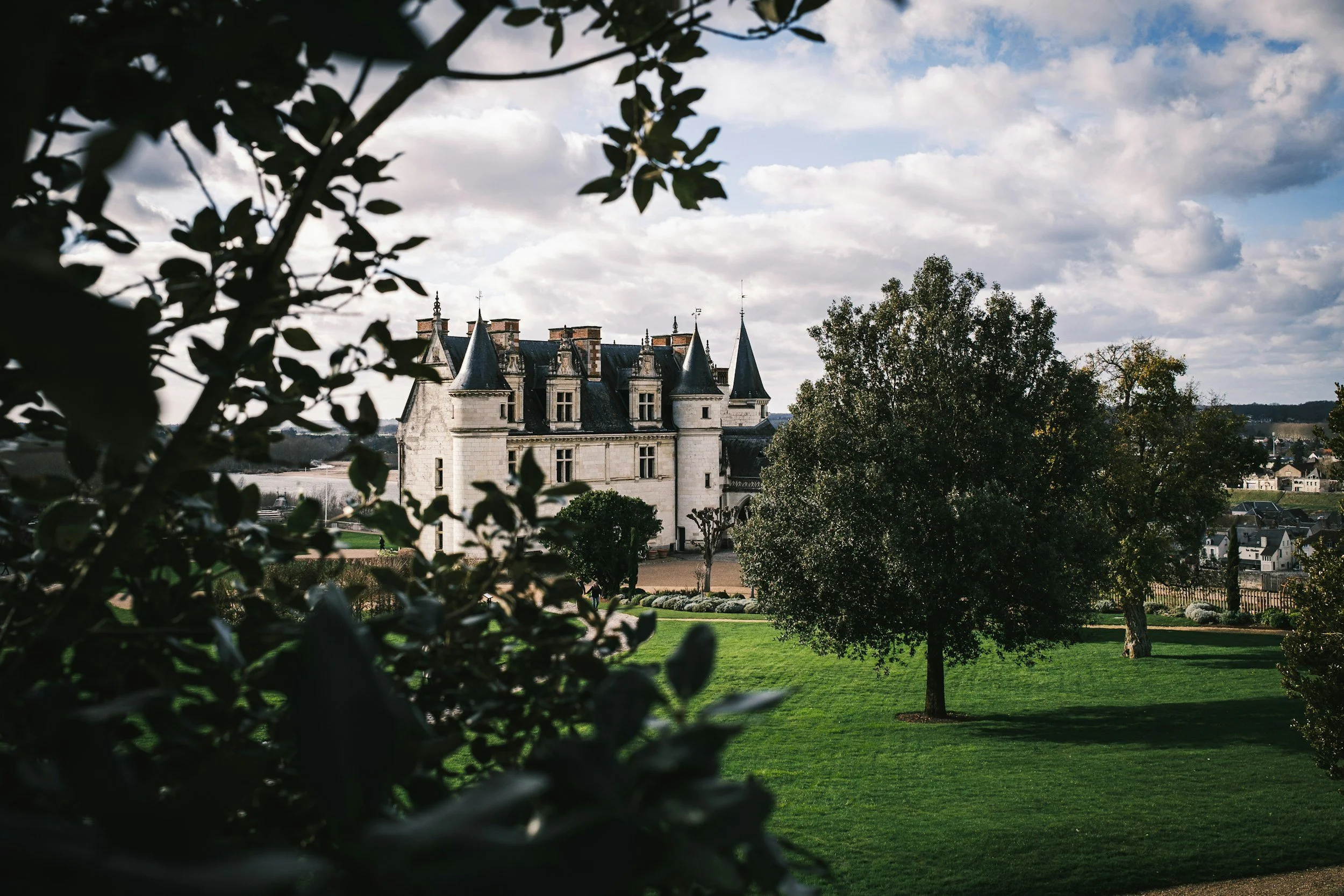
The towns are just as much a reason to come as the vineyards. In Tours, it's easy to lose half a day wandering around Rue Colbert, browsing bookshops and little food shops before ending up in Place Plumereau. Amboise has the château overlooking the Loire and a riverside lined with cafés that fill up on warm evenings. In Saumur, people drift between the market, the old town and the riverfront, while in Chinon you can spend the morning walking beneath the fortress before crossing the Vienne to a winery a few minutes away. They're all connected by train, but they never feel interchangeable.
That's probably why the Loire suits people who enjoy moving around rather than staying in one place. You don't wake up wondering which famous winery to visit first. You wake up wondering whether today feels like a market morning in Tours, lunch beside the river in Amboise, an afternoon tasting Chenin Blanc in Vouvray, or catching the train to Saumur because you've never been before. The wine is always there, but it rarely feels like the only reason you're travelling.
For a first visit, I'd base myself in Tours. The city sits at the heart of the regional rail network, making it incredibly easy to build day trips without constantly changing hotels, and it also happens to be somewhere I'd happily spend several days even if I wasn't travelling anywhere else. Around Place Plumereau, the timber-framed houses fill with cafés and restaurant terraces from breakfast until late into the evening, while Les Halles de Tours is one of those places that's worth visiting even if you're not buying anything. You'll find local cheeses, fresh bread, rillettes de Tours, seasonal fruit and pâtisseries that make putting together a picnic for the riverbank almost impossible to resist.
I wouldn't limit yourself to the main square, though. Walk along Rue Colbert, where independent wine bars, cafés and small food shops give the street a much more local feel than many visitors expect, browse the shelves at La Boîte à Livres, one of France's largest independent bookshops, or spend an hour exploring the quieter streets around Cathédrale Saint-Gatien before heading back towards the Loire. If you're looking for lunch before catching an afternoon train, Le Bistrot des Halles, Chez Gaster or L'Accalmie are all excellent choices, while Maison Hardouin is a good stop if you'd like to pick up regional specialities to take home.
I'd stay somewhere between Tours station, Rue Nationale and the streets around Place Plumereau. That's the part of the city where you'll probably spend most of your time anyway. In the morning, you can walk over to Les Halles de Tours to pick up fresh bread, cheese or fruit, stop for a coffee on Rue Colbert, then wander back through the old town before catching a TER. The station is only ten or fifteen minutes away on foot, so even if you're heading to Amboise, Saumur, Chinon or Blois, there's no need to think about taxis or local buses.
One thing I noticed quite quickly was how little I thought about train times. If I missed the train to Amboise because lunch took longer than expected or I ended up browsing the food shops around Les Halles for another half hour, it rarely mattered. Another TER would be along before long, and that changes the way you travel. Instead of cutting lunch short or rushing back to the station, it's easy to stay where you are a little longer, then simply catch the next train. That's one of the reasons travelling around the Loire feels so relaxed compared with many other wine regions where missing one connection can throw the rest of the day off.
I'd usually make Amboise my first day trip from Tours. The TER only takes around twenty minutes, and from the station it's an easy walk into the centre. Most people instinctively head straight for the château, but I never feel any rush to get there. I prefer crossing the bridge over the railway, following Rue Nationale through the middle of town and seeing where I end up first. That's where you'll find places like Librairie Luce, which has been part of the town for years, little delicatessens selling local wines and rillettes from Tours, and Pâtisserie Bigot, where the display of fruit tarts and éclairs is usually enough to tempt me into an early coffee stop even if I've only just arrived.
If I'm visiting on a Friday or Sunday, I'll often wander through the market first. The stalls spread through the centre with local goat's cheese from the Touraine, cherries and apricots in early summer, mushrooms in autumn, fresh bread, honey and bottles from nearby producers in Montlouis-sur-Loire and Vouvray. It's an easy place to pick up lunch before carrying everything down towards the river.
Afterwards, I nearly always end up walking along the banks of the Loire towards Île d'Or. There are benches looking back towards the château, fishermen casting into the river, cyclists following La Loire à Vélo and people sitting with picnics under the trees. If you carry on a little further, you get one of my favourite views of Amboise, with the château stretching above the rooftops and the river filling most of the foreground. I always find myself staying there longer than I'd planned before wandering back into town for another coffee or a glass of Vouvray on a terrace.
Further west, Saumur feels like a town that has always belonged to the Loire. The château may be the first thing you notice, standing high above the rooftops, but it never completely steals the attention from the river below. Walking over Pont Cessart from the station, you'll often pass cyclists following La Loire à Vélo, traditional toue cabanée boats tied up along the quays and broad views back towards the pale tuffeau buildings that have shaped the look of the town for centuries.
Once you're in the old town, I'd spend a while around Place Saint-Pierre, where cafés spill onto the square beneath half-timbered buildings, before wandering along Rue Saint-Jean. There are wine merchants, little food shops selling fouées, galleries and independent boutiques tucked into the old buildings, and I nearly always end up popping into Librairie Le Livre à Venir before carrying on towards the river. If you're there on a Saturday morning, the market spreads through the centre with Loire goat's cheeses, mushrooms from nearby caves, fresh vegetables and bottles from producers around Saumur-Champigny and Coteaux de Saumur. It's the sort of place where buying lunch often feels more appealing than booking a restaurant.
Later in the afternoon, I like walking along the quays beside the Loire before climbing up to the château gardens for the view across the river and the rooftops. Then it's back into town for dinner. La Table by Mi-K'L, L'Instinct and Bistrot Les Tontons are all good choices, but even after eating I'd leave another half hour to wander back along the river. Once the château is lit up, the whole waterfront feels completely different from the middle of the day.
The Loire is one of the few places where I genuinely stop worrying about whether I've planned enough. More than once I've caught a train from Tours intending to spend the whole day in Amboise, then realised over lunch that I still had time to continue to Blois for an hour before heading back. On another trip, I ended up getting off in Chinon simply because I'd heard somebody at breakfast recommend the market. The trains make those last-minute decisions surprisingly easy. You're rarely committing yourself to a complicated journey, so it's much easier to follow a recommendation, spend longer somewhere you like or simply get off because a town you've never heard of suddenly looks interesting from the train window.
Even if cycling isn't usually the reason you choose a destination, it's surprisingly easy to fit into a weekend in the Loire. La Loire à Vélo follows the river for hundreds of kilometres, using quiet lanes, traffic-free greenways and former towpaths that connect many of the towns you'd probably visit anyway. Instead of hiring a car for the day, it's easy to rent a bike in Tours or Amboise and spend a few hours seeing a different side of the valley.
One of my favourite routes follows the Cher west from Tours towards Savonnières, passing riverside parks, old lock houses and the gardens of Château de Villandry before looping back through small villages and quiet country lanes. Around Amboise, it's just as enjoyable to cycle east towards Montlouis-sur-Loire or Chargé, where the vineyards begin almost as soon as you leave town. Along the way you'll come across roadside wine cellars, tiny village cafés, picnic tables beside the Loire and stretches of river where the loudest sound is usually the wind through the poplars or the occasional TER crossing the valley in the distance.
What I like most is that cycling doesn't have to become the focus of the day. You might ride for a couple of hours in the morning, stop for lunch in a village you hadn't planned to visit, then return the bike in time to catch an afternoon train somewhere else. It fits naturally alongside everything else that makes the Loire enjoyable!
Unlike somewhere like Burgundy, where many wineries are the reason for travelling, I often find the Loire works best when the wine becomes part of the day rather than the entire plan. You might spend an hour tasting Chenin Blanc in Vouvray, then catch the next train to Amboise for lunch, or finish the afternoon by the river instead of squeezing in another cellar. I usually come home remembering the whole day rather than trying to remember which winery I visited first.
I don't think I ever followed the plan exactly in the Loire, and I'm glad I didn't. I'd get off the train in Amboise thinking I'd stay for a couple of hours, then realise it was already mid-afternoon because I'd stopped for coffee, wandered into a little wine shop, bought pastries from Pâtisserie Bigot and ended up sitting beside the river longer than I'd meant to. The same thing happened in Tours. I'd head into Les Halles for lunch and somehow still be there an hour later after looking around the food stalls and shops nearby.
Looking back, I barely think about the château visits. I think about crossing into Saumur with the river right in front of me, finding somewhere to sit with bread, cheese and fruit from the market, or deciding to have one last coffee instead of catching the next train. Those are the moments that stuck with me.
That's probably why I enjoy the Loire so much. You can visit wineries if you want to, but you never feel as though the whole day has to revolve around them. Some days end up being about the wine, others are mostly cafés, markets and wandering around another town you hadn't planned to visit. Somehow it all fits together, and by the end of the weekend it feels less like you've been rushing between attractions and more like you've just spent a few really good days following the river.
If you're tempted by the Loire but don't fancy spending your weekend surrounded by tour buses, these quiet Loire towns are a much better place to begin.
Which French wine region would I choose?
I've recommended Southern Burgundy to quite a few people over the years, and I don't think anyone has come back disappointed. It isn't because every town is spectacular or because every winery is world-famous. It's because the whole region just fits together. You can move around without much effort, every town feels a little different, and it's very easy to let the day change as you go along without feeling like you've ruined the plan.
If your time is more limited, I'd probably go for Chablis. It's the region I'd choose for a Friday-to-Sunday trip from Paris because the journey is short enough that you don't feel as though you've spent half the weekend travelling. Once you're there, everything is close together, so instead of looking at bus timetables or wondering which village makes the most sense next, you can just get on with enjoying the place. Mornings usually end up wandering through the streets around Rue Auxerroise and the Serein, afternoons are easy to fill with a walk out to the vineyards or a tasting at one of the local domaines, and there's still plenty of time for a long lunch and an unhurried evening back in town. If having more time in one place matters more to you than covering lots of ground, I think Chablis is hard to beat.
Champagne is the one I'd pick for completely different reasons. It's the region I'd recommend if you like cities just as much as vineyards and don't want every hour of the weekend to revolve around wine. You can spend the morning beneath the chalk cellars at Ruinart or Taittinger, browse bottles and chat to the staff at Cave du Forum, then wander around Place Drouet d'Erlon before deciding where to eat. Or take the train to Épernay, stroll along Avenue de Champagne past houses like Moët & Chandon and Perrier-Jouët, and finish the day with dinner before catching an evening train back to Reims. That's what I like about Champagne. You still get the wine, but you also get lively squares, cafés that stay busy into the evening and two places that feel quite different from one another without being more than half an hour apart by train.
Alsace is the region I'd choose when I don't really want to stay in one place. I'd happily spend the morning wandering around Colmar, catch the next TER to Turckheim for lunch, then end up in Ribeauvillé because there was still time for one more stop before dinner. On another trip, it might be Eguisheim, Kaysersberg or Riquewihr instead. The villages are close enough together that changing your mind never feels like a problem, and I think that's part of why I enjoy travelling here so much. Every place has its own bakery, wine cellar, little square and café terrace, so even though you're only travelling a few kilometres each time, the day never feels repetitive.
The Loire Valley is probably where I'd go if I wanted a bit of everything rather than a weekend built around one particular thing. I could start the day with coffee in Tours, catch a regional train to Amboise, have lunch overlooking the Loire, then head back to the city in time to browse a few bookshops or pick up something for dinner from Les Halles de Tours. The next day could be completely different. Maybe hiring a bike and following part of La Loire à Vélo, spending a few hours wandering around Saumur, or just finding somewhere beside the river with a picnic instead of making any real plans at all. The wine is always there if you want it, but it never feels like it has to shape the whole day. I think that's why the Loire works so well if you're travelling with someone who's just as happy wandering around a market or sitting in a café as they are visiting another vineyard.
People sometimes ask me which of these regions I'd choose, and my answer is usually, "It depends what sort of weekend you want." Some trips are all about the wineries. Others end up being remembered because of a market you stumbled across, a long lunch that lasted all afternoon or a town you decided to visit simply because the next train happened to stop there. That's why I find it so difficult to pick a favourite.
I'd happily go back to any of them tomorrow, but probably for different reasons. Southern Burgundy is where I'd go when I want quiet market towns and easy days that don't need much planning. Chablis is perfect when I've only got a couple of nights to spare. Champagne is the one I'd choose if I wanted to mix cellar visits with good restaurants and city life. Alsace is the place I go when I feel like wandering from village to village, and the Loire Valley is where I'd head if I wanted the weekend to be about a bit of everything rather than just the wine.
If you'd rather wake up among vineyards than in the middle of Beaune, these countryside stays are exactly where I'd start looking.
Things I wish I'd known before exploring France's wine regions by train
The first thing I'd tell anyone is not to book the prettiest place you can find before looking at what the evenings actually look like.
It's easy to fall for a vineyard hotel sitting above Épernay, a converted winery outside Fuissé or a beautiful guesthouse surrounded by vines near Riquewihr because the photographs are exactly what you imagine a French wine holiday should look like. The problem often appears at about 9 pm, when you've finished dinner in town, the last regional bus has already gone, there isn't a taxi rank outside the station and Google Maps quietly informs you that the final part of the journey is a forty-minute walk uphill along country roads. Unless you're deliberately planning a countryside retreat where you're happy staying in one place for the evening, I'd nearly always choose somewhere that lets you wander out for another drink, browse a few shops after dinner or simply stretch your legs without thinking about how you'll get back.
One of the first things I noticed travelling around these regions was how quickly you stop expecting every town to work the same way. In Chablis, I remember wandering into the centre on a Monday morning thinking I'd browse a few wine shops before lunch, only to find several of them still closed for the day. In Tournus, the cafés around the market are busiest not long after the stalls begin packing away, while in smaller Alsatian villages it's completely normal for family-run bakeries, wine shops and little boutiques to disappear behind closed doors for a couple of hours in the middle of the day. It never really caused a problem, but it did make me stop planning every hour quite so carefully.
I also think it's easy to build a trip that's almost entirely winery bookings. Personally, I'd leave a bit more space than that. Some of the places I ended up enjoying most weren't on the itinerary at all. In Tours, I spent far longer around Les Halles than I'd expected because I kept finding things I wanted to try. In Colmar, I wandered away from the busiest streets and ended up in a small gallery after spotting something interesting through the window. In Amboise, I never made it to another tasting because lunch by the Loire turned into most of the afternoon. None of that felt like I'd missed out. If anything, those slower parts of the day made the winery visits feel better.
One thing I've started doing before every trip is looking at the walk from the station instead of just checking how far away it is. A hotel that's "ten minutes from the station" can mean very different things depending on where you are. In Saumur, it's a straightforward walk across Pont Cessart into town. In Semur-en-Auxois, the climb up from the bus stop catches plenty of people out if they're pulling a suitcase, and around villages like Eguisheim, old cobbled streets are lovely to wander around but much less enjoyable with luggage. These days I usually spend a couple of minutes on Street View before I book anywhere. It's a small thing, but I've been grateful for it more than once.
I've also become much pickier about which train I catch. The earliest TER often looks like the obvious choice until you arrive somewhere like Amboise, Beaune or Colmar and realise half the cafés are still setting out chairs or the bakery queue is the only sign that the town is awake. I'd much rather leave 30 or 40 minutes later, arrive when people are actually out, grab breakfast straight away and start exploring without feeling like I'm waiting for the day to begin.
Local buses are often the part of the journey that catches people out. Getting to somewhere like Semur-en-Auxois, Flavigny-sur-Ozerain or a winery outside Chablis can be surprisingly easy. Getting back isn't always quite as straightforward. Some routes only run a handful of times a day, especially outside summer, so I always look at the return journey before deciding where to spend the afternoon. It only takes a minute, and it can completely change how relaxed the day feels.
Another thing I'd do differently now is leave far more empty space in the itinerary than I used to. When I planned my first wine trips, I thought every day needed another village, another tasting or another famous stop (yes, that was me back in the days). These days, some of my favourite afternoons begin with absolutely no plan beyond catching a train somewhere interesting. Maybe I spend longer than expected in a bookshop like La Boîte à Livres in Tours, discover a small épicerie selling local goat's cheese that wasn't marked anywhere online, or find myself sitting on a bench overlooking the Marne Valley outside Hautvillers because the view is better than I'd imagined.
I think people often solve the wrong problem. They'll spend an hour working out exactly which train to catch at 11:18, then book a hotel on the edge of town that means dragging a suitcase uphill for twenty minutes. I'd do the opposite. Pick the right base, stay somewhere you can walk everywhere, check the last train home, and the rest of the weekend usually falls into place on its own.
Ps. if you keep coming back to Semur-en-Auxois while planning your route, there's probably a reason. This car-free guide will help you decide whether it's worth the detour.
Still wondering whether Burgundy works without a car? This train guide answers the questions most people end up Googling halfway through planning.
So... where would I start?
If a friend asked me where to spend their first few days exploring a French wine region by train, I'd still say Southern Burgundy. I don't think it's because the wine is better than everywhere else, or because every village is more beautiful. I just find it incredibly easy to travel around. After a couple of days, I stop thinking about trains altogether. I'll have a slow morning in Tournus, decide over lunch that I fancy heading to Mâcon, or wake up and feel like spending the day in Cluny instead. None of those decisions need much planning. The trains are frequent enough that missing one isn't a disaster, the towns are close together, and the whole trip starts to revolve around what you feel like doing rather than what the timetable is telling you.
I probably spent less time inside wineries than most people expect. Quite a few afternoons disappeared just walking around Tournus, stopping at Maison Chazot, browsing Librairie Develay or sitting outside a cave à vin with a glass of wine before deciding whether I actually wanted to catch the next train. That's one of the reasons I'd tell people not to treat these towns as quick stops between tastings. They're much more enjoyable if you give yourself time to stay longer than planned.
The same thing happened once I started visiting wineries. I had a list before I arrived, but some of the visits I enjoyed most weren't the ones I'd planned weeks earlier. They were the tastings that ran half an hour over because someone disappeared to open another bottle, started talking about why one vineyard had been harvested later than the next, or ended up recommending where to have lunch in Lugny, which market they never missed or another producer a few kilometres away that I'd never heard of. After a while, I stopped trying to fit four or five tastings into a day because I realised I'd rather have two that I wasn't in a hurry to leave.
That's another reason I keep coming back to Southern Burgundy. The plans don't have to be fixed. If I'm enjoying a morning in Tournus, I don't mind leaving Mâcon until later. If I spot a sign for Saint-Gengoux-le-National, I'll quite happily get off and have a look instead of sticking to the original plan. Some afternoons end up in a winery, others with a glass of Mâconnais Chardonnay beside the Saône because that's what felt right that day. I've never come home thinking I should have squeezed in another stop.
If someone told me they only had one chance to explore a French wine region by train, I'd still send them here.
In case you're wondering why so many people recommend Semur-en-Auxois, this town guide gives you a much better feel for what it's actually like once you arrive.
FAQs about wine regions in Northern and Central France
Which French wine region is easiest to visit without a car?
If this is your first wine trip in France, I'd start with Southern Burgundy. Not because it's the country's most famous wine region, but because everything feels remarkably straightforward once you arrive. The TER trains connect towns like Tournus, Mâcon and Chalon-sur-Saône well, the centres are compact enough to explore on foot, and you never feel as though the whole day depends on one bus connection or a single winery appointment.
That's one of the reasons I keep recommending it to people who want to experience French wine country without hiring a car. You can spend the morning browsing a market, enjoy lunch beside the Saône, visit a producer in the afternoon and still have plenty of time for dinner without constantly checking transport schedules.
Can you visit Burgundy by train?
Yes, and it's much easier than many people expect.
The key is choosing the right base rather than trying to stay in the middle of the vineyards. Towns like Tournus, Mâcon, Beaune and Dijon all have railway stations, making them practical places to stay while exploring the surrounding wine villages by train, bus, bike or the occasional short taxi ride.
If you're focusing on Southern Burgundy, I actually think travelling by train encourages a more enjoyable pace. Instead of driving from one tasting to the next, you're much more likely to spend time in cafés, local markets, riverside walks and independent wine shops between visits.
Is Champagne easy to explore without renting a car?
Much easier than most people realise.
Reims and Épernay are both well connected by train, and many of the best-known Champagne houses are within walking distance of the stations. Reims works particularly well if you enjoy combining wine with restaurants, museums and city life, while Épernay feels smaller and revolves much more around Avenue de Champagne.
Where people sometimes struggle is trying to visit several small grower villages in one day. Those are often easier to reach with a taxi or by planning one destination rather than trying to squeeze in several.
Which French wine region is best for a weekend?
If you're travelling from Paris, I'd probably narrow it down to Champagne or Chablis simply because you spend less time travelling.
If you've got three or four days instead of two, I'd lean towards Southern Burgundy or the Loire Valley, where there's enough variety that you can mix wine tasting with markets, cafés, walks and smaller towns without feeling you've run out of things to do.
Personally, I think one region over a long weekend almost always works better than trying to combine several.
Can you really explore French wineries by train?
Yes, but don't expect every winery to sit beside a railway station.
The train usually gets you to the nearest town, and from there you continue on foot, by bike, local bus or an occasional taxi. That's one reason I always recommend staying somewhere you'll enjoy spending time outside the tastings as well.
Places like Tournus, Tours, Colmar, Reims and Amboise all have enough cafés, restaurants, markets and independent shops that the trip never feels as though it's only about visiting wineries.
Can you walk between wineries in France?
Sometimes, but it depends entirely on the region.
In places like Chablis, you can easily walk from the town into the surrounding vineyards, while parts of Épernay also have Champagne houses close together. In other regions, wineries are scattered across several villages and walking between them simply isn't realistic.
Rather than trying to visit as many producers as possible, I'd usually choose one or two tastings and leave the rest of the day for exploring the town itself. That's often a much more enjoyable balance.
Do you need to book wine tastings in advance?
If there's somewhere you're particularly keen to visit, I'd always book.
Large Champagne houses often have scheduled tours throughout the day, but many of the smaller domaines in Burgundy, Alsace and the Loire Valley work very differently. They're family businesses first and visitor attractions second, so tastings may only happen by appointment or when someone is available.
A quick email a few days before your trip usually saves disappointment and often leads to a much more personal visit.
Are winery tastings open every day?
Not necessarily.
Many wineries close one or two days each week, particularly outside the busiest tourist season, and lunch closures are still common across France. Smaller producers may also reduce opening hours during harvest, bottling or pruning season because most of their time is spent working in the vineyards.
It's always worth checking directly with the winery instead of relying solely on Google opening hours.
Should I choose Burgundy, Champagne, Alsace or the Loire Valley for my first wine trip?
It depends what you're hoping the weekend will look like.
If you simply want the easiest introduction to French wine regions without a car, I'd still choose Southern Burgundy.
If you're travelling from Paris, Champagne is probably the most convenient.
If colourful villages, scenic walks and half-timbered streets matter just as much as the wine, I'd head for Alsace.
If you'd rather combine vineyards with riverside cafés, food markets, cycling and historic towns, the Loire Valley offers the widest variety of experiences.
None of them are wrong choices. They're simply different kinds of weekends.
Can you buy wine if you're travelling by train?
Absolutely.
Buying a few bottles as you travel isn't difficult at all, and many people do exactly that. If you're planning to take home a larger selection, though, it's worth asking whether the winery can arrange shipping instead.
I've found that many producers are happy to organise delivery, especially if you're buying several bottles. It saves dragging a heavy suitcase through railway stations and means you don't have to spend the rest of the trip worrying about breaking a bottle in your luggage.
How many days do you need for a French wine trip?
I'd recommend three or four days in one region.
That's usually enough time to visit a few wineries, enjoy the local food, browse a market, discover a couple of cafés and still leave space for the unexpected. One of the biggest mistakes I see is people trying to fit Champagne, Chablis and Burgundy into the same long weekend because they look fairly close together on the map.
I'd do the opposite. Spend four relaxed days in one region instead. You'll leave feeling as though you've actually got to know the place rather than simply passing through it.