The Burgundy villages I'd actually visit by train from Dijon
That probably sounds slightly counterintuitive, but it was one of the first things I realised after spending time exploring Burgundy by train. Before my first trip, I assumed the easiest day trips would simply be the towns with direct TER services and stations close to the centre. Beaune certainly proves that theory right, and Tonnerre is just as straightforward, but then places like Cluny and Semur-en-Auxois make you realise that one extra connection isn't nearly as important as it looks when you're sitting at home planning the trip. Changing from the train to the Mobigo bus at Mâcon-Ville, or stepping onto the waiting bus outside Montbard station, quickly becomes just another part of the journey.
Once you've arrived, you're not thinking about the connection anymore. You're deciding whether to stop at La Brûlerie d'Archibon before wandering down Rue Mercière in Cluny, carrying a still-warm baguette from Boulangerie Alexandre through Semur-en-Auxois because you couldn't resist buying it, or standing under the medieval market hall in Place Monge in Nolay wondering if you've still got room for a Succès Nolaytois from Maison Cochard. Those are the kinds of decisions that end up filling the day, and they're usually the things I remember afterwards, not whether the journey included one train or a train and a bus.
That's why I don't automatically choose the village with the simplest route. I think about what happens after I arrive. Does the station leave you a couple of minutes from the old centre, like it does in Beaune and Tonnerre, or do you need to allow a little more time before the streets start looking the way you hoped they would? Will you still be happily wandering around at four o'clock, maybe stopping for one last coffee before heading back to the station, or does the town begin to feel finished after lunch? And perhaps the question I end up asking myself most often on the journey home: would I happily come back and spend a night here next time? If the answer is yes, I know I've found somewhere special.
These are the Burgundy villages I'd keep going back to by train, including a few that completely changed my mind once I actually visited them. Lets dive in.
Which Burgundy villages are actually easy to reach from Dijon?
Before getting into the villages themselves, I'd probably rethink what easy by train actually means.
The quickest journey isn't always the one that leaves you with the best day. Some places are less than half an hour from Dijon but still involve a fairly uninspiring walk before you reach the old centre. Others ask you to change onto a Mobigo bus at Mâcon-Ville or Montbard, which can look slightly inconvenient when you're planning at home, yet end up feeling surprisingly straightforward once you've done it. After one or two trips, I found myself spending far less time thinking about train connections and much more time wondering whether I'd have enough time for another wander before catching the train back to Dijon, whether there was another bakery I'd wanted to try, or if I could squeeze in one last coffee in the square before everything started closing for the afternoon.
That's really the way I've chosen these villages. I wasn't looking for the shortest train journey. I was looking for places where arriving before lunch still leaves you with plenty of time to explore, where it's easy to find somewhere good to eat, where another street always seems worth walking down, and where heading back to the station at the end of the day never feels like you've run out of things to do.
If this is your first time using Burgundy's regional network, TER trains explained makes the whole system much easier to understand before you travel.
If you want the easiest possible first day from Dijon, I'd start with Beaune
The TER from Dijon takes about 20 minutes, and from the station it's an easy walk into the historic centre. You're not spending ages trying to work out whether you've come the right way or following a busy road before anything interesting appears. A few minutes after leaving the station you'll pass Porte Marie de Bourgogne, the old stone walls begin to close in around you, and before long you're walking into the heart of Beaune.
Most people head straight for the Hospices de Beaune, and I completely understand why. It's one of Burgundy's best-known landmarks and well worth seeing if it's your first visit. After that, though, I'd leave the crowds behind and keep walking.
From Rue de Lorraine, it's only a couple of minutes to Place Carnot, where the cafés begin spilling onto the square, and if Les Halles happens to be open it's worth wandering through before carrying on towards Collégiale Notre-Dame. I almost always end up drifting into Rue Maizières or Rue Monge, usually without much of a plan. One wine shop turns into a bakery, then an independent bookshop catches my eye, and before I know it I've completely forgotten where I was originally heading. That's the part of Beaune I enjoy most. It doesn't feel as if you're following a route through the town; it feels more like you've slipped into the parts that locals use every day.
If you're interested in food rather than just wine, I'd leave plenty of time for that too. Fromagerie Hess is one of those places that's very easy to walk straight past if you don't know it's there, and Athenaeum is worth popping into even if you aren't planning to buy anything. It's one of France's best-known bookshops dedicated entirely to wine, gastronomy and Burgundy, and somehow still feels surprisingly relaxed compared with the streets outside. Around Place Carnot you'll also come across several independent épiceries selling things like pain d'épices, crème de cassis, local mustard and Burgundy truffles, many from producers you won't find once you've left the region.
One walk I'd add, especially if you've still got plenty of time after lunch, is to follow the old walls towards Boulevard Perpreuil before looping through Parc de la Bouzaize. I don't often see people mention it, which is a shame because it shows a completely different side of Beaune. Within a few minutes the tour groups have disappeared, there are locals out walking their dogs, families spread across the grass with picnic blankets, and people reading on the benches around the lake. It doesn't feel like an extension of the historic centre so much as another part of the town altogether.
If you're there on a Saturday, I'd aim for one of the earlier TER departures from Dijon. By about half past ten, the market around Les Halles is already busy, especially around the cheese, charcuterie and fruit stalls. If you're putting together a picnic, it's also worth ducking into La Fromagerie Hess for local Époisses or Délice de Pommard, then calling into one of the bakeries on Rue Monge before leaving the centre. I usually carry everything over to Parc de la Bouzaize, although if the weather's cooler there are plenty of benches tucked along the old ramparts where it's just as nice to stop for lunch.
One thing that's easy to miss is that Beaune changes quite a bit once the day-trippers start leaving. By late afternoon, Place Carnot is noticeably quieter, the streets around Rue Maizières and Rue Maufoux feel less hurried, and the wine bars begin filling up with people staying overnight rather than visitors rushing back to the station. If your train isn't until early evening, I'd use that last hour for one final wander instead of heading straight back. It's probably my favourite time to be in the town.
That's really why Beaune sits at the top of this list. Getting there from Dijon couldn't be much easier, but what keeps me recommending it is everything that happens after you arrive. I've visited plenty of beautiful towns where I started checking the time halfway through the afternoon because I felt I'd seen most of what I came for. Beaune has never been one of them. Somehow there's always another street I haven't walked down yet, another deli or wine shop that catches my eye, or another excuse to delay heading back to the station for just a few more minutes.
If you're wondering whether it's worth staying there instead of using Dijon as a base, where to stay near Beaune breaks down the different areas and who they're best suited to.
If I only had one slow day in Burgundy, I'd spend it in Tournus
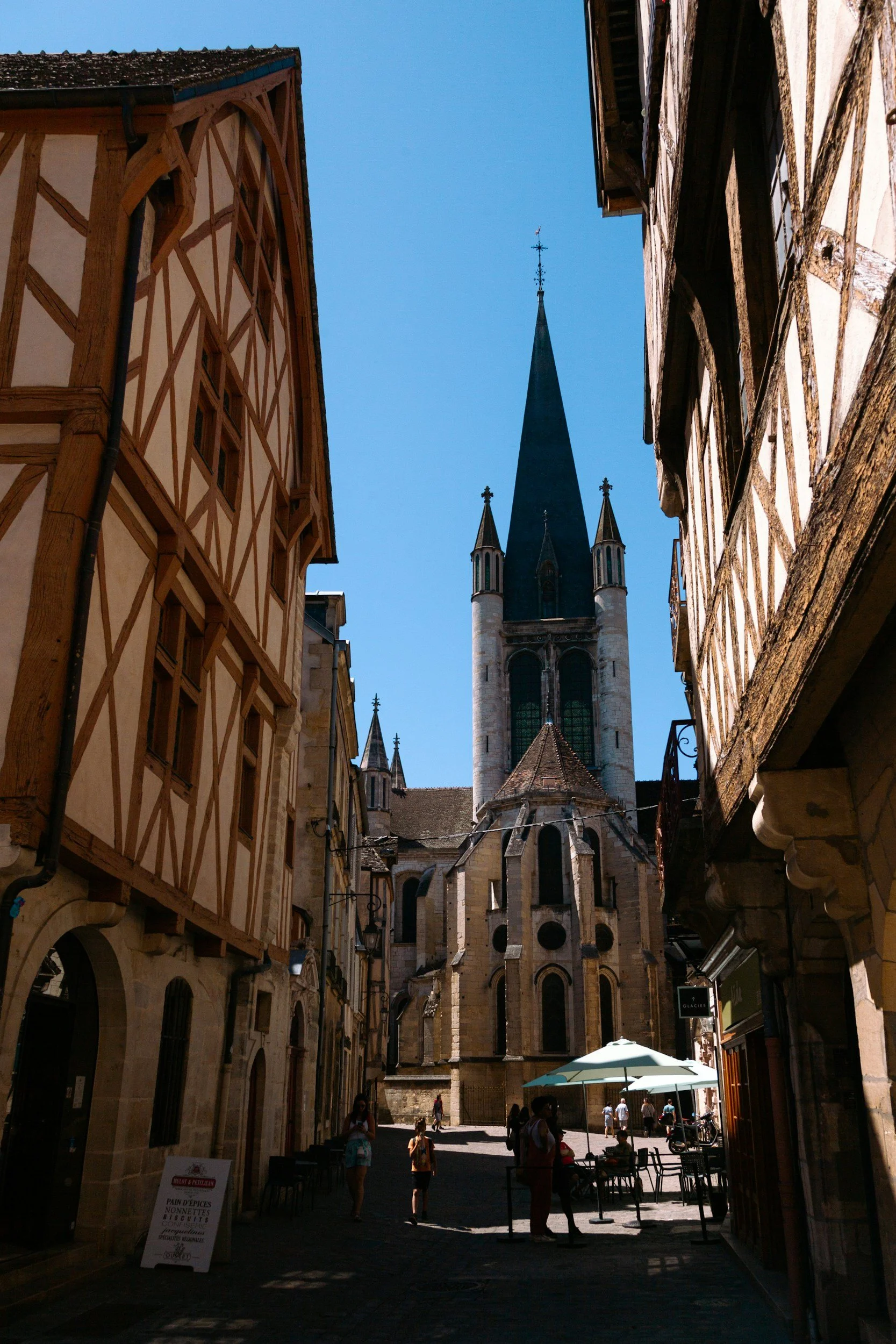
If you've already visited Beaune, I'd take the TER south to Tournus next. The journey from Dijon takes around 35 minutes, and it's one of the easiest in Burgundy. Within a few minutes of leaving the station you're crossing into Rue Gabriel Jeanton, with the abbey tower already visible ahead of you. There's no shuttle bus to think about, no taxi, and no long walk before the town begins. By the time you've reached the river, you're already there.
Most people naturally make a beeline for Abbaye Saint-Philibert, and rightly so. It's one of the oldest Romanesque churches in France, and even if you've seen plenty of churches elsewhere in Burgundy, this one feels different. The thick stone columns, low vaulted ceilings and remarkable crypt are worth taking your time over. Once you've finished, though, I'd leave the square behind rather than joining everyone heading back towards the station.
The part of Tournus I enjoy most sits just beyond the obvious route. I'll usually wander back through Rue de la République, then drift into Rue du Docteur Privey or Rue Désiré Mathivet, where the shopfronts become more independent and everyday life starts taking over from sightseeing. You pass butchers setting out their lunchtime specials, little épiceries with local wines in the window, and bakeries where half the queue seems to know the person behind the counter. I rarely have a destination in mind by this point. I'll stop if a bookshop catches my eye, wander down a side street just to see where it goes, or buy something for lunch because it looks too good to leave behind.
That's probably what I like most about Tournus. It never feels as though the town is trying to entertain you. People are shopping, meeting friends for coffee in Place de l'Hôtel de Ville, cycling along the Saône, or sitting beside the river with lunch from the market. You simply happen to be there alongside them for the day, and I think that's exactly why Tournus feels so easy to settle into.
I almost always end up spending longer here than I'd planned. Librairie Les Arcades is one of those bookshops where it's easy to lose track of time, even if most of the shelves are in French, simply because every room seems to lead into another. Just around the corner, La Ferronnerie couldn't be more different. It's part café, part brocante, with old enamel advertising signs, vintage furniture, crockery stacked on mismatched shelves and the sort of things you'd expect to find at a village flea market rather than in a café. I usually end up wandering around before I've even thought about ordering a coffee.
One of the nicest things about Tournus is that you never really have to choose what to do next because almost everything is within a few minutes' walk. You can be browsing the little shops along Rue de la République, then five minutes later you're beside the Saône watching the riverboats drift past. If you're walking towards the river, keep an eye out for the old covered traboule at 29 Rue de la République. It's easy to walk straight past it, but once you're underneath the stone passageway it suddenly opens out onto Quai de Verdun, where the town feels completely different.
You'll usually find locals walking their dogs along the riverside path, cyclists crossing the footbridge, and people sitting on the benches looking back towards the abbey tower. If you've picked up lunch from Maison Chazot, a wedge of local cheese from the Saturday market or a pastry from one of the bakeries on Rue de la République, I'd bring it down here rather than eating in the centre. There are plenty of benches overlooking the water, and if you carry on a little further you'll find quieter spots where it's often just the sound of the river and the occasional train crossing the bridge upstream.
Speaking of the market, it's one of the strongest reasons to plan your visit for a Saturday if you can. The first stalls begin appearing from around 8:30, stretching along Rue de la République and into the surrounding streets, and by about 10:30 the whole centre feels noticeably busier. I actually think the best way to do the day is the opposite of what many people do. Start with the market while the produce is at its best, buy some local Mâconnais goat's cheese, charcuterie, fruit and fresh bread for later, then wander the quieter side streets before most people have finished shopping. By lunchtime, the cafés around the abbey begin filling up, while the little lanes behind Saint-Philibert become surprisingly peaceful.
One practical thing I'd keep in mind is that quite a few of Tournus' independent shops still close for lunch, particularly outside the busiest summer months. If browsing is part of the reason you've come, I'd do that first. I usually spend the morning wandering through the streets around Rue de la République and Rue du Docteur Privey, stopping wherever something catches my eye, before settling in for lunch. The abbey works particularly well afterwards. By early afternoon, many of the coach groups have moved on, the square is noticeably quieter, and it's much easier to spend time inside without feeling as though you're moving from one room to the next with everyone else.
If you're visiting on a Saturday, it's also worth checking out the market around Place Carnot before heading towards the river. You'll find local cheeses, seasonal fruit and vegetables, charcuterie, honey and plenty of producers from across southern Burgundy. It's the sort of market where it's very easy to leave carrying far more than you'd planned, especially if you're catching the train back to Dijon later that afternoon.
I also wouldn't plan anything after Tournus. On paper, continuing to Mâcon or Chalon-sur-Saône looks completely doable, but I don't think it improves the day. By the time you've explored the abbey, wandered through the old streets, stopped for lunch and spent a while down by the Saône, it's usually late afternoon anyway. I'd rather have another coffee or browse one more shop before catching the next TER back to Dijon than spend the afternoon rushing somewhere else.
If you're continuing south after Dijon, Tournus is one of the easiest places to add before reaching Lyon.
Chagny is where I'd go for a Sunday market rather than sightseeing
If I arrived in Dijon and woke up to sunshine on a Sunday morning, there's a good chance I'd end up on the TER to Chagny.
The market is the main reason. By the time the stalls are set up across Place d'Armes and Rue de la République, people are arriving from villages across the Côte Chalonnaise carrying shopping baskets rather than cameras. There are cheese producers, butchers, fruit and vegetable growers, bakers, honey producers and stalls selling Burgundy wines, and it's the sort of market where you end up buying lunch before you've even walked all the way around. Maison Lameloise might be the name most visitors recognise, but it isn't the only reason food matters here. It feels as though the whole town is built around shopping, cooking and sitting down to eat.
Getting there couldn't be much easier. The TER from Dijon takes about 25 minutes, and from Gare de Chagny it's only a short walk along Avenue de la Gare before you reach Rue de la République. Within a few minutes you're in the middle of the market, cafés are already busy, and the smell of roast chicken, fresh bread and rotisserie potatoes drifts across the square. It's the sort of day trip you can decide on over breakfast without needing to spend the rest of the morning checking train connections or working out how to reach the town once you've arrived.
If you're coming on a Sunday, I'd ignore the temptation to save the market until later. The stalls start appearing from around 8:00, and by about 10:30 the busiest stretch between Place d'Armes, Rue de la République and the surrounding streets is already full of people filling baskets with vegetables, goat's cheese, Charolais beef, honey, fresh bread, seasonal fruit and bottles from local producers. The market carries both the "Marché de France" and "Saveurs et savoir-faire de Bourgogne" labels, and once you've walked through it, it's easy to understand why. It really feels like somewhere people genuinely shop every week.
If you're planning to buy lunch at the market, I'd do that first. I've made the mistake of thinking, I'll come back for that later, only to find the cheesemaker had already packed up or the bread I'd been eyeing had sold out. The earlier trains from Dijon give you the best choice, especially if you're hoping to put together a proper Burgundy picnic with local cheeses, saucisson, fresh fruit and a still-warm baguette before the busiest part of the morning.
Once you've finished at the market, I wouldn't go looking for another attraction. Chagny isn't really that sort of place. I'd wander along Rue de la République, stop if one of the wine merchants has something interesting in the window, maybe call into Maison Lameloise's bakery if it's open, then gradually make my way towards the Canal du Centre.
The canal is only a few minutes from the market, but most people seem to stay around the cafés instead. Down by the water you'll usually find people cycling the Voie Verte, narrowboats waiting at the locks, and locals sitting on the benches with a coffee or sandwich while watching everything pass by. There are several grassy spots and benches along the towpath, so if you've just filled a bag with market produce, it's a much nicer place to stop than trying to squeeze onto a busy terrace back in the centre.
Maison Lameloise is the name almost everyone knows, but I wouldn't feel as though you have to book a Michelin-starred lunch for Chagny to be worth the trip. Unless you've reserved well in advance, I'd simply admire the building as you walk past and keep going. For a relaxed lunch, I'd be much more inclined to book somewhere like Le Caboulot Lyonnais or Cépages et Saveurs, where regional ingredients are the focus and lunch doesn't become the entire day's itinerary.
Before heading back to the station, I'd take another walk through the centre rather than following the same route back. The streets are noticeably quieter once the market has packed away, and it's a good time to call into any wine merchants or food shops you skipped earlier. If you've bought cheese or charcuterie to take back to Dijon, most of the independent shops are happy to wrap everything for the journey, so there's no real disadvantage to leaving your shopping until the afternoon if you're not worried about the busiest market stalls selling out.
I think Chagny catches quite a few people by surprise because they arrive expecting another Beaune. It isn't trying to be that. There aren't dozens of historic buildings to work through or a long list of museums to visit. Instead, the day tends to revolve around the Sunday market, lunch, the little food shops, a walk beside the Canal du Centre and whatever catches your eye along the way. That's more than enough reason to spend a day here, and it's exactly why I'd recommend Chagny to anyone who enjoys local food as much as sightseeing.
If you’re wondering whether it makes more sense to stay in Beaune instead, I’ve compared Dijon and Beaune specifically for a car-free trip.
Semur-en-Auxois is where Burgundy starts feeling properly medieval
Getting to Semur-en-Auxois takes a little more planning than the other places on this list, but it's still a very straightforward journey. Take the TER from Dijon to Montbard, then walk straight outside the station where the Mobigo coach usually waits for the onward journey. When I first looked at the connection, I expected it to be much more complicated than it actually was. In reality, you change from the train to the coach, sit back for another 20 minutes or so, and before long you're arriving beneath the old town.
I'd actually slow down before heading through the gates. The coach drops you close to Pont Joly, and from there the view back towards the towers, stone walls and houses climbing above the Armançon is one of the first things you'll notice. Most people instinctively start walking uphill, but it's worth turning around first because this is one of the best viewpoints in the town. It also tends to be much quieter than the streets inside the walls, especially if you've arrived on one of the earlier buses from Montbard. The climb from Pont Joly into the old town is fairly steep and cobbled in places. It only takes a few minutes, but if you're travelling with a heavy suitcase or have limited mobility, it's worth knowing before you arrive.
Most people head through Porte Sauvigny towards Place Notre-Dame, and it's the obvious place to begin. After a look around the square and a visit inside Collégiale Notre-Dame, I'd leave the busiest streets behind for a while. Rue Buffon, Rue Varenne, Rue du Rempart and the narrow lanes connecting them are where I usually end up spending the most time. There are front doors left open on warm days, neighbours stopping to chat outside the bakery, and everyday shops mixed in with cafés instead of rows of souvenir stores. It only takes a few minutes to leave the busiest part of town behind.
If you're visiting on a Sunday, I'd arrive in time for the weekly market. From around 8:30 until 13:00, more than 40 local producers and artisan stalls line Rue Buffon and spread across Place Notre-Dame, selling seasonal fruit and vegetables, Burgundy cheeses, fresh bread, honey, escargots, charcuterie and pastries. By about 10:30, the streets are noticeably busier and the queues outside some of the most popular stalls start to grow, so I'd aim for one of the earlier TER and Mobigo connections from Montbard. You'll have more time to browse, the choice is better, and it's much easier to wander through the market before the streets fill up.
I'd buy breakfast before doing anything else. Boulangerie Alexandre on Rue Buffon is worth reaching while the shelves are still full. Early in the morning there are usually warm croissants, pain au chocolat and pain aux raisins coming straight from the ovens, while a little later the queue fills with locals collecting baguettes for Sunday lunch. I'd take a pastry with me rather than stopping at the first café and eat it while wandering through the quieter streets before the town gets busier.
From there, I'd head down towards the Armançon instead of staying on the upper streets. The paths below the walls near Pont Joly and Tour de l'Orle d'Or are only a few minutes from the centre, but surprisingly few people make the short walk. Down here, you can see the fortified walls rising directly above the river, with the towers reflected in the water on calmer days and stone houses climbing up the hillside behind them. It's one of the easiest places to appreciate just how dramatically Semur was built, and you'll often have long stretches of the riverside almost to yourself while the cafés around Place Notre-Dame are filling up for lunch.
If you're hoping to browse the independent shops, don't leave it until mid-afternoon. Quite a few still close for a couple of hours around lunchtime, so Rue Buffon is livelier earlier in the day while people are coming and going between the bakery, butcher and food shops. I'd usually stop at Le Coin du Monde for regional preserves, teas and locally made products, then call into Charcuterie Notre-Dame if I wanted something for the train back to Dijon. They're the sort of places I'd be looking for in any small Burgundy town, and neither takes more than a few minutes to visit.
I'd also keep Semur-en-Auxois as the only destination for the day. On a map, Fontenay Abbey and Flavigny-sur-Ozerain don't look far away, but without a car the connections quickly start dictating your day. It's much nicer to have time for another walk around the ramparts, another coffee on Rue Buffon, or to head back down towards Pont Joly before catching the afternoon Mobigo coach to Montbard. I've never regretted spending longer in Semur, but I've often looked at itineraries that try to fit all three places into one day and wondered how much of each people actually get to enjoy.
Compared with the other towns on this list, Semur-en-Auxois asks for a little more effort to reach, but it gives you something completely different in return. Beaune is easier from Dijon. Chagny is where I'd go for the Sunday market. Tournus is perfect for a day built around cafés and the river. By the time I head back to Montbard, my backpack is usually a little heavier with bread, cheese or something I've picked up in one of the food shops, and I'm already thinking I'd happily make the journey again.
If you're still deciding whether Semur-en-Auxois deserves a full day, my Semur guide walks through exactly how I'd spend the day there without a car.
Cluny is worth leaving the railway behind for
On paper, Cluny looks like the awkward one. Unlike Beaune, Tournus or Chagny, you can't simply stay on the same TER all the way there. You'll travel south to Mâcon-Ville, walk straight outside the station and continue on the Mobigo 701 bus for the final 30-minute journey into Cluny, which sounds far more inconvenient when you're planning the trip than it ever feels in reality. The buses leave from directly outside the station, the route climbs gently through the southern Burgundy countryside instead of following the railway, and before long you're stepping off at Cluny Ville, only a short walk from the medieval centre. It's one of those journeys that people often overthink beforehand, yet after doing it once it feels surprisingly straightforward, and I'd happily make the connection again because Cluny offers something quite different from the other towns on this list.
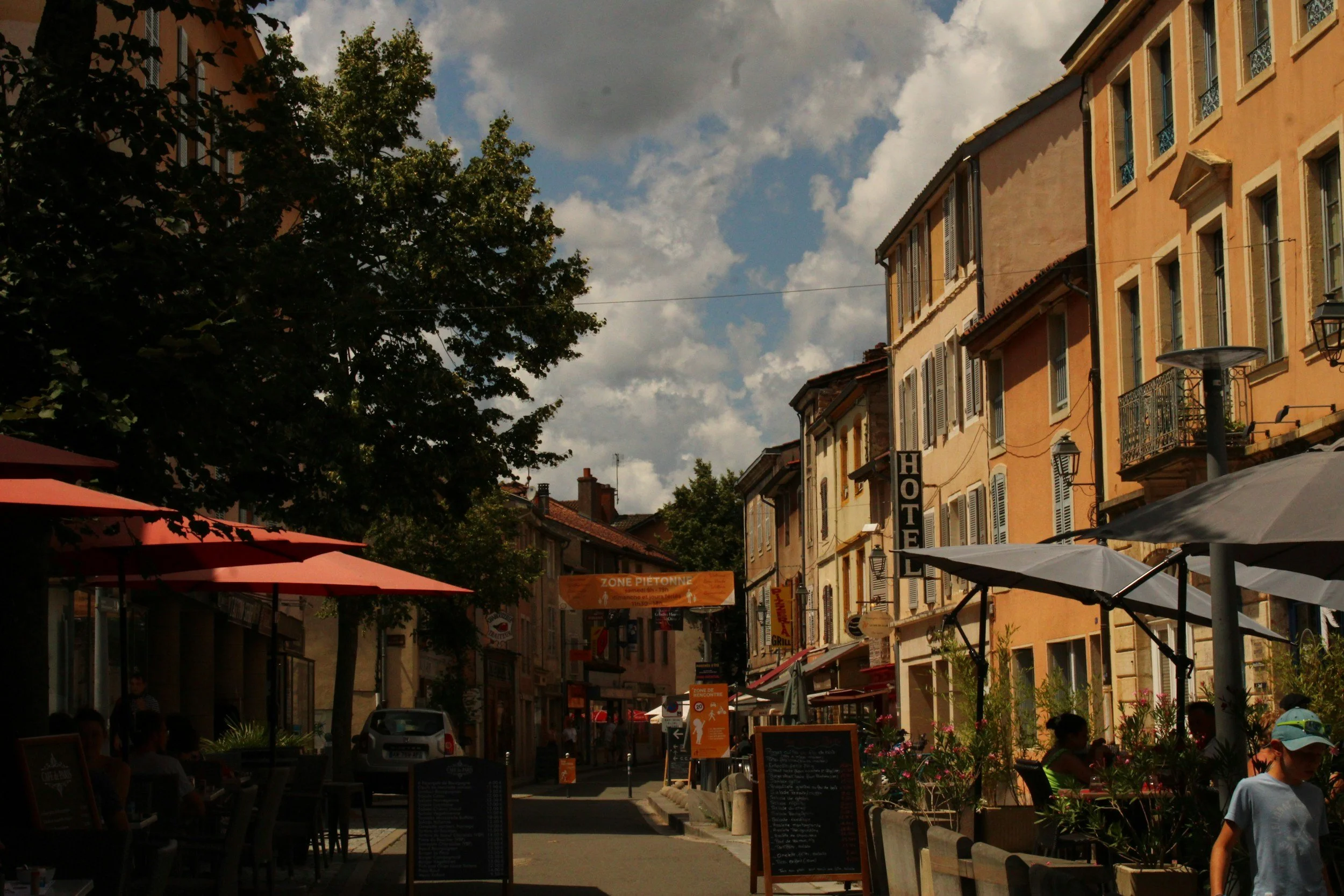
When I arrive in Cluny, I don't head straight for the abbey. The signs all point that way, but I usually start along Rue Lamartine before wandering into Rue Mercière instead. Within a couple of minutes you've passed independent bookshops, cafés, wine merchants and small food shops, while students from the Arts et Métiers engineering school cycle across the square or stop for coffee between lectures. It doesn't take long before Cluny feels less like somewhere built around a single monument and more like a town that's simply getting on with its day.
I nearly always slow down on Rue Lamartine because the smell of freshly roasted coffee from La Brûlerie d'Archibon reaches the street before the shop comes into view. Inside you'll find freshly roasted beans alongside loose-leaf teas, chocolates and regional products, and a few doors away Le Cellier de l'Abbaye is a good place to browse local wines whether you're taking a bottle home or looking for something to enjoy with lunch.
If I'm planning a picnic, I buy the food before lunch rather than afterwards. Several of Cluny's independent food shops still close for part of the afternoon, so it's worth making the most of the morning. Crèmerie de l'Abbaye closes between 13:00 and 15:30, and I'd usually stop there first for Mâconnais goat's cheese before calling into Pâtisserie Polisson on Rue de la République for bread or pastries. On Saturday mornings there's often a queue stretching onto the pavement as locals pick up their bread before the market, which is usually a good sign you've found the right bakery.
If you're visiting on a Saturday, I'd let the market decide the order of the day. From around 7:30 until 13:00, producers spread across Place du 11 Août 1944, Rue du 11 Août and the surrounding streets, unloading crates of seasonal fruit and vegetables, bunches of flowers, Mâconnais goat's cheeses, saucisson, jars of local honey, Burgundy wines and still-warm loaves from nearby bakeries. By half past nine the market is already in full swing. Stallholders are chatting with regular customers, café terraces begin to fill, and it's not unusual to see people leaving with wicker baskets loaded with tomatoes, apricots, peaches and enough food for a long lunch at home.
I'd catch one of the earlier departures from Dijon and spend the first couple of hours here before thinking about anything else. The choice is better, the queues are shorter and there are far more opportunities to stop and talk to the producers before the busiest part of the morning arrives. If you're planning a picnic, this is the time to buy it. Pick up a piece of Mâconnais cheese, a fresh baguette, some charcuterie and whatever fruit is in season, then keep it with you for later in the day.
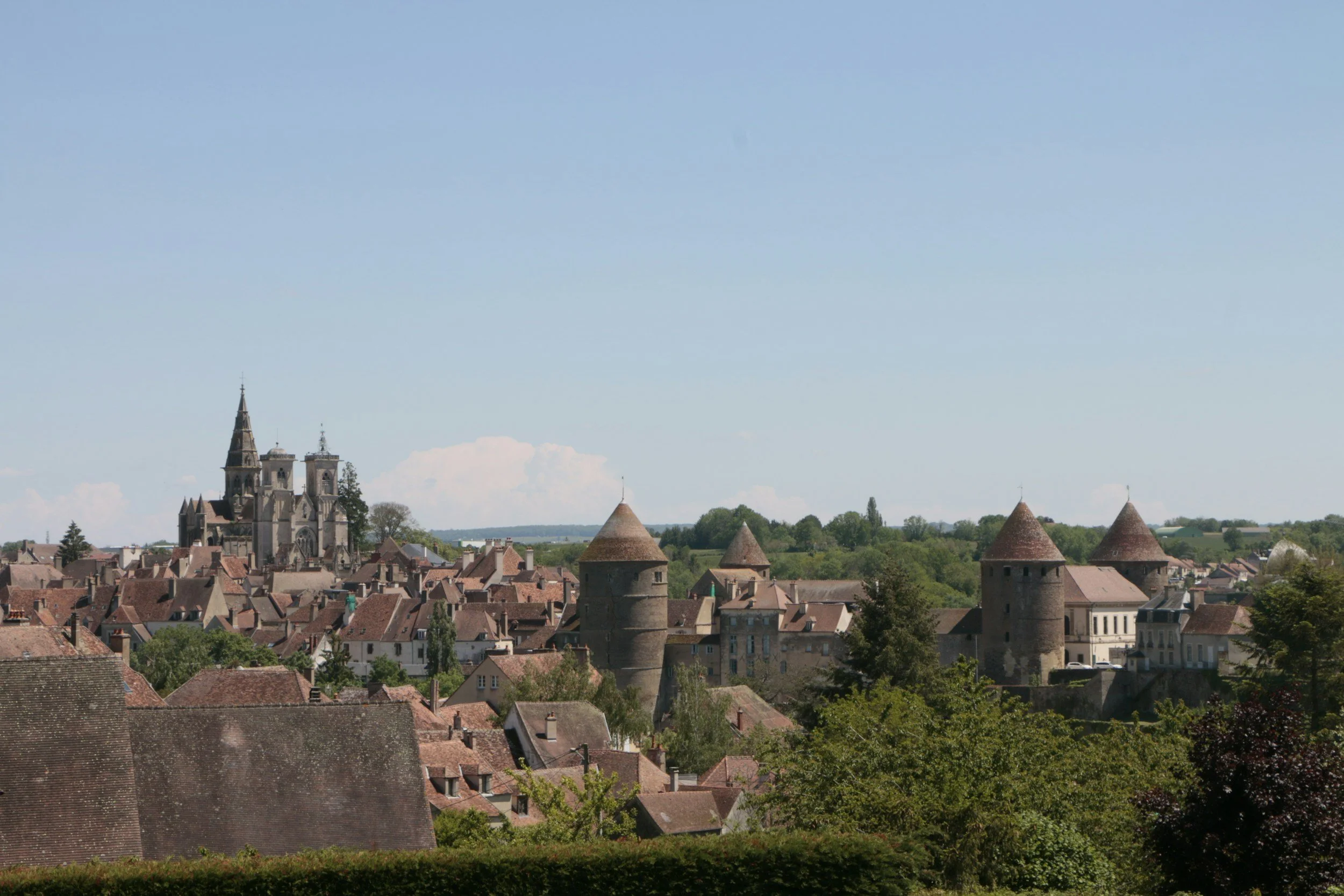
Only once the market starts packing away would I walk over to Cluny Abbey. I think that's where a lot of people get the timing back to front. They rush through one of Burgundy's best weekly markets because they're worried about reaching the abbey first, even though it will still be there an hour later. By early afternoon, the organised coach groups have usually moved on, the courtyards are noticeably quieter and there's much more space to appreciate the scale of what was once the largest church in Western Europe. If you climb onto the viewing platform overlooking the remaining transept, it's also much easier to picture the original footprint of the abbey once the crowds have thinned.
Afterwards, I rarely head straight back towards the bus stop. Instead, I usually wander behind the abbey into Rue Joséphine Desbois, one of those streets that many visitors never reach simply because it isn't on the direct route between the main sights. Some of Cluny's oldest houses survive here, and 6ter Rue Joséphine Desbois still preserves part of the Romanesque clerestory from the original abbey church, a tiny architectural detail that's easy to miss but somehow makes the scale of medieval Cluny much easier to imagine than another information panel ever could. From there I tend to carry on without much of a plan because that's how Cluny seems to work best. You might spend longer than expected browsing a bookshop, stop for another coffee because a terrace has finally moved into the shade, wander into Rue Prud'hon after spotting an old doorway (or double back because you've remembered a chocolate shop you meant to visit earlier!)
I'd happily spend a little longer getting to Cluny because the day rarely feels rushed once I'm there. Beaune is the easiest journey from Dijon, Chagny is where I'd go for the Saturday market if food was the priority, and Semur-en-Auxois is the place I'd choose for medieval streets and viewpoints above the river. Cluny offers something different again.
The walk back to the bus station only takes a few minutes, but I almost always end up making one last stop on Rue Lamartine or Rue de la République because I've spotted another deli, bookshop or wine merchant I'd somehow missed earlier. That happens to me in Cluny more than almost anywhere else in Burgundy.
If you're trying to decide where to base yourself for several days instead of taking individual day trips, southern Burgundy guide compares the towns that make the most practical bases.
Nolay is one of Burgundy's most overlooked day trips
Getting to Nolay takes a little longer than catching the TER to Beaune, but it's still a straightforward journey. I'd take the train from Dijon to Beaune, then change to the regional Mobigo bus for the final stretch through the vineyards of the Côte de Beaune. The road climbs gently into the Hautes-Côtes, passing small villages, limestone cliffs and vineyards before dropping into Nolay. Within a couple of minutes of stepping off the bus, you're walking beneath stone buildings that have barely changed for centuries.
I always head straight to Place Monge. The 14th-century covered market hall (Les Halles de Nolay) dominates the square, its enormous oak roof resting on thick stone pillars that have sheltered traders since the Middle Ages. Around it you'll find the Hôtel de Ville, cafés with tables spilling onto the square, the bakery, butcher and a handful of independent shops that locals still use every week. If you've arrived in the morning, it's not unusual to see bicycles leaning against the stone arcade, neighbours stopping for a conversation before continuing with their shopping, and paper bags filled with bread tucked under people's arms as they cross the square.
From there, I'd wander slowly along Rue de la République, where the old arcaded houses continue for several blocks. There are little details everywhere if you stop looking only for landmarks: carved stone doorways, faded shop signs, wooden shutters, flower boxes hanging from upper windows and courtyards hidden behind heavy timber doors. If one of the cafés has a few empty tables outside, I'd stop for a coffee here rather than saving it until later. This part of Nolay is quiet enough that you can simply sit for a while and watch the town getting on with its day.
That's what I enjoy most about Nolay. Nobody seems to be in a hurry, and there isn't a procession of tour groups moving from one attraction to the next. The covered market hall isn't there as a backdrop for photographs. People still meet underneath it, collect their shopping, chat for a few minutes before heading home and cross the square several times a day because it's simply the centre of everyday life. That's much harder to find in Burgundy's better-known towns than many people realise.
I wouldn't rush through Nolay in an hour before moving on somewhere else. After walking around Place Monge, I'd take my time along Rue de la République, which is where I almost always end up spending longer than I'd planned. The street is lined with independent businesses rather than souvenir shops, and it's the sort of place where you notice something different every time you walk past. I've often turned around halfway down the street because I'd spotted a delicatessen, wine merchant or bakery window I'd somehow missed a few minutes earlier.
One stop I'd make fairly early is Maison Cochard at 19 Rue de la République. The shop has been part of Nolay for generations and is best known for the Succès Nolaytois, a local speciality layered with praline buttercream, almond macaron and chocolate. If that's a little too rich first thing in the morning, the raspberry macarons are an easy choice instead and travel well if you're saving them for later in the day.
A little further along, Boulangerie Dervin is another place I'd rarely walk past without going inside. Alongside the everyday baguettes you'll usually find speciality country loaves, fruit tarts, raspberry tartlets and neatly stacked millefeuille behind the counter. If I'm planning lunch outdoors, this is where I'd buy fresh bread before picking up cheese or charcuterie elsewhere in town rather than relying on whatever happens to be available later in the afternoon.
The opening hours are worth keeping in mind. Boulangerie Dervin closes completely on Wednesdays and Sunday afternoons, while Maison Cochard is closed on Thursdays. In a town like Nolay, where many independent businesses still keep traditional opening hours, it's much easier to buy what you want while you happen to be passing than to assume you'll come back later.
If you're in Nolay on a Monday, I'd be in Place de l'Hôtel de Ville not long after the first stalls start opening. From around 08:00 until midday, producers arrive with crates of seasonal fruit and vegetables, flowers, jars of local honey, Mâconnais goat's cheese, charcuterie and fresh eggs, gradually filling the square as cafés begin serving their first coffees of the morning.
The market is much smaller than the ones in Beaune or Chagny, but that's part of its appeal. By mid-morning, many of the conversations are clearly between people who know each other. Someone stops to ask how the harvest is going, another picks up the same loaf of bread they've probably been buying for years, and stallholders greet regular customers before they've even reached the counter. You'll see very few people photographing the market because almost everyone is there to shop rather than look around. It's the kind of Monday market that still exists because local people use it every week.
Afterwards, I'd walk back along Rue de la République before thinking about lunch. At 44 Rue de la République, Yannick Magny is well known locally for jambon persillé, traditional judru sausage and other Burgundy charcuterie, and it's one of my favourite stops before leaving town. I'd usually call in after picking up bread from Boulangerie Dervin, then add a piece of Mâconnais goat's cheese from the market or another local producer, finishing with something sweet from Maison Cochard. By the time everything is packed into a paper bag, lunch has pretty much organised itself.
That's one of the reasons Nolay stays with me. Instead of planning the day around a restaurant reservation, you end up building lunch one stop at a time as you wander through the town. By the time you leave, you've visited the baker, the cheesemaker, the charcutier and the pâtisserie without ever feeling like you were following an itinerary.
After lunch, I wouldn't head straight back to the bus stop. I'd wander across Place Monge once more before slipping into the quieter streets behind the market hall. Rue Philippe Pot, Rue des Halles and the little lanes connecting them are much calmer once the market has packed away. The cafés empty out, shopkeepers have time for longer conversations, and details that disappeared into the background earlier in the day suddenly stand out, from carved stone doorways to uneven timber-framed façades and old painted shop signs.
Before leaving, I'd call into Les Petits Bonheurs de Nataline on Rue de la République. Alongside books about Burgundy you'll find locally made jams, stationery, gifts and regional products that are much harder to find in the larger towns. Around the corner, Vent du Sud mixes antique furniture, vintage homewares, ceramics and a small tea room inside an old stone building where every room seems to lead to another. Even if you're not planning to buy anything, it's an interesting place to browse before heading back towards the square.
By late afternoon, Les Halles de Nolay has a completely different pace from the busy Monday market. The delivery vans have gone, the traders have packed away their stalls, and the square belongs to the cafés again. A few people sit outside with a drink, others cross the square carrying shopping home, and the market hall quietly returns to doing what it has done for centuries: sitting at the centre of everyday life.
If the markets are the main reason you're visiting, market weekend puts the best weekly markets into an itinerary that works entirely by train.
When it's time to catch the bus back to Beaune, I usually have a paper bag from Maison Cochard or Boulangerie Dervin tucked into my backpack. The journey back follows the same vineyards and limestone hills you passed earlier in the day, only this time you're leaving with a much clearer idea of what life in a small Burgundy market town actually looks like.
Compared with the other places on this list, Beaune is the easiest journey, Chagny has the largest market, and Semur-en-Auxois is the obvious choice if medieval streets are your priority. Nolay doesn't really compete with any of them. It's simply a working market town where people still come to buy bread, collect cheese, stop for coffee and catch up with neighbours beneath a 14th-century market hall. That's exactly the reason I'd come.
Tonnerre is the place I'd choose if you like towns that feel a little mysterious
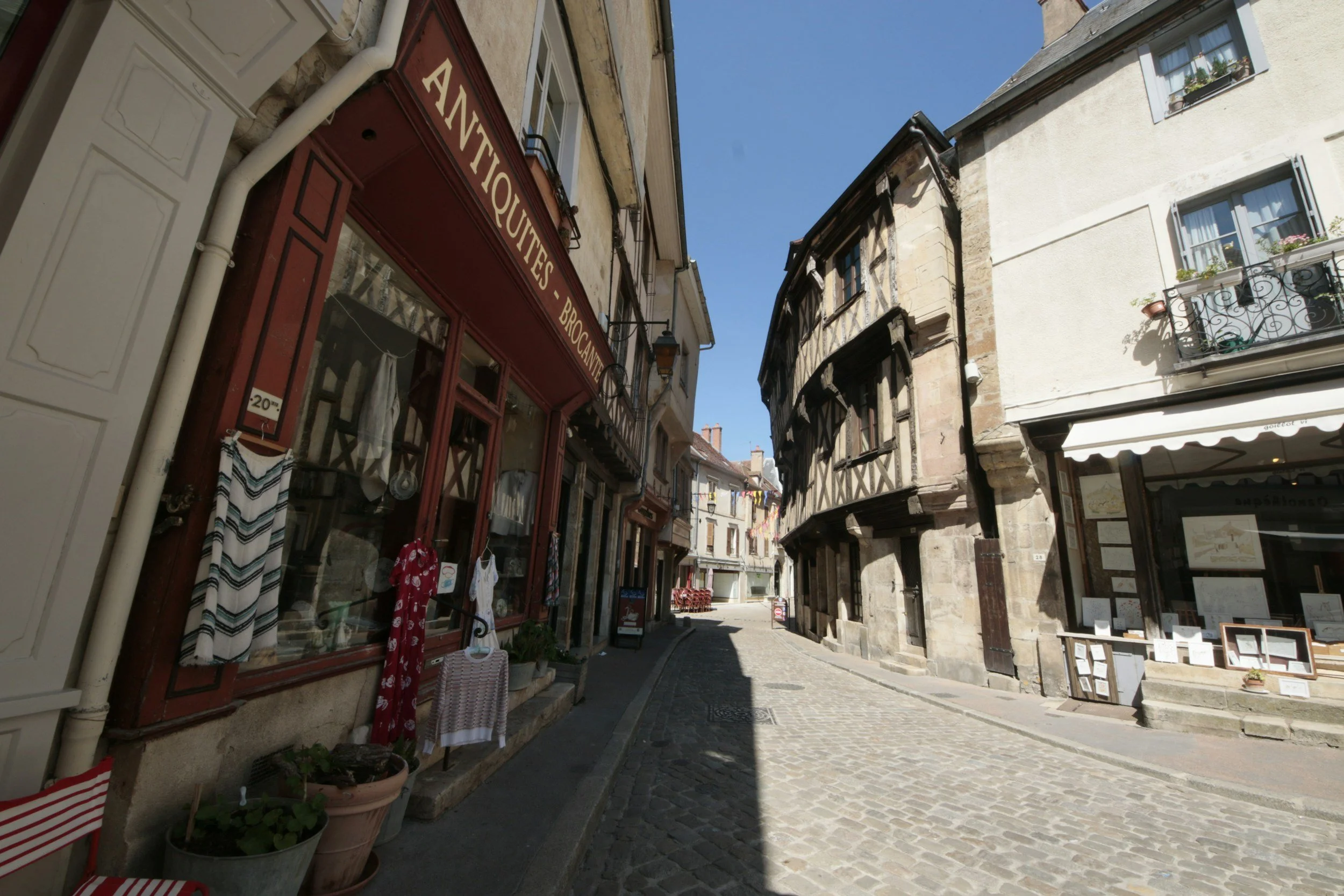
Tonnerre isn't the sort of place that wins you over in the first two minutes after leaving the station. The walk from Gare de Tonnerre begins with apartment buildings, supermarkets and everyday businesses, and for a little while it feels like any other small town in Burgundy. About ten minutes later, you're standing beside La Fosse Dionne, a spring that has flowed from the foot of the cliffs for centuries, or looking across at the enormous Hôtel-Dieu de Tonnerre, founded in 1293 by Marguerite of Burgundy and still one of the largest surviving medieval hospital buildings in Europe. The contrast is what makes Tonnerre memorable.
Getting here is refreshingly straightforward. Direct TER trains run from Dijon to Gare de Tonnerre, and from the station it's an easy walk into the historic centre. Rather than making a beeline for La Fosse Dionne, I'd follow Rue de l'Hôpital past the Hôtel-Dieu first before continuing towards Rue Georges Pompidou and the older streets around the spring. That route feels much more natural. You pass bakeries, cafés and everyday shops before the town's oldest landmarks begin appearing between the buildings, and by the time you reach the spring you've already seen much more of Tonnerre than visitors who simply walk there and turn straight back.
From the station, I'd follow Rue de la Gare before continuing onto Rue de l'Hôpital, which is the route most people take into the historic centre. The first part of the walk passes apartment buildings and everyday businesses, but before long you'll reach independent bakeries, food shops and cafés where local people are picking up lunch or stopping for coffee rather than browsing souvenir shelves.
One place I nearly always stop is Boulangerie Casaubon on Rue de l'Hôpital. The queue often stretches onto the pavement around lunchtime, with people leaving carrying warm baguettes, fruit tarts and paper bags filled with pastries. It's the kind of bakery that still feels like part of the town's daily routine rather than somewhere catering to visitors. Just a few doors away, La Tentation combines a pâtisserie, chocolatier and tea room. Alongside beautifully made pastries, you'll find its well-known Tonnerroise baguette, chocolates and seasonal desserts in the display cabinets.
If I'm putting together lunch, I carry on for another minute to La Boucherie Gourmande. Between the butcher, the bakery and the pâtisserie, it's easy to assemble a picnic of fresh bread, Burgundy charcuterie, local cheeses and something sweet before continuing towards the old town. I much prefer doing that here than booking lunch weeks in advance. It fits the pace of Tonnerre far better, and everything is within a few minutes' walk of the station and the historic centre.
From there, it's only a short walk to La Fosse Dionne. Many people stop for a photograph and move on, but it's worth walking all the way around the basin. The spring changes colour throughout the day, shifting from deep blue to emerald green as the light moves across the water, and despite decades of exploration, no diver has ever reached its true source. Information panels nearby explain both the geological history and the legends surrounding the spring, including the story that Saint Jean de Réome defeated a basilisk here. Standing beside the water, it's easy to understand why the spring has inspired stories for centuries.
From La Fosse Dionne, I'd carry on uphill towards the Hôtel-Dieu Notre-Dame des Fontenilles rather than looping back into the centre. The climb is steady rather than steep, following streets lined with stone townhouses, old walls and small gardens before the enormous medieval hospital comes into view. Founded in 1293 by Marguerite of Burgundy, the building stretches for more than a hundred metres, making it one of the longest surviving medieval hospital buildings in Europe. Before going inside, it's worth turning around for a moment. From here, the rooftops of Tonnerre spread across the valley, with the church towers and the surrounding hills rising beyond them.
After visiting the Hôtel-Dieu, I'd keep walking instead of heading straight back towards the spring. The streets around Rue de l'Hôtel de Ville, Rue de Venise and the smaller lanes linking them are noticeably quieter than the route between the station and La Fosse Dionne. Window boxes spill over old stone façades, heavy wooden doors open into hidden courtyards and many of the houses still have carved lintels and worn stone steps that hint at just how old this part of town is.
I'd also make time for a couple of independent shops before leaving. Deuxième Vie, opposite the Hôtel de Ville, is packed with antiques, vintage furniture and second-hand finds that change from one visit to the next. A few minutes away on Rue de l'Hôpital, L'Échoppe des Arcanes brings together handcrafted leather goods, antiques and work by local artisans in a space that's small enough to browse properly without feeling rushed. They're not places you'd travel across Burgundy to visit on their own, but they fit naturally into an afternoon in Tonnerre and add another layer to the town beyond its better-known landmarks.
If you have a choice, I'd plan the visit around Tonnerre's Saturday market. During the morning, stalls fill Place Marguerite de Bourgogne and the surrounding streets with seasonal fruit and vegetables, local cheeses, flowers, honey, charcuterie and fresh bread, and the cafés quickly fill with people stopping for coffee before carrying their shopping home. On other weekdays, the pace is completely different. Many of the same streets are almost empty apart from residents running errands, shopkeepers chatting in doorways and the occasional TER arriving at the station. Seeing both sides of the town would be ideal, but if I had to choose, I'd happily take the market morning.
Tonnerre isn't somewhere I'd visit to tick off one landmark after another. I'd leave time to walk back through the centre, call into a bakery you missed earlier, sit for a coffee in Place Marguerite de Bourgogne, or wander down another side street before heading back towards the station. The walk back to the station only takes about ten minutes, but I'd leave a little extra time. Tonnerre has a habit of making you stop one more time, whether it's another look at La Fosse Dionne, a bakery window or a street you didn't notice earlier.
I wouldn't compare Tonnerre with Beaune because they're trying to do completely different things. Beaune has grand wine houses, elegant streets and a polished historic centre. Tonnerre has a medieval hospital stretching across the hillside, a spring that nobody has ever reached the bottom of, independent food shops that still serve the local community and residential streets where daily life carries on around buildings that have stood here for centuries. If that's the version of Burgundy you're hoping to find, Tonnerre deserves much more than a quick stop on the way somewhere else.
Which Burgundy village should you choose?
People often ask which of these towns I'd recommend if they only have one day based in Dijon, but I don't think there's one right answer because it depends far more on how much time you have than on which place is objectively "best". Some destinations reward a couple of leisurely hours before heading back for dinner, while others become much more enjoyable once you stop worrying about catching the next train or bus.
If you've only got half a day, I'd keep things simple and choose Beaune. The direct TER journey is quick, the station is only a short walk from the historic centre, and you can comfortably wander through the old streets, browse the shops around Rue Monge and Place Carnot, visit Les Halles if it's market day and still have time for lunch before returning to Dijon. Tonnerre also works surprisingly well if you're looking for somewhere a little different. The station is close to the centre, most of the main sights are within walking distance of one another, and you can easily spend a few hours wandering between La Fosse Dionne, the medieval streets and a couple of independent food shops without feeling rushed.
Once you've got a full day, I'd start looking at the towns where there isn't any advantage in rushing. Semur-en-Auxois is one of them. I'd arrive on one of the earlier buses from Montbard, spend the morning around Place Notre-Dame and the market if it's Sunday, then wander through Rue Buffon, Rue du Rempart and the quieter streets before walking down towards the Armançon. After lunch, I'd head back up to the ramparts before catching a later coach to Montbard. Trying to fit Semur into three or four hours usually means skipping the riverside paths or constantly watching the time.
I'd also give Nolay a full day. The 14th-century market hall, independent bakeries, butcher, pâtisserie and small shops along Rue de la République are all within a few minutes of one another, but that's exactly why it's easy to spend longer there than you expected. Between stopping for coffee in Place Monge, browsing the food shops and walking through the quieter streets behind Les Halles, the afternoon tends to disappear without needing a packed itinerary.
Cluny is another place I'd never try to rush. The train and bus connection from Mâcon takes a little longer than travelling somewhere like Beaune, so I'd make the most of the day once I'm there. If you're visiting on a Saturday, the market deserves at least a couple of hours on its own before you even think about the abbey. After that, there's plenty of time to wander through Rue Lamartine, browse the independent shops and cafés, and visit the abbey without having one eye on the return bus.
There are also a couple of places where I'd seriously think about staying overnight. In Semur-en-Auxois, the streets around Place Notre-Dame become much quieter once the last day visitors leave, and an evening walk across Pont Pinard or along the western ramparts is very different from Sunday lunchtime. In Cluny, staying overnight means you don't have to organise dinner around the last bus back to Mâcon. You can linger over a meal, take another walk through the centre after dark and wake up in town the following morning instead of arriving with everyone else on the first bus.
If you're travelling through Burgundy rather than using Dijon as a base, I'd happily spend a night in either of those towns. Having the evening and the following morning gives you time to see them when the cafés are opening, the bakeries are busy with local customers and the streets belong almost entirely to the people who live there.
If markets are one of the reasons you're coming to Burgundy, I'd choose the town before choosing the train. Chagny is the place I'd visit on a Sunday, arriving early enough to see the traders unloading crates of fruit, vegetables, flowers, cheeses and charcuterie before the busiest part of the morning. Cluny's Saturday market is larger and draws producers from across southern Burgundy, filling Place du 11 Août 1944 and the surrounding streets with everything from Mâconnais goat's cheese to Burgundy wines, seasonal produce and fresh bread. Nolay's Monday market is much smaller, but that's exactly what I like about it. Most of the people carrying shopping bags are there because it's Monday morning, not because it's listed in a guidebook.
I'd choose Beaune if I only had half a day and wanted the simplest journey from Dijon. Semur-en-Auxois deserves a full day, especially if you want time for the riverside paths, the market on Sunday morning and the quieter streets beyond Place Notre-Dame. Tonnerre is the town I'd pick if La Fosse Dionne and the Hôtel-Dieu are enough of a reason to travel somewhere that many visitors drive straight past. Cluny is worth the longer journey if you're interested in medieval history, independent food shops and one of Burgundy's best weekly markets. Nolay is the place I'd recommend to anyone who enjoys spending as much time in bakeries, butcher's shops and local cafés as they do visiting historic landmarks.
If I were planning the trip myself, I wouldn't start by asking which town is supposed to be the prettiest. I'd start by deciding how I wanted to spend the day. Some mornings I'd happily catch an early train for a market. Other days I'd rather spend an afternoon walking beside the Armançon in Semur-en-Auxois, browsing the food shops in Nolay or sitting outside a café in Cluny after everyone else has moved on. That's usually the decision that matters most.
If this is exactly the kind of France you're looking for, these countryside towns rounds up several others that are just as easy to reach by rail.
The small things that make these day trips much easier
After visiting quite a few of these towns, I've found that the train is usually the easiest part of the journey. Most TER services run exactly as you'd expect. The practical questions tend to start once you've arrived, particularly if you're changing to a regional bus or trying to work out how far the historic centre is from the station.
Beaune and Tonnerre are the simplest arrivals. You leave the station and can walk straight into the centre in around ten minutes without needing another connection. Both routes are clearly signposted, so by the time you've crossed the main road you're already heading towards the historic streets.
Semur-en-Auxois takes one extra step because the train only goes as far as Montbard. From there, the regional bus leaves from directly outside the station entrance, with departures usually planned around arriving TER and TGV services. If you've looked at the timetable before leaving Dijon, there's very little to think about once you arrive. Walk out of the station, board the bus and stay on until it reaches the centre of Semur.
The journey to Cluny works in a similar way. After arriving at Mâcon-Ville, the Mobigo 701 bus departs from outside the station for the final stretch into town. Nolay is also reached by bus because its railway station closed many years ago. From Beaune, regional buses connect with the town in under half an hour, making it an easy addition to a day based around the Côte de Beaune.
None of these connections are difficult, but they're worth knowing before you leave. Spending two minutes checking which station you'll change at and where the bus departs removes most of the uncertainty before the trip has even begun.
Several of these towns were built centuries before suitcases with wheels became the norm, so it's worth thinking about luggage if you're staying overnight. Semur-en-Auxois requires the most effort. Although the bus from Montbard drops you much closer than the old railway station ever did, you'll still be walking uphill on cobbled streets once you reach the historic centre. If you're carrying a large suitcase, taking your time is far easier than trying to drag it over uneven stone. Tonnerre has a few gentle climbs between La Fosse Dionne and the Hôtel-Dieu, while Beaune, Cluny and Nolay are generally flatter and easier to manage with luggage.
Opening hours deserve a little planning too. In many of these towns, independent businesses still close for part of the afternoon. If you're relying on bakeries, cheesemongers or delicatessens for lunch, I'd buy everything soon after arriving instead of assuming you'll find the same shops open at three o'clock. In Cluny, Crèmerie de l'Abbaye closes between 13:00 and 15:30, and in Nolay, both Maison Cochard and Boulangerie Dervin have weekly closing days, so checking opening times before you travel can save a disappointing walk across town.
The same applies to cafés. Beaune has enough visitors that you'll usually find somewhere serving coffee throughout the afternoon, but the smaller towns are quieter once lunch service finishes. I normally pick up something from a bakery before everything closes, then find somewhere to sit for a while before carrying on. In Semur-en-Auxois, that might be one of the benches overlooking the Armançon below the ramparts. In Nolay, I usually end up beneath Les Halles or in Place Monge, while Cluny has plenty of benches and café terraces around Place du 11 Août 1944 where it's easy to pause before wandering through the abbey district.
If your dates are flexible, I'd choose the market before choosing the train. Cluny's Saturday market is the largest of the five towns, with producers filling Place du 11 Août 1944 and the surrounding streets from early morning. Chagny's Sunday market is another favourite, particularly if you enjoy food markets, while Nolay's Monday market is smaller and feels very much like a town going about its weekly routine rather than putting on an event for visitors. If markets aren't your priority, arriving after lunch has its own advantages. By mid-afternoon, Semur-en-Auxois and Tonnerre are usually much quieter, making it easier to walk through the centre, photograph the streets and find a table in a café.
Sundays are worth planning around too. If you're visiting Chagny, Sunday is the obvious choice because of the market. In the other towns, however, you'll generally find fewer independent shops open than you would on a weekday or Saturday. Bakeries are usually busiest in the morning, while some delicatessens, wine merchants and smaller boutiques may not open at all. If shopping is part of the reason you're visiting, it's worth checking opening hours before you book your train.
One mistake I'd avoid is trying to fit several of these towns into the same day. On a map, the distances don't look especially great, but changing trains, waiting for buses and walking between stations and historic centres all take time. Trying to combine Semur-en-Auxois and Cluny, or Tonnerre and Nolay, usually leaves very little time to enjoy either place.
I'd rather spend that extra hour somewhere worthwhile. Call into another bakery before heading back to the station. Walk down to the Armançon one last time in Semur-en-Auxois. Browse the antique shops in Tonnerre, have another coffee beneath Les Halles in Nolay, or pick up a bottle from one of the wine merchants in Beaune before your train leaves. The return journey will still be there, and Burgundy is one of those regions where a slow afternoon nearly always turns out to be the better plan.
If Dijon is only one stop on a longer journey, market towns near Lyon picks up where this guide leaves off with several more towns that are easy to reach by train.
Why I haven't included every famous Burgundy village
If you've spent any time looking at Burgundy travel guides, you might be wondering why Vézelay, Flavigny-sur-Ozerain and Châteauneuf-en-Auxois aren't on this list. They're among the region's best-known villages, and if this article had simply been about Burgundy's most beautiful places, I'd almost certainly have included all three. The focus here is slightly different, though. I wanted to recommend the villages that are the easiest to enjoy if you're staying in Dijon and relying entirely on trains and regional buses, and once I started comparing timetables, walking distances and bus connections, I realised that some of Burgundy's most famous destinations become much more complicated than they first appear.
Flavigny-sur-Ozerain is probably the best example. The village itself is everything you'd hope for, with medieval streets, honey-coloured stone houses and the abbey where Anis de Flavigny sweets have been made for generations. Reaching it without a car usually means taking a TER to Les Laumes-Alésia before continuing by regional bus or taxi, and while that's perfectly achievable, the limited number of connections means your day quickly becomes tied to the timetable. Missing a bus or deciding to stay a little longer for lunch suddenly has much bigger consequences than it would in somewhere like Beaune or Tonnerre, where you can usually walk back to the station whenever you're ready and catch the next train.
I found myself reaching a similar conclusion with Vézelay. There's no question that it's one of Burgundy's most remarkable places, and the walk up through the village towards the Basilica of Sainte-Marie-Madeleine is reason enough to make the journey. The practical difference is that there isn't a railway station in the village itself. Most visitors travel to Sermizelles-Vézelay before continuing by bus or taxi, so although public transport works well enough, it leaves much less flexibility once you've arrived. If you decide to spend another hour exploring the side streets, visit another gallery or sit down for a long lunch, you're also deciding whether you'll still make your planned connection back.
Châteauneuf-en-Auxois falls into much the same category. The fortified village and its castle are spectacular, particularly as you approach from the surrounding countryside, but getting there by public transport usually involves combining trains with regional buses that don't run especially often. It's the sort of journey I'd happily plan if I had a week in Burgundy and didn't mind organising the day around a timetable, but it isn't where I'd send someone making their first train trip from Dijon.
The more I compared these villages with places like Semur-en-Auxois, Cluny, Nolay, Tonnerre and Beaune, the more obvious the difference became. In the towns I've included in this guide, it's easy to change your plans once you've arrived. If you discover another bakery in Nolay, spend longer at Cluny's Saturday market than you expected or decide to walk down to the river one more time in Semur-en-Auxois before heading back, doing so rarely affects the rest of the day because the return journey is usually straightforward. In villages where buses only run a handful of times, those small, spontaneous decisions become much harder because the timetable is never very far from your mind.
That's ultimately why these villages aren't part of this particular guide. I don't think they're less beautiful, less interesting or less deserving of a visit. I simply think they're better suited to travellers who already have a little experience using Burgundy's regional transport network or who have enough time to build an itinerary around the available bus services rather than expecting the transport to adapt to their plans.
If you're spending several days in Burgundy, I'd absolutely start adding places like Vézelay, Flavigny-sur-Ozerain and Châteauneuf-en-Auxois to your itinerary because each of them offers something genuinely special. If, on the other hand, you're arriving in Dijon for a long weekend and hoping to enjoy a couple of relaxed day trips by train, I'd still begin with the five towns in this guide and save the more complicated journeys for a return visit.
If Burgundy's food is half the reason you're planning the trip, Chablis weekend is another easy train journey where the markets, wine bars and local producers become just as memorable as the sightseeing.
If you're still comparing Burgundy with other quieter corners of France, French countryside towns rounds up some of my favourite small towns you can reach by rail.
If this were my first week exploring Burgundy by train...
Looking back, I don't think I'd begin with the villages that require bus connections or careful planning around timetables. I'd keep the first day as simple as possible, and for me that would mean taking the morning TER from Dijon to Beaune.
Twenty minutes after leaving Dijon, you're already walking along Avenue du 8 Septembre towards the old town. There's no second connection to think about, no bus waiting outside the station and no feeling that you need to get somewhere before the day can properly begin. Within a few minutes you're standing at the edge of the historic centre deciding whether to wander towards Rue Monge, cut through to Place Carnot or simply follow whichever street catches your eye first.
I don't think I'd plan very much beyond that.
If it happened to be market day, I'd spend a while walking around Les Halles, stopping at whichever stalls looked busiest before picking up something for lunch. I'd almost certainly end up inside Athenaeum, telling myself I was only going in for a quick look before walking out with another book I hadn't planned on buying. Somewhere between Rue Monge, Rue Maufoux and the smaller lanes linking them, I'd probably stop for coffee, browse another wine merchant and realise I'd drifted much further through the town than I'd intended.
By the time I walked back towards the station that afternoon, I don't think what I'd remember most would be any one particular sight. I'd remember how straightforward the day had been. I'd know what the TER felt like, how the stations worked, how easy it was to step off the train and start exploring, and I'd probably find myself looking at the departure board in Dijon that evening thinking, right... where shall I go tomorrow?
The next place I'd choose would probably surprise most people because I'd skip another famous wine town altogether and go straight to Tonnerre. I like how it constantly changes as you walk. The route from the station feels fairly ordinary at first, then suddenly you're standing beside La Fosse Dionne, where the water is almost unnaturally clear, before climbing gently towards the Hôtel-Dieu and finding yourself looking back across rooftops you hadn't even realised were there ten minutes earlier. I'd almost certainly stop at La Tentation on Rue de l'Hôpital for something sweet because it's difficult not to, and I'd probably end up carrying a warm baguette from Casaubon for half the afternoon simply because I bought it too early. That's exactly the sort of small mistake I seem to make in France all the time, and somehow it always becomes one of the things I remember.
I wouldn't rush to Semur-en-Auxois, even though it's one of the places people ask about most. In fact, I'd deliberately wait until I had one day with absolutely nothing else planned afterwards. It's easy to underestimate how much time disappears there once you've crossed Pont Joly and wandered through Porte Sauvigny into the old town. I always think I'll spend an hour around Place Notre-Dame, then I notice another lane running downhill towards the Armançon, decide to see where it goes, end up walking below the ramparts instead, and suddenly it's mid-afternoon. The biggest mistake I see people making is arriving with Fontenay Abbey or Flavigny already pencilled in afterwards. Every time I've tried squeezing something else into the same day, I've enjoyed Semur less. These days I'd rather buy something from Boulangerie Alexandre, carry it down towards the riverside path near Pont Pinard, and forget about the clock for a while.
I'd probably leave Cluny until later in the week, not because the journey is difficult, but because by then I'd have stopped worrying about changing from train to bus altogether. The connection at Mâcon-Ville feels intimidating when you're sitting at home looking at maps, but after a few days travelling around Burgundy it barely registers. I'd arrive early on a Saturday if I could because the market around Place du 11 Août completely changes the town. Before 9 o'clock the stallholders are still setting up fruit and vegetables, by 10:30 half the square seems to be carrying bread under one arm and flowers under the other, and by lunchtime people have drifted onto café terraces while the market slowly begins packing away. I'd almost certainly leave with coffee from La Brûlerie d'Archibon, cheese from Crèmerie de l'Abbaye before it closes for lunch, and a bottle from Le Cellier de l'Abbaye, then realise I'd spent more time wandering Rue Mercière than inside the abbey itself. I'm perfectly happy with that because I don't think Cluny is really about ticking off the abbey. It's about everything that happens around it.
Nolay is probably the place I'd leave until later in the week, once I'd already visited Beaune or Semur-en-Auxois and wasn't worrying about whether I'd seen Burgundy's biggest sights. I'd arrive with very little planned beyond walking into Place Monge and seeing where the morning took me. Before long I'd find myself beneath the timber-framed market hall, watching neighbours stop for conversations on their way across the square while stallholders packed away crates and folded tables after the market. I'd call into Maison Cochard for a Succès Nolaytois, fully intending to save it for the train home before giving in a few minutes later, then pick up jambon persillé from Yannick Magny and a fresh baguette from Boulangerie Dervin for lunch.
If I happened to be there on a Monday, I'd probably spend even longer in the centre. The weekly market isn't particularly large, but that's part of its appeal. Most of the people carrying shopping bags have walked into town because it's market day, not because they're working through a list of places to visit, and before long the cafés around Place Monge begin filling with the same familiar faces. By lunchtime, the stalls start disappearing again and the square settles back into its usual routine.
I don't think I'd rush anywhere after that. I'd wander along Rue de la République, stop outside another bakery window, browse whichever independent shop happened to catch my eye and eventually find somewhere to sit beneath Les Halles before walking back towards the bus. By the time I walked back towards the bus, the paper bag from Maison Cochard was already empty, lunch had somehow turned into an afternoon of wandering between bakeries, food shops and little side streets, and catching the next bus felt far less important than it had when I first arrived.
Looking back, I also think I'd make one decision that goes against a lot of online itineraries. I wouldn't try to combine places simply because they're close together on the map. It always seems logical to pair Semur-en-Auxois with Flavigny-sur-Ozerain, or to squeeze another stop in after Cluny, but every extra train, bus or taxi chips away at the time you actually spend in the places you've travelled to see.
I'd rather have an afternoon where nothing much is scheduled. One that starts with coffee in Beaune, turns into an unplanned stop at a wine merchant on Rue Maufoux, becomes lunch built from whatever looked good in a bakery window, and somehow ends with enough time for another slow walk before the train home. Or a day in Tonnerre where I think I'm heading back towards the station, only to realise I've wandered into another side street and ended up back at La Fosse Dionne without meaning to.
The same thing happened to me more than once in Cluny. I'd tell myself it was time to leave, then stop to watch the market traders loading their vans, wander into another bookshop or sit down for one last coffee while the square gradually emptied around me. In Nolay, it was usually the bakeries or food shops that delayed me. In Semur-en-Auxois, I'd often find myself taking the longer walk back along the Armançon instead of heading directly for the bus.
By the time I boarded the train back to Dijon, it rarely felt as though I'd done everything. There was almost always another street I hadn't walked, another shop I hadn't stepped into or another café I'd noticed too late. Oddly enough, that's one of the reasons I'd happily go back. Burgundy never really felt like a region I needed to finish. It felt like somewhere I could return to, knowing there would always be another train, another market morning and another town waiting at the end of the line.
If you're thinking beyond Dijon, this piece about travelling around Burgundy without a car looks at how the whole region fits together using trains and regional buses.
FAQs about train travel in Burgundy
Which Burgundy village is easiest to visit by train from Dijon?
If you're only choosing one, I'd recommend Beaune. It's the simplest journey by far, with regular direct TER trains from Dijon and a station that's only a short walk from the historic centre. You can step off the train and be wandering around Rue Monge, Place Carnot or the Hospices de Beaune within minutes, which makes it an ideal first day trip if you've never travelled around Burgundy by train before.
If you've already visited Beaune, I'd look at Tonnerre next. The direct train is just as straightforward, but the town feels completely different, with quieter streets, the remarkable Fosse Dionne spring and a much less touristy atmosphere.
Can you visit Semur-en-Auxois by public transport?
Yes, and it's much easier than many people expect.
Take the TER from Dijon to Montbard, then change to the regional bus waiting outside the station. The journey is straightforward, but I'd recommend allowing a full day rather than trying to combine Semur-en-Auxois with somewhere else. Once you reach the medieval centre, you'll probably spend much longer exploring than you expected, especially if you walk down towards the Armançon River or around the old ramparts.
Is Cluny worth visiting without a car?
I think so, provided you don't mind one bus connection.
From Dijon, you'll travel by TER to Mâcon-Ville, then continue on the Mobigo 701 bus into Cluny. It's not the quickest journey in Burgundy, but it's reliable and easy once you've done it. I'd particularly recommend visiting on a Saturday, when the weekly market fills the streets around Place du 11 Août, making the town feel much livelier than it does during the rest of the week.
Which Burgundy villages have the best weekly markets?
If markets are one of the main reasons you're visiting Burgundy, I'd actually plan your travel dates around them.
Saturday: Cluny
Sunday: Chagny
Monday: Nolay
Each has a completely different feel. Cluny has the widest choice of local producers, Chagny is one of the region's best-known Sunday markets, while Nolay is much smaller and feels like a genuine local shopping morning rather than a visitor attraction.
Which Burgundy villages are hardest to visit without a car?
Beautiful doesn't always mean practical.
Places like Vézelay, Flavigny-sur-Ozerain and Châteauneuf-en-Auxois can all be reached using combinations of trains, buses or taxis, but they take considerably more planning than the destinations in this guide. If it's your first trip to Burgundy, I'd start with places like Beaune, Tonnerre, Cluny or Semur-en-Auxois, where the public transport feels much more straightforward.
Can you explore Burgundy wine villages without renting a car?
Yes, although it's worth adjusting your expectations slightly.
Some of Burgundy's famous vineyard villages, such as Meursault and Santenay, can be reached by public transport, while larger wine towns like Beaune make excellent bases for tasting local wines without driving. The smaller villages are often easier to enjoy if you're happy walking between wineries or using regional buses rather than expecting train stations in every village.
Are Burgundy's TER trains easy to use?
In my experience, yes.
Regional TER trains are one of the easiest ways to travel around Burgundy. Stations are generally small, platforms are clearly signed and journeys between Dijon, Beaune, Tonnerre and Mâcon are straightforward. The only places in this guide that require an extra bus connection are Semur-en-Auxois, Cluny and Nolay, and in each case the connection is much simpler than it first appears when you're planning the trip.
Which Burgundy village would you choose for a first visit?
I'd still begin with Beaune, but probably not for the reason most people expect.
It isn't because I think it's the most beautiful town in Burgundy. I'd choose it first because everything is easy. The train journey is short, the station is close to the centre and there's no pressure to understand local bus timetables on your first day. Once you've got one successful train trip behind you, exploring places like Semur-en-Auxois, Cluny or Nolay suddenly feels much more approachable.
Can you visit several Burgundy villages in one day?
Technically, yes.
Personally, I wouldn't.
I've tried squeezing multiple villages into a single itinerary and always ended up remembering the train times more than the places themselves. Burgundy is one of those regions where slowing down almost always leads to a better day. I'd much rather spend an extra hour browsing the shops in Cluny, walk the quieter streets behind Place Monge in Nolay or sit beside the Fosse Dionne in Tonnerre than rush back to the station just to fit in another destination.
What is the best time of year to explore Burgundy by train?
Spring and early autumn are my favourite times because the towns feel busy enough to be lively without becoming crowded.
If you're interested in markets, try to match your visit with the weekly market days rather than simply choosing the sunniest forecast. A Saturday in Cluny, a Sunday in Chagny or a Monday in Nolay completely changes the experience. September and October are particularly enjoyable if you like seeing vineyards during harvest, while May and June usually bring long daylight hours that make it easy to spend an entire day wandering without feeling rushed.