Can you visit Pals without a car? Yes. Here's exactly how I'd plan the trip.
At first glance, Pals doesn't look like the sort of place you'd visit without a car. It's a medieval hilltop village surrounded by countryside, and if you spend five minutes searching online, you'll quickly find yourself wondering whether it's more trouble than it's worth.
I wondered exactly the same thing.
What I couldn't find was anyone explaining what the trip actually feels like. Not just which bus to catch, but whether I'd spend half the day travelling, whether staying overnight made more sense, or if I'd be happier choosing somewhere like Girona or Begur instead.
The good news is that Pals is perfectly possible without a car. The trick isn't getting there. It's planning the trip in a way that actually makes sense.
In this guide, I'll show you exactly how I'd do it now. Not just which buses to catch, but whether I'd visit as a day trip or stay overnight, the mistakes I'd avoid, what surprised me once I arrived and how I'd decide between Pals, Girona and Begur before booking anything.
Is Pals worth visiting without a car?
Yes, I think it is, but only if Pals itself is the reason you're coming.
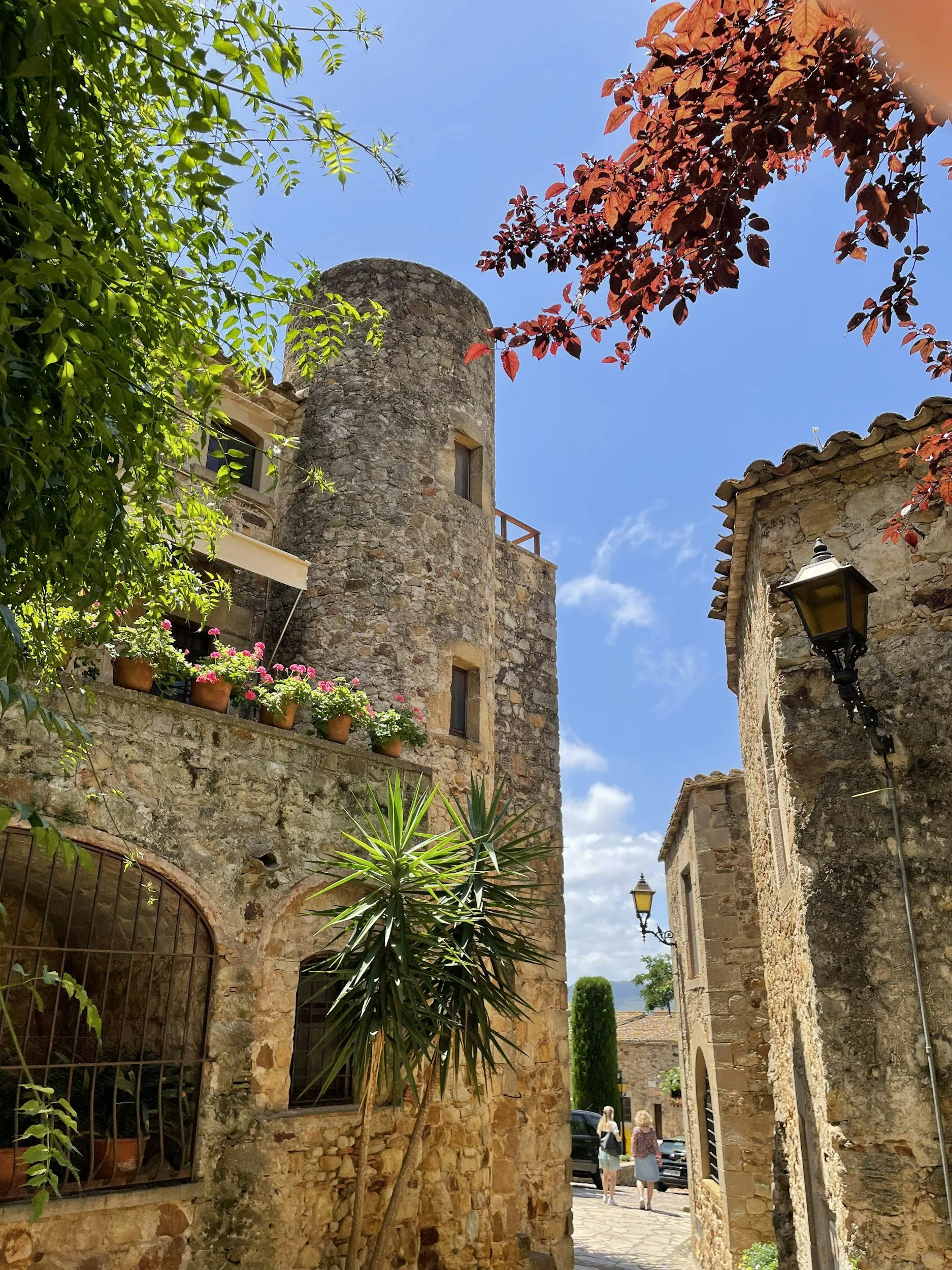
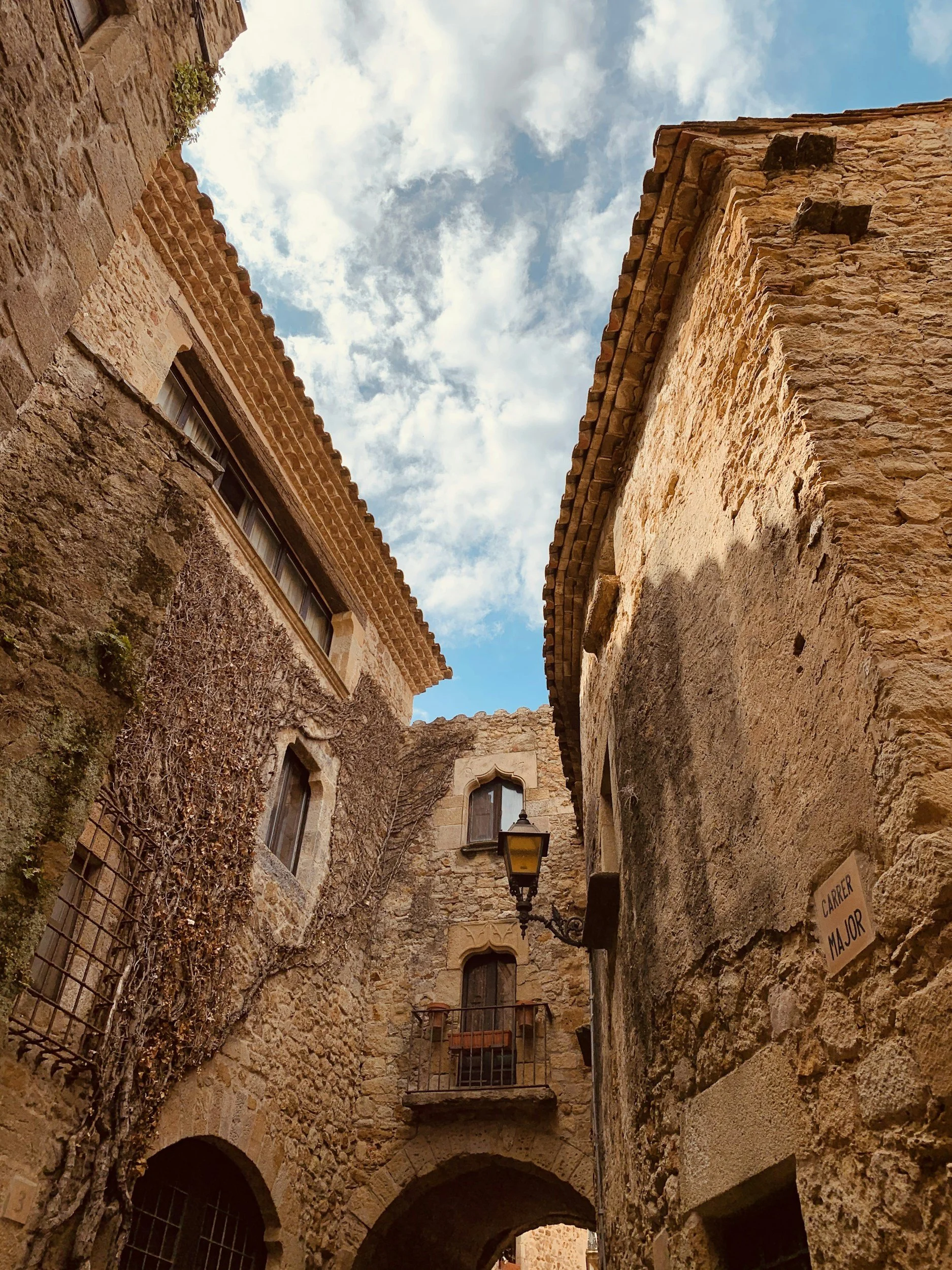
If your idea of visiting Pals is spending a few hours wandering between Carrer Major, the Torre de les Hores, Plaça Major and the viewpoints along Passeig Arqueològic, then I honestly don't think arriving by bus changes the experience at all. The coach drops you close enough that you're walking into the medieval streets within a few minutes, and once you're through the old gateway there's very little reason to think about transport again. Everything that draws people to Pals is within easy walking distance, whether that's ducking into a little ceramics shop, stopping for lunch on Plaça Major, following the old walls towards Mirador Josep Pla, or simply taking whichever narrow lane looks the most interesting without worrying about how you'll get back to your car.
Where I'd think twice is if you're trying to make Pals one stop on an ambitious Costa Brava day. On paper it looks tempting to combine Begur, Peratallada, Pals and perhaps even Calella de Palafrugell, especially because they're all relatively close together, but the reality feels very different once you start looking at bus times. You quickly realise that missing one connection can throw the rest of the day off, lunch suddenly becomes something you squeeze in between departures instead of something you enjoy, and before long you're leaving places because the timetable says it's time to go rather than because you've seen everything you wanted to see. For me, that's exactly the point where travelling without a car stops feeling relaxed, and I'd much rather slow the itinerary down than spend the afternoon watching the clock.
The same goes if your priority is the coast. Although Platja de Pals belongs to the same municipality, it's several kilometres from the medieval village, separated by rice fields and open countryside rather than a short stroll through town. If your ideal day revolves around beaches, coastal walks and moving between different seaside villages, I'd probably stay in Begur or Calella de Palafrugell instead and leave Pals for another trip.
I think Pals works best when you stop trying to fit it around everything else. Spend the morning wandering whichever streets catch your eye, climb up to the Torre de les Hores when you feel like it, follow the old walls towards the Mirador Josep Pla, then settle into lunch on Plaça Major or just outside the walls instead of watching the time because there's another bus to catch. That's when Pals started making sense to me. It's not somewhere I'd visit to tick off another village on the map. It's somewhere I'd happily spend a few unplanned hours, simply because it's an enjoyable place to be. If that's the sort of trip you're hoping for, I really wouldn't let not having a car put you off.
In case you're using trains to get around Spain, this Renfe guide answers the practical questions that usually don't come up until you're about to book your tickets… worth a read!
If Pals is only one stop on your trip, these Catalonia day trips are some of the easiest places to add without renting a car.
If you're struggling to choose between Pals and Begur, this Pals or Begur comparison helps you work out which one you'll actually enjoy more before you book.
Before you choose Pals, ask yourself these three questions
I think this is the easiest way to work out whether Pals is the right choice before you start looking at bus timetables. None of these questions have a right or wrong answer, but by the end of them you'll probably know whether Pals belongs on your itinerary or whether another part of the Costa Brava makes more sense.
Are you coming for medieval streets or the coast?
This is probably the biggest decision, and it's one that catches quite a few people out. Pals appears in a lot of Costa Brava itineraries, so it's easy to assume you're getting a classic seaside town. You're not.
The historic centre sits several kilometres inland, surrounded by rice fields, farmland and gentle countryside rather than beaches. If the idea of wandering through Carrer Major, climbing up to the Torre de les Hores and spending an hour in Plaça Major with no particular schedule sounds like a good day, I'd choose Pals every time. If you're already imagining swimming before lunch, walking along the coast and finishing the afternoon in another seaside village, I'd probably look at Begur instead.
Would you enjoy spending most of the day in Pals?
I think this is the question that's worth asking before you even look at bus timetables.
Pals isn't the sort of place I'd visit because there's a long list of attractions to get through. Most of the enjoyment comes from simply being there. You might spend half an hour wandering around Carrer Major, end up in one of the little galleries without planning to, stop for coffee on Plaça Major, browse a few independent shops selling local ceramics and Empordà products, then walk the old walls towards the Mirador Josep Pla before slowly making your way back to the bus stop. It's the kind of place where a couple of hours disappear without you really noticing.
If you're already thinking that sounds like too little to fill a day, I'd probably base myself in Girona instead and visit Pals as a day trip. That way you still get to experience everything that makes the village special without feeling as though the whole day depends on one place.
Are you hoping to fit in as many places as possible, or really get to know one?
I think it's worth deciding that before you start putting places on a map.
I've come across plenty of Costa Brava itineraries that squeeze Pals, Peratallada, Begur, Calella de Palafrugell and sometimes even Cadaqués into two or three days without hiring a car. Looking at Google Maps, it almost seems reasonable. Then you realise one bus only runs every couple of hours, restaurants stop serving lunch just as you've arrived, or you've barely reached the top of the old streets before you're checking when the next connection leaves. Suddenly the places themselves become secondary to making the timetable work.
I'd happily spend most of a day in Pals if it meant I could explore the village without constantly checking the time. That's what feels worthwhile to me, and it's one of the reasons I don't think visiting without a car is a compromise at all.
How to get to Pals from Girona
If you're already staying in Girona, this is by far the easiest way to visit Pals without a car.
The journey is easy because you don't need to change buses. The direct Moventis Sarfa service leaves from Girona Bus Station, next to the city's train station, and takes just over an hour to reach Pals, depending on the service you choose. Tickets can be bought online through the Moventis website, but if you're travelling outside the busiest summer weeks, it's usually just as easy to buy one at the station before you leave.
Before you leave, I'd take two minutes to check the bus timetable for the day you're travelling. Services change throughout the year and Sundays are usually much quieter than weekdays, so it's worth knowing when your last bus leaves before you settle into a long lunch on Plaça Major or decide to order another coffee. Pals isn't somewhere with buses every half hour, and if you miss one there's a good chance you'll be waiting a while before the next one comes along.
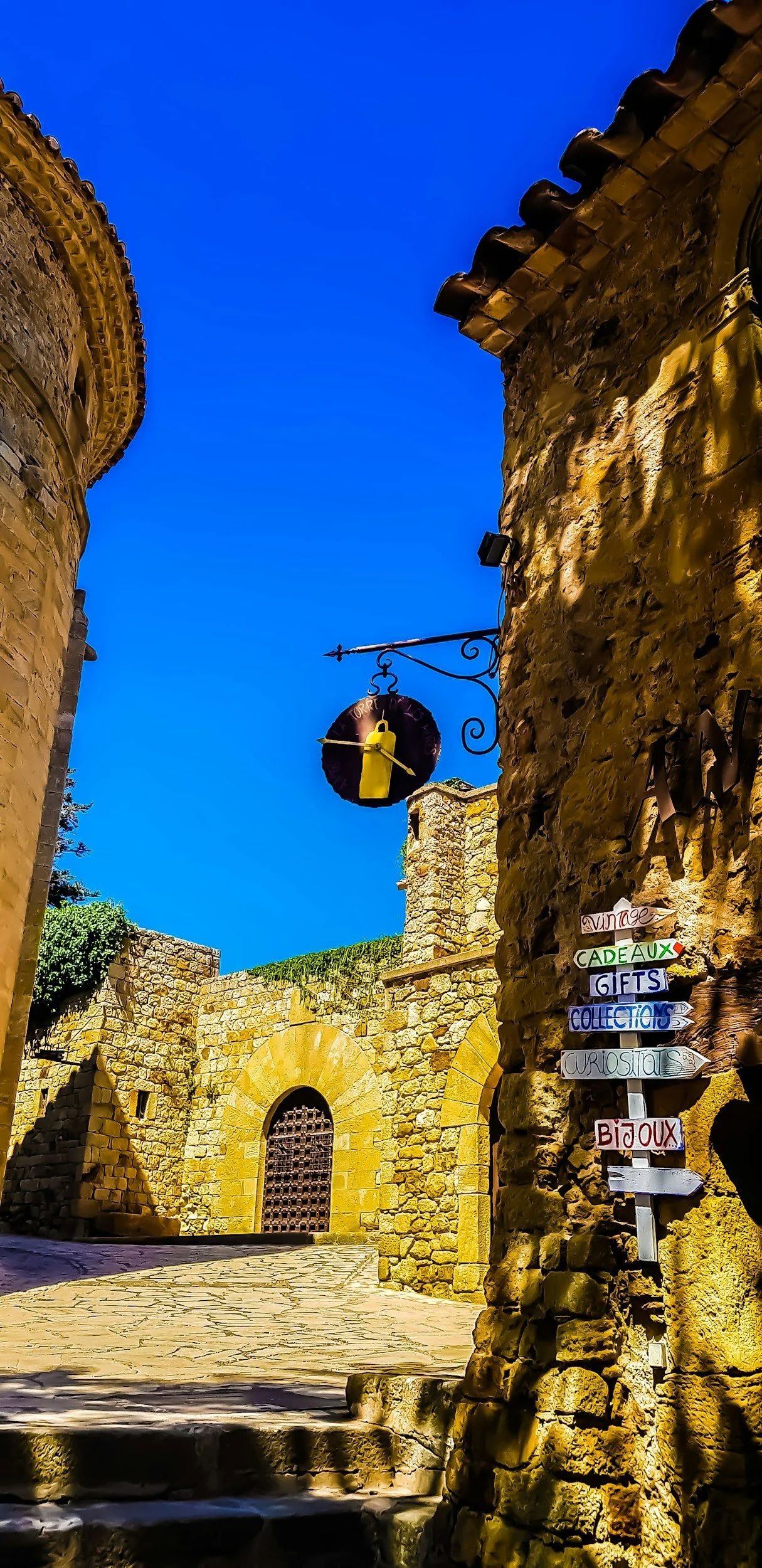
The bus drops you just outside the medieval centre, which means you don't have far to walk before you're climbing through Portal de la Vila and into the old streets. From there it's only a few minutes to Carrer Major, Plaça Major and the Torre de les Hores, so you never feel as though you've arrived on the edge of town. If you're staying overnight and have a small suitcase, the walk is straightforward, although the last stretch is over uneven cobbles. I'd probably lift the suitcase for those final few minutes rather than dragging it across the stones.
One thing that surprised me while planning this trip is how many websites still suggest changing trains at Flaçà and continuing by bus from there. That's certainly possible, but unless you're already travelling that way, I don't really see the advantage. Girona has direct bus connections to Pals, the station is easy to navigate, and it makes a much simpler starting point for most visitors.
If I were planning the trip today, I'd aim for one of the earlier buses, spend most of the day in Pals, and head back to Girona in the late afternoon. It gives you enough time to wander through the old town without watching the clock, enjoy a proper lunch, and still have a nice journey back before the evening.
I wouldn't automatically base myself in Barcelona, though. Before you book, it's worth reading this Sitges guide because it might save you a lot of travelling.
If Pals turns out to be your favourite stop on the trip, I'd have a look at these quiet Spanish towns next. They have a very similar feel, just in different parts of the country.
How to get to Pals from Barcelona
Getting to Pals from Barcelona is definitely possible without a car, but I wouldn't think of it as a quick day trip. The journey is straightforward, although it takes a little planning because you'll normally combine a train with a bus rather than relying on a single direct connection.
I'd start by taking a Renfe train from Barcelona Sants to Girona. Depending on which service you choose, the journey takes somewhere between 40 minutes on the high-speed trains and around an hour and a half on the regional services. Once you arrive in Girona, the bus station is attached to the railway station, so changing from train to bus only takes a few minutes. From there, you can catch a Moventis Sarfa bus directly to Pals.
Allow around 2½ to 3 hours from Barcelona to Pals, depending on your train connection and how long you wait in Girona. That's why I wouldn't leave Barcelona late in the morning expecting a relaxed day in Pals. By the time you've arrived, wandered through the old town and stopped for lunch, you'll already be thinking about the return journey.
Could you do it as a day trip? Yes, absolutely. The only thing I'd avoid is trying to squeeze too much into the same day. Catch an early train to Girona, continue by bus to Pals, then spend the rest of the day wandering the streets around Carrer Major, climbing up to the Torre de les Hores, popping into a few of the independent shops and sitting down for a proper lunch before heading back. Once you start adding places like Begur or Peratallada as well, the day quickly becomes more about catching buses than enjoying where you are.
If it were my trip, I'd spend the night in Girona instead of trying to get back to Barcelona the same evening. The high-speed train takes around 40 minutes, Girona has trains running throughout the day, and it gives you the freedom to enjoy Pals without constantly keeping an eye on the time. You can wander around El Call, have dinner somewhere along Rambla de la Llibertat or Plaça de la Independència, then head back to Barcelona the following morning instead. I'd happily trade one hotel night for that, especially if it means the day feels relaxed from start to finish instead of ending with another long journey.
If you're carrying on inland afterwards, Soria Province is well worth considering. It's a completely different landscape, but it has that same feeling of never being in a hurry.
What surprised me about visiting Pals without a car
One thing I completely misjudged before arriving was how close the bus stop is to the old town. I'd pictured a much longer walk through a modern village first, but within a few minutes you're already climbing towards the medieval streets. You pass a handful of newer buildings, then almost without noticing it you're walking beneath the old stone archways, with Carrer Major stretching ahead instead of another road full of traffic.
What surprised me even more was the size of the historic centre. Looking at photos beforehand, I'd convinced myself there would be enough streets to wander for an entire afternoon. In reality, it's much smaller than it looks. I actually think that's part of its charm because it changes the pace of the visit. Instead of feeling like you have to keep moving, you naturally start lingering over lunch, popping into the little galleries and craft shops, walking back along a street you'd already seen because the light has changed, or sitting for a while in Plaça Major before carrying on towards the Mirador Josep Pla.
That slower pace is probably what I remember most. I wandered into places I would almost certainly have walked straight past if I'd been trying to fit three villages into the same day. Galeria Patrick J. Domken was one of them, tucked quietly among the old streets, and I found myself spending just as much time looking around the small ceramics studios and shops selling locally made pieces as I did ticking off the main viewpoints. They never felt like the sort of souvenir shops you find in heavily visited destinations. They felt as though they'd still be there even if the tourists disappeared for the afternoon.
Lunch ended up becoming a much bigger part of the day than I'd expected, partly because there isn't a huge choice of restaurants once you're inside the old town. Rather than spending ages deciding where to eat, I found myself choosing between places like Restaurant El Pedró and Antic Casino Restaurant, then staying far longer than I'd planned. It never felt like somewhere to grab a quick bite before rushing off to the next village. Afterwards, I wandered up towards the Mirador Josep Pla, and that's when the layout of Pals finally clicked. Looking out across the Empordà Plain towards the Montgrí Massif, you get a completely different perspective on why the village was built up on the hill in the first place.
The biggest change came later in the afternoon. By then, a lot of people had already left for Begur, Calella de Palafrugell or the nearby beaches, and Pals became noticeably quieter. Some of the galleries and independent shops began closing for their afternoon break, chairs were being stacked outside a few cafés, and there were long stretches where I had whole streets almost to myself. That was probably my favourite time to wander around. The village felt less like somewhere people had come to see for an hour or two and more like a place where everyday life carried on once the day visitors had gone.
If I planned the same trip again, the only thing I'd do before leaving Girona would be checking the return bus. Not because getting back is complicated, but because Pals has a habit of making the afternoon disappear. You head towards the Torre de les Hores, spot another narrow lane that wasn't on the map, wander into a gallery for a look around, then realise you've somehow ended up back on Plaça Major wondering whether you've got time for another coffee before walking down to the bus stop. It's surprisingly easy to forget what time it is.
That, more than anything else, is what I'd take away from visiting Pals without a car. The buses were never really the challenge. The bigger mistake would have been treating the village as something to squeeze in between other places along the Costa Brava. Pals is small enough to see in a few hours, but it's also the sort of place where those few hours rarely unfold the way you expected. Some of my favourite moments weren't the viewpoints or the landmarks at all. They were the little detours that happened because I wasn't in a hurry to be anywhere else.
Ps. if your trips naturally revolve around local food and markets, don't stop at Pals. These coastal market towns are exactly the sort of places I'd build another weekend around.
The mistakes I'd avoid
If I went back to Pals tomorrow, I don't think I'd change the journey at all. I'd probably spend five minutes checking the bus times, then stop thinking about the logistics altogether. What I'd put more thought into is how I actually wanted to spend the day once I got there.
When I first looked at a map, I imagined walking from one landmark to the next until I'd seen everything. That's not how Pals felt once I arrived. You wander along Carrer Major, notice a narrow lane that looks interesting, follow it for a few minutes, and somehow find yourself back on Plaça Major without having planned it. Later you head towards the Mirador Josep Pla, only to realise you've reached it from a completely different direction than you expected. After a while, you stop thinking about what you haven't seen yet because the village never really asks you to.
I can also see why Pals isn't for everyone. If your favourite trips are the ones where you're constantly moving between museums, landmarks and neighbourhoods, you might find you've seen enough after a couple of hours. Pals feels different. I found myself noticing things I'd walked straight past the first time around: a carved stone doorway on Carrer de la Creu, flowerpots outside an old house, the view opening up across the Empordà Plain as I walked back towards the Mirador Josep Pla, or the quiet around Església de Sant Pere once most people had drifted away for the afternoon. Those were the moments that stayed with me far more than trying to remember whether I'd seen every corner of the village.
I wouldn't be tempted to add another village, either.
It's surprisingly easy to convince yourself it'll work. Pals in the morning, lunch, then on to Begur or Peratallada before heading back to Girona.
That's usually the point where the planning starts becoming more complicated than the day itself. Around the Baix Empordà, buses aren't running every few minutes and they don't all connect neatly with one another. You might find yourself backtracking through Palafrugell, waiting an hour or two for the next departure, or cutting lunch short because you've only just realised the next bus is leaving sooner than you thought. Before long, you're paying more attention to the timetable than the village you're standing in.
If I went back, I'd probably have lunch earlier than I normally would.
The first couple of hours after arriving were some of my favourite. Carrer Major was still fairly quiet, I could wander in and out of the little galleries without many other people around, and it never felt as though I needed to queue for anything. I'd make the most of that time first, climb up to the Torre de les Hores, wander through the side streets and only then settle into lunch at somewhere like Restaurant El Pedró or Antic Casino Restaurant. By the middle of the afternoon, the village has a different energy. More tables are full, more people are drifting through the streets, and the quieter corners aren't quite as quiet anymore.
The shops were another thing that caught me by surprise. Most people talk about the medieval streets, but I don't remember many guides mentioning that quite a few of the independent shops keep their own hours. Some of the ceramics studios, galleries and little food shops selling Arròs de Pals, local olive oil and other Empordà products close for a few hours in the middle of the day, especially outside the busiest months. After noticing that, I stopped telling myself, I'll come back later, because later isn't always an option. If something catches your eye while you're wandering through the village, it's worth stepping inside while the door's open.
Finally, I wouldn't leave without walking beyond the busiest streets.
Most visitors spend almost all their time between Plaça Major and the Torre de les Hores, which is understandable because that's where the photographs are taken. But some of my favourite moments were only a couple of minutes away. The quieter stretch around Carrer de l'Hospital, the views from the edge of the old walls looking out across the patchwork of rice fields, and the little benches where you can hear church bells instead of conversations all made the village feel much less like a postcard and much more like somewhere people still live.
Trying to choose between Pals and Cadaqués? This Cadaqués weekend guide makes it much easier to work out which one fits the trip you're planning.
Should you visit Pals as a day trip or stay overnight?
This is probably the question I'd spend the most time thinking about before booking anything because, honestly, I don't think there's a single right answer. It depends far less on Pals itself than on the kind of trip you're putting together and whether you enjoy settling into one place for a while or naturally find yourself wanting to move on after a few hours.
I'd visit as a day trip if...
If I were already staying in Girona, I'd happily visit Pals for the day and wouldn't feel as though I was missing out by returning in the evening. The journey is simple enough that changing hotels doesn't really buy you much, and once you've arrived you'll have plenty of time to wander through the medieval streets without constantly looking at your watch. I'd probably spend the morning following whichever streets looked the most interesting rather than trying to follow a route, climb up to the Torre de les Hores, drift along Carrer Major, stop in whichever little gallery or ceramics workshop happened to be open, and eventually end up at Restaurant El Pedró or Antic Casino Restaurant for a long lunch before walking over to Mirador Josep Pla, where the views stretch across the rice fields towards the Montgrí Massif. Somewhere before heading back I'd almost certainly leave with a bag of Arròs de Pals or a bottle of locally produced olive oil tucked into my backpack, simply because they're the sort of things that actually remind me where I've been once I'm back home.
I also think a day trip makes much more sense if you're travelling around Catalonia by train. Once you start adding a one-night stay, checking into another hotel, carrying your suitcase over uneven cobbles and working around another set of check-in and check-out times, the practical side of the trip starts taking over, and personally I'd rather spend that time sitting in the village than moving my luggage somewhere else.
If exploring Pals has you looking for more villages like it, these spring village ideas are full of places that deserve far more attention than they get.
I'd stay overnight if...
Where I'd seriously think about staying overnight is if you enjoy seeing places before everyone else does. Pals has a completely different feel first thing in the morning and again once most of the day visitors have left. Around lunchtime, Plaça Major is full of people lingering over lunch, the cafés are busy and there's a steady stream of visitors making their way up towards the Torre de les Hores. A few hours later it's a different story. The coaches have gone, most people are back on the road towards Begur, Girona or the coast, and it's perfectly possible to wander along Carrer de la Creu or past Església de Sant Pere without seeing many people at all.
I think I'd make the most of both ends of the day. I'd have dinner somewhere inside the old town, wander back towards the Torre de les Hores as the light starts fading over the rooftops, then get up early enough to enjoy the village before it begins filling up again. Watching café owners drag their tables outside, shopkeepers unlocking the little galleries and ceramics studios, and the first visitors arriving through the old gateways gives the village a completely different character. If you've only ever visited as a day trip, it's a side of Pals you'll probably never see.
I'd also stay overnight because it gives you the freedom to leave the medieval streets behind for a while. Within a few minutes you're out among the lanes leading towards Masos de Pals, with the rice fields stretching out across the Empordà Plain and hardly anyone else around apart from the occasional cyclist or local heading home. If you're visiting on a Tuesday, it's also a much easier way to enjoy the weekly market, because you're not trying to match your whole morning to the first bus from Girona.
More than anything else, though, staying overnight changes the way you spend your time. You're not glancing at your watch while you're ordering another coffee or wondering whether you've got enough time for one more walk before the next bus. You just stay where you are until you're ready to move on, and I think that's what makes the biggest difference. It isn't that you see more of Pals. It's that you stop thinking about how you're going to leave it.
If I were visiting Pals for the first time, I'd still make the trip from Girona. It's an easy journey, you can see everything at your own pace, and by the time you head back you'll know whether it's somewhere you'd happily return to.
I think that's when I'd book a room inside the old town. Not because I'd be expecting to uncover hidden corners I'd somehow missed the first time, but because I'd enjoy seeing Pals at the times most people never do. I'd like to wander through Plaça Major while people are still setting out tables for the day, walk up towards the Torre de les Hores before the first groups arrive, then end the evening with one last walk through the quiet streets after dinner. For me, that's reason enough to come back.
Where I'd stay if I had three nights
If I had three nights here, I wouldn't spend hours comparing hotels. I'd spend those hours deciding where I actually wanted to end each day.
That's what usually makes the biggest difference. You can stay inside the old streets of Pals, in Girona, or somewhere nearer the coast, and every choice changes the trip in a different way. Once I've travelled somewhere, I almost never remember the hotel itself. I remember whether I was happy with the place I'd chosen as my base.
Girona
More often than not, this is the option I'd choose.
The reason has very little to do with the hotel itself. I like being able to step off the train from Barcelona Sants, walk to wherever I'm staying, then spend the rest of the evening without thinking about transport again. I'd wander through El Call, drift along Carrer de les Ballesteries, almost certainly lose track of time in Llibreria 22, then find somewhere for dinner around Plaça de la Independència or Rambla de la Llibertat without needing to plan anything in advance.
The following morning, I'd head out to Pals, stay for as long as I felt like it, then come back to Girona knowing the day didn't have to end as soon as I got off the bus. I'd still have time for an evening walk through the old town, another good meal, or one last drink before calling it a night.
That's probably the biggest reason I'd stay here on a first visit. Everything feels easy. You're not unpacking and repacking, checking in and out, or wondering whether you should move on to the next place. You settle in once, then spend your time exploring instead.
Pals
I'd only book a hotel in Pals if I wanted to enjoy the hours that most people never see.
That's really the reason to stay here. The village doesn't suddenly have more to offer after dark or before breakfast, but it feels different when you're sharing the streets with café owners setting out tables, shopkeepers unlocking their doors and the occasional local walking across Plaça Major. By lunchtime, the atmosphere has changed completely. The restaurants are busy, people are making their way towards the Torre de les Hores, and you'll hear conversations in half a dozen different languages as you wander through the old streets.
The evening is probably my favourite time. Once dinner is over and the last coaches have left, you can wander back through Carrer Major, pause outside Església de Sant Pere as the bells ring across the rooftops, then walk up to the Mirador Josep Pla without feeling as though you're sharing it with anyone else. I don't think that's something many day visitors ever experience.
The following morning, I'd leave the old walls behind for a while. It only takes a few minutes before you're walking towards Masos de Pals, with the rice fields stretching out across the Empordà Plain and hardly another person in sight. During the growing season you can see exactly why Arròs de Pals has become one of the area's best-known local products, and it's a side of the village that's easy to miss if you're already keeping one eye on the bus timetable back to Girona.
Begur
Whenever I think about staying there, I don't really picture the old town first. I picture leaving the hotel in the morning without much of a plan, wandering down to Sa Tuna, deciding the sea looks too inviting to leave, or walking part of the Camí de Ronda before ending up back in Plaça de la Vila for dinner. The coast becomes part of your day rather than somewhere you make a separate trip to.
That's where Pals fits in so well. It's close enough for a relaxed day out, then you head back to Begur in the evening without feeling as though you've missed out on either place.
For me, choosing between the three has never really been about which town is "best." They're all good bases, just for different kinds of trips.
I'd stay in Girona if it were my first visit because getting there is simple and it leaves every option open once you've arrived. I'd stay in Pals if I wanted a couple of quiet days where I wasn't planning much beyond lunch, a walk through the old streets and another coffee before dinner. I'd stay in Begur if I knew I'd spend just as much time by the sea as I would wandering around villages.
In the end, I think I'd ignore the hotels for a while and imagine what each day would actually look like. That's usually how I decide where to stay now, and I've found it's a much better guide than comparing room photos or breakfast buffets.
If you enjoy travelling on your own, these small Spanish towns have the same relaxed feeling that makes Pals such an easy place to spend a day.
If I planned this trip again
If I went back tomorrow, I wouldn't change the route. I'd change the order.
The first time I arrived, I naturally followed everyone else along Carrer Major, stopping every few metres because there was another doorway, another shop or another view worth looking at. Next time, I'd do the opposite. I'd head straight up towards the Torre de les Hores while most people were still making their way through the lower streets, then wander back down later when the crowds had started to spread out. It's surprising how much calmer Carrer Major feels even half an hour later.
I'd also spend more time following the paths around the outside of the old town instead of staying in the centre the whole time. The walk along Passeig Arqueològic is often much quieter than the streets around Plaça Major, and every few minutes another gap opens up between the old stone walls with a different view across the Empordà Plain. Most people reach the Mirador Josep Pla, stop for a photograph and turn back, but I found the walk beyond it just as rewarding. As the village slowly drops behind you, the rice fields become more prominent, the Montgrí Massif starts dominating the horizon, and it's much easier to understand why Pals was built exactly where it was.
I'd spend more time in the little food shops than the souvenir shops.
You'll see Arròs de Pals all over the village, but it's worth checking where it comes from because not every shop stocks the same local producers. The same applies to the Empordà olive oils, preserves and other local products tucked in among the ceramics and kitchenware. Those were the things I found myself looking at most, and they're probably what I'd take home if I came back.
If I happened to be there on a Tuesday, I'd head to the weekly market first and leave the medieval centre until afterwards. Most people start in the old town, but doing it the other way round means the streets are often quieter by the time you reach them. It also saves doubling back later if you're planning to visit both anyway.
I also wouldn't spend the whole visit looking for empty streets to photograph.
Some of my favourite photos weren't taken from the places everyone stops. They were the ones I spotted while walking between the main sights, after turning down a side street or looking back the way I'd just come. I'd still stop at the Mirador Josep Pla, but I wouldn't feel as though every photo has to come from one of the well-known viewpoints.
Before catching the bus back to Girona, I'd walk outside the old walls one last time. It only takes a few minutes to leave the centre, but surprisingly few people do. From there you get a much better idea of how Pals sits above the surrounding rice fields than you do from inside the village, and I actually found that just as interesting as walking through the medieval streets themselves.
Still deciding whether Pals belongs on your itinerary at all? This complete Pals guide will help you work out whether it's somewhere you'll genuinely enjoy before you start planning the journey.
FAQs about visiting Pals
Is Pals easy to visit without a car?
Yes, much easier than many people expect.
If you're already staying in Girona, it's a straightforward journey by regional bus and you don't need to worry about hiring a car just to spend a day there. Once you arrive, almost everything people come to see is within walking distance, including Carrer Major, the Torre de les Hores, Plaça Major and the viewpoints along the old walls.
The only thing I'd plan in advance is the return bus. Everything else is much easier to enjoy if you stop checking transport times every half hour.
Is Pals worth visiting if you're already staying on the Costa Brava?
I think so, especially if you're looking for something different from beaches and seaside towns.
Most Costa Brava holidays revolve around the coast, but Pals gives you a completely different side of the region. Instead of promenades and marinas, you're walking through a medieval hilltop village surrounded by rice fields, old stone houses and narrow streets that have changed surprisingly little over the centuries.
If you're staying somewhere like Begur, Palafrugell or L'Estartit, it's an easy half or full-day excursion.
Can you visit Pals and Begur in the same day without a car?
You can, but I'd only do it if you're happy with a fairly full day.
The villages are close together geographically, but buses don't always connect as neatly as the map suggests. Once you add lunch, waiting for buses and the time you naturally spend wandering around both places, the day starts disappearing quite quickly.
Personally, I'd rather give one village the time it deserves than rush through both just because they're nearby.
Is Pals or Peratallada better for a first visit?
I'd choose Pals.
Peratallada is beautiful, but it's smaller and slightly trickier to reach by public transport. Pals feels more practical if you're travelling without a car because getting there from Girona is straightforward, there are more places to eat, more viewpoints to walk between and enough to comfortably fill several hours without feeling repetitive.
If you fall in love with this part of Catalonia, then Peratallada is well worth returning for on another trip.
What's the best time of day to visit Pals?
Early morning and late afternoon are easily my favourite times.
Between about 11 am and 3 pm, particularly during weekends and summer, Carrer Major and Plaça Major are at their busiest. That's when most coach tours and day visitors arrive.
If you reach the village earlier, you'll often have streets like Carrer de la Creu and the lanes around Església de Sant Pere almost to yourself. Later in the day, once the buses start leaving again, the village becomes noticeably quieter and it feels much more like a place where people actually live.
Is Pals a half-day trip or a full-day trip?
For most people, I'd treat it as a full day.
You could walk around the historic centre in two or three hours, but I think that misses what makes Pals enjoyable. A proper visit includes a long lunch, time to browse the independent galleries and food shops, a walk out towards Passeig Arqueològic, and enough flexibility to sit for a while without immediately thinking about the next bus.
That's usually what people remember afterwards rather than how many streets they managed to cover.
Where should you eat in Pals?
I'd avoid arriving with one restaurant in mind.
Places like Restaurant El Pedró and Antic Casino Restaurant are both excellent, but they're also among the first to fill up on busy weekends. I think it's better to wander first, decide where you'd like to sit once you've explored the village, and then settle in for lunch rather than building your whole day around one reservation.
If you're visiting outside the main season, it's also worth checking opening days because some restaurants close for a couple of days each week.
What should you buy in Pals?
Skip the souvenirs.
If I'm bringing something home, it's usually food.
Arròs de Pals is the obvious choice because it's grown in the fields surrounding the village and has been produced here for generations. You'll also find excellent Empordà olive oils, local honey, preserves and small food shops selling regional products that are much more representative of the area than another fridge magnet or ceramic ornament.
Is Pals very touristy?
It depends entirely on where you are and what time you visit.
The busiest part of the village is usually around Plaça Major and the upper stretch of Carrer Major, especially around lunchtime. Walk a few minutes towards Passeig Arqueològic, continue beyond Mirador Josep Pla, or simply return after about five o'clock, and the atmosphere changes surprisingly quickly.
That's one of the reasons I'd never judge Pals based only on the busiest hour of the day.
Are the streets in Pals difficult to walk?
They're not difficult, but they're worth knowing about before you arrive.
The historic centre is built on a hill, so you'll be walking uphill from the bus stop and many of the streets are uneven stone or cobbles. Comfortable shoes make a much bigger difference than people expect, particularly if you've spent the morning exploring other villages first.
It's absolutely manageable for most visitors, but it isn't somewhere I'd choose for smooth rolling luggage or flimsy sandals.
Where are the best views in Pals?
Most people stop at Mirador Josep Pla, and it's definitely worth visiting, but I'd keep walking afterwards instead of turning straight back.
Some of my favourite views are actually from the quieter stretches of Passeig Arqueològic, where you can look back towards the medieval walls with the rice fields stretching out towards the Montgrí Massif. They feel much less crowded than the main viewpoints and give you a much better sense of how the village sits within the surrounding landscape.
Should you stay in Pals or Girona?
For a first visit without a car, I'd still stay in Girona.
It's easier to reach by train, has a much wider choice of hotels and restaurants, and makes day trips incredibly simple.
I'd only choose to stay inside Pals if I'd already visited before or knew that I wanted to experience the village before breakfast and after dinner, because those are the hours that most day visitors never see.