
How to visit Semur-en-Auxois without a car from Paris or Dijon
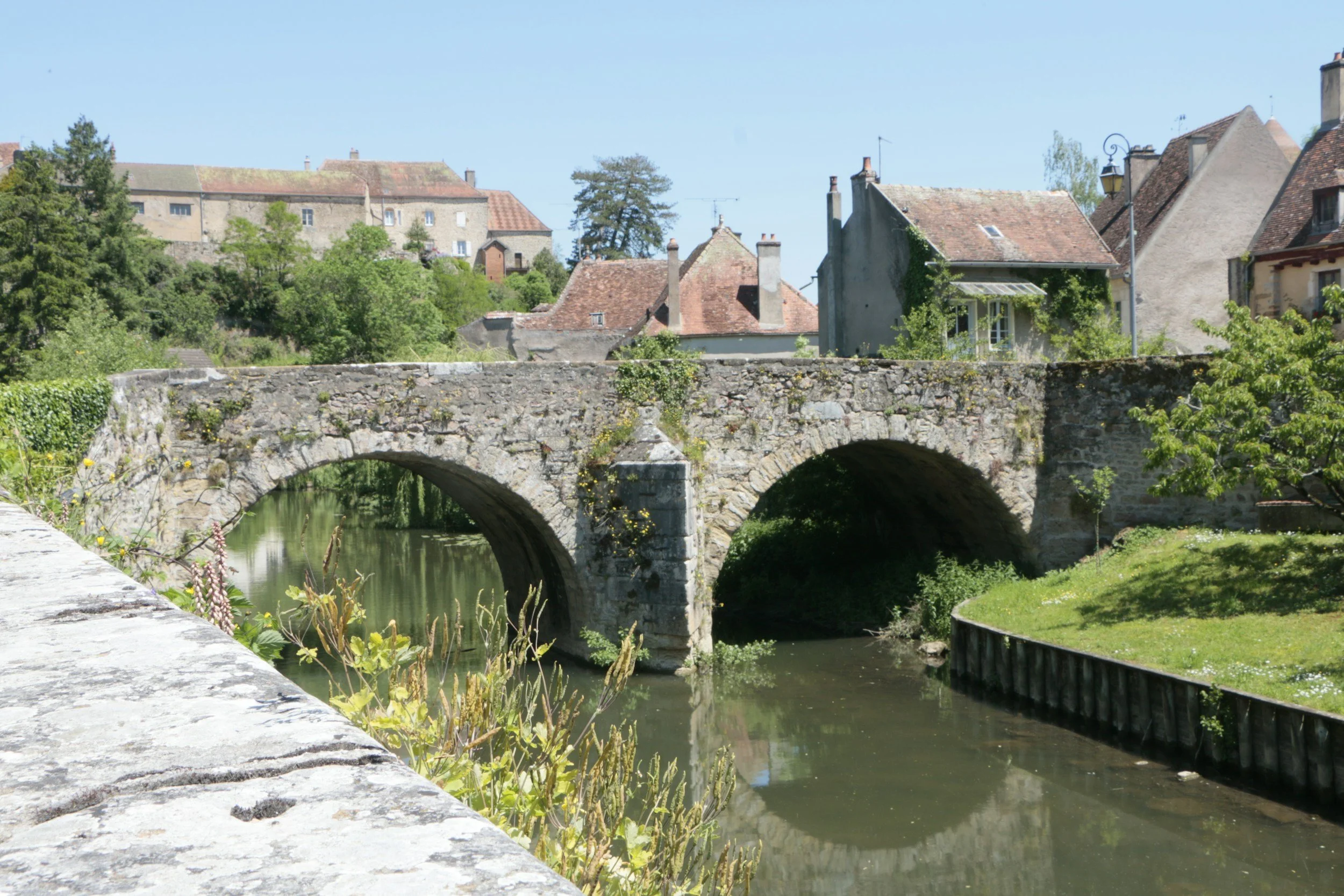
Semur-en-Auxois often appears on lists of Burgundy's most beautiful towns, right up until you start planning how to get there. That's usually the point where people realise the railway line stops in Montbard, not Semur itself, and suddenly what looked like an easy day trip becomes much less obvious.
In reality, visiting without a car is much easier than it first appears, but it does take a little more planning than places like Beaune or Dijon. The connection between Montbard and Semur-en-Auxois isn't something you'll stumble across once you arrive, and choosing the right train from Paris or Dijon can make the difference between stepping straight onto a waiting bus and spending nearly an hour at the station.
Once you've stepped off the bus in Semur-en-Auxois, the journey stops being the interesting part. The old town is compact enough that you naturally explore it on foot, and within a few minutes you'll find yourself wandering between Rue Buffon, Place Notre-Dame and the little lanes leading towards the ramparts without giving transport another thought. The only time you'll really notice the lack of a car is if you're hoping to explore the surrounding villages afterwards. For Semur itself, walking is simply how the town makes the most sense. The bigger decision isn't how you'll get around once you're there, but whether you'll catch the afternoon bus back to Montbard or stay long enough to see what happens after the cafés begin stacking their chairs, the market traders have packed away, and the streets around Pont Joly become quieter again.
I'll show you the route I'd take from both Paris and Dijon, explain how the Montbard connection works in real life rather than just on paper, and share the small things that genuinely make a difference once you arrive, from choosing the right train instead of simply the fastest one to knowing why a Sunday morning feels completely different from a Tuesday afternoon, or why it's often worth lingering by the Armançon for another half hour instead of rushing back to the bus.
Most people assume regional trains in France are awkward until they actually understand how the TER network works. It honestly opens up far more places than you'd expect.
What kind of place is Semur-en-Auxois?
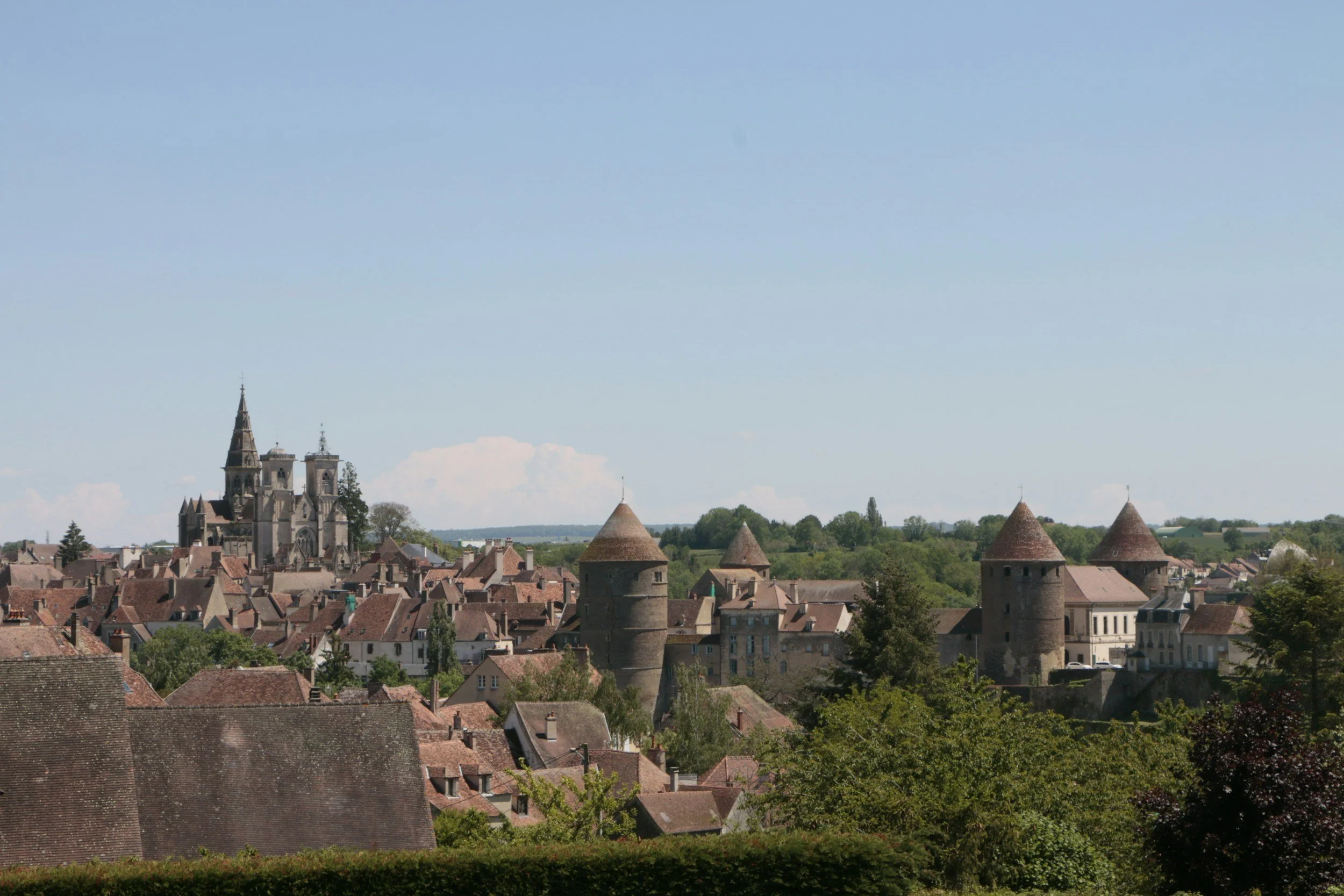
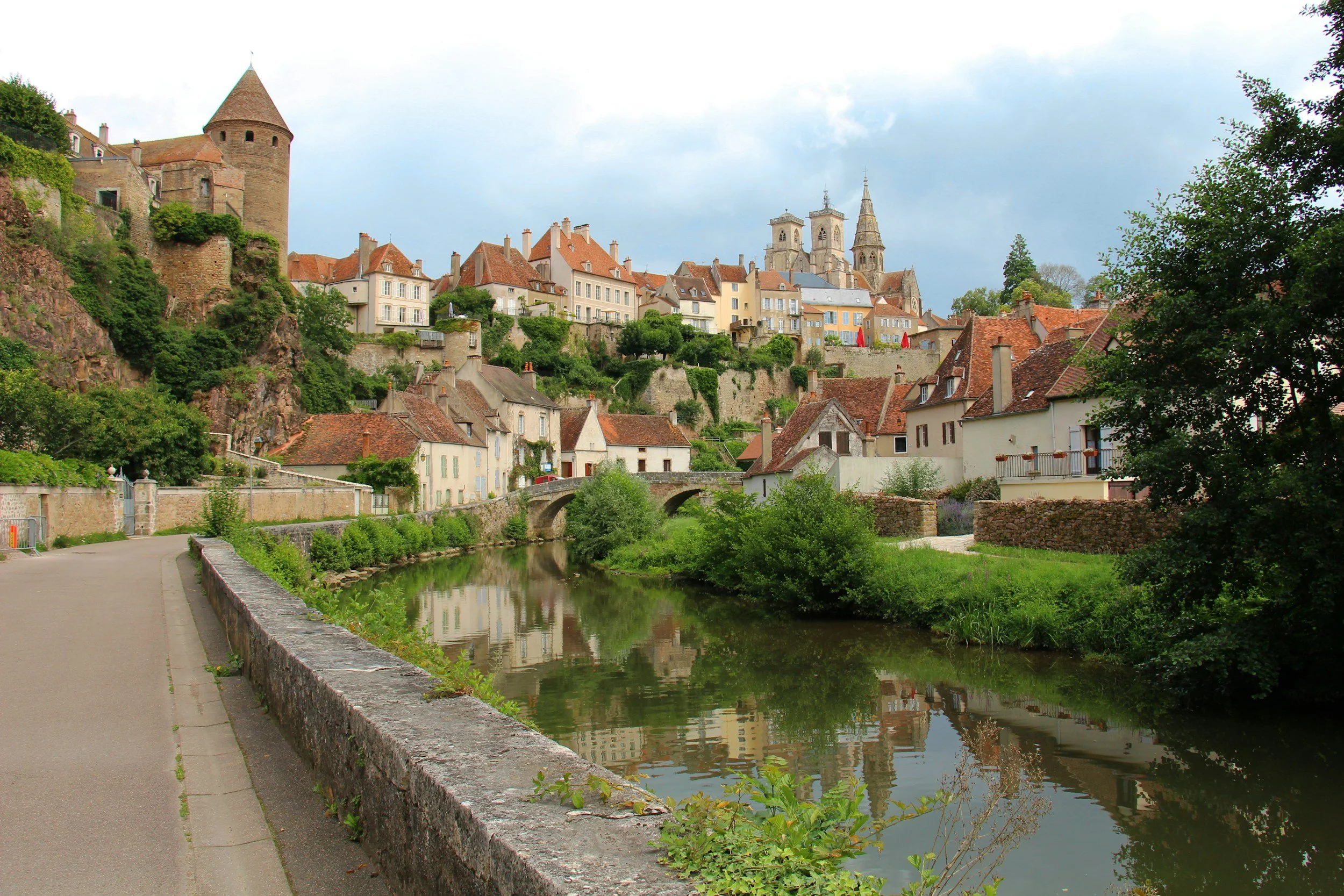
Semur-en-Auxois sits in the northwestern part of Burgundy, around 80 kilometres northwest of Dijon, on a rocky granite outcrop almost entirely encircled by the River Armançon. From above, the old town almost looks like an island, with the river wrapping around three sides before narrowing into the approach that has connected people to the town for centuries. It's one of those places where the landscape explains the layout long before you know anything about its history.
Although Semur-en-Auxois is often listed alongside Burgundy's better-known medieval towns, it never struck me as somewhere that had been polished for visitors. Before long you stop noticing the towers and start noticing everything happening around them instead. Someone is wheeling a shopping trolley home along Rue Buffon, two neighbours have stopped in the middle of the street for a conversation that clearly isn't in any hurry to end, and by the time the school day finishes the lanes around Collégiale Notre-Dame fill with children cutting through the old town on their way home. It never feels as though everyday life has been pushed to the edges to make room for tourism, which is probably why spending time here feels so different from places where every other doorway has become a souvenir shop or another restaurant with an English menu.
It's also a very different corner of Burgundy from the one most people imagine before they arrive. If your picture of the region is rows of vines climbing every hillside, tasting rooms every few kilometres and villages built around famous wine estates, Semur-en-Auxois will probably come as a surprise. The Auxois has a much softer landscape, with hedgerows instead of vineyards, grazing Charolais cattle, quiet stretches of the Canal de Bourgogne, broad patches of woodland and villages where the weekly market is still a bigger event than the arrival of a coach tour. That changes the rhythm of a trip as well. People don't generally come here to spend the day moving from one tasting to the next. They come because they enjoy wandering through a town that still feels closely tied to the countryside around it, where you can walk from the medieval streets to the banks of the Armançon in a matter of minutes and be reminded that this was never meant to exist in isolation from the landscape that surrounds it.
The centre itself is surprisingly small. Most of what you'll want to see lies within a ten-minute walk, although those few minutes often involve steep streets and uneven cobbles. From almost anywhere inside the old town you'll eventually find yourself back at one of the bridges overlooking the Armançon, where the defensive position becomes obvious. It's easy to understand why Semur developed here rather than out on the surrounding plain.
What I hadn't expected was how quickly I'd stop thinking about the landmarks altogether. You might set off intending to walk straight to Collégiale Notre-Dame, then spot a little lane that looks as though it probably won't lead anywhere interesting, only for it to open onto a view across the Armançon that wasn't on your map at all. From there it's only another couple of minutes before you're down beside the river, looking back up at the houses balanced above the cliffs, and by the time you've wandered back towards Place Notre-Dame you can't really remember which route you took to get there. I think that's why Semur-en-Auxois stays with people. It's not because there are dozens of sights competing for your attention, but because the spaces between them are just as enjoyable as the places you thought you'd come to see.
If you're trying to work out where to stay in Burgundy, don't book anything until you've read this comparison because some of the prettiest towns are surprisingly frustrating without a car.
Can you visit Semur-en-Auxois without a car?
es, and I'd actually put Semur-en-Auxois much higher on the list than most people would expect.
When people start looking for smaller towns in Burgundy that don't require a car, places like Beaune or Dijon usually come up first because they have railway stations. Semur-en-Auxois often gets overlooked simply because the train doesn't go all the way there, but I don't think that's a particularly good reason to skip it. Once you've worked out that Montbard is the rail gateway rather than the final destination, the rest of the journey falls into place surprisingly easily, and after that first visit it all feels much more straightforward than it looked while you were planning it.
The only part that's worth giving a bit of thought is the connection in Montbard. You step out of the station, cross to the bus stops directly outside and, before long, you're leaving the high-speed railway behind for quieter roads that wind through the Auxois countryside. It's quite a satisfying transition, really. One moment you're on a TGV that has just come from Paris, the next you're passing small villages, open pasture and fields where the landscape suddenly feels much more like rural Burgundy than the wine villages most visitors picture.
That's why I wouldn't automatically book the fastest train you can find. I've found it's often better to choose one that leaves you with a comfortable connection rather than arriving in Montbard twenty minutes earlier only to spend the extra time waiting at the station for the next bus. Sundays deserve a little more planning because there are fewer departures throughout the day, but on most weekdays the connection is straightforward enough that it quickly becomes just another part of the journey rather than an obstacle.
Once you've arrived, getting around is probably the easiest part of the whole journey. Semur-en-Auxois isn't a town where you'll spend the day checking maps or wondering whether something is too far away. The streets inside the medieval centre naturally connect with one another, so even if you take a wrong turn you'll usually end up somewhere interesting rather than having to retrace your steps.
The only thing that's worth being prepared for is the terrain. Because the old town sits high above the Armançon, almost every walk involves a slope somewhere along the way. None of them are particularly long, but the combination of cobbles, uneven paving and occasional flights of steps means comfortable shoes make a much bigger difference than having a car ever would. If you're arriving with luggage, it's worth remembering that the last few hundred metres to your accommodation can easily be the hardest part of the journey.
If the bus from Montbard doesn't fit your plans, a taxi is an easy alternative. The drive usually takes about twenty minutes, so it isn't an expensive journey if there are two or three of you sharing the fare, and it can make sense if you've arrived on a later train or simply don't feel like organising your day around the bus timetable. The only mistake I'd avoid is assuming there will be taxis waiting outside the station. Montbard is a small place, particularly once the morning rush has passed, so if you already know you'll need one it's much less stressful to arrange it before you travel.
I don't think staying overnight is essential, but I do think it changes the way you experience Semur-en-Auxois.
If you're visiting from Dijon, a day is enough to walk through the medieval centre, have lunch and spend a few hours exploring the streets around Place Notre-Dame, the river and the old ramparts before catching the bus back to Montbard. You won't feel rushed unless you're trying to squeeze another destination into the same day.
What you won't see is the quieter version of the town that begins to appear later on. By early evening, most of the people wandering with cameras have disappeared, chairs are being brought in from the terraces and the conversations you hear tend to belong to people who actually live here rather than visitors deciding where to go next. Then, the following morning, before the cafés have properly filled and before anyone arrives from Montbard, the streets feel almost residential again. It's a different atmosphere altogether, and if you enjoy places at their calmest, that's probably the part of the visit you'll remember.
I wouldn't stay longer than a night unless you were using Semur-en-Auxois as a base for exploring the wider Auxois. Places such as Fontenay Abbey, Flavigny-sur-Ozerain and the quieter stretches of the Canal de Bourgogne are much easier to reach with a car, and that's really the point where hiring one starts to make sense. If your plan is simply to experience Semur itself, though, I'd happily leave the car where it is and let the train and bus do the work instead.
I nearly skipped Tournus the first time because I assumed there wasn't much there, but this guide explains why I'd happily stop there again.
Getting to Semur-en-Auxois from Paris or Dijon
The journey itself is much simpler than it first appears. The only thing to remember is that the train doesn't take you all the way to Semur-en-Auxois. Instead, you travel to Montbard, then continue the final stretch by bus or taxi.
From Paris, the obvious temptation is to book whichever TGV gets you there fastest. The journey only takes a little over an hour, which makes Semur-en-Auxois feel surprisingly close, but I've found the quickest train isn't always the one that gets you there most smoothly. Some arrivals are followed by a bus just a few minutes later, while others leave you with enough time to wonder whether you should have stopped for a coffee instead. Before booking, I always compare the onward connection as well as the train itself. It only takes a minute, and it can easily save half an hour of waiting in Montbard.
If you're already in Dijon, things are generally more relaxed. The TER takes around thirty-five minutes to reach Montbard, and although it's slower than the TGV, it often fits more naturally into the regional timetable. It's one of those occasions where the journey with the slightly longer train ride can actually get you to Semur sooner overall.
Changing onto the bus is straightforward. You leave the station building, walk a short distance to the stops directly outside and that's about it. There isn't an underground passage to navigate or another station hidden across town, which is exactly what you want after stepping off a train. Before long you're leaving Montbard behind and heading into the Auxois, passing fields, woodland and small villages that feel very different from the vineyard landscapes further south around Beaune.
A taxi is the obvious backup if the bus doesn't work for your plans. The drive takes roughly twenty minutes, so it can be a sensible option if there are two or three of you sharing the fare or if you're arriving later in the day. The only assumption I wouldn't make is that one will be waiting outside the station. Montbard is small enough that taxis tend to appear when they're booked rather than simply because trains have arrived, so if you already know you'll need one, arranging it in advance makes the whole journey feel much more straightforward.
Sundays need a little more planning than weekdays. Bus services are reduced, cafés around the station have shorter opening hours, and missing a connection can easily turn into a much longer wait than it would on a Tuesday morning. If you're visiting for the day, it's worth planning the return journey before you leave home rather than assuming you'll simply catch the next bus back to Montbard.
Luggage isn't much of an issue if you're staying overnight. The bus has space for suitcases, and once you're in Semur-en-Auxois, most accommodation in the historic centre is within walking distance. The only thing to bear in mind is the final walk through town. The old centre sits above the river, and depending on where you're staying, you may find yourself pulling a suitcase up steep cobbled streets for the last few minutes. It's not particularly far, but it's enough that you'll appreciate packing lighter if you're only visiting for a night or two.
I've also become much pickier about which markets are actually worth making a detour for, and this brocante guide explains why some are far more memorable than others.
And if market mornings are one of your favourite parts of travelling in France, this guide might give you a few more places to build a weekend around.
What it's like once you arrive
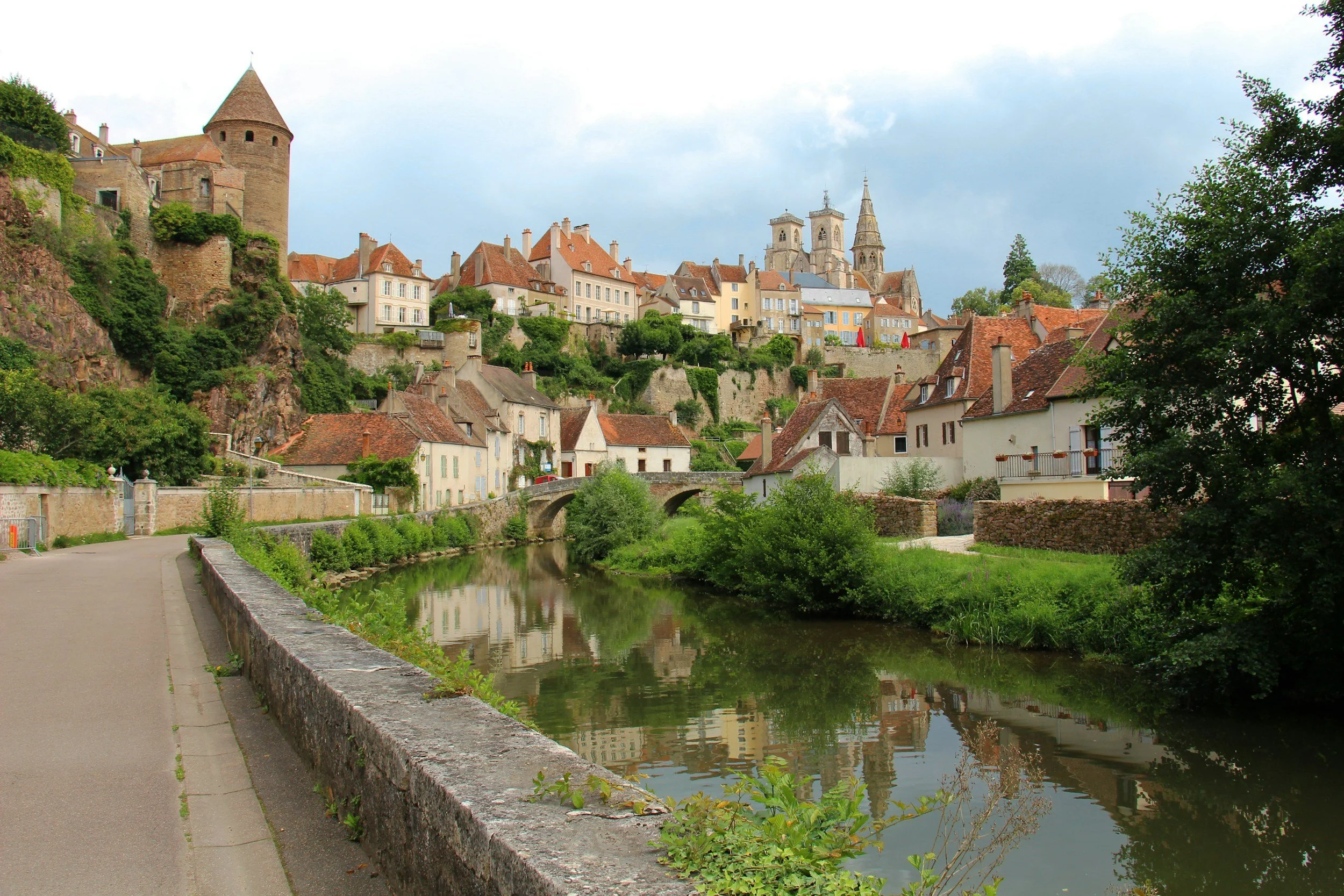
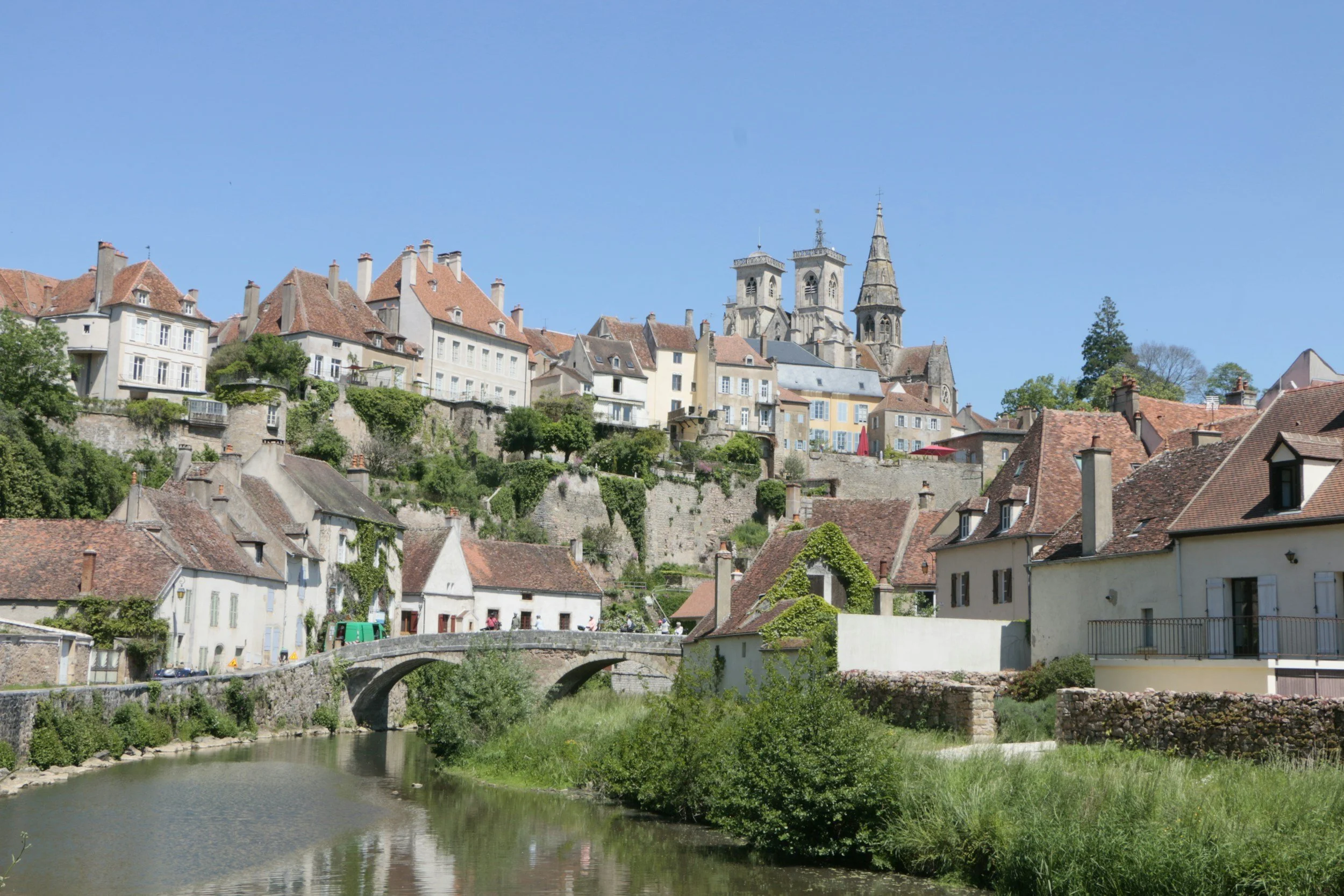
The arrival is one of my favourite parts of visiting Semur-en-Auxois. Within a few minutes of getting off the bus you're standing on Pont Joly, looking across to the old town. It's the sort of view that makes you stop for a minute without really planning to. You think you've taken it all in, then notice the towers above the rooftops or the river running below the cliffs. It doesn't feel like you've arrived at a station and still have to find the town. You're already in it.
From Pont Joly, the walk into the old town is short, but you'll notice the climb. It's nothing particularly strenuous, although you'll probably feel it if you're pulling a suitcase over the cobbles. One thing I found quite quickly is that Google Maps doesn't always pick the nicest route. It tends to send you straight up the steepest little lanes, whereas staying on Rue de la Liberté for a bit longer is often easier, even if it adds another minute or two.
Before long you'll reach Porte Sauvigny, one of the old gateways into the town, and from there you'll naturally drift onto Rue Buffon. I always end up slowing down here, not because there's one big sight to stop for, but because it's the part of Semur that feels most like everyday life. Someone is walking out of Boulangerie Alexandre with a baguette tucked under their arm, a couple of people are chatting outside the bank, and the pharmacy door never seems to stay closed for very long. You could easily walk straight through it, but it's the sort of street that's worth taking your time over because it reminds you that Semur-en-Auxois isn't just somewhere people come to visit - it's somewhere people live.
By the time you've reached Place Notre-Dame, it's easy to assume you've seen the busiest part of Semur-en-Auxois, and you'd be right. The terraces fill up surprisingly quickly, people wander in and out of the church, someone is usually waiting outside the bakery, and for a while it feels as though everything revolves around the square.
What I didn't expect was how quickly that feeling disappears.
You don't have to walk very far. Turn away from Rue Buffon, follow whichever little street catches your eye and, within a minute or two, it suddenly feels as though the town has emptied again. I found myself doing that almost every time I visited. Not because I was trying to escape the crowds, but because I kept spotting another narrow lane or old gateway that looked interesting enough to follow. Half the time I had no idea where I'd come out.
Those little detours ended up becoming some of my favourite parts of the day. One of them always seemed to lead me back towards the river, where you start seeing the town from completely different angles. Looking up from below, the towers don't dominate the skyline in quite the same way they do from Pont Pinard. Instead, your eyes keep drifting between the cliffs, the old stone houses and the river flowing underneath them, and you begin to appreciate just how naturally the town seems to fit the landscape around it.
I still stop on Pont Pinard every time because the view is beautiful, but I almost never turn around afterwards. I keep walking down to the riverside instead. It's quieter, you spend longer looking than photographing, and somehow it always feels like the part of Semur that stays with me after I've gone home.
By the end of the afternoon, Semur-en-Auxois starts to feel different again. The shop doors close one by one, chairs disappear from outside the cafés and Rue Buffon slowly becomes a street people walk through on their way home rather than somewhere visitors are wandering with maps in their hands. If you're staying the night, I wouldn't rush back to your hotel just yet. This is usually when I end up walking without much of a plan, heading towards Porte Guillier, following the paths above the Armançon and eventually finding myself down by Jardin de l'Ancienne Tannerie before looping back into the centre.
It's funny how the places I remember are rarely the ones I'd have pointed out on a map beforehand. I remember looking through a gap between two old houses and suddenly seeing the river far below, or sitting on a bench for a few minutes because the light had changed rather than because I'd planned to stop there. I remember hearing someone call across the street to a neighbour carrying a baguette home for dinner. Those aren't the things people usually photograph, but they're the moments that make Semur-en-Auxois feel less like somewhere I'd visited and more like somewhere I'd briefly slipped into everyday life.
Semur isn't the only French town that's much easier without a car than people assume, and these places completely changed the way I plan trips around France.
If you're debating whether to stay in Semur or somewhere further south, this guide makes the decision much easier because the two regions feel completely different once you're actually travelling around them.
How much time should you allow?
Semur-en-Auxois is one of those towns that looks deceptively small when you're planning the trip. You open Google Maps, zoom in on the historic centre and think you'll probably wander around for a couple of hours before getting the bus back to Montbard, but once you're actually there, the day rarely unfolds quite as neatly as it looked on your laptop the week before.
Part of that is simply the way the town has developed. You don't walk through Semur-en-Auxois in a straight line because the streets weren't designed that way. One minute you're following Rue Buffon towards Place Notre-Dame, then you notice a narrow lane disappearing between two old stone houses, decide to have a quick look, and before long you've somehow ended up looking back across the Armançon towards Tour de l'Orle d'Or from a completely different angle. None of the detours are particularly long, but together they have a habit of turning what you thought would be a quick circuit into an afternoon that disappears much faster than expected.
If you've only got a few hours, you'll still see the best-known parts of Semur-en-Auxois. There's plenty of time to cross Pont Joly, wander through Porte Sauvigny, have a look around the Collégiale Notre-Dame and stop somewhere for lunch before making your way back to the bus. It never feels rushed while you're doing it. The only thing sitting quietly in the back of your mind is the departure from Montbard. Miss that connection and the day suddenly looks rather different, so it's difficult not to keep one eye on the time.
Give yourself the whole day and that feeling gradually disappears. You stop checking your watch before ordering another coffee, you wander into L'Écritoire without wondering how long you've got, and if you notice a little lane leading away from the square, you follow it just to see where it ends up. On a Sunday you might come away with a bag of cherries or a jar of local honey from the market without thinking about how you're going to carry it for the rest of the afternoon. You cross Pont Pinard more than once because it looks different every time the light changes, and before long it stops feeling as though you're trying to fit Semur-en-Auxois into a timetable. You're just there.
One thing I realised quite quickly is that Google Maps can be a bit misleading around here. On paper, Semur-en-Auxois, Flavigny-sur-Ozerain and Fontenay Abbey all look close enough to squeeze into a single day. If you've got a car, that's fair enough. By bus and train, though, it's a different story. The distances aren't really the problem - it's the gaps between the connections. Before you know it, you've spent more of the afternoon watching the departures board in Montbard than actually wandering around any of the places you came to see. If I only had one day, I'd happily give it all to Semur instead of trying to tick off three places at once.
Sunday is the one exception where I'd plan the day a little differently. Rather than arriving late morning, I'd catch an earlier train and make the market part of the visit. By the time you reach Rue Buffon, the stalls are already spilling out along the street. Someone's selling peaches and cherries a few metres from a cheesemaker, there's usually a queue at the rotisserie chicken van, people stop in the middle of the road to chat because there aren't any cars to dodge, and the cafés seem to gain another row of tables almost without you noticing. It feels less like a market that's been put on for visitors and more like the town's regular Sunday morning, which just happens to be a lovely time to be there.
A few hours later it's over almost as quickly as it began. The stalls disappear, traffic comes back, the extra tables are folded away and Rue Buffon settles back into itself. If you only arrived after lunch, you'd never know it had looked completely different that morning.
If I went back tomorrow, I'd book one night again without really thinking about it. Not because I'd need the extra time to see more, but because I like not having to leave. Once the last bus isn't hanging over the day anymore, everything feels a bit more relaxed. You order another coffee because you feel like it, take another turn through the old streets because nothing is waiting for you, and if you find a bench overlooking the Armançon, there's no reason to check the time before sitting down.
The next morning is probably my favourite part. Before the town fills up again, you see people collecting bread on their way home, cafés setting out tables and shopkeepers unlocking their doors for the day. None of it's remarkable on its own, but together it makes Semur-en-Auxois feel less like somewhere you've come to visit and more like somewhere you've briefly slotted into.
If Semur feels like exactly your kind of place, you'll probably end up adding another five destinations after reading this list.
A few things that are easier to know before you arrive
The journey is usually the part people spend the most time planning. Once you're actually in Semur-en-Auxois, it's the opening hours that tend to catch people out.
The town gets going earlier than you might expect. If you're staying overnight and leave your hotel before nine, you'll already find people calling into the bakery on the way to work, the first coffees being served around Place Notre-Dame and delivery vans squeezing through streets that feel almost empty an hour later. It's one of those places where the morning feels properly underway long before it feels busy.
Then, almost without noticing, everything slows down again.
If you're used to cities where you can wander into a restaurant whenever you feel hungry, Semur takes a bit of adjusting to. Leave lunch until three and you may find the kitchens have already finished serving, while a few independent shops close for part of the afternoon before opening again later on. Nothing is inconvenient once you know it's coming, but it does reward doing things a little earlier than you perhaps would at home.
The buses between Montbard and Semur-en-Auxois are reliable, but they're not something you can treat like a city service. If you miss one, the next departure may not be along for quite a while, particularly on Sundays or outside the busiest part of the day. It's worth checking the return journey before ordering another coffee rather than assuming you'll simply catch the next bus whenever you're ready to leave.
If you're lucky enough to be here on a Sunday, don't treat the market as something you'll wander through on the way to the church. It really becomes the centre of the morning.
By half past eight, Rue Buffon is already starting to fill up, and over the next few hours the whole street feels completely different from the rest of the week. You'll find stalls selling local cheeses, fruit and vegetables, honey, bread, flowers and charcuterie, but what I like most is how the town changes around it. People stop in the middle of the street for conversations because there aren't any cars to move out of the way, café tables spread further across Place Notre-Dame, and what normally feels like a quiet market town suddenly has a bit of a buzz without ever becoming hectic. If your dates are flexible, I'd happily choose a Sunday over any other day.
The hills are probably the only part of Semur-en-Auxois that catches me out every time. The distances are short, but it's surprisingly rare to walk anywhere without either going uphill or downhill at some point. You notice it most if you're arriving with a suitcase rather than a backpack. Those old limestone streets can also become quite slippery after rain, particularly around the smaller lanes leading towards Collégiale Notre-Dame, so I'd leave the smooth-soled shoes at home and wear something with a bit more grip instea
I wouldn't let a rainy forecast put you off visiting. If anything, it just changes the sort of day you end up having.
The first time it happened to me, I stopped trying to dodge every shower. I'd wander for a while, duck into L'Écritoire for ten minutes, have another coffee while the rain passed over, then head back out again. The viewpoints emptied almost straight away, but the town never felt closed or miserable. If anything, it slowed everything down. Afterwards, when the rain cleared, the streets felt almost washed clean and the pale stone seemed to pick up every bit of light that came back through the clouds.
I also wouldn't worry too much about setting an alarm for sunrise unless that's something you genuinely enjoy. The nicest light I found was later in the day, once people had started drifting back towards Montbard. Around five o'clock, Pont Pinard often felt completely different from lunchtime. You could stop in the middle of the bridge without feeling as though someone was waiting behind you, wander along the riverside paths without constantly stepping aside for other people and generally take your time. I came home with far more photographs from late afternoon than I ever did first thing in the morning, and none of it was because I'd planned it that way.
One final thing that's easy to overlook is shopping. There are small food shops, bakeries and convenience stores in the centre, but if you're staying in self-catering accommodation and planning a proper grocery shop, you'll probably end up using Super U or Intermarché, both of which sit outside the medieval centre and have only limited opening hours on Sunday mornings. It's much easier to stop there before checking in than to realise later in the evening that you've run out of breakfast for the next day.
If you're heading further south afterwards, Collioure is another place where travelling without a car ends up being part of the experience rather than a compromise.
In case you're torn between Burgundy and somewhere warmer, the Lot Valley has a completely different pace, but I enjoyed travelling around it for many of the same reasons.
Where I'd spend my time
If you asked me afterwards where I'd actually walked in Semur-en-Auxois, I honestly don't think I could tell you. I always arrive with a rough plan, but it never seems to last very long. I'll think I'm heading towards the church, spot a little lane that looks interesting, end up by the river instead and, somehow, find myself back on Rue Buffon without really knowing how I got there.
That's probably the street I spend the most time on, although not for any particular reason. It just seems to be where I keep ending up. Someone's coming out of Boulangerie Alexandre with a paper bag tucked under their arm, two people have stopped outside the pharmacy because they've bumped into each other, and every now and then a van inches its way through while everyone carries on chatting as though it's not there. It never feels like a street that's been taken over by tourism. It's just people getting on with their day.
If I'm there before lunch, I'll usually stop at the bakery and buy something to take with me. Not because I've decided where I'm going to eat it, but because I know there's a good chance I'll end up sitting somewhere overlooking the Armançon later on. That happens almost every time. I never really plan it, but somehow I always end up there.
A few minutes later I'm usually on Place Notre-Dame, although I almost never stop there straight away. That's one mistake I made the first time I visited. The square looks busiest when you first arrive, so it's tempting to grab the first café table you see. I actually think it's nicer an hour later. By then the early coffee crowd has thinned out, deliveries have finished, and if it's a weekday the square starts feeling much more like a small French town than somewhere people have come specifically to photograph.
I nearly always end up walking around Collégiale Notre-Dame before I go inside, although I don't think I've ever done exactly the same loop twice. Every street around the church seems to lead somewhere different, so I'll head down one little lane thinking it'll probably just bring me back to the square, only to find myself looking out across the valley instead, or standing somewhere I hadn't even noticed on the map a few minutes earlier. It's one of those parts of Semur where I spend far more time looking around than actually deciding where I'm going next.
That normally carries on for the rest of the afternoon as well. I'll spot a staircase disappearing between two old buildings or a narrow lane that looks as though it probably won't lead anywhere, wander down it out of curiosity and then realise I've ended up somewhere completely different. Rue du Rempart and Rue Fevret are both like that, but there are plenty of little corners that don't even have names you notice while you're there. Someone has squeezed a couple of chairs onto a tiny terrace overlooking the Armançon, washing is hanging between two old houses, a cat is asleep on a windowsill, and before long I've forgotten where I was actually planning to go in the first place.
I almost always find my way back towards the river eventually, although not because I'm following any sort of route. Most people stop on Pont Pinard for the view and then carry on into town, but I usually do the opposite and head down to the riverside path afterwards instead. Looking back from below gives you a completely different view because you're not just looking at the towers anymore; you notice how the houses, the old walls and the rock all seem to blend into each other, and it's much easier to understand why people chose to build the town exactly there. If I'd picked something up from the bakery earlier that morning, there's a good chance that's where I'd end up sitting for a while before carrying on.
Then I'll head back uphill again without really thinking too much about where I'm going. Sometimes I end up back on Rue Buffon, other times I come out near Porte Guillier, and I honestly couldn't tell you afterwards which route I took to get there because I nearly always seem to change direction halfway through.
I'll usually call into L'Écritoire as well. I can never really walk past an independent bookshop without going inside for a look, but I also like that it feels like somewhere people actually use rather than somewhere that's there because visitors expect to find a bookshop in a pretty old town. Someone is picking up the morning paper, somebody else is asking whether the latest paperback has arrived, another customer walks in to buy a birthday card, and before long I've spent far longer in there than I'd planned.
Sunday mornings are completely different.
The market spreads right along Rue Buffon and into Place Notre-Dame, and if I'd arrived with the idea of walking straight through town, I'd usually give up on that pretty quickly. Every few metres there's another stall selling something I'd stop to look at, whether it's Époisses, goat's cheese, bunches of asparagus in spring, mushrooms later in the year or trays of fruit that seem to disappear almost as soon as they're put out. Half the cafés are full before lunchtime, people are carrying flowers, cheese or fresh bread home under their arms, and it feels less like something organised for visitors than somewhere the town naturally gathers once a week. I don't think I've ever walked through the market without buying something, even if it was only a pastry I'd planned to eat later.
Late in the afternoon, I nearly always seem to find my way back to the river again, although I never really set out with that in mind. By five o'clock the town has usually become much quieter, especially outside the main holiday season. A few cafés are stacking chairs, shopkeepers are starting to bring signs back inside, and by the time I reach Pont Joly there's often nobody else standing there apart from someone waiting for a friend or looking out over the water for a couple of minutes before carrying on.
I always end up staying longer than I mean to. Once the breeze drops, the Armançon becomes almost completely still, the reflections underneath the old houses become much clearer and it's one of those moments where I stop thinking about what else I wanted to do that day. I'll lean on the bridge for a while, wander back through the streets one last time and eventually realise I've still got a bus to catch.
If you're travelling from Paris rather than Dijon, I'd also have a look at these quieter weekend escapes before deciding where to go.
Should you stay overnight in Semur-en-Auxois?
I don't think there's one right answer because it depends entirely on where else you're staying. If you're already based in Dijon, I'd happily visit Semur-en-Auxois as a day trip. Once you've done the journey once and realised it's simply a train to Montbard followed by the regional bus waiting outside the station, it feels much more straightforward than it looks when you're planning the trip at home.
Where I think people make things harder for themselves is by trying to squeeze Semur-en-Auxois into a day that's already full. I've seen plenty of itineraries that include Fontenay Abbey, Flavigny-sur-Ozerain and Semur all on the same day because they look close together on the map, but travelling without a car changes that completely. Instead of enjoying wherever you are, you end up checking the time while you're having lunch, wondering whether you've got enough time for one more walk before you need to head back to Montbard, or cutting a coffee short because you've convinced yourself you can't miss the next bus.
That's never really felt like the right way to see Semur-en-Auxois. It's a town that's much nicer when you stop looking at your watch every half hour and accept that you probably won't see absolutely everything.
If I wasn't already staying somewhere else in Burgundy, I'd almost always spend the night. It changes the whole pace of the visit because you stop thinking about bus times and start wandering without really caring where you end up. You can have another coffee if you feel like it, sit by the river for a while without watching the clock or decide at the last minute to stay out until dinner instead of heading back to the station.
Not because the evenings are packed with things to do, because they aren't, but because staying overnight means you stop planning your day around the journey back to Montbard. If I know I'm not catching the last bus, I'm much more likely to wander into L'Écritoire for longer than I'd planned, order another coffee instead of checking the time, or take a detour simply because a street looks interesting. None of those things sounds particularly exciting on paper, but together they make the town feel very different from somewhere you're trying to fit into a tight day trip.
Before dinner I'll usually cross Pont Joly one last time. Not because I'm chasing the light or trying to take another photograph, but because it's become a bit of a habit. The river is often quieter by then, and looking back towards the old town from that side somehow gives me a better sense of how everything fits together than it does from the busier viewpoints in the centre. It's normally the last place I stop before heading back for the evening.
The following morning is another reason I like staying overnight. There's no rush to be anywhere, so I'll usually wander out for a coffee first, see what's open and only then decide what I feel like doing. Sometimes I'll end up back by the river for another walk before leaving, other times I'll spend longer than I'd planned in a café or call into a shop I'd walked straight past the day before. None of that would really happen if I knew I had to be back in Montbard by lunchtime.
If you're there on a Sunday, I'd definitely keep the morning free for the market. It's much bigger than I expected the first time I visited, stretching along Rue Buffon and into Place Notre-Dame, and it's the sort of place where you stop every few metres because something catches your eye. I normally tell myself I'm only going to have a quick look, then end up carrying a bag with a piece of cheese, some fruit and whatever else I've talked myself into buying along the way.
That's probably why I'd choose to spend the night if I had the option. Not because you'll suddenly find lots more to do, but because you don't have to keep looking at the time. You can stay for another coffee, wander down a street just to see where it goes or sit by the river for twenty minutes without thinking about whether you've still got enough time before the next bus. For me, that's when Semur-en-Auxois is at its best.
I probably wouldn't stay for three or four nights unless I had a car, not because you'd run out of pleasant walks or cafés, but because the surrounding countryside is where public transport starts becoming much more limiting. Villages such as Flavigny-sur-Ozerain, the walking paths around Fontenay Abbey, or stretches of the Canal de Bourgogne are all close enough on a map to look like obvious day trips, yet getting between them without your own transport often involves long waits, awkward connections and a surprising amount of backtracking through Montbard. For me, Semur-en-Auxois works much better as somewhere to pause for a night before continuing through Burgundy than somewhere to use as a base for exploring the whole region.
I nearly ignored several of these wine regions because I assumed they needed a car, but this guide proved me completely wrong.
FAQs about visiting Semur-en-Auxois without a car
Is Semur-en-Auxois actually worth visiting without a car?
I think so, and that's probably what surprised me most the first time I went.
When you first look at a map it almost feels as though Semur-en-Auxois should be one of those places that's impossible without driving because there's no railway station in the town itself. In reality, the journey is much more straightforward than it looks. The train to Montbard is quick from both Paris and Dijon, the regional bus drops you close to the historic centre, and once you've arrived there's very little reason to miss having a car at all.
The only part that really requires a bit of planning is the journey itself. Once you're walking through the old streets, everything that most visitors come to see is within easy walking distance.
Is Semur-en-Auxois better than Flavigny-sur-Ozerain?
They're completely different places, even though people often compare them.
Flavigny-sur-Ozerain is smaller, quieter and feels almost entirely focused on the medieval village itself. You visit, wander for a couple of hours and move on.
Semur-en-Auxois feels like an actual town rather than an open-air museum. There are schools, independent shops, cafés where locals stop every morning, bakeries with queues before work and a market that still exists because residents use it, not because tourists expect one. If I could only visit one without a car, I'd almost always choose Semur because there's simply more to do without ever feeling busy.
Can you visit Semur-en-Auxois as a day trip from Dijon?
Yes, and if you're already staying in Dijon it's probably the easiest way to do it.
The journey is short enough that you're not spending half your day on trains, and the town is compact enough that you don't need to rush around trying to fit everything in before heading back.
The only thing I'd avoid is trying to combine Semur with another village on the same day. It always looks achievable on Google Maps, but once buses enter the equation the timetable quickly starts dictating your day. Personally, I'd rather spend another hour wandering down towards the Armançon than spend it waiting for a connection in Montbard.
How difficult is the journey from Montbard to Semur-en-Auxois?
Much less difficult than people often imagine.
The regional bus leaves from outside Montbard station, so there's no complicated walk across town or separate bus terminal to find. What matters more is checking the timetable before you travel because buses aren't running every half hour, especially on Sundays and outside commuter times.
If you're travelling from Paris, I also wouldn't automatically book the fastest TGV. Sometimes arriving twenty minutes later actually gives you a much smoother connection and saves a longer wait in Montbard.
Can you explore Semur-en-Auxois entirely on foot?
Yes, although "walkable" doesn't necessarily mean flat.
The historic centre sits on a rocky peninsula above the Armançon River, which means almost every route involves either climbing or descending at some point. The distances are short, but you'll notice the gradients much more than the kilometres.
If you're arriving with a suitcase, it's worth knowing that the last few minutes into the old town are the hardest part of the day. Once you've checked into your accommodation, though, you'll probably spend the rest of your visit walking everywhere.
When is the best time of day to walk around Semur-en-Auxois?
I actually think the town changes more during the day than across the seasons.
Early in the morning you'll mostly meet local residents buying bread, opening shops or stopping for coffee before work. Around lunchtime Place Notre-Dame becomes noticeably busier, while Sunday mornings feel completely different again once the weekly market spreads across Rue Buffon.
My favourite time, though, is usually between about five and seven in the evening. That's when many day visitors have already headed back towards Montbard, the light softens across the old stone façades and the viewpoints around Pont Joly and Pont Pinard suddenly become much quieter.
Is one night enough in Semur-en-Auxois?
For most travellers, yes.
One night gives you something a day trip can't: an evening after the coaches have left and a slow morning before new visitors begin arriving.
Those are the moments I tend to remember afterwards. Walking back from dinner while the streets are almost empty, buying breakfast from the bakery before the queues appear, hearing the church bells echo across the valley without many other people around—it feels like a completely different place from the one most people experience between eleven and four.
What's the biggest mistake people make when planning a visit?
Trying to see Semur-en-Auxois too quickly.
It's easy to assume that because the historic centre isn't very large you'll be finished in two hours. In reality, it's the sort of place where you constantly find another lane, another viewpoint or another reason to stop.
I've lost count of the number of times I've walked down towards the river thinking I'd be back in ten minutes, only to end up following the footpath below the ramparts, sitting on a bench overlooking the Armançon, then climbing back into town somewhere completely different from where I'd intended.
Are there enough cafés and restaurants if you're staying overnight?
Definitely, although it's worth remembering that this is still a small Burgundian town rather than a city.
Lunch is generally the busiest service, and many restaurants close between lunch and dinner, so turning up at three o'clock expecting a full menu usually doesn't end particularly well. If you're staying overnight, I'd simply enjoy a long lunch or book dinner in advance if there's somewhere you've got your eye on, especially over a summer weekend.
What shouldn't you miss besides the famous viewpoints?
Honestly, I'd spend less time trying to tick off viewpoints and more time wandering.
Some of my favourite moments in Semur-en-Auxois haven't happened at the landmarks people usually photograph. They've happened inside L'Écritoire while browsing the shelves even though I wasn't planning to buy anything, sitting outside with coffee on Place Notre-Dame after the morning rush had disappeared, watching the market pack away on a Sunday afternoon, or taking the riverside path beneath the old walls where the town suddenly looks far more dramatic than it does from the bridges above.
Those are the moments that make Semur-en-Auxois feel like somewhere people genuinely live rather than somewhere that's simply nice to photograph.
Is Semur-en-Auxois one of the best small towns in Burgundy to visit without a car?
I'd say yes, and that's largely because the journey and the town itself work well together.
There are prettier villages in Burgundy if you're driving, but once public transport becomes part of the equation the list gets much shorter. Semur-en-Auxois has enough cafés, restaurants and small independent shops to fill a relaxed day or overnight stay, the centre is compact enough to explore entirely on foot, and getting there doesn't involve the kind of complicated chain of buses that puts many other villages out of reach.
For travellers who want to experience rural Burgundy without hiring a car, I genuinely think it's one of the strongest options in the region.
Can you visit Semur-en-Auxois from Paris in one day?
Yes, although I'd recommend starting early to make the most of it.
The fastest route is usually a TGV from Paris Gare de Lyon to Montbard, followed by the regional bus into Semur-en-Auxois. If you leave Paris in the morning, you'll have enough time to explore the old town, stop for lunch, walk down to the Armançon, and still return to Paris the same evening.
That said, if your itinerary allows it, I'd much rather spend one night. The town changes completely once the afternoon visitors leave, and those quieter hours ended up being the part I remembered most.
Where should you stay in Semur-en-Auxois if you're travelling without a car?
I'd stay inside or just beside the medieval centre rather than near the edge of town.
It means you can walk everywhere, whether that's breakfast at a bakery on Rue Buffon, dinner around Place Notre-Dame, or an evening stroll down towards Pont Joly without thinking about transport.
The centre is compact enough that almost every hotel, guesthouse and apartment is within a ten-minute walk of the main sights, although remember that "ten minutes" often includes a fairly steep hill.
Is Sunday a good day to visit Semur-en-Auxois?
I actually think it's one of the best days, provided you know what to expect.
The weekly market fills Rue Buffon and Place Notre-Dame throughout the morning, giving the town a much livelier atmosphere than you'll find during the rest of the week. Local producers arrive with seasonal fruit and vegetables, cheeses, bread, honey, flowers and prepared food, and it's one of the few times when you really see the town being used by local residents rather than mostly by visitors.
The trade-off is that Sunday afternoon becomes extremely quiet once the market has packed away, so if you're hoping for lots of shops to browse later in the day, a weekday may suit you better.
Can you combine Semur-en-Auxois with other places by public transport?
You can, but I'd keep your ambitions realistic.
Montbard combines naturally because you'll pass through it anyway, and Dijon works perfectly as a base.
Once you start looking at places like Flavigny-sur-Ozerain, Fontenay Abbey or MuséoParc Alésia, the journey becomes much more dependent on local bus timetables, which don't always line up neatly. If you're travelling without a car, I'd usually rather spend longer in one place than rush through three.
When is Semur-en-Auxois at its quietest?
If quiet streets are part of the reason you're travelling, I'd aim for an overnight stay.
By early evening, especially outside the main summer holidays, many day visitors have already returned to Montbard or Dijon. Around Pont Joly, the riverside paths and the streets behind Collégiale Notre-Dame, you'll often find yourself walking almost alone, and the atmosphere feels completely different from the middle of the day.
The following morning, before around 9 am, is another lovely time to explore. The cafés are just beginning to fill, delivery vans are making their rounds and the town feels as though it belongs almost entirely to its residents.
Do you need to book restaurants in advance?
Usually not if you're visiting outside the busiest summer weekends.
What catches people out isn't availability so much as opening hours. Many restaurants serve lunch, close during the afternoon and don't reopen until dinner service, so arriving at three o'clock expecting to eat can leave you with fewer choices than you imagined.
If you're staying on a Saturday during summer or over a public holiday, I'd reserve a table simply to avoid disappointment.
Is Semur-en-Auxois suitable for solo travellers?
Very much so.
It's the kind of town where spending an hour reading with a coffee or wandering without any particular destination never feels out of place. Because the centre is compact, it's easy to explore at your own pace without constantly checking maps, and there are enough cafés, bakeries and quiet corners overlooking the Armançon to fill a relaxed day without feeling as though you need company to enjoy it.
What should you pack for a visit to Semur-en-Auxois?
More than anything else, comfortable shoes.
Not because you'll be covering huge distances, but because the old town is built on a rocky outcrop and almost every walk involves a hill, uneven stone paving or cobbles. If rain is forecast, I'd also pack a lightweight waterproof rather than an umbrella. The narrow streets can become surprisingly windy, and a shower often passes quickly enough that it's easier to keep exploring than to wait indoors.
Is Semur-en-Auxois a good base for exploring Burgundy?
If you're travelling without a car, I'd say it's better as a destination than as a base.
The town itself is wonderfully easy to explore on foot, but many of the surrounding villages that make this part of Burgundy so appealing are much easier to reach by car than by bus. For a car-free itinerary, I'd rather split my time between places like Dijon, Beaune and Semur-en-Auxois than stay in Semur for several nights hoping to make lots of day trips.
Does Semur-en-Auxois feel touristy?
Not particularly, and I think that's one of its biggest strengths.
You'll certainly meet other visitors around Pont Pinard, Place Notre-Dame and the collegiate church, especially in summer, but it never feels as though the town exists solely for tourism. The market is still where local people buy their vegetables, the bakery queue is mostly residents picking up breakfast, and you'll often hear more French than English as you wander through the centre.
That everyday atmosphere is probably what keeps drawing me back.