Choosing between Beaune and Chablis? Here's how I'd decide
If you've narrowed your Burgundy trip down to Beaune or Chablis, you've probably realised that most comparisons don't really help. They tell you both towns are famous for wine, both have beautiful historic centres and both are well worth visiting, which is all true, but it still leaves you wondering which one you'll actually enjoy more once you get there.
I don't think it's really a question of which town is better. They're trying to offer completely different kinds of weekends, so comparing them on the number of wineries or attractions only tells part of the story.
When I first started planning my own trip, I was convinced I'd end up choosing Chablis. It's one of those places you've heard about for years, even if you've never been to Burgundy, and the idea of staying in a small wine village surrounded by vineyards sounded exactly like my kind of weekend. The more I looked into Beaune, though, the more I realised I wasn't really comparing two versions of the same place. One promised long vineyard walks, quiet evenings and a handful of wineries. The other was somewhere you could happily spend hours wandering between wine merchants, little food shops, cafés and restaurants without ever feeling as though you needed an itinerary.
That was also when I realised I was asking myself the wrong questions.
It's easy to compare hotel prices, Michelin-starred restaurants or how many tasting rooms each town has, but those aren't usually the things that shape a weekend. What happens after breakfast if your first tasting isn't until lunchtime? Where do you end up if you simply decide to go for a walk without a plan? Does the town still feel enjoyable once you've finished visiting wineries, or does it suddenly become somewhere you're just passing through until dinner?
Those were the questions that ended up changing my mind, because they're the ones that determine what your trip actually feels like rather than what it looks like on paper.
The good news is that there's no wrong choice here. Both Beaune and Chablis are excellent places to visit without a car, and I'd happily recommend either one. They simply suit different kinds of travellers. If you're trying to work out which one fits the sort of weekend you're hoping for, this guide compares the things that genuinely make a difference once you've arrived, from getting around and visiting wineries to how each town feels in between the plans you've already made.
If you're already thinking, "Could I squeeze in another stop?", I'd have a look at southern Burgundy before you book your trains. It's a completely different side of the region.
Is Beaune or Chablis better for a weekend?
I kept changing my mind while planning this trip, which probably says more about Beaune and Chablis than any comparison table ever could. One evening I was convinced Chablis was exactly where I wanted to stay because the idea of waking up in one of the world's most famous white wine villages, with vineyards stretching out in every direction, sounded pretty hard to beat. Then a couple of days later I'd somehow end up back on Beaune again because I'd searched for somewhere to have dinner, found three restaurants I wanted to try, then a wine bar, then a shop selling Burgundy wines, and before I knew it I was imagining spending an entire afternoon there without having planned anything at all.
I think that's the point where I stopped comparing the wineries and started thinking about everything else instead. Not because the wine suddenly mattered less, but because I realised I'd be spending far more time walking around the town than I would actually sitting in tasting rooms. I'd have breakfast somewhere, wander for a while, stop for coffee, probably buy a bottle I hadn't planned on buying, and then eventually end up at the next tasting. That's what a weekend usually looks like for me, and I wanted somewhere that still felt enjoyable during all those hours in between.
Once I started thinking about it like that, the decision became much easier. Beaune and Chablis both produce fantastic wines, but they don't fill your days in the same way. One gives you a compact wine village where the vineyards are never far away. The other gives you somewhere that feels like you could happily spend half a day doing nothing in particular and still go home feeling like you'd had a brilliant weekend.
One thing I kept coming back to while planning this trip was how easy it is to convince yourself that Beaune and Chablis are basically offering the same weekend. On paper they certainly look that way. They're both famous wine towns, both surrounded by vineyards, both full of old stone buildings, tasting rooms and restaurants where local wines are the obvious thing to order, so it's easy to assume you're choosing between two slightly different versions of the same holiday.
The more I looked into them, though, the less that idea made sense. If you visited Beaune one month and Chablis the next, I don't think you'd come home talking about the same sort of trip at all. You might drink excellent wine in both places, but I suspect the stories you'd tell afterwards would be completely different.
That's partly because, even on a wine-focused weekend, tasting is only one part of the day. You'll probably spend an hour with a producer, maybe a little longer if the conversation keeps going, and then you're back outside deciding what to do next. Do you wander for another hour before lunch? Stop at a wine merchant because something in the window catches your eye? Sit down for another coffee? Walk out into the vineyards? Head back to the hotel for a while before dinner? Those in-between moments usually make up far more of the weekend than the tastings themselves, and that's where Beaune and Chablis start to feel surprisingly different.
Those hours between the tastings are usually the ones you remember afterwards anyway. They're the hours when you're deciding where to have lunch, wandering because you've got nowhere you need to be, or stopping somewhere simply because it looks interesting. That's also where Beaune and Chablis start feeling like two completely different weekends.
In Beaune, I always get the impression that the town keeps giving you reasons to change your plans. You might leave a tasting thinking you'll head back to the hotel for an hour, then notice another wine merchant with bottles you've never seen before, walk into Athenaeum for what you tell yourself will be five minutes, stop for a coffee around Place Carnot, take a different route back through Rue Paradis or Rue de Lorraine, and before you've really thought about it the afternoon has disappeared. It never feels as though you're looking for something to do because there's usually something else that catches your attention before you have to.
Chablis feels much less like that, and the village itself is compact enough that you'll probably have walked most of the centre before long, which is exactly why your attention naturally shifts towards the vineyards instead. It's completely normal to leave the streets behind, follow the paths up towards Les Clos or Vaudésir and spend an hour walking without really thinking about where you're going. By the time you wander back into the village for a glass of wine or dinner, it feels as though the landscape has been just as much a part of the day as any tasting you've booked.
I think people sometimes put too much weight on the wineries when they're deciding where to stay. That probably sounds strange in Burgundy, but a tasting rarely takes up more than an hour or two, even if you visit a couple of producers in the same day. The rest of the time you're deciding where to have breakfast, where to stop for lunch, whether to wander into another wine merchant, or whether you feel like walking for another hour before dinner. That's the part of the weekend that ends up being surprisingly important, and it's also where Beaune and Chablis start to feel quite different.
Chablis is often the place people recognise first because they've seen the name on wine lists for years, so it's easy to assume that's automatically the better place to stay. Beaune doesn't have quite the same international recognition, but I actually think it's the easier place to spend two or three days because there's simply more variety once you've finished your tasting. You can browse wine merchants around Rue Maufoux, stop for a coffee near Place Carnot, wander into a food shop because something in the window catches your eye, then take a completely different route back to your hotel without feeling as though you're just filling time until your dinner reservation.
That's probably the biggest difference for me. In Chablis, the wineries and vineyards naturally become the centre of the weekend. In Beaune, they're part of it, but they're only one reason to spend time there.
That doesn't automatically make Beaune the better choice, though.
I can completely see why someone would choose Chablis instead. If the whole reason you're going to Burgundy is because you want to spend a couple of days walking through vineyards, visiting a few really good producers and taking things at a slower pace, Chablis makes perfect sense. It's the sort of place where you don't really mind if you end up spending half the afternoon out among the vines before wandering back into the village for dinner because that's exactly what you came for in the first place.
I think Beaune is the better choice if you're the sort of person who likes having options. You can spend the morning at a tasting, change your mind completely afterwards, wander into a few wine merchants around Rue Maufoux, stop somewhere for lunch that wasn't on your list, browse a couple of shops, then realise you've somehow spent the whole afternoon in town without ever feeling like you were just waiting for your dinner reservation.
Still trying to work out whether Burgundy is even the right wine region for your trip? This train comparison makes that decision much easier than staring at Google Maps for an hour.
How Beaune and Chablis feel without a car
I've travelled without a car enough times now that I've become weirdly interested in all the little things most travel guides never mention. Not the wineries or the restaurants, but the practical bits that don't sound very exciting until you're actually there. How easy is it to arrive with a suitcase? If you buy six bottles of wine instead of the two you promised yourself, can you drop them back at the hotel without it becoming a mission? If you wake up and completely change your plans, does the town make that easy, or do you suddenly have to start checking bus times and figuring everything out again?
They're the sort of things that don't usually make it into destination guides, but they're often what decides whether somewhere feels genuinely easy without a car. I actually think they're some of the biggest differences between Beaune and Chablis.
With Beaune, everything just feels... easy.
You step off the train, cross Avenue du 8 Septembre, carry on along Avenue de la République, and within a few minutes you're already walking around Place Carnot. By then the journey already feels finished. You're not standing outside the station wondering where to go next or trying to work out whether you've missed a bus. You're just there. People are popping into the boulangeries, someone is cycling past with a baguette under their arm, the wine merchants are opening up for the day, and before you've really had time to think about it you've settled into the weekend.
It's funny because I didn't really notice that the first time I visited. I almost expected everywhere to be that straightforward. It was only after visiting places where the station is miles outside town, or where you arrive and immediately have to start looking for a taxi, that I realised how much those first twenty minutes can affect the rest of the trip. If getting from the train to your hotel is effortless, you start the weekend in a completely different mood.
Chablis feels different from the moment you arrive, although not because it's difficult. You know there's one more step before you get there. Most people come via Laroche-Migennes, then continue by coach, or sometimes by taxi if the connections don't quite work out. It's an easy journey once you know it, but it never has quite the same feeling as Beaune, where you step off the train and almost immediately forget about travelling altogether.
There's no station sitting on the edge of Chablis, so there's nearly always one last part of the journey to think about. For most people that's the train to Laroche-Migennes followed by the coach, or occasionally a taxi if the connections don't quite work out. It's not difficult once you know how it works, but it does mean you arrive in Chablis a little differently than you do in Beaune. It feels like somewhere you've deliberately travelled to rather than somewhere you've simply stepped off the train and wandered into, and I actually think that sets the tone for the whole weekend.
One thing I really appreciated about Beaune was how easy it was to change my mind without feeling like I'd messed up the day. That probably sounds like a strange thing to judge a town on, but weekends almost never go exactly how you imagined when you were planning them at home. A tasting takes longer than expected because you get chatting, the weather changes, you wake up and decide you'd rather spend the morning over coffee than on a bike, or you've somehow bought far more wine than you can comfortably carry and suddenly getting back to the hotel becomes the most important thing on your list.
In Beaune, none of that ever felt like a problem. If I decided not to hire a bike after all, there was always something else I'd happily do instead. I could wander along Rue Monge, browse a few wine merchants, pop into Patriarche Père & Fils, spend some time around the Hospices de Beaune or walk out towards Parc de la Bouzaise for a quieter hour before heading back into town. None of it felt like a backup plan, which is probably what I liked most.
I think that's what I like most about Beaune. I never feel as though I have to plan the whole day before I leave the hotel because it doesn't really matter if things change halfway through. If lunch takes longer than expected or I end up spending forty minutes in a wine merchant instead of ten, it's easy enough to adjust. There's always somewhere else to wander afterwards without feeling like you've thrown the rest of the day off.
Chablis felt quite different to me. Once I'd walked through the centre, crossed the Serein and wandered past places like Domaine William Fèvre and La Chablisienne, I almost stopped looking around the village altogether because my attention kept drifting towards the vineyards instead. I'd look up at the slopes and think about walking a little further rather than wondering what was down the next street, and I don't think I ever had that feeling in Beaune.
I also think Chablis is one of those places that's much easier to enjoy if you arrive with the right expectations. I've seen people compare it directly with Beaune and come away disappointed because there aren't as many wine bars, restaurants or little shops to wander between once the wineries close for the day. If that's what you're hoping for, I can understand why Chablis might feel a bit quiet.
I just don't think that's what it's trying to be.
By early evening, especially outside the busiest months, the village settles down surprisingly quickly. Rather than spending another couple of hours deciding where to go next, you're much more likely to find yourself sitting outside with a glass of wine, taking one last walk along the Serein or heading back to your hotel a little earlier than you normally would. If your idea of a good weekend is having somewhere new to discover around every corner, Beaune will probably suit you better. If you're happy ending the day with a slow dinner and a quiet walk back through a village that's already beginning to empty out, I actually think that's when Chablis is at its best.
If you'd asked me before I visited, I probably would've compared things like train connections, walking distances and how easy it was to get around without a car. Looking back, I don't think any of those things would've changed my decision.
What would've changed it is knowing what an ordinary day actually looks like.
In Beaune, I never really had to think too much about what came next. If one plan didn't happen, something else usually did without much effort. In Chablis, I found myself doing less, but doing it for longer. I'd spend more time out in the vineyards, sit down for longer over lunch and head back into the village when I felt like it rather than because there was something else I wanted to fit in.
I think that's the comparison I would've found most useful before booking. Both towns are easy without a car, so I wouldn't choose between them based on transport. I'd choose based on what you'd like your day to look like once you've put your suitcase down, because that's the part you'll remember when the weekend is over.
One thing I didn't realise until I started planning was how many lovely places you can reach without a car. These Burgundy villages completely changed how I put my itinerary together.
Should you stay in Beaune or Chablis?
One thing I've realised after travelling around Burgundy is that choosing where to stay has very little to do with the hotel itself and almost everything to do with what you'll naturally end up doing once you've put your bag down. That's easy to forget when you're comparing accommodation because every description promises more or less the same thing. Beautiful setting. Excellent location. Local wine. Charming rooms. After a while they all start sounding identical, even though the towns they're describing can feel completely different.
I don't think I really appreciated that until I started spending weekends in places like Beaune and Chablis. On paper, they're both compact wine towns where you can walk almost everywhere. In reality, I found myself using them in completely different ways.
In Beaune, I almost never went back to the hotel during the day because there always seemed to be another reason to stay out a little longer. I'd head towards Place Carnot for a coffee, notice the market traders packing away their stalls, wander into Athenaeum to browse the food and wine books downstairs, then carry on along Rue Monge because a wine merchant had a few bottles outside that caught my eye. Before long I'd ended up on the other side of town without ever setting out to spend the whole afternoon walking around.
That's why I'd happily stay several nights in Beaune.
Most afternoons seemed to take on a life of their own. I'd walk through Place de la Halle after the Saturday market and notice people heading home with bags of fruit and vegetables, spot a courtyard I'd somehow missed the day before or wander into a delicatessen for what I thought would be a quick look. Twenty minutes later I'd be walking back out with mustard, saucisson and half a loaf of pain d'épices, wondering how I'd managed to buy all of that.
I don't think those are the reasons anyone books a weekend in Beaune, but I do think they're the reasons people end up wishing they'd stayed another day. Chablis never really gave me that same feeling, although I don't mean that as a criticism because I don't think it's trying to.
What surprised me most was how quickly I stopped thinking about the village itself. It's compact enough that after an afternoon or so you aren't really checking maps or wondering which street comes next anymore because you've already walked most of the centre. Instead, I found myself recognising the same faces in the cafés, crossing the Serein without really thinking about it and noticing little things I probably would've walked straight past on the first day, like which domaines had tractors parked outside because everyone was already out working in the vineyards.
I noticed the same thing when it came to dinner. In Beaune I'd often change my mind halfway through the evening because another terrace or another wine bar caught my eye as I walked past. In Chablis I'd usually decide quite early where I wanted to eat and then stop thinking about it. Instead of wandering around comparing menus, I'd end up walking a little further along the river or heading towards the vineyards before making my way back into the centre once the restaurants started filling up.
In Beaune, I changed my mind all the time because there always seemed to be another terrace, another menu or another wine bar a little further along Rue Maufoux or down one of the side streets leading towards the Hospices. In Chablis, I'd usually decide quite early where I wanted dinner and then stop thinking about it. I'd wander along the river for a while, sit on one of the benches near the old washhouse or walk up towards the Grand Cru hillside to look back across the rooftops before making my way into the village once the restaurants started opening for the evening.
Looking back, I think that probably sums up the difference between the two towns better than any list of attractions could. In Beaune, I'd often leave the hotel without much of a plan because I knew I'd end up changing it anyway. In Chablis, I was perfectly happy knowing what the evening looked like before I'd even left my room, and I think that's why I ended up looking for completely different places to stay.
In Beaune, I'd almost always look for somewhere inside the old ramparts or within a few minutes' walk of them. Staying around Boulevard Maréchal Foch, Rue du Faubourg Bretonnière or the quieter streets behind Basilique Notre-Dame meant I never had to think twice about walking back for an hour. I'd drop off a couple of bottles after visiting a wine merchant, change into lighter clothes if the afternoon got hotter than expected or leave my backpack before heading out for dinner. Those little trips back to the hotel became part of the day, and I don't think I'd have enjoyed Beaune quite as much if I'd been staying a 20 minute walk away.
Normally I almost always recommend booking somewhere you can walk back to in five minutes, but here I'd seriously consider one of the vineyard chambres d'hôtes just outside the village, particularly if I were staying for two or three nights. Waking up with rows of vines stretching towards Les Clos or Vaudésir, walking down into the village for breakfast at Pâtisserie Dupré, then taking the quieter road back through the vineyards after dinner feels completely different from staying in the middle of town, and I actually think it makes far more sense in Chablis than it would almost anywhere else in Burgundy.
Looking back, I don't think I'd choose between Beaune and Chablis by comparing hotel reviews or restaurant recommendations because both towns do those things well. I'd think about what I'd actually want to do once I'd finished breakfast. If the answer is wandering through wine merchants, cafés and little streets until dinner, I'd book Beaune. If it sounds more appealing to spend most of the day out among the vineyards before heading back into the village for the evening, I'd book Chablis.
If Chablis is the town you're secretly hoping I'll recommend, don't skip the weekend guide because that's where I share all the places I'd actually go back to.
How wine tasting feels different in Beaune and Chablis
This is probably the comparison I changed my mind about the most after visiting both.
Before I went, I assumed it would come down to the wineries themselves. Both are surrounded by some of France's best-known vineyards, both are easy to explore without a car and both have more than enough places where you can taste excellent wine. Once I was there though, I realised I wasn't really choosing between producers. I was choosing how I wanted to spend the weekend.
In Beaune, I hardly planned anything beyond the first tasting of the day. I'd leave the hotel knowing I had an appointment in the afternoon and somehow end up fitting in two or three completely different wine experiences without ever intending to. Around Rue Paradis, Rue Maufoux and the little lanes behind Place Carnot, it's easy to wander between historic maisons, independent wine merchants and tasting cellars without feeling as though you're following an itinerary. One tasting leads to a conversation, that conversation leads to another recommendation, and before you know it you've changed your plans without really thinking about it.
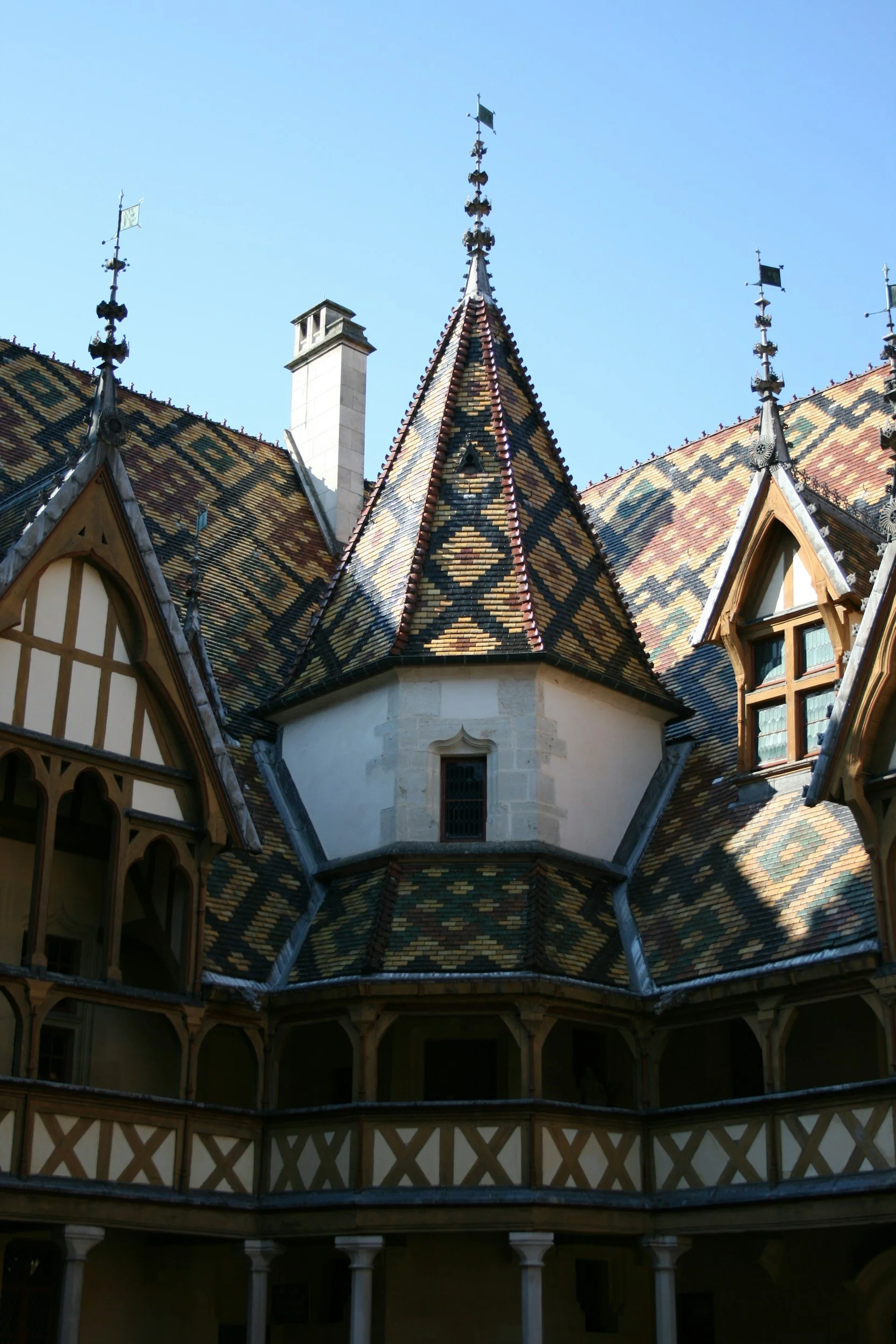
What surprised me most was how different the tastings felt from one another. Walking through the underground galleries at Patriarche Père & Fils, where kilometres of vaulted cellars stretch beneath the town, didn't feel anything like standing in the courtyard at Maison Champy, Burgundy's oldest wine house, or sitting down for a tasting at Marché aux Vins inside a former fifteenth-century church just a few minutes from the Hospices. I never had the feeling I was repeating the same experience in a different building because each place told a slightly different part of Burgundy's story.
I actually found myself learning just as much between tastings as I did during them. Even on days when I hadn't booked anything, I'd end up in Athenaeum leafing through books about Burgundy's vineyards, stop outside a wine merchant because something in the window caught my eye or end up talking to someone behind the counter about a producer I'd never heard of before. By the end of the weekend, it felt as though I'd spent as much time learning about Burgundy as I had tasting it.
One afternoon I spent almost as long inside Athenaeum as I did in one of the cellars. If you enjoy books, maps and wine history, it's very easy to walk in for ten minutes and realise nearly an hour has disappeared. Afterwards I'd usually wander back towards the Hospices, stop for a glass of wine or walk into a wine merchant because something in the window had caught my eye. Sometimes I'd leave with a bottle, sometimes I'd leave with nothing more than a recommendation for another producer to look out for. Either way, it never felt like I'd stopped learning about Burgundy just because the tasting had finished.
I think that's what I enjoyed most about Beaune. The wine never felt confined to the appointment I'd booked that afternoon because it kept popping up in different ways as I wandered around the town. Chablis felt completely different, although I ended up enjoying that for a different reason.
Chablis felt completely different. There aren't tasting rooms around every corner because before long you're out among the vineyards instead. Walk beyond Rue Auxerroise or head up towards the Grand Cru hillside and you'll pass names like Les Clos, Vaudésir, Valmur, Grenouilles and Blanchot one after another. If you've been drinking Chablis for years, it's quite strange the first time you realise they're all right there, separated by little more than a stone wall, a narrow lane or a change in the slope.
I think that's why the tastings stayed with me. By the time I arrived at Domaine William Fèvre, I'd already walked past the vineyards where some of the wines had come from, so the conversation felt completely different from walking straight into a tasting room from a car park. I felt the same at La Chablisienne, which is a great place to start if it's your first visit because you can taste wines from several different climats without spending the whole day moving between producers. If you've got time to book ahead, I'd also make the walk out to Domaine Jean-Marc Brocard. Half the enjoyment is getting there through the vineyards rather than simply turning up for the tasting.
One thing I hadn't expected was how differently I ended up choosing wineries. In Beaune, I'd often walk into a tasting simply because I happened to be passing it on my way somewhere else. In Chablis, I found myself deciding where to walk first, then stopping at whichever domaine happened to be along the route. The vineyards almost dictated the day rather than the other way round.
I also became much more aware of appointments in Chablis than I ever did in Beaune. If I woke up and fancied another tasting that afternoon, it was usually easy enough to find somewhere in Beaune that could fit me in, especially outside the busiest harvest weeks. Chablis is more flexible than people sometimes suggest, but if you're hoping to visit smaller producers such as Domaine Billaud-Simon, Domaine Long-Depaquit or Domaine Samuel Billaud, I'd still send an email a few days beforehand. I found those visits felt much more personal when they knew you were coming, and it's a small bit of planning that can make quite a big difference.
I also hadn't appreciated how much time I'd end up spending on foot.
In Beaune, most of my walking was between wine houses, merchants and cellar doors, with the occasional bus or organised tour if I wanted to spend a day in villages like Pommard, Volnay, Meursault or Savigny-lès-Beaune. In Chablis, I often found myself walking simply because I wanted to spend a bit longer out among the vineyards. I'd head up towards Les Clos, stop every so often to look back across the rooftops and then carry on because I wasn't quite ready to turn around yet. Looking back, that's one of the clearest memories I have from Chablis, and it had very little to do with the tasting itself.
If someone asked me which has the better wineries, I honestly don't think I'd answer the question because I don't think that's what separates them. Beaune is the place I'd choose if I wanted to spend a weekend dipping in and out of different wine houses, merchants and cellar doors, trying different producers as I wandered around town. Chablis is where I'd go if I wanted to understand one wine region a bit better, because by the time you've walked through the vineyards, visited a couple of domaines and seen where names like Les Clos or Vaudésir actually sit on the hillside, the wines start making sense in a completely different way.
I'd also seriously consider Tournus if you're travelling between Lyon and Dijon. It's one of those places that quietly ends up being a highlight.
What happens after the wineries close?
I went to Burgundy expecting the wine to be the main event. It obviously is, but what surprised me was how much of the weekend ended up revolving around everything in between. A tasting only takes an hour or so, then you're deciding where to have lunch, whether to stop for another coffee, what to do with the bottle you couldn't resist buying that morning and where you fancy spending the evening once the cellar doors have closed.
I don't think I noticed that until I started comparing Beaune with Chablis.
In Beaune, I stopped planning meals almost straight away. I'd have a restaurant in mind, head off towards Rue Monge, Rue Maufoux or Place Carnot, then change my mind because another terrace looked nicer or I'd spotted something on a menu outside that sounded better. After a couple of days I stopped trying to book everywhere in advance because half the fun was seeing what I'd come across on the way.
One thing I really liked about Beaune was that I never felt I had to choose between eating out and picking things up for a picnic because both worked just as well. I'd spend the morning around the Saturday market in Place de la Halle, stop at Fromagerie Hess for a wedge of Époisses, call into Boulangerie Marie Boucherot for a fresh baguette and usually end up adding a few slices of jambon persillé somewhere along the way. More than once, lunch ended up being whatever I'd collected over the previous hour, and I honestly looked forward to those picnics as much as I did the restaurant meals.
When I did eat out, I kept gravitating towards places that felt as though they'd always belonged in Beaune. Ma Cuisine deserves its reputation, especially if you're interested in older Burgundy vintages that are difficult to find elsewhere, but it's also one of the few restaurants where I'd book ahead because tables disappear quickly, particularly towards the end of the week. Le Bénaton is somewhere I'd choose if I wanted a slightly more modern menu without feeling disconnected from Burgundy, while Caves Madeleine was probably where I was happiest ordering something I'd never heard of before and asking for a recommendation instead of scanning the wine list for the most familiar name.
Lunch rarely took just an hour. I'd order œufs en meurette, jambon persillé or boeuf bourguignon with a glass of Bourgogne Rouge, then suddenly realise it was halfway through the afternoon. That happened more than once, especially if I was sitting outside and didn't have anywhere I needed to be afterwards. I enjoyed those lunches just as much as the tastings because they probably taught me as much about Burgundy as another cellar visit would have.
By the evening, I usually found myself back around Place Carnot, Rue Carnot, Rue de Lorraine or the streets around the Hospices. Once the tasting rooms closed, everyone seemed to end up in the wine bars instead, and I liked that the conversations often carried on from whatever people had been tasting earlier in the day. I kept going back to La Dilettante because it felt relaxed without ever feeling sleepy, and it was one of those places where I'd almost always end up writing down another producer to look out for. If you're interested in natural wines, La Lune is well worth a visit as well because it offers something quite different from many of the more traditional Burgundy wine bars around town.
Beaune was one of those places where my plans kept changing. Some of my favourite evenings started because I walked another fifty metres, spotted somewhere that looked nicer, or changed my mind at the last minute because another terrace caught my eye.
Chablis never really felt like that.
There are excellent restaurants, but I never found myself wandering around comparing menus or wondering if there was somewhere better around the next corner. Most evenings I'd decide where I wanted to eat fairly early, book if I needed to, then spend the rest of the afternoon walking around town instead of keeping my options open.
That slower pace just seems to suit Chablis.
If you're having lunch at Au Fil du Zinc, I'd honestly order a glass of Chablis before spending more on a Premier Cru. I did exactly that and never felt as though I was missing out. The food doesn't need an expensive bottle alongside it. Freshwater fish from the Yonne, seasonal vegetables or a really good piece of veal all felt like exactly the sort of lunch I wanted after spending the morning around the vineyards.
I also kept going back to Le Bistrot des Grands Crus. If you've spent the day walking through the vineyards, it's a really easy place to sit down and compare different climats without opening a whole bottle. Ordering a flight with a village wine, a Premier Cru and a Grand Cru side by side felt like the obvious thing to do there, and it's probably the only place where I'd choose that over a bottle.
Something I don't remember reading before my own trip is how much quieter Chablis becomes on Sunday and Monday evenings outside the busiest months. Several restaurants close for a day or two each week, so if you're visiting in spring or autumn it's worth checking opening days before you arrive instead of assuming everywhere in the centre will be serving dinner.
I actually quite liked it. One evening I bought a bottle from La Chablisienne, picked up a few local cheeses from Fromagerie Berthaut and sat beside the Serein for a while before dinner, watching the village gradually empty as the delivery vans disappeared and the light changed across the Grand Cru hillside. I hadn't planned any of it, but it's one of the evenings that still comes back to me when I think about Chablis!
If what you really love are old streets and medieval towns rather than vineyards, Semur-en-Auxois is probably the comparison you're actually looking for.
And hey, don't let the transport put you off. The car-free guide makes the Burgundy journey look much less complicated than it does at first.
What is there to do in Beaune and Chablis besides wine?
Even if you enjoy wine, you're probably not going to spend an entire weekend moving from one tasting to the next. By the second afternoon, I usually find myself looking for somewhere to walk, somewhere to browse for a while or somewhere to sit with a coffee that isn't another tasting room. That's also when Beaune and Chablis start feeling like two completely different places.
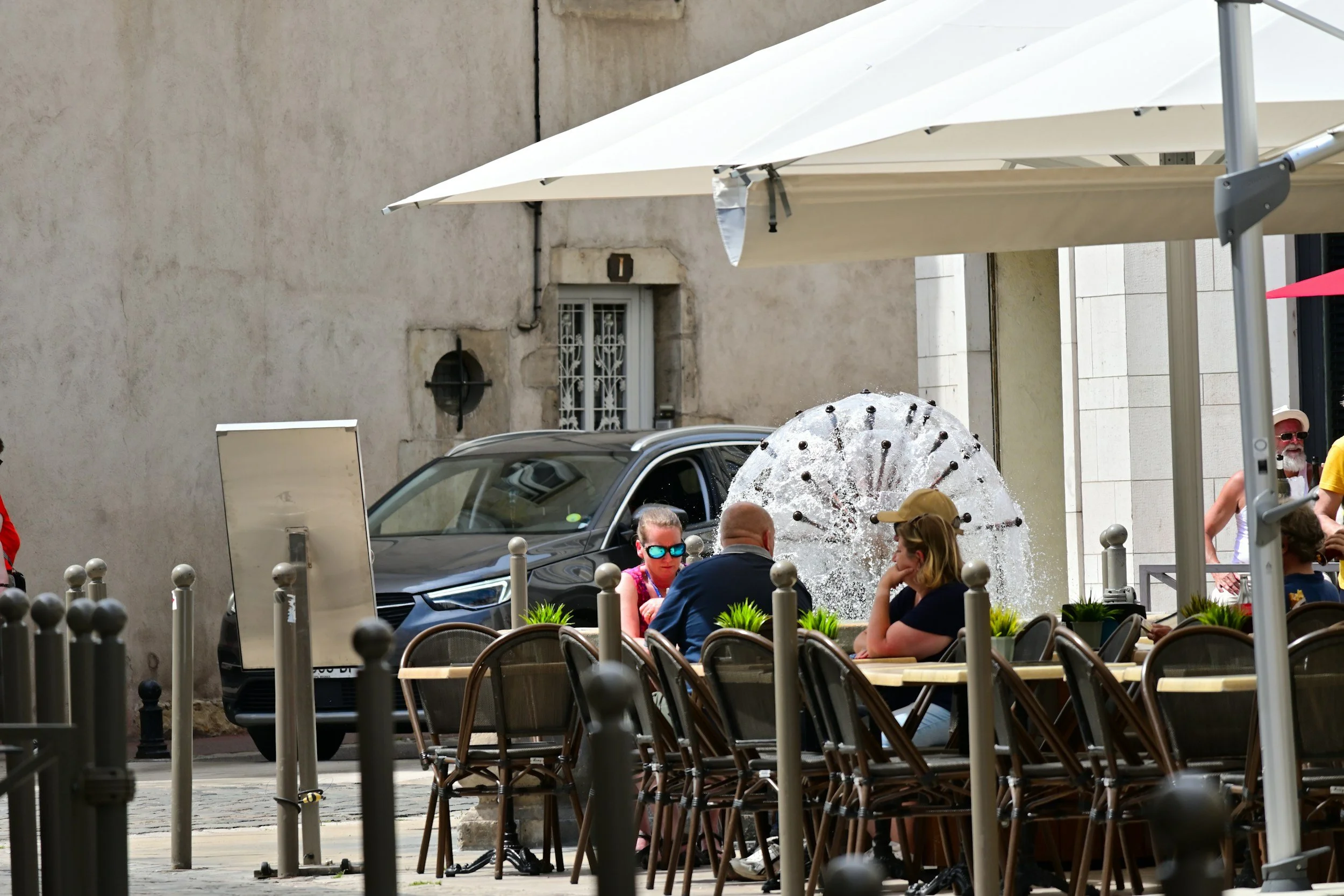
If your weekend includes a Saturday, I'd build the morning around Beaune's market rather than trying to squeeze it in before a winery visit. By eight o'clock, the stalls are already spreading out from the covered market on Place de la Halle, across Place Fleury and along Avenue de la République, and most of the people filling the streets are there to do their weekly shopping rather than sightseeing. The cheese stalls usually have queues before the flower sellers do, cyclists stop on their way home with baskets full of vegetables and you'll see plenty of people leaving with a roast chicken under one arm and a warm baguette under the other because lunch is already sorted.
I almost always ended up leaving with more than I'd planned. A wedge of Époisses or Délice de Pommard, a slice of jambon persillé, fresh cherries if they were in season and usually something sweet I'd spotted on the way out. Rather than taking everything back to the hotel, I'd walk over to Parc de la Bouzaize, find a bench by the lake and have lunch there instead. Most of the people around me seemed to be reading, walking their dogs or sitting on the grass while their children fed the ducks, and after a while it was easy to forget that the Hospices were only about fifteen minutes away.
Back in the old town, I nearly always end up in Athenaeum. I tell myself I'm only going in for a few minutes, then somehow find myself upstairs looking through vineyard maps, books about individual climats, old editions covering Burgundy's wine villages or guides to producers I've passed earlier in the day. It isn't really somewhere I visit to buy something. I go because every time I leave, I understand the region a little better than when I walked in.
I also think Beaune is at its best when you stop trying to see everything. Some of the streets I've enjoyed most, including Rue Monge, Rue Paradis and Rue Maufoux, weren't on any itinerary. I wandered into Boutique des Domaines to compare bottles from estates I'd visited, stopped at La Boutique des Saveurs for mustard and pain d'épices to take home and ended up spending far longer than expected looking through tiny galleries and kitchen shops that most people walk straight past on their way to the Hospices.
If the weather's good, I'd swap another tasting for a bike.
The Voie des Vignes starts just outside Beaune and passes through Pommard, Volnay and Meursault, but I wouldn't get too caught up in trying to reach all three. The best part of that ride, at least for me, was stopping whenever something caught my attention. Once it was a producer unloading grapes during the harvest. Another time it was a roadside stall with tomatoes, peaches and courgettes laid out beside an honesty box. Looking back, those stops are what I remember, not how many villages I managed to cycle through.
Chablis is completely different.
After a few hours, I usually stop looking at Google Maps because I know I'll end up back where I started sooner or later anyway. The village is small enough that you naturally walk past the same cafés, bridges and little squares more than once, and after a while I stopped thinking about where I was going and just wandered.
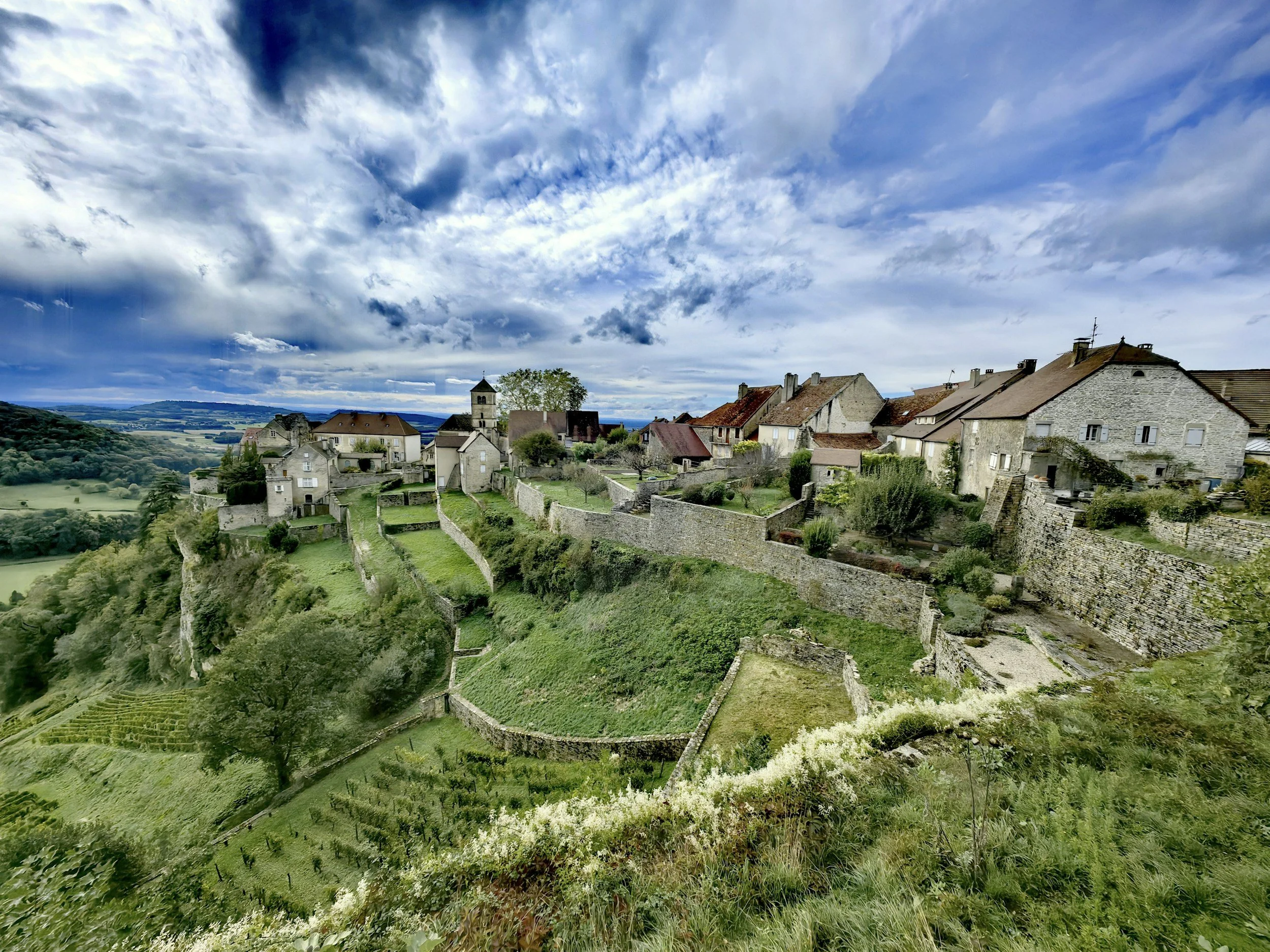
One walk I'd recommend to almost anyone starts beside Collégiale Saint-Martin, crosses the Serein and climbs gradually towards the Grand Cru vineyards. Most people stop at the first viewpoint overlooking the village, but it's worth continuing another five or ten minutes because the number of people drops away surprisingly quickly. Standing beside Les Clos, Vaudésir, Valmur, Grenouilles and Blanchot, looking back across the rooftops towards the church tower, gives you a much clearer picture of Chablis than any explanation of the appellation ever could. You suddenly realise that these famous vineyard names are separated by little more than a narrow path, a low stone wall or a slight change in the slope.
If you keep walking, you'll pass estates such as Domaine William Fèvre and Domaine Jean-Marc Brocard, where you'll often see people working in the vines, tractors moving between parcels or deliveries being loaded outside the winery. You don't need a tasting booked for the walk to feel worthwhile because the landscape itself explains a great deal about the wines you've already been drinking.
Back in the village, I rarely felt the need to keep looking for something else to do.
I'd usually buy a pastry from Pâtisserie Dupré, cross one of the old bridges over the Serein and sit by the river for a while. Every now and then someone would walk past carrying a cardboard case from one of the wine merchants, a couple of cyclists would roll through the centre, the bells from Collégiale Saint-Martin would ring across the village and then everything would go quiet again. Looking back, I remember afternoons like that more clearly than some of the winery visits.
If shopping is one of the things you enjoy when you're away, I'd pick Beaune without thinking twice.
Chablis has a few wine shops, local food producers and the odd place to browse, but I never felt like I was missing anything. I'd much rather spend twenty minutes choosing a piece of fresh goat's cheese, pick up a bag of warm gougères from the bakery or see what had just come in at La Chablisienne than wander around clothes shops selling the same brands I'd find at home.
If markets are the main reason you're heading to Burgundy in the first place, don't miss these market weekends before you decide where to stay.
How many days do you need in Beaune or Chablis?
I don't think either Beaune or Chablis is somewhere you need to spend a week, but I also think a lot of people underestimate how quickly a day disappears once they're actually there. Wine tastings almost always take longer than you expect, lunches have a habit of stretching into the afternoon, and it's surprisingly easy to lose an hour wandering through a market, sitting outside a café on Place Carnot or browsing shelves at Athenaeum without ever feeling as though you've done anything particularly organised.
If I only had one night in Burgundy, I'd almost always choose Beaune.
Part of that comes down to how straightforward it is. You can arrive by train just before lunch, walk into the old town in less than ten minutes and settle into the weekend almost immediately. There's enough time to visit the Hospices de Beaune, wander through Rue Monge, Rue Paradis and Rue Maufoux, stop for a tasting at Maison Champy, explore the underground cellars at Patriarche Père & Fils or simply spend an hour moving between wine merchants without feeling that you've got to keep checking your watch.
The evening is one of the reasons I think Beaune works so well as a short break.
In Beaune, one evening often rolled into the next without much thought. I'd stop for an apéritif at La Dilettante, end up at Ma Cuisine or Caves Madeleine for dinner, then wander back through the old streets while people were still sitting outside with a final glass of Burgundy. The next morning never felt rushed either. There was still time for a coffee on Place Carnot, another walk through the centre or half an hour in Athenaeum before heading to the station for a late-morning train.
Chablis can work just as well for one night, but for a different reason.
By dinner, you'll probably have walked through most of the village already. You'll have crossed the Serein a few times, wandered past Collégiale Saint-Martin and almost certainly found yourself looking up at the Grand Cru hillside as the light starts changing across Les Clos and Vaudésir. I never felt like I needed to find something else to do after that. Sitting outside with a glass of wine or taking one more walk through the village felt like enough, which is probably why I enjoyed staying there as much as I did.
I don't think either place is at its best if you only stay for one night.
With two nights in Beaune, I stopped thinking about how to fit everything in. Instead of squeezing the Hospices, the market, a cellar visit and dinner into the same afternoon, there was time to do one thing, then see where the rest of the day went. If you're there on a Saturday, you can spend the morning around Place de la Halle, pick up some cheese, fruit and bread at the market, then take everything over to Parc de la Bouzaize for lunch. Afterwards, hire a bike and follow the Voie des Vignes towards Pommard, Volnay or Meursault, stopping whenever something catches your eye instead of worrying about the next tasting. By the second evening, I usually wasn't looking at restaurant recommendations anymore. I'd just wander until somewhere looked good.
I actually think Chablis benefits even more from a second night.
The first day is usually about getting your bearings. By the second day, I stopped thinking about where everything was and just got on with enjoying it. I already knew where to buy a pastry, which bridge I liked crossing over the Serein and how long it took to walk up into the vineyards, so the whole day unfolded a bit differently. I'd pick up something from Pâtisserie Dupré, wander up through Les Clos, carry on towards Valmur because I felt like seeing where the path went, then end up sitting on a bench overlooking the vineyards for half an hour without really thinking about the time. Looking back, those are the hours I remember most.
Personally, I probably wouldn't stay in Chablis for three nights unless I already knew how I wanted to spend that extra day. It makes sense if you've booked visits with producers, want to cycle out towards Préhy, Fleys or Chichée, or you're planning to explore more of the Yonne, but the village itself is small enough that after a couple of days I felt like I'd seen most of it without ever feeling rushed.
Beaune is much easier to stretch into a longer stay because the town naturally opens up into the rest of Burgundy.
One day might disappear entirely within the old town. Another might be spent cycling through the vineyards to Meursault, stopping for lunch in Volnay before returning through Pommard. On another day, it's easy to take the train to Dijon, Nuits-Saint-Georges or Chagny without changing hotels. Even if you never leave Beaune, I think the town simply gives you more reasons to stay out for another hour, whether that's another wine bar tucked behind Place Carnot, another independent food shop or another bottle you've decided to open before dinner.
As day trips, both work well, but I'd choose them for different reasons.
Beaune is probably one of the easiest day trips in Burgundy because the station is only a short walk from the historic centre. You can arrive in the morning, wander around for a few hours, visit the Hospices, stop somewhere for lunch, browse the wine merchants along Rue Monge and still have time for a cellar visit before catching an evening train without feeling as though you're watching the clock.
Getting to Chablis takes a bit more effort. Unless you're driving, you'll usually travel via Laroche-Migennes before continuing by bus or taxi, so I'd be more inclined to visit if I was already travelling through northern Burgundy or didn't mind the journey being part of the day.
For a long weekend, though, I'd stay overnight every time! A Friday to Sunday in Beaune usually ends with me leaving a little list in my head of things I didn't quite get round to. Another restaurant I wanted to try. Another street I meant to wander down. Another bottle I wish I'd found room for in my bag.
Chablis leaves me with something completely different. By the time I'm heading home, I already know which stretch of the Grand Cru hillside I'll walk first when I come back, which bench beside the Serein I'll end up sitting on again and which streets I'll wander through before the village wakes up.

I nearly stayed somewhere completely different the first time I visited Beaune, so if you're still weighing up your options, this where to stay guide might save you from making the same mistake.
My recommendation after visiting both
I don't think my answer today would've been the same before I actually spent time in both places.
When I was planning my first trip to Burgundy, I was convinced I'd prefer Chablis. On paper it sounded much more like the sort of place I'd normally choose. It's smaller, quieter and surrounded by vineyards instead of busy wine streets, and I could already picture myself spending slow mornings walking through the vines before everyone else was awake.
Instead, Beaune ended up being the place that surprised me the most.
I'd leave the hotel planning to visit one wine merchant, notice that the Saturday market stretched further along Place Fleury than I'd realised, stop to buy something for lunch instead, spend twenty minutes chatting to someone selling local cheeses under the covered market, wander back through Rue de Lorraine because it was quieter than Rue Monge, then look at the time and realise most of the afternoon had disappeared. It happened often enough that I eventually stopped worrying about whatever I'd originally planned because Beaune always seemed to come up with something better.
That's still the biggest reason I'd recommend it to someone visiting Burgundy for the first time. It's the sort of place where changing your mind halfway through the day rarely feels like a problem. If I woke up and decided I'd rather spend a couple of hours browsing food shops than visiting another cellar, I could. If I felt like hiring a bike after lunch and following the Voie des Vignes towards Pommard without worrying whether I'd make it as far as Meursault, that worked too. And if I lost an hour in Athenaeum before stopping for another coffee, it never felt as though I'd thrown the day off course.
Chablis took me much longer to appreciate.
If you'd asked me what I thought halfway through my first afternoon, I'm honestly not sure I would've recommended staying overnight. I'd already walked through most of the village, crossed the Serein a few times and somehow found myself back near Collégiale Saint-Martin again. At one point I even opened Google Maps because I was convinced I'd missed another street somewhere, but I hadn't. Chablis really is that compact.
The following morning I bought some breakfast, crossed the river before many people were around and wandered uphill without paying much attention to where I was going. By the time I reached the Grand Cru vineyards and looked back across the rooftops, there were only a handful of people working among the vines and barely anyone else around. I stayed there much longer than I'd expected because there wasn't really any reason to leave.
Looking back, I think I was expecting Chablis to work in the same way as Beaune, and that's probably why the first afternoon felt a little underwhelming. If I went back tomorrow, I don't think I'd book a tasting for my first afternoon at all. I'd spend those first few hours walking instead because, once I'd seen Les Clos, Valmur and Vaudésir for myself, the wines suddenly made much more sense. Sitting in a tasting afterwards, I could actually picture where everything had come from rather than just reading the names on a menu.
That's also why I wouldn't recommend Chablis to everyone. If your idea of a good weekend is finding another restaurant you want to try, another market stall you didn't expect or another little shop that catches your eye on the way somewhere else, I still think Beaune is the easier place to fall in love with because there's always something else to discover without really looking for it.
I enjoyed Chablis much more once I stopped expecting it to fill every hour of the day. I'd walk for a while, sit beside the Serein with a coffee, wander back through the village, head up into the vineyards again and eventually realise most of the afternoon had disappeared without me really thinking about it. It wasn't a place that constantly pulled me towards the next thing. It was somewhere I enjoyed far more once I stopped looking for one.
People still ask me which one I'd choose if I only had two nights, and I still usually say Beaune because it's the place I'd recommend first. Things don't always go to plan when you're away, whether that's a rainy afternoon, a fully booked tasting or simply waking up and deciding you'd rather do something completely different, and Beaune seems to cope with that better than almost anywhere else I can think of. There's always another café to duck into, another wine bar that wasn't on your list or another street that somehow turns into the best part of the day.
These days I don't really compare them anymore because I book them for completely different reasons. Beaune is the place I choose when I want a weekend with plenty of choice and the freedom to change my mind as I go, while Chablis is the place I choose when I'm perfectly happy if the highlight of the day is buying a pastry, walking through the vineyards and sitting somewhere quiet with a glass of wine afterwards.
I used to assume French regional trains would be confusing until I actually started using them. This TER guide is everything I wish I'd known before my first trip.
FAQs about Beaune and Chablis
Is Beaune worth visiting without a car?
Yes, and it's one of the easiest places in Burgundy to explore entirely on foot. The train station is only around a ten-minute walk from the historic centre, so you can arrive with a small suitcase and be wandering through the old streets almost immediately. Most visitors spend their time around Place Carnot, Rue Monge, Rue Maufoux and the area surrounding the Hospices de Beaune, where restaurants, cafés, wine merchants and historic cellars are all within a few minutes of each other.
What I like most is that you never feel as though you're constantly walking back and forth across town. You might spend the morning at the Saturday market, stop for lunch, browse a few wine merchants and finish with a tasting without needing any transport at all. If you decide you'd like to explore further, regional trains, local buses and cycle routes make it easy to reach villages such as Meursault, Pommard, Nuits-Saint-Georges and Dijon without renting a car.
Can you stay in Chablis without driving?
Absolutely. Getting to Chablis takes a little more planning because most people travel via Laroche-Migennes before continuing by bus or taxi, but once you've arrived, the village is surprisingly easy to explore on foot.
The centre is compact enough that you'll naturally walk everywhere, whether you're heading to dinner, crossing the Serein, visiting a producer or walking up into the Grand Cru vineyards. In fact, I think walking is one of the reasons Chablis works so well. You're not simply travelling between wineries. The vineyards themselves become part of the day, and I found I understood the wines much better after walking through Les Clos, Vaudésir, Valmur and the surrounding slopes before sitting down for another tasting.
Which Burgundy town is better for a first visit: Beaune or Chablis?
If you've never been to Burgundy before, I'd recommend Beaune.
Not because Chablis is less interesting, but because Beaune gives you a broader introduction to the region. You can visit historic wine houses, browse independent wine merchants, explore the Saturday market, enjoy some of Burgundy's best restaurants and easily take a day trip to nearby villages such as Pommard, Volnay or Meursault without changing hotels.
Chablis feels much more specialised. Rather than introducing you to Burgundy as a whole, it immerses you in one particular landscape and one wine-growing tradition. That's exactly why many people fall in love with it, but I personally think it's even more rewarding once you've already experienced another part of Burgundy.
Is Chablis worth staying overnight?
Definitely, and I'd actually recommend staying for at least two nights if your itinerary allows.
Many people visit Chablis for a few hours before moving on, but the village feels completely different once the day-trippers leave. The streets become quieter, restaurants settle into a much slower pace and the riverside feels almost empty compared with the middle of the afternoon.
The following morning is often my favourite part of the stay. Walking up towards the Grand Cru vineyards while producers are already working among the vines and the village is only just waking up gives you a very different impression than arriving for a quick tasting in the middle of the day. That slower rhythm is one of the main reasons I'd stay overnight rather than treating Chablis as a day trip.
Is Beaune too touristy?
Beaune is undoubtedly the busiest wine town in Burgundy, especially between late spring and autumn, during the Hospices de Beaune Wine Auction and on Saturday market mornings.
Even so, I never found it overwhelming.
Most visitors stay close to the Hospices and Place Carnot, but it only takes a few minutes to wander into quieter streets like Rue Paradis, Rue de Lorraine or around Place Madeleine, where everyday life carries on much as it always has. I actually think Beaune gets the balance right. It has enough visitors to create a lively atmosphere without feeling like a town that's lost its local character.
Can you walk to wineries from Beaune?
Yes, although it's worth understanding the difference between tasting rooms and vineyards.
Within the historic centre you'll find dozens of wine merchants, historic négociants and cellar tours that you can reach entirely on foot, including places such as Maison Champy, Patriarche Père & Fils and several smaller tasting rooms tucked away around Rue Maufoux.
If your goal is to walk through vineyards themselves, you'll need to leave the town. That's where hiring a bicycle or following the Voie des Vignes towards Pommard, Volnay and Meursault makes much more sense than walking from producer to producer inside Beaune.
Can you walk to wineries from Chablis?
Yes, and I actually think this is where Chablis has a real advantage.
Within a few minutes of leaving the centre, you'll already be among the vineyards, and several well-known producers can be reached on foot. Walking between the village and estates such as La Chablisienne, Domaine William Fèvre and Domaine Jean-Marc Brocard feels completely natural because the vineyards are never far away.
I also like the fact that the walks themselves become part of the experience. Instead of treating the landscape as something you drive past on the way to a tasting, you spend time in it first, which makes the wines feel much more connected to the place they come from.
Which Burgundy town has the best restaurants?
For me, it's Beaune, although not necessarily because the cooking is better.
The biggest difference is choice.
In Beaune you can spend one evening at Ma Cuisine, another at Caves Madeleine, stop for a glass at La Dilettante before dinner or simply wander until somewhere looks inviting. If your first choice is full, there are plenty of excellent alternatives within a few streets.
Chablis has some very good restaurants, particularly Au Fil du Zinc, but the evenings feel quieter and more settled. Rather than comparing several places, I usually choose one restaurant, order a bottle from a local producer and let the evening unfold from there. If restaurants are an important part of your weekends away, I'd recommend Beaune. If you're looking for a slower village where dinner naturally becomes the highlight of the day, Chablis is hard to beat.
Can you visit Beaune and Chablis on the same trip?
Yes, but I wouldn't rush between them.
Although they both belong to Burgundy, they feel surprisingly different once you're there. Beaune is a lively base with easy rail connections and enough restaurants, wine bars and nearby villages to fill several days. Chablis is much smaller and rewards a slower pace, particularly if you enjoy walking through vineyards and spending time in one place.
If you have four or five nights, I'd split the trip between them rather than choosing one over the other. You'll come away with a much better understanding of how varied Burgundy really is, and I don't think either town feels like a substitute for the other.
Should I stay in Beaune or Chablis?
If it's your first visit to Burgundy, I'd usually recommend staying in Beaune. It's easier to reach by train, offers more accommodation, restaurants and wine bars, and makes a convenient base for exploring villages like Meursault, Pommard and Volnay.
I'd choose Chablis if your priority is spending a couple of quiet days walking through vineyards, visiting a handful of producers and slowing the pace right down. The village is much smaller, but that's exactly what many people love about it.
For me, it isn't really a question of which town is better. It's about deciding whether you're looking for a weekend with lots of possibilities or one where doing less is the whole point.