France's most train-friendly wine regions for a long weekend
It's surprisingly difficult to find advice on planning a wine weekend in France without a car. Most itineraries begin with picking up a rental at the airport, then jumping between villages, wineries and hotels over a couple of days. That works in some parts of the country, but it also means spending a lot of the weekend behind the wheel.
The funny thing is that some of France's best wine regions barely need a car at all.
In places like Burgundy, you can arrive by train, walk to your hotel in ten minutes, spend Saturday morning wandering through the market, hop on a regional train after lunch and be tasting wine somewhere else before the afternoon is over. In other regions, the station might exist, but it's twenty kilometres from the vineyards and the last bus leaves before dinner. On paper they both look train-friendly. In reality, they feel completely different.
That's what this article is really about.
Not every French wine region is equally easy without a car, and that's usually where people come unstuck. On paper the train connections can look almost identical, but once you're there the experience can be completely different. In some regions you can walk out of the station, settle into one hotel and spend the next few days moving around without thinking much about logistics. In others, you're constantly checking bus timetables, looking for taxis or trying to fit too much into a weekend that suddenly feels much shorter than it did when you booked it.
Before choosing a wine region, think about how you actually want to spend the weekend
One of the reasons people come away with completely different opinions about French wine regions is that they often end up taking completely different kinds of trips without really meaning to. Two people can both spend a long weekend in Burgundy, drink excellent wine and come home with opposite impressions, simply because one stayed three nights in Dijon while the other tried to fit Dijon, Beaune and Chablis into 48 hours.
When you're looking at a map, that itinerary doesn't seem particularly ambitious. Dijon and Beaune are less than twenty minutes apart by TER, Chablis doesn't look impossibly far away, and suddenly adding another village for lunch starts sounding quite reasonable as well. Then Friday disappears into train connections and checking into the hotel, Saturday morning turns into a decision about whether to leave Les Halles in Dijon before you've really finished wandering around, and by Sunday you're pulling a suitcase over cobbles in Beaune instead of sitting outside on Place Carnot with another coffee because the train leaves in an hour.
That's usually the moment when people decide a region is difficult without a car, when in reality the itinerary was.
Champagne is almost the opposite. Once you've checked into a hotel in Reims, there's very little reason to keep moving because so much of the city is within easy walking distance. You can spend the morning wandering around Boulingrin Market, stop for lunch on Rue de Mars, book an afternoon tour at Taittinger or Pommery, finish the day with a glass of champagne at Café du Palais and still never feel like you've been rushing from one place to the next. If you've got another day, it's easy enough to catch the train to Épernay or continue on to Hautvillers, but it feels like an addition to the weekend rather than something you have to do.
I've realised over the years that the train journey itself is rarely what makes a region easy or difficult. It's those last ten minutes after you arrive that usually decide how the whole weekend unfolds. Walking out of Dijon Ville and reaching your hotel on foot before you've even started thinking about transport feels very different from arriving somewhere like Orange, where the train is only part of the journey and you're still waiting for a bus or hoping a taxi turns up. On paper they're both train trips. In reality, they don't feel anything alike once you've arrived.
Spend a Saturday morning in Beaune and come back on Sunday afternoon, and it almost feels like you've arrived in a different town. By half past eight, Les Halles is already busy with people filling shopping bags with cheese, fruit and fresh bread, the terraces around Place Carnot are starting to fill and there's a steady stream of locals weaving between the market and the cafés before lunch. By Sunday afternoon the pace has eased right back. A few tasting rooms have closed for the day, some restaurants have already finished lunch service and suddenly those regional train departures matter a little more because there isn't quite as much happening if you miss the next one.
That's one of the reasons I rarely try to plan these weekends down to the hour. Some of my favourite parts have come from changing my mind halfway through the day because a tiny wine bar looked too inviting to walk past, a producer had time for an unplanned tasting or lunch ended up lasting twice as long as expected. It's surprisingly easy to lose track of time in places like Beaune or Dijon, and that's exactly what makes them such good bases. You never feel as though one small detour is going to throw the whole weekend off course, because another train is rarely far away and there's usually something worth doing while you wait.
Ps. if Saturday markets are one of the reasons you're coming, this Burgundy market weekend is a brilliant way to build the whole trip around them.
Regional TER trains are brilliant once you understand how they work, but they don't all run with the same frequency, and France's TER network makes the differences much easier to plan around.
Burgundy is still the easiest place to start
People often assume they'll want to stay in Beaune because that's where so many of Burgundy's famous wine cellars are, and on paper it certainly looks like the obvious choice, but every time I start planning another weekend here I somehow end up booking another hotel in Dijon instead. Beaune is wonderful for an afternoon, and there are days when I don't want to be anywhere else, yet Dijon is the place that quietly makes the whole weekend easier without ever really drawing attention to itself. You arrive at Dijon Ville, cross Place Darcy, wander down Rue de la Liberté, and before you've even thought about checking into the hotel you've probably already stopped outside Mulot & Petitjean to see what's just come out of the ovens or found yourself wondering whether breakfast should be another coffee somewhere around Place François Rude or a slow wander towards Les Halles while the market is still waking up.
Ps. Beaune isn't the only town that makes a great place to stay in Burgundy and Semur-en-Auxois instead offers a completely different weekend without adding much extra travel.
Saturday mornings are one of the reasons I'd always choose Dijon over arriving later in the weekend. By half past eight, Les Halles is already buzzing, although not because visitors have turned up with cameras. Most of the people weaving between the stalls are there because it's simply where they buy their food. Florists are wrapping enormous bouquets in brown paper, the queue outside Fromagerie Gaugry has usually spilled into the aisle before lunchtime, fishmongers are calling orders across the counters and someone always seems to be leaving with far more cheese than they could possibly need. Once you've wandered through the market, it's worth carrying on beyond the busiest shopping streets. Rue Bannelier, Rue Amiral Roussin and the quieter lanes towards Place Émile Zola slow down almost immediately, and that's where Dijon starts feeling less like somewhere people have come to spend a Saturday and more like somewhere they're simply getting on with their weekend. If you pass Mulot & Petitjean before late morning, you'll usually see locals popping in for gingerbread or a few pastries rather than visitors browsing for souvenirs, while café owners are still carrying chairs onto the terraces and neighbours stop to chat on street corners before settling in with their first coffee.
The temptation is usually to head straight for Beaune because it's the name everyone recognises, but I've never really understood the rush. The TER journey from Dijon takes barely twenty minutes, trains run often enough throughout the day that you're rarely tied to one departure, and staying in Dijon a little longer nearly always makes the day feel less hurried. I'd much rather have lunch first, wander through the streets around the Palais des Ducs, duck into Mulot & Petitjean if I haven't already picked up their pain d'épices, browse the shelves at Maille Dijon or one of the little specialist food shops tucked away nearby, and see whether La Cave de la Cité has a tasting that catches my eye before strolling back to Dijon Ville. None of it feels planned. You're simply following whatever looks interesting before catching the next train.
Beaune has a different feel almost as soon as you leave the station. The streets become narrower, the buildings close in around you and, before long, almost everyone is drifting towards the Hospices de Beaune. It's well worth seeing if it's your first visit, but I rarely spend much time there anymore because the streets around it are usually what keep me in town. Rue Paradis, Rue Monge and the little lanes running between them are much quieter once you've left the main square behind, and they're full of the sort of places that don't usually appear on an itinerary. Athenaeum is one of them. It's part bookshop, part wine merchant and part specialist map shop, and it's remarkably easy to lose the best part of an hour leafing through Burgundy wine atlases, regional cookbooks and bottles from producers you've just passed on the train. If you still have time before heading back, I nearly always walk past Collégiale Notre-Dame and into the small streets behind it, where you'll often find tiny independent wine merchants quietly pouring tastings while most visitors are still gathered around Place Carnot.
Beaune is one of those towns that seems to exhale later in the afternoon. Somewhere around four o'clock, without any obvious moment when it happens, the tour groups start disappearing, the queue outside the Hospices de Beaune shortens and it's suddenly much easier to find a table around Place Carnot without hovering for one to become free. That's usually when I'll stop for a glass of wine. The atmosphere shifts almost completely. Instead of people studying maps or trying to squeeze one last tasting into the afternoon, you start noticing couples settling in for apéritifs, locals dropping by after work and shopkeepers chatting across the street as they begin pulling in displays for the evening. If you've got a little time before your train, it's also worth wandering through the small lanes around Place de la Halle, where the pace feels noticeably calmer once the busiest part of the day has passed.
Heading back to Dijon never feels like doubling back. If anything, it feels as though you're arriving just as the city is settling into the evening. Around Rue Berbisey, Rue des Forges and the streets behind the Palais des Ducs, the restaurant terraces gradually fill with people who clearly aren't in any hurry to leave, and it's the sort of area where one recommendation easily leads to another. I've lost count of the number of times I've ended up adding another producer to my list after overhearing a conversation at the next table or asking a waiter what they'd open if they were choosing for themselves. La Fine Heure is particularly good for that. The wine list goes well beyond the famous labels, the staff are happy to point you towards smaller domaines if you ask, and it's the kind of place where one glass has a habit of turning into two because nobody seems to be looking at the time.
Love Chardonnay? Then I'd seriously look at Chablis before automatically booking Beaune.
Sunday is quieter, although not in a disappointing way. Les Halles is closed, several of the independent food shops don't reopen, and there's a softness to the city that feels completely different from the energy of Saturday morning. It's usually enough time for one last walk through the old centre, perhaps another stop at Mulot & Petitjean for gingerbread to take home, before wandering back towards Dijon Ville with the feeling that one hotel, one railway line and one unhurried base turned out to be far more than enough for a long weekend in Burgundy.
Passing through southern Burgundy anyway? Is Tournus actually worth stopping in? The answer surprised me the first time I went.
Maybe you are still deciding whether Burgundy deserves three days or four? This route helped me stop overplanning and actually enjoy the region.
Where you stay in southern Burgundy is all abut finding those cute villages and streets, and this breakdown makes the choice much easier.
Beaune isn't automatically the best place to unpack your bags, and these alternatives are well worth a look before you book anything.
Champagne is surprisingly easy without a car
Champagne is one of those regions that looks far more awkward on a map than it actually feels once you're there. You see vineyard villages scattered across the hillsides, famous champagne houses in different towns and a railway network that seems to stop just short of where you really want to be. Then you arrive in Reims, walk out of Reims Centre station and realise you probably won't think much about transport again until it's time to go home.
That's why I'd base myself in Reims every time.
Épernay is somewhere I almost always enjoy visiting, but I've never found myself wanting to base an entire weekend there. Once you've wandered along Avenue de Champagne and visited one or two of the big houses, the town becomes much quieter, particularly later in the afternoon when many cellar tours have finished for the day. Reims has a completely different feel. You can spend hours wandering between Rue de Mars, the streets around the cathedral and the little lanes behind Place Royale, duck into an independent bookshop, stop for another coffee because the terrace looks inviting or wander into a gallery you hadn't planned to visit, and the day never feels as though it's revolving around champagne alone.
Saturday mornings nearly always pull me towards the Boulingrin district instead of the cathedral. While visitors are gathering around Place Drouet-d'Erlon, locals are already filling wicker baskets with vegetables, oysters and still-warm bread inside Marché du Boulingrin, stopping to pick up flowers on the way home or squeezing onto the terrace outside Café du Palais before the tables disappear. If you wander down Rue de Mars afterwards, you'll notice delicatessens opening their doors, independent wine shops setting out chalkboard signs and people greeting shopkeepers by name. It's busy, but not because everyone's trying to see the same thing. It simply feels like a Saturday morning in a neighbourhood where people have been shopping for the weekend long before visitors arrived.
If you arrive early, I'd head straight into Les Halles du Boulingrin before thinking about breakfast. The market is at its best while everyone is still doing their weekly shopping, and it's much more interesting watching people debate which cheese to take home or queue for oysters than arriving once most of the browsing has replaced the buying. After that, Café du Palais is still one of those places I always end up returning to. It has been around for generations, and it shows. The stained-glass ceiling catches the morning light beautifully, every wall seems to have another painting or framed photograph to look at, and there are usually just as many locals reading the newspaper over coffee as visitors trying to decide which champagne house to book next. It's closed on Sundays and Mondays, something that's surprisingly easy to forget, so Saturday morning is usually the best time to go.
From there, I almost always wander towards Rue Chanzy rather than back towards the cathedral. La Belle Image is one of those bookshops that's difficult to leave quickly, especially if you enjoy travel writing, photography or regional history, and a few doors further on you'll find independent food shops and little wine boutiques that rarely make anyone's itinerary. By the time I reach Le Coq Rouge, I'm normally ready to stop again. Their list leans heavily towards grower champagnes and smaller producers, so it's a nice contrast if you've already spent the day visiting houses like Ruinart, Taittinger or Pommery. The staff are genuinely enthusiastic about pointing people towards bottles they haven't heard of before, and I've ended up discovering several producers there that never appeared on the cellar tours earlier in the day.
The larger champagne houses are all straightforward to reach from the centre of Reims, either on foot or with a short tram or bus ride, but they're also the one part of the weekend I'd never leave until the last minute. Between April and October, and especially once harvest gets closer, the best tour times disappear surprisingly quickly. I've made that mistake before, assuming there would be plenty of choice a few days ahead, only to find myself picking whatever happened to be left instead of visiting the house I actually wanted to see. Booking early gives you much more freedom to build the rest of the day around the tasting rather than the other way round.
Épernay is only about half an hour away by train, which makes it one of the easiest day trips from Reims. The walk from the station is short, and before long you'll find yourself on Avenue de Champagne, where grand stone mansions stretch almost uninterrupted along the avenue behind wrought-iron gates and neatly clipped gardens. Moët & Chandon, Perrier-Jouët, Pol Roger, Boizel and several smaller producers all sit within easy walking distance of one another, but it's worth wandering beyond the avenue once you've had a look. I nearly always turn off towards the quieter streets around Église Notre-Dame d'Épernay before stopping for a coffee at Le Sacré Bistro or a glass at La Cave de l'Avenue, where the pace feels noticeably calmer than it does outside the biggest champagne houses. By late afternoon, when many visitors have started making their way back to Reims, Épernay becomes much quieter again, and that's usually when I enjoy it most.
By late afternoon, though, Épernay starts changing almost without you noticing. Once the last cellar tours finish and the coaches begin leaving, Avenue de Champagne becomes much quieter, shopkeepers start bringing in signs from the pavement and some of the smaller tasting rooms close their doors for the day. If you've booked dinner, it's a lovely time to be there because the town finally feels as though it's slowing back down again, but if you're the sort of person who likes wandering for another couple of hours after eating, popping into another wine bar or sitting outside with one last glass before heading back to the hotel, Reims is the place that keeps giving. Around Rue de Mars and Place Drouet-d'Erlon, people are only just settling in for the evening, terraces stay busy well after dinner and it's easy to end up changing your plans because one recommendation leads to another. That's usually why I prefer sleeping in Reims and visiting Épernay for the day rather than the other way around.
If you have room for one more stop, Hautvillers is the place I'd make the effort for. The village sits above the vineyards rather than beside the railway, so you'll need a taxi from Épernay or one of the seasonal shuttle services when they're running. That's probably why it still feels surprisingly peaceful once the coach groups leave. Walk beyond the church where Dom Pérignon is buried, follow Rue Dom Pérignon towards the edge of the village and you'll find one of the best viewpoints in Champagne looking out across the vineyards towards Épernay. Stay until early evening and the view changes again as the light drops across the rows of vines. Most people have already gone by then.
Sundays are where I'd think twice about trying to squeeze in one more village before heading home. Reims still has plenty going on. You can take your time over lunch, wander through the streets for another hour or stop for one last glass before making your way back to the station without feeling as though the weekend has suddenly come to an end. Out in places like Hautvillers, Aÿ-Champagne or Verzenay, it's a different story. By early afternoon, bakery shelves are looking pretty empty, family-run tasting rooms have often closed for the day and you'll notice the streets becoming quieter as locals disappear home for Sunday lunch. None of that is a reason not to visit, but it does make the timing matter more than people often expect. If my train wasn't until later in the day, I'd almost always head back to Reims rather than trying to stretch another few hours out in one of the villages.
Before booking Champagne, where to stay is probably the decision that'll make the biggest difference once you're there.
If autumn is an option, harvest season in Alsace feels completely different from visiting in spring.
Alsace is the one region where I'd actually move hotels
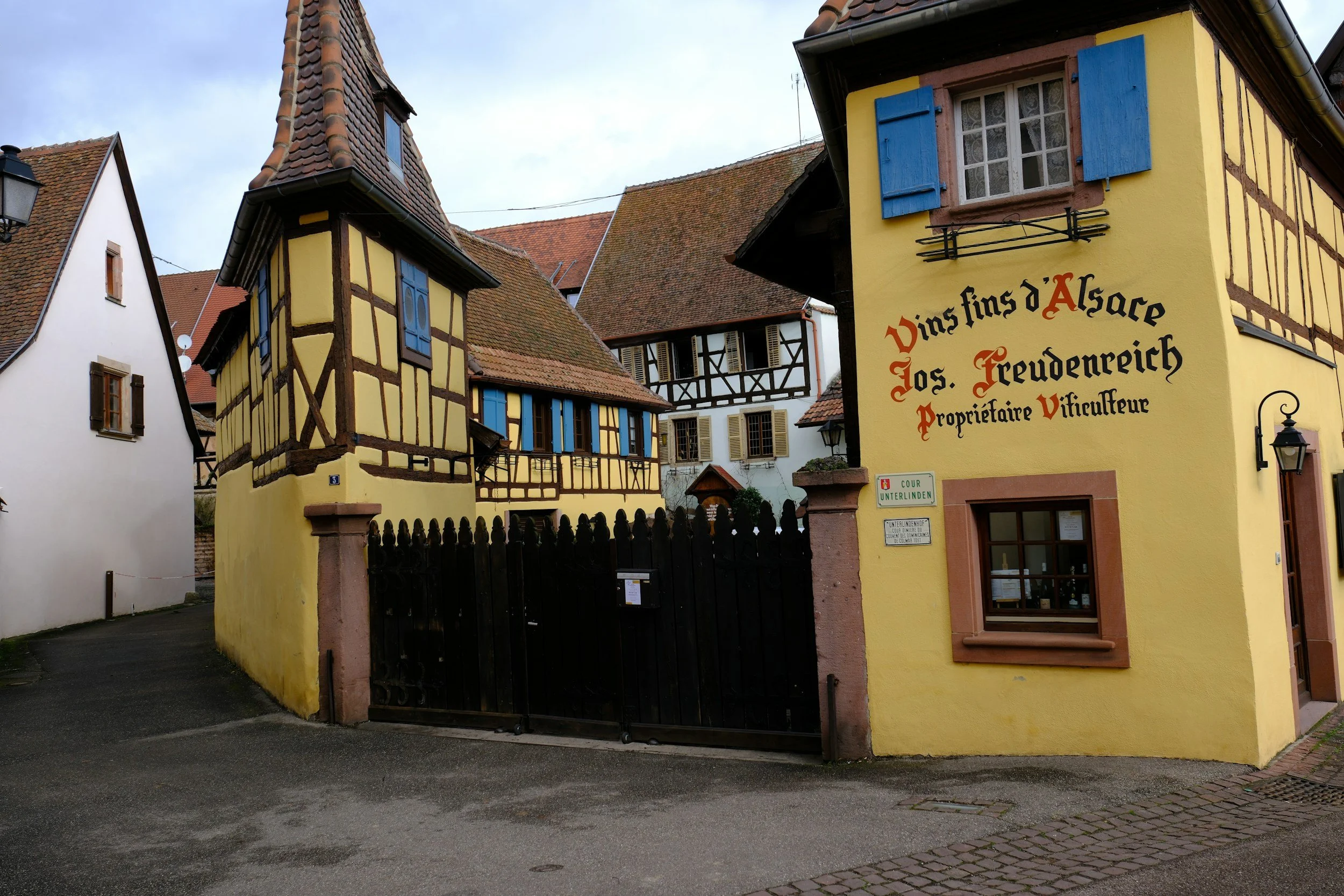
If this were Burgundy, I'd be telling you exactly the opposite. Check into one hotel, unpack your bag and forget about it until it's time to catch the train home. Alsace never really encourages that. The towns sit so close together that moving between them feels less like relocating and more like carrying on with the same trip somewhere new. After you've travelled between Strasbourg, Obernai, Barr, Sélestat and Colmar once or twice, they stop feeling like separate destinations altogether. It's remarkably easy to finish breakfast in Strasbourg, spend the afternoon wandering through Colmar and still be back in time for dinner somewhere completely different without the day ever feeling rushed. Before long, you stop thinking in terms of towns and start thinking about one long stretch of vineyards connected by small stations, each with its own market square, wine bars and favourite bakery.
The villages are where a little planning starts to matter. Ribeauvillé, Riquewihr, Mittelbergheim and Hunawihr don't have railway stations, so the final few kilometres usually depend on a local bus or a short taxi from Sélestat or Colmar. It's not difficult, but it's worth looking up before you leave in the morning rather than when you're standing on the platform wondering where everyone disappeared to. The buses are designed around local life rather than sightseeing, which means they're excellent when they line up with your plans and surprisingly awkward when they don't. Miss one on a weekday afternoon outside the main season and you might suddenly have forty-five minutes to fill in a station café, and once early evening arrives the departures thin out much faster than many visitors expect. That's one of the reasons I nearly always keep the vineyard villages for the middle of the day and leave the mornings and evenings for places like Strasbourg or Colmar, where there's always somewhere open if your plans change.
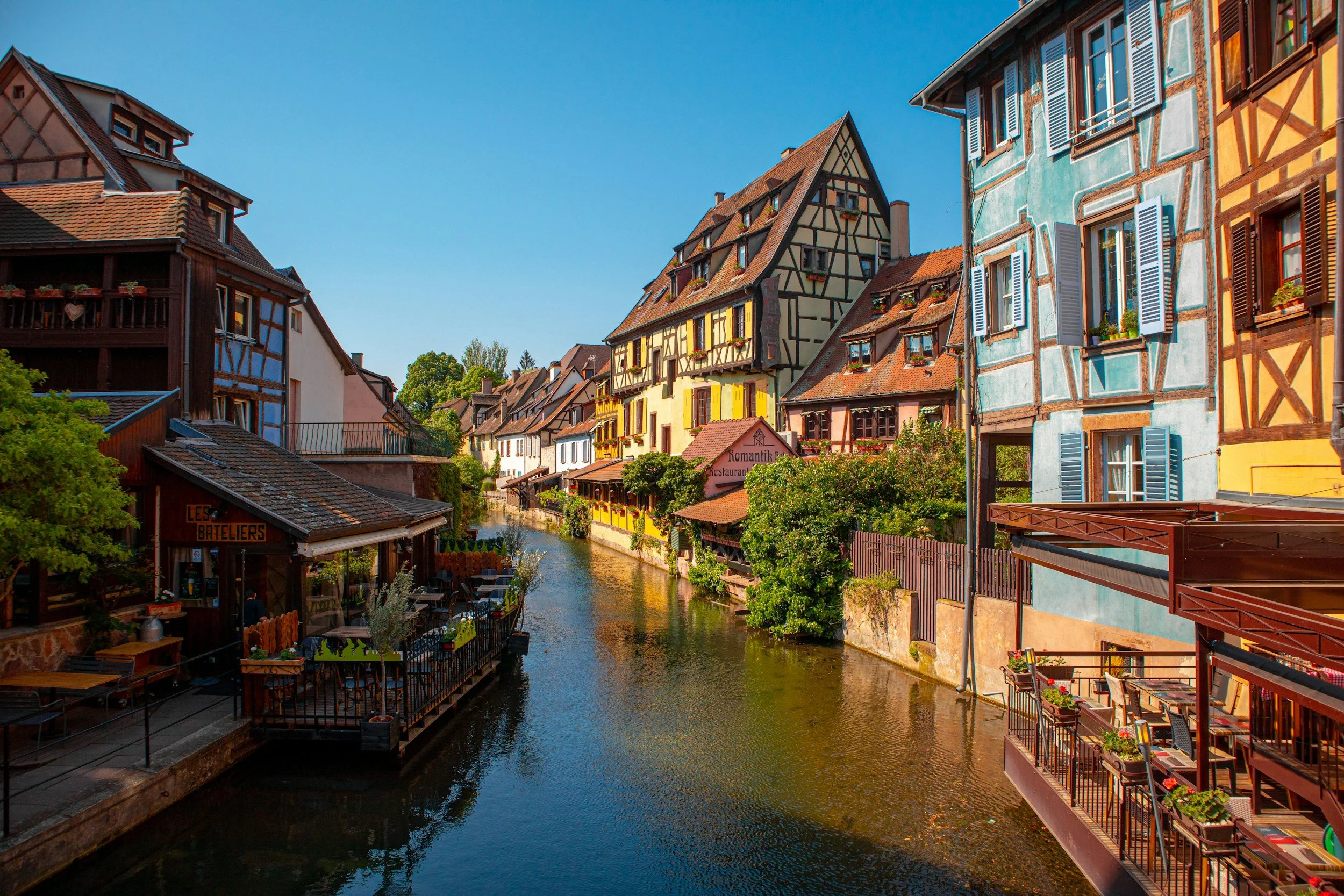
I almost always begin in Strasbourg, partly because arriving there couldn't be much easier and partly because it gives the weekend a gentler start than heading straight into the vineyards. Within twenty minutes of leaving the station you've wandered through Petite France, crossed another canal without really paying attention to which one it was and found yourself somewhere around Place Gutenberg, where it's very easy to lose track of time without feeling as though you should be somewhere else. I rarely pass Librairie Kléber without stepping inside for a look around, even if I already know my backpack is too full for another book, and if there's still an hour before dinner I'll often end up with a glass of Riesling at Le Comptoir d'Eugène or sitting outside Café Bretelles, watching the city settle into the evening before calling into Boulangerie Christian for breakfast supplies to take on tomorrow's train.
The next morning is usually when I move on. Not because Strasbourg runs out of things to do, but because staying in one place never feels like the best way to see Alsace. The towns are so close together that changing hotels hardly interrupts the trip. You can have breakfast in Strasbourg, catch the next TER and be walking through Colmar before you've had time to finish your coffee. That's one of the reasons Alsace works so well for a long weekend. Instead of trying to fit everything around one base, each town naturally becomes the next stop.
Colmar is probably the town that changes the most over the course of a day. Around lunchtime, especially from spring into autumn, Rue des Marchands, Maison Pfister and the bridges around Petite Venise are exactly as busy as you'd expect. I normally have a quick walk through, then turn off towards Rue Berthe Molly, where things become noticeably quieter after just a couple of streets. Librairie Hartmann is always worth a browse, Marché Couvert is a good place to see what's in season and I almost always come away with something I hadn't planned to buy, whether that's local honey, biscuits or a bottle of apple juice from one of the nearby producers. Jadis et Gourmande is another place I nearly always end up stopping, especially if they're making seasonal chocolates or nougat.
By the early evening, Colmar feels like a different town again. Most of the day visitors have already caught trains back towards Strasbourg, it's much easier to find a table for dinner and the streets around Quai de la Poissonnerie and Rue des Tanneurs are suddenly somewhere you can wander without constantly stepping aside for people taking photographs. That's usually when I enjoy Colmar the most. Instead of trying to see everything, I'll often just pick a wine bar, order a glass of Riesling and spend the rest of the evening walking wherever the next street happens to lead.
Further north, Ribeauvillé is another place that's worth seeing later in the day. Most of the coach tours arrive towards the end of the morning, so Grand'Rue is usually at its busiest around lunchtime, when the wine shops and tasting rooms are opening and people are drifting between terraces looking for somewhere to eat. Give it another couple of hours and the town feels noticeably different. The groups have moved on, it's much easier to find a table outside Au Passage de la Tour, and you start noticing the things that are easy to miss earlier in the day, like shopkeepers chatting across the street, locals stopping for a quick glass on their way home or the sound of church bells carrying through the old centre now that the crowds have thinned out. I nearly always end up wandering a little further before catching the bus back, usually past Maison Trimbach and a handful of smaller family-run domaines, because Ribeauvillé has a habit of introducing you to producers you weren't looking for. Those unexpected stops have ended up being some of the tastings I've remembered most.
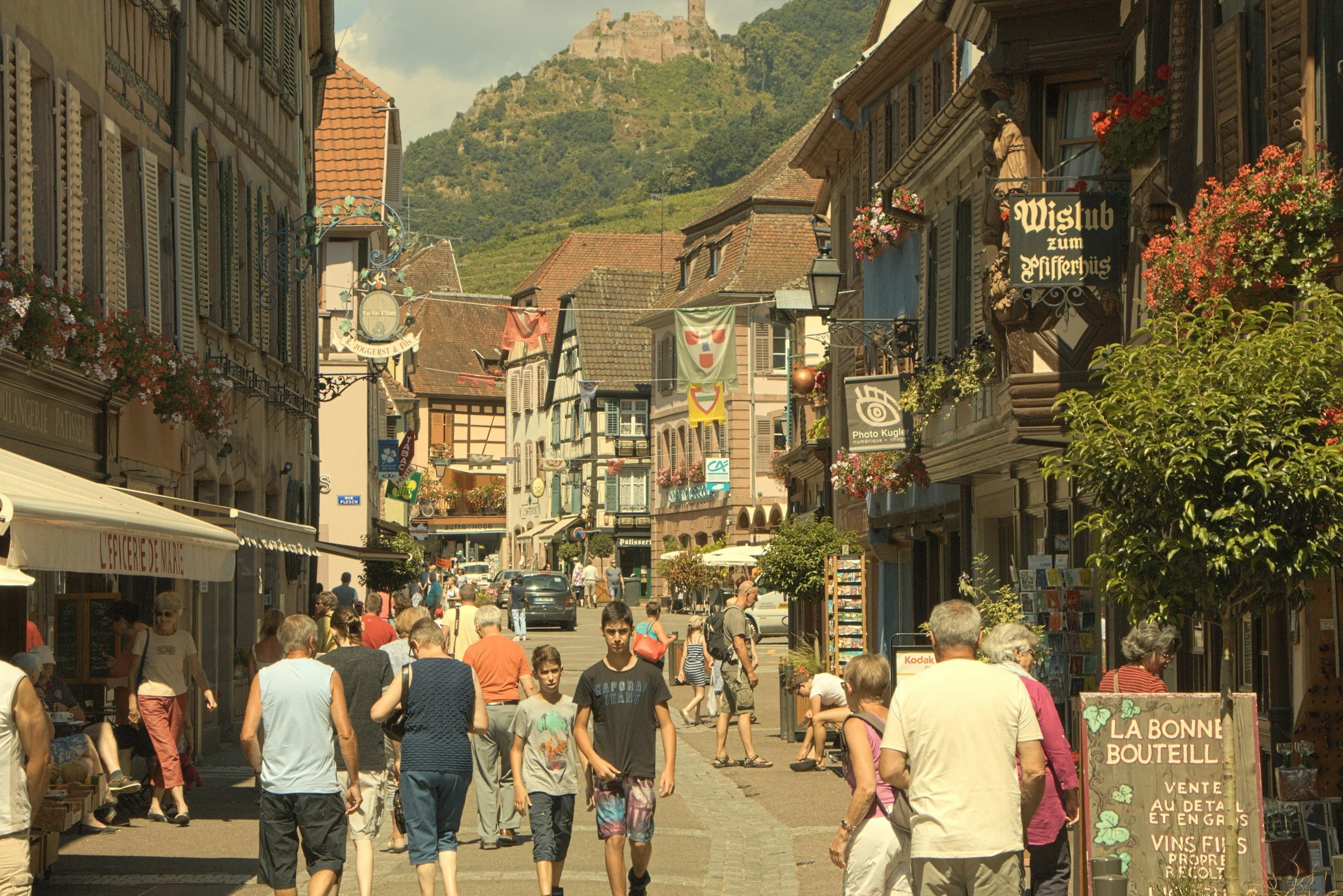
Most people arrive in Riquewihr, wander the length of Rue du Général de Gaulle, stop outside the colourful half-timbered houses for a few photographs and head back again. I always keep walking. Once you're past the Dolder Tower, a network of vineyard tracks begins climbing gently above the village, and within a few minutes the noise from the main street has almost disappeared. Looking back across the rooftops from up there gives you a completely different sense of the place. In late September, there's a good chance you'll pass tractors pulling trailers piled high with freshly harvested grapes on their way back to the wineries, and it's often easier to hear people working in the vineyards than conversations from the village below. It's only a short walk, but very few people seem to carry on once they've reached the old gate.
If there's one town I'd happily add another night to, it's Barr. It doesn't have the instant recognition of Colmar or Riquewihr, but that's exactly why I keep coming back. Around Place de l'Hôtel de Ville, people drift in and out of cafés because they're meeting friends or running errands rather than ticking somewhere off a list, and it's not unusual to see someone leaving Domaine Stoeffler with a couple of bottles tucked under one arm before stopping to chat halfway down the street. I nearly always wander along Rue des Boulangers, partly because it's quieter than the main square and partly because it still feels like a street people actually use every day. If you have time, walk a little further to Folie Marco, an elegant eighteenth-century house that's easy to miss but rarely busy, or call into La Cave des Vignerons de Barr to taste wines from several local producers without needing to drive between villages.
Come back in late September or early October and Alsace feels like a different region altogether. Spring has its own appeal, with blossom appearing between the vines and villages slowly filling up again after winter, but harvest is when everything suddenly has a purpose. Tractors are already moving through the villages first thing in the morning, cellar doors are left open while grapes are unloaded, and there's that unmistakable smell of fermenting juice drifting out into the streets as you walk past the wineries. In places like Barr, Ribeauvillé and Obernai, you'll often stumble across temporary wine bars, harvest celebrations or producers pouring the new vintage in village squares, and restaurants that were easy to book a few months earlier suddenly fill up with locals, growers and visitors all at once. It never feels chaotic, but it does mean dinner is one of the few things I'd book ahead if you're travelling during harvest.
By the time you're on the train back to Strasbourg, you've probably stayed in more than one town, walked across plenty of cobbled streets with a suitcase, caught a couple of local buses and worked around the odd timetable that didn't quite line up with your plans. Somehow it never feels like hard work. After a day or two, hopping on the next TER almost becomes part of the routine, and that's what makes Alsace so different from somewhere like Burgundy. Instead of choosing one base and exploring outwards, the journey naturally unfolds one town at a time, and looking back afterwards it's hard to imagine seeing the region any other way.
Thinking about carrying on towards the Alps? Talloires or Annecy? It's one of those decisions that's much easier to make before you arrive.
The Loire Valley changes completely depending on where you stay
The Loire Valley looks incredibly straightforward when you're planning from home. Tours, Amboise, Blois and Saumur all sit neatly along the railway, the château names seem surprisingly close together and it's easy to convince yourself you'll cover half the valley in a long weekend. Once you're there, though, the days have a habit of disappearing much faster than they did on the map. You linger over lunch, spend longer than expected at a market, stop for a glass of Vouvray overlooking the river or decide to walk a little further along the Loire à Vélo path, and suddenly crossing to the next town no longer feels like the obvious thing to do.
That's why I always decide where I want to wake up before I think about château tickets or winery visits. Staying in Tours gives you a completely different weekend from staying in Saumur, even if you end up visiting some of the same places. Once you've picked the town that matches the sort of trip you actually want, the rest of the planning usually becomes much easier.
For me, that's usually Tours. Not because it's the most beautiful town in the valley, but because everything starts working the moment you step out of the station. Within ten minutes you've crossed into the old centre, Rue Colbert is already pulling you towards independent wine bars and little food shops, and before long you're wandering between the stalls at Les Halles de Tours, where locals are filling baskets with goat's cheese, asparagus, fresh bread and bottles to take home for lunch. On Wednesday and Saturday mornings the outdoor market spills beyond the covered halls, and arriving before ten makes a surprising difference. By late morning it becomes a lot busier, but earlier on it still feels like somewhere people are shopping for the weekend rather than somewhere visitors have come to photograph.
I rarely spend the whole evening around Place Plumereau, even though that's where most people naturally end up. It's a great square, but once I've had a drink there I almost always wander back towards the river. During the warmer months, Tours sur Loire gradually fills with people who've picked up a bottle of Vouvray, cyclists rolling in from the Loire à Vélo route and groups settling into deckchairs overlooking the water, but if you keep walking for another five or ten minutes the atmosphere changes again. Around Pont Wilson and the quieter stretches of the Loire, you'll mostly pass dog walkers, evening runners and people sitting on the riverbank watching the sun go down. It's an easy walk, but surprisingly few visitors seem to carry on beyond the guinguette.
One of the things I like most about staying in Tours is that you don't have to choose between wine and the city. Vouvray and Montlouis-sur-Loire are both close enough for an easy day out, but they're just far enough away that it's worth being realistic about how you want to spend the day. On a map, cycling through the vineyards looks effortless. In reality, a leisurely tasting at one domaine usually turns into another because someone recommends a producer just down the road, lunch lasts longer than expected and suddenly you're cycling back along the Loire with a couple of bottles in your pannier wondering why the last few kilometres feel much longer than the first. It's all part of the day, but it's one of those small things that's much easier to appreciate before you set off than halfway back into Tours.
If I wanted a smaller base, I'd move to Amboise, although I don't think I'd stay there for the whole weekend. The walk from the station only takes ten minutes or so, but it's just long enough to remind you why a small suitcase is a better idea than a large one once the wheels hit the older cobbles near the centre. After that, though, everything is close together. Rue Nationale naturally draws you through town towards Place Michel Debré, little food shops spill out onto the street, and before long you'll know your way around without needing to look at Google Maps every few minutes. I nearly always end up stopping at Bigot for something sweet before carrying on towards the river, even if I wasn't planning to.
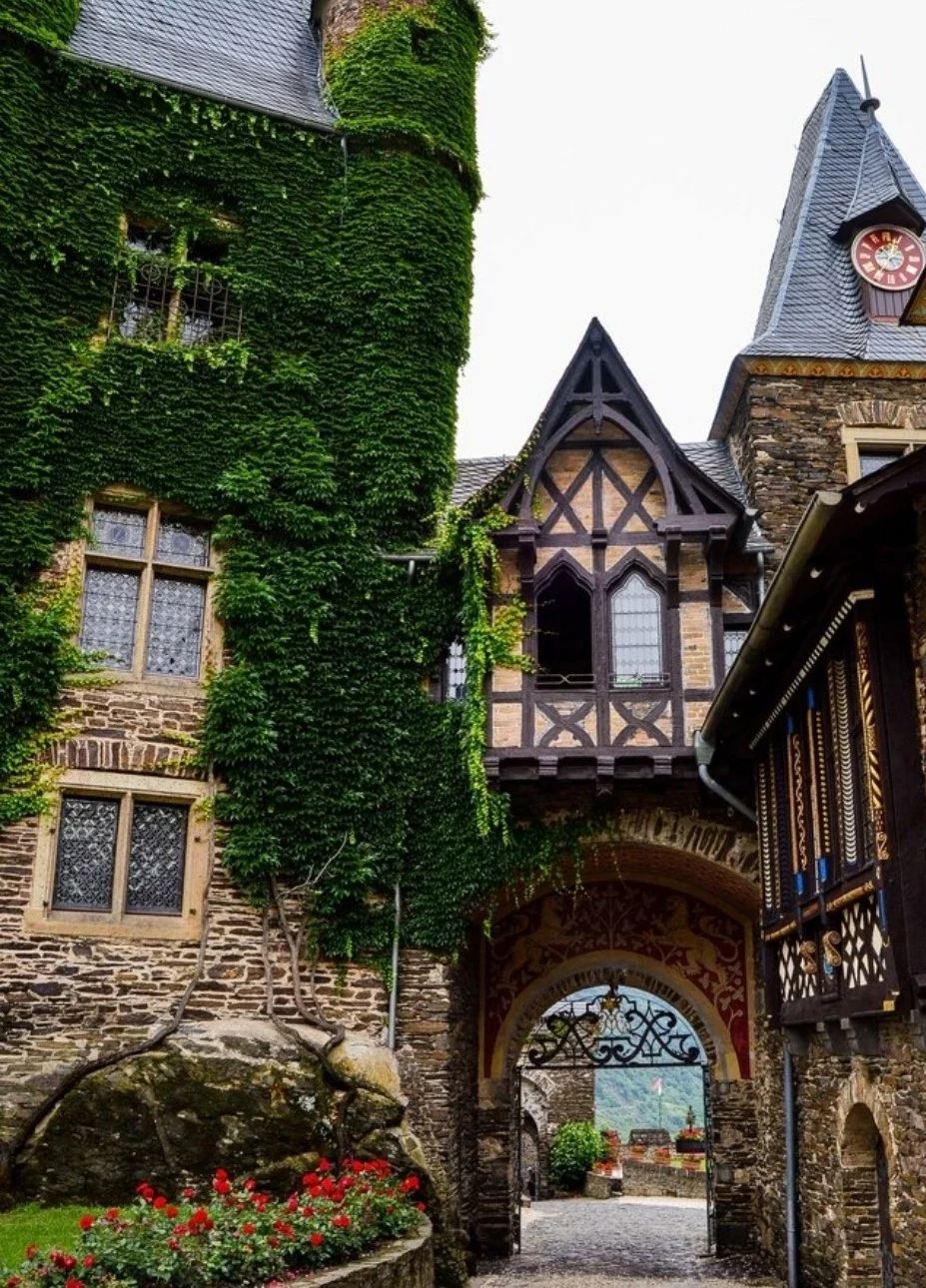
By late morning, the area around Château Royal d'Amboise is usually at its busiest. Visitors queue for the château, the terraces fill up surprisingly quickly and, if it's a Sunday, the market along the Loire pulls even more people into the centre. I rarely linger there for long. Amboise becomes much more enjoyable later in the afternoon, once the coaches have left and the pace settles down again. That's normally when I'll wander over to Clos Lucé, take the riverside path for a while or stop at L'Ilot for a glass of Chenin Blanc before walking back through town. If you've still got some energy left, it's worth crossing the river to Île d'Or as well. Looking back towards the château from there gives you one of the best views in town, and for some reason far fewer people seem to make the short walk across than you'd expect.
Further west, Saumur feels completely different again. Wine sits much closer to everyday life here than many people expect, but not only because of the vineyards. This is one of the Loire's historic sparkling wine towns, and walking west from the centre towards Saint-Hilaire-Saint-Florent gradually brings you into a landscape of old limestone quarries where producers such as Ackerman and Bouvet-Ladubay have carved enormous underground cellars into the rock. The tours are fascinating, but I almost enjoy what happens afterwards more. Bouvet-Ladubay's contemporary art centre sits beside the cellars rather than feeling like an afterthought, and spending an hour wandering through photography exhibitions before tasting a glass of Crémant somehow feels entirely natural here.
Saumur always makes me rethink how much I can comfortably fit into a day. On the map, everything looks close together, but once you're there the distances feel a little more spread out than they first appeared. The station sits on the north side of the Loire, the cafés and restaurants cluster around Place Saint-Pierre, the château watches over the town from above and the big sparkling wine houses, including Bouvet-Ladubay, Ackerman and Veuve Amiot, are another walk further west. None of it's difficult, but I wouldn't expect to wander between all of it without checking where the next local bus is heading or deciding that a taxi is worth it after a long lunch. I usually end up choosing one side of Saumur for the morning and the other for the afternoon instead of trying to zigzag backwards and forwards across town.
Blois, on the other hand, is one of those places I think deserves far more attention than it gets. People often pass through on their way between Tours and Orléans, but it's an easy town to settle into for a couple of days. The station is only a short walk from the centre, although you'll feel the climb soon enough. By the time you've made your way up the Escalier Denis Papin, suitcase in tow, you'll probably be questioning your packing choices, but once you're at the top everything is within easy walking distance again. Around Place Louis XII, people linger over coffee instead of rushing off to the next château, the little streets behind Maison de la Magie are much quieter than the square in front, and it's worth ducking into Fondation du Doute even if contemporary art isn't usually your thing. A few minutes away, Librairie Labbé is the sort of independent bookshop where it's easy to lose half an hour without noticing, and if you're still wandering towards the end of the afternoon, the gardens around Jardin de l'Évêché are one of my favourite places to stop for a view across the Loire before dinner.
Saturday mornings give Blois another personality altogether. By mid-morning, Place Louis XII is lined with market stalls, people are queueing for goat's cheese, seasonal vegetables and bunches of flowers, and the cafés around the square fill with shoppers stopping for coffee before carrying on through the old town. I nearly always wander through the market first, then cross the Loire towards Port de la Creusille. The walk only takes a few minutes, but the view back towards the château, Cathédrale Saint-Louis and the rooftops climbing the hillside is one of my favourites anywhere in the valley. By late afternoon, when the light catches the pale tuffeau stone, it's easy to see why people linger there long after they've taken the photograph they came for.
One thing I've learnt in the Loire is that the best days rarely happen because everything went exactly to plan. It's surprisingly easy to lose half a day without feeling as though you've done very much at all. You stop at a winery in Vouvray intending to taste three wines and leave an hour later after talking to the owner about the last harvest. Lunch stretches on because the table next to you recommends another producer a few kilometres away. You wander into an independent bookshop while waiting for the next train and somehow leave with a regional cookbook tucked under your arm. Those are the moments I remember afterwards far more than whether I managed to fit in another château.
Looking back, I don't think there's one perfect base for the Loire Valley, and that's exactly what makes the region interesting. Tours works if you want a lively city with easy train connections, Amboise if you like being able to walk almost everywhere, Saumur if sparkling wine is high on your list, and Blois if markets, old streets and a few quieter corners sound more appealing than ticking off another famous château. Once you've worked that out, the rest of the weekend tends to fall into place on its own.
The Loire changes completely depending on which day you arrive, and these market towns explain why it's worth checking the calendar before booking.
Not every Loire town feels the same once the day-trippers disappear, and these quieter places might end up being much more your style.
Beaujolais is much easier without a car than most people realise
Beaujolais is one of those regions people often overcomplicate before they even arrive. The map makes it look as though every vineyard sits on a different hillside and every village needs its own winding country road, so it's easy to assume a car is essential. It isn't. Take the train to Lyon Part-Dieu, hop on the next TER to Villefranche-sur-Saône, and about twenty minutes later you're already in the middle of the region. It's one of those journeys that feels almost too easy considering how quickly the city disappears behind you.
I'd happily base myself in Villefranche-sur-Saône for a couple of nights. It's practical, but more importantly, it never feels as though it's putting on a show for visitors. The station is only a short walk from the old centre, Rue Nationale runs through town beneath its long arcades, and before you've gone very far you'll pass independent wine merchants, bakeries and cafés where people are clearly stopping because it's Saturday morning, not because they're following a guidebook. If you're there on market day, head for Place du Marché early enough to catch people doing their weekly shop rather than browsing. You'll see bags filling with Rigotte de Condrieu, fresh fruit, saucisson and crusty loaves long before anyone starts thinking about wine. That's something I really like about Beaujolais. The wine never feels separate from everything else. It's simply another stop before lunch, another conversation at the market or another bottle tucked under someone's arm on the walk home, and I think you understand the region much better once you've seen it that way.
If you happen to arrive on a Sunday, I'd head straight for the market before doing anything else. It's one of the biggest in the Beaujolais region, spreading through the centre of Villefranche-sur-Saône with stalls piled high with apricots, tomatoes, peaches, regional cheeses, saucisson, flowers and honey, while locals weave through the crowds with shopping trolleys and wicker baskets rather than cameras. It never feels like a market that's there for visitors. People are doing their weekly shop, catching up with neighbours and deciding what they're cooking for lunch. During the rest of the week, Les Halles de Villefranche becomes the natural place to wander instead. I rarely walk through without stopping somewhere. One producer will insist you try a slice of Rosette de Lyon, another is handing out pieces of still-warm Saint-Marcellin, and before long I've somehow added a loaf of bread, a few local cheeses and something I hadn't planned to carry home on the train.
The villages take a little more thought, but not enough to make the region difficult without a car. The trains do the hard part. It's the last few kilometres that need a bit more improvisation. Places like Oingt, Fleurie, Juliénas and Romanèche-Thorins aren't connected by the kind of bus service that lets you hop from village to village whenever you feel like it, and I've found it's often easier just to share a taxi for one leg of the journey instead of organising the whole day around a timetable. It usually costs far less than people expect, especially if there are two or three of you travelling together, and it gives you the freedom to stay for another glass of wine, wander through the village a little longer or stop for lunch without constantly wondering whether you've just missed the only bus for the next two hours. That's one of the few places in France where I'd happily spend a little extra on transport because it makes the rest of the day so much more enjoyable.
Oingt never really matches the picture people have in their heads before they arrive. Yes, the honey-coloured stone houses are beautiful, but what keeps me there isn't the architecture. It's the fact that you'll walk past a ceramic studio, then a tiny gallery, then an artist working with the door propped open before finding another winemaker just around the corner. It doesn't feel like a village where every shop is trying to sell you the same souvenir. I nearly always climb up to the Tour d'Oingt before leaving. The view stretches across rows of Gamay vines towards the Beaujolais hills, and it's one of the easiest places to understand how spread out the vineyards really are once you're standing above them instead of driving past them. Afterwards, I'll usually wander back through Rue de la République, where it's worth ducking into whichever workshop happens to be open that day. No two visits have ever felt quite the same. The only thing I'd mention is the ground under your feet. Those old cobbles are much kinder to comfortable walking shoes than they are to a suitcase with tiny wheels.
Fleurie has a gentler feel than some of the neighbouring crus, although the village itself is only part of the reason I'd come. If you've got the time, it's well worth making your way up to the Chapelle de la Madone, whether you walk or split a taxi with someone else. From the chapel, you can see vineyards spreading across the hills in almost every direction, with villages like Moulin-à-Vent, Chiroubles and Juliénas visible on a clear day. It also puts the region into perspective. Looking at a map, it's easy to think the villages are all just a few minutes apart, but from up there you quickly realise how much climbing and twisting country roads sit between them. Back in Fleurie, I usually leave plenty of time for lunch because it's one of those places where nobody seems interested in rushing you. Around Place de l'Église, people drift between cafés and domaines throughout the afternoon, growers stop in for a coffee after working in the vines, and if you're there during harvest you'll often see tractors rolling back through the village loaded with freshly picked grapes while everyone else carries on with lunch. Those are the moments I remember afterwards far more than any individual tasting.
I nearly always leave Juliénas until later in the trip, partly because it's the tasting I'm usually looking forward to most. It doesn't have the same stream of visitors as villages like Fleurie, and that's often reflected in the tastings themselves. At smaller domaines, there's a good chance the person pouring the wine is the same person who was out in the vines earlier that morning, so conversations tend to drift well beyond what's in the glass. One minute you're talking about the vintage, the next you're looking at a map of the surrounding parcels or hearing why one slope ripened a week later than another. I almost always stop by Le Cellier de la Vieille Église, not just to taste wines from different producers in one place, but because it's somewhere locals still drop in during the day. You never quite know who you'll end up talking to, and I've picked up more restaurant tips and winery recommendations there than from any guidebook.
If your train back to Lyon isn't until later in the day, Romanèche-Thorins is well worth adding before you head home. Most people know it because of Hameau Duboeuf, but it's much more than a quick museum visit. It's an easy place to spend half a day, especially if you take your time between the exhibitions, the gardens and the tasting spaces instead of rushing through them. The station is only a few minutes away on foot, so there's no awkward transfer at the end of the weekend, and I like finishing there because it feels completely different from the small wine villages you've just come from. Instead of another cellar door or village square, you leave Beaujolais with a broader picture of the region's wine history before catching the train back to Lyon. It makes a surprisingly satisfying last stop without feeling like you're squeezing one more thing into the itinerary.
Come back during harvest and you'll probably wonder if you've arrived somewhere different. In spring, it's not unusual to walk through Fleurie or Juliénas without seeing much more than a few locals, somebody pruning vines and the occasional café terrace beginning to fill around lunchtime. By late September, the villages are already busy before you've finished breakfast. Tractors keep rumbling through the centre loaded with freshly picked grapes, cellar doors are left open while people move crates in and out, and you'll often catch the sweet smell of fermenting juice before you even realise where it's coming from. Lunch lasts a little longer, wineries are busier than they were a month earlier and somebody always seems to know somebody who's still out picking that afternoon. It never feels like an event that's been organised for visitors. You're simply arriving while the region is at its busiest.
That's probably what I like most about Beaujolais. The weekend never unfolds quite the way I expect it to. I'll leave in the morning thinking I'll visit one producer, then somebody at the market tells me about another domaine ten minutes away, lunch ends up lasting far longer than planned and suddenly it's four o'clock and I'm still sitting outside with a glass of Gamay wondering where the afternoon disappeared to. Yes, you'll probably end up calling a taxi once or twice, and you might have to glance at a bus timetable now and again, but I never really remember those bits afterwards. That's the part of Beaujolais you can't really see on a map!
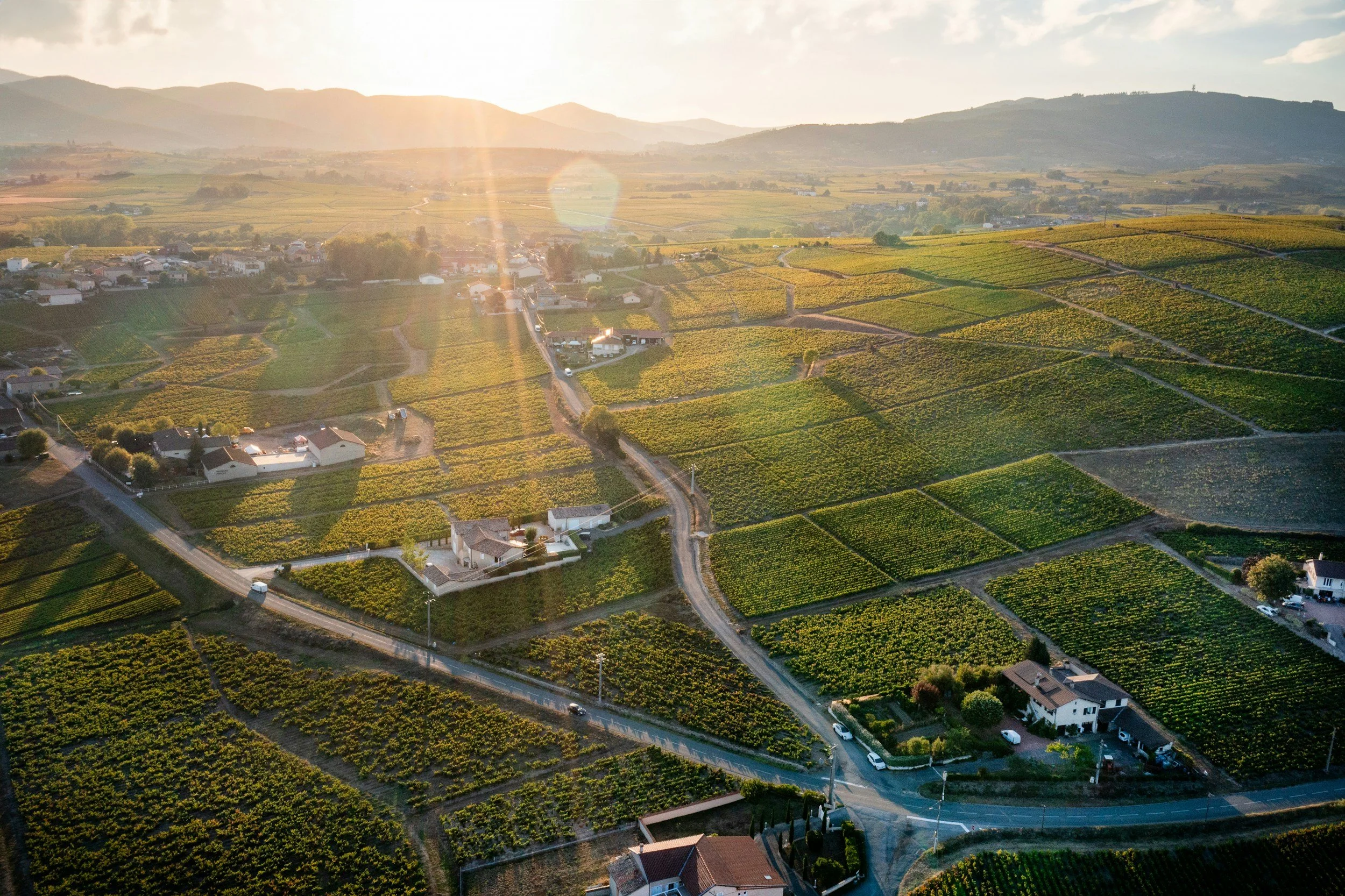
Not ready to head home after Beaujolais? These market towns near Lyon are an easy way to stretch the trip by another couple of days.
Choosing the right wine region
By now you've probably realised there's no obvious winner, and I actually think that's one of the nicest things about travelling through France's wine regions by train. They all work, but they work in completely different ways, and after a while you stop comparing them by how many famous wineries they have or how many bottles you can bring home, because those things rarely decide whether a weekend was memorable or not.
If somebody asked me where to start, I'd still point them towards Burgundy. Not because I think it's the best wine region in France, but because it's the one where almost everything falls into place without much effort. You can arrive in Dijon, check into one hotel, spend the morning wandering through Les Halles, jump on the next TER to Beaune after lunch and be back in Dijon in time for dinner without ever feeling as though you've spent half the day moving from one place to another. It's only after you've travelled somewhere that needs a few more moving parts that you realise how enjoyable that is.
The second trip is where I'd start matching the region to the person instead. I'd send someone who enjoys wandering from one village to the next straight to Alsace, because hopping between towns is half the fun there. Someone who'll happily spend an hour chatting to a winemaker before even thinking about the next tasting would probably feel at home in Beaujolais, while people who like having one lively city to come back to every evening nearly always enjoy Champagne more than they expect. The Loire Valley sits somewhere in the middle. One day might start with a market in Amboise, drift into lunch beside the river, end with a tasting in Vouvray and somehow still leave room for an evening walk through Tours. None of those weekends are trying to do the same thing, and I think that's why comparing the regions is much more useful than trying to rank them.
Looking back, I rarely remember the cellar tours in the order I visited them. I remember the tiny bakery in Dijon where I only stopped because there was a queue outside, and ended up carrying lunch around in a paper bag for the rest of the afternoon. I remember standing in a winery in Juliénas thinking I'd be there for twenty minutes before catching the next taxi, then leaving well over an hour later because the conversation had drifted from wine to weather, family and harvest. I remember buying one bottle in Colmar, then walking halfway across town because someone in the shop insisted another producer was only five minutes away and "worth the detour." None of those moments were on the itinerary when the weekend began.
That's probably why I enjoy travelling through France's wine regions by train. The timetable is there when you need it, but it rarely dictates the day. Missing one train usually means waiting twenty or thirty minutes with a coffee instead of rushing across a car park, and I've lost count of the number of times those unexpected gaps have turned into another good conversation, another stroll through a market or another bottle finding its way into my backpack because somebody said, "Just try this one before you go."
I couldn't tell you exactly how many wineries I've visited across Burgundy, Champagne, Alsace, the Loire Valley and Beaujolais anymore. I can tell you where I had the lunch I'd still order again, which café I'd happily walk twenty minutes out of my way for, which market I'd rearrange the whole weekend around and which bottle I'm still hoping to find again. For me, that's usually a much better sign that the trip was worth taking than how many cellar doors I managed to tick off.
And if you're continuing towards Lyon after the Burgundy visit, the best market towns nearby are much closer than most people realise.
FAQs about visiting France wine villages by train
Which French wine region is the easiest to explore entirely by train?
If you want the fewest transport decisions, I'd still choose Burgundy. Dijon sits on one of France's main rail lines, the station is only a short walk from the historic centre, and regional TER trains make places like Beaune, Chagny and Chalon-sur-Saône very straightforward day trips. You can comfortably spend three days there without ever feeling that you're constantly moving hotels or chasing connections.
Which French wine region works best if I don't want to hire a bike?
Not every wine region expects you to cycle. Burgundy, Champagne and much of Alsace work perfectly well on foot once you've arrived in the main towns, whereas parts of the Loire Valley become much easier if you're happy hiring a bicycle for a day. Beaujolais sits somewhere in between. The trains get you into the region easily, but short taxi rides between villages often make more sense than trying to rely entirely on local buses.
Is it better to stay in one town or move between several?
It depends entirely on the region.
Burgundy is usually better from one base, with Dijon making an easy hub for day trips. Champagne also works well from one hotel in either Reims or Épernay. Alsace is the exception. Because the villages are linked by regional trains and buses, changing towns halfway through the weekend often makes the trip feel more varied rather than more complicated.
What's the biggest mistake people make when planning a wine weekend in France?
Trying to fit in too many wineries.
It's surprisingly easy to spend most of the day travelling between appointments instead of actually enjoying the places in between. The weekends I remember best have usually included one market, one or two tastings and plenty of time to wander around the town itself. Wine regions are often just as enjoyable away from the vineyards, particularly once cafés fill up in the evening and local life takes over after the day visitors have gone home.
Is harvest season the best time to visit French wine regions?
It depends on the kind of trip you're looking for.
Late September and early October are fascinating because you'll see tractors bringing grapes into the villages, wineries working flat out and temporary tasting events popping up throughout the region. At the same time, accommodation fills earlier, cellar visits can be busier and producers often have less time to chat. If you're hoping for quieter tasting rooms and easier reservations, late May or early June is often a more relaxed time to visit.
Which French wine region has the best food markets?
If your ideal weekend includes as much local food as local wine, I'd look at Burgundy and Beaujolais first.
Les Halles de Dijon is one of France's great covered food markets, especially on Saturday mornings, while Villefranche-sur-Saône has one of the liveliest weekly markets in Beaujolais, where cheese, charcuterie, seasonal fruit and local wines all sit side by side. They're the sort of markets where buying lunch often becomes part of the day rather than just something to do before the next tasting.
Can I visit famous wineries without booking in advance?
Sometimes, but I wouldn't rely on it.
Many family-run domaines are happy to welcome visitors if they're available, particularly in Burgundy, Alsace and Beaujolais, but a quick email a few days beforehand usually makes a much better first impression than turning up unannounced. Champagne is different. If you've been hoping to visit houses such as Ruinart, Taittinger or Pommery, it's worth booking well before you travel, especially between spring and harvest.
Which wine region feels the least touristy?
I'd probably say Beaujolais, followed closely by parts of Alsace outside the busiest villages.
That's not because nobody visits them, but because daily life still feels very visible. Weekly markets are full of local shoppers, cafés are busy with regulars rather than tour groups and many wineries still feel like working businesses first and visitor attractions second. It's a different atmosphere from places where most people arrive for a few hours before moving on.
Can I do a French wine weekend with just a backpack?
I'd actually recommend it.
Almost every town in this guide has cobbled streets somewhere, and villages like Oingt, Riquewihr or parts of Beaune become much less enjoyable when you're pulling a large suitcase uphill. Travelling light also makes it much easier to change trains, walk from the station to your hotel and leave room in your luggage for a bottle or two on the journey home.