Dieulefit, France: where pottery, cafés and Provençal streets come together
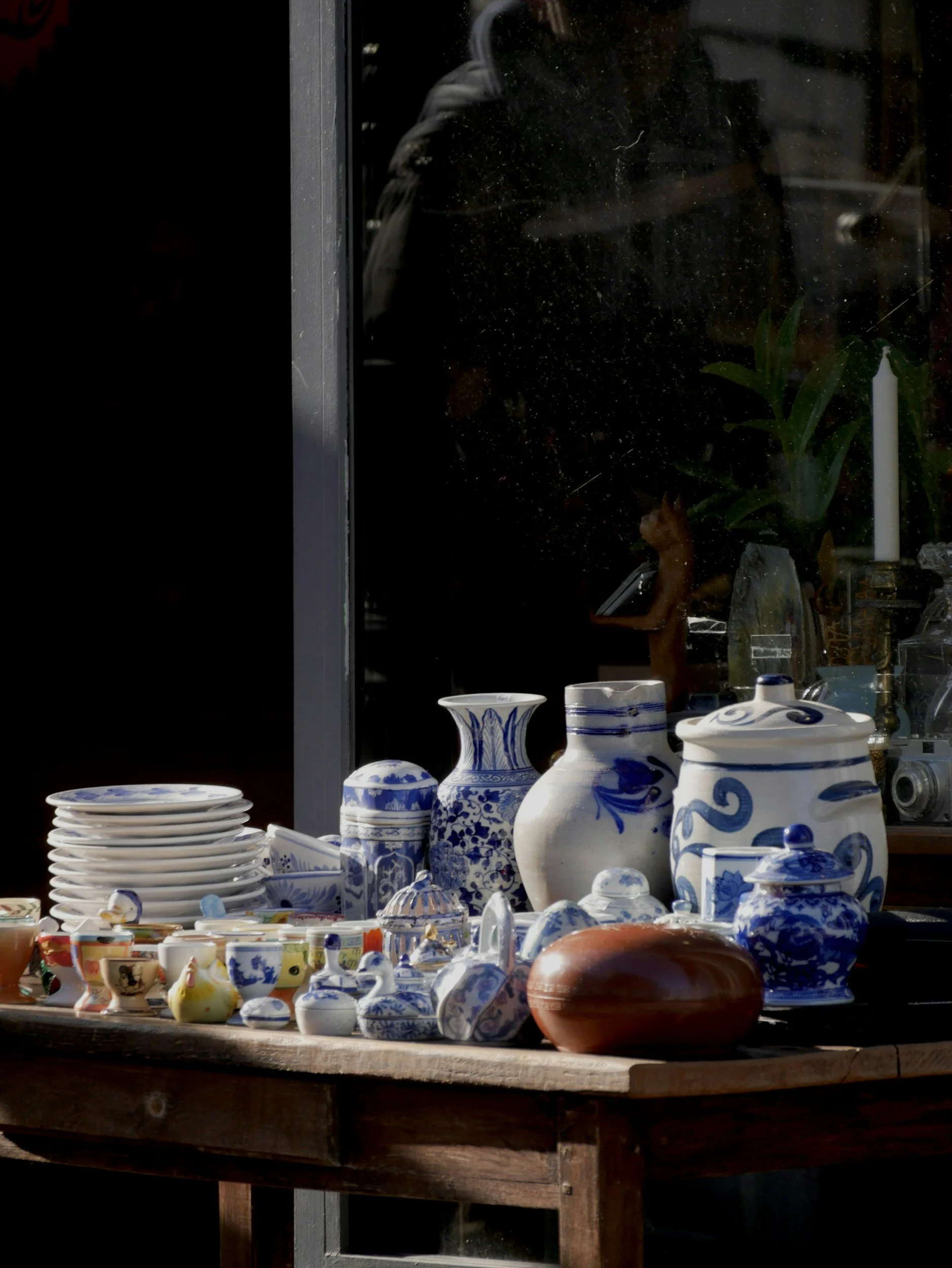
Most people come to Dieulefit because they've heard it's a pottery town. I don't actually think that's the best reason to visit.
If you're expecting Dieulefit to be another pretty little town where every other shop sells handmade pottery to visitors, you'll probably leave wondering what all the fuss is about. The ceramics are certainly everywhere, but that's not really the interesting part. What makes Dieulefit feel different is that people are still making them. You don't just walk past galleries or carefully arranged shop windows; you'll see workshop doors standing open, shelves stacked with pieces waiting to be fired, and makers chatting to neighbours before disappearing back inside to finish what they were working on.
That isn't something many towns have managed to hold on to.
Dieulefit has been making pottery for centuries, helped by the clay found in the surrounding hills, but unlike many former craft towns, it never completely turned that tradition into something that exists only for visitors. Today you'll still find dozens of ceramicists working here, alongside painters, woodworkers, glass artists and textile makers, so creativity feels less like a theme and more like part of the town's everyday routine. It's pretty much just as normal to walk past someone carrying freshly fired bowls across the street as it is to see people picking up bread from the bakery or stopping for coffee before work.
The town sits in the hills of Drôme Provençale, about an hour east of Montélimar, and while plenty of people pass through on their way to Grignan or Nyons, Dieulefit works much better if you stay a couple of nights.Trust me, most of the time you'll simply find yourself wandering from one workshop to another, stopping for lunch when you happen to find somewhere that looks good, browsing the Friday market, or taking a walk into the surrounding hills before heading back into town when the cafés start filling up again.
In this guide, we'll look at how Dieulefit became one of France's best-known ceramics towns, what it's actually like to spend time here today, where to eat, stay and browse, how to get here with or without a car, and a few things that are surprisingly easy to misjudge if you've only read the usual travel guides.
If Saint-Rémy is next on your route, don't arrive in the middle of the day. This early morning guide explains why it's worth setting the alarm instead.
Where exactly is Dieulefit?
Dieulefit sits in the eastern part of Drôme Provençale, roughly halfway between Montélimar and Nyons, although once you arrive it doesn't really feel much like either. Around Nyons, the landscape is full of olive groves and vineyards stretching across gentle hillsides, while Dieulefit is greener, hillier and surrounded by forests that begin climbing towards the Baronnies mountains. It's one of those places where Provence slowly starts blending into the foothills of the Alps, so if you're picturing endless lavender fields and rows of cypress trees, you'll probably be surprised by how much woodland there is.
Technically, Dieulefit isn't in the Provence-Alpes-Côte d'Azur region at all. It's part of the Drôme department in Auvergne-Rhône-Alpes, but hey, don't let that put you off if you're looking for Provence! The cafés spill out onto the squares, olive oil is still produced nearby, lavender fields appear once you head further south in summer, and lunch can easily stretch well into the afternoon. It just feels like a quieter, slightly greener version of Provence than the one most people already know.
The town is around 40 minutes from Montélimar, 30 minutes from Grignan, 35 minutes from Nyons and just over an hour from Valence, so it's easy enough to include as part of a longer trip around Drôme Provençale. Most people arrive by car, but you can also take the train to Montélimar or Valence and continue by regional bus. It's not the quickest journey in France, although that's probably one of the reasons Dieulefit has stayed much the way it is. You don't accidentally end up here on the way to somewhere else.
The landscape also explains why pottery became such a big part of the town in the first place. The surrounding hills provided good clay, the forests supplied wood to fire the kilns, and over time ceramics became one of the area's biggest industries. Even after many pottery towns gradually lost their workshops, Dieulefit managed to hold onto them, and today they're still scattered throughout the centre rather than tucked away in an industrial estate somewhere outside town.
I'd give yourself at least two nights here. You could certainly walk around Dieulefit in an afternoon, but that's missing the point a little. The workshops don't all keep the same opening hours, cafés become busier at different times of day, and Friday morning has a completely different atmosphere from a quiet Tuesday. It's also the sort of place where you end up changing your plans because you've wandered into another gallery, started talking to someone in a workshop, or decided lunch deserved another hour.
If you're choosing when to come, late spring and early autumn are probably the nicest times to visit. Everything is open, it's comfortable enough to walk without thinking about the heat, and the surrounding hills are at their best. Summer is lively too, but temperatures regularly climb well above 30°C, while winter is much quieter, although unlike many small towns in southern France, Dieulefit never feels completely closed down.
Thinking about doing this trip without a car? This TER train guide shows where regional trains make life easy, and where you'll probably wish you'd hired one after all.
Nyons is less than 40 minutes away, but it gives you a very different weekend, and this market-day guide helps you decide whether olives, cafés and a busier town would suit you better.
How did Dieulefit become France's ceramics town?
It's surprisingly easy to spend an entire weekend in Dieulefit without really thinking about why there are so many ceramic workshops. You simply wander into one gallery, then another, stop to watch someone trimming bowls on a pottery wheel, notice another kiln tucked away behind a courtyard, and after a while it simply starts feeling normal. It isn't until you leave that you realise you've just walked past more working studios than you'd probably find in most French towns ten times the size.
The reason has very little to do with tourism.
Long before anyone came here looking for handmade ceramics, Dieulefit was already making them. The clay beneath the hills around the Jabron valley turned out to be exceptionally good for pottery, while the forests stretching towards Le Poët-Laval provided all the wood needed to keep traditional kilns burning. It was one of those combinations that happened to work incredibly well, and over the centuries the town slowly organised itself around it. Pottery wasn't something that sat alongside everyday life. For a long time, it was everyday life.
By the eighteenth and nineteenth centuries, Dieulefit had become one of the main pottery centres in this part of France. Workshops filled streets that you'll still walk along today, including Rue du Bourg, where many family businesses operated only a few doors apart. Potters specialised in different things, from glazed earthenware and cooking pots to roof tiles, olive oil jars and the large storage vessels that were once found in kitchens and cellars across southeastern France. Finished pieces travelled by cart towards Montélimar, Nyons, Crest and villages throughout Provence, while fresh clay continued making the opposite journey back into town.
If you look closely, there are still little reminders of that history. Some workshops occupy buildings that have been used for ceramics for generations, while others still have deep courtyards behind the street where wood, clay and finished work could once be moved in and out without blocking the road. They aren't details most people notice on their first walk through town, but once you know what you're looking at, the streets begin making a lot more sense.
Like almost every traditional craft industry, Dieulefit eventually reached the point where it could easily have disappeared. During the twentieth century, cheaper factory-made ceramics became easier to produce and transport, family workshops closed, and many French pottery towns gradually turned into places where the craft survived mainly in museums. If you travel around France, you'll come across quite a few villages where pottery is remembered rather than practised.
Dieulefit somehow escaped that fate, although not because anyone decided to preserve it.
New ceramicists kept arriving at exactly the moment when older workshops were beginning to disappear. They weren't choosing Dieulefit because it looked pretty on a postcard. They came because they could still find kilns, suppliers, experienced potters, specialist knowledge and people who understood exactly what it meant to make a living from clay. Instead of rebuilding an industry from scratch, they stepped into one that had never quite vanished.
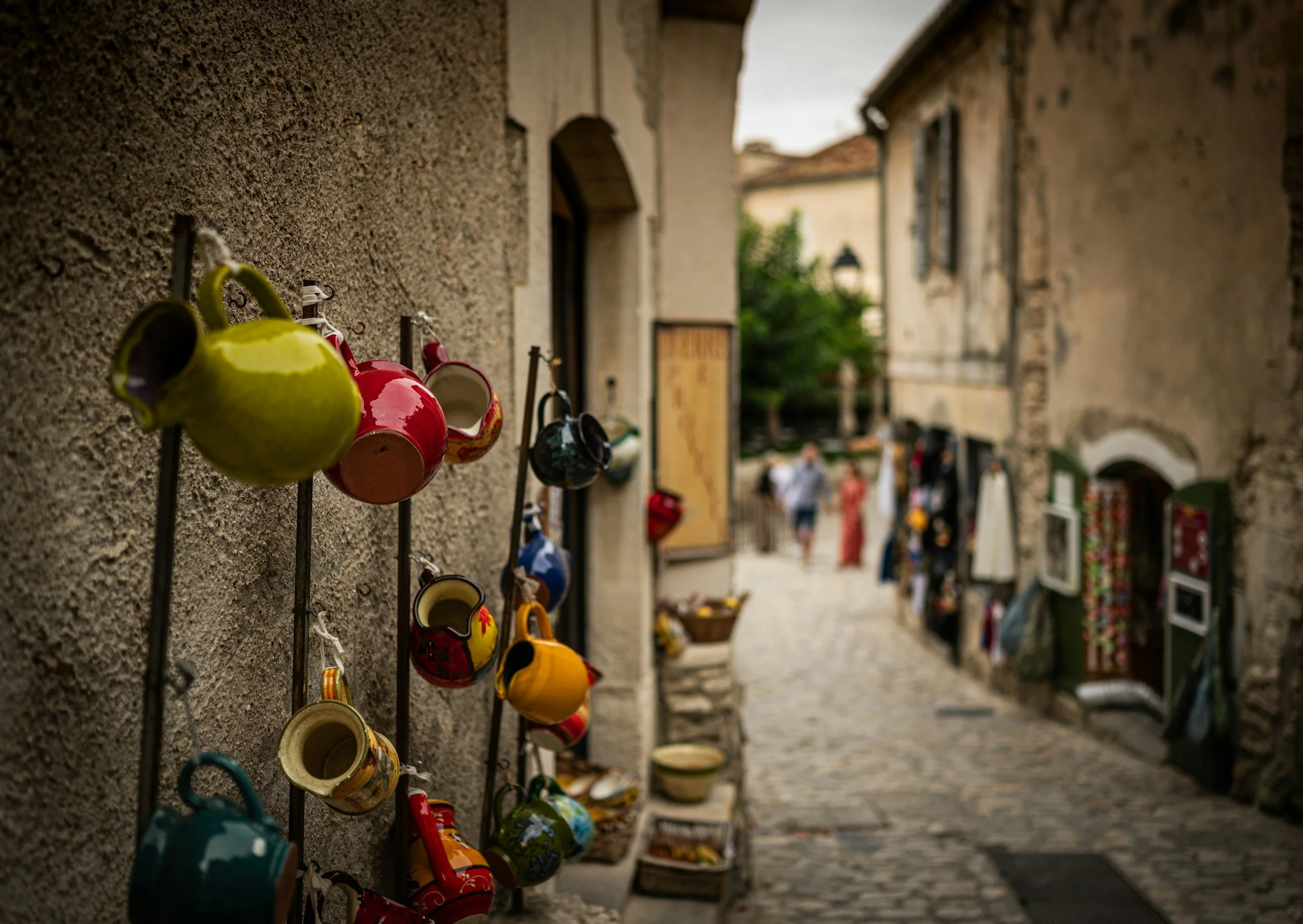
That's also why the town feels different from places where craft has become a performance for visitors. Walk along Rue des Reymonds, continue towards Rue Justin Jouve, or wander through the quieter lanes climbing up to La Viale, and you'll notice that many workshops still operate very much on working hours rather than shopping hours. Some don't unlock until the afternoon because the morning is spent glazing work or unloading kilns. Others leave the door open while someone quietly carries on throwing pots in the back room, barely looking up when people wander in. A handwritten atelier ouvert sign often tells you more than any formal shopfront.
I actually wouldn't start with La Maison de la Céramique du Pays de Dieulefit, even though it's one of the best places to understand the town. I'd wander first.
Spend an hour noticing how often ceramics appear without really looking for them, then visit the museum afterwards. Suddenly the names of local workshops start meaning something, you begin recognising the difference between traditional glazed earthenware and contemporary studio ceramics, and the history becomes much easier to connect to the streets you've just walked through.
The same applies to CERCO, the professional ceramics training centre just outside the centre of town. It's not somewhere many visitors ever think about, but it's probably one of the biggest reasons Dieulefit hasn't become frozen in time. New ceramicists still come here every year to learn traditional and contemporary techniques, some settle in the region afterwards, older workshops gradually change hands, and every so often another studio quietly appears somewhere down a side street. The town keeps changing without ever really changing direction.
People like Jacques Pouchain helped bring Dieulefit to a wider audience during the twentieth century, and ceramicists such as Étienne Noël remain part of the town's story, but what stays with me isn't one famous name or one particular workshop. It's that ceramics never became something the town simply remembers. You see it while somebody carries a tray of freshly fired bowls across Place Chateauras, when a workshop closes for lunch instead of staying open for passing visitors, or when you realise the person pouring your coffee in the morning also knows the ceramicist whose studio you wandered into half an hour earlier.
One thing I'd probably avoid doing is trying to visit every workshop on the map. Some of the most interesting ones barely have a website, others only open when the maker happens to be working, and a few are hidden behind gates or old carriage entrances that you'd never think to walk through unless the door happened to be open. That's part of what makes Dieulefit feel so different.
Autumn changes the wooded hills around Dieulefit far more than the classic lavender image of Provence suggests, so this autumn breakdown is useful when choosing between September, October and early November.
What it's actually like to spend a day in Dieulefit
Friday changes the town completely. By nine o'clock, Place du Champ de Mars is already filling with market stalls and people carrying baskets between the fruit and vegetable growers, cheesemakers selling Picodon, olive producers, flower stalls and book sellers, and once summer arrives the market doesn't stay neatly in the square for very long. It gradually spills into Rue du Bourg and Place de l'Église, where ceramicists set up alongside textile makers, jewellers and wooden toy stalls, and by eleven o'clock it's almost impossible to walk in a straight line because every few metres somebody has stopped to continue a conversation they were clearly having somewhere else a few minutes earlier. It just feels like a random Friday.
By two o'clock, most of that has already disappeared. The vans have gone, the square opens up again and Dieulefit slips back into its usual routine so quickly that it's hard to believe how busy it looked a couple of hours earlier. Around Place Chateauras there are still people finishing lunch or sitting over coffee, but once you wander further into town the streets become unexpectedly quiet. Anyone arriving from places like Uzès or L'Isle-sur-la-Sorgue, where cafés continue buzzing throughout the afternoon, usually notices the contrast almost immediately.
I ended up walking along Rue du Bourg far more often than I'd expected, partly because so much of the town quietly connects here and partly because it kept making me turn around after spotting something I'd somehow missed the first time. Le Ventre de la Baleine is the sort of bookshop that's difficult to leave quickly, and only a couple of doors further along Sauts et Gambades somehow makes it perfectly normal for a town this size to support two independent bookshops within the same street. A little further on, Art des Huit – Céramistes Associés brings together several ceramicists under one roof, while Craft Espace Galerie mixes ceramics with jewellery, photography, textiles and contemporary art instead of separating everything into different spaces.
The addresses stop mattering after a while anyway because some of the nicest places aren't the ones you planned to visit. An old carriage entrance stands open, you glance inside without expecting much, and suddenly there's another courtyard with shelves of drying ceramics or somebody quietly sanding the foot of a bowl while a kiln hums somewhere in the background. Around Rue Justin Jouve, Rue des Reymonds and the little lanes climbing towards La Viale, quite a few studios still look exactly like workplaces because that's what they are! Sometimes there's a handwritten atelier ouvert sign propped against the wall, sometimes there isn't even that. You notice the clay dust on the floor before you notice the ceramics.
That also explains why Google Maps isn't especially useful here. It'll happily send you from one workshop to the next without mentioning that the ceramicist has gone for lunch, is unloading a kiln, or is away exhibiting somewhere else that weekend. Craft Espace Galerie closes until 3.30 pm, Poterie Dieulefit does much the same, and quite a few of the smaller studios disappear behind closed doors for a couple of hours as well. If you've planned to spend the afternoon moving methodically between workshops, you'll probably end up changing your plans without really intending to because the people making ceramics still organise their day around firing schedules rather than opening hours.
That usually turns into coffee or lunch instead (at least for me). Corazon Café is already busy while several workshops are still unlocking their doors in the morning, and after the market begins packing away the tables fill again with people who seem in no particular hurry to leave. Thursday evenings in summer look completely different, with live music, tapas and cocktails replacing laptops and coffee cups, while Le Rétroviseur, only a couple of streets away, tends to stay a little quieter if you're after somewhere to pause before heading back out again.
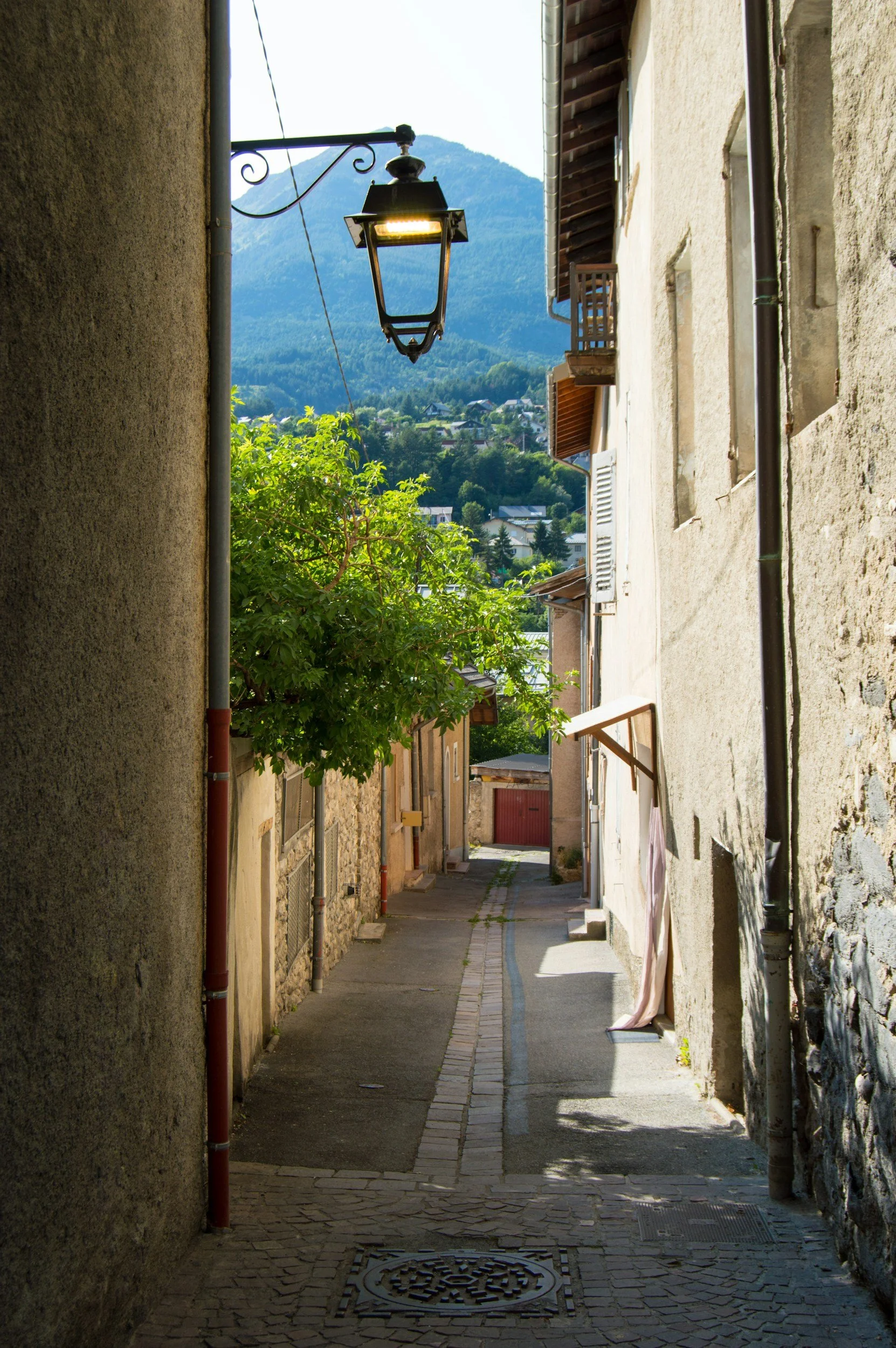
The streets gradually climb once you leave the centre behind, although it's never enough to feel like hard work. Heading up towards La Viale, the oldest part of Dieulefit, the lanes become narrower, the houses sit closer together and every now and then the rooftops briefly give way to views across the wooded hills before another corner closes everything in again. It isn't a town where you march from one attraction to the next. Half the distance comes from changing direction because you've noticed another doorway standing open or realised there's another studio hidden behind a courtyard that wasn't marked on any map.
Trying to visit every ceramic workshop usually turns into the least interesting way to spend the day. Some makers don't unlock the front door until the morning firing has finished, others are away at ceramics fairs, and a few have been working in exactly the same studio for years without ever worrying much about websites, social media or Google reviews. Walking past twice isn't unusual. The door that was shut at eleven might be standing open an hour later, with somebody glazing bowls, packing an order or trimming clay while visitors quietly wander around for a few minutes before stepping back out into the street.
Friday may be the obvious market day here, but the experience shifts considerably from one Provençal town to another, and this seasonal market guide shows which places are strongest at different times of year.
A few places I'd make time for
I wouldn't make La Maison de la Céramique du Pays de Dieulefit your first stop, even though it's the obvious place to begin. Half the displays make much more sense once you've already wandered around town for a while and started recognising workshop names or wondering why one studio is producing traditional glazed earthenware while another is making sculptural stoneware. The museum quietly fills in those gaps rather than trying to impress you with dates, and because it's relatively small, you can comfortably spend forty-five minutes there without feeling like you've committed half the day.
Back outside, Rue du Bourg is the street I kept returning to, although not because I was trying to. It's simply where lots of different parts of Dieulefit overlap. Within a couple of minutes you'll pass Le Ventre de la Baleine, where books seem to be stacked in every possible direction, then Sauts et Gambades, which somehow proves that a town of just over three thousand people can support another independent bookshop only a few doors away. Neither feels like the sort of place designed for tourists to browse for five minutes before moving on. They're proper neighbourhood bookshops, and that's probably why it's so easy to lose track of time in both.
Almost opposite, Art des Huit – Céramistes Associés is worth stopping at even if you've already visited several workshops because it puts different ceramicists side by side. It's surprising how different they are. One shelf might be full of simple everyday tableware, while the next is showing sculptural pieces that barely look functional at all. You start noticing that Dieulefit isn't known for one recognisable pottery style. It's known because so many people are making completely different things.
A minute further along, Craft Espace Galerie changes the conversation again. Ceramics are still there, but so are textiles, photography, printmaking, jewellery and illustration, and because the gallery rotates around a third of its artists every year, it rarely looks quite the same from one season to the next. If you're visiting outside the main holiday months, it's worth checking the current exhibition before you arrive because they're often centred around one particular artist or theme rather than being permanent displays.
Then the planned route usually disappears.
Some of the workshops I spent longest in weren't on my list beforehand. Around Rue Justin Jouve, Rue des Reymonds and the little lanes climbing towards La Viale, there are studios that still look exactly like working studios. A wooden door happens to be open. There's clay drying on shelves just inside the entrance, somebody is sanding the base of a bowl, another person is packing an order into cardboard boxes, and nobody seems particularly concerned about whether anyone walks in or not. Sometimes there's a small atelier ouvert sign outside. Sometimes there isn't. Those were the places I remembered afterwards.
That also explains why I wouldn't try to plan the day too tightly. Google Maps will show you where the workshops are, but it can't tell you whether the person who owns it has gone for lunch, is unloading a kiln or has disappeared to a ceramics fair for the weekend. Around 12.30, quite a few doors close anyway. Craft Espace Galerie doesn't reopen until 3.30 pm, Poterie Dieulefit is the same, and several smaller ateliers work around firing schedules rather than shopping hours. If you arrive with a list of twenty studios to visit, you'll probably spend more time checking opening hours than actually enjoying them.
That's usually when Corazon Café starts filling up again. In the morning it's one of the first places open, serving coffee roasted by LOMI, homemade pastries and breakfast while several galleries are still unlocking their doors. By early afternoon the tables fill for lunch instead, and if you're in town on a Thursday evening during summer, you'll barely recognise it. The coffee cups disappear, the terrace fills with people ordering tapas and cocktails, and live music takes over for the evening.
Lunch is one of the few things I probably wouldn't overthink. Épisens Resto Café changes its menu depending on what's available locally, so there's rarely much point looking it up weeks in advance, while Le Rétroviseur feels more like somewhere people return to every week than somewhere chasing five-star reviews. Later in the day, Bar Le Commerce, looking out over Place de l'Église, is a nice place for a glass of local wine before dinner, particularly once the market has packed away and the square has gone quiet again.
Friday is the only day I'd happily skip restaurant plans altogether. The market is full of things that are difficult to resist anyway (fresh bread, Picodon, olives, tapenades, fruit, honey, charcuterie and seasonal vegetables) and it's easy to put together a picnic without trying very hard. Before leaving town, I'd probably stop at Bio Préfixe for a few local ingredients, then call into Boulangerie Laumonnier or Boulangerie Chavarot if I was driving further through Drôme Provençale afterwards.
One place that almost escaped my attention completely was La Mine d'Art on Quai Roger Morin. It's inside the old Poterie des Grottes, and that history hasn't been hidden away. The industrial buildings are still there, but today they host exhibitions, concerts, community events, a café and simple lunches instead of pottery production. It sums Dieulefit up rather well. Nothing feels preserved for the sake of nostalgia. The old spaces have simply found another purpose, and the town has carried on around them.
Anyone building the trip around markets rather than landmarks will get far more from these quieter market towns, especially when deciding where to stop before or after Dieulefit.
How to get to Dieulefit (with and without a car)
The first thing that's worth knowing is that Dieulefit doesn't have a train station, and honestly, that's probably part of the reason it still feels the way it does. You can arrive by public transport without much trouble, but nobody accidentally ends up here on the way somewhere else.
If you're travelling by train, Montélimar is where almost everyone changes. It's around 40 minutes from Dieulefit, with regular TGV services from Paris (about 2 hours 40 minutes) as well as trains from Lyon, Marseille and Valence. From the station forecourt, the D35 regional bus continues all the way to Dieulefit, and the timetable has been adjusted in recent years to line up better with arriving trains, making the connection much less awkward than it used to be.
That said, I'd still check the bus times before booking train tickets. There are several departures during the day, but they aren't frequent enough that you can simply assume another one will be leaving twenty minutes later. Missing a connection can easily mean an extra hour or two in Montélimar.
Valence also works, although it's rarely the simplest option. Unless you're already arriving at Valence TGV, Montélimar almost always means fewer changes and a shorter journey into Dieulefit. There are also transport-on-demand services linking Dieulefit with places like Bourdeaux, Crest and Valence TGV, although they're designed more for local travel than sightseeing and usually need to be booked in advance.
Driving is definitely easier, but not because Dieulefit itself is difficult without a car. The roads simply open up the rest of Drôme Provençale. From Montélimar, allow about 40 minutes, Grignan is roughly 30 minutes, Nyons about 35 minutes, and Valence just over an hour. The final fifteen or twenty minutes feel very different from the motorway. The road narrows, bends become tighter, forests replace vineyards, and you'll pass through little villages like Le Poët-Laval before dropping into Dieulefit itself. It's a drive that's worth doing in daylight the first time because you'll almost certainly end up pulling over once or twice just to look across the valley.
Parking is refreshingly uncomplicated. Unless you're staying somewhere with private parking, I'd head straight for the public spaces around Place du Champ de Mars or Allée des Promenades rather than trying to squeeze into the older streets. From there it's only a few minutes to Rue du Bourg, Place Chateauras and the rest of the historic centre, and once you've parked you'll probably forget about the car until you're ready to leave. There isn't much reason to drive from one side of Dieulefit to the other when the whole centre is so easy to cover on foot.
And that's probably the question people ask most often - do you actually need a car?
For Dieulefit itself, I'd say no.
The town is compact enough that you're rarely walking for more than ten or fifteen minutes at a time, even if you spend the whole day wandering between workshops, cafés and bookshops. The only thing you'll really notice is the gentle climb towards La Viale, but it's more of a steady uphill walk than anything strenuous. Comfortable shoes matter much more than having a car.
Where the decision changes is if you're planning to stay for several days. Le Poët-Laval, Poët-Célard, Bourdeaux, Saoû and the lavender plateau around Comps all make easy half-day trips by car, but they're much harder to combine using buses. Public transport exists, although it's built around helping local residents get to appointments, schools and railway stations rather than linking together pretty villages for visitors. You can certainly make it work, but you'll spend far more time planning timetables than actually exploring.
I'd probably look at it this way instead. If the plan is simply to spend a long weekend in Dieulefit (walking through the workshops, browsing the Friday market, lingering over lunch and filling the gaps with whatever catches your eye) you won't miss having a car once you've arrived. If you're hoping to discover more of Drôme Provençale while you're here, hire one. Not because Dieulefit needs it, but because the villages scattered through the surrounding hills are often the sort of places where the best part of the afternoon starts when you decide to turn off the main road and see where it goes.
Dieulefit is manageable without driving once you arrive, but the wider region is less straightforward, and this car-free Provence guide saves a lot of wasted time with routes that look easier on a map than they really are.
Some Provençal towns are genuinely pleasant without a car while others leave you stranded after dinner, and these walkable hotel bases make that decision much easier.
Dieulefit is only one small piece of Drôme Provençale, and if you're wondering what else is worth adding nearby, this weekend route will save you hours of planning: Drôme Provençale guide.
Where to stay if you're spending a weekend here
Dieulefit looks tiny on a map, but where you stay changes the weekend much more than you might expect. You can wake up five minutes from Rue du Bourg, walk down for coffee before the market begins filling Place du Champ de Mars, and be browsing pottery workshops before half the town has opened. Or you can wake up surrounded by oak woods, hear almost nothing except birds, and not see another village until you've driven fifteen minutes down the valley. Both feel like Dieulefit. They just lead to very different weekends.
If you're arriving by bus from Montélimar, I'd stay in the centre without thinking twice. The old streets are compact enough that you'll barely notice the distance between your accommodation and anywhere else, and after a day of wandering between workshops you'll probably end up back in town again before dinner anyway. Le Mapillon is a good example of that sort of stay. Nothing feels overdesigned, you're only a couple of minutes from the Friday market, and if you suddenly decide to wander back out after breakfast because one of the galleries has just reopened, you don't have to think about the car sitting in a car park somewhere.
The countryside starts surprisingly quickly. Drive less than five minutes out of town towards Route de Nyons or Route de Montjoux, and the houses begin spreading out between lavender fields, walnut trees and woodland. Around Comps, Montjoux and Le Poët-Célard, you'll find old stone farmhouses converted into gîtes where breakfast happens on a terrace instead of a café, and the loudest thing you'll usually hear after sunset is the wind moving through the trees. If you're planning long walks in the Forêt de Saoû, exploring the little roads towards Bourdeaux, or simply disappearing with a book for a couple of days, I'd choose somewhere out here instead of the town itself.
A lot of people book Les Sources de Dieulefit because of the spa, but I actually think the setting is the bigger reason to stay. The hotel sits inside Parc de Réjaubert, surrounded by around forty hectares of woodland, so even though Dieulefit is only a few minutes away, it feels much further. It's the sort of place where people head back long before dinner rather than trying to squeeze one more stop into the afternoon.
If medieval villages are just as important as ceramics, I'd probably look at Hôtel Les Hospitaliers in Le Poët-Laval instead. It's barely ten minutes away by car, but the evenings couldn't feel more different. Once the day visitors have gone home, the stone streets become remarkably quiet, and walking back through the old village after dinner is a completely different experience from staying in Dieulefit itself. The trade-off is that you'll be driving into town each morning instead of simply wandering out of your front door.
One thing I probably wouldn't do is book somewhere thirty or forty minutes away because it happens to be cheaper. On paper it doesn't sound like much, but Dieulefit is the sort of place where you end up popping back to your room because you've bought a couple of ceramic bowls you don't feel like carrying all afternoon, or because one workshop is still closed and you've got an hour before it reopens. Staying nearby gives you that flexibility, and I think that's part of enjoying the town properly.
Holiday cottages make even more sense if you're staying for four or five nights rather than a weekend. Around Truinas, Orcinas, Vesc and Francillon-sur-Roubion, there are plenty of restored stone houses where Dieulefit becomes just one stop during the day rather than the whole destination. They also put you closer to some places that visitors often overlook completely, like the tiny pottery village of Poët-Célard, the hiking trails around the Forêt de Saoû, or the little roads climbing towards the Col de Valouse, where you'll often drive for twenty minutes without meeting another car.
I also wouldn't get too distracted by star ratings here. Some of the nicest places to stay don't have infinity pools, designer interiors or restaurants trying to earn Michelin stars. They have an owner who'll tell you which bakery to visit before eight on Friday morning because the fougasse sells out, they'll mention that the road through Le Poët-Laval is closed during the medieval festival, or they'll quietly suggest driving the back road towards Bourdeaux instead of taking the main route because the views are better and you'll probably pass an honesty stall selling apricots or cherries if you're here in early summer.
That's the sort of information that quietly changes a trip, and it's usually worth far more than another bottle of complimentary wine waiting in the room.
Staying outside Dieulefit gives you more woodland, silence and space, but it also means driving back for dinner, and these Drôme cottage stays show what that trade-off actually looks like.
Brocante stalls and food markets can look similar from a distance, but they require a completely different eye, and this French brocante guide helps you tell proper finds from things priced for visitors.
Dieulefit belongs to a much broader group of small southern French towns where markets still are an important part of the week, and these Provence market villages are easy additions when the route continues further south.
Before you book
I'd try to make your visit include a Friday if you can. The weekly market is easily the busiest part of the week, not because it's enormous, but because it changes the whole town for a few hours. Stalls spread across Place du Champ de Mars before reaching into Rue du Bourg and Place de l'Église, the cafés fill much earlier than usual, and several ceramicists open their workshops at the same time. By early afternoon it's already winding down again, so if you arrive on Friday evening you'll have missed most of it.
The opening hours catch quite a few people out as well. Workshops don't all keep the same schedule, and quite a few disappear behind closed doors between about 12.30 and 3.00 pm while people are firing kilns, glazing work or simply stopping for lunch. If one studio happens to be shut, don't stand outside waiting for it to reopen. Walk somewhere else instead and come back later. There's a good chance the door will be open by the time you've had coffee.
Sunday sits at the opposite end of the scale. The market has gone, several businesses close altogether, and the streets are much quieter than they were two days earlier. If your plan is to browse galleries, pottery studios and independent shops, Friday or Saturday gives you far more choice than Sunday afternoon.
I probably wouldn't arrive with much of an itinerary either. Dieulefit is small enough that you won't spend the day navigating from one side of town to the other, and some of the nicest places aren't the ones with the biggest signs or the highest number of Google reviews. It's the workshop you only noticed because the door happened to be open, the tiny gallery hidden behind an old carriage entrance, or the ceramicist who waved you in while still covered in clay.
Two nights always felt about right to me. One night disappears surprisingly quickly, particularly if you're here on market day, while three or four nights only really starts making sense if you're planning to spend time exploring the surrounding villages as well. Dieulefit itself isn't trying to fill every hour with things to do, and that's part of why a weekend works so well.
It's also worth choosing the town for the right reasons. Grignan is the place I'd pick for château visits, Renaissance architecture and one of the region's most impressive skylines. Nyons revolves much more around olives, Provençal markets and café life. Dieulefit is quieter than either of them, but it also feels more connected to the people who still work here. Pottery isn't something you visit for an afternoon before moving on. It's simply part of the town.
If you've got another couple of days, I'd resist driving long distances. This corner of Drôme Provençale works much better when everything stays close together. Le Poët-Laval is only about ten minutes away and feels completely different from Dieulefit, Poët-Célard is tiny but worth the detour if you're interested in ceramics and old villages, Bourdeaux makes a nice stop for lunch, and the roads through the Forêt de Saoû are worth driving even if you never leave the car. They're the sort of places that rarely make a "Top 10 Provence" list, which is probably one of the reasons they're still so enjoyable to spend time in.
One last thing I'd say is don't treat Dieulefit as somewhere to tick off. It's tempting because the town isn't very big, but almost everyone I spoke to seemed to arrive planning a few hours and leave wondering where the day had gone. That's usually a good sign.
Heading to Aix afterwards? This Aix spring guide will help you find a calmer side of the city before the trip suddenly feels busy again.
The Luberon gets far more attention, but it is not automatically the better choice, and this Apt or Gordes comparison is useful when deciding between a famous place and somewhere with more everyday life.
Lavender around Provence does not all flower at the same time, and this early lavender guide is useful when travelling before the better-known fields reach their peak.
Dieulefit isn't the only place that gets overlooked in this part of France. These quiet Provence alternatives might introduce you to somewhere you'd never have found otherwise.
FAQs about Dieulefit
Is Dieulefit worth visiting if I'm not particularly interested in pottery?
Probably, as long as you're not expecting a long sightseeing checklist.
The pottery is part of almost everything here, but it never feels like you're walking through one giant ceramics museum. You'll spend just as much time browsing independent bookshops, stopping for coffee, wandering into galleries that also happen to sell jewellery or textiles, and simply watching the town go about its day. If your favourite weekends involve ticking off ten attractions before dinner, Dieulefit will probably feel too quiet. If you enjoy places that gradually reveal themselves, it's surprisingly easy to fill two days here.
Can you visit Dieulefit without renting a car?
Yes, and for a weekend I'd happily do exactly that.
The train to Montélimar followed by the regional bus works well, as long as you've checked the timetable before travelling. Once you're in Dieulefit, there's very little you'll need transport for. The workshops, cafés, galleries, restaurants and Friday market are all within walking distance.
I'd only hire a car if you're planning to visit nearby villages such as Le Poët-Laval, Bourdeaux, Poët-Célard or the Forêt de Saoû, because that's where public transport starts becoming much less practical.
Is Dieulefit or Nyons better for a weekend?
They suit completely different trips.
If you're looking for lively Provençal markets, olive oil, café terraces and a town that stays busy throughout much of the year, I'd choose Nyons.
Dieulefit feels greener and more creative. The workshops are still places where people work rather than simply somewhere to browse, and the town has a much quieter feel overall. They're only about 35 minutes apart, so it's easy to combine both if you have a few extra days.
Is Dieulefit or Grignan the better base?
It depends what kind of weekend you're planning.
I'd stay in Dieulefit if you're interested in workshops, galleries, independent shops and exploring the surrounding countryside.
I'd choose Grignan if you're planning to spend more time around the château, the historic centre and the restaurants there.
The two towns are only around 30 minutes apart, so where you stay mostly comes down to what you want your evenings to look like.
Which day should I plan my visit around?
Friday, without much hesitation.
The weekly market changes the whole town for a few hours, spreading from Place du Champ de Mars into Rue du Bourg during the summer. It's also the day when the greatest number of workshops and independent businesses are open at the same time.
If your dates are flexible, I'd always try to include a Friday rather than a Sunday.
Are the pottery workshops open every day?
Not always, and that's probably the thing people underestimate most.
Many ceramicists are still running working studios rather than traditional shops, so opening hours often revolve around kiln firings, glazing or deliveries instead of retail hours. Walking past a closed workshop doesn't necessarily mean it's closed for the day. Quite often the door is open again an hour later.
How many nights should I stay in Dieulefit?
I'd choose two nights every time.
One night disappears surprisingly quickly between arriving, checking in and finding somewhere for dinner. Three nights starts making more sense if you're also planning to explore more of Drôme Provençale.
Two nights gives you enough time to enjoy the Friday market, browse the workshops without rushing and still leave plenty of time for wandering wherever the day takes you.
Does Dieulefit feel touristy in summer?
Not in the same way as many Provençal towns.
There are certainly more visitors in July and August, especially on market days, but once you leave the busiest streets you'll quickly find yourself walking through quiet residential lanes, passing working studios, bakeries and people going about everyday life.
Even in the middle of summer, the town never feels overwhelmed.
What's the biggest mistake people make when visiting Dieulefit?
Trying to plan every hour.
The nicest parts of Dieulefit rarely happen because they're marked on a map. They happen because a workshop door is open, somebody invites you inside, you lose half an hour browsing books in Le Ventre de la Baleine, or lunch lasts much longer than expected because another gallery has just reopened after closing for the middle of the day.
Leaving a little space in your plans usually leads to a much better weekend.
What's the best time of year to visit Dieulefit?
If I could choose any time, I'd go in late May, June or September.
The workshops are fully open, the market is busy without feeling crowded and the weather is comfortable enough to spend most of the day outside.
October is beautiful if you enjoy autumn colours in the surrounding hills, while July and August are warmer and livelier without ever feeling as busy as many destinations further south in Provence.
What else should I visit near Dieulefit?
I'd keep the driving short.
Le Poët-Laval is close enough for a relaxed morning before returning to Dieulefit for lunch. Bourdeaux makes an easy detour, particularly if you're heading towards the Forêt de Saoû, while Poët-Célard is worth adding if you enjoy small villages that have changed very little over the years.
Trying to fit too much into one weekend usually means spending more time behind the wheel than actually enjoying the places you've come to see.
Is Dieulefit a good place to buy ceramics?
Definitely, but I'd go with an open mind rather than searching for one famous workshop.
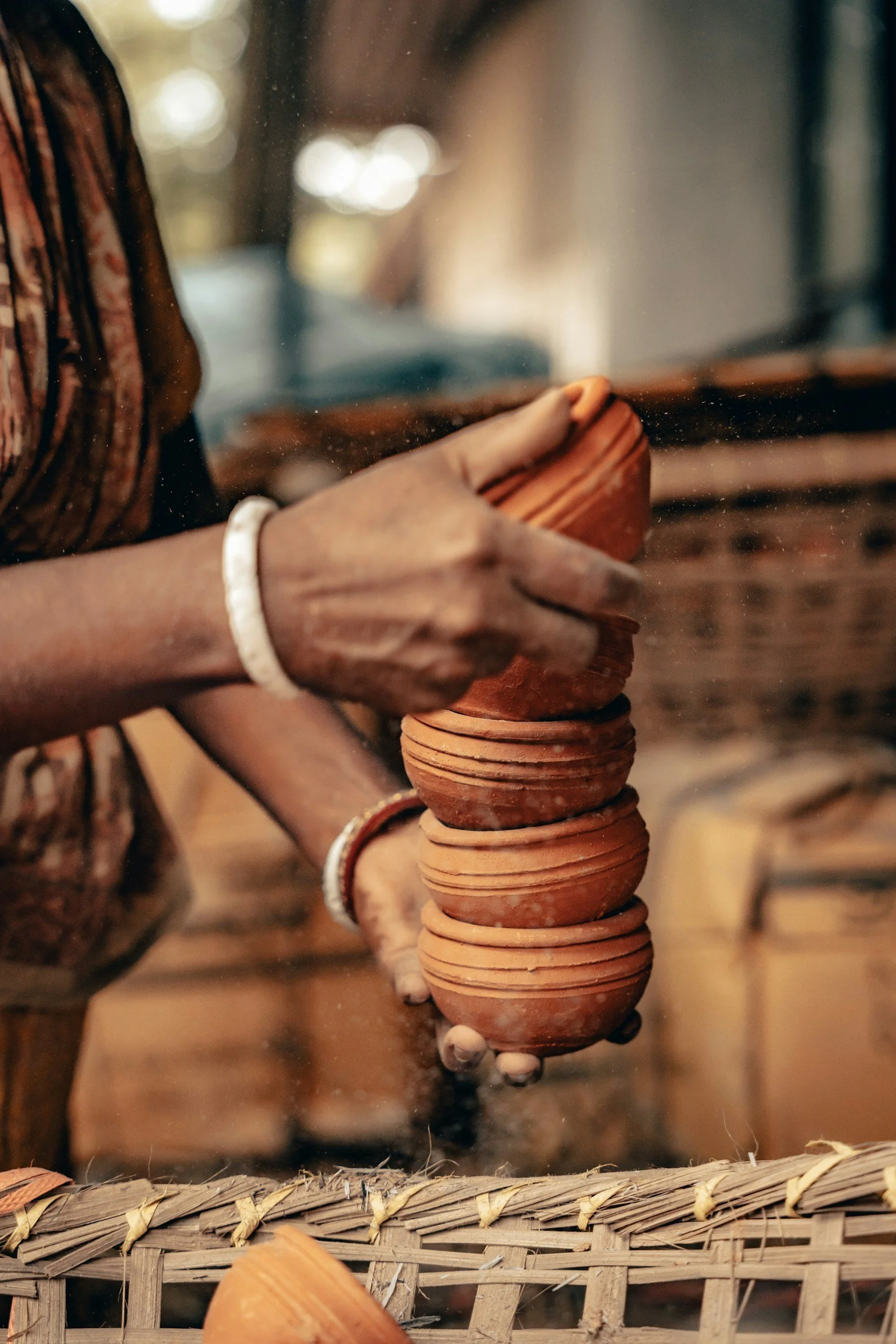
One of the nicest things about Dieulefit is how varied the ceramics are. Within a few minutes you can move from traditional glazed tableware to contemporary sculptural pieces, and because many studios are still run by the makers themselves, there's often someone there to explain how the work was made.
It makes buying a bowl or a mug feel much more personal than picking one off a shelf in a design shop somewhere else.