If I only had one free weekend from Lyon, I'd start here
If you've ever stood at Lyon Part-Dieu on a Friday evening wondering where to disappear for the weekend, it's surprisingly easy to end up choosing somewhere that looks good in photos but is over almost as soon as you've arrived. You wander around the market for a couple of hours, have lunch, maybe stop for a coffee, and by the middle of the afternoon you're already wondering what to do next while half the town is closing up.
That's exactly what I wanted to avoid when putting this guide together.
Every market town here is easy to reach from Lyon without a car, but that wasn't enough on its own. I wanted places where I'd genuinely be happy to stay until Sunday. Somewhere the market is only the start of the weekend rather than the whole reason for it. Somewhere you can wander back to your hotel after dinner thinking you're already looking forward to the next morning instead of feeling as though you've seen everything by lunchtime.
Some of these towns are famous for their markets, others barely get mentioned outside their own region, but they all have one thing in common. Once the stalls begin disappearing, there's still plenty of reason to keep walking. Maybe that's another café you spotted earlier, a wine bar that looked too busy at lunchtime, a riverside path that suddenly feels quiet again or simply the pleasure of spending the evening somewhere that doesn't empty as soon as the shopping is done. That's what separates a good market from a genuinely good weekend, and it's the only thing I really cared about when choosing the towns in this guide.
If you're still deciding whether a market weekend is the right fit, quiet towns near Lyon compares some of my favourite slower alternatives without the market crowds.
What I look for after the market ends
Most market towns near Lyon sound remarkably similar when you're planning the trip. They all seem to have a lively weekly market, a historic centre, a handful of restaurants and a railway station somewhere nearby, so after reading a few guides it's easy to wonder whether it really matters which one you choose. In my experience, that's exactly where the biggest differences get lost, because they rarely have anything to do with the market itself.
The station is a good example. A direct train always looks tempting until you realise you've arrived on the edge of town, you're dragging a suitcase along a busy road and the old centre is still another twenty minutes away. I'd happily stay on the train for a little longer if it means stepping off at Tournus, Vienne or Villefranche-sur-Saône and being able to walk straight into the middle of town with nothing more to think about than where to stop for a coffee. Those first twenty minutes often decide how the whole weekend feels, much more than whether the train journey took one hour or one hour and twenty.
The market can be just as misleading. Between nine and eleven almost every market in France feels busy, colourful and full of local produce, which makes them surprisingly difficult to compare if you're only visiting for the morning. I pay much more attention to what happens later, when the flower stalls have disappeared, the cheese merchants are packing away and the day visitors begin making their way back towards the station. In some towns, that's when the streets become noticeably quieter and you start wondering whether to catch an earlier train home. In others, people are only just settling onto the café terraces, the wine bars begin filling for the evening and the whole place somehow feels even nicer than it did during the market.
I've also become far less interested in whether there's a direct train. Some of the weekends I've enjoyed most have started with an easy change at Mâcon Ville, Valence Ville or Chalon-sur-Saône, because those connections open up places that many visitors simply skip in favour of the faster route. Once you've done a few of these trips, you realise that an extra platform change is a very small price to pay for arriving somewhere you'll still be enjoying twenty-four hours later.
That's really the thinking behind every town in this guide. The market still matters, of course, but I was much more interested in what happened afterwards. Could I happily wander around until dinner without looking at my watch? Would I still be pleased I'd booked another night when Sunday morning arrived? Those questions turned out to be far more useful than comparing how many stalls each market had.
If you're still deciding how to get between these towns, France's TER trains make planning the whole weekend much simpler.
If this article has you planning another French market weekend already, summer markets is probably where I'd look next.
What actually makes a market town worth staying in?
After a while, you stop judging market towns by the market.
A good Saturday morning is surprisingly easy to find in France. A market full of local cheese, fruit, flowers and wine doesn't really narrow things down, because hundreds of towns can offer that for a few hours every week. The harder thing to find is somewhere that's just as enjoyable once the vans have pulled away and the square belongs to local residents again.
That's what I kept coming back to while choosing the towns for this guide. I wanted stations close enough that arriving by train never became part of the day's logistics, markets that still felt like they belonged to the people who lived there, enough cafés and restaurants that staying until Sunday actually made sense, and old centres where I was still happy wandering around long after the shopping bags had been dropped back at the hotel.
Some places become quieter after lunch, but in a good way. The bakery has another queue because people are buying bread for dinner, café terraces fill with friends meeting after work, and the riverside suddenly has more walkers than shoppers. Others feel as though the weekend quietly ends once the market does.
Every town below passed the same test. If the market had been cancelled that week, I'd still have been glad I'd gone.
If you're torn between a Burgundy weekend and somewhere closer to Lyon, Burgundy without a car makes the choice surprisingly easy.
Tournus for Burgundy food and riverside evenings
If you're travelling from Lyon without a car, Tournus is one of the easiest weekends to get right. The TER station sits close enough to the old centre that there's never that slightly disappointing moment of realising you still need a bus or taxi before the weekend can actually begin. Ten minutes after stepping off the train you're usually somewhere along Rue de la République, passing boulangeries, little food shops and café terraces that are already beginning to fill, and by the time you've reached Place de l'Hôtel de Ville it feels as though you've been in town much longer than you actually have.
Saturday morning is when the centre naturally pulls everyone towards Rue de la République, Place de l'Hôtel de Ville and the neighbouring streets, where the weekly market gradually fills almost every available space. I'd aim for one of the earlier trains from Lyon if you can. By half past eight the market is already well underway, but there's still enough room to wander without constantly stepping aside for other shoppers, and the producers usually have time for a proper conversation if something catches your eye. An hour or so later the pace changes noticeably. More visitors have arrived, café terraces are full, queues start forming at some of the most popular cheese and charcuterie stalls, and browsing becomes a slower affair simply because there are so many people doing exactly the same thing. If you're hoping to buy a few things for lunch or take local produce home, I think the quieter first hour makes for a much nicer start to the day than arriving at the busiest point of the morning.
One thing I hadn't expected was how quickly everyone spread out once the market started packing away. By about one o'clock the shopping trolleys are rolling back towards the car parks near Quai de Verdun, vans are loading up and the busiest corners of the market suddenly become quiet again. That's usually when I head away from the square instead of staying in it. A slow walk down towards the Saône, a table outside with a glass of Mâconnais white and nowhere particular to be has become part of every visit. Cyclists following the Voie Bleue stop here for lunch, people sit along the river long after they've finished eating, and the afternoon somehow feels completely different from the busy few hours that came before.
I wouldn't rush straight to Abbaye Saint-Philibert either. Most people seem to visit while the market is at its busiest, but I think it's much nicer later in the day. By early evening the square has quietened down, the warm stone catches the last of the light and it's much easier to wander through the narrow lanes leading towards the former Hôtel-Dieu without constantly weaving around day visitors. Those streets hide some of the places I enjoy most in Tournus. La Ferronnerie – Café Brocante on Rue du Docteur Privey is the sort of place you could easily miss if you're only following the main streets, mixing vintage furniture, antiques and coffee in a way that somehow works surprisingly well, while the Librairie Ancienne de l'Abbatiale is worth a look even if you have no intention of buying an old book.
People often associate Tournus with its Michelin-starred restaurants, but I don't think you need to build the whole weekend around them. Aux Terrasses is a lovely choice if you've booked ahead, and L'Écrin is another restaurant that's earned its reputation, but I've had equally enjoyable evenings keeping things much simpler. After spending most of the day wandering around the market, I'm usually more interested in finding a good table, ordering whatever's in season and lingering over a bottle from the Mâconnais than chasing a long tasting menu. If you're staying overnight, I'd avoid eating too early. By around eight o'clock the last of the day visitors have usually caught their trains or started the drive home, there's a little more space on the terraces and the centre begins to feel as though it belongs to the people staying for the evening rather than those passing through for the market. I think that's one of the nicest times to be in Tournus, because you're no longer planning the day around what to see next. You're simply enjoying where you are.
Sunday morning is usually when I appreciate Tournus most because there's no longer any pressure to fit everything into a few hours. Rue de la République is much quieter than it was the day before, the bakeries have their regular Sunday queues rather than market crowds, and the centre settles back into its everyday routine. Without the market filling every street, it's much easier to wander wherever a side street happens to take you, and I often find myself exploring parts of the town I barely noticed on Saturday.
If your train back to Lyon isn't until later in the morning, I'd resist the temptation to head straight for the station after checking out. Pick up something from one of the bakeries, wander down towards the Saône for a while, then make your way back through the old centre at a slower pace. I also like stopping at La Ferronnerie – Café Brocante before leaving. It's the sort of place that's easy to miss when the market is in full swing, but much easier to appreciate on a quieter Sunday morning, when you can browse the antiques, have a coffee and stretch the weekend out just a little longer before walking back to the station.
If Tournus is the town that's caught your attention, a weekend in Tournus goes into much more detail, from where to eat to how I'd spend two days there.
Villefranche-sur-Saône for the easiest spontaneous weekend from Lyon
Villefranche-sur-Saône is probably the easiest weekend in this guide to dismiss, which is exactly why I think it's worth talking about. Mention you're going away for a couple of days and most people immediately think of somewhere much further from Lyon, yet twenty-five minutes after leaving Lyon Part-Dieu you're already stepping onto the platform in the middle of Beaujolais with your entire weekend still ahead of you. It feels almost too easy, and perhaps that's why so many people never consider staying the night. They arrive for the Saturday market, have lunch, wander along Rue Nationale for an hour or two and head back on the next train.
I did exactly the same thing the first time.
The second visit was completely different.
One thing Villefranche has over almost every other town in this article is that very little time disappears between arriving and actually enjoying yourself. The station sits within comfortable walking distance of the historic centre, and the route never feels like you're simply trying to get somewhere more interesting. Within a few minutes the streets begin changing, modern buildings give way to pale stone façades and suddenly you're standing on Rue Nationale, one of the longest historic shopping streets in France, stretching for almost a kilometre through the old town.
It's easy to stay on the main street the whole weekend, but I'd encourage you not to. One of the nicest things about Villefranche is what hides behind it. Heavy wooden gates are often left open during the day, revealing Renaissance courtyards that most people walk straight past without noticing. Some have elegant spiral staircases, others are framed by old galleries and carved stone columns, and together they form the town's Hidden Treasures trail. You don't need to follow the official route to enjoy them. Half the fun is simply slowing down whenever a doorway happens to be open and seeing where it leads.
Saturday morning naturally begins at the Marché Couvert, but I wouldn't make the mistake of treating it as somewhere to dash in and out of before exploring the rest of town. The beautifully restored Art Deco building has been the heart of Villefranche's food culture since the 1930s, and it's the sort of place where local residents still come for their weekly shopping rather than a quick photograph. Fishmongers call across to cheesemongers, Beaujolais wines sit beside seasonal fruit and charcuterie, and by half past nine you'll usually find yourself moving at exactly the same pace as everyone else because there's simply too much to look at.
If you have time, don't leave as soon as you've finished shopping. One of the nicest things about the covered market is that you can head upstairs afterwards, order a few oysters and a glass of white wine, and watch everything carrying on below for a while. Most people seem to wander back outside as soon as they've bought what they came for, so the mezzanine is often much quieter than the market hall itself. It's an easy place to pause before heading back into town rather than treating the market as a quick stop.
By early afternoon, Villefranche begins settling into a different sort of Saturday. The busiest queues have disappeared, there's more space along Rue Nationale, and it's much easier to duck into the courtyards, independent shops and wine merchants that are easy to overlook during the busiest part of the morning. I actually prefer wandering around at this point because you're no longer moving with the crowd. It's also a good time to stop for lunch around Place des Arts or simply keep walking without much of a plan. That's one of the things I like most about Villefranche. The market gives you a reason to come, but it never feels as though the weekend is over once you've walked away from the stalls.
I somehow always drift back towards Collégiale Notre-Dame-des-Marais during the afternoon. The church is impressive, but it's the little streets around it that keep pulling me back. There are tiny squares where hardly anyone lingers, independent food shops tucked beneath old arcades and little passages that seem to lead nowhere until they suddenly open into another courtyard. It's a part of the centre that feels much quieter once the market has packed away, and I think it's one of the nicest places in town simply to walk without looking at a map.
If the weather turns or you simply want a break from the cafés, Musée Paul-Dini is well worth an hour or two. Rather than trying to compete with the bigger museums in Lyon, it focuses on artists connected to the Rhône and Beaujolais, which somehow makes it fit the town much better. It's also one of those museums where you rarely feel stressed because you're sharing the galleries with relatively few people.
Staying overnight makes much more sense here than catching the evening train back to Lyon. By the time dinner comes around, the busiest part of the day has passed, you don’t need to squeeze anything else into the itinerary and you can simply choose somewhere that looks inviting rather than planning the whole evening in advance. Being in the middle of Beaujolais also means local wines naturally take centre stage on most wine lists, so it's an easy place to spend the evening trying bottles produced only a short drive from town instead of working your way through a list from all over France. Afterwards, I like walking back along Rue Nationale rather than taking the quickest route to the hotel. Without the market, the street feels completely different, and it's often the first chance you've had all day to notice the Renaissance façades, little courtyards and independent shopfronts without weaving through Saturday crowds.
One practical thing worth knowing is that January is a particularly busy time because of the famous Fête des Conscrits. If you're planning a winter weekend around those celebrations, it's worth booking accommodation well in advance, as hotels tend to fill much earlier than they do at other times of the year.
Sunday morning is much easier to appreciate because the town has gone back to its normal pace. Rue Nationale is no longer full of market shoppers, so you can wander its full length without constantly stopping, duck into the courtyards you walked straight past the day before and browse the independent shops that were simply too busy to enjoy on Saturday. If you've got a little time before your train, I'd use it. Pick up breakfast from a bakery, walk through the old centre one last time and leave via Rue Nationale rather than taking the quickest route back to the station. It's a completely different experience from Saturday morning, and I think it gives you a much clearer picture of what Villefranche is actually like to spend time in.
Looking back, I think the biggest mistake people make with Villefranche-sur-Saône is assuming that being close to Lyon somehow makes it less interesting than places further away. After a weekend here, I don't really think about the journey at all. What I remember are the long stretches of Rue Nationale, the Renaissance courtyards tucked behind heavy wooden gates, a leisurely lunch that drifted well into the afternoon and the feeling that there was never any need to rush from one place to the next. That's why I'd stay overnight every time!
If you're just as likely to come home with vintage finds as local cheese, brocantes in France might end up being your favourite guide.
Tournon-sur-Rhône for wine without needing a car
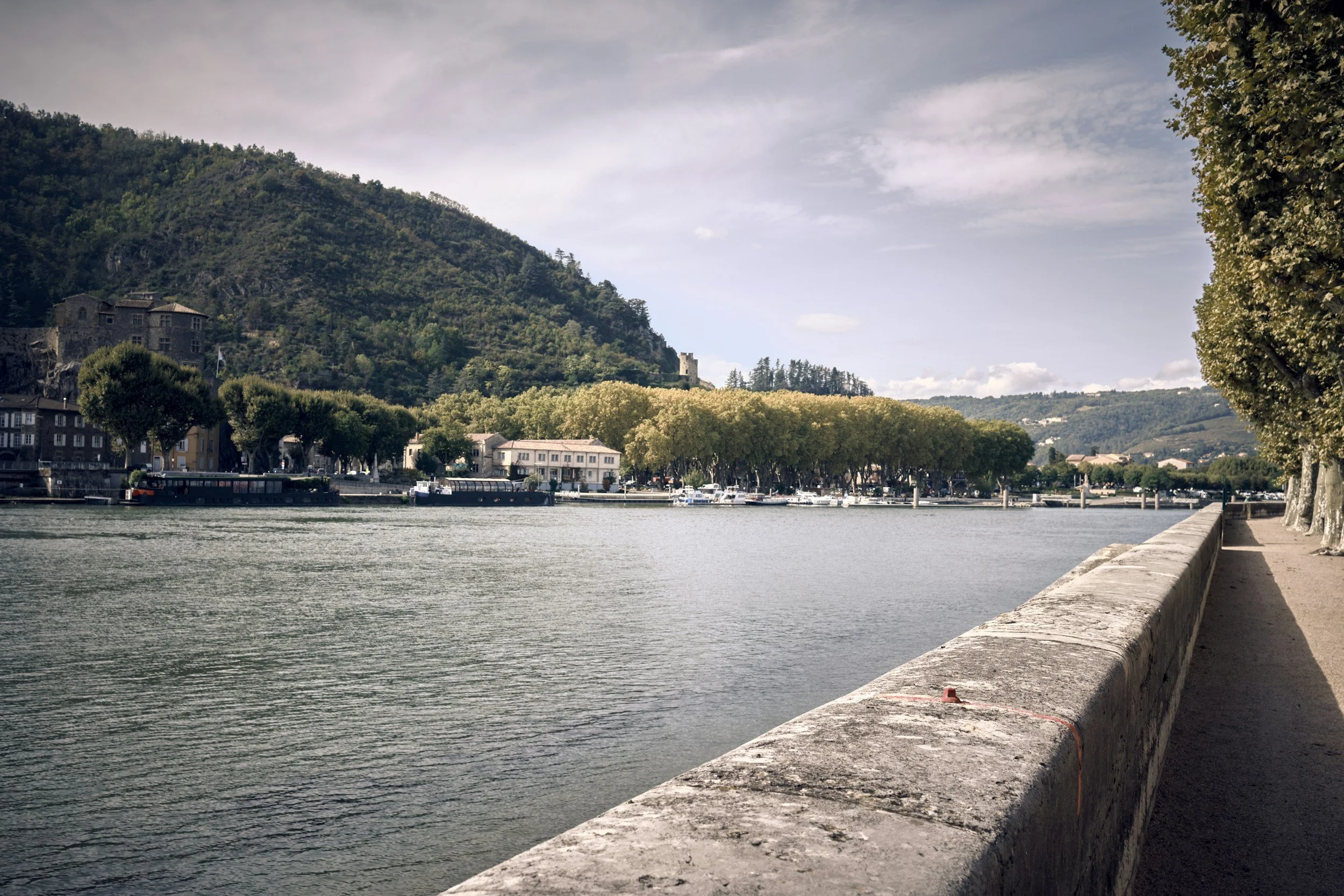
Tournon-sur-Rhône is probably the easiest wine weekend I've found in France that genuinely doesn't need a car. Not because everything is packed into one town, but because the river quietly turns two places into one. The first time you arrive it feels as though you'll spend the weekend choosing between Tournon and Tain-l'Hermitage. By Sunday morning, you've crossed the Passerelle Marc Seguin so many times that you stop thinking about which side you're on altogether.
Coming from Lyon, you'll arrive in Tain-l'Hermitage, not Tournon, and I actually think it's worth making the most of that rather than heading straight across the Passerelle Marc Seguin. Most people naturally make a beeline for the bridge, but I like spending a little time in Tain first. The walk from the station into the centre only takes a few minutes, so it's easy to pick up breakfast from a local bakery, have a coffee around Place du Taurobole or browse the wine shops before the tasting rooms begin filling later in the morning. Once you've crossed the Rhône, you're unlikely to come back until later in the day, so there's no real advantage in rushing. Giving Tain half an hour at the start of the weekend makes the two towns feel much more connected, and by Sunday you'll probably find yourself moving between them without really thinking about which side of the river you're on.
Crossing the Passerelle Marc Seguin only takes a few minutes, but Tournon immediately feels smaller than Tain. The streets tighten around Grande Rue, Rue Thiers and Place Jean Jaurès, where the Saturday market threads its way through the historic centre before continuing towards the château. I like that it still feels like a market people rely on rather than one that's been polished for visitors. You'll see people comparing vegetables at the same stall they've probably been using for years, picking up Picodon or Saint-Félicien from the cheesemonger before calling into the bakery, and stopping for a coffee because they're in town anyway, not because they're trying to make the most of a day out.
I'd aim for one of the earlier trains if you can. By half past eight, everything is already underway but the streets are still easy to move around, which makes a bigger difference than you might think in a town this compact. You can browse without feeling you're holding anyone up, chat to producers if something catches your eye and actually take your time looking at what's on the stalls. By eleven, the centre is much busier, especially around Place Jean Jaurès, and although the market is still enjoyable, you'll naturally spend more time following the flow of people than choosing your own route through it. If you're hoping to put together a picnic or buy a few things to take home, the first hour of the morning is easily the nicest.
One thing I've noticed is that the market naturally pulls people towards the river. By lunchtime you'll see shopping bags resting against the benches on Quai Farconnet, couples sharing a bottle they'd just picked up from a wine merchant and cyclists arriving from the ViaRhôna before continuing north or south along the Rhône. If you're wondering where to eat, I'd actually avoid booking lunch too early. Around one o'clock the terraces begin emptying slightly, service becomes more relaxed and it's much easier to find a table without feeling rushed.
One of the reasons this weekend works so well is that you never have to fit the wine around the driving. Once lunch is over, it's only a short walk back across the Passerelle Marc Seguin, so there's no pressure to watch the time or decide who isn't tasting. You can spend as long as you like at one producer, wander back into Tournon for a coffee if you feel like it, then cross the river again later in the afternoon without it ever feeling like you've made a special trip.
Most people start at Cave de Tain, and it makes sense to do the same. It's an excellent place to get an overview of the northern Rhône, especially if you're curious about the differences between Crozes-Hermitage, Saint-Joseph, Cornas, Saint-Péray and the famous Hermitage hillside you're looking at through the windows. I wouldn't stop there, though. Maison M. Chapoutier is only a few minutes away on foot, and visiting both gives you a much better feel for the region than choosing one over the other. One thing I'd recommend is dropping any bottles back at your hotel before carrying on. It's a small detail, but you'll enjoy the rest of the afternoon far more if you're wandering between the two towns with empty hands instead of carrying a growing collection of wine from one tasting room to the next.
Later in the day I nearly always climb up to the Jardin d'Éden. The path is steeper than it first appears, especially on a warm afternoon, but there are enough shady spots to make it an easy climb if you take your time. From the terraces you can see almost the entire shape of the weekend at once. The Rhône curves below, the vineyards rise behind Tain-l'Hermitage, cyclists follow the ViaRhôna, and the old rooftops of Tournon stretch out beneath the château. It's also one of the few places where you really appreciate how compact everything is. Looking down from above, it's obvious why the car stays forgotten all weekend.
By dinner time, I find myself crossing the Passerelle Marc Seguin almost without thinking about it. I'll wander into Tain to see whether anywhere catches my eye, head back to Tournon if a terrace along Quai Farconnet looks more inviting, then perhaps cross the river again afterwards. It's surprisingly easy to change your mind because everything is so close together. Instead of deciding where you'll spend the whole evening, you can simply keep walking until somewhere feels right, and I think that's one of the things that makes this weekend feel so relaxed.
The bridge itself changes once it gets dark. During the day it's simply the quickest way between the two towns, but in the evening it becomes somewhere people slow down instead of hurry across. Looking back towards the château on one side and the Hermitage hillside on the other gives you a completely different perspective from the busy market streets below, and it's one of the few moments during the weekend when you really appreciate how closely connected Tournon and Tain are. I nearly always make one last walk across before heading back to the hotel, partly because it's a lovely view and partly because it's hard to think of another wine town where ending the evening with a stroll between two historic centres feels so completely natural.
Sunday morning has a very different feel from Saturday, partly because there's no market setting the pace anymore. The cafés fill gradually, bakeries are busy with people picking up breakfast rather than shopping for the week ahead, and it's much easier to wander through both towns without constantly stopping or changing direction. If your train back to Lyon isn't until later in the morning, I'd make the most of those last couple of hours. Walk along Quai Farconnet, cross over to Tain-l'Hermitage for breakfast and leave the station until you're actually ready to go. Everything is close enough that there's no reason to rush.
I think that's why I'd always recommend spending the night instead of treating Tournon as a day trip. It's only after the market has finished that you realise how naturally the weekend fits together. You're no longer moving from one attraction to the next or deciding which side of the Rhône deserves more time. Instead, you find yourself crossing the bridge whenever it suits you, stopping for another coffee, another walk or another glass of wine simply because it's only a few minutes away. By the time you're heading home, the river doesn't feel like it separates Tournon and Tain-l'Hermitage at all. It feels like the reason the weekend works so well without a car.
If you're wondering how these market weekends compare with Provence, Nyons on market day shows a completely different side of southern France.
Louhans for one of France's most distinctive market weekends
Louhans is the only town in this guide where I'd deliberately avoid a traditional weekend.
The reason is simple. Its famous market takes place on Monday morning, not Saturday, so the trip works much better if you arrive on Sunday and leave on Monday afternoon. It sounds like a small adjustment when you're planning it at home, but once you're there it changes the whole experience. Instead of squeezing the market into the last few hours before travelling home, you're waking up in town just as everything is beginning.
Getting here from Lyon is straightforward enough, although you'll usually need to change trains at Bourg-en-Bresse or Chalon-sur-Saône, depending on the timetable. I wouldn't leave Lyon too late on Sunday. Not because the journey is difficult, but because Louhans is worth seeing before the market begins. The arcades are quiet, restaurants are getting ready for the evening, the butcher shops are still displaying Bresse poultry in their windows and you have a chance to get your bearings before thousands of people arrive the following morning. By Monday, you'll already know your way around instead of trying to work it out while the busiest market in the region is in full swing.
I'd always arrive on Sunday rather than first thing on Monday. The market is the reason most people come to Louhans, but seeing the town the evening before makes the following morning much easier to appreciate. Grande Rue is still busy enough that cafés and restaurants have a pleasant buzz, yet the famous arcades are almost empty. Stretching for more than half a kilometre beneath around 150 medieval arches, they're one of the defining features of the town, and Sunday evening is one of the few times you'll have them largely to yourself before every metre fills with traders the next morning.
I usually walk the length of Grande Rue before checking into the hotel, partly because it's the easiest way to get your bearings and partly because you notice details that disappear once the market arrives. The butcher shops still have their displays of Bresse poultry, pâtés and regional charcuterie in the windows, a few delicatessens are making last-minute preparations for Monday, and restaurant menus already give you a good idea of what the region does best. By the time you sit down for dinner, you've already got a much better sense of why Louhans has such a strong food reputation, and when you step back out the following morning the town feels familiar instead of overwhelming. That small head start makes a much bigger difference than I expected the first time I visited.
Staying the night also means you can enjoy one of the things Louhans does best without constantly watching the clock. Auberge de l'Europe has long been one of the best-known places to eat in town, while La Mère Jouvence is another excellent choice if you'd rather settle in somewhere that feels more informal. Bresse chicken naturally appears on plenty of menus, but I'd also keep an eye out for pôchouse, the local freshwater fish stew, and corniottes, the buttery pastries that have been a Louhans speciality for generations. They're the sort of regional dishes that make much more sense here than they would anywhere else because they're still part of the local food culture rather than something prepared only for visitors.
The following morning starts surprisingly early. Well before most people have finished breakfast, vans are already pulling into the centre, stallholders are unloading produce beneath the arcades and familiar faces are greeting one another before a single customer has reached the market. If you're staying nearby, it's worth getting up a little earlier than you normally would. Watching Louhans change from a quiet Sunday evening into one of the busiest market mornings in eastern France is part of the experience, and it's something you'd completely miss if you only arrived on the first train of the day.
One mistake I think people make is staying beneath the arcades the whole morning.
Yes, they're beautiful, and yes, that's where much of the shopping happens, but the market is much bigger than that. Around Place Saint-Pierre you'll find the food stalls, while local producers gather close to the covered market. Then there's the reason Louhans became famous in the first place. Walk over towards Place de la Charité and the Champ de Foire, where the poultry market has been held for centuries. This isn't simply a display of Bresse chickens. Farmers still arrive with ducks, geese, rabbits and seasonal livestock, buyers inspect birds one by one and conversations happen that have probably changed very little over the decades. Even if you have no intention of buying anything, it's one of the most fascinating parts of the morning because you're watching a genuine agricultural market.
Once you've explored the poultry market, I'd head back beneath the arcades rather than making for the station. It's easy to assume you've seen most of Louhans by then, but in reality you've only experienced one part of the morning. The covered walkways continue for much longer than many first-time visitors expect, and the mix of shops changes as you go. One minute you're standing in front of a butcher displaying Bresse poultry with its protected blue, white and red label, the next you're browsing a little delicatessen specialising in local produce or an old-fashioned kitchen shop that seems to stock everything you never knew you needed.
The market itself is also much bigger than it first appears. The famous arcades are only one piece of it, and if you never wander beyond them you'll miss some of the most interesting sections altogether. I'd allow the whole morning rather than trying to squeeze everything into an hour or two before catching a train. Between the poultry market, the food stalls, the cafés, the bakeries and all the little detours that inevitably happen along the way, the time disappears surprisingly quickly. I certainly wouldn't book an early train back to Lyon. Louhans is one of those places where the market keeps unfolding the longer you stay, and I think that's one of the reasons it's still regarded as one of France's great market mornings rather than simply another weekly market.
By early afternoon, the market gradually gives the streets back to the town. The queues disappear from beneath the arcades, stallholders begin loading their vans and, for the first time all morning, you can stop looking at the market and start looking at the buildings around it instead. It's only then that I really notice how long the arcades are, the timber-framed façades tucked in between later buildings and the old shopfronts that have been quietly sitting behind thousands of shoppers all morning. I'd almost recommend taking one last walk along Grande Rue before leaving, because it feels completely different once the stalls have gone.
I think that's why arriving on Sunday and staying until Monday afternoon makes such a difference. You don't just visit the market; you see what the town is like before it begins, watch it transform over the course of the morning and then see it settle back into itself again a few hours later. That gives you a much better sense of Louhans than turning up for a couple of hours ever could. By the time you're back on the train, it no longer feels like you've visited a famous market. It feels as though you've briefly stepped into the town's normal weekly routine, and I suspect that's the reason so many people make the journey back again.
If you're trying to decide between Provence and somewhere a little quieter, Saint-Rémy in the morning makes the differences much easier to picture.
Vienne for markets, cafés and an easy Rhône weekend
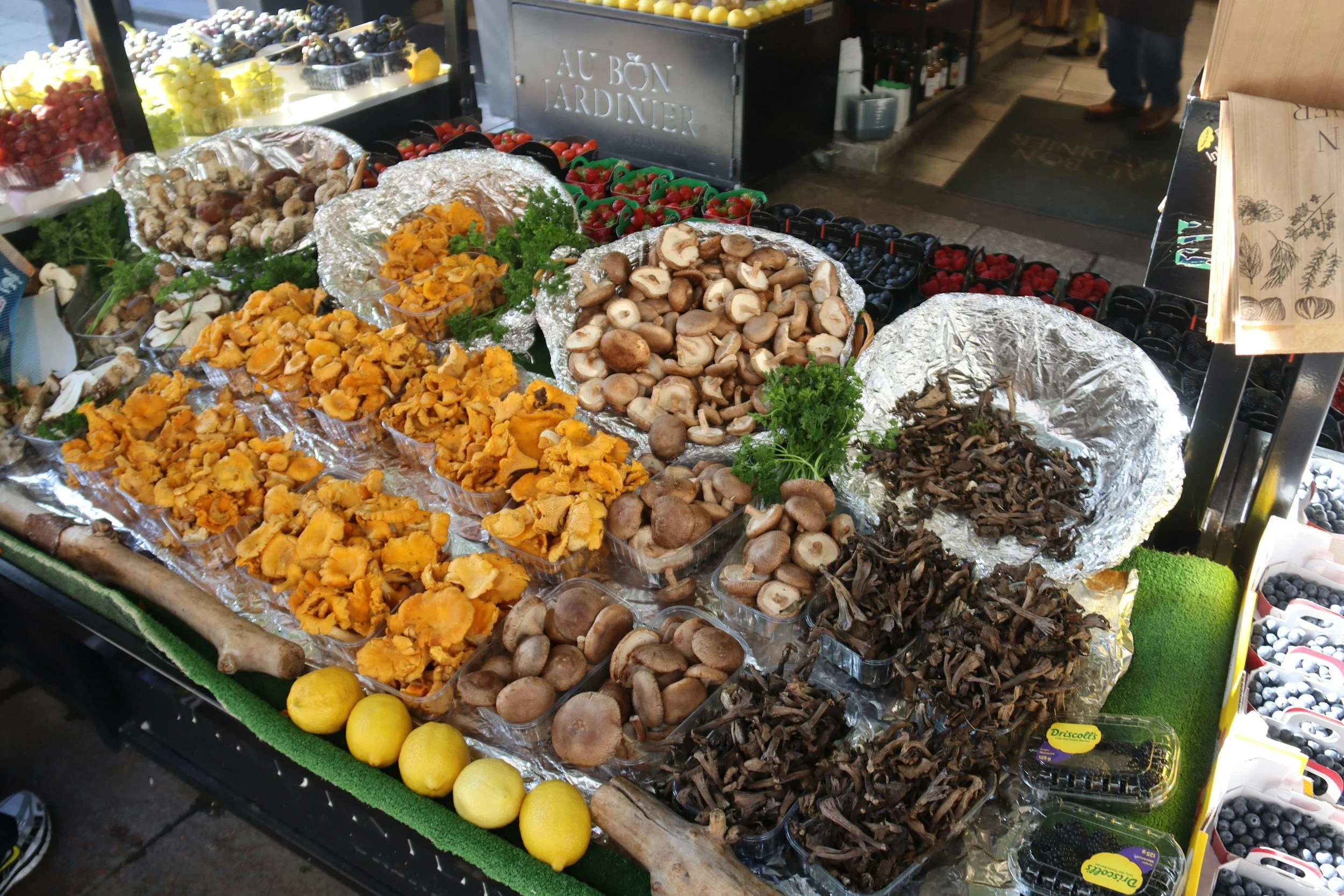
Vienne is the town I would choose if I wanted the market to be the start of the weekend rather than the whole point of it. It is close enough to Lyon that plenty of people treat it as a quick Saturday morning trip, which makes sense on paper, but it is also exactly why many visitors leave before the town has had time to become interesting.
The train makes it easy. You arrive at Vienne station, walk out towards Cours Brillier, and within a few minutes you are already moving between the station, the Rhône and the lower part of the old town. There is no awkward transfer, no taxi decision and no feeling that you have arrived somewhere unfinished. If you are travelling with a small overnight bag, you can be at a café near Cours Romestang before you have properly switched out of Lyon mode.
Saturday morning is big here. Really big! The market spreads through the city centre, especially around Cours Romestang, Boulevard de la République and the surrounding streets, with more than 300 traders and several kilometres of stalls. That is useful to know before you arrive, because this is not the kind of market where you casually “have a look” in twenty minutes before moving on. By mid-morning, the narrowest sections become slow, the food stalls have proper queues and it is easy to lose track of where you started. I would arrive early, buy anything you actually want before the busiest hour, then stop somewhere for coffee and come back through more slowly once the first rush has passed.
Vienne feels less concentrated than many of the other towns in this guide, and I think that's part of its charm. The Saturday market stretches through Cours Romestang, Boulevard de la République and several neighbouring streets, so you never really feel as though you've arrived at one central square where everything happens. Instead, the morning naturally pulls you through different parts of the town. You might stop to buy fruit or cheese, find yourself outside the Temple d'Auguste et de Livie a few minutes later without meaning to, then carry on towards a café before realising you've walked half the historic centre almost by accident. It feels much more like discovering a town through its market than visiting a market inside a town.
That's also why I wouldn't spend the weekend trying to see every Roman monument. They're woven into everyday Vienne anyway, so you'll come across most of them without making a special effort. The Temple d'Auguste et de Livie sits beside cafés and restaurants where people are stopping for lunch, while the Jardin de Cybèle is only a short walk away if you fancy escaping the busiest streets for a while before heading back into town. Later in the afternoon, I like wandering down towards the Rhône and then looping back through the older streets around Cathédrale Saint-Maurice, simply because they're quieter once the market begins winding down. None of that needs much planning. Vienne is one of those places where the weekend comes together quite naturally if you give yourself enough time to wander between one part of town and the next instead of following a sightseeing route.
This is usually the point where day-trippers start heading back towards the station, and I think that's exactly why it's worth staying. Once the busiest part of the market is over, Vienne becomes much easier to enjoy. The queues outside the food stalls disappear, it's easier to wander through the old streets without constantly weaving around other shoppers, and suddenly you've got time to explore parts of the town that barely crossed your mind during the morning. I nearly always stop for a long lunch rather than rushing on to the next thing because there isn't any reason to hurry anymore.
A lot of people also forget that Vienne sits on the Rhône. During the market it's surprisingly easy to spend hours in the centre without going anywhere near the river, but later in the afternoon I'd definitely make the short walk down to the quays before dinner. Unlike Tournon, where the river is always part of the experience, Vienne keeps it slightly in the background, which means it feels almost like another part of the town once you get there. From the riverside it's worth wandering back through the older streets towards Cathédrale Saint-Maurice, stopping wherever something catches your attention rather than following a planned route. That's one of the reasons I'd choose to stay overnight. The market might be what brings you to Vienne, but the hours afterwards are when you begin noticing why the town is worth more than a Saturday morning.
Dinner is another reason I wouldn't rush back to Lyon. By the end of the afternoon you've usually got a much better feel for the town than you did when you arrived, so deciding where to eat becomes part of the weekend rather than something you organise in advance. Some evenings I'd happily keep things simple with a table at Le Simone's Café on Rue des Clercs, especially if I've spent most of the day wandering around the market, while Bistrot de Serine is a good choice if you'd like to stay with the local wine theme for a little longer. If the trip is centred around food, La Pyramide is still one of the great dining experiences in the Rhône Valley and well worth booking ahead, but I don't think every visit to Vienne needs to revolve around a specific restaurant.
One thing I've found is that the town often nudges you towards a different kind of evening than you expected. After a busy morning at the market and a long lunch, I rarely feel like squeezing in another full itinerary before dinner. Instead, I'll wander for another hour, perhaps browse a few of the independent shops that were too busy earlier in the day, stop for an apéritif if somewhere looks inviting, and only then decide where to eat. That's one of the advantages of staying overnight instead of treating Vienne as a day trip. Once you're not watching the clock for the train back to Lyon, the whole evening becomes much more spontaneous.
Sunday morning gives you a chance to see a side of Vienne that Saturday never really has time for. Without hundreds of market stalls running through the centre, the distances suddenly make more sense, and it's easier to wander between Cours Romestang, the Temple d'Auguste et de Livie, Cathédrale Saint-Maurice and the quieter streets beyond without constantly stopping or changing direction. If you've got a couple of hours before your train, I'd make the climb up to Mont Pipet while the air is still relatively cool. It isn't especially long, but it's steep enough to appreciate in the morning, and from the top you get a completely different perspective of the town, with the Rhône winding below, the railway hugging the riverbank and the old centre sitting between them.
I think that's why Vienne stayed with me more than I expected. Most market towns revolve around one square or one historic centre, but Vienne feels broader than that. The market is only one part of the day, not the thing holding the whole town together. Even on a busy Saturday there are people shopping, meeting friends, catching trains, walking to work or sitting outside cafés nowhere near the busiest stalls, and I like that mixture. It feels like somewhere that happens to have an excellent market rather than somewhere defined by it.
If I had one free weekend in Lyon and wanted somewhere that offered more than a few pleasant hours wandering between market stalls, Vienne would be high on my list. You can spend the morning at one of France's biggest Saturday markets, stretch lunch into the afternoon, wander down to the Rhône, enjoy a really good dinner, then wake up the next day feeling as though there's still another part of the town waiting to be explored before you head back. That's surprisingly difficult to find less than half an hour from Lyon, and I think it's the reason Vienne is so often underestimated.
If what appealed to you most was wandering without much of a plan, Montolieu has that same calm feeling, just with bookshops instead of markets.
If I only had one weekend...
If someone asked me to pick just one town from this list, I'd probably answer with another question first. What do you actually want your weekend to feel like?
Some people are happiest wandering around a market until lunchtime and catching the next train home. Others barely buy anything at all because they're much more interested in finding a good wine bar, sitting outside a café for an hour longer than planned or seeing what the town feels like once the visitors have gone. That's why I don't think there's a single "best" choice.
If food is the reason you're travelling, I'd lean towards Louhans or Tournus, but for completely different reasons. Louhans feels wonderfully old-fashioned. You're planning your whole weekend around Monday morning, chatting to poultry producers beneath the arcades and leaving with a bag full of things you hadn't intended to buy. Tournus is less about the market itself and more about everything that comes afterwards. A long lunch, a really good Burgundy dinner, breakfast from the bakery on Sunday and one last walk along the Saône before getting back on the train. It's the sort of place that quietly stretches a weekend without you noticing.
For wine, I don't think anything here comes close to Tournon-sur-Rhône. The fact that you can wander between Tournon and Tain-l'Hermitage all day without thinking about the car changes everything. Taste a few wines at Cave de Tain, cross the bridge because somewhere on the opposite bank looks inviting, stop for another glass before dinner and realise you've crossed the Rhône four times without ever planning to. It never feels like you're trying to fit lots into the day. The walking naturally joins everything together.
If wine is the reason you're travelling, Vongnes and Bugey make a brilliant follow-up once you've explored the Rhône Valley.
If I wanted the easiest weekend by train, I'd probably book Villefranche-sur-Saône. Twenty-five minutes from Lyon, hardly any time between the station and the old centre and enough cafés, restaurants and shops that you never feel as though you've arrived somewhere that only comes alive on market day. Tournus would be my second choice for much the same reason. Everything is close enough that the train becomes part of the appeal rather than something you have to work around.
Autumn changes the picture a little. That's when I'd head for Tournus, Louhans or Tournon. Burgundy feels particularly good once the vineyards begin turning gold, market stalls fill with mushrooms, walnuts and squash, and people start lingering over longer lunches instead of searching for shade. They're all lovely in summer, but I think they have even more character once the seasons begin changing.
If you're planning this trip later in the year, Drôme Provençale in autumn might completely change which towns you choose.
People often ask what to do after they've already been somewhere like Annecy. My answer usually isn't another famous destination. I'd send them somewhere like Vienne instead. It has a huge Saturday market, excellent places to eat and drink, plenty to keep you wandering for two days and a completely different atmosphere once Saturday afternoon arrives. Or I'd send them to Louhans, because I can't think of many other places in France where planning a weekend around a Monday market feels so completely natural once you've done it.
If your idea of a good weekend is somewhere a little quieter, where you're just as happy sitting beside the river with a book as browsing market stalls, I'd look at Die or Crest. Neither feels finished when the market packs away. In fact, I probably enjoy both towns more later in the afternoon, once the busiest visitors have left and everyday life quietly takes over again.
Travelling on your own changes things too. I think Tournus is probably the easiest place to settle into because it never feels too busy or too quiet. It's easy to spend an hour reading outside a café without feeling self-conscious, wander through the market at your own pace and book yourself a good dinner without wondering whether you'd have enjoyed the evening more somewhere else.
And if you've only got one night, I'd actually simplify the weekend rather than trying to fit more into it. I'd choose one town, arrive early, stay for dinner, wake up there the next morning and leave after another slow breakfast…
If one weekend turns into a longer escape, Drôme cottage stays are some of the loveliest places to slow down for a few extra days.
The market is only half the weekend
I've started thinking about market towns a little differently over the years. The market is usually what persuades me to book the trip in the first place, but it's almost never the reason I decide to come back.
By the time lunch is over, most visitors have already seen what they came for. They've bought a few things to take home, walked through the busiest streets, taken a handful of photographs and are already thinking about the drive or train home. That's usually the point where my weekend feels as though it's only just beginning, because the town slowly starts returning to itself.
I've also found that staying overnight changes the parts of a town you pay attention to. During the busiest hours of the market it's perfectly natural to follow the crowds because that's where everything is happening, but later in the day you start wandering for different reasons. You notice which streets still feel worth exploring once the stalls have gone, which cafés are still busy because local people are there rather than market visitors, and whether the town still feels enjoyable without the excitement of market day carrying it. That's usually when I decide whether somewhere is simply a good place to spend a Saturday morning or somewhere I'd happily come back to for another weekend.
That's also when it's worth wandering away from the obvious streets. Almost every market naturally pulls people towards the same handful of squares during the morning, but later in the afternoon I usually find myself taking whichever street looks the quietest instead. Sometimes it leads nowhere more exciting than a small residential lane with shutters standing open and herbs growing outside front doors. Sometimes it's an old washhouse, a tiny square with a fountain that never seems to appear in guidebooks or a bakery that's starting to sell tomorrow's bread rather than this morning's pastries. Those little detours rarely look important on a map, but they're often where a town feels most like itself.
Cafés are a good example of this. During the busiest part of market day it's almost impossible to tell which places people genuinely return to and which are simply the closest option to the market, because every terrace is busy. Come back later in the afternoon and the picture is often very different. A few places are still full, others are almost empty, and it's much easier to work out where people actually choose to spend time once they no longer have shopping bags under one arm or a train to catch. I've found that those quieter hours usually tell me far more about a town than the busiest part of the morning ever could.
Sunday morning is usually when I decide whether I'd come back. Once the market has disappeared, there's nothing left to hide behind. You're no longer distracted by hundreds of stalls or the excitement of market day, so the town has to stand on its own. Is it still enjoyable to wander without any particular destination? Are there cafés you'd happily spend another hour in? Do you find yourself taking the long way back to the hotel instead of the quickest one? Those are the questions that matter much more to me than how many market stalls there were the day before.
It's also changed the way I travel. I used to feel I should see as much as possible while I was away, but now I'm much happier spending a whole weekend getting to know one place properly. I'll often walk down the same street two or three times at different points during the weekend because it never feels quite the same. A square that's full of market shoppers on Saturday morning might be almost empty by late afternoon, while a café that seemed impossible to get a table at the day before suddenly becomes somewhere you can linger over breakfast before catching the train home. Those small changes tell you far more about a place than trying to fit another destination into the itinerary ever could, and I think they're the reason I remember some weekends so much more clearly than others.
I think that's why I've stopped judging market towns by the market itself. Almost all of the places in this guide have excellent markets, so that isn't really what separates them anymore. What makes me want to come back is everything that happens once the shopping is done. If I'm still finding another street I want to wander down, changing my mind about where to have dinner or wishing my train home was a couple of hours later, that's usually a much better sign than the number of stalls or how famous the market happens to be.
In the end, the market is what gets me to book the trip, but it's rarely the reason I remember the weekend. That usually comes from the hours afterwards, when the crowds have thinned out, you've stopped thinking about what you "should" see next and the town starts feeling less like somewhere you've come to visit and more like somewhere you could happily return to.
FAQs about market towns near Lyon
Which market town near Lyon is actually worth staying overnight?
Quite a few of them are, but not for the same reason. Tournus is the one I'd choose if the weekend revolves around good food and long meals, while Tournon-sur-Rhône works beautifully if you want to combine markets with wine without ever needing a car. Villefranche-sur-Saône surprised me because it feels much more complete as a weekend than most people expect from somewhere only twenty-five minutes from Lyon, and Louhans is one of the few places where I'd happily plan an entire trip around a Monday market.
Which market town near Lyon feels the least touristy?
I'd probably say Louhans, followed closely by Die. Neither feels as though the market exists for visitors. People are there because it's where they buy their vegetables, cheese, flowers and bread every week, and as a visitor you're simply joining something that would happen whether you were there or not. That gives both places a very different atmosphere from markets that have become major tourist attractions.
Which market town is best if I don't want to hire a car?
If ease is your priority, I'd look at Villefranche-sur-Saône, Tournus and Vienne first. All three have stations within an easy walk of the historic centre, so you can arrive with a small bag and spend the rest of the weekend on foot. Tournon-sur-Rhône is just as straightforward, even though you arrive in neighbouring Tain-l'Hermitage, because the two towns are connected by the Passerelle Marc Seguin and are only a few minutes apart.
Is it better to stay one night or two?
If you possibly can, I'd stay two nights. One of the things I've learnt after visiting market towns over the years is that they're often at their most enjoyable once the market has finished. Saturday evening and Sunday morning tell you far more about a place than the busiest couple of hours on market day, and staying that extra night completely changes the pace of the weekend.
Which market town near Lyon is best for food lovers?
Louhans and Tournus stand out for different reasons. Louhans is rooted in Bresse cooking, poultry, butcher shops and one of France's most distinctive food markets, while Tournus has the kind of restaurants, wine bars and Burgundy produce that naturally encourage long lunches and unhurried dinners. If food is the main reason you're travelling, I'd happily return to either.
Which market town near Lyon is best for wine?
Without much hesitation, Tournon-sur-Rhône. Being able to walk between Tournon and Tain-l'Hermitage means you can spend the afternoon tasting wines at Cave de Tain or Maison M. Chapoutier, stop for dinner on either side of the Rhône and never think about driving. It's one of the easiest wine weekends I've found anywhere in France.
Are these market towns busy all weekend?
Not really, and that's one of the reasons I chose them. Saturday mornings are naturally the busiest, especially during spring and autumn, but by the afternoon each town settles into its own pace. That's usually when you'll discover whether it's somewhere you'd genuinely enjoy spending a weekend rather than simply visiting for a few hours.
Which market town would you recommend for a solo weekend?
I'd probably send someone to Tournus first. Everything is close together, there are plenty of cafés where it feels completely natural to spend an hour with a book, and the town stays lively without feeling crowded. Villefranche-sur-Saône is another good choice if you'd like a little more variety in restaurants and shops while keeping everything within walking distance.
Which market town changes the most after the market finishes?
For me, it's Vienne. On Saturday morning it feels lively, energetic and surprisingly busy, but once the market starts disappearing the cafés, restaurants and streets around the Rhône take over instead. It almost feels like you've arrived in a different town, which is exactly why I think it's much better as an overnight stay than a day trip.
If I only have time to visit one market town near Lyon, which would you choose?
I'd probably ask what kind of weekend you're hoping for before answering. For food, I'd choose Tournus. For wine, Tournon-sur-Rhône. For the easiest train trip, Villefranche-sur-Saône. For somewhere quieter, Die or Crest. And if you want the most distinctive market experience of the lot, I'd plan the whole trip around Louhans on a Monday.