Looking beyond Gordes? Start with these market villages.
There are plenty of market villages in Provence, but one thing I've never really understood is why they're so often treated as though they're interchangeable. They aren't. A Saturday in Apt doesn't feel like a Wednesday in Lourmarin, and neither has much in common with a Thursday in Nyons. They sell different things, they attract different people, and perhaps most importantly, they leave you with completely different afternoons.
That's the part I think gets overlooked. Most guides tell you which day the market takes place, maybe mention a few local specialities, then move on to the next village. What they rarely tell you is that by two o'clock these places have all become something completely different. In Apt, you'll still see people carrying bags of vegetables back to the car after doing their weekly shopping. In Lourmarin, the market has quietly given way to lunch, galleries reopening after their midday break and people wandering between the boutiques with no particular plan. Nyons settles back into everyday life so naturally that if you wandered a couple of streets away from Place des Arcades, you could almost forget there had been a market at all.
That's why I've stopped asking which market village is supposed to be the best. It's a much more interesting question to ask what kind of day you're hoping to have. Maybe you're looking for the biggest traditional market. Maybe you'd rather spend half the afternoon sitting outside a café before wandering into a local gallery. Maybe your idea of a good market is coming home with olive oil, cheese and vegetables instead of lavender soap and souvenirs.
Once you start looking at the villages that way, the decision becomes much easier, because once you stop comparing market villages by how pretty they are, choosing between them becomes much easier.
If you're still deciding when to visit Provence, May or September? is one of those decisions that's worth making before you book anything.
Before choosing a Provençal market village
One thing that surprised me when I started spending more time in Provence was how differently market villages feel once you've actually visited a few of them. Most guides list the market day, mention a few local products and move on, which makes it sound as though the only real decision is which village looks nicest in the photos. In reality, choosing between them often changes the whole feel of the day.
Take Apt and Lourmarin. They regularly appear on the same "best markets in Provence" lists, but they couldn't feel much more different. In Apt, the market is the reason people are there. By mid-morning, Place de la Bouquerie, Rue des Marchands and the streets around Cathédrale Sainte-Anne are full of people buying fruit, vegetables, cheese, olives, roast chickens and everything else needed for the week ahead. Visitors are there too, of course, but it still feels like a town doing its weekly shopping rather than a sightseeing stop for tourists. Most people leave once they've finished at the market, but I actually like Apt once it's quieter. You can slow down, wander through the old centre without the Saturday crowds and notice parts of the town that were easy to miss a couple of hours earlier.
Lourmarin is the village where I almost always end up staying longer than I planned. The Wednesday market is busy, but unlike a lot of market villages, it doesn't empty once the traders start packing away. People are still ordering lunch around Place Henri Barthélémy, the boutiques along Rue Henri de Savornin stay busy well into the afternoon, and galleries begin reopening after their lunch break. I've gone there plenty of times thinking I'd stay for a couple of hours, then looked at the time halfway through the afternoon and realised I still hadn't left. That's probably the biggest difference between Lourmarin and somewhere like Apt. In Apt, the market is the highlight of the day. In Lourmarin, the market often ends up being where the day starts.
Nyons surprised me the first time I visited because I expected olives to be one small part of the market. They're not. You notice them everywhere, from the producers offering tastings of different olive oils to the stalls selling several varieties of olives, tapenade and products made with the town's famous Tanche olive. By the time you've walked through the market around Place des Arcades, it's pretty obvious why people travel here specifically for food rather than simply because there's a Thursday market.
If Nyons has caught your eye, this article gives you a much better feel for the town than simply looking at the market itself.
Forcalquier gives me a completely different impression. On Monday mornings, it doesn't feel like everyone has arrived with the same plan. Someone is buying flowers, somebody else is picking up bread, another person is loading vegetables into the back of the car before driving back towards one of the villages around the Montagne de Lure. You still have visitors wandering with cameras, of course, but it never feels as though the market exists only because people are on holiday. That's probably why I find it one of the easiest markets in Provence to slow down in.
That's also why I'm rarely convinced by itineraries that squeeze two or three market villages into the same day. It sounds efficient until you're sitting in traffic on the D900, circling another full car park or arriving just as traders are folding up their tables. I've found that the nicest part of a market day often starts once most people head back to the car. That's when you wander into the bakery because there's finally no queue, realise the wine shop you walked straight past earlier is actually worth a look, or end up ordering another coffee simply because the square has gone quiet and there's nowhere else you particularly need to be. That's one reason I almost never try to squeeze two market villages into the same day anymore.
How you're travelling changes the decision much more than most guides let on. If you've got a car, it's easy to build a trip around market days because you can simply stay somewhere central, whether that's Apt, L'Isle-sur-la-Sorgue or Aix-en-Provence, and drive to a different village each morning. The challenge isn't usually the distance. It's that market mornings are when everybody else has had exactly the same idea. A drive that looks like thirty minutes on Google Maps can easily become closer to an hour once you've slowed behind tractors on the D900, driven through a string of villages and joined the queue for one of the main car parks.
Without a car, I'd plan very differently. Villages that look almost next door to each other on the map can be surprisingly awkward to combine because public transport isn't designed around market-hopping. Getting to Lourmarin from Aix-en-Provence is straightforward enough if that's where you're spending the day, but trying to continue to somewhere like Cucuron, Apt or Forcalquier often means working around regional bus timetables rather than travelling when it suits you. Depending on the route, you may find yourself changing buses in Pertuis, Cavaillon or back through Aix, and it's very easy to lose two or three hours without covering much ground.
That's one reason I've stopped trying to link several market villages together in a single day. I'd much rather catch an early bus, arrive before the busiest part of the market, stay for lunch and see what the village is like once most people have left. It sounds less ambitious on paper, but it usually ends up feeling like you've experienced far more of Provence than if you'd spent the afternoon watching the next departure time.
If this article has you wondering where else to go, more market towns in France is a good place to keep exploring.
If the market itself is the main reason you're visiting
If your main reason for visiting is the market, I'd stop thinking about which one is supposed to be the "best" because they aren't really competing with each other!
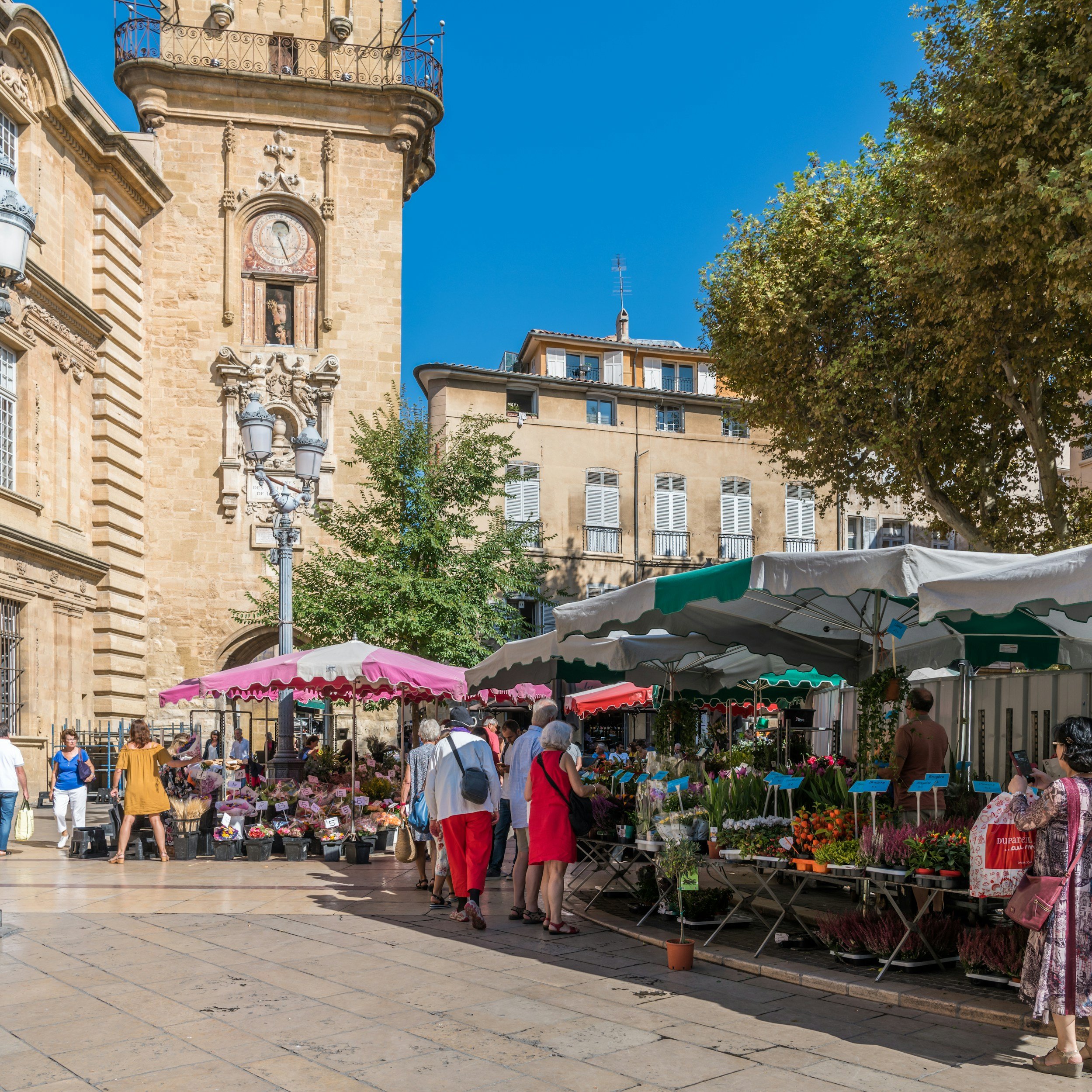
Apt is the market I would choose if I wanted to spend the whole morning browsing. It just keeps going. You turn off Place de la Bouquerie thinking you've reached the end, then another row of stalls appears along Rue des Marchands, then another around Rue Saint-Pierre, and before long you've completely lost track of where you started. One stall is selling apricots and tomatoes picked that morning, the next has huge baskets of dried herbs and spices, then handmade ceramics, linen tablecloths, tapenade, lavender products, cheeses and rotisserie chickens turning away in the background. It feels busy without ever feeling like everything has been squeezed into one square.
What I like most about Apt isn't actually the size. It's that it still feels like a market people genuinely rely on. You see shoppers pulling little shopping trolleys behind them, restaurant owners loading crates into vans before lunch and locals stopping to chat because they've bumped into someone they know rather than because they're on holiday. I nearly always end up walking the market twice. The first time I'm looking at everything, the second time I'm going back for the cheese, fruit or olives I decided not to carry around for another hour. Judging by the number of people doing exactly the same thing, I'm probably not the only one.
Forcalquier has a big market as well, but it feels calmer from the moment you arrive. Monday mornings bring people in from villages across the surrounding hills, so the market has a much stronger regional feel than somewhere like Lourmarin. Around Place du Bourguet, you'll notice stalls selling mountain honey, goat's cheese, fresh herbs, fruit, vegetables and charcuterie sitting alongside flower growers and bakers who've been coming here for years. There's less of that feeling that everyone is trying to see exactly the same thing before moving on to the next village.
If I'm buying food to cook over the next couple of days, though, I'd probably drive to Nyons instead.
Nyons is the market I'd choose if food is the reason I'm travelling. Thursday mornings naturally revolve around the famous Tanche olive, but what I like is that the market doesn't stop at the last stall. Walk through Place des Arcades and you'll taste different olive oils before buying, compare tapenades from neighbouring producers and inevitably leave carrying far more olives than you planned. Then, once you've finished at the market, the rest of the town quietly carries on with the same story. Olive shops stay open, restaurants drizzle local oil over almost everything that comes out of the kitchen, and it's easy to spend another hour comparing producers rather than feeling you've already seen everything. By the time people are walking back towards the car parks, plenty of shopping bags are noticeably heavier than when they arrived. They're filled with bottles of olive oil, olives, cheese and bread for the drive home rather than lavender sachets or souvenirs, which says quite a lot about the kind of market Nyons is.
I'd happily go back to all three, but for completely different reasons. If I wake up wanting a proper market morning, it's usually Apt I'm thinking about because there's simply more to see and I always seem to find another street full of stalls that I'd somehow missed. If the plan is to buy food for the next few days, I'd drive to Nyons without thinking twice. I've never left without olive oil, and I usually end up carrying home far more cheese and olives than I'd planned as well. Forcalquier is the sort of market where I stop halfway round for a coffee because I know there's no rush. The stalls will still be there when I get back, and somehow the whole morning feels a little less frantic than some of the better-known markets in the Luberon.
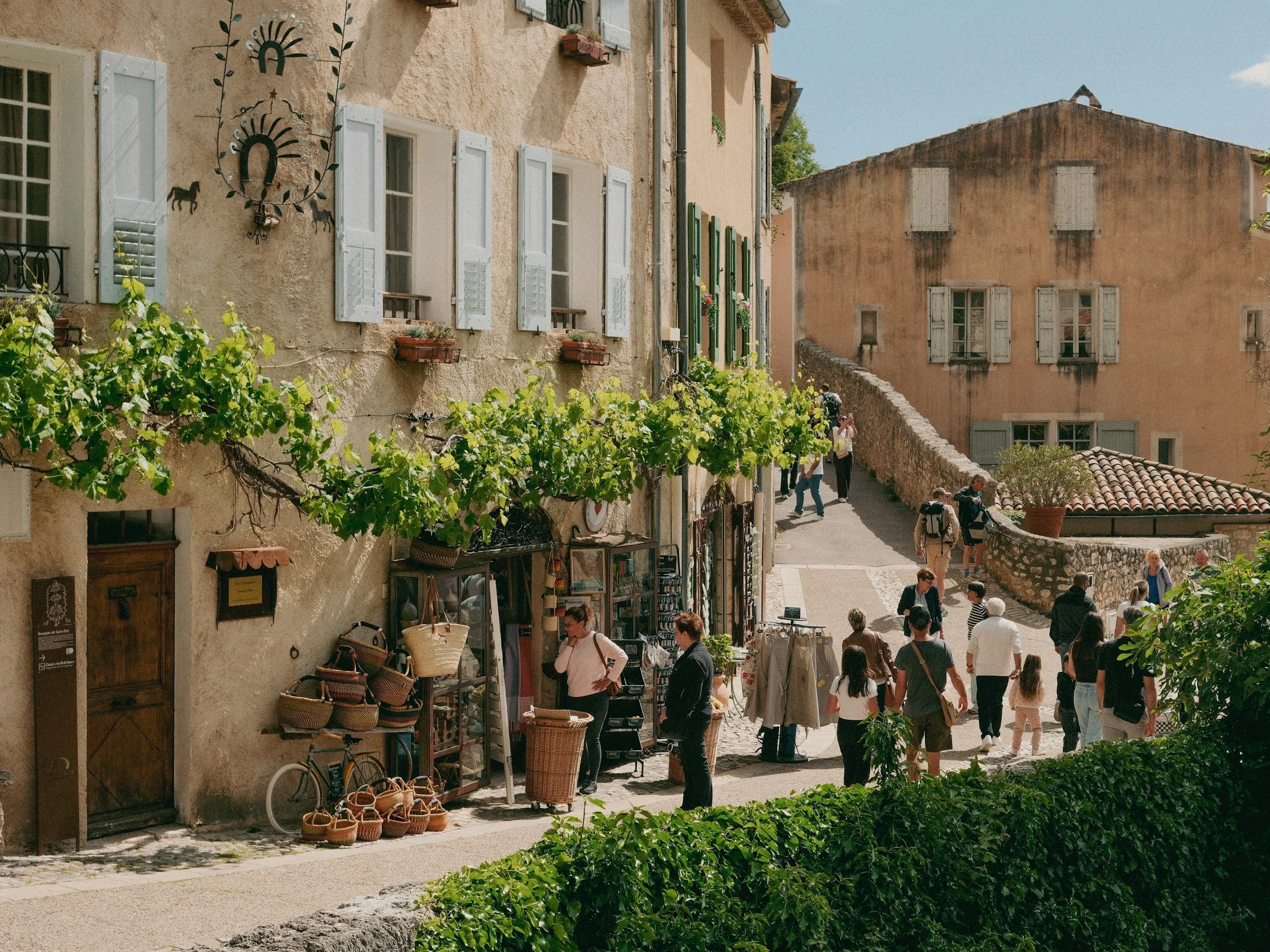
If Nyons sounds more like your kind of Provence than the Luberon, Drôme Provençale explores the villages, markets and back roads that make the region worth slowing down for.
If you're hoping the market turns into a whole day
The first few times I visited Provence, I always left once I'd finished walking around the market. Looking back, I think I was leaving at exactly the wrong time. Some villages become much quieter once the traders pack away, while others barely seem to notice the market has finished. That's usually the point where the biggest differences between these villages begin to show.
Lourmarin is probably the best example I've found in Provence. The Wednesday market is busy all morning, but it never feels as though the market is the only reason people have come. Once the stalls begin disappearing from Place Henri Barthélémy and the surrounding streets, hardly anyone seems to leave straight away. Tables outside Café Gaby and Le Moulin stay full, people wander in and out of the small shops along Rue Henri de Savornin, galleries quietly reopen after lunch, and you'll still see visitors walking up towards the Château de Lourmarin long after the market has finished.
That's one of the reasons I think Lourmarin works so well if you're only choosing one village for the day. You can arrive early enough to see the market at its busiest, stop for coffee without feeling rushed, browse a few of the independent boutiques after lunch, spend an hour at the château and still have time for an early apéritif before dinner. It never feels like you're trying to fill time because the market has ended.
If Apt and Lourmarin already feel familiar, where I'd go next introduces some of the Provençal market towns that quietly slip under the radar.
Nyons changes more quietly than the other villages. By the time Thursday morning slips into the afternoon, most of the market is packing away, but the town doesn't suddenly empty. Around Place des Arcades, people are still sitting beneath the plane trees, the bakeries still have locals dropping in for bread, and the streets climbing towards the old town feel completely different from the busy market a couple of hours earlier. That's usually when I like crossing the Pont Roman, wandering uphill towards Tour Randonne or stopping at one of the olive producers without a queue forming behind me. If I've spent the morning choosing olive oil, tapenade and cheese, I'll often pick up a baguette before leaving and find somewhere quiet to eat instead of rushing straight to the next village.
Cucuron is the one village in this guide that I'd almost never visit on its own, and I don't mean that as a criticism. The Tuesday market spills around the Étang de Cucuron, with stalls tucked beneath the plane trees and café terraces gradually filling as the morning goes on, but it's a much smaller place than Apt or Lourmarin. Before long you've walked around the basin, wandered through the quieter lanes behind the church and found yourself back where you started again. That's exactly why I think it works so well as part of a day exploring the southern Luberon rather than as the day's only destination. I'll often end up there after a morning in Lourmarin, or combine it with Ansouis or Vaugines, then stay for lunch beside the étang before carrying on. There's never any feeling that you've rushed it. A couple of calm hours is usually enough to understand why people keep coming back.
Ps. if you always find yourself drifting towards the antique stalls first, before you buy is worth five minutes.
In case you're visiting before the main lavender season, this piece explains where to see colour weeks before the famous fields reach their peak.
The afternoon tells you more than the market does
One thing I've started paying attention to in Provence isn't what the villages are like at ten o'clock on market day. Almost all of them are busy then. It's what they're like two or three hours later.
That's usually when the differences become obvious.
In Apt, the market gradually folds back into the town rather than disappearing all at once. Around Place Gabriel Péri and the streets leading towards Cathédrale Sainte-Anne, you'll still see people carrying shopping bags instead of souvenir bags, cafés filling with people who have finished their errands, and shopkeepers returning to their usual routine. The market is a big part of Saturday, but it doesn't completely take over the town. Apt still has banks, bakeries, pharmacies, schools and everyday shops spread through the centre, which means it rarely feels as though the day ends when the last stall is packed away.
Lourmarin is usually at its nicest once the busiest part of the market has gone. Around lunchtime, the village starts changing without ever really becoming quiet. The fruit and cheese stalls disappear, but almost everything else carries on. Rue Henri de Savornin is still busy, except now people are looking in gallery windows, browsing independent bookshops or deciding where to stop for an apéritif rather than comparing tomatoes or goat's cheese. I nearly always end up walking the same street twice because it feels like a different place once the market has packed away. The first time, everyone is looking at the stalls. A couple of hours later, people are looking at the village itself.
Nyons never feels as though everything revolves around Thursday morning. Once the market starts packing away, the town doesn't suddenly become quiet, it just spreads out again. Around Place des Arcades, people linger over lunch while others drift into the olive shops they walked past earlier without having time to stop. It's also much easier to visit one of the local producers once the busiest part of the market has finished. I nearly always leave Nyons later than I'd planned because the market ends up being only one part of the day. By the time I'm walking back across the Pont Roman, most of the shopping bags are full and the crowds have thinned out, but the town still feels comfortably busy.
Forcalquier changes in a quieter way. By early afternoon, the market has folded back into the streets around Place du Bourguet, but plenty of people are still in town because they've come to do more than wander the stalls. You'll see people carrying bread back to the car, picking up a few last groceries before driving home or sitting outside a café before heading back towards villages around the Montagne de Lure. That's probably why Forcalquier never feels like somewhere people simply pass through. Even on market day, it still feels like the place the surrounding area naturally gathers.
Cucuron is usually where my day starts slowing down. By the time the Tuesday market begins packing away, most people have already found a table beside the Étang de Cucuron, lunch is stretching well into the afternoon and there isn't really much pressure to do anything next. I'll often wander one last loop through the village after eating because it's completely different once the stalls have gone. The quieter streets behind the basin suddenly feel much more noticeable, and it's easy to see why people staying nearby keep coming back even on days when there isn't a market at all. That's probably why I rarely think of Cucuron as the destination. For me, it's the place that naturally sits in the middle of a day exploring the southern Luberon, somewhere I'll happily stop for a long lunch before carrying on towards Ansouis, Vaugines or whichever small road looks interesting next.
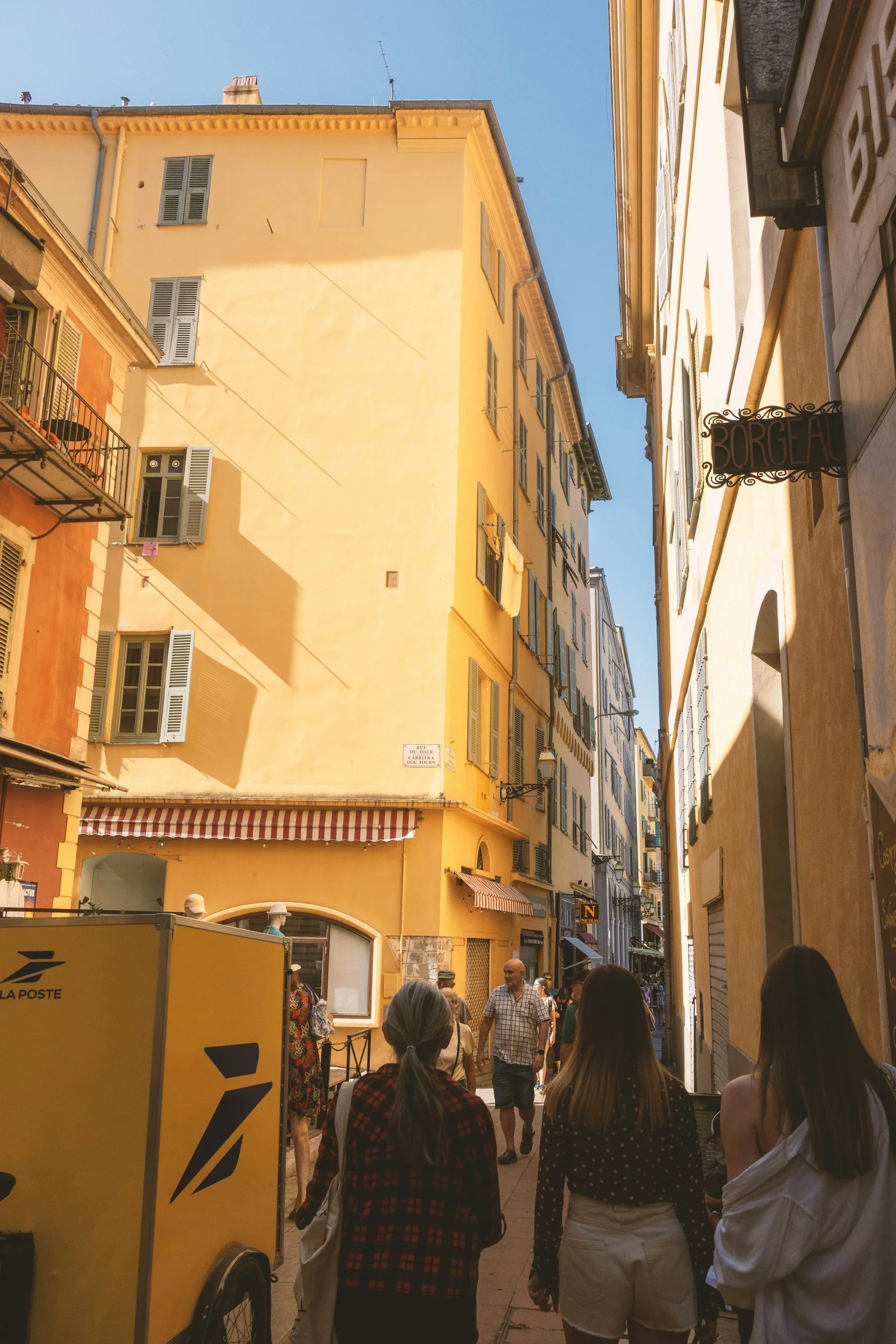
If you're planning to base yourself in Aix-en-Provence, this article helps you decide how many days to stay and which market villages are realistic as day trips.
And in case you're still debating whether you actually need a rental car, without a car breaks down what works well by train and bus, and where having your own car genuinely makes a difference.
The journey is often longer than it looks
One thing that catches people out in Provence is how close everything seems on the map. 20 or 30 kilometres doesn't sound like much until you remember you're driving small departmental roads, passing through villages, slowing down behind cyclists and tractors, then looking for parking on one of the busiest mornings of the week.
That's one reason I'd rarely plan more than one market village in the same morning.
Apt is probably the easiest place to see how much timing can change a market day. If you're already staying somewhere in the Luberon, getting there is rarely the difficult part. What catches people out is that almost everyone seems to arrive at exactly the same time. By half past nine or ten, the main car parks are already much busier, which often means parking further from the old town than you'd expected and starting the morning with a longer walk in. I nearly always find the market more enjoyable if I arrive before it reaches that point. The fruit and vegetable stalls are fully set up, there's a little more room to wander before the streets around Place de la Bouquerie become shoulder to shoulder, and stopping to chat to a producer or browse a stall doesn't feel as though you're holding up the people behind you.
Lourmarin is one of the easier market villages to visit from Aix-en-Provence, but I'd only do it if Lourmarin is the plan for the whole day. There isn't a railway station, so everyone arrives by road, whether that's by car or one of the regional ZOU! buses from Aix. The journey itself is straightforward, but the timetable isn't really designed for hopping between villages afterwards. It's very easy to look at a map and think, I'll just continue to Cucuron or Apt after lunch, only to realise that the next bus doesn't line up with the way you'd naturally want to spend the day.
Cucuron is barely ten kilometres from Lourmarin, so on paper they look like obvious companions, but public transport doesn't treat them that way. If you've got a car, combining the two is one of the nicest days you can have in the southern Luberon because you're only twenty minutes apart on quiet roads through vineyards and orchards. By bus, though, that same journey can easily become the least enjoyable part of the day, with waiting time often taking longer than the drive itself. Unless you're happy planning your day around bus departures, I'd either hire a car or choose one village and give it the whole day instead.
Nyons takes a little more planning than the Luberon villages, which is probably why it feels different once you get there. If you're staying around Aix-en-Provence or Avignon, it's not the sort of place I'd squeeze into an already busy itinerary just because the market is on. I'd only make the journey if Nyons was the reason for the day, or if I was already exploring Drôme Provençale. Once you've arrived, though, the practical side becomes refreshingly easy. You can wander the Thursday market, cross the Pont Roman, explore the older streets, browse the olive shops and stop for lunch without moving the car again. Everything sits comfortably within walking distance, and unlike some of the hill villages further south, you don't spend the day climbing steep cobbled lanes every time you want to see something else.
Forcalquier works much the same way. I wouldn't drive there expecting to squeeze in another famous Luberon village before dinner because that's usually when Provence starts feeling like you're watching the clock instead of enjoying where you are. Monday belongs to Forcalquier. Spend the morning at the market around Place du Bourguet, stay for lunch, then carry on towards Mane, Lurs or even Sisteron if you've got the rest of the afternoon. Those places fit together naturally because you're already in Alpes-de-Haute-Provence, whereas trying to link Forcalquier with Lourmarin or Gordes often looks much better on a map than it feels once you're actually driving.
One itinerary I see suggested surprisingly often is Apt, Roussillon and Lourmarin on the same market morning. It looks perfectly reasonable when you're looking at Google Maps, but once you're actually there the day quickly starts revolving around the car instead of the villages. By the time you've parked in Apt, wandered the market for a couple of hours and stopped for a coffee, you're already looking at the clock because you still want to reach Roussillon before lunch. Then comes another car park, another walk into the centre and another search for somewhere to eat. Before long you've spent more time getting in and out of villages than being in them.
I'd much rather spend the whole day in one place. Walk the market while it's busy, have lunch once the traders start packing away, then wander the streets when they're quieter and you can actually see the village without looking over someone's shoulder. That's usually when I'll find the little épicerie I missed earlier, finally get a table at the café I'd been eyeing all morning or stumble across a shop that wasn't even visible behind the market stalls.
If you're travelling without a car, I'd simplify things even further. Rather than trying to work backwards from bus timetables, pick one market village that's easy to reach, accept that it'll take up most of the day and let everything else fit around that. Provence is one of those places where covering less ground nearly always leaves you with a much clearer memory of where you've actually been.
Travelling without a car? Before you start comparing bus routes, regional TER trains explains how France's regional rail network fits into a Provence itinerary.
If you're continuing west after the Luberon, Arles in autumn is a lovely next stop once the summer crowds have faded.
If you're wondering whether Saint-Rémy-de-Provence is still worth visiting despite the crowds, Saint-Rémy mornings explains exactly when the town is at its best.
After spending time in all of these villages, I don't think the question is "Which market is the best?" It's usually "Which one fits the trip I'm planning?"
If it were my first visit to Provence, I'd still send most people to Apt. Not because it's the prettiest village or because it appears on every list, but because it gives you the broadest picture of what a traditional Provençal market can be. You can spend the morning comparing cheeses, buying seasonal fruit, wandering through streets filled with ceramics and linen, stop for lunch without leaving the centre, then keep exploring long after the busiest part of the market has finished. If someone came home from Provence having only visited one market, Apt would probably give them the fewest reasons to feel they'd missed out.
I'd choose Lourmarin slightly differently. It's the village I'd recommend if you're travelling with no particular plan for the afternoon. Some places feel as though they expect you to leave once you've finished shopping. Lourmarin almost encourages you to stay. Walk through the market, have a coffee on Place Henri Barthélémy, wander into one gallery, then another, climb up to the Château de Lourmarin once the midday crowds have started to thin out and finish the day with an apéritif before driving back. It feels less like a market trip and more like spending the day in a village that happens to have an excellent market.
Nyons is the one I'd choose if food is what you'll remember most from the trip. If you're renting a house for a week, staying in a gîte or planning long lunches on the terrace instead of restaurant meals every day, this is where I'd stock up. The Thursday market isn't about finding the biggest selection of everything. It's about finding producers you'll still be thinking about when you open a bottle of olive oil or a jar of tapenade back home six months later. I also think Nyons improves outside the busiest summer weeks. Visit in September or early October and you'll still have the market, but with a little more space to stop and talk to producers instead of simply joining the flow of people moving through the streets.
I'd actually save Forcalquier for a slightly different kind of itinerary. If you're exploring Alpes-de-Haute-Provence rather than concentrating on the Luberon, Monday is one of the nicest days to plan your route around. The market feels firmly rooted in the surrounding countryside, and because many visitors never make it this far east, it avoids some of the pressure that villages closer to Gordes or Roussillon experience during the busiest weeks of summer. If you enjoy buying directly from producers rather than browsing souvenir stalls, it's often a more rewarding morning than people expect.
Then there's Cucuron, which I'd rarely recommend as somebody's only market village but quite often recommend as part of one of my favourite days in the southern Luberon. I like arriving after breakfast in Lourmarin, browsing the Wednesday market, then driving the short distance through the vineyards to Cucuron for a late lunch beneath the plane trees around the Étang de Cucuron. By early afternoon, when many visitors have already moved on, the village becomes noticeably quieter, and that's usually when I enjoy it most. There's no pressure to rush towards the next attraction because there really isn't one. It's simply a pleasant place to sit for another coffee before continuing towards Ansouis, Vaugines or back across the Luberon.
One thing I would avoid, though, is trying to build an itinerary around the biggest villages alone. It's tempting to draw a neat circle on Google Maps linking Gordes, Roussillon, Lourmarin, Apt and another village before dinner, but Provence rarely works that way in practice. Market mornings start early, village centres become busier than the map suggests, lunch has a habit of lasting longer than expected, and some of the nicest parts of the day don't happen until most people have already left.
Trying to fit several market villages into one trip? This May itinerary shows one route that actually works without spending half the holiday in the car.
If you've spent the morning filling your bag with cheese, olives and bread, Provence picnic suggests a few vineyards where it's worth slowing down for lunch.
And in case you're planning the trip without hiring a car, walkable places compares the towns where you can comfortably stay on foot.
FAQs about Provençal market villages
Which market day is the best in Provence?
There's no single "best" market day because each village has its own character. Saturday in Apt is ideal if you want one of Provence's biggest traditional markets, Monday in Forcalquier has a stronger regional feel with plenty of local producers, Wednesday in Lourmarin naturally turns into an afternoon of cafés and boutiques, while Thursday in Nyons is one of the best choices if food and olive oil are high on your list. I'd choose the market that matches the kind of day you want rather than simply the busiest one.
Which Provençal market village is best if you don't want large crowds?
If avoiding crowds matters more than seeing the biggest market, I'd look beyond the villages that appear in every Provence itinerary. Forcalquier generally feels more spacious than Apt on a Saturday, particularly once you step away from the busiest squares, while Nyons rarely feels as busy as many of the better-known Luberon villages. Visiting in May, early June, September or October also makes a much bigger difference than many people expect. The markets are still lively, but you can browse without constantly moving with the crowd.
Is Apt or Lourmarin better?
It depends entirely on what you're hoping for.
Choose Apt if the market itself is your priority and you want the widest choice of food, produce, fabrics, ceramics and regional specialities. Choose Lourmarin if you're just as interested in what happens after the market, with long lunches, galleries, independent boutiques and cafés that stay busy well into the afternoon. I often think of Apt as a market destination, while Lourmarin feels more like a village where the market becomes part of the day rather than the whole reason for visiting.
Which Provençal market village is best for food lovers?
I'd probably choose Nyons if I wanted to come home with ingredients rather than souvenirs. The Thursday market revolves around the town's famous Tanche olives, but you'll also find local olive oil, cheese, seasonal fruit and vegetables, bread, wine and plenty of regional produce from the surrounding countryside. Apt has the widest overall choice, but Nyons is the place I'd visit if the market was shaping dinner rather than filling a shopping bag with gifts.
Can you visit Provence market villages without a car?
Yes, but I'd plan differently. Instead of trying to visit several villages in one day, choose one that has practical bus connections from your base and enjoy it properly. Villages that look close together on the map often involve awkward transfers or surprisingly infrequent buses, especially outside the busiest months. If you're relying on public transport, you'll usually have a much better day by slowing down rather than trying to cover more ground.
How early should you arrive at a Provençal market?
Earlier than many people think. Between 8:30 and 9:00 is usually the sweet spot if you want to see the market setting up, browse before the busiest crowds arrive and still have plenty of choice at the food stalls. By late morning, especially in places like Apt, the atmosphere becomes much busier, parking is harder to find and cafés often have queues for outdoor tables.
Is it worth staying overnight in a market village?
In some villages, absolutely.
Lourmarin is somewhere I'd happily stay for two or three nights because the village remains lively once the market has finished and there are plenty of cafés and restaurants for the evening. Nyons also works well if you want to explore Drôme Provençale over several days. Cucuron, on the other hand, is somewhere I'd usually visit as part of a wider day in the southern Luberon rather than choosing as my main base.
Which Provençal market village would I recommend for a first trip?
If you've never been to Provence before, I'd still suggest Apt. It offers one of the widest selections of stalls, a genuinely traditional market atmosphere and enough shops, cafés and restaurants to comfortably fill the rest of the day. Once you've experienced Apt, it's much easier to decide whether you'd rather return for somewhere quieter like Forcalquier, somewhere more food-focused like Nyons or somewhere that naturally blends the market with galleries and cafés like Lourmarin.