How is Mantua still this overlooked?
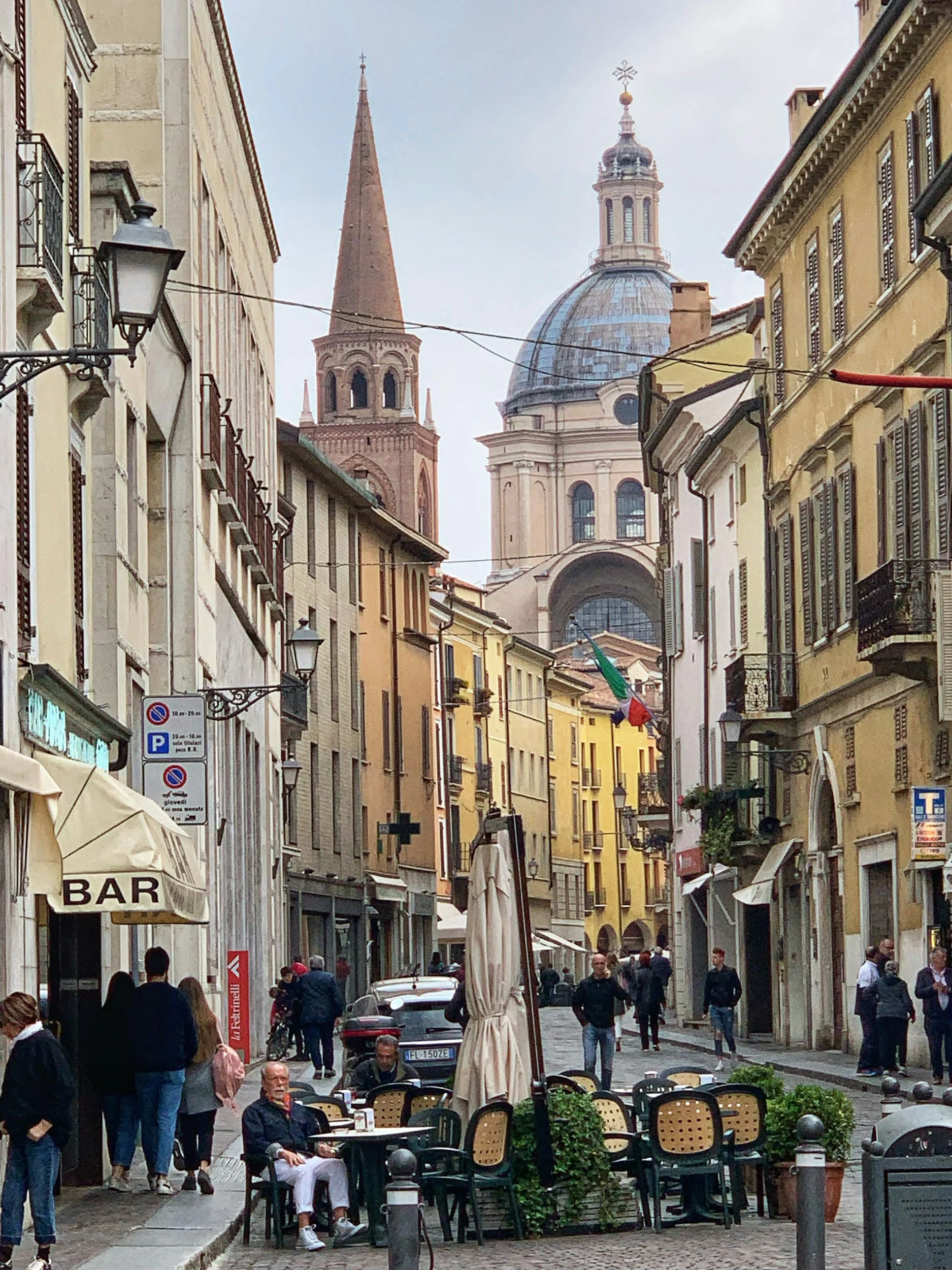
I've enjoyed both Florence and Verona, but they're also the kind of cities where I find myself looking at the time more than I'd like. Before I've even left the hotel I've usually got a rough plan in my head because there are museum tickets to make, cafés that will be busy in an hour and streets that somehow become much harder to walk through by lunchtime than they were first thing in the morning. It's not a bad thing. That's simply what happens in places that millions of people want to visit.
Mantua felt different almost immediately, although it took me a while to work out why.
It wasn't because there was less to see. If anything, I ended up spending much longer inside Palazzo Ducale than I'd expected, wandered over to Palazzo Te thinking it would be a fairly quick visit and somehow kept ending up back in Piazza delle Erbe without really planning to! I just never felt like the city was asking me to hurry. I'd stop for another coffee because there were still empty tables outside, take whichever street looked interesting rather than the quickest one, and before long I'd completely forgotten about trying to fit as much as possible into the day.
That's quite surprising when you think about what Mantua actually is. It's a UNESCO World Heritage city, the former capital of the Gonzaga family and one of the most important Renaissance cities in northern Italy, with three lakes wrapping around the historic centre and enough museums, churches and palaces to keep you busy for two or three days. You can get here easily by train from Verona, Milan or Bologna, walk into the centre from the station in about fifteen minutes and spend most of your stay on foot.
I don't think Mantua is a better city than Florence or Verona, and that's not really what this guide is about. They're simply built around different kinds of weekends. Florence and Verona naturally pull you from one famous place to the next. Mantua lets the day unfold a bit more naturally, and somewhere between Piazza Sordello, the lakeside paths and another unplanned stop for coffee, I realised I was enjoying the time between the landmarks just as much as the landmarks themselves.
Thinking about visiting later in the year? These winter towns have a completely different vibe once summer is over.
Getting to Mantua is easier than most people expect
One of the reasons Mantua often gets overlooked is that people assume it's difficult to reach. It sits away from Italy's main tourist route, so on a map it looks as though you'll need to go well out of your way, but that's rarely the case.
If you're already travelling through northern Italy by train, Mantua fits surprisingly easily into the journey. Regional trains connect the city with Verona, Bologna, Modena and Milan throughout the day, and although some routes involve a straightforward change rather than a direct service, the connections are generally simple. From Verona, the journey usually takes around 45–50 minutes, while trains from Bologna take roughly an hour and a half. Coming from Milan is a little longer, often around two hours depending on the connection.
One thing that often puts people off is seeing "regional train" on the timetable. In reality, that's part of what keeps Mantua feeling less hectic than many of Italy's headline destinations. You're travelling alongside commuters, students and local travellers rather than coach groups moving between Italy's biggest cities, and the journey itself already feels a little different.
Mantova railway station sits just outside the historic centre, around a fifteen-minute walk from Piazza Sordello. It's an easy route if you're travelling with a backpack or a small suitcase, although the final stretch through the old town is paved with cobbles like many historic Italian cities. If you're carrying larger luggage or arriving during the hottest part of summer, a short taxi ride can be worth it.
Once you've reached the centre, you'll probably find you don't need transport again until it's time to leave. Palazzo Ducale, Piazza delle Erbe, Basilica di Sant'Andrea, Teatro Bibiena and most of Mantua's historic streets are all within comfortable walking distance of each other. Even Palazzo Te, which sits beyond the old walls and sometimes looks much further away on a map, is only around twenty minutes on foot from Piazza Sordello.
That also makes Mantua a practical base if you're spending several days in this part of northern Italy. Verona is close enough for a day trip in either direction, while Sabbioneta, another UNESCO World Heritage Site linked to the Gonzaga family, can be reached by bus in under an hour. If you're exploring Lombardy and Emilia-Romagna without hiring a car, Mantua fits into the journey much more naturally than many people expect.
By the time I left, I realised getting there had probably been the biggest obstacle in my head rather than in reality. Once I'd stepped out of the station and walked into the old town, everything felt remarkably straightforward, and for the rest of the weekend my feet were the only transport I needed.
It's surprisingly easy to follow Mantua with a few slow days in the Sabina Hills if you're not quite ready to head home.
And it's also an easy journey from Mantua into the Prosecco Hills if you're in no hurry to leave northern Italy behind…
What makes Mantua feel different from Florence and Verona
I don't think I checked Google Maps more than a couple of times in Mantua.
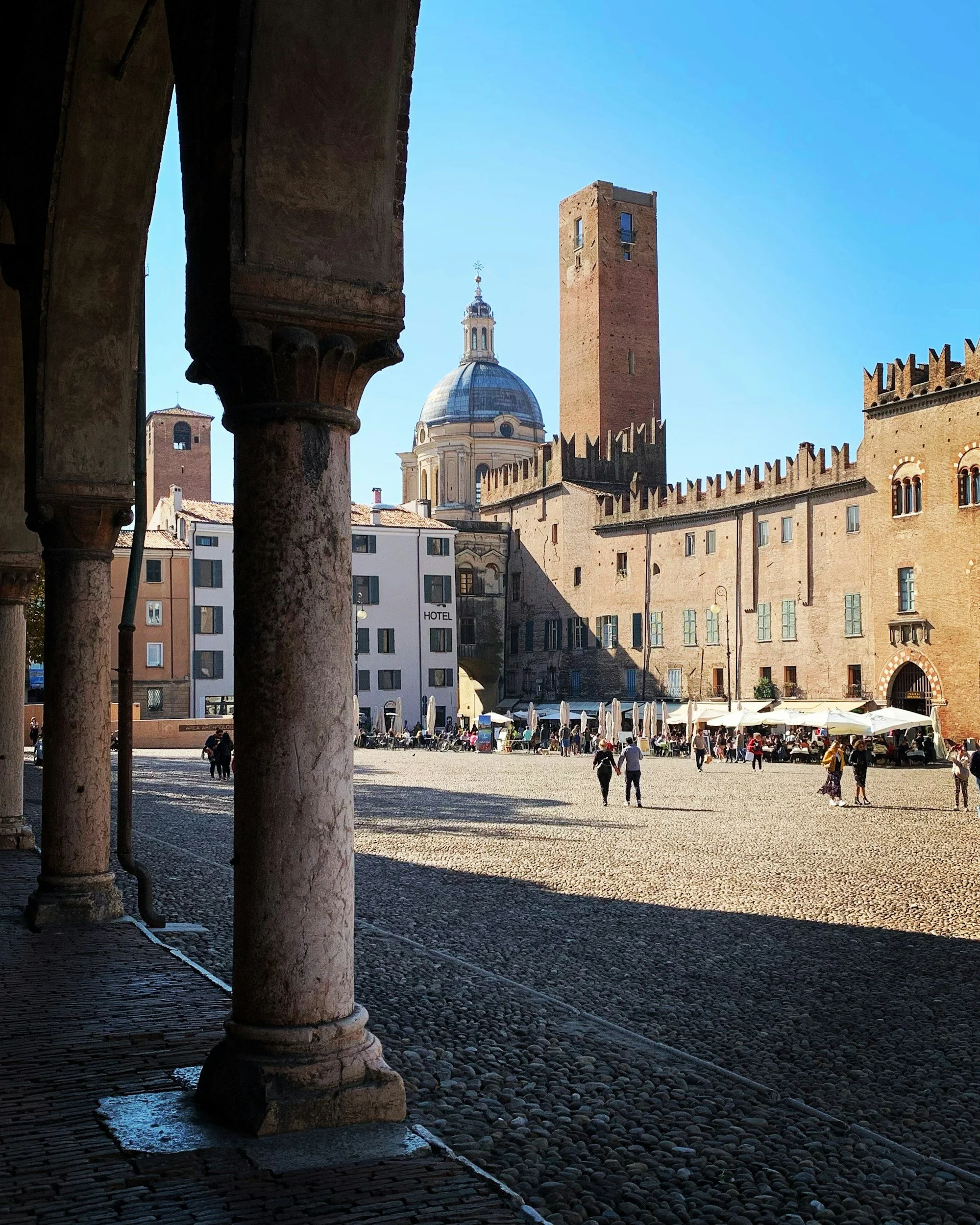
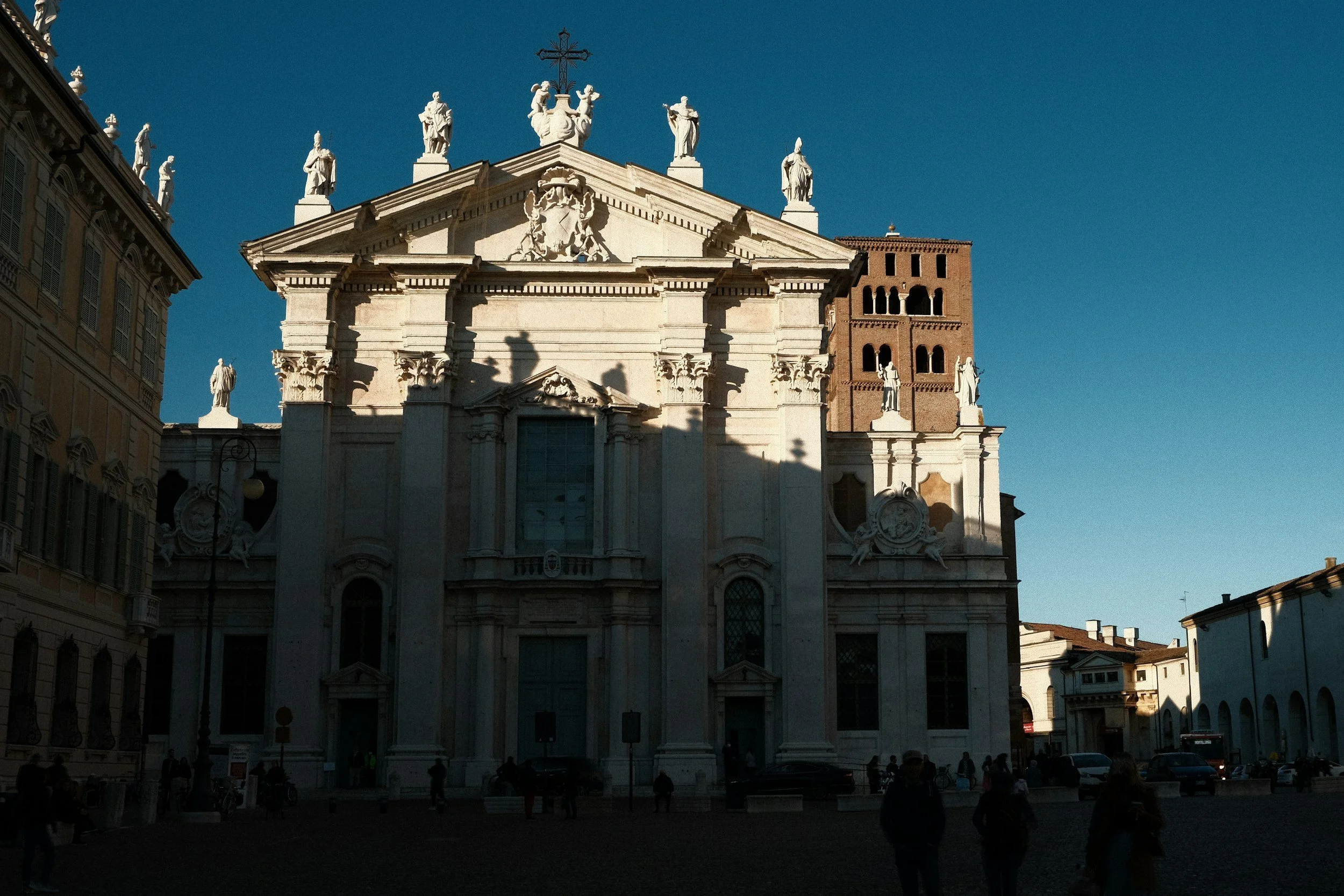
Not because I'd memorised the streets, but because after a few hours it stopped feeling necessary. I'd leave Piazza Sordello thinking I was finally heading to Palazzo Te, get as far as Via Broletto before something distracted me, wander through Piazza delle Erbe, notice that the door to the Rotonda di San Lorenzo was open, then somehow find myself standing outside the Basilica di Sant'Andrea wondering how I'd ended up there instead.
That happened over and over again.
The old town is small enough that very few wrong turns actually feel wrong. Piazza Sordello flows into Piazza Broletto, Piazza Broletto becomes Piazza delle Erbe, Via Broletto turns into another narrow street lined with old shopfronts and arcades, and before long you're back somewhere familiar without really trying. From one side of the historic centre to the other is only about a twenty-minute walk, so it's surprisingly easy to follow your curiosity instead of your itinerary.
I ended up crossing Piazza delle Erbe far more often than I expected. The first time was because I wanted to see the Clock Tower and Casa del Mercante. Later it was simply because that's where I happened to be after leaving Palazzo Ducale. Then again because I fancied another coffee. After a while I stopped thinking of it as somewhere to visit. It just became part of the day.
If you're there in the morning, don't rush straight through. The square has been Mantua's market place for centuries and you'll still find stalls set up beneath the arcades selling fruit, vegetables and local produce before the cafés gradually become busier. It feels more like a neighbourhood square than somewhere built around sightseeing, which is probably why I kept ending up there without planning to.
If your weekends naturally revolve around local markets, you'll probably want to save these authentic markets for your next trip.
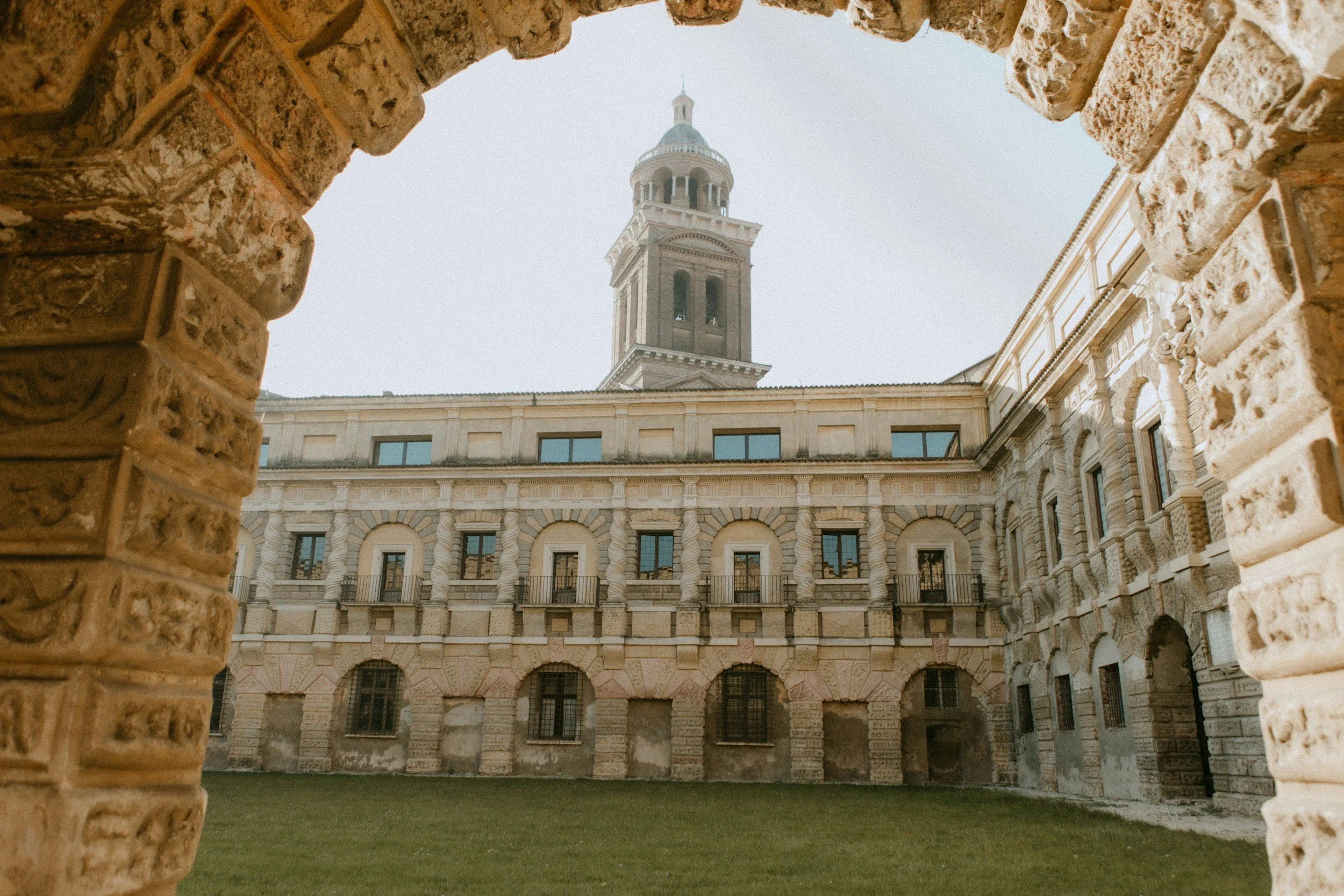
Palazzo Ducale deserves much more time than most people seem to allow for it. Looking at a map, it's easy to think of it as one palace, but once you're inside it unfolds into courtyards, galleries, gardens, grand staircases and room after room linked together across what was once the Gonzaga family's residence. I wouldn't leave it until late afternoon unless you're happy to move fairly quickly. Two or three hours disappear surprisingly easily here, especially if you spend time in the Camera degli Sposi rather than simply walking through.
Then there's Palazzo Te, which feels almost like a separate outing even though it's only around fifteen minutes on foot from the centre. Looking at Google Maps, the walk doesn't seem like much, but once you've crossed out of the medieval streets and into the wider roads leading towards the palace, it feels as though you've left one part of Mantua behind and are arriving somewhere completely different. I actually liked doing it later in the afternoon. Walking back towards Piazza Mantegna afterwards, with the city slowly getting busier again before aperitivo, felt much nicer than trying to squeeze it in between other sights.
That part of Mantua also has a habit of making you slow down without really meaning to. Casa del Mantegna sits only a few minutes from Palazzo Te and is worth stepping into if there's an exhibition on, not because it's another major sight but because it quietly reminds you that Mantua's Renaissance story extends well beyond the medieval centre. Walking back afterwards along Viale Te and through Porta Pusterla, you'll notice how quickly the streets narrow again until you're back beneath the arcades around Piazza Mantegna as though you'd never left.
One place I nearly missed altogether was the Loggia delle Pescherie, Giulio Romano's Renaissance fish market tucked just behind Piazza delle Erbe. It only takes a couple of minutes to wander through, but it's the sort of place that's easy to overlook if you're only moving between Mantua's biggest landmarks. The same goes for Teatro Bibiena. Even if you don't go inside, it's worth walking the extra few streets because that part of the centre feels noticeably quieter than the route most day-trippers follow.
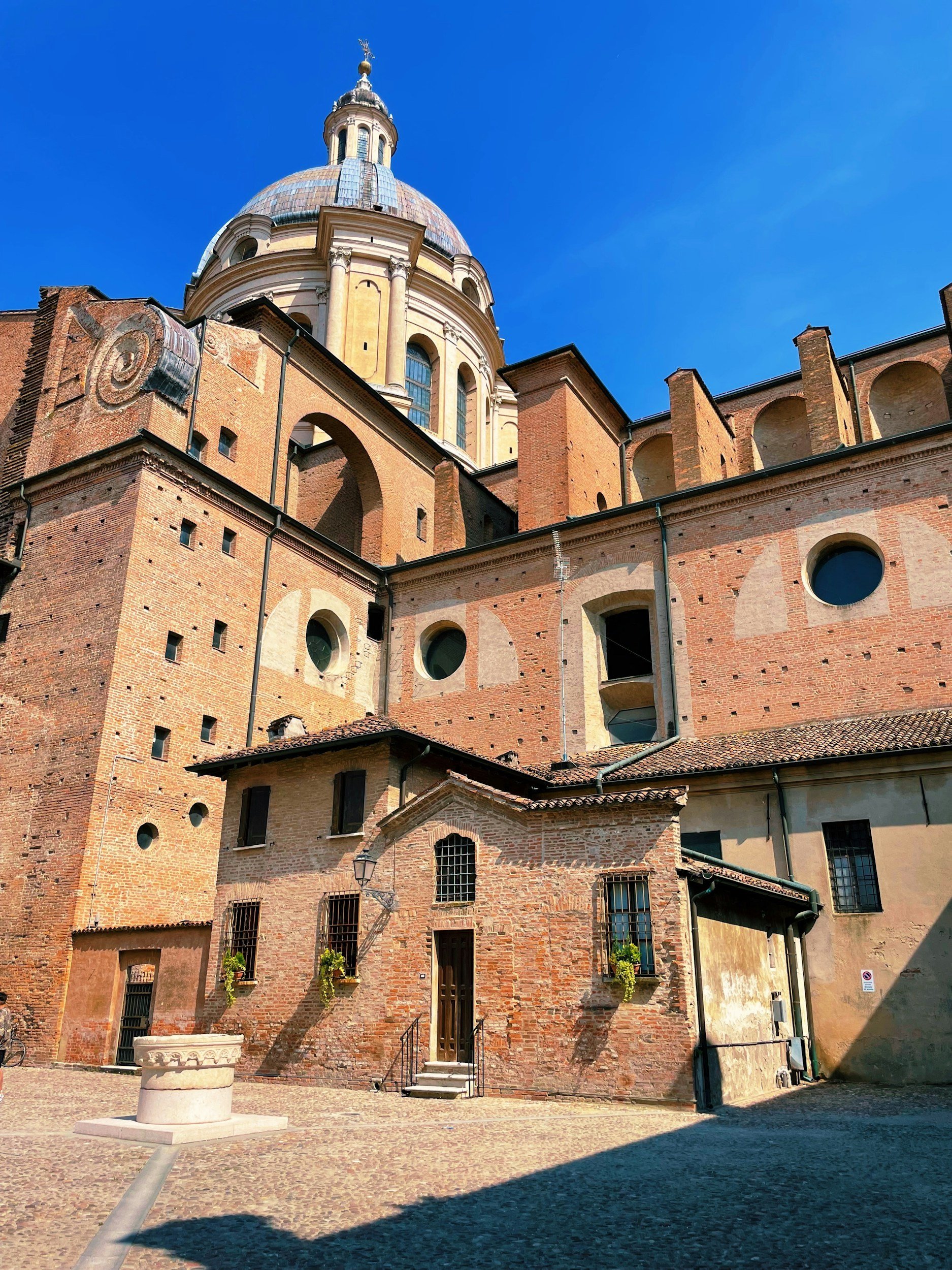
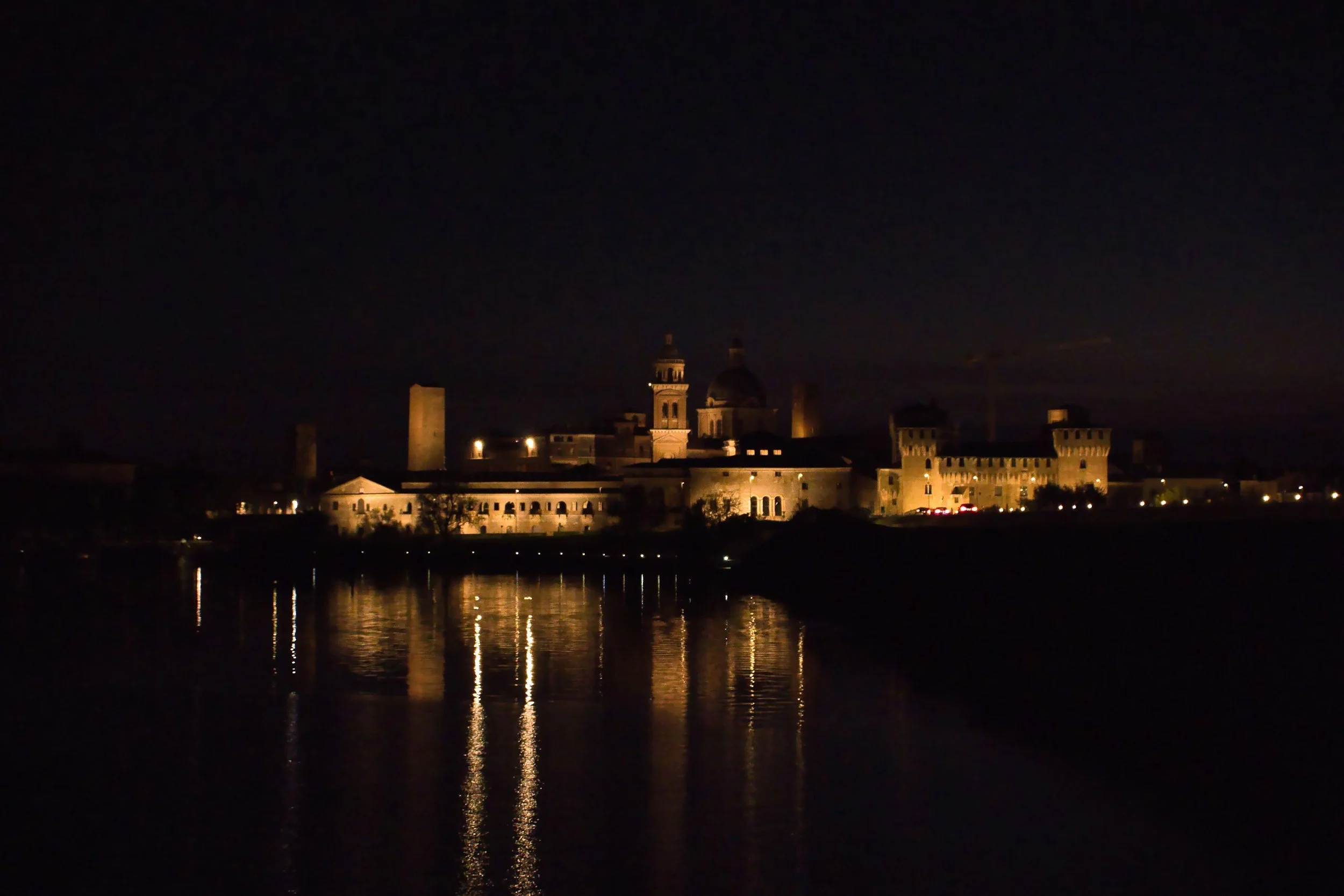
Before heading back for dinner, it's worth crossing Ponte San Giorgio instead of turning around at Castello di San Giorgio like many visitors do. The skyline opens up across Lago di Mezzo and suddenly you understand why Mantua feels different from so many historic Italian cities. You're looking back at domes, towers and palace roofs with water in the foreground rather than another row of buildings, and it's one of the few places where you really appreciate that the city is almost surrounded by lakes.
By the second day, I'd stopped thinking about Mantua in terms of what I still needed to see. I kept finding myself back in Piazza delle Erbe without meaning to, taking little detours because a narrow street looked interesting or a courtyard was standing open, and more than once I realised I'd walked halfway across the centre simply because I'd followed whatever caught my eye next. It wasn't that I'd run out of places to visit - quite the opposite actually. There were still museums I hadn't been inside, streets I'd barely explored and corners of the city I'd promised myself I'd come back to, but somehow none of it felt urgent. Mantua never gave me that feeling that the day was slipping away before I'd seen enough, which is probably the biggest difference I noticed compared with weekends in Florence or Verona.
If you're wondering where else you can find beautiful historic streets without Florence-sized crowds, Ascoli Piceno is well worth a look.
And in case your route takes you towards the coast afterwards, these Ligurian towns are much quieter than you might expect.
One of my favourite ways to understand a region is through what's on the menu, which is exactly why this guide to seasonal Italian food is so useful before you go.
Three cities, three completely different weekends
I think the biggest difference between Mantua, Florence and Verona becomes obvious much earlier than most people expect, because it has very little to do with which city has the grandest buildings or the most famous museums. It's something you notice before you've really done anything at all, usually while you're still deciding where to have your first coffee and whether you actually need to hurry anywhere.
In Florence, I almost always feel as though the day has already been mapped out before I've left the hotel. If I've booked the Uffizi or the Galleria dell'Accademia, there's an obvious order to everything else that follows, and even if I haven't planned every hour, I know there are certain places I'd rather reach before the streets around Piazza del Duomo and Piazza della Signoria become noticeably busier. By the time I've finished breakfast, I've usually looked at Google Maps several times already, worked out roughly where lunch might fit in and accepted that some parts of the city will simply be busy regardless of what time I arrive.
Verona has a habit of gently pulling everyone in the same direction. You arrive in Piazza Bra, wander through the Arena, drift along Via Mazzini towards Piazza delle Erbe, pause outside Juliet's House because you're already there, then somehow end up in Piazza dei Signori before thinking about dinner. By the end of the day you've crossed the same streets more than once, not because you've taken a wrong turn, but because that's simply how the historic centre is laid out. Most routes fold back into the same handful of places, so even an unplanned afternoon ends up following a surprisingly familiar path.
Mantua never seemed to funnel me towards one obvious route. I'd leave Piazza Sordello planning to spend the morning inside Palazzo Ducale, only to end up having a coffee outside Caffè Borsa because there were still plenty of empty tables in Piazza delle Erbe, wander through the Loggia delle Pescherie after spotting it out of the corner of my eye, step inside the Rotonda di San Lorenzo because the door happened to be open, then carry on towards the Basilica di Sant'Andrea without ever really deciding that was where I was going next. By the time I eventually found myself walking through Piazza Virgiliana towards the lakes, the morning had almost disappeared, yet it never felt as though I'd fallen behind or missed anything. Quite the opposite. Mantua seemed to reward those little detours instead of making me feel I ought to be somewhere else, and I think that's what makes a weekend here feel so different from Florence or Verona.
By the afternoon, the differences between the three cities become even more noticeable. In Florence, it's easy to find yourself looking at the time because there's always one more museum, church or neighbourhood that feels worth squeezing in before everything closes. Verona has a similar pull, just in a different way. You leave the Arena thinking you'll have a relaxed walk before dinner, then somehow end up crossing Piazza delle Erbe, peeking into courtyards, following the Adige for a while and deciding you may as well keep going because another landmark is only a few minutes away.
Mantua never seemed to build that kind of momentum. While some people disappeared into Palazzo Ducale for hours and others headed out along Viale Te towards Palazzo Te, just as many settled into a long lunch that drifted well into the afternoon before wandering through Piazza Mantegna or Via Verdi with no obvious plan at all. I remember seeing people browsing the little food shops and delicatessens around the centre, stopping to look in shop windows, carrying paper bags from the bakery rather than cameras, and sitting in the shade long after they'd finished their coffee. It gave the impression that the city wasn't asking everyone to spend the afternoon in the same way, and somehow that made the whole place feel much more relaxed without ever feeling quiet.
It doesn't take long for Mantua to become much quieter once you leave the busiest route between Piazza delle Erbe and Piazza Sordello. A couple of streets is often enough. Around Via Frattini and Via Roberto Ardigò, the souvenir shops thin out, shopkeepers chat from open doorways, little enotecas begin replacing cafés aimed at passing visitors and it starts feeling much more like a neighbourhood than somewhere people are steadily moving through. You can wander for ten or fifteen minutes without seeing many other visitors at all, then turn one corner and find yourself back beneath the arcades with the bells of the Basilica di Sant'Andrea echoing across the square as though you'd never left.
Some of my favourite moments happened because I stopped treating the map as a set route. Walking out towards Palazzo Te, I ended up taking a slight detour through Casa del Mantegna simply because it was there, and it completely changed the feel of the walk. The same thing happened later that evening after crossing Ponte San Giorgio. Most people pause on the bridge for a photograph before turning back towards the old town, but it's worth carrying on a little further along the edge of Lago di Mezzo. The crowds disappear surprisingly quickly, rowing clubs begin replacing restaurants, the skyline opens up and Mantua suddenly looks less like a compact Renaissance city and more like an island of towers and domes rising out of the water. It's one of those views that rarely becomes the main reason for visiting, yet it quietly ends up being one of the things you remember afterwards.
Evenings were probably when I noticed the biggest difference. In Florence, there's often a point where it feels as though everyone has arrived at once. Tables fill quickly around Santo Spirito and Santa Croce, people spill out onto the streets before dinner and, particularly between spring and early autumn, it helps to know where you're eating before you start wandering. Verona settles into its own evening rhythm too, especially on opera nights when the Arena empties and Piazza Bra suddenly becomes the place everyone seems to be heading.
Mantua never really gathered like that. I'd walk through Piazza delle Erbe and find people enjoying aperitivo, cut across to Piazza Sordello where a few restaurant terraces were just beginning to fill, then turn down a quieter side street and come across another handful of tables where dinner was only just getting started. Osteria dell'Oca, Alla Buca della Gabbia and Osteria Piazza Sordello 26 all felt less like restaurants people travelled across the city to tick off and more like places woven into everyday life, where locals drifted in throughout the evening and nobody seemed particularly interested in rushing the table. It gave the impression that the city wasn't revolving around one busy square or one headline restaurant. Instead, the evening quietly spread itself across the centre, which somehow made it feel easier to settle into rather than simply pass through.
It's almost impossible to leave this part of Italy without thinking about food, so these Emilia-Romagna towns make a very tempting next stop.
By the end of the weekend, I realised I'd spent surprisingly little time thinking about what I hadn't seen. In Florence, there's usually another museum I'd hoped to fit in or another neighbourhood I never quite reached, while Verona always seems to tempt me into one last walk before heading back to the station because everything feels so close together. Mantua didn't leave me with either of those thoughts.
Instead, the weekend seemed to fill itself in different ways. A quick stop turned into half an hour because somebody was opening up a tiny workshop, walking back to the apartment took longer because I kept changing streets, and dinner gradually became the only thing I'd planned all afternoon. Even on Sunday, when plenty of Italian cities begin winding down after lunch, I never had the feeling that the day was getting away from me or that I needed to make the most of the last few hours before leaving.
I think that's why Mantua feels so different from Florence and Verona. It isn't because there's less to do. If anything, I left with plenty of reasons to come back. The difference is that I never felt I was leaving before I'd had enough time to enjoy the city I'd already been in.
Do the lakes around Mantua leave you wanting more? Lake Orta offers a completely different kind of weekend.
In case Mantua has you looking for more places like this, these small towns by train are some of my favourite next stops.
The things you probably won't expect until you're actually there
Before visiting Mantua, I assumed I had a fairly good idea of what the weekend would look like. I'd spend a morning exploring the historic centre, visit Palazzo Ducale, walk out to Palazzo Te after lunch and probably have enough time left to sit beside the lakes before dinner.
Almost none of it happened like that!
The biggest surprise was Palazzo Ducale. Looking at it on a map, it's easy to think of it as one more Renaissance palace, but it feels much more like a small neighbourhood than a single building. One courtyard leads to another, long galleries suddenly open into grand reception rooms, staircases seem to appear where you weren't expecting them and, just when you think you're nearly finished, you realise you've only explored another section of what was once the Gonzaga family's residence. If you've only allowed an hour, there's a good chance you'll end up rushing through one of the most impressive parts of the city.
Palazzo Te surprised me for almost the opposite reason. On paper it's only around a twenty-minute walk from Piazza Sordello, yet it feels much further away because the route takes you beyond the medieval streets and into a quieter part of Mantua where the city suddenly feels much more residential. By the time you reach Palazzo Te, it doesn't feel like another stop between attractions. It feels like you've arrived somewhere entirely different, and somehow that makes the walk back just as enjoyable as the visit itself.
The lakes also become much more than a backdrop once you've spent a night here. On a map they're simply the blue spaces surrounding the city, but after a day or two you begin using them to orient yourself just as much as the piazzas. The walk along Lungolago Gonzaga before dinner feels completely different from crossing Ponte San Giorgio in the early morning, when the water is usually much calmer and the skyline of Castello di San Giorgio, the dome of Sant'Andrea and the bell towers beyond seem to rise almost directly out of Lago di Mezzo. If you're happy to keep walking for another ten minutes beyond the bridge instead of immediately turning back, the view only gets better and the number of people around you drops away surprisingly quickly.
Another thing that caught me off guard was how comfortable the centre feels during the hottest part of the day. Streets like Via Broletto and the arcades around Piazza delle Erbe offer far more shade than you might expect, which means you're not constantly looking for somewhere to escape the sun in the same way you often are in other Italian cities during July or August. I found myself wandering for much longer than I'd planned, simply because walking between places never became uncomfortable enough to send me indoors.
One of the nicest things about Mantua is how quickly the centre changes once you drift away from the busiest streets. It only takes a couple of turns beyond Piazza Sordello before the souvenir shops begin giving way to independent businesses, and I spent far longer than I'd expected wandering in and out of places like Libreria Di Pellegrini, where the shelves are filled with books on Mantua's history, architecture and art rather than the usual travel souvenirs. Teatro Bibiena was another place I almost walked past before deciding to step inside, and what I thought would be a quick look turned into much longer because it's the sort of building that's difficult to appreciate from the outside alone.
After that, I stopped paying much attention to where I was heading. Via Frattini, Via Cavour and the smaller streets linking them back towards Piazza delle Erbe never felt particularly busy, even in the middle of the day. A bicycle leaning against an old façade, somebody carrying fresh bread home, an artisan workshop with its door propped open or a tiny gallery that wasn't there on my map often became enough reason to change direction for a few minutes. Those little detours rarely led to Mantua's biggest landmarks, but they made the city feel much more like somewhere people still happened to live rather than somewhere visitors simply moved through.
I ended up approaching dinner in Mantua very differently from Florence or Verona. In those cities I'd often decide where I wanted to eat first and then make my way there, but here I'd usually just start walking and see where I ended up. A stop outside Pasticceria Atena to look at the cakes turned into a slow wander through the neighbouring streets, I ducked into a little food shop after spotting fresh tortelli di zucca in the window, and before long I was much closer to Osteria dell'Oca than I'd expected. Another evening the same thing happened with Trattoria Due Cavallini. I hadn't been heading there at all, but after wandering around the quieter streets behind Piazza Sordello it simply felt like the obvious place to stop.
That's something I really liked about Mantua. You never seem to be more than a street or two away from somewhere that looks worth sitting down, and once you move away from Piazza delle Erbe the atmosphere changes almost without you noticing. The streets become quieter, more locals start appearing than visitors, and it's surprisingly easy to spend an entire evening without feeling that you've missed wherever everybody else has gone.
Most evenings I wasn't ready to head back after dinner either. I'd usually keep walking for another twenty minutes or so, sometimes towards Lungolago Gonzaga, sometimes in the opposite direction if another street caught my eye. The closer I got to the water, the quieter everything became. You could still hear people chatting outside the restaurants behind you, but the lakeside felt like a different city altogether, with the lights from Mantua reflecting across the water and only the occasional cyclist or couple wandering past. Looking back, those walks are every bit as memorable as the meals themselves.
By the second day, Palazzo Ducale had almost slipped into the background. I'd spent an entire morning wandering through its courtyards, galleries and frescoed rooms, crossed Piazza Sordello afterwards without really thinking about where I was going next and somehow ended up beside Lago Inferiore later that evening. It struck me afterwards that Mantua's best-known landmarks had quietly become part of the weekend rather than the reason for it.
The moments that kept interrupting the day were much smaller. I'd stop outside a delicatessen because fresh tortelli di zucca had just appeared in the window, wander into an old stationery shop without intending to buy anything, slow down to watch someone unlocking the shutters of a tiny workshop or take a different street simply because it looked quieter than the one I'd planned to follow. Around Piazza Mantegna and the lanes behind Piazza Sordello, those little detours seemed to happen constantly. By Sunday afternoon, I realised they were the parts of Mantua I was thinking about most, not because they'd been planned, but because they'd gradually become part of the weekend without me really noticing.
Still weighing up whether to base yourself in Florence or somewhere quieter? These places to stay make the decision much easier.
Once you've discovered places like Mantua, it's hard not to keep looking. These wine villages are a good place to start.
The things that caught me out before I even arrived
One of the reasons I think Mantua gets underestimated is that it looks incredibly straightforward when you're planning the trip. The historic centre seems very small on Google Maps, the train connections look simple enough and most guides make it sound as though everything is concentrated around a handful of squares. It isn't until you're actually putting a weekend together that you realise Mantua works slightly differently from many of Italy's better-known cities.
For example, I wouldn't build the whole itinerary around opening hours you've copied from another website. Palazzo Ducale, Palazzo Te, Teatro Bibiena and the city's smaller museums don't all follow the same timetable, and some change their hours depending on the season or the day of the week. Palazzo Te is a good example, opening later on Tuesday than many visitors expect, which can completely change how you organise the day if you arrive the evening before. It's one of those small details that doesn't matter until suddenly it does.
Accommodation is another decision that's worth thinking about a little more than people often do. Staying somewhere just inside the historic centre, around Piazza Sordello, Piazza delle Erbe or Via Accademia, means almost everything is within walking distance once you've arrived, and you'll probably only think about transport again when it's time to catch your train home. Stay further out near the station and you'll save a little money, but you'll find yourself making that fifteen-minute walk over the same cobbles several times a day instead of simply stepping outside into the middle of the old town.
Saturday and Sunday don't feel remotely the same here either. Saturday morning is when the centre feels most like a working city rather than a visitor destination, particularly around Piazza delle Erbe where market stalls have traded for centuries and local food shops, bakeries and cafés are all busy for different reasons. By Sunday afternoon, however, the atmosphere changes completely. Some independent shops pull down their shutters after lunch, the streets around Via Goito and Via Cairoli become much quieter than the day before, and it's often the best time to wander through parts of the centre that felt much livelier twenty-four hours earlier.
If you're driving, the ZTL deserves a little more attention than it usually gets in travel guides. Like many historic Italian cities, Mantua restricts traffic throughout much of the medieval centre, and it's surprisingly easy to follow your sat nav straight towards a camera if you haven't checked your route beforehand. I'd much rather park outside the walls and walk in than spend the weekend worrying about whether I'd accidentally driven somewhere I shouldn't.
Something else I completely overlooked was shopping. If you're staying in an apartment and planning to cook breakfast or pick up a picnic for the lakes, don't assume you'll stumble across a large supermarket beside Piazza Sordello. Most of the bigger supermarkets sit outside the medieval core, so it's worth doing your grocery shopping before heading into the centre for the evening. What you will find once you're inside the old town are specialist food shops, delicatessens and bakeries selling Mantuan favourites like sbrisolona and torta delle rose, which makes wandering for breakfast far more enjoyable than buying everything in one go.
Summer also deserves a little more thought than many people give it. The lakes surrounding Mantua create beautiful views, but they don't turn the city into a cool retreat. July and August afternoons are often hot enough that it's worth saving more exposed walks, such as the route beyond Porta Pusterla towards Palazzo Te or the paths around Lago Inferiore, for later in the day, while using the arcaded streets around Via Broletto, Piazza Broletto and Piazza delle Erbe whenever the sun is at its strongest.
One thing I wish somebody had told me beforehand is not to plan every meal too carefully. Mantua isn't Florence, where you often need to book weeks ahead for well-known restaurants, but the city's best traditional tables still fill up on Friday and Saturday evenings because they're popular with locals as well as visitors. Booking dinner at places like Osteria dell'Oca, Alla Buca della Gabbia or Trattoria Due Cavallini is sensible if you're visiting for the weekend, but I'd leave the rest of the day deliberately loose. Mantua has a habit of making you change your plans, and more often than not those unexpected changes end up being the part of the weekend you remember most.
If this kind of weekend feels much more like your style, you'll probably enjoy travelling Italy by train even more than you expected.
One of the nicest things about Mantua is that you never really need the car
I think this is one of the reasons Mantua suited me so well. Once I'd arrived, I hardly thought about transport again.
That's surprisingly rare, even in Italy!
There are lots of beautiful towns that look easy without a car until you actually get there and realise the station is on the edge of town, the bus only runs every hour, or you've spent half the afternoon checking whether you've missed the last connection. Mantua never became that kind of place.
The train journeys are straightforward from Verona, Bologna and Milan, so if you're already travelling around northern Italy by rail, it fits into the trip much more naturally than people often expect. I actually think that's one of the reasons the city stays a little quieter. It isn't sitting directly on the route most visitors take between Venice, Florence and Rome, so people tend to come because they've chosen Mantua rather than because they've simply ended up there.
I also wouldn't worry too much if you're arriving by train with luggage. The walk into the historic centre is perfectly manageable, although the last few minutes become noticeably slower once the smooth pavement gives way to the old cobbles around Via Roma and Corso Umberto I. By the second day I barely noticed them, but pulling a suitcase across them after a long journey is another story. If you've packed heavily or you've arrived in the middle of a July afternoon, I'd happily spend the few euros on a taxi instead of wrestling with wheels that clearly weren't designed for sixteenth-century streets.
Where you stay makes much more difference than I expected. Somewhere around Piazza Sordello, Via Accademia or the little streets between Piazza delle Erbe and Piazza Mantegna means you naturally drift back to your room during the day without really thinking about it. That turned out to be surprisingly useful, especially when I wanted to drop off shopping, change shoes before dinner or simply escape the heat for half an hour. Staying closer to the station saves a little money, but it also means those extra twenty minutes of walking quietly add up over a long weekend.
One thing I'd definitely do if I went back is hire a bicycle for an afternoon. The paths around Lago Superiore and Lago Inferiore are almost completely flat, and once you leave the bridges behind, the city suddenly looks completely different. Instead of church towers and piazzas, you're looking back across the water towards the skyline, rowing clubs drift past, reeds line the edge of the lakes and you begin to understand why Mantua has always felt slightly separate from the rest of Lombardy. Most visitors never see that side of the city because they don't leave the old centre.
If you've got another day or two, Mantua is one of those places that's easy to build a trip around rather than simply squeeze into one. Regional trains make Verona an obvious addition if you want a day of busier streets before coming back to somewhere quieter in the evening, while Sabbioneta takes a little more planning because you'll need the bus instead. It's an easy mistake to assume there's a train between the two, and the buses don't run often enough to leave until you've finished breakfast and decide on the day. Check the timetable the evening before and the whole trip becomes much easier. Sabbioneta is well worth the effort though. It's another UNESCO World Heritage Site, built by the Gonzaga family as an ideal Renaissance city, and it feels completely different from Mantua despite their shared history.
What I liked most was how little time I spent thinking about logistics once I was there. Friday afternoon was really the only time I looked at train times or worked out how to get somewhere. After that, the days seemed to organise themselves. Some mornings naturally drifted towards Piazza Sordello and Palazzo Ducale, another afternoon ended up by the lakes instead, and dinner usually happened wherever I happened to be when I realised it was getting late. By the time I caught the train home, it felt less like I'd been trying to fit Mantua into a weekend and more like the city had quietly set its own pace.
Once you've realised how easy Italy can be without a car, these countryside stays are well worth bookmarking.
If you're torn between Mantua and somewhere on the Ligurian coast, this Levanto guide makes the choice a lot easier.
The city you enjoy most might not be the one you expected
I don't think this really comes down to choosing between Mantua, Florence or Verona. By the time you've read this far, you've probably already got a feeling for which one sounds most like the weekend you're hoping to have, and it's interesting how little that usually has to do with the number of museums, churches or famous buildings each city happens to have.
Florence always leaves me feeling as though there's another half day I never quite found. You head out intending to spend the morning around San Lorenzo, but then somebody suggests walking across the Arno to Santo Spirito for lunch, you realise the Uffizi Gallery still has evening tickets, there's a queue outside the Basilica of Santa Croce that's finally started moving, and before long you're trying to work out whether you still have time to climb to Piazzale Michelangelo before sunset. Even after several visits, I usually leave Florence with a list of places I never quite got around to. That's one of the reasons people keep going back, but it also gives the city a very different rhythm from Mantua.
Verona always seems to pull me back towards the same places, even when I think I'm heading somewhere completely different. I'll wander away from the Arena, follow a quieter street for a while, then somehow end up back near Piazza delle Erbe without really meaning to. A quick look along Via Mazzini turns into another walk through the centre, somebody is playing music outside the Arena, the cafés are busier than they were an hour ago and, if it's opera season, you can almost tell what time it is by watching people begin drifting back towards Piazza Bra before the performance starts or spilling back into the restaurants once it's finished. It's one of the things I like about Verona, but after a day or two it feels as though the city gently keeps bringing everyone back together again, no matter where they started.
By the second day, I'd stopped thinking about what I still needed to see. Instead, I was noticing the sort of things I probably would have walked straight past if I'd only been in Mantua for an afternoon. A florist was arranging buckets of fresh flowers beneath the arcades while the market stalls were still setting up, the delicatessens along Via Giustiziati had wheels of Parmigiano-Reggiano stacked beside jars of mostarda Mantovana in the window, and people drifted into Enoteca Peppo for a glass of Lambrusco Mantovano as though they'd been doing exactly the same thing every Friday evening for years. I wandered down Via Bertani simply because it looked quieter than the street I'd been following, passed old doorways that were standing open to shaded courtyards and realised I hadn't looked at my map for quite a while. None of it had anything to do with ticking off another landmark, but by then that hardly seemed to matter anymore.
Visiting in summer? These market towns are at their liveliest when the stalls spill out into the squares.
One afternoon I ducked into a little food shop intending to buy a piece of sbrisolona for the train home and walked out with a bag full of things I hadn't planned on after chatting to the owner about the local cakes people still make at home. Another evening, instead of ordering dessert, I carried a gelato down towards Piazza Virgiliana and ended up sitting there for far longer than I'd expected while families wandered along the edge of the lake and cyclists drifted past on their way home. Neither of those moments had been part of the plan when I'd arrived in Mantua on Friday, but by Sunday they somehow felt just as much a part of the city as Palazzo Ducale or Piazza Sordello.
Florence will always have extraordinary museums and churches, Verona will always have the Arena and one of Italy's most recognisable historic centres, but Mantua never felt as though it needed another headline attraction. The weekend was already full without constantly looking for the next thing to do.
Florence, Verona and Mantua all give you very different weekends, and I don't really think one is better than the others.
Florence is the city where I usually leave wishing I'd had another day. There's always another gallery I'd meant to visit, another street I'd wanted to explore or another view I never quite made it to before the train home. Verona has its own pull as well, especially once the Arena empties and the restaurants around Piazza Bra begin filling for the evening.
Mantua never left me with that feeling. By Sunday afternoon, I wasn't thinking about what I'd missed or trying to squeeze in one last sight before leaving. I was buying something for the train from a neighbourhood bakery, taking the longer walk back because it happened to pass the lakes and stopping for one last coffee simply because there was an empty table outside. It was a weekend that seemed to organise itself without much help from me, and I think that's what I'll remember long after I've forgotten exactly which room in Palazzo Ducale I liked best.
Fancy ending the trip by the sea instead? The Cilento Coast couldn't feel more different.
FAQs about visiting Mantua
Is Mantua worth visiting if I've already been to Florence and Verona?
I actually think that's when Mantua makes the most sense. Florence and Verona are wonderful first introductions to northern Italy, but they also come with a fairly obvious rhythm. You know where most people will spend the morning, which museums everyone wants to visit and which squares become busiest once the day gets going. Mantua feels different because it doesn't rely on a handful of headline attractions to carry the weekend. Instead, you find yourself spending time in places you probably wouldn't have noticed if you were only passing through, whether that's browsing the independent shops around Via Accademia, lingering over lunch a little longer than planned or discovering that the walk beside the lakes becomes just as memorable as the palaces themselves. If you've already seen Italy's biggest Renaissance cities, Mantua often feels refreshingly different rather than simply smaller.
Is Mantua or Verona better for a weekend?
It really depends on what you want the weekend to feel like rather than what you want to see. Verona naturally has more energy, particularly around Piazza Bra, Via Mazzini and the Arena, where there's a steady flow of people throughout the day and well into the evening during the opera season. Mantua spreads people out much more naturally. You might spend an hour wandering through the quieter streets behind Piazza Sordello, stop in a neighbourhood bakery because something in the window catches your eye, then realise you've reached dinner without ever looking at the time. If your ideal weekend revolves around lively piazzas and a busier atmosphere, Verona is probably the stronger choice. If you'd rather spend two or three days exploring without feeling as though you're constantly following the crowd, Mantua is likely to suit you better.
Is Mantua a good destination without a car?
Yes, and it's one of the reasons I think it fits so well into a longer trip through northern Italy. Regional trains connect Mantua with Verona, Bologna and Milan, and once you've reached the historic centre you can comfortably explore almost everything on foot. The only time transport really becomes worth thinking about again is if you're arriving with a heavy suitcase, travelling during one of the hottest weeks of summer or planning to venture further beyond the city. Otherwise, it's the sort of place where you quickly stop checking train times and simply settle into the weekend, which isn't something I can say about every beautiful town in northern Italy.
Is one day in Mantua enough?
You can certainly see the main landmarks in a day, but I think you'd leave with a very different impression of the city. One day is enough for Palazzo Ducale, a walk through the historic centre and perhaps Palazzo Te if you keep moving, but the things that make Mantua memorable tend to happen once you've stopped treating it like somewhere to tick off before catching the next train. By the second morning you're buying breakfast from the same bakery instead of searching online for somewhere new, recognising streets that looked unfamiliar the day before and taking small detours simply because you've got time. That's when the city starts to feel much more than a collection of beautiful buildings.
What is Mantua famous for besides Palazzo Ducale?
Most people know Mantua because of Palazzo Ducale and Palazzo Te, but they're only part of the story. The city is surrounded by three lakes, its historic centre is a UNESCO World Heritage Site, and it's closely connected with the Gonzaga family, who transformed it into one of Italy's great Renaissance capitals. It's also known for traditional dishes such as tortelli di zucca, the crumbly almond cake called sbrisolona and its long arcaded streets that make wandering through the centre surprisingly comfortable even during the warmer months. Those are the details that gradually become just as memorable as the famous sights.
When is the best time to visit Mantua?
If I were planning a weekend purely around atmosphere, I'd choose late spring or early autumn. The weather is usually comfortable enough to spend most of the day outside, the café terraces are busy without feeling overcrowded and the lakes become somewhere you naturally wander before dinner rather than simply looking at from a bridge. Summer is still a lovely time to visit, but the afternoons can be much hotter than many people expect, particularly away from the shaded arcades in the historic centre. Winter is much quieter and often brings morning mist over the water, giving the city a completely different character that suits slower weekends surprisingly well.
Can you combine Mantua with Verona on the same trip?
Definitely, and I actually think they complement each other extremely well because they offer such different weekends despite being less than an hour apart by regional train. Spend a couple of days in Verona if you're looking for Roman monuments, elegant shopping streets and lively evenings, then move on to Mantua for a slower finish where long lunches, lakeside walks and unplanned afternoons gradually replace the feeling that you need to fit one more attraction into the day. Visiting both cities also makes it much easier to appreciate how varied northern Italy can be without travelling huge distances.
Who is Mantua really for?
Rather than thinking about the type of traveller, I'd think about the type of weekend you want to have. If you're happiest when every hour is planned around famous museums and major landmarks, Florence will probably leave you more satisfied. If your favourite memories usually come from wandering into a small wine bar because it looked inviting, sitting in a piazza with a book for longer than you intended, chatting to a bakery owner while choosing tomorrow's breakfast or finding yourself on a quiet street simply because you decided not to turn back, Mantua has a way of rewarding that kind of curiosity. It's not trying to compete with Florence or Verona. It simply gives you a different way to spend a weekend, and for many people that's exactly what makes it memorable.