
Thinking about Provence in May? Read this first.
May is one of those months in Southern France where things just work without you having to plan around crowds. You notice it pretty quickly. In towns like Uzès or Saint-Rémy, bakeries like Boulangerie Pâtisserie Pouget or Le Fournil de la Place are already open early, but you don’t feel rushed when you walk in. Around 9:30 there’s still plenty left, and you can take your time choosing instead of just grabbing whatever’s available. Same with cafés. You can sit down on Place aux Herbes or along a quieter street in Saint-Rémy without circling for a table. Markets in places like Lourmarin or Pézenas are busy enough to feel worth going to, but you can actually stop, look properly, and go back to a stall if you want something.
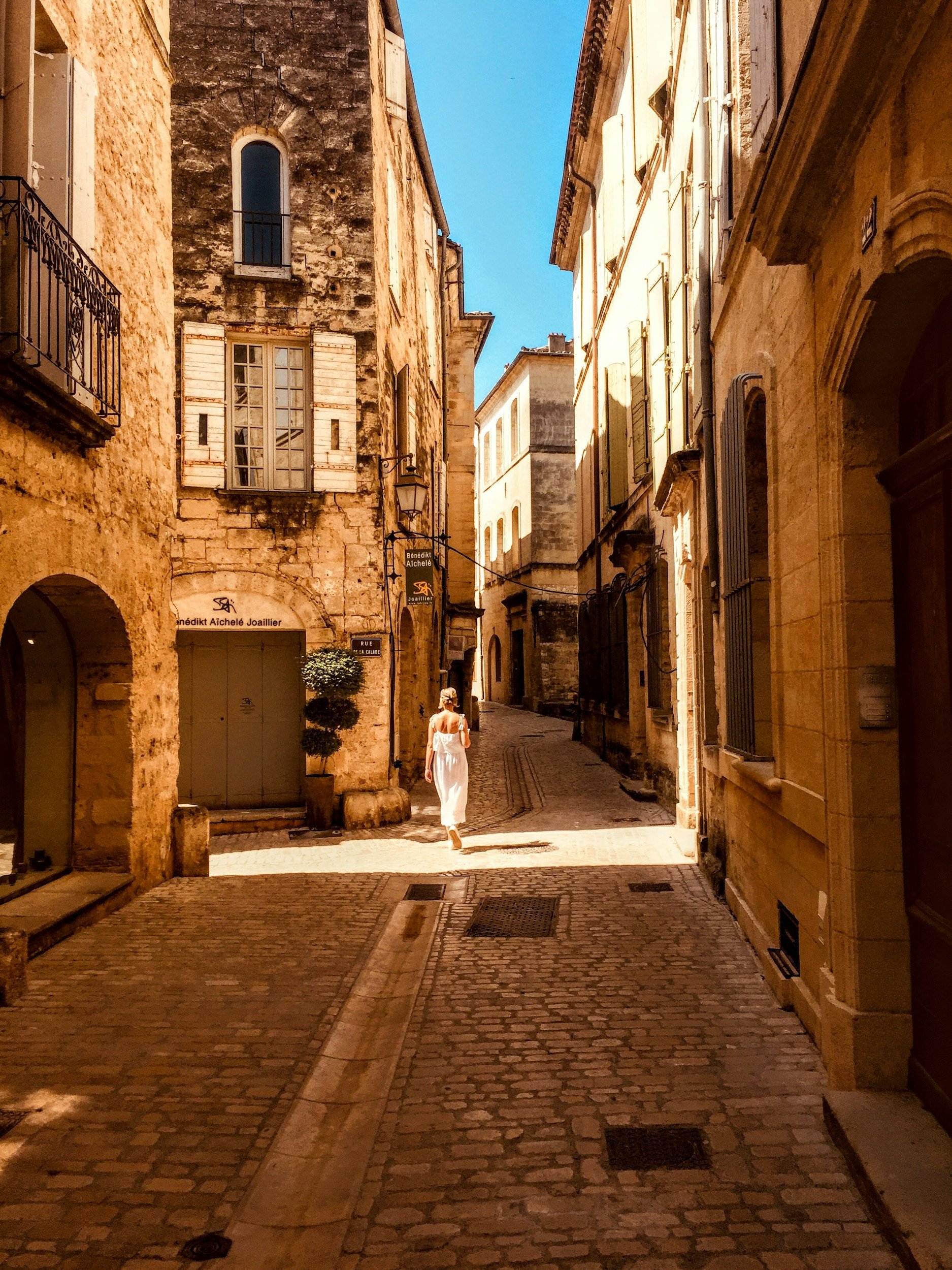
The temperature is also just easy to deal with. Most days sit somewhere between 18 and 25 degrees, so you can walk for a few hours without needing to hide in the shade. In the Luberon, towns like Lourmarin or Bonnieux start to feel warm by late morning, especially in the main squares. Pézenas and Collioure are a bit fresher, especially early in the day and later in the evening. If you’re going out for dinner around 20:00, you’ll probably want a light jacket, especially if you’re sitting outside.
Getting around is the one thing that looks simple but isn’t always. Distances between villages like Gordes, Roussillon, and Lourmarin don’t seem far, but the roads slow you down. You’re driving through smaller villages, taking turns you didn’t expect, and it all adds up. A 40 km drive can easily take close to an hour. Trains are great for getting into the region, especially to places like Nîmes, Avignon, or Béziers, but after that you’ll notice the difference. Reaching towns like Uzès or Cotignac usually means a final stretch by car or taxi, and having your own car makes things much easier once you’re there.
If you’re travelling on your own, this guide to solo travel in southern France walks through where it actually feels easy and comfortable to spend a few days.
Uzès – where to stay for markets, cafés and easy days in May
Uzès is about 25 minutes from Nîmes, but it doesn’t feel like a quick transfer once you’re on the smaller roads. The last part is slower, with vineyards on both sides and hardly any traffic. Most people end up parking just outside the center near Boulevard Gambetta or along Avenue de la Libération. From there, it’s an easy walk in, a few minutes uphill, and you’ll come in through quieter streets before reaching the main square.
If you’re coming by train, Nîmes is the closest stop. A taxi is the simplest option and takes around half an hour. There is a bus, but it doesn’t run that often, so unless the timing works perfectly, it’s easier not to rely on it.
Place aux Herbes is where everything circles back to, but it’s not somewhere you just “see” once. In the morning, around 8:30–9:30, it’s mostly locals picking up bread or stopping for a quick coffee. Boulangerie Pâtisserie Pouget usually has a small line, but it moves quickly. You can still find a table without thinking about it, especially if you sit slightly off the center of the square. Late morning is different. By 11:00, especially towards the weekend, more people arrive and it starts to feel busier, not overwhelming, but enough that you notice it. Then later in the afternoon, around 16:30, it slows down again and people sit longer, usually with a drink rather than coffee.
You won’t stay on the square the whole time. The smaller streets just around it are where you’ll end up walking without really planning to. Rue de la République has more shops and people moving through, but if you turn off onto Rue Saint-Roman or Rue du Docteur Blanchard, it gets quieter almost immediately. It’s the kind of area where you’ll pass someone carrying groceries, or see doors open with people going in and out, rather than just other visitors.
Saturday is the main market day, and it starts earlier than most expect. If you go after 10:30, it’s already busy and you’ll be moving slowly through the streets. Going before 9:30 makes a big difference. That’s when the food stalls are at their best, especially around the square, with cheeses, olives, fruit, and things you’ll actually want to bring back with you. Later on, it’s easier to just walk around and look, especially for clothes, linen, and baskets in the outer parts of the market.
If you stay a few nights, Uzès is easy to settle into without planning much. Pont du Gard is about 15 minutes away, and it’s worth going either early, before 9:00, or later in the afternoon when it’s quieter again. You can walk along the river or just sit by the water without it feeling busy.
Saint-Quentin-la-Poterie is even closer, around 10 minutes by car, and has a slightly slower feel than Uzès. There are working pottery studios, small galleries, and a couple of cafés where people sit for a while rather than just stopping quickly. It works well as a short, unplanned stop rather than something you build your day around.
If Uzès stood out, there’s also a more detailed look at what autumn in Uzès is actually like, especially outside the busier months.
For more places similar to Uzès worth staying in, this piece on hidden villages in southern France is a good place to start.
Lourmarin – a Luberon village that’s easy to spend a few days in
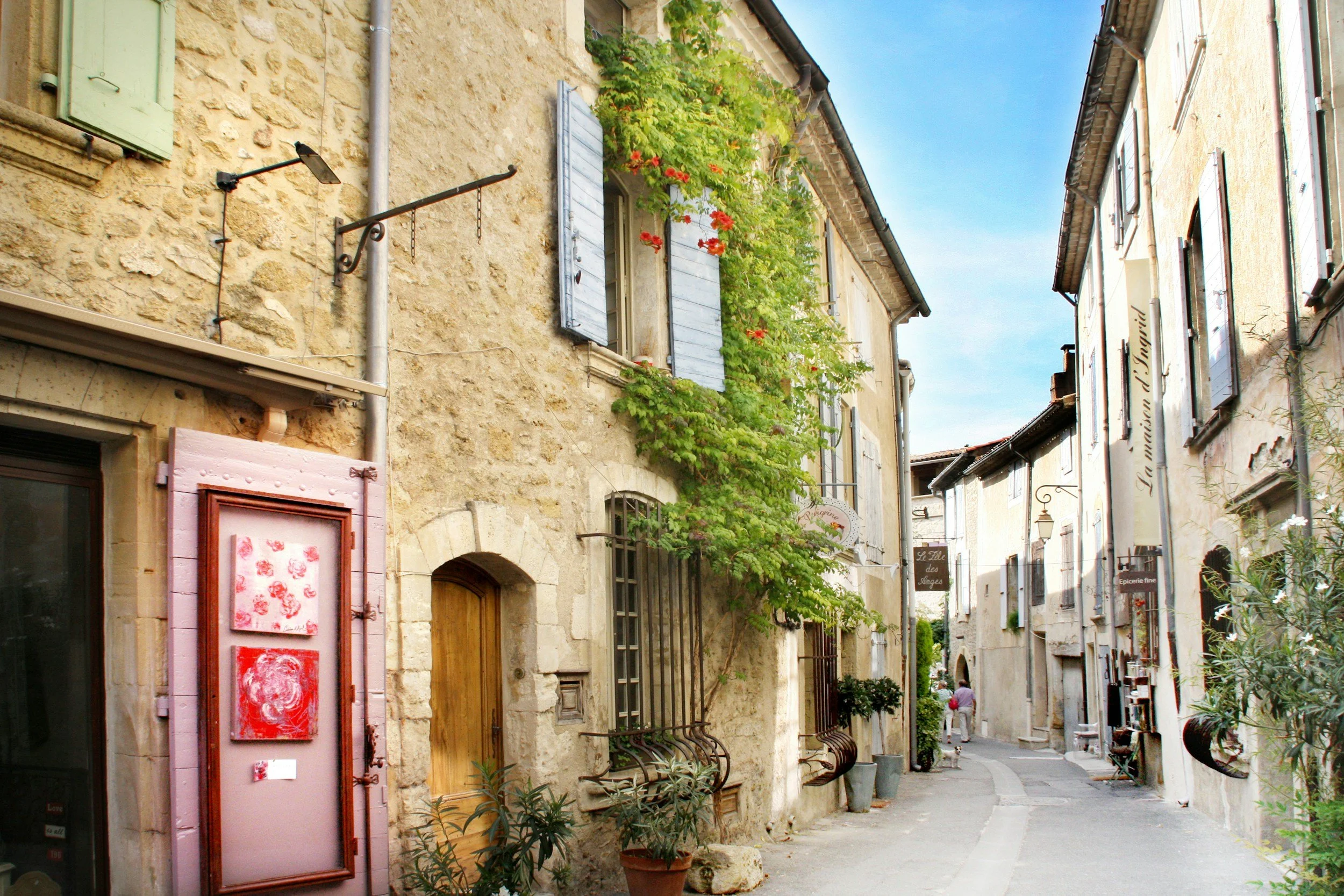
Lourmarin is one of the easier villages to reach in the Luberon, especially from Aix-en-Provence. The drive takes around 35–40 minutes, and you stay on wider roads most of the way before things narrow slightly as you get closer. You’ll usually notice it when cars slow down and people start parking along the road instead of heading into a car park. On Fridays, it fills up early, so it’s often easier to leave the car just outside the center near Avenue Raoul Dautry and walk in rather than trying to get closer.
Most people head straight into the square and stay there, but it works better if you don’t treat it as the only place to be. In the morning, around 8:30–9:30, cafés are just opening, chairs are being set out, and it fills slowly. Café Gaby is usually one of the first places with people sitting outside. If you take a table slightly off the middle of the square, it stays quieter for longer. Boulangerie Volpert is just around the corner, and you’ll see people going in and out with paper bags, often stopping for a minute before continuing through town.
Friday is market day, and it spreads out more than people expect. If you go later in the morning, around 10:30 or after, it’s busy enough that you’ll mostly be moving along with everyone else. Earlier, before 9:30, it feels completely different. You can stop properly, ask about things, and actually choose what you want. The food stalls near the center are best early on, especially for cheese, fruit, and olives. The further out you go, the easier it is to browse later without feeling crowded.
You don’t need to plan anything to get out of the village for a bit. Within five minutes, you’re already past the last houses and on dirt paths or small roads next to vineyards. You’ll see people walking here in the morning with coffee or in the early evening before dinner. It’s not something you set aside time for, more something you end up doing without thinking about it.
Evenings are a bit more social here than in smaller villages nearby. Restaurants open around 19:00, but most people arrive closer to 20:00. Places like La Récréation or Café Gaby fill up steadily, so if you go when they open, you can usually get a table without booking. Sitting outside still works in May, but once the sun goes down, you’ll notice people putting on a jacket.
Compared to Bonnieux or Lacoste, Lourmarin is easier to move around in. The streets are flatter, and you don’t have to think about the walk back every time you leave the center. It makes a difference when you’re going in and out a few times a day instead of staying out for hours.
For a slightly different angle, this guide to castle towns in southern France you can reach by train works well if you’re not planning to drive the whole time.
Pézenas – a small town near Béziers with markets, antiques and slower evenings
Pézenas is about 20 minutes from Béziers, and getting there is simple as long as you plan that last part. If you arrive by train, Béziers is your stop, and from there it’s a short taxi ride. During the day there are usually cars outside the station, but in the evening it’s less certain, so it’s worth booking one ahead instead of waiting around. Once you get to Pézenas, you’ll leave the car just outside the old town and walk in, since most of the center is pedestrian.
The old town is small enough that you don’t really think about directions. You’ll walk in through streets like Rue de la Foire or Rue François Oustrin and just continue from there. It feels a bit more mixed than villages in Provence. You’ll pass small shops, then a workshop, then someone’s front door, all within a few steps. In the morning especially, you’ll see deliveries coming in, doors open, people moving through the same streets you’re walking.
Saturday is market day, and it spreads out more than you expect at first. It runs along Cours Jean Jaurès and into the side streets, with everything from produce to clothing mixed together. Around 9:00 it’s still easy to stop properly at stalls, especially for food. Later, after 10:30, it fills up and you’ll mostly just move along with everyone else, stopping here and there when there’s space.
During the week, it’s the antique and brocante shops that stand out more. Streets like Rue Conti and the area around Place Gambetta have a steady flow of small shops, and many of them are open most days, not just weekends. Around lunchtime, usually between 12:30 and 14:30, a lot of places close, and the town quiets down for a bit before picking up again later in the afternoon.
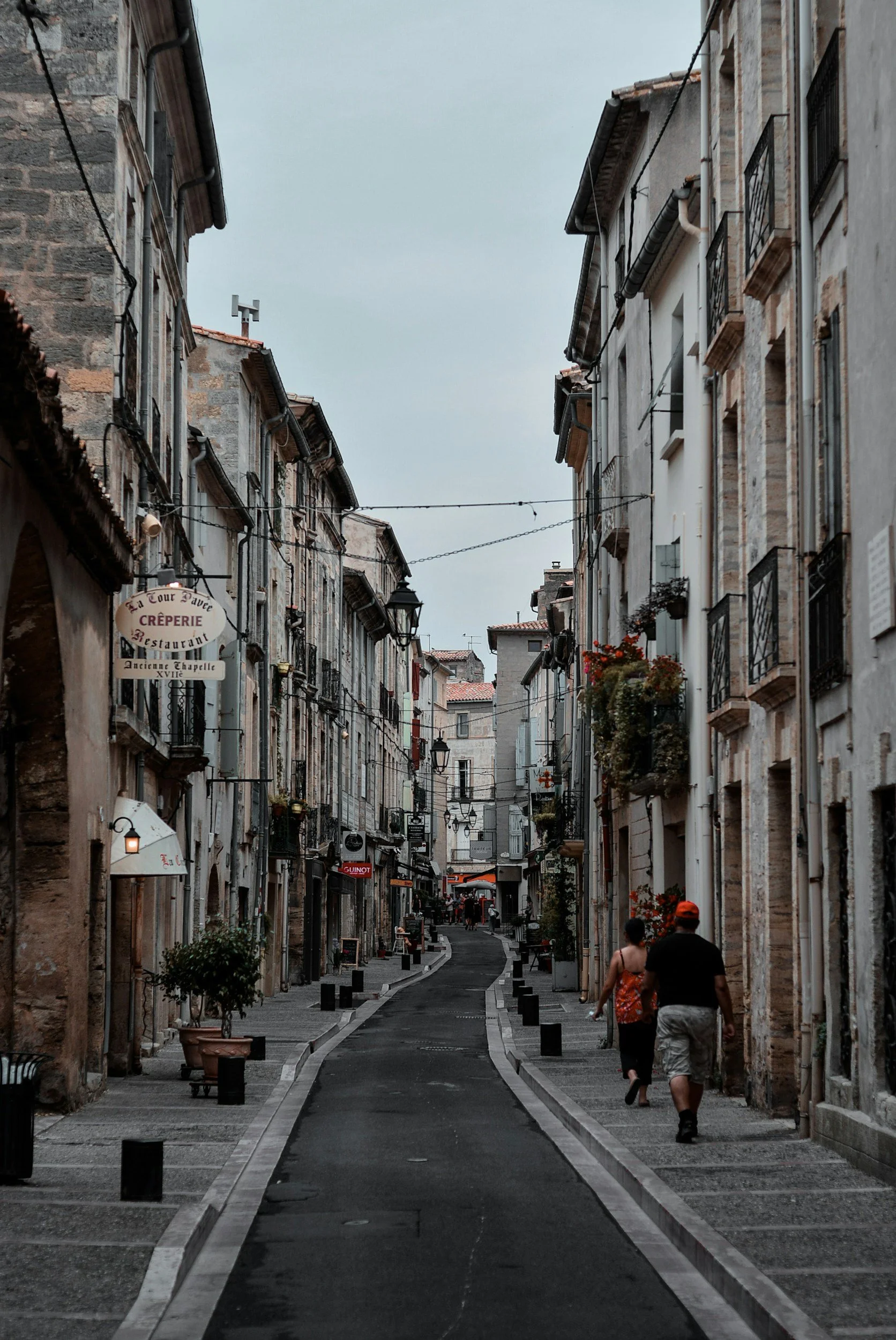
If you’re deciding whether to stay by the coast or not, Pézenas makes that choice easier. You’re about 25–30 minutes from places like Marseillan, Mèze, or the Étang de Thau, so you can go there for a few hours and then come back again. In the evening, Pézenas feels calmer. People sit outside in small squares or along the main streets, and dinner usually starts around 19:30 or a bit later, without the same pace you get closer to the water.
If you’re leaning more towards staying somewhere quiet for a few days, these cottage stays in Drôme Provençale are a good option, especially if you want space and slower mornings.
There’s also a broader guide to slow travel in Drôme Provençale, with markets, villages, and places that are easy to build a few days around.
Cotignac – A Slower Village Near Aix with Markets, Cliffs and Long Lunches
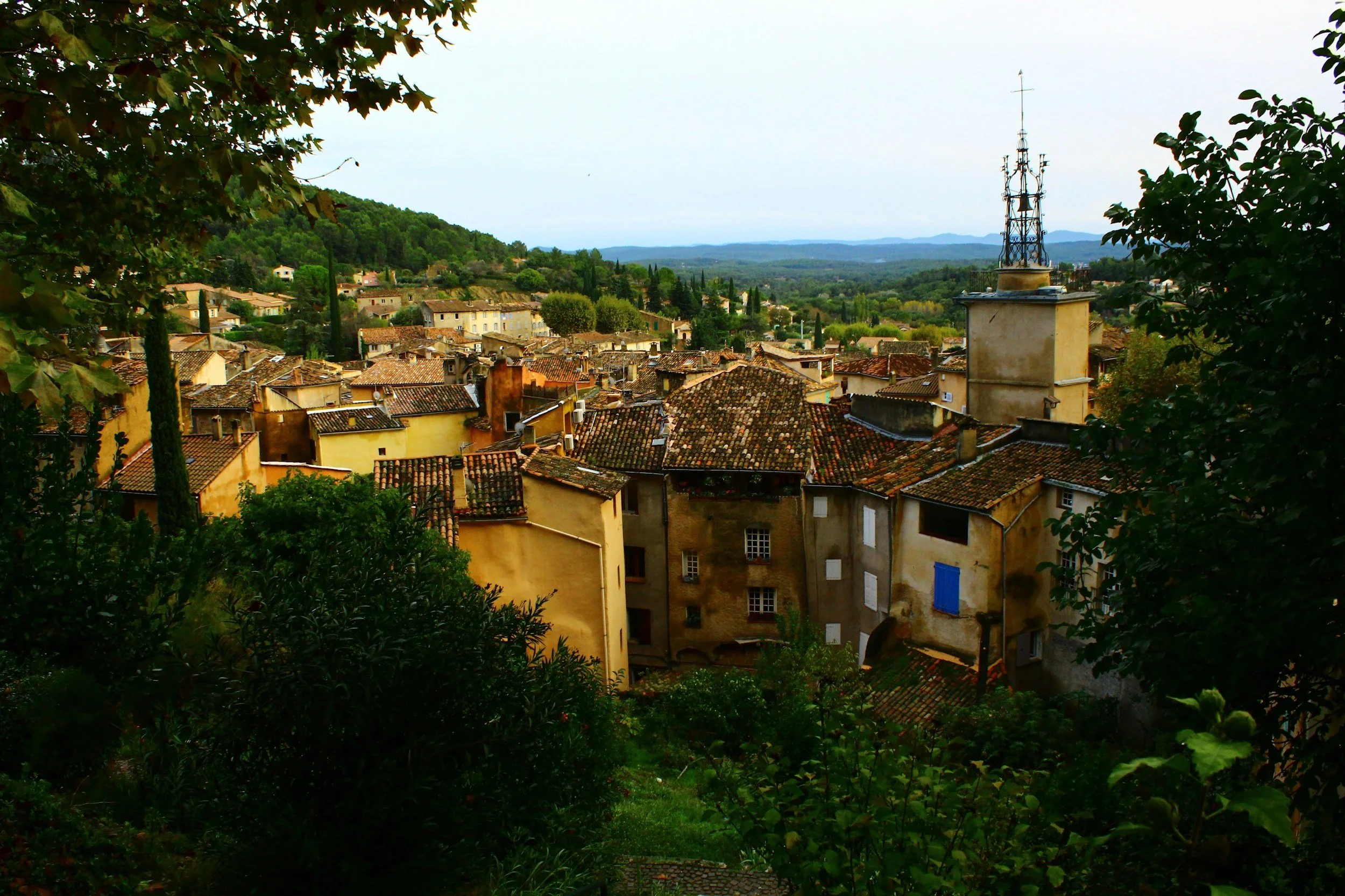
Cotignac sits just under an hour from Aix-en-Provence, and the last part of the drive is where it shifts. The roads narrow, traffic drops off, and you start passing olive groves and low stone walls before arriving just outside the village.
Most people park near Cours Gambetta, which is where you’ll end up spending most of your time anyway. It’s the main street, but it doesn’t feel like one in the usual sense. On one side, there are cafés and restaurants with tables spilling out. On the other, the cliff rises straight up, with small openings and old stone details built into it.
You don’t really “explore” Cotignac in a structured way. You walk up Cours Gambetta, sit down somewhere, get up again, and then end up back on the same stretch later without planning to.
In the morning, places like Café de la Promenade and Les 3 Marches start to fill slowly, not all at once. Before 9:30, it’s mostly locals picking up bread or sitting with coffee. By 10:30, more tables are taken, but people stay longer. It’s not the kind of place where you feel like you need to leave after finishing your coffee.
Tuesday is market day, and it runs along Cours Gambetta and into the small side streets just behind it. If you arrive around 9:00, you can actually stop and look properly - especially at the produce stalls and cheese stands. Closer to midday, it’s harder to move around, and a lot of the best things are already gone.
If markets are part of why you’re going to France… these quiet Provence market towns is worth a read!
For a broader feel of places that are lived in year-round, this guide to countryside France beyond seasonal travel is a good one to end on.
Saint-Rémy-de-Provence – From Boulevard Victor Hugo to Glanum
Saint-Rémy is one of the more well-known towns in Provence, but it really depends on where you base yourself. If you stay right in the center, around Boulevard Victor Hugo or near Place de la République, you’ll notice the vibe is more driven by day visitors, especially from mid-morning onwards.
Stay just a few minutes out instead (towards Route des Baux or closer to the countryside edge) and it feels completely different. Mornings are quieter, and you’re not stepping straight into the busiest part of town the moment you leave your door.
The Wednesday market is one of the biggest in the area, and timing matters more than people expect. Around 8:30–9:00, you can still walk through properly, stop at stalls, and actually look at things. By 10:30, it’s noticeably busier, and between 11:00 and 12:30, you’re mostly moving with the flow rather than choosing where to go. After 13:00, traders start packing up, and the streets open up again.
If you walk out of the center towards Glanum, it’s an easy shift from town to countryside without needing to plan anything. You pass the Saint-Paul de Mausole monastery (where Van Gogh stayed), and from there, you can continue along simple paths that lead into open landscape. It’s the kind of walk people do in the late afternoon when the heat drops a bit, rather than something you set aside a whole day for.
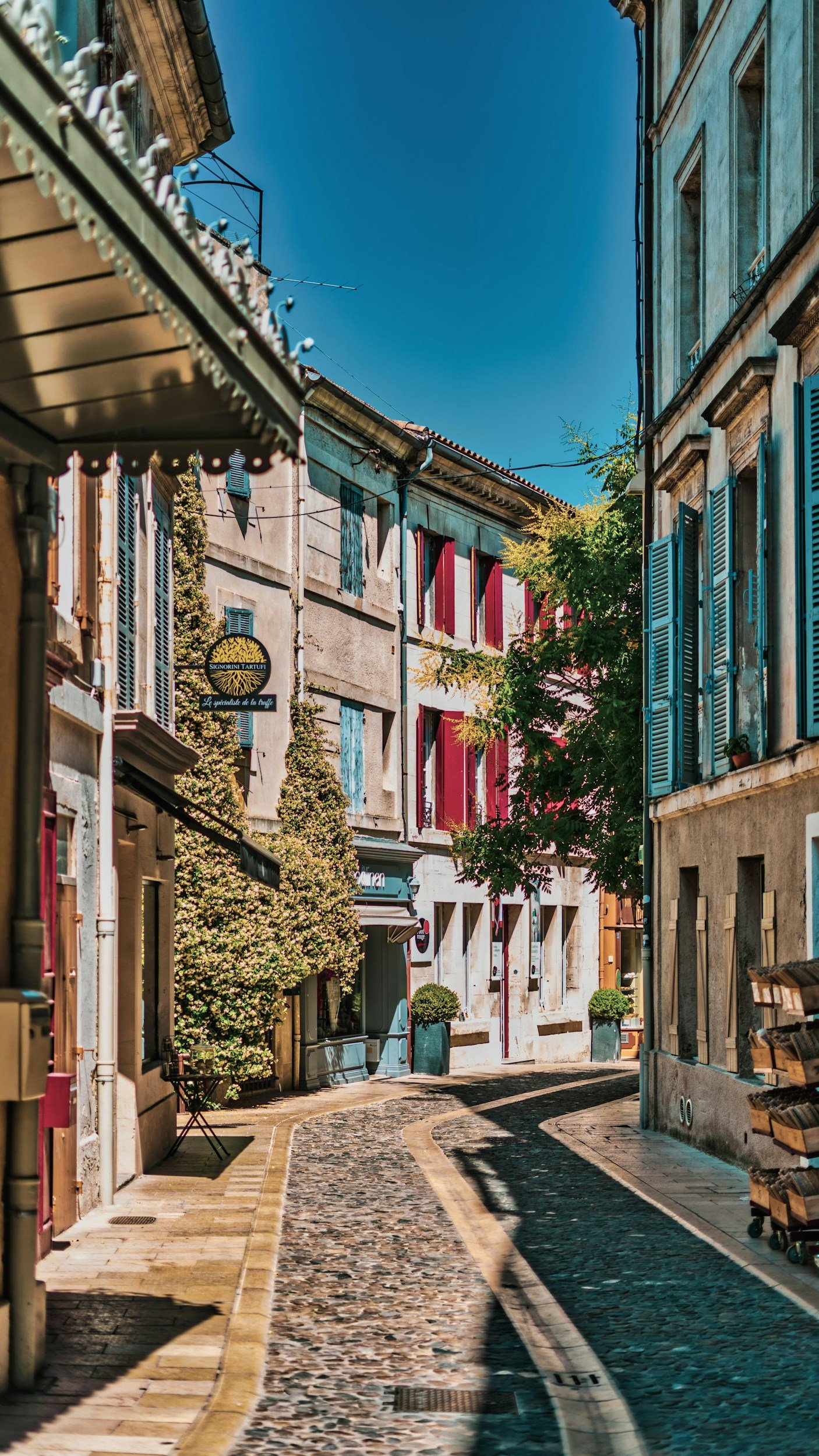
Cafés change a lot depending on where you sit. In the center, places like Café de la Place fill quickly, especially late morning. A few streets away, or just outside the main loop, you’ll find quieter terraces where people stay longer and it doesn’t feel like tables are constantly turning over.
Saint-Rémy works well as a base if you want to explore nearby villages like Eygalières or head up to Les Baux-de-Provence, but distances can be a bit misleading. Even short drives take longer than expected once you’re on smaller roads, especially in high season, so it’s worth planning your days a bit loosely rather than trying to fit in too much.
For quieter alternatives outside Provence, these Loire Valley towns for a slower trip have a similar feel but a different landscape.
Collioure in Early May – Mornings by Quai de l’Amirauté Before the harbour fills up
Collioure is about 30 minutes from Perpignan by train, and the last part of the ride runs right along the coast. When you arrive at Collioure station, it’s a 10-minute walk downhill into town. You’ll pass a small roundabout, a few local shops, and then suddenly the view opens up towards the harbor near Église Notre-Dame-des-Anges.
In early May, especially during the first couple of weeks, mornings still feel slow. Around 8:30, you’ll see shutters opening, bakery doors propped open, and a few people already walking back with bread. If you head towards Quai de l’Amirauté, the water is usually still, and there are only a handful of people out… some setting up café tables, others just walking along the edge.
Places like Le Café Sola or the smaller terraces near the church start filling gradually, not all at once. If you sit down before 10:00, you don’t feel like you need to order quickly or give up your table. People stay longer, sometimes just with coffee, sometimes adding something small, and the pace stays slow for a while.
Most visitors stay right around the harbor, especially between the church and Plage de Boramar, where the beach meets the row of restaurants. That area gets busier first. But if you turn off onto Rue de la République, or continue slightly uphill towards Rue Bellevue, it changes almost immediately. You’ll notice laundry on balconies, open windows, and fewer people passing through - it feels more like a place people live in, not just visit.
By around 11:30, there is more people arrive, especially on the train from Perpignan, and the harbor starts to fill in. Tables turn over faster, and you might need to wait a bit if you want to sit right by the water. It’s not overwhelming, but it’s noticeably different from earlier.
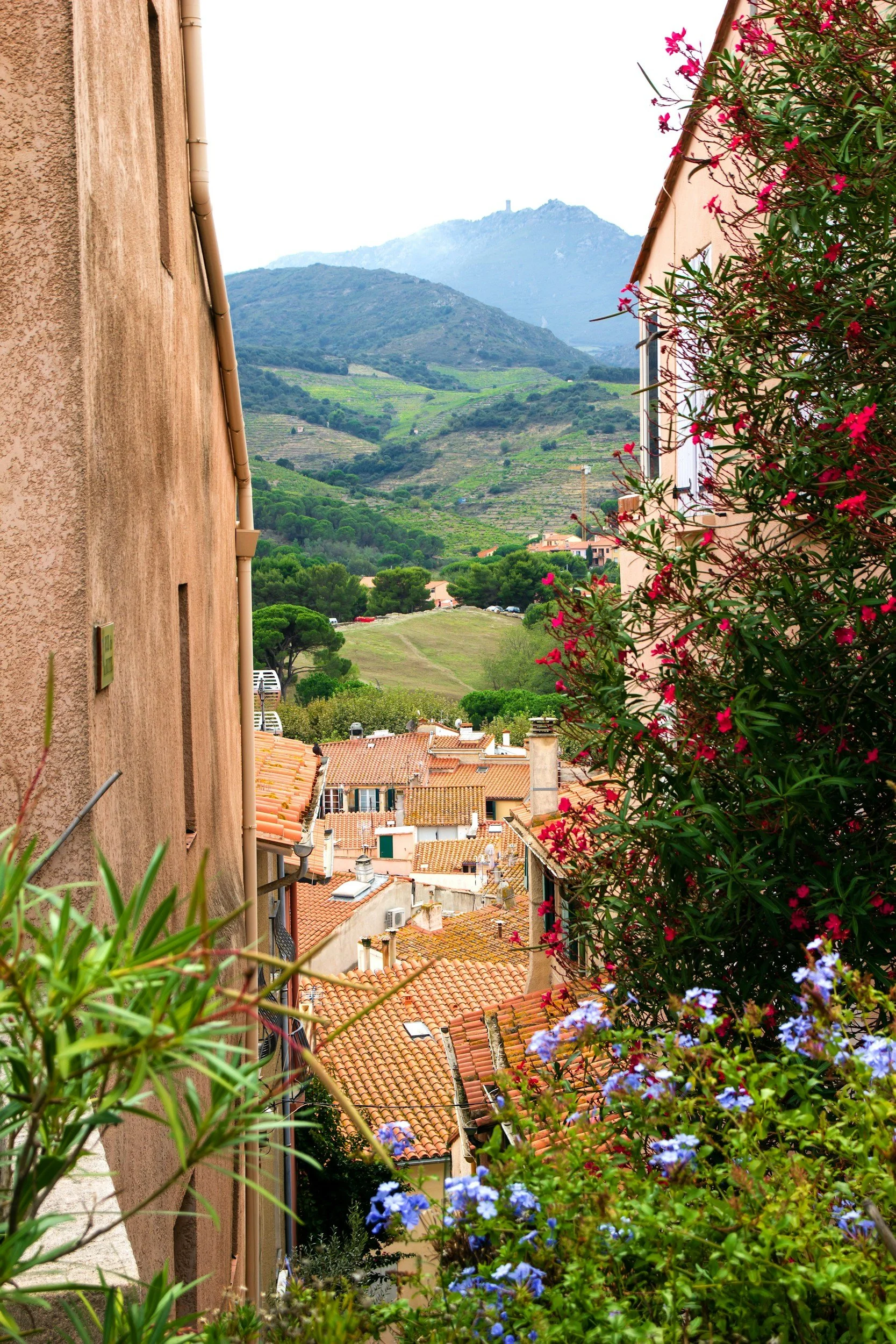
If you want to get away from that without leaving town, it’s easy. Walking towards Port-Vendres, you’ll pick up the coastal path just past the edge of Collioure. Even 15–20 minutes out, it feels quieter, and when you turn back, you get a clear view of the church and the town from a distance.
If you go the other direction, towards Fort Saint-Elme, it’s a steeper walk, but you start getting views almost straight away. People usually do this later in the afternoon, around 17:00–18:30, when it’s not as warm and the light softens over the water.
Evenings in early May are still relaxed, but they’re less spontaneous than mornings. Restaurants along Quai de l’Amirauté and near the church fill first, especially if the weather is good. If you don’t want to think about booking, it’s easier to walk a street or two back and find somewhere there instead.
If you’re planning to move around by train, this guide on which Eurail pass actually makes sense for slower travel helps avoid overpaying.
Provence or Pézenas? It depends how you want your days to feel
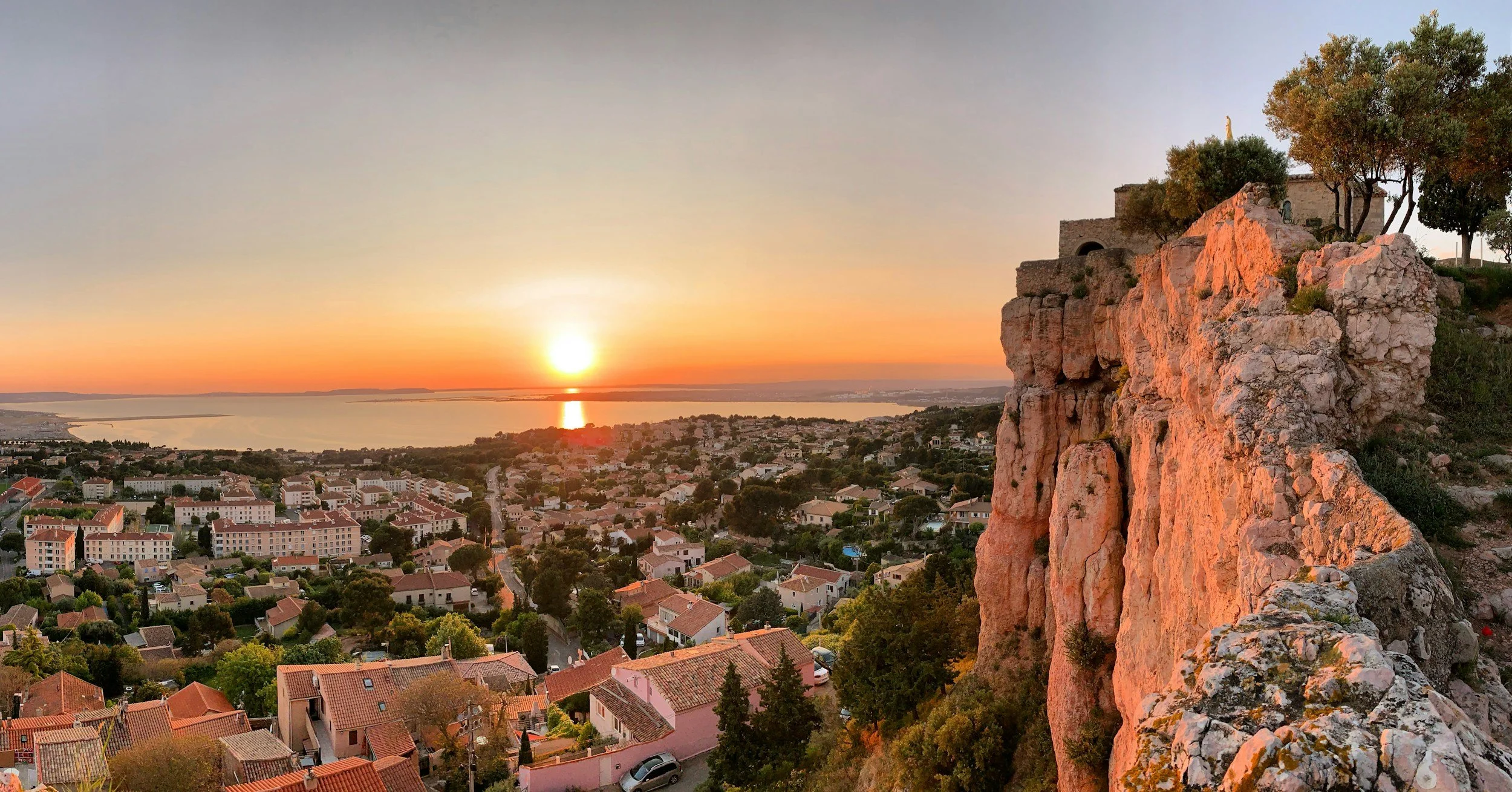
On a map, Provence and Pézenas don’t look that far apart. In reality, they don’t work well in the same trip unless you’re rushing. The drive from somewhere like Lourmarin down to Pézenas is around 2.5–3 hours, and it cuts right through the kind of slow mornings you probably went there for in the first place.
The bigger difference is how your days actually play out.
In places like Saint-Rémy-de-Provence or Lourmarin, May already feels warm quite early. By late morning, you’re looking for shade without really thinking about it. You grab a table, sit for longer, maybe move slower in the afternoon, then head back out again in the evening. Streets around Boulevard Victor Hugo or the main square in Lourmarin fill up gradually, but there’s still a bit of structure to the day.
Around Pézenas, it’s softer. You notice it in the mornings straight away. It’s a bit cooler, a bit greener, and the pace feels less shaped around heat. If you’re walking through Place Gambetta or along streets like Rue de la Foire, it feels more everyday. Shops open, people set things up slowly, and you don’t feel like you have to plan your day around avoiding the busiest or warmest hours.
The landscapes shift in a pretty obvious way too. Provence has that dry, slightly faded look with vineyards, stone, dusty hills. Around Pézenas, it’s flatter and greener, and it feels less exposed. You can walk around for longer without thinking about when you need to stop.
Markets are different in a way you only really notice once you’ve seen both. In Provence, they’re a mix of food, fabrics, soaps, ceramics - everything spread out and quite polished. Around Pézenas, especially on Saturdays, there’s more brocante and antiques mixed in, and the shops stay open during the week too. You can dip in and out without feeling like you have to “do the market” properly in one go.
If you’re deciding between them, it’s honestly more about this:
Provence feels a bit more put-together, brighter, and shaped around the day.
Pézenas feels more relaxed, slightly less fancy, and easier to just drift through without overthinking anything.
The Mistake Most People Make When Planning 5–7 Days in Provence
If you’ve got 5–7 days, the easiest mistake is trying to see everything. It looks close on a map, but it doesn’t feel like that once you’re there.
What actually works is picking two bases and staying put.
For example, staying in Uzès for a few nights and then moving to Saint-Rémy-de-Provence gives you enough variation without spending your time in the car. From Uzès, you can do a slow morning in town, walk out towards Pont du Gard, or just stay local. From Saint-Rémy, you’ve got easy access to Les Baux-de-Provence and smaller places like Eygalières, without needing to think too much about distance.
If you’re more drawn to the Luberon side, pairing Lourmarin with Cotignac works in the same way. They’re different enough to not feel repetitive, but close enough that moving between them doesn’t take over your day.
What tends to ruin the rhythm is changing place every day. Even if the drive looks short, you lose more time than you think. Packing up, checking out, finding your way out of town, then arriving somewhere new and figuring out parking (which is usually outside the center)… it adds up quickly. Half the day is gone without doing much.
Driving here also just takes longer than expected. A “45-minute drive” often turns into over an hour once you pass through smaller roads, roundabouts, and slow traffic near towns like Lourmarin or Saint-Rémy. It’s not stressful, just slower than it looks.
The days themselves don’t need much planning. You’ll notice it pretty quickly - a market in the morning, sitting down somewhere for lunch, maybe walking a bit in the afternoon, and then dinner later on. That’s already a full day here!
If you’re starting your trip from Aix, this Aix-en-Provence spring guide gives a good base for the first few days.
What No One Tells You About Visiting Provence in May
May is a really good time to be here, but there are a few things that can catch you off guard if you don’t know about them.
Public holidays are the main one. Dates like 1 May and 8 May can make towns feel quieter in a slightly confusing way. Some restaurants are open, some aren’t, and smaller shops often just don’t open at all. If you arrive that day and haven’t checked, you can end up walking around longer than you expected trying to find somewhere to eat.
Food timings are also something you notice pretty quickly. Lunch usually finishes around 14:00–14:30, and after that, kitchens close. Not “quietly slow down” - actually close. Dinner doesn’t really start until 19:00 or later, especially in places like Saint-Rémy or Lourmarin. There’s that awkward gap in between where options are limited unless you plan for it.
A lot of restaurants also have closing days, often midweek. Tuesday or Wednesday is common. It’s not always updated properly online either, so if there’s somewhere you really want to go, it’s worth double-checking.
The temperature can be a bit misleading too. You can sit outside in the sun in the afternoon and feel like it’s properly warm, and then by the evening it drops enough that you wish you had a jacket… especially inland around Uzès or Saint-Rémy.
Weekends are a different pace. Even smaller towns like Lourmarin or Uzès fill up more than you’d expect, especially if the weather’s good. If you’re staying over a Friday or Saturday, it’s usually easier to just book ahead. During the week, it’s much more relaxed and flexible.
None of this is a big deal once you know it - it just saves you from those small moments where the day doesn’t quite go how you thought it would.
For something a bit different but similar in pace, this piece on slow travel in Montolieu is worth a look.
FAQ – Visiting Provence & Occitanie in May
Is May a good time to visit Provence?
Yes, especially the first half of May. Mornings are still quiet in places like Saint-Rémy-de-Provence and Lourmarin, and you can sit down at cafés without thinking about timing. By late May, especially on weekends, the same places feel noticeably busier from around 10:30 onwards.
How busy is Provence in May?
It depends on the day and time. Early mornings (before 10:00) are usually calm, even in popular towns. By midday, especially in places like Saint-Rémy or Lourmarin, you’ll notice more day visitors arriving. Weekends are always busier than weekdays.
How many days do you need in Provence?
Around 5–7 days works well if you don’t want to rush. Staying in two places is usually enough. For example, combining Uzès and Saint-Rémy-de-Provence gives you access to different areas without long drives.
Is it better to stay in one place or move around?
Moving every day sounds good in theory, but in practice it takes more time than expected. Packing, driving, and finding parking (often outside village centers) can easily take half a day. Staying 2–3 nights in each place makes the trip feel much more relaxed.
Do you need a car in Provence?
For most places, yes. Towns like Lourmarin, Cotignac, and smaller villages aren’t easy to reach without a car. The exception is places like Collioure, which you can reach by train via Perpignan. Driving itself is simple, just slower than it looks on Google Maps.
What are market days in Provence?
Market days vary by town, and they’re usually busiest late morning:
Saint-Rémy-de-Provence – Wednesday
Lourmarin – Friday
Uzès – Saturday
Cotignac – Tuesday
Pézenas – Saturday
If you go around 8:30–9:30, it’s easier to move around and actually stop at stalls.
What time do restaurants open in Provence?
Lunch usually ends around 14:00–14:30, and after that, kitchens close. Dinner typically starts from 19:00, sometimes a bit later. There’s often a gap in the afternoon where options are limited unless you plan ahead.
Is Provence warm in May?
Afternoons can feel warm, especially inland, but evenings are cooler than people expect. It’s common to need a jacket after sunset, even if you were sitting outside in the sun earlier.
Are places closed in May due to public holidays?
Yes, especially on 1 May and 8 May. Some restaurants stay open, but many smaller shops close completely. It can feel a bit unpredictable if you haven’t checked ahead.
Can you visit both Provence and Pézenas in one trip?
You can, but it’s not ideal for a short stay. The drive from the Luberon down to Pézenas takes around 2.5–3 hours, and it breaks up the flow of the trip. It usually works better to focus on one area.