Staying in Pals or Begur? Here's how I'd choose
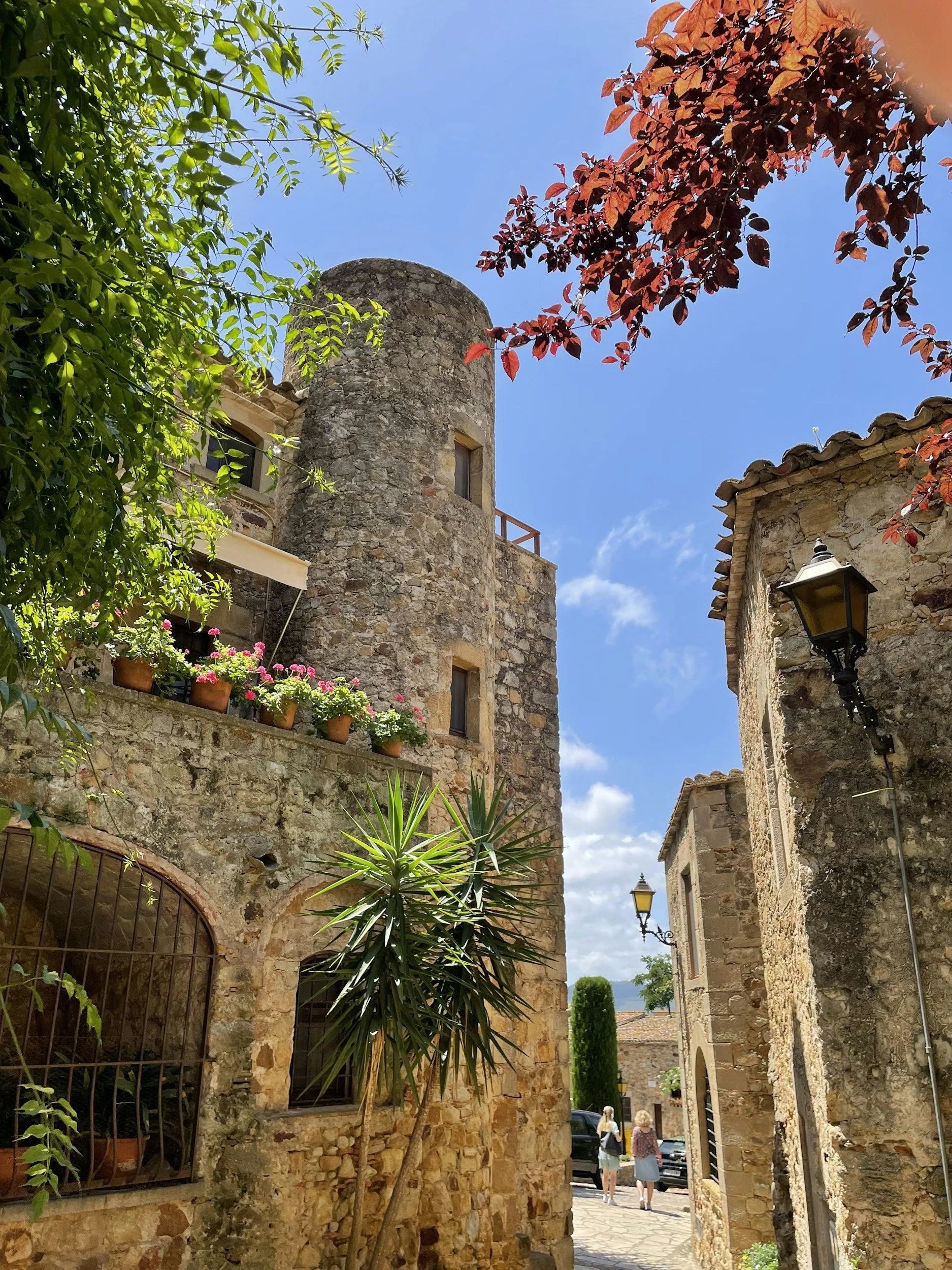
Pals
On a map, Pals and Begur barely seem far enough apart to compare. They're only around 10 kilometres from each other, plenty of people stop in both on the same day, and if you're sitting at home trying to decide where to book a hotel it's easy to think you're choosing between two medieval towns that will feel more or less the same once you arrive.
They don't.
Pals doesn't take long to get your bearings in. Within an hour you've probably wandered along Carrer Major, crossed Plaça Major, climbed up to Torre de les Hores, stopped at Mirador Josep Pla to look across the rice fields towards the Illes Medes, then found yourself back where you started without really trying. That's one of the things I like about it, but it's also something that doesn't always come across when you're looking at photos online. By the second morning you already know the streets well enough that the question isn't where to explore next, it's whether the day makes more sense at Platja de Pals, in one of the nearby villages like Peratallada or Monells, or simply sitting outside a café for another half an hour because there isn't any reason to rush anywhere.
Begur doesn't really let the day settle quite so quickly. The centre spreads out in several directions instead of gathering around one compact medieval core, so a short walk rarely stays short. The bakery is a couple of minutes away, then you notice a shop you meant to go back to yesterday, there's finally a free table outside Fitzroy Café, someone is carrying pastries across Plaça de la Vila, and before you know it you've been wandering around town for the best part of an hour without ever feeling like you were sightseeing. Even after a few days, there always seemed to be another street I hadn't properly walked down or another reason to head back into the centre before dinner.
That's why I don't really think this comes down to which town is prettier or which one has the better beach. They're close enough that you'll probably see both anyway. The real decision is where you want to base yourself, because after a couple of days that ends up changing far more than most people expect.
Hotel photos make the decision look much harder than it actually is. Both towns photograph beautifully, both have medieval streets and good places to eat, and both sit close enough to the coast that either one works as a base. The differences don't show up until you've spent a couple of days there, when the practical bits start taking over. Where do you go for breakfast? Is it easy to pop out again after dinner? Do you feel like you've already seen most of the town, or are there still streets you haven't wandered down yet?
Where are Pals and Begur?
Pals and Begur are neighbours on the Costa Brava, tucked into the Baix Empordà region about 45 minutes from Girona. On a map they look almost next door to each other, which is probably why so many people assume they're largely the same. They aren't. The drive between them only takes around 15 minutes, but the landscape changes quickly, from open rice fields around Pals to the wooded hills and small coves around Begur.
Neither town has a train station, so if you're arriving by public transport you'll usually come through Girona before continuing by bus. A car definitely makes life easier, especially if you're planning to spend time at beaches like Sa Tuna, Aiguablava or Platja de Pals, but you don't have to hire one. Plenty of visitors stay in one town for a few days and simply slow the itinerary down instead of trying to fit every beach and village into the same weekend.
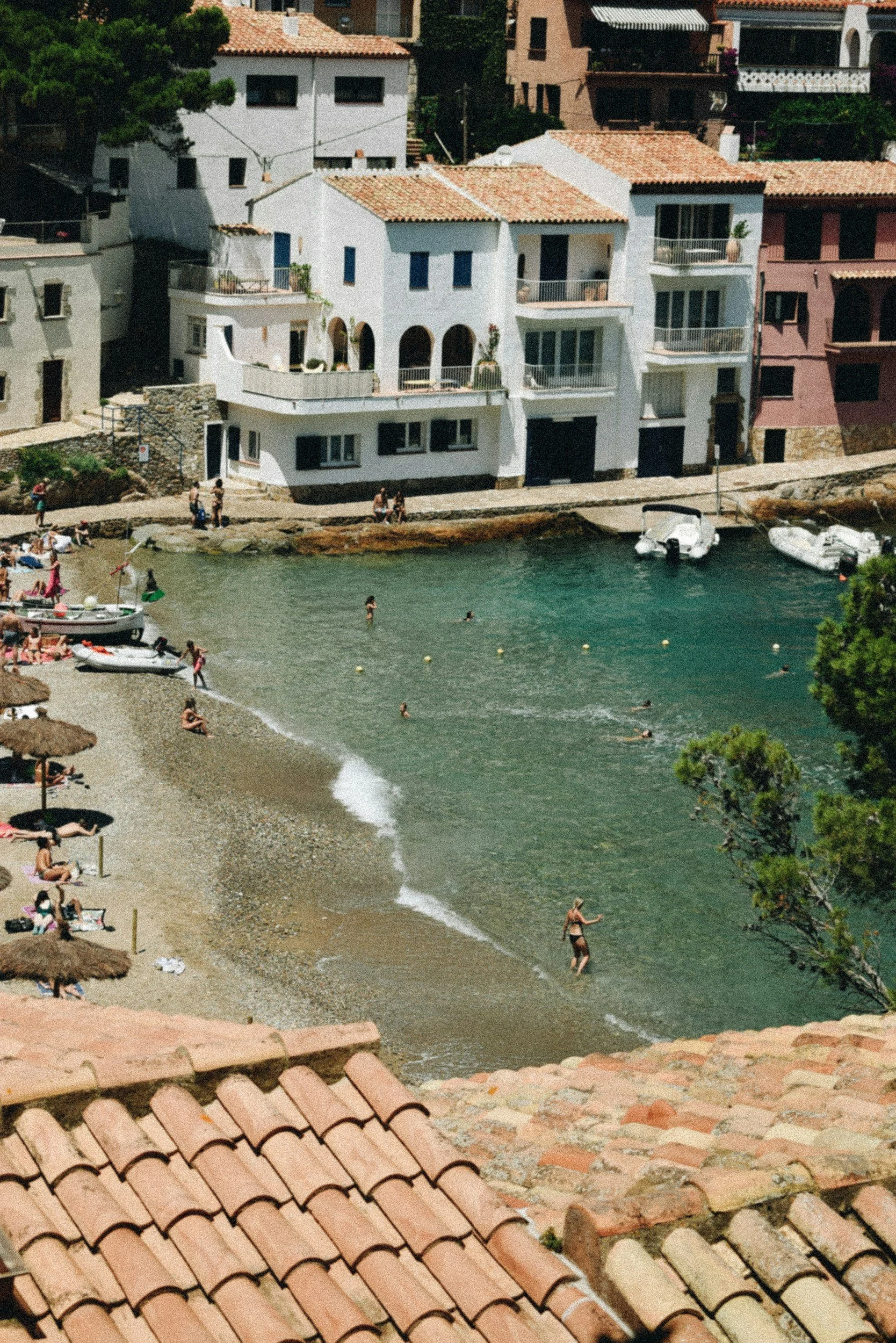
Begur, Spain
Your first few hours already feel different
Most people arrive in Pals by parking outside the medieval walls rather than driving into the old town itself. If you're coming from the main car parks near Avinguda Mediterrània, the first few minutes are spent walking uphill through one of the stone gateways with your suitcase rolling over uneven cobbles. It's not difficult, but it's worth knowing if you're travelling with heavy luggage or arriving in the afternoon heat.
Once you're inside the walls, Pals feels smaller than many first-time visitors expect. Within ten or fifteen minutes you've probably walked along Carrer Major, reached Plaça Major, climbed towards Torre de les Hores and stopped at the viewpoint overlooking the rice fields, the Illes Medes and, on a clear day, even the Pyrenees. There are plenty of small lanes to duck into afterwards, but they all lead back to roughly the same handful of streets. That's part of why Pals feels so calm. You rarely feel as though you're trying to get somewhere.
By the afternoon, you've usually walked most of the old town already. Not because you're rushing, simply because it isn't very big. You can wander up and down Carrer Major, take a few smaller side streets, stop at Mirador Josep Pla, spend a while looking in the little ceramics shops and galleries, and before you realise it you're back at Plaça Major again. I think that's something a lot of people underestimate before coming here because the photos make the old town feel much larger than it actually is.
That's also why I wouldn't book Pals expecting to spend every afternoon wandering around town. Most people don't. They head down to Platja de Pals, drive over to Peratallada for a late lunch, stop in Monells for an ice cream on the way back, or simply spend a couple of hours at the hotel before dinner. Pals becomes the place you return to rather than the place that keeps giving you something else to do.
Dinner changes things for a little while.
Around eight o'clock, the tables along Carrer Major start filling up and there are people strolling between the restaurants, but it doesn't carry on for the rest of the evening. Finish dinner, wander back through Plaça Major twenty or thirty minutes later and you'll probably notice how quickly it's emptied again. Most of the day visitors have gone home, the shop doors are closed, and apart from the last few restaurant tables still occupied, the old town is surprisingly quiet.
Begur feels larger than it first appears, partly because the town doesn't really finish where the historic centre does. Around Plaça de la Vila, there are cafés, bakeries and terraces as you'd expect, but once you start walking you realise the streets keep pulling you a little further, whether that's along Carrer Pi i Ralló, past the old Indianos houses, or uphill towards the castle where the views stretch across the coastline. You don't really reach a point where it feels as though you've seen everything and should turn around.
That changes all the ordinary parts of the day in a way that isn't immediately obvious when you're booking a hotel. Picking up pastries from Forn de Pa Can Pere, grabbing fruit and water from Jodofi Supermercats before heading down to Sa Tuna, stopping to look in one of the small homeware or clothing shops because something in the window catches your eye, then noticing there's finally a free table outside a café you'd walked past twice already doesn't feel like sightseeing, it just becomes part of being in Begur. Before long you've spent far longer in the centre than you intended, not because there was a plan, but because one small stop quietly turned into the next.
That's probably what surprised me most after spending time in both towns. In Pals, by the second day you generally know where you're going before you leave the hotel because the old town is smalland most people naturally build the rest of the day around somewhere else, whether that's the beach, another village or simply a long lunch. In Begur, you might only have planned to walk into town for ten minutes before driving to Aiguablava, yet an hour later you're still there because you've stopped for coffee, remembered you wanted to walk up to the castle while the light was good, or decided to book a restaurant for later that evening while you happened to be passing.
It's not a gigantic difference, and that's probably why so many comparison guides miss it altogether, but after three or four days it becomes one of the things you notice most. The old centre in Pals is somewhere you return to, whereas in Begur it's surprisingly easy to keep passing through the square several times a day without really planning to, simply because so many of the practical things you end up doing are already there.
If you're heading inland afterwards rather than continuing along the coast, these spring villages are some of the nicest stops to build into the same trip.
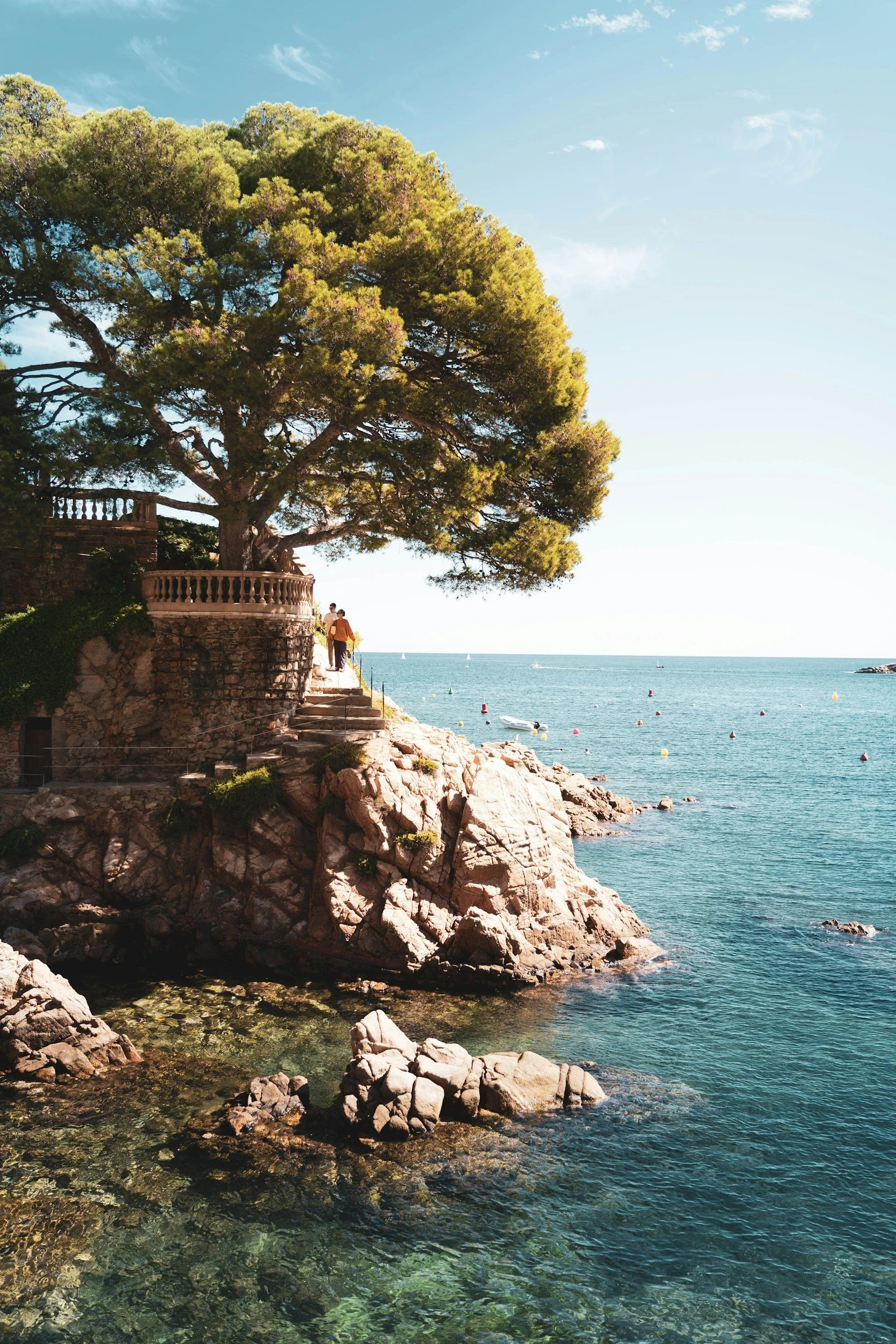
Cliffs in Begur
Travelling outside the busiest summer weeks? Before you book, I'd also read this Tarragona guide because the experience is completely different once the crowds have disappeared.
After the first afternoon, the towns start to separate
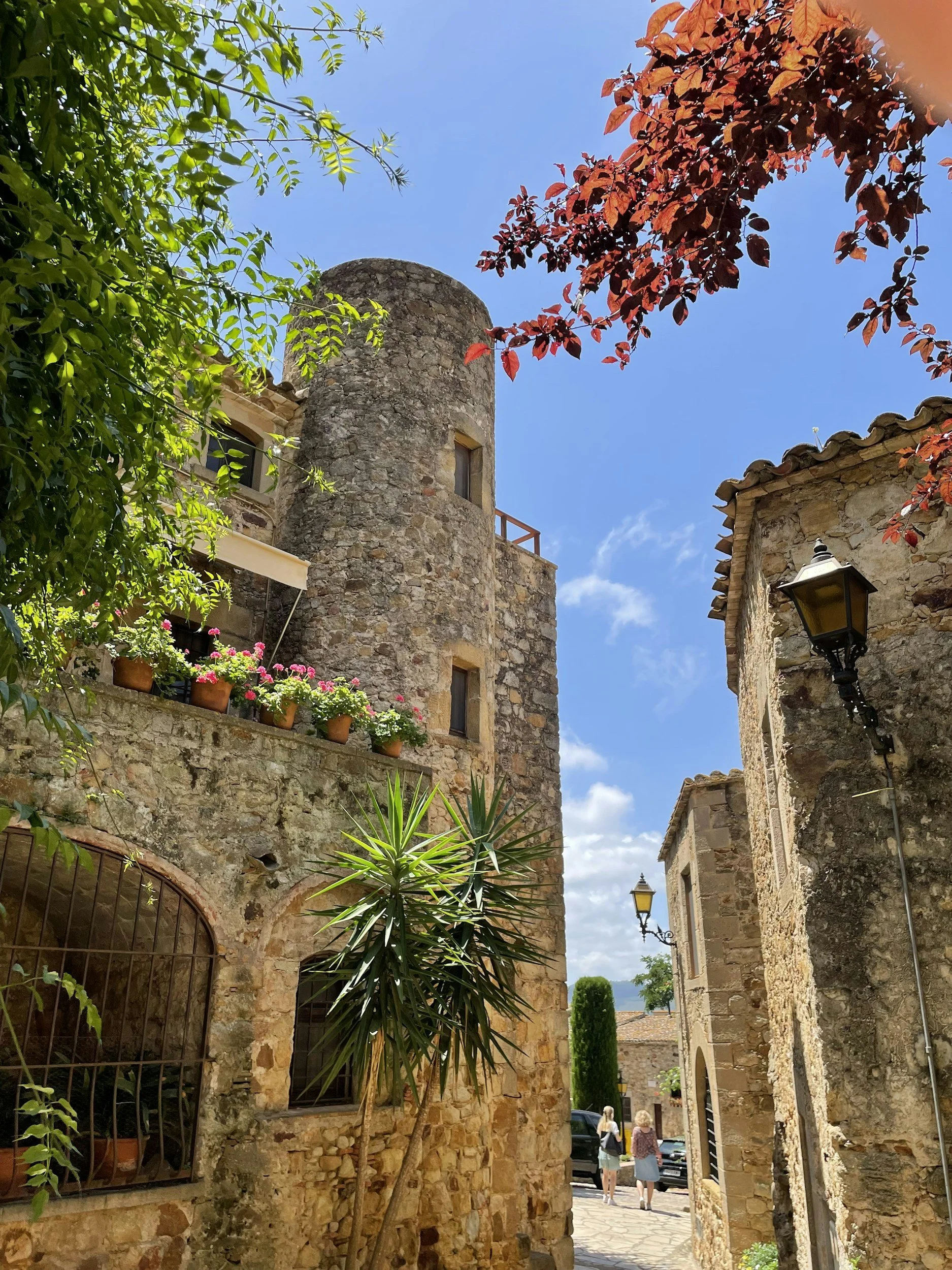
The medieval centre of Pals is one of those places that's smaller than most people expect. That's not immediately obvious from photographs, because every street seems to reveal another stone archway or flower-covered doorway, but after you've wandered from Carrer Major past Ca la Pruna, crossed Plaça Major, climbed to Torre de les Hores and stood for a while at Mirador Josep Pla, you've already covered most of it without looking at a map.
The next morning is often when you notice it.
Instead of wondering which street to explore next, you're deciding whether to walk back to the same café because you liked the terrace yesterday, whether the artisan ceramics shop you passed deserves another look, or whether today's the day to drive over to Platja de Pals instead. Most of the independent shops don't open particularly early, especially outside the busiest summer weeks, so before ten o'clock the old town belongs more to the people staying there than to visitors. The bakery queues are short, shutters are still opening and it's surprisingly easy to have Mirador Josep Pla almost to yourself for a few minutes.
By lunchtime, especially from the end of June onwards, Pals is noticeably busier than it was first thing in the morning. Most people have arrived for a few hours rather than the whole day, so you'll see plenty of visitors wandering through Carrer Major, taking photos around Torre de les Hores or sitting down for lunch before heading back towards the coast. It doesn't stay like that for long. By three or four o'clock, the streets are much quieter again and the old town feels almost as though it's has reset itself. If you're staying for a few nights, it's a pattern you'll notice quite quickly.
One practical thing that's easy to miss is that the medieval centre isn't where you'll usually stop for the ordinary bits and pieces. If you suddenly realise you need more water for tomorrow, forgot sunscreen or want something simple for breakfast before heading out, you'll probably end up walking or driving back towards the newer part of Pals because that's where the supermarkets and everyday shops are. It isn't inconvenient, but it's worth knowing before you've already climbed back up into the old town.
Begur works differently because the centre doesn't really separate everyday life from everything else. You might walk into town planning to buy something for the beach and end up doing three or four other things before you've even reached the supermarket. Forn de Pa Can Pere is only a short walk from Plaça de la Vila, Jodofi Supermercats is close by, and if you're heading along Carrer Pi i Ralló it's easy to get distracted by a bakery, a clothing shop or a terrace that suddenly has a free table outside. None of those places are destinations in their own right, but together they make the town feel much bigger than it first appears because you're constantly taking one more street before turning back.
That's probably the biggest practical difference between the two. If you're heading to Aiguablava, plenty of people stop in town first to pick up pastries from Fleca Can Baldiri, fresh fruit or picnic supplies from one of the small supermarkets around Avinguda Onze de Setembre, rather than paying beach prices later. By mid-morning, you'll see locals doing exactly the same thing before disappearing towards the coves.
One difference that only really becomes obvious after a couple of days is how often you end up walking back into the centre. In Begur, it happens all the time without much planning. You might come back from Sa Riera, shower, realise you've got an hour before your dinner reservation and head into Plaça de la Vila rather than staying at the hotel. Maybe you stop for an ice cream, notice a table outside Bar de Plaça has just become free, remember you wanted to look inside one of the little homeware shops on Carrer Pi i Ralló, or walk up towards the castle because it's finally cooled down enough to enjoy the climb.
Pals rarely worked like that. Once I was back from Platja de Pals or another village in the Baix Empordà, I generally stayed put until dinner because I'd already spent the morning walking around the old town. There wasn't another part of the centre I felt like wandering through again, and most evenings naturally started at the restaurant rather than an hour beforehand.
That probably explains why people often come away with such different opinions of the two towns even though they're so close together. If you enjoy spending time at your hotel, sitting on the terrace with a book or opening a bottle of DO Empordà wine before dinner, Pals makes that feel completely natural. If you're more likely to pop back out because you've suddenly remembered a bakery, fancy another coffee or just want one last walk through town before the day ends, Begur quietly makes those little detours much easier.
Quite a few people end up choosing between the Costa Brava and the Barcelona coastline instead, so this Sitges comparison will probably save you making that decision twice.
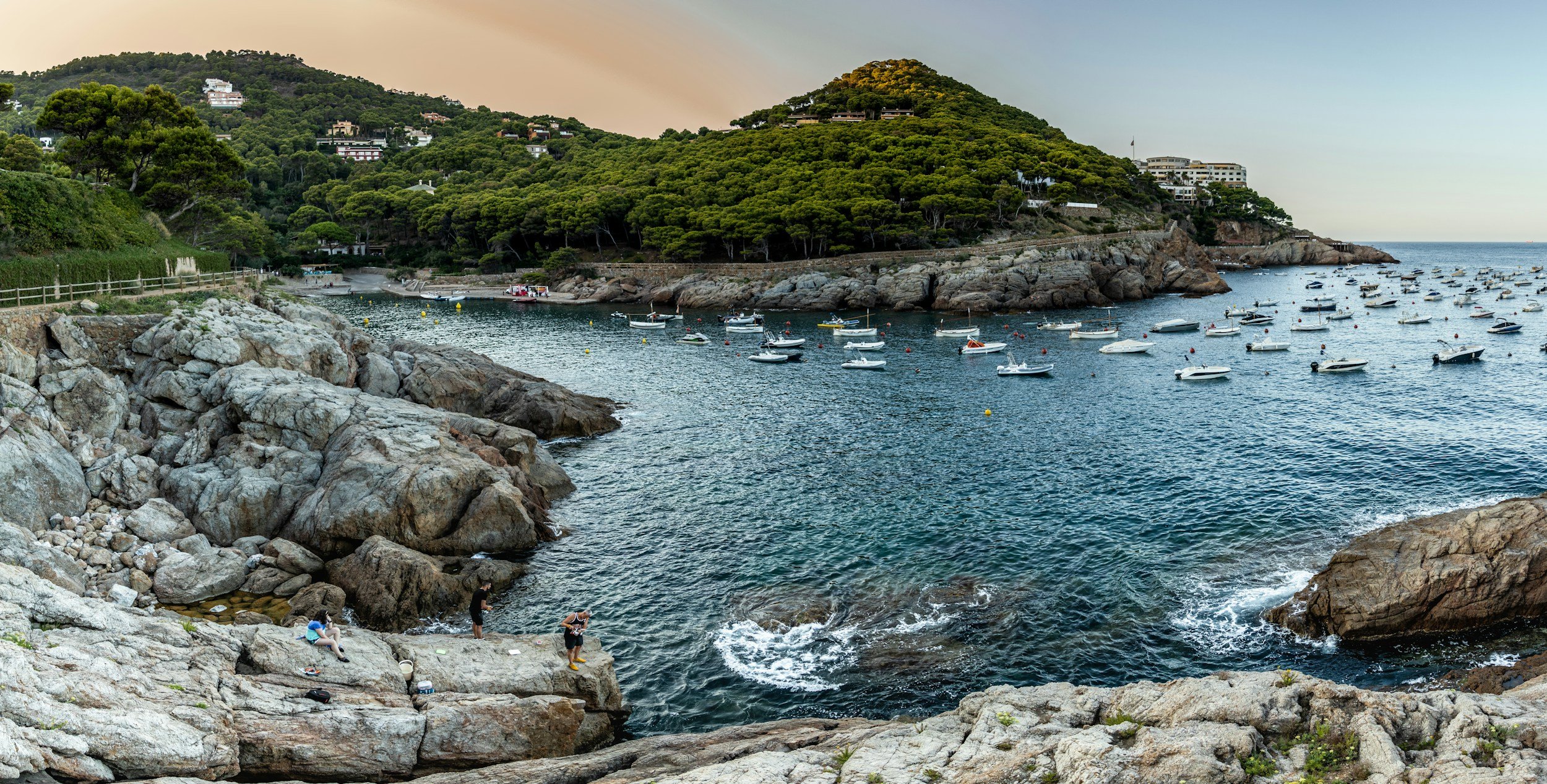
From your first coffee to your last glass of wine
I didn't really notice this until my second morning in Pals.
The first day is usually spent wandering the medieval streets, stopping every few minutes because another stone doorway or ivy-covered corner catches your eye. The second morning is different. You already know where Carrer Major leads, you've found the quickest way to Plaça Major, and you don't need Google Maps to reach Torre de les Hores.
Before nine, Pals feels almost residential. Restaurant owners are carrying chairs onto the terraces, shutters open one by one along the old streets and you'll often have Mirador Josep Pla almost to yourself apart from the occasional photographer who has deliberately come early. It's probably my favourite time to walk around the town… By eleven, particularly in July and August, you'll be sharing those same streets with visitors arriving for a few hours before moving on again.
Breakfast is one of the few things I'd think about before staying in Pals. If you're planning to be at Platja de Pals early, especially in July or August when the car parks start filling much sooner than many people expect, don't assume every café inside the medieval centre will already be open. Outside the busiest summer weeks, mornings are noticeably quieter and several places don't start serving until later, so checking opening hours the evening before saves wandering around looking for coffee with nowhere open. If your hotel includes breakfast, it's often the easier option before heading out for the day.
The old town is where you come for dinner, a walk or another look around the medieval streets, but if you've run out of water, want something for tomorrow's picnic, forgot sunscreen or fancy a bottle of DO Empordà wine to take back to the hotel, you'll usually end up in the newer part of town where the supermarkets and everyday shops are. It isn't a problem once you know, but it's the sort of thing that's easy to miss when you're booking because almost every photo of Pals is taken inside the medieval walls.
Around Carrer Major and Plaça Major, restaurant terraces gradually fill up in the evenings as people drift back from the beach or nearby villages, and tables often stay occupied for most of the evening rather than turning over quickly. People stay longer in restaurants, but finish dinner around half past ten and you'll notice how quickly the town settles once the last tables begin to empty. The little shops are already closed, the cameras have disappeared, and walking back through the old town feels completely different from lunchtime a few hours earlier. If you're staying somewhere with a terrace overlooking the countryside or the rooftops, it's the kind of place where opening another bottle of wine or sitting outside with a book feels like a perfectly good way to end the day. If you're hoping to wander into town again for another drink, you'll probably find yourself with fewer options than you would in Begur.
One thing Begur does have is a centre that stays useful throughout the day, not just somewhere you walk around once before moving on. Picking up a bottle of water before driving to Sa Tuna can easily turn into coffee at Fitzroy Café because there's finally a table outside, then a stop at Forn de Pa Can Pere for pastries, followed by a look in one of the little shops along Carrer Pi i Ralló because something in the window catches your eye. None of it feels like you've changed your plans, yet half an hour disappears surprisingly quickly because everything sits within a couple of streets of each other.
The practical things are mixed in with everything else, which is probably why Begur feels so easy to settle into for a few days. Need fruit for the beach, a bottle of wine for the evening, sunscreen, cash or somewhere to grab breakfast before heading down to Aiguablava? During the summer, it also means you can sort everything out before driving to the beach. By the time you've picked up breakfast, filled the cooler bag, grabbed another bottle of water and remembered you wanted cash for the beach bar, you're only a couple of minutes from the road down towards Sa Riera or Aiguablava instead of driving back and forth across town because you've forgotten something.
One thing I don't think comes across very well when you're looking at Begur on a map is how much of your day ends up happening in the town itself. If you've spent the afternoon at Sa Tuna or Aiguablava, it's completely normal to drive back, shower and head into the centre afterwards rather than staying near the beach for dinner. By eight o'clock, most people aren't arriving from their hotels, they're arriving from the coast, which is why the centre often feels busier in the evening than it does in the middle of the afternoon.
That also changes how you use the town. You're just as likely to walk into Plaça de la Vila because you need something practical as because you're looking for somewhere to eat. Maybe you've run out of water for tomorrow, want to pick up breakfast before heading back to the beach, need cash, or realise you'd rather buy a bottle of local DO Empordà wine from one of the shops in town than pay beach prices later. Everything is only a few minutes apart, so none of those jobs ever feel like a separate trip.
Restaurants also fill differently from Pals. Around seven o'clock it's often still fairly easy to get a table, especially outside the busiest weeks of July and August, whereas by nine o'clock you'll notice people waiting outside some of the more popular places around Plaça de la Vila. The town stays busy for longer simply because people don't all arrive at the same time. Some have spent the whole day in Begur, others have only just come back from Sa Riera, Sa Tuna or Aiguablava, and plenty are only just starting their evening.
That was probably the biggest difference for me after spending time in both towns. In Pals, dinner usually felt like the last thing I was doing before heading back to the hotel. In Begur, dinner was often just one part of the evening because there was still somewhere to wander afterwards, another shop that was open, or something to pick up before the next morning.
In case you're driving further north, don't skip Santillana del Mar. It's another town that looks much smaller on a map than it feels once you're there.
If you're continuing through Catalonia afterwards, these quiet train-friendly towns make an easy next stop from Girona and feel completely different from the Costa Brava.
The beaches are completely different, and so is getting to them
This is probably where most people underestimate the difference between staying in Pals and staying in Begur.
They're only a few kilometres apart, but the coastline changes completely.
If you're based in Pals, Platja de Pals is the obvious beach. It's a long, wide stretch of sand backed by dunes and pine trees rather than cliffs, so there's plenty of room to spread out even in summer if you're prepared to walk five or ten minutes away from the main access points. I found myself walking here almost as much as swimming! You can easily spend an hour strolling towards Platja del Racó in one direction or the mouth of the Ter River in the other without running out of beach.
Getting there is fairly straightforward. There are several parking areas behind the beach, although the closest ones fill surprisingly quickly in July and August, especially after about 10.30 am. Arrive earlier and you'll usually have a much easier time. Once you've parked, everything is flat. No long staircases, no steep climbs back to the car carrying towels and umbrellas, which makes a bigger difference than you might think after a full day in the sun.
If you're still deciding whether Pals is worth staying in or whether it's somewhere you'll simply visit for a couple of hours, this guide goes into much more detail about what it's actually like once the day visitors have gone home.
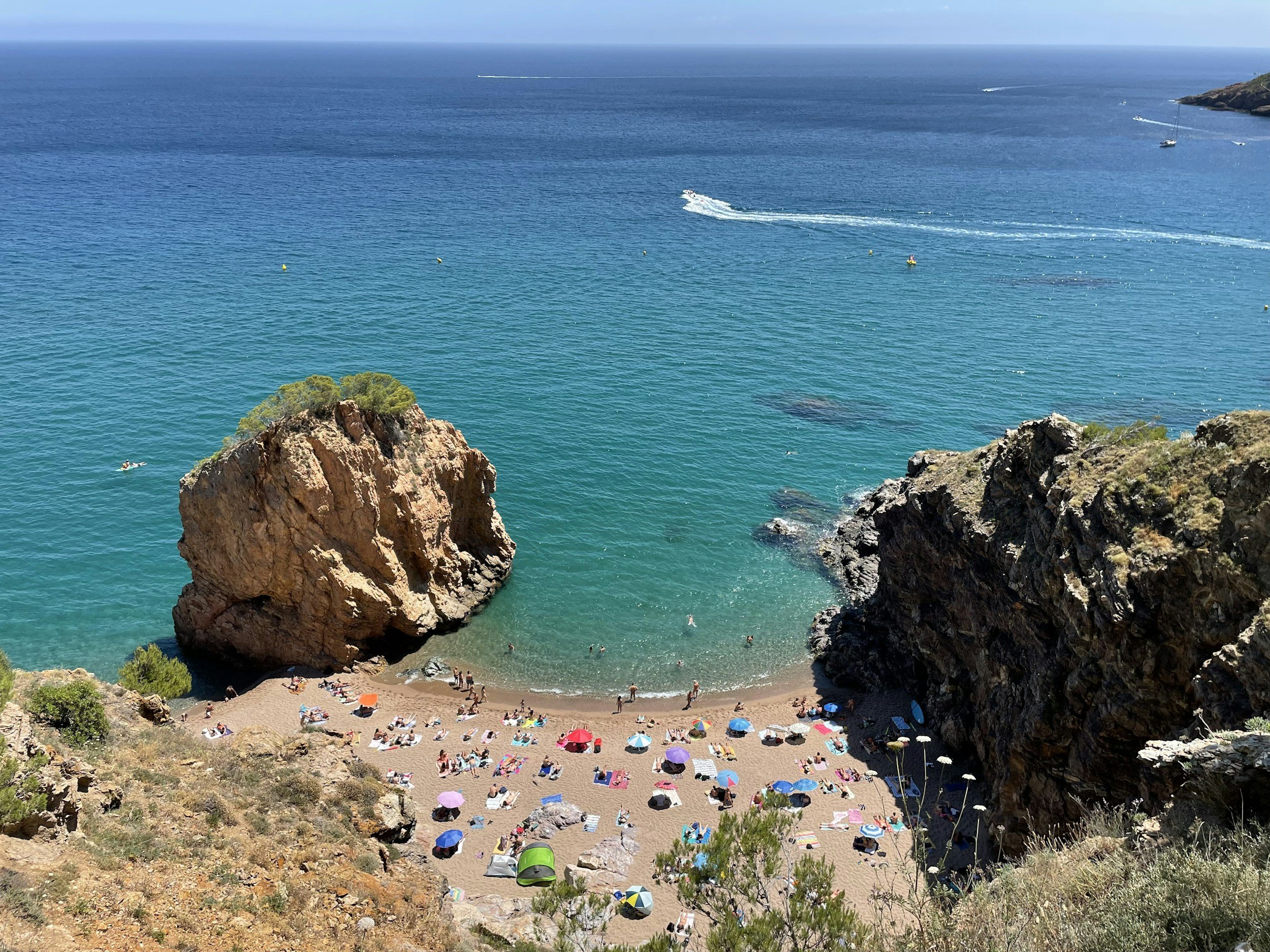
In Begur however, there isn't one main beach because the coastline is broken into a series of small coves. Sa Riera is the easiest one to spend a full day at if you're looking for a long beach, restaurants and somewhere to rent paddleboards, while Sa Tuna is much smaller and starts feeling busy much earlier in the day. Aiguablava has that clear turquoise water people associate with the Costa Brava, and Cala d'Aiguafreda is completely different again, with a rocky shoreline where people come to swim and snorkel rather than spread out towels on the sand. Most people staying in Begur don't return to the same beach every day because each one offers something slightly different.
One thing that's much harder to judge before arriving is the distance between them. Looking at a map, Sa Tuna, Aiguafreda and Aiguablava almost look close enough to wander between without thinking too much about it, but once you're there the roads are much steeper than they appear on a screen and the coastline isn't connected by one flat promenade. The Camí de Ronda links parts of the coastline, but it's a proper coastal path with steps, climbs and uneven sections rather than an easy stroll between beaches.
That's why I'd be realistic about how much you can fit into one day. Spending the morning in Sa Tuna, stopping for lunch in Begur and driving over to Aiguablava afterwards works well. Trying to squeeze Sa Tuna, Aiguafreda and Aiguablava into the same afternoon on foot usually looks much easier when you're planning the trip than it does once you're standing at the bottom of another set of stone steps in the middle of August.
If you're travelling in July or August, parking is probably the first thing I'd think about before deciding which beach to visit. Sa Tuna has a relatively small car park and it fills much earlier than many first-time visitors expect, especially on sunny weekends. Aiguablava isn't much different. Arrive in the middle of the day and there's a good chance you'll be leaving the car further uphill and walking the last stretch down to the beach, which doesn't feel particularly difficult until you're carrying everything back in the afternoon heat.
The local buses do connect Begur with the beaches during the summer, but I wouldn't rely on them if your plan is to spend the day moving between different coves. They work well if you're heading to one beach and staying there, but once you start changing your mind, stopping for lunch or deciding to spend another hour swimming because the water's too nice to leave, the timetable suddenly matters much more than you'd probably like it to.
Reaching Platja de Pals is usually straightforward. If the forecast looks good over breakfast, you can throw towels, water and lunch into the car and leave without giving it much thought because there's only one real decision to make: which part of the beach do you feel like walking along today?
If this is just one stop on a longer trip, this northern Spain itinerary joins together quieter towns without needing to hire a car.
If you're not hiring a car, I'd think about this before booking
Getting to either town without a car is perfectly doable, but it's one of those journeys that's much easier if you look at the bus timetable before you book anything else. Both Pals and Begur are reached from Girona with Moventis Sarfa buses rather than by train, and outside the busiest weeks of summer there aren't departures every half hour. It's surprisingly easy to arrive at Girona station and realise you've just missed the connection, leaving yourself with an hour or more to wait before the next bus.
It's also worth remembering that Girona station and the bus station sit next to each other, so changing between train and bus is straightforward once you're there. The planning mostly comes before you travel. I always check the bus times first, then book the train that fits around them rather than doing it the other way round, especially in spring and autumn when the timetable is less frequent than many people expect.
The difference between Pals and Begur doesn't really start until you've dropped your suitcase at the hotel.
Pals made me think about the practical things a little earlier in the day. If I knew I was heading to Platja de Pals, driving inland to Peratallada or spending the afternoon somewhere else in the Baix Empordà, I'd usually make sure I'd already bought water, sunscreen or anything else I needed because most of the everyday shops sit outside the medieval centre. Once you're back inside the old streets, you're there for a completely different reason. You're walking to dinner, taking another lap around Plaça Major before heading back to the hotel or sitting outside with a coffee, not stopping to pick up groceries on the way.
The medieval centre and the newer part of Pals almost feel like two different places. One is where you spend your time, the other is where you sort out the practical bits before the day really gets going.
Begur is much easier when you need to sort out the ordinary things before heading off somewhere. Picking up cash, stopping at the pharmacy, buying fruit for the beach or grabbing a loaf of fresh coca from Forn de Pa Can Pere can all be done within a few minutes around Plaça de la Vila, so there isn't much reason to make separate trips during the day. If you've forgotten sunscreen or want something for lunch down at Sa Tuna, it's usually easier to stop in Begur first than hope you'll find what you're looking for once you've reached the beach.
The coastline is the one part of the trip I'd spend a little more time planning. Looking at a map, Sa Tuna, Cala d'Aiguafreda, Sa Riera and Aiguablava all appear close together, and it's easy to imagine spending the day moving from one cove to the next. Once you're there, the distances feel very different. The Camí de Ronda does link sections of the coastline, but this isn't a flat promenade where you wander between beaches in flip-flops. Some stretches involve long flights of stone steps, others climb steadily through the pines before dropping back down again, and by the middle of the afternoon, carrying a beach bag, towels and water uphill is usually enough to make most people stay where they are.
I'd rather pick one cove for the morning, have lunch either there or back in Begur, then decide if it's worth moving somewhere else afterwards. Sa Tuna and Aiguafreda combine quite naturally because they're close together, while Aiguablava is easier to enjoy if you give it most of the day instead of trying to squeeze it in between two other beaches. It ends up being a much more relaxed way to explore this stretch of the Costa Brava, and you spend far less time walking back to the car wondering whether the next beach would really have been any better.
Platja de Pals works in a much simpler way. Once you've arrived, the biggest decision is usually where to leave the car because the beach stretches for several kilometres and each access point feels a little different. The southern end near Platja del Racó is often busier because it's closest to the restaurants and apartments, while walking further north towards the dunes quickly opens up much quieter stretches of sand where it's perfectly possible to spread out even in the middle of summer. If you're staying in Pals for a few days, it's quite common to return to the same beach more than once simply because there's still plenty of it left to explore.
One thing I would think twice about is changing hotels halfway through a long weekend. Pals and Begur look so close together on the map that splitting the trip into two nights in each seems like a sensible idea, and you'll see that suggestion in quite a few itineraries. In practice, it rarely feels as efficient as it sounds. By the time you've packed, checked out, driven or taken the bus across, waited for your room to be ready and unpacked again, a good part of the day has disappeared, even though you've only travelled a few kilometres. I'd much rather spend that time having a long lunch in Begur, wandering around Pals for the morning, or stopping somewhere like Peratallada or Palafrugell on the way instead of moving suitcases from one hotel to another.
Taxis are another thing I'd organise a little earlier than you might in a larger town. In Girona, finding one outside the station is rarely a problem, but that's not how it works in Pals or Begur. If you've booked dinner in Peratallada, need to be back at Girona station for an early train, or have a flight from Girona-Costa Brava Airport, it's much better to book the taxi in advance through your hotel or a local company than assume one will be waiting in the square. During July and August, particularly on Friday and Saturday evenings, the local taxis are often already busy with restaurant bookings and airport transfers.
Planning an autumn trip instead? These northern Spain villages are especially good once the summer holiday season has finished.
Travelling without a car? Read the Renfe train guide before you start booking tickets. It answers most of the practical questions people only realise they have halfway through planning.
So... which one would I actually book?
I don't think I'd always book the same one because it depends much more on the time of year than people often realise.
If I were going in April, May, late September or October, I'd probably choose Begur because those trips aren't usually about spending eight hours on the beach. You're more likely to wake up without much of a plan, have breakfast in town, stop somewhere for coffee afterwards because there's no reason to rush anywhere, wander into a couple of shops along Carrer Pi i Ralló, maybe walk up to the castle if the weather looks good, then realise it's already lunchtime without ever feeling as though you've been trying to fill the morning. Begur is simply an easy town to spend time in, even on the days when you don't really know what you feel like doing.
Pals is the one I'd book when I already know what the weekend is going to look like. Maybe I've planned to spend one day around Platja de Pals, another driving through Peratallada, Monells and Palau-sator, or I've booked a hotel where I'm perfectly happy coming back a little earlier in the afternoon to sit on the terrace with a book before heading out again for dinner. That's something I don't think comes across particularly well when you're looking at hotels online. The town itself isn't somewhere I kept dipping in and out of throughout the day. Most mornings I'd walk around the old centre, then the rest of the day naturally happened somewhere else before coming back in the evening.
If you're the kind of traveller who enjoys the quieter side of Spain, I'd also have a look at Soria Province before you finalise your route. It couldn't feel more different from the Costa Brava.
FAQs about Costa Brava
Is it better to stay in Pals or Begur for 3 nights?
For a three-night trip, I'd choose one town and use it as your base rather than splitting your stay. They're close enough that visiting the other for lunch, dinner or an afternoon is easy, but changing hotels halfway through usually takes longer than people expect. Once you've packed, checked out, travelled, checked in again and unpacked, you've lost a good part of the day for very little gain. Three nights is just enough time to settle into one place instead of constantly moving on.
Is Pals or Begur better as a weekend base?
If your weekend is mostly about exploring the wider Baix Empordà, visiting nearby villages and spending time on the road, Pals makes a very comfortable base. If you're just as happy spending a couple of hours wandering between cafés, small shops and terraces as you are driving to the beach, Begur tends to work better. The two towns are close together, but you'll naturally spend your days quite differently.
Is Pals or Begur better without a car?
Neither town is difficult without a car, but they ask for a little more planning than many visitors expect. Both are reached by bus from Girona, usually with Moventis Sarfa, and outside the busiest summer weeks the timetables aren't especially frequent. Once you've arrived, Begur makes everyday errands a little easier because cafés, bakeries, supermarkets and pharmacies all sit within a short walk of the centre. In Pals, you'll probably think ahead a little more before leaving for the day, particularly if you're staying inside the medieval centre.
Which town is easier if you're visiting the Costa Brava for the first time?
I'd probably suggest Begur for a first visit because it introduces you to so many different sides of the Costa Brava in a relatively small area. You can spend one day at Sa Tuna, another at Aiguablava, walk part of the Camí de Ronda, then still have plenty of restaurants and cafés to come back to in the evening. Pals is a wonderful second visit too, especially once you're ready to explore more of the inland villages and countryside that many first-time visitors miss.
Can you stay in one town and visit the other?
Definitely, and that's what I'd recommend. They're only around 15 minutes apart by car, so there's no need to choose one and ignore the other. A lot of people spend the morning in Pals before driving to Begur for dinner, or base themselves in Begur and visit Pals early the next day before it gets busier. It gives you the best of both without the hassle of changing accommodation.
Does Pals still feel quiet in July and August?
Yes, although the time of day makes a big difference. Late morning and lunchtime are the busiest, particularly around Carrer Major and Plaça Major, when visitors arrive from the beaches and nearby villages. Early mornings feel completely different. If you're out before breakfast, you'll often have much of the old town almost to yourself, and after dinner the streets become noticeably quieter again once the restaurant terraces begin to empty.
Which town has better restaurants and cafés?
I'd choose Pals if dinner is the highlight of the evening. There are some lovely restaurants tucked inside the medieval centre where people settle in for long meals and rarely feel rushed. Begur offers more variety across the whole day. It's easier to find somewhere for breakfast, another coffee later in the morning, a glass of DO Empordà wine before dinner and somewhere to linger afterwards if you're not quite ready to head back to the hotel.
Which town has the better weekly market?
Both have weekly markets, but they're quite different. Pals Market takes place on Tuesday mornings, while Begur Market is held on Wednesday mornings in the town centre. If markets are one of the reasons you're visiting this part of Catalonia, I'd also make time for Palafrugell Market on Sunday, which is considerably larger and has a stronger local feel, particularly around the fresh produce stalls.
Which town is better if you enjoy walking?
That depends on what kind of walking you enjoy. Around Pals, it's about wandering medieval streets, exploring the rice fields or taking long walks along Platja de Pals without needing to think too much about the route. Begur is more varied but also more demanding. The Camí de Ronda links several of the coves, but don't let the map fool you. Those coastal paths include plenty of steps, climbs and uneven ground, so a walk that looks short can easily take longer than expected.
Which town is better in spring or autumn?
Outside the main summer season, the differences become even clearer. Begur stays lively because the town itself has enough cafés, shops and restaurants to fill a day even if the weather changes. Pals feels particularly special in spring and autumn, when the medieval streets are quieter, the surrounding rice fields begin changing colour and it's much easier to enjoy the viewpoints without the midday crowds.
Which town works better as a base for exploring nearby villages?
If you're hoping to explore inland, I'd lean towards Pals. It's well placed for visiting Peratallada, Palau-sator, Monells, Cruïlles and La Bisbal d'Empordà, all within a relatively short drive. Begur naturally pulls you towards the coast instead, so days often revolve around coves, viewpoints and scenic drives rather than medieval villages.
Where would I stay if I wanted to avoid the busiest parts of the Costa Brava?
Neither Pals nor Begur feels anything like the larger resort towns further south, but they offer different kinds of quiet. In Pals, the busiest part of the day is usually late morning and lunchtime, after which the medieval centre settles down again. Begur stays a little livelier because people drift in and out throughout the day, especially in summer. If your idea of a relaxing break is hearing church bells instead of beach bars once dinner is over, Pals probably edges it. If you still like a bit of life in the streets without the feel of a resort, Begur strikes a nice balance.
Which town would I return to?
I'd happily return to both, but not for the same trip.
Pals is the one I'd book when I know I want to spend as much time enjoying the hotel as exploring the surrounding area. It's somewhere I'd return to the same boutique hotel, revisit a favourite restaurant and happily watch the evening settle over the old stone streets without feeling I needed to do anything else.
Begur is the place I'd choose when I know I'll keep wandering. Even after a few visits, it still feels like the sort of town where another side street, another bakery or another small shop catches your attention just when you thought you were heading back. That's probably the simplest way I can explain the difference. You'll almost certainly visit both during the same trip, but where you wake up each morning quietly shapes the whole weekend.