
Spring is the perfect excuse to explore Périgord Noir
Périgord Noir is in the Dordogne, about two hours from Bordeaux, and it’s one of the easier places in France to spend a few days without overplanning anything.
In spring, the region starts to open up again. Markets in towns like Sarlat run at full pace, café terraces fill slowly through the morning, and the walking paths along the Vézère and Dordogne rivers are still quiet enough to enjoy properly. You don’t need to time things carefully or book much in advance, which makes a short trip here feel straightforward from the start.
The distances between places are small. You can stay in one village and reach others like Beynac-et-Cazenac, La Roque-Gageac, or Saint-Léon-sur-Vézère in 15–25 minutes by car. Most days end up being a mix of short drives, slow walks, and long stops somewhere that wasn’t planned.
A typical day might start early in Sarlat before the market gets busy, then continue along the river toward Montignac or Les Eyzies, with a stop for lunch wherever feels right. By the afternoon, you’re either by the water, in a garden, or walking through a village that’s still going about its day.
This guide focuses on a few places that work well for a spring weekend, along with simple ways to structure your time so it stays relaxed and easy to manage.
If you end up liking this kind of slower pace, this quiet village in southern France is a good one to look at next.

Where to Stay in Périgord Noir
Where you stay here makes a bigger difference than you think.
It’s not a region where you want to move around a lot. Roads are narrow, parking in villages like Sarlat or Beynac can be frustrating in the middle of the day, and most places are best early morning or later in the afternoon anyway. It’s easier to pick one base and keep things simple.
If you look at a map, aim for somewhere between Sarlat-la-Canéda, the Vézère Valley (Montignac / Les Eyzies), and the Dordogne River. That triangle covers most of what you’ll end up doing, and you won’t spend your trip driving back and forth.
If you’re traveling on your own, this slower solo route through southern France follows a similar rhythm, just over a few more days.
Here’s what actually works in practice:
Saint-Léon-sur-Vézère - if you want it quiet without feeling cut off
This is the place that feels easiest to settle into.
It sits right on the Vézère River, about 15 minutes from Montignac (Lascaux caves) and 20 minutes from Les Eyzies, so you’re close to things without being in the middle of them. The village itself is small enough that you’ll recognize it within an hour, which is kind of the point.
In the morning, you’ll usually see a couple of people walking down to the river, maybe someone setting up a small terrace, and that’s about it. There’s a simple café near the church and a few low-key places for lunch, but most evenings you’ll either cook or drive 10–15 minutes somewhere else.
Look for a gîte with a garden or river access - places along Route de la Vézère or just outside the village tend to have more space and better views than the few spots right in the center.
Ps. if it’s the smaller places that stand out to you, these quiet villages in southern France are worth saving for later.
Beynac-et-Cazenac - better location than it looks on a map
Beynac is one of those places everyone photographs, but staying here only works if you pick the right spot.
The village climbs steeply up to the château, and anything too high up means a lot of walking (and carrying bags on uneven stone streets). The sweet spot is the middle section, around Rue du Barry or slightly above it, as you still get the view over the Dordogne, but you’re not dealing with the steepest part every time you leave.
From here, you’re well placed for:
La Roque-Gageac (5 minutes)
Castelnaud-la-Chapelle (10 minutes)
Domme (15 minutes)
In the morning, before 10am, it’s actually quiet. You can walk down to the river, pass a few closed souvenir shops, and see the village before it shifts into day-visitor mode.
If you’re booking, go for small guesthouses with terraces facing the river. Maison Olive and La Tour de Cause are good examples - not overly styled, just well-located and easy to stay in.
Domme - easiest option if you don’t want to think too much
Domme is the most straightforward base.
You can walk out for coffee in the morning, there are a few restaurants open even outside peak season, and the views over the valley are right there without needing to go anywhere.
It sits about:
15 minutes from Sarlat
20 minutes from Beynac
25 minutes from Saint-Cyprien (Sunday market)
The only thing to be aware of is where you stay. Right on Place de la Halle can feel busy during the day, even in spring. If you stay just inside the gates or slightly outside the walls, it’s a lot calmer.
In the evening, once people leave, Domme is actually one of the nicer places to be. You can walk along the edge of the village, past the viewpoint near the Porte des Tours, and it’s quiet again.
If you want more places in France that feel less obvious, this list of quieter alternatives is a good place to start.
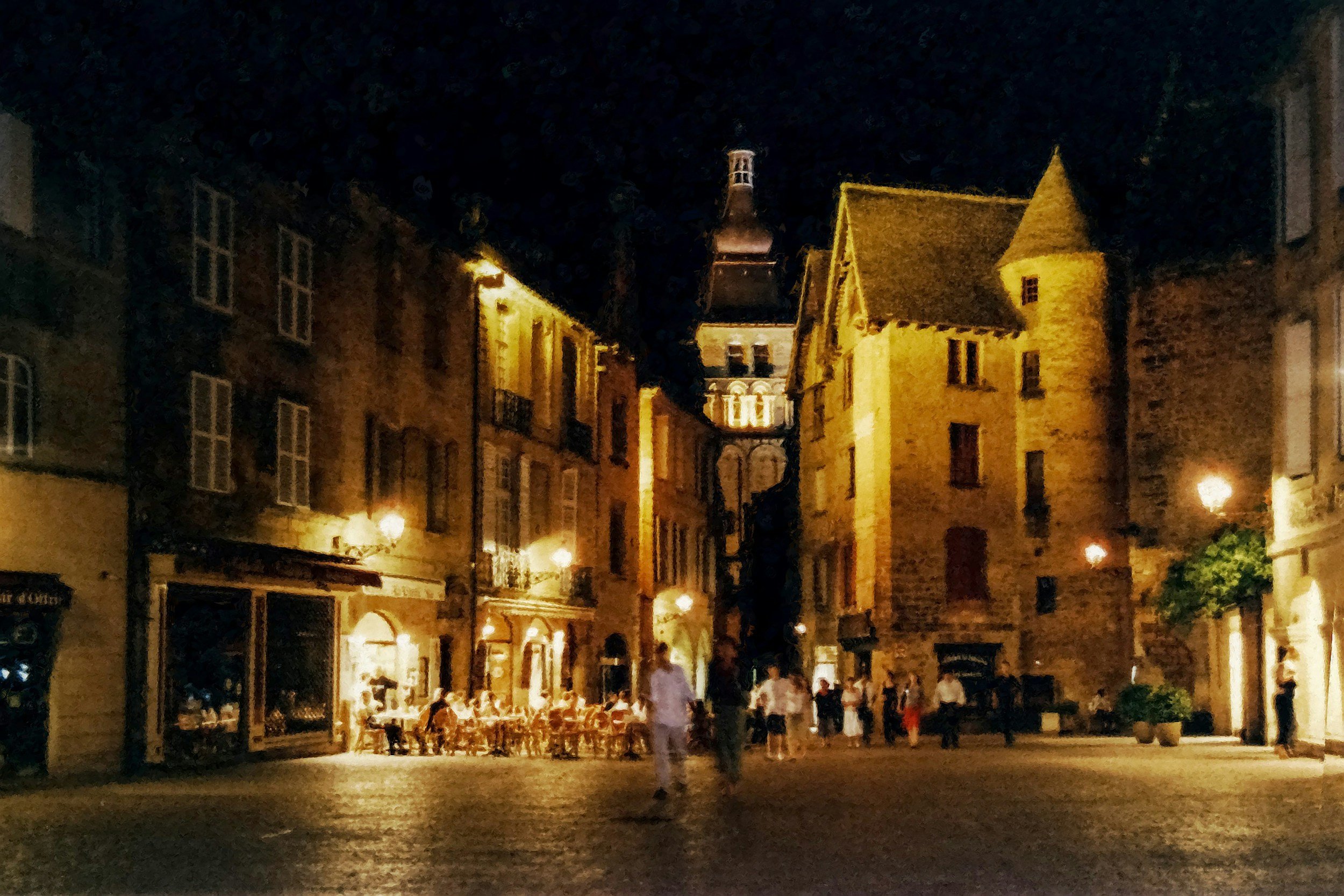
How to spend a spring weekend in Périgord Noir
You don’t need a fixed plan here. What helps more is knowing when to go places and when to leave them.
Most of the villages change quite a lot through the day. Early morning and early evening are calm. Late morning into mid-afternoon is when Sarlat and the river villages fill up. If you work around that, everything feels easier.
If you prefer something with a bit more sea and light, Menton on the French Riviera has a completely different setting but a similar pace outside peak season.
For something even quieter, the Lot Valley has the same kind of pace but with more space between places.
Friday - arrive, settle in, keep it local
If you’re arriving by train, you’ll likely come into Sarlat-la-Canéda via Bordeaux or Brive. The station sits just outside the old town, so once you’ve picked up your car, it’s only a few minutes’ drive in.
If you’re not staying in Sarlat, don’t stop there yet. It’s much better the next morning.
Head straight to your base. The last stretch of road into the Dordogne tends to slow down, especially once you pass through smaller towns like Saint-Cyprien or along the river near Vitrac, but that’s part of arriving here.
Once you’ve checked in, go for a short walk without trying to turn it into anything.
In Saint-Léon-sur-Vézère, follow the small road down past the church toward the river. There’s a low stone edge and a grassy bank where people sit quietly in the evenings. It’s not marked as anything special, but it’s one of the nicer spots in the village.
In Beynac, stay low instead of heading uphill. Walk along the Dordogne riverbank, past the boats and under the cliffside. You’ll see the château above you, but from below it feels more like part of the landscape than something to “visit”.
In Domme, walk beyond Place de la Halle and out toward the edge of the village near Porte des Tours. The view opens up over the valley here, and in the evening it’s usually quiet again.
Dinner doesn’t need to be planned in advance. In spring, most places are still flexible.
You’ll see similar menus across the region (duck, walnuts, goat cheese, seasonal vegetables) and it’s generally done well wherever you go. Pick somewhere that feels relaxed rather than somewhere that looks like it needs booking.
Saturday - Sarlat early, then leave it behind
If you want to see Sarlat, go early enough that it still feels like a town and not a queue.
Arriving around 8:30 or just before 9:00 makes a big difference. You can park just outside the old town, near Avenue Gambetta or Place Pasteur, and walk in while everything is still opening.
The market runs through the old streets, but the best part is before it’s fully set.
Along Rue des Consuls, stallholders are still unpacking crates of strawberries and herbs. Near Place du Marché aux Oies, you’ll start to smell the first rotisserie chickens turning. The covered market inside Église Sainte-Marie is open, but still quiet enough to walk through without stopping every few seconds.
This is when it feels good. After about 10:30, it shifts.
Before you leave, stop for coffee somewhere simple. Café de la Liberté works because it’s easy and central, but if you walk just off the main square you’ll find smaller places that feel less busy.
Then leave Sarlat before it fills up.
Late morning - the Vézère side
Drive out toward the Vézère Valley, in the direction of Saint-Léon-sur-Vézère and Montignac.
This side of the region feels slightly less visited than the Dordogne river villages, and it’s easier to stop without feeling like you’ve pulled into a designated viewpoint.
You’ll pass stretches where the road runs close to the water, with small gravel areas where you can pull over. You don’t need a specific place. Stop when it looks right.
This is where you eat what you bought earlier.
Bread, cheese, strawberries, maybe a slice of pâté wrapped in paper. Sit near the river, watch the water move past, d just relax.
Afternoon - one stop is enough
It’s tempting to try and fit in a few things here, but it works better if you choose one and stick to it.
If you feel like being on the water, head just outside Montignac where several small canoe bases operate. You don’t need a long route. An hour or two is enough to get a feel for it.
The Vézère is calm here. You’ll drift past limestone edges, small wooded sections, and the occasional stone bridge. It’s quiet in spring, especially outside weekends.
If you’d rather stay on land, go to Château de Losse, just outside Montignac.
It’s one of the easier places to spend time without it turning into a full “visit”. The gardens are laid out but not overly formal, and there are paths down toward the river where you can just walk without following a route. In May, things are starting to come into bloom, and it’s usually quiet enough to take your time.
After that, don’t add another stop.
Evening - Domme, but later in the day
If you’re heading to Domme, go toward the end of the day instead of the middle of it.
Arriving around 18:30 or later means most people have already left, and the village feels more open again.
Walk along the edge near Porte des Tours or along the outer wall. You’ll see the Dordogne valley spread out below, with the river cutting through the trees and fields.
For dinner, avoid the most obvious terrace spots right on the main square. Walk a little further in and you’ll find smaller places that feel more relaxed and easier to sit down in without planning ahead.
Sunday - one place, early, then leave space
If you want to see La Roque-Gageac, go early again.
Before 9:30, you can walk along the river without it feeling crowded. The light hits the rock face directly in the morning, and it’s one of the better times to see it before it fills up.
After that, keep the day light.
You could stop in Saint-Cyprien if it’s Sunday - there’s a small market that feels more local than Sarlat. Or drive toward Les Eyzies and stop somewhere along the Vézère again for a short walk.
Or just go back, sit outside wherever you’re staying, and let the trip end slowly instead of trying to fit in one more place.
And if you like the idea of combining countryside with wine, this weekend in Vongnes (Bugey) is another easy one to add.
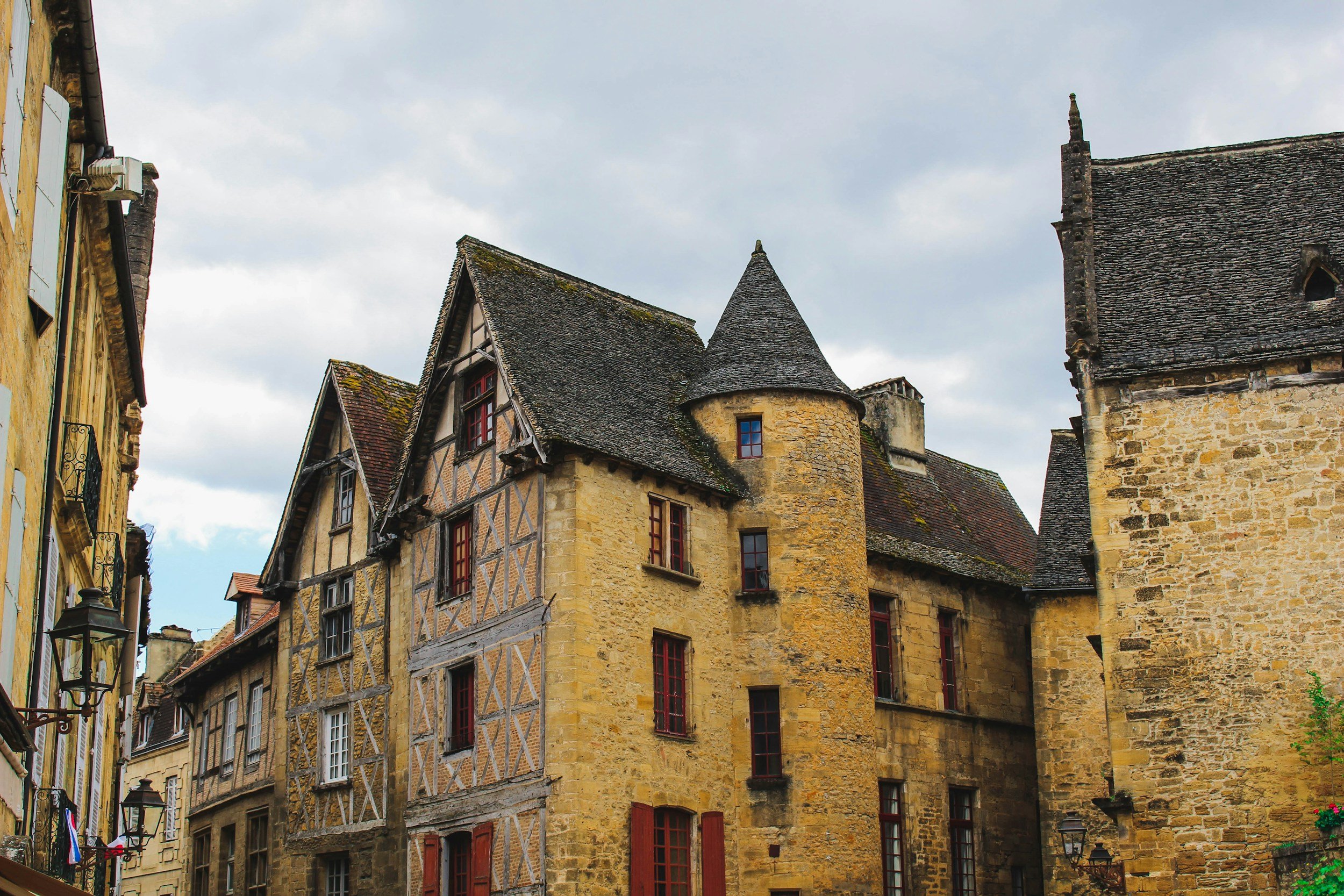
Sarlat
Where to eat in Périgord Noir
Food here isn’t complicated, but that’s also what makes it easy to get wrong if you just follow Google Maps blindly.
Most places serve some version of the same things (duck, potatoes, goat cheese, walnuts) so the difference isn’t really the menu. It’s where you sit, what time you go, and whether the place feels like it’s set up for visitors or still used by locals.
A few places below that are genuinely worth it, plus how to approach eating here in general.
Sarlat - go early or slightly late, not peak lunch
Sarlat is the only place in the area where timing really matters.
If you sit down around 12:30–13:30 on a Saturday, it’s busy and a bit rushed. If you go earlier, or closer to 14:00, it’s a different experience.
Le Presidial is one of the safer choices if you want something that feels a bit more considered. It’s tucked just behind the main streets (near Rue du Présidial), set in a small courtyard with stone walls, and the pace is slower than the main square. The menu leans classic (foie gras, duck, seasonal vegetables) without trying to modernise everything.
If you want something simpler, Le Bistrot on Place de la Liberté works because it’s easy. Sit outside if there’s space, order something straightforward, and use it more as a place to pause than a “destination meal”.
One thing to avoid: restaurants directly on the busiest part of the square right at peak time. Same food, less enjoyable.
Market food + river = often better than a restaurant
One of the best meals you’ll have here probably won’t be in a restaurant.
If you’ve been to the Sarlat market, you’ll already have everything:
a still-warm baguette, a piece of goat cheese, strawberries, maybe a small jar of something you didn’t plan to buy.
Take it with you.
Along both the Dordogne and Vézère rivers, there are small access points and grassy edges where you can sit without it feeling like a “picnic spot”. Near Saint-Léon-sur-Vézère or just outside Montignac, you’ll find quiet stretches where you can sit close to the water without anyone passing by for a while.
This is usually more memorable than sitting at a table.
La Roque-Gageac - one reliable stop by the water
If you do want to sit down somewhere along the Dordogne, La Belle Étoile is one of the more reliable places.
It sits right by the river in La Roque-Gageac, just below the cliff. If you go early in the day or slightly after the main lunch rush, you can usually get a table near the edge.
The menu is straightforward (confit de canard, salads with walnuts and goat cheese, simple desserts) but that’s exactly what works here. It’s more about the setting and the pace than the food being “special”.
Domme - better than expected if you avoid the obvious spots
Most people go to Domme for the view and don’t think much about eating there, but it can actually be a good stop if you choose carefully.
L’Esplanade is the well-known one, and it works best at lunch when the light over the valley is clear. The set menu is fairly priced for the location, and you’re really there for the view as much as the food.
That said, it’s worth walking a bit further into the village instead of sitting right at the most obvious terrace. Smaller places just off Place de la Halle tend to be calmer, especially later in the day.
One dinner worth planning (but only one)
If you’re staying two or three nights, it’s worth doing one proper dinner - not for something fancy just somewhere that takes a bit more care.
Auberge du Vieux Logis in Trémolat is a good example. It’s about 25 minutes from Sarlat, so you’ll need to drive, but the setting is quiet and slightly removed from the busier villages.
Inside, it’s simple and warm rather than formal. Service is steady, not rushed. The food follows the region but with a bit more attention to detail - foie gras that’s not overworked, duck that’s cooked properly, vegetables that aren’t an afterthought.
It’s the kind of place where you stay for a while without checking the time.
A quieter lunch stop between villages
If you’re driving between places and want something that doesn’t feel busy, Le Petit Paris in Daglan is worth knowing about.
It’s slightly off the main route between Sarlat and the river villages, with a small garden that opens up in good weather. It’s not a “destination restaurant”, but that’s why it’s great - you can sit down, eat something simple, and not feel like you’ve stepped into a tourist flow.
How to get to Périgord Noir
Most people come in via Bordeaux.
From there, the simplest option is to rent a car and drive. It takes around 2 to 2.5 hours. The first part is fast, then it slows down once you leave the main roads. You’ll notice it when you pass through smaller towns or turn off toward Sarlat - the roads narrow and the pace drops.
You can also take the train from Bordeaux to Sarlat-la-Canéda or Brive-la-Gaillarde. Brive has more connections, but Sarlat puts you closer to where you want to be.
Either way, you’ll still need a car once you arrive. The train gets you into the region, but it doesn’t help much after that.
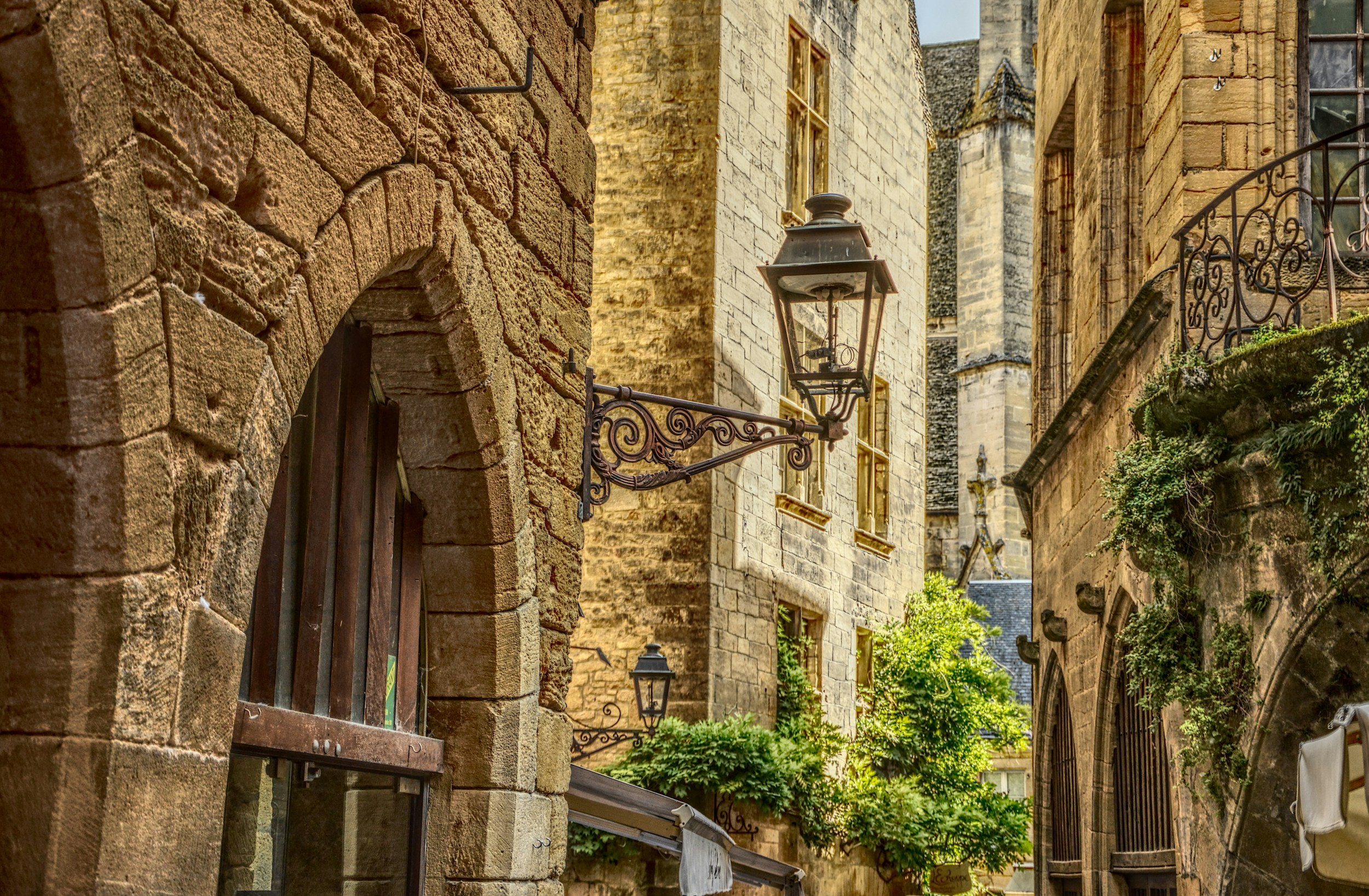
Is spring actually the best time to visit Périgord Noir?
For me, May is probably one of the nicest times to come. Everything has properly opened up again, but you are still ahead of the busiest summer weeks.
You can wander around Sarlat in the morning without every narrow street being packed, and villages like Beynac and La Roque-Gageac are much easier to enjoy when you are not constantly trying to squeeze past tour groups. It is warm enough to sit outside for lunch, spend time by the Dordogne and walk between viewpoints without feeling completely wiped out by the heat.
Temperatures in May are often somewhere around 18–24°C, although spring weather can obviously be a little unpredictable.
By July and August, you are visiting exactly the same beautiful villages, but the experience is quite different. Parking takes more thought, lunch reservations become more useful and you are far more aware of when everyone else has decided to visit the same place.
In spring, you can be a bit more spontaneous. Decide over breakfast whether you fancy a market morning in Sarlat, a walk around Beynac or a lazy afternoon by the river, rather than planning the entire day around crowds and parking.
Getting around Périgord Noir
This is definitely an area where 15 kilometres does not necessarily mean 15 easy minutes.
The villages are fairly close together, but many of the roads are narrow and winding, with sections running through tiny villages and wooded countryside. Most journeys between the main places will take somewhere around 15–25 minutes, sometimes a little longer than Google Maps initially makes you think.
Driving itself is not particularly stressful. Parking is more likely to be the annoying part.
In Sarlat, I would avoid trying to get as close to the old town as possible, especially from late morning onwards. It is usually much easier to park a little further out and walk the last few minutes.
Beynac and La Roque-Gageac both have designated parking, but these are small villages and the spaces can disappear surprisingly quickly around lunchtime. Arriving earlier in the morning makes everything easier, and later afternoon is another good time if you are not bothered about fitting in a long lunch.
Once you stop trying to rush between places, getting around is actually pretty straightforward.
A few things worth knowing before you go
One thing that catches people out in rural France is that you cannot necessarily get coffee, lunch or dinner whenever you feel like it. Some cafés close in the afternoon, kitchens stop serving after lunch and then reopen for dinner, and smaller villages can become very quiet between the two.
Market days are also worth planning around because they completely change the feel of a town. Sarlat’s main markets are on Wednesday and Saturday, with Saturday being the bigger one. If you would rather have something smaller and a little easier to browse, Saint-Cyprien has its market on Sunday.
I would also use mornings and early evenings for the most popular villages whenever possible. Around midday, that is when day-trippers tend to arrive, restaurant terraces fill up and the small car parks suddenly feel much smaller.
The good thing about travelling here in spring is that you generally do not have to organise every meal and activity weeks in advance. There is still room to change your mind.
Where I wouldn’t stay for a short trip
The countryside around Périgord Noir is full of beautiful converted farmhouses, cottages and tiny hamlets, and it is very easy to book somewhere because it looks idyllic in the photos.
For a two or three-night trip, though, I would be careful about going too rural.
A house that looks ten minutes from everything on the map can mean repeated drives along slow country roads every time you want breakfast, dinner or a walk around a village. Lovely if you are staying for a week and deliberately want to disappear into the countryside. Slightly annoying if you only have two days.
I probably would not choose the very centre of Sarlat either if the whole point of the trip is to have somewhere quieter to come back to.
Instead, I would look just outside Sarlat or around one of the smaller villages such as Saint-Léon-sur-Vézère or Beynac. You are still close enough to restaurants and the places you actually want to visit, but your mornings and evenings feel much calmer once the day-trippers have gone.
FAQ: Périgord Noir in Spring
Is Périgord Noir worth visiting in spring?
Yes, and it’s one of the best times to go.
In May, villages like Sarlat-la-Canéda, Beynac-et-Cazenac, and La Roque-Gageac are still active, but not crowded. Markets are fully running, restaurants are open, and the weather is comfortable enough to spend most of the day outside.
You’ll also notice the difference in pace. You can walk through Sarlat in the morning without it feeling busy, and places along the Dordogne and Vézère rivers are still quiet enough to stop without planning ahead.
Where should I stay in Périgord Noir for a short trip?
If you’re staying 2–3 nights, it’s better to pick one base and stay there.
Good options:
Saint-Léon-sur-Vézère → quieter, close to Montignac and Les Eyzies
Beynac-et-Cazenac → central along the Dordogne River, easy access to nearby villages
Domme → easiest for cafés, restaurants, and views without needing to drive every time
All three are within 20–30 minutes of Sarlat, so you won’t lose time moving around.
Do you need a car in Périgord Noir?
Yes, realistically you do.
You can reach Sarlat by train, but most of the smaller villages (Saint-Léon-sur-Vézère, Beynac, Domme) aren’t connected by reliable public transport.
Driving distances are short, but having a car makes it possible to:
stop along the river
visit smaller villages
move early or late in the day when places are quieter
What are the best villages to visit in Périgord Noir?
For a short trip, these are the ones that work well together:
Sarlat-la-Canéda → market, old town, cafés
Beynac-et-Cazenac → river views and castle setting
La Roque-Gageac → village built into the cliff along the Dordogne
Domme → panoramic views over the valley
Saint-Léon-sur-Vézère → quieter, more local feel
You don’t need to visit all of them — 2–3 per day is more than enough.
What is the Sarlat market like, and when should I go?
The market in Sarlat runs on Wednesdays and Saturdays and spreads through the old town.
The best time to go is before 10:00.
That’s when:
stalls are still setting up
it’s easier to move through the streets
you can actually stop and look without it feeling crowded
After late morning, it gets busy and slower to walk through.
Can you visit Dordogne without a strict itinerary?
Yes! and it’s actually better that way.
The region works best when you:
go to places earlier in the day
leave before they fill up
keep space between stops
Instead of planning every hour, it’s easier to:
base yourself in one village
do one main activity per day
leave time to stop along the river or sit somewhere longer
Is Périgord Noir good for solo travel?
Yes, especially in spring.
It’s a safe, easy region to move around, and the pace suits solo travel well. You can:
walk through villages without feeling out of place
sit in cafés or by the river without pressure
structure your day loosely without needing plans
Places like Sarlat, Saint-Léon-sur-Vézère, and Domme all work well if you’re traveling alone.
What is the weather like in Dordogne in May?
May is one of the most comfortable months.
daytime temperatures: around 18–24°C
cooler mornings and evenings
occasional rain, but usually short
It’s warm enough to sit outside, walk along the river, and even canoe, but without the heat of summer.
Is it better to visit Dordogne in spring or summer?
Spring is usually the better choice if you want a calmer trip.
In May:
villages are active but not crowded
restaurants are open but easier to access
temperatures are more comfortable
Summer brings more people, especially in places like Sarlat and La Roque-Gageac, and you’ll need to plan more around crowds.