
The small towns near Lyon I'd actually get on a train for
Lyon is one of those cities where it's surprisingly easy to find yourself somewhere completely different before lunchtime.
You can leave Part-Dieu with a coffee still too hot to drink, settle into a TER train heading north, and spend the next forty minutes watching apartment blocks gradually give way to vineyards, small stations and wide stretches of the Saône. By the time you step off the train, you're somewhere that feels a long way from France's third-largest city. The bakery has almost sold out of bread, people are leaving the Saturday market carrying flowers and roast chickens, and the loudest sound is usually a church bell or someone chatting across the square.
Most visitors naturally hear about Annecy or Pérouges first, and they're popular for good reason. But if your idea of a good day is browsing a local market, finding a café where nobody seems in a hurry, or wandering streets that still feel like they're used more by residents than day-trippers, there are plenty of smaller towns around Lyon that rarely get the same attention despite being just as straightforward to reach without a car.
That's probably what I enjoy most about them. They don't feel undiscovered, and they don't need to. They simply feel lived in. On a Saturday morning you'll see queues outside the butcher, neighbours stopping to chat outside the bakery, and cafés filling up with people who clearly know each other rather than groups working through the same sightseeing route. Then lunchtime arrives, shutters close, the streets empty almost all at once, and for an hour or two the whole town seems to slow down before gradually coming back to life later in the afternoon.
I've also found that these places are much more enjoyable when you stop trying to see everything. Arriving in time for the market, wandering wherever looks interesting, sitting down for a long lunch, maybe walking along the river or through the vineyards before catching a later train back to Lyon is usually more rewarding than trying to fit three towns into the same day.
Every town in this guide has its own character. Some sit among the Beaujolais vineyards, others follow the Saône or the Rhône, and a few feel less like tourist destinations and more like the sort of places where everyday life simply carries on whether visitors arrive or not. They're all easy to reach by train, and together they show a quieter side of the region that many people never see.
Ever wondered whether it's worth getting off the train between Lyon and Dijon? Tournus convinced me it absolutely is.
Before you choose a town
One thing that's worth knowing before planning day trips from Lyon is that the station you leave from can shape the start of the day more than you'd expect.
Most regional TER trains leave from Lyon Part-Dieu, so chances are you'll pass through here at some point. It's the city's main transport hub, and on weekday mornings it feels exactly like one. Commuters weave through the concourse with coffee in hand, the departure boards are constantly updating, and it's not unusual for platforms to be announced fairly late. None of it is difficult once you're there, but it's much nicer if you're not trying to sprint through the station with five minutes to spare.
Lyon Perrache has a completely different feel. It's smaller, quieter and generally less stressful to navigate, especially if you're staying around Bellecour, Ainay or the southern end of Presqu'île. There are fewer departures, so it won't work for every destination, but when it does it's often the calmer way to begin the day.
In reality, Part-Dieu still ends up being the better option for most trips simply because there are far more trains heading out towards places like Villefranche-sur-Saône, Mâcon and the Beaujolais villages. I usually just aim to arrive a little earlier than necessary, pick up a coffee and something from one of the bakeries in the station, check the departure board without feeling rushed, and let the train journey become part of the day rather than something to get through as quickly as possible.
TER trains vs regional buses in this area
For most of the towns in this guide, TER trains are the simplest option.
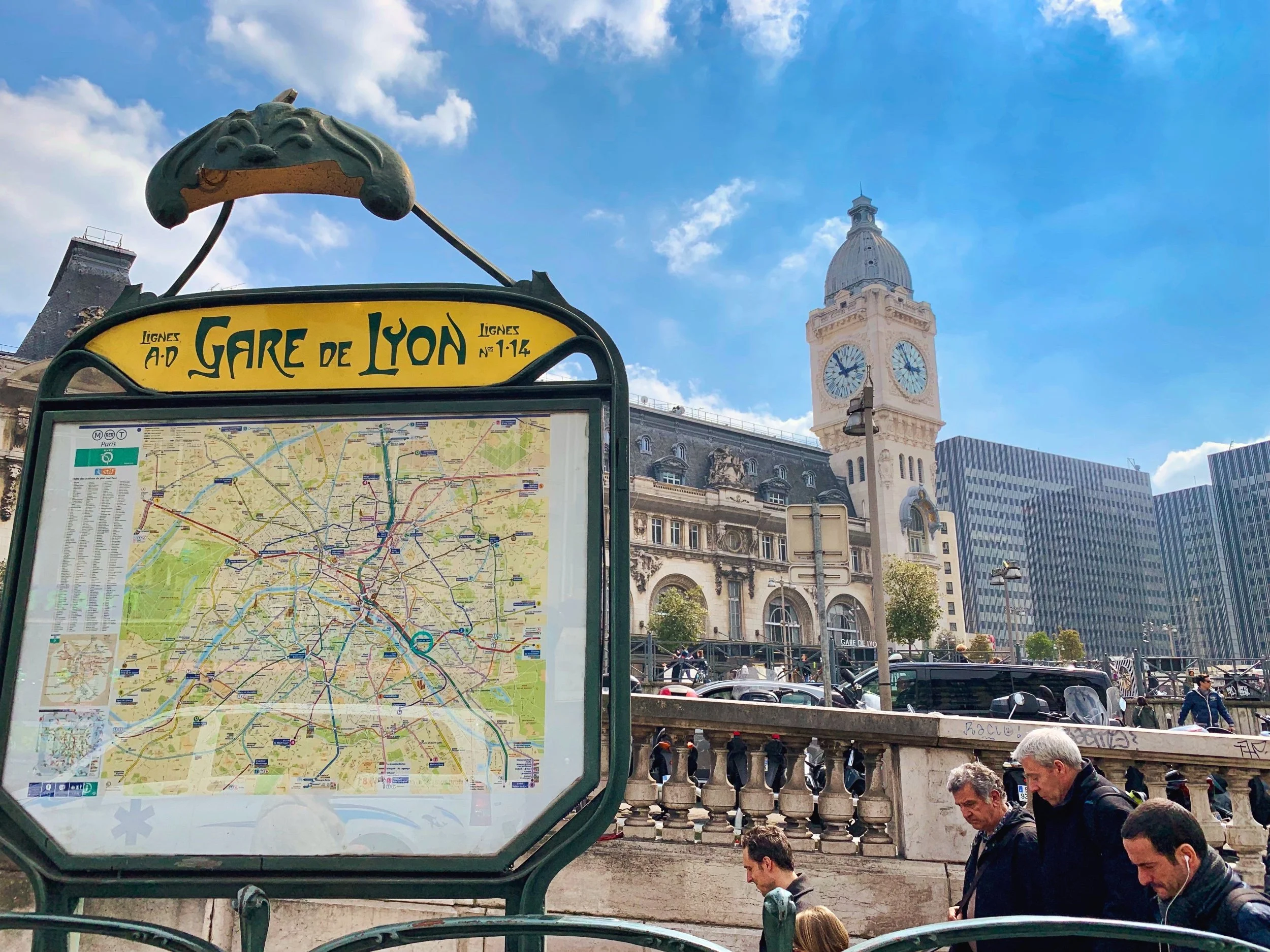
One of the reasons these towns make such good day trips is that most of them begin almost as soon as you step off the train. In places like Villefranche-sur-Saône, Vienne and Meximieux, there's no complicated transfer to think about. Within a few minutes you're wandering past bakeries putting fresh tarts in the window, cafés setting out their terraces or independent shops opening for the morning, which makes the whole day feel pleasantly straightforward from the start.
The only places that take a little more planning are some of the smaller villages tucked into the Beaujolais hills or further towards the Pilat Regional Natural Park. They might look close to Lyon on a map, but the nearest railway station can still be several kilometres away, and that's where people often underestimate how long the last part of the journey takes.
If you're heading somewhere like that, I've generally found it much easier to pick up a taxi from a larger station such as Villefranche-sur-Saône than trying to piece together a local bus journey. The buses are perfectly usable if the timetable happens to suit your plans, but services can be quite limited outside the busiest routes, and it's not unusual to end up being dropped on the edge of a village with another walk still ahead of you.
For the kind of day trips this guide is about, the train is usually what makes them so enjoyable. You don't need to keep checking the time in quite the same way, and it's easy to stay a little longer if lunch turns into two courses instead of one, if the Saturday market is bigger than you expected, or if you discover a café that's too nice to leave after a single coffee.
Unless you're specifically aiming for one of the villages beyond the rail network, I'd build the day around the train and only think about buses or taxis for the final few kilometres when they're genuinely needed.
If you end up wanting something similar further south, these small towns near Marseille have that same easy, walkable feel once you step away from the coast.
When these towns are actually at their best
One thing I've learnt after several trips around Lyon is that the time of day often changes a place far more than the season does.
Take somewhere like Oingt or Pérouges on a warm Saturday. If you arrive around lunchtime, you'll probably find the restaurant terraces busy, visitors stopping every few metres for photos and a steady stream of people wandering along the main street. There's nothing wrong with that, but it isn't quite the version of these villages that stays with me. Catch an earlier train from Lyon instead and you'll arrive while shopkeepers are still unlocking their doors, bakery deliveries are being wheeled inside and locals are picking up bread before the day properly begins. For an hour or so, the quieter lanes can feel almost empty.
The opposite happens later in the afternoon. Once the day-trippers start making their way back to Lyon, places like Trévoux, Vienne and Villefranche-sur-Saône gradually settle back into their normal pace. People drift down to the river for an evening walk, terraces fill with groups meeting for an apéritif rather than lunch, and the town starts feeling like somewhere people live instead of somewhere they're visiting for a few hours.
If your schedule is flexible, travelling midweek is usually an easy way to avoid the busiest moments, particularly in the smaller Beaujolais villages. The only thing I'd always check beforehand is restaurant opening days. Family-run restaurants often close on Mondays or Tuesdays, and outside the main season it's not unusual for village cafés to keep shorter hours than you'd expect.
That said, I wouldn't avoid weekends altogether. I'd just start earlier. Leaving Lyon before most people have finished breakfast can completely change the feel of the day, and you'll often have time to enjoy the market, wander the quieter streets and settle in for lunch before the busiest trains from the city arrive.
The towns that I find myself returning to are usually the ones where everyday life never disappears behind tourism. In Trévoux, the riverside paths are still full of walkers and cyclists going about their day. In Villefranche-sur-Saône, people are shopping along Rue Nationale because that's where they actually shop, not because it's part of a sightseeing route. Even in the more popular places, you rarely have to walk more than a street or two away from the main square before everything feels noticeably quieter again.
If you’re thinking about doing this kind of trip in spring instead, this Provence in May itinerary gives a much clearer idea of how the days actually fall into place.
Why market days can completely change a town
If you're trying to decide between two towns near Lyon, one of the most useful things to check isn't necessarily which one has the prettier streets or the better viewpoint. It's whether there's a market on the day you're planning to visit, because a market morning can completely change the atmosphere of a place in ways that don't always show up in guidebooks.
Take Trévoux on a Saturday, for example. Long before you reach Place de la Terrasse, you'll start noticing people walking through town carrying flowers, baguettes tucked under their arms, paper bags filled with vegetables, or boxes of fruit balanced carefully on bicycle baskets. The cafés along the river seem to fill earlier than usual, the bakery queues are noticeably longer, and the whole town feels more animated without ever feeling busy in the way larger cities do.
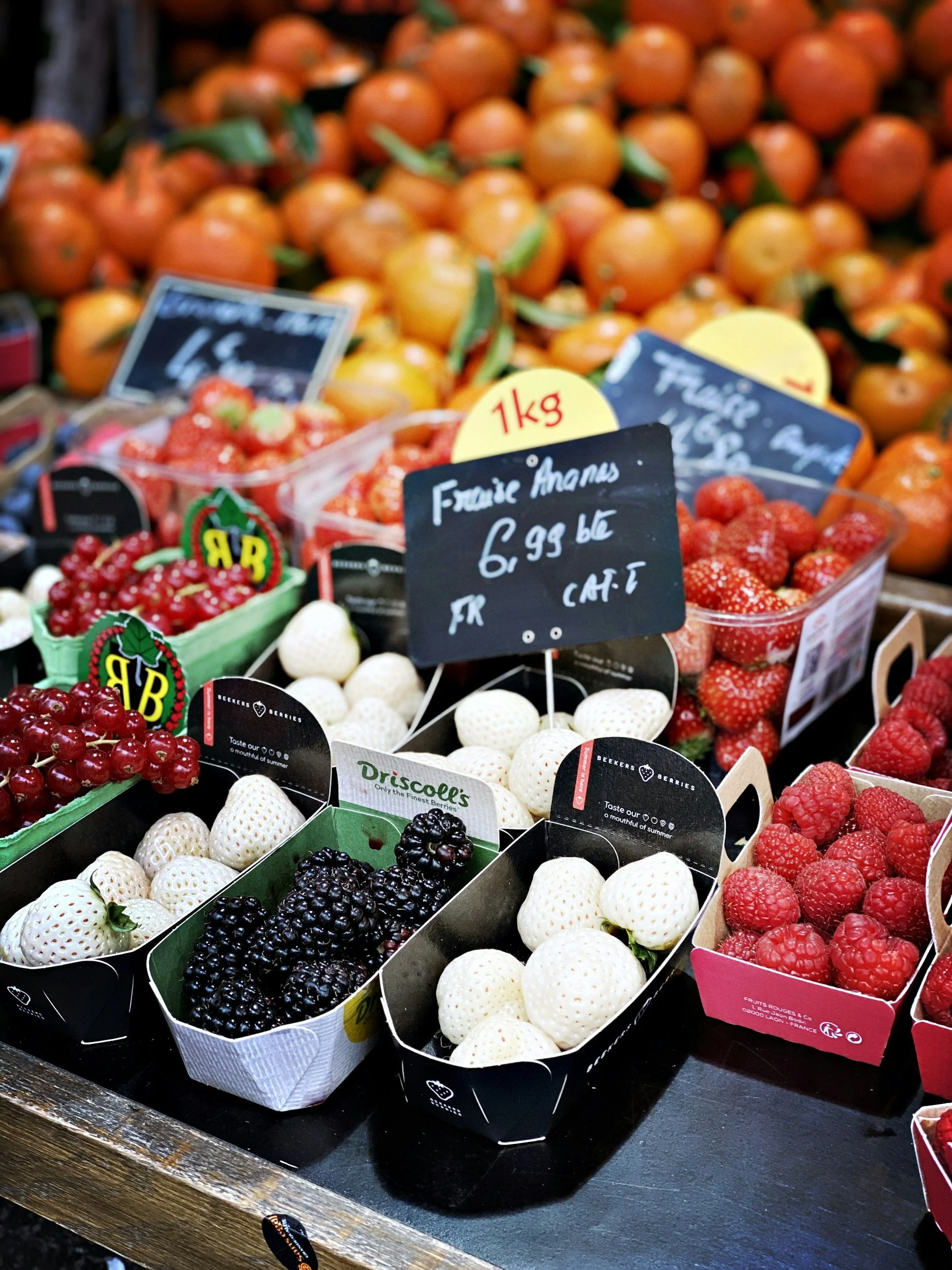
What usually catches my attention isn't the market itself but everything happening around it. Someone is standing outside the butcher waiting for their number to be called, another person is balancing a baguette and a bunch of flowers while trying to finish a conversation, and the café terraces gradually fill with the same familiar faces who clearly do this every Saturday. Before long, the market almost fades into the background because everyone is simply getting on with their morning.
That's especially noticeable in Villefranche-sur-Saône. Around Rue Nationale, people drift between the cafés, bakeries and food shops without much urgency, stopping to compare peaches, ask the cheesemonger what's particularly good this week or chat to someone they've bumped into on the pavement. Wander through Les Halles de Villefranche while it's still busy and you'll notice very quickly that most shoppers aren't there for an experience. They're there because it's Saturday and they need something for lunch.
The markets in the Beaujolais villages feel different again. Beaujeu, Le Bois-d'Oingt, Villié-Morgon and other wine villages rarely have dozens of stalls, but they don't need to. A fruit grower is selling cherries picked earlier that morning, someone else has apricots from the Rhône Valley stacked in wooden crates, and the cheesemonger is cutting generous wedges of Saint-Marcellin, Rigotte de Condrieu and local goat's cheese while explaining where each one came from. By eleven o'clock, the queue for the rotisserie chicken van is usually longer than any queue at the bakery.
I always end up spending longer here than I'd planned because buying food seems to be a conversation rather than an errand. People ask whether this week's apricots are sweeter than the last batch, taste a slice of saucisson before deciding which one to take home, disappear into another conversation halfway through their shopping and carry on exactly where they left off ten minutes later. It's ordinary, but it's also one of the easiest ways to understand a place.
Lunch usually sorts itself out after that. I'd much rather leave with a warm baguette, a piece of Saint-Marcellin, whatever fruit looks best that morning and, if the bakery has any left, a slice of tarte aux pralines than spend half the day trying to find the "best" restaurant. In Trévoux, it's easy to wander down towards the Saône and eat by the river, while in the Beaujolais villages there always seems to be a quiet square or a bench looking over the vines where nobody will mind if you stay for a while.
That's often when these towns feel most themselves.
If markets is your thing, I wrote about a few smaller market towns in Provence where it still feels like people are shopping for the week, not just browsing.
And if Provence has started to feel a bit too expected, these quieter alternatives in southern France are worth a look before you decide where to base yourself.
When Beaujolais feels most enjoyable to explore on foot
The countryside west of Lyon is one of those places that's worth seeing more than once because it never looks quite the same twice. Drive or walk the same road in May, then come back in September, and you'll wonder if you're looking at the same hillside.
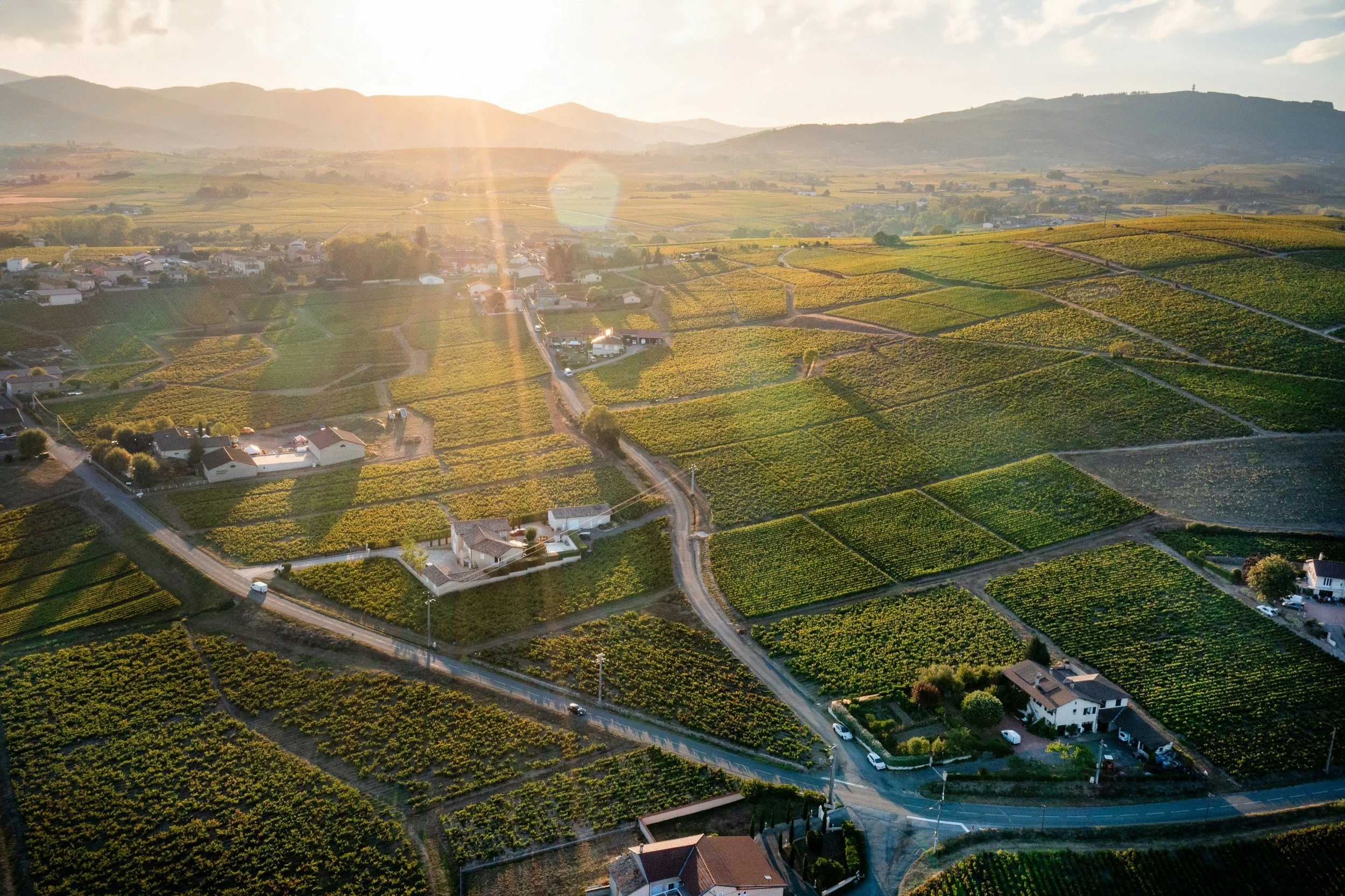
In late spring, villages such as Oingt, Theizé and Ternand are surrounded by bright green vineyards, with poppies and wildflowers appearing along the edges of the lanes and every bend opening another view across the hills. It doesn't take much to leave the village behind. A road that begins between stone houses quickly becomes a vineyard track, then slips past an old winegrower's hut, a tiny chapel or a farmhouse tucked into the slopes.
I've set out more than once intending to stretch my legs for twenty minutes before lunch and ended up walking for well over an hour instead. Around here, it's easy to convince yourself that you'll just see what's around the next corner, only to find another lane climbing between the vines or another view that makes you stop for a minute before carrying on.
A few months later, the landscape has a completely different character. By August, the vines are heavy with fruit, the hills have faded from bright green to softer golds and pale greens, and the limestone walls seem to hold onto the afternoon warmth long after the sun has started dropping. Around midday, the quieter vineyard roads often empty while the café terraces begin to fill instead.
Then September arrives, and the whole area becomes noticeably busier without ever feeling crowded. Tractors move steadily between the rows, growers are out checking the grapes, and conversations on café terraces often drift towards the harvest. Even if you know very little about wine, it's obvious that these villages aren't surrounded by vineyards simply because they look attractive. They're working landscapes, and for a few weeks each year, almost everything happening around them revolves around the grapes.
Looking back, the places I remember most are rarely in the middle of the villages. They're a narrow lane climbing out of Theizé, where the rooftops gradually disappear behind the vines, a track above Ternand where church bells carry across the valley, or the stone wall just beyond Oingt where people naturally stop before continuing on their walk. None of those places appear on the list of local attractions, but they're often the ones that stay in my mind long after I've gone home.
That's also why I wouldn't plan these villages as quick stops between other destinations. You can wander through the centre in half an hour, but it's usually the roads leading away from it that end up changing the pace of the day. More than once, I've looked at my watch, realised my train had already left, and decided it really didn't matter.
Season shifts places more than people admit. I saw that clearly in Moustiers-Sainte-Marie in spring (completely different feel than high summer!)
Oingt: golden stone, vineyard roads, and one of the best walks in Beaujolais
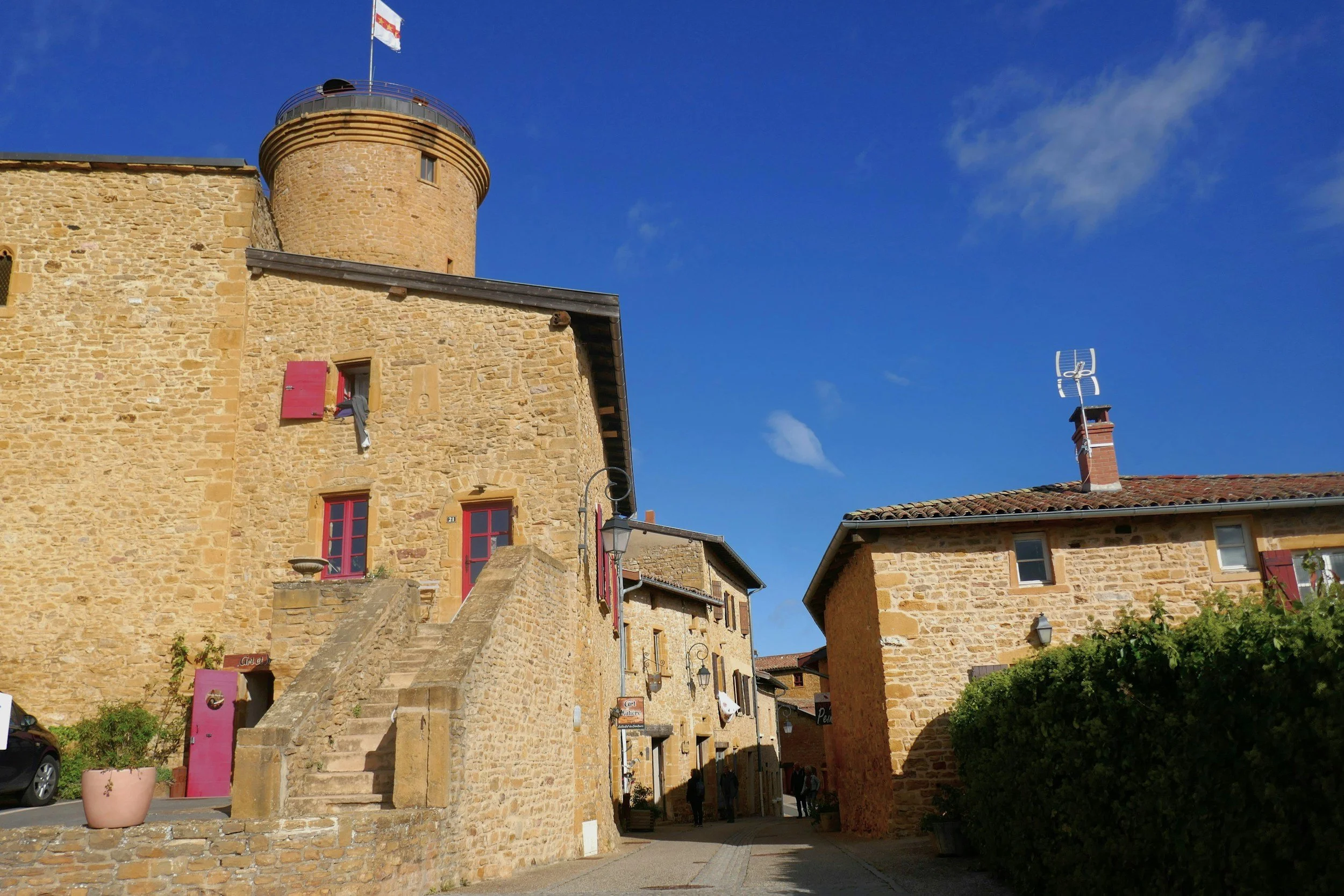
Oingt isn't a village that asks for a detailed itinerary because there simply isn't one. The medieval centre is small enough that you'll probably find yourself back where you started much sooner than expected, yet that's rarely the moment people leave. More often than not, another narrow lane catches your eye, a gallery door has been left open, or you notice one of the vineyard roads disappearing downhill and decide to see where it goes before heading back.
The village sits in the middle of Le Pays des Pierres Dorées, a part of southern Beaujolais where the local limestone gives almost every building the same warm golden colour, and after a while you stop noticing individual houses because everything seems to belong together. The church, old farmhouses, garden walls and narrow alleyways all share the same stone, although it never quite looks the same for very long. Early in the day it has a soft honey colour, while later in the afternoon it picks up deeper amber tones that seem to spread across the entire village as the sun begins to drop behind the hills.
Most people naturally wander along Rue Paul Causeret, and it really is the best place to begin because it leads through the heart of the old village, past small galleries, artisan workshops and stone houses where wooden shutters stay open through the day and flowerpots spill over onto the pavements. It's also where everyday life quietly carries on around you. Someone is unlocking a cellar beneath their house, another person is wheeling shopping home instead of carrying it, and conversations drift across the street because neighbours still seem perfectly happy to stop and talk for ten minutes in the middle of the morning.
If the Tour d'Oingt happens to be open, I'd climb it before doing anything else, partly because the view is beautiful but mostly because it helps you understand the landscape you're about to walk through. Looking out across Theizé, Bagnols, Frontenas and the folds of the Azergues Valley, you can see how completely the vineyards shape this part of Beaujolais, with rows of vines following almost every hillside and villages appearing wherever the terrain briefly softens.
Most visitors wander back towards the cafés after that, but I've always found myself walking in the opposite direction. Passing through Porte Nizy only takes a minute or two, and almost without noticing it the stone streets become narrow country lanes lined by dry-stone walls, vineyard parcels and old cabanes de vigne where winegrowers once stored tools and took shelter from the weather. There's no particular viewpoint you're trying to reach, which is probably why I enjoy these roads so much. You simply keep walking until something makes you stop, whether that's an old stone cross standing at a junction, a vineyard gate left open after someone has driven through, or the moment you turn around and realise Oingt now looks completely different from below, with the tower sitting above the rooftops and the golden stone catching the light across the hillside.
Come back during September and the roads tell a different story. Small tractors move steadily between the rows from early morning, trailers loaded with grapes head towards nearby domaines in Val d'Oingt and Theizé, stacks of harvest crates appear beside the vines waiting to be filled, and outside the wineries there's a constant rhythm of hoses being rolled out, presses being cleaned and forklifts moving backwards and forwards across the courtyards. Even if wine has never interested you particularly, it's difficult not to notice that this landscape isn't simply being admired. It's busy doing exactly what it has done for centuries.
The village changes with it. Café terraces still fill with visitors, but they're shared with vineyard workers stopping for coffee before heading back out into the fields, conversations drift towards the weather and the harvest instead of weekend plans, and every so often another tractor rumbles slowly through the village before disappearing back towards the vines. It never feels staged or preserved. You're simply arriving while everyday life happens to be carrying on around you.
That's probably why I keep returning to Oingt. The medieval streets are undeniably beautiful, but they're only one small part of the experience because within five minutes of leaving the last houses behind you're already walking through the vineyards that have shaped this landscape for generations, and before long you're looking back towards the village instead of standing inside it…
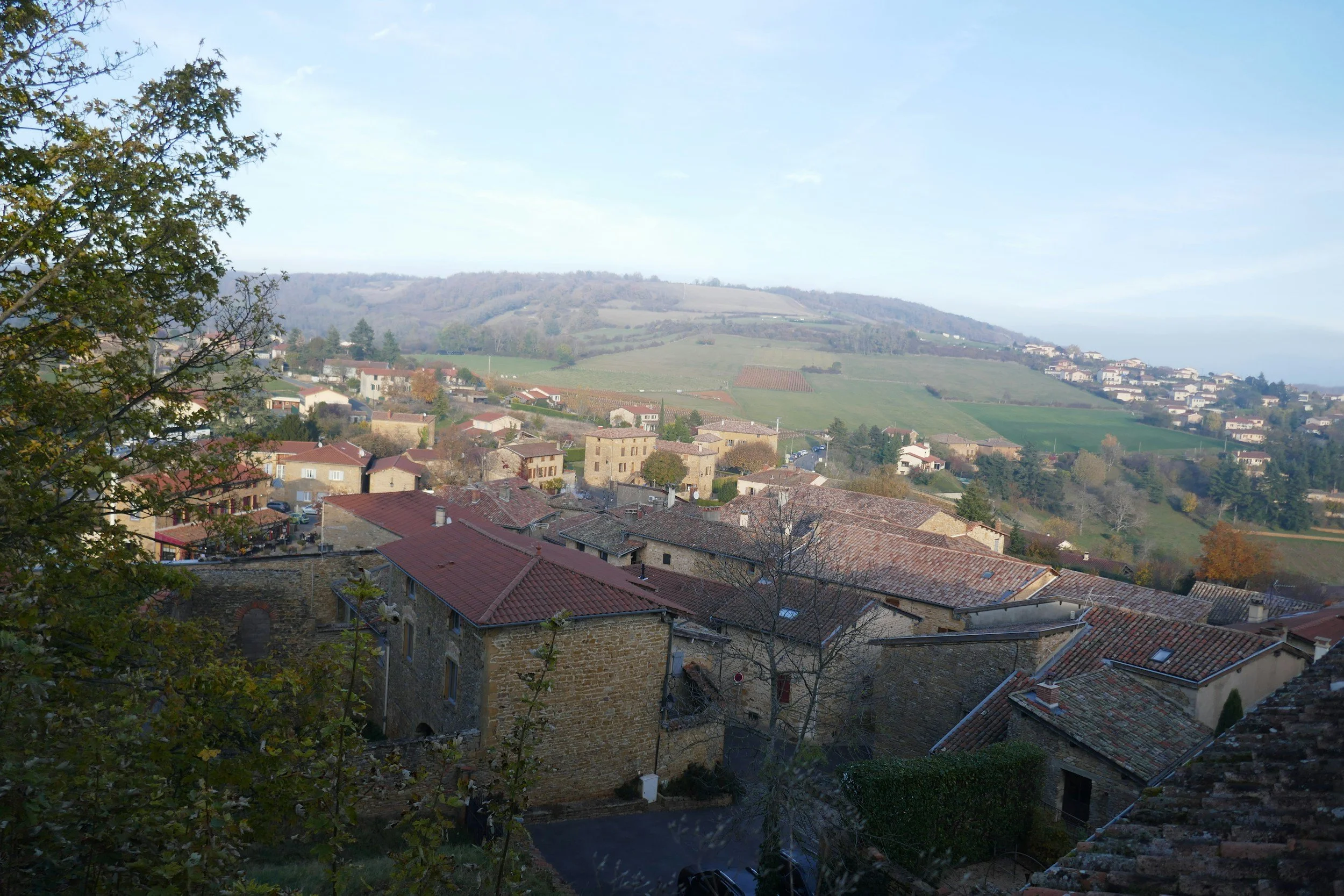
Trévoux: riverside walks, old stone streets, and everyday life along the Saône
révoux has a completely different character from many of the places people visit on day trips from Lyon. Instead of climbing a hill towards a medieval village or following vineyard roads through Beaujolais, you arrive beside the Saône, and before long you realise that the river shapes almost everything around you. Streets drift towards the waterfront, café terraces face the water whenever they can, and much of daily life seems to happen within sight of it.
It's the reason I nearly always begin down by Place de la Terrasse rather than heading straight into the old town. On market mornings, people cross the square carrying bouquets of flowers, roast chickens, fruit and paper bags from the bakery before disappearing into the surrounding streets, while during the week you'll usually find anglers quietly setting up along the riverbank, cyclists stopping for coffee on the Voie Bleue, or locals sitting outside the cafés before work with the newspaper folded beside their cup. It doesn't feel like a waterfront that's been designed for visitors. It's simply where the town naturally gathers.
The walk beside the Saône is one of those places where it's easy to lose track of time without really doing anything in particular. Barges move slowly upstream towards Chalon-sur-Saône, rowing clubs head out onto the water early in the morning, and every so often another cyclist rolls through on the long-distance route connecting Luxembourg with Lyon. You don't have to follow the entire riverside path for it to be enjoyable. Even twenty minutes is enough to see the pace of the town changing as you move away from the centre.
Many visitors stay close to the river, but it's worth climbing back up Grande Rue afterwards because that's where Trévoux starts revealing the layers of its history without making a spectacle of them. Between the bakery, pharmacy, cafés and small independent shops, you'll pass Renaissance façades, carved stone doorways and elegant townhouses that date back to the years when Trévoux was the capital of the Principality of Dombes, a small independent state that remained outside the Kingdom of France until the eighteenth century.
That history still lingers in unexpected places. The former Parlement de Dombes stands quietly in the centre, while the Apothicairerie de Trévoux, one of France's oldest historic pharmacies, preserves shelves of ceramic jars, painted woodwork and laboratory equipment that survived from a time when Trévoux was known as much for scholarship and printing as it was for trade along the river. The town also became famous across Europe for producing exceptionally fine fil d'or de Trévoux, a gold thread used in luxury embroidery and ecclesiastical textiles, an industry that brought remarkable prosperity to a place that now feels almost understated.
That's probably what I appreciate most about Trévoux. Nothing is presented with much fanfare. The history isn't concentrated in one landmark, the river isn't treated as an attraction, and nobody seems particularly concerned about whether visitors notice any of it. You discover the town by walking between the waterfront and the old streets, stopping for coffee, reading the plaques you happen to pass and gradually realising that somewhere which first appears quite modest has far more stories than you'd ever guess from a quick look at the map.
The walk up to Château Fort de Trévoux begins almost unnoticed. One moment you're passing cafés and shopfronts in the old centre, and a few minutes later you're climbing narrow stone lanes where window boxes spill over old walls and the streets become quiet enough that all you really hear are footsteps echoing between the buildings.
The fortress itself is mostly a ruin today, but the climb is easily justified by the view. From the circular keep, the Saône bends gently through the valley below, with Fareins on the opposite bank and the ponds and farmland of the Dombes stretching away beyond it. Looking back towards Trévoux, it's also one of the few places where you can appreciate how closely the town still follows the shape of the hillside rather than the neat grid you might expect from below.
Back at river level, it's worth slowing down again instead of immediately moving on to the next sight. The stretch between Place de la Terrasse and the old quays is where much of the town quietly unfolds, whether that's anglers unpacking their gear before sunrise, rowing crews heading out onto the water or cyclists rolling through on the Voie Bleue before continuing towards Lyon or Mâcon. If you arrive early enough, you'll often see the cafés filling with locals long before many visitors have appeared.
If your visit happens to fall on a Saturday, I'd make the market the centrepiece of the morning rather than something you squeeze in around everything else. Producers from across the Ain arrive with seasonal fruit and vegetables, local cheeses such as Bleu de Bresse and Saint-Marcellin, honey from the Dombes, saucisson from nearby farms and bunches of flowers that seem to disappear almost as quickly as they're unloaded. By mid-morning, the conversations are often just as much a part of the market as the shopping itself.
Before leaving, I'd take one last wander along Grande Rue, partly because it's still the town's everyday shopping street and partly because it's full of small places that are easy to overlook if you're walking too quickly. Librairie La Folle Aventure is one of them. Independent bookshops like this have become increasingly rare, and it's the sort of place where it's worth stepping inside even if you have no intention of buying anything.
Just around the corner, Carré Patrimoines occupies the beautifully restored Hôtel Pierre et Anne de Bourbon and tells the story of Trévoux when it was the capital of the Principality of Dombes. I'd only recommend it if you're curious about how the town fits into the wider history of the region, but if you are, it adds another layer to streets that can otherwise seem quietly understated at first glance.
Saturday morning in Trévoux
Saturday is easily the liveliest morning of the week in Trévoux, and by the time you arrive around Place de la Terrasse and Grande Rue, the market is usually already in full swing with people moving between stalls carrying flowers, paper bags from the bakery, bunches of asparagus in spring, or crates of peaches and apricots later in the summer.
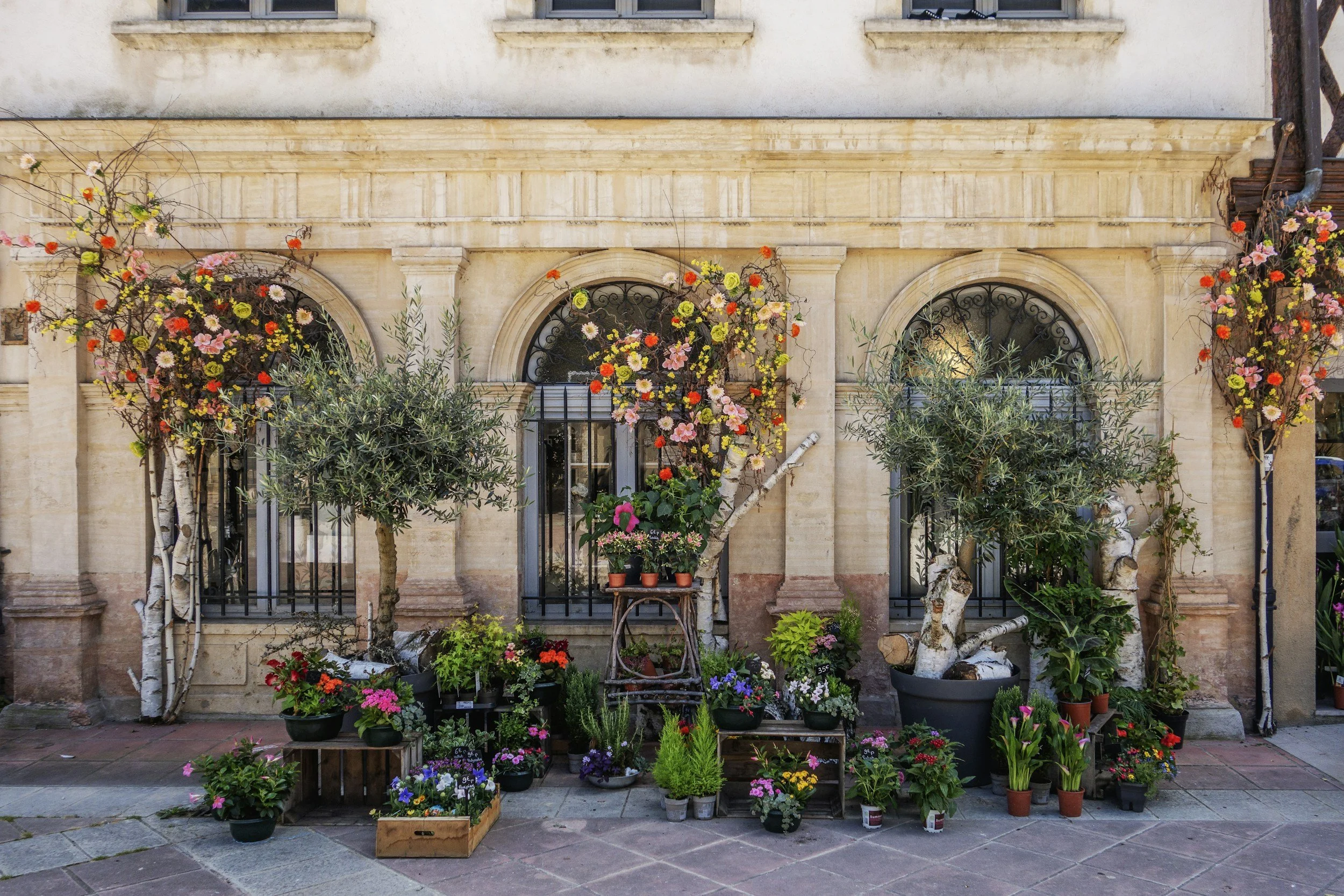
What I like is that nobody seems to be treating it as an attraction. Most people are there because it's Saturday and they need to buy things for the week ahead. You'll see familiar conversations happening between stallholders and customers, people comparing fruit before deciding which basket to take home, and locals queuing patiently at the cheese stands for Saint-Marcellin, Bleu de Bresse, fresh goat's cheese, or whatever happens to be in season that week.
The food side of the market is often what draws the biggest crowds, particularly around the rotisserie stalls where chickens turn slowly throughout the morning while the smell drifts across the square, mixing with fresh bread, coffee from nearby cafés, and whatever fruit happens to be piled highest on the produce stands that day.
By late morning, the shopping has almost become secondary. People leave the market carrying bags that are noticeably heavier than when they arrived, stop outside the bakery because they've bumped into someone they know, then drift down towards the Saône for coffee before eventually heading home. There's no clear point where the market ends and the rest of the morning begins. Everyone just seems to move through the town at their own pace.
Follow them down to the river and you'll notice the same thing. A couple of cyclists on the Voie Bleue have stopped to refill water bottles, anglers are already settled into their favourite spots along the bank, and almost every bench facing the water has someone sitting on it with an ice cream, a newspaper or a paper bag from the market. Nobody appears to be in a hurry to get anywhere else.
Come back a few days later and Trévoux has a different feel altogether. The market stalls have gone, the square is quieter and the conversations have shifted back to the cafés and the shops along Grande Rue. It's still somewhere I'd happily spend a few hours, but Saturday is the day when the town shows you the version locals know best, with neighbours catching up over coffee, shopping bags swinging from one hand and lunch already tucked under the other arm.
If market mornings are your favourite part of travelling, these are the towns around Lyon I'd plan an entire weekend around.
Sainte-Croix-en-Jarez: a former Carthusian monastery that became a village
Sainte-Croix-en-Jarez doesn't really resemble the other day trips from Lyon. There isn't a river running through the middle, there are no vineyard viewpoints, and you won't find a busy market square surrounded by cafés. Instead, almost everything here revolves around a former Carthusian monastery founded in 1280, one of the very few in France that gradually became an inhabited village without losing its original layout.
The unusual thing isn't simply that the monastery survived. It's that people still live inside it.
Walk through the entrance and you'll find yourself moving between spaces that were designed for a completely different way of life. The broad Cour des Frères, the quieter Cour des Pères, the church and the long stone passageways all belonged to a community of Carthusian monks who spent much of their lives in silence. Even now, the proportions feel different from an ordinary village. The streets are wider than you'd expect, the walls are unusually high in places, and many front doors still open onto what were once individual monastic houses.
One detail that's easy to miss is how the monastery was organised. Unlike many religious orders, the Carthusians lived alone rather than together. Each monk had his own small house, workshop and enclosed garden arranged around the Grand Cloître, allowing long periods of solitude while remaining part of the same community. If you look carefully as you walk around the village, you can still recognise the shape of those former gardens, now divided by stone walls, vegetable plots and private courtyards.
The church immediately catches your attention because it seems far too large for a village with only a few hundred residents, but of course it wasn't built for the village at all. It was built for the monastery centuries before anyone imagined people would one day be parking bicycles outside former monks' houses or carrying groceries through the cloisters on their way home.
I'd also take a few minutes to visit the Maison du Prieur, where exhibitions explain how the monastery functioned before the French Revolution changed the future of the site. It adds useful context before wandering through the rest of the village because so many of the buildings still survive, even if they're now private homes rather than monastic cells.
What surprised me most wasn't the history, though. It was how quiet the village becomes once you've walked beyond the entrance. Cars almost disappear, conversations seem to carry across the courtyards, and there are long moments where the only sound is a church bell or footsteps on the old stone paving. Considering this is still a lived-in village rather than an open-air museum, it feels remarkably peaceful.
If you have time afterwards, don't head straight back to Lyon. Several walking paths leave directly from Sainte-Croix-en-Jarez into the Parc naturel régional du Pilat, passing meadows, beech woodland and small farms scattered across the surrounding hills. Even a short walk changes the perspective completely because, looking back, you realise the monastery sits almost hidden within the landscape rather than dominating it.
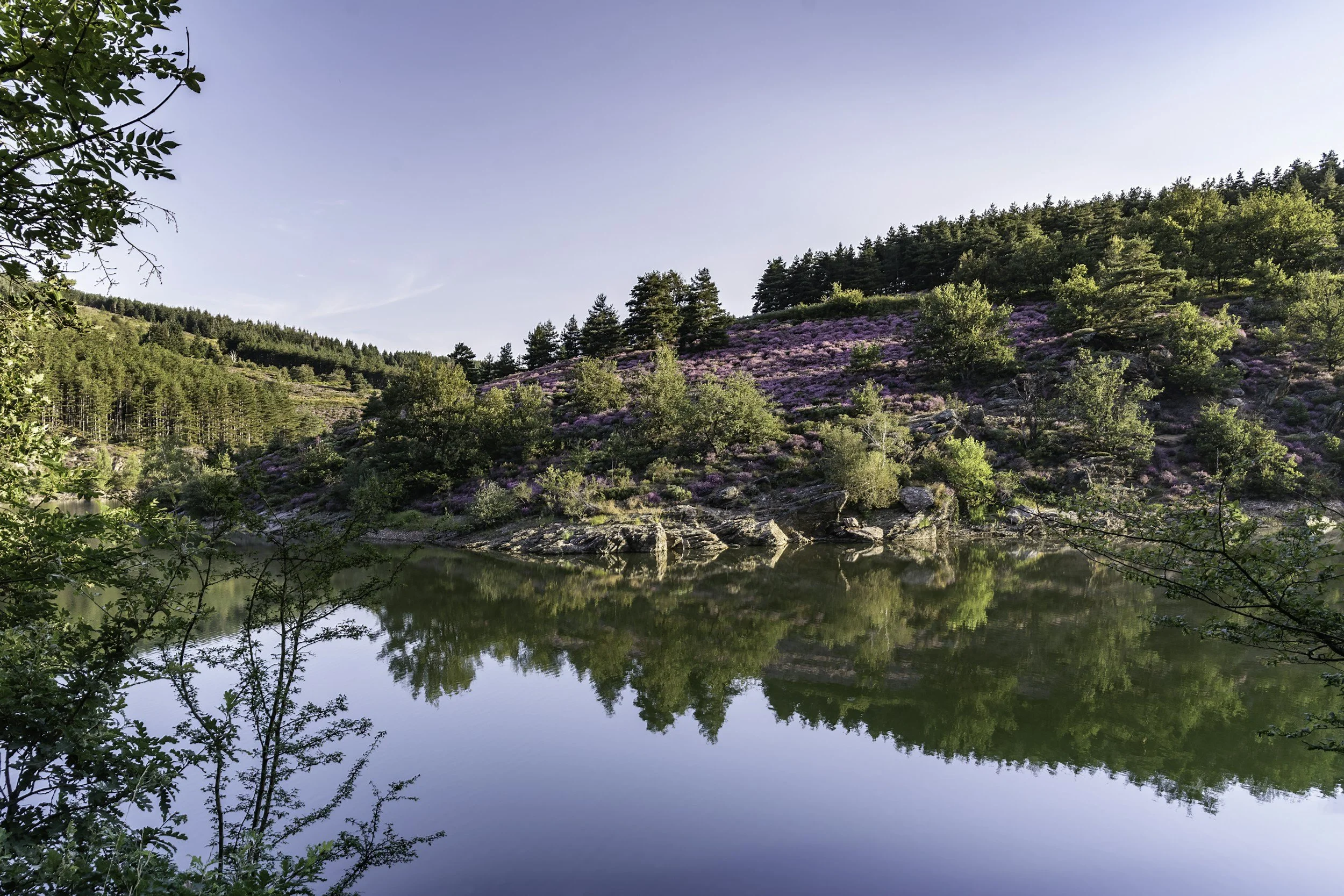
The former monastery layout becomes easier to understand once you reach the Grand Cloître. What looks like a collection of ordinary houses today was originally arranged around the individual cells where Carthusian monks lived. Each monk had his own small house and garden enclosed within the monastery walls, which explains why some properties still have surprisingly large garden plots tucked behind stone walls that seem much older than the houses themselves.
Around Cour des Pères and Cour des Frères you'll notice how little the original structure has changed. Arched passageways still connect different parts of the complex, sections of the cloister galleries remain visible, and several buildings still follow the same footprint they had centuries ago. The difference is that where monks once lived, you'll now find front doors, window boxes, parked cars, and everyday village life.
The church is worth stepping into if it's open, partly because of its size. For a village of around 450 residents, it feels unexpectedly large, which makes more sense once you remember it was built for a monastery rather than a village. Nearby, information panels explain how the Carthusians organised daily life and help make sense of spaces that otherwise just look like attractive stone courtyards.
Outside the walls, the landscape changes quickly. The roads leading towards Pavezin, Longes, and Chuyer pass through farmland, woodland, and open sections of the Pilat massif where grazing cattle often outnumber people. If you're already exploring the area, it's worth continuing towards Col de Pavezin or Croix de Montvieux, both of which offer wider views across the Pilat and Rhône Valley than anything you'll find inside the village itself.
One of the more unusual things about Sainte-Croix-en-Jarez is that there isn't really a centre in the way most French villages have one. No large market square, no main café terrace, no obvious focal point where everyone gathers. Instead, the village is spread through the former monastery buildings, which means people naturally move between courtyards, passages, gardens, and small lanes rather than congregating in one place. That's part of why it feels so different from places like Oingt, Pérouges, or Trévoux.
Around 50 minutes southwest of Lyon by car
Sainte-Croix-en-Jarez feels completely different from Beaujolais or the river towns. You’re not walking between vineyards or along water. You’re in the hills, inside what used to be a Carthusian monastery, with stone walls wrapped around the whole village. It’s quiet in a different way. But getting there is not as effortless as hopping on a TER!
From Lyon, it’s about 50 minutes by car, depending on traffic and which side of the city you’re starting from. Once you leave the main roads, it becomes more rural and winding. Public transport technically exists, but the connections don’t flow in a way that feels relaxed. You’ll likely be checking bus times carefully and working around gaps in service. If you’re already trying to keep the day simple, that extra layer can make it feel heavier than it needs to.
With a car, it’s easy. You drive up, park near the entrance to the village, and you’re walking within minutes. The core of Sainte-Croix-en-Jarez isn’t large, so you can see most of it in under an hour if you’re just exploring the old monastery layout. If you want more, there are walking paths just outside the walls where you can stretch your legs properly before heading back in for lunch somewhere nearby.
Ambronay: a village built around one of the region's most remarkable abbeys
Ambronay sits in the Ain department about 40 minutes east of Lyon, and despite being surprisingly easy to reach, it rarely appears on the same day-trip lists as Pérouges or the Beaujolais villages. From Lyon Part-Dieu, regular TER trains run to Ambérieu-en-Bugey in around 25 minutes, and from there it's a short taxi ride or roughly a 30-minute walk into the village. If you're driving, the journey is straightforward via the A42, and you'll be parked within a few minutes of the abbey.
The reason most people come is the Abbaye Notre-Dame d'Ambronay, which dominates the centre of the village in a way that's hard to miss. Founded in the 9th century and expanded over the centuries that followed, it's one of the most significant monastic complexes in this part of France. The bell tower rises above the rooftops long before you reach the square, and once you're standing in front of it, the scale feels surprisingly large for a village of this size.
What makes Ambronay interesting isn't just the abbey itself but the fact that the village still seems to function around it. Around Place de l'Abbaye you'll find a bakery, a pharmacy, a handful of local businesses, and residents going about their day rather than a centre built around visitors. It's the sort of place where somebody stops for bread on the way home while another person is unlocking their bicycle outside the post office.
The abbey complex is worth taking time with because there's more to it than the church façade facing the square. Inside you'll find cloisters, former monastic buildings, courtyards, vaulted rooms, and exhibition spaces that help explain how large the site once was. The Centre Culturel de Rencontre d'Ambronay now occupies part of the complex and hosts concerts, exhibitions, and cultural events throughout the year, making the abbey feel like an active part of village life rather than a preserved monument.
After exploring the abbey, it’s worth wandering beyond Place de l'Abbaye and into the streets surrounding it. Rue du Cloître, Rue des Moines, and Rue de la Poste are some of the nicest parts of the village to walk through, with stone houses, old shutters, and small gardens tucked behind walls. None of it feels arranged for visitors. These are simply the streets people use every day.
If you're the kind of traveller who likes stopping at bakeries, Boulangerie Pâtisserie Dupré near the centre is a good place to pick up something before exploring. Depending on the season, you'll usually find locals coming and going throughout the morning, particularly before lunch when much of the village settles into a slower pace.
One thing that often surprises visitors is how quickly the countryside begins. Walk a few minutes beyond the village centre and you'll find yourself looking across fields and woodland rather than more houses. Small roads lead towards Douvres, Ambutrix, and Saint-Rambert-en-Bugey, and if you have a car it's easy to combine Ambronay with a drive through the wider Bugey region, which tends to receive far less attention than Beaujolais despite having some beautiful scenery of its own.
Ambronay also changes dramatically during the annual Ambronay Festival each autumn. For a few weeks, musicians and audiences arrive from across France and beyond, and the abbey fills with concerts focused on early and baroque music. Outside those festival dates, though, the village settles back into its usual pace, and that's arguably when it's most enjoyable to visit because you can explore the abbey and surrounding streets without feeling like you're sharing them with a crowd.
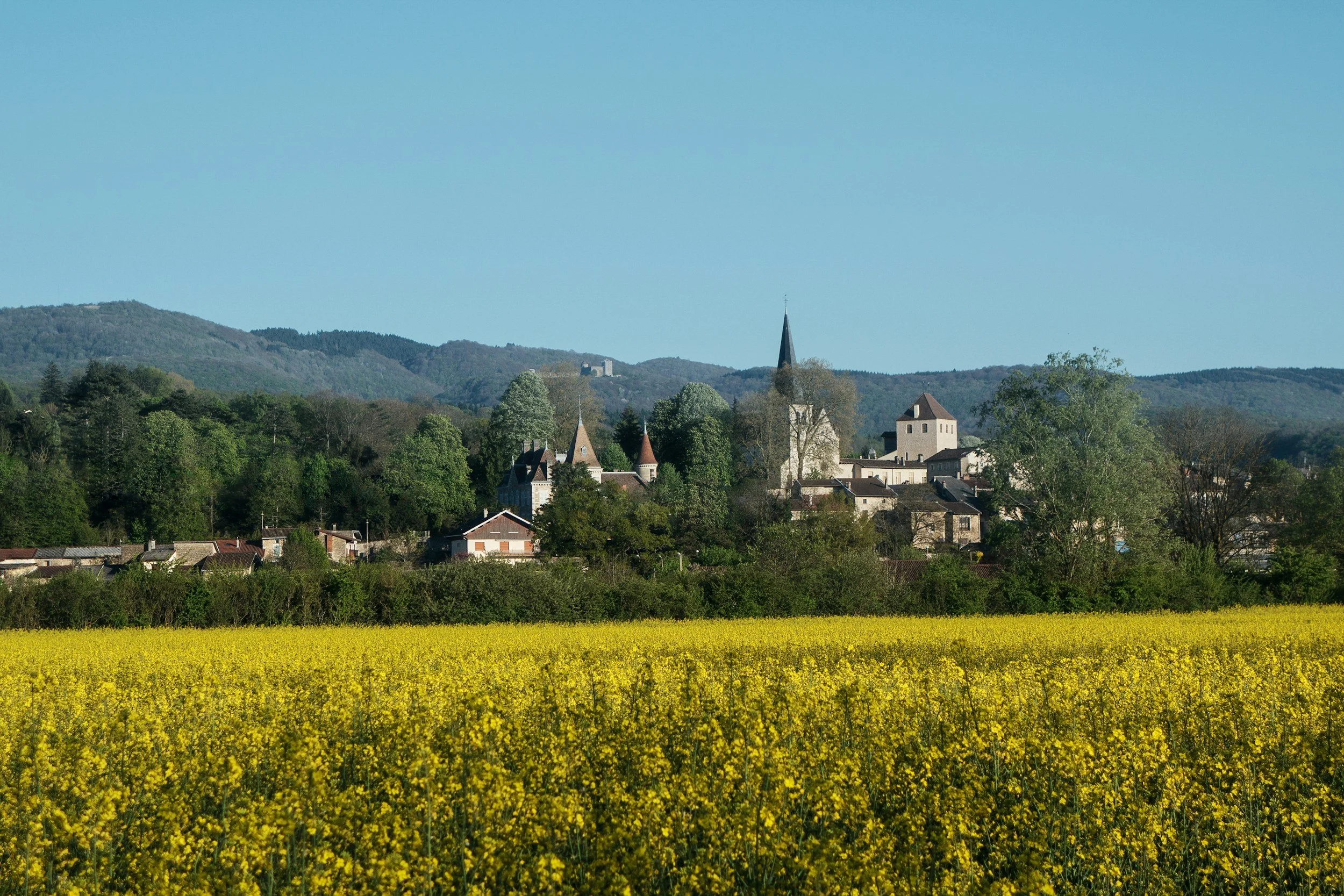
Ternand: a golden-stone village above the Beaujolais vineyards
Ternand sits in the southern Beaujolais hills about 45 minutes from Lyon, although it often gets overlooked in favour of nearby Oingt. That's a shame because the two villages have completely different personalities. Oingt tends to be where people stop for lunch or a wander through the medieval streets, while Ternand feels much quieter, with fewer visitors and a stronger sense that you're exploring somewhere people simply happen to call home.
The village is split between the newer streets below and the medieval settlement climbing the hillside above, so almost every visit naturally becomes a gradual walk uphill. The easiest way to get here without a car is usually to take a TER train to L'Arbresle before continuing by taxi for the last few kilometres, and by the time you reach the old village you'll probably notice how quickly the traffic disappears. There aren't rows of souvenir shops or busy terraces waiting at the top, just narrow stone lanes that twist between old houses, small gardens and the occasional cat stretched out in the sun.
Most people eventually find themselves on Rue du Vieux Bourg, where the honey-coloured limestone typical of the Pierres Dorées catches the light beautifully throughout the day. Some of the lanes are barely wide enough for two people to walk side by side, and every now and then they open onto a tiny square or a gap between the buildings where the view suddenly stretches across the Azergues Valley towards Theizé, Oingt, Bagnols and the surrounding vineyards.
Keep following the climb and you'll eventually reach Église Saint-Jean-Baptiste and the remains of the old fortified château. There isn't much left of the castle itself, but standing here makes its position easy to understand. The views extend across the valley in almost every direction, and it's immediately obvious why this ridge was worth defending long before the vineyards became the landscape most people associate with Beaujolais today.
One of the reasons I enjoy Ternand is that there isn't really a "correct" route through the village. You can follow the main street towards the church, but it's usually the little detours that end up being memorable. A worn stone staircase slips away between two houses, an old passage leads into a tiny courtyard with flowerpots outside the doors, or a narrow lane suddenly opens onto a view across the Azergues Valley, where the vineyards seem to tumble down the hillsides towards Le Bois-d'Oingt. None of those places are marked as viewpoints. You simply come across them while walking.
The village itself has very little in the way of cafés or shops, and I actually think that's part of its character rather than a drawback. If I'm spending a morning here, I'll usually stop for coffee before arriving or afterwards in Oingt or Val d'Oingt, where there are a few more places to sit outside for a while. Ternand has never felt like somewhere built around lingering over lunch. It feels much more like somewhere you explore slowly before carrying on through the surrounding countryside.
That countryside is really the reason to come. Leave the old village behind and the roads quickly become quiet enough that you'll often hear birds or church bells long before another car passes. Small vineyard lanes thread through rows of Gamay vines, dry-stone walls divide the parcels, and every so often you'll pass a discreet sign for a family-run domaine tucked away behind the trees. The wineries here don't announce themselves with large visitor centres or coach parks. Many are working estates where appointments are preferred, but if you're planning to taste wine, it's worth contacting producers such as Domaine des Pampres d'Or or one of the smaller domaines around Theizé, Saint-Laurent-d'Oingt and Chessy-les-Mines before you visit.
One thing I always notice in this part of Beaujolais is how much of the work still happens out in the open. In spring you'll see growers repairing trellis wires or tying young shoots onto the supports, while September brings tractors pulling grape trailers along roads that are quiet for most of the rest of the year. Outside some wineries, harvest crates are stacked in neat rows waiting for the next load, and if the weather is warm there's occasionally the sweet smell of freshly pressed grapes drifting across the vineyards. Even if you're only out for a walk, it's hard not to feel connected to what's happening around you.
The seasons change these roads more than the village itself. In early summer the vineyard lanes are edged with wildflowers and long grass, while autumn replaces the bright greens with golds, russets and deep reds. By winter, once the leaves have fallen, the views open right across the valley towards Oingt, Theizé and the ridges beyond, making it much easier to appreciate how these villages relate to one another across the landscape.
I probably wouldn't choose Ternand if I wanted a busy day of museums, shopping or long restaurant lunches. I'd come because it's one of those places where an hour easily turns into three, not because there's another attraction to tick off, but because every road seems to invite one last walk before heading back. By the time you've wandered through the old village, followed a vineyard lane out into the hills and stopped to look back at the church sitting above the vines, you've seen a side of Beaujolais that many people miss completely as they drive between the better-known villages.
Oingt, Theizé or Bagnols? They look similar at first, but they really aren't
The first time I explored this part of Beaujolais, I made the mistake of treating these villages as quick stops. Looking back, I think that's why they all blurred together. It wasn't until I slowed down, spent a couple of hours in each one and stopped trying to fit everything into the same afternoon that I realised they each had their own personality.
It's easy to look at a map and assume they're almost interchangeable. They're all part of the Pierres Dorées, they're all built from the same golden limestone and they're all surrounded by vineyards, yet they feel surprisingly different once you're actually there.
Oingt is usually where people arrive first, and you'll understand why within a few minutes. The streets are lined with little galleries, ceramic studios and independent shops, and on a sunny afternoon you'll often hear as much English or Dutch as French around Place de l'Église and the medieval tower. It's probably the busiest of the villages, but it never feels overwhelming, especially if you wander beyond the main street where residents are still watering plants outside their front doors or carrying home a baguette before lunch.
Theizé has a completely different pace. Instead of gathering around one square, the village seems to spill gently into the surrounding hills, and before long the old houses give way to vineyard roads, old washhouses and quiet lanes leading towards Moiré, Ville-sur-Jarnioux and the folds of the Azergues Valley. It's the sort of place where I always end up walking further than I'd planned because every road looks as though it might lead to another view or another tiny hamlet hidden among the vines.
Then there's Bagnols, which many people know only because of Château de Bagnols. Some visitors drive up for lunch, admire the château and head straight back again, but the village itself is much quieter than people expect. Around Église Saint-Blaise, the streets are often almost empty apart from the occasional resident walking home or someone opening the shutters after lunch, and it's surprisingly easy to find a shady bench where half an hour disappears without you noticing.
If I have most of the day, I almost never stay in just one village anymore. I'll usually grab a coffee in Oingt while the streets are still quiet, wander through Theizé without really looking at the time, then stop in Val d'Oingt to pick up bread, cheese, fruit and something sweet from the bakery before finding a quiet spot overlooking the vineyards for lunch. Somehow that always feels more satisfying than planning the day around a restaurant booking.
The roads between the villages are part of the experience too. One minute you're passing old stone wine cellars built into the hillside, the next you're slowing down for a tractor pulling grapes during the harvest or spotting a roadside stall with cherries, apricots or peaches sitting beneath an honesty box. There are little family-run domaines tucked behind stone walls, vineyard workers out tying vines in spring, and tiny lanes where you can stop for a moment without another car passing for several minutes.
I've stopped trying to decide which of these villages I like best because the answer changes every time I come back. Sometimes I leave thinking about the vineyard roads around Theizé, sometimes it's the quiet streets in Bagnols, and sometimes I realise I spent most of the morning sitting in Oingt with a coffee, watching the square gradually fill with people buying flowers, bread and cheese for the weekend. That's probably the better way to experience this corner of Beaujolais anyway. Rather than choosing one village and rushing on to the next, it's worth letting the day unfold as you move between them, because they're close enough to combine but different enough that each one leaves a completely different impression.
This isn’t only a Lyon-region thing either. I wrote about a few French towns that feel cozy and local and is reachable by train.
Late summer is when southern Beaujolais feels most alive
If you're driving through the Pierres Dorées villages in late August or September, you'll notice small signs that harvest season is getting closer long before you see anyone picking grapes.
Around Oingt, Theizé, Jarnioux and Saint-Laurent-d'Oingt, tractors become part of everyday traffic. You might pull over on the D96 to let one pass, or find yourself behind a trailer loaded with empty grape crates heading towards a domaine somewhere up the hill. Nobody seems particularly bothered by it. People just slow down and carry on.
Some of the small wine cellars that feel almost invisible during spring suddenly have more activity around them. Doors are open, vans are parked outside, and workers move between vineyard parcels carrying equipment or preparing tanks for the weeks ahead. Around Theizé and Moiré, you'll often spot handwritten signs for tastings outside family-run producers that you would probably drive straight past at other times of the year.
One thing I always enjoy about this part of Beaujolais is that the roads between the villages are often just as interesting as the villages themselves. The stretch between Oingt and Saint-Laurent-d'Oingt passes old stone wine houses, small chapels, cherry orchards and vineyards that seem to roll all the way down the hillsides. Around Jarnioux you'll occasionally come across roadside stalls selling peaches, apricots, honey or grape juice with a simple honesty box sitting on a table beside the produce.
Market mornings feel different too.
In Villefranche-sur-Saône, traders start setting up along Rue Nationale while it's still relatively cool outside. By mid-morning the stalls are piled high with tomatoes from the Rhône Valley, melons from the south, Saint-Marcellin cheeses, saucisson, roast chickens slowly turning on spits, fresh goat's cheese covered in herbs, and baskets of late-summer figs. This is where many locals from the surrounding villages do their shopping before heading home again.
Smaller village markets tend to be less predictable, which is part of the appeal. One week there might be somebody selling local honey from the hills around Theizé. Another week you'll find a producer from nearby Charnay with peaches and nectarines picked the day before. It's rarely about finding the biggest market. It's more about seeing what happens to be there that morning.
If you're planning lunch, this is one of the easiest regions in France to keep things simple. A baguette from a boulangerie in Val d'Oingt, a piece of Saint-Marcellin, a handful of cherries or figs, maybe some saucisson from the market in Villefranche-sur-Saône, and you've got everything you need. Some of the best places to stop aren't restaurants at all but a quiet stone wall outside Ternand, a bench overlooking the vines near Theizé, or one of the small picnic tables scattered along the vineyard roads above Oingt.
What I like most about late summer here is that the villages don't suddenly become tourist destinations. Life just gets a little busier. Farmers are preparing for harvest, markets are full of seasonal produce, cafés have more people sitting outside, and the whole region feels as though it's getting ready for something without ever losing its everyday character.
If you're coming from Paris rather than Lyon, this guide covers a fewtrain-friendly towns where arriving an hour earlier can completely change the experience.
If you enjoy days that revolve around a market, a long walk, and one good meal instead of constant sightseeing, I wrote about that kind of weekend in the French countryside too.
Where to stay if you want to spend a night outside Lyon
One thing that surprised me about this part of France is how quickly Lyon disappears once you're out of the city. Twenty or thirty minutes can make a bigger difference than you'd expect. You leave behind apartment blocks, ring roads and busy train stations, and suddenly you're driving past vineyard slopes, small village bakeries and roadside signs pointing towards places most visitors never stop in.
For an overnight stay, I'd look beyond the villages that get all the attention and focus instead on where you'll actually enjoy spending a full evening and a slow morning.
The area around Val d'Oingt works particularly well because you're surrounded by several villages rather than tied to one. You can spend the afternoon exploring Oingt, drive ten minutes for dinner in Bagnols, stop for coffee in Theizé the next morning, and still be back in Lyon before lunch if you want to. It gives you flexibility without needing to constantly repack or move hotels.
Another area that works surprisingly well is around Ville-sur-Jarnioux and Jarnioux. The villages themselves are small, but the roads connecting them wind through some of the prettiest parts of southern Beaujolais. You'll pass old stone farmhouses, small chapels tucked into the hillsides, and family-run domaines where wine is still sold directly from the cellar door. It's also one of the easiest parts of the region to simply drive around without a plan and stumble across somewhere worth stopping.
If you're looking for somewhere with a little more life in the evening, Trévoux makes more sense than many of the vineyard villages. Once the day visitors leave, people are still walking along the Saône, restaurants remain open, and the riverfront stays active without ever feeling busy. It's the kind of place where you can eat dinner, wander down towards the old Parliament building, then follow the river path as the light starts fading over the water.
For readers travelling without a car, Villefranche-sur-Saône is often overlooked but deserves more credit than it gets. It isn't the prettiest town in the article, but it gives you access to almost everything nearby. You can walk along Rue Nationale in the morning, pick up pastries from one of the bakeries, browse the covered market, then head out into the surrounding villages without feeling cut off from practical things like restaurants, cafés or train connections.
One thing I'd avoid is booking somewhere that looks wonderfully remote simply because it has a vineyard view. Some of the prettiest guesthouses sit at the end of long country roads where the nearest bakery is a twenty-minute drive away and dinner requires getting back in the car. It sounds romantic until you're standing outside the next morning wishing you could walk somewhere for coffee…!
The places that tend to work best are often the ones just outside the village centre. Somewhere near Val d'Oingt, Jarnioux, Trévoux or Villefranche-sur-Saône where you can leave the car behind for a few hours, walk into town for dinner, wander back afterwards, and wake up the next morning without immediately needing to think about logistics.
FAQs about quiet towns near Lyon
What are the best day trips from Lyon by train?
Some of the easiest day trips from Lyon by train include Pérouges, Ambronay, Villefranche-sur-Saône and several towns in the Ain department. From Lyon Part-Dieu, many destinations can be reached in under an hour, making them realistic options even if you only have a day free.
Which village near Lyon has the most beautiful old town?
Pérouges is probably the most visually striking medieval village near Lyon, with stone lanes, fortified gates and remarkably preserved buildings. Oingt is another strong contender, particularly for its golden-stone architecture and views across the Beaujolais hills.
Is Beaujolais worth visiting if you don't drink wine?
Absolutely. Many visitors come for the villages themselves rather than wine tasting. Places such as Oingt, Theizé, Ternand and Bagnols offer walking routes, historic architecture, local markets and countryside views that have nothing to do with wine.
What is the easiest Beaujolais village to visit without a car?
Oingt is often the easiest option because it can be reached via Villefranche-sur-Saône and a short taxi ride. Val d'Oingt also works well as a base thanks to its services, bakeries and connections to nearby villages.
Can you visit Pérouges and Lyon in the same day?
Yes. Pérouges is only around 30–40 minutes from Lyon by TER to Meximieux-Pérouges, making it one of the simplest day trips from the city. Many visitors spend half a day exploring the village before returning to Lyon for dinner.
Which villages near Lyon are usually overlooked by visitors?
Ternand, Sainte-Croix-en-Jarez and Ambronay tend to receive far fewer visitors than Pérouges or Oingt. They require slightly more planning but often feel more connected to everyday local life.
Where can you find markets near Lyon outside the city?
Villefranche-sur-Saône hosts one of the best-known markets in the area, while smaller village markets take place throughout Beaujolais and the Ain. Market days are often the easiest way to experience local food culture and seasonal produce.
Is Villefranche-sur-Saône worth visiting or just a transport hub?
Most people use Villefranche-sur-Saône as a gateway to Beaujolais, but it's worth exploring in its own right. Rue Nationale, the covered market, local cafés and its position at the edge of wine country make it a practical and enjoyable base for exploring the region.
What is the best month to visit villages near Lyon?
June and September are often the most rewarding months. June brings long evenings and green vineyards, while September adds harvest activity throughout Beaujolais. Both months tend to feel more balanced than the busiest weeks of August.
Where should I stay if I want to explore Beaujolais without changing hotels?
Val d'Oingt, Villefranche-sur-Saône and the countryside around Theizé make good bases. They allow easy access to several villages, wineries and walking routes without needing to move accommodation every night.