Exactly how I'd spend a weekend in the Prosecco Hills
The Prosecco Hills look fairly straightforward on a map. The UNESCO-listed area between Conegliano and Valdobbiadene is not particularly large, and many first-time visitors assume they can simply book a hotel somewhere among the vineyards and work out the details later.
In reality, where you stay has a much bigger impact on the weekend than most people expect.
The change starts almost immediately after leaving the main roads behind. One minute you're near Conegliano, still passing roundabouts, supermarkets, and commuter traffic. A few turns later you're driving through places like San Pietro di Feletto, where vineyards sit right against the roadside and the village centre might consist of little more than a café, a church, and a handful of people carrying bread home for lunch.
What catches many visitors off guard is that the Prosecco Hills don't really have a single centre. The experience is spread across dozens of small villages, wineries, viewpoints, and narrow roads that wind through the landscape between Conegliano and Valdobbiadene. Most of the places people remember are not major attractions at all. They're the unexpected stops that happen between them.
That might be a small cantina outside Santo Stefano, a terrace overlooking the Cartizze hills, or a restaurant you only notice because there are several local cars parked outside. The best parts of the region rarely arrive with a large sign telling you that you've reached them.
Because everything is spread out, choosing the right base matters. Staying in the wrong place can mean spending much of the weekend driving back and forth across the hills. Staying in the right one makes it easy to combine winery visits, village walks, long lunches, and scenic drives without feeling as though you're constantly in the car.
That's what this guide focuses on. Where to stay in the Prosecco Hills, which towns work best as weekend bases, how to get around, and which villages, wineries, and viewpoints are genuinely worth building part of your trip around.
If you want a better sense of how the walking routes actually fit together, this Prosecco hikes guide makes it easier to picture the days before you choose where to stay.
Valdobbiadene: staying in the heart of the Prosecco hills
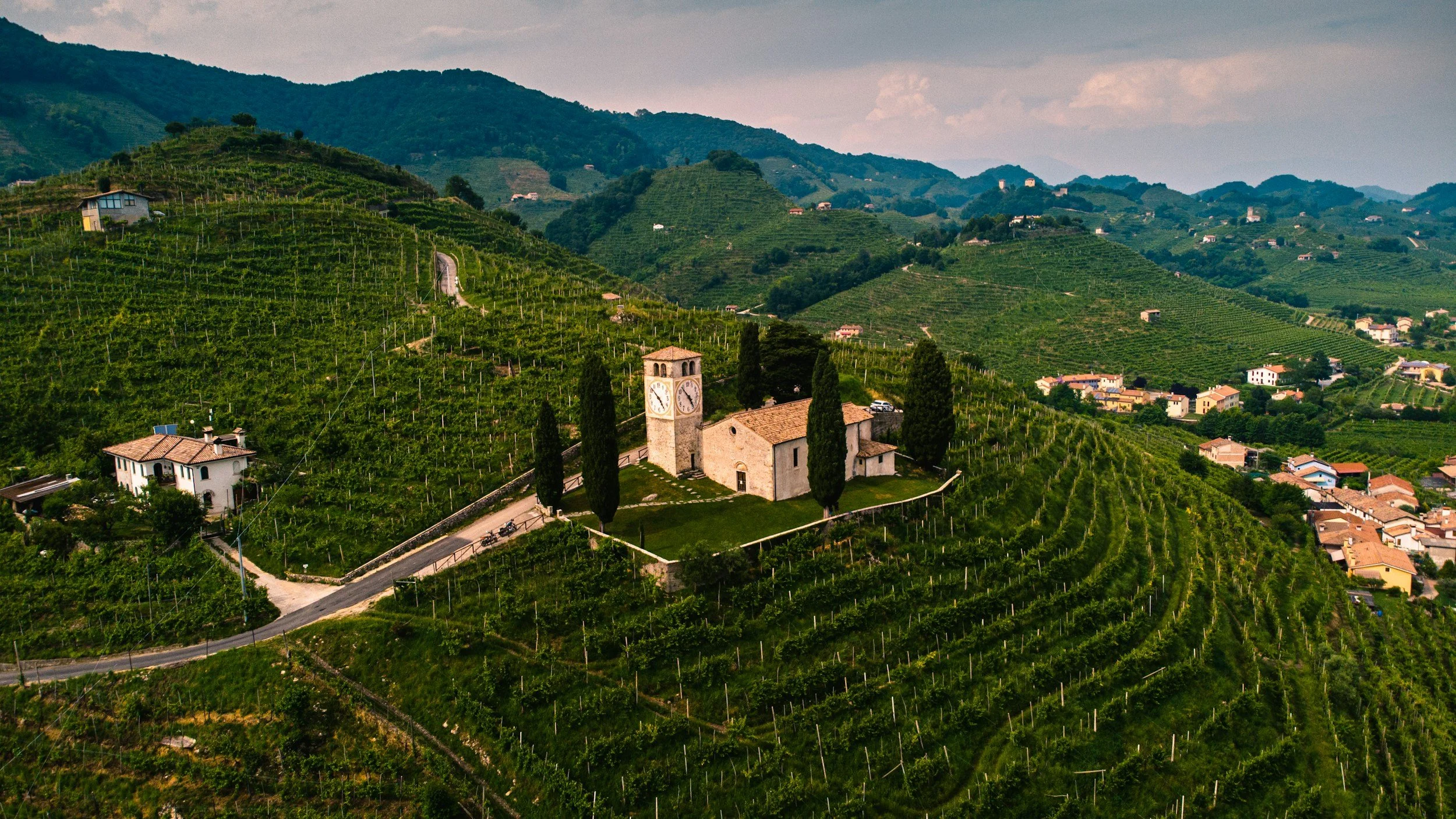
Most people arrive in Valdobbiadene from Conegliano, following the SR348 into the hills. The transition is surprisingly gradual. You leave the traffic around Conegliano behind, pass through San Pietro di Feletto, and before long the vineyards start climbing the slopes on both sides of the road. By the time you reach Valdobbiadene, it already feels quite different from the flatter parts of Veneto.
If you're arriving by train, Conegliano is the nearest station and the most practical gateway into the region. From there, however, the reality of the Prosecco Hills becomes clear quite quickly. The villages, wineries, viewpoints, and restaurants that people come here for are spread across a large area, and buses don't run frequently enough to make spontaneous exploring easy. You can visit without a car, but if you're planning to spend a full weekend here, having one makes a huge difference.
One thing that catches many first-time visitors off guard is that Valdobbiadene itself isn't the highlight of the trip.
The town works well as a base. Around Piazza Guglielmo Marconi and Via Garibaldi you'll find cafés, wine shops, bakeries, pharmacies, and restaurants, making it one of the easiest places to stay if you want everything within walking distance in the evening. But most people don't spend much time sightseeing in the centre. They use it as a starting point before heading back into the vineyards.
And that's exactly what you'll probably end up doing too.
If you're staying in Valdobbiadene, chances are you'll drive the road towards Santo Stefano several times over the course of a weekend. It's one of the routes that quietly connects many of the places visitors end up searching for once they're here: Col Vetoraz, Osteria Senz'Oste, the Cartizze hills, Guia, Rolle, and several smaller wineries that rarely make it into guidebooks.
By the second day, most people know this road without needing directions.
The stretch between Santo Stefano and Cartizze is where the landscape starts to feel noticeably steeper. Vineyards climb hillsides at angles that seem difficult to work, narrow access roads disappear between the rows, and small chapels and farm buildings appear where you least expect them. This isn't a landscape designed for visitors. It's a working wine region, and that becomes more obvious the longer you spend here.
Many visitors head straight to Col Vetoraz, largely because of the terrace and the views across the vineyards. It's a good stop, particularly for first-time visitors, but some of the smaller cantine around Santo Stefano, Saccol, and Guia often provide the more memorable experiences. In many cases you'll be tasting wine a few metres from where it's produced rather than sitting in a purpose-built visitor centre.
The Cartizze area is also one of the places where people tend to spend less time than they should. Many visitors drive through, stop for a photograph, and continue on. It's worth slowing down. The roads looping through Cartizze are some of the most scenic in the entire region, especially early in the morning or later in the afternoon when the light catches the vineyard slopes. Even people with little interest in wine often end up spending far longer here than they expected.
Around lunchtime, many visitors make their way towards Osteria Senz'Oste above Santo Stefano. You'll usually notice the parked cars before you notice the building itself. The views stretch across the vineyards below, and although it has become one of the most photographed places in the Prosecco Hills, it still feels closely connected to the landscape around it.
From here, don't rush back to Valdobbiadene! Continue towards Guia and Rolle instead.
Rolle takes less than ten minutes to walk through, which is exactly why many people nearly skip it. The village itself is tiny, but the approach road from Guia is one of the most beautiful drives in the Prosecco Hills. If you're short on time, I'd prioritise this stretch of road over spending another hour in Valdobbiadene's centre.
Where you stay ultimately changes the feel of the entire weekend.
A hotel near Piazza Guglielmo Marconi means you can walk to dinner, stop for a glass of wine without thinking about the drive back, and have restaurants within easy reach every evening. Staying near Santo Stefano, Guia, Saccol, or the Cartizze hills gives you something different. You'll wake up surrounded by vineyards, start the day directly in the landscape people travel here to see, and avoid driving the same roads back and forth each morning.
On a map, the difference looks minor, but over the course of a weekend, it's one of the decisions that shapes the trip most.
The atmosphere around Valdobbiadene feels very different from the Italian Riviera, but if you're debating vineyards versus the coast for your next trip, these Ligurian towns make the comparison much easier.
If peaceful places like Santo Stefano speak to you, you’ll love this list of small villages in Europe perfect for introverts - each one calm, beautiful, and ideal for people who prefer the sound of birds over crowds.
Conegliano: where the Prosecco hills begin
Craving more vineyard walks?
If you’re into long, scenic strolls between the vines, this guide to vineyard hikes across Europe has a few soul-soothing routes to bookmark: Tuscany, Bordeaux, and beyond.
Santo Stefano & Guia: staying in the heart of the Prosecco hills
Many visitors book accommodation in Valdobbiadene because it's the easiest place to recognise on a map, only to realise a day or two later that most of their time is actually being spent somewhere between Santo Stefano, Guia, Rolle, Saccol, and the Cartizze hills. It's not that Valdobbiadene is in the wrong place. In fact, it's only a short drive away. It's simply that the landscape people travel here to see begins to take over once you leave town behind.
That becomes obvious the first morning.
Instead of starting the day with a drive into the vineyards, you're already there. The road outside your accommodation might be the same one that connects Santo Stefano to Guia, with rows of vines climbing the slopes on both sides and only the occasional delivery van or vineyard worker passing through. If you're up early, you'll notice that the hills feel very different before the first visitors arrive from Venice, Treviso, or Padua. The roads are quieter, the winery terraces are still empty, and places like Rolle feel more like small farming villages than destinations people travel across the world to photograph.
One of the things that surprised me most about this part of the Prosecco Hills is how often the best moments happen between places rather than in them. You might leave Santo Stefano planning to visit a winery near Guia and find yourself stopping twice along the way because the view suddenly opens across the Cartizze slopes. You might pull over near San Pietro di Barbozza for what you think will be a quick photograph and end up spending twenty minutes watching people work among the vineyards. The distances are short, but there's enough happening along the roads that journeys rarely take as little time as the map suggests.
The route linking Santo Stefano, Saccol, Guia, Rolle, and Cartizze quickly becomes familiar because you'll probably drive parts of it several times over the course of a weekend. The road climbs and falls with the landscape, occasionally revealing wider views towards Valdobbiadene before narrowing again between vineyard-covered slopes. Around Cartizze, some of the roads become surprisingly steep, and it's here that many visitors finally appreciate just how much manual work goes into maintaining these vineyards. Looking across the hills from a distance is one thing. Driving through them is something else entirely.
Rolle is often described as one of the prettiest villages in the Prosecco Hills, although the village itself is much smaller than many people expect. What tends to stay with people is not the handful of buildings around the church, but the approach from Guia and the surrounding landscape. Late in the afternoon, particularly outside the busiest summer months, the road through Rolle can feel remarkably quiet, and it's one of the few places where it's easy to slow down without feeling as though you're holding up traffic behind you.
This part of the region also works well if winery visits are a priority, simply because so many producers are nearby. Col Vetoraz sits above Santo Stefano overlooking the vineyards, while smaller wineries are scattered throughout the hills around Guia, Saccol, and San Pietro di Barbozza. Some have large terraces and structured tastings, others feel little different from visiting a family business. One of the advantages of staying here is that you don't need to organise the day around driving long distances between appointments. Most places are only a few minutes apart.
What many visitors don't think about until they're actually booking accommodation is how different the evenings feel compared with staying in Valdobbiadene. Around Piazza Guglielmo Marconi, you can walk to dinner, have another glass of wine, and wander back to your hotel afterwards. Santo Stefano and Guia offer something different. Once the winery visitors leave and the roads quieten down, the hills become noticeably calmer. Depending on where you're staying, you may have vineyards outside your window, very little traffic, and almost no reason to leave again until the following morning.
For travellers who want restaurants, wine bars, and practical convenience within walking distance, Valdobbiadene often remains the better choice. For those who want to spend as much time as possible immersed in the landscape itself, waking up among the vineyards and ending the day there too, Santo Stefano and Guia tend to provide the experience people imagined when they first started planning a trip to the Prosecco Hills.
Cison di Valmarino: a small town of stone streets and quiet weekends
Cison di Valmarino feels quite different from Valdobbiadene, and not only because there are fewer vineyards immediately surrounding the centre.
What stands out first is how much time people actually spend in the village itself.
In many parts of the Prosecco Hills, the town is simply where you sleep before heading off to wineries, viewpoints, and scenic drives the next morning. Cison works differently. Once you've parked near Piazza Roma and started wandering through the centre, there's a good chance you'll spend far longer there than you originally planned, partly because the village is surprisingly compact and partly because there always seems to be another small lane, stone archway, or bridge that pulls you a little further on.
The centre follows the course of the Rujo stream, which runs directly through the village, and many of the most enjoyable moments here are remarkably simple. Crossing one of the small stone bridges, stopping for a coffee near Piazza Roma, or wandering along Via Vittorio Emanuele while looking up at the old buildings climbing the hillside often ends up being just as memorable as any planned activity.
One thing that makes Cison different from many of the villages around Valdobbiadene is that it still feels connected to everyday life. You'll see people collecting bread in the morning, chatting outside local businesses, and walking through the centre for practical reasons rather than because they're sightseeing. Even during the busier months, it rarely feels overwhelmed by visitors.
It's also one of the few places in the region where it makes sense to spend an entire morning without getting back in the car.
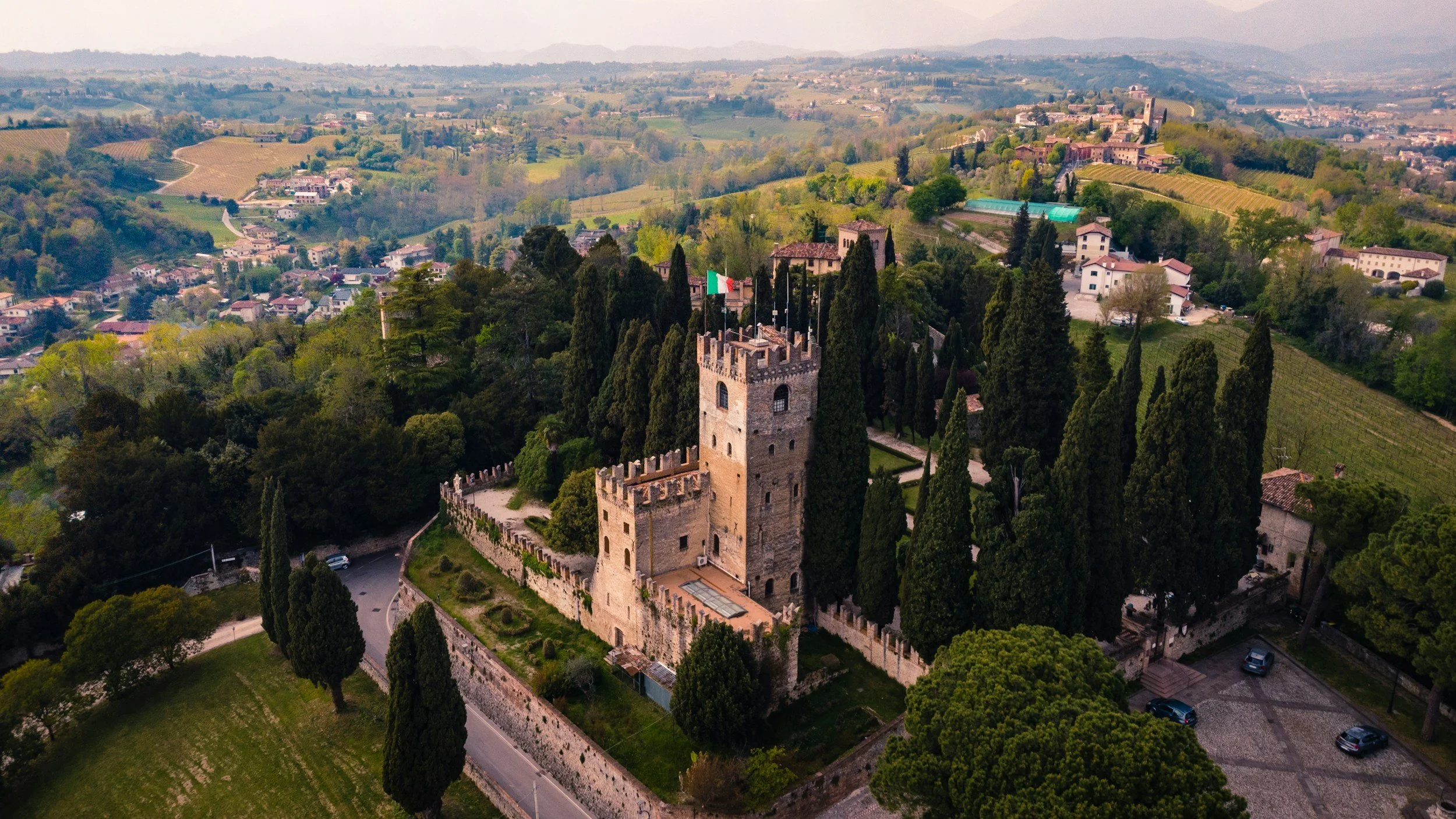
Many visitors eventually find themselves climbing towards CastelBrando, which dominates the hillside above the village and is visible from almost every corner of the centre. The castle attracts most of the attention, but the walk itself is often the more enjoyable part. As you move higher, the rooftops of Cison begin appearing below you, the valley opens up, and the surrounding landscape starts making more sense. From here it's easier to understand how different this part of the Prosecco Hills feels from the vineyard-heavy routes around Santo Stefano, Guia, and Cartizze.
The villages surrounding Cison are worth paying attention to as well. Follina sits only a few minutes away and is home to the Abbazia di Santa Maria, one of the most important historic buildings in the area. Many visitors stop briefly to see the cloister before moving on, but it's the kind of place that's worth slowing down for, particularly if you're interested in the history that shaped these valleys long before Prosecco became internationally famous.
If you're spending a full weekend in Cison, another route worth taking is the drive towards Lago di Revine and the twin lakes of Lago di Santa Maria and Lago di Lago. The landscape changes noticeably once you leave the valley behind. Vineyards become less dominant, wooded hills appear more frequently, and the atmosphere feels closer to a mountain region than a wine destination. On warm days, you'll often find local families around the lakes while most visitors remain concentrated around the better-known winery routes further west.
One reason Cison works particularly well as a base is that you're never far from the main Prosecco Hills attractions, yet you don't feel surrounded by them. Santo Stefano, Guia, Rolle, and the Cartizze hills are all within easy reach by car, but at the end of the day you return somewhere that feels noticeably quieter. The roads empty earlier, evenings slow down, and the centre settles into a pace that's very different from the busier parts of the region.
That difference becomes especially noticeable after dinner. Around Piazza Roma, people sit outside for a drink, conversations drift between tables, and the sound of the stream becomes more noticeable as the village quietens down. There isn't a long list of attractions competing for your attention and that's part of the appeal. Cison di Valmarino works best when you treat it less as a checklist destination and more as a place to spend time.
For travellers who want to combine the Prosecco Hills with historic villages, walking routes, smaller roads, and a side of Veneto that feels less focused on wine tourism, it's one of the best places in the region and often ends up surprising people who originally booked it simply because it looked attractive on a map.
Dreaming of even quieter countryside?
For something even more off-radar, these quiet French villages in Auvergne and Limousin are perfect for slow days, silent walks, and cozy stays far from the noise.
If you liked the feel of Cison di Valmarino, you might also enjoy these slow travel towns in the Loire Valley- château-filled, peaceful, and made for lovers of history, wine, and calm mornings.
Col San Martino: a quieter stop among the Prosecco vineyards
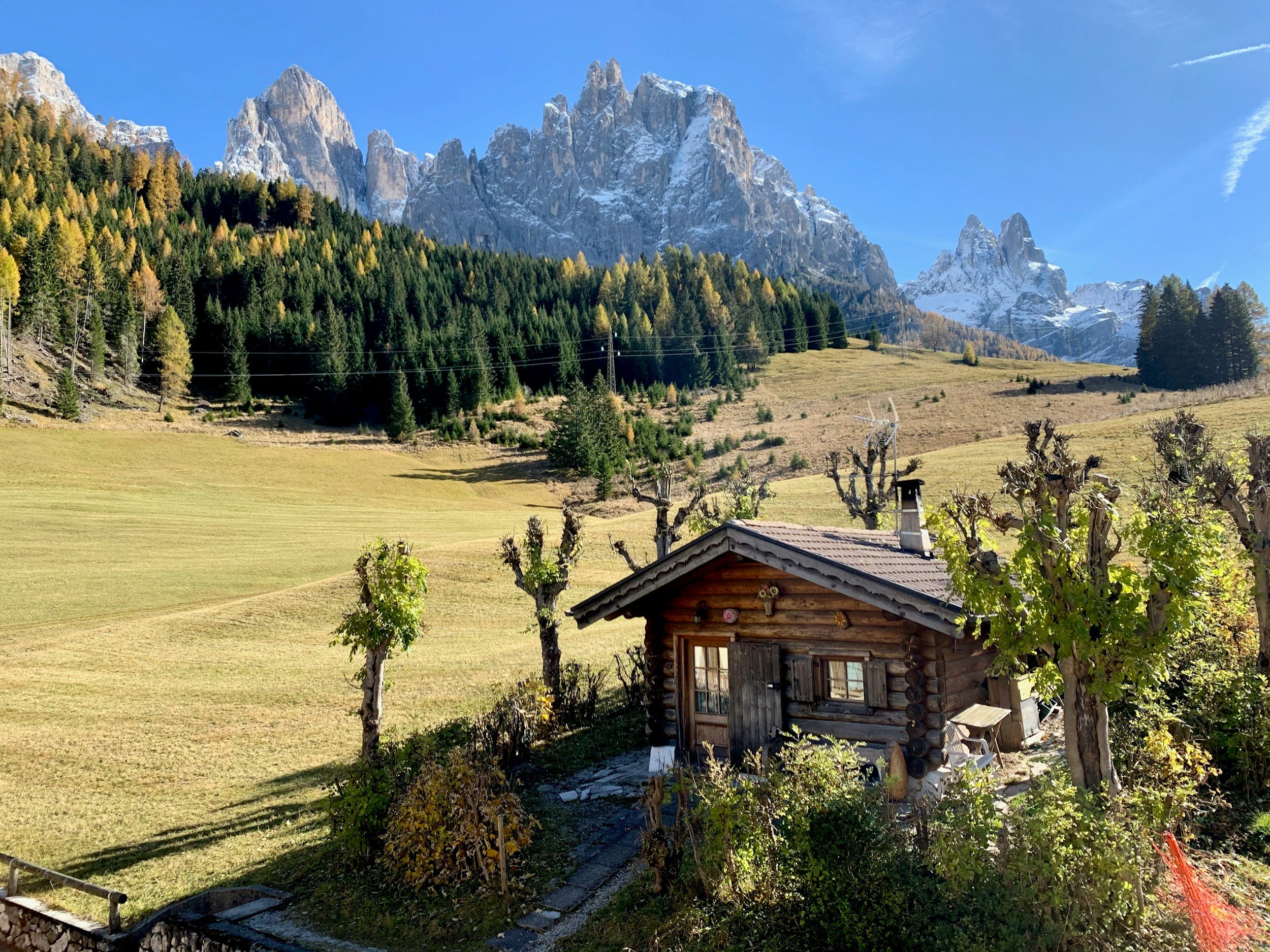
You can drive straight through Col San Martino without thinking much about it, especially if you’re coming along the SP36 from Farra di Soligo, because nothing really tells you to stop, but somewhere around the turn off towards Via Treviset or just after the stretch past the church on Via della Chiesa, you usually find yourself easing off the speed without deciding to…
Col San Martino often gets overlooked because it sits between places that receive far more attention. Visitors heading west towards Valdobbiadene usually continue driving, while those exploring Follina or Cison di Valmarino rarely stop for long. After a few days in the region, though, it's easy to understand why some people choose to stay here instead.
The location makes everyday logistics surprisingly simple. From Col San Martino, you can reach the wineries around Santo Stefano and the Cartizze hills in one direction, or head towards Follina, Cison di Valmarino, and the Molinetto della Croda in the other without spending half the day in the car. That becomes more valuable than many visitors realise, particularly if you're only in the Prosecco Hills for two or three nights.
The village itself is small and spread along the main road rather than gathered around a single square. Most people won't spend an entire day exploring Col San Martino, but that's not really the point. What matters is what's around it. Within a few minutes, you're climbing towards Collagù, where some of the widest views in the region open across the vineyards and hills around Farra di Soligo. Unlike some of the viewpoints closer to Cartizze, which can become surprisingly busy on sunny weekends, it's still possible to stop here and find yourself looking across the landscape without another person nearby.
One thing that becomes noticeable when driving around this part of the Prosecco Hills is how different the vineyards feel from those around Santo Stefano. The famous slopes around Cartizze are dramatic and tightly packed, while the hills around Farra di Soligo and Col San Martino feel broader and more open. The roads follow longer ridgelines, the views stretch further, and the landscape feels less concentrated around a handful of famous locations.
That also makes it a good base for visitors who want to explore more than wineries. You can spend a morning around the Abbazia di Santa Maria in Follina, continue towards Cison di Valmarino and CastelBrando, then return through the vineyards without needing to retrace the same roads. The route between Follina and Col San Martino is particularly pleasant in the late afternoon when the light begins reaching across the valley and the hills take on a completely different appearance from the middle of the day.
Evenings tend to be quieter here than in Valdobbiadene. You're unlikely to find rows of wine bars around a central piazza, but you also won't find the same concentration of visitors. For some travellers that's a disadvantage. For others, especially those spending most of the day exploring the hills, it's exactly the reason they choose to stay here.
Col San Martino probably won't be the place you remember because of a single attraction. More often, people remember it because it made the rest of the trip easier. The roads are shorter, the villages are closer together, and many of the places that define a weekend in the Prosecco Hills sit within easy reach without needing to constantly cross the region from one end to the other.
And if you’re not fully set on this region, places like Ascoli Piceno also has these stunning views and villages worth a visit.
Many travellers combine the Prosecco Hills with a few days elsewhere in northern Italy, and if you're trying to decide where to go next, these food-loving towns in Emilia-Romagna offer a completely different side of the region.
How to plan a weekend in the Prosecco Hills
Most people arrive with a fairly simple plan. See a few villages, visit a couple of wineries, maybe drive the Strada del Prosecco and stop whenever something looks interesting.
Then they leave Conegliano and realise the region doesn't work quite like that.
The change usually starts somewhere around San Pietro di Feletto. The roads become narrower, vineyards begin climbing the hillsides around you, and the distances that looked insignificant on Google Maps suddenly take longer than expected because you're constantly slowing down. Sometimes it's because of a view, sometimes because you've spotted a winery you weren't planning to visit, and sometimes because the road itself becomes part of the experience.
That's one reason staying your first night in Conegliano often works better than people expect. After arriving by train from Venice or Treviso, you can simply walk into the centre, spend the evening around Via XX Settembre and Piazza Cima, have dinner without thinking about driving, and ease into the trip rather than arriving in the hills late and trying to fit too much into the first day.
The following morning, most routes into the Prosecco Hills naturally lead through San Pietro di Feletto. Some travellers continue towards Refrontolo and Rolle, others head directly towards Valdobbiadene, but it rarely takes long before the first unplanned stop appears. You might pull over near the church at San Pietro di Feletto for a view across the vineyards, stop at a small cantina along the SP34, or find yourself taking photographs somewhere that wasn't marked on your itinerary at all.
By the time you reach Valdobbiadene, you'll usually understand something that isn't obvious when planning the trip: the town itself isn't really the destination. Most people spend an hour or two around Piazza Guglielmo Marconi, perhaps stop for a coffee, pick up a bottle of wine, or walk through the centre, before heading straight back into the hills.
The area between Santo Stefano, Guia, San Pietro di Barbozza, and the Cartizze vineyards is where many visitors end up spending most of their time, whether they intended to or not. The roads are scenic, the wineries are close together, and places that looked insignificant on a map suddenly become places where you stop for twenty minutes without meaning to.
One mistake people often make is trying to cover too much in a single day. The temptation is to see Cartizze, Valdobbiadene, Rolle, Follina, Cison di Valmarino, and several wineries all before dinner. In reality, the best days here tend to involve fewer decisions. If you're already near Santo Stefano, continue towards Guia and Rolle. If you're exploring around Follina and Cison di Valmarino, stay on that side of the hills and save the western vineyards for another day.
Lunch usually works best the same way, and if you arrive at Osteria Senz'Oste around midday, there's a good chance you'll stay longer than planned. The views across the Cartizze slopes are difficult to leave quickly, and once you've found a table overlooking the vineyards, the idea of rushing off to another attraction starts feeling slightly ridiculous. The same applies to many of the smaller wineries. Some tastings take twenty minutes. Others turn into an hour-long conversation that wasn't part of the plan when you arrived.
By late afternoon, many visitors find themselves heading towards Rolle almost by accident. The village itself is tiny, but the drive from Guia through the surrounding vineyards is one of the most enjoyable in the region, particularly outside the busiest summer months when the roads become quieter and the landscape feels less hurried.
Evenings tend to take care of themselves. If you're staying in Valdobbiadene, you'll probably end up around Piazza Guglielmo Marconi. If you're staying in Santo Stefano, Guia, or one of the smaller villages, you'll usually return to your accommodation, sit outside for a while, and realise there's very little reason to be anywhere else.
The final day often ends up being the most relaxed. Instead of trying to see something new, many people revisit somewhere they passed too quickly the day before, stop longer in Refrontolo, drive through Combai, or spend an extra hour in Cison di Valmarino before making their way back towards Conegliano. By that point, the trip has usually stopped feeling like a route and started feeling like a collection of places connected by roads that were worth driving in the first place.
In case you're continuing east after the vineyards and looking for somewhere with more history, less driving, and enough to fill a long weekend, this Ravenna weekend guide is worth a look.
And if you’re thinking about timing and want something a bit less busy, these wine villages in autumn give you a good idea of how different the atmosphere can feel later in the year.
Where to stay: choosing the right place for your weekend
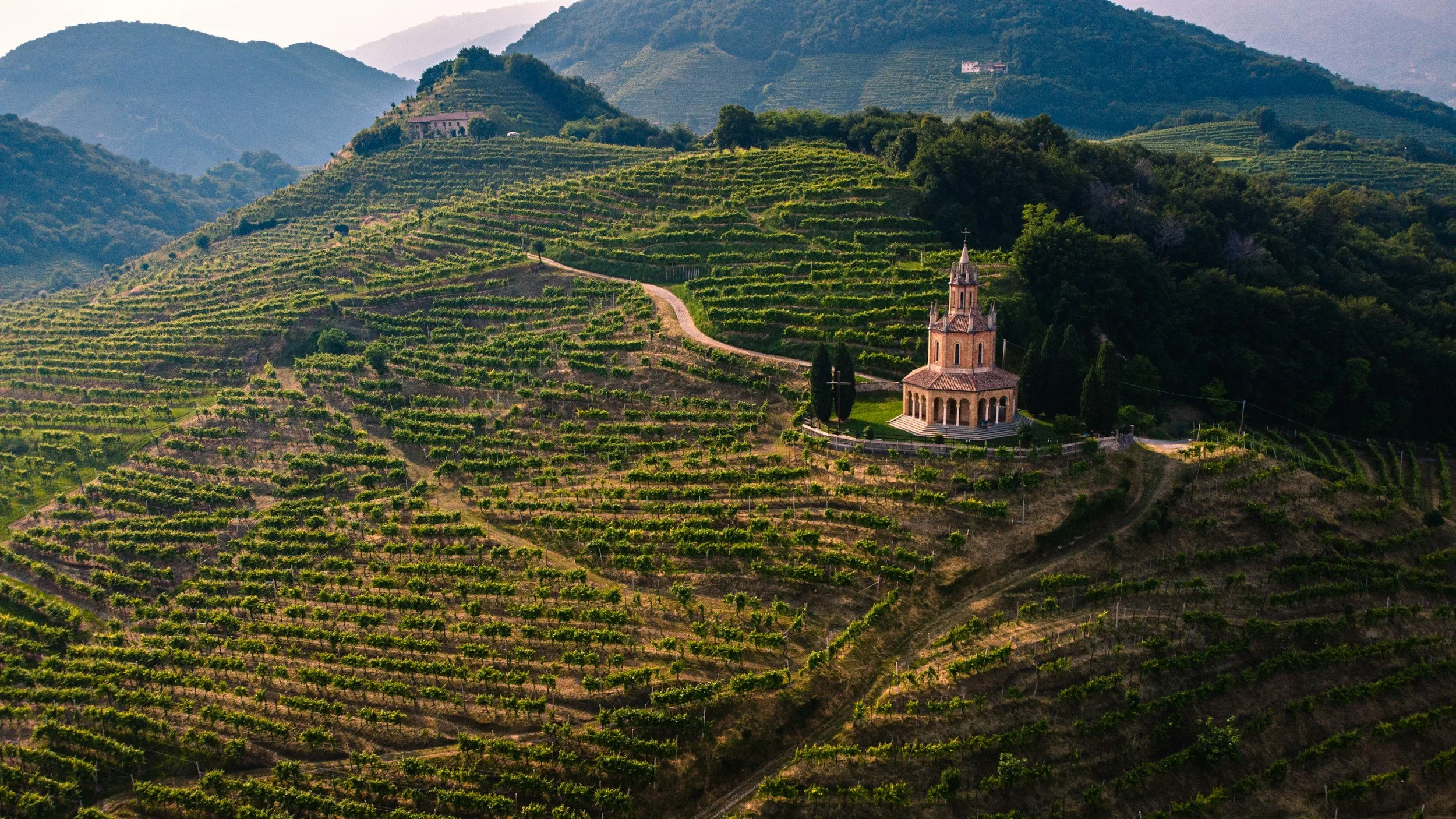
Where you stay in the Prosecco hills changes the whole feel of the trip more than anything else, because the distances are short but the experience is completely different depending on whether you’re in a town or already up in the vineyards.
If you want to stay somewhere easy to arrive and move around without thinking too much, basing yourself in Conegliano works well for the first night. A place like Civico 80 sits just outside the busiest part of Via XX Settembre, so you can walk into the centre in a few minutes, have dinner nearby, and still wake up somewhere quiet enough that mornings don’t feel rushed. It’s the kind of place where you drop your bag, go out for a short walk, and everything is already within reach.
Once you move into the hills, it’s a different setup entirely.
Around Valdobbiadene, places like Agriturismo Vedova sit slightly above the main road, which makes more of a difference than it sounds. You wake up looking out over rows of vines rather than towards a street, and mornings tend to start slowly because there’s nowhere you need to go straight away. If you’re planning to visit a few cantine, staying here keeps everything within a short drive without needing to cross the same roads repeatedly.
Further into the hills, around Santo Stefano, places like Il Follo feel more connected to the land itself. You don’t step out into a town, you step straight into the landscape. Gravel driveways, vines close to the building, and evenings that stay quiet without needing to go anywhere. It works best if you’re happy staying in one place for longer stretches rather than moving around all day.
If you want something that feels more contained, Cison di Valmarino offers a different kind of stay. Castelbrando sits above the town and changes the experience completely, not because it’s a “castle stay” in a dramatic sense, but because you’re slightly removed from everything below. You walk into the old town when you want to, then come back up again without needing to drive anywhere.
Back in the hills near Guia, smaller places like B&B Strada di Guia 109 tend to feel more personal. You’re usually staying in someone’s home or a converted building surrounded by vines, where mornings start with breakfast already prepared and no reason to rush out the door. It’s less about facilities and more about how easy it is to settle into the day.
There isn’t one “best” place to stay here, just different ways of experiencing the same area. Town first, then hills. Or straight into the vineyards and staying there. The right choice depends on how much you want to move around once you arrive.
Prosecco Hills: a few things worth knowing before you go
The map makes the Prosecco Hills look surprisingly compact. Conegliano, Valdobbiadene, Follina, Guia, Rolle, and Cison di Valmarino all appear close together, and when you're planning the trip it's easy to imagine covering most of them in a day or two. Once you're actually driving through the region, that idea tends to disappear fairly quickly.
The roads are a big part of the reason. Leaving Conegliano towards San Pietro di Feletto, the vineyards begin appearing almost immediately, but the roads also become narrower, slower, and far more winding than many visitors expect. Google Maps might suggest that somewhere is only fifteen minutes away, but those fifteen minutes often include vineyard roads, blind bends, tractors during harvest season, and unexpected stops because you've spotted a view across the hills that wasn't on your itinerary five minutes earlier.
The stretch between Santo Stefano, Guia, Rolle, and the Cartizze hills is where this becomes most obvious. Distances are short, yet a morning can disappear surprisingly quickly because you're constantly pulling over. One minute you're heading towards a winery, the next you're stopping near a small chapel above the vineyards or taking photographs from a roadside viewpoint overlooking the slopes around Cartizze. It's one of the reasons trying to fit six villages, four wineries, and a long lunch into the same day rarely works particularly well.
Parking tends to be much easier than visitors expect. In Valdobbiadene, most people naturally gravitate towards the areas around Piazza Guglielmo Marconi, while in villages such as Follina, Cison di Valmarino, or Rolle you'll usually find small public parking areas within a short walk of the centre. Around Santo Stefano and Guia, things are less formal. Quite often you'll find yourself parking near a cantina, a viewpoint, or wherever there happens to be a safe space at the side of the road. If there are already several local cars parked there, it's usually a good indication that you've found somewhere worth stopping.
Having a car changes the experience more here than in many parts of Italy. Arriving by train is easy enough because Conegliano has direct connections to Venice, Treviso, and Padua, but once you leave the station the region quickly becomes difficult to navigate without your own transport. Buses connect some of the larger towns, including Valdobbiadene, yet they don't really allow for the kind of spontaneous stops that often become the highlight of a weekend in the hills.
Wine tastings also tend to be less predictable than first-time visitors expect. Larger producers such as Col Vetoraz have established tasting rooms, clear opening hours, and a more structured experience, but much of the region still operates on a smaller scale. Around Santo Stefano, San Pietro di Barbozza, Guia, and Col San Martino, you'll often pass wineries where the only indication that tastings are available is an open door, a small sign, or a few cars parked outside. Sometimes those turn out to be the places people talk about most afterwards.
Food is another thing worth paying attention to. Unlike larger Italian destinations where restaurants seem to appear on every corner, there are stretches of road in the Prosecco Hills where options become surprisingly limited. If you find yourself in Follina around lunchtime, for example, it usually makes sense to eat there rather than assuming you'll find something better later. The same applies around Santo Stefano and Guia. Many visitors discover that the place they almost stopped at turns out to be the one they wish they had chosen.
The pace of the day feels different too. In Conegliano, cafés around Piazza Cima and Via XX Settembre are busy early in the morning, while bakeries and coffee bars in Valdobbiadene fill briefly before people head to work. By mid-afternoon, however, many of the smaller villages become noticeably quieter. This isn't the kind of region where each evening builds towards a lively town square packed with people. Most visitors spend the day exploring, find somewhere for dinner, and then enjoy the fact that things slow down again.
Perhaps the most useful thing to know before arriving is that there isn't really a single centre to organise the trip around. The Prosecco Hills are less like a destination built around one town and more like a collection of villages, vineyard roads, wineries, churches, viewpoints, and valleys that happen to sit close together. That's why choosing the right base matters more than trying to create the perfect itinerary. The people who enjoy the region most are usually the ones who leave enough space in the schedule for unexpected stops, longer lunches, and roads that take a little longer than expected.
If you're arriving by train and wondering whether the Prosecco Hills are the easiest place to explore without a car, this guide to Northern Italy by rail can help you compare a few destinations before committing to a rental car.
Some people end up deciding between vineyards and water, and these Italian lake towns show what the trip looks like if you base yourself by the lakes instead.
FAQ: A weekend in Prosecco hills
Where are the Prosecco Hills in Italy?
The Prosecco Hills are in the Veneto region in northern Italy, between Conegliano and Valdobbiadene. This stretch of hills is known as the Conegliano–Valdobbiadene area and is a UNESCO-listed landscape of vineyards, small villages, and narrow hillside roads.
Is Valdobbiadene or Conegliano better to stay in?
It depends on how you want to travel.
Conegliano works better if you’re arriving by train and want an easy first night with everything walkable. Valdobbiadene puts you closer to the vineyards and makes it easier to explore places like Santo Stefano, Guia, and the Cartizze hills without long drives. Many people split their stay between both.
Do you need a car in the Prosecco Hills?
In most cases, yes.
You can reach Conegliano by train and Valdobbiadene by bus, but once you’re in the hills, public transport is limited. If you want to move between smaller villages like Santo Stefano, Guia, or Col San Martino, or stop at cantine along the way, having a car makes a big difference.
How many days do you need in the Prosecco Hills?
Two to three days is usually enough to get a good feel for the area.
One day often feels rushed, especially with the slower roads and unplanned stops. With two or three days, you can base yourself in one or two places, explore a few villages, and still have time to slow down between stops.
What is the best way to explore the Prosecco Hills?
The easiest way is by car, following roads like the SP34 and Strada Cartizze between Valdobbiadene, Santo Stefano, and Guia.
Rather than planning a strict route, most people explore by driving short distances, stopping at viewpoints, small cantine, or places that look open along the way.
Can you visit wineries in the Prosecco Hills without booking?
Often, yes.
Larger wineries like Col Vetoraz have set tasting areas and opening hours, but many smaller producers don’t require bookings. If the door is open, you can usually walk in and ask to taste. If not, you move on to the next place.
Where are the best places to stay in the Prosecco Hills?
It depends on the type of stay you want:
Conegliano for easy access and walkable evenings
Valdobbiadene for a central base near the vineyards
Santo Stefano or Guia for staying directly among the vines
Cison di Valmarino for a quieter village setting with forest walks
Each area gives a slightly different experience, so many people combine two locations.
Is the Prosecco Hills area crowded?
Compared to other parts of northern Italy, it’s relatively quiet.
You might see more people around popular stops like Osteria Senz’Oste, but most villages and roads stay calm, especially outside peak summer weekends.
What is the best time to visit the Prosecco Hills?
Late spring (May–June) and early autumn (September–October) are usually the best times.
The weather is mild, vineyards are active, and the area feels more balanced. Summer is still good, but can be warmer and slightly busier on weekends.
Are the Prosecco Hills good for a weekend trip?
Yes, they’re well suited for a weekend, especially if you base yourself in one area and avoid trying to cover too much.
The short distances, slower pace, and small villages make it easy to enjoy without needing a full itinerary.
Can you do the Prosecco Hills as a day trip from Venice?
It’s possible, but it tends to feel rushed.
The drive from Venice to Valdobbiadene takes around 1.5 hours, and once you’re there, the slower roads and scattered villages make it harder to see much in a single day. Staying at least one night gives a much better experience.