Come hungry. These Emilia-Romagna towns are worth the train ride.
Most people plan Emilia-Romagna around Bologna and end up treating the smaller towns like quick lunch stops between train rides. That usually means arriving in Parma at the busiest possible hour, missing the market mornings in Modena entirely, or booking two nights somewhere like Brisighella before realizing the town becomes extremely quiet once day visitors leave and dinner service finishes.
The region works much better once you understand how differently these towns behave throughout the day and across the week.
In Faenza, Wednesday and Saturday mornings still revolve around the market near Piazza del Popolo, so the cafés fill early and the center stays active well into lunch. In Comacchio, mornings matter more than evenings because the canals empty surprisingly early outside summer weekends and a lot of the seafood restaurants close earlier than visitors expect. Parma changes completely after around 18:30 when aperitivo starts spilling into the streets around Via Farini and residents reappear after the long afternoon pause that catches a lot of first-time visitors off guard.
And Emilia-Romagna is not one single food culture in the way many guides present it.
The western side around Piacenza and Parma feels heavier, especially in colder months when menus start filling with slow-cooked dishes, butter-based pasta, and cured meats that make more sense in November fog than July heat. Around the Romagna hills near Brisighella and Faenza, olive oil starts replacing butter, piadina appears everywhere, and dinners feel looser and slightly less formal overall.
A lot of these towns also look easier on paper than they are in practice. Some train connections thin out heavily on Sundays. Certain hill towns become frustrating with luggage because the stations sit far below the historic center. A few places that seem ideal for a four-night stay end up feeling repetitive after one full day unless you have a car.
These are the smaller Emilia-Romagna towns that still feel local and authentic, and where staying overnight usually tells you far more than passing through for lunch ever will.
Find the local corners in Parma
A lot of people experience Parma between roughly 11:00 and 15:00, which is probably the least interesting version of the city.
That’s when the streets around Piazza Duomo fill with food tours, when people queue outside salumerias with printed reservation lists in hand, and when visitors rush between Parmigiano tastings, prosciutto tours around Langhirano, and train departures toward Bologna or Florence. Then by late afternoon, the city drops back into a much more local routine almost immediately.
Parma sits on the main rail line between Milan and Bologna, so getting there is straightforward. Direct trains from Milano Centrale usually take around 1 hour 20 minutes, while Bologna is under an hour on most services. The station itself is north of the historic center and completely walkable if you pack reasonably light. The first ten minutes from the station feel more functional than romantic though. You pass ordinary apartment buildings, bus lanes, pharmacies, and chain cafés before the streets tighten into the older center near Strada Garibaldi and Via Cavour.
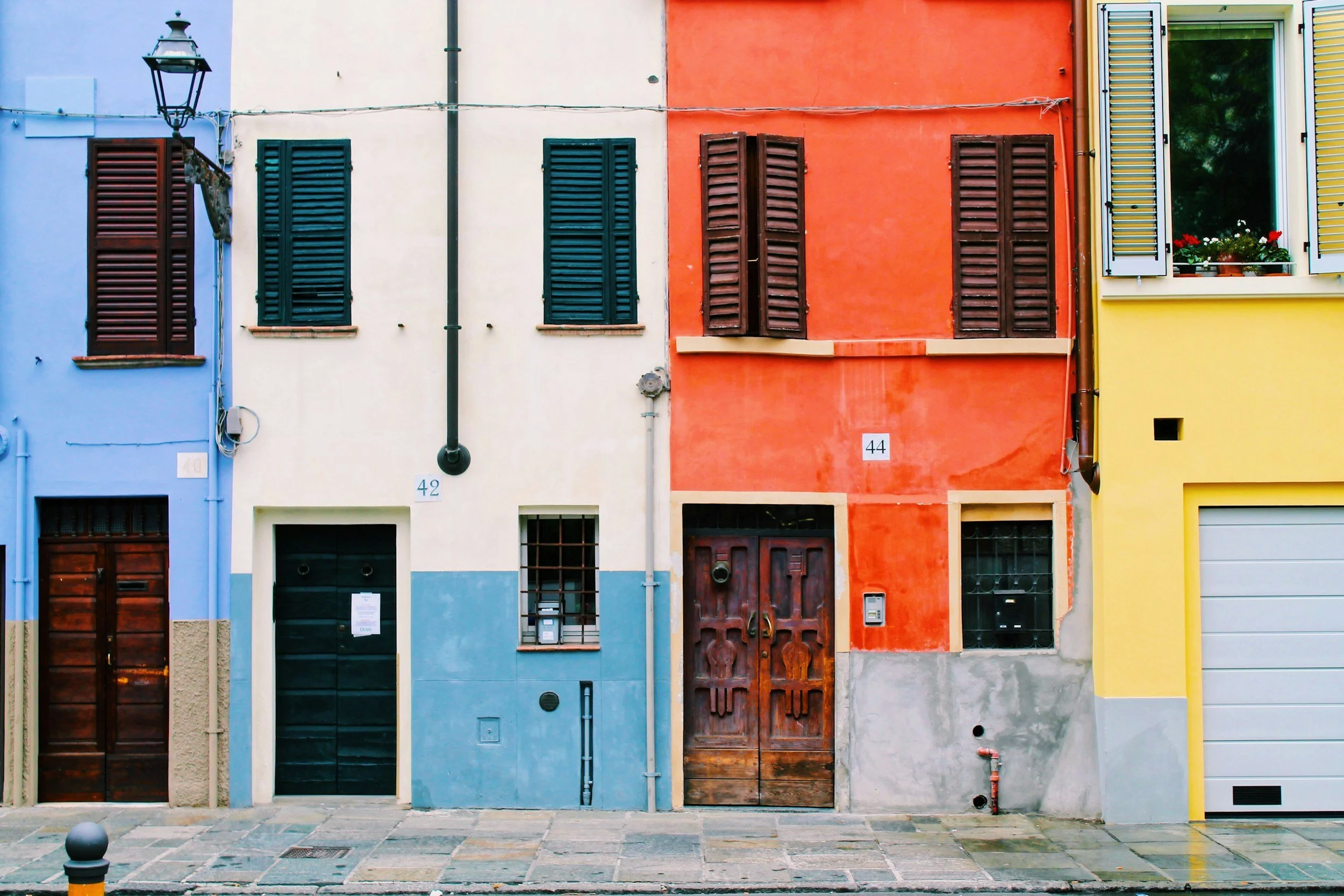
Most visitors stay near Piazza Duomo or Piazza Garibaldi because the hotels are concentrated there, but Oltretorrente feels noticeably better once you stay longer than a quick weekend. Crossing Ponte di Mezzo changes the atmosphere almost immediately. Around Via d’Azeglio and Borgo del Correggio, evenings feel more residential and less polished for visitors. Laundry hangs above side streets. University students spill out onto sidewalks with plastic cups during aperitivo. Tiny neighborhood bars stay busy while the streets closer to the Duomo become unexpectedly empty after dinner.
The prettiest streets are often not the famous ones either! Borgo delle Colonne becomes especially beautiful around early evening when the light hits the pale buildings properly and locals start cycling home from work. Strada Farini stays lively later than most parts of the city, especially Thursday through Saturday, while Borgo Giacomo Tommasini still has some of the nicest smaller storefronts in Parma without feeling overly curated.
People expecting big lively piazzas until midnight usually misread Parma a little at first. Parms is not like Bologna…
People expecting lively piazzas packed until midnight usually need a day or two to adjust to Parma properly, because the city behaves very differently from Bologna once dinner service begins winding down. During colder months especially, large parts of the center become surprisingly calm by around 22:00. Around Piazza Duomo and Via Cavour, you mostly see people slowly heading home after dinner, cyclists cutting through the quieter side streets, and restaurant tables lingering over another bottle of wine rather than crowds moving between bars.
The parts of the city that stay busiest later into the evening are usually around Strada Farini, Borgo Santa Brigida, and Oltretorrente, where students, younger locals, and groups of friends gradually spill outside places like Tabarro, Gallo d’Oro, and Tra l’Uss e l’Asa. Even there, though, Parma rarely feels chaotic or loud in the way people often expect from an Italian university city. The atmosphere stays softer and more stretched out. People settle into tables for hours, waiters move at their own pace, and dinners drift naturally later without anybody seeming particularly concerned about turning the table for the next reservation.
That slower pacing becomes especially noticeable at places like Trattoria Corrieri or Cocchi, where long Sunday lunches still feel tied to family routines more than restaurant turnover. It is completely normal to see tables still deep into second courses well into the afternoon while nearby groups are only just ordering dessert and coffee.
The aperitivo culture feels more relaxed than Milan too. Along Strada Farini, people gather outside with glasses of Lambrusco while small plates of olives, focaccia, crisps, and thick slices of Parmigiano Reggiano appear beside drinks almost automatically. Nobody presents it like a concept. Office workers stop after work still wearing scarves and winter coats while scooters continue squeezing through the narrow street beside the clusters of people talking outside the bars.
Then only a few streets away, the city suddenly becomes quiet again.
The restaurants people remember most are also not always the heavily photographed or internationally famous ones. Around lunchtime, Salumeria Garibaldi near Strada della Repubblica becomes crowded very quickly, especially on Saturdays when locals queue shoulder-to-shoulder for culatello, torta fritta, and Prosciutto di Parma with sparkling Lambrusco poured into small glasses. Nearby, Sorelle Picchi inside La Galleria still feels connected to ordinary local habits despite Parma’s international food reputation. Residents stop in for sliced salumi, focaccia, and takeaway parcels while discussing which producers are best that week.
Pepèn continues feeling almost unchanged by time altogether. The tiled walls, tightly packed lunch crowds, paper-wrapped roast beef sandwiches, and the famous panino con cavallo all feel deeply tied to the city rather than curated for visitors. Around lunch, especially on Saturdays, the line often spills outside while office workers squeeze in beside tourists trying to understand what everyone else is ordering.
Dinner in Parma changes a lot by season too. In autumn and winter, restaurants like Angiol d’Or near Piazza Duomo start leaning heavily into richer dishes almost immediately once temperatures drop. Pumpkin tortelli, porcini mushrooms, anolini in brodo, slow-cooked meats, and heavier red wines begin appearing across menus throughout the city, especially once fog starts settling over the surrounding countryside in October and November.
Even breakfast habits feel specific once you spend more than one rushed night here. Early in the morning, Pasticceria Torino near Via Repubblica fills with residents stopping for espresso and pastries before work while much of the historic center still feels half asleep. Over in Oltretorrente, Café Elzig becomes busier later in the day with students, remote workers, and locals hanging out over coffee during rainy afternoons while the rest of the neighborhood quiets down outside.
On Sundays, local families still drive toward places like Trattoria Ai Due Platani in Coloreto or toward the countryside near Langhirano, Sala Baganza, and Torrechiara for lunches that stretch for hours. Once autumn arrives, the roads south of the city begin feeling completely different from summer. Fog settles low across the vineyards during the mornings, prosciutto producers become busier ahead of winter, and menus across the area shift heavily toward mushrooms, chestnuts, pumpkin, and richer colder-weather cooking.
Libreria Diari di Bordo near Borgo Santa Brigida feels exactly like the kind of independent bookshop people hope still exists in Italy. Travel books stacked unevenly. Handwritten staff recommendations. Small design magazines near the entrance. A few streets away, Galleria San Ludovico and the spaces around Complesso della Pilotta regularly host temporary exhibitions that many visitors completely miss because they only stop for food.
The Pilotta itself feels very different depending on time of day. Early mornings feel almost strangely quiet around the Teatro Farnese and the Biblioteca Palatina before excursion groups arrive. Toward sunset, the open piazza outside starts filling with teenagers skateboarding and residents sitting along the edges with takeaway aperitivo drinks.
Parma starts revealing itself more through small routines than major sights once you stay long enough to stop rushing between meals.
In the mornings around Via Repubblica, older residents still stand shoulder-to-shoulder at pastry counters reading the local newspaper while ordering espresso and torta duchessa at places like Pasticceria Torino or Pasticceria Bombé. During winter, the windows fog up completely from the warmth inside while people continue drifting in every few minutes for coffee before work. Around late morning, the pace changes again once the shopping streets begin filling and the food shops near Strada della Repubblica start preparing for lunch crowds.
Over in Oltretorrente, Café Elzig stays busy much later into the evening than most places nearby, especially during colder months when students settle in with laptops while the surrounding streets become noticeably quieter outside. A few minutes away, Libreria Diari di Bordo still feels refreshingly independent and slightly chaotic in the best way, with travel books stacked unevenly beside small design magazines and handwritten staff recommendations taped onto shelves rather than polished displays.
Around Borgo XX Marzo and Borgo Giacomo Tommasini, there are still small antique stores, stationery shops, wine shops, and old-fashioned homeware stores that feel tied to actual local shopping habits instead of curated tourism. Places like Chierici on Strada della Repubblica still sell traditional Parma products in a way that feels functional rather than performative, while tiny storefronts around Borgo delle Colonne become especially beautiful toward early evening when the soft light hits the pale buildings and cyclists start weaving home through the narrower side streets.
The Complesso della Pilotta changes atmosphere throughout the day too. Early mornings feel almost strangely calm around the Teatro Farnese before visitors arrive, while evenings around Piazza della Pace tend to attract teenagers skateboarding, university students sitting along the edges with takeaway drinks, and locals cutting across the square on their way home.
And once you leave the city entirely, the landscape south of Parma changes the mood almost immediately.
The roads toward Langhirano, Torrechiara, and Sala Baganza start winding more heavily through vineyards, castles, and prosciutto producers, especially once you move beyond the flatter land surrounding the city itself. During autumn, fog settles low across the countryside early in the mornings while vineyards disappear into mist by late afternoon. Small trattorias around Felino and Collecchio become busiest on Sundays when local families gather for long lunches centered around porcini mushrooms, pumpkin tortelli, braised meats, and Lambrusco served in thick everyday glasses rather than wine tastings designed for visitors.
Driving toward Langhirano or Torrechiara in October, especially early in the morning when fog sits low over the roads and vineyards, feels much closer to the Parma locals actually associate with food culture than the polished city-center version visitors usually experience first. Smaller trattorias around Sala Baganza and Felino become busiest on Sunday afternoons, particularly during porcini mushroom season.
Without a car, though, travelers often underestimate how limiting Parma can become outside the center. Reaching smaller prosciuttifici, rural wine producers, or countryside restaurants by public transport is technically possible in some cases but frustrating in practice, especially on Sundays when regional bus schedules become sparse enough that missing one connection can derail half the day.
During July and August, afternoon heat settles heavily between the pale buildings around Piazza Garibaldi and much of the city slows down dramatically until evening. Some independent restaurants close temporarily around Ferragosto, residents disappear toward the Ligurian coast for weekends, and the city starts feeling far quieter than people expect from somewhere internationally associated with “food tourism”.
If Parma is already on your shortlist, this Parma breakdown makes it much easier to figure out whether you’ll actually prefer Parma or Modena before locking in hotels.
If the quieter evenings in Emilia-Romagna are what you’re actually responding to, this Italy for introverts explains that feeling much better than most Italy guides online do.
The quieter side of Emilia-Romagna starts in Brisighella
Brisighella is one of those towns that can feel completely different depending on what hour you arrive, which is probably why some people leave after half a day wondering why it’s so well-loved while others immediately start checking whether they can stay another night.
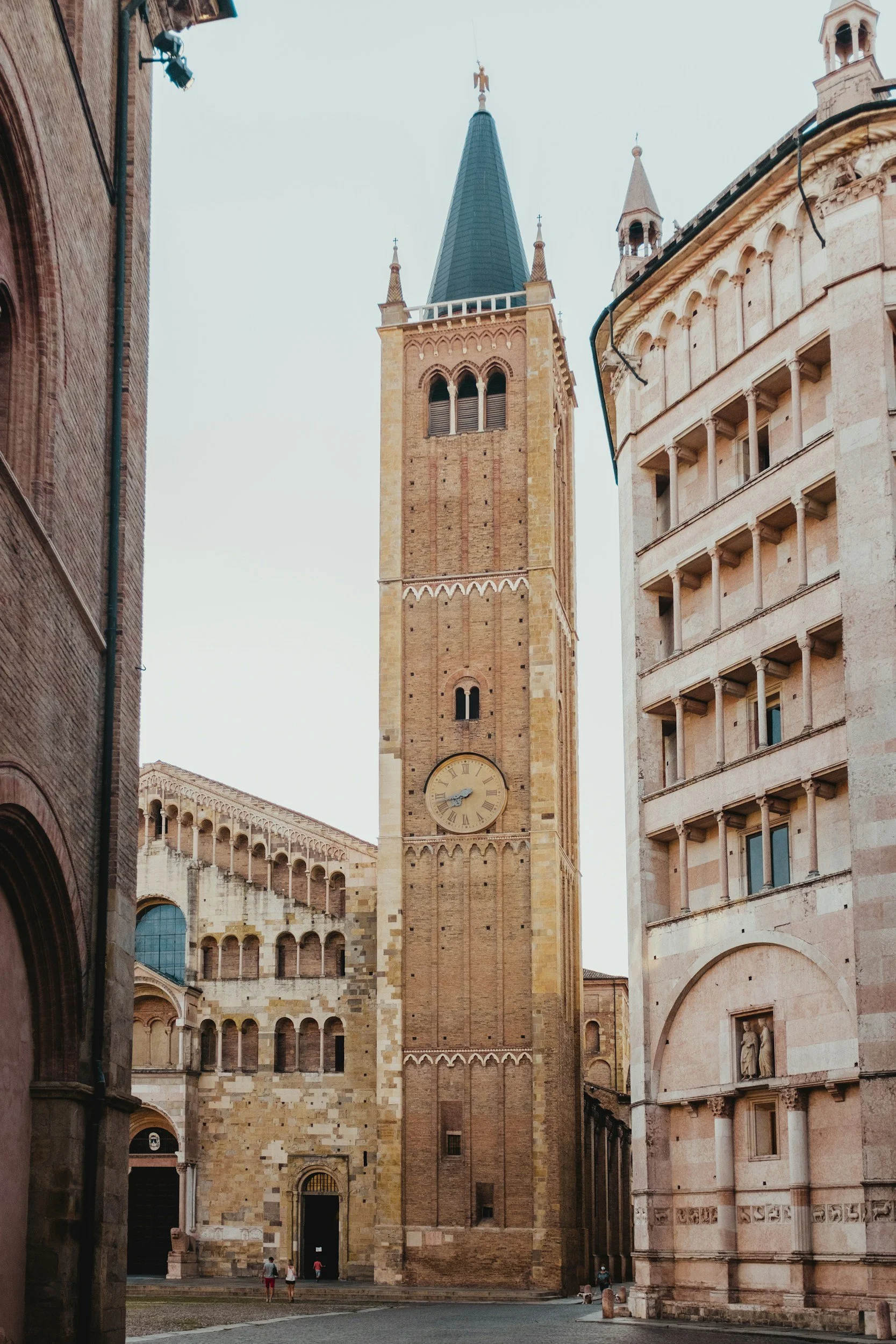
If you arrive around lunchtime on a Saturday, the town can feel busier and more polished than it actually is most of the time. The regional train from Faenza pulls in, people walk uphill from the station together dragging suitcases over the rough paving stones around Via Porta Fiorentina, and within twenty minutes everybody seems to be standing beneath Via degli Asini taking the same photographs while trying not to get clipped by tiny local cars squeezing through streets clearly built long before modern traffic existed.
Then by late afternoon the lunch tables around Piazza Marconi slowly empty, people disappear back toward Bologna or Ravenna, and the upper streets near Rocca Manfrediana become quiet enough that you start noticing ordinary sounds again instead. Somebody opening shutters above Via Naldi. Plates clattering from restaurant kitchens preparing for dinner service. Church bells carrying across the hills because there’s barely any background noise competing with them.
The uphill walk from the station catches people off guard every single day. On paper the center looks close. It technically is close. But the combination of steep streets, uneven stone paving, and summer heat makes it feel much longer once you’re hauling luggage uphill in the middle of July with almost no shade in parts of the climb.
Mornings feel much more like the real Brisighella anyway.
Around 08:00, Bar Al Borgo already has regulars crowded around the counter drinking espresso while reading newspapers and talking quietly before work. The bakery near Piazza Marconi smells strongly enough of warm focaccia and pastries that you notice it before you even reach the square itself, and older residents stop at Alimentari da Monica carrying groceries uphill while delivery vans crawl slowly through streets barely wide enough to fit them.
And unlike a lot of hill towns that now feel heavily arranged around tourism, Brisighella still has slightly awkward everyday details everywhere you look. Tiny alimentari shops with handwritten opening hours taped unevenly to the door. A pharmacy that somehow always seems closed exactly when somebody needs it. Laundry hanging across alleyways behind Via del Borgo while visitors walk straight past without noticing because they’re focused on reaching the clock tower.
Most people stay concentrated around Via degli Asini and Piazza Marconi, but the quieter uphill streets become much nicer once the day visitors start thinning out later in the afternoon. The walk toward Santuario del Monticino feels especially good near sunset when the light starts hitting the olive groves and terracotta rooftops properly, and from the upper paths you can see the hills stretching out toward Fognano and Modigliana while the town below slowly settles into evening.
The food around Brisighella feels connected to those hills more than to tourism. At Osteria della Fonte, nobody spends time explaining ingredients or trying to turn lunch into a performance. Plates arrive when they’re ready. Thick tagliatelle with ragù, grilled meats, rabbit, warm piadina wrapped in cloth napkins, local olive oil poured generously over almost everything. Once autumn arrives and temperatures cool properly for the first time, porcini mushrooms suddenly start appearing across menus all over town almost overnight.
A few minutes away, Enoteca La Grotta becomes one of the nicest places to sit once the center quiets down after dinner because the atmosphere feels completely unforced. People order local Sangiovese, plates of salumi and pecorino appear on tables, conversations stretch longer than intended, and nobody seems remotely concerned about rushing through the evening.
And some of the best meals are not actually inside Brisighella itself.
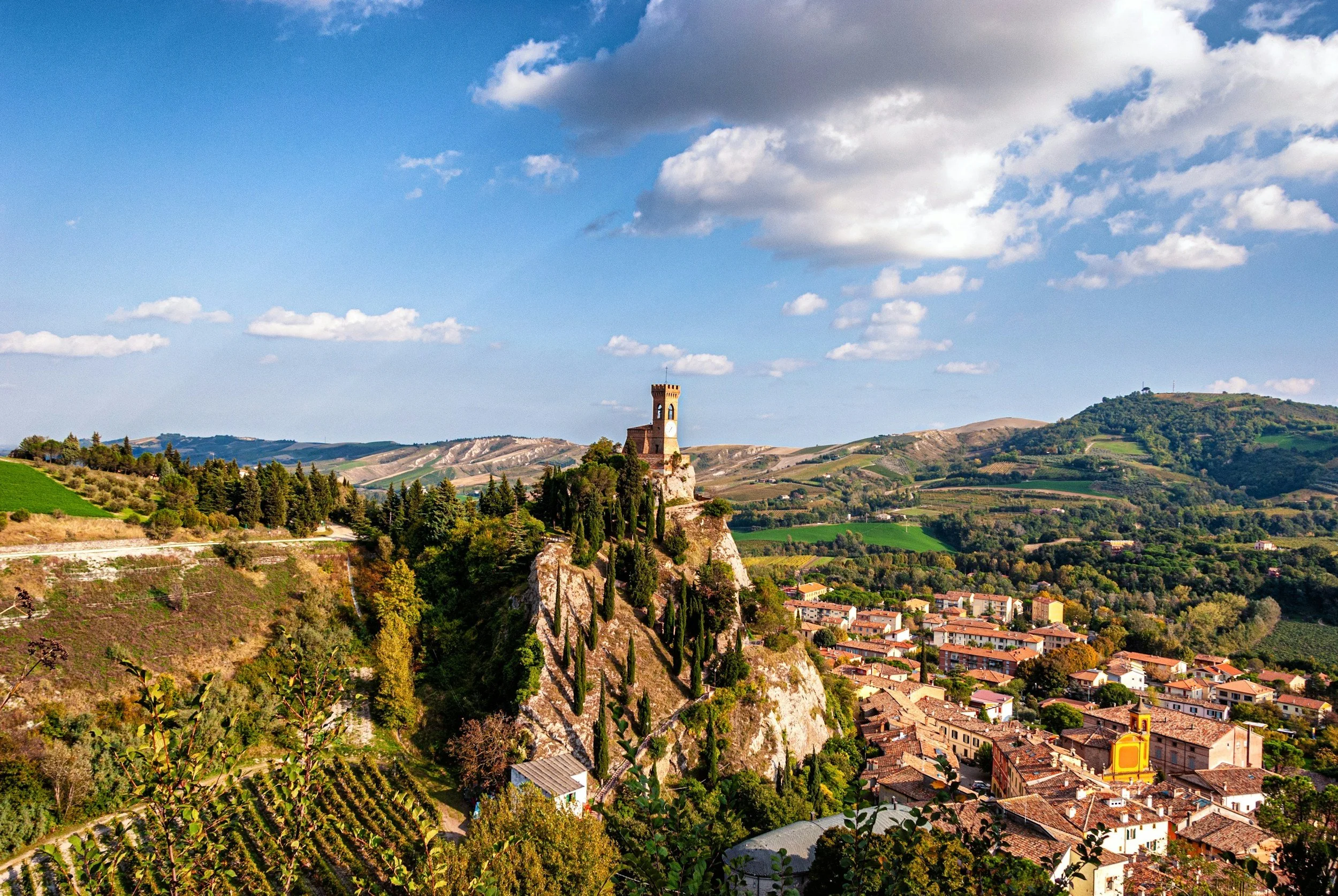
Around Fognano and the smaller countryside roads leading toward Modigliana, the landscape starts feeling rougher and more agricultural than the polished vineyard scenery many visitors expect from central Italy. During olive harvest season in October and November, producers sell fresh oil directly from garages and farm buildings with handwritten cardboard signs beside the road, and local families spend entire Sunday afternoons at places like Trattoria La Casetta eating fried porcini mushrooms, handmade pasta, grilled meats, coffee, more wine, and then somehow staying another hour after everyone already said they were full.
There are also smaller places around town that people tend to miss because they move through too quickly. Libreria La Caravella near the center feels more like somebody’s personal collection slowly taking over a room than a carefully styled independent bookshop, with uneven stacks of local history books, regional cookbooks, old postcards, and art prints leaning against shelves. Nearby ceramic workshops along Via Naldi still look properly functional rather than polished into souvenir stores, and around Piazza Carducci, Caffè della Loggia fills before dinner with older men sitting outside watching people cross the piazza while saying very little.
And once the evening settles properly over Brisighella, the silence becomes very noticeable very quickly.
Not the romanticized version of quietness travel writing usually talks about either. Actual small-town silence where you hear restaurant kitchens shutting down for the night, somebody talking from an open window farther downhill, and dogs barking somewhere beyond the olive groves once most of the visitors have already gone home.
Anyone debating Brisighella versus somewhere in Tuscany should probably read this Ascoli comparison first because the atmosphere is much closer to what people usually hope Tuscany still feels like.
A lot of people automatically jump from Emilia-Romagna to Tuscany, but these quieter vineyards feel much closer to the atmosphere around Brisighella and the Romagna hills than the classic Chianti route does now.
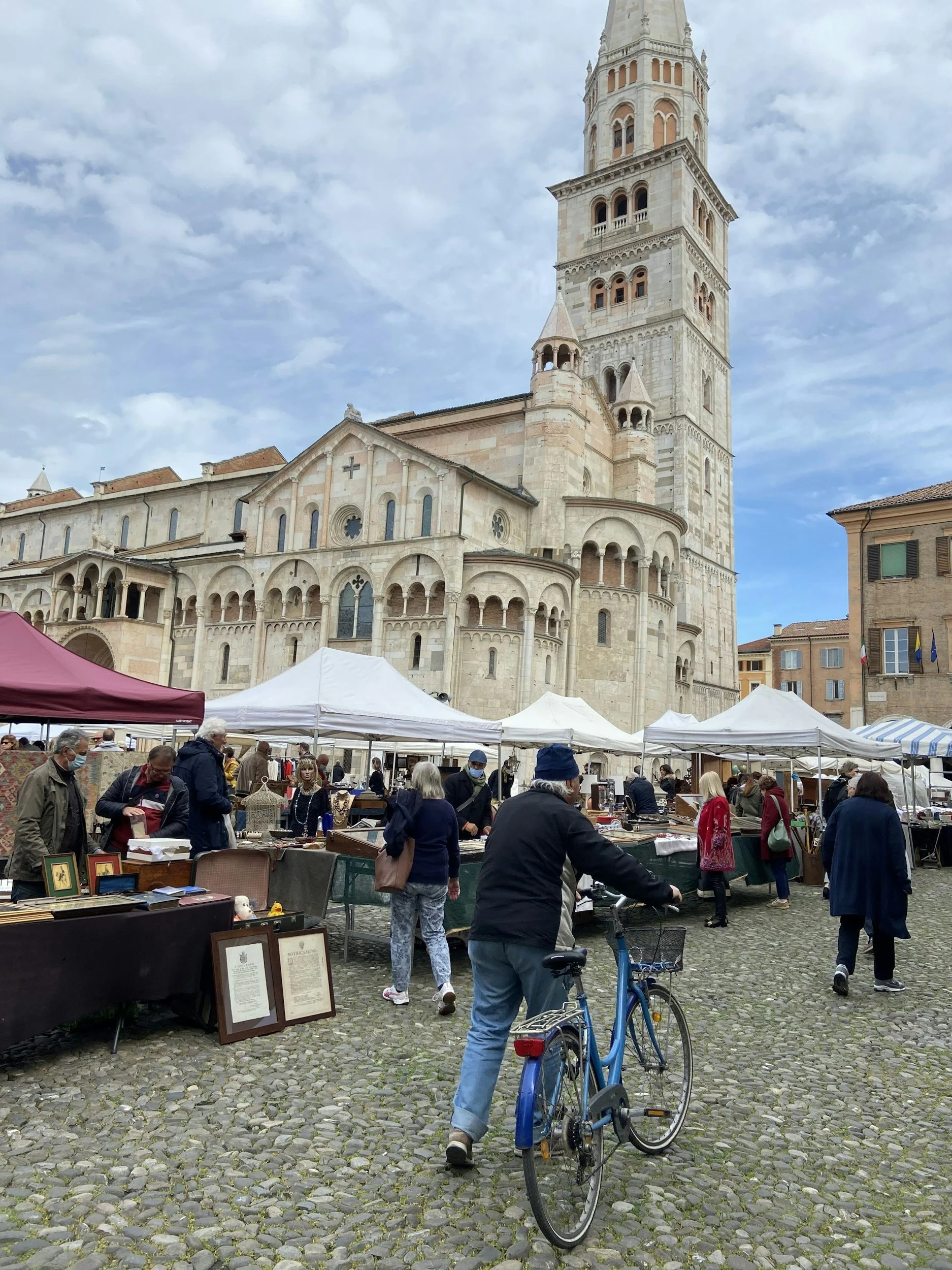
Modena feels better once you get away from Piazza Grande for a while
A lot of people arrive in Modena with a schedule that already looks completely full before they’ve even left the station. Balsamic vinegar tasting at noon, Mercato Albinelli for lunch, maybe a photograph outside Osteria Francescana, then dinner somewhere booked months ago before taking the train back to Bologna the next morning.
And the strange thing is that Modena can feel slightly flat if you experience it that way, because the city is much better in the gaps between those plans when you start noticing how people actually move through it during the day.
The walk from the station into the center catches people off guard at first because the area north of Via Emilia Centro feels much more ordinary than the polished version of Modena people usually imagine beforehand. Students sit outside the station smoking before class, buses crowd the streets around Viale Monte Kosica, and the first cafés you pass feel functional rather than charming. Then somewhere around Via Gallucci and Via del Taglio the atmosphere tightens properly into narrower porticoed streets lined with wine bars, salumerias, little bookstores, and old shopfronts that still look built around regular customers rather than visitors.
Mornings are when the city feels most grounded in local routines.
By 08:30, Mercato Albinelli is already fully alive with residents buying trays of fresh tortellini, cappelletti, vegetables, and Parmigiano Reggiano while visitors are usually still standing near the entrance deciding where to get coffee. At Bar Schiavoni, people squeeze shoulder-to-shoulder at the counter drinking espresso and eating tiny sandwiches before work while the smell of broth, fresh pasta, cured meat, and butter drifts through the market from different directions at once.
And the market changes a lot depending on the hour.
Around lunchtime, visitors start settling into plates of tigelle and Lambrusco while locals carrying shopping trolleys disappear again almost as quickly as they arrived. Then by mid-afternoon, parts of the city suddenly empty out in a way that surprises people expecting constant movement. Shutters close around Via del Taglio. Smaller butcher shops disappear for several afternoon hours. Some cafés become strangely quiet until aperitivo starts bringing people back outside again.
Those slower stretches are part of what makes Modena feel different from Bologna.
Around Via Carteria and Calle di Luca, the city softens noticeably once the lunch crowds around Piazza Grande thin out. Students sit outside Menomoka for hours with coffee and laptops while bicycles move constantly through the narrow lanes between Corso Canalchiaro and Via dei Servi. Libreria Fahrenheit nearby feels slightly chaotic in the best possible way, with stacks of photography books, architecture magazines, regional cookbooks, and old Italian design journals piled unevenly across tables rather than arranged neatly for display.
A few streets away, the bookstore inside FMAV (Fondazione Modena Arti Visive) feels much more connected to the city’s younger art scene than most museum shops usually do. Around spring and autumn, the exhibitions there attract local students, photographers, and artists who drift between the gallery spaces and nearby wine bars afterward instead of tourists moving through quickly for sightseeing.
And Modena changes again around aperitivo without ever becoming particularly loud.
Around 18:30, outdoor tables slowly begin filling outside places like Enoteca Stalìn, Vinoteca Modena, and the smaller bars around Via Gallucci while scooters keep squeezing through streets already too narrow for them. People stand outside with glasses of Lambrusco and plates of salumi while conversations stretch slowly into dinner plans without anyone seeming especially rushed about where the evening is going next.
The food scene here makes much more sense once you stop chasing famous reservations and start paying attention to places where local habits still shape the atmosphere.
At Trattoria Aldina above Mercato Albinelli, lunch feels crowded, noisy, and heavily local in a way that immediately separates it from more polished food experiences around the city. Handwritten menus, tightly packed tables, waiters carrying bowls of tortellini in brodo between rooms while conversations bounce loudly around the dining room for hours. Nearby, Salumeria Giusti still deserves the attention it gets mostly because it hasn’t changed much despite becoming internationally famous. The tiny dining room behind the deli counter still feels cramped and busy around lunchtime while locals stop in at the front counter buying cured meats for dinner at home.
And there are smaller details around Modena that start becoming more memorable after a few days than the landmarks people came for originally.
The older men standing outside Caffè Concerto watching Piazza Grande slowly fill before dinner service begins. The smell of butter and broth drifting through Via Emilia Centro around lunchtime once restaurants start opening their doors. The tiny antique shops near Via Carteria with dusty ceramics and old posters stacked in windows that barely seem touched for weeks at a time.
Once you get outside Modena itself, the whole atmosphere changes pretty quickly, especially around Castelvetro, Spilamberto, and Castelnuovo Rangone where the roads start winding through Lambrusco vineyards, small industrial buildings, old farmhouses, and little villages that feel much more tied to agriculture than tourism.
Autumn suits this area best. Early in the morning, fog sits low across the vineyards while tractors move slowly between the rows and the local bars in places like Castelvetro start filling with workers stopping for espresso before heading out again. Around harvest season, the countryside smells faintly of crushed grapes and damp leaves, especially after rain.
And the acetaie around Modena usually feel much less polished than people expect before visiting.
Places like Acetaia San Matteo outside Spilamberto are not set up like sleek wine tourism experiences where everything feels choreographed. You drive down a quiet road, somebody eventually appears to open the gate, and before long you’re standing inside dark attic rooms lined with old wooden barrels while somebody explains the difference between vinegars almost conversationally, usually drifting off into stories about weather, bad harvest years, or how long their family has been doing this.
A lot of the smaller producers don’t even really look open from the outside.
Sometimes there’s just a small sign beside the road, maybe a couple of parked cars, maybe not. Around this part of Emilia-Romagna, some of the best balsamic vinegar still comes from places that feel more like somebody’s home than a business built around visitors.
And evenings in Modena become quieter faster than many visitors expect from a city this associated with food.
By around 22:30 on weekdays, parts of the center are already almost empty apart from wine bars near Via Gallucci and a few lingering tables outside Caffè Concerto facing Piazza Grande. You hear bicycles crossing the stone streets beneath the porticoes, restaurant kitchens shutting down for the night, students heading home past the Duomo while the center slowly settles back into itself again.
People who enjoy aperitivo in Modena almost always end up wanting this Bologna food guide afterward because it focuses much more on atmosphere and timing than rushed food-stop lists.
Where to stay, eat, and slow down in Comacchio
A lot of people arrive in Comacchio expecting a smaller Venice and spend the first hour trying to work out why the town feels so different from the version they imagined beforehand.
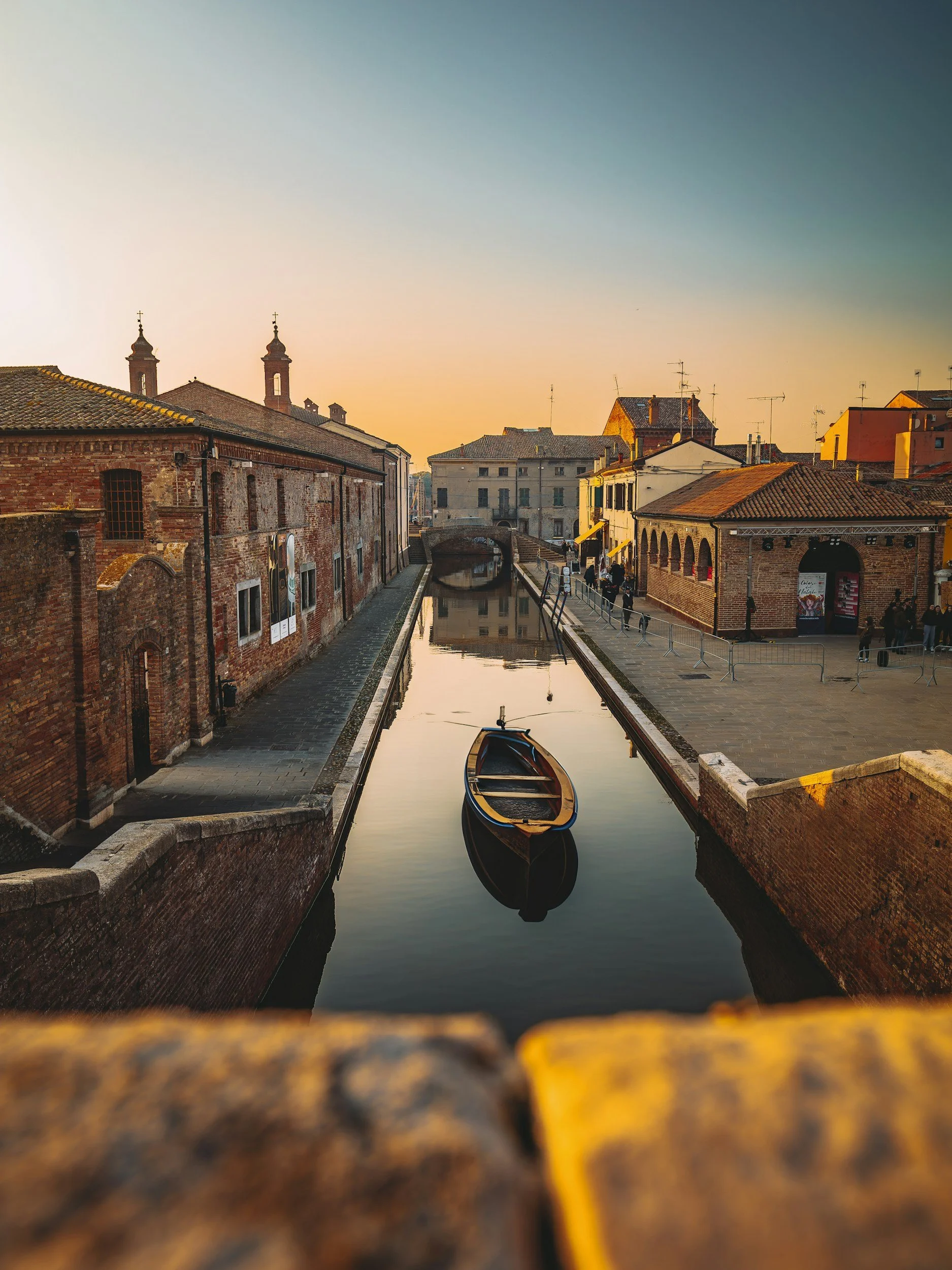
The canals are there, obviously, and Trepponti really is beautiful in person, especially early in the morning when the water stays still enough to reflect the pastel buildings properly. But Comacchio feels much rougher around the edges than the polished canal-town fantasy people often expect. Fishing boats tied beside fading buildings, tiny grocery stores with handwritten opening hours taped to the windows, narrow residential canals where laundry hangs above the water and nobody seems particularly interested in whether visitors are impressed or not.
And the town changes completely depending on what time of day you see it.
Around lunchtime, especially during warmer weekends, the whole area around Trepponti and Via Pescheria suddenly fills with people arriving from Ferrara, Ravenna, Bologna, and the Adriatic coast. Cyclists try to squeeze past groups stopping in the middle of bridges for photographs while seafood restaurants start filling all at once with tables ordering spaghetti alle vongole, grilled eel, fried seafood, and cold white wine.
Then somewhere around late afternoon the atmosphere shifts again almost without warning.
The smaller canals behind Museo Delta Antico empty first, chairs get stacked outside cafés, and suddenly you start noticing ordinary sounds again instead of visitors talking over each other. Somebody hosing down the pavement outside a seafood shop near Via Muratori. Bicycles rattling over the bridges. Television noise drifting from open windows farther down the canals.
Getting here takes slightly more effort than most Emilia-Romagna towns, which honestly helps Comacchio stay the way it is.
There’s no train station directly in town, so most people either drive or come through Ferrara first and continue by bus. The route itself is easy enough once you know it, but the schedules thin out heavily in the evenings and Sundays can become awkward very quickly if you miss a connection. Without a car, you also miss a huge part of what makes this area interesting because the Po Delta landscape outside town changes the whole mood of the place.
The drive into Comacchio feels completely different from the rest of Emilia-Romagna too. Once you leave Ferrara behind, the landscape flattens out almost unnaturally. Long roads cut through wetlands and fishing areas while flamingos stand beside the water looking so normal after a while that people stop slowing the car down to look at them. During autumn and winter mornings, fog hangs low across the lagoons near Anita and Boscoforte until surprisingly late in the day, and there are stretches where you barely pass another vehicle for twenty minutes.
Mornings inside Comacchio are easily the best part of the day though.
Around 07:30, Bar Ragno near Via Cavour already has regulars standing shoulder-to-shoulder at the counter drinking espresso while fishermen and delivery drivers move through the center before the town fully wakes up. The light across Trepponti at that hour looks completely different from the harsher midday version most visitors end up photographing later. Softer reflections. Fewer people. The smell of saltwater drifting through the canals before restaurant kitchens fully take over the air around lunch.
Pasticceria Duomo near the cathedral starts filling early with residents buying pastries and newspapers while fish shops around Via Muratori open shutters one by one. Around 09:00, the center smells completely different depending on which street you’re standing on. Coffee near Via Cavour. Fried seafood near the canal restaurants. Saltwater and damp wood closer to the fishing areas.
And Comacchio never really smooths itself out for visitors in the way many prettier Italian towns eventually do.
Some afternoons feel almost strangely empty outside summer. Tiny alimentari stores close for several hours in the middle of the day. Shops shut unexpectedly. Around Via Edgardo Fogli and the smaller residential canals behind the museum area, there are stretches where you mostly see old men sitting outside talking quietly while repairing fishing equipment or watching bicycles pass over the bridges.
The food scene feels tied completely to that lagoon atmosphere too.
At Osteria del Delta, nobody explains dishes or gives long introductions about local traditions. Plates simply arrive when they’re ready. Grilled eel, seafood risotto, tiny clams, fried soft-shell crab when it’s in season, spaghetti alle vongole with more garlic than people sometimes expect. During colder months, the dining room windows fog up by lunchtime while local families settle into seafood lunches that stretch much longer than visitors originally planned.
La Comacina feels even more local once summer beach traffic disappears, especially during autumn weekends when the dining room fills with families from Ferrara ordering huge seafood lunches before driving back inland later in the evening. Nearby, Antica Pescheria San Pietro works especially well earlier in the evening for smaller seafood plates and wine before dinner.
And there are smaller places around town that people miss constantly because they stay near Trepponti the entire time.
Libreria Le Querce near Via Sambertolo feels cluttered in the best possible way, with shelves packed full of regional cookbooks, fishing history, old postcards, local maps of the Po Delta, and random secondhand novels stacked unevenly everywhere. Around Via Mazzini, there are still fishing suppliers, old hardware shops, and local kitchen and homeware stores.
One of the nicest walks is actually later in the evening once the center starts emptying again. Crossing the quieter bridges behind Museo Delta Antico around sunset while the canals reflect the last light feels completely separate from the busy lunchtime version most visitors experience first.
And by around 22:00 outside peak summer weekends, Comacchio becomes properly quiet.
Not cinematic quietness. Actual silence where you hear restaurant kitchens shutting down for the night, televisions playing through open windows somewhere farther down the canal, and water moving against the stone edges beneath the bridges once most of the visitors have gone home again.
If Comacchio ends up being your favorite stop, these Liguria towns have the same “accidentally stayed three nights longer” energy once the afternoon crowds disappear.
And if Comacchio makes you realize you actually prefer quieter coastal towns to crowded Italian cities, this Levanto guide explains very quickly why some people never end up staying in Cinque Terre at all.
If the wine bars and long lunches around Emilia-Romagna become your favorite part of the trip, this Piedmont stay guide is probably the most natural next stop afterward.
Faenza is much more interesting once you stay overnight
A lot of people only really know Faenza through train announcements and departure boards.
They’ve changed trains here on the way to Ravenna or Rimini, stood outside the station waiting for the regional connection to Brisighella with a paper cup of espresso from the station bar, then left assuming the city itself probably wasn’t worth more than an hour or two anyway. And honestly, the area directly outside the station does not exactly help make a strong first impression. Piazzale Cesare Battisti always feels busy in a slightly messy way with buses pulling in constantly, students rushing across the road toward class, taxis waiting beside people dragging hard-shell suitcases toward Bologna connections.
Then you walk into the center and within ten minutes the atmosphere changes completely.
The streets narrow properly around Corso Giuseppe Mazzini, the traffic noise drops away, bicycles start moving faster than cars, and the long porticoes suddenly make the whole city feel softer and more lived-in than people expect beforehand. Not polished. Not trying to become the next stylish weekend destination. Just a proper Romagna city where people still use the center for ordinary life instead of mostly tourism.
And mornings are when Faenza feels strongest.
Around 08:00, Piazza del Popolo already has movement everywhere without feeling chaotic. At Caffè delle Rose, regulars stand crowded around the marble counter drinking espresso while staff move trays of pastries back and forth so quickly you barely see the empty spaces before they refill again. Older residents stop beneath the arches reading newspapers while delivery vans crawl through the piazza trying not to clip bicycles weaving between them.
The smell around the center at that hour is half the reason to get up early here in the first place. Fresh pastry cream drifting from the bakeries near Via Torricelli, warm focaccia from smaller forno shops around Via Pistocchi, coffee moving beneath the porticoes while people carry paper bags home before work. Around rainy mornings in autumn, the whole area near Piazza della Libertà smells faintly of wet stone, espresso, and bread all at once.
And Faenza changes quickly depending on where you walk.
The streets directly around Piazza del Popolo stay busy most of the day because cafés and aperitivo bars keep people moving through the center constantly, but once you drift toward Via Santa Maria dell’Angelo or the quieter lanes behind Museo Internazionale delle Ceramiche, things soften almost immediately. Ceramic workshops sit half open with paint-stained worktables visible from the street, shelves stacked with unfinished bowls and plates drying beside kilns, bags of clay pushed into corners beside bicycles and cardboard boxes.
Some of the nicest streets are not the obvious ones either.
Around Via Severoli and Via Campidori, the center starts feeling much less visitor-focused and much more tied to ordinary routines again. Small kitchenware stores still have dusty ceramic bowls and hand-painted espresso cups sitting in the same faded window displays for months, bicycles lean beneath the porticoes outside Alimentari Bettoli while older residents stop inside for groceries, and by late afternoon students from ISIA and the ceramic school cross Corso Mazzini carrying oversized portfolios toward Nove100 or Mokador for coffee before heading home.
The ceramic studios around these streets feel properly working too. Along Via Santa Maria dell’Angelo and the quieter lanes behind Museo Internazionale delle Ceramiche, doors stay half open because of the heat from the kilns, shelves overflow with unfinished bowls waiting to dry beside paint jars and buckets of clay slip, and somebody is usually sanding or glazing pieces in the back room without paying much attention to who walks past outside.
Around the smaller streets near the museum, there are still workshops where somebody is sanding pieces in the back room while a radio plays quietly somewhere you can’t see, shelves overflow with half-finished ceramics waiting to be fired, and nobody particularly changes the atmosphere because somebody walked inside looking around.
Libreria Moby Dick near Corso Mazzini feels exactly how a good independent bookstore should feel too. Slightly cramped, uneven stacks everywhere, local art books mixed beside secondhand novels and architecture journals. Nearby, Carta Canta sells thick notebooks, fountain pens, handmade paper, wrapping paper, little prints, and cards that feel chosen by actual humans rather than ordered through a branding catalogue.
Faenza also feels younger than people expect because of the ceramic schools and small art spaces spread through the city.
Around FM Contemporary Art Center and the smaller galleries near Via Castellani, you start seeing posters for exhibitions taped beside handwritten music flyers and ceramics workshops advertised on café windows. Late afternoons around there feel especially good because students sit outside bars with sketchbooks and laptops while people cycle home beneath the arches carrying groceries or flowers from the market.
The ceramics museum itself is much stranger and more interesting than people usually expect too.
A lot of visitors rush toward the historical collections first, but the rooms that stay with people longest are often the more unusual contemporary sections deeper inside the building where cracked experimental pieces, strange ceramic sculptures, old regional tiles, and modern installations all sit together in ways that feel slightly chaotic rather than perfectly curated. The museum bookshop is also genuinely worth browsing for a while if you care about Italian design, ceramics, architecture, or independent art publishing because the selection feels chosen by people who actually know the subject properly.
And then around 15:00 the city suddenly empties just enough that you notice it immediately after lunch. Smaller stores close for several hours. Somebody drags chairs across the pavement near Via Torricelli. The porticoes become quiet enough that you hear bicycles crossing the stone streets from surprisingly far away.
Then around aperitivo everything slowly starts waking up again!
At Enoteca Astorre, people stand outside drinking Sangiovese with little plates of salumi while scooters somehow squeeze through streets already crowded with tables and bicycles. Nove100 becomes busier later in the evening with students and younger locals staying much longer than they originally intended while conversations drift across Corso Mazzini beneath the arches.
The food around Faenza feels much more Romagna than Emilia too once you sit down properly for dinner. More grilled meats, more piadina, more Sangiovese, less of the richer butter-heavy cooking you get farther west around Parma and Modena.
At Trattoria Manueli, lunch can quietly disappear into the whole afternoon once tables settle into handmade pasta, rabbit, local wine, and desserts nobody originally planned on ordering. Osteria della Sghisa outside the center feels even more local and authentic, especially during autumn when porcini mushrooms suddenly appear across menus almost overnight after the first colder week arrives.
And once you leave Faenza itself, the landscape changes surprisingly fast.
Within twenty minutes driving south toward Brisighella and Modigliana, the flat streets around the city turn into vineyards, olive groves, and winding roads where handwritten signs advertise Sangiovese tastings beside farmhouses that barely look open from the outside. During harvest season, tractors move slowly through the vines early in the morning while fog hangs low across the hills behind them and small roadside bars fill with vineyard workers stopping for espresso before the day properly starts.
People who love the quieter streets in Faenza usually connect with this Matera escape almost immediately, especially if bigger Italian cities start feeling exhausting halfway through a trip.
A lot of the countryside outside Modena and Faenza starts making much more sense once you stay rural for a couple of nights, and these countryside stays are genuinely useful if you want vineyard mornings without driving everywhere.
The best parts of Emilia-Romagna usually happen between the plans
A lot of people come to Emilia-Romagna thinking the trip will revolve around famous meals, restaurant reservations, or ticking off food destinations they’ve seen online for years.
Then they end up remembering completely different things instead, like the tiny bakery in Faenza where they bought the same pistachio pastry three mornings in a row because it was still warm at 08:15. The fact that nearly everything in Comacchio suddenly went quiet after lunch apart from bicycles crossing the bridges and somebody washing down the pavement outside a fish shop. Sitting too long at Enoteca Stalìn in Modena because aperitivo quietly turned into dinner without anybody really deciding that was the plan. Realizing halfway through Brisighella that dragging a heavy suitcase uphill on those stone streets was a terrible idea.
And Emilia-Romagna works best once there’s enough room in the schedule for those smaller moments to happen naturally.
Trying to move cities every night usually flattens the region into one long series of meals and train rides. The towns here change too much throughout the day for that. Faenza after lunch feels nothing like Faenza at breakfast. Comacchio early in the morning is a completely different place from the version people see arriving at midday. Modena becomes much more relaxed once office workers start filling the wine bars around Via Gallucci in the evening and the lunch crowds disappear.
Even practical things shape the experience more than people expect beforehand.
Restaurant hours matter here. Market days matter. Sunday evenings can feel unexpectedly quiet in smaller towns because many kitchens close after lunch. August changes entire streets because local businesses shut for holidays. Fog changes the atmosphere completely in autumn, especially around the vineyards south of Modena or the lagoon roads outside Comacchio where visibility sometimes drops so low in the mornings the landscape almost disappears.
And some of the nicest places from this trip are not really places you “do” at all.
They’re the wine bars people wandered into accidentally because another restaurant was full. The ceramics workshop in Faenza where somebody was still glazing bowls at 18:00 with the door half open. The roadside trattoria outside Brisighella where lunch quietly lasted three hours longer than expected because nobody seemed interested in bringing the bill too quickly.
That’s usually when Emilia-Romagna starts feeling less like a food itinerary and more like somewhere people could actually imagine returning to regularly without needing a checklist next time.
If you’re planning around food seasons instead of weather, this Italy food calendar honestly saves a lot of disappointment later.
Anyone considering Alba during truffle season should read this Alba reality check before assuming it feels similar to smaller Emilia-Romagna towns in autumn because the atmosphere is very different now.
And in case you’re trying to build an Italy trip without renting a car the whole time, these lake town routes fit very naturally before or after Emilia-Romagna.
FAQ: Small towns in Emilia-Romagna with incredible food
Which small town in Emilia-Romagna is best for food without heavy tourism?
Parma and Modena attract the most international food tourism, especially around weekends and major restaurant bookings, but towns like Faenza, Brisighella, and Comacchio still feel much more connected to everyday local routines. Faenza works especially well if you want cafés, wine bars, ceramics, bookstores, and walkable streets without large crowds, while Comacchio feels completely different from inland Emilia-Romagna because the food revolves around lagoon seafood, eel, clams, and fishing culture instead of heavier Emilia dishes.
Which Emilia-Romagna town works best for a slower two-night stay?
Faenza and Modena are probably the easiest towns to settle into for a couple of nights because they stay active throughout the day without feeling overwhelming. Faenza works well if you want easier access to Brisighella, ceramic workshops, bookstores, and the Romagna hills, while Modena is stronger for wine bars, markets, balsamic vinegar producers, and slower aperitivo evenings around Via Gallucci and Corso Canalchiaro.
Parma also works well for longer stays, especially in colder months when the city leans heavily into long lunches, trattorias, and richer seasonal food.
Is Comacchio worth visiting without a car?
It’s possible, but more limiting than many people expect beforehand.
You can reach Comacchio by train to Ferrara followed by a bus connection, and the historic center itself is small enough to walk easily. But the surrounding Po Delta landscape is a huge part of the experience, and many of the quieter lagoon roads, seafood restaurants near Porto Garibaldi, and wetland areas outside town are much easier to explore with a car.
Bus schedules also thin out heavily later in the evening and on Sundays.
Is Emilia-Romagna better by train or car?
The region works surprisingly well by train between Parma, Modena, Bologna, Faenza, Ravenna, and Brisighella because distances are shorter than many visitors expect. Regional trains are frequent and stations usually sit close to the historic centers.
A car becomes much more useful once you start exploring the countryside outside the cities, especially around the Lambrusco vineyards south of Modena, the smaller roads near Brisighella, or the lagoon areas surrounding Comacchio.
Does Parma feel touristy now?
Parts of Parma around Piazza Duomo, Via Cavour, and the best-known food spots can feel busy during weekends and peak food tourism periods, especially in autumn.
But areas like Oltretorrente, Via d’Azeglio, Borgo Santa Brigida, and the smaller residential streets west of the center still feel much more local once evening arrives and day visitors leave. Parma also quiets down much earlier at night than many people expect beforehand.
Which Emilia-Romagna town has the best aperitivo atmosphere?
Modena probably works best overall for aperitivo because the wine bars around Via Gallucci, Via del Taglio, and Corso Canalchiaro gradually fill throughout the evening without feeling overly tourist-heavy.
Faenza feels more relaxed and local around aperitivo hours, especially near Piazza del Popolo where students, residents, and local artists slowly fill outdoor tables after work. Parma feels more traditional and food-focused around aperitivo, particularly near Strada Farini and Borgo Santa Brigida.
What is the quietest town in Emilia-Romagna from this list?
Brisighella becomes extremely quiet outside summer weekends, especially after dinner once the upper streets near Rocca Manfrediana empty out.
Comacchio also changes dramatically after lunch when many visitors leave and the smaller canals behind Trepponti settle back into everyday local routines. Around 22:00 outside peak season, large parts of the center can feel almost completely empty apart from a few seafood restaurants and wine bars near the canals.
Which town in Emilia-Romagna is best for ceramics and art?
Faenza is easily the strongest choice for ceramics, independent studios, and contemporary craft culture.
Around Via Santa Maria dell’Angelo, Via Campidori, and the streets behind Museo Internazionale delle Ceramiche, many workshops still function primarily as working studios rather than tourist shops. The city also has a younger creative atmosphere than people expect because of its ceramic schools, design students, galleries, and art spaces.
What is the best time of year to visit Emilia-Romagna for food?
October and November are especially good if the trip revolves around food, wine, and smaller towns rather than hot weather.
Porcini mushrooms start appearing across menus, fog settles across vineyards and countryside roads in the mornings, and cities like Parma and Modena feel much more connected to long lunches and heavier seasonal cooking.
Spring also works very well, especially April and May when outdoor cafés, markets, and wine bars start filling again without peak summer heat.
Which town in Emilia-Romagna has the best seafood?
Comacchio is the strongest choice for seafood from this list because the town is directly connected to lagoon and fishing culture.
Restaurants around Via Pescheria, Trepponti, and Porto Garibaldi focus heavily on eel, clams, seafood risotto, grilled fish, soft-shell crab when in season, and simple Adriatic cooking that feels very different from the richer food traditions farther inland.
Is Faenza worth visiting or should you only visit Brisighella?
Faenza is worth staying for on its own, especially if you enjoy ceramics, independent cafés, bookstores, slower city centers, and places that still feel heavily local.
A lot of people only pass through Faenza on the train to Brisighella, but the atmosphere around Corso Mazzini, Via Severoli, and the ceramic workshop streets near the museum becomes much more interesting once you spend a full day or two there properly.
Which Emilia-Romagna town feels most different from the others?
Comacchio feels completely separate from the rest of Emilia-Romagna because of the lagoons, wetlands, fishing culture, and flat Po Delta landscape surrounding the town.
The atmosphere, food, light, and even the daily rhythm feel noticeably different from inland places like Parma, Modena, or Faenza. Fog, tides, seafood deliveries, and lagoon weather shape daily life there much more than city routines do.