Looking beyond Cinque Terre? Start with these Ligurian towns.
Most people take the train from Genoa and stay on it until Cinque Terre, get off, follow the same streets as everyone else, and then leave again a few hours later. That’s why it feels the way it does. Not because the coastline is like that, but because almost everyone is moving through it in the same way.
If you start getting off earlier, or just stay on the train one or two stops longer, things shift quite quickly. The same railway line runs the entire coast, from Genova Piazza Principe down towards La Spezia, and trains come often enough that you don’t need to plan much. What changes is what happens after you step off.
In towns like Camogli, Levanto, or even smaller stops like Bonassola, you don’t arrive into a set route. You step out, walk a few minutes, and you’re already where people actually spend their day. Someone is picking up bread, someone else is standing at the bar having a quick coffee, the same table is used more than once instead of being cleared immediately for the next person.
In Cinque Terre, the typical first time visitors are easy to spot. People arrive, walk through, stop in the same places, check the train times, and move on. You feel it in how quickly everything turns over. In the towns just outside that stretch, it’s less organised in that way. You might sit down somewhere without thinking about how long you’ll stay, or end up back at the same place later in the evening without planning it.
Once you start using the train like that, just moving a few minutes between stops without overthinking it, the coastline starts to make more sense. Not as a list of places to see, but as somewhere you can actually stay for a while without needing to keep moving.
Markets are part of everyday life here, and if you enjoy that kind of experience, there are also authentic small-town markets across Italy you' should check out.
In summer, these routines shift slightly, especially in coastal areas, which you’ll notice if you’ve looked into Italy’s smaller summer market towns.
How to Visit Camogli from Genoa (Best Time to Go During the Day)
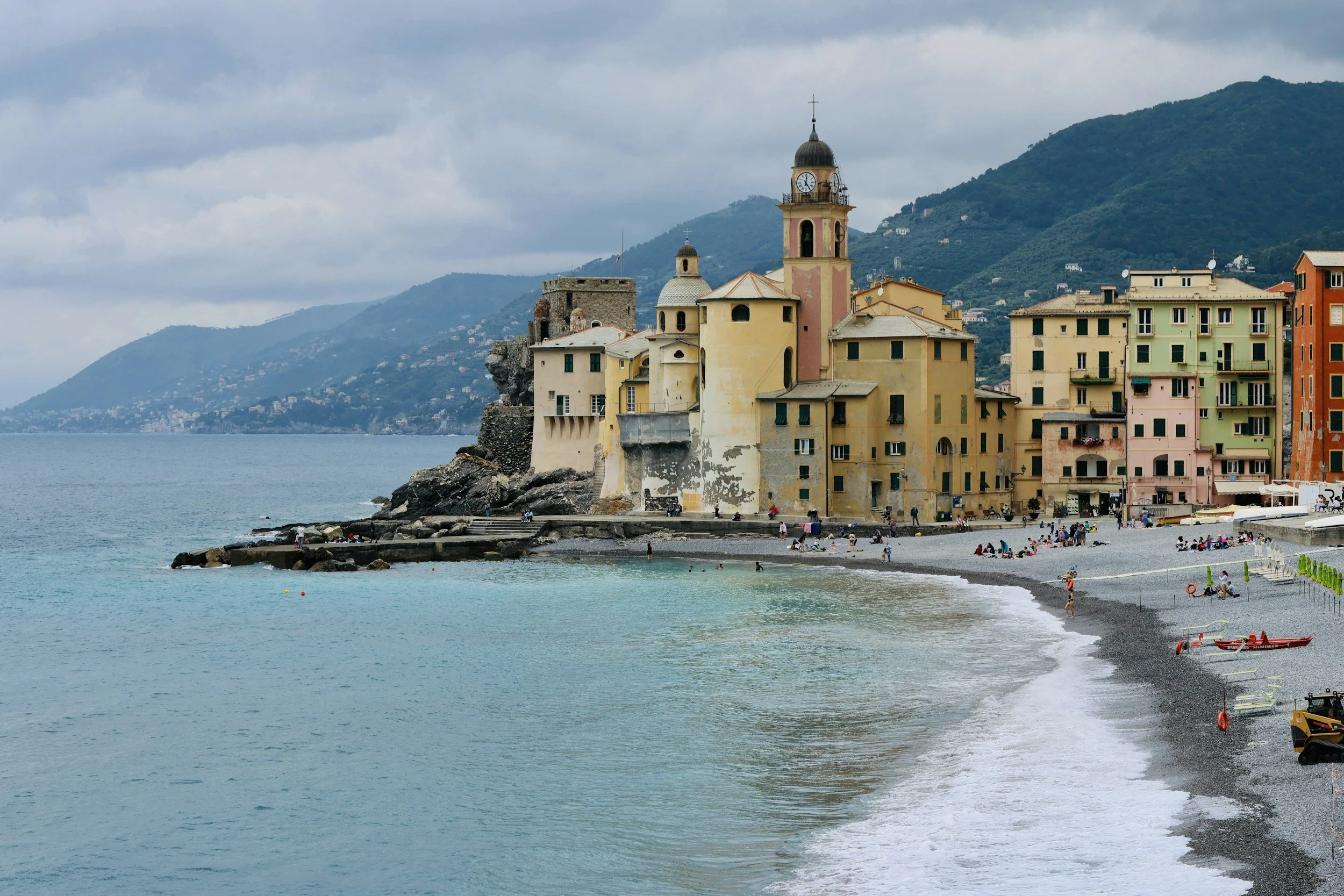
Camogli is one of those places that’s almost too easy to reach, which is probably why it gets busy later in the day. From Genova Piazza Principe, you just take a regional train towards La Spezia. No planning needed. They run often, and about 25 minutes later you’re stepping off at Camogli-San Fruttuoso. The station sits slightly above the town, so when you come out, you’re already looking down at the harbour without having to search for it.
You follow the short path down and within a few minutes you’re on Via XX Settembre. It’s a simple street, a bit worn in places, with bakeries, a few small food shops, and cafés that are already open. Revello is hard to miss. It’s usually one of the first places with people standing at the counter, ordering coffee and focaccia without really stopping. No one is sitting with laptops or taking their time. It’s quick, local, and then they move on.
If you get there before 9:30, everything still feels easy. You can walk the full stretch along the water without slowing down, past the small marina and along the row of tall buildings facing the sea. Someone is opening shutters, someone else is dragging chairs out, and there are a few people already sitting along the harbour wall with coffee. It doesn’t feel empty, just not in motion yet.
Camogli is very straightforward once you’re in it. There’s the waterfront, a few streets running slightly uphill, and that’s about it. You don’t need to check where to go. You just walk, turn when something looks interesting, and end up back by the water again.
By late morning, it changes quite quickly. You start noticing more people arriving at once, usually from the same train, and the promenade fills up. Around 11:00, it’s a different place. Not chaotic, but you’re no longer moving at your own pace. You adjust a bit, slow down, wait, walk around people.
If you stay instead of leaving after lunch, it settles again. Around 18:30 or 19:00, people come back out, but it’s not the same kind of crowd. You’ll see the same spots being used again, just with different people. Restaurants like Da Laura or La Camogliese start filling up slowly, and people sit down properly this time. No one is checking train times. You can walk along the harbour again without thinking about where you’re going next, and it feels like a place you can stay in rather than pass through.
If you’re planning to continue travelling through Italy after Liguria, the timing becomes even more relevant, especially when comparing it to places like the quieter Cilento Coast in southern Italy.
Sestri Levante and Baia del Silenzio (Best Times to Visit)
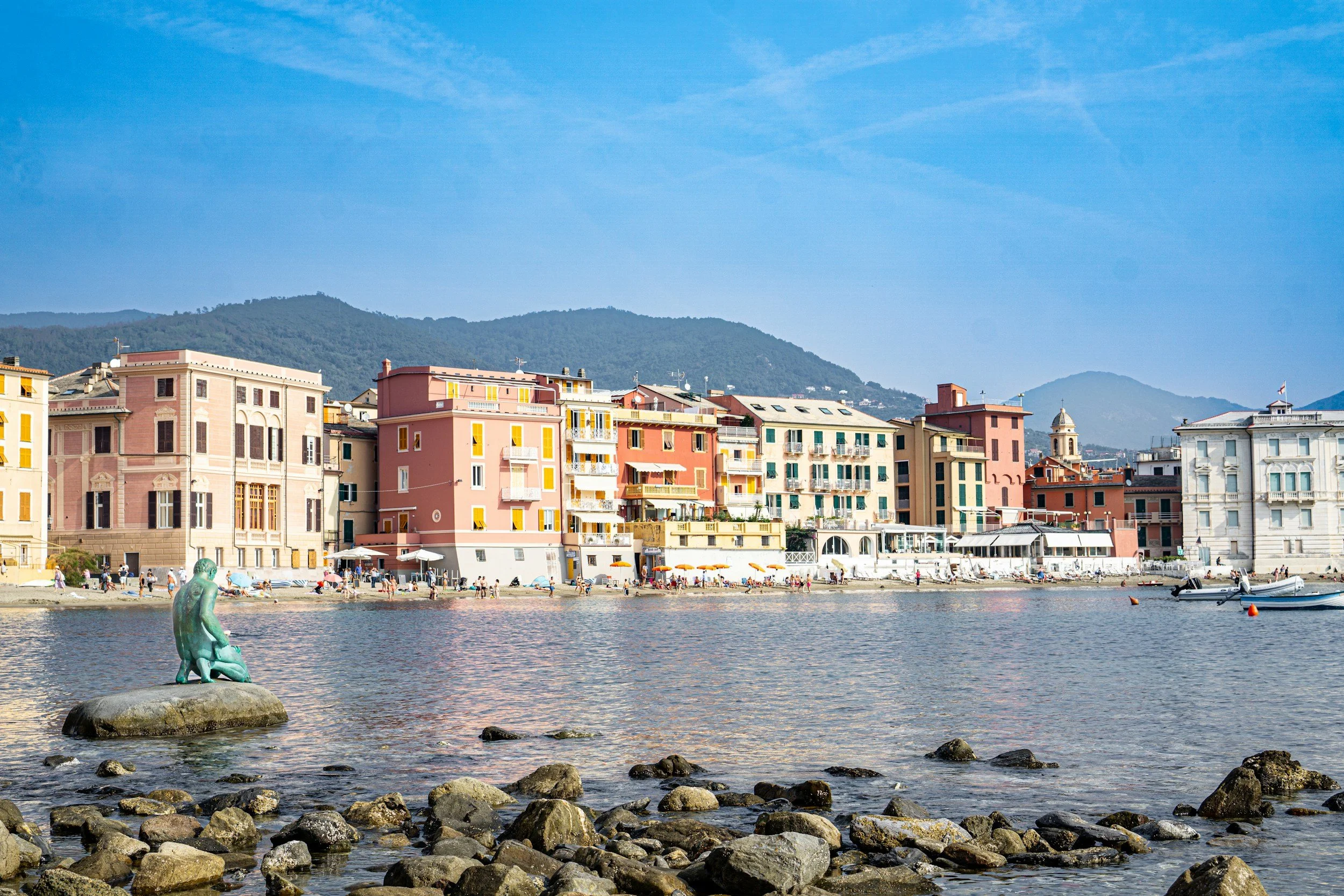
Sestri Levante is one of those places where the arrival is almost too simple. You get off the train, walk straight down Via Nazionale, and you’re already in town without really noticing when it started. It’s about ten minutes, completely flat, past a few cafés setting up for the day and people doing small errands. No taxis, no confusion, just a straight walk towards the water.
Most people don’t stop on the way. They go straight to Baia del Silenzio. You reach it through a narrow gap between buildings, and then suddenly you’re standing on the sand. It’s smaller than people expect, almost enclosed, with low houses right behind the beach and barely any distance between the water and the town.
If you get there early, before 10:00, it feels easy to be there. You don’t need to think about where to sit. You just walk out, pick a spot, and stay. A few people are already in the water, others are sitting with coffee or reading, and there’s still space between everyone. You can walk across the whole bay without adjusting your steps or looking for a way through.
Around lunchtime, it changes quickly. Not gradually, but within an hour or so. Sunbeds are already set up, and new people keep arriving, looking around for space that isn’t really there anymore. You’ll see people walking back and forth with bags, trying to figure out where to go, sometimes giving up and heading out again. It’s not chaotic, but it’s tight, and you feel it.
Later in the afternoon, usually after 16:30, it starts to loosen again. People begin packing up, slowly at first, then more noticeably. You’ll see the same paths opening up again, the same spots becoming available. It’s easier to come back then, even just for a short swim or to sit by the water for a bit before dinner.
By early evening, the focus shifts away from the beach without anyone really deciding that it should. People start walking back through the small streets, and the movement spreads out across town. Some head towards Baia delle Favole on the other side, others stop along Viale Rimembranza for a drink. You’ll see tables filling up, not all at once, but steadily, with people staying longer than they would earlier in the day.
Around 20:00, the smaller streets just behind the waterfront come back to life. You don’t need to book everywhere, but the places slightly tucked away from the main stretch tend to fill first. It’s not about finding the “right” restaurant. It’s more about where you end up once you’ve walked around for a bit and decided to sit down.
Is Levanto a Good Base for Cinque Terre?
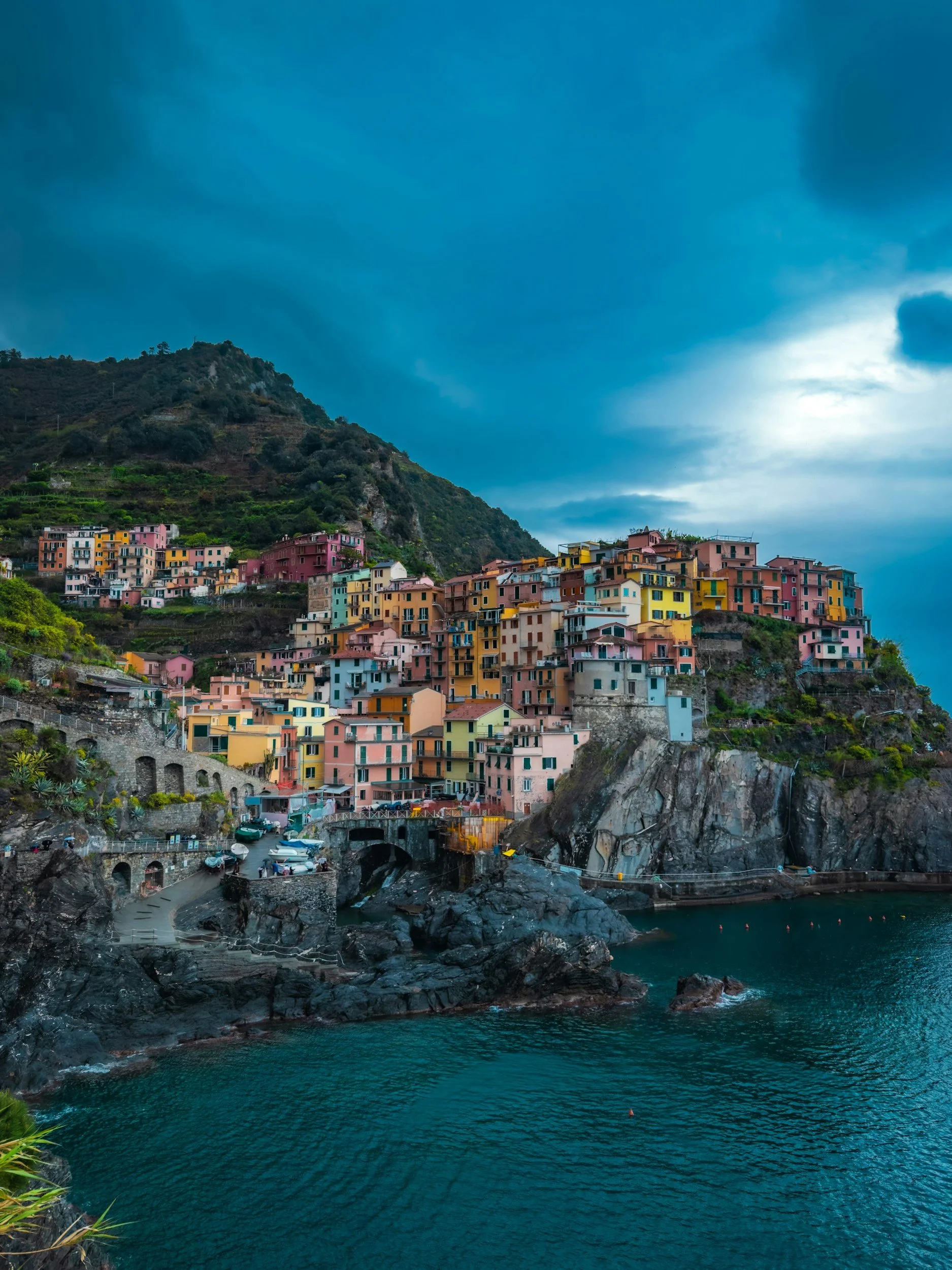
Levanto is usually the place people pass through on the way to Cinque Terre, but if you actually stay here for a few nights, the whole area becomes easier to handle. You get off the train, walk five minutes, and you’re already in the middle of town. No stairs, no searching. Corso Italia runs straight ahead, and from there it’s another few minutes to the beach. After that first walk, you don’t really think about where things are anymore.
Trains towards Monterosso and the other Cinque Terre villages run all the time. You’ll hear them, you’ll see people coming and going, but you don’t feel tied to it. Some mornings you might go one stop and come back before lunch. Other days you just stay in Levanto because it doesn’t feel necessary to leave.
Mornings are slow in a practical way. Around 8:30–9:00, people start showing up at the same cafés. Pasticceria Bianchi has a small crowd at the counter, people ordering coffee, focaccia, something sweet, and then heading off again. A few streets over, Bar Levanto has tables outside where people sit a bit longer, watching who passes by. Nothing is staged. It’s just people starting their day.
The beach is right there, stretching along the front of town. You can walk onto it without planning anything. Some areas have sunbeds lined up, others are completely free, and you can move between them depending on how long you feel like staying. You’ll see people going back and forth all day, picking up something from a shop, returning to the beach, leaving again. It never feels fixed.
If you’re there on a market day, you’ll notice it without trying. Streets near Piazza Cavour fill with stalls, and it’s not just food. Clothes, household items, things people actually use. You’ll see locals stopping to buy what they need, not browsing slowly. It’s a good place to walk through once, maybe pick up something simple, and then continue on.
Evenings don’t arrive all at once here. Around 18:30, people start coming back out, but it’s gradual. You walk along Corso Italia, and the same places you passed earlier are open again, just busier now. You might walk the whole street once, maybe twice, before choosing somewhere to sit. And once you do, you stay.
If you’re staying here for a few days, it’s worth slowing down and using Levanto as more than just a base. There’s a lot to explore without leaving town, especially if you’ve already looked into a more detailed travel guide to Levanto, including where to stay, eat, and walk.
How to Get to Cervo Liguria
Getting to Cervo isn’t difficult, but it’s not as direct as the towns further east, and you notice that straight away. You take the train to Diano Marina, which is a simple journey along the coast, but when you arrive, there’s no clear path that brings you into the village on foot. You either wait for the local bus, which runs but not constantly, or take a taxi for the last stretch uphill. It’s only about ten minutes, but it’s enough of a break in the journey that most people don’t include it unless they’ve decided in advance to go there.
When you arrive, you’re not stepping into a flat seaside town. The road curves up, and then you’re on foot almost immediately. The streets are narrow and uneven, and you walk through them without really knowing where they lead at first. There aren’t signs pointing you through a set route, so you just follow the direction of the slope. After a few minutes, the space opens up into Piazza dei Corallini, and you’re suddenly looking straight out over the sea, with the church right in front of you. Most people stop there longer than they expected to.
From that point, everything stays within a small area. You move a few streets over, maybe down a little, then back up again. Distances are short, but you feel them because of the incline. You don’t cover much ground in terms of kilometres, but you’re still moving enough to notice it.
There aren’t many places to sit, which becomes clear once you start thinking about where to go. A couple of restaurants, a few small terraces, and that’s it. Ristorante Serafino is one of the places people end up at, partly because it’s good, partly because there aren’t endless alternatives to compare it to. You don’t walk around for half an hour trying to decide. You look at what’s there, pick something, and sit down.
During the day, a few people come through, walk around, leave again. Then it’s quiet for a while. It never builds into anything that feels busy. You can stand in one of the small streets and not need to move aside for anyone.
In the evening, people come out gradually. Not all at once, not in groups. A few tables fill up, then a few more. You might walk past the same place twice before deciding to sit down, and no one is waiting behind you for the table. After dinner, people stay where they are a bit longer, and then it fades out early. By 22:00 or so, most of the movement has stopped.
Because of the extra step to get there, it doesn’t really work as a quick visit between other places. You spend more time getting in and out than actually being there. Staying overnight changes that completely. Once you’re already in the village, you don’t think about the journey anymore, and the slower pace of this part of the coast starts to make more sense…
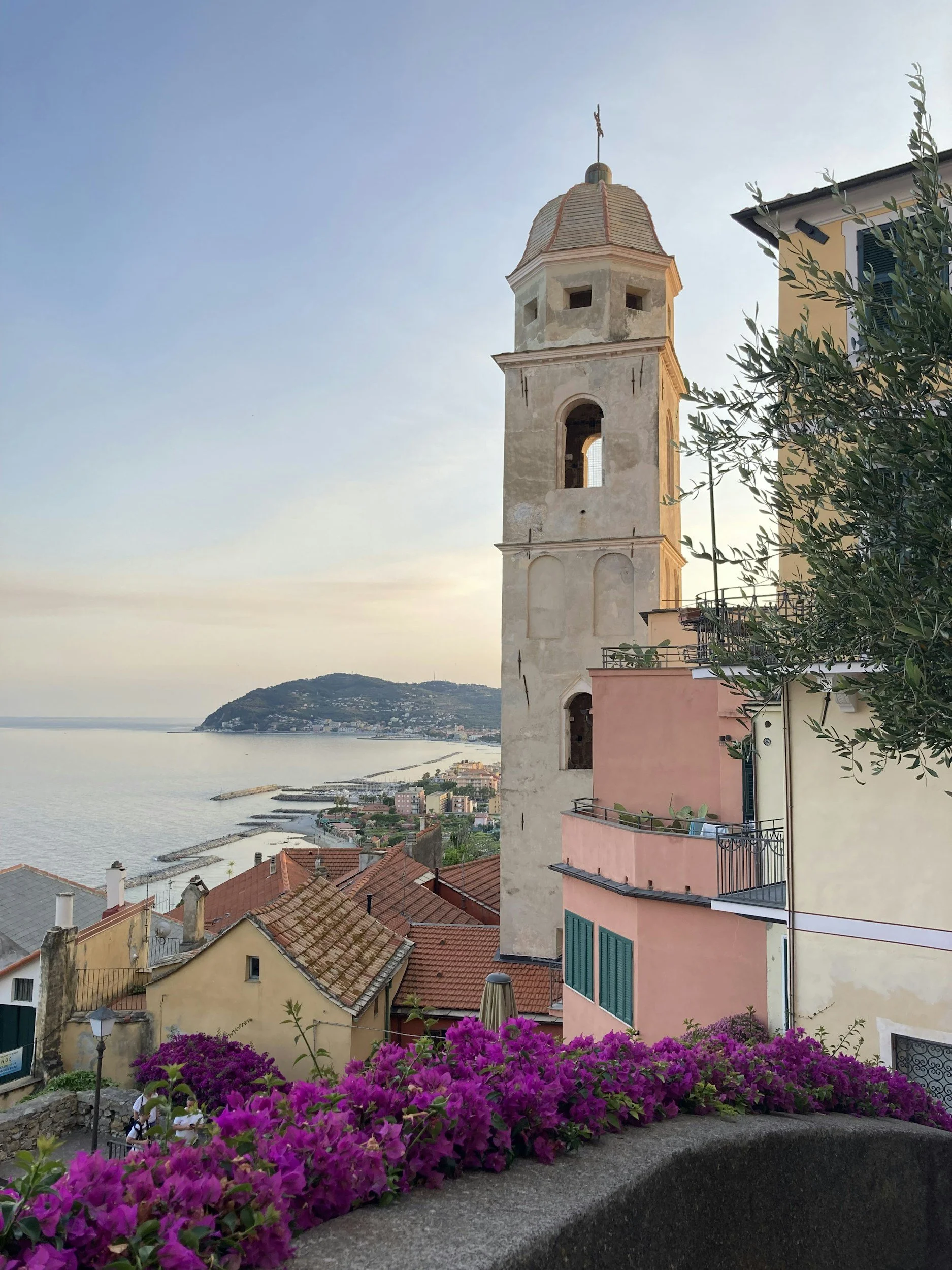
Noli Liguria (A Seaside Town with a Local Town Center)
Noli sits just below Spotorno, and getting there is straightforward once you know the last step. You take the train to Spotorno-Noli, which is on the main coastal line, and when you come out of the station you’ll see the bus stop just outside. Buses towards Noli run regularly, usually every 20–30 minutes during the day, and the ride takes around 10 minutes along the road that follows the coastline. If you arrive with luggage or don’t want to wait, there are usually taxis outside the station, and the drive is short.
The bus drops you right near the entrance to the old town, close to Corso Italia, and from there you’re already inside it. You don’t need to walk far to understand how the place is laid out. One or two parallel streets run along the waterfront, with narrow lanes connecting them, and everything is within a few minutes’ walk. You can go from the centre to the beach in under two minutes without crossing any big roads or figuring anything out.
In the morning, the first movement starts around 8:00. Panetteria Ghigo on Via Colombo has people coming in and out, picking up bread or focaccia, and next door cafés open their shutters and start setting out a few tables. Most people don’t sit long. They stop at the counter, have a coffee, maybe something small, and leave again. If you sit outside instead, you’ll notice how slowly the street fills. There’s no point where it suddenly gets busy. It just adds a few more people every ten minutes.
By 9:30–10:00, you start seeing more people heading towards the beach. Access is simple, with small openings between buildings leading straight onto the sand. Parts of the beach are organised with sunbeds, but there are also free sections where people put down towels without needing to rent anything. You’ll see both locals and visitors using the same areas, often coming and going rather than staying all day.
Around lunchtime, nothing really resets. Shops stay open, people keep moving through the same streets, and restaurants start filling table by table rather than all at once. You can walk along Via Monastero and find a place without planning ahead. Some tables turn over quickly, others don’t. It depends more on the people sitting there than on the place itself.
In the afternoon, the town stays active without getting crowded. People move between the beach and the centre, stopping to pick something up, then heading back down again. You might notice the same faces more than once during the day, which usually means people are staying nearby rather than just passing through.
Towards late afternoon, around 17:00–18:00, there’s a slight shift as people start leaving the beach and walking back into town. Not in groups, just gradually. Some stop for a drink along Corso Italia, others head back to where they’re staying and come out again later.
Dinner starts a bit later here. Around 19:30–20:30, the waterfront begins to fill, especially along the stretch facing the sea. Restaurants don’t try to turn tables quickly, so once people sit down, they stay. You can walk the full length of the centre, check a couple of places, and go back to one you passed earlier without feeling like you’ve missed your chance.
After dinner, people stay out but don’t move much. You’ll see the same tables occupied, a few people walking slowly through the streets, and some stopping for something small before heading back. By around 22:30, it’s already quieter again.
What makes Noli so great is that you don’t have to adjust your day around it. You arrive, you learn the few streets without trying, and everything you need stays within that small area. By the second day, you’re just moving between the same places in a way that starts to feel familiar.
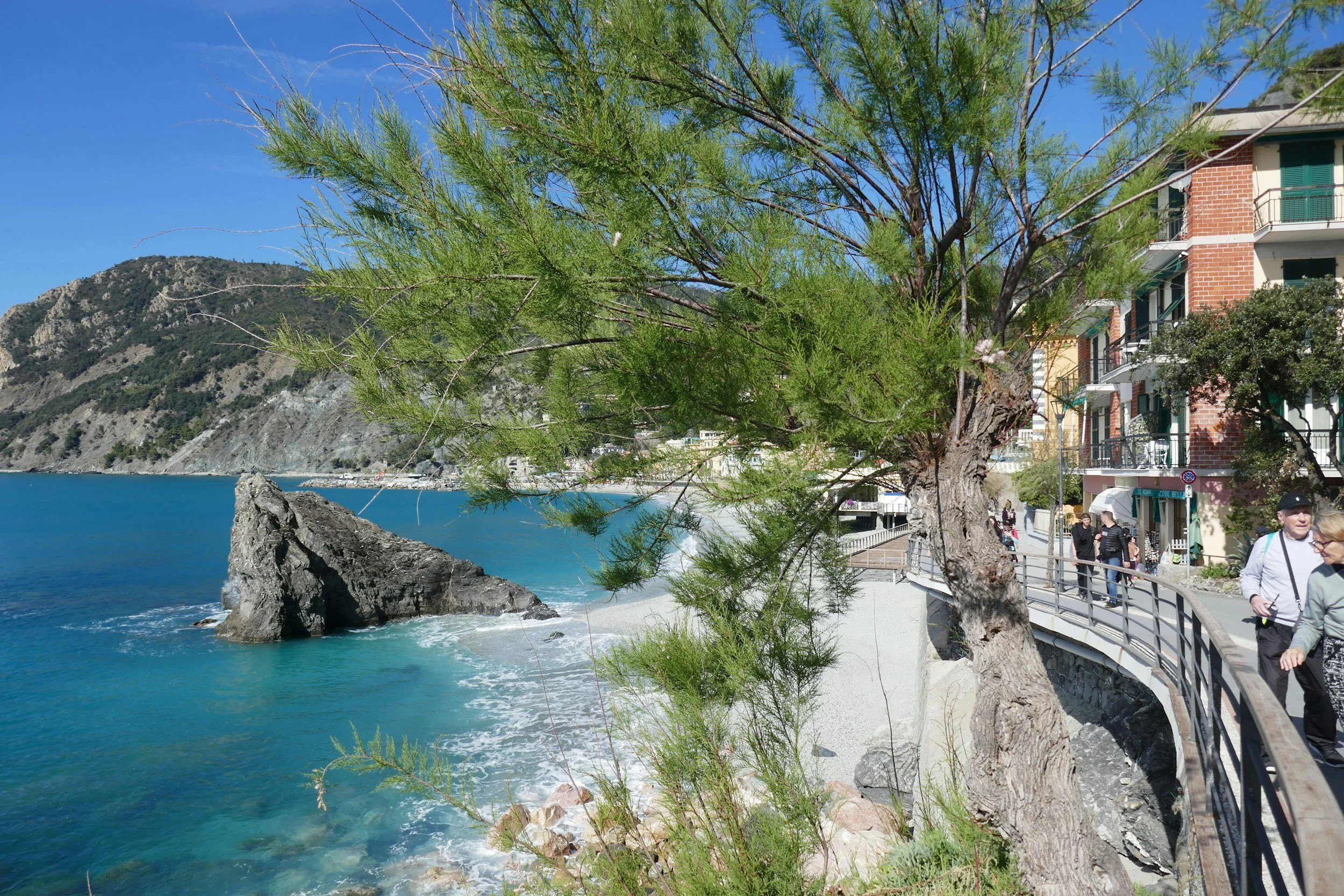
Framura Liguria
When you get off the train in Framura, it doesn’t feel like you’ve arrived in a town yet. The station is down at sea level, partly built into the rock, and you walk through a short tunnel to reach the harbour side. There’s a small beach area, a few boats, and maybe one or two places open depending on the time of day, but that’s it. No main street, no obvious direction to follow unless you already know where you’re going.
If you stay near the station, mornings are very simple. Around 8:30–9:00, a few people come down for a swim or sit with coffee near the water, but it never turns into anything busy. Most people don’t stay there long. After an hour or so, you start noticing people heading uphill, and that’s when you realise the rest of Framura is somewhere above you rather than around you.
The first stretch up towards Setta starts just past the station area, following a narrow road that curves through olive trees and low stone walls. It takes around 15–20 minutes, and you feel it in your legs because it’s a steady incline the whole way. There’s no traffic to move around, just the occasional car passing slowly. You don’t rush it. Most people stop at least once on the way up without really deciding to.
Setta itself is small enough that you can walk through it in a few minutes. A cluster of houses, a church, and if you’re lucky with timing, one place open where you can sit down. There’s no guarantee of that, though. You might arrive and find everything closed, which just means you keep going. That’s part of how this place works.
From there, the path continues towards Anzo. It’s another 10–15 minutes, slightly uneven in parts, and then it opens up a bit more. This is usually where people stop longer. There are a couple of places where you can sit, often connected to small guesthouses, and you’ll see the same people there for a while rather than a constant turnover. If you arrive around lunchtime, you might find a table, but it’s not something you plan precisely. You take what’s available and stay.
If you keep moving, Costa sits further up and takes a bit more effort to reach. By that point, you’ve been walking for a while, and most people slow down without thinking about it. There are even fewer places here, and you don’t move between them comparing options. You pick somewhere, sit, and that becomes your stop for the next hour or two.
Coming back down takes less time, but you still don’t rush it. In the afternoon, you’ll see people heading back towards the station in small gaps rather than groups. Some stop again near the water, others go straight back to where they’re staying.
There’s no central point where everything comes together later in the day. Even in the evening, people stay close to their own area. If you’re up in one of the hamlets, you eat there. If you’re down near the station, you stay there. You don’t move across Framura once it gets dark unless you’ve planned it.
After a day here, you start to understand that distances are measured more in time than in kilometres. A place that looks close on the map can easily take 20–30 minutes to reach, and once you’ve made that walk, you don’t immediately think about doing it again.
Bonassola vs Levanto
Bonassola is right next to Levanto, but it doesn’t feel like an extension of it once you’re there. The train from Levanto takes two or three minutes, and when you get off, you’re already in the centre. No walking through tunnels or climbing stairs. If you prefer to walk, the old railway tunnel starts at the far end of Levanto’s seafront and brings you straight into Bonassola after about 20 minutes. It’s flat the whole way, with lights inside, and you’ll usually pass a few cyclists and people walking, but never enough to slow you down.
When you come out into Bonassola, everything is right in front of you. The beach is directly ahead, and behind it there’s one main line of activity along Via Matteotti. A few cafés, a couple of restaurants, a small grocery shop, and that’s more or less it. You don’t spend time figuring out where to go. You just start walking and you’ve already seen most of it.
In the morning, things begin quietly. Around 8:30, shutters go up, and by 9:00 there are a few tables occupied. Some people sit with coffee for a while, others stand at the counter, finish quickly, and leave. There’s no buildup where it suddenly fills. It stays in that middle ground where there’s always a bit going on, but never enough to feel busy.
By late morning, people drift towards the beach. You’ll see it happen gradually. Someone walks down with a towel, someone else arrives with a bag and sets up for a couple of hours, a few people go in for a swim and come back up again. The beach is split between sunbeds and free sections, but even in the more organised parts, people aren’t packed in tightly. You can still walk across without weaving between rows.
Around lunchtime, the same pattern continues. Restaurants open, a few tables fill, but there’s no clear peak. You don’t need to arrive at a certain time to get a seat. You might walk past one place, keep going, and come back a few minutes later without anything changing.
In the afternoon, not much changes. People move between the beach and the street behind it, stopping briefly rather than settling in one place all day. If you sit somewhere for a while, you’ll start recognising the same people passing by again later. It’s that kind of place.
What stands out is the evening. If you’ve been in Levanto before coming here, you notice the difference straight away. Around 19:00, there’s a bit more movement as people come back from the beach and start thinking about dinner. A few restaurants fill up, and for a short time it feels like it might build into something more.
But by around 21:00, it slows down again. Some places close earlier than you’d expect, others stay open but with empty tables. You can walk along the seafront without adjusting your pace, and there’s space between people rather than groups moving together.
If you stay out a bit longer, by 22:00–22:30 it’s already quiet. Not empty, but close to it. A few people finishing dinner, someone walking back from the station, maybe a couple heading through the tunnel towards Levanto, but that’s about it.
Because it’s so close, you can easily go back and forth between Bonassola and Levanto during the day. But once you’ve spent an evening here, you stop comparing the two. You just notice that things end earlier, and you adjust without thinking about it.
How to Travel Between Liguria Towns by Train
Most people end up in Liguria through Genoa or Pisa, but the difference between the two becomes obvious once you start looking at actual train times instead of just the map. If you’re heading towards Camogli, Noli, or further west, Genoa saves you time because you’re already on the right side of the coast. From Genova Brignole, trains towards La Spezia run often enough that you don’t need to plan tightly. You can arrive at the station, check the board, and usually find something within 20–30 minutes. Camogli is one of the easier ones, about 25 minutes away, and the train drops you right above the harbour.
From Pisa, everything moves in the opposite direction. You’re going north, usually changing in La Spezia. The connection itself is simple. You get off, walk across to the next platform, and continue along the same coastal line. The total time to Levanto is around 1 hour 20 minutes, sometimes a bit longer depending on the wait. During the day, it flows without much effort. Later in the evening, you start noticing gaps where trains aren’t running as frequently, and that’s when it helps to have checked ahead rather than assuming there’s always another one coming.
Once you’re on that coastal railway, everything is connected, but not every train stops everywhere. Levanto and Sestri Levante are well served, so you’ll see both regional and faster trains stopping there. Framura is different. It’s on the same line, but fewer trains stop, so you can’t just board anything going in the right direction and expect it to work. It’s a small detail, but it’s the kind that makes a difference when you’re moving between places during the day.
This part of Liguria works well if you’re already used to travelling by train in Italy, especially for shorter trips where you don’t want to plan everything in advance. It’s a similar setup to a weekend in Italy using trains for slower, more flexible travel.
You feel that more in the evening. During the day, it’s easy to move around without checking every departure. After around 20:00, the rhythm changes. Trains still run, but not as often, and if you’re staying somewhere smaller, you notice the wait more. If you’re having dinner in Levanto and heading back to Framura, for example, it’s worth knowing which train you’re aiming for before you sit down, just so you don’t end up adjusting your evening around a long gap.
Cars can be useful, but only in certain parts of Liguria. On the western side, around Imperia and places like Cervo, having a car gives you more flexibility because towns are spread out and not all of them are right on the train line. Even then, you don’t drive into the centre. You park outside and walk in, usually uphill, so it’s not something you dip in and out of quickly.
On the eastern side, around Levanto and Bonassola, a car tends to stay parked. Roads are narrow, parking fills up quickly, and the train is simply easier. Levanto, in particular, works well as a base because you can reach everything by train in short hops without thinking about where you left the car.
One of the things that makes this coastline easier than expected is how close the stations are to where you actually want to be. In Levanto, you walk out of the station, cross a couple of streets, and you’re on Corso Italia within five minutes. From there, it’s another short walk to the beach or most places to stay. In Sestri Levante, it’s about 8–10 minutes on flat streets to reach Baia del Silenzio, passing cafés and small shops along the way. Camogli is even more direct. You step off the train, walk downhill for a few minutes, and you’re already at the water.
It means you don’t spend time figuring out transfers or waiting for taxis. You arrive, you walk, and you’re there.
If you’re already looking beyond the usual regions, this fits into the same mindset as places like Ascoli Piceno as an alternative to Tuscany.
Best Time of Day to Visit Liguria’s Coastal Towns
The biggest difference along this part of the coast isn’t really which village you choose, it’s when you’re out and how you move through the day. You start noticing that after a day or two, especially if you take the train between a couple of places and see the same streets at different hours.
Mornings are the easiest time almost everywhere. In Camogli, for example, things start around 7:30–8:00. Bakeries are already open, and you’ll see people stopping briefly before work, ordering at the counter and leaving again. If you walk down towards the harbour around 8:30, there’s space along the waterfront, and you don’t need to adjust your pace. It stays like that for a while. Even by 9:30, it hasn’t filled up yet. You can sit down, have a coffee, and still feel like you’re ahead of the day.
Late morning is where things begin to change, especially in places that are easy to reach. Trains from Genoa start bringing in more people, and you notice it first on the main streets. In Camogli, the promenade fills quickly once that happens. It’s not gradual. Within an hour, it goes from easy to move through to something you have to navigate a bit more carefully.
Midday is the busiest part of the day across all of these towns, and it’s consistent whether you’re in Sestri Levante, Levanto, or somewhere smaller. Beaches fill up first. By early afternoon in Sestri Levante, Baia del Silenzio is usually completely occupied. People arrive with bags and umbrellas, and you start seeing them walk up and down looking for space rather than settling immediately. Restaurants are the same. Tables fill, and you either wait or come back later.
If you want to spend time in places like that without dealing with the midday density, it’s easier to go early or leave it until later in the afternoon. Around 16:30–17:00, things begin to open up again. People start packing up, heading back to the station, or moving away from the beach, and you can see the difference within a short time.
Afternoons don’t reset completely, but they become easier. You can walk through the same streets without needing to move around groups, and there’s space again at cafés and along the waterfront. It’s also when people start moving between places more slowly, stopping for something small rather than settling into a full meal.
Evenings follow a similar pattern across most of the region, but there are small differences depending on where you are. Dinner usually starts around 19:00–19:30. In Levanto, you’ll see more movement later into the evening. People walk along Corso Italia, stop at different places, and some bars stay open after dinner. In Bonassola, it’s different. By around 21:00, things have already started to slow down, and you notice fewer people moving through the streets.
In places like Noli, evenings spread out across the town rather than concentrating in one area. You can walk from one end of the centre to the other without it feeling crowded, even in summer. People sit down, stay where they are, and there’s less movement overall.
Sundays are worth paying attention to, especially if you’re staying for a few days. In smaller towns like Noli, Sundays bring more local visitors. Beaches fill earlier, and restaurants can be busier than during the week. At the same time, some smaller shops close, particularly outside peak season, so you might find fewer places open during the middle of the day.
After a couple of days, you stop thinking about which village is better and start planning your day around timing instead.
This kind of travel overlaps with areas further inland as well, especially if you’ve considered places like the Sabina Hills or Valle Maira for a quieter weekend in northern Italy.
Where to Stay in Liguria
Where you stay along this coastline ends up shaping your day more than you expect, mostly because everything looks close on the map, but doesn’t always feel that way once you’re actually there.
In Camogli, staying right on the waterfront sounds like the obvious choice, and for the first hour of the day, it usually is. You walk out, turn once, and you’re at the harbour with cafés already open. Around 8:30, it’s still easy. By 10:30, especially on a Saturday, you’ll notice the difference. More people arriving from Genoa, more movement along the promenade, more noise carrying up into the buildings. It’s not chaotic, but it’s constant.
If you stay just above that, even one or two streets up, it feels different straight away. You walk up a short incline, maybe along a narrow street where only a few people pass, and it’s quieter without being far away. You’re still down by the water in a few minutes, but you don’t hear everything happening below. In the evening, that matters more, because you leave the busier area behind as soon as you head back.
Levanto is simpler to work with because it’s flat and everything connects easily. If you stay near the station, around the upper part of Corso Italia or streets like Via Dante, you’ll notice how easy it is to come and go. You wake up, decide to take the train somewhere, and you’re on the platform in five minutes without thinking about timing. That makes a difference if you plan to move around a lot.
If you stay closer to the beach instead, the day shifts slightly. You’re nearer the water, so you end up going back and forth more often without planning it. A quick swim, back to the room, out again for something to eat. In the evening, that area stays active a bit longer, with people walking along the seafront and stopping here and there. It’s still close to everything else, but you notice that you don’t leave the area as much.
Sestri Levante is where you start paying more attention to where you book. If you stay near the centre, close to Baia del Silenzio, you can walk everywhere in under ten minutes. That’s the easiest setup. You go out in the morning, come back whenever you want, head out again in the evening without thinking about it.
If you stay higher up, above the town, it changes the rhythm. The views are there, and it’s quieter, but getting down takes a bit of time. Maybe 15–20 minutes depending on where you are, sometimes longer if the road winds around. Going back up in the evening feels different than going down in the morning. You notice the incline more, especially after dinner. It doesn’t stop you from going out, but you probably won’t go back and forth multiple times in a day.
Cervo is more straightforward in one way and less flexible in another. There aren’t many places to stay inside the village, and the ones that exist are small. If you book there, everything is on foot. You step outside, walk a couple of minutes, and you’re already in the main square or one of the nearby streets. No planning, no transport.
If you stay below the village, closer to Diano Marina, it’s a different setup. You’ll need to get up to Cervo each time, either by car or taxi. Walking is possible, but it’s uphill and not something you’ll want to repeat more than once a day. Buses run, but not often enough to rely on without checking. So you either plan around that or stay inside the village and remove the extra step completely.
None of these places are large, but small differences in location change how often you move, and how much you go back to your room.
If you’re thinking about timing your trip more carefully, it’s similar to places like Matera before the summer crowds, where the experience shifts depending on when you go.
How to Get Between Levanto, Bonassola, and Framura
Once you’ve used the train here a couple of times, you stop treating it like something that needs planning. It’s just there in the background, and you work around it without thinking too much.
Between Levanto, Bonassola, and Framura, everything is so close that the journey barely feels like a journey. Levanto to Bonassola is a few minutes. By the time you’ve sat down, you’re already getting off again. Framura is only one stop further. During the day, trains run often enough that you don’t check every single departure. You get to the station, look at the board, and take whatever comes next.
Most days end up starting the same way. You go out for coffee, walk through Levanto a bit, and then at some point head towards the station without a fixed plan. If the next train is going to Bonassola in five minutes, you go there. If it’s Framura instead, you take that one. You don’t lose time either way.
Levanto makes this easy because the station is right behind the centre. From Corso Italia, it’s a short walk, maybe five minutes. You don’t need to leave early or build in extra time. You just go when you’re ready.
Walking works in the same way, especially between Levanto and Bonassola. The path starts at the far end of the seafront in Levanto. You walk into the tunnel, and it stays flat the whole way. It takes around 20 minutes, and you’ll pass a few cyclists and people walking, but there’s always space. You don’t need proper shoes or any kind of planning. You just start walking.
Coming out on the Bonassola side, you’re already close to the beach. No extra distance, no turns. It’s a simple way to move between the two without thinking about train times at all.
If you continue from Bonassola towards Framura, it changes a bit. The route is still along the coast, but it’s not one straight tunnel anymore. You move through shorter tunnels and open stretches, with a few small climbs in between. It takes longer, and you notice it more, especially in the afternoon when it’s warmer. Most people do it once, maybe one way, and take the train back.
Boats exist, but they don’t fit into the day in the same way. They run when they run, and sometimes they don’t. If the weather changes, plans change with it. They’re fine if you want to spend a couple of hours on the water, but you don’t rely on them to get somewhere on time.
Outside the peak summer months, nothing becomes difficult, but you start paying a bit more attention in the evening. During the day, trains still run often enough that you don’t think about it. Later on, especially after 20:00, the gaps get longer. If you’re staying in Framura and having dinner in Levanto, it’s worth knowing roughly when the last trains go, just so you’re not cutting it too close or waiting longer than you expected.
After a couple of days, you stop checking everything in detail. You just know that something will be coming soon, and that’s enough.
If you like moving between places on foot, this coastline has a similar feel to areas like the Prosecco hills with walking routes between villages.
What Food, Cafés, and Beach Life Are Like in Liguria
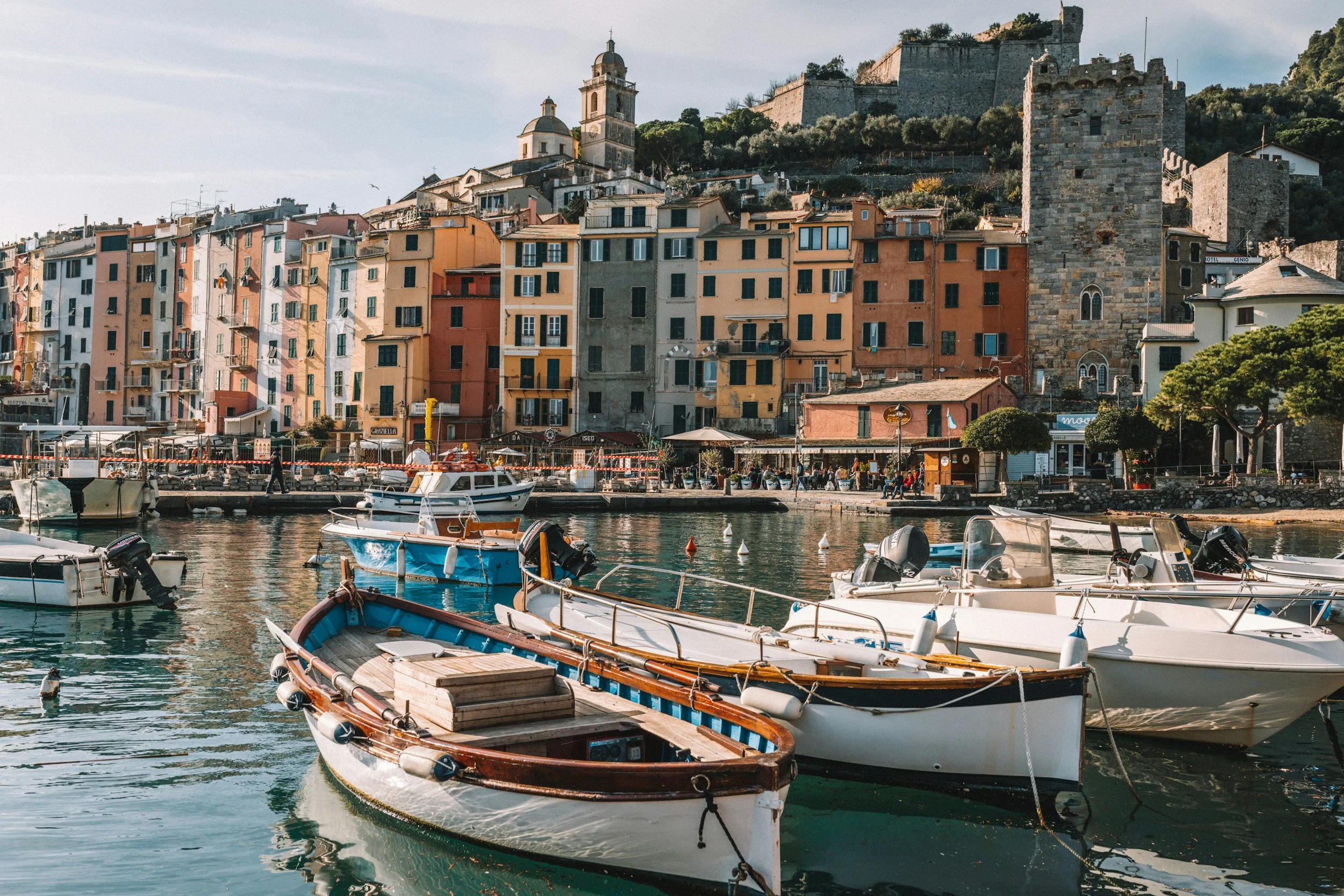
Mornings don’t really “start” at a fixed time here. Things just open, one by one. In Levanto, if you walk along Corso Italia around 8:30, a few shutters are already up, a couple more are halfway there, and people are starting to stop in for coffee. At Pasticceria Bianchi, you’ll see a small line at the counter, people ordering quickly, taking a pastry wrapped in paper, and heading back out. A few doors down, Bar Levanto has tables outside where people sit longer, sometimes without ordering anything else after the first coffee.
No one is trying to move you along. You can sit for as long as you want without feeling like you’re taking someone else’s place. Some people stay for ten minutes, others for half an hour, and both feel normal.
In Camogli, mornings begin a bit earlier. Around 8:00, the bakeries along Via XX Settembre are already open, and you’ll see people going in and out quickly. Most don’t sit down. They pick up focaccia or something sweet and leave again. If you walk down towards the harbour before 9:30, there’s still space along the water, and you can sit without needing to wait or look around.
Food is simple, but there’s more to it than what people usually mention. Focaccia is everywhere, but you’ll also see farinata being cut into slices from large trays, especially closer to lunchtime. It’s something you eat standing up or take with you rather than sitting down for.
Trofie with pesto shows up on menus without any explanation. It’s just part of what’s available. Most places don’t have long menus. A few options, sometimes written by hand, and that’s it. If something isn’t available, it’s not replaced with something else.
Lunch has a clear window. Around 12:30, kitchens open, and by 14:30 most of them are closing again. If you arrive at 15:00, you’ll notice the difference straight away. Chairs stacked, or people finishing the last tables. Dinner starts later, usually around 19:30, and fills gradually. You don’t need to be there at a specific time to get a table. You can walk around a bit, look at what’s open, and decide without rushing.
The beaches follow the same kind of rhythm. In Bonassola, you can walk down at almost any time and find a place without planning it. There are sunbeds set up in rows, but also open areas where people just put down a towel and stay for a while. Some come for an hour, others stay most of the day. You’ll see people going back and forth rather than settling in one place.
It’s not just visitors either. You start recognising the same people after a day or two, especially in smaller places. Someone you saw at the café in the morning shows up at the beach later, then again in the evening.
Markets fit into the week in the same way. In Levanto, the market near Piazza Cavour takes over a few streets, but it doesn’t feel like an event. People go there to buy things they need. Clothes, vegetables, small household items. You’ll see people moving through quickly, stopping at the same stalls each time.
If you walk through, you can spend ten minutes or an hour there, depending on what you’re doing.
What you eat here also depends a lot on timing and season, especially if you’re moving between regions. Liguria has its own staples, but it helps to understand how Italian food changes depending on the region and time of year.
Outside summer, food markets tend to feel more local and less busy, similar to what you see in regional Italian markets outside peak season.
Best Time to Visit Liguria
When you go changes everything here. The same place can feel completely different just a few weeks apart, and you notice it straight away once you’ve seen it at two different times.
Late May into early June is usually the easiest to settle into. You don’t have to think too much. Trains run often, most places are open every day, and you don’t need to plan meals in advance. In Levanto, you can walk down to the beach around 10:00 and still find space without scanning the whole shoreline first. In Camogli, you can sit by the harbour mid-morning without people constantly passing behind you. It feels like the day has room to unfold.
July shifts things quickly. It’s not something you ease into, you just notice it one morning. By 10:30, parts of the beach are already full, especially in smaller places like Bonassola where there isn’t much extra space to begin with. In Sestri Levante, Baia del Silenzio fills early. You’ll see rows of umbrellas already set up, and people arriving and walking the edge of the beach trying to figure out where to sit.
The same thing happens in the evening. In June, you could walk around a bit before deciding where to eat. In July, around 20:00, you’ll see tables already taken and people waiting outside a few places. In Camogli, weekends feel busier because more people come in from Genoa. You notice it on the trains first, then on the streets.
August stays similar, just warmer. You start adjusting your day without really planning it. Mornings become the easiest time to be out, afternoons slow down a bit, and evenings pick up again once the heat drops. You don’t fight it, you just follow it.
September is where things open up again, but it depends a bit on the week. Early September can still feel like late summer, especially if the weather holds. After that, it changes. Fewer people arrive just for the day, and more stay longer. You notice it on the beach first. There’s space again, even in the middle of the day, and you don’t need to think about timing everything.
Evenings feel different too. You can head out at 20:30 or even later and still find a place to sit without checking ahead. It’s not empty, just easier.
If you go earlier in spring or later in autumn, like April or October, the coast feels quieter, but you need to pay a bit more attention to what’s open. In places like Framura or Cervo, some restaurants don’t open every day, and cafés might close earlier than you expect. You can still move around easily, but you don’t leave things as late in the day.
Weather shifts quickly here as well. You can start the morning in clear sun, and by mid-afternoon it’s cloudier or cooler. It doesn’t really disrupt anything, but you might change your plan halfway through the day without thinking twice about it.
How Many Days to Spend in Liguria
A few days here work better when you don’t try to organise everything in advance. Once you arrive, it’s easier to let the days take shape on their own instead of deciding where you’ll be at every hour.
Levanto is one of the easiest places to stay for a few nights without overthinking it. You arrive, walk a few minutes from the station, and after that you don’t really deal with logistics again. The first day often ends up staying local without planning it that way. You go out for coffee, walk through town, end up by the beach, maybe go in the water for a bit, then head back, and go out again later without having tried to “fill” the day.
On another day, you might leave town without a fixed plan. You walk to the station when you feel like it, check the board, and take whatever is next. If it’s Bonassola in a few minutes, you go there. You get off, walk straight towards the beach, sit for a while, maybe stay for lunch, maybe not. At some point you head back, either by train or by walking through the tunnel if you feel like it. There’s no real decision point where you have to commit.
Framura usually becomes a slightly longer day without you trying to make it one. You take the train there, step out by the water, and then decide whether to stay near the coast for a bit or start walking uphill. Once you start moving between the different parts, time stretches out on its own. You’re not moving quickly, and you’re not trying to see everything.
Sestri Levante fits in when you feel like going a bit further. If you arrive earlier in the day, you can spend time by Baia del Silenzio before it fills up, then move back into town later on when it’s easier again. The return is simple. You don’t need to think about it until you’re ready to leave.
If you want to see more of the coast, it’s easier to change base once rather than trying to reach everything from one place. A few nights in Levanto, then moving west to somewhere like Camogli or Noli, works without making the trip feel busy. You take the train, settle in again, and the rhythm resets slightly.
Genoa can fit in at the beginning without complicating things. If you arrive late, staying there for a night removes the pressure of catching another train straight away. The next morning, you leave when you’re ready and head along the coast with most of the day still ahead of you.
Some days, you won’t go anywhere at all. In Levanto, it’s easy to spend a full day moving between the same few places without it feeling repetitive. Coffee, a walk, the beach, back through town, out again in the evening. Camogli works the same way. You walk along the harbour, stop somewhere, continue a bit further, and the day passes without you having needed to plan anything beyond where to sit next.
From here, it’s easy to keep going, whether that means heading north to smaller towns in northern Italy during winter or exploring wine villages in Italy in autumn.
FAQ: Visiting Liguria Without Staying in Cinque Terre
Is Levanto a good base instead of Cinque Terre in Italy?
Levanto, just outside Cinque Terre on the Ligurian coast, works well as a base if you want to stay somewhere that functions as a town rather than a stop. The train station sits about a 5–10 minute walk from most apartments and hotels, and trains into Monterosso or Vernazza take only a few minutes. When you come back in the evening, Levanto is noticeably easier to move around, with space along the main street, more restaurant availability, and fewer people arriving and leaving at the same time. It also has practical things like supermarkets, pharmacies, and a weekly market, which makes a difference if you’re staying more than a couple of nights.
Where to stay in Liguria instead of Cinque Terre?
Levanto, Camogli, and Bonassola are the most straightforward alternatives depending on how you want to structure your stay. Levanto is the easiest if you want to move around by train and still have a proper base with everything within walking distance. Camogli works better if you’re arriving through Genoa and want a smaller harbour town with direct train access and short walking distances between the station, waterfront, and restaurants. Bonassola sits one stop from Levanto and is quieter in the evenings, with fewer accommodation options but a simpler layout and direct access to the beach and coastal path.
Are there towns like Cinque Terre but less crowded?
Sestri Levante, Framura, and Noli offer a similar coastal setting but function differently throughout the day. Sestri Levante has a historic centre and two bays, so visitors spread out rather than concentrating in one area, although Baia del Silenzio does get busy at midday. Framura is more fragmented, with small hamlets connected by paths, which limits how many people gather in one place at the same time. Noli has a defined centre and beachfront, but it doesn’t have the same constant train flow of short-term visitors, so the overall movement through the town is slower.
Which towns in Liguria have quiet beaches without crowds?
Bonassola and Framura are usually the easiest options for a quieter beach setup along this part of the Ligurian coast. In Bonassola, you can choose between private beach sections and free areas, and if you walk further along the shoreline, there are stretches that stay less busy even in peak season. Framura has smaller access points to the sea, often reached by walking from the station or along the coastal path, which naturally reduces the number of people compared to larger, more central beaches.
How do you get to Camogli without going through Cinque Terre?
Camogli sits west of Cinque Terre, so you don’t need to pass through it. From Genoa, take a regional train towards La Spezia and get off at Camogli-San Fruttuoso; the journey takes about 25 minutes and is direct. From Milan, you usually change once in Genoa. From Pisa, the route is longer and involves at least one change, typically in La Spezia and then Genoa, which is why it’s easier to plan Camogli as part of a route that starts or ends in Genoa.
Can you visit Ligurian coastal towns without a car?
Yes, especially between Sestri Levante and Levanto, where the train line connects most of the towns directly. Stations are close to the centres, and walking distances are short once you arrive. You can move between Levanto, Bonassola, Framura, and Sestri Levante by train in a few minutes. On the western side, places like Noli and Cervo require an extra step, usually a short bus ride or taxi from the nearest station, but they’re still manageable without driving.
Is Sestri Levante less crowded than Cinque Terre?
Sestri Levante is less concentrated rather than empty. The town has multiple areas, including two bays and a wider centre, so people spread out more than in the Cinque Terre villages. Baia del Silenzio fills up in the middle of the day during summer, but outside of that, especially in the morning and evening, it’s easier to move around and find space compared to the narrower streets and viewpoints in Cinque Terre.
How many days should you spend in Liguria outside Cinque Terre?
Three to five days works well if you’re staying in one or two towns and moving between them without rushing. A base like Levanto or Camogli allows you to take short train trips to nearby places while still having enough to do locally. If you want to include both eastern and western Liguria, it’s more practical to split your stay rather than trying to cover everything from a single base.
When is Liguria least crowded compared to Cinque Terre?
Late May, early June, and September are generally the most manageable periods. The weather is still suitable for being by the sea, but the number of day trips is lower than in peak summer. July and August bring more visitors, especially to coastal towns, and weekends can be busier due to local travel within Italy. Outside these months, the pace is quieter, but some smaller places may have limited opening hours.
Are there walking routes between Levanto, Bonassola, and Framura?
Yes, there’s a coastal path built along a former railway line that connects Levanto, Bonassola, and parts of Framura. The section between Levanto and Bonassola is mostly flat and takes around 20 minutes on foot. Continuing towards Framura involves a bit more variation in terrain, but the route stays close to the coast and is clearly marked. It’s a practical alternative to the train for shorter distances.
Do you need to book restaurants in Ligurian coastal towns?
In July and August, it’s usually necessary to book dinner, especially in smaller towns where there are fewer options and seating is limited. In places like Levanto, you may find availability without booking, but popular restaurants still fill up in the evening. In shoulder seasons, it’s easier to walk in, although weekends can still be busier. Lunch is generally more flexible, with many places offering simple menus or takeaway options.
Is Framura worth visiting if you’re not hiking?
Framura still works if you’re comfortable walking between different parts of the village. The train station is located near the water, and from there you’ll need to walk or cycle along the coastal path or go uphill to reach other sections. Distances are not long, but they are not all in one place like in Levanto or Sestri Levante. If you prefer having cafés, restaurants, and the beach within a few minutes’ walk of each other, Bonassola or Levanto are easier choices.