

These northern Italian towns don't shut down for winter
Northern Italy can feel slightly underwhelming in winter if you land in the wrong place, and it’s not always obvious why at first. You arrive with a clear idea in your head, something about slower days and long lunches and that quiet, everyday version of Italy that people don’t really talk about, and then within a few hours you start noticing small things that don’t quite line up.
A restaurant you saved is only open Friday to Sunday. The street you imagined wandering along after dinner is already quiet by 18:30. Even the café that looked promising from the outside doesn’t quite have that pull once you sit down, like it’s missing a layer you expected to be there.
It’s not bad. It just doesn’t carry you… And when you’re travelling solo, that becomes much more noticeable. There’s no one to fill in the gaps or distract from them, so the place either gives you something to move through, or it leaves you slightly aware of time in a way that feels heavier than it should.
A lot of towns in Northern Italy fall into that category in winter, especially the ones that quietly rely on visitors to stay open and interesting.
But then there’s another type of place, and the difference is immediate in a way that’s hard to explain until you feel it yourself.
You step out in the morning and there’s already movement, not in a busy or overwhelming way, but enough to make the day feel like it has a shape. A bar on Via Garibaldi where people are standing shoulder to shoulder for a quick espresso before work, barely pausing. A market setting up in Piazza Cavour even though the weather is grey and slightly damp, the same stallholders arranging crates as if it were any other week. A bakery where the door keeps opening every few seconds, locals walking in without hesitation, ordering the same thing they always do.
This isn’t ski-resort winter, and it’s not built around Christmas markets or anything particularly seasonal. It’s quieter than that, and a bit more honest in a way that doesn’t always show up in photos. You’ll notice the damp air in parts of the Po Valley, especially in the mornings when the fog sits low over the streets and doesn’t rush off. Some evenings will feel slower than you expected, particularly early in the week, and yes, you might arrive somewhere on a Monday and realise your first-choice restaurant is closed.
But if you stay at least two nights, ideally three, something shifts without you really noticing when it happens.
You start to recognise small things like which café actually feels right at 08:00, not just looks good online. Which streets still have a bit of movement after dark, even in January. Where people go for a quick lunch without overthinking it, and which places are better left for another time of year.
And once that clicks, the whole experience becomes easier, because you’re no longer trying to make the place work. You’re just moving through it in the same way everyone else already is.
What winter looks like in Northern Italy
A lived-in winter town has a few telltale signs, and once you notice them, they’re hard to unsee. A bakery open early on a weekday, not as a gesture but because people actually rely on it. In places like Cremona or Parma, you’ll notice bakeries already open before 08:00, with locals coming in for bread rather than browsing. A bar where people stop for coffee standing up at the counter, coats still on, barely pausing before heading back out. The shops aren’t curated or themed, and that’s usually a good sign. You’ll see a ferramenta, a pharmacy, a slightly outdated stationery shop, maybe a small clothing store with practical winter coats in the window rather than anything styled for visitors.
It also helps if the town has a reason to exist beyond being pretty, and you can usually feel that quite quickly. A university changes the energy completely. So does a regional hospital, or a rail junction where people are coming and going all day. Cities like Pavia, with its long-established university, or Brescia, with a strong local economy and less reliance on tourism, tend to stay active midweek in a way smaller, more visitor-dependent towns don’t. In some places it’s less obvious, more about a working valley nearby or a local industry that doesn’t slow down when temperatures drop. That’s the difference between a town that quietly closes midweek and one where you can still get a proper lunch on a random Wednesday in February without planning your entire day around it.
It’s also worth being realistic about what winter actually looks like here, because this part tends to get softened online. In the Po Valley, especially around cities like Milan, Cremona, and Piacenza, grey days are common, and the fog can sit low well into late morning without shifting much. Some days don’t really “open up” in the way you expect. In the foothills and valleys, the air feels sharper and cleaner, but you’ll notice how quickly the light disappears in the afternoon, especially in January.
None of that is a dealbreaker, but it does change how the day naturally unfolds. You start earlier without really planning to. You build your day loosely around daylight without overthinking it. Evenings become quieter by default, which, in Northern Italy, usually means a longer dinner than you intended, a slow walk back through streets that feel different after dark, and an earlier night that doesn’t feel like you’re missing anything.
One more thing that makes these towns work, and this is easy to underestimate, is how simple it is to leave them for a few hours without turning it into a whole project. Not a complicated day trip with multiple changes, just a short regional train, often 20–30 minutes, between towns on lines like Milano–Bologna where trains run frequently even in winter. You can leave mid-morning, have lunch somewhere else, walk a bit, and be back before it gets properly cold.
If you want a similar cozy vibe outside Italy, you may like this piece about the Loire Valley towns in France.
Living inside the walls: Bergamo Alta in winter
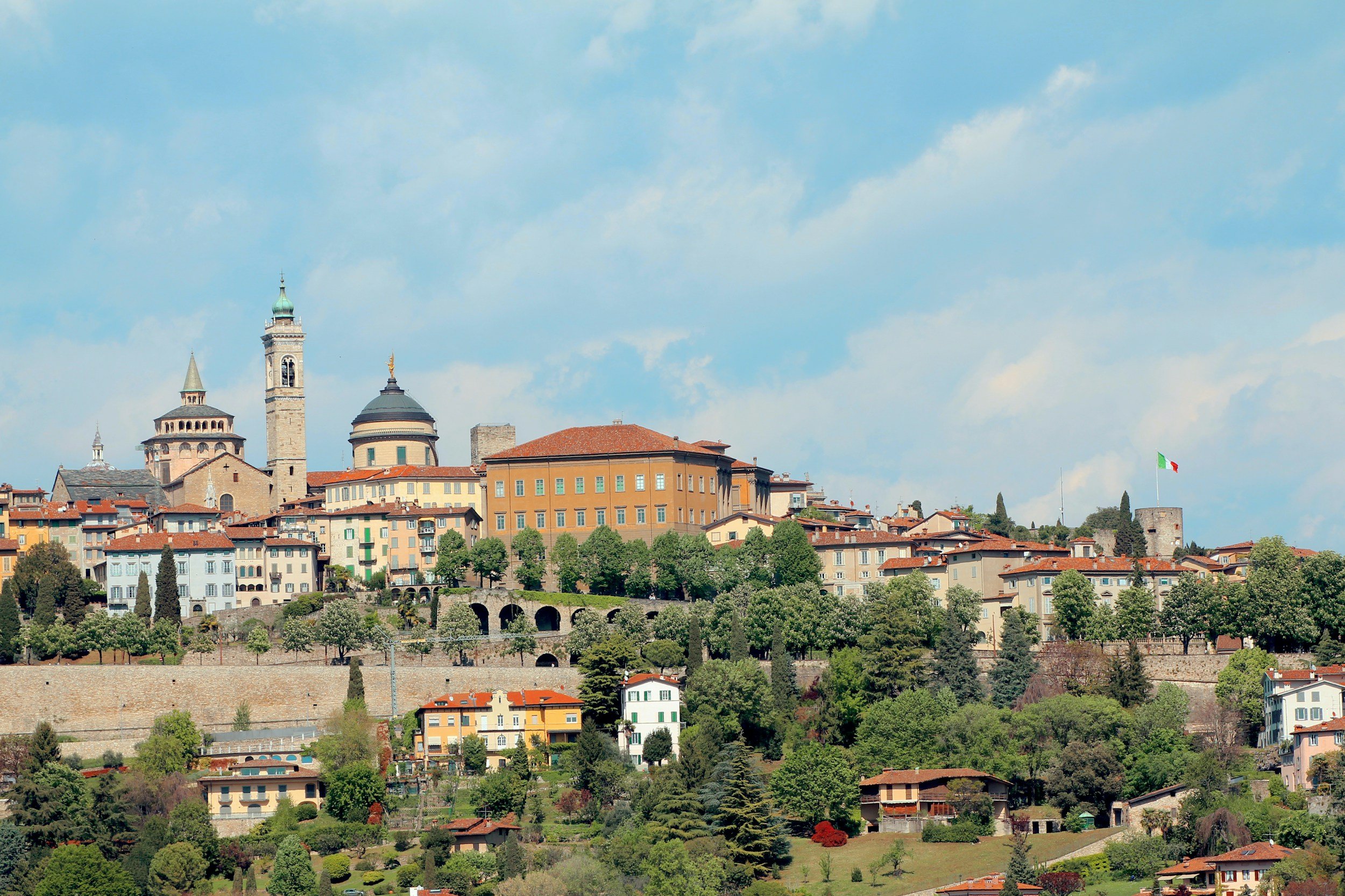
Bergamo is well-known, but winter is when it relaxes a bit. Bergamo Alta, the old upper town behind the Venetian walls, shifts away from being a place people pass through for an afternoon and back into something closer to a neighbourhood. The funicular still runs up from Viale Vittorio Emanuele II every few minutes, connecting the lower town to the upper in under five minutes, and you’ll notice quickly that it’s not just visitors using it. People commute up and down throughout the day, shopping bags in hand, heading home or to work. Walk along the walls between Porta San Giacomo and Porta Sant’Agostino and it feels less like a viewpoint and more like part of someone’s daily route.
Getting here is straightforward without a car, which is part of why Bergamo works so well in winter. Direct trains from Milano Centrale take just under an hour, running frequently throughout the day, and from the station you can either walk through Città Bassa toward the funicular or take a short bus ride. The transition from the lower town’s wider streets to the narrower lanes above happens quickly, and that shift is part of the experience.
One of the better ways to experience Bergamo Alta this time of year is to spend less time orbiting Piazza Vecchia and let yourself drift outward without too much structure. Early mornings make that easier. Streets like Via Gombito before it fills up, or the quieter stretch along Via Boccola heading toward San Vigilio, feel almost residential then. You’ll see shutters opening one by one, someone stepping out with a dog, a quick stop at a bakery like Panificio Tresoldi before heading back inside. Nothing staged, just everyday movement that makes the place feel grounded rather than observed.
If the air is clear, it’s worth walking part of the way up toward the Castello di San Vigilio, even if you don’t go all the way. The path from Porta Sant’Alessandro gradually lifts you above the rooftops, and there are points where the view opens unexpectedly across the lower town and out toward the plains. In winter, especially on colder days, the light sits lower and softer across the terracotta roofs, and the city below feels noticeably calmer than it does in warmer months.
For coffee or something warm, it’s usually better to step just outside the immediate orbit of Piazza Vecchia and follow the places that still feel in use rather than on display. Il Circolino, set inside the former monastery on Via Colleoni, is a reliable choice on colder days, informal, slightly worn-in, with several rooms that feel designed for staying longer than planned. Caffè del Tasso works too, especially if you sit inside rather than on the square. The interior matters more than the view here. Order something simple and take your time with it.
Grey afternoons are part of winter here, and Bergamo Alta handles them well. Accademia Carrara sits just outside the walls and is easy to reach on foot or by a short bus ride. It’s not overwhelming, and you can move through it slowly without needing to commit a full afternoon. Afterwards, walking back uphill through the smaller lanes near Porta Sant’Agostino often feels better than heading straight down, especially as the light starts to fade and the town shifts into evening.
Bergamo also works because you can settle into it without needing to think like you’re in a major city. Along streets like Via Colleoni and the quieter side lanes branching off it, you’ll find proper grocery shops, small alimentari, and bookstores that are actually used. There are enough restaurants open midweek that you can eat well without planning everything in advance, which, in winter, makes more of a difference than you expect. It’s the kind of place where a simple dinner on a Tuesday still feels like a good decision rather than the only option left open.
This winter travel in France and Italy is worth a read for more charming winter villages in Italy and France
Where to stay in Bergamo
GombitHotel is a smart choice if you want to stay right in the historic centre with a boutique feel, close to Piazza Vecchia, and be able to step outside and immediately be in the old town.
If you prefer something slightly quieter in Bergamo Bassa (lower town) with a calm boutique atmosphere, Hotel Petronilla is often a good fit, especially if you like a design-forward place that still feels personal.
Ps. Bergamo is a town where it’s genuinely worth staying at least two nights. Day-trippers often do the same loop, which means if you stay overnight you get the best hours: early morning and early evening, when the town feels like it belongs to itself again.
Cividale del Friuli and the calm of Italy’s border towns
Friuli-Venezia Giulia is one of those regions that feels slightly different from the rest of Italy in ways that are easy to notice but harder to define at first. It sits right up against Slovenia and not far from Austria, and that shows up quietly in everyday things rather than anything staged. You’ll hear different accents in the cafés, notice Austrian-style pastries in bakery windows, and see wines on menus that don’t appear as often further west. It doesn’t feel like a border region in a dramatic sense, just a place shaped by more than one direction.
Cividale del Friuli fits naturally into that. It’s the kind of town that works better when you don’t try to structure it too much. The centre is compact, so you get your bearings quickly, but it doesn’t feel empty or overly curated in winter. The Natisone River is a big part of that. Walking down toward Ponte del Diavolo, especially late morning when the light finally reaches into the gorge, gives you a clearer sense of how the town moves. People cross the bridge on their way somewhere else, pause briefly, then carry on. It’s not a viewpoint you “visit” as much as something you pass through.
Getting here is relatively straightforward without a car, although it takes a bit more awareness than places closer to Milan. The easiest route is to take a train to Udine, which is well connected to cities like Venice and Trieste, then continue by regional train or bus to Cividale in about 20–25 minutes. Trains run regularly enough during the day, but less frequently in the evening, so it’s worth checking times in advance, especially in winter. If you’re thinking about skipping the car entirely, this Tuscany without a car piece is more honest than most about what actually works.
For coffee, it’s usually better to choose places that feel part of daily life rather than anything that looks designed to attract attention and visitors. Caffè Longobardo works well for a quick stop when you want something warm and simple. Antico Caffè San Marco is more of a classic, and in winter it makes more sense inside, where the pace is slower and the conversations around you tend to stay local rather than passing through.
Cividale is also well suited to smaller cultural pauses rather than anything that takes over your day. Christian Museum and Treasury of the Cathedral of Cividale is easy to step into when the weather turns, and you don’t need long there to feel like it added something. It’s the kind of place you can visit for half an hour and leave without feeling like you rushed it.
One thing that becomes clear quite quickly is how early the town naturally winds down in winter, and it doesn’t feel forced. Dinner tends to happen earlier, streets quieten without becoming empty, and the whole place shifts into a slower evening pace without ever feeling shut down. Staying somewhere central, like 1448 Antica Dimora Al Merlo Bianco, makes that easier to settle into. You can step out again after a break, or decide not to, without feeling like you’re missing something essential.
Cividale del Friuli has enough historical weight to be interesting, but it doesn’t present itself like a “museum town”. You can walk from Piazza Paolo Diacono down toward the river, cross the bridge, and within a few minutes find yourself in streets where someone is picking up bread or closing a shop for lunch. That balance is what holds it together in winter.
Where to stay in Cividale del Friuli
1448 Antica Dimora Al Merlo Bianco is exactly the kind of place that makes a winter stay feel intentional without being “showy”: suites in a historic setting, paired with an osteria, right in town so you can keep everything walkable.
Important to note though, that Friuli is not the place to chase constant sunshine in winter. But if you like the idea of a region that feels quietly “for itself”, and you’re happy to plan around weather, it’s one of the most satisfying areas in Northern Italy to spend time.
If your like these kind of destinations, you might also like our other travel guides like this one from rural France.
Asolo in Winter: A quieter way to experience the town
Asolo can look almost too perfect on paper, which usually makes it a bit risky. Places like that tend to feel slightly staged once you arrive. But winter shifts that balance in a way that’s noticeable within the first hour. The day-trippers thin out, especially midweek, and what’s left is a small hill town settling back into itself. People stopping for coffee on Piazza Garibaldi without hanging around too long, shopkeepers chatting in doorways along Via Browning, the kind of quiet that feels unforced rather than carefully preserved.
It also helps that Asolo isn’t trying to keep you busy. Once you stop treating it like somewhere to “see” and start using it more like a place to spend a day, it opens up in a different way. In winter, that shift happens almost without effort. The main street, Corso Eleonora Duse, stays active but never crowded, and if you drift a few minutes off it, the side streets feel almost residential. You don’t need a route. Walking a loose loop from the square, up slightly, then back down again is enough.
The moments that stay with you here are usually the quieter ones. Sitting somewhere warm with a coffee while people come and go, coats being taken off and put back on again within minutes. Watching the light change along the façades as the afternoon fades, especially on days when the sky stays clear. If you walk part of the way up toward the Rocca, starting near Via Canova, you’ll find small openings where the town suddenly drops away and the hills beyond come into view, before everything closes in again. It’s not about reaching the top, just noticing how the perspective shifts as you move.
For coffee, it’s worth choosing places that feel easy to return to rather than somewhere you visit once for the view. Caffè Centrale Asolo sits right on the square and works best if you lean into its everyday rhythm rather than treating it as a stop. People come and go quickly, conversations overlap, and the pace never really slows unless you decide it should. Bar Cornaro is another good option, especially inside on colder days, where the atmosphere feels slightly more settled and it’s easier to stay longer without thinking about it.
Asolo also has a handful of small galleries and independent shops scattered just off the main streets, particularly along the quieter lanes branching from Via Browning. They don’t announce themselves much, and that’s part of the appeal. You step in, look around for a few minutes, maybe exchange a few words, and step back out again. It suits winter, when you’re not trying to fill time, just move through the day at a comfortable pace.
Getting to Asolo takes a bit more intention than some of the other towns in this guide, but it’s still manageable without a car. The easiest route is usually by train to either Bassano del Grappa or Castelfranco Veneto, both of which are well connected to Venice, then a short bus or taxi ride up into Asolo itself. Buses run regularly during the day, though less frequently in the evening, so it’s worth checking return times in advance if you’re planning a day trip.
Asolo also works well as a base if you’re curious about this part of Veneto beyond the usual stops. Bassano del Grappa is close and easy for a half-day, and the surrounding countryside is dotted with small villages and vineyard areas that feel even quieter in winter. Or you can just stay put, which is often the better choice here.
Where to stay in Asolo
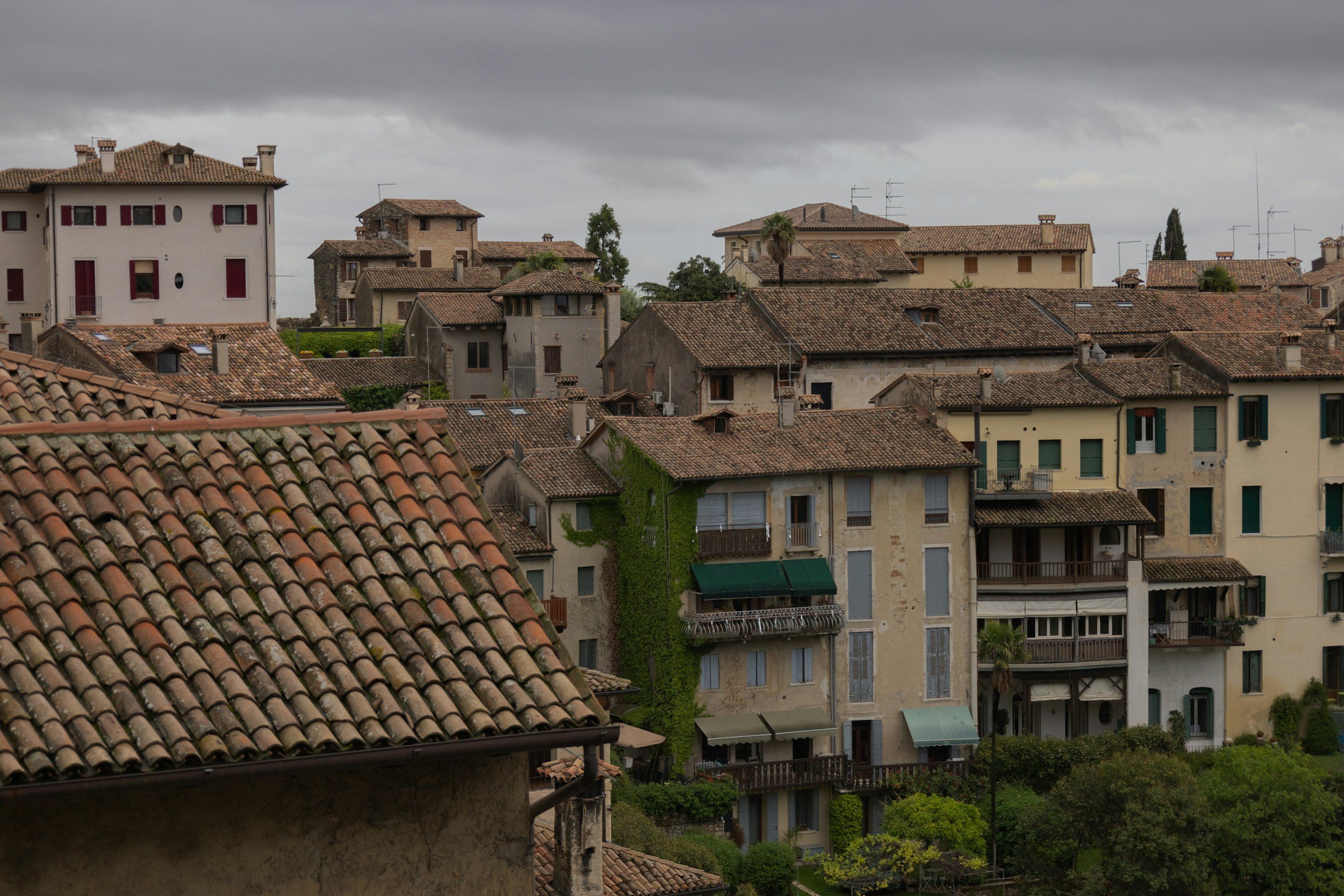
Albergo Al Sole is a strong choice if you want a classic, quietly elegant stay right in the centre, with the kind of hotel atmosphere that suits winter evenings. It’s also the sort of place where you can come back in the afternoon, warm up, and feel like you’re still “in” the trip rather than killing time.
If you’re building a Northern Italy winter trip, Asolo tends to work best as the softer, slower section. Think two nights after a bigger base, or as a calm start before you move toward the Alps.
Vercelli in Winter: A Northern Italian Town That Still Feels Local
Vercelli is one of those towns that feels quietly reassuring in winter because very little shifts once the season changes. Shops keep their regular hours, cafés fill up at the same times they always do, and the centre doesn’t suddenly rearrange itself around visitors. You’ll notice that quite quickly, especially if you arrive mid-morning and step straight into the rhythm around Piazza Cavour, where people are already halfway through their day rather than just starting it. It’s not trying to charm you, and after a while you realise that’s exactly why it works.
The centre is compact and easy to move through on foot, which matters more than you expect when the temperature drops and you don’t feel like walking endlessly just to “see” something. A slow loop from Piazza Cavour toward Corso Libertà and back again gives you a good sense of how the town holds together. There’s a solidity to the architecture here, less decorative than places further west, more about function than display, and in winter that sturdiness feels grounding rather than plain.
Cafés are where Vercelli shows its personality most clearly, and they don’t shift their tone depending on who walks in. Bar Centrale Vercelli is a good example of how these places are actually used. Mornings move quickly, people stopping in for espresso at the counter before heading off again, while afternoons stretch out a bit more, with people dropping by after errands or before going home. It’s not somewhere you go for a view, but it’s somewhere you can sit without feeling like you’re taking space meant for someone else. Pasticceria Fratelli Ragazzi is worth timing for mid-morning, when the trays are still full and the day hasn’t quite settled into its routine yet.
If the weather turns, which it often does here in winter, Vercelli has just enough to carry you through the slower parts of the day without forcing you into anything. Small bookshops along the side streets near Via Cavour are the kind of places people actually spend time in, browsing without urgency. Museo Borgogna is an easy fallback on grey afternoons, not too large, not overwhelming, and the kind of place you can move through at your own pace without feeling like you need to “cover” everything.
Getting to Vercelli is straightforward, which is part of why it works so well as a winter base. Direct trains from Milano Centrale take around 50 minutes, and the station sits within walking distance of the centre, so you can arrive and be in Piazza Cavour in under 15 minutes on foot. It also sits on the line toward Turin, which makes short, low-effort day trips possible if you feel like leaving for a few hours without turning it into a full travel day.
What makes Vercelli hold together in winter is that it never really pauses. You’re not waiting for things to open or relying on a handful of places to carry the experience. It’s just a town going about its day, and once you settle into that, it becomes much easier to enjoy.
If you want explore more towns outside Italy with a similar low-key appeal, you might like this broader piece too with our favourite places in Europe.
Chiavenna and winter life in an Alpine valley town
Chiavenna feels practical in a way that becomes more noticeable in winter. It’s a town shaped by its position in the valley rather than anything designed for visitors, and that shows in how the days are once the cold sets in. Mornings take their time. The air feels sharper here than in the lowlands around Como or Milan, and by late afternoon you can feel the temperature drop quickly as the light disappears behind the mountains.
The centre is compact and easy to move through, which matters more than you expect when you’re layered up and not in the mood to wander without direction. A simple walk along the river Mera, especially the stretch near Via Dolzino, is usually enough to reset things a bit. Late morning tends to be the best time, once the light reaches the water and the town feels more open again. You don’t need distance here. Short walks suit Chiavenna better, with a clear start and end point rather than anything that turns into a loop for the sake of it.
Getting to Chiavenna takes a bit more planning, but it’s still manageable without a car. The most straightforward route is by train to Colico, on the eastern side of Lake Como, followed by a short regional train or bus up the valley, which takes around 30 minutes. The journey itself is part of the experience, especially as the landscape shifts from lake to mountains, but connections are less frequent in winter, so it’s worth checking times in advance. If you’re drawn to lakes but want something quieter than the obvious choices, Lake Orta early spring has a very similar feel to the towns in this guide.
Food becomes more central here once the temperature drops, and Chiavenna leans into that without making a point of it. The town’s crotti culture, those stone cellars built into the rock where cool air naturally circulates, feels especially relevant in winter. Crotto Ombra gives a good sense of that, even if you’re just passing by or stopping briefly. It’s not about rushing through a meal, but about sitting properly, eating something warm, and letting the time stretch a bit. For something simpler, Bar Centrale Chiavenna works well mid-morning, with a steady flow of people stopping in between errands rather than lingering for long.
If the weather turns, which it often does here, Chiavenna is good at offering smaller indoor pauses rather than anything that takes over your day. Mulino di Bottonera is easy to dip into and gives a clear sense of the town’s working past without needing much time. Afterwards, it usually feels better to step back outside, walk a short stretch, and find somewhere warm again rather than trying to fill the afternoon with too much structure.
If you’re curious what the Alps feel like without crowds or pressure, this Valle Maira weekend is a very different version of mountain travel.
And if you’ve only ever seen the Dolomites in peak season, this Dolomites slow guide shows a calmer way to approach them.
Where to stay in Chaivenna
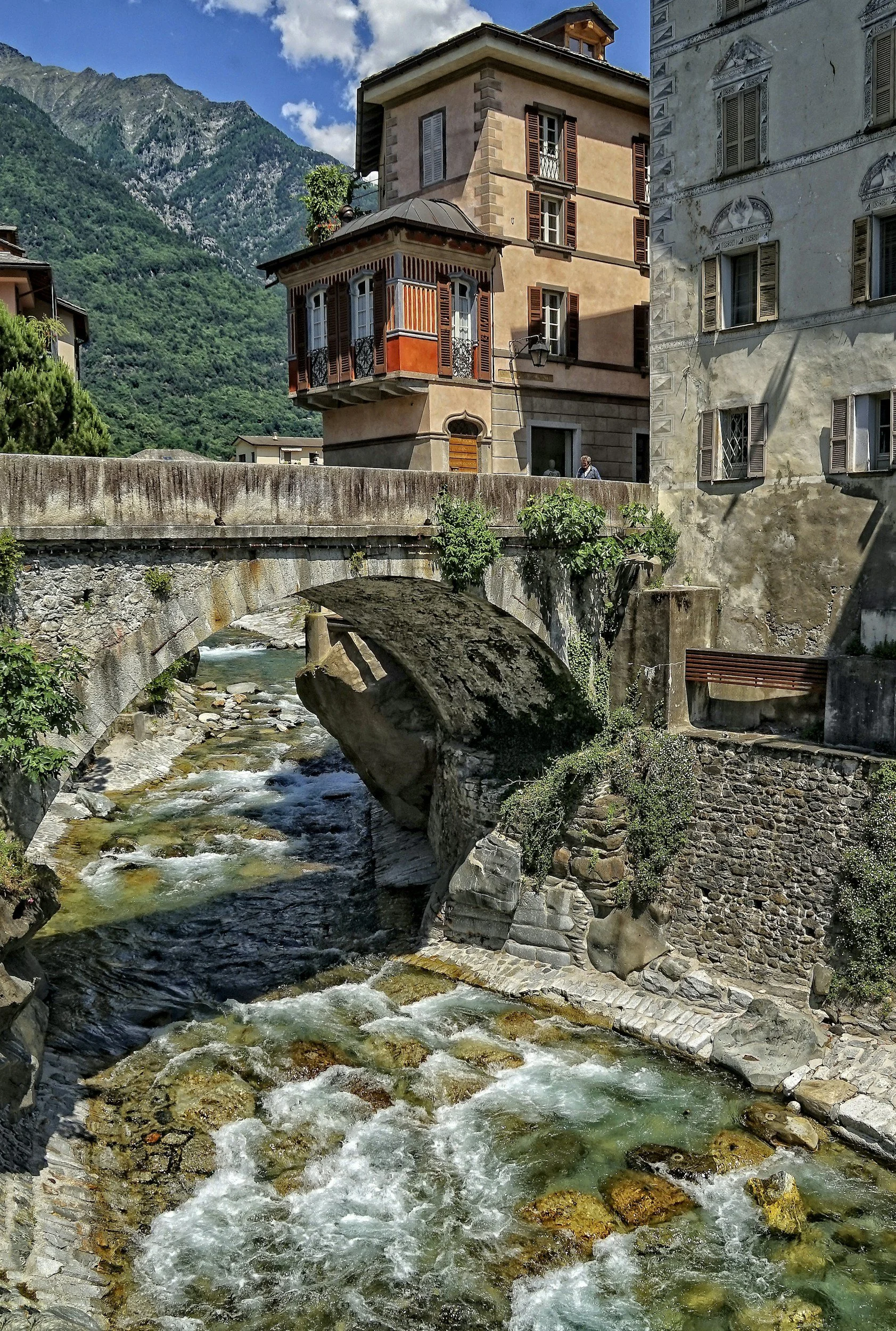
Hotel Crimea is a good pick if you want to be central and close to the station area, with an atmosphere that suits a winter base.
If you want something more rural-feeling above town, places like Foresteria B&B Vecchiascuola Pianazzola can give you that hillside quiet, which can be beautiful in winter if you’re happy with a bit more effort getting in and out.
What makes a town nice to visit in Winter (and what doesn’t)
After spending time in towns like these, a pattern starts to show up quite clearly, and it’s not really about beauty. Plenty of places look good in photos and still feel flat in January. It’s also not about how many things there are to do. You can have museums, viewpoints, and perfectly preserved streets and still end up slightly restless by mid-afternoon.
What actually matters is simpler than that, and easier to miss when you’re planning. The town needs a reason to wake up on a Tuesday morning.
That’s the lens that tends to hold up, even beyond the places in this guide.
Start with weekday life. Walk past a café around 10:30 or just after lunch and see what’s happening. Are people coming and going without thinking about it, or does it feel like everything is waiting for the weekend to start? The difference is usually obvious within a few minutes. The same goes for shops. A mix of ordinary places, a ferramenta, a pharmacy, a small alimentari, tells you far more than anything that looks designed to be noticed.
Connections matter more than people expect, especially in winter when the days are shorter and you’re less inclined to improvise. A town with a working train station, regular regional connections, and a centre you can walk across in ten or fifteen minutes is simply easier to enjoy in January. Compare that to somewhere where you need a car for every small movement, and the difference shows up quickly, usually around late afternoon when you’re deciding whether to go back out or not. If you’re even slightly unsure about trains, it’s worth looking at this Italy train weekend because it’s much easier than most people expect once you’re on the ground.
Scale plays into this as well, although it’s not just about size. Very small villages can be beautiful in winter, but they ask a bit more from you. You need to be comfortable with a level of quiet that can tip into stillness, especially midweek. Towns like Bergamo, Cividale del Friuli, and Vercelli sit in a more forgiving middle ground. There’s enough going on to carry the day without you needing to plan around it.
And then there’s where you stay, which matters more in winter than it does in almost any other season. Late afternoons come earlier than you expect, and you’ll likely head back before dinner at least once. If the place you’re staying in feels like somewhere you’d rather not spend time, you’ll feel it immediately. What tends to work is something central, well-heated, and properly insulated from street noise, the kind of place where coming back at 16:30 doesn’t feel like the day is over, just paused for a bit.
That’s also why staying slightly outside town, even if it looks appealing on paper, rarely works as well in winter unless you’re deliberately choosing to disconnect. The extra distance changes how you move through the day more than you expect, and not always in a good way.

For something softer and less structured, this Sabina Hills stay shows what happens when you stop planning every hour.
Is this your kind of Winter trip?
You’ll probably recognise this kind of trip from how you like to spend a normal day, not from what you usually book.
It suits you if you’re the type who doesn’t mind that nothing “big” is happening. You walk out in the morning, end up standing at a bar with an espresso, maybe on a street like Via Gombito in Bergamo or near Piazza Cavour in Vercelli, and the day starts to take shape from there. A short walk turns into a loop. You cross a market without planning to. You sit down somewhere because it feels right, not because it’s recommended everywhere.
Food shifts more than people expect depending on the time of year, and this Italian food by season makes that click in a practical way.
That’s the pace these towns hold.
It also tends to click if you’ve already been to places like Florence or Venice and found yourself remembering smaller things instead. A lunch that went on longer than expected. A café where you stayed because no one rushed you. The hour before it got dark, when the streets felt more local than anything you’d planned to see. And if you’ve ever wondered whether staying just outside a city is worth it, where to stay near Florence breaks that down in a way that’s easy to picture.
Places like Cividale del Friuli or Chiavenna lean into that without trying. In Cividale, you might spend more time walking back and forth across Ponte del Diavolo than visiting anything in particular. In Chiavenna, a short walk along the Mera and a stop at a bar near Via Dolzino can be enough to carry most of the day without it feeling empty.
They also work well if you’re travelling on your own, or with someone who doesn’t need constant input. You’re not navigating crowds, you’re not booking everything in advance, and you don’t have to think too much about how to structure your time. You can take the funicular up to Bergamo Alta, walk for an hour, head back down, and feel like that was enough. If this kind of travel feels familiar, Italy for introverts explains why certain places just feel easier to be in.
At the same time, it’s not the kind of trip that hides its limitations.
If you need movement or variation throughout the day, you’ll notice the quiet here. Towns like Asolo can feel almost too contained by late afternoon if you’re expecting options. In the Po Valley, especially around places like Vercelli, the fog can sit low well into the day, and not every street will look the way you imagined. Evenings are slower. Some nights, you’ll have dinner and go back to your hotel without much happening in between.
That’s part of it.
If you’re unsure, one way to make it work is to build in contrast without overcomplicating things. Start somewhere like Asolo, where everything sits within a few streets and you settle quickly. Then move to a place like Vercelli, where the vibe is more about daily life than setting. Finish in Chiavenna if you want a shift, where the valley closes in slightly and the air feels different the moment you step outside.
It gives you variation, but the kind that still feels manageable in winter.
For more ideas like this, these Italy countryside stays are a good place to keep open while you plan. And if you want to keep exploring the Trippers Terminal style beyond Italy, this French small-town guidehas a similar vibe.
FAQ: Northern Italy in Winter
Is Northern Italy worth visiting in winter?
Yes, but it depends on where you stay. Larger working towns like Bergamo, Vercelli, and Cividale del Friuli stay active throughout winter, with cafés, shops, and restaurants open midweek. Smaller, tourism-dependent towns can feel very quiet or partially closed between November and February.
If you find yourself liking towns that don’t try too hard, you’ll probably appreciate Ascoli Piceno over Tuscany once you see how different the pace feels there.
What are the best towns in Northern Italy to visit in winter?
Some of the best winter towns in Northern Italy are:
Bergamo (easy access, strong daily life, walkable upper town)
Vercelli (less visited, very local atmosphere, good train connections)
Cividale del Friuli (compact, cultural, close to Slovenia)
Asolo (small and atmospheric, best for shorter stays)
Chiavenna (mountain setting, strong food culture, good for winter walks)
These towns stay functional in winter rather than relying on seasonal tourism. For a completely different setting but the same quiet feeling, Matera before summer is one of those places that you’ll remember for it’s authenticity and local life.
Where should I base myself in Northern Italy in winter without a car?
Look for towns with:
a train station within walking distance of the centre
frequent regional connections (for example Milan–Turin or Udine routes)
a compact, walkable layout
Bergamo and Vercelli are especially easy without a car, while Cividale del Friuli and Chiavenna require one simple connection but are still manageable.
If you’re the kind of person who travels by season rather than checklist, these autumn wine villages might make more sense than anything in peak summer.
How cold is Northern Italy in winter?
Temperatures usually range between 0°C and 8°C in lowland areas like Lombardy and Piedmont. In the Po Valley (including cities like Vercelli and Milan), fog and damp air can make it feel colder than the temperature suggests. In towns closer to the mountains, like Chiavenna, the air is sharper but often clearer.
Does it snow in Northern Italy towns?
Snow is possible but not guaranteed in most towns. Places like Bergamo or Vercelli rarely get consistent snow, while towns closer to the Alps, such as Chiavenna, are more likely to see occasional snowfall during winter.
Are restaurants and cafés open in Northern Italy during winter?
Yes, in working towns. In places like Bergamo or Vercelli, restaurants and cafés operate year-round, although some may close on Mondays or have shorter weekday hours. In smaller or tourist-focused towns, more closures are common outside weekends.
Is Northern Italy good for solo travel in winter?
Yes, especially in towns with a strong local rhythm. Places like Bergamo, Cividale del Friuli, and Vercelli are easy to navigate, safe, and don’t require constant planning. You can move around on foot, rely on trains, and settle into a slower pace without feeling isolated.
What is the best way to travel between towns in Northern Italy in winter?
Regional trains are the most reliable option. Routes between cities like Milan, Turin, Verona, and Udine run frequently even in winter. Smaller towns like Asolo or Cividale del Friuli may require a short bus or regional train connection, but travel is still straightforward with a bit of planning.
How many days should you spend in one town?
Two to three nights works best in winter. This gives you time to settle into the town’s rhythm, adjust to the slower pace, and avoid feeling like you need to rush between places.
What should you expect from Northern Italy in winter?
Expect:
quieter streets, especially in the evenings
shorter daylight hours
some grey or foggy days in lowland areas
a slower, more local pace
It’s less about sightseeing and more about daily life, food, and atmosphere.