These northern Italian towns are even better when you arrive by train
A lot of northern Italy looks train-friendly until you actually start planning the trip.
You open Google Maps and see stations everywhere. Then you realize some towns only have a few regional departures per day, some stations sit awkwardly outside the center, and some places that look ideal online become exhausting once you arrive with luggage and no car. Even beautiful towns can feel surprisingly inconvenient if cafés shut early, Sundays go completely quiet, or the last useful connection leaves before dinner.
At the same time, there are towns that work far better than people expect.
Places where you can step off the train and walk straight into the center without needing buses or taxis. Towns where staying three nights feels easier than one. Regional bases where train connections are frequent enough that you stop thinking about logistics constantly and start paying attention to where you actually are.
That difference is even more important in northern Italy than you might realize.
This guide focuses on the smaller towns that genuinely function well by train, not just places technically connected to the rail network. Some are better for slow multi-day stays, some work best as short regional bases, and some become noticeably harder outside summer schedules or weekends. A few are much quieter than travelers expect after dark. Others stay lively long after day-trippers leave.
The goal here is not to cover every beautiful town in northern Italy. It’s to narrow down the ones that are realistically enjoyable without renting a car.
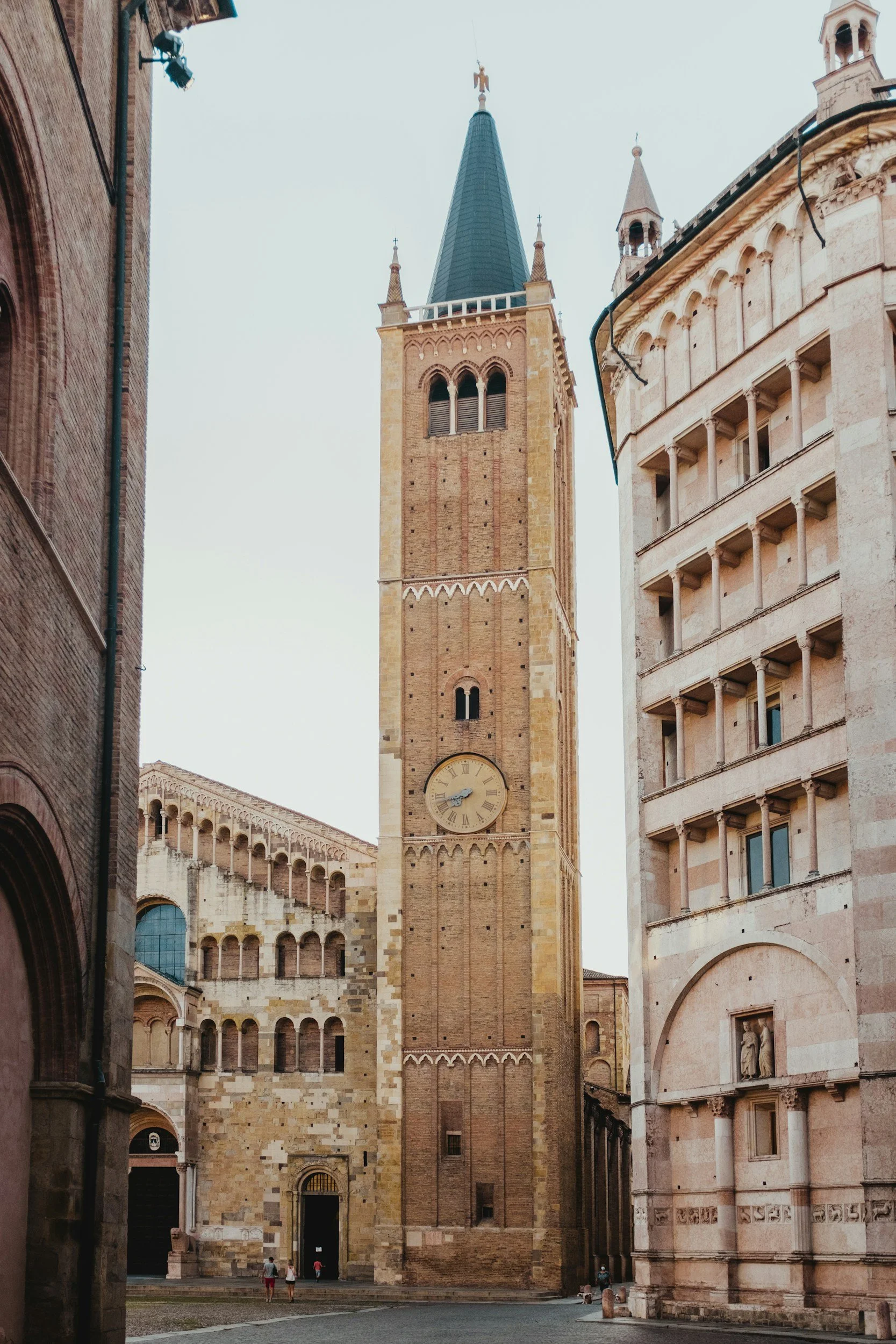
A lot of people end up combining Parma with Bologna, but if you’re trying to avoid turning the trip into constant restaurant reservations and crowded porticoes, this food route continues much more slowly through Emilia-Romagna while still keeping the train logistics easy.
Parma works better than most people think
Parma is one of those places that becomes more useful the second or third day rather than immediately on arrival. A lot of northern Italy train trips start feeling tiring because people keep changing bases, dealing with awkward station locations, or arriving somewhere that looks good online but becomes inconvenient once the cafés close and the last decent dinner reservation is gone by 8pm.
Parma avoids a lot of that.
The station is close enough to the center that you can realistically arrive from Milan with a suitcase, stop for coffee on the way into town, and still make lunch without the arrival becoming an entire operation. The walk down Strada Garibaldi is flat and easy to follow even without maps. No steep climb like Bergamo. No bridges and crowds like Venice. No long dead stretch outside the station either.
And the city is great fir early birds.
By 7:30am, people are already standing at the counters inside Caffè Pagani near Piazza Garibaldi before work, ordering espresso and leaving within minutes. Around Viale Mentana, cyclists cut through the streets toward the university buildings while delivery vans start unloading bread and produce into the smaller side streets behind Strada Repubblica. Parma actually feels awake earlier than a lot of smaller towns nearby!
That makes a difference when you’re trying to build a train-based trip without wasting half the morning.
One thing people often misjudge about northern Italy without a car is how quickly some towns become inconvenient outside the middle of the day. You arrive Sunday evening and suddenly half the restaurants are closed. Monday morning cafés don’t reopen after breakfast. The train station luggage lockers aren’t operating. Small operational things start stacking together… but Parma stays relatively steady through the week.
Even on quieter evenings, there’s usually still movement around Borgo XX Marzo, Via Nazario Sauro, and the streets near Strada Farini. Not tourism movement exactly. More students, locals meeting after work, people standing outside small wine bars holding tiny glasses of red wine while scooters squeeze through the narrow streets behind them.
The city also spreads activity out better than many places this size.
In some towns, everything revolves around one central piazza and then dies immediately outside it. Parma feels wider than that. Oltretorrente especially changes the atmosphere completely. Cross the river near Ponte di Mezzo and suddenly things feel more residential, less polished, quieter after dark. Around Borgo Rodolfo Tanzi and Via Bixio, tables outside bars start filling around aperitivo, but by 10pm parts of the neighborhood are already almost silent except for bicycles passing over the cobblestones.
On Sundays, it gets even quieter. That’s usually when you notice which places are actually lived-in and which are functioning mostly for visitors. Smaller grocery stores close early, and some cafés around Oltretorrente never reopen after lunch. A few bakeries sell out before midday and simply shut the doors. Things like that are easier to notice when you’re travelling by public transport and not by car.
Parma also works unusually well as a regional train base because the rail lines around Emilia-Romagna are genuinely practical rather than just technically connected. You can wake up late, decide over coffee to go to Modena instead, and still get there easily. Reggio Emilia is quick. Bologna works for a full day without feeling exhausting. Brescia is manageable too.
And crucially, you don’t constantly need to route back through Milan to continue the trip.
That changes the entire feeling of train travel in northern Italy.
The useful part of Parma isn’t really the landmarks. It’s how easy the city feels after two or three days. You start noticing small routines instead, like the queue outside Pepèn before lunch. Students sitting along the edges of Piazza della Pace eating takeaway pizza in the evenings. The tiny Alimentare on Borgo delle Colonne where locals stop for bottles of wine before dinner. The fact that certain restaurants near Via della Salute still don’t really care whether visitors found them online or not.
Even the timing of the city feels different depending on where you are. Around Piazza Garibaldi, mornings are busiest. Near Via Farini, things peak later around aperitivo. Oltretorrente feels best around late afternoon before dinner starts. Piazza Ghiaia is oddly inconsistent depending on the day. Sometimes lively with market activity, sometimes strangely empty apart from a few vegetable stalls and people cutting through quickly on bicycles.
And Parma is one of the few smaller cities in northern Italy where staying four nights without a car doesn’t start creating logistical friction or boredom. Usually by that point in smaller towns, people feel trapped into repeating the same walks and cafés.
Here, the city keeps unfolding sideways a bit instead.
The city works very differently once food seasons start changing, especially during autumn truffle fairs and winter market periods. This seasonal food guide makes the timing decisions much easier if you’re debating when to go.
Parma becomes much easier to navigate once you understand which neighborhoods actually stay active after dinner and which ones empty out completely on Sundays. This Parma guide breaks that down in much more detail.
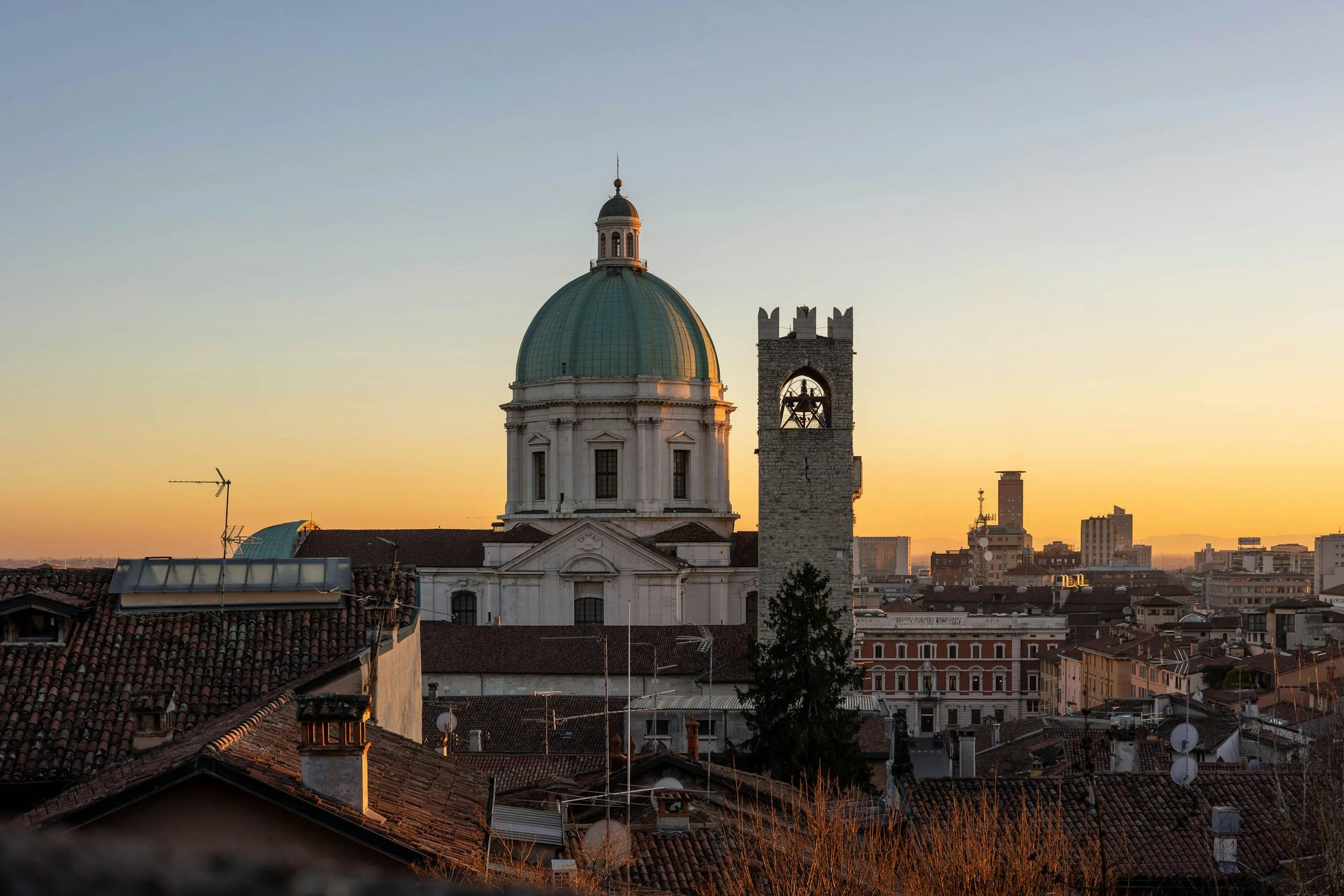
Brescia feels much easier than people expect by train
Most people arriving in Brescia are either continuing toward Verona or heading down to Lake Garda. You notice it immediately at the station. Small groups pulling suitcases toward platforms for Desenzano. Day-trippers checking departure boards for Venice. Very few people actually stopping.
Which is partly why the city still feels less shaped around visitors than Bergamo or Verona.
Brescia station itself is straightforward once you arrive. Busy commuter traffic in the mornings, regional trains constantly moving through, but nothing close to the chaos of Milano Centrale. You walk out past the taxi rank and within a few minutes the streets already start changing from office buildings and chain cafés into older residential blocks around Corso Martiri della Libertà.
A lot of people walk straight toward Piazza della Loggia from there. The route works fine, though the more interesting streets are usually slightly off to the side. Via Dante and Contrada delle Bassiche feel quieter during the day, with tiny alimentari, tobacco shops, and older bars where people stand at the counter drinking espresso before disappearing again within five minutes.
The city opens slowly in the mornings.
Around 8am, bakeries near Corso Palestro already have queues outside for focaccia and brioche, but several shops around Piazza Paolo VI still haven’t opened their shutters yet. On weekdays, students from the university start filling the cheaper cafés near Via San Faustino by late morning, especially around Caffè Letterario Primo Piano where people stay sitting with laptops for hours without anyone bothering them.
Brescia feels much less compressed than Bergamo.
You notice it physically after a couple of days without a car. Streets are wider. The center spreads outward more gradually instead of climbing uphill immediately toward one concentrated historic section. Walking back from dinner near Contrada del Carmine at night feels easy in a way that some northern Italian towns don’t, especially after long train days.
And Carmine changes a lot depending on the hour.
During the afternoon, parts of it feel almost sleepy. Graffiti-covered shutters half down. Small groceries selling vegetables out onto the pavement. Elderly residents sitting outside apartment entrances near Via delle Battaglie watching scooters move through the narrow streets. Then around aperitivo, the whole area starts filling again, particularly near Piazza Tebaldo Brusato and the bars around Vicolo dell’Aria.
Not formal wine-bar crowds either. More local students, groups meeting after work, people spilling into the street because the tables are already full.
Near Via Musei, things feel different again. Heavier tourism traffic during the middle of the day because of the Roman ruins and museums, but surprisingly quiet after dinner once people leave the center. Around 10pm, parts of that area become almost empty apart from a few restaurants still open near Piazza del Foro.
The food routines here are very Lombardy. You’ll see lunch starts earlier than visitors often expect, and several kitchens stop serving completely between lunch and dinner instead of offering continuous service. Around 2:30pm, finding proper food becomes oddly difficult outside the central streets. Even some cafés near Piazza della Vittoria shut completely for part of the afternoon.
Sunday mornings are especially quiet heer! Almost severe in parts of the center.
Around Piazza Paolo VI before 9am, you mostly hear church bells and delivery vans crossing the stone streets. Then cafés start opening gradually one by one. Pasticceria Veneto becomes busy early, especially with locals picking up pastries to bring home rather than sitting down inside.
The metro changes the city more than guidebooks usually mention. Not because Brescia is enormous, but because it quietly removes a lot of the annoying parts of staying without a car. You can move between the station, the castle area, and outer neighborhoods without thinking much about buses or taxis. After several weeks traveling regionally by train, small practical things like escalators and functioning metro stations start feeling oddly luxurious.
Brescia also works well geographically without forcing constant backtracking through Milan. Verona is quick. Parma is manageable. Desenzano del Garda barely feels like a journey. Even smaller places along the lake become realistic day trips if you leave early enough.
A lot of towns in northern Italy are pleasant for one night but tiring as actual bases without a car. Brescia gets easier after a few days instead of harder.
Usually around the point where you stop walking through Piazza della Loggia and start cutting through the smaller side streets automatically instead.
Brescia often gets overlooked because people rush directly toward the lakes, but if you’re deciding between staying lakeside or somewhere more practical by rail, these car-free stays narrow down which countryside hotels actually work without needing taxis constantly.
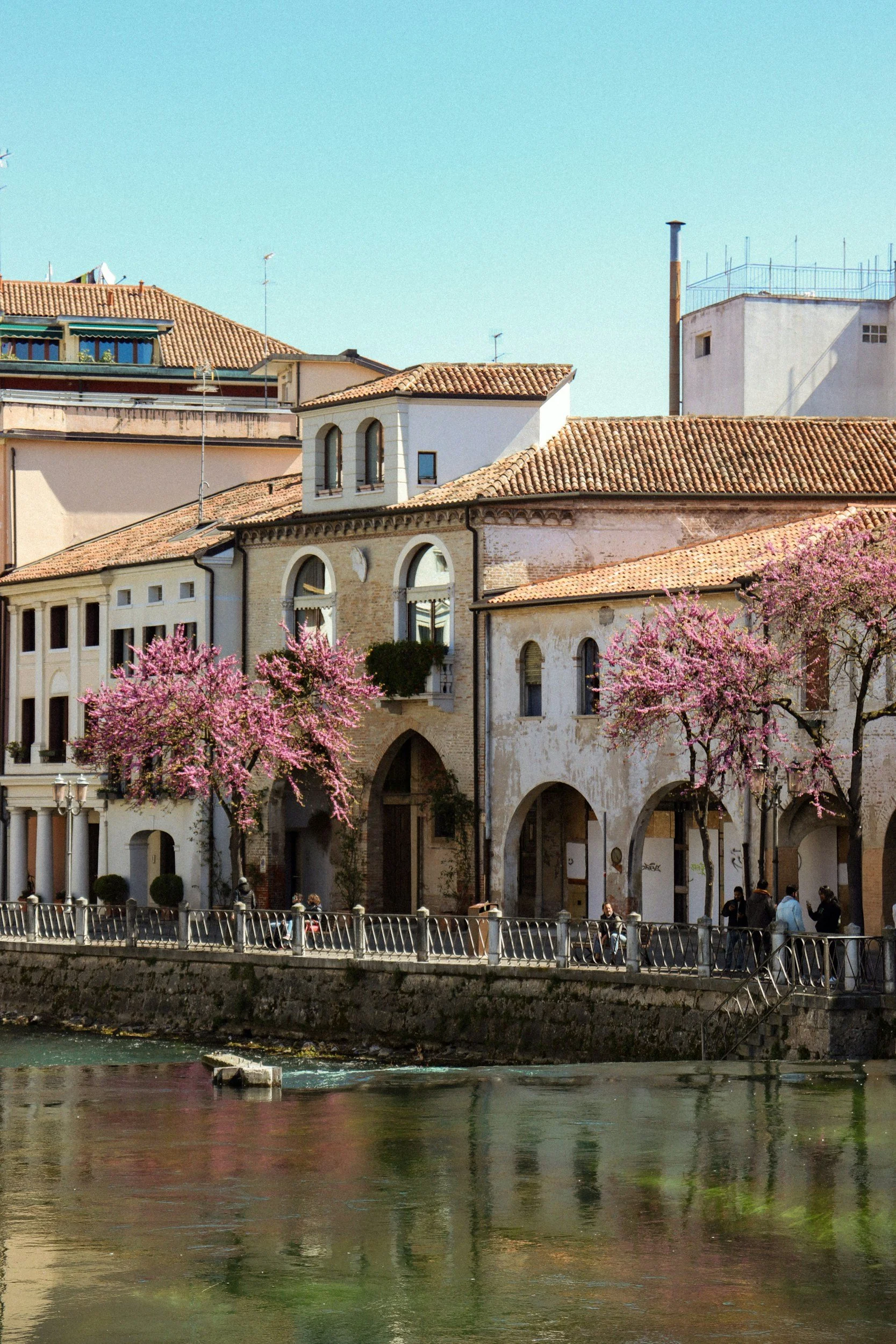
Treviso makes train travel through Veneto feel much less exhausting
Treviso starts making sense almost immediately after arriving from Venice. You step out of Treviso Centrale, cross the road outside the station, pass the row of taxis and the small Tabacchi near Viale Trento e Trieste, and within a few minutes the whole atmosphere changes. No bridges. No vaporetto queues. No crowds blocking narrow walkways with rolling luggage.
After a few days moving around Veneto by train, that kind of arrival starts feeling unusually easy.
A lot of people staying here are technically visiting Venice. You notice it early in the mornings around the station when day-trippers queue for trains toward Santa Lucia while the cafés in Treviso itself are still mostly filled with commuters and students. Around 7:45am, places near Via Roma are busy with people stopping briefly for espresso before work rather than sitting around lingering over breakfast.
Treviso wakes up gradually.
Near Piazza dei Signori, chairs get dragged across the stone pavement while delivery vans squeeze through streets that feel too narrow for them. Around Via Calmaggiore, some shutters stay closed surprisingly late into the morning outside peak season. Tuesdays feel noticeably quieter than Fridays. Sunday mornings before 9am are almost empty apart from churchgoers crossing Piazza Duomo and older men reading newspapers outside Caffè Centrale.
The city also changes block by block more than people expect.
Around the canals near Buranelli, especially early evening, things slow down quickly once the day visitors leave. You hear cutlery from restaurant terraces and water moving beneath the arches more than actual conversation. Then five minutes away near Piazza San Vito, aperitivo spills into the streets properly. Small glasses of spritz balanced on crowded outdoor tables. University students sitting directly on the stone steps because there aren’t enough chairs left.
And the narrow passage beside Osteria Arman always seems busier than the larger streets around it.
Treviso works best when you stop trying to “see everything” and start using it operationally instead. The train connections through Veneto are genuinely practical from here. Venice is easy. Bassano del Grappa works well. Conegliano takes barely any time. Even Padua feels manageable without turning into a full travel day.
More importantly, returning to Treviso in the evening rarely feels stressful.
The station stays relatively calm even during busier periods. No endless escalators. No huge station halls. If you arrive back late from Venice around 9pm, you can realistically be sitting outside a wine bar near Piazza delle Erbe fifteen minutes later.
There are also smaller routines around the city that people only really notice after staying a few days. Around late morning, lines start forming outside Nascimben near Via Sant’Agostino for sandwiches filled with porchetta, sopressa, or soft local cheeses. By early afternoon, several smaller shops near Quartiere Latino close entirely for a few hours and the center suddenly feels much quieter.
Around Porta Santi Quaranta in the evenings, you mostly hear televisions through open windows and scooters passing occasionally. A few bars there still feel entirely local, especially during football matches when people stand outside smoking while watching through the windows instead of going inside.
Near Isola della Pescheria, mornings work much better than afternoons. Vendors set out radicchio, white asparagus, and seasonal produce from nearby farms early in the day, but by around 1pm parts of the market area already start thinning out. A lot of visitors arrive too late and assume it’s always subdued.
Treviso also has strange little operational quirks that repeat visitors start planning around automatically. Certain cafés near Piazza Pola close on Sundays even during busier months. Some restaurants stop serving surprisingly early on Mondays. During heavy rain, parts of the stone streets near the canals become ridiculously slippery.
Nobody tells you that beforehand…!
And if you stay near Via Barberia or the smaller lanes behind Piazza dei Signori during summer, garbage collection starts early enough in the mornings that sleeping with open windows becomes less peaceful than expected.
The city feels very different depending on the hour too. Around 8am, Treviso belongs to commuters and bakery queues. Around aperitivo, the streets near Piazza San Leonardo fill up quickly. Then by 10:30pm, large parts of the center become quiet again apart from a few bars and restaurant terraces near the canals.
It never really turns into a late-night city, which is partly why it works so well in the middle of a longer northern Italy train trip.
Treviso starts making much more sense once you continue north into the hills instead of circling back toward Venice again, especially if you want quieter wine villages that still work without a car. This Prosecco guide helps connect the route properly.
A lot of travelers looking at Treviso or Bassano also start debating lake towns around the same time, but some become surprisingly awkward without a car once you arrive. This lake breakdown saves a lot of logistical frustration.
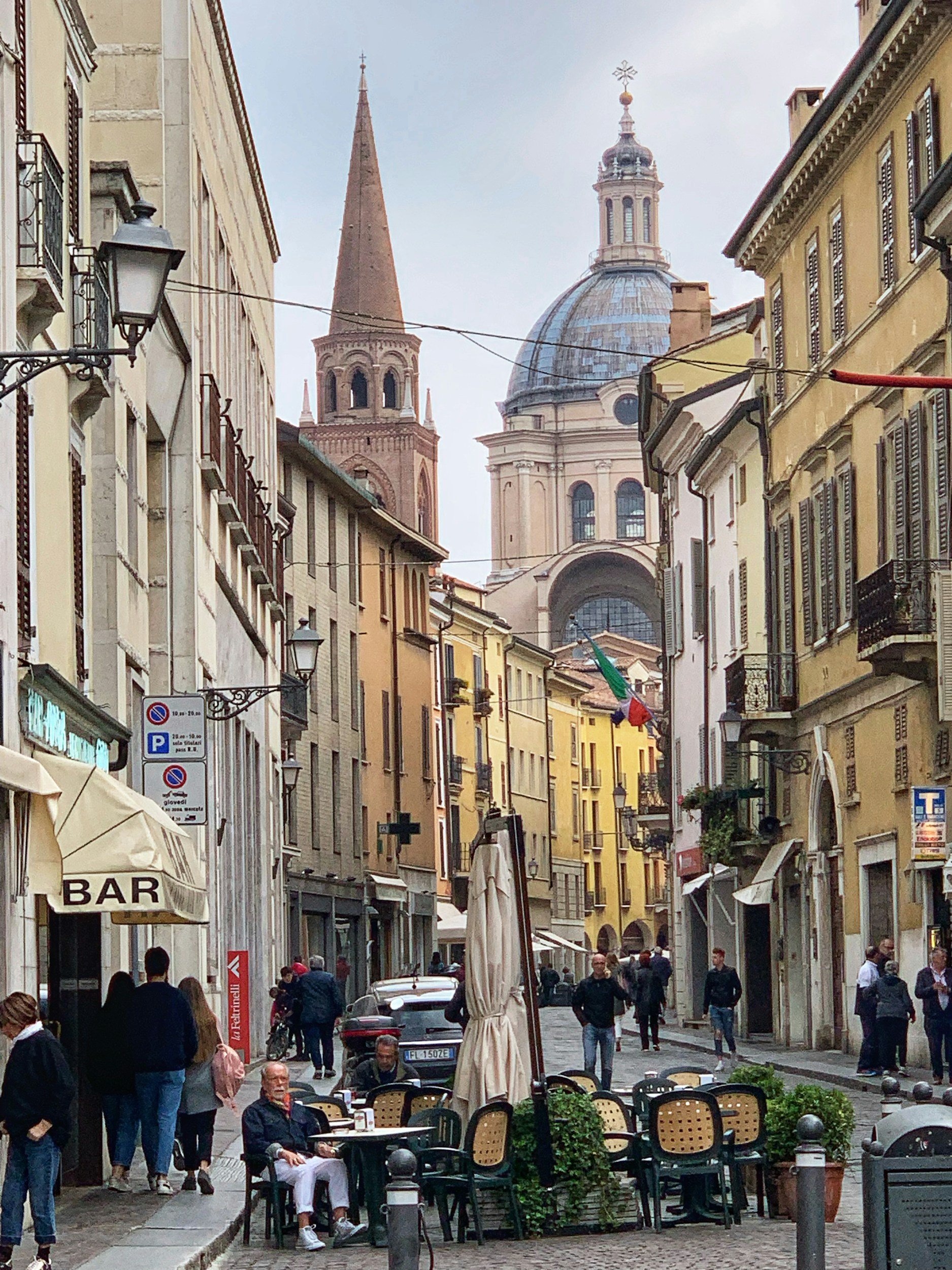
Mantua is quieter and slightly more awkward by train than people expect
Mantua usually enters the trip without much drama, which feels strange considering how visually heavy and atmospheric the city becomes once you actually walk inside it. The train rolls through long stretches of flat Lombardy countryside, past warehouses, low apartment blocks, industrial edges, patches of farmland, and then suddenly the water surrounding the city starts appearing beside the tracks before the station comes into view almost quietly.
Mantova station itself feels surprisingly small for a city with this much history attached to it. A few regional platforms, commuters standing outside smoking near the buses, students waiting for connections toward Verona or Modena, a café counter where people order espresso quickly without lingering very long. If you arrive directly from somewhere like Bologna or Venice, the whole place can initially feel almost too subdued, as though you stopped in the wrong town by accident.
And the first stretch outside the station doesn’t really help either.
Most people walk into the center along Viale Risorgimento and Corso Vittorio Emanuele II because it’s the easiest route with luggage, but the beginning feels practical rather than particularly memorable. Apartment blocks, pharmacies, tabacchi, small bars with lottery machines glowing in the corners, delivery scooters parked carelessly outside cafés where older locals stand at the counter reading newspapers before work. Around Bar Italia near Via Solferino, the same groups seem to gather every morning while buses idle outside and cyclists cut through traffic toward the center.
Then somewhere near Piazza Mantegna, the streets narrow properly, arcades start hanging low above the pavement, and entire sections of the center feel physically darker than cities nearby because sunlight barely reaches ground level in some of the smaller lanes around Via Bertani, Vicolo Storta, and the streets branching behind Piazza delle Erbe. Even during summer, certain corners stay cool and shadowed well into late morning while the squares a few minutes away already feel bright and overheated.
Mantua feels enclosed in a way northern Italian towns often don’t anymore.
And unlike places where the historic center constantly performs itself outward toward visitors, Mantua still has long stretches during the middle of the day where daily life feels strangely slow and half-hidden unless you stay long enough to notice the patterns properly. Around 2pm, especially weekdays, entire sections near Via Broletto and Piazza Concordia become almost silent after lunch service finishes. Restaurant chairs stacked inward. Metal shutters half-lowered over tiny grocery stores. Small alimentari near Piazza delle Erbe running slowly with one person buying vegetables while everyone else seems to have disappeared indoors for the afternoon.
The lunch closures feel much stricter here than in Parma or Brescia, and you notice it most when you try doing ordinary things instead of sightseeing. Looking for coffee around 3pm near Via Accademia and realizing half the cafés are closed. Wandering toward Piazza Sordello expecting movement and finding huge sections nearly empty apart from a few tourists crossing the square quickly before disappearing again. Even some restaurants around Rotonda di San Lorenzo don’t reopen until fairly late for dinner, which catches people off guard constantly if they arrive Sunday evening without reservations.
Then the city changes completely again around aperitivo.
Near Via Pescherie and Piazza delle Erbe, outdoor tables gradually fill from around 6:30pm onward, especially Thursday through Saturday when students and locals spill into the narrow lanes holding glasses of wine while scooters squeeze awkwardly through the gaps between people standing outside bars. Places like Bar Venezia and Antica Osteria Ai Ranari stay busy late into the evening, but the strange thing about Mantua is how quickly the atmosphere shifts once you leave those pockets behind.
You turn one corner and the streets are lively enough that finding a table becomes difficult. Two minutes later, somewhere near Via Dottrina Cristiana or the smaller lanes behind Casa del Mantegna, the city becomes almost completely silent again apart from bicycles echoing across the stone streets.
That unevenness gives Mantua a completely different feeling from places that stay consistently active from one end of the center to the other.
The lake areas surrounding the city change the atmosphere even more. Walking out toward Lungolago Gonzaga around sunset, especially during colder months, the whole city starts feeling detached from the rest of Lombardy somehow. Damp air coming off Lago Inferiore. Joggers moving quietly along the water near Ponte San Giorgio. Church bells carrying across the lakes far louder than expected because everything else has gone quiet already.
During late autumn and winter mornings, the mist around the lakes often hangs low until surprisingly late in the day, especially near Piazza Virgiliana and the outer edges of the historic center. Some mornings the towers near Piazza Sordello barely appear properly until mid-morning, and cafés fill earlier because people stay inside longer nursing coffee while waiting for the city to wake up fully.
Thursday market mornings interrupt all of that calm completely!
Around Piazza delle Erbe, Via Spagnoli, and Piazza Broletto, temporary stalls suddenly take over the streets with clothing racks, produce crates, cheap household goods, wheels of cheese sitting directly on folding tables, vendors shouting across the square while delivery vans attempt impossible turns through streets clearly not designed for modern traffic. Elderly residents arrive early carrying shopping trolleys while tourists drift through more slowly photographing the basilica nearby.
By around 1pm the whole thing starts disappearing again almost immediately. Mantua also has these tiny routines that only really become visible after a few days instead of one afternoon. The queue outside Pasticceria Atena before lunch. Libreria Di Pellegrini near Via Marani staying unexpectedly busy during quiet afternoons while the surrounding streets remain empty. The bakery near Via Fratelli Bandiera selling out of schiacciata so early that arriving after late morning usually means staring at mostly empty shelves.
Even the sounds shift block by block. Near Piazza Mantegna you hear glasses, chairs scraping across stone pavement, conversations spilling from wine bars. Around Via Tazzoli late at night, there’s almost nothing except footsteps and bicycles moving through the darkness.
And Mantua never really becomes frictionless by train in the same way Treviso or Parma do. Regional connections still require attention. Sundays remain quiet enough that parts of the city feel nearly closed. Missing certain trains toward Modena or Verona can easily derail half the afternoon because frequencies aren’t particularly forgiving.
People who need constant stimulation usually get restless here fairly quickly… and the people who end up extending their stay are usually the ones who stop treating the city like a checklist stop between bigger destinations and start settling into the odd little routines Mantua quietly builds around you instead.
If you’re trying to build this into a longer solo train trip through Italy, this solo itinerary connects several smaller cities without forcing constant backtracking through Milan or Rome.
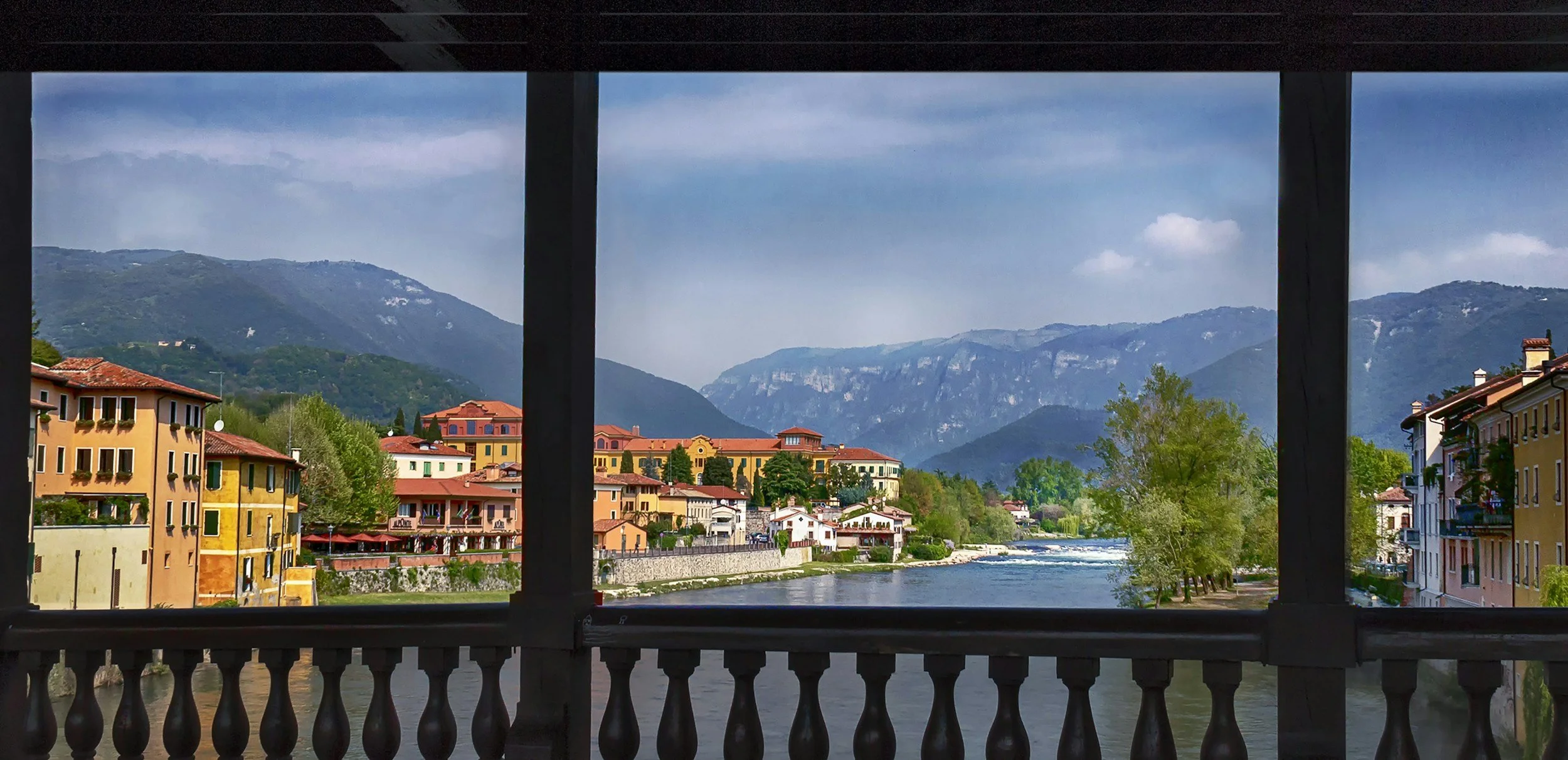
Bassano del Grappa feels more practical than it looks on the map
Bassano usually enters the trip after a sequence of flatter cities, which makes the approach feel noticeably different before the train has even arrived. Coming from Padua or Treviso, the landscape starts loosening up around Castelfranco Veneto. Industrial stretches thin out, the foothills slowly appear behind the towns, and by the time the train reaches Bassano del Grappa the whole atmosphere already feels less compressed than the Venice-Padua corridor.
The station itself is small and straightforward in a way northern Italy increasingly isn’t anymore. A couple of regional platforms, commuters waiting quietly with bicycles, students heading toward Vicenza or Treviso, and usually at least one person standing outside smoking beside the bus stop near Piazzale Cadorna.
You step outside and the mountains already feel close!
Bassano works well without a car partly because the station sits close enough to the center that you never really need to think about transport once you arrive. Most people walk straight down Viale delle Fosse toward the historic center, passing apartment buildings, small cafés, pharmacies, and the odd slightly dated clothing shop before the streets narrow properly near Piazza Garibaldi.
The first impression catches people off guard sometimes because Bassano doesn’t immediately look polished in the way places like Verona or Bergamo present themselves. Some parts feel practical, slightly worn, very local. Then suddenly you turn into the older streets near Via Jacopo da Ponte and the city tightens inward around arcades, stone lanes, and small family-run shops that still look like they haven’t changed much in twenty years.
And mornings here feel completely different from afternoons.
Around 8am, Piazza Garibaldi belongs mostly to locals buying bread and stopping for coffee before work. Pasticceria Biaggioni already has people queueing for pastries while nearby market vendors unload crates of vegetables directly onto the pavement under the arcades. During weekdays, older residents move slowly between stalls carrying shopping trolleys while students cut diagonally across the square toward school without paying much attention to any of it.
By late morning the center shifts completely.
Day-trippers start arriving from Venice, Verona, and Lake Garda, especially Fridays and weekends. Around Ponte degli Alpini, people bunch together almost immediately for photos overlooking the Brenta River while the nearby grappa shops start filling with visitors tasting bottles before noon.
But Bassano gets more interesting once you move slightly away from the bridge.
The smaller streets around Contrà del Monte, Via Museo, and Via Roma stay quieter even during busy afternoons. Near Libreria Palazzo Roberti, people drift slowly between the bookstore and nearby cafés while scooters squeeze through streets that suddenly feel too narrow for them. The bookstore itself stays busy enough that locals still use it properly rather than treating it as somewhere decorative to wander through for five minutes.
Around 1:30pm, some parts of the center become oddly calm while restaurants fill completely. Kitchens near Piazza Libertà often stop serving earlier than people assume, especially weekdays, and several smaller cafés around Via Bellavitis shut entirely between lunch and aperitivo. Arriving hungry around 3pm without planning ahead usually means settling for sandwiches or pastries instead of proper food.
And Bassano gets quiet surprisingly early once the day visitors leave. Around 6pm, the atmosphere changes almost street by street. The crowds around Ponte degli Alpini thin out quickly while locals begin filling wine bars near Via Ferracina and Piazza delle Erbe for aperitivo. Small plates of baccalà, spritz glasses balanced on crowded outdoor tables, groups standing in the street because there’s nowhere left to sit.
Then ten minutes later, somewhere near Contrà San Giorgio or the upper streets near Castello degli Ezzelini, the city feels almost empty apart from footsteps and televisions playing behind open windows.
The weather affects Bassano more than people anticipate too.
Even after hot days in Padua or Venice, evenings cool down quickly once the light disappears behind the foothills. Around the river near Ponte Vecchio, the temperature drops enough that people sitting outside in short sleeves often start ordering hot drinks instead of another spritz surprisingly early.
Rain changes the whole city immediately… The stone streets near the bridge become slippery enough that everyone slows down walking, arcades fill with people sheltering all at once, and the Brenta River turns loud enough beneath Ponte degli Alpini that conversations outside nearby bars start competing against the sound of the water.
Certain small routines repeat themselves constantly here if you stay longer than one night. The queue outside Pasticceria Al Portego before lunch. Students sitting along the river walls eating takeaway pizza near Viale dei Martiri. The tiny alimentari near Via Vendramini selling wine, cigarettes, and sandwiches from counters that barely seem large enough to stand behind.
Bassano also has these strange little dead periods during the afternoon where parts of the center feel almost abandoned for an hour or two before aperitivo begins. Around Via Gamba and some of the streets behind Piazza Libertà, shutters stay closed, chairs remain stacked outside restaurants, and you mostly hear delivery scooters and church bells echoing across the stone lanes.
And unlike some smaller northern Italian towns that become frustrating after two nights without a car, Bassano actually gets easier once you stop treating it like a stop “between” somewhere else. The station stays close, and the center stays walkable. You start learning which streets remain busy later, which bakeries sell out first, which cafés reopen after lunch and which ones don’t.
That’s usually around the point where people start wishing they’d planned an extra day here instead of rushing onward toward Venice.
If Bassano del Grappa ends up being your favorite stop on the route, this Dolomites guide continues the same slower mountain atmosphere without jumping straight into crowded alpine resort towns.
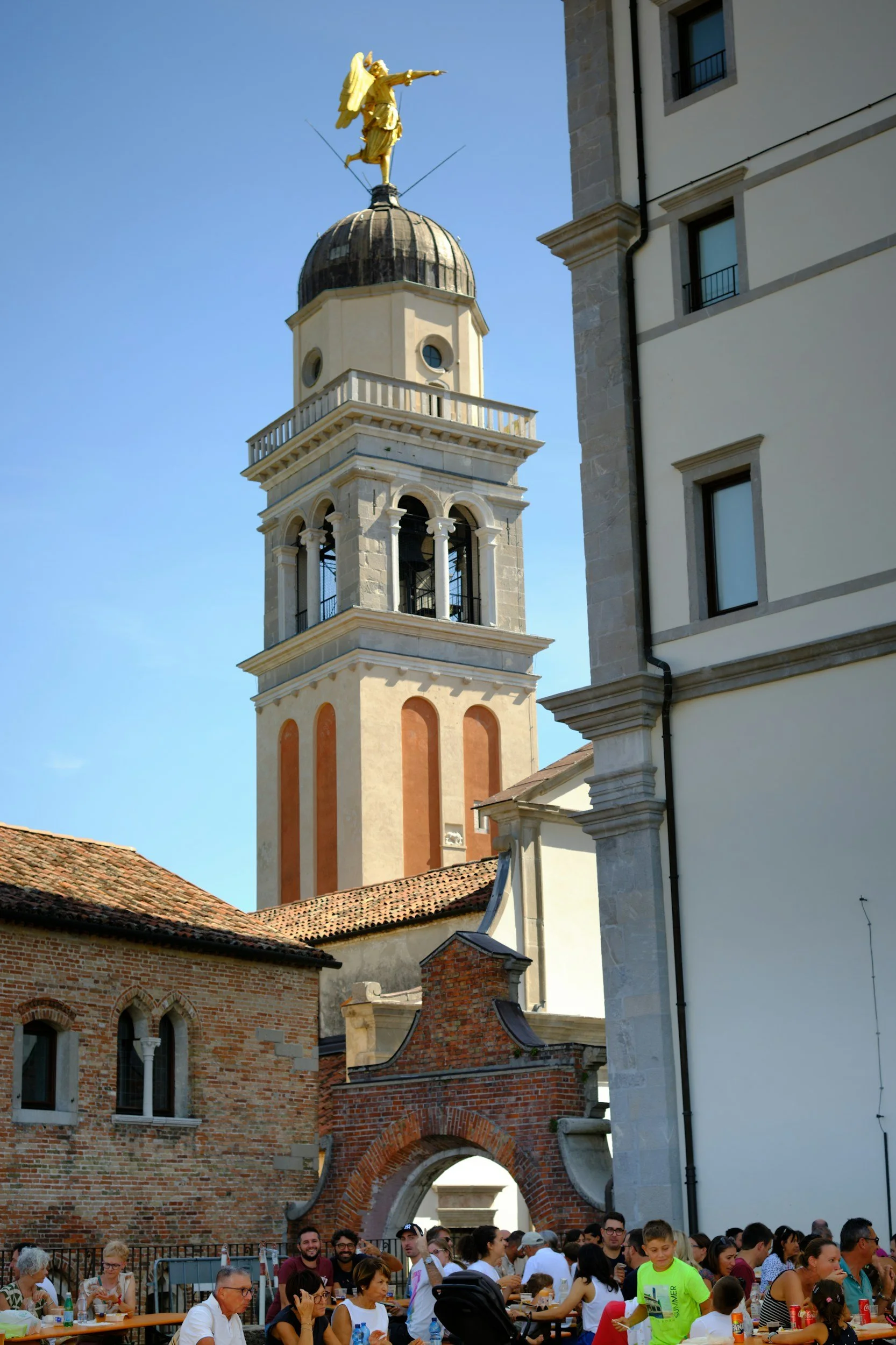
Udine feels very different from the rest of northern Italy
By the time the train reaches Udine, a lot of northern Italy has usually started blending together a bit. Similar station cafés. Similar aperitivo menus. Similar crowds moving between Milan, Verona, and Venice with rolling suitcases and Google Maps open.
Then Udine shifts things slightly, and you notice it almost immediately around the station area near Viale Europa Unita. The atmosphere feels more regional city than polished destination. Commuters smoking outside the entrance beside rows of bicycles. Students dragging backpacks toward buses heading deeper into Friuli. The small station café full of people ordering espresso quickly before disappearing again within minutes.
The walk into the center takes maybe fifteen minutes depending on where you’re staying, although parts of Via Roma become annoying with luggage because the pavement suddenly changes texture every few meters. The beginning feels practical enough. Apartment blocks, pharmacies, tabacchi, newspaper stands. Then around Piazza XX Settembre the city starts tightening inward properly around arcades and older streets that feel noticeably different from Veneto.
Udine wakes up slowly compared to places farther west.
Around 8am, cafés near Piazza Matteotti are already packed at the counter with people drinking espresso before work, but plenty of shops around Via Mercatovecchio still haven’t opened yet. During colder months the mornings feel heavier here somehow. Fog hanging low between the buildings. People sitting inside cafés longer with newspapers spread across the table instead of rushing back outside immediately.
Near Caffè Contarena close to Piazza della Libertà, older locals stop for quick coffee while students stay sitting outside for ages even when it’s cold. Pastry counters start filling with gubana and strucchi by late morning instead of the usual cornetti you see everywhere farther south.
Udine doesn’t really revolve around one obvious center where everybody gathers all day long. Activity shifts street by street depending on the hour. Around Via Paolo Sarpi at lunchtime, restaurants fill heavily with office workers ordering fixed menus while nearby residential streets stay almost empty apart from delivery scooters and people walking dogs.
Then later in the afternoon Piazza San Giacomo slowly starts filling for aperitivo.
Not huge crowds. More people staying longer than expected enjoying wine and small plates of prosciutto while church bells keep interrupting conversations every fifteen minutes. Around Osteria Al Vecchio Stallo and the smaller wine bars near Via Stringher, people stand outside balancing glasses of Friulano while the surrounding streets stay surprisingly calm.
The quieter parts of Udine feel very quiet too. Walk uphill toward Via Gemona and the smaller lanes behind the castle after dinner and entire sections of the city almost empty out! Tiny bookstores still open late. Old stationery shops with handwritten signs taped into the windows. Libreria Friuli near Via dei Rizzani still feels like somewhere locals actually browse instead of a bookstore existing mostly for visitors taking photos.
And evenings here stay calmer than people often expect after Venice or Bologna.
By around 10pm, parts of the center near Piazza Venerio and Via Manin are already nearly silent apart from restaurant terraces and students sitting on the steps outside bars. Sundays get even slower. Some cafés never reopen after lunch, several shops close entirely by afternoon, and certain streets feel almost administrative once everything shuts down.
Train travel changes slightly once you reach Friuli too, as the routes toward Trieste and Venice work well enough, but the network feels less “fancy” than Lombardy or Veneto. More regional delays. Longer station stops. Smaller platforms where barely anyone gets off. Connections toward Cividale del Friuli or the Slovenian border sometimes feel oddly slow even over short distances.
People trying to rush through Udine usually don’t stay very long. The city works better once the schedule loosens a bit. Long lunches around Piazza Matteotti. Slow mornings moving between cafés and bookstores near Via Mercatovecchio. Coming back late from Trieste without worrying too much about maximizing the day.
After a while, Udine starts feeling less like somewhere you “visit” and more like somewhere you temporarily settle into without really planning to.
Udine starts making more sense once you continue east instead of looping back toward Lombardy again, especially if you like quieter regional routes that feel less tourism-heavy than the main Milan–Venice corridor. This peaceful towns guide connects well from Friuli.
A lot of the markets in northern Italy feel increasingly visitor-focused now, which is partly why these small-town markets stand out if you want places where locals are still actually shopping during the morning.
If you’re continuing south after Emilia-Romagna instead of heading toward Venice, this Cilento route feels completely different from northern Italy and works better once you’re ready to slow the trip down properly.
Smaller Italian towns are easier when you stop changing hotels constantly
After a while, the towns people remember most from northern Italy usually aren’t the ones with the biggest landmarks or the most photographed piazzas.
It’s the places that made the actual trip feel easy.
The station where you could arrive tired and still walk straight into town without dragging luggage uphill for half an hour. The café that was still open after a delayed regional train. The town where you stopped checking train schedules constantly because the days started flowing naturally on their own.
That’s partly why places like Parma, Treviso, Brescia, Mantua, Bassano del Grappa, and Udine work so well without a car. They’re not just “reachable by train.” They’re places where daily life still functions around the train network instead of fighting against it.
And the small details end up becoming the memorable parts anyway.
The queue outside Pepèn in Parma before lunch. Students sitting along the river in Bassano eating takeaway pizza after dark. The strange quiet around Mantua once the market stalls disappear for the evening. Early morning espresso bars near Piazza Matteotti in Udine before half the shops have even opened. Coming back to Treviso late from Venice and realizing the walk from the station still feels calm instead of exhausting.
Those are the things that start shaping the trip more than major attractions after a few weeks moving through northern Italy by regional train.
Especially once you stop trying to see everything and start paying more attention to which towns actually feel good to stay in.
Ps. if Parma ends up feeling too posh and you want something much more remote afterward, this Valle Maira weekend shifts the trip completely into mountain villages, small food producers, and slower roads near the French border.
And if your route overlaps with autumn, this truffle fair guide helps decide whether Alba is worth the detour or if it’s better to stay around Emilia-Romagna instead during October weekends.
FAQs about train travel in Northern Italy
Which northern Italy towns are easiest without dragging luggage uphill from the station?
Parma and Treviso are probably the easiest arrivals overall because both stations sit close to the center and the walks are mostly flat. In Parma, you can leave the station and be near Piazza Garibaldi within fifteen minutes without dealing with stairs, bridges, or steep cobbled streets. Treviso works similarly. The route from Treviso Centrale into the old town is direct enough that many people walk it automatically after arriving from Venice.
Bassano del Grappa is manageable too, although the stone streets near Via Jacopo da Ponte become uneven with rolling suitcases. Bergamo is much harder than people expect because of the climb toward the upper town unless you use the funicular.
Is Treviso a better base than Venice if you’re traveling by train?
For longer regional train trips, usually yes.
Returning to Venezia Santa Lucia every evening gets tiring faster than people expect, especially once crowds build around the station and vaporetto stops. In Treviso, you can walk from the platform into the center within minutes without bridges or luggage bottlenecks, and trains toward Venice, Padua, Bassano del Grappa, and Conegliano remain easy enough for flexible day trips.
The tradeoff is that Treviso becomes much quieter at night. Around Quartiere Latino and parts of Via Barberia, streets can feel almost empty by 10pm on Sundays.
Which northern Italy towns become too quiet on Sundays?
Mantua changes the most on Sundays.
Several smaller restaurants close entirely, afternoon openings become inconsistent, and parts of the center near Via Broletto and Piazza Concordia can feel almost shut down by early evening. Udine also slows down heavily Sundays, especially around Via Manin and the quieter streets behind Piazza Matteotti where cafés often close after lunch.
Treviso stays calmer too, although aperitivo still brings some movement back around Piazza San Vito later in the evening.
Parma handles Sundays much better than most smaller cities in northern Italy because there’s enough university life and local activity to keep the center functioning normally.
Which northern Italy towns work best for longer stays without a car?
Parma and Brescia usually work best for stays of three to four nights because daily logistics stay easy even after the first couple of days.
In Parma, the regional train connections toward Bologna, Modena, and Reggio Emilia are frequent enough that day trips don’t require rigid planning. Brescia works similarly for Verona, Desenzano del Garda, and eastern Lombardy, and the metro quietly removes a lot of small transport frustrations people normally run into without a car.
Mantua and Bassano del Grappa feel better for shorter stays unless the goal is a deliberately slower trip.
Which northern Italy town feels most local after dark?
Udine probably changes the least for visitors once evening arrives.
Around Piazza San Giacomo and Via Stringher, aperitivo still feels heavily local even during busier months, and many of the wine bars remain filled mostly with residents rather than weekend tourism. Brescia also keeps a noticeably local atmosphere around Contrada del Carmine and Via delle Battaglie after dinner.
Treviso and Bassano del Grappa shift much more visibly once day visitors leave.
Are regional trains in northern Italy stressful if you don’t speak Italian?
Usually not on the main routes.
Stations between Milan, Parma, Brescia, Verona, Venice, and Treviso are straightforward enough that most people manage fine with basic navigation apps and digital tickets. Smaller regional routes in Friuli-Venezia Giulia become slightly more confusing because platforms sometimes change last minute and announcements are less consistent in English.
The harder part is often timing rather than language.
Missing certain trains around Mantua or smaller Friulian routes can leave long gaps between departures, especially Sundays and evenings.
Which northern Italy towns feel best during rainy weather?
Mantua and Udine actually work surprisingly well during colder or rainy periods because the atmosphere changes with the weather instead of collapsing under it.
In Mantua, the fog around the lakes and the darker arcaded streets near Via Bertani make the city feel heavier and quieter in a way that suits bad weather. Udine’s cafés around Piazza Matteotti stay busy for hours during rainy mornings, especially late autumn when people linger much longer inside over coffee and newspapers.
Bassano del Grappa becomes much moodier during rain, although the stone streets near Ponte degli Alpini get slippery enough that walking slows down noticeably.
Which northern Italy towns are hardest without a car even though they have train stations?
A lot of smaller hill towns in Veneto and Lombardy look easy on maps but become awkward once you arrive with luggage.
Asolo is one example. The town itself is excellent, but the station sits outside the center and buses become necessary unless you’re comfortable relying on taxis. Parts of Lake Garda can feel similar outside the larger train-connected towns like Desenzano or Peschiera del Garda.
This is partly why Bassano del Grappa works better operationally than people initially assume.
Is Mantua too quiet for a longer stay?
For some people, yes.
Mantua gets very quiet at night compared to Parma, Bologna, or Verona, especially weekdays outside summer. Around Via Dottrina Cristiana and parts of the center behind Piazza Sordello, entire streets can feel almost empty after dinner apart from bicycles and restaurant staff cleaning terraces.
People who like slower evenings usually end up loving it there. People wanting constant activity often leave after one or two nights.
Which northern Italy town feels easiest after a delayed train arrival?
Parma probably handles late arrivals best overall.
The station stays connected to the center naturally, restaurants around Strada Farini and Borgo delle Colonne usually stay active later than in similarly sized towns, and the city doesn’t become logistically awkward after dark.
Treviso also works well for late arrivals because the station walk remains simple even late in the evening.
Mantua feels much harder after delays because train frequencies are thinner and the city quiets down early.
Which northern Italy towns have the best station-to-center walk?
Treviso is probably the smoothest overall because the walk feels direct and calm even with luggage. Parma comes close for the same reason.
Brescia works well too, especially because the metro sits directly at the station and removes longer walks entirely if needed.
The least pleasant arrivals are usually towns where stations sit outside the actual historic center or require immediate uphill walking. That physical friction changes trips more than most itineraries admit.
Which northern Italy town works best as a base for regional train day trips?
Parma is probably the strongest overall combination of manageable station, frequent regional routes, and a center that still feels active enough to return to every evening.
Treviso works especially well for Veneto routes. Brescia works surprisingly well for Lombardy and eastern lake areas.
Udine becomes more useful once the trip moves farther east toward Trieste or smaller Friulian towns, although the train network starts feeling slower and less polished there compared to the Milan–Venice corridor.