These lake towns are easier to enjoy than Annecy
By around 10 in the morning in Annecy during July, the cycle path beside the lake is already crowded, the old town cafés have queues outside, and drivers are looping between full parking garages hoping someone leaves. The eastern side of the lake around Talloires and Menthon starts backing up before lunch. On warm weekends, even finding a place to sit by the water can take longer than people expect.
A lot of travelers leave thinking Annecy was beautiful but strangely exhausting.
Usually, the trip they were actually looking for was something quieter and less “structured”. A lake town where you can swim without arriving at 8 am to claim a spot. Somewhere you can stay for four or five nights without needing restaurant reservations every evening. A place where the bakery still feels local in the morning and the waterfront does not stay busy until midnight.
Some of the smaller places around Lake Annecy itself are calmer once day visitors leave, especially on the western shore. Other alternatives sit completely outside the Alps altogether, in places like the Vosges or along the quieter parts of Lake Geneva, where the atmosphere feels less tourism-driven year-round. Northern Italy has a few lake towns that work great if you care more about quiet evenings and walkability than luxury hotels or shopping streets.
The practical things are important when planning a trip here though. Some towns look peaceful online but become frustrating without a car because buses stop early and the nearest supermarket is along a roadside with no pavement. Others are much easier to settle into for a week because trains, cafés, lake walks, and grocery stores all sit within ten minutes of each other.
And not every quiet lake town feels the same. Some are built around hiking and mountain weather. Others feel softer and more residential, where most days revolve around long lunches, swimming, reading outside, and walking by the water after dinner.
These are the places that tend to work better if the idea of Annecy appeals to you, but the reality of Annecy in peak season probably does not.
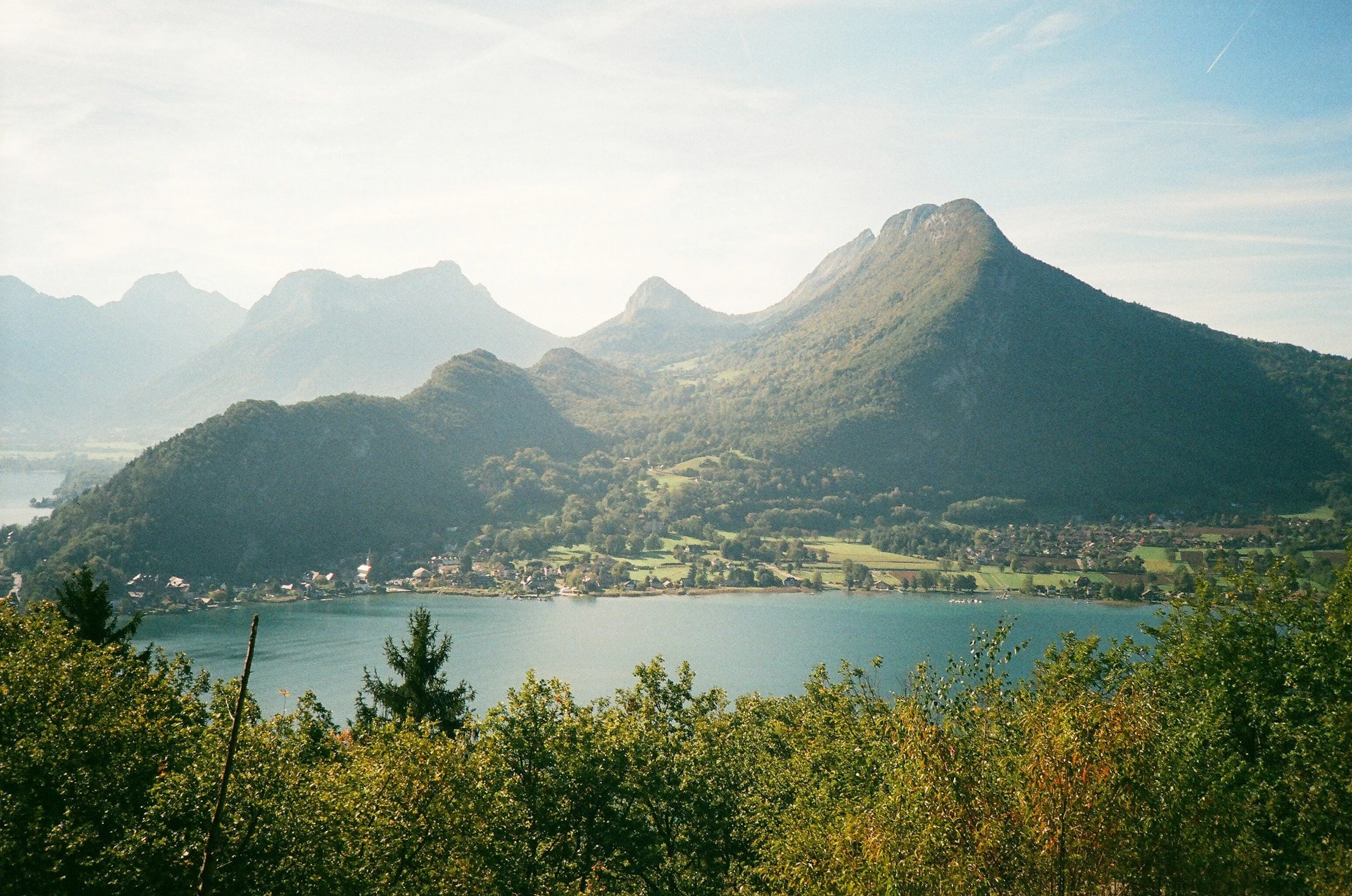
Lake Annecy without staying in Annecy: Talloires and Duingt
Talloires is usually the first place people look at after deciding Annecy itself feels a bit too busy. The harbor area absolutely gets crowded in July and August, especially once the boats arrive from Annecy and people start renting paddleboards for the afternoon, but the village changes quickly once you leave the waterfront. Walk uphill for five minutes toward the church and the atmosphere shifts completely. You hear breakfast plates clattering from hotel terraces, scooters heading down toward the lake road, shutters opening above the narrow streets.
A lot of the smaller hotels and chambres d’hôtes sit above the bay rather than directly beside the water. Some have balconies facing across the lake toward Duingt and the Roc de Chère cliffs, especially around the Saint-Germain hillside. If you stay higher up, expect steep walks home after dinner. People book those views and then realize on day one that carrying groceries uphill in 30-degree heat feels different than it did in the photos.
Talloires is not really about shopping or galleries. Most people fall into small routines instead, like morning coffee at Café Gisèle near the old washhouse. Picking up pastries from Boulangerie Pascal Crolard before the line forms. Walking down toward the harbor with a newspaper tucked under your arm while swimmers are already climbing into the water near the docks.
The road around this side of Lake Annecy gets frustratingly slow during summer afternoons. The distance between Talloires and Menthon-Saint-Bernard looks tiny on the map, but around 4 or 5 pm the traffic barely moves because everybody is leaving the beaches at the same time. You can end up spending forty minutes covering a few kilometers along the lake.
If you are relying on buses around Lake Annecy, staying near the harbor in Talloires makes the trip much smoother. The Y51 bus from Annecy stops close to the waterfront, so you can walk back from dinner, morning swims, bakeries, and the docks without thinking too much about logistics. Once you stay further uphill, the mood changes. The views are better, absolutely, but evenings become less spontaneous because you are suddenly checking bus schedules, walking dark roads back uphill after dinner, or trying to find one of the few taxis still answering calls around the lake after 10 pm in summer.
A lot of people book hillside accommodation because the photos look peaceful, then end up driving everywhere anyway. Around the harbor, you can actually settle into the village properly. Morning coffee, a swim before breakfast, walking down for aperitivo without needing the car keys every single time.
Talloires also has a more polished restaurant scene than the western side of the lake. You notice it immediately in the evenings. Tables dressed properly, people lingering over wine for hours, hotel terraces filling before sunset. Les Terrasses du Cottage is one of those places where dinner slowly stretches into the entire evening because the terrace sits directly above the water facing the mountains across the lake. Around golden hour, nearly everybody pauses mid-conversation when the light hits the cliffs above Duingt.
For lunch, most people end up wanting something simpler after swimming or hiking. Petit Paradis near Angon beach feels much more relaxed - sandy feet, sunglasses still on the table, people stopping after paddleboarding or cycling the lake path. The menu leans Mediterranean in summer, and on hotter afternoons the shaded terrace becomes one of the nicer places to disappear for a couple of hours while the traffic builds around the lake road outside.
If you drive or cycle uphill toward Col de la Forclaz, the landscape changes fast. The road twists sharply above the lake with paragliders constantly launching from the cliffs during summer afternoons. La Ferme at the top fills with hikers, cyclists, and people stopping for the panoramic view across the lake toward Annecy. Early mornings are quieter up there before the motorbikes and camper vans arrive.
Around Talloires, people spend more time outside than inside cafés or shops anyway. The Roc de Chère reserve between Talloires and Menthon has forest trails leading to rocky viewpoints over the lake, and the paths stay noticeably cooler during hot afternoons because of the trees. Nearby, Cascade d’Angon pulls in swimmers and hikers all summer, especially later in the day once the heat settles over the lake road.
Duingt feels rougher around the edges and much less curated than Talloires. That is partly why people end up staying longer. The village sits squeezed tightly between the cliffs and the water with narrow passageways behind the main road, faded shutters, tiny docks, old stone houses pressed close together. Some of the nicest parts are barely landmarks at all. A quiet lane beside the château. Towels hanging from balconies near the water. People walking home barefoot after swimming with baguettes under their arms.
You are not coming here for galleries or stylish concept stores. Most days revolve around swimming, cycling north toward Saint-Jorioz, stopping for pastries in the morning, then sitting beside the lake until the mountains turn pink in the evening light.
The old railway line along the western side of the lake now forms the voie verte cycling path, and Duingt sits right along one of the prettiest stretches. In the mornings, locals cycle toward Annecy for work while visitors stop for coffee near the path or lock their bikes beside tiny swimming spots hidden between reeds and trees.
Dinner in Duingt usually ends up being much simpler and more relaxed than around Annecy. You are not dealing with packed pedestrian streets or huge restaurant turnover all evening. At Lisca, people sit outside for hours over fish from the lake, wine, and slow dinners while cyclists roll past on the voie verte behind the terrace. The atmosphere feels very “everyone already knows each other here” by the second evening. Restaurant BEC is smaller and less polished, with handwritten menus, locals stopping in for lunch, and mountain dishes that make more sense once the evenings cool down a bit.
Closer to the water, Wakpala gets busy on hot evenings because people come straight from swimming and stay for cocktails beside the lake. Around sunset, there are still teenagers jumping off the docks, paddleboards drifting back toward shore, and people sitting barefoot at the tables with towels around their shoulders. It feels more like a lakeside summer routine than a restaurant scene.
The swimming spots around Annecy itself fill up fast once temperatures rise above 25 degrees, especially around Albigny and Marquisats where half the city seems to end up after work. Around Duingt, the atmosphere stays calmer much longer into the afternoon. Near the small port, people spread out along the grassy shoreline with books, picnic bags, and foldable chairs rather than rows of crowded sunbeds. Further south toward Doussard, the lake opens up more and the mountains feel wider around you. By late August, the water near the southern end of the lake is noticeably warmer too.
You will probably still end up spending one afternoon in Annecy for bookstores and galleries before escaping back around the lake again. That usually happens naturally after a few days. In Annecy, Librairie Imaginaire is good for art books and regional photography titles, while BD Fugue draws a mix of locals and visitors browsing graphic novels and travel books during rainy afternoons. Around Rue Sainte-Claire and the smaller side streets behind the canals, there are a few independent homeware shops, poster stores, and tiny galleries worth ducking into early in the morning before the crowds arrive.
But most people do not stay in Annecy very long before wanting to leave again. By mid-afternoon in summer, the old town starts feeling loud and overheated. Then you drive or cycle back toward Duingt or Talloires, the road curves around the lake again, and suddenly everything slows down.
If you’re staring at hotel prices in Annecy wondering whether staying directly in the old town is actually worth the chaos in July, this Talloires breakdown makes the choice much clearer once you see where the quieter swimming spots, cafés, and evening streets actually are.
Gérardmer feels very different from the Alps - in a good way
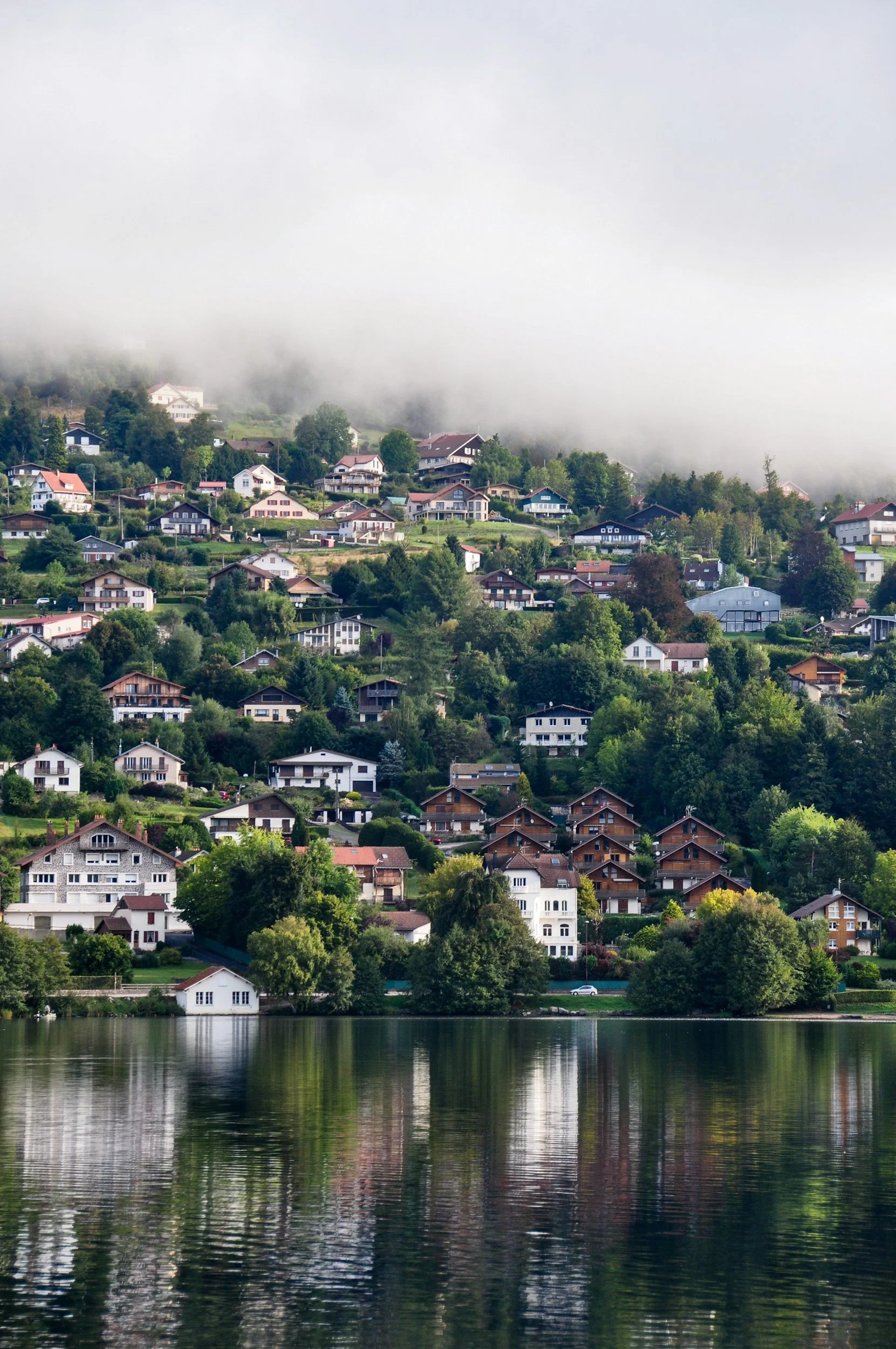
People usually compare Annecy with places around the French Alps or northern Italy, but Gérardmer belongs to a completely different landscape. The Vosges mountains feel softer and more forested, the roads curve through pine trees instead of dramatic cliff edges, and the atmosphere around the lake stays much more local year-round. You hear families from Strasbourg, Nancy, Colmar, or Luxembourg unpacking picnic bags beside the water rather than large groups moving quickly between sightseeing stops.
Getting there takes a little more effort than Annecy, which filters out a lot of short weekend tourism straight away. Most people arrive by TGV to Remiremont through either Paris or Strasbourg, then continue by bus through the Vosges hills for the final stretch. Once you leave Remiremont behind, the scenery changes quickly. Dense forests start closing in around the road, small villages appear between the trees with steep slate roofs and faded shutters, and the air feels cooler even in the middle of summer. If you arrive late in the evening, plan the connection carefully because the buses thin out fast after dinner hours and the station area around Remiremont becomes very quiet at night.
Driving here feels completely different than driving around Lake Annecy or Como. You are not spending the entire day navigating hairpin bends, tunnels, motorcycles, and traffic jams around narrow lakeside roads. The Vosges roads feel calmer and more local, passing through forests, small mountain farms, roadside inns, and villages where people are still buying bread and groceries rather than exclusively serving tourists.
The town itself feels much more lived-in than Annecy, especially once you move a few streets back from the lake. Along Avenue de la Ville de Vichy and near the casino, some of the older hotels still carry that slightly faded mountain-resort atmosphere from another era — heavy wooden dining rooms, patterned carpets, balconies facing the lake, handwritten menus outside restaurants that have probably looked almost identical for twenty years. Places like Hôtel Beau Rivage or some of the older family-run hôtels-restaurants around the waterfront are not trying to reinvent themselves into design hotels, which is partly why the town still feels grounded instead of overly curated.
You notice pretty quickly that Gérardmer functions first as a real town and second as a tourist destination. Around Rue Charles de Gaulle, people are shopping for everyday things rather than wandering souvenir stores all afternoon. There are pharmacies with queues spilling outside in the morning, florists arranging buckets of mountain flowers onto the pavement, outdoor shops selling hiking boots and rain jackets to locals who actually use them in the surrounding forests. Gérardmer’s independent cheese shops and wine stores stay busy year-round because people live here through long winters, not only during summer lake season.
The center wakes up slowly in the mornings. Before 8 am, delivery trucks stop outside the bakeries while café owners drag tables onto the pavement around Place Albert Ferry. At Le Bourru Gourmand, people queue for warm brioche and pain aux raisins before work, while nearby at Boulangerie Vaxelaire, locals grab baguettes and tartes aux myrtilles to bring home for lunch. Around the covered market area, older men stand talking beside newspaper kiosks while hikers in fleece jackets start appearing one by one from the trails above town. Nearby, Maison Boulanger has some of the better pastries in town if you want to bring breakfast down toward the lake instead.
By late morning, the terraces along Rue François Mitterrand begin filling gradually rather than all at once. Cyclists stop for espresso before heading toward the Route des Crêtes, families drift down toward the lake carrying towels and inflatable boats, and people browse through Librairie Le Neuf looking at hiking maps, regional cookbooks, and old black-and-white photography books about the Vosges. Even on busy summer weekends, Gérardmer rarely feels overly polished or performative. Parts of it are slightly rough around the edges in a way that actually makes the town feel more believable after a few days there.
The lake sits directly beside the center of Gérardmer, so you end up moving between cafés, bakeries, swimming spots, and the shoreline all day without really thinking about transport. From the hotels around Avenue de la Ville de Vichy or near the casino, it takes only a few minutes to walk down toward the water. In the mornings, people cross the streets carrying towels and baguette bags at the same time while delivery vans unload crates outside the cafés around Place Albert Ferry.
Near Quai du Locle early in the day, the lake feels almost quiet enough to hear the rowing clubs training out on the water. Older locals walk laps around the shoreline path before breakfast while swimmers climb down the small ladders near Union Nautique for their morning swim. Around 8:30 or 9 am, the terrace at Le Bourru Gourmand starts filling with people in hiking clothes studying trail maps over coffee and tartines before driving up toward Hohneck or Route des Crêtes.
The western side of the lake near Ramberchamp feels calmer than the central swimming areas around the casino. Pine trees come much closer to the shoreline there, and people spread out on small wooden pontoons or grassy patches beside the water instead of gathering in one large beach area. On warm afternoons, you see paddleboards drifting slowly near the reeds while teenagers jump from the docks with portable speakers balanced on towels nearby.
Most visitors fall into the same small routines after a day or two. Breakfast from Boulangerie Vaxelaire on Rue François Mitterrand. Walking around the market stalls near Place du Tilleul on Saturday mornings for Munster cheese, smoked sausage, mountain honey, and blueberries from nearby farms. Picking up wine from one of the smaller caves à vin in the center before heading back toward the lake in the evening.
Summer weekends get busy, especially once the weather turns hot in July. Cars from Alsace and Luxembourg fill the parking areas by late morning, queues form outside the ice cream stands near the casino, and families wheel cool boxes and inflatable kayaks across the road toward the lake. Around lunchtime, the terrace at Le Grizzly fills with cyclists and hikers stopping for beer and mountain dishes before heading back out.
Then the weather changes and Gérardmer becomes almost another town entirely. Rain moves low across the forests surrounding the lake, the hills disappear behind fog, and the promenade near Quai du Locle empties within an hour. Inside cafés, hiking jackets dry over chairs while people order another coffee because the rain clearly is not stopping anytime soon. Around Rue Charles de Gaulle, florists push buckets of flowers further inside their shops while butchers, wine merchants, and bakery owners stand in their doorways talking to each other under the awnings watching the weather roll across the water.
Around sunset, the western side of the lake near Ramberchamp becomes especially quiet once the boat rental kiosks close and the day visitors disappear. Pine trees block parts of the road noise there, and the light filtering through the forest onto the lake in the evening feels completely different than the open Alpine scenery around Annecy. People sit on the wooden docks with their feet in the water long after the swimming beaches empty out, while fishermen start appearing along the shoreline with folding chairs and coolers.
The independent shops around Gérardmer are subtle rather than highly stylized. Librairie Le Neuf has a strong regional section filled with books about Vosges hiking trails, mountain history, and local nature photography, while smaller épiceries around the center sell smoked sausage, Munster cheese, honey, jams, and bottles of local eau-de-vie from villages nearby. On Saturday mornings, the market near Place du Tilleul pulls together farmers and producers from across the region selling cheese, mushrooms, cured meats, mountain herbs, and seasonal fruit. By around 11 am, the market gets noticeably busier, so arriving earlier changes the atmosphere completely.
For dinner, most people stay fairly close to the center because evenings in Gérardmer naturally revolve around the lakefront once the temperatures cool down. L’Hors du Temps is one of the nice spots for longer dinners and local wines, especially during colder months when the inside feels warm, crowded, and slightly old-fashioned in the best possible way. Brasserie du Grizzly feels much more relaxed after a swimming or hiking day, with local beers, mountain dishes, and tables filled with people still wearing outdoor clothes rather than dressing up for dinner.
The surrounding Vosges roads make day trips easy without turning them into exhausting full-day drives. Gérardmer to Xonrupt-Longemer barely takes fifteen minutes, and the road between the lakes cuts through thick pine forest almost the entire way. Longemer itself feels quieter and more wooded than Gérardmer, with fewer cafés and hotels directly around the shoreline. People mainly come there to swim, kayak, or walk beside the water under the trees. Early mornings can feel almost strangely still when fog hangs low over the lake and the forest blocks most surrounding noise.
Further east toward Alsace, Munster makes a very good lunch stop if you want a break from the lake towns without committing to a long detour. The town has small wine bars, cheese shops, old timber-framed buildings, and enough activity to feel alive without turning into a full tourism production. Hikers drift down from the surrounding hills carrying walking poles while people sit outside drinking Riesling in the afternoon sun.
Autumn probably suits this region better than any other season! Around late September, the forests around Gérardmer turn deep copper, orange, and dark red while the air cools sharply in the mornings. Café terraces start bringing out blankets, smoke rises from chimneys around the hillsides, and then suddenly the school holidays end and the lake feels almost empty again during weekday afternoons.
A lot of smaller French lake towns become much easier once you stop relying on a car for every movement, and this Burgundy route explains which towns genuinely feel relaxing by train instead of sounding good only on paper.
Lake Orta works better for quiet evenings than Lake Como
A lot of people looking at Annecy start drifting toward northern Italy at some point, usually Lake Como first because that is the lake everybody recognizes. Then they look closer and realize half the hotels are either extremely expensive or booked months ahead in summer, the roads around Bellagio barely move in the afternoon, and even grabbing a ferry can involve standing in long queues beside hundreds of other people doing the exact same thing.
Lake Orta feels different almost immediately. Smaller roads. Smaller towns. Less noise around the water. Even in summer, there are moments during the day where the lake suddenly goes quiet again.
Part of that comes down to getting there. Orta is not difficult to reach, but it is awkward enough that people do not arrive accidentally. Most travelers come through Milan, change trains in Novara, then continue north toward Orta-Miasino on the regional line heading toward Domodossola. The train gets emptier the further north you go. Apartment blocks disappear, vineyards start appearing outside the windows, then forests and small Piedmont villages where almost nobody gets off apart from a few older locals carrying shopping bags home from town.
Then you arrive at Orta-Miasino station and realize the lake is still nowhere nearby.
The station sits uphill above Orta San Giulio in a quiet residential area surrounded by trees and villas with shuttered gardens. A lot of people think they will just walk down with luggage because it “doesn’t look far.” Then the road starts sloping properly downhill along Via Panoramica and suddenly dragging a suitcase over uneven pavement in humid summer heat becomes much less romantic.
Most people cave and call a taxi halfway down… Driving feels calmer than around Como almost immediately though. You are not stuck behind giant ferries loading cars every twenty minutes or circling endlessly for parking near packed waterfronts. Around Orta, the roads stay slower and quieter, winding through chestnut trees, little villages, and old stone walls rather than constant hotel strips and heavy traffic.
Once you reach Orta San Giulio itself, you mostly stop thinking about transport altogether because the village is tiny. You walk everywhere. Morning coffee on Piazza Motta, swimming from the stone steps near the waterfront, wine bars hidden inside the side streets behind Via Olina, ferries leaving toward Isola San Giulio every few minutes during the day.
Without a car, staying directly inside Orta makes a huge difference because the smaller villages around the lake become frustrating once buses and ferries thin out in the evening. Pettenasco and Omegna are beautiful in their own way, but if you stay there without a car outside peak season, you end up checking ferry schedules constantly instead of relaxing into the lake rhythm.
You notice the evenings around Orta more in the small details than in the obvious postcard views. Around 8 pm, people are still eating outside on Piazza Motta while the last ferries continue crossing toward Isola San Giulio, waiters squeeze between tightly packed tables carrying plates of perch risotto and bottles of cold Ghemme from the nearby hills, and the light over the lake slowly turns from bright silver into a darker blue-grey behind the island monastery.
Then within an hour, the whole village starts emptying out surprisingly fast.
The tiny alimentari near Via Caire Albertoletti pulls down its metal shutters for the night, the ceramic shop tucked beside the old archway near Piazza Mario Motta switches off its lights, and restaurant staff begin standing outside smoking cigarettes beside stacked chairs while the sounds of dinner service disappear gradually from the side streets one by one.
Around Lake Como, there is usually another crowded terrace nearby, another cocktail bar opening properly after dinner, another line forming outside a gelato shop. Around Orta, you walk uphill for five minutes from the waterfront and suddenly the village feels almost residential again, with only a few people sitting outside their houses talking quietly across the alleyways while laundry still hangs above the narrow lanes between the buildings.
Via Olina is probably the street most people end up photographing repeatedly without ever checking the name of it afterwards. The paving stones are uneven and worn smooth from years of rain and foot traffic, parts of the lane stay cool even in the middle of August because the buildings lean inward above the street, and every few meters something small catches your attention — baskets of lemons outside a doorway, old restaurant signs painted directly onto the walls, tiny wine bars hidden under low stone archways where only three or four tables fit outside.
Further uphill near Via Giovanetti, the atmosphere shifts again and the village starts feeling much more local than touristic. Small vegetable gardens appear squeezed between old stone walls, faded green shutters stay half open above the staircases, and old Fiats are parked so tightly against the buildings that you wonder how anybody manages to get them back out again. By late afternoon, you start smelling dinner long before the restaurants officially open because kitchens are already working behind open windows while handwritten menu boards are dragged slowly onto the streets outside the trattorias.
Some of the nicest corners around Orta are not even beside the water. If you continue climbing toward Sacro Monte in the early evening when the day visitors have mostly left, the stone paths behind the chapels become almost silent apart from birds moving through the chestnut trees overhead. Moss grows across the low walls bordering the pathways, old leaves gather between the cobblestones, and then suddenly one of the small openings between the trees frames the lake perfectly below with Isola San Giulio sitting directly in the center of the water.
Closer to the waterfront again, people gather along the low stone wall beside Piazza Motta after dinner with beers, cigarettes, or melting cups of pistachio gelato from Gelateria Antica Torre while teenagers continue jumping into the lake beside the ferry dock even after dark during the hottest weeks of August. The atmosphere feels much more like a small lakeside town settling down for the night than a destination trying to entertain people until midnight.
Then the mornings arrive and the village feels completely different all over again. Before 8 am, the piazza is mostly empty apart from hotel staff arranging breakfast tables under the arcades and a few older locals stopping at Bar Centrale for espresso before work, while delivery boats move quietly across the lake carrying supplies toward the restaurants before the first visitors begin appearing around the waterfront.
Bar Centrale is one of the few places already fully awake that early. Locals stop for espresso standing at the counter while visitors sit outside longer with cappuccinos watching the lake slowly brighten. Later in the morning, people drift toward places like Pan & Vino or Caffè des Arts, especially once the shaded tables become more valuable than the lake view itself during hotter days.
The restaurant scene around Orta stays much smaller and less polished than around Como or Bellagio. You are not walking through endless rows of cocktail bars and designer terraces here. Most places are family-run, slightly cramped, and built into old stone buildings where tables end up squeezed close together in narrow alleyways or under archways.
Ristorante Venus sits directly beside the water and stays busy for long dinners because the terrace faces straight toward Isola San Giulio. Around sunset, the lake turns almost silver-grey and people hag around enjoying wine much longer than planned. Osteria San Giulio feels more tucked away behind Piazza Motta with handwritten menus, low stone ceilings, and local dishes leaning heavily toward Piedmont rather than generic “Italian lake food.” Risotto with perch from the lake shows up constantly around here.
Villa Crespi just outside the center near Pettenasco draws most of the Michelin-star attention around Lake Orta. Even if you are not eating there, people still walk past it because the huge Moorish-style villa looks almost surreal beside the lake with its towers and arches appearing through the trees. Nearby, Enoteca RE DI Coppe feels much more grounded - shelves packed with smaller Piedmont wine producers, locals stopping for glasses of Nebbiolo in the evening, cured meats and cheeses arriving on wooden boards without too much ceremony.
The independent shops around Orta are easy to miss because they disappear into the old lanes rather than sitting along one obvious shopping street. Libreria Spalavera near the upper part of town has regional history books, Italian architecture titles, old lake photography collections, and shelves filled with books about Piedmont food culture and mountain walking routes. Some afternoons you find more locals than tourists inside.
Small ceramic workshops and galleries are scattered around the old center too, particularly near Via Caire Albertoletti and the lanes climbing toward Sacro Monte. Most sell earthy handmade pottery, old-style prints, watercolors of the lake, and objects that actually feel tied to the region rather than generic souvenir-shop stock shipped in from somewhere else.
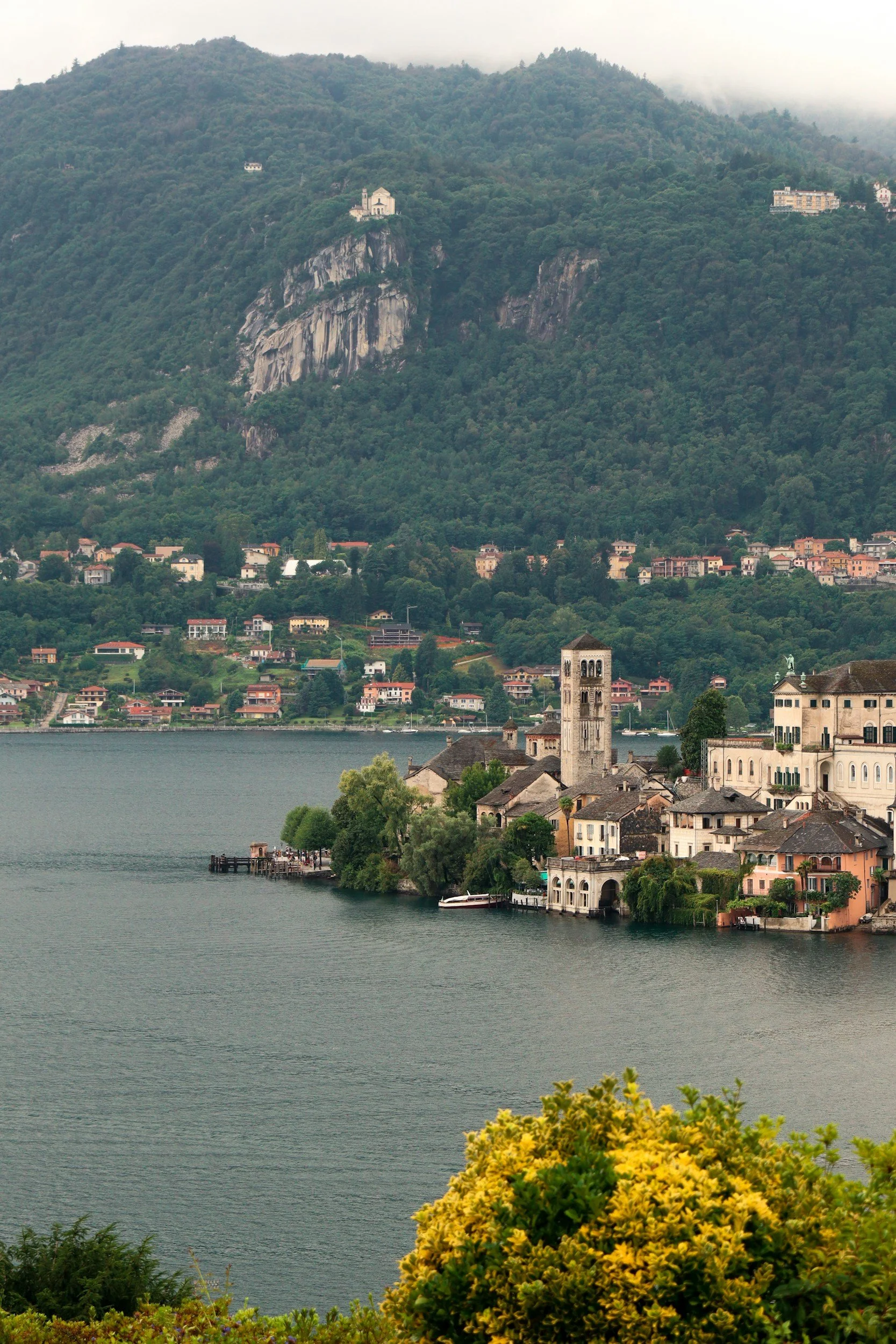
The walk up toward Sacro Monte di Orta changes the atmosphere completely. Behind the village, the streets narrow into old stone staircases leading into chestnut forest. The chapels scattered across the hillside feel almost hidden among the trees, and the viewpoints opening up across the lake toward Isola San Giulio are probably the best anywhere around Lake Orta. In the early morning, before the tourist boats arrive, the paths stay almost silent apart from birds moving through the woods and gardeners sweeping leaves from the chapel entrances.
People often underestimate how steep Orta becomes once they leave the waterfront around Piazza Motta. From the lake, the village looks compact and fairly flat in photos, but after a few hours you realize nearly every small street starts climbing somewhere. The staircases leading up toward Sacro Monte are especially uneven in places, with old stone steps polished smooth over time and narrow passages where two people barely fit side by side. Even walking back uphill from dinner near the waterfront toward some of the small hotels around Via Panoramica or Via Giovanetti can feel surprisingly tiring late in the evening, especially during humid August heat when the stone walls still hold warmth long after sunset.
You notice it most in the mornings when delivery vans struggle through the old streets and hotel staff haul crates uphill before breakfast service begins. Around Via Olina, some of the alleyways become so steep and narrow that scooters are parked halfway onto staircases because there is barely space anywhere else. Good shoes matter here much more than people expect from the polished Instagram versions of the lake.
Swimming around Lake Orta feels much less organized than around Como or Garda. You do not really find long rows of beach clubs with reserved loungers and music playing all afternoon. Most people swim from wherever they can reach the water. Near Piazza Motta, locals climb carefully down old stone steps beside the ferry dock before slipping into the lake early in the morning while the piazza is still quiet. Around Bagnera, on the western edge of Orta San Giulio, small grassy areas and stone platforms stretch along the shoreline beneath old villas where people spend hours reading, swimming, and lying in the shade under trees.
Further south near Pettenasco, the shoreline becomes greener and quieter with little wooden docks extending into the water beside reed beds and small moored boats. Families bring folding chairs and cool boxes for the afternoon while teenagers jump repeatedly from the platforms until sunset. Near Lido di Gozzano, you find one of the few more traditional beach-style swimming areas around the lake, though even there the atmosphere stays much calmer than around the larger Italian lakes.
The villages around Lake Orta all shift slightly in mood and rhythm. Pettenasco feels residential and slow-moving, with waterfront hotels tucked behind gardens and narrow walking paths running directly beside the lake under chestnut trees. In the mornings, people cycle quietly along the shoreline road while hotel staff sweep leaves from the little terraces facing the water. Places like Hotel Giardinetto or the lakeside bars near the marina become gathering spots later in the evening because there are not many alternatives nearby.
Omegna at the northern end of the lake feels more functional and local than Orta San Giulio, but it has some of the better food shops around the lake if you like wandering without much of a plan. Under the old arcades around Piazza XXIV Aprile, bakeries display hazelnut cakes and focaccia in the windows while small delis sell local toma cheeses, cured meats, and jars of honey from the surrounding hills. Pasticceria Iraghi fills early in the mornings with locals stopping for espresso and pastries before work, and the streets around the Nigoglia canal feel especially nice later in the afternoon once the heat softens a little.
By evening, the whole lake changes atmosphere again once the final ferries stop crossing between the villages. Around Piazza Motta, restaurant lights reflect directly onto the water while waiters slowly clear tables outside places like Venus and Leon D’Oro. Then the piazza empties surprisingly quickly. A few people remain sitting along the stone wall eating gelato or drinking beer beside the lake, but within half an hour the narrow streets behind the waterfront become almost silent apart from footsteps echoing against the old walls and dishes clattering quietly somewhere behind the restaurant kitchens.
If Lake Orta makes you want to keep traveling deeper into northern Italy without dealing with rental cars or packed tourist routes, this train-town route is the kind of itinerary that saves a huge amount of planning time once you start figuring out which smaller Italian towns actually work well by rail and still feel calm after the day visitors leave.
Aiguebelette stays quieter because it is slightly inconvenient
Lac d’Aiguebelette sits west of Chambéry and receives far fewer international visitors than Annecy or Bourget. Part of the reason is simply that getting here requires a bit more effort and planning. You do not accidentally pass through Aiguebelette on the way somewhere else, and there is no large town wrapped directly around the shoreline pulling in day-trippers all summer.
Most people arrive through Chambéry first, either by TGV from Paris or regional trains from Lyon and Geneva, then continue toward the lake by car through smaller roads winding between forests, farms, and low green hills. There is technically a train station called Lépin-le-Lac–La Bauche on the eastern side of the lake, but it feels very disconnected from the kind of train travel people usually imagine around European lake destinations. The platform is tiny, surrounded by trees and quiet residential roads, and once you step off the train there is rarely much movement around apart from a few parked cars and cyclists passing through.
Without a car, you end up planning around the region much more carefully than around Annecy. Taxis from the station are not always waiting, buses are limited outside summer, and walking between villages can take longer than expected because the roads curve around the lake rather than following direct routes. Some travelers arrive thinking they will casually move between beaches, cafés, and villages on foot, then realize halfway through the trip that distances around the shoreline feel much bigger in practice.
Driving changes the experience completely. Once you leave Chambéry behind, the roads narrow quickly and traffic almost disappears compared with the routes around Annecy. You pass old stone farmhouses, roadside fruit stalls, tiny villages with shuttered cafés, and stretches of forest where the lake suddenly appears between the trees without much warning.
The roads become smaller and calmer as you approach the water. There are fewer hotels directly on the shoreline, fewer fancy waterfront promenades, fewer places designed specifically to keep tourists entertained all day long. Around many parts of the lake, you mostly pass detached houses with gardens, old farm buildings, campsites hidden between trees, and tiny beach entrances tucked behind hedges.
Nances and Novalaise usually work best as bases around the lake, though they create very different kinds of stays once you spend more than a night or two there. Novalaise feels more grounded in everyday life, with an actual village center where people are running errands, picking up bread, stopping at the pharmacy, and chatting outside cafés throughout the morning rather than a place built mainly around summer visitors.
Around Place de la Liberté, the day starts slowly but steadily. Delivery vans stop outside the bakery before sunrise, locals queue at Maison Bonnet for baguettes and pastries, and by around 8:30 the terrace outside Le Petit Café de Novalaise starts filling with cyclists heading around the lake road and older locals reading Dauphiné Libéré over espresso. The atmosphere is very local-French rather than polished lake-town tourism. Nobody is rushing particularly much. People stop to talk in the middle of the pavement while cars wait patiently behind them.
Novalaise also makes longer stays easier because you are not constantly driving elsewhere for practical things. There is a small weekly market, wine shops carrying bottles from nearby Savoie vineyards, a butcher, pharmacy, grocery store, and enough places staying open year-round that the village still feels alive outside July and August. Around Rue des Écoles and the little streets branching off the center, you pass faded shutters, vegetable gardens, old stone houses, and cafés where tables spill quietly onto the pavement once the weather warms up.
The people who fall in love with Aiguebelette usually end up liking the Swiss Jura too, especially if you prefer forest roads, mountain villages, thermal spas, and quiet hotels over dramatic Alpine resort towns, and this Jura escape explains where that side of Switzerland still feels wonderfully low-key.
Le Petit Café de Novalaise becomes one of those places people end up returning to repeatedly without necessarily planning to because the atmosphere stays relaxed all day long. In the mornings, people stop for coffee before work or after dropping children at school, then later in the afternoon cyclists and walkers drift back for wine or beer after circling the lake. Nearby, Maison Faune feels more contemporary without becoming overly polished or self-conscious about it. Long lunches stretch out over local wines, lake fish, burrata with tomatoes in summer, and seasonal plates built around produce from nearby farms rather than heavy Savoyard dishes aimed at tourists looking for fondue in July.
Nances feels much smaller and quieter overall, especially once the beaches empty toward the evening. Around the little roads near the shoreline, houses sit half hidden behind hedges and chestnut trees while campsites disappear almost entirely into the greenery during summer. The atmosphere near the water changes constantly depending on the time of day because motorboats are so heavily restricted around the lake. That absence of engine noise feels strange at first if you are used to Annecy, Como, or Bourget where there is usually some kind of constant mechanical background sound from ferries, traffic, or boats crossing the water.
Around Aiguebelette, entire stretches of shoreline stay almost silent apart from birds moving through the reeds, bicycles rolling along the roadside, or cutlery from campsite restaurants drifting through the trees in the evening. You hear conversations carrying across the water from surprisingly far away because the lake itself stays so calm.
Some of the nicest swimming spots are hidden down tiny roads that barely look public at all. Around Plage de Pré Argent and the smaller access points near Nances, people arrive carrying folding chairs, striped towels, cool boxes, books, and baguettes rather than beach club bags and rented loungers. Families stay the whole afternoon under the trees because the water warms up much faster than Annecy during summer, especially around the shallow southern end of the lake where the temperature can feel almost bath-like by August.
The roads linking Nances, Saint-Alban-de-Montbel, and Lépin-le-Lac are probably prettier than the villages themselves in many ways. Tiny lanes curve between sunflower fields, old farms, walnut trees, and roadside fruit stands selling apricots, peaches, and tomatoes directly from wooden crates beside handwritten signs. Around late afternoon, the light softens across the hills surrounding the lake and cyclists begin appearing everywhere along the smaller roads looping through the countryside.
Saint-Alban-de-Montbel is worth driving through slowly rather than just heading straight toward the beach areas. The little church above the village overlooks the lake from higher ground, and the roads nearby open occasionally between the trees with wide views across the water toward the wooded hills on the opposite side. Early in the morning, before the campsites fully wake up, the entire area feels almost unusually quiet for a French lake region in summer.
Swimming around Aiguebelette feels much less structured than around Annecy. The lake warms up quickly in summer because it is shallower, especially around the southern shoreline near Plage de Pré Argent and the smaller swimming areas close to Lépin-le-Lac where the water can already feel surprisingly warm by June. People arrive in the late morning carrying picnic bags, folding chairs, inflatable mattresses, and then stay for hours without really leaving the water for long.
Around the little wooden pontoons near Nances, children spend entire afternoons jumping into the lake while parents sit in the shade under trees reading or opening coolers filled with fruit, cheese, and cold drinks. Later in the evening, once the hottest part of the day passes, local teenagers cycle down toward the shoreline still in swimsuits with towels wrapped around their handlebars before gathering along the docks near the campsites.
The landscape around Aiguebelette feels very different from Annecy too. You do not have huge Alpine cliffs towering directly above the lake or dramatic viewpoints every few kilometers. Instead, the hills around the water are lower, greener, and heavily wooded, with chestnut trees and pine forest running almost right down toward the shoreline in places. The whole region feels less visually intense and more lived-in somehow, especially once you start driving through the small villages surrounding the lake instead of staying directly beside the water all day.
Some of the nicest roads are the ones where you barely pass another car for ten minutes. Between Nances and Saint-Alban-de-Montbel, tiny lanes wind past old stone farmhouses with faded blue shutters, vegetable gardens, stacked firewood, and roadside stalls selling apricots, tomatoes, cherries, and walnuts directly from wooden crates beside handwritten signs. Around late afternoon, people begin appearing slowly along the roads carrying towels and picnic bags toward little hidden swimming spots tucked between reeds and trees.
The small church above Saint-Alban-de-Montbel gives one of the better views across the lake, especially early in the morning before the campsites wake up properly and before the first cyclists start circling the lake road. From up there, the water sits almost completely still below the wooded hills, with only the occasional paddleboard or fishing boat moving across the surface.
Independent shops around Aiguebelette stay very low-key and scattered rather than gathered into one obvious village center. You are not walking through polished shopping streets lined with concept stores or design boutiques here. Most places are small family-run businesses hidden behind gardens, attached to old houses, or sitting quietly along roads you would probably drive past if you were not paying attention.
Around Novalaise, there are little caves à vin where local producers from Savoie and the nearby Avant-Pays Savoyard sell bottles directly from the cellar, often with handwritten signs outside advertising Mondeuse, Jacquère, or Apremont from vineyards closer to Chambéry. Places like La Cave du Lac feel more like neighborhood wine shops than tourist stops, with shelves packed tightly together and owners happy to talk for twenty minutes about regional wines if the shop is quiet.
Food shops around the lake lean heavily into local produce rather than souvenirs. In Novalaise, Fromagerie Didier carries cheeses from nearby farms in the Chartreuse mountains (Tomme de Savoie, Beaufort, chèvre wrapped in chestnut leaves) while little grocery stores nearby sell walnut cakes, mountain honey, cured sausage, and jars of blueberry jam from villages higher up in the hills.
You also come across tiny roadside stalls constantly around the lake in summer. Wooden tables beside farmhouses selling apricots, tomatoes still warm from the sun, eggs, walnuts, flowers, and sometimes bottles of homemade génépi with handwritten price tags taped onto the glass. Around Saint-Alban-de-Montbel and Attignat-Oncin, people still leave produce outside unattended with little metal cash boxes beside the road.
There are a few pottery studios and artisan workshops hidden around the villages too, though you usually find them accidentally rather than planning a visit. Small ceramic studios near Nances sell earthy handmade bowls, plates, and mugs glazed in muted greens and browns that feel very tied to the landscape around the lake. Some workshops open only a few afternoons per week during summer and barely advertise themselves apart from a small sign outside the gate.
For galleries or bookstores, most people still end up spending part of a day in Chambéry before returning toward the lake. The old town around Rue Basse du Château and Place Saint-Léger has independent bookshops, wine bars, old arcaded passageways, and small galleries tucked between cafés and bakeries. Librairie Garin is especially good if you like mountain writing, regional history, hiking books, and older French travel literature rather than glossy souvenir books aimed at tourists.
Closer to the lake itself, the atmosphere stays much more practical and local. You are more likely to spend the afternoon buying cheese, wine, and fruit for a picnic beside the water than browsing shops for hours.
Around Aiguebelette itself, evenings stay low-key. There are a handful of restaurants scattered around the shoreline, but outside weekends and July-August, dinner options narrow quickly after around 9 pm. Places like Les Lodges du Lac near Saint-Alban-de-Montbel fill slowly around sunset with peopleenjoying local wine while the light softens over the water. Camping restaurants near the lake become unexpectedly social during summer evenings because there are simply fewer places for everybody to spread out across.
Mornings around the lake start slowly too. Bakeries open early, but café culture is much quieter than in larger French towns. Outside summer, finding somewhere for proper coffee before 9 am can genuinely be difficult around the smaller villages. A lot of mornings end up beginning with pastries eaten beside the lake instead.
The lake probably feels best during shoulder season weekdays when the campsites are quieter and the water still warm enough for swimming. In June and September, you can walk stretches of shoreline around Lépin-le-Lac or Saint-Alban-de-Montbel in the middle of the afternoon and barely pass anyone apart from a few locals cycling home or fishermen sitting quietly beside the reeds.
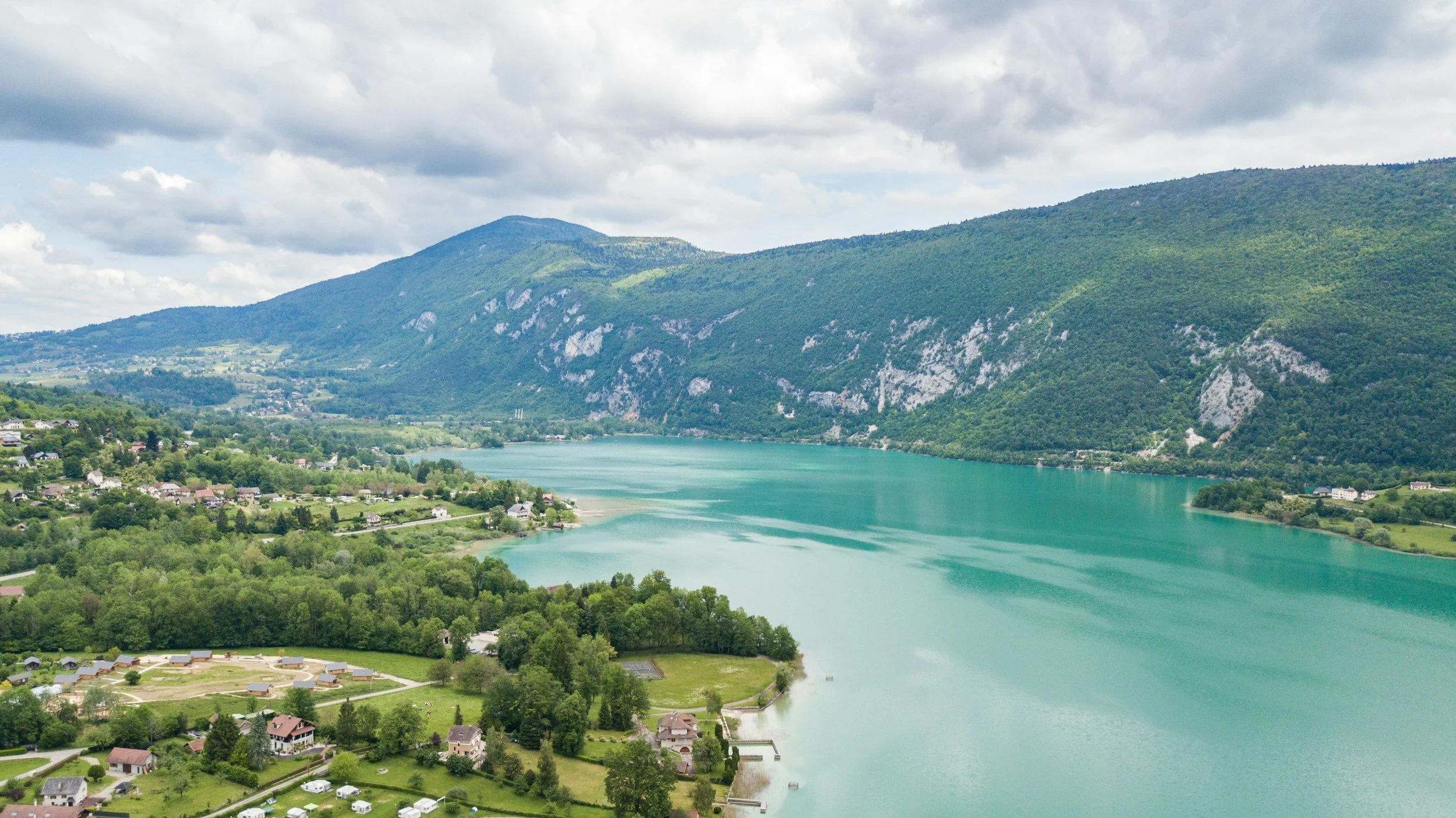
If you like the idea of Lake Geneva but want somewhere with wine bars, slower mornings, and neighborhoods that still feel residential after dark, this Bordeaux guide has the same kind of atmosphere once you move beyond the busiest streets.
Thonon-les-Bains is calmer than people expect
Lake Geneva rarely comes up when people talk about quieter lake towns because the conversation usually jumps straight to Geneva, Montreux, or the grand hotels around Lausanne. The French side of the lake feels completely different though, especially around Thonon-les-Bains where daily life moves at a much steadier rhythm than people expect before arriving.
Getting here is surprisingly easy without needing a car, which is part of why the town works so well for longer stays. Direct trains run from Geneva, Bellegarde-sur-Valserine, Lyon, and Paris via Bellegarde or Annemasse, and the station sits right inside the upper town rather than out on the edge somewhere industrial. Most people arriving for the first time step out expecting immediate lake views and instead find themselves in a very ordinary part of town with apartment buildings, bakeries, pharmacies, kebab shops, cafés, and school traffic moving through the streets.
The first impression of Thonon can feel slightly confusing if you arrive expecting a polished lakeside resort town straight away. You leave the station and find yourself in a very ordinary part of Haute-Savoie instead — apartment buildings with laundry hanging from balconies, small tobacco shops opening for the morning, school traffic clogging the roundabouts, delivery vans double-parked outside bakeries while café owners drag chairs onto the pavement before breakfast service begins.
Around Avenue Jules Ferry and Rue des Granges in the mornings, the town feels much more like somewhere people genuinely live than somewhere carefully arranged for visitors. Locals queue outside Boulangerie Pernet for croissants and still-warm pain aux noix before work while the terrace at Le Café des Arts slowly fills with retirees reading Le Dauphiné Libéré over espresso. Nearby, florists unpack buckets of hydrangeas and sunflowers onto the pavement while people carrying shopping trolleys head toward the covered market near Place du Marché.
The longer you stay, the more the town’s layout starts shaping the rhythm of the day. The upper part of Thonon around the station and Grande Rue sits noticeably above the lakefront, connected partly by steep staircases and partly by the old yellow funicular that locals use constantly throughout the day. Tourists usually underestimate the hill completely at first because the map makes Port de Rives look very close. Then later in the evening, after dinner by the water and maybe a stop at La Fabrik for wine or dessert, the climb back uphill suddenly feels much longer carrying shopping bags or bottles from the wine shops around Rue Vallon.
The lakefront itself feels much softer and quieter than Annecy, especially once you walk beyond the marina near Port de Rives toward the longer waterfront paths beside Quai de Ripaille. Fishing boats painted in fading blues and reds sit tied beside little sailboats while ferries glide slowly across the lake toward Lausanne several times a day without creating much noise or urgency around the harbor.
The landscape across Lake Geneva changes constantly depending on the weather too. Some mornings the Swiss shoreline almost disappears completely behind mist while the water turns flat and silver under low cloud. Other evenings, especially after storms, the light across the vineyards near Lavaux becomes incredibly sharp and clear just before sunset while people gather along the benches near the port eating glace from Le Chablais or sitting with takeaway pizza boxes watching the ferries arrive from Switzerland.
Around the waterfront, life continues at a very local pace even during summer. Older men fish beside the harbor walls near the Château de Rives early in the morning, cyclists stop for coffee before continuing toward Évian along the lakeside roads, and families gather around the little pebble beaches near Ripaille carrying folding chairs, towels, and coolers rather than beach club reservations or rented loungers.
People spend a lot of time simply walking along the waterfront rather than rushing between attractions. In the evenings around Quai de Ripaille, runners pass families eating ice cream near the marina while older locals sit facing the lake for hours talking quietly on benches under the chestnut trees. Around sunset, the water changes constantly depending on the weather - some evenings completely silver-grey under heavy cloud, other nights reflecting warm orange light from the Swiss side of the lake.
The Château de Ripaille changes the atmosphere around this side of Thonon more than people expect before arriving. The estate sits just outside the center surrounded by forest, vineyards, and walking paths where traffic noise almost disappears completely despite being close to town. The château itself dates back to the Dukes of Savoy and sits inside a huge wooded domain beside the lake with vineyards still producing Ripaille wines today.
The paths through the Ripaille forest feel especially good in warmer weather because the trees block most of the heat from the lakeside roads. People cycle slowly through the estate in the mornings carrying baguettes or towels toward the smaller swimming spots near the shoreline while others stop at the winery shop to pick up bottles of Chasselas produced directly on the estate itself.
Café culture here feels much more local than resort-focused too. Around Grande Rue and Place des Arts, places like Le Café des Arts and Brasserie Les Arts stay active all year because the town does not empty once summer ends. In the mornings, people stop for espresso before work or after dropping children at school, then return later in the afternoon for beer or wine after the market closes.
The covered market near Place du Marché is worth walking through even if you are not buying much. Fishmongers sell féra and perch from the lake, cheese stalls stack huge wheels of Tomme de Savoie and Abondance, and nearby bakeries put out blueberry tarts and walnut cakes still warm from the ovens. On Saturdays, the surrounding streets become noticeably busier once people from nearby villages drive in for the market.
For bookstores and smaller independent shops, the upper town feels much more interesting than the waterfront around Port de Rives. Near Grande Rue and Rue des Arts, you start finding the kinds of places people actually use year-round rather than shops aimed mainly at summer visitors arriving from the ferries.
Majuscule Birmann is one of those bookstores where you end up staying much longer than planned because the shelves feel very tied to the region itself. There are old photography collections showing Lake Geneva before the modern waterfront developments arrived, hiking books covering the Chablais mountains above Thonon, regional history titles about Haute-Savoie and the old Savoy kingdoms, and entire sections dedicated to mountain writing, skiing history, and local food culture. On rainy afternoons, people drift in slowly to browse rather than buy quickly and leave.
Around Rue Vallon, small delicatessens and wine shops spill quietly onto the pavement with crates of fruit, stacked cheese boxes, handwritten wine labels, and baskets filled with saucisson from nearby alpine farms. At La Cave du Chablais, shelves are packed tightly with bottles from small vineyards around Ripaille, Marin, Crépy, and the Swiss side of the lake rather than big-name labels tourists already recognize. Staff usually start talking about Chasselas within a few minutes whether you ask or not.
The food shops around the upper town feel especially good in the mornings before the lakefront gets busy. Fromageries display huge wheels of Abondance and Tomme de Savoie in the windows while nearby bakeries put out walnut bread, blueberry tarts, and brioche still warm from the ovens. Around the covered market near Place du Marché, older locals stop to chat beside the vegetable stalls while fishmongers unpack perch and féra from the lake onto crushed ice for the day.
There are also little details around the upper streets that make Thonon feel more lived-in than polished. Old painted signs above former cafés still remain on some of the facades around Rue des Arts, staircases disappear suddenly between buildings leading toward hidden courtyards, and small florist shops overflow onto the pavement with lavender, eucalyptus, and hydrangeas during summer. Even the tobacconists and pharmacies around Grande Rue feel busy in a very everyday way that a lot of prettier lake towns lose once tourism takes over completely.
The restaurant scene stays calmer than Évian nearby, which leans much more toward spa-town polish and grand-hotel terraces. Around Thonon, dinner often feels simpler and more local. Ô Vent d’Anges draws people in for long dinners built around lake fish and seasonal Savoy dishes, while smaller places around the upper town fill gradually rather than all at once. Near the marina, terraces around Port de Rives stay busy around sunset with people ordering white wine, seafood, or coffee while watching the ferries crossing toward Lausanne.
Without a car, Thonon works particularly well because the train line along the southern shore of Lake Geneva connects smaller towns constantly throughout the day. Regional trains run east toward Évian and west toward Geneva without complicated transfers or mountain driving. You can leave after breakfast, spend an afternoon walking the waterfront in Évian, then return to Thonon before dinner in under twenty minutes.
Yvoire is much nicer outside the middle of the day when the ferries from Lausanne and Nyon start arriving one after another and the tiny streets become difficult to move through properly. Around lunchtime in July and August, the harbor fills with people eating ice cream, queueing outside the crêpe stands, and stopping every few meters to take photos of the flower-covered stone facades.
Earlier in the morning, the village feels completely different. Before most of the souvenir shops open, people are still unloading bread deliveries through the old gates while café owners wipe down terraces facing the harbor. Around the port, fishermen work quietly beside the boats and the water stays almost completely flat before the wind picks up later in the afternoon.
The small streets behind Rue du Port feel especially good before 9 am because you can actually hear the church bells and footsteps on the stone pavement instead of tour groups moving through the alleyways. Flower boxes spill over the walls, shutters stay half closed above the lanes, and places like Boulangerie Chez Marinet already have locals stopping in for coffee and pastries before the first ferries arrive across the lake.
Winter works surprisingly well around Thonon too because the region supports a large permanent population instead of depending entirely on seasonal tourism. Cafés stay open, ferries continue crossing the lake, bookstores stay busy, and even during colder weeks people still sit inside cafés near Place des Arts drinking coffee beside steamed-up windows while fog drifts slowly across the water toward Switzerland.
If Béziers surprised you in the same way Thonon or Zell am See might (slightly rougher around the edges but easier to settle into for several days) this car-free Béziers guide explains why some of the most enjoyable French towns are not necessarily the polished postcard versions.
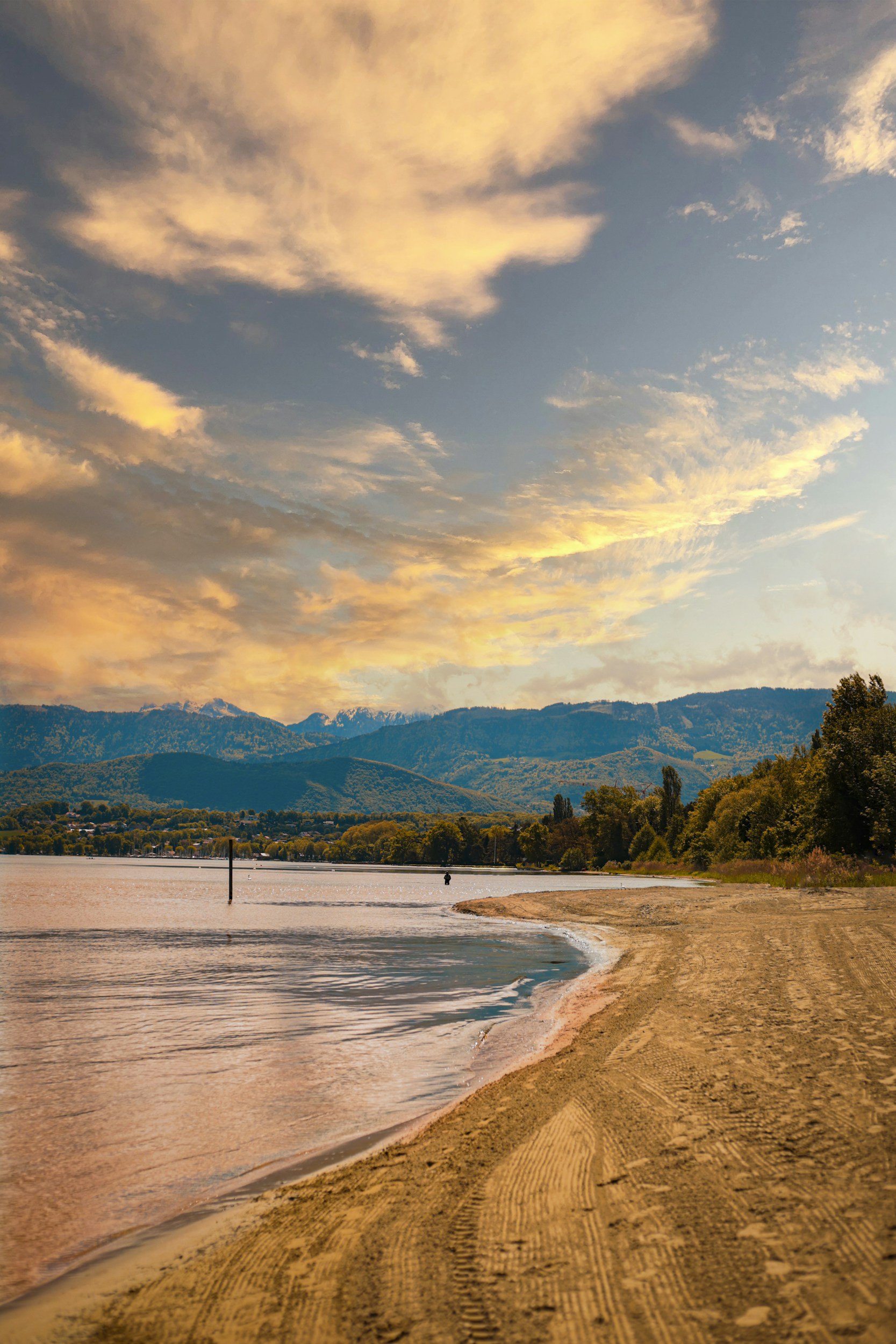
Zell am See feels easier to stay in than Hallstatt
A lot of people looking for mountain lake towns eventually end up staring at photos of Hallstatt, wondering whether it is still possible to enjoy places like that without spending half the trip surrounded by day tours and phone cameras. The reality is that many of the smaller Austrian lake villages now feel busiest exactly during the hours when you would normally want to walk around them.
Zell am See works differently because it is large enough to absorb tourism without every street feeling overwhelmed all the time. It is not perfectly preserved or postcard-pretty from every angle either, which actually helps. Around the station and parts of Schmittenstraße, you pass supermarkets, ski shops, pharmacies, laundromats, apartment buildings, and bakeries where people are clearly shopping for everyday life rather than vacation photos.
Getting there without a car is also much easier than many Alpine lake destinations. Trains from Salzburg run directly into Zell am See station in around 1.5–2 hours depending on connections, and when you step off the platform the lake is already visible only a few minutes away beyond the buses and station square. You can genuinely arrive with luggage and walk to your hotel without needing shuttles, cable cars, or expensive taxis winding up mountain roads.
Arriving in Zell am See feels much less stressful than places like Hallstatt partly because everything is right there when you step off the train. You walk out from the station onto Bahnhofplatz, pass buses heading toward Kaprun and Saalbach, and within a few minutes you are already near the lakefront instead of standing in shuttle queues or dragging luggage through overcrowded pedestrian streets trying to locate a hotel hidden somewhere uphill.
That practicality changes the mood of the stay more than people expect. You can arrive in the afternoon from Salzburg, leave your bags at the hotel, and still have time for a swim at Strandbad Zell am See or dinner beside the lake without feeling like the entire day disappeared into transport logistics.
Where you stay inside town makes a big difference though because Zell am See changes character block by block once evening arrives.
Around Esplanade, Stadtplatz, and the waterfront near Grand Hotel Zell am See, the atmosphere stays busy late into the evening during summer. People continue walking along the lake after dinner because the mountains hold light for a surprisingly long time, especially in June and July when the peaks above Schmittenhöhe still glow pale pink close to 10 pm. Children run between the fountains near Elisabethpark eating ice cream from Heiner’s while hotel terraces fill with people ordering wine and aperol spritz long after dinner service has technically ended.
Villa Crazy Daisy stays packed during warm evenings because the terrace sits directly beside the water with uninterrupted lake views, and around Seecamp or Steinerwirt, people linger outside talking over drinks while cyclists and late walkers continue passing along the promenade. Horse-drawn carriages still move slowly through parts of the center during peak summer weeks, which sounds cliché until you actually hear them crossing the cobblestones near Stadtplatz late in the evening after most day visitors have already disappeared.
Then you walk ten minutes uphill away from the waterfront and the town changes almost immediately.
Around Dreifaltigkeitsgasse, Schmittenstraße, and the smaller residential roads climbing behind the center, balconies fill with drying hiking clothes and towels from the lake while supermarket bags sit outside apartment doors beside hiking boots and folded trekking poles. You pass small guesthouses where people are quietly sitting on balconies drinking tea after hiking all day rather than moving between bars or restaurants.
The roads become quieter too. You start hearing trains passing through the valley again, church bells from St. Hippolyte, dogs barking somewhere behind the apartment blocks, and dishes clattering from restaurant kitchens shutting down for the night. Even during busy summer weeks, those upper residential streets feel surprisingly calm once you leave the immediate waterfront behind.
The lakefront itself stretches out more loosely than Annecy. Instead of one concentrated old town packed tightly around the water, Zell am See spreads gradually along the shoreline with parks, little beaches, apartment buildings, cafés, and boat docks all mixed together. Around Elisabethpark, people spend entire afternoons lying beside the lake eating pastries from nearby bakeries while paddleboards drift slowly across the water below the mountains.
Mountain scenery around Zell am See dominates everyday life in a way that feels much more immediate than around Lake Geneva or the softer landscapes near the Vosges. The mountains do not sit quietly in the distance here. From Bahnhofplatz outside the station, you already see steep forested slopes rising behind the town, and once you reach the waterfront near Elisabethpark or Esplanade, the ridgelines above Schmittenhöhe seem almost directly above the lake itself.
The weather shifts constantly because of it. Early mornings can feel completely clear and cold with sharp visibility across the water toward Thumersbach, then by mid-afternoon clouds begin catching on the ridges above Schmittenhöhe and suddenly half the mountain disappears behind mist while thunder rolls somewhere deeper into the valley toward Kaprun. Around July and August, locals check the mountains constantly before heading out because storms move in quickly here. By around 7 am, people with hiking poles already queue outside bakeries near Stadtplatz while the first gondolas begin moving above town toward the hiking trails.
The mountain infrastructure blends directly into daily life too. From almost anywhere around the center, you see cable cars moving overhead, cyclists climbing toward the higher roads above town, and trains sliding through the valley beneath the slopes every hour or so. Around Postplatz in the mornings, buses heading toward Kaprun and Saalbach fill with hikers carrying backpacks and mountain bikes while swimmers already spread towels out along the lakeside platforms near Strandbad.
Coffee culture around Zell stretches well into the afternoon in a very Austrian way. At 4 pm, cafés are often busier than they were at breakfast because people come back from the lake or mountains and settle properly for coffee and cake instead of grabbing something quickly. Café Vanini near Stadtplatz stays crowded most of the day with people ordering huge slices of apple strudel, Esterházy cake, or Sachertorte after hiking around the lake or arriving back from Salzburg on the train.
Down on the waterfront, Villa Crazy Daisy fills gradually from late afternoon onward because the terrace sits directly beside the water facing the mountains across the lake. Swimmers wrapped in towels stop for beer after leaving the platforms near Seespitz while groups coming down from Schmittenhöhe drift toward the lakefront still carrying hiking backpacks and rain jackets tied around their waists after afternoon storms.
Breakfast usually happens in bakeries rather than cafés around here. At Bäckerei-Konditorei Bauer near Dreifaltigkeitsgasse, locals queue early for warm kaiser rolls, poppy seed pastries, apricot jam croissants, and takeaway coffee before work or hiking. The smell of bread drifts through the streets long before most shops open, especially on colder mornings in September when the air around the station already feels alpine before sunrise.
Around the quieter residential roads climbing uphill behind Schmittenstraße, guesthouses and apartment balconies fill with drying hiking clothes and towels from the lake by late afternoon. People sit outside smaller pensions drinking coffee under blankets while clouds move low across the mountains above the water and church bells from St. Hippolyte echo through the center below.
The shops around the center feel much more connected to everyday mountain life than polished tourism. Along Bahnhofstraße and Dreifaltigkeitsstraße, you move between bakeries smelling of warm bread, little delis stacked with smoked speck and mountain cheeses from Pinzgau farms, outdoor stores filled with proper hiking boots and weatherproof jackets, and bookstores where entire sections are dedicated to skiing history, alpine photography, and walking routes around Salzburg region lakes.
Buchhandlung Thalia near Stadtplatz is one of those places people drift into for “five minutes” and leave half an hour later carrying hiking maps or photography books about the Grossglockner and Hohe Tauern mountains. Nearby, smaller shops around the old center sell hand-carved wooden decorations, thick wool blankets, ceramics, and knitted winter clothing that still feel tied to the region rather than imported souvenir stock you see repeated across Europe.
Around the side streets branching off Stadtplatz, there are tiny windows displaying handmade candles, old postcards of Zell am See from the early ski era, and shelves filled with schnapps bottles produced in nearby valleys. During colder months, especially once Christmas market season starts, the whole center smells faintly of roasted chestnuts, mulled wine, and wood smoke drifting between the buildings in the evening.
The independent food shops are usually more interesting than the souvenir stores anyway. Delis near Dreifaltigkeitsgasse carry local jams, alpine honey, smoked sausages, and mountain cheeses wrapped in paper while bakery windows fill with poppy seed pastries and huge braided loaves before sunrise. People heading into the mountains stop to buy picnic supplies there early in the morning before catching buses or cable cars.
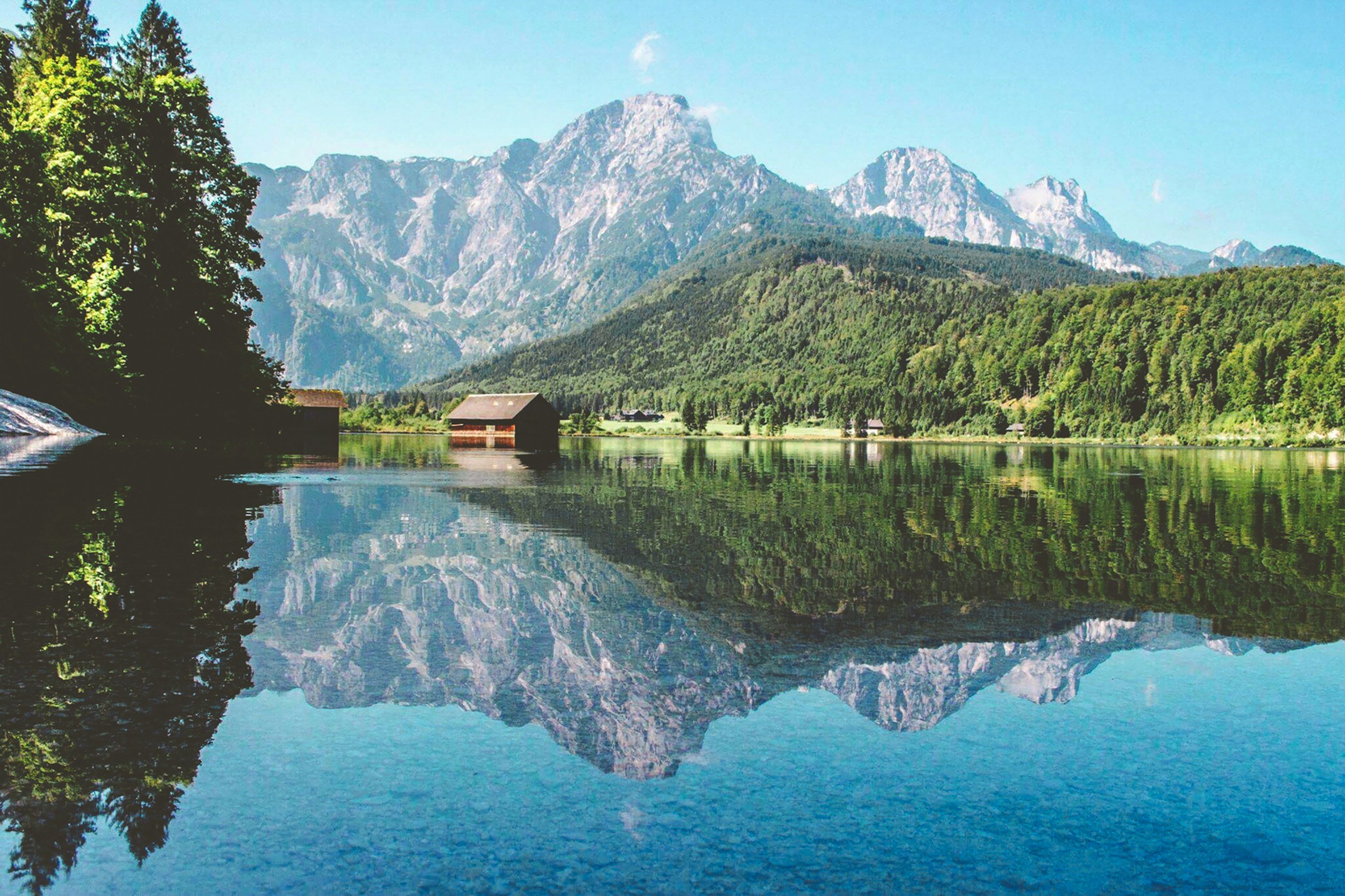
For galleries and exhibitions, the Ferry Porsche Congress Center occasionally hosts regional photography exhibitions and local art events, especially during winter season when the town fills with skiers rather than summer hikers. Smaller exhibitions appear quietly throughout town too - hotel lobbies displaying black-and-white mountain photography, cafés hanging local paintings above the tables, little cultural spaces hosting Austrian landscape artists during seasonal festivals.
The nicest walks around Zell am See usually start once you leave the busiest section near Elisabethpark and continue east toward Thumersbach where the shoreline opens up and the crowds thin out properly. Around the central promenade near Grand Hotel and the ferry dock, there is almost always movement during summer - rental bikes, families with strollers, people queuing for boat tours, hotel terraces filling from late morning onward.
But once you continue past the lido area and follow the lakeside path toward Seespitz and Thumersbach, the atmosphere changes surprisingly fast. The route curves beside reeds, little swimming platforms, rowing clubs, and small pebble access points where locals arrive before work for quick swims in the morning. Around 7 or 8 am, the water there often stays completely flat before the wind picks up later in the afternoon, and the reflections of Schmittenhöhe and the surrounding peaks become almost unnaturally sharp across the lake.
Near Thumersbach, people spread towels out on the grass beside tiny wooden docks instead of gathering in one large beach area. Cyclists heading toward Bruck an der Großglocknerstraße stop briefly for coffee around the little cafés near the eastern shoreline before continuing toward the mountain roads. Even during busy weeks in July, there are stretches along this side of the lake where you mostly hear bicycles passing, rowing teams training out on the water, or church bells carrying across from the opposite side of town.
Around sunset, the wooden platforms near Strandbad Zell am See and Seecamp become gathering spots for people who have spent the whole day outdoors rather than tourists rushing through for photos. Teenagers jump repeatedly into the lake while groups sit eating takeaway pizza from Pizzeria Giuseppe or carrying beers down from the supermarkets near Bahnhofstraße. Swimmers stay in the water surprisingly late during heatwaves, and people linger along the shoreline well after sunset because the mountains continue holding light long after the center of town starts getting dark.
Without a car, Zell works better than most Alpine lake towns because the transport network is genuinely integrated into daily life rather than existing mainly for sightseeing routes. Trains run directly through the center toward Salzburg, Innsbruck, and Wörgl, local buses leave constantly toward Kaprun and the glacier area, and ferries connect different parts of the lake without requiring long detours around mountain roads.
You notice quickly how little many visitors actually use cars once they arrive. In the mornings around the station, hikers line up beside bus stops carrying poles and backpacks heading toward Kitzsteinhorn or Sigmund-Thun-Klamm, while others board the Pinzgauer Lokalbahn toward smaller villages deeper into the valley. The lakeside walking and cycling paths also remove a lot of logistical stress because you can genuinely move around for hours without needing to think much about transport or parking.
Zell am See is absolutely not quiet in the way smaller lake villages are quiet. Around the promenade in July, tourism is obvious everywhere - tour groups moving through the center, lake cruises departing constantly, hotel terraces completely full by dinner. But the town absorbs that movement better than places built entirely around one tiny historic center. Once you stay longer than a night or two, routines begin taking over naturally. Morning swims near Seespitz, bakery runs before hiking, coffee and cake after thunderstorms roll through in the afternoon, train rides toward Salzburg, evenings sitting beside the lake once the day-trippers disappear back toward their hotels.
If the market-town atmosphere around Thonon or Orta is what you actually enjoy most on these trips, these market weekends are the kinds of places where mornings still revolve around cafés, produce stalls, and bakery queues instead of sightseeing schedules.
A lot of quieter lake trips become unexpectedly good once they overlap with brocante season, especially in eastern France where village flea markets start filling entire squares by sunrise, and this brocante guide breaks down which regions are genuinely worth planning a route around.
Quiet alternatives to Annecy for lakes, cafés, and mountain views
One thing you start noticing after spending time around quieter lake towns is how different they feel once the weather turns or summer starts fading out. A lot of the famous lake destinations people search for online are built around a very specific atmosphere - sunny afternoons, busy waterfronts, boat traffic all day long, outdoor terraces packed from morning until night, and people arriving mainly to see the same handful of viewpoints before moving on again.
And if you realize halfway through this article that what you really want is not mountains but quieter waterfront promenades, old cafés, sea air, and long evenings by the water, this Cabourg guide has a surprisingly similar atmosphere once the summer crowds thin out.
You feel that shift quite quickly in places like Annecy, Hallstatt, or parts of Lake Como once the weather becomes grey for a few days. Ferries run less often, the promenades empty earlier, and some parts of town suddenly feel strangely quiet because so much of the energy depends on constant movement and short-term visitors passing through.
The places in this guide usually handle ordinary days much better because life around the lake continues whether tourists are there or not. Bakeries still open before sunrise when the lake is completely hidden behind fog. Morning trains still fill with commuters heading to work. Local markets continue because people nearby are actually shopping there for vegetables, flowers, cheese, bread, and fish instead of browsing for an hour before leaving again.
That changes the feeling of staying somewhere for four or five days instead of just one night.
You stop treating every day like it needs to become a perfect sightseeing day with ideal weather and nonstop plans. Some of the nicest parts of these trips happen when very little is going on at all - sitting inside a bakery in Thonon while rain hits the windows outside, walking through Orta after dinner once the waterfront empties, or swimming in Aiguebelette late in September when half the shoreline suddenly feels abandoned again after school holidays end.
The lakes themselves keep changing too depending on weather, season, and time of day. Zell am See during a humid afternoon before thunderstorms roll across the mountains feels completely different than the same lake on a cold clear morning in October. Around Lake Geneva, the water can look almost metallic grey for days when low cloud sits over the Swiss side. In Orta, heavy rain changes the whole atmosphere around Piazza Motta because the narrow stone streets suddenly become quiet enough that you hear church bells echoing across the water again.
Those are usually the parts people remember later even if they never make it into the photos.
A lot of travel guides compare lake towns almost like they are interchangeable versions of the same trip with slightly different scenery. In reality, the bigger difference is usually whether the place still feels comfortable once the sightseeing part wears off and you settle into ordinary routines - buying pastries in the morning, figuring out which café stays open later than expected, swimming before dinner, walking back through residential streets at night, or staying somewhere long enough to notice how the lake changes from one day to the next.
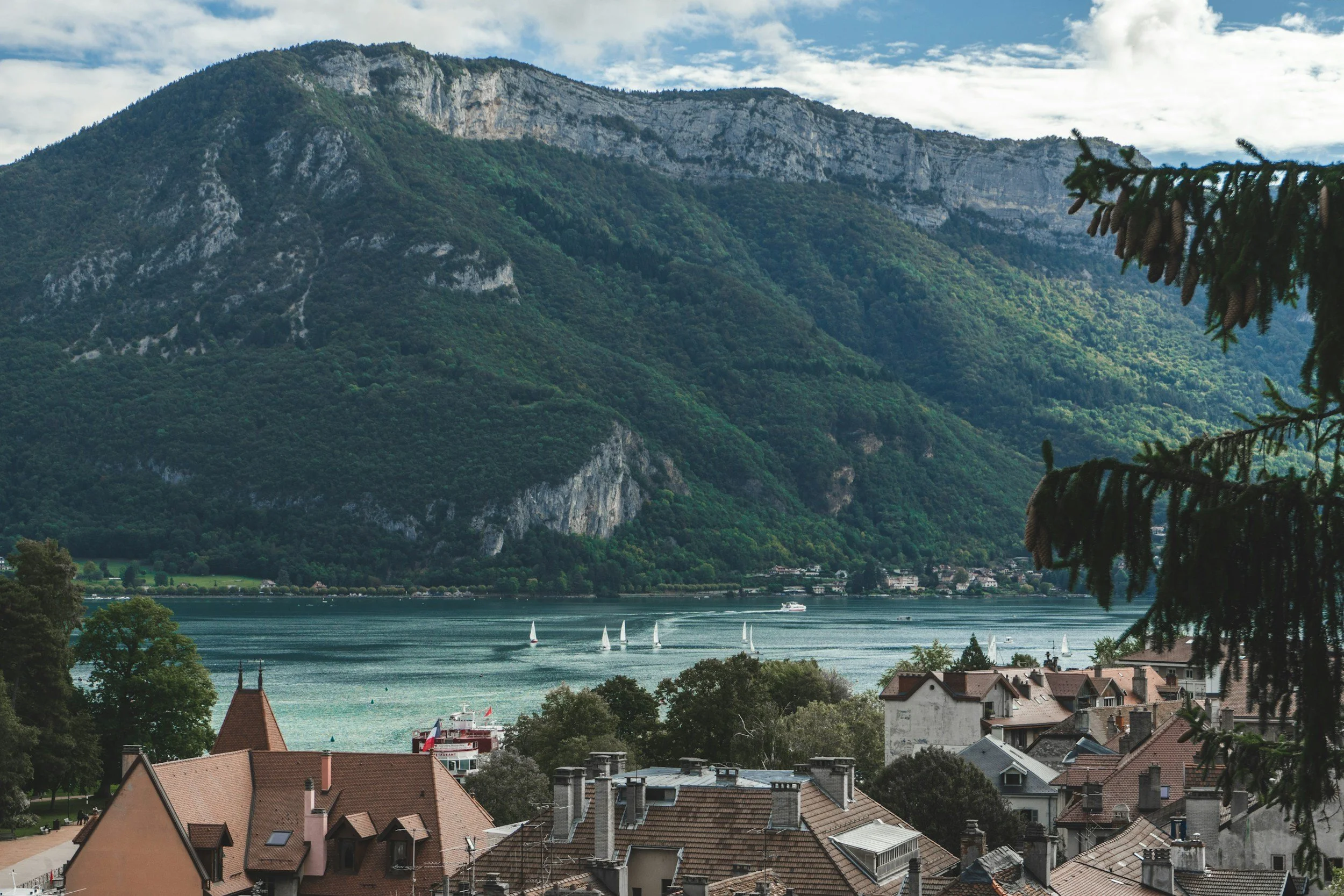
If you’re trying to avoid large chain hotels and want somewhere that actually fits the atmosphere of places like Aiguebelette, Gérardmer, or smaller Burgundy towns, these guesthouse stays feel much more personal than the usual resort-style options around bigger lakes.
Travelers who like the quieter side of Burgundy almost always end up loving Semur-en-Auxois once they realize how calm the town becomes after day visitors leave, and this Semur guide gives a much clearer picture of what staying there actually feels like outside a quick stopover.
FAQs about the quieter lake towns to visit instead of Annecy
Where to stay near Annecy without the crowds
Talloires, Duingt, and Saint-Jorioz usually work much better than staying directly inside Annecy during summer, especially if you care more about swimming, cafés, and quieter evenings than being beside the busiest old-town streets.
Talloires feels more polished and restaurant-focused, particularly around the harbor and Angon side of the lake, while Duingt stays quieter later into the evening and has easier access to calmer swimming spots and the lakeside cycling paths. Saint-Jorioz works well if you want easier grocery shopping, flatter cycling routes, and less traffic than the eastern side of the lake.
Is Talloires quieter than Annecy in summer?
Yes, especially in the mornings and evenings.
Annecy’s old town stays busy most of the day during July and August because of tour groups, markets, lake cruises, and day visitors arriving from Geneva and Lyon. Talloires still gets crowded around lunchtime and dinner service near the harbor, but the atmosphere changes much faster once the waterfront restaurants start closing.
Staying slightly uphill from the shoreline around Talloires also feels completely different than staying directly near the harbor where traffic builds quickly during the middle of the day.
Are there quieter alternatives to Lake Como in Italy?
Lake Orta is usually the strongest alternative if you like the idea of Como but want smaller villages, quieter evenings, and fewer crowds around the water.
Orta San Giulio still gets busy during the daytime in summer, especially around Piazza Motta, but the atmosphere changes quickly once ferries and day visitors leave. Restaurants close earlier, the streets empty faster, and the lake feels much calmer overall than Bellagio or Varenna during peak season.
The tradeoff is transport. Orta-Miasino station sits uphill from the lake, ferries are less frequent than around Como, and buses around the smaller villages become limited later in the evening.
Is Lake Orta worth visiting without a car?
Yes, but it works best if you stay directly inside Orta San Giulio rather than around the outer lake villages.
Once you arrive in the old town, most things are walkable - cafés around Piazza Motta, swimming spots near Bagnera, ferries toward Isola San Giulio, wine bars along Via Olina, and restaurants tucked into the upper lanes behind the waterfront.
Without a car, places like Pettenasco or smaller villages around the lake become less practical because buses and ferries thin out quite early outside peak summer.
Which lake towns in Europe are easiest without a car?
Thonon-les-Bains and Zell am See are two of the easiest overall because both have train stations directly inside town within walking distance of the lakefront.
In Zell am See, you can arrive from Salzburg by train and walk to most hotels, cafés, swimming areas, and the waterfront within minutes. Regional buses and trains also connect easily toward Kaprun and surrounding mountain areas.
In Thonon-les-Bains, trains connect regularly toward Geneva and Évian while the funicular links the upper town with the waterfront throughout the day.
Which European lake towns still feel local in summer?
Thonon-les-Bains, Gérardmer, and parts of Lac d’Aiguebelette usually retain more everyday local life during summer than heavily photographed lake destinations.
In Thonon, commuters still fill the morning trains and ferries, local markets continue year-round, and the upper town around Rue des Granges and Place du Marché feels much more residential than resort-oriented.
Around Aiguebelette, the villages near the lake remain small enough that most beaches, bakeries, and grocery shops are still being used primarily by residents, campers, and regional visitors rather than international tourism.
Which lake towns work best in rainy weather?
This matters much more than most travel guides admit.
Places like Thonon-les-Bains, Zell am See, and Gérardmer usually handle bad weather far better than smaller sightseeing-focused lake towns because cafés, bookstores, bakeries, markets, and trains continue functioning normally regardless of conditions.
In Zell am See, rainy afternoons often shift people into cafés around Stadtplatz for coffee and cake while trains continue running toward Salzburg and the mountain valleys. Around Thonon, people still move between the covered market, bookstores, bakeries, and waterfront cafés even when the lake disappears completely behind fog.
Which lake town is best for swimming and cafés together?
Lake Orta, Talloires, and Zell am See probably balance this combination best in different ways.
Around Orta San Giulio, you can swim directly from stone platforms near Bagnera, then walk back into the old town for espresso or wine within minutes. Talloires combines lake swimming with cafés and long lunches around the harbor and Angon area, while Zell am See works especially well during summer because swimming platforms, bakeries, cafés, and waterfront bars all sit within walking distance of each other.
Which quieter lake town works best for a week-long stay?
Thonon-les-Bains and Zell am See usually work best for longer stays because they have enough infrastructure to support everyday routines without relying entirely on sightseeing.
You have proper train connections, supermarkets, bakeries, bookstores, pharmacies, cafés staying open year-round, and enough surrounding villages or walking routes to avoid feeling stuck after two days.
That becomes much more noticeable during shoulder season when smaller lake villages can start feeling very quiet once restaurants reduce opening days and ferries stop running regularly.
What is the best month to visit quieter lake towns in Europe?
The first half of September is usually one of the strongest periods overall for lake towns in France, Austria, and northern Italy.
Around Lake Orta, Lake Geneva, and Annecy, the water often stays warm enough for swimming while restaurant pressure, ferry queues, and traffic drop noticeably once European school holidays finish. Around Zell am See and Gérardmer, early autumn also brings clearer mountain visibility and cooler hiking temperatures compared with the humidity and thunderstorms common in July and August.
Are there quieter alternatives to Hallstatt in Austria?
Yes. Zell am See usually works much better if you want mountain scenery, train access, swimming, cafés, and hiking without spending the entire trip inside one tiny village overwhelmed by daytime tourism.
The promenade near the center still gets busy in July, but the town spreads much more naturally around the lake, and quieter residential areas, swimming spots, cafés, and walking paths remain easy to find once you move beyond the central waterfront.
Which lake towns stay active outside summer?
Thonon-les-Bains, Zell am See, and Gérardmer all stay relatively lively outside peak season because they support larger permanent populations instead of relying only on tourism.
That means cafés, bakeries, bookstores, trains, and markets continue operating throughout autumn and winter rather than shutting down once summer visitors leave. Around Lake Geneva especially, ferry traffic and daily commuting continue year-round, which keeps the waterfronts feeling active even during colder months.